

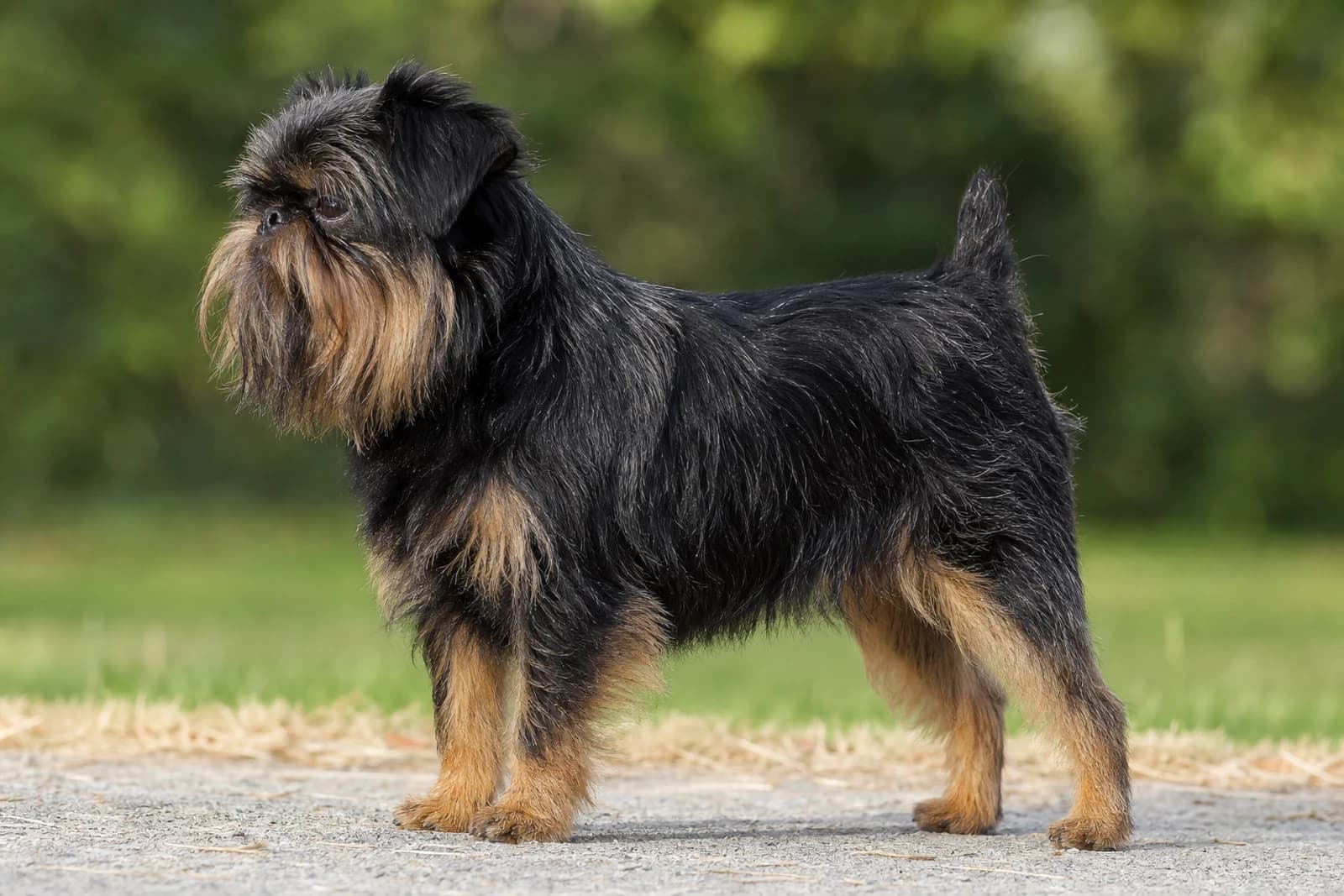
The Affenpinscher, often called the 'Monkey Dog' for its expressive, simian-like face, is a pint-sized terrier brimming with confidence and curiosity. This sturdy, small breed suits individuals or families seeking a bold, entertaining companion with minimal shedding. While affectionate with their owners, they can be stubborn and have a mischievous streak, best matched with patient owners who appreciate a dog with a big personality in a compact package. They thrive in apartments or homes and make excellent watchdogs, though their bossy nature may not be ideal for first-time dog owners or homes with very young children.
At a glance
- Size
- Small
- Height
- 9–11 in
- Weight
- 7–9 lb
- Life span
- 10–12 years
- Coat colors
- Black, Gray, Silver, Red, Black and Tan, Belge
- Coat type
- Wiry and dense
- Group
- Terriers
How much does a Affenpinscher cost?
Adopt / rescue
$75–$400
Usually includes spay/neuter, first shots, and a microchip.
Buy from a breeder
$700–$2,000
From a reputable, health-testing breeder.
Approximate USD. Prices vary widely by region, breeder, pedigree, age, and coat colour — adopting is the lower-cost and recommended route. Avoid suspiciously cheap “breeders”; they’re often puppy mills.
Estimate the full cost of a Affenpinscher →Affenpinscher photos
Views
Front, side, rear and top — the full silhouette.Poses
How the breed sits, lies, moves and plays.Puppy to senior
The breed across its whole life.Expressions
The breed’s range of moods.Close-up details
Eyes, ears, nose, paws, tail and coat.Coat colors
The breed’s recognized colors.Click any photo to enlarge. We show the Affenpinscher from every angle — three views, poses, life stages, expressions, close-ups, coat and colors.
Appearance & size
You see an Affenpinscher coming and the first thing that registers is a purposeful little dog who looks like a wiry-haired gremlin that just finished a serious board meeting. He stands 9 to 11 inches at the shoulder and weighs a dense 7 to 9 pounds—a compact, square-proportioned body that feels heavier than it looks when you scoop him up. He is a terrier through and through: sturdy bone, straight forelegs, and a level topline that barely dips as he trots.
His head is the conversation starter. The skull is round but not domed, with a distinct stop and a short muzzle that ends abruptly—not flattened like a brachycephalic breed, but decidedly blunt. What makes the face truly memorable is the underbite. The lower jaw juts forward just enough that the lower incisors align in front of the uppers, which, combined with a full beard and mustache, gives him that monkey-like grimace the breed is named for. Dark, round eyes sit well apart, rimmed in black, and the expression is always bright, alert, and just a little mischievous. Ears are set high; you’ll see them naturally drop forward as small V-shaped flaps, or cropped to a sharp, erect point where that’s still practiced.
From the front, the chest is moderately broad and the neck is short and strong, blending into well-laid-back shoulders. A wiry mane of longer, harsher hair frames the neck and throat, adding to the scruffy, almost theatrical outline. The front legs are straight, parallel, and set under the shoulders with no hint of fiddly elegance—this is a dog built to dig in and go.
Looking from the side, the body is nearly square. The distance from the point of the shoulder to the rump is about equal to the height at the withers, and the back is short and level. A slight tuck-up behind the ribs keeps the outline from looking soft. The hindquarters angle cleanly with moderate bend of stifle, and the hocks are just a touch out behind the rump, giving the dog a ready, coiled-spring stance.
From the rear, the legs are straight and strong, carrying that same sturdy width you saw in front. The tail is typically docked short enough to stand upright like a little exclamation point, or left natural and curling slightly over the back. Either way, the tail is always carried with a certain jauntiness when the dog moves.
The coat is what ties the whole rumpled package together. It’s dense and rough, about an inch long on the body, with a slightly softer, longer texture on the head and neck. It’s a wiry, broken coat, not smooth, and it stands off the body just enough to give a shaggy but never woolly silhouette. Black is the color you’ll see most often, but the breed also comes in gray, silver, red, black and tan, and a warm beige. The coat darkens or clears with age in some lines, but the standard calls for a solid, intense pigment—no washed-out tones. Shedding is minimal, but that rough coat does require regular stripping to keep its texture and color. Without it, the Affenpinscher loses some of that defiant, monkey-faced charm and starts looking like a fluffy lapdog in a bad wig.
History & origin
Forget the toy dog you see trotting alongside café tables today. The Affenpinscher’s story begins in 17th-century German stables, where he was a rugged, sharp-eyed exterminator with a terrier’s instinct for kill. The name itself — Affenpinscher, “monkey terrier” in German — wasn’t a cutesy branding move. It was a literal description of a wiry, dark-coated dog with a flat, simian face and a whiskery beard that made him look like a tiny, serious primate.
Back then, he stood closer to 12 or 13 inches at the shoulder and weighed a sturdier 12–14 pounds. Farmers, shopkeepers, and coachmen valued him as a pitiless ratter who could slip behind barrels and into tight feed-room corners to root out mice and rats. But he also pulled double duty as a yappy early-warning system, barking at anyone who didn’t belong. His territory was the barn, the grain store, the kitchen, not the sofa.
A practical mindset shift happened during the 18th and 19th centuries. Breeders around Munich and other southern German cities started selecting for smaller size, softer coat texture, and a more pronounced pushed-in face. They likely crossed in Pugs, German Pinschers, and perhaps other small companion breeds to refine the look and dial down the hard-edged working temperament. The goal wasn’t to eliminate the ratting drive entirely but to produce a compact, indoor-friendly dog with the same monkey-like charm. By the 1800s, well-to-do ladies kept them as portable lap warmers and living hot-water bottles.
The breed’s modern identity took shape when Germany’s Berlin Lapdog Club wrote the first Affenpinscher standard in 1902. The two world wars nearly erased the breed, but a handful of dedicated breeders in Germany and later in America rebuilt the population. The American Kennel Club recognized the Affenpinscher in 1936, and the Affenpinscher Club of America formed in 1950 to protect the gene pool.
Even today, you see the old terrier wiring under the plush coat: a 7–9-pound dog who will still stalk a backyard mouse with the intensity of his 17th-century forebears. His story is a straight line from barnyard vermin-killer to cheeky house companion, with just enough sideways glances and beard-splitting expressions to earn every bit of that monkey nickname.
Temperament & personality
An Affenpinscher runs on confidence, curiosity, and the unshakable belief that he’s a 50-pound guard dog in a 7-pound body. This is a terrier in every sense — plucky, stubborn, and quick to sound the alarm at a knock on the door, a squirrel on the fence, or a plastic bag blowing across the yard. You’ll get a dedicated watchdog, but without early training, the barking can turn from “heads-up” to hard-to-ignore noise.
Energy comes in quick, bouncy bursts. A solid 30–45 minutes of daily play and a couple of short walks usually take the edge off, but these dogs need mental work just as much. Puzzle toys, hide-and-seek, and short trick sessions keep their busy brains occupied. When exercise or attention falls short, anxiety-driven behaviors like nonstop barking or destructive chewing tend to follow.
Affens bond tightly with their people. Expect a little shadow who wants to be on your lap, under your desk, or patrolling the nearest window. Affection is sincere, but on the dog’s terms — they aren’t pushovers. A respectful, consistent approach works far better than heavy-handed corrections. Bribery with food often seals the deal.
Body language tells you a lot. A relaxed, loose body and soft eyes mean you’ve got a content companion. A stiff posture with direct staring or a forward lean signals that the pint-sized boss is about to dig in his heels. Lip licking, yawning, or turning away are calming signals: read them, and give him space.
With children, the Affenpinscher fits best in homes with older kids who understand boundaries. Never let a child interrupt a dog who’s eating or chewing a prized bone — resource guarding can surface and is easier to prevent than fix. Gentle, supervised handling from day one helps the dog see kids as allies, not threats.
The quirks are part of the deal. Many Affens steal socks or remote controls not to destroy them, but to parade around with their prize. It’s equal parts mischief and showmanship. That monkey-like face, tilted head, and strutting walk can make even the most exasperated owner laugh. A well-socialized Affenpinscher brings a surprising amount of bravery and clowning into a small, sturdy package.
Good with kids, dogs & other pets
An Affenpinscher’s tiny frame — just 7 to 9 pounds of bone and attitude — means every interaction with a young child needs a spotter. Even the most easygoing dog can be dropped, stepped on, or grabbed the wrong way, and pain can provoke a defensive snap. That said, this isn’t a tense or aggressive breed by nature. Affenpinschers lean patient and level-headed, which gives them a head start in homes with gentle kids who understand how to handle a small dog. The real clincher is early, layered socialization.
Start exposing your puppy to calm children, visitors, walking surfaces, and the everyday clatter of a household well before 16 weeks of age. That window — roughly 3 to 14 weeks — is when their brain sorts “normal” from “scary.” Short, positive meet-and-greets with kids who sit on the floor and offer treats set a pattern that sticks. Without those experiences, an adult Affenpinscher can become timid, jumpy at loud noises, or overreact to unfamiliar hands. The same goes for other dogs. Given their size, a poorly matched play session with a boisterous big dog can easily turn into a fear factory. Puppy classes and structured playdates in those early months help an Affen learn to read canine body language and stand up for themselves without panic.
With cats and small pets, the picture gets more complicated. Affenpinschers are terriers at heart, and that brings a flicker of chase-and-grab instinct. A kitten raised alongside an Affen puppy often becomes a member of the inner circle, but an adult cat who flees can trigger a high-speed pursuit. Pocket pets — rats, gerbils, birds — are generally off the menu for unsupervised cohabitation; a closed door is your safest bet. Let prey animals meet the dog only from behind secure cage bars, never in free range.
Don’t mistake their adaptable size for a dog who happily flies solo. Affenpinschers thrive on companionship and can develop real distress — barking, destruction, or clinginess — if left alone for long stretches. They’re built for proximity, not backyard solitude. For families that want a small, steady companion who’s up for both couch time and a round of fetch, and who are committed to hands-on supervision and early, positive introductions, an Affenpinscher tends to return the favor tenfold.
Trainability & intelligence
Your Affenpinscher is smarter than he looks—and he already looks like a tiny, scheming genius. The real challenge isn't whether he can learn; it's whether you can make the lesson matter enough to him. This is a terrier-brained dog in a toy package, and he brings that typical independent streak. If your tone gets drill-sergeant stiff, he’ll simply find something more interesting to do.
The core approach is reward-based and relentlessly consistent. Treats, a squeaky toy, a silly-voiced “good boy”—whatever flips his switch, use it immediately when he gets something right. Punishment or a harsh tone backfires fast. It erodes trust and can make a 7-pound dog anxious or snappy. Because he’s sensitive under that brash exterior, training works best when you’re patient, clear, and a little bit entertaining.
Housetraining can try your patience; many Affens need longer supervision and a crate routine that treats a dry night like the big win it is. They aren’t being spiteful—they just have small bladders and a mind that’s easily distracted by a passing shadow. For recall, never count on it being bombproof around squirrels or strange cats. A fenced yard and a long training leash are your friends while you build that skill.
Start socialization early—ideally from 8 to 12 weeks—with calm, positive exposures to different people, sounds, textures underfoot, and other well-behaved dogs. This helps dial down the suspicious watchdog tendencies that can creep into adulthood. Short, daily sessions keep him from getting bored; 5–10 minutes of focused work followed by play works far better than a long, repetitive drill. If you treat training like the two of you are figuring out a puzzle together, you’ll get more reliability than you ever would from a power struggle.
Exercise & energy needs
Forget long, steady marches around the neighborhood. The Affenpinscher is a pocket-sized terrier who burns energy in quick, comedic bursts and then happily crashes on the couch. Two or three short daily sessions almost always beat one marathon walk.
Aim for about 20–30 minutes of total daily activity, split into manageable chunks. A pair of 10–15 minute walks, combined with an indoor play session, hits the sweet spot for most adults. Because the breed’s small size and slightly pushed-in face can make them overheat faster than you’d expect, shift outdoor exercise to cooler morning or evening hours in warm weather — and never skip a chance to let them decide when they’ve had enough.
Inside the house or a securely fenced yard is where an Affen really shines. Terrier brains need as much work as terrier legs, so pair physical movement with daily mental exercise. Rotate puzzle toys, hide treats in a snuffle mat, or teach a new trick — their clever, sometimes obstinate streak makes trick training a great outlet. A quick game of hide-and-seek where you call them from room to room can drain their battery faster than an extra walk.
Stick to low-impact activities. Their small frame doesn’t need high jumps off furniture or repetitive pounding on hard surfaces. A flirt pole gently dragged along the ground, a soft fetch toy tossed down a hallway, or a short sniff walk where they set the pace gives them the stimulation they need without stressing joints. On days when weather keeps you inside, a solid 10 minutes of tug-and-drop or obedience drills easily replaces a stroll around the block.
Grooming & coat care
The Affenpinscher’s wiry, harsh coat is designed to look deliberately scruffy—about an inch long on the body, a touch longer around the neck and chest. That rough texture stretches out the time between brushings, but don’t skip them. A quick session two to three times a week with a slicker brush or a metal comb will nab dead hair and stop little mats from forming behind the ears and under the front legs, right where the harness rubs.
Bathing every four to six weeks is plenty, or just when your dog rolls in something rank. Use a mild dog shampoo and rinse thoroughly; if the coat feels tacky, a dollop of conditioner won’t soften it into a puffball, but it’ll help the comb glide through. The Affen’s trademark beard collects food bits and drool, so wipe it down daily with a damp cloth—otherwise you’ll find crusted kibble in there by breakfast.
Trim and tidy is where pet owners get options. For a true monkey look, many show homes hand-strip the dead outer hairs a few times a year, preserving the rough texture and near-zero shedding. If that’s not your style, a clipper cut down to a half-inch or so every eight to ten weeks keeps things neat. Just know: clipping may cause the coat to feel softer and shed a little more dead fluff—so your weekly brushing stays non-negotiable. Whichever route you pick, keep the hair around the eyes and the paw pads trimmed so your dog can see and grip.
Nails, ears, teeth follow small-dog logic. Nails every two to three weeks (the quick grows fast indoors), ears checked weekly for wax or odor, and a quick swipe with a vet-approved cleaner when needed. Small jaws mean crowded teeth; a daily brushing with dog toothpaste slows tartar buildup and spares you pricey dental cleanings.
Seasonally, there’s no big blowout—Affens don’t drop clouds of fuzz when the weather turns—but you might notice a little extra dead hair coming out in the brush come spring. Just bump the comb-outs up to every other day during that stretch, and you’re set. The grooming routine doubles as a health scan, too: run your hands over the body, feel for bumps or dry patches, and you’ll catch skin issues early.
Shedding & allergies
The Affenpinscher sheds very little in daily life—the harsh, wiry coat grabs dead hairs and hangs onto them until you brush or strip them out. You won’t see fur floating in sunbeams or coating the sofa, but that means the work falls on you. Plan for weekly combing with a fine-toothed metal comb and a session of hand-stripping or plucking every few months to pull the spent coat. Skip this, and the dead hairs mat against the skin, creating a bigger mess down the road.
There’s no seasonal blowout like you’d get with a double-coated breed. Because they lack a dense, shedding undercoat, they don’t explode into fluff when the weather shifts. Year-round loss is minimal—think a few stray hairs on your dark pants, nothing more.
Drool is a non-issue. Affenpinschers run dry-mouthed, so you won’t be wiping slobber off furniture or your face.
As for allergies: no dog is zero-allergen. Proteins in dander and saliva trigger reactions, and every dog makes them. Still, the Affenpinscher’s low-shedding coat keeps airborne allergens to a trickle. Many allergy sufferers do well with them, but the only real test is spending a couple of hours with an adult dog before committing to a puppy. Frequent grooming—stripping out that dead hair in the yard rather than letting it drift indoors—reduces the allergen load even further. It’s a tidy breed, but individual sensitivities still rule.
Diet & nutrition
Portion control and weight management
An Affenpinscher weighs 7–9 pounds fully grown. That means even a couple of extra ounces can strain tiny joints and set the stage for luxating patellas or back problems. Treat this like a numbers game: measure meals with a kitchen scale, not a scoop, because the difference between “hefty” and “hurt” is razor-thin in a dog this small.
Some Affens act like they’ve never seen food before; others will turn up their nose and walk away. If yours is a chowhound, you’re the portion police — no free-feeding, no eyeballing. If yours is picky, resist the temptation to drizzle on gravy or pan drippings to tempt them. Rich, fatty extras can trigger pancreatitis in small breeds fast, and a finicky dog can still pack on empty calories. Either way, body condition trumps the food bowl’s emptiness: you want to feel ribs easily beneath a thin layer of fat.
Puppy feeding schedule
From weaning until 4 months old, give an Affen pup four evenly spaced meals a day. From 4 to 6 months, drop to three meals, then settle into the adult rhythm of two meals daily by six months. Start transitioning to solids with a high-quality commercial puppy formula or with lightly cooked, puréed meats, fish, and dog-safe fruits and vegetables. Around 12 weeks, you can introduce a raw chicken wing — supervised, and scaled down for a tiny mouth (a wing tip or neck) — to work those jaws and clean teeth early. Just go slow; a sudden switch will upset a puppy’s stomach.
What to put in the bowl
Build meals around animal protein, roughly 60% raw or cooked meat, alongside 20–30% dog-safe fruits and vegetables, and the final 10% from eggs, plain yogurt, or digestible grains. Pearl barley brings fiber and sits easy for many dogs; white rice is the go-to when stomachs go sideways. Since dogs’ jaws move straight up and down and they lack the salivary enzymes to break down carbs, blending or lightly puréeing meals helps your Affenpinscher absorb more nutrients — especially useful if they inhale food or have dental trouble down the line. A slow-feeder bowl or snuffle mat turns mealtime into a puzzle, forcing a speedy eater to downshift and use their brain.
Adjusting for seniors
By the time an Affenpinscher hits their senior years (the breed’s life span runs 10–12 years), metabolism slows and activity often dips. You might switch to smaller, more frequent meals to keep their digestion comfortable. Don’t slash protein; there’s no solid evidence that older dogs need less, and they need the amino acids for muscle upkeep. Do watch the scale relentlessly and reduce calories a bit at a time as their zoomies become naps. If teeth go missing or gums become sensitive, purée meals to keep nutrition available. A senior Affen that stays lean spares those aging joints and buys more comfortable years.
No-go territory
Never feed from the table. Once an Affenpinscher learns that your dinner plate produces handouts, you’ll never eat in peace again. Put any leftovers into the dog’s own bowl and offer them at mealtime if you must. Skip vegetarian or vegan diets outright — a dog’s digestive system evolved on meat, and imposing a meat-free menu robs them of nutrients their body expects. Skip all-you-can-eat holiday scraps, too, because one fatty binge can land a small dog in the emergency clinic with pancreatitis. Batch-cook grains, vegetables, or proteins in advance so you have healthy meal bases ready, and if you make homemade food, the unsalted water left from steaming veggies makes a handy flavor base when stock isn’t around.
Health & lifespan
A well-cared-for Affenpinscher typically lives 10–12 years, though it’s not unusual for one to nudge past 13 when weight, teeth, and joints get early attention. This isn’t a fragile powder puff, but at 7–9 lb, a lot of typical small-dog trouble spots come with the territory.
What you’ll want to keep an eye on:
- Dental disease – That little underbite and crowded monkey mouth trap plaque fast. Daily brushing and annual cleanings under anesthesia are your best defense against infections that can spread to the heart and kidneys.
- Luxating patellas – Kneecaps that pop out of the groove are common in toy breeds. You might see a hop-skip gait before it pops back. Responsible breeders screen breeding stock, but the condition can still show up and may need surgery if it causes pain.
- Tracheal collapse – That dry, honking cough isn’t always a cold. Affens can have weaker cartilage in the windpipe, so a harness instead of a collar is non-negotiable.
- Eye issues – Cataracts and progressive retinal atrophy crop up in the breed. A yearly veterinary ophthalmologist exam catches changes before they become blinding, and good breeders test parents’ eyes.
- Heat sensitivity – The short, pushed-in muzzle means they don’t cool air well. Hot, humid days can turn dangerous fast. Walk in the early morning, carry water, and never leave one in a parked car.
- Hypoglycemia – Young puppies, especially under 12 weeks, can crash if they miss a meal. Keep Nutri-Cal on hand and feed three or four times a day until they stabilize.
Weight is a quiet killer. An extra half-pound on a 7-lb dog is like 10 extra on a human. You’ll feel ribs easily and see a waist from above. Use a kitchen scale to track it monthly.
Care that pays off year after year:
- Keep up with monthly heartworm prevention (yes, even for an apartment dog—mosquitoes get indoors) and the legally required rabies shot. Rabies has no treatment once symptoms appear.
- A proactive vet schedule—annual wellness exams while young, every six months once they hit senior status—picks up heart murmurs, early lens changes, and wobbly kneecaps while they’re still manageable.
- Early, positive handling at the vet and groomer reduces stress-related cortisol spikes that, over time, wear on the immune system. A dog who’s been calmly handled for nail trims and mouth checks faces fewer health risks tied to chronic anxiety.
The starkest truth with a breed this small: you’ll notice a problem faster by knowing his normal—how he eats, how he plays, how he breathes at rest. A sudden drop in appetite or a quieter-than-usual afternoon gets a vet call sooner rather than later.
Living environment
Space: apartment or house?
An Affenpinscher is a natural apartment dog so long as you tackle his one built-in hobby: alert barking. At 7 to 9 pounds he takes up about as much room as a throw pillow and can burn off plenty of energy racing from kitchen to living room. Stairs? He’ll manage them, though many owners add ramps to spare little joints the daily pounding. A house is fine too — just don’t expect him to self-exercise in a big yard.
Yard needs
A securely fenced courtyard or small patch of grass is a bonus for quick potty breaks and sniff sessions, but it’s not a requirement. This breed would rather be under your elbow. Without a yard, well-timed leash walks and indoor play fill the gap easily. If you do have a yard, check fence gaps at ground level: a 9-pound terrier can squeeze through surprisingly small openings when a squirrel mocks him.
Weather watch
That pushed-in face gives the Affenpinscher his monkey-like expression but also makes him work harder to cool down. In warm weather, shift walks to early morning or after sunset, keep them brief, and watch for panting that doesn’t settle. Icy sidewalks call for a sweater or coat — his rough coat provides some insulation, but with so little body mass he chills fast. A dry, room-temperature perch by your desk is pretty much his ideal climate.
The bark factor
He’s small, but he sounds off with big-dog confidence. Knocks, delivery trucks, a neighbor’s keys jingling — all deserve a sharp announcement. Early reward-based training can turn that into a single alert bark instead of a full concert. Consistent “enough” cues and quiet games go a long way, especially in thin-walled apartments.
Alone-time tolerance
This is where the Affenpinscher can get tricky. He bonds hard and doesn’t do well with long, lonely days. Left for a full work shift without company, he may dig, chew, or bark himself hoarse. Gradual alone-time practice, food-puzzle toys, and a midday dog walker dramatically lower the stress. A slow-feeder mat or a snuffle box keeps that clever terrier brain busy and tired. If your schedule keeps you away eight-plus hours regularly, an Affenpinscher may need a second person — or a well-run doggy daycare — to stay a happy, civilized roommate.
Who this breed suits
A great match if…
You want a tiny dog that acts like a big fish in a small pond. The Affenpinscher weighs 7–9 pounds but struts through life with terrier confidence and a comically serious expression. This breed suits owners who enjoy a dog with a self-employed attitude — affectionate on its own terms, not a velcro lapdog. You’ll get kisses, but you’ll also get a side-eye when you’re being boring.
Singles, seniors, and apartment dwellers often click with Affens. They’re compact (9–11 inches at the shoulder), don’t need a yard, and satisfy their exercise requirement with two brisk 20-minute walks and a few rowdy indoor play sessions. A flirt pole or treat puzzle wears them out faster than a long, meandering stroll. They’re alert and will announce visitors, so you’ll never miss a delivery, but they’re not typically nonstop barkers if you teach a “quiet” cue early.
First-time owners can do well if they’re not pushovers. The Affen’s clever, sometimes stubborn brain responds to short, upbeat training sessions and a sense of humor — “because I said so” doesn’t fly. Their wiry coat sheds minimally, but plan on twice-weekly brushing and a professional groom every couple of months to keep them from turning into a dust mop.
Think twice if…
- You want a dog that automatically loves everyone. Affens can be choosy; they need heavy socialization as puppies to avoid becoming a one-person dog who snubs your friends.
- Your household has young children. A clumsy toddler can break a leg on a 7-pound dog, and an Affen won’t hesitate to correct rough handling with a growl or snap. Generally a better fit for homes with older, dog-savvy kids.
- You prize stillness and silence. An Affenpinscher is a busy, curious creature who’ll patrol the windowsill, steal socks, and make you laugh with a sudden “monkey” face — but they won’t quietly blend into the furniture.
- You expect a 12–15 year commitment. Their typical lifespan is 10–12 years, and later years can bring patellar luxation or eye issues. Responsible breeders screen for hips and knees, but health surprises still happen.
Pick this breed because you appreciate a wiry little tyrant who makes you work for its affection and rewards you with a huge, unhinged personality. Pass if a mellow lap warmer is what you’re after.
Cost of ownership
An Affenpinscher’s price tag is just the entry fee. These little dogs come from small litters and responsible breeders invest heavily in health testing, so a well-bred puppy typically runs $1,500 to $3,000. If you’re open to a retired show dog or an adult through a breed rescue, you might find one for a few hundred dollars. Either way, the real financial conversation is the monthly upkeep.
Even a 7–9-pound dog eats only modestly, but a high-quality, protein-forward kibble matters for that dense wiry coat and steady energy. Figure roughly $25–$40 a month on food. The bigger line item is grooming. The Affenpinscher’s harsh, terrier-type jacket sheds minimally but needs consistent hand-stripping or clipping to keep texture and shape. Most owners visit a professional groomer every 6–8 weeks, which can set you back $50–$80 per visit depending on your area. If you learn basic hand-stripping at home, you’ll save money, but factor in the cost of stripping knives, brushes, and detangling spray.
Routine veterinary care — annual exams, vaccines, heartworm prevention, and flea/tick control — averages around $600–$800 a year. The breed can be prone to luxating patellas, hip dysplasia, and heart murmurs, so many owners carry pet insurance for accidents and illness. A solid plan usually falls between $25 and $45 a month. Responsible breeders screen for knees, hips, eyes, and cardiac issues, but future vet bills are never zero.
Add in a crate, bed, harness, toys, and training classes early on, and you’re looking at a one-time upfront spend of $300–$500 beyond the purchase price. On an ongoing basis, a realistic monthly budget — food, grooming, routine preventives, and insurance — lands somewhere in the $150–$250 range. A sturdy little terrier isn’t cheap, and saving on grooming often just means spending more on replacement jackets when the coat gets out of hand.
Choosing a Affenpinscher
You’ve decided an Affenpinscher might fit your life — now the real work begins. Finding a dog from a source that stacks the deck toward good health and sound temperament is everything with this breed. You have two solid paths: a responsible breeder or a rescue. Both are worth your patience.
Start with health clearances, because a 7–9 lb dog can still carry expensive joint and heart problems. For an Affenpinscher, a breeder should hand you OFA (or PennHIP) results for patellar luxation — slipping kneecaps are common in tiny bodies. You also want a recent cardiac exam from a board-certified cardiologist. Mitral valve disease and other silent heart issues crop up in the breed, and a clear clearance doesn’t guarantee a forever heart, but it’s the best defense. Add an annual eye exam by a veterinary ophthalmologist (CAER or CERF). Some breeders also screen hips, but it’s the knees, heart, and eyes that matter most. No paperwork, no puppy. Breeders who wave off testing with “my lines are healthy” are not doing you a favor.
Red flags are easy to spot once you know what you’re looking at. Walk away if you see these: multiple litters on the ground at once, puppies younger than 10 weeks heading out the door, a refusal to let you meet at least one parent on-site, or an offer to ship with a click and a credit card. A good breeder asks you as many questions as you ask them — they’ll want to know where the puppy will live, who’s home during the day, and whether you’re ready for a stubborn little monkey-dog that housetrains on its own timeline.
Rescue is a quieter route but just as real. Affen-specific rescues exist, though you might wait months. General small-breed rescues occasionally have an Affen or a mix. The upside is you’ll often get a dog who’s past the nippy puppy stage and whose temperament is already visible. Ask about any known knee or breathing quirks, and bring a healthy dose of observation during a meet-and-greet: watch the dog move on a leash and listen for respiration at rest.
When you finally stand in front of a litter, ignore the urge to pick the flashiest one. The puppy who trots over with a “what’s next?” expression, stands his ground when a crinkle toy barges in, and accepts a gentle exam without melting or snapping — that’s your candidate. Check for clear, dry eyes, a clean rear end, and movement free of a telltale skip-hop in the back legs. With a flat face breed, you want to hear a little puppy snuffling, not open-mouth panting or audible effort after 30 seconds of play. A responsible breeder has already started exposing them to nail clippers, car rides, and different surfaces — ask what they’ve done. It makes a difference you’ll feel on day one. The breeder or rescue who hands you a folder of records and tells you to call anytime, for anything, is the only kind worth your money.
Pros & cons
Pros
- A pint-sized charmer with a big personality: the 7–9‑lb Affenpinscher struts around like a much larger dog and keeps you laughing with his monkey-like antics.
- Sturdy watchdog in a small package — he’ll alert you to anything suspicious with a surprisingly deep, serious bark.
- Modest exercise needs. A couple of brisk 20‑minute walks plus some indoor fetch or puzzle games are plenty; no yard required.
- The wiry double coat sheds very little, so you won’t find drifts of hair around the house. Regular brushing and an occasional clip or hand-strip keep dander to a minimum.
- Long-lived (10–12 years) and easy to tuck into a carrier, making him a flexible little sidekick for apartment dwellers, travelers, and retirees.
Cons
- Terrier stubbornness runs deep. Training takes patience and consistency — without it, he’ll make up his own rules and run the household.
- Housetraining can try your resolve. A tiny bladder and an independent streak often stretch the process well beyond what you’d expect from a small dog.
- Coat upkeep is real. To avoid matting and preserve that trademark scruffy texture, plan on professional grooming every 6–8 weeks.
- Not a mellow lapdog. He can be snappish when startled or handled roughly, so homes with very young children are a poor fit.
- Small-dog health watch list includes luxating patellas, crowded teeth needing regular cleaning, and serious heat intolerance — short muzzle means you’ll need to keep summer outings brief.
Similar breeds & alternatives
If the Affenpinscher’s 7–9-pound scruff and no-nonsense terrier attitude intrigue you, a few other small breeds share overlapping traits while steering you in a noticeably different direction.
-
Brussels Griffon: Same monkey-faced charm and wiry coat, but typically 8–10 pounds with a stronger velcro streak. Griffons often bond so tightly to one person that they struggle with polite indifference around strangers. You get a dog who lives for laps—less inclined to pick a scuffle than the scrappy Affen, but more emotionally demanding. Both breeds need regular hand-stripping or clipping; the Griffon’s rough coat may mat slightly faster if you slack on upkeep.
-
Miniature Schnauzer: A bigger terrier brother at 12–14 inches and 11–20 pounds. His harsh, wiry double coat requires a similar grooming schedule. The Schnauzer brings double the daily energy—expect a solid hour of active play and longer, faster walks. His louder bark and natural suspicion make him an alert watchdog, but he’s less portable and less likely to forgive a missed morning run than the Affen. Good fit if you want a sturdier terrier presence without downsizing the personality.
-
Yorkshire Terrier: Smaller at 4–7 pounds, with a completely different coat. Silky, human-hair-like strands need daily brushing; no stripping required. Yorkies are bold and often just as bossy, but their finer bones make them more fragile in rough-and-tumble houses with young kids. They travel insanely well, but their low cold tolerance means you’ll deal with sweaters the Affen rarely needs.
-
Toy Poodle: Roughly the same weight (4–6 pounds) or slightly lighter, but worlds apart in coat and nerve. A tightly curled, non-shedding fleece suits allergy-conscious homes, and their cleverness rivals the Affen’s wit. Yet Toy Poodles lack the gritty terrier resolve—you’ll get a quick-learning trickster, not a dog who still thinks he can take on the neighbor’s Rottweiler. Grooming bills run higher, and the silky intelligence comes with a sensitive side that crumples under harsh corrections.
Each of these breeds trades off a slice of the Affenpinscher’s unique, self-possessed scruffiness. Your best move is to spend an afternoon with both the breed you’re eyeing and its close cousin—real-life attitude beats a checklist every time.
Fun facts
- The name "Affenpinscher" translates to "monkey dog" in German.
- They were originally bred to catch rats in stables and homes.
- Their distinctive facial hair gives them a simian-like expression.
- They are known for their comical and mischievous personality.
Frequently asked questions
- Are Affenpinschers good with children?
- Affenpinschers can be affectionate with children, but they tend to do best with older, gentle kids. Due to their small size and sometimes stubborn personality, they may not tolerate rough handling, so supervision is important around toddlers.
- Do Affenpinschers shed a lot?
- Affenpinschers are low-shedding dogs, which can make them a good fit for some people with mild allergies. However, no breed is completely hypoallergenic, and regular grooming helps minimize loose hair.
- How much exercise does an Affenpinscher need?
- With a moderate energy level, an Affenpinscher typically needs daily walks and interactive play to stay happy. They adapt well to apartment living as long as they receive enough physical and mental stimulation.
- How often does an Affenpinscher need grooming?
- Their wiry coat requires brushing several times a week to prevent tangles and regular trimming every few months. Many owners opt for professional grooming to maintain the breed’s distinctive look and keep the coat healthy.
- Are Affenpinschers easy to train?
- Affenpinschers are intelligent but can be independent and stubborn, which may challenge first-time owners. Consistent, positive reinforcement training works best, and early socialization helps shape a well-mannered companion.
Tools & calculators for Affenpinscher owners
Quick estimates tailored to Affenpinschers — pre-filled with this breed’s size where it matters.
Articles & stories about the Affenpinscher
Sources & standards
This profile follows recognized breed standards from the American Kennel Club (AKC) and the Fédération Cynologique Internationale (FCI), along with established veterinary and breed-club guidance. These describe general breed tendencies — every dog is an individual.
Owner stories
Have a Affenpinscher? Share your experience — grooming tips, personality quirks, anything goes.