

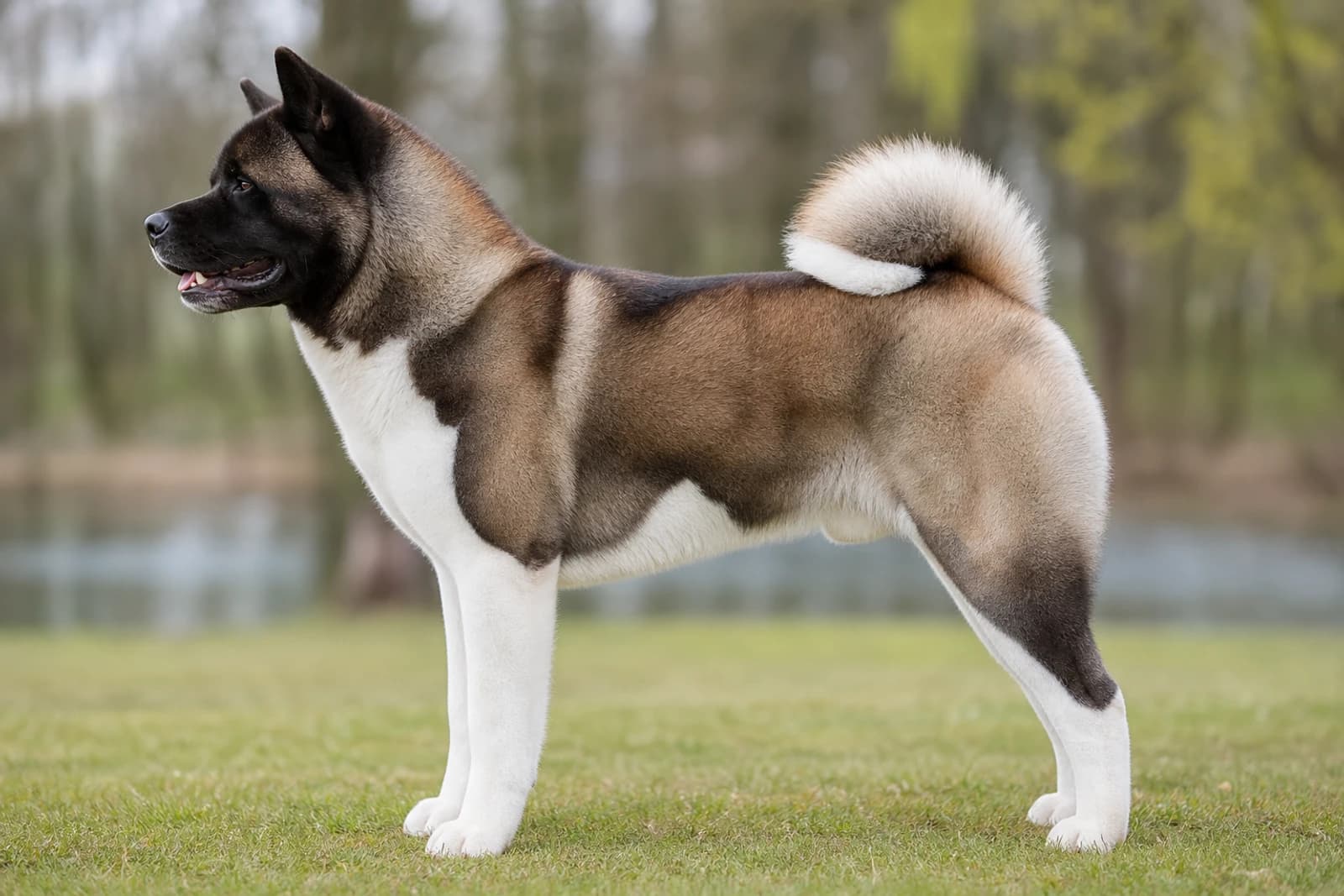
The Akita is a noble, powerful, and loyal breed from Japan. They are dignified, courageous, and deeply devoted to their families. With a strong protective instinct, they are natural guardians. Due to their size, strength, and independent nature, they are best suited for experienced owners who can provide consistent training and socialization. Not recommended for first-time owners or homes with small children or other pets, unless carefully managed. They thrive in a home with a securely fenced yard and plenty of exercise. Their thick double coat requires regular grooming, and they shed heavily twice a year. Overall, an Akita is a majestic companion for the right dedicated family.
At a glance
- Size
- Giant
- Height
- 24–28 in
- Weight
- 65–115 lb
- Life span
- 10–12 years
- Coat colors
- white, brindle, red, fawn, sesame, pinto
- Coat type
- thick double coat
- Origin
- Japan
How much does a Akita cost?
Adopt / rescue
$150–$500
Usually includes spay/neuter, first shots, and a microchip.
Buy from a breeder
$2,000–$4,000
From a reputable, health-testing breeder.
Approximate USD. Prices vary widely by region, breeder, pedigree, age, and coat colour — adopting is the lower-cost and recommended route. Avoid suspiciously cheap “breeders”; they’re often puppy mills.
Estimate the full cost of a Akita →Akita photos
Views
Front, side, rear and top — the full silhouette.Poses
How the breed sits, lies, moves and plays.Puppy to senior
The breed across its whole life.Expressions
The breed’s range of moods.Close-up details
Eyes, ears, nose, paws, tail and coat.Coat colors
The breed’s recognized colors.Click any photo to enlarge. We show the Akita from every angle — three views, poses, life stages, expressions, close-ups, coat and colors.
Appearance & size
The first thing you notice is sheer substance. An Akita isn’t just tall — they’re dense, broad, and built like a dog who was expected to hold a wild boar at bay. That’s exactly the job they had in Japan’s northern mountains, and it shows in every angle.
You’ll see a male stand 26 to 28 inches at the shoulder and tip the scales at 100 to 115 pounds without looking soft. Females run slightly smaller, 24 to 26 inches and 65 to 85 pounds, but carry the same muscular weight. This is a giant breed with a deep, wide chest and heavy bone. When you stand next to one, you feel it: the shoulder comes up past your knee, and the head is broad enough to need two hands for a good scratch.
From the front, the Akita’s head is the defining piece. It’s a massive, bear-like wedge with a distinct stop and a thick, short muzzle. The ears are small triangles, set wide and carried stiffly erect, leaning forward just a little. The eyes are deep-set, small, and triangular, giving a calm but watchful expression — they don’t miss much. The neck is short and muscular, thickening into pronounced shoulders that flow into a straight, level topline.
From the side, the body reads powerful and balanced. The back is firm and horizontal, the chest deep enough to reach the elbows, and the legs are straight and heavy-boned. The double coat stands off the body enough to soften the outline, but you can still see the muscular sweep of the hindquarters. The tail is impossible to ignore: thick, full, and carried curled forward over the back in a tight plume.
From the rear, the tail curl is often the first thing you spot, fanning out into a dense brush of fur. The back legs are well-muscled with moderate angulation, built for power rather than speed. The overall stance is rooted — four solid paws on the ground, no room to push this dog around.
Coat color comes in a wide palette: bright white, red-fawn, sesame (black-tipped hairs on a red background), brindle, and pinto patterns with a white body and darker patches. The outer coat is straight, harsh, and stands slightly away from the body, while the undercoat is dense and plush — a reminder that these dogs handle snow country. White dogs lack the facial mask, but all other colors show a striking white or cream “urajiro” shading on the cheeks, chest, belly, and inside the legs. A full, thick ruff of fur around the neck adds to the bear-like silhouette, especially in winter.
History & origin
The Akita didn’t start out as a family companion. It was a bear dog, plain and simple. Up in the rugged, snowbound mountains of Akita Prefecture on northern Honshu Island, hunters needed a dog big enough, brave enough, and independent enough to hold a 600-pound Asian black bear at bay until they arrived with a spear. For centuries, the ancestor of today’s Akita—known then as the matagi-inu—worked in pairs, silently tracking boar, elk, and yes, bear through deep forest. This was a silent, strategic partnership, not a baying chase. The dog had to think for itself, and that trait never left the breed.
By the late 1800s, changes rippled through Japan. Dog fighting became a fad, and the native hunting lines were crossed with Tosas and European mastiffs to produce a larger, more aggressive brawler. The bear-hunting type nearly dissolved. Then came World War II, when a desperate government ordered all non-military dogs killed for their fur. Faced with losing the breed entirely, dedicated owners smuggled their dogs into remote villages, passed them off as German Shepherd crosses to skirt the order, or secretly tied them high in the mountains. After the war, only a small handful of survivors remained.
The restoration effort that followed split into two paths. Some breeders worked to reclaim the leaner, fox-faced Akita Inu that matched illustrations from the early 1900s; others held onto the heavier, mastiff-influenced type that American servicemen had fallen in love with. Those dogs went home with GIs after occupation duty and became the foundation for what we now call the American Akita—blockier, bigger-boned, with a bear-like head. Japan declared the breed a living national monument in 1931, and the story of Hachikō—the dog who waited nine years at Shibuya Station for his dead owner to return—sealed the Akita’s place as a cultural icon.
So the breed that reached you crossed an ocean, survived government culling, and split into two distinct expressions, but never shed its original wiring. That 200-pound boar-hunting brain is still in there, behind the dark, almond-shaped eyes, whether the dog is walking a suburban street or keeping watch over a frozen farm field.
Temperament & personality
A quiet, steady presence
At home, an Akita is calm, watchful, and often cat-like in its dignity. This is a giant breed (65–115 lb, 24–28 in) that doesn’t bounce off walls or demand constant attention. But that reserved surface hides a strong-willed, independent mind. Respectful, consistent engagement works; force or harsh corrections will make an Akita shut down — or push back. Novice owners who confuse stubbornness with disobedience usually find themselves in over their head.
Loyal — on their own terms
Akitas form deep bonds with their family, yet they aren’t clingy. They’ll seek affection when they want it, often following you from room to room to keep you in sight. Strangers get a cool reception, sometimes outright suspicion. This isn’t a dog that greets every visitor with a wagging tail, so extensive, ongoing socialization from puppyhood is non-negotiable. Without it, natural reserve can harden into fear-based reactivity.
A guardian’s instincts
The breed’s protective streak runs deep. An Akita quietly patrols the house, positions itself to watch the door, and delivers a low, rumbling alert when something’s off. That guard-dog intensity needs an owner who can read the fine print of canine body language. A stiff, forward-leaning body and a hard stare often signal that the dog is about to escalate. Lip licking, yawning, or turning the head away are calming signals — the dog’s way of saying it’s uncomfortable. Ignore these and you may back the dog into a corner where it feels it has no choice but to use its mouth.
Inside the household
Akitas can be gentle with respectful children they’ve been raised alongside, but they have zero tolerance for having their food, toys, or personal space invaded. Never interrupt an Akita while it’s eating; food guarding is not a training failure, it’s a deeply ingrained instinct. Teach kids to let the dog finish in peace. Same-sex aggression with other dogs is common, so many Akitas live happily as the only pet. A household with cats or small animals is a mismatch unless you’ve managed a lifetime of careful introduction and supervision — the breed’s prey drive is that strong.
Cleanliness, chewing, and communication
Akitas are famously fastidious. They often house-train themselves, disliking mess in their living area. But that cleanliness also shows up as territorial marking, especially in intact males. Leftover urine scents indoors become a powerful cue to re-mark the same spot, so enzymatic cleaners are a must.
Chewing is serious business. Puppies explore and soothe teething pain with their mouths; adults crunch bones and hard toys to exercise jaw muscles and clean teeth. Supply sturdy chew items from day one, or your furniture pays the price. A homemade citrus or vinegar spray can steer them away from off-limits objects, but it’s no substitute for supervision.
Energy that needs direction
Don’t mistake the Akita’s calm demeanor for laziness. This is a large, powerful working breed that needs at least an hour of daily physical and mental exercise — brisk walks, scent games, or training sessions that challenge its brain. A frustrated, underworked Akita won’t bark endlessly; it will quietly dismantle your couch or dig a crater in the yard. A tired Akita, on the other hand, is the serene, steady companion the breed is prized for.
Good with kids, dogs & other pets
An Akita's calm and patient temperament often makes them a steady presence around children. They're not quick to snap or get rattled, but their size—65 to 115 pounds—means every interaction deserves your attention. A gentle lean from a dog this big can knock a toddler flat. Teach kids how to respect the dog's space, and never leave them unsupervised together. Pair that with the breed's deep need for companionship: an Akita housed alone outdoors or ignored for long stretches can develop distress that spills into how they handle all family members. They belong inside, part of the daily rhythm.
With other dogs, the picture hinges on early experiences. When an Akita puppy meets a wide variety of friendly dogs during the critical window between 3 and 14 weeks, they tend to grow into a confident adult who reads canine social cues. Miss that exposure, and you risk a dog who becomes reactive or over-excited with unfamiliar dogs. Adult introductions need to happen on neutral ground, at the dog's pace—forcing a skittish adult to "make friends" often triggers fights, not play. Even well-socialized Akitas can be selective, especially with same-sex dogs.
Cats and small pets are a genuine gamble. An Akita raised with a cat from puppyhood might coexist peacefully, but a running squirrel or a neighbor's outdoor cat can still ignite a chase. Early, positive exposure to small animals helps, but it never erases the risk entirely. Always supervise around pocket pets or birds—a 100-pound dog can cause injury without meaning to.
The through-line is relentless socialization before that 16-week mark closes. Puppies need gentle, gradual introductions to children, other dogs, cats, and the noisy chaos of your actual life. Keep those encounters short and positive. A well-socialized Akita is far less likely to let fear morph into reactivity, but this is a giant, sensitive dog who requires a handler that stays tuned in to their comfort level, every single time.
Trainability & intelligence
An Akita doesn’t learn commands to please you — he decides whether the deal you’re offering is worth his time. That independent mindset defines training from day one. This is a giant, powerful dog, tipping the scales at 65–115 pounds, and you can’t muscle him into compliance. Force and intimidation break his trust fast; once that’s gone, you’re left with a 28-inch-tall dog who ignores you.
Start young, ideally between 3 and 14 weeks, with short, upbeat sessions that feel like a game. Use high-value treats, a favorite toy, or a quick burst of play the moment the puppy does what you want. Early socialization matters just as much — steadily expose him to different people, surfaces, sounds, and calm dogs before 16 weeks. Without that, the natural wariness that makes an Akita an excellent guardian can tip into over-the-top reactivity as an adult.
The recall is typically the hardest thing to crack. An Akita with his nose on a scent or his eye on a squirrel won’t suddenly spin around for a dry biscuit. Build a reliable check-in before the environment gets thrilling, and always reward like it’s a party when he chooses to come back. Punishment — jerking the leash, yelling — teaches him you’re unpredictable, and an Akita won’t work for someone he doesn’t trust.
Consistency is everything. If you let the puppy jump on guests one day and scold him the next, he’ll make up his own rules. Set clear boundaries, and everyone in the household has to enforce them the same way. His intelligence is real, but so is his stubborn streak; he’ll test routines to see what slips. Patience, not repetition, proves you mean what you say. A well-trained Akita isn’t a robotic performer — he’s a calm, respectful partner who’s learned that cooperating with you beats going it alone.
Exercise & energy needs
Plan on 60 to 90 minutes of daily exercise, split into at least two sessions. One long ramble won't cut it for this powerful, independent breed. An Akita carries serious size and muscle, not frantic, untargeted energy — he moves with steady purpose. So a solid hour of brisk walking, hiking, or pulling a cart does far more for him than short, intense sprints.
- Daily structure: Aim for two 30–45 minute walks, ideally off pavement to cushion his joints. Add a midday training or scent game to keep his mind busy. A bored Akita can become destructive, so don't skip the brain work.
- Safe outlets: Long-leash hikes on soft trails, snowshoeing, or, once his joints mature, controlled carting or weight pull scratch his working-dog itch. Avoid off-leash dog parks — same-sex aggression is common, and a 100-pound dog in a scuffle is a serious liability.
- The mental payoff: These dogs were bred to track and hold large game. Scent games and puzzle feeders tap that instinct hard. Hide a stinky treat in the yard and let him work the scent line; ten minutes of nose work tires him faster than an extra mile on leash.
- Puppy adjustments: Growth plates don't close until 18–24 months. Skip forced running, jumping, and stair-climbing marathons. Stick to multiple short, low-impact play sessions on grass or carpet, plus gentle exploration walks.
- Senior or joint-compromised dogs: Dial back the mileage but not the stimulation. Swimming is excellent low-impact exercise, and food puzzles keep the mind engaged while the body rests.
Give an adult Akita a real job to do — whether that's carrying a backpack on a hike or solving a complex scent puzzle — and you'll end up with a calmer, happier housemate.
Grooming & coat care
Your Akita comes with a dense, plush double coat that sheds — heavily — year-round, then dumps entire undercoats twice a year during seasonal “blow coat.” You’ll know it when you see it: tufts of fluff pulling loose like cotton batting and fur drifts collecting under furniture. Brush daily during those blowouts, or you’ll be wearing the dog.
For the rest of the year, aim for at least two to three thorough brushings a week. The right tools make it manageable:
- An undercoat rake gets deep into all that insulation and pulls out dead hair before it mats.
- A slicker brush or a pin brush with rounded ends cleans the outer coat and untangles light snarls, especially behind the ears and in the breeches.
- Finish with a pig-bristle brush to spread natural oils and bring up the coat’s shine.
Bathing is an every-few-months affair, unless your Akita has rolled in something truly memorable. Too much washing strips the natural oils that keep the coat weather-resistant. When you do bathe, use a gentle dog shampoo and make peace with the fact that drying will take forever — a high-velocity dryer is your friend for blowing out loose undercoat and getting down to the skin. Never shave an Akita; that double coat insulates against both cold and heat, and shaving can ruin regrowth permanently.
Clean the ears weekly (they’re prone to holding moisture), trim nails every few weeks if you hear them clicking, and brush teeth several times a week with dog toothpaste. During big shedding seasons, a zoom groom or curry comb followed by a walk outside lets the wind carry away some of the hair — and the outdoor activity actually helps the coat turn over faster. Akitas are self-groomers, but all that fastidious licking means you’ll want to stay on top of hairball-like wads in the yard and vacuum bags that fill shockingly fast.
Shedding & allergies
You’re not going to out-shed an Akita. These are double-coated giants, and they shed with a purpose—every day, all year, with two dramatic seasonal blowouts that redefine what "a lot of hair" means.
The undercoat is dense and downy, designed for harsh Japanese winters. Guard hairs are coarser and longer. Together, they drop constantly. You’ll find Akita-sized dust bunnies under the sofa, fur floating onto your plate, and white undercoat fluff woven into dark clothing no matter how often you sweep. A robot vacuum helps, but it won’t keep up on its own.
The big event happens twice a year. In spring and fall, the undercoat comes out in clumps over three to four weeks. You can literally pull tufts out with your fingers. Daily brushing during a blowout is non-negotiable—a slicker brush or undercoat rake will fill a trash bag quickly. Some owners swear by having the dog professionally blown out with a high-velocity dryer.
Drool adds to the mess. It’s not Saint Bernard-level, but an Akita will drip after drinking, pant heavily on a warm day, and occasionally sling ropes of saliva when excited or waiting for food. Expect wet spots on floors and sleeves.
As for allergies: no dog is truly hypoallergenic—allergens are in dander, saliva, and urine—but an Akita is a worst-case scenario for many allergy sufferers. They produce loads of dander attached to all that shed fur, and the seasonal blowout magnifies exposure. If someone in the house has dog allergies, spend real time in an Akita home before deciding. A strict grooming schedule, HEPA filters, and keeping the dog off furniture can take the edge off, but you’ll still live in fur. Stock up on lint rollers and embrace the fact that a little Akita glitter on your coat is just part of the deal.
Diet & nutrition
An Akita’s frame can hide extra weight fast, and those added pounds hammer the joints. Precision matters — portion control beats guessing every time. Start by dividing the daily ration into two meals for adults, three for puppies 4–6 months old, and four evenly spaced meals for pups under four months. A giant breed puppy puts down bone and cartilage quickly, so steady, controlled growth is the goal; use a high-quality commercial giant-breed puppy food or a carefully transitioned home-prepared diet that hits the right calcium-phosphorus balance.
For the adult Akita (65–115 pounds), daily calories vary wildly depending on activity. A 115‑lb couch-lounger might need only 2,400 calories, while an active 70‑lb dog could top 3,000. Weigh the food, don’t scoop by eye. Aim for a plate that’s roughly 60% raw and cooked meat, 20–30% fruits and vegetables, and 10% extras like eggs, grains, or plain yogurt. Since dogs’ jaws shear vertically and they lack salivary amylase, blending or processing meals helps unlock nutrients. If your Akita gobbles, drop meals into a puzzle bowl to slow eating and engage that independent brain.
- Puppy specifics: Transition gently. Start with lightly cooked, puréed meats, fish, fruits, and vegetables, or a premium puppy kibble. Raw meaty bones like chicken wings can appear around twelve weeks — always supervised.
- Grains that work: Pearl barley adds digestible fiber; white rice provides bland, simple carbs for sensitive stomachs.
- Senior slow‑down: Once your Akita passes middle age, shift to smaller, more frequent meals. There’s no hard evidence for slashing protein, but you should dial back total calories as exercise tapers off. Purée if teeth are missing or gums are tender.
Never impose a vegetarian or vegan diet — a dog’s physiology demands meat. Keep rich holiday scraps off the menu; they can trigger pancreatitis. If you want to use leftovers, serve them in the dog’s own bowl, well away from the dinner table, to shut down begging before it starts.
Measure every meal with an actual cup or scale. Free‑pouring kibble into a bowl is the shortest road to an overweight Akita with aching joints.
Health & lifespan
You’re looking at a typical lifespan of 10 to 12 years — solid for a giant breed, but those years won’t happen by accident. Akitas come with a handful of inherited vulnerabilities that need a proactive owner from day one. The big ones are hip dysplasia, gastric dilatation‑volvulus (bloat), autoimmune skin disease, and hypothyroidism. Responsible breeders screen for all of them. Ask to see hip and elbow X‑rays scored through OFA or PennHIP, a current eye clearance for progressive retinal atrophy (PRA), and a full thyroid panel on the parents.
Bloat is the emergency you never want to face. A deep‑chested dog like the Akita can have its stomach twist after a large meal or fast gulping, cutting off blood flow. Split the daily ration into two or three smaller meals, skip the raised food bowl (which can actually increase risk), and enforce a quiet hour after eating — no roughhousing, no sprinting. Know the early signs: unproductive retching, a tight belly, restlessness. If you see them, you drive to the vet immediately.
Those thick double coats they’re famous for also mean Akitas overheat fast. On humid days over 80°F, exercise happens early morning or not at all. Cool tile floors and fresh water are non‑negotiable. In cold weather, they’re built for it, but you still need to check paw pads for ice balls and salt.
Skin issues tend to show up in middle age. Akitas can develop sebaceous adenitis or pemphigus — both are immune‑mediated and cause hair loss, scaling, and crusty sores. There’s no cure, but you manage flare‑ups with medicated baths, fatty acid supplements, and sometimes prescription drugs. A good diet matters here: a high‑quality fish‑based food often helps keep the coat and skin barrier in better shape.
Weight management is everything for those joints. An extra 5 pounds on a 100‑pound dog is like 20 extra pounds of stress on the hips. You want to see a waist when you look down and feel ribs under a light layer of fat — not buried. Akitas can be stoic to the point of hiding pain, so watch for subtle shifts: a second or two of hesitation before jumping into the car, not finishing a meal, less interest in the morning walk. Those are your cues to get a vet exam, not just assume he’s “getting older.”
Routine care anchors all of this. Heartworm prevention runs monthly during mosquito season and for one month after it ends — no skipping. Rabies vaccination is a legal given. After the dog turns 7, I tell owners to add annual bloodwork (including a thyroid panel) and a urinalysis to the physical exam. Early‑stage hypothyroidism is common in the breed and can mimic behavior problems if you don’t catch it — sluggishness, weight gain, skin infections.
If you’re bringing an Akita into your life, line up a vet who reads large‑breed X‑rays regularly and understands the stoic nature of the dog. Have the difficult conversation early about bloat surgery prophylaxis — a gastropexy can be done at spay or neuter time and drops the twist risk dramatically. That one decision, plus consistent weight control and twice‑yearly vet checkups, tilts the odds toward a full 12 years with a sound, good‑natured Akita.
Living environment
Apartment vs. House
A house with a fully fenced yard wins hands down. An apartment can work only if you can commit to multiple daily outings and have nearby, low-traffic outdoor space—not just the chaos of a dog park. These are 65–115-pound dogs with a reserved, independent presence. Cramped rooms can amplify their stubborn side and leave them restless. If you’re in a rental, check breed restrictions early; many landlords classify Akitas as a restricted breed.
Yard and Security
A physical fence—not an invisible one—is non-negotiable. A 6-foot wood or chain-link fence with a dig-proof barrier at the base is the standard starting point. Akitas have sky-high prey drive and an escape-artist streak; they’ll sail over a short fence or dig under one if a squirrel taunts them. The yard doesn’t need to be a ranch, but it should be big enough for a full-tilt zoomie session. Backyard time backs up your walks—it doesn’t replace them.
Climate Comfort
That dense double coat was built for Japan’s snowy mountains, so your Akita will be in heaven when the temperature drops. Snowy day? They’ll refuse to come inside. Heat is the real enemy. Once it climbs past 75°F, shift walks to dawn or dusk, and keep the house cooled with air conditioning. Give them tile floors to sprawl on and always have cool water available. Shade alone isn’t enough during a hot spell—they can overheat fast.
Noise and Barking
Expect a generally quiet house. Akitas don’t yap or bark at nothing. What they do is sound a deep, resonant alarm when someone steps onto the property or something feels off. That bark is a security bonus, not a nuisance, but it means you won’t have a completely silent watchdog. Early socialization keeps the protective vocals from turning into excessive greeting racket at every passing delivery truck.
Alone Time Tolerance
These dogs bond hard to their people but carry a sturdy independent streak. A well-exercised adult can handle around 4–6 hours alone without losing their mind—much better than some velcro breeds. Push it to 8+ hours routinely, though, and boredom will chew through your baseboards. Give them a stuffed Kong, a puzzle toy, and a secure space before you leave. Gradual desensitization as a puppy teaches self-soothing; skip it, and you might come home to a remodeled couch. They’re not indifferent because they’re aloof—they just express missing you with their teeth.
Who this breed suits
The Akita is not a beginner’s dog. This is a giant, 65–115 lb guardian with an independent mind and a one-family devotion that can look like aloofness to everyone else. The right owner brings prior large-breed experience, calm confidence, and zero need for a dog that fawns over strangers.
You’ll click if you want a dignified, clean housemate who is more loyal protector than social butterfly.
Akitas are famously quiet indoors, almost catlike in their fastidiousness, and bond hard with their people. They don’t need a marathon runner — a long daily walk and a chance to stretch their legs in a securely fenced yard usually suffices. Their exercise needs sit in that 45–60 minute range, not endless. Singles, couples, and families with older kids (think 10 and up) who understand that this breed won’t tolerate being climbed on or teased can thrive. The Akita will treat kids in its own family with quiet patience, but the dog’s sheer size — 24–28 inches at the shoulder — means accidental knock-overs are real, and the breed’s intolerance for roughhousing makes homes with toddlers or visiting hordes of small children a poor fit.
Experience matters more than activity level.
You don’t need a boot-camp trainer, but you do need someone who won’t get into a battle of wills. Akitas read inconsistency as weakness and will fill the leadership gap themselves. They respond to firm, fair boundaries set early and enforced without drama. If you’ve handled a strong, thinking dog before — and you’re prepared to socialize a puppy relentlessly through the first two years — you’ll be rewarded with a steadfast shadow who notices everything.
Who should think twice.
- First-time owners. An Akita will expose every gap in timing and read on canine body language.
- Anyone wanting a dog-park socialite or an off-leash hiking buddy. Same-sex aggression is common and serious; many Akitas live happily as the only pet. Their prey drive is strong, and recall is notoriously selective. A fence is non-negotiable.
- Seniors or people with limited physical strength. A 100 lb dog that decides to chase a squirrel can dislocate your shoulder.
- Those who prize a biddable, eager-to-please companion. Akitas think for themselves, and that stubborn streak is a breed feature, not a bug.
- Clean freaks who can’t handle twice-yearly shedding that fills trash bags. The coat blow is epic.
The Akita is not a dog for the majority of homes, and that’s exactly why the right owner finds the breed irreplaceable. You get a deeply bonded guardian who demands respect and returns it tenfold — as long as you never needed a pushover.
Cost of ownership
Bringing an Akita into your home means budgeting for a giant breed that eats like one, sheds like a double-coated machine, and needs proactive healthcare. The numbers here are realistic mid-range estimates for a quality lifetime, not bare-minimum survival.
Purchase price
Expect to pay $2,000–$4,000+ for a well-bred puppy from a breeder who screens hips, elbows, eyes, and thyroid, and tests for autoimmune disease markers. Show-potential or imported lines can push well past $5,000. Avoid sub‑$1,000 listings — they usually skip the genetic and orthopedic clearances that matter in a 100‑pound dog. Adoption through a breed rescue typically runs $300–$600, and an adult dog often comes spayed/neutered and microchipped, saving you a few hundred dollars right away.
Monthly and annual costs
- Food: $100–$160 per month. A 100‑lb adult eats roughly 4–5 cups of high-quality kibble daily; a raw or fresh-food diet will land higher. Joint supplements (glucosamine, omega‑3s) add another $20–$40 a month, and are worth it in a breed prone to hip dysplasia and cruciate tears.
- Grooming: $30–$120 a month if you outsource. These dogs blow undercoat in dramatic, twice-a-year sheds that can overwhelm a household. A trip to a professional every 6–8 weeks, with a thorough deshedding bath and blowout, runs $80–$120 a session. Between appointments, a good rake and slicker brush at home cost $40–$60 upfront — and they’ll get a lot of use.
- Vet and preventatives: $50–$80 a month. Routine wellness exams, vaccinations, heartworm prevention, and flea/tick control scale up with a giant’s body weight. Annual bloodwork for thyroid and general health adds $150–$300 a year.
- Pet insurance: $60–$100 a month. We strongly recommend a policy with no caps on hereditary conditions. Gastric dilatation‑volvulus (bloat) surgery alone can hit $5,000–$7,500, and autoimmune problems or orthopedic surgeries are common enough that one major event erases years of “savings” from going uninsured.
Initial gear — a heavy-duty crate, a martingale collar, a 6‑foot leather leash, indoor gates, and chew-proof bedding — will set you back $300–$500. Factor in $1,000–$1,500 for a solid first-year obedience and socialization program with a trainer who understands primitive breeds; Akitas don’t thrive with cookie‑cutter classes.
All in, a responsibly cared‑for Akita costs $250–$450 a month, not counting an emergency fund or the upfront payment. A healthier puppy from honest health-tested parents often costs more on day one but drastically reduces the odds of a five‑figure orthopedic or autoimmune nightmare later.
Choosing a Akita
You don’t choose an Akita lightly. This is a dog that can weigh 100 pounds or more, with a natural inclination to guard, think for himself, and test boundaries. Before you decide where to get one, be brutally honest with yourself about handling a giant, strong breed that matures slowly and often isn’t friendly with other dogs. That honesty will guide you toward the right source.
Breeder or rescue?
Rescue Akitas exist, often surrendered because someone underestimated the dog’s size, dog aggression, or daily shedding. Going this route can save a life, but you’re inheriting an unknown history. Look for a rescue that houses the dog in a foster home long enough to assess temperament around people, kids, and other animals. Some adult rescues bond beautifully and slip right into a quiet, experienced household.
If you go with a breeder, the goal is a healthy, stable puppy with a predictable temperament. That takes work to find. A responsible breeder isn’t just selling puppies; they’re producing dogs as a serious hobby, often showing or working them. Expect to be on a waitlist.
Health clearances you need to see
Ask for proof of these tests on both parents—not a verbal promise. Akitas can be prone to hip dysplasia, progressive retinal atrophy (PRA), autoimmune thyroiditis, and elbow dysplasia. Bloat is another known risk in deep-chested giants, so ask about any family history of torsion. At minimum, the breeder should show you:
- Hip evaluation: OFA or PennHIP
- Elbow evaluation: OFA
- Eye exam by a veterinary ophthalmologist (clear within the past year)
- Thyroid panel (autoimmune thyroiditis screening)
Red flags to walk away from
- The breeder won’t let you meet the mother dog (father may be off-site, which is common, but you should see photos and documentation).
- Puppies are available before 8 weeks of age.
- Multiple litters on the ground at once or a constant stream of puppies.
- No questions asked about your lifestyle, experience, or fencing.
- Health testing is shrugged off as “the vet said they’re fine.”
Picking your puppy
Spend time watching the litter interact. An Akita puppy that hides in the corner might be a fear-biter down the road; one that relentlessly bullies littermates could be too much dog for a family. A confident, curious pup that approaches you and then engages with toys or settles for a moment often strikes the best balance. The breeder should have started early neurological stimulation and daily handling. Ask about the pup’s individual temperament notes—most dedicated breeders keep detailed observations and can match you to the right one.
Pros & cons
The Akita bonds fiercely to its family and carries a calm, almost regal presence indoors — but that quiet dignity masks an independent mind that will test your boundaries every day.
Pros
- Deeply loyal guardian: Forms an intense, protective bond with its household. An Akita naturally puts itself between family and anything it perceives as a threat.
- Low-key indoors: Despite its giant frame (65–115 lb, 24–28 inches at the shoulder), it often behaves like a quiet shadow inside — no frantic pacing, just watchful stillness.
- Clean and house-proud: Fastidious self-groomers with minimal doggy odor. Many owners describe them as almost catlike in their tidiness.
- Quiet communicator: Not a nuisance barker. An Akita typically vocalizes only when something genuinely unusual demands attention.
Cons
- Not a beginner’s breed: Independence and stubbornness run deep. Without calm, consistent leadership, an Akita will write its own rules — and at this size, that’s a liability.
- Same-sex dog intolerance: Many adults, particularly males, view same-sex dogs as rivals. Careful socialization helps, but peaceful cohabitation is never guaranteed.
- Heavy shedding machine: The thick double coat “blows” twice a year, dumping clouds of fur. Outside blowout season, daily shedding is still substantial — invest in a good vacuum.
- Reserved to the point of aloofness: Visitors are met with suspicion, not wagging tails. Proper introductions are mandatory; this is not a dog that solicits affection from strangers.
- High prey drive and wanderlust: Squirrels, cats, and small dogs trigger a chase instinct that overrides recall. A secure, 6-foot fence is essential — off-leash walks are a gamble you shouldn’t take.
- Heat-sensitive giant: That dense coat makes warm-weather exercise tricky. Limit activity to early mornings or evenings during summer, and always watch for signs of overheating.
- Health tightrope: A 10–12 year lifespan is typical for a giant breed, but screen carefully. Responsible breeders test for hip and elbow dysplasia, autoimmune thyroiditis, and bloat risk — feeding multiple small meals and avoiding post-meal exercise reduce the danger.
Similar breeds & alternatives
If you're drawn to the Akita’s noble, independent spirit but need a different size or temperament dial, a handful of breeds share pieces of the puzzle. Each alternative shifts the formula in a meaningful way.
-
Shiba Inu – Think of it as the Akita’s scaled-down cousin. At around 17–23 lb, it’s a fraction of the size but preserves that cat-like cleanliness, bold confidence, and a similar double coat with urajiro markings. The Shiba is no pushover — it’s equally stubborn and can be dog-selective — but it’s far easier to handle physically. If you live in a smaller home and still want a sharp, ancient Japanese breed that won’t bowl you over on leash, this is the one.
-
Alaskan Malamute – Both are massive, heavy-boned northern breeds, but the Malamute is a pack animal through and through. It craves company, rarely guards, and greets strangers with a wagging tail rather than a silent stare. Expect more daily energy (a real sled-dog work ethic) and a much lower tolerance for being left alone. Choose a Malamute if you love the powerful spitz look and plan to include your dog in a boisterous, active family — not if you want a natural guardian.
-
Chow Chow – Another dignified, aloof Asian breed with a thick ruff and an independent mind. A Chow typically tops out around 50–70 lb, so it’s substantially smaller than an Akita, yet it often brings more reserve and less overt protectiveness. Chows can be even more stubborn and less likely to tolerate roughhousing, but they’re generally lower energy indoors. You might lean this direction if you want a quiet, lion-like presence that doesn’t need rigorous daily outings but still respects a one- or two-person bond.
-
German Shepherd – The contrast lands in trainability. A well-bred Shepherd is velcro-like in its desire to work with you, making it far more biddable for obedience, sports, or active protection work. The trade-off: you give up the Akita’s almost feline independence and get a dog that demands mental engagement every single day. If you want a large, loyal guardian that will happily follow complex commands, the Shepherd fits — as long as you can supply a job.
Fun facts
- The Akita is a national treasure in Japan.
- They are known for their unwavering loyalty, exemplified by the famous Hachikō.
- Akitas have webbed toes, making them strong swimmers.
- They are naturally clean and almost cat-like in their grooming habits.
Frequently asked questions
- Are Akitas good with children?
- Akitas are loyal and protective, which can be positive in families, but they tend to do best with older, respectful children due to their independent and reserved nature. Early socialization and careful supervision are essential, as their large size and strength could accidentally overwhelm small kids. They may not tolerate rough handling.
- How much do Akitas shed?
- Akitas are heavy shedders, as they have a thick double coat that blows seasonally. You can expect significant shedding throughout the year, with a dramatic increase during spring and fall. Regular brushing several times a week helps manage the loose fur.
- Is an Akita a good choice for first-time dog owners?
- Akitas can be challenging for first-time owners because of their strong will, independence, and need for consistent, firm training. They are intelligent but often stubborn, and their guarding instincts require early and ongoing socialization, so experienced handlers are generally a better fit.
- Do Akitas bark a lot?
- Akitas are generally quiet dogs that only bark when they have a reason to, such as alerting you to something unusual. This makes them good watchdogs, but they are not prone to excessive barking or nuisance noise.
- Can an Akita live in an apartment?
- While Akitas are calm indoors, apartment living can work if they get sufficient daily exercise through long walks and play. However, their large size and protective instincts may pose challenges in close quarters, and some rental communities have breed restrictions.
Tools & calculators for Akita owners
Quick estimates tailored to Akitas — pre-filled with this breed’s size where it matters.
Articles & stories about the Akita
Sources & standards
This profile follows recognized breed standards from the American Kennel Club (AKC) and the Fédération Cynologique Internationale (FCI), along with established veterinary and breed-club guidance. These describe general breed tendencies — every dog is an individual.
Owner stories
Have a Akita? Share your experience — grooming tips, personality quirks, anything goes.