

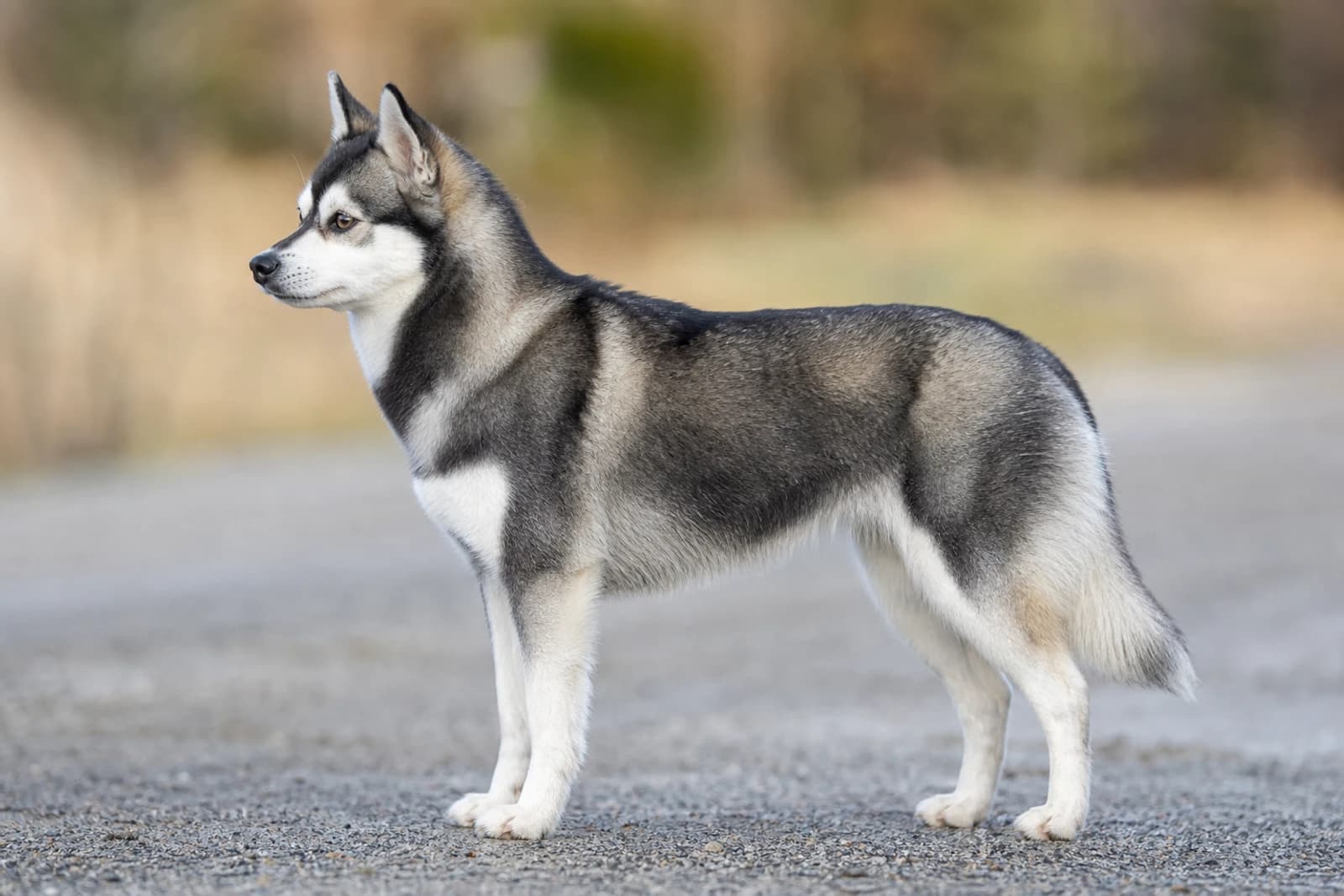
The Alaskan Klee Kai is a charming miniature Husky look-alike developed in the 1970s in Alaska. Alert, intelligent, and energetic, this spitz-type breed is best suited for active owners who can provide firm, consistent training and plenty of exercise. They are loyal and affectionate with their family but may be reserved with strangers. With their high prey drive and vocal nature, they thrive in a home with a securely fenced yard and experienced handling.
At a glance
- Size
- Medium
- Height
- 13 in
- Weight
- 9 lb
- Coat colors
- Black and white, Gray and white, Red and white, Solid white
- Coat type
- Dense double coat
- Group
- Spitz-Type
How much does a Alaskan Klee Kai cost?
Adopt / rescue
$75–$400
Usually includes spay/neuter, first shots, and a microchip.
Buy from a breeder
$700–$2,000
From a reputable, health-testing breeder.
Approximate USD. Prices vary widely by region, breeder, pedigree, age, and coat colour — adopting is the lower-cost and recommended route. Avoid suspiciously cheap “breeders”; they’re often puppy mills.
Estimate the full cost of a Alaskan Klee Kai →Alaskan Klee Kai photos
Views
Front, side, rear and top — the full silhouette.Poses
How the breed sits, lies, moves and plays.Puppy to senior
The breed across its whole life.Expressions
The breed’s range of moods.Close-up details
Eyes, ears, nose, paws, tail and coat.Coat colors
The breed’s recognized colors.Click any photo to enlarge. We show the Alaskan Klee Kai from every angle — three views, poses, life stages, expressions, close-ups, coat and colors.
Appearance & size
The first thing you’ll notice is how much an Alaskan Klee Kai looks like a miniature Siberian Husky, right down to the masked face and curled tail. But this is a distinct breed, purposely smaller and more refined, and once you know what to look for, the differences are clear.
At 13 inches tall and 9 pounds, the dog described here falls into the toy size range—though the breed actually comes in three recognized sizes: toy (up to 13 inches), miniature (13–15 inches), and standard (15–17 inches). Weights vary accordingly, from around 8 pounds up to about 22, but all share the same proportions. The body is slightly longer than tall, with a level topline, a deep chest, and a moderate tuck-up that gives a clean, athletic outline without appearing fragile.
The head is wedge-shaped, with a moderately pointed muzzle that’s shorter than the skull—never snipey. Almond-shaped eyes can be blue, brown, green, or parti-colored, and they contribute to that intense, intelligent stare. Prick ears are set high, medium-sized, and heavily furnished inside, pointing slightly forward. The hallmark of the breed is the facial mask: a symmetrical pattern of dark and light that differs from dog to dog. Some have a full mask with goggles and a bar down the nose; others have an open mask with more white. A white blaze and dark pigment on the nose and eye rims are standard.
From the side, you see the clean neck, well-sprung ribs, and the classic Spitz tail curling over the back. The double coat is plush and medium in length, with a dense, soft undercoat and longer guard hairs that protect against cold. On the neck and chest, the coat forms a distinct ruff, and the backs of the legs and tail carry longer feathering. Common colors are black and white, gray and white, and red and white, always with white on the legs, belly, chest, and tail tip. A solid white coat is possible but rare.
Viewed from the front, the straight forelegs and compact, oval feet give a sturdy base. The chest is moderately broad, and the ruff frames the face dramatically. From the rear, the hindquarters are muscular and parallel, with the tail curling up over the croup—a constant reminder you’re looking at a Spitz breed that moves with a quick, effortless trot.
History & origin
Linda Spurlin didn’t set out to build a new breed from scratch — she just wanted a small, Husky-looking dog that could keep up with her family in Wasilla, Alaska, without the needs of a full-sized sled dog. In the early 1970s, Spurlin and her family began a private breeding program with a straightforward goal: shrink the striking Northern-type appearance down to a companion size. She wasn’t trying to create a pocket working dog; she wanted a manageable, indoors-friendly pet that still turned heads like a miniature Siberian Husky.
The foundation came from her own Alaskan Husky and Siberian Husky lines, which gave the coat patterns, ears, and spunk. To dial down size and add some structural refinement, Spurlin carefully introduced a handful of other spitz-type breeds, most notably the Schipperke and the American Eskimo Dog. The early generations were kept strictly within the family’s Wasilla kennel for more than a decade, with Spurlin documenting every pairing and trait carefully. She originally called them “Klee Kai,” drawing on an Inuit term that loosely translates to “small dog.” The name later evolved into “Alaskan Klee Kai” to anchor the breed geographically and distinguish it from other miniature spitzes.
The breed stayed a deeply personal project until the late 1980s, when Spurlin made the first dogs available to the public under a strict spay/neuter contract — she was determined to protect the lineage and keep irresponsible breeding at bay. The United Kennel Club recognized the Alaskan Klee Kai in 1997, placing it in the Northern Breed group. While still rare, the breed has spread across the U.S. and into several other countries, though it hasn’t yet achieved full American Kennel Club recognition (it remains in the Foundation Stock Service). Today’s breeders continue Spurlin’s emphasis on health, temperament, and that unmistakable mini-Husky look — all from a line that started as one family’s no-fuss experiment in their own backyard.
Temperament & personality
Think of this as a 60-pound sled dog crammed into a 9-pound, 13-inch frame. An Alaskan Klee Kai is alert, quick, and always watching. You won’t get a quiet lap warmer; you’ll get a tiny spitfire who notices every squirrel, delivery truck, and rustling leaf — and feels duty-bound to tell you about it. The vocal repertoire ranges from sharp barks to full-on Husky-style yodels, so shared walls and noise-sensitive neighbors can become an issue fast.
Energy runs high and mental needs run deep. These dogs weren’t bred to idle on a couch. A couple of short leash walks won’t cut it; expect to provide vigorous play sessions, puzzle toys, and training games that stretch their clever brains. Without that outlet, a bored Klee Kai turns into a creative demolition crew — shredded couch corners, dug-up houseplants, and howling concerts are all on the table. Puppies chew to relieve teething pain, and adults keep their jaws strong on hard chews, so a steady supply of appropriate gnawables is non-negotiable.
With their own family they’re deeply bonded, often shadowing one favorite person from room to room. Strangers, however, won’t see that side. Reserve is hardwired, and without tons of early socialization it can tip into fear-based snapping or relentless alarm barking. Expect a dog who circles back rather than runs up for a pat from a new houseguest. This isn’t a gregarious Golden; the Klee Kai’s trust must be earned.
That wariness, plus a strong prey drive, makes supervision around small children and other pets mandatory. Toddlers who grab or startle can provoke a defensive nip, and the family cat may trigger a high-speed chase that doesn’t end well for the cat. Teach kids to give the dog space, especially during meals — interrupting a Klee Kai at its bowl can spark resource guarding. Always let the dog eat in peace.
Training a Klee Kai takes patience and a light touch. This is a strong-willed breed that will check out or push back if you come down heavy-handed. Respectful, consistent engagement wins cooperation; force ruins it. They’re world-class escape artists, too. A secure fenced yard is essential, and many owners add dig-proof barriers for good measure.
Housetraining can be trickier than their size suggests. Even after they seem reliable, some Klee Kai will urine-mark inside, especially in rooms that don’t carry the family’s scent strongly. They may treat a rarely used guest room as fair territory. Clean accidents with an enzyme cleaner to completely erase the scent cue, and immediately reward outdoor pottying with a high-value treat. Punishing indoor mistakes only creates anxiety, which makes marking worse.
Because they’re so watchful, body language matters. A forward lean with stiffened posture often means they’ve locked onto something and are about to sprint or bark. A backward shift, tucked tail, lip licking, or an exaggerated yawn signals discomfort — give them space before they feel cornered. Recognizing these signs keeps tiny spats from escalating.
Early and ongoing socialization isn’t optional; it’s what stands between a sharp, aloof companion and a nerve-wracked dog who reacts to everything. This isn’t a beginner’s breed. If you’re ready for a dog who demands engagement and outthinks you regularly, you’ll get an intensely loyal watchdog with the heart of a sled dog packed into a compact body that can live just about anywhere — as long as you don’t expect quiet.
Good with kids, dogs & other pets
A Klee Kai’s patience with kids hinges on one thing: the kids know it’s a 9-pound dog, not a plush toy. Even the most even-tempered Klee Kai can get hurt or spooked by clumsy handling, so all interactions with young children need an adult watching. Teach kids to sit on the floor and let the dog come to them, and never grab, chase, or carry a dog this small. When those ground rules stick, the Klee Kai’s non-aggressive, people-oriented nature shines. They’ll happily post up next to a calm child for a movie marathon. Skip the supervision, and you’re asking for a nip born of fear, not meanness.
With other dogs, don’t expect a social butterfly. Alaskan Klee Kai are a Spitz-type breed with a reserved streak. They often do fine with another polite dog in the home, especially if raised together from puppyhood. Introduce them gradually — a neutral location, parallel walks, short meet-and-greets — and never force a dog-park mob scene. The breed’s sensitivity means a single bad experience with a pushy dog can build lasting wariness. Early socialization makes a huge difference. Puppies exposed to a variety of friendly, calm dogs before 16 weeks old generally carry that confidence into adulthood. Skip that window, and you may end up with an adult who prefers the company of his own humans and sees strange dogs as a threat, not a playmate.
Around cats and small pets, the picture gets nuanced. Klee Kai share ancestry with dogs originally bred to notice small, scurrying things. If a Klee Kai grows up alongside the family cat, they can coexist peacefully — some will curl up together. But that relationship rests on early, positive exposure. A Klee Kai meeting a cat for the first time as an adult might treat it like a chase trigger. The same goes for pocket pets like hamsters or rabbits; assume natural prey drive until proven otherwise, and separate them when you can’t supervise. The dog’s high companionship need also means it wants to be near its people, not banished to a yard. When left alone for long stretches, a lonely Klee Kai can become anxious, vocal, and less patient with household pets. So this is a dog that fits best in a home where someone is around often and willing to put in the socialization groundwork right from the start.
Trainability & intelligence
Training an Alaskan Klee Kai isn’t a matter of drilling commands into a biddable, eager-to-please dog. These little spitzes are bright — sometimes alarmingly so — but they pair that intelligence with a heavy dose of independence. You earn reliable behavior by building trust and making it worth their while, not by expecting instant compliance.
Klee Kai pick up new concepts fast when lessons are short, game-like, and loaded with positive reinforcement. Treats, a favorite squeaky toy, or just an excited “yes!” work far better than repetition or pressure. If you get drill-sergeant on them, they’ll shut down, avoid you, or offer the canine equivalent of a shrug. They’re sensitive and remember how you made them feel. One harsh correction can undo a week of progress.
Recall is often the biggest headache. Their spitz heritage gives them a mind that wanders — squirrel, leaf, interesting smell — and the belief that they can handle things themselves. Off-leash reliability doesn’t come naturally. You’ll need to start recall training the day you bring your puppy home and reinforce it relentlessly in safe settings, always making sure coming back pays off better than whatever they just found.
Early socialization makes everything else easier. Aim to begin exposing your puppy to different people, sounds, surfaces, and calm dogs before 14 weeks. A poorly socialized Klee Kai can become skittish or reactive toward strangers and novel situations. The same dog who runs the house with supreme confidence can transform into a nervous wreck at the vet’s office if those experiences didn’t happen early and often.
Consistency matters more than intensity. Two five-minute sessions sprinkled through the day will outpace one grueling twenty-minute battle of wills. Let them use their brain for puzzle toys, hide-and-seek games, and scent work — a tired mind curbs the stubborn streak. Above all, train the dog in front of you. Build a bond where you’re a source of good things, and the Klee Kai will try hard to figure out what you’re asking. Punish or bully, and you’ll get exactly the opposite: distance, distrust, and a tiny dog who’s learned to outsmart you.
Exercise & energy needs
An Alaskan Klee Kai may tip the scale at just 9 pounds, but don’t mistake that small body for a low-energy lap dog. This is a spitz through and through — alert, quick, and bred from working sled dog lines. A bored Klee Kai is a noisy, destructive Klee Kai, so meeting their daily needs is non-negotiable.
Plan on a solid 60 minutes of exercise every day, split into at least two sessions. A single walk around the block won’t cut it. These dogs thrive on variety: a fast-paced morning jog, an afternoon session of fetch or flirt pole, and an evening sniffari where they can follow their nose. They often do better with multiple shorter bursts than one marathon outing, which helps keep their mind engaged and prevents overstimulation.
Mental exercise carries just as much weight as physical activity. A puzzle toy stuffed with treats, a round of hide-and-seek indoors, or a 10-minute clicker training session can drain energy in a way that simply running never will. Klee Kais are clever — sometimes too clever — so dangling new challenges in front of them keeps anxiety and nuisance barking at bay.
Good activities for this breed tap into their natural instincts and agility:
- Agility or rally — Their light frame and quick turns make them naturals. Low-impact courses are ideal.
- Scent work — Hide a smelly treat and let them hunt. It’s deeply satisfying for a breed with a sharp nose.
- On-leash running with a bike attachment — For adults only, once joints are closed. Check with your vet.
- Backyard obstacle courses — A few jumps and tunnels set up at home can give them a safe place to zoom.
Avoid high-impact jumps onto hard surfaces, especially during puppyhood. While not a fragile breed, responsible owners keep joint health in mind as they age.
If you’re short on time on a given day, double down on brain games. But chronic under-exercise will almost certainly show up as problem behaviors — chewed baseboards, howling fits, or reactivity on leash. Give them the work they didn’t know they were wired for, and you’ll get a sharp, affectionate companion instead of a tiny whirlwind of frustration.
Grooming & coat care
A good brush makes all the difference with this little spitfire. The Alaskan Klee Kai wears a dense double coat — a soft, insulating undercoat beneath a weather-resistant outer layer — that’s surprisingly low maintenance most of the year, until it isn’t. Twice annually, usually in spring and fall, they “blow” coat in clouds. During those weeks, you’ll brush daily; the rest of the time, two or three sessions a week keep loose fur off the couch and the skin breathing freely.
Brushing tools that actually work
- Metal slicker brush with rounded pins: Your daily driver for lifting dead undercoat and detangling the longer guard hairs without scraping the skin.
- Undercoat rake: Gets deep into the plush underlayer without snagging. Indispensable during shedding season.
- Fine-toothed comb: Cleans up around the ears, britches, and tail where tiny mats can hide.
- For the occasional Klee Kai with a shorter, sleeker coat (yes, they exist), a pig-bristle brush adds a nice gloss and distributes natural oils.
Bathing and the “self-cleaning” coat
That spitz coat repels dirt surprisingly well. Unless your dog has rolled in something unmentionable, a bath every 8–12 weeks is plenty. Overbathing strips the weatherproofing oils. Use a mild dog shampoo, and rinse until the water runs crystal clear — leftover soap irritates skin and makes the undercoat clump. Dry completely, right down to the skin. A damp undercoat is an invitation to hot spots, especially in the thick ruff around the neck.
Trimming and tidy-ups
Skip the clippers. Double-coated breeds shouldn’t be shaved; the undercoat and guard hairs grow on different schedules, and shaving can cause permanent, patchy regrowth. A light scissor trim around the paw pads and a conservative sanitary trim are all most Klee Kai ever need. The tail should stay untouched — that plume is part of the breed’s silhouette.
Nails, ears, teeth
- Nails: Trim every 3–4 weeks. If you hear clicking on the floor, you’re overdue. Small dogs often need more frequent nail care because they wear them down less naturally.
- Ears: Check weekly for wax buildup or redness. A quick wipe with a damp cotton ball (never a Q-tip) keeps tiny, upright ears clean and dry.
- Teeth: Daily brushing with dog toothpaste is gold standard. Even a few times a week cuts down on the periodontal issues small breeds can be prone to.
Seasonal reality check
When a Klee Kai blows coat, the hair comes out in tufts. Accept it. A high-velocity dryer (used outside!) can dramatically speed up the process and save your vacuum. Regular outdoor exercise also supports healthy turnover — a good romp literally shakes loose dead hair and reduces stress-related shedding. That’s a win-win for both of you.
Shedding & allergies
If you want a dog that doesn’t leave hair everywhere, the Alaskan Klee Kai is not your dog. These little spitz-types pack a thick, double coat that sheds year-round, and twice a year they “blow” the entire undercoat in a dramatic seasonal event. For a couple of weeks each spring and fall, you’ll wonder if you could knit another dog from what comes off your floors, furniture, and clothes.
Daily life with the coat: moderate daily shedding, heavy during blowouts. A quick once-over with a slicker brush a few times a week keeps the worst at bay, but during a blowout you’ll be brushing daily — or just surrendering to the fur tumbleweeds. On the plus side, they have almost no doggy odor and drool is practically nonexistent. You won’t wipe slobber off your walls, but you’ll empty a vacuum canister constantly.
The hypoallergenic picture: there is no such thing as a truly hypoallergenic dog, and the Klee Kai is a particularly poor choice for allergy sufferers. All that loose fur carries dander, and the seasonal coat dump floods the air with allergens. If someone in your home has dog allergies, expect a rough time, even with HEPA filters running. Many responsible breeders will tell you upfront: if allergies are a dealbreaker, look elsewhere. For everyone else, invest in a great vacuum, a pile of lint rollers, and a solid grooming routine.
Diet & nutrition
At just 9 pounds, an Alaskan Klee Kai needs surprisingly little food — but a lot of dogs this size end up overweight because owners underestimate how quickly calories add up. A free-fed Klee Kai will almost always eat more than he burns, so portion control is the single most important part of your feeding routine.
Feeding amounts by age and size
- Puppies under 4 months: Four evenly spaced meals a day. Transition gradually from the breeder’s diet; mix in a high-quality small-breed puppy food or lightly cooked and puréed meats, fish, fruits, and vegetables. Around 12 weeks, a raw chicken wing (supervised) doubles as a teething toy.
- 4–6 months: Three meals a day. Growth slows here, so you can start watching body condition more closely.
- Adults 6 months and older: Two meals a day. A moderately active 9-pound adult might eat ½–¾ cup of a premium dry food daily, but always start with the manufacturer’s weight-based guide and adjust. You should easily feel the ribs without pressing hard.
- Seniors: Older dogs often need fewer calories. If appetite lags, try smaller, more frequent meals. Purée meals for dogs with missing teeth or tender mouths. Cut back food gradually as activity drops — weight creeps up fast in the later years.
Keeping a Klee Kai lean
This breed’s playful, alert personality masks how little fuel it really needs. Many Klee Kai are intensely food-motivated and will out-stare you for an extra treat. That cute face can wreck a waistline. Use a puzzle bowl or slow feeder to stop a speed-eater and burn mental energy at mealtime. Count every training treat toward the daily total — one small biscuit can be 5% of a 9-pound dog’s entire day.
Extra pounds stress the tiny joints. Responsible breeders screen for patellar luxation, but any surplus weight makes that condition far more likely to flare up. The leaner your dog, the happier his knees.
What to put in the bowl
Whether you feed a high-quality commercial diet or a balanced homemade plan, a Klee Kai thrives on a meat-centered menu. If you cook for your dog:
- Aim for roughly 60% raw or cooked meat, 20–30% fruits and vegetables, and about 10% extras like eggs, plain yogurt, or whole grains.
- Blend or purée the meal. A dog’s jaw moves only vertically, and they lack salivary digestive enzymes; blending unlocks nutrients that would otherwise pass through whole.
- Gentle grain options: pearl barley adds digestible fiber, and white rice works for a temporarily sensitive stomach.
- Keep canned fish (in water, no added salt), cooked eggs, and pre-cooked batches of grains and vegetables on hand for quick, healthy assemblies.
What to avoid
Never feed directly from the table. Once begging takes hold, it’s brutally hard to break. Any leftovers go in his own bowl. Rich, fatty scraps — especially holiday trimmings — can trigger pancreatitis in a small dog. A single greasy meal isn’t worth an emergency vet visit.
Measure the scoop, watch the scale, and treat food as fuel. Your Klee Kai will stay mobile and fit for a long, active run.
Health & lifespan
Expect a small dog with a long lifespan — most Alaskan Klee Kai live 12 to 16 years, sometimes longer with steady care. That 9-pound frame stays lively well into old age, but don’t mistake small for fragile. A few inherited conditions pop up in the breed, and knowing them early can add years to your dog’s life.
The biggest health conversations start with factor VII deficiency, a blood-clotting quirk that can cause excessive bleeding from minor cuts or surgery. It’s not common, but responsible breeders test for it before breeding. Patellar luxation (trick knees) also appears — you might see a little skip or hitch when the kneecap slips out of place, another thing good breeders screen for and orthopedic exams catch early. You’ll also hear about heart murmurs and autoimmune thyroiditis in some lines, so regular bloodwork during annual vet visits matters.
Small size brings its own watchlist. At 9 pounds, these dogs can develop dental disease faster than larger breeds; daily toothbrushing and yearly cleanings aren’t optional. Puppies can dip into hypoglycemia if they go too long without eating — something to monitor during stressful changes or active growth spurts. And because a half-pound weight gain is a 5% body weight jump, portion control is huge. An overweight Klee Kai stresses those sliding kneecaps and a heart that may already carry mild murmurs.
The double coat that laughs at a Minnesota winter means heat sensitivity in summer. No midday jogs on blacktop; walk early or late and keep indoor temps sensible. On the flip side, don’t assume a thick coat excuses a dog from heartworm prevention — you still need that monthly pill during mosquito season and one month past it. Rabies vaccination is legally required everywhere, and there’s no wiggle room once symptoms show.
These are sharp, people-focused dogs. Isolation breeds anxiety-driven behaviors that eventually show up as physical stress — digestive upsets, overgrooming, or skin flare-ups. Allergies (environmental or food-related) can drive itchy skin and ear infections, so mention any licking or head shaking at your vet visit. An annual wellness exam, plus a blood panel for seniors, catches thyroid dips and liver changes early. Keep the dog lean, the teeth clean, and the vet schedule boringly regular — that’s how you get the full 16 years.
Living environment
A Klee Kai can absolutely live in an apartment, but only if you’re ready for a dog that sounds like a small siren. This breed is naturally vocal. They’ll bark at knocks, passing neighbors, and the odd squirrel that dares to exist. In close quarters, that can wear on you and your building fast. Teach a quiet cue early and stay on top of it.
Yard needs matter less than the fence itself. These nine-pound escape artists can squeeze through gaps you’d swear were impossible and climb surprisingly well. A securely fenced yard—dig-proof too—is ideal, but it’s not a substitute for real exercise. They’re sprinters, not yard loungers. A couple of 20-minute brisk walks plus a hard game of fetch or a flirt-pole session twice a day usually hits the mark. Swap one walk for indoor scent games or a puzzle toy on brutally hot days.
Speaking of weather: a double coat that laughs at a Minnesota winter has zero patience for summer heat. On anything above 75°F, shift walks to early morning or late evening, stick to shade, and watch for panting. This is a dog that’ll happily curl into a ball in the snow but wilt on a midday sidewalk.
Leaving a Klee Kai alone for a standard eight-hour workday is a gamble. They bond fiercely and can develop full-blown separation anxiety, turning that barking up to a level nobody wants. Start crate training and short solo departures the week they come home. If your schedule won’t budge, plan on doggy daycare or a midday drop-in. They don’t need constant entertainment, but they do need to feel their person isn’t gone for a geological era.
Who this breed suits
This dog lands in a compact 9-pound, 13-inch package, but he’s a full-intensity spitz — think a dynamo that outthinks and outlasts unprepared owners. The Alaskan Klee Kai thrives with an active single or couple who prizes his sharp, foxy brain and doesn’t mind a little sass. He’s a top-tier partner if you’re a dedicated runner, hiker, or agility enthusiast who can give him a real 60–90 minutes of hard exercise every day, not a casual stroll. You also need a sense of humor about noise: he’s naturally vocal, alert-barking at the mail carrier and “talking” back when you give a command he’d rather not follow.
First-time owners can succeed only if they genuinely enjoy training as a daily project. This isn’t a biddable breed—he learns fast but bores faster, so you’ll need to keep sessions creative and reward-based. He does best in a home with a tall, securely fenced yard because his spitz brain defaults to “see gap, exploit gap,” and off-leash reliability in unfenced areas is fragile at best.
Seniors often find the Klee Kai’s exercise demands and watchdog intensity more than they want to manage, and families with toddlers or very young kids should think carefully. The breed can be motion-sensitive and easily overwhelmed by grabby hands; a 9-pound dog who nips in self-defense becomes a liabilty. He’s also a devoted pack member who hates being left alone all day. Long work hours away from the house will likely trigger destructive chewing and ear-splitting serenades that strain neighbor relations.
Skip this breed if you’re looking for a placid lap dog, a silent apartment companion, or a dog who greets every stranger with a wag. He needs an owner who appreciates a clever, somewhat aloof, ultra-alert housemate and knows that “mini” refers to size, never to maintenance.
Cost of ownership
A responsibly bred Alaskan Klee Kai from a breeder who screens for patellar luxation, cardiac issues, and Factor VII deficiency typically costs $2,500 to $4,000. Prices go higher for show-potential pups or rare coat colors. You’ll see cheaper listings around $1,000 — those almost always skip health testing, and the vet bills down the road can erase any upfront savings fast.
Once your Klee Kai is home, budget $100–$200 a month for the predictable stuff. Here’s how it breaks down:
- Food: At about 9 pounds, these dogs eat roughly ½ to 1 cup of kibble a day. A quality, high-protein small-breed formula runs $20–$40 monthly. Factor in an extra $10–$15 if you use training treats heavily (you will — they’re clever but independent).
- Grooming: Their double coat sheds year-round and blows heavily twice a year. An undercoat rake and slicker brush are non-negotiable. Many owners spring for a professional deshedding bath and nail trim every 6–8 weeks at $40–$60 a visit; that averages out to $20–$30 a month. You can DIY it, but expect to sink real time into brushing.
- Vet & insurance: Routine care — annual exams, vaccines, heartworm/flea prevention — lands around $300–$500 a year. Dental cleanings add another $300–$700 every year or two. Given the breed’s known orthopaedic quirks and autoimmune conditions, a solid pet insurance policy ($35–$60 monthly) is a smart move, not a luxury. Even a minor escape-artist mishap can turn into a $1,500 ER trip.
Choosing a Alaskan Klee Kai
The Alaskan Klee Kai is rare enough that you'll probably get on a breeder's waiting list instead of driving home with a puppy the same day. That's not a bad thing—it means the breeder plans litters around health and temperament, not demand. You might catch an adult through a breed-specific rescue; these dogs are world-class escape artists and sometimes slip through bad fencing into shelters. But most new owners start with a puppy from a breeder.
Ask to see written proof of these health clearances for both parents before you put down a dime:
- Hip evaluation (OFA or PennHIP)
- Current eye exam from a veterinary ophthalmologist (CERF or OFA Eye)
- Patellar luxation (knee) screening
- Factor VII deficiency test—a clotting disorder that pops up in the breed
- Thyroid panel, since autoimmune thyroiditis can crop up
A breeder who waves off these tests or tells you the line is “naturally healthy” is a red flag you shouldn't ignore. Other deal-breakers: advertising “teacup” Klee Kai, guaranteeing a specific eye color, constantly having litters on the ground, or breeding dogs without any real proof they have stable, workable minds—even a CGC title counts. The 13-inch, 9-pound dog described here falls in the toy variety, but the breed also comes in miniature and standard sizes. No good breeder churns out every size like menu items.
When you visit the litter, don't just fall for the pup with the sharpest mask. Watch for a puppy who greets you with quiet curiosity, recovers fast from a sudden noise, and isn’t glued to the back of the whelping box. A healthy puppy should feel solid and well-muscled under that double coat, not skinny. The breeder should have already started nail trims, ear handling, crate exposure, and potty-pad routines. Meet the mother on-site—expect a reserved, watchful dog, but not one who trembles, snaps, or hides. Outright fear or hair-trigger aggression often has a genetic thread.
Red flags also pop up on the buyer-screening side. A responsible breeder will grill you about your fence height (Klee Kai can climb and squeeze through gaps you’d swear were safe), your plan for daily mental exercise, and whether you're okay with a dog who may never warm up to strangers. If they're asking zero questions about your home, walk. Wait for the litter that checks all the boxes, even if it means sitting out a season. That patience buys you a companion with solid nerves and cleaner health odds for the next dozen-plus years.
Pros & cons
-
Pros
- Packs a full husky personality into a compact, 13-inch, 9-pound frame. You get the expressive face, pricked ears, and curled tail without needing a sled dog’s square footage.
- Deeply loyal and affectionate with their people. They’ll shadow you from room to room and curl up on your lap — often on their own terms — but the bond runs strong.
- Naturally vigilant; they notice everything. Alaskan Klee Kai make excellent little watchdogs who’ll alert you to a delivery truck or a squirrel on the fence without endless, mindless barking (especially with early guidance).
- Sharp and quick to learn when there’s something in it for them. They shine in trick training, puzzle toys, and dog sports like agility or rally — their brains need a job.
- Surprising cleanliness: they groom themselves like cats and carry very little doggy odor. Between blowouts, loose hair is manageable with a weekly once-over.
- Moderate physical needs for a spitz. A couple of 20–30-minute walks plus a romp in a secure yard usually does it, though they’ll happily join longer adventures.
-
Cons
- Escape artists to the bone. They can scale a six-foot fence, dig under barriers, and wriggle through deceptively small gaps. Airtight containment — high fence with dig-proof base — isn’t optional, and off-leash freedom in an unfenced area is asking for a runaway.
- The double coat blows heavily twice a year. During shed season, expect tumbleweeds of undercoat everywhere you look, requiring daily brushing to keep it from taking over your home.
- Reserved with strangers, sometimes to the point of fear-aggression if undersocialized. You’ll need consistent, positive exposure to new people and situations from puppyhood onward — and even then, they may never be the gregarious dog at the barbecue.
- Same-sex aggression can crop up, particularly in intact dogs. In multi-dog households, mismatched personalities can lead to serious scraps, so introductions and management need real care.
- No built-in off switch. A bored Klee Kai will redecorate by chewing drywall, shredding carpet, or dismantling a couch corner. Physical exercise alone won’t cut it; they require daily mental workouts — puzzle toys, hide-and-seek, short training bursts — to stay sane.
- Can become distressed when left alone for long stretches. They’re prone to separation anxiety and do best in homes where someone is around most of the day, or where a gradual alone-time training plan is in place from day one.
Similar breeds & alternatives
If the Klee Kai’s miniature husky look grabbed your attention, but you’re unsure about the wariness, vocal leanings, or sheer rarity, a handful of other spitz-type dogs come close — often with a different trade-off.
- American Eskimo Dog – Available in toy (6–10 lb) and miniature (10–20 lb) sizes, so you can find one that matches the Klee Kai’s 9-lb frame. Eskies are bright white, biddable, and far more openly friendly with strangers. They still have a sharp bark and need mental work, but they’re less likely to treat every visitor as a threat. Grooming is similar: thick double coat, heavy seasonal shedding.
- Shiba Inu – About twice the size at 17–23 lb, with the same alert, independent streak. A Shiba is more cat-like indoors and less prone to the prolonged howling a Klee Kai can dish out, but early socialization is still non-negotiable. The signature Shiba scream and dramatic leash antics replace the Klee Kai’s talkative nature.
- Pomsky (Pomeranian × Husky) – The obvious visual shortcut, but a total wild card. Sizes range from 5 to 30 lb, temperaments from clingy to aloof, and you often get the Husky’s vocal repertoire without the predictability of a purebred. Health and coat vary wildly. Expect a dog that needs just as much exercise and boundary-setting as a Klee Kai, but with less consistency.
- Schipperke – All black, 10–16 lb, and built for mischief. They share the Klee Kai’s sharp-eyed watchfulness and reserved nature around strangers, but they lack the husky mask and coat markings. Schipperkes are tireless, confident, and can be scrappy with other dogs — a consideration if you’re hoping for a more social pet.
The Siberian Husky and Alaskan Malamute are obvious spitz cousins, but their 35–85 lb builds make them a complete lifestyle leap, not a simple alternative. None of these breeds mirrors the Klee Kai’s exact combination of tiny size, distinct facial mask, and intense wariness, so the right match often means trading one strong trait for another — a more outgoing temperament, a lap dog that stays quieter, or a little dog that’s simply easier to find.
Fun facts
- Developed in the 1970s by Linda Spurlin to be a miniature Husky companion.
- Their name means 'little dog' in the Inuit language.
- They come in three sizes: Toy, Miniature, and Standard.
- Extremely clean and often groom themselves like cats.
Frequently asked questions
- Are Alaskan Klee Kai good with children?
- They can be good with older, respectful children when properly socialized, but their reserved and alert nature may make them cautious around young kids. Supervision is recommended, as their high energy and sensitivity can lead to nipping if they feel overwhelmed. Early exposure to gentle handling helps build positive relationships.
- Do Alaskan Klee Kai shed a lot?
- Yes, they are heavy shedders with a dense double coat that sheds year-round and blows heavily twice a year. Daily brushing during shedding seasons helps manage loose fur, while weekly brushing suffices otherwise. Expect noticeable hair around the home without consistent grooming.
- How much exercise does an Alaskan Klee Kai need?
- They need at least 60–90 minutes of daily exercise, combining physical activities like brisk walks or runs with mental challenges such as puzzle toys or training. Their high energy level can lead to boredom and destructive behavior if unmet. Off-leash play in securely fenced areas is ideal due to their prey drive.
- What are the grooming requirements for an Alaskan Klee Kai?
- Grooming is moderate: brush their double coat 2–3 times per week, increasing to daily during shedding seasons. They are naturally clean and only need occasional baths, plus routine nail trims, ear cleaning, and dental care. Their coat repels dirt, so baths are rarely necessary.
- Can Alaskan Klee Kai live in an apartment?
- They can adapt to apartment living if given sufficient daily exercise and mental stimulation. However, their alert, vocal nature may lead to excessive barking, which can disturb neighbors. Early training to curb barking and providing quiet activities during alone time are essential.
- Are Alaskan Klee Kai good for first-time dog owners?
- They can be challenging for novices due to their intelligence, independence, and need for consistent, positive training. Their reserved temperament requires thorough socialization from a young age. First-time owners may find them manageable if committed to learning about the breed’s unique needs.
Tools & calculators for Alaskan Klee Kai owners
Quick estimates tailored to Alaskan Klee Kais — pre-filled with this breed’s size where it matters.
Articles & stories about the Alaskan Klee Kai
Sources & standards
This profile follows recognized breed standards from the American Kennel Club (AKC) and the Fédération Cynologique Internationale (FCI), along with established veterinary and breed-club guidance. These describe general breed tendencies — every dog is an individual.
Owner stories
Have a Alaskan Klee Kai? Share your experience — grooming tips, personality quirks, anything goes.