

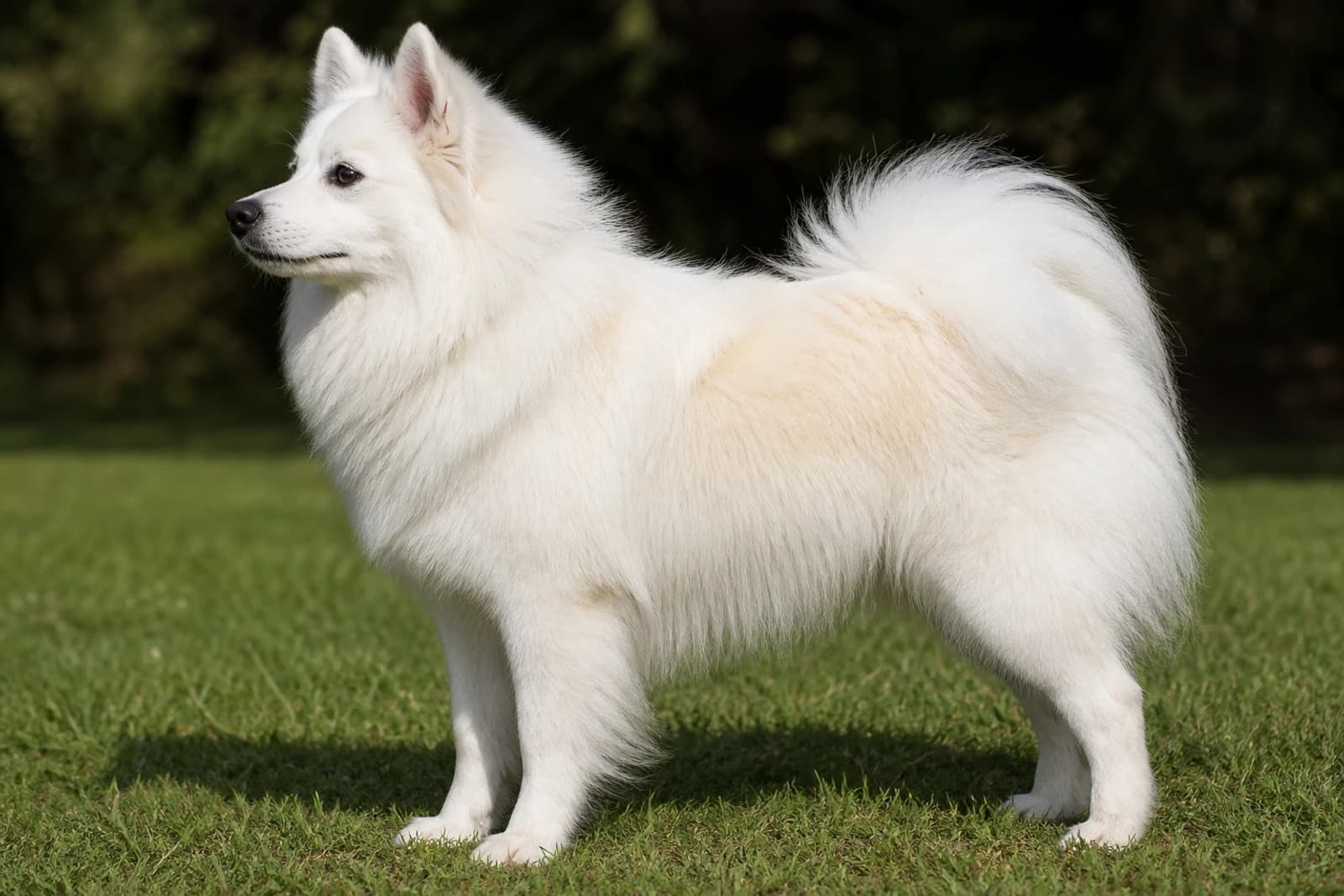
The American Eskimo Dog is a bright, playful, and affectionate companion ideal for active individuals or families. Despite its name, this breed originated from German Spitz dogs and became popular in the US. With a striking white double coat and an alert, friendly nature, they excel in dog sports, obedience, and as watchdogs. They are highly trainable and thrive on human interaction, though they require regular exercise and grooming. Their vocal tendencies make them excellent alarm dogs, but they may not be suitable for noise-sensitive environments. Best for owners who can provide mental stimulation and companionship.
At a glance
- Size
- Medium
- Height
- 9–12 in
- Weight
- 7–11 lb
- Life span
- 12–13 years
- Coat colors
- White, White with Biscuit Cream
- Coat type
- Thick double coat, stand-off
How much does a American Eskimo Dog cost?
Adopt / rescue
$75–$400
Usually includes spay/neuter, first shots, and a microchip.
Buy from a breeder
$700–$2,000
From a reputable, health-testing breeder.
Approximate USD. Prices vary widely by region, breeder, pedigree, age, and coat colour — adopting is the lower-cost and recommended route. Avoid suspiciously cheap “breeders”; they’re often puppy mills.
Estimate the full cost of a American Eskimo Dog →American Eskimo Dog photos
Views
Front, side, rear and top — the full silhouette.Poses
How the breed sits, lies, moves and plays.Puppy to senior
The breed across its whole life.Expressions
The breed’s range of moods.Close-up details
Eyes, ears, nose, paws, tail and coat.Coat colors
The breed’s recognized colors.Click any photo to enlarge. We show the American Eskimo Dog from every angle — three views, poses, life stages, expressions, close-ups, coat and colors.
Appearance & size
You can’t mistake an American Eskimo Dog for anything else — a cloud of white fur with a sharp, foxy face and a grin that looks like it’s in on the joke. The breed actually comes in three size divisions (toy, miniature, and standard), so the numbers you’ll meet at the park vary. The figures here cover the smallest: 9 to 12 inches at the shoulder and 7 to 11 pounds, putting them squarely in the lap-dog weight class but with a Spitz build that feels more substantial than a typical toy.
Build and stance
An Eskie stands square and balanced — the distance from the point of the shoulder to the buttock equals the height at the withers. That boxy silhouette makes the dog look ready to spring, not fragile. The chest is deep, reaching to the elbows, and the ribs are well-sprung without being barrel-shaped. A level topline runs from the withers to a slight tuck-up at the loins, giving a sleek side profile that still reads as sturdy, not racy. From the rear you see the trademark plume of a tail curled high over the back, draped slightly or laid in a full loop, and broad, well-furnished hindquarters with tidy “breeches” of longer hair.
Head and expression
Everything about the head says alert. The skull is a soft wedge, and the muzzle is about as long as the skull — not snipy, not blocky. Ears are set high, triangular, and carried fully erect; they catch motion before you do. Dark, almond-shaped eyes sit slightly oblique, rimmed in black, and together with the black nose and tight black lips they give the coat its crisp contrast. The whole face often shows a slight upturn at the corners of the mouth, the “Eskie smile” that breeders love.
Coat and color
The coat is double and meant to stand off the body — never flat or silky. A harsh, straight outer coat pairs with a dense, soft undercoat that pushes the guard hairs outward, creating that puffball look. The ruff around the neck is especially thick, and the tail is heavily plumed. Pure white is the ideal, but a little biscuit cream on the ears or along the back is allowed and doesn’t detract from the crisp, snowy picture. Any other color or pattern is a fault.
The whole package — compact, square, and cloaked in brilliant white — gives the American Eskimo Dog a self-possessed, almost theatrical presence. That tail, always in motion, balances the forward-set ears and makes the dog look equally sharp coming and going.
History & origin
The dog you know as the American Eskimo Dog didn’t come from the Arctic, and it has zero sled-pulling background. Its real story starts in 19th‑century Europe with the white German Spitz — a small, thick‑coated companion and watch dog that German immigrants brought to the United States. Those early Spitz dogs were exactly what we’d recognize today: sharp, lively, and dressed in a stand‑off white double coat.
From German Spitz to “American Eskimo”
After World War I broke out, anti‑German sentiment ran deep in America. Anything with a German label was rebranded, and the breed was no exception. In 1917, the German Spitz officially became the American Eskimo Dog — a name that borrowed a northern mystique but had nothing to do with Inuit peoples or Eskimo dog breeds. The switch stuck, and the new name helped the breed flourish without political baggage.
The Circus Dog Era
What really put the American Eskimo Dog on the map was the traveling circus. From the 1920s through the mid‑20th century, these dogs were a staple of acts like the famous Barnum & Bailey shows. They weren’t just a pretty white face; they could walk a tightrope, ride a pony, or weave through an obstacle course with a trainer who needed a dog that was fast, fearless, and eager to show off. That tight bond with handlers and an almost theatrical intelligence are still baked into the breed today — you’ll see it when one teaches itself a new trick or gives you a perfect head‑tilt on cue.
Three Sizes, One Breed
Early breeders in America intentionally developed the Eskie in three distinct size categories, all from the same root stock: Toy (9–12 inches, 7–11 pounds), Miniature (12–15 inches, 10–20 pounds), and Standard (15–19 inches and up to about 35 pounds). The smallest, measured at 9–12 inches and 7–11 pounds, is the one most people picture first — portable, but with the same big‑dog confidence as its larger relatives.
Late‑blooming Recognition
The United Kennel Club recognized the American Eskimo Dog back in 1913, but the American Kennel Club waited until 1995. That long gap means the breed spent decades as a working show dog and cherished house pet before the purebred fancy fully caught up. Responsible breeders now screen for issues that can crop up in a smaller spitz, including luxating patellas and progressive retinal atrophy, so you’ll find health‑tested parents behind well‑bred toy lines.
The dog today is still a companion through and through, with an alert bark that makes it a first‑class watchdog in a compact package. Its life span of 12–13 years gives you over a decade of that quick‑witted, often clownish presence that the circus crowds first fell for more than a hundred years ago.
Temperament & personality
This little white fluffball is a sharp, watchful companion who bonds hard with her people. Bred down from larger spitz-type farm dogs, the American Eskimo Dog carries a lot of brain and alertness in that 7–11 pound body. Expect a dog who notices every squirrel, delivery truck, and odd sound before you do — and who feels it’s her job to let you know. Without early guidance, that vigilance can tip into nonstop barking, so teach a “quiet” cue early and give her plenty of mental work.
Energy runs surprisingly high for a dog who fits in a tote bag. A brisk 30–45 minute daily walk plus some indoor puzzle games or trick training keeps her satisfied. When she’s bored or lonely, she’ll invent her own entertainment — often destructive chewing. Puppies gnaw to ease teething pain and explore, while adults chew to keep their jaws strong and teeth clean. Provide a rotation of sturdy chews, and if she targets the wrong object, a homemade citrus spray (boiled citrus peels in water) or a diluted vinegar spray can discourage the habit without harsh corrections.
Affection flows freely with her own family. She’ll shadow you from room to room, curl on your lap, and thrive on physical closeness — but that intensity means she can develop separation anxiety if routinely left alone for hours. You might come home to shredded pillows or anxious marking indoors. Eskies have a powerful scent memory: once urine odor sets in a spot, it signals “toilet” again and again. Clean accidents with an enzyme-based cleaner to break the cue, and reward outdoor potty breaks immediately with a treat. Never punish indoor accidents after the fact; it only teaches her to hide from you.
Her independent streak surprises some first-time owners. This isn’t a push-button obedience robot. She questions you, and force just makes her dig in. Respectful, consistent training with food rewards or play will get you much further — and she’ll learn fast once she trusts that you’re on her side. Socialization matters enormously. An under-socialized Eskie can become fearful, snappy, or reactive with strangers and other dogs. Introduce her to a wide variety of people, gentle handling, and new environments before 16 weeks, and maintain those outings throughout her 12–13 year life.
Reading her body language will save you both a lot of stress. A relaxed, wiggly body with soft eyes means she’s happy. A stiff, forward-leaning posture paired with a hard stare often signals rising tension or an intent to challenge — step in before it escalates. Look for calming signals like lip licking, yawning, or turning her head away when she’s uncomfortable; they’re her way of saying “back off” politely. Tail carriage only makes sense as part of the whole picture: a high, curled tail can mean confidence or over-arousal depending on what’s happening around her.
With kids and other pets, her small size makes her vulnerable. Teach children never to interrupt her while she’s eating or chewing a prized item — food guarding can flare if she’s startled. Supervise interactions with larger dogs, and pair her with respectful canine housemates. She can live happily with another dog or even a cat if introduced calmly, but her chase impulse may kick in with small critters outside.
And one quirk that might baffle you: on a walk she may suddenly drop a shoulder and roll in something utterly foul. This isn’t a hygiene accident — it’s a deep-rooted spitz behavior, possibly a leftover from scavenger ancestors who used strong odors to mask their own scent or to “advertise” a find to the pack. You’ll want to keep a towel and a sense of humor handy.
Good with kids, dogs & other pets
With kids
The American Eskimo Dog has a patient, non-aggressive temperament that makes them a natural fit for families with respectful children. They’re playful and quick to learn tricks, so older kids who can throw a ball or work on a new command will find a willing partner. But at just 7–11 pounds, these are delicate dogs. A clumsy hug or a tumble from a toddler can cause real injury, so supervision is non-negotiable in homes with young children. Their sensitivity also means they can shut down in chaotic, shriek-filled environments. Create a quiet retreat—a crate or a gated-off corner—where your Eskie can step away when the noise gets to be too much. Teach kids to read the dog’s body language and back off if he walks away or yawns repeatedly.
With other dogs
Eskies generally do well with other dogs when they’ve been given the right start. They’re not dog-aggressive by nature, but their spitz alertness can translate into bossy barking or a bit of posturing, especially with much larger breeds. Early puppy classes and ongoing, low-stress playdates go a long way toward teaching them how to read other dogs’ signals without overreacting. A poorly socialized adult may become reactive or fearful, and in those cases, forcing meet-and-greets at the dog park only backfires—stress spikes and a fight can break out. If you’re adopting an older dog who’s comfortable just being with you, it’s okay to skip the off-leash chaos and stick to leashed walks with trusted canine friends.
With cats and small pets
Many American Eskimo Dogs live peacefully with cats, especially when they’ve grown up together. Introduce them gradually with baby gates and scent swapping before face-to-face meetings. The bigger wild card is small caged animals: hamsters, rabbits, birds. That spitz prey drive can flip on at any time, and even a well-fed Eskie may fixate, chase, or paw at a small creature that moves fast. Some individuals have zero interest, but you can’t bet on it. Keep cages securely latched and out of lunging range. Never leave the dog alone in a room with a loose small pet, no matter how “fine” things have been.
The socialization piece
The window for building a confident, easygoing adult slams mostly shut around 12–16 weeks. That’s when you need to gently expose your pup to a wide variety of people, calm dogs, different surfaces, and everyday sounds—doorbells, garbage trucks, kids laughing. Miss that period and you’re often playing catch-up. Undersocialized Eskies tend to become timid, spook at loud noises, or panic at the vet’s office. Even after the critical months, patient counter-conditioning can help an adult feel safer, but it’s slower and never a guarantee of an outgoing dog. If you bring home an older rescue who never got early handling, don’t push him into scary situations; let him set the pace.
Keep in mind that this is a breed that bonds hard and hates being left alone. Long hours of isolation can unravel all your socialization work, turning a friendly dog into a barking, shadow-chasing mess. If your household is gone 10 hours a day, an Eskie is not going to cope well without a midday break, a second dog, or both.
Trainability & intelligence
The American Eskimo Dog picks up new commands with a speed that will make you smile — and then occasionally decides to rewrite the script just to see what happens. That combination of sharp intelligence and independent thinking is classic spitz, and it means training is less about teaching the basics than about keeping a clever mind engaged. You’re not breaking through stubbornness; you’re negotiating with a dog that already figured out what you want and is wondering if there’s something better in it for him.
Reward-based training is non-negotiable here. An Eskie’s sensitivity runs deep, and a harsh word or frustrated tone can shut down trust faster than you’d believe. Use high-value treats, a favorite tug toy, or an animated “yes!” — the dog feeds on your enthusiasm. Once he understands that working with you leads to good things, he’ll start offering behaviors you haven’t even asked for yet. That eagerness is gold, but it also means repetitive drilling bores him silly. Short, upbeat sessions that end on a win keep him invested.
Recall can be a sticking point because that alert, watchful nature makes the world endlessly interesting outside. Start leash-free practice in a fenced area and reward generously every single time he comes back. Build the habit before you test it in distraction-heavy places. If he learns that coming when called means the fun stops (like being leashed and taken home), he’ll start calculating the odds. Keep the reward unpredictable and high — a jackpot of chicken, a burst of play — so returning to you is always the best option.
Socialization is as critical as obedience. Expose an Eskie puppy to different people, friendly dogs, weird surfaces, and everyday sounds well before 16 weeks old — and continue that exposure throughout his first year. The breed’s natural wariness can tip into fear-based reactivity, especially toward strangers or sudden noises, if he isn’t shown early that new things are safe and sometimes even fun. Calm, gradual introductions build a dog who thinks before reacting. Pushing too fast or forcing interactions does the opposite.
This is a dog that learns every rule of the house, including the ones you didn’t mean to teach. Consistency matters — if you let him on the couch once, expect him to claim it forever. Channel his smarts into puzzle toys, trick training, or canine sports like agility. A bored Eskie will invent his own entertainment, and you probably won’t like the headline.
Exercise & energy needs
American Eskimo Dogs run on a clever, busy-brained kind of energy — not the gallop-all-day, blow-off-steam type, but the “what’s next and can I learn it?” kind. Plan on 30 to 45 minutes of physical exercise every day, broken into at least two sessions. One long walk isn’t nearly as satisfying as a couple of 15- to 20-minute outings paired with mental work.
A brisk sniff walk gives their legs and nose a job, but real fulfillment comes when you mix in brain games. These little performers practically invented trick training. Work on a new behavior — spin, weave through your legs, put your toys away — in short, upbeat bursts. Treat-dispensing puzzle toys and scent games (hide a favorite toy or a smelly treat under a flipped-over bowl) will tire out their mind faster than a third lap around the block.
- Good bets for physical activity: fetch in a fenced yard, indoor hide-and-seek, a flirt pole session on softer ground, or a romp in snow (their double coat loves cold weather).
- Avoid in summer: mid-day pavement walks and prolonged fetching on hot days; Eskies overheat quickly. Move exercise to early morning or after sunset, and always offer shade and water breaks.
- Joint sense: keep repetitive jumping off furniture and high-impact leaps to a minimum — small joints don’t need the pounding.
For dogs that want a job, agility with jumps set low, rally, obedience, and nose work are all great fits. A bored Eskie left to his own devices often becomes a barking, fence-patrolling mess, so the real preventive medicine is mixing movement with mental challenges. Two or three distinct activity bursts daily, blending a walk with a puzzle or a training game, keep an Eskie content — and your home a whole lot quieter.
Grooming & coat care
That cloud-white double coat is the Eskie’s glory — and the reason a brush lives permanently on your coffee table. This is a dense double coat: a thick, insulating undercoat beneath a long, straight outer coat that stands off the body. It sheds. A lot. And twice a year, during seasonal blowouts, you’ll wonder if you’re raising a dog or a cotton field. The upside? A consistent routine keeps it surprisingly fresh and mat-free.
The Weekly Brush-Out
- 3–4 times a week is your baseline. Use a metal slicker brush with rounded pins to pull loose undercoat and surface debris without scraping the skin. Finish with a pin brush or a wide-tooth comb to fluff the stand-off coat and catch any small tangles behind the ears, under the legs, and around the ruff.
- During the heavy spring and fall sheds, bump that to daily brushing. An undercoat rake becomes your best friend: it reaches deep without cutting the top coat and scoops out clouds of dead fluff before it ends up on your black pants.
- Check for mats especially in the feathering on the tail and britches. Early mats can be teased out with a comb; ignoring them turns into a tight, painful felt that has to be cut out with scissors — and then you’ll have a divot in that perfect silhouette.
Baths and Coat Trims
- Bathe an Eskie every 6–8 weeks, or when he’s visibly grimy. A gentle whitening shampoo brightens the coat, but over-bathing strips natural oils and can make the skin dry and flaky. Always rinse until the water runs clear — leftover shampoo turns to itch.
- No body clipping. The double coat acts as insulation from heat and cold; shaving it ruins that function and invites sunburn. Trim the hair between the paw pads to improve traction on slick floors, and a neat sanitary clip under the tail keeps things clean. That’s it.
Ears, Nails, and Teeth
- Tiny, upright ears trap less moisture than floppy ones, but they still collect wax and debris. Lift the flap weekly, sniff for any funky odor, and wipe gently with a vet-approved ear cleaner and a cotton ball — never a Q-tip in the canal.
- Nails grow fast on 7–11 pound dogs that often pad around indoors. Aim for a trim every 3–4 weeks — you shouldn’t hear click-click on hard floors. If you start handling paws when he’s a puppy, this becomes a 60-second non-event.
- Brush those tight little teeth 3 times a week to hold off tartar and bad breath, especially as this breed often lives to a healthy 12–13 years. Daily is even better.
One honest caveat: Skip a few brushing sessions during a shed cycle, and you’ll be untangling mats for 20 minutes while your dog sighs dramatically. Regular handling catches mats early and also lets you spot the occasional hot spot or dry patch before it gets out of hand. Stick with the schedule, and that brilliant white coat stays a showpiece, not a chore.
Shedding & allergies
You’re going to find white hair on everything you own. The American Eskimo Dog sports a dense, stand-off double coat that sheds constantly — you’ll see a steady drizzle of fur year-round, then a full-blown snowstorm twice a year when the undercoat blows out.
What to expect
- Daily shedding: Moderate but noticeable. Light-colored hairs drift onto dark furniture, clothes, and floors.
- Seasonal blowouts: Spring and fall bring heavy tufting. You’ll pull cotton-ball clumps from the ruff, pants, and tail for several weeks.
- Drool: Practically zero. This breed is dry-mouthed, which keeps saliva off walls and couches.
The coat reality
The double-layer coat — a soft, thick undercoat topped by a longer, straight outer coat — acts like a dirt-shedding shield, but it also traps dead hair. Without regular brushing, that hair mats fast and then dumps in tumbleweed-sized fluff balls. A thorough slicker-brush session two to three times a week cuts down on airborne fur. During blowout season, daily line brushing with an undercoat rake becomes non-negotiable.
The allergy picture
No dog is truly hypoallergenic, and the Eskie is no exception. The good news: low drool means less allergen-laden saliva spread around the house. The bad news: all that shed fur carries dander, which is the real trigger for most people. If allergies are a concern, spend time in a home with adult Eskies before bringing a puppy home. Frequent vacuuming, HEPA filters, and keeping the dog off your bed will do more than any “hypoallergenic” label ever could.
Diet & nutrition
Your American Eskimo Dog may bounce around like a six-pound firecracker, but those 7–11 pounds pile on extra weight in a hurry if portions aren’t kept in check. A moderately active adult Eskie needs roughly 200–300 calories a day, split between two meals. Use a kitchen scale for kibble or a measuring cup you trust — eyeballing it almost always leads to overfeeding in a dog this small. If your dog runs agility, hikes with you, or spends the afternoon herding toys, bump the top end a little; if she’s more of a sunbeam napper, lean toward the lower number.
Puppy meals. From 8 weeks to 4 months, serve four evenly spaced meals. At 4 months, drop to three meals, and by 6 months settle into the adult two-meal rhythm. Start with a high-quality commercial puppy formula or lightly cooked, puréed meats, fish, fruits, and veggies; blend or finely chop everything — those tiny jaws move vertically and don’t have salivary digestive enzymes, so a smoother texture aids nutrient absorption. Around 12 weeks, supervised raw chicken wings can be introduced if you’re comfortable with raw feeding, but never leave a pup alone with bones.
What to put in the bowl. A practical target: about 60% meat (raw or cooked), 20–30% fruits and vegetables, and 10% extras like eggs, grains, or plain yogurt. Canned fish, steamed broccoli, cooked carrots, barley, or white rice all work as quick meal builders. Unsalted veggie-cooking water makes a decent broth base. Avoid pouring the holiday ham drippings over his food — rich, fatty extras can trigger pancreatitis in small dogs, and Eskies aren’t shy about begging for them. Never feed directly from the table; if you save safe leftovers, put them in his own bowl well away from the dinner table to avoid cementing a begging habit that’s a nightmare to undo.
Senior adjustments. As your Eskie’s sprint turns into a stroll, weight creeps up. Switch to smaller, more frequent meals if that fits her routine, and weigh her monthly. Reduce food gradually as activity drops — there’s no sound reason to slash protein just because a dog is older, but you do need to pull back total calories.
Keep him lean, save the knees. American Eskimo Dogs are prone to luxating patellas (slipping kneecaps), and excess weight amplifies every wobble. A lean body condition from puppyhood through old age is your cheapest joint insurance. If your Eskie inhales meals, a puzzle bowl or snuffle mat slows him down while working his brain — a double win for a breed that loves a mental challenge.
Health & lifespan
An American Eskimo Dog typically shares your life for 12 to 13 years — a solid stretch that rewards consistent, low-fuss care. These aren’t fragile dogs, but their 7- to 11-pound frame and small facial structure mean you’ll spend time managing a handful of predictable health quirks. Responsible breeders get ahead of most of them with genetic screening, and your vet keeps the rest in check.
Here’s what tends to crop up in the breed and what good breeders test for:
- Patellar luxation: a kneecap that slides out of place. You might see a quick hop-skip or a leg kicked sideways. Mild cases live with it; severe ones need surgery. Ask a breeder if the parents’ knees were certified clear.
- Dental crowding: those short muzzles pack a full set of teeth into a tiny mouth. Without daily brushing and annual cleanings, tartar builds fast, leading to tooth loss and infections that can spread.
- Progressive retinal atrophy (PRA) and cataracts: PRA causes gradual vision loss with no cure, while cataracts can cloud the lens early. An eye exam by a veterinary ophthalmologist on both sire and dam is the standard you want to see.
- Hypoglycemia: low blood sugar is a real threat in pups under four months of age. Frequent small meals and knowing the signs (lethargy, wobbliness) keep a scary crash from becoming an emergency.
- Tracheal collapse: that goose-honk cough when a dog pulls against a collar signals a windpipe that flattens under pressure. Switching to a harness stops it mechanically, but the predisposition remains.
Even an extra half-pound on a 10-pound dog strains those wobbly kneecaps. Measure food, ignore the “starving” eyes, and remember that treats are calories, not love.
Routine care isn’t glamorous, but it’s where you win the longevity game. Monthlies heartworm prevention during mosquito season — and one month after — shuts down a parasite that clogs the heart and lungs. Rabies vaccination is a legal requirement with zero treatment options once symptoms show, so don’t skip it. Annual wellness exams, or twice-yearly for seniors, help you catch liver shifts, heart murmurs, or subtle behavior changes (reduced activity, picky eating) before they spiral.
Early socialization doubles as health care. An Eskie exposed to gentle handling and positive vet visits as a pup grows into a relaxed adult — less likely to stress-bark or wind itself into an anxiety spiral that wears down the immune system.
When you pick an American Eskimo Dog, you’re also picking the breeder’s homework. Walk through the health clearances they offer on parents, and schedule that first vet check within days of coming home. Those early conversations map out the road for the next decade-plus.
Living environment
American Eskimo Dogs pack a lot of personality into their 7 to 11 pounds. These little spitzen aren’t delicate couch potatoes — they’re clever, watchful, and loud. A shared-wall apartment can work, but only if you put serious effort into redirecting their natural alarm barking. Otherwise, every knock, passing car, or neighbor in the hallway becomes an event. A house with a bit of distance between homes is more forgiving.
Physical needs are modest but non-negotiable. A couple of brisk 15-minute walks and a few scattered play sessions easily fill their tank. What you do between those walks matters more: puzzle toys, scent games, and trick training burn off the mental energy that otherwise fuels nonstop yapping. A securely fenced yard is a nice extra for zoomies and sniffing, but it’s not a must — these dogs are small enough to get plenty of exercise indoors if you’re creative.
Their thick double coat makes them surprisingly cold-tolerant, so winter walks are no problem. Heat is another story. On warm days, stick to early morning or evening outings, and keep indoor play sessions short in air-conditioned comfort.
The biggest environmental hurdle is being left alone. Eskies form tight bonds and can slide into separation anxiety if isolated for long stretches. A household where someone is around much of the day suits them best. If you need to leave, build up alone time gradually and leave behind frozen food puzzles or long-lasting chews. Even with training, a standard all-day work schedule often clashes with this breed’s social wiring. If you’re gone eight-plus hours without a midday break, expect stressed-out barking that your neighbors won’t appreciate — and a miserable dog.
Who this breed suits
If you picture a small, fluffy white dog snoozing on your lap all day, an Eskie will quickly prove you wrong. This is a bright, busy companion who treats every day like a puzzle to solve and a show to run. You’ll thrive together if you want a dog that’s as eager to learn tricks and chase a flirt pole as it is to curl up afterward with a full brain, not just a full belly.
- Active singles and couples who rent or live in apartments. At 7–11 pounds, Eskies fit under most weight restrictions. They’re clean, portable, and adapt well to indoor life — provided you honor their need to move. A quick potty break won’t cut it. Plan on 30–45 minutes of real exercise (brisk walks, indoor fetch, or a fenced yard sprint) plus a training session that makes them think.
- First-time owners who are ready to be trainers. Eskies are whip-smart and eager to work, which makes them forgiving for a newbie who commits to positive, consistent training from day one. They’ll ring a bell to go out, nail a dozen cues, and keep you laughing. The catch: that same cleverness backfires if you skimp on boundaries. Left to invent their own fun, they’ll bark at every leaf and redecorate with toilet paper.
- Families with school-age kids or teens. The breed’s alert, playful nature can be a great match for children who understand that a 9–12-inch dog isn’t a stuffed toy. Rough handling can injure a small dog, so households with toddlers need rigid supervision. Older kids who can help with trick training or agility often become an Eskie’s favorite people.
- Seniors looking for a lively sidekick. An Eskie’s size makes them physically manageable, and their 12–13-year lifespan offers long-term companionship. They can keep a retired person moving with short, purposeful walks and endless hide-and-seek games indoors. Just be honest about your tolerance for noise — these are vigilant watchdogs who announce every delivery truck with conviction.
Think twice if…
- You want a quiet, unobtrusive pet. Eskies are vocal. Without early training and plenty of mental outlets, barking can become a full-time hobby.
- You’re gone 9+ hours a day. Separation anxiety crops up fast in a breed so people-oriented. A bored, lonely Eskie may bark nonstop or chew through drywall.
- You dislike white tumbleweeds. The thick double coat sheds constantly and blows heavily a couple times a year. Even with weekly brushing, you’ll find fur on your dark pants and sofa.
- You just want a calm lap warmer. Eskies have a startling amount of engine in a tiny frame. A dog who’s ignored or under-exercised will turn that drive into neurotic pacing, spinning, or snapping at passing ankles.
An Eskie doesn’t settle for being an accessory. Come to the relationship ready to teach, play, and gently manage a big personality in a compact body, and you’ll get a deeply loyal housemate who’s up for anything you dream up.
Cost of ownership
The first number to wrap your head around is the purchase price. From a responsible breeder who screens for patellar luxation, hip dysplasia, and eye issues, an American Eskimo puppy runs $800–$1,500, with show-quality pups sometimes hitting $2,000. If you see a listing for half that, you’re almost certainly skipping health testing, which sets you up for expensive orthopedic or eye problems later. You can also check breed-specific rescues, where adoption fees usually land in the $200–$400 range—but availability is sparse and you may wait months.
Once the dog is home, monthly costs settle into a predictable rhythm. A 7–11 lb dog eats about a half to one cup of kibble per day. A quality 5-lb bag that runs $25–$40 will last six to eight weeks, so food clocks in at roughly $15–$25 a month. Don’t skimp here: poor diet often triggers the tear staining that mars that white coat.
Grooming is a real line item. That thick double coat sheds heavily twice a year and needs brushing two or three times a week. Budget $45–$70 every 6–8 weeks for a professional bath and tidy-up, plus the upfront cost of a good slicker brush and metal comb. If you learn to do it yourself, you’ll save the pro fees but still spend on shampoo, ear cleaner, and nail trims.
Vet care averages $25–$40 per month when you spread out the annual exam, vaccines, heartworm prevention, and flea/tick control. Eskies often need dental cleanings—their small mouths crowd teeth—so stash an extra $300–$800 every two to three years. Pet insurance typically adds $25–$40 a month and can soften the blow if a luxating patella or a sudden illness shows up. Tack on training classes ($150–$300 for a group course), plus the recurring purchases of chew toys, puzzle feeders, a crate, and replacement beds (this breed loves to dig and fluff), and you’re in the $20–$50 monthly range for “stuff.”
Add it all up, and a realistic monthly budget lands between $100 and $200, not counting the initial dog cost or a true emergency. Rescue or not, the bigger commitment is the steady grooming, dental care, and mental enrichment that keep a smart, busy Eskie out of trouble—and out of the vet’s office.
Choosing a American Eskimo Dog
The choice usually comes down to a responsible breeder who health-tests and socializes deliberately, or an adult dog from a rescue that can tell you exactly what you’re getting. Both paths work; what matters is dodging the corner-cutters.
Start with the health clearances every Eskie parent dog needs. This is a small 7–11 lb dog with a 12- to 13-year lifespan, and a few inherited problems show up when corners are cut. Ask for documented OFA (Orthopedic Foundation for Animals) or PennHIP evaluations for patellar luxation, and an eye exam from a veterinary ophthalmologist within the last year. Hips are less often an issue in the smallest Eskies, but if you’re looking at a dog on the larger end of the standard (say, a 15–19-inch Eskie), request hip clearance too. A breeder who waves these off with “my vet checked them” isn’t doing enough. You want the paperwork.
It’s just as important to see where and how the puppies are raised. An Eskie puppy raised in a quiet back room or a kennel run misses the early noise, foot traffic, and handling that build a stable, confident adult. This is a breed that’s naturally alert and reserved with strangers — not anxious, not trembling, but watchful. A well-raised puppy will come right up to you after a brief hesitation, not flatten in a corner or bark hysterically. If the breeder won’t let you meet at least one parent on-site, and the mother seems shut-down or unsocial, walk away.
Red flags pile up fast: a breeder who always has puppies available or sells multiple litters on the spot; no questions about your lifestyle; pickup at a park or parking lot instead of their home. Also, run from anyone offering “teacup” Eskies — that’s just a marketing term for undersized dogs that often come with fragile bones and a raft of health issues.
Rescue is a straight talk: you’ll miss the 8-week fluffball stage, but you get an adult whose temperament is already out in the open. Eskie-specific rescues do a solid job evaluating dogs with other pets, kids, and strangers, so you can find one that fits your household without guessing. The trade-off is that you might be dealing with a bit of neglect baggage — leash manners that need work, or barking that became a habit in a former home. None of it’s insurmountable, but go in with your eyes open.
When you’re picking a puppy from a litter, watch for the one who checks in with you, follows you a few steps, then goes back to exploring. That easy, social curiosity is what you want. Pass on the bully who pushes siblings around nonstop and the skittish ball of fluff hiding under the chair. A good breeder will have already matched puppies to families based on early temperaments, so describe your daily life honestly — high-energy exercise routine, or a quieter setup where mental games carry the load — and lean on their guidance.
Pros & cons
-
Sharp as a tack and eager to please. This breed picks up commands fast and genuinely enjoys working with you. Trick training, rally, and puzzle toys all tap into that brainpower.
-
A portable, lively sidekick. At 7–11 pounds and 9–12 inches tall, they fit easily into apartment life (with enough exercise) and travel well. Don’t let the fluff fool you — this is a sturdy little dog, not a delicate ornament.
-
Natural watchdogs with a big-dog bark. They’ll let you know the second a delivery truck pulls up or a squirrel trespasses. You won’t miss a knock at the door.
-
Devoted family companions. Once bonded, they shadow you from room to room, snuggle on the couch, and thrive on being part of the daily hustle. They generally do well with gentle older kids who respect their size.
-
High-maintenance coat. That gorgeous white double coat sheds heavily year-round and blows coat twice a year. Expect daily brushing, regular baths, and white fur on every dark surface you own.
-
Barkers, not just alerters. The watchdog instinct can become nonstop noise if you don’t actively teach a “quiet” command early. Bored Eskies will bark at leaves, clouds, and silence.
-
Velcro dog tendencies. They don’t do well left alone for long hours. Without training and gradual desensitization, you might come home to shredded pillows or an eviction notice over the noise.
-
Too smart for their own good. If you slack on mental exercise, they’ll find their own jobs — dismantling trash cans, unrolling toilet paper, or scaling furniture to explore countertops. Fair warning: a tired Eskie is a well-behaved Eskie; a bored one is a tiny hurricane.
Similar breeds & alternatives
If you’re drawn to the bright, alert personality of the American Eskimo Dog but want to weigh your options, start by looking at the breed’s own size varieties. The numbers here (9–12 inches, 7–11 pounds) describe the Toy Eskie. The same dog comes in a Miniature (12–15 inches, 10–20 pounds) and a Standard (15–19 inches, 20–35 pounds). Sticking with the breed but moving up or down a size often solves the “I love the temperament but need a sturdier hiking buddy” or “I want a true lapdog” dilemma.
Outside the breed, the closest visual match is the Japanese Spitz. They’re nearly twins: same white double coat, same foxy face, same tendency to announce visitors. Japanese Spitz usually run a little larger (12–15 inches, 11–20 pounds) and can be slightly less intense about barking, but the differences are subtle. Both are wicked smart, shed predictably, and need a solid 45–60 minutes of active play and thinking games daily.
Go smaller and you land on the Pomeranian (3–7 pounds, 6–7 inches). Poms pack the same big-dog-in-a-tiny-body sass and spitz cleverness, but their exercise needs are far lower—a couple of brisk 20-minute walks and indoor play do the job. They’re more portable and fragile, making them a poor choice for rough-and-tumble households with very young kids.
On the other end of the scale, the Samoyed (19–23 inches, 45–65 pounds) cranks the Eskie’s perpetual smile and white fluff up to XL. Expect a much larger living space, a serious daily hour-plus workout, and more coat to manage. The upside is a famously gentle, family-ready temperament that rarely meets a stranger.
If the shedding and barking give you pause, consider the Bichon Frise (9.5–11.5 inches, 12–18 pounds). You trade the spitz cleverness and watch-dog edge for a lower-energy, less vocal companion that doesn’t leave drifts of white hair on your furniture. The Bichon’s curly coat needs professional grooming every 4–6 weeks but lands on the hypoallergenic side—a real differentiator for allergy sufferers.
Fun facts
- Despite the name, they are not from Eskimo culture; they descend from German Spitz dogs brought to the US by immigrants.
- They were popular circus performers in the early 20th century due to their intelligence and trainability.
- Their white double coat sheds year-round and requires regular brushing to prevent matting.
- They are excellent watchdogs and will alert you to any unusual activity with persistent barking.
Frequently asked questions
- Are American Eskimo Dogs good with children?
- American Eskimo Dogs are generally friendly and playful, making them good companions for children. Their loyal and alert nature means they can be protective, but supervision is still recommended with young kids. Early socialization helps ensure positive interactions.
- How much do American Eskimo Dogs shed?
- American Eskimo Dogs are heavy shedders, especially during seasonal changes. Their thick double coat requires frequent brushing to manage loose fur. Regular vacuuming will likely become part of the routine.
- How much exercise does an American Eskimo Dog need?
- With a high energy level, American Eskimo Dogs need at least 30–60 minutes of daily exercise. Activities like brisk walks, playtime, and mental stimulation through training keep them happy. Without enough activity, they may become bored and develop unwanted behaviors.
- How much grooming do American Eskimo Dogs require?
- Grooming an American Eskimo Dog is moderately demanding due to their thick white coat. Brushing two to three times a week is necessary to prevent mats and keep shedding under control. Regular baths, nail trims, and ear cleaning should also be part of the routine.
- Do American Eskimo Dogs bark a lot?
- American Eskimo Dogs are naturally alert and can be vocal, so they tend to bark at unfamiliar sights and sounds. Proper training can help manage excessive barking. They make good watchdogs but may not be ideal for noise-sensitive environments.
- Are American Eskimo Dogs good for first-time dog owners?
- American Eskimo Dogs can be a good fit for first-time owners who are prepared for an active and intelligent breed. They respond well to positive reinforcement training, but their grooming needs and exercise requirements should not be underestimated. Dedicated beginners willing to invest time can find them to be loyal and entertaining companions.
Tools & calculators for American Eskimo Dog owners
Quick estimates tailored to American Eskimo Dogs — pre-filled with this breed’s size where it matters.
Articles & stories about the American Eskimo Dog
Sources & standards
This profile follows recognized breed standards from the American Kennel Club (AKC) and the Fédération Cynologique Internationale (FCI), along with established veterinary and breed-club guidance. These describe general breed tendencies — every dog is an individual.
Owner stories
Have a American Eskimo Dog? Share your experience — grooming tips, personality quirks, anything goes.