

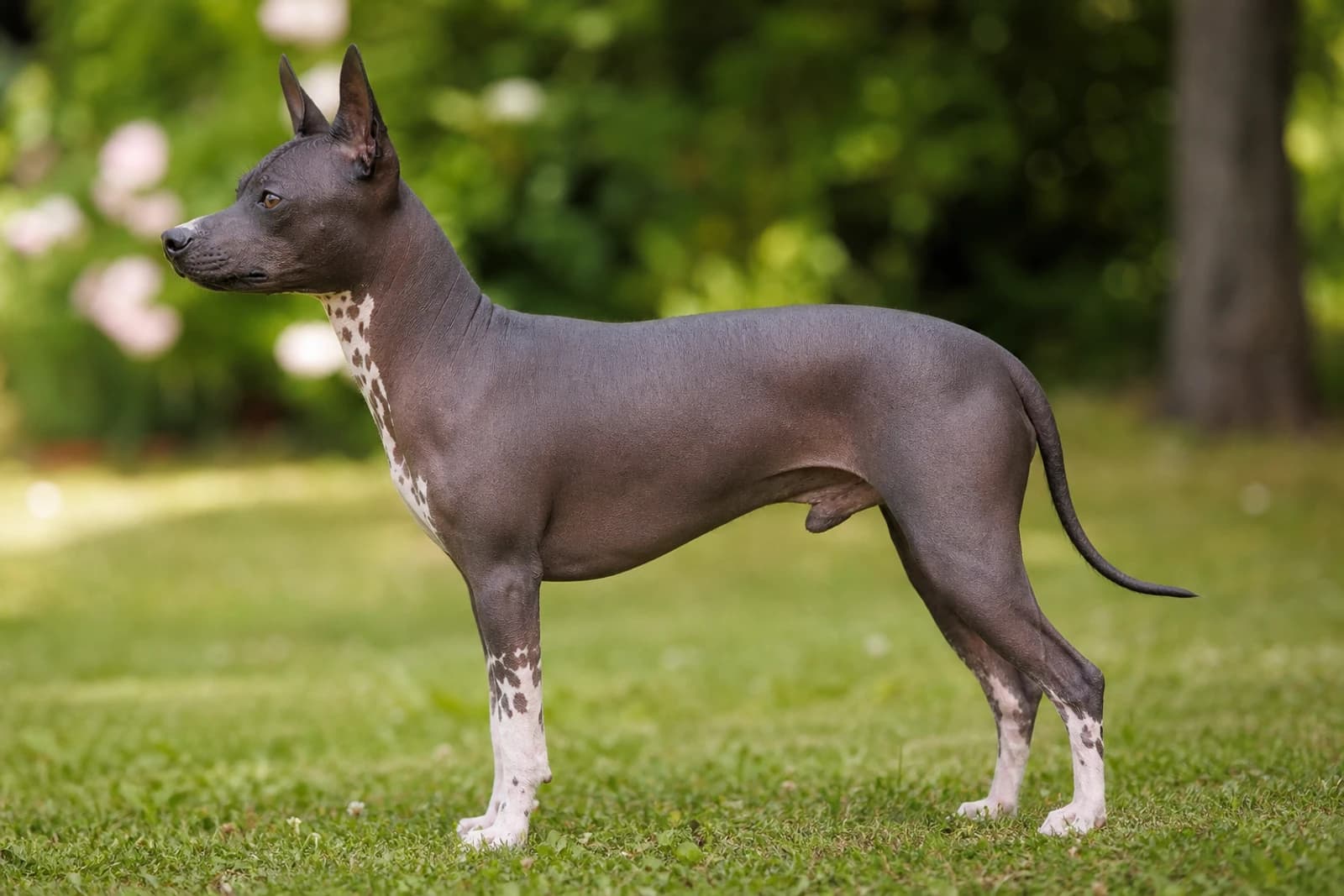
The American Hairless Terrier is a lively, intelligent, and affectionate companion that excels as a family pet. Originating from the Rat Terrier, this unique hairless breed is perfect for allergy sufferers while still retaining the classic terrier tenacity and playfulness. Their smooth, warm skin requires minimal grooming but benefits from sun protection. Ideal for active individuals or families, they thrive on interaction and mental stimulation. Adaptable to city or country life, these dogs are devoted, alert, and always ready for fun. They suit first-time owners and experienced dog lovers alike.
At a glance
- Size
- Medium
- Height
- 10–18 in
- Weight
- 7–13 lb
- Life span
- 12–13 years
- Coat colors
- Any color, White, Black, Tan, Chocolate, Blue, Brindle, Pied
- Coat type
- Hairless; coated variety has short, smooth coat
- Group
- Terriers
- Origin
- United States
How much does a American Hairless Terrier cost?
Adopt / rescue
$75–$400
Usually includes spay/neuter, first shots, and a microchip.
Buy from a breeder
$700–$2,000
From a reputable, health-testing breeder.
Approximate USD. Prices vary widely by region, breeder, pedigree, age, and coat colour — adopting is the lower-cost and recommended route. Avoid suspiciously cheap “breeders”; they’re often puppy mills.
Estimate the full cost of a American Hairless Terrier →American Hairless Terrier photos
Views
Front, side, rear and top — the full silhouette.Poses
How the breed sits, lies, moves and plays.Puppy to senior
The breed across its whole life.Expressions
The breed’s range of moods.Close-up details
Eyes, ears, nose, paws, tail and coat.Coat colors
The breed’s recognized colors.Click any photo to enlarge. We show the American Hairless Terrier from every angle — three views, poses, life stages, expressions, close-ups, coat and colors.
Appearance & size
You’re looking at a small, tightly wound terrier built like a little athlete, not a delicate lap decoration. The American Hairless Terrier stands anywhere from 10 to 18 inches at the shoulder — yes, that’s a wide range, but the breed’s working-root flexibility means you’ll see some as compact mousers and others with leggier, lankier frames. Weight typically lands between 7 and 13 pounds, with a lean, muscled body that feels dense when you scoop them up.
From the front, the chest is moderately deep and the forelegs are straight, set well under the body. The head is a classic terrier wedge — slightly rounded skull, strong muzzle, and a distinct stop. Ears are triangular and can be erect, semi-erect, or button, but they’re always alert, pivoting to every sound. Eyes are round to almond-shaped, set well apart, and radiate a curious, lively expression that says I’m already three steps ahead of you.
Move to the side and you’ll see the outline is rectangular — the body is slightly longer than tall. The topline is level, the ribs are well-sprung but not barrel-shaped, and the tuck-up is moderate, not whippet-thin. The neck arches cleanly into well-laid-back shoulders, and the hindquarters have the sort of angulation that lets this dog explode into motion, pivot on a dime, and disappear after a squirrel before you blink.
From behind, the rear legs are straight and muscular, with short hocks that add leverage for digging or sudden stops. The tail is set moderately high and often carried like a perky flag; it tapers to a point and is never docked in the hairless variety, which is one quick way to spot the true hairless gene at work.
Now, the coat — or the lack of it. This is the breed’s calling card. The hairless variety has smooth, soft skin that’s warm to the touch and completely naked except for a sprinkling of very fine guard hairs on the muzzle and eyebrows, plus whiskers. Some puppies are born with a light down that disappears by adolescence. The skin itself feels suede-like, and responsible owners treat it like you would a baby’s skin: sunscreen, moisturizer, and a keen eye for rashes. The coated variety is a different story — a short, dense, shiny jacket that lies flat and sheds minimally. Both types share the same terrier silhouette and can be born in the same litter.
Color-wise, you’re dealing with a painter’s palette. Hairless dogs show their skin pigment directly, so colors and patterns pop vividly: solid pink, black, spotted, brindle, sable, red, liver, tricolor — often with dramatic patches or speckling. In the coated variety, the same colors appear in the fur, though the patterns can be slightly muted. A freckled pink dog with a black eye patch is a head-turner, and it’s exactly that un-self-conscious look — a terrier who forgot its clothes — that makes this breed so distinctive.
History & origin
It all started with one naked puppy. In 1972, a completely hairless female named Josephine appeared in a litter of otherwise normal Rat Terriers belonging to Edwin and Willie Scott of Trout, Louisiana. Her coat never grew in, but she was otherwise healthy and full of terrier spirit. Intrigued, the Scotts decided to see if they could establish a new breed from this single oddity—and they did.
Josephine’s genetics turned out to be a gift. The hairless trait she carried was a spontaneous natural mutation, and it proved to be dominant. Breed her to a coated Rat Terrier, and many of the offspring would be born hairless, too. The Scotts carefully bred line after line, selecting for sound structure, typical terrier temperament, and that distinctive smooth, warm skin. By the 1980s, they had a consistent, predictable hairless terrier. They named their creation the American Hairless Terrier (AHT) to highlight its all-American roots and its terrier identity.
Unlike hairless breeds such as the Chinese Crested or Xoloitzcuintli, the AHT doesn’t carry the genetic quirks that often bring missing teeth or serious skin problems. The dominant hairless gene meant no “powderpuff” variant, just dogs born either fully hairless (some with light fuzz that fades) or with a short, dense coat. This distinction kept the gene pool broad, since coated dogs could still be part of a thoughtful breeding program without muddying the hairless type.
The breed’s development timeline is unusually well-documented. The United Kennel Club was first to recognize the American Hairless Terrier, in 1999. AKC recognition came in 2004, when the breed entered the Foundation Stock Service, and it secured full Terrier Group status in 2016. All the while, the AHT kept the working terrier instincts of its Rat Terrier forebears—vermín control, alert watchdogging, and playful companionship—just without the shedding. From a fluke in a Louisiana whelping box to a recognized terrier with a distinct identity, the breed’s rise is remarkably fast by purebred dog standards, and it all traces back to one curious, hairless pup someone chose to believe in.
Temperament & personality
This terrier delivers everything you want from the group—alertness, tenacity, and a busy brain—minus the coat. The American Hairless Terrier is an energetic, curious dog that stays plugged into household activity all day. Don’t mistake the hairlessness for fragility; these dogs are scrappy, confident, and ready to chase a squirrel or dive into a toy bin with zero hesitation.
They bond intensely with their people and will shadow you around the house. That loyalty has a flip side: if you’re gone long hours without a plan, you might end up with a barker or a chewer working through isolation anxiety. A quick morning potty break won’t cut it—plan for a solid 30 to 45 minutes of romping, sniff walks, or a vigorous game of fetch. A tired American Hairless Terrier is a quiet one; a bored one may redesign your baseboards.
A watchdog first
These terriers notice everything—the delivery truck three doors down, a squirrel on the fence, the neighbor’s cat testing its luck. They’ll tell you about it with a sharp, persistent bark. That makes them excellent little guardians, but in an apartment or with nearby neighbors, you’ll need to teach a “quiet” cue early. Their vigilance runs on scent, too. Like any dog, they use urine marking to map their territory, and if an accident inside leaves a lingering odor, they’ll be drawn back to that exact spot. A vinegar-based cleanup that neutralizes the smell is your best training ally.
Playful but pushy
Affection comes in sloppy kisses, happy wiggles, and a tendency to crawl right into your lap—then launch off it three seconds later to investigate a noise. They’re generally eager to engage with kids and adults alike, but terrier spunk means they have limits. A stiff body and a hard stare signal go-away, not playtime. Teach children never to bother the dog while it eats; even a normally gentle terrier may guard a food bowl. Watch for the calming signals—lip licking, yawning, turning the head—that say “I need a break.”
Terrier stubbornness, no fur attached
Smart and opinionated, the American Hairless Terrier won’t bend to heavy-handed corrections. Layer training in short, game-like sessions and pay generously with treats right when they get it right. If you leave the room and they sneak onto the forbidden sofa, they’re not being spiteful—they’re just a terrier who noticed you forgot to block access. Their center of gravity tells you plenty: a forward lean as they stare at a treat bag means “I’m ready to work,” while a backward weight shift around a new person may signal wariness. Respect that body language and you’ll earn their trust instead of triggering a snap.
Housetraining and chewing
Puppies explore with their mouths and chew to relieve teething pain; adults chew to keep jaws strong and teeth clean. Provide plenty of appropriate chew items and use a homemade citrus spray on off-limits furniture. Housetraining can be quick with consistency, but don’t punish indoor accidents. Scoop the pup outside the moment you catch them, and throw a party with a treat the instant they eliminate in the right spot. That positive link—pee outside, reward arrives—builds faster than any scolding.
The household fit
An American Hairless Terrier thrives with someone home often, or at least committed to skipping the after-work Netflix routine for a long walk and a training session. They do well with older children who understand dog body language, and they can coexist with other dogs when properly introduced. Cats and small pets, though, often trip that terrier prey drive. Without enough mental work, a smart terrier will create a job—digging at the couch, barking at the window, or mastering the art of counter-surfing. Give them real tasks, even if it’s just hiding kibble in a snuffle mat, and they’ll repay you with ten pounds of cheerful, hairless companionship that keeps you laughing.
Good with kids, dogs & other pets
These terriers are patient, non-aggressive, and genuinely sweet with children—but at 7–13 pounds, they’re small enough that a well-meaning toddler can hurt them. Supervise every interaction. Teach kids to sit on the floor and let the dog come to them, to avoid picking them up, and to keep play gentle. With respectful children, an American Hairless Terrier is a playful, affectionate sidekick who’ll curl up on laps or chase a ball with equal enthusiasm.
With other dogs, they usually get along fine when introduced the right way. The key is early socialization. Expose your puppy to friendly, vaccinated dogs during the 3–14 week window and continue those positive meet-ups. An adult AHT who missed that early exposure may be shy or reactive, but you can build confidence over time with controlled walks and one-on-one playdates instead of a chaotic dog park. Never force a fearful adult into crowded canine gatherings—it ramps up anxiety and can trigger defensive snaps.
Cats are doable, especially if the terrier grows up with them. A confident cat who stands her ground often teaches a pushy puppy boundaries quickly. Still, watch for chasing. If your cat bolts, the terrier’s instinct to pursue can kick in. Keep initial meetings calm, give the cat escape routes, and separate them when you’re not home until you’re sure the relationship is safe.
Small pets are a different story. This breed descends from the Rat Terrier, and that means a hardwired prey drive for rodents, birds, and reptiles. Hamsters, gerbils, rabbits, or pet birds aren’t safe loose around an AHT—even one that cozies up to the family cat. Secure cages with latches a dog can’t nudge open, place them out of reach, and never leave them unsupervised together.
Because these terriers are intense people-dogs, leaving them alone for long hours can breed stress, barking, and destruction, which adds strain to a home with kids and other animals. They do best in families where someone is around most of the day.
Commit to a rich socialization plan from puppyhood, supervise every interaction with young children and small animals, and respect your dog’s comfort level. That’s how you’ll raise a confident, zesty housemate who slides easily into a busy, multi-pet home.
Trainability & intelligence
The American Hairless Terrier is sharp as a tack, but don’t confuse smarts with an eagerness to please like a retriever. This is a terrier first — curious, quick, and perfectly capable of deciding your command is merely a suggestion. That independent streak means training hinges on a strong working relationship, not a battle of wills.
What works (and what backfires)
Positive reinforcement is the only game in town. Harsh corrections or a raised voice can cause these sensitive dogs to shut down or get anxious. Use tiny, high-value treats, a favorite squeaky toy, or a quick game of tug to reward what you want. Because they bore easily, keep sessions to 5–10 minutes and switch up exercises often.
The early socialization window
Early, thorough socialization is non-negotiable. Start exposing your puppy to new people, calm dogs, different surfaces, and household sounds between 3 and 14 weeks old. A poorly socialized Hairless Terrier can become a velcro dog that barks at every unexpected noise or a stranger’s extended hand. Ongoing positive experiences through the first year prevent a fearful or reactive adult.
Recall and the terrier prey drive
Recall demands honest expectations. When that terrier prey drive kicks in — and a squirrel darts across the yard — all the cookies in your pouch won’t trump the chase. Build a reliable “come” with long-line practice, gradually adding distractions. In unfenced areas, a leash is the safest bet. Teaching a solid “quiet” cue also matters; these dogs are alert watchdogs and will announce the mail carrier with gusto.
Consistency from day one pays off. Set clear house rules, involve everyone in the household, and reward calm, polite behavior just as much as formal commands. A pocket full of tiny treats and a playful tone will take you much further than a stern voice with this sensitive, clever little dog.
Exercise & energy needs
Don’t let the small package fool you—this is a terrier, and that means a dog with real gas in the tank. A couple of short, focused sessions each day delivers better results than one marathon walk. Aim for 30 to 45 total minutes of daily movement, split into at least two bursts. Morning zoomies in a fenced yard, a brisk 15-minute walk, or a fast round of fetch, followed by an afternoon flirt-pole session or hide-and-seek in the house, usually hits the sweet spot. Multiple shorter rounds scratch the terrier itch for start-and-stop intensity and help keep their busy brain out of trouble.
Mental exercise matters as much as the physical stuff here. A bored American Hairless Terrier will make up his own job—often the kind that involves redecorating your couch or barking at shadows. Give the dog a puzzle toy with hidden treats, a snuffle mat, or a 10-minute nose-work game where you hide a smelly treat around the room. Scent work taps directly into the terrier’s instinct to hunt and problem-solve, and it tires them out fast.
Because they’re small but built to move, most of these dogs do well with activities that combine thinking and quick locomotion. They’re naturals for barn hunt, rally, and agility (with the jumps set low for the 7–13 lb body). Short, joyful training drills for trick titles work indoors on bad-weather days, which counts as exercise too. If you have a secure outdoor space, a flirt pole is a favorite—it satisfies the prey-drive in a controlled way.
Keep an eye on bare pink skin during outdoor workouts. Sun protection and a coat in cool weather are part of the exercise plan, because a shivering dog isn’t burning energy efficiently. Joints are generally sound in a responsibly bred American Hairless Terrier, but you still want to avoid repetitive high-impact landings on hard surfaces with such a light-boned dog. Grass, dirt, or a padded floor are easier on the joints. As long as they get their daily brain and body workout, they settle nicely into life as an enthusiastic, ready-for-anything companion.
Grooming & coat care
No coat means no brushing, but it also means skin is front and center every day. For the hairless American Hairless Terrier, grooming shifts from fur management to skin protection. A soft, damp cloth wipe-down every couple of days removes dust and natural oils that would normally be wicked away by hair. Bathe every week or two with a gentle, dog-safe cleanser — not human soap — to prevent clogged pores and that faint “doggy” smell. In sunny weather, a pet-formula sunscreen (SPF 30, no zinc oxide) is non-negotiable 20 minutes before going outside; this breed burns just like we do. Cold months call for a fitted sweater or fleece anytime the temperature dips below 50°F, because there’s no undercoat to trap heat.
A coated American Hairless Terrier (the same breed’s short, sleek variety) does grow a single layer of fine hair, and it’s gloriously low-maintenance. A quick once-over with a short-bristle brush once a week removes any loose hairs and spreads natural oils for a glossy shine. That bristle brush acts like a massage, too, which most of these terriers lean into.
For both versions, ears, nails, and teeth follow the same routine. Flip ears up weekly to check for wax buildup or redness, and wipe with a vet-approved cleaner. Nails grow fast on small, active feet — plan on a trim every three to four weeks; if you hear clicking on the floor, you’re past due. Daily tooth brushing with a dog toothpaste keeps breath in check and gums healthy. The real payoff of all this skin-focused care: you catch tiny scrapes, rashes, or pimples early, before they turn into something that needs a vet visit.
Shedding & allergies
The hairless variety doesn’t shed fur — there’s literally no coat to drop. That alone makes the American Hairless Terrier one of the lowest-shedding breeds you can live with. The coated variety, which appears in the same litters because the hairless gene is recessive, has a short, smooth coat that sheds lightly year-round, similar to a Rat Terrier. Even then, you’re looking at a few fine hairs on dark pants, not tumbleweeds rolling across the floor. Neither type goes through a heavy seasonal blowout; there’s no undercoat to dump in spring or fall.
Allergies are where people need the full picture, not just the fur. No dog is completely hypoallergenic — allergens come from dander (dead skin flakes), saliva, and urine, not just hair. A hairless AHT still produces dander, and you’ll handle it every time you pet or bathe the dog. The upside: without fur to trap and broadcast dander around the house, the airborne load tends to be lower. Many allergy sufferers do better with this breed, but it’s not a guarantee.
- Dander management: Hairless skin needs regular baths with a gentle shampoo to wash away oils and loose skin cells. If you let it slide, dander builds up on the dog and in your home, defeating the low-allergen advantage.
- Saliva and licking: All dogs lick, and AHTs are no exception. Saliva proteins can trigger reactions, so keep that in mind if you’re sensitive.
- Realistic test: Spend a full hour — ideally more — inside a home with an adult American Hairless Terrier before committing. Snuggle the dog, let it lick your skin, see how you feel the next day. That hands-on exposure tells you more than any breed label ever will.
Diet & nutrition
An American Hairless Terrier can pack away more kibble than you’d expect for a 7‑to‑13‑pound dog. Many are enthusiastic eaters, so portion control isn’t a suggestion — it’s what keeps a lean, athletic terrier from becoming an overweight couch potato on four legs.
How much and how often
Base the daily amount on your dog’s exact weight, body condition, and honest exercise level. An active 10‑pounder often lands around 250–300 kcal per day, while a high‑octane 13‑pound dog might need closer to 400 kcal. Measure every meal — eyeballing fills the bowl faster than you think. Puppies get four evenly spaced meals until 4 months old, three meals until 6 months, then settle into the adult rhythm of two meals a day.
Weight that creeps up fast
A few extra ounces on a frame this small can strain joints and the back, especially in a breed that loves to leap, twist, and tunnel under blankets. Keep an honest hand on the ribs: you want to feel them easily with a thin layer of fat, not search through a cushion. If your dog starts plumping up, cut back calories before you cut back on the romps — activity is non‑negotiable.
What to put in the bowl
A high‑quality commercial food with real meat as the first ingredient works well. If you go fresh or home‑prepped, a useful starting point is about 60% muscle meat and organs, 20–30% dog‑safe vegetables and fruit, and the remaining 10% from eggs, grains like pearl barley or white rice, or plain yogurt. Avoid suddenly feeding rich, fatty scraps — holidays are prime time for pancreatitis triggers in small breeds.
Puppy and senior adjustments
Transition puppies to a new food gradually, mixing in soft, puréed meats and vegetables or the breeder’s diet. Raw chicken wings can appear around 12 weeks, supervised, but go bone‑in only when you know your pup chews thoroughly. Older Hairless Terriers often do better with three smaller meals instead of two. As activity naturally slows, dial back the daily ration and watch the scale. If teeth are missing, purée the meal — it aids nutrient absorption and makes eating painless. Leave protein levels alone; there’s no good evidence to cut them for healthy seniors.
A few ground rules that pay off
- Use a puzzle bowl if your dog inhales meals — it slows the gulp and adds a little brain work.
- Leftovers get served in the dog’s own dish, never from the table. Begging, once learned, is miserably hard to undo.
- Stash extra batches of cooked grains, veggies, or protein in the fridge for quick, balanced meals on busy days. Vegetable cooking water (unsalted) works as a light meal base if you’re out of stock.
Health & lifespan
With a typical lifespan of 12 to 13 years, the American Hairless Terrier is a generally sturdy little dog whose biggest health consideration is right on the surface: bare skin. Without a coat to act as a buffer, he sunburns fast. Dog-safe sunscreen or a lightweight shirt is non-negotiable for outdoor time, especially in midday sun. Dryness, flaking, and minor rashes aren’t unusual. A fragrance-free moisturizer or an occasional medicated bath recommended by your vet can keep his skin from getting cranky. Cold weather hits him hard — he loses body heat quickly — so a well-fitted sweater or coat belongs in his wardrobe. Stay alert to redness, bumps, or scaling. Skin allergies and bacterial infections like folliculitis crop up in the breed and usually clear up with prompt treatment, but letting them linger can spiral into stubborn problems.
Like many small, compact dogs, these terriers can be prone to tartar buildup and gum disease. Daily toothbrushing (or at minimum dental chews designed to scrape plaque) and yearly cleanings under anesthesia pay off. Patellar luxation — a loose kneecap that pops out of place — also surfaces in the breed. You’ll spot a momentary skip or hop in a rear leg; mild cases often need nothing more than lean body weight and joint-friendly exercise, while severe ones may call for surgery. Responsible breeders screen breeding stock for patellas and eye disorders such as cataracts and primary lens luxation, so ask to see current OFA or equivalent clearances.
At 7 to 13 pounds, even an extra half-pound puts unnecessary strain on those knees and on the heart. These terriers are food-motivated, so measure meals, skip the table scraps, and keep treats tiny. Annual vet visits with bloodwork as he ages catch subtle shifts before they become serious. Year-round heartworm prevention, flea/tick control, and up-to-date vaccinations — rabies is legally required — are just as critical for this small-town terrier as they are for any dog. Keeping him lean, active, and current on preventives stacks the deck toward a long, comfortable run.
Living environment
An American Hairless Terrier slots into apartment life more naturally than most terriers — provided you’re serious about giving this pocket rocket at least two focused exercise sessions a day. The breed’s compact 7–13 lb frame and lack of an insulating coat mean they’re strictly indoor dogs; a fenced yard is a nice bonus for zoomies, not a substitute for time with you.
Climate tolerance is a real concern. The hairless variety sunburns quickly and shivers the moment the temperature dips. You’ll need dog-safe sunscreen, a shady spot, and maybe a light shirt in summer; sweaters and even fleece pajamas aren’t optional in winter. The coated version has a short, thin coat that offers only a little more buffer, so plan for wardrobe changes either way. This isn’t a dog you can leave lounging outside for hours.
Exercise fits neatly into two or three shorter spurts — a brisk 20-minute walk, a flirt-pole session, or a backyard chase, followed by a puzzle toy that makes them think. Terrier brains run hot, and an under-exercised AHT will invent their own jobs, often ones that involve digging, barking, or chewing. Speaking of barking: these are alert, curious dogs. You’ll get a vocal announcement when someone’s at the door or the neighbor’s cat strolls by. In an apartment, that means early training to redirect the noise is worth every treat you spend on it.
Leaving them alone for a full workday is a gamble. They form tight bonds with their people, and a bored, lonely AHT can tip into separation anxiety — shredding bedding, barking nonstop, or potty accidents. Crate training, gradual departures, and stuffed Kongs help, but if you’re rarely home, this breed will pay the emotional price. A mid-day dog walker or a schedule built around two short crated periods is the realistic compromise for most.
Who this breed suits
This is a lively, clever little terrier in a pocket-sized, nearly naked package. If you want a dog that’s always game for a walk, a puzzle toy, or a full-on living-room zoomie session—without coating your couch in hair—the American Hairless Terrier fits right in. True first-timers can do well here, provided you’re ready to meet the breed’s terrier brain with consistent, positive training. They’re also a solid match for allergy sufferers who react to fur or dander (no dog is 100% hypoallergenic, but a hairless body drastically cuts down the airborne particles).
- Active singles and couples who can give a solid 30–45 minutes of real exercise daily—think brisk walks, fetch, or agility groundwork—will get a tireless little sidekick.
- Families with older, respectful kids (say, age 8 and up) who understand that a 10-pound dog isn’t a stuffed toy. The breed’s bounce and playfulness can be a blast, but rough handling risks injury.
- Apartment dwellers get a built-in advantage: no shedding, minimal “dog smell,” and a size that doesn’t demand a yard. Just know these terriers have a big-dog voice and will alert bark at the door or a squirrel outside.
- Seniors with an active routine—think daily walks and a few short training sessions—will appreciate the compact size and portable energy. A 12–13 year lifespan means a long companion, but you’ll need a plan for chilly weather (sweaters are non-negotiable) and for protecting that bare skin from sunburn.
Think twice if…
- You want a low-key lapdog who’s content with a quick potty break. This terrier will find his own entertainment—often involving shredding or digging—if you don’t provide it.
- You can’t commit to skin care. That means weekly baths to prevent pimples, sunscreen before sun exposure, and wiping down after outdoor romps. Ignore this and you’ll be at the vet with rashes and acne.
- You’ve got toddlers or children who don’t yet know how to be gentle. The dog’s quick movements can also knock a tot over.
- You’re gone for long workdays. American Hairless Terriers bond hard and can develop separation anxiety, which translates to nonstop barking and destruction.
- You expect a quiet house. They’re alert watchdogs, and a squirrel at the window is a four-alarm event.
Cost of ownership
A well-bred American Hairless Terrier puppy from health-tested parents usually costs $1,500 to $3,000. The hairless variety sits at the higher end; the coated version occasionally dips a couple hundred dollars lower. Show prospects or puppies from top working lines can exceed that range. Adoption through a rescues is rare but possible, generally running $200 to $600.
Here’s a realistic monthly breakdown for a 7–13 lb dog:
- Food: $20–$40. A high-quality small-breed kibble fits the bill; adding wet food or fresh toppers pushes the number higher. With a fast terrier metabolism, cheap fillers often backfire in the long run.
- Grooming: $10–$25 averaged out. No fur means no brushing or professional clips, but the bare skin needs weekly wipe-downs, occasional moisturizing baths, and dog-safe sunscreen every time the dog steps outside. Nail trims and ear cleaning you can handle at home, or a quick groomer appointment runs $15–$25 a visit.
- Routine vet care: $20–$35 monthly when spread over the year. Annual exams, core vaccines, and flea/tick/heartworm prevention for a small dog typically total $200–$400 a year. Hairless individuals can be prone to skin irritations and dental problems, so budget for an extra sick visit or a professional dental cleaning ($300–$500) every couple of years.
- Pet insurance: $20–$50 a month. Accident-only plans start low; comprehensive illness coverage costs more. Given the breed’s 12- to 13-year lifespan, a single overnight emergency easily exceeds years of premiums.
First-year setup adds another $500–$800 for a crate, bed, harness, bowls, toys, microchip, and spay or neuter. Hairless dogs also need a small sweater wardrobe for cold weather—plan on $30–$50 per season.
All in, expect to budget $80–$150 a month after the initial purchase. The near-zero grooming tab helps, but smart owners keep a rainy-day fund for the occasional skin flare-up or broken tooth that comes with the territory.
Choosing a American Hairless Terrier
Responsible Breeder vs. Rescue
American Hairless Terriers rarely surface in shelters—you’ll almost certainly work with a breeder. A breed-specific rescue, if one places an adult, lets you skip the housebreaking chaos and see the dog’s real temperament right away. With a good breeder, you meet at least one parent, inspect health records, and shape the puppy from eight weeks old. Rescues do exist, but waitlists stretch long for this niche breed, so start with the American Hairless Terrier Club of America’s referral list and a rescue contact simultaneously.
Health Clearances to Ask For
Skin health overshadows everything else here. Ask for vet records showing no pattern of chronic rashes, yeast infections, or seasonal allergies in the dam, sire, or earlier litters. Because these terriers can be prone to patellar luxation, demand OFA patella clearances; a cardiac screening should be standard, too. Legg-Calvé-Perthes disease crops up in small terriers, so a breeder who mentions hip screening isn’t overdoing it. For a hairless dog, sun protection and regular skincare aren’t optional—a breeder who downplays this isn’t preparing you properly.
Red Flags
Watch for anyone selling “hairless” as maintenance-free; it’s exactly the opposite. A breeder who always has puppies available or won’t let you visit their home and meet the dam is a hard pass. Evasive answers about health testing, refusal to provide paperwork, or reluctance to discuss what happens if you can’t keep the dog later signal a puppy mill or backyard operation. Run if they pressure you with “rare color” ploys.
Picking a Puppy
Start with the skin: it should be clean, pink, and smooth—no red bumps, scaly patches, or greasy buildup. Eyes and nose must be discharge-free. At eight weeks, a healthy pup feels solid in your hands, with a slightly rounded belly, not bony or distended from worms. Temperament-wise, pick a curious, confident puppy that engages without bullying littermates; the over-the-top bossy one often channels that terrier smarts into destructive mischief later. Confirm deworming, first vaccinations, and ask if crate or potty training has started. A tidy, enriched puppy area with obvious socialization efforts tells you more than a contract ever will.
Pros & cons
Pros
- Practically no shedding and low dander — a real plus if you’re tired of vacuuming dog hair or sneezing around other breeds. Many allergy sufferers do well with an AHT, though no dog is 100% hypoallergenic.
- Small but sturdy package. At just 7–13 pounds, they fit easily into apartment life, RV travel, or a house with a small yard. You get a terrier’s toughness without the bulk.
- Energetic and playful indoors and out. They’ll fetch, tug, and zoom around the living room, then settle in your lap. A good match if you want a lively companion that doesn’t need acreage to burn off steam.
- Clean and low-odor. No coat means less “wet dog” smell and no muddy fur to wipe down after a walk. Quick rinse-and-dry is often all the grooming they need.
- 12–13 year lifespan means a long run with a dog that stays puppyish well into old age.
Cons
- High prey drive from their terrier roots. Squirrels, rabbits, and even the neighbor’s cat can trigger a chase. Off-leash walks in unsecured areas are a gamble unless you’ve put in serious recall training.
- Stubborn streak runs deep. They’re clever, but that terrier independence can turn training into a negotiation. Short, upbeat sessions work better than repetition; boring drills get tuned out fast.
- Skin needs daily attention. No coat means no natural protection. You’ll be applying dog-safe sunscreen in summer, bundling them in a sweater when it’s cold, and wiping down after outdoor play to prevent breakouts or sunburn.
- Can be escape artists. AHTs are small enough to squeeze through gaps and tenacious enough to dig under fences. You’ll need to check your yard’s perimeter like a security guard.
- Prone to separation anxiety if left alone too long. They bond hard and want to be where you are. A home where somebody is around most of the day works best; otherwise, you’ll be dealing with barking, destructive chewing, or house-soiling.
Similar breeds & alternatives
The American Hairless Terrier sits in a quirky corner of the dog world as the only hairless breed with true terrier fire. If you love the idea of a small, agile dog that doesn’t shed but aren’t sold on the terrier intensity, the most natural alternative is the Chinese Crested (hairless). At roughly 8–12 inches and 5–12 pounds, it’s in the same size range and needs the same skin TLC — regular baths, moisturizer, and sun protection. But the Crested is a companion through and through: less prey drive, more inclined to splat on the couch, and often goofier with family. You trade rat-chasing tenacity for a softer, velcro temperament.
If it’s the terrier part you’re after and the bare skin makes you pause, look straight at the Rat Terrier. It’s the exact same working dog underneath — same height, 10–18 inches, and a lean 10–25 pounds — with a short, smooth coat that still sheds minimally. You lose the extra grooming routine and gain a classic terrier that can handle a chilly walk without a sweater. For a slightly different flavor of small coated terrier, the Toy Fox Terrier (8.5–11.5 inches, 3.5–7 pounds) brings that high energy and alert nature in a more pocket-sized, finely boned package; they tend to be a bit more reserved with strangers. The Miniature Pinscher (10–12.5 inches, 8–10 pounds) shares the AHT’s confident, “big dog in a small body” swagger but with a sleek, low-maintenance coat and a more independent, watchful streak that veers away from terrier scrappiness toward proud house guardian.
For someone drawn specifically to the hairless novelty but wanting a calmer household presence, the Xoloitzcuintli (toy or miniature) ranges 10–14 inches and 10–15 pounds, offering a similar skin-care commitment with a more serene, ancient-dog personality. It’s less likely to launch itself off the back of the sofa for a squirrel, making the two hairless breeds surprisingly different roommates.
Fun facts
- The American Hairless Terrier is the only hairless dog breed native to the United States.
- They originated from a hairless puppy born in a litter of Rat Terriers in 1972.
- Their skin feels like a warm suede hot water bottle and may change color with sun exposure.
- They are often recommended for allergy sufferers due to their lack of hair.
Frequently asked questions
- Do American Hairless Terriers shed?
- As a mostly hairless breed, they shed very little, though coated varieties do exist and may shed minimally. The hairless type is often tolerated by allergy sufferers, but no dog is truly 100% hypoallergenic. Regular skin care replaces typical coat maintenance.
- Are American Hairless Terriers good with children?
- They tend to be friendly and playful, making them good companions for older kids who know how to handle a small dog gently. Like many terriers, they can be energetic and may not tolerate rough play. Supervision is recommended to ensure positive interactions.
- How much exercise does an American Hairless Terrier need?
- With a high energy level, they need daily physical and mental stimulation, such as brisk walks, play sessions, or agility training. Without enough activity, they can become bored and may develop unwanted behaviors. A fenced yard is ideal, but indoor play can also meet their needs.
- Are American Hairless Terriers easy to train?
- They are intelligent and eager to please, which can make training straightforward with positive reinforcement. However, their terrier stubbornness may surface, so consistency and patience are important. Early socialization helps them grow into well-mannered adults.
- Do American Hairless Terriers bark a lot?
- As alert terriers, they can be vocal and may bark to announce visitors or unusual sounds. Their barking tendency can be managed with training and enough exercise to keep them calm. They are not typically excessive barkers without cause.
- Is the American Hairless Terrier good for first-time dog owners?
- Their manageable size and affectionate nature can suit first-time owners willing to meet their exercise and training needs. Their energy and occasional stubborn streak might be challenging for someone completely new to dogs. Commitment to consistent training helps ensure a successful match.
Tools & calculators for American Hairless Terrier owners
Quick estimates tailored to American Hairless Terriers — pre-filled with this breed’s size where it matters.
Articles & stories about the American Hairless Terrier
Sources & standards
This profile follows recognized breed standards from the American Kennel Club (AKC) and the Fédération Cynologique Internationale (FCI), along with established veterinary and breed-club guidance. These describe general breed tendencies — every dog is an individual.
Owner stories
Have a American Hairless Terrier? Share your experience — grooming tips, personality quirks, anything goes.