

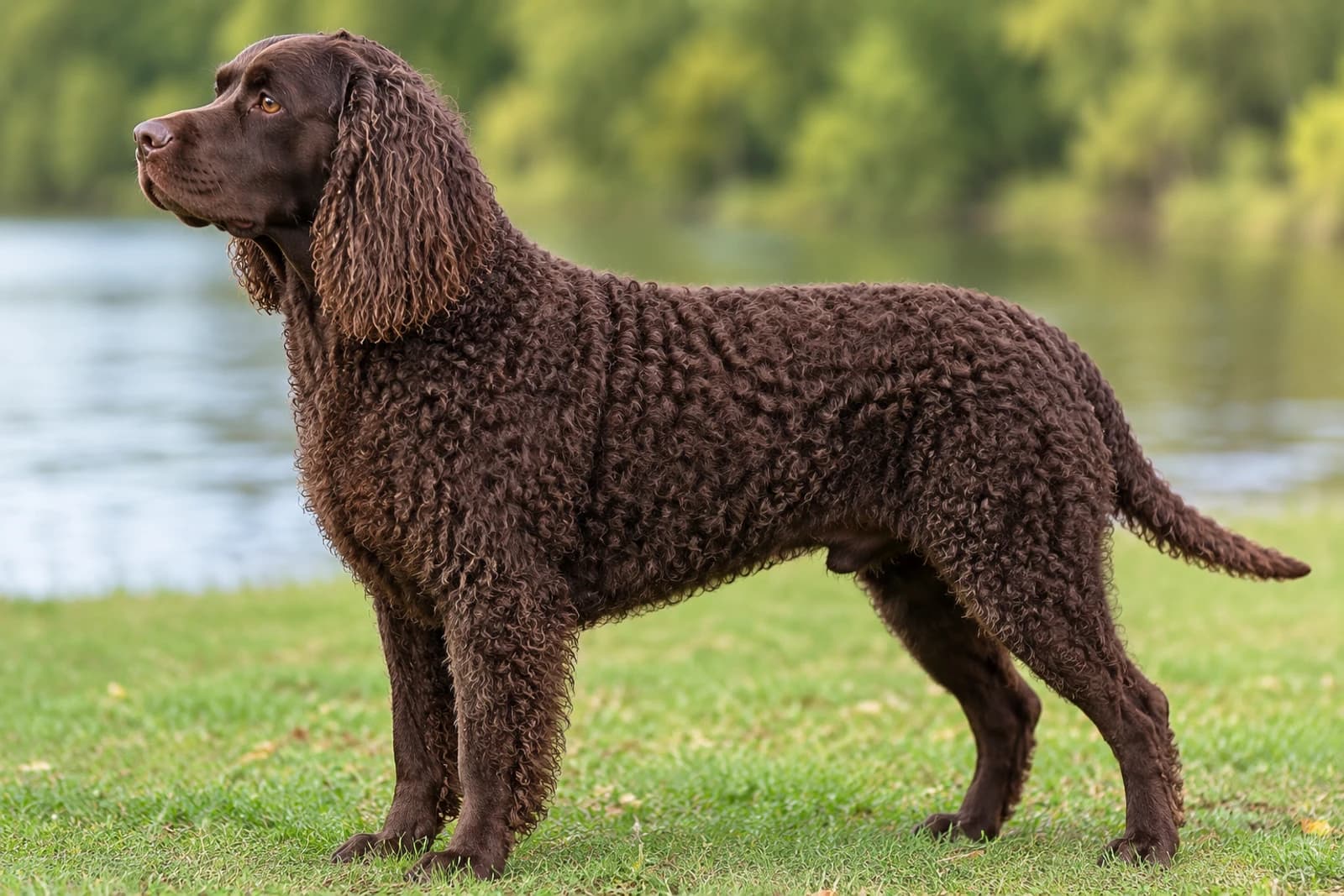
The American Water Spaniel is a medium-sized, lively hunting dog brimming with enthusiasm. Bred to retrieve from water and land, this versatile breed thrives with active families who can provide ample daily exercise and mental stimulation. Their dense, curly coat demands regular grooming but repels water efficiently. Affectionate and loyal with their family, they can be reserved with strangers, making them decent watchdogs. Best suited for homes with a yard and opportunities for outdoor adventures, they excel in canine sports and make devoted companions for those who appreciate their hardworking spirit.
At a glance
- Size
- Medium
- Height
- 15–18 in
- Weight
- 26–46 lb
- Life span
- 10–12 years
- Coat colors
- Liver, Brown, Chocolate
- Coat type
- Dense, curly or wavy, water-resistant double coat
How much does a American Water Spaniel cost?
Adopt / rescue
$75–$400
Usually includes spay/neuter, first shots, and a microchip.
Buy from a breeder
$700–$2,000
From a reputable, health-testing breeder.
Approximate USD. Prices vary widely by region, breeder, pedigree, age, and coat colour — adopting is the lower-cost and recommended route. Avoid suspiciously cheap “breeders”; they’re often puppy mills.
Estimate the full cost of a American Water Spaniel →American Water Spaniel photos
Views
Front, side, rear and top — the full silhouette.Poses
How the breed sits, lies, moves and plays.Puppy to senior
The breed across its whole life.Expressions
The breed’s range of moods.Close-up details
Eyes, ears, nose, paws, tail and coat.Coat colors
The breed’s recognized colors.Click any photo to enlarge. We show the American Water Spaniel from every angle — three views, poses, life stages, expressions, close-ups, coat and colors.
Appearance & size
The first thing you notice about an American Water Spaniel is a compact, muscular body wrapped in dense, tightly curled brown hair — this dog was built to slip into cold water without hesitation.
Standing 15 to 18 inches at the shoulder and tipping the scale between 26 and 46 pounds, the AWS packs a lot of strength into a medium frame. The body is slightly longer than tall, giving the dog a rectangular outline that promotes easy, ground-covering movement. Bone is moderate, never coarse or spindly. From the side, the chest reaches down to the elbows, the ribs spring smoothly back to a tucked-up loin, and the topline stays firm and level as the dog moves.
The coat is the breed’s signature. It comes in solid shades of liver, brown, or dark chocolate — rich, solid color from nose to tail tip. A small white patch on the toes or a tiny white dash on the chest is acceptable, but you won’t see much flash. The outer coat consists of close, crisp curls or “marcel” waves that lie in uniform rows, not loose fluff. Underneath, a thick, oily undercoat provides waterproof insulation. This double coat has a slight oily feel and a distinctive, working-dog smell when wet. The hair on the tail is dense and feathered, and the legs carry moderate furnishings.
Head and expression are practical, not extreme. From the front, a broad, square muzzle balances a slightly domed skull; the stop is moderate. Eyes are medium-sized, set well apart, and can be hazel, brown, or dark — always matching the coat tone. They look alert and friendly, not soft. The ears are set just above the eye line, hang close to the head, and are covered in tight curls. The tail is a moderate length, carried slightly above the horizontal but never curled over the back; it wags constantly when the dog is working.
From the rear, the hindquarters stand wide and well-muscled, with stifles that are only moderately angulated — enough for power swimming and a quick turn on land. Viewed from any angle, the dog projects balanced utility: an agile, tireless swimmer that can push through marsh grass all day and still curl up in a duck boat. That oily, curly coat is the real giveaway: this spaniel was designed to shed water, not win a beauty contest.
History & origin
The American Water Spaniel got its start in the mid-19th century, tucked into the Fox River Valley and the Great Lakes region of Wisconsin and Michigan. Market hunters and farm families needed a compact, no-fuss dog that could work the cold, reedy marshes from a small skiff — something that wouldn’t swamp the boat and could handle ice-fringed water as eagerly as an October field. They stitched together a mix that probably included Irish Water Spaniel, Curly-Coated Retriever, and the now-extinct English Water Spaniel, along with a dash of local spaniel-type dogs. The result was a medium-sized, curly-coated retriever with a tail that wagged nonstop and a nose that worked equally well on waterfowl and upland game.
This was the working man’s all-rounder. The AWS didn’t just mark a downed duck and crash into the chop; it also quartered the brush for ruffed grouse, tracked rabbits, and settled into a leaky punt without complaint. Its dense, marcell-coated double coat — oily, insulating, and nearly waterproof — let it power through icy retrieves that made larger retrievers think twice. Size was a feature, not a bug: at 26 to 46 pounds and 15 to 18 inches at the shoulder, one hunter could easily lift dog and a limit of birds into the boat at day’s end.
The breed stayed a regional secret, passed from father to son, until wider interest threatened to dilute it. In the 1920s, Dr. Fred J. Pfeifer of New London, Wisconsin, stepped in. He bought and bred the best local dogs, established a breed standard, and pressed for recognition. Thanks largely to his efforts, the United Kennel Club registered the breed in 1920, and the American Kennel Club followed in 1940. It remains Wisconsin’s official state dog.
Numbers never went big. The post-war boom in specialized retrievers — Labs, Goldens — pushed the little brown spaniel into obscurity. By the 1980s, the gene pool was dangerously narrow. A handful of dedicated breeders, working with the American Water Spaniel Club, carefully managed crosses (approved by the AKC) with other breeds to widen genetic diversity without sacrificing type or working drive. Today the AWS is still rare, ranking among the bottom 20 AKC breeds in registrations. Walk a boat landing in north-central Wisconsin in November, though, and you might still spot one curled up on a duck hunter’s jacket, waiting for shooting light.
Temperament & personality
The American Water Spaniel thrives when it’s treated like a true partner, not a yard ornament. These dogs bond fiercely with their families and have an inborn drive to be busy—retrieving, swimming, hiking, or just following you from room to room. They’re affectionate without being needy, but they can tip into Velcro-dog territory if they don’t get enough daily structure and exercise. Expect a medium-sized bundle of enthusiasm that greets you with a wagging rear end and a pilfered sock or tennis ball held gently in its mouth.
-
Energy & outlets: What looks like hyperactivity is really just a hunting dog waiting for a job. A brisk walk around the block won’t cut it. Plan on a solid 45–60 minutes of vigorous activity every day, ideally split into a morning run and an afternoon swim or fetch session. They’re obsessive about water—a kiddie pool in the backyard becomes the center of their universe. Without that outlet, a bored AWS will find its own entertainment, often in the form of barking, digging, or methodically dismantling the remote control.
-
Watchfulness: This is an alert, vocal breed. They’ll announce visitors, delivery drivers, and squirrels with equal conviction, then switch to a tail wag once they see you’re at ease. They’re naturally reserved with strangers, but early and ongoing socialization turns that caution into confidence rather than shyness. They’re not aggressive, but they’ll give a clear warning if they’re uncomfortable—a forward lean, stiff body, and direct stare are your cue to de-escalate before a nip or snap.
-
Family life: With family, they’re gentle and silly, though their athletic enthusiasm can accidentally bowl over a toddler. They typically do well with other dogs and can coexist with cats if introduced when young. The real dealbreaker for many households is separation sensitivity. An American Water Spaniel left alone for long stretches can develop anxiety-driven habits—excessive barking, indoor marking, or chewing that isn’t about teething but about stress.
-
Training & quirks: Strong-willed but eager to please, they’ll test your consistency. Respectful, positive training works beautifully; harsh corrections make them shut down and lose trust. Use what they love—bits of cheese, a tossed bumper—to reinforce the behaviors you want. They have a soft mouth and will carry anything, so teach a solid “drop it” command early. If they start scent-marking in the house, don’t just scrub—neutralize the urine with a vinegar spray (white and cider vinegar) to break the scent cue. Catch them doing something right and reward immediately; that quick, positive reinforcement shapes a calm, willing partner you’ll want to bring everywhere.
Good with kids, dogs & other pets
The American Water Spaniel is a steady, patient family dog that generally handles the chaos of kids well, but he’s not a set-it-and-forget-it pet. These dogs are 26 to 46 pounds of muscle and warmth, sturdy enough for a preschooler’s clumsy hug yet small enough not to bowl a toddler over. You’ll want to supervise interactions, especially with young children who squeal and grab, because an AWS can be sensitive — a loud, startling moment might make him wary if he hasn’t been prepared. Teach kids to approach calmly and respect the dog’s space during meals or rest, and you’ll get a loyal, affectionate shadow instead of a stressed one.
He’s also a velcro breed. This spaniel craves close companionship and can develop real distress if shut away in a back room or yard while the family life happens inside. He belongs in the thick of things, in the same room as you, and that built-in need makes him a devoted playmate — as long as someone is usually home. If your household is empty for nine hours a day, expect anxiety, which no amount of patience with kids can fix.
With other dogs, early socialisation makes the difference. Start before 16 weeks, introducing your puppy to friendly, vaccinated dogs in controlled settings. A well-socialised AWS is typically non-aggressive and plays nicely. However, if you wait until adulthood and then try to force meet-and-greets at a busy dog park, you might trigger fear-based reactivity instead of friendship. An adult who’s comfortable just being with his people doesn’t need a packed social calendar.
Cats and small pets are a case-by-case call. The breed has hunting roots, so a running rabbit or a flapping bird can spark chase instincts. Raise a puppy alongside a cat with gradual, positive introductions, and many learn to coexist peacefully. But never leave the two unsupervised until you’re absolutely sure the dog sees the cat as family, not quarry. The key is steady, praise-heavy exposure during that critical 3-to-14-week window, followed by a lifetime of calm, positive experiences — even after the window closes, you can still build confidence, just more slowly and without pressure.
Trainability & intelligence
You’ll see the gears turning the first time you pull out a treat pouch. The American Water Spaniel is a sharp, willing worker who picks up new behaviors fast—as long as your tone stays encouraging. Heavy-handed corrections will damage trust and stall progress, often making a normally eager dog suddenly stubborn. These spaniels have a soft side; they learn best when reward-based training is layered with patience and clear, consistent cues.
Motivation usually comes in the form of food, a favorite bumper, or an excited “good dog.” Since they were bred to retrieve in cold water, many have a built-in work ethic that makes training sessions feel like a game rather than a chore. That said, they can be clever enough to test your follow-through. If you let a “sit” slide once because you’re in a hurry, you’ll find yourself negotiating the next ten times. Decide what the rules are and stick with them from day one.
Recall can be a strong point if you build it early around high-value rewards—think bits of chicken, not dry biscuits. The breed’s retrieving instinct means they’ll often turn on a dime for a thrown dummy. But water and scent are powerful distractions. Near a pond or marshy area, a young dog may decide the real prize is whatever he just flushed. Practice recall in progressively more tempting environments before you trust it off-leash in the field.
Early socialization matters here more than with some mellower breeds. Introduce your puppy to varied people, surfaces, other dogs, and unexpected sounds during the 3-to-14-week window, and continue those positive exposures well into adulthood. A poorly socialized AWS can become leery of strangers or spook at sudden noises, which makes advanced training bumpy.
Keep sessions short, upbeat, and mixed with play. If he misses a cue, just reset without punishment; he’ll remember the correction far longer than the lesson you meant to teach. With steady, reward-focused handling, you’ll get a responsive partner who works hard simply because he enjoys the teamwork.
Exercise & energy needs
The American Water Spaniel was built to hunt all day in cold water and thick cover, so you’re living with a compact, serious athlete. Plan on at least 60 minutes of real exercise every day, split into two or three sessions. A single leisurely walk won’t touch this dog’s energy. He needs to run, swim, and work his nose.
- Off-leash hikes, vigorous fetch, or multiple long swims are the baseline — not the exception.
- Because the AWS is a natural water lover, swimming is ideal: it burns energy without pounding joints and taps into his retrieving instincts. Dock diving and hunt tests are perfect organized channels for that drive.
- On land, agility, rally, and scent work engage both body and brain. Even a 15-minute session of hiding a dummy around the yard counts as solid mental work.
- Replace one long block with shorter, intense bursts. A tired, mentally satisfied AWS is much less likely to chew, dig, or bark out of boredom.
High-impact jumping on concrete should be kept to a minimum, especially while growth plates close (up to about 18 months). Hip dysplasia can appear in the breed, so low-impact activities like swimming and running on soft ground are safer long-term picks. When you hit the sweet spot — at least two daily outings that mix aerobic effort with scent games or training — you’ll have a relaxed, up-for-anything companion who rarely puts a paw wrong.
Grooming & coat care
That dense, curly double coat is built to shrug off water and brush, but it'll mat into a carpet if you ignore it for a week. The outer curls trap moisture and debris, and the insulating undercoat packs down fast. Plan on brushing 3–4 times a week with a slicker brush or a long-toothed metal comb to work through the curls and pull out loose undercoat before it tangles. During spring and fall, the shedding ramps up considerably, and you'll likely need a quick daily session to stay ahead of the hair tumbleweeds.
Bathing is a “when dirty” task—every couple of months, or after the dog rolls in something questionable. Use a mild dog shampoo that won't strip the natural oils keeping that coat water-resistant. Rinse thoroughly; soap residue invites itching and kills the shine. After a swim in a lake or pond, at least hose him down with plain water to get out muck and prevent hot spots.
Trimming is minimal. A tidy-up around the feet, the bottom of the ear leather, and the tail can keep the dog looking clean without clippers wrecking the coat's texture. Skip the temptation to shave—the double coat protects against heat as much as cold, and shaving often leads to a patchy, cottony regrowth that mats worse.
Ears demand special attention. Those floppy ears seal in moisture, especially in a water-loving breed, setting up a perfect breeding ground for yeast and bacteria. Flip them open after every swim or bath, wipe with a vet-approved drying solution, and check for redness or funk. Nails should click once on a hard floor; trim every few weeks. Teeth get a brushing several times a week to keep that classic doggy breath from turning into a vet bill.
Seasonally, you'll see the biggest shed in spring and then again as fall daylight shifts. That's when the slicker brush earns its keep, pulling out chunks of dead undercoat so they don't end up on every chair. A greyhound comb ran through after the slicker catches any small knots you missed. Watch for matted spots behind the ears and in the armpits, where the harness rubs—those areas felt up fast and get sore if ignored.
Shedding & allergies
If you’re after a dog that barely leaves a trace, the American Water Spaniel will quickly disabuse you of that hope. They carry a dense, wavy double coat — built to shed water and keep them warm — and that comes with steady, moderate shedding year-round. A fine rain of brown hair works its way onto your floors, sofa, and dark pants daily. Then, twice a year, the real show starts: seasonal blowouts in spring and fall when the undercoat turns loose in tufts. Those are the weeks you’ll brush daily and still find fur drifting in sunbeams.
Drool is a non-issue. You might mop a wet chin after a drink, but slobber dripping on your arm or leaving ropes on the walls isn’t part of the AWS lifestyle.
The hypoallergenic picture is just as straightforward: they are not hypoallergenic. Their skin produces dander, and the shedding spreads it around. No breed lives up to that allergy-safe promise, but the water spaniel’s constant moderate shed makes it a poor gamble for a family with serious allergies. Spend time with adult dogs of the breed to gauge your reaction. A few brushings each week, plus the occasional bath, will capture loose hair and reduce airborne dander—but they won’t make the shedding stop. You’ll still own a good lint roller for the rest of their 10–12 years.
Diet & nutrition
American Water Spaniels tend to love their food — that’s a handy training tool, but it also means they’ll pack on extra pounds fast if you aren’t paying attention. Keeping this dog lean is a big deal because even a few extra pounds can strain the joints of a hard-working, compact body that tops out around 26 to 46 pounds.
What and how much to feed
For most adults, two meals a day works well. The exact amount depends on size, metabolism, and how hard the dog works, but a medium-energy 35-pound spaniel might need around 1½ to 2 cups of high-quality dry food daily, split into two meals. If your AWS is hunting or doing daily field work, bump that up — a full day of swimming and retrieving can burn enough calories to push the daily ration well past 3 cups. Use the bag as a starting point, then adjust based on what your hands tell you: you should feel the ribs easily with a light fat cover.
Puppies start with four evenly spaced meals a day until about four months old, then three meals until six months, and finally the two-meal adult schedule. Transition new pups gradually — think lightly cooked, puréed meats, fish, fruits, and vegetables, or a high-quality commercial puppy formula.
Weight management and everyday habits
A few simple rules go a long way here:
- Measured portions only. Free-feeding from a full bowl is a recipe for an overweight spaniel.
- Skip the table scraps. This breed learns to beg fast, and it’s tough to undo. Any leftovers go into the dog’s bowl, never straight from your plate.
- Slow down the inhale. If your AWS acts like the bowl might vanish, use a food-puzzle bowl or snuffle mat. It burns a little mental energy and prevents gulping.
- Watch the “extras.” Rich holiday food and fatty trimmings can trigger pancreatitis — skip them, no matter how good the eyes.
Homemade and fresh-food basics
If you cook for your dog, aim for a rough split: about 60% raw or cooked meat, 20–30% fruits and vegetables, and the remaining 10% from eggs, grains like pearl barley or white rice, and plain yogurt. Puréeing or finely processing meals helps nutrient absorption because a dog’s jaw only moves up and down, and saliva isn’t built for heavy pre-digestion. Canned fish (in water, no added salt), cooked carrots, scrambled eggs, and batch-cooked grains are easy building blocks.
Puppy and senior tweaks
Around 12 weeks, you can introduce raw chicken wings under supervision — great for jaw strength and mental stimulation. As the dog ages, don’t automatically cut protein. Instead, shift to smaller, more frequent meals and keep a close eye on the scale. Senior weight creep is common as activity drops; gently reduce total calories rather than removing nutritious food. Finally, a dog’s digestive system is built on meat — vegetarian and vegan diets short-change essential nutrients, so stick with a species-appropriate plan.
Health & lifespan
10–12 years is the window you can realistically expect, and a handful of AWS push past it when weight stays off and joints stay sound. These are sturdy medium dogs (26–46 lb, 15–18 in), but they’re also food-motivated retrievers, so cutting back on table scraps and sticking to measured meals is the single biggest lever you have for adding healthy years.
What responsible breeders screen for
Talk to any breeder who’s doing it right, and they’ll open the books on hips, eyes, and hearts. Hip dysplasia shows up in the breed, so ask for OFA or PennHIP results on both parents. Progressive retinal atrophy (PRA) and inherited cataracts pop up, too — a yearly eye exam by a veterinary ophthalmologist and registration with CERF or OFA Eyes is common in solid breeding programs. Mitral valve disease also surfaces, so a cardiac clearance from a cardiologist is worth asking about. None of these are a guarantee a puppy will sail through life perfectly healthy, but they stack the odds in your favor.
Everyday wellness and the wet-coat factor
That dense, oily, water-repellent double coat is built for crashing through cold marshes, but it also means moisture can get trapped against the skin. Yeast and bacterial ear infections are frequent if you don’t dry out the ears after swimming or a bath. A wipe with a vet-approved drying solution and a quick ear check a couple of times a week heads off most trouble. The same oiliness makes some AWS prone to skin irritation — you might see flakes or a greasy smell, and diet or an omega-3 supplement can often smooth that out.
Keep heartworm prevention monthly during mosquito season and one month after it ends. Rabies vaccination is legally required, and skipping it isn’t an option because once symptoms show up, there’s no treatment. Annual bloodwork and a physical let you catch thyroid dips or subtle heart changes early, before a dog who normally rips around the yard goes quiet on you. An AWS that’s well-socialized from puppyhood also carries less chronic stress, which translates directly into a stronger immune system and a dog that ages with fewer anxiety-driven gut or skin flare-ups.
Living environment
An American Water Spaniel settles in best where people are around most of the day and physical outlets are built into the daily rhythm. This is a medium-sized gundog bred to hunt all morning and bounce back for more after lunch — a short leash walk around the block won’t cut it. Plan on at least an hour of vigorous exercise, ideally split into two sessions, with off-leash running, retrieving, and swimming whenever possible. A house with a securely fenced yard is the straightforward choice, but an apartment can work if you are genuinely committed to multiple daily outings and nearby access to water or open space. Without that overflow valve, the dog’s energy turns into restlessness, chewing, and sharp alert barking at every sound in the hallway.
Yard size matters less than what you do with it. A small patch is fine for quick potty breaks, but this breed needs destination exercise — a lake, a creek, a large park with a pond — not just a lawn. If you lack a private yard, you’ll be living out of your car some days to reach good swim spots. Their dense, water-resistant coat handles cold, wet conditions beautifully; they’ll plunge into icy water with zero hesitation. Hot, humid weather is a different story. Watch for overheating during summer afternoons and provide shade, cool water, and a kiddie pool if you’re away from natural water sources.
Indoors, the AWS wants to be near you. They form intense bonds and can become anxious when left alone for long stretches. Working from home or a household with a staggered schedule suits them far better than a scenario where everyone leaves at 8 a.m. and returns at 6 p.m. Crate training, gradual departures, and mentally draining puzzle toys help build independence, but this isn’t a breed that easily shrugs off isolation. Barking can also become a default outlet for boredom or separation distress. Expect an alert dog who will announce visitors and unusual noises; early training can shape a reasonable “quiet” command, but you won’t erase the watchdog instinct. If you share walls with neighbors, you’ll need to take that seriously.
They thrive in climates with cool seasons and ready water access, in homes where someone is present enough to notice when the dog starts to pace. If you enjoy daily outdoor adventures and want a shadow who’s just as happy in a canoe as on the couch, the AWS fits. If your life demands the dog to be alone for 40-plus hours a week, other breeds will manage that gap with less wear and tear.
Who this breed suits
This is a dog for someone who wants a versatile hunting partner in a manageable package—and then plans to share the couch with that same dog at the end of the day. The American Water Spaniel thrives with an owner who sees exercise not as a chore but as daily recreation. A brisk 30-minute leash walk won’t cut it; this breed needs a full hour or more of off-leash running, swimming, or retrieving, preferably with water involved. If you’re a kayaker, duck hunter, or just love long hikes around lakes, this spaniel will keep pace without demanding the nonstop drive of a larger retriever.
Suited for:
- Active families who can include the dog in weekend adventures and backyard play. The AWS is affectionate and generally patient with children it knows, though its medium size (26–46 pounds) and enthusiastic energy mean it may bowl over a toddler accidentally. Better with school-aged kids who can join in fetch games.
- Singles and couples who want a compact, alert watchdog and a loyal shadow. The breed bonds tightly, so it fits someone who works from home or can bring the dog along. It’s not a dog that does well left alone for 9 hours day after day.
- First-time owners if you’re genuinely outdoorsy and willing to sign up for training classes. These spaniels are intelligent and biddable but can be stubborn and sensitive. They shut down under harsh corrections, so a patient, positive-reinforcement approach is non-negotiable.
- Hunters and dog-sport people looking for a close-working flushing and retrieving dog that excels in water. The AWS can tag-team upland birds and waterfowl and won’t outrun you in the field.
Think twice if:
- You’re away from home for long workdays. The breed is prone to separation anxiety and can develop nuisance barking or destructive chewing without human contact.
- You live a low-energy lifestyle. A bored AWS will invent its own jobs, like digging, chewing, or alert-barking at every squirrel.
- You want a dog-park social butterfly. The breed is often reserved with strangers and can be territorial with unfamiliar dogs. Early and consistent socialization is critical, and even then, some individuals remain aloof.
- You’re a senior looking for a calm lapdog. While adaptable in size for an apartment, these dogs hold onto their puppy-like energy well into middle age. An active retiree who walks 5 miles a day could make it work; a sedentary household will not.
The American Water Spaniel’s unofficial motto might be “with you, not without you.” Give it structured exercise, mental work, and real companionship, and it returns tenacity in the field and a goofy, tail-wagging presence indoors. Skimp on any of those three, and the same dog becomes a noisy, neurotic handful.
Cost of ownership
You won’t stumble onto an American Water Spaniel by accident. This is a rare breed, so expect to join a waiting list and pay a typical puppy price of $1,500 to $2,500 from a responsible breeder. A dog with proven hunting or field trial lines can push that higher. Rescues are few and far between, but when they do pop up, adoption fees usually fall between $300 and $600.
Bringing one home is just the start. Here’s how the monthly budget shakes out for a 26–46 lb dog with a 10–12 year lifespan.
- Food: A high-quality kibble formulated for active medium breeds runs $45–$65 a month. An AWS that hunts or trains hard in cold water will need more calories, so you might nudge toward $75 in heavy work seasons.
- Grooming: That dense, curly, water-repellent coat mats easily. Plan on brushing 2–3 times a week at home and a professional groom every 6–8 weeks at $60–$90 per session. You’ll also need to keep ears clean and dry to avoid infections this breed can be prone to.
- Vet and prevention: Annual checkups, vaccines, and heartworm/flea/tick prevention typically land around $500–$700 a year ($40–$60/month average). Responsible breeders screen for hip dysplasia, eye disorders, and cardiac issues, but medium-breed orthopedic problems can still crop up, so budget for possible diagnostics or joint supplements down the road.
- Pet insurance: For an AWS, a mid-level accident-and-illness policy often costs $35–$55 per month, depending on your deductible and location. It can take the sting out of surprise vet bills, but read the fine print on hereditary exclusions.
- Training and gear: This spaniel is smart, biddable, and thrives with positive, consistent work. A group obedience class ($150–$250 for a 6-week course) is money well spent in year one. Ongoing, you’ll replace chew toys, leashes, and maybe a dog vest or skid-proof boots if you hunt marsh and ice.
Choosing a American Water Spaniel
Choosing between a breeder and a rescue is step one. The American Water Spaniel is a rare breed — you won’t trip over litters. Most people go through a responsible breeder and expect a wait. The American Water Spaniel Club maintains a breeder referral list, and those breeders are usually hunting homes themselves. Rescue is a slim possibility; the national breed rescue occasionally places adults, but don’t count on finding a puppy that way. Either path, you want a dog that’s healthy and temperamentally sound.
Health clearances to ask for
Responsible breeders test breeding stock and hand you proof. For this breed, the “big four” are:
- Hips — OFA or PennHIP evaluation (fair, good, or excellent hips, never just “vet checked”).
- Eyes — annual CAER exam by a board-certified veterinary ophthalmologist.
- Thyroid — OFA thyroid panel from an approved lab.
- Heart — cardiac clearance, often an OFA basic cardiac exam.
Don’t settle for verbal assurances. Ask for certificate numbers or look them up on the OFA website. If a breeder skips any of these or claims testing isn’t needed because “the line has never had problems,” walk away.
Red flags
Persistent red flags: year-round availability of puppies, multiple litters on the ground, no hunting or field work in the background, refusal to let you meet at least the dam, or puppies leaving before 8 weeks. A breeder who pressures you or doesn’t ask about your lifestyle isn’t protecting the dogs. Also run from anyone promising a specific weight or color at adult size — 26–46 pounds covers a lot of ground, and a good breeder matches temperament, not a number on the scale.
Picking your puppy
Start by watching the litter interact. An AWS puppy should be curious, busy, and quick to investigate you — a pup that hangs back hard or snaps when startled is a red flag for later nerves. Ask about early exposures: a great breeder introduces crate time, household noises, short car rides, and shallow water wading by 7 weeks. If you can, ask to see a brief retrieve with a crumpled paper or a small bumper; even tiny pups should show interest. A solid breeder will have already observed each puppy’s bounce-back after a surprise and can guide you toward a pup that fits your home — higher drive for a hunting partner, a bit softer for a family that hikes on weekends. The right breeder will ask you just as many questions, because this little brown dog depends on it.
Pros & cons
Pros
- Rugged medium size — 26–46 lb and 15–18 in tall — fits a canoe, a compact SUV, or a city apartment as long as you provide real exercise.
- Eager to please and bright; responds beautifully to positive, consistent training and excels in obedience, rally, and hunt tests.
- A true dual-purpose gun dog that flushes upland birds and retrieves with equal enthusiasm in icy water, thanks to a dense, water-repellent coat.
- Sheds very little when brushed weekly; coat stays tidy with occasional trimming and doesn’t coat your furniture.
- Deeply bonded with its people and typically patient with respectful kids when raised together — you get a shadow who wants to be part of every activity.
- Alert and territorial enough to sound the alarm at an unfamiliar knock, but not generally looking for a fight.
Cons
- Needs a solid hour of off-leash running, swimming, or retrieving every day. A couple short leash walks will create a restless, destructive housemate.
- Carries an independent, stubborn streak — training demands patience and a firm sense of humor. Early, ongoing socialization is non-negotiable.
- Can become wary of strangers and overly protective of the yard if not taught from puppyhood that new people aren’t a threat.
- The oily double coat stays clean in marsh water but holds onto mats, burrs, and doggy odor; plan on twice‑weekly brushing, regular ear cleaning, and post‑swim rinses.
- Responsible breeders screen for hip dysplasia, progressive retinal atrophy (PRA), and epilepsy, all of which appear in the breed. Expect to see health clearances before you take a puppy home.
- Quick to sound off at squirrels, delivery trucks, or a neighbor’s cat. This is not a quiet breed, and noise‑sensitive households will feel the strain.
Similar breeds & alternatives
If the American Water Spaniel’s extreme rarity makes finding a puppy a multi-year wait, a handful of other breeds scratch the same itch for a compact, curly-coated flushing dog that lives to work in water. Each trades away a piece of the AWS’s exact formula, so the right pick depends on what you’re willing to flex on.
-
Boykin Spaniel – The closest alternative in size (14–18 in, 25–40 lb) and purpose. Also a solid-liver flushing spaniel developed in the U.S., the Boykin is generally more outgoing with strangers, whereas the AWS tends toward reserve and will bark an alarm. Both need a hard daily run through brush or water. If a warmer, more social house-mate matters, the Boykin often fits easier into busy households. The AWS is a bit more stubborn and watchful.
-
English Springer Spaniel – Larger (19–20 in, 40–50 lb) and far easier to find, the Springer offers big field drive in both liver/white and black/white coat patterns. Expect more shedding from the feathered coat, plus a hunting style that quarters harder and faster. The AWS is physically more compact and purpose-built for frigid water, with a denser, less showy coat that dumps less hair year-round.
-
Irish Water Spaniel – A bigger, clownish water dog (21–24 in, 45–65 lb) with a curly liver coat and signature rat tail. His retrieving-and-flushing game is high-horsepower and built for wide-open water. The AWS does the same work in a smaller, kennel-friendly frame that stays busy without quite the same bull-in-a-china-shop energy indoors.
-
Nova Scotia Duck Tolling Retriever – A foxy retriever standing 17–21 in and weighing 35–50 lb, with a striking red coat. The Toller’s playful tolling behavior and high mental demands separate it from the AWS’s quieter, close-working flush. Both are sharp, medium-sized water lovers, but the Toller typically needs more puzzle work to stay sane and can be noisier. The AWS is the more low-key watch-and-flush companion.
If you can budge on size for easier availability, a well-bred Springer gives you a related skill set right now. If the small-creek, brush-busting, liver-coloured spaniel is the non-negotiable, the Boykin comes the closest while softening the watchdog edge.
Fun facts
- The American Water Spaniel is the state dog of Wisconsin.
- Developed in the Great Lakes region to be a versatile retriever from small boats.
- Their dense, curly coat is nearly waterproof, allowing them to work in icy conditions.
- They nearly went extinct in the early 20th century but were revived by dedicated breeders.
Frequently asked questions
- Are American Water Spaniels good with children?
- American Water Spaniels tend to be affectionate and gentle, making them generally good companions for children. Their playful and energetic nature means they often enjoy active play, but supervision is recommended with young kids. Early socialization helps ensure they are patient and tolerant.
- Do American Water Spaniels shed a lot?
- No, this breed sheds very little, which can be a plus for owners seeking a low-shedding dog. Their dense, water-resistant coat does require regular care to keep it healthy and minimize loose hair. Weekly brushing helps control any minimal shedding and prevents matting.
- How much exercise does an American Water Spaniel need?
- With high energy levels, the American Water Spaniel needs at least an hour of vigorous exercise daily. They thrive on activities like swimming, retrieving, and long walks. Without enough physical and mental stimulation, they may become restless or develop unwanted behaviors.
- What are the grooming requirements for an American Water Spaniel?
- The American Water Spaniel has a curly, dense coat that needs brushing two to three times a week to prevent mats and tangles. Regular ear checks and cleaning are important, especially due to their love of water, to avoid infections. Trimming around the feet and ears helps maintain a neat appearance and hygiene.
- Are American Water Spaniels suitable for apartment living?
- While they can adapt to apartment life, they are energetic dogs that do best with access to a yard. Apartment living requires a dedicated owner committed to providing ample daily exercise and mental stimulation. Without sufficient outlets, their energy may lead to barking or destructive behavior.
- Are American Water Spaniels easy to train for first-time owners?
- Thanks to their intelligence and eagerness to please, American Water Spaniels usually respond well to training. They can be a good choice for first-time owners who are patient and consistent with positive reinforcement methods. However, their high energy might require extra effort to keep training sessions engaging.
Tools & calculators for American Water Spaniel owners
Quick estimates tailored to American Water Spaniels — pre-filled with this breed’s size where it matters.
Articles & stories about the American Water Spaniel
Sources & standards
This profile follows recognized breed standards from the American Kennel Club (AKC) and the Fédération Cynologique Internationale (FCI), along with established veterinary and breed-club guidance. These describe general breed tendencies — every dog is an individual.
Owner stories
Have a American Water Spaniel? Share your experience — grooming tips, personality quirks, anything goes.