

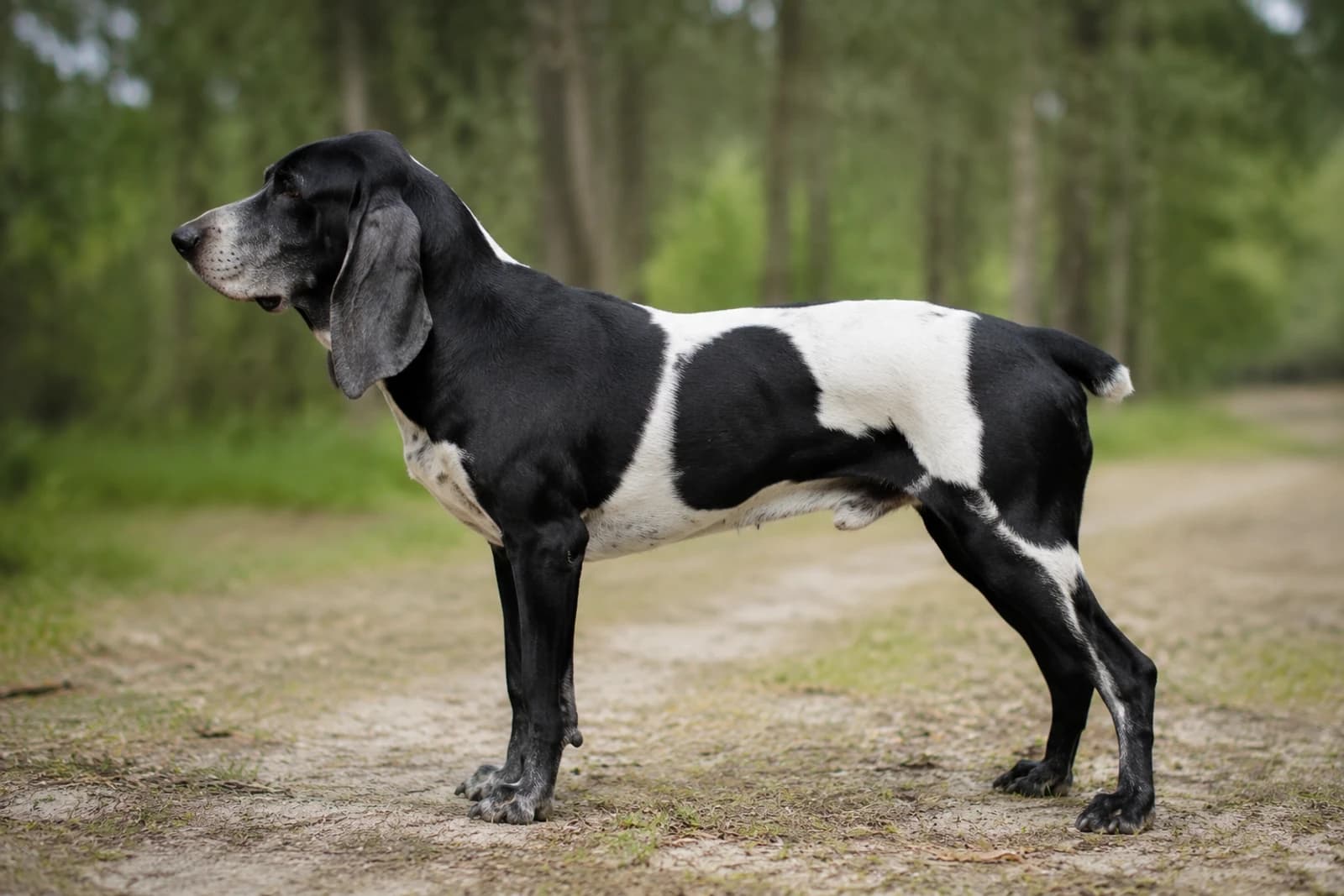
The Artois Hound is a large, energetic scenthound best suited for active, experienced owners who can provide ample exercise and engaging scent work. Known for its affable and persistent nature, this French breed thrives in packs and forms strong bonds with its family. Its short, dense coat comes in tricolor or bicolor patterns. Early socialization is crucial to manage its high prey drive and strong baying voice, making it a perfect companion for rural or suburban homes with a fenced yard.
At a glance
- Size
- Large
- Height
- 21–23 in
- Weight
- 62–66 lb
- Life span
- 12–14 years
- Coat colors
- tricolor (black, white, tan), black and white, white and tan
- Coat type
- short, dense, and smooth
- Group
- Scenthounds
How much does a Artois Hound cost?
Adopt / rescue
$75–$400
Usually includes spay/neuter, first shots, and a microchip.
Buy from a breeder
$700–$2,000
From a reputable, health-testing breeder.
Approximate USD. Prices vary widely by region, breeder, pedigree, age, and coat colour — adopting is the lower-cost and recommended route. Avoid suspiciously cheap “breeders”; they’re often puppy mills.
Estimate the full cost of a Artois Hound →Artois Hound photos
Views
Front, side, rear and top — the full silhouette.Poses
How the breed sits, lies, moves and plays.Puppy to senior
The breed across its whole life.Expressions
The breed’s range of moods.Close-up details
Eyes, ears, nose, paws, tail and coat.Coat colors
The breed’s recognized colors.Click any photo to enlarge. We show the Artois Hound from every angle — three views, poses, life stages, expressions, close-ups, coat and colors.
Appearance & size
Standing 21 to 23 inches at the shoulder and weighing between 62 and 66 pounds, the Artois Hound is a medium-to-large scenthound built to cover rough ground at a steady trot all day. The overall silhouette is rectangular — body length slightly exceeds height at the withers — but the dog never looks long or low. Males tend to the upper end of those numbers; females are often an inch shorter and a few pounds lighter without losing substance.
Coat and color
The coat is short, dense, and lies flat against the body. It feels noticeably thick and just coarse enough to turn light rain, though it’s not harsh or wiry. That flat, weather-shedding jacket means less grooming for you than you’d expect for a working hound. The only color pattern that appears is a clear tricolor: a white base with large black patches or a black blanket, plus richly pigmented tan points. You see those tan markings above the dark eyes, on the cheeks, inside the long ears, and on all four legs. A white chest and white feet are typical, and the tail nearly always has a white tip.
Head and expression
The head is the breed’s most distinctive feature. The skull is moderately wide and slightly domed, with a stop that’s pronounced but never abrupt. The muzzle is straight, about as long as the skull, and ends in a broad black nose with well-opened nostrils. The eyes are fairly large, dark brown, and set wide apart — the expression is gentle and a little soulful, never sharp or suspicious. But the ears really draw your attention. They’re set at eye level, broad, and so long that when you pull one forward it easily reaches the tip of the nose. The leather is thin, slightly twisted, and hangs flat against the cheek. A trace of dewlap under the neck is normal and adds to the old-school houndy look.
Body, tail, and how it stands
From the front, the chest is moderately broad and the forelegs are straight, with strong bone and compact, round feet. Viewed from the side, the chest drops well down to the elbows and the ribs are long and nicely sprung, giving plenty of room for heart and lungs. The back is level and firm, the loin broad and muscular. The hindquarters look powerful without being bulky — thighs are well-muscled, and the hocks are parallel and let down. The tail is thick at the base, tapers gradually, and is carried saber-style, rising just above the line of the back when the dog moves. It never curls over the back. When the hound is working a scent line, that tail waves steadily, a flag you can spot above the thickest cover.
History & origin
The Artois Hound came together in the Artois region of northern France, a place that still gives the breed its name. It’s an old hound, with records of similar-looking pack dogs going back to the 15th century, though the type we’d recognize today really solidified in the 1600s. These dogs descended from the now-extinct Grand Artois Hound and the smaller, more compact Picardy hounds, with the St. Hubert Hound — the legendary “bloodhound of the kings” — leaving a heavy print on the line. That lineage gave the Artois Hound its relentlessly following nose and that deep, rolling voice that hunters could hear a mile off.
They were bred for one thing: hunting hare in a pack, often on foot. The Artois Hound had to push through thick underbrush, stay steady on a cold track, and run with enough stamina to keep a hare moving for hours without burning out. Nobility loved them. King Henry IV kept a pack, and Louis XIV’s kennels were full of them. For a couple of centuries, an Artois Hound at your side was a quiet flex — a dog that worked as beautifully as it looked.
Then history broke the breed almost completely. The French Revolution scattered aristocratic kennels, and the world wars hammered what remained. By the end of WWII, the Artois Hound was functionally gone, reduced to a handful of individuals that didn’t remotely represent the original type. In the 1970s, a few devoted French breeders, particularly a man named M. Mallard, set out to resurrect it. They gathered the last surviving dogs and carefully bred back toward the old standard, pulling in select Picardy and other French scenthounds where needed. It was a long, painstaking reconstruction — less a revival and more a deliberate rebuild from the blueprint.
Even today, the Artois Hound is rare. Most live in France, still used on hare, and the breed barely registers outside its home country. The FCI and UKC recognize it, but you won’t trip over one at a neighborhood dog park in North America. That rarity means anyone looking for a puppy will be talking directly to French breeders who are fiercely protective of the breed’s working character.
Temperament & personality
An Artois Hound is big, good-natured, and completely ruled by his nose. He stands 21–23 inches at the shoulder and carries 62–66 pounds without an ounce of nervous energy, giving him a calm, steady presence that settles easily into family life. At home you'll spot a loose, relaxed body and soft eyes when he's content—a head turn or a quick lip lick when he's feeling crowded tells you to ease up.
Driven by scent
This breed was built to trail game for hours, and that instinct colors every waking moment. He'll sniff the same spot, mark it with urine, and return to it later because the scent map is as real to him as the fence line is to you. Indoor accidents need an enzyme cleaner—anything less leaves an invitation to re-soil. On walks, he may drop a shoulder into something foul and roll with pure delight. Researchers have several explanations: some point to a scavenger ancestry that prized decay smells, others compare it to our own taste for perfume. Either way, a fenced yard and a long line are non-negotiable. Once his nose locks onto a scent trail, your voice can fade to background noise.
Living with the family
An Artois Hound is typically brave without being sharp, and watchful enough to announce a stranger with a deep, ringing bay. That's usually as far as his guard duty goes—he'll wag more than he'll ward. He's affectionate and sturdy, leaning into your legs and patient with kids who understand the rules. The big one: never interrupt him while he's eating. Any dog can develop food guarding if pressed, so let him have his meals in peace. Chewing is a lifelong need, not a phase. Puppies chew to explore and soothe sore gums, adults to keep their jaws strong and teeth clean. Give him proper outlets—tough toys, raw bones—and use a citrus or vinegar spray to steer him away from chair legs and shoes.
Training and independence
An Artois Hound makes decisions for a living, so he's not a push-button dog. He'll question a command that doesn't make sense to him, which means respectful consistency works far better than a heavy hand. Positive reinforcement, especially a high-value treat delivered right after he potties outside, builds real reliability. Isolation or long stretches of boredom can lead to anxiety-driven barking, so plan on plenty of human contact and a solid hour of real exercise every day—sniffy walks, a jog, or scent games. In return, you get 12–14 years with a loyal, even-tempered companion who rarely makes a fuss once his needs are met.
Good with kids, dogs & other pets
This hound’s default mode is patient and non-aggressive, which makes him a natural fit for a household with children. At 62–66 pounds, he’s substantial enough that a toddler’s accidental lean won’t knock him over, but any interaction with young kids requires close supervision — not because he’s sharp-tempered, but because his easygoing nature can make a child’s grabby hands something he’ll tolerate silently rather than walk away from. These dogs are deeply pack-oriented, so they hate being isolated or left outdoors for hours. Long absences from the family often produce whining, pacing, or destructive chewing.
With other dogs, an Artois Hound usually slips into the social order without drama. They read canine body language well and, true to their breeding as cooperative pack hunters, prefer to get along. A properly introduced adult rarely starts a scuffle, though boisterous puppy play may need a pause button if the hound grows weary.
Cats and small pets are the trickier category. Centuries of tracking game have wired a strong prey drive into this breed. A fleeing cat or a scurrying hamster can flip a switch that’s hard to turn off. Some Artois Hounds coexist peacefully with a confident indoor cat they’ve known since puppyhood, but you should never count on it. Homes with rabbits, guinea pigs, or free-roaming birds are a genuine risk without heavy management and completely separate living areas.
Solid relationships with kids, dogs, and other animals rely on early and ongoing socialization. The critical window runs from about three weeks to four months; during that stretch, a puppy needs calm, positive encounters with people of all ages, strange dogs, busy streets, and odd surfaces under his feet. Puppies raised in isolation — like those from puppy mills — often grow into fearful adults that spook at loud noises, overreact around other dogs, or panic at vet visits. You can still chip away at timidity after sixteen weeks, but forcing a fearful adult dog into crowded social situations tends to make things worse. An older Artois Hound who is already comfortable keeping his world small — just you and a few trusted friends — doesn’t need to meet every dog on the block to live a full, contented life.
Trainability & intelligence
An Artois Hound learns fast when there’s a scent involved — but that doesn’t mean he’s itching to obey your next command. His intelligence is shaped by centuries of independent hunting: he was bred to follow a trail, make decisions on his own, and stay with the scent until the hunter caught up. That independence can feel like stubbornness in a living room. He’s not a push-button obedience dog. He’s thinking, “What’s in it for me?” — and if the answer isn’t better than the squirrel he just smelled, you’ll lose his attention instantly.
Motivation matters more than drilling repetitions. High-value food rewards — bits of cooked chicken, freeze-dried liver — work far better than a pat on the head. Pair treats with a cheerful voice, and you’ve got a currency he’ll actually work for. Keep sessions short, maybe five to ten minutes, and stop before his nose drifts. If you go too long or get repetitive, he’ll mentally check out and start sniffing the floor.
Recall is the make-or-break command. A trailing Artois Hound goes temporarily deaf; his entire brain tunnels onto the scent line. Build a solid recall starting in a quiet fenced yard, using a long line and rewards so incredible he can’t ignore them. Practice it hundreds of times before you even consider an unfenced field. Never punish a slow recall — that only teaches him that coming back ends the fun. If he thinks you’re a buzzkill, next time he won’t come at all.
He’s sensitive under that tough scent-hound exterior. Harsh corrections or yelling will damage trust and can make him shut down or become hand-shy. This breed responds to patience, clarity, and relationship-building — not domination. Early socialization is non-negotiable. Expose an Artois puppy to as many different people, dogs, surfaces, and sounds as you can between 8 and 16 weeks old. Without it, he can become suspicious of strangers or overly reactive to new situations. Keep those exposures positive and low-pressure, letting him investigate at his own pace. That steady, consistent foundation is what turns a bright-but-headstrong scenthound into a calm, cooperative adult who still gets to be a dog.
Exercise & energy needs
Plan on giving this hound a real job every day, or he’ll create one you don’t like. The Artois Hound was bred to cover miles in rough country behind a pack, and that deep-burning endurance doesn’t fade just because he’s living in a house. At least 60 to 90 minutes of movement each day is a baseline — and a quick leashed walk won’t cut it. Split it into two sessions: a long, sniffy ramble or off-leash run in a secure area in the morning, and another 30-minute workout or scent game in the afternoon.
- Intensity matters. This is a galloping breed, not a plodder. Where safe, let him open up in a fenced field, a Sniffspot, or on a long line in a wooded trail. Jogging alongside a bike (once growth plates close, after about 18 months) can help burn the engine.
- Scent work is non-negotiable. Physical exercise alone won’t settle a scenthound’s brain. A 15-minute session following a hidden treat trail or working a puzzle toy that requires nose precision tires him out faster than another mile on pavement. Nose work classes, tracking, or barn hunt are all excellent outlets.
- Good news: an Artois Hound that gets his needs met is calm indoors, not a restless wreck. Bad news: skip a few days and you’ll see how fast he invents his own entertainment — usually loud, destructive, or escape-artist material.
Puppies and young dogs under two years should stay on soft footing and avoid repetitive hard-surface pounding. Responsible growth management means letting them set the pace and stopping when they’re tired, not pushing through. Once mature, the breed is sturdy and built for the long haul, but that nose will pull him into trouble if recall isn’t solid — invest in a tracking harness and GPS collar for off-leash adventures. A tired Artois Hound is a content, quiet companion. A bored one can dig a crater in your couch with the same dedication he’d put into unearthing prey.
Grooming & coat care
The Artois Hound’s coat is a short, dense, no-nonsense working jacket that wants very little from you. A bristle brush or a rubber curry mitt run over the body once or twice a week pulls out dead hair and spreads the natural oils that keep the tricolor pattern shiny. Skip the slicker and comb—this coat won’t mat, and the occasional burr from a field run picks right out with your fingers.
Bathing is an as-needed thing. The coat stays surprisingly clean and low-odor when the dog is healthy, so plan on a bath every two or three months, or after a truly swampy romp. Use a mild dog shampoo; you’re just rinsing off mud, never stripping the weather-resistant oils the skin needs.
Ears and nails are where the real routine lives. Those long drop ears fold moisture and debris into a quiet trap. Flip each ear once a week, take a sniff, and wipe out visible dirt with a vet-approved cleaner. Any dark, yeasty smell or sudden head-shaking means get on an infection fast. Nails on this 62–66 lb running machine grow hard and fast—if you hear clicking on the floor, they’re overdue. Clip or grind them every three to four weeks to prevent splayed toes and joint strain. Brush teeth daily, or several times a week at minimum, to stay ahead of tartar buildup.
During the spring and fall shed, you’ll notice a real spike in loose hair. Bump brushing to every other day for two or three weeks and you’ll keep the couch from turning tricolor. A solid off-leash run helps the old coat blow out faster, too. Fair warning: a clean Artois Hound can still bring home a faint field scent—it’s part of the package, but regular brushing and the occasional rinse keep it from taking over the house.
Shedding & allergies
An Artois Hound sheds more than you might expect from a dog with a short, tight coat. This is a steady, year-round moderate shedder—you’ll find fine white and orange hairs woven into furniture, baseboards, and car upholstery. Twice a year, usually in spring and fall, the shedding kicks into a full-on blowout that leaves drifts of hair in corners if you skip brushing for a couple of days.
The coat itself is dense and smooth, built to withstand brambles and wet weather. A quick weekly once-over with a rubber curry brush or a hound glove pulls out a surprising amount of dead hair and keeps the worst of it off your floors. During seasonal peaks, daily brushing makes a real difference. Baths help loosen the dead coat, but don’t overdo it—too much washing dries out the skin and can actually increase shedding.
Drool is present, though not as theatrical as in some other scenthounds. You’ll see wet jowls after drinking, a few drips while you’re preparing dinner, and maybe a slobber string after a long sniffy walk. Keep a drool rag handy near the water bowl.
On the allergy front: no, this is not a hypoallergenic breed. All shedding dogs release dander and saliva proteins into the home, and the Artois Hound’s steady hair turnover means plenty of both. If someone in your household has significant dog allergies, this is a breed to skip. A good vacuum with a HEPA filter helps, but it won’t solve the underlying issue. You’re signing up for fur that clings to dark pants and a fine dust of hair in the sunlight—manageable if you’re not allergic, miserable if you are.
Diet & nutrition
How much to feed an adult Artois Hound
An Artois Hound that gets a solid hour of off-leash running or scent work most days will burn more fuel than one who’s a weekend warrior. For a 62–66 lb adult, start with about 1,600–1,800 calories per day, which works out to roughly 3 to 4 cups of a high-quality dry kibble split into two meals. Check the bag — calorie density varies a lot between brands. If your dog is dragging you on five-mile runs or hunting hard, bump that up; if he’s slowing down, pull it back before the ribs disappear under padding.
These dogs often come with a serious food drive. Measure every meal with a real measuring cup, not a coffee mug, and resist the urge to refill the bowl just because those hound eyes are working you. Free-feeding is a recipe for a sausage-shaped scenthound.
Puppy feeding schedule
Artois puppies grow fast and need fuel spaced out across the day.
- Up to 4 months: four evenly spaced meals
- 4 to 6 months: three meals
- After 6 months: two meals, just like the adults
Transition a new pup to your chosen food gradually. Start with lightly cooked, puréed meats, fish, and soft fruits and vegetables, or a high-quality large-breed puppy kibble. Around 12 weeks, raw chicken wings (under supervision) can be introduced for jaw exercise and mental stimulation.
Keeping weight in check
A lean Artois Hound is a healthier Artois Hound. Like many large breeds, they can be prone to joint stress, so extra pounds put real strain on hips and elbows. Run your hands along his sides weekly — you should feel the ribs with a thin layer of fat, not need to dig for them. If his waist starts to vanish, cut daily portions by about 10% and increase exercise before you see a full-blown weight problem.
If your dog inhales meals, a food puzzle bowl slows him down, adds mental engagement, and can help prevent bloat — a concern in deep-chested breeds. The mental workout often takes some of the edge off that hollow-leg hunger.
What a balanced meal looks like
A practical target for homemade meals: about 60% raw or cooked meat, 20–30% fruits and vegetables, and 10% other ingredients like eggs, plain yogurt, or grains. Because dogs’ jaws move vertically and they lack salivary digestive enzymes, blending or lightly processing the veggie-and-fruit portion aids nutrient absorption. You don’t need to purée everything into baby food, but think “roughly chopped and slightly mashed.”
For sensible grains, pearl barley is a digestible, high-fiber option — useful if your hound tends toward loose stools. White rice is bland and gentle when a stomach is upset. Cook extra batches of grains, veggies, or lean proteins on the weekend so you can assemble a quick meal on busy days. A mix of canned fish (in water, no salt), scrambled eggs, and steamed vegetables makes a solid, no-fuss dinner.
Never pour holiday pan drippings or rich, fatty leftovers over the food. That one indulgence can trigger pancreatitis, and Artois Hounds aren’t known for resisting a greasy bribe. If you do share safe leftovers like plain cooked carrots or a bit of chicken, put them in his own bowl — not from the table — so you don’t accidentally create a begging machine that drools through every meal.
Senior adjustments
As your Artois Hound hits his golden years (12–14 is a good run), his metabolism will likely slow down. Monitor his weight monthly and cut food gradually if he’s getting less exercise. Smaller, more frequent meals can be gentler on an aging digestive system. There’s no strong evidence you need to slash protein for a healthy senior, so stick with quality meat. If teeth are missing or his mouth is sensitive, purée the meals to help him absorb nutrients without struggling.
Skip the vegetarian or vegan route entirely. This breed’s teeth and gut are built to process meat; a plant-based diet deprives him of the nutrients his physiology expects. Keep the meals species-appropriate, keep the portions measured, and you’ll keep him moving comfortably for years.
Health & lifespan
A healthy Artois Hound typically lives 12 to 14 years — a solid run for a large scenthound. That lifespan doesn’t happen by accident. It’s built on a few key habits and honest conversations with your vet and breeder.
Large, deep-chested dogs like this one can be prone to bloat (gastric dilatation-volvulus) , a life-threatening emergency where the stomach twists. Feed two or three smaller meals a day instead of one big one, and don’t let your hound tear around the yard right after eating. Some owners opt for a preventive gastropexy surgery during spay or neuter — worth discussing with your vet.
Floppy, well-set ears are part of the breed’s charm, but they trap moisture and wax. Weekly ear checks with a gentle cleaner keep infections at bay. Artois Hounds can also inherit hip or elbow dysplasia — responsible breeders screen breeding stock through OFA or PennHIP evaluations and share those clearances openly. Eye exams by a veterinary ophthalmologist are similarly routine in conscientious breeding programs, since several large hound lines carry risk for progressive retinal atrophy and other hereditary eye disorders.
Weight management matters here more than many owners expect. A fit Artois Hound stays around 62 to 66 pounds — not a soft 75. These dogs are driven by their noses at mealtime, so measure kibble, limit treats, and keep the ribs easily felt under a thin layer of flesh. Even a few extra pounds accelerate joint wear and shorten those good years.
Skin allergies and hot spots pop up in some lines, often triggered by diet or environmental allergens. A high-quality food with balanced omega fatty acids and prompt attention to scratching can head off secondary infections.
Standard preventive care isn’t optional. Rabies vaccination is legally required and there’s no cure once symptoms show. Give a monthly heartworm preventive during mosquito season and for a full month after it ends. Annual bloodwork and physicals catch subtle changes — a dip in appetite, a drop in activity — before they become big problems.
A well-bred Artois Hound with consistent ear care, a lean waistline, and yearly vet exams is in the best position to hit that 14-year mark.
Living environment
This is a pack-bred scenthound with a deep, carrying bay that won't make you any friends in an apartment building. A single-family home with a securely fenced yard is almost a non-negotiable, because once that nose locks onto a scent, the Artois Hound can bolt after a rabbit or squirrel without a second thought. A 62–66 lb, 21–23-inch-tall dog doesn't need a sprawling estate — but a tight walk-up with shared walls will amplify every melodious howl, and you'll hear about it. Expect barking alerts at passersby, strange noises, and the occasional bout of vocalizing for the sheer joy of it.
Yard and space needs
You'll want a solid 5- to 6-foot fence that's dug in or reinforced at the base — these dogs can climb and dig if motivated by a strong whiff of game. A yard is a good place for them to air-hunt on scent trails, but a yard alone isn't enough exercise. Plan on at least two brisk, sniff-heavy walks a day totaling 60 minutes or more, plus puzzle toys, scent work, or hide-and-seek games to work the brain. Without that, a bored Artois Hound will redecorate your yard or house with excavation projects and operatic soliloquies.
Tolerance for being left alone
This isn't a dog you can leave for a 10-hour workday with a quick potty break. They're affectionate, people-focused, and built for pack living; extended isolation can lead to howling, destruction, and anxious pacing. If you work from home or can come home midday, they'll fare much better. Gradual desensitization to alone time in puppyhood and plenty of physical and mental exercise beforehand go a long way. But if your lifestyle keeps you away often, you're staring at a dog that will make its unhappiness loud and clear.
Climate and comfort
Their short, dense coat gives them a moderate tolerance for damp, cool weather — understandable for a breed developed in northern France. That said, 62–66 lb of solid muscle doesn't mean impervious to cold; limit outdoor time in freezing weather and offer a warm, dry place to sleep. Hot, humid days are tougher. Move walks to early morning or evening, and always have fresh water and shade when they're outside. They'll melt indoors just as fast as any other large breed in a heat wave.
Strike the right balance — a house, a secure yard, a person or family around more often than not — and the Artois Hound settles into a calm, gentle housemate. Live in an apartment or leave them alone for long stretches, and the noise and anxiety will be a hard conversation you keep having with your neighbors.
Who this breed suits
If you hunt hare over open country or spend every weekend on long, scent-driven hikes, an Artois Hound will look at you like you finally speak the same language. This is a deep-voiced, tireless scenthound built to work in packs, and it needs an owner who truly understands drive. First-timers and city apartment dwellers should think twice—not because the dog is difficult, but because it’s uncompromising.
Who fits best
- Active, outdoorsy singles or couples who live rural or on acreage. A bored Artois Hound in a suburban backyard will serenade the neighborhood with a booming bay and redecorate your fence line. They need a solid hour of off-leash running or structured long-line tracking work daily, not a stroll around the block.
- Hunters and scent-work enthusiasts. This breed’s whole purpose is to find game, give voice, and keep going through rough cover. If you want a partner for tracking, trailing, or hunting hare and roe deer, the Artois slots right in. Their nose is non-negotiable, and they expect you to respect it.
- Pack-minded, experienced dog owners. Artois Hounds were bred to work closely with other dogs, so they tend to be dog-social and do well in multi-hound households. They also respect a calm, fair leader who knows how to motivate a scent-obsessed brain without head-butting their independence.
- People who can tolerate (or enjoy) a loud, musical hound voice. These are not quiet dogs. They bay when on scent, when excited, and sometimes just to announce the arrival of a squirrel two blocks over.
Who should think twice
- Apartment or condo dwellers. At 62–66 pounds, 21–23 inches, and with a voice that carries, this dog is a hard fit for close quarters. Noise complaints and insufficient exercise are almost guaranteed.
- First-time dog owners. Artois Hounds are steady-natured, but they combine high exercise needs with a stubborn streak bred into them through generations of independent decision-making in the field. Training requires patience and realistic expectations—recall off a hot scent is never a promise.
- Families with very small children or tiny pets. They are gentle and pack-oriented with their own people, but a sprinting toddler or a free-range hamster can trigger that prey drive. Supervision is critical. With sturdy older kids who like to run, they can be a blast.
- Anyone wanting a Velcro lap dog. Artois Hounds are affectionate without being needy. They’ll lean against your legs and snuffle your ears, but they won’t melt into the sofa with you all day. Twelve to fourteen years is a long commitment if you secretly wanted a couch potato.
Cost of ownership
Purchase price
An Artois Hound puppy from a reputable breeder who screens for hip dysplasia and ear issues will typically run $1,500 to $2,500. This is a rare scent hound outside its native France, so a waitlist is common and you may need to travel or pay shipping to bring a pup home. Adoption through a breed-specific rescue is possible but rare — expect fees around $200 to $500 if you’re lucky enough to find one.
Monthly upkeep
Feeding a 60–66 lb athlete isn’t cheap. Figure on $70–$90 a month for high-quality dry food (roughly 4–6 cups a day, split into two meals, depending on activity). Grooming is low-effort: a short, smooth coat needs just a weekly brush and the occasional bath. If you do it yourself, supplies might average $10–$15 per month. But those floppy ears need weekly checks and cleaning to head off infections — a recurring expense if you rely on a vet or groomer.
Veterinary and preventive care add the real weight. Flea, tick, and heartworm preventives for a large dog run $30–$50 a month. An annual exam with vaccines and bloodwork can land between $300 and $500, so set aside another $25–$40 per month. This breed can be prone to bloat and hip trouble, so a solid pet insurance policy is wise — budget $40–$70 a month for decent coverage.
One-time and extras
- Crate, bed, leash, collar, bowls, and initial toys: $300–$500 upfront.
- A group obedience class or two (scent hounds have a stubborn streak): $150–$300 for a six‑week session, often worth every penny.
- Ongoing treats, poop bags, and the odd chewed-up toy: $30–$50 monthly.
All told, you’re looking at a baseline of $150–$250 per month in routine costs once the dog is settled, not counting the first year’s training classes and equipment. A 12–14-year lifespan makes that a long-term commitment.
Choosing a Artois Hound
Start by accepting that an Artois Hound puppy won’t be waiting for you on the first breeder website you click. Rescuing one is even harder. The breed’s numbers are so low—primarily clustered in France and a few European kennels—that a purebred rarely surfaces in a shelter or rescue outside its native country. If you’re determined to go the rescue route, widen your net to scenthound-specific groups or reach out to the Club du Chien d’Artois in France; occasionally, an adult dog needs rehoming when a hunter can’t keep it. Be ready for a long wait and international logistics. For most families, a well-vetted preservation breeder is the only realistic path.
Health clearances that matter
At a minimum, demand proof of hip screening. The Artois Hound’s large frame and working style put stress on the joints; responsible breeders x-ray and submit results to the Orthopedic Foundation for Animals (OFA) or use PennHIP. Ask for the actual reports, not a verbal promise. Look for an OFA rating of Fair or better, or a PennHIP distraction index below the breed’s median—the breeder should know that number cold. An eye exam by a board-certified veterinary ophthalmologist (documented through OFA Eye or CERF) is equally non-negotiable. Some breeders also screen elbows, but hips are the big one. Beyond that, press for details about ear care. Those long, floppy ears trap moisture and debris; a breeder who won’t discuss cleaning routines and the line’s history of infections is skipping a daily reality of scenthound ownership.
Red flags that signal you should walk away:
- Can’t show you the sire and dam’s health certificates, or offers excuses instead of paperwork.
- Has puppies ready to go year-round—a tiny breed like this doesn’t produce frequent litters.
- Won’t let you visit and meet at least the mother on her home turf.
- Pushes for a quick sale without asking about your experience with scent hounds, your yard, or your noise tolerance (Artois Hounds bay loudly on trail).
- Says the line is “naturally healthy” without proof, or dismisses hip testing as unnecessary for a working dog.
Choosing the right pup
Once you’ve found a breeder you trust, spend time watching the litter interact. You want a middle-of-the-road puppy—not the one cowering under a deck and not the one bulldozing over its siblings. A well-bred Artois Hound pup will approach with a wagging tail, give you a quick sniff, then go back to wrestling. Pay attention to the mother. She should be calm but alert, tolerant of strangers yet clearly bonded to her owner—a glimpse of the adult temperament your puppy may inherit. Ask about early scent games, crate introduction, and how the breeder handled short separations; puppies raised in a quiet kennel alone often struggle with household noise. A good breeder will have a stack of questions for you, too. Expect to be grilled about your plans for exercise, confinement, and why you specifically want a rare French scenthound. The best signal isn’t an instant sale—it’s a breeder who makes you wait.
Pros & cons
Pros
- A true scenthound that bonds deeply with the household — calm and patient indoors, often excellent with children who treat it respectfully.
- Moderate size (62–66 lb) strikes a sweet spot: large enough for a day in the field, not so big you dread the daily routine.
- Coat care is refreshingly simple. The short, dense fur sheds, but a quick weekly brushing and the occasional wipe-down keep it looking good.
- That voice. The Artois Hound gives a deep, rolling bay that hound people adore — and it only really hits full volume on the trail, not for every squirrel.
- Built for stamina with a typical lifespan of 12–14 years, so you get a decade-plus with a hardy partner.
Cons
- A nose that runs the show. At home, this dog is a sweetheart; outside, a single rabbit scent can flip the switch to selective deafness. Off-leash reliability is a project, not a guarantee.
- Exercise requirements are non-negotiable. A walk around the block doesn’t scratch the itch. Figure at least an hour of hard running, long-line tracking games, or scent work daily — or you’ll see it in the landscaping.
- That same voice becomes a liability in close quarters. An Artois left alone in the backyard can serenade the neighborhood for hours.
- Stubborn “what’s in it for me?” thinking makes training a negotiation. Positive methods and patience win; force or repetition wear you out first.
- As a rare breed, finding a well-bred puppy can mean a long wait, and the smaller gene pool means you should press for whatever health screening the breeder actually does.
Similar breeds & alternatives
If the Artois Hound’s blend of steady nose and pack-oriented temperament appeals to you but you’re weighing other scenthounds, a few breeds tug at the same instincts with differences that matter for a family or hunting home.
Porcelaine
The Porcelaine shares the French pack-hound heritage and a similar height (21–23 inches) and lifespan (12–14 years), but it’s lighter (55–62 lb) and wears a glossy white coat with orange ticking instead of the Artois’s tricolor mantle. Both are deep-mouthed trailers bred for hare, but the Porcelaine tends to be a bit more sensitive and less hard-edged in the house; the Artois can be sharper and more independent when not working. If you want the same size category but a slightly easier, softer-natured hound, the Porcelaine is worth a look.
Harrier
Often described as a smaller English Foxhound, the Harrier stands 18–22 inches and weighs 45–60 lb — noticeably smaller than the Artois, but still a baying pack hound built for long days on hare. Harriers are more common in the US, with established breeders and a deeper rescue network. Their temperament is easygoing and sociable, though they can be vocal. The Artois is rarer, typically a bit larger and stockier, and often shows more intensity in the field. If you want a hound that’s easier to source while keeping that pack-hound grit, the Harrier is a practical alternative.
English Foxhound
If the Artois’s stubborn, big-hearted drive appeals and you have room for something heavier, the English Foxhound reaches 23–25 inches and 65–70 lb. They share the pack mentality and need for company (human or canine) but were developed for fox rather than hare, so they tend to be a trifle more biddable with consistent training. The Artois, with its black-and-tan mantle on a white background, has a distinct look; the English Foxhound comes in richer coat variations. The Artois’s bark is notably deeper and more rolling than the Foxhound’s, a small but real difference if you live close to neighbors.
Basset Hound
For a scenthound that dials down the exercise demand, the Basset Hound sits at the opposite end of the size and speed spectrum: 11–15 inches tall and 40–65 lb of low-slung, steady-sniffing determination. Bassets share the Artois’s single-minded nose and pack-friendly nature but don’t require hours of hard running. The Artois needs a solid hour of off-leash trotting or running; a Basset is content with a couple of long, ambling walks and a fenced yard. If the Artois’s stamina gives you pause, the Basset trades speed for a quieter, more apartment-friendly life while keeping that hound-bellow and scent obsession.
The Artois’s tricolor coat and low-pitched, resonant voice are distinctive, but you’ll wait longer for a puppy than you would for a Harrier or English Foxhound. If rarity and a true French pack-hound intensity are what pull you, the Artois delivers — just be ready for a dog that lives to follow its nose in the company of others.
Fun facts
- The Artois Hound is one of the oldest French scenthound breeds, originally bred to hunt hare and other game in packs.
- Known for their exceptional nose and stamina, they excel in trailing over long distances.
- The breed nearly went extinct after World War II but was revived by dedicated breeders.
- They have a distinctive, melodious voice that carries far, a trait valued by hunters.
Frequently asked questions
- Are Artois Hounds good with children?
- Artois Hounds can be affectionate and loyal with their families, but their independent and energetic nature means interactions with young children should be supervised. Early socialization and training help ensure a gentle and patient temperament.
- How much exercise does an Artois Hound need?
- This breed has a high energy level and needs at least an hour of vigorous exercise daily, such as long walks, jogs, or scent-tracking games. Without enough physical and mental stimulation, they may become restless or develop undesirable behaviors.
- Do Artois Hounds shed a lot?
- Artois Hounds shed moderately, so you can expect some loose hair around the home. Weekly brushing helps manage shedding and keeps their short coat healthy.
- Are Artois Hounds easy to groom?
- Grooming an Artois Hound is relatively simple; their short, dense coat requires only occasional brushing and baths when necessary. Regular ear checks and nail trims are also important parts of their care routine.
- Can an Artois Hound live in an apartment?
- Artois Hounds are not ideal for apartment living because they are large, energetic dogs that thrive with space to roam. They can also be vocal, which may disturb neighbors, so a home with a securely fenced yard is better suited.
- Are Artois Hounds suitable for first-time dog owners?
- This breed's independent and determined personality can be challenging for novice owners. Experienced handlers who can provide consistent training and plenty of outlets for their energy tend to have more success.
Tools & calculators for Artois Hound owners
Quick estimates tailored to Artois Hounds — pre-filled with this breed’s size where it matters.
Articles & stories about the Artois Hound
Sources & standards
This profile follows recognized breed standards from the American Kennel Club (AKC) and the Fédération Cynologique Internationale (FCI), along with established veterinary and breed-club guidance. These describe general breed tendencies — every dog is an individual.
Owner stories
Have a Artois Hound? Share your experience — grooming tips, personality quirks, anything goes.