

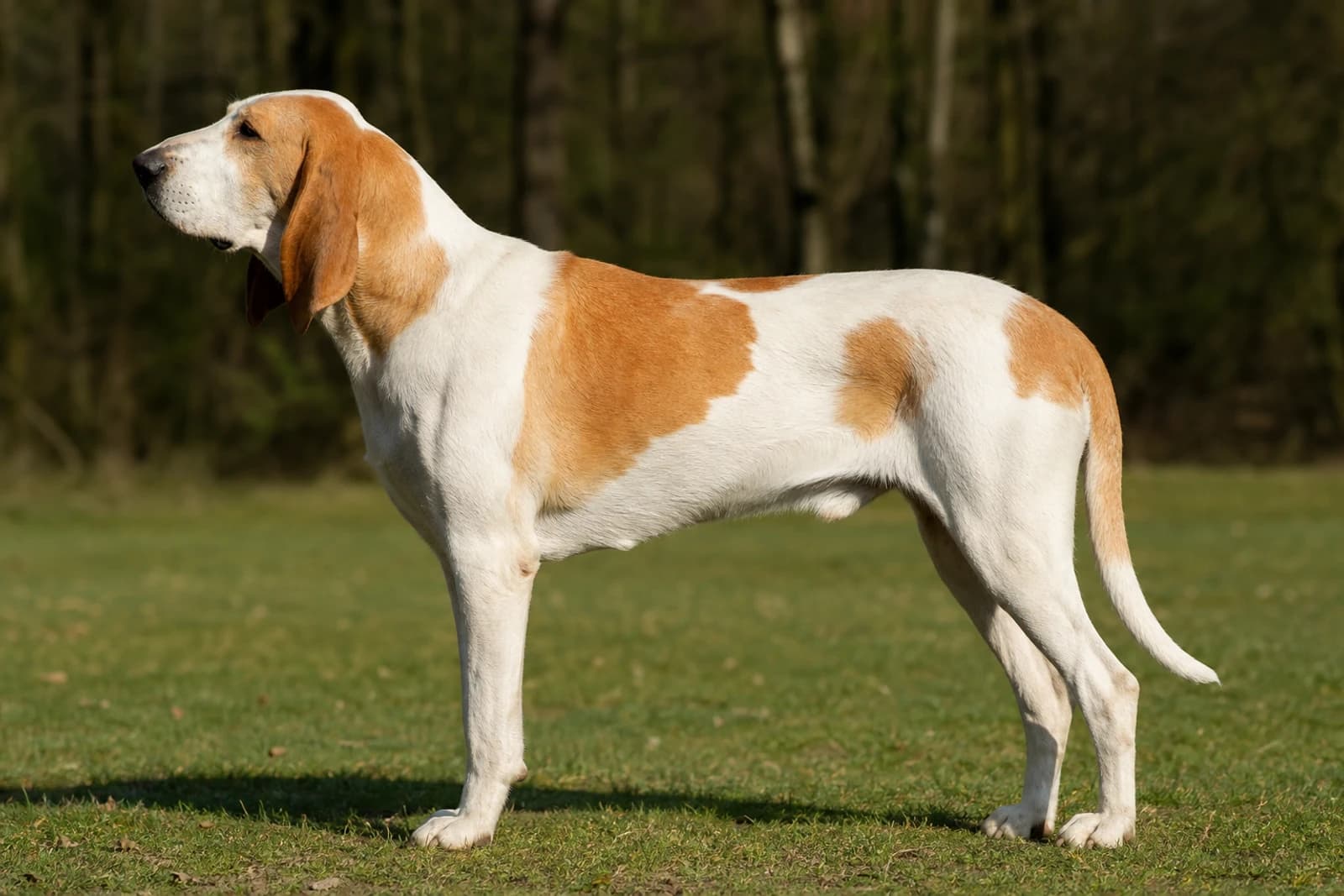
The Billy is a rare, giant-sized scent hound from France, prized for its exceptional hunting prowess and affectionate, pack-oriented nature. Standing up to 28 inches tall and weighing up to 73 pounds, this athletic breed suits active owners who can provide ample exercise and mental stimulation. With a gentle, loyal temperament, Billies thrive in homes with yards and do best with experienced handlers familiar with scent hounds. Their short coat requires minimal grooming, but their strong prey drive and vocal nature demand understanding. Ideal for families with older children or active singles, they excel as both hunting partners and devoted companions.
At a glance
- Size
- Giant
- Height
- 23–28 in
- Weight
- 55–73 lb
- Life span
- 12–13 years
- Coat colors
- White & Orange, White & Lemon, Tricolor
- Coat type
- Short, smooth, and dense
- Group
- Scenthounds
How much does a Billy cost?
Adopt / rescue
$75–$400
Usually includes spay/neuter, first shots, and a microchip.
Buy from a breeder
$700–$2,000
From a reputable, health-testing breeder.
Approximate USD. Prices vary widely by region, breeder, pedigree, age, and coat colour — adopting is the lower-cost and recommended route. Avoid suspiciously cheap “breeders”; they’re often puppy mills.
Estimate the full cost of a Billy →Billy photos
Views
Front, side, rear and top — the full silhouette.Poses
How the breed sits, lies, moves and plays.Puppy to senior
The breed across its whole life.Expressions
The breed’s range of moods.Close-up details
Eyes, ears, nose, paws, tail and coat.Coat colors
The breed’s recognized colors.Click any photo to enlarge. We show the Billy from every angle — three views, poses, life stages, expressions, close-ups, coat and colors.
Appearance & size
When you spot a Billy, what hits you first is that mix of raw athleticism and remarkable cleanliness — a tall, pure-white hound built to cover ground all day without carrying an ounce of extra weight. This is a giant scenthound that stands 23 to 28 inches at the shoulder and weighs 55 to 73 pounds, with the upper end usually seen on big, working males. The bone is strong but refined, never heavy, so the dog looks elegant rather than bulky.
From the front, the chest is deep and fairly narrow, letting the elbows move freely against the ribcage. The shoulders are laid back and muscular, and the front legs are straight and long, ending in tight, oval feet. The neck rises cleanly out of the shoulders, long and slightly arched, without any throatiness.
Stand off to the side, and you’ll see a level topline that runs from the withers to the hipbones — no dip, no roach. The back is firm and well-muscled, the loin broad and short-coupled. The underline tucks up noticeably behind the ribcage, which is exactly what you want in a dog bred for stamina. The hindquarters are powerful, with a moderate angulation that drives the dog forward in an easy, ground-covering trot. The tail is a natural extension of the spine, thick at the base and tapering to a fine point, carried jauntily when the dog is on scent.
Moving to the rear, the thighs are well-developed without being bunchy, and the hocks sit low to the ground. The dog looks balanced and ready to leap a ditch or navigate thick cover.
The coat is short, smooth, and lies flat against the body — you’ll feel a fine, dense texture that sheds dirt and water easily. Color is straightforward: pure white, ideally with distinct orange or lemon patches on the head and body. Many dogs show a solid white head with a colored ear, or a white body with a few large, well-placed colored spots. A fully white coat is allowed, too, though patches are the more common pattern. You’ll occasionally see light ticking on the white areas, but heavy ticking or speckling is not typical.
The head deserves its own close look. The skull is slightly domed, the muzzle long and square-tipped, with a gentle stop. The nose is black or brown, depending on the coat. Ears are set on at eye level, medium-length, and hang in a slight fold — never dragging, but long enough to sweep scent toward the nose. Eyes are dark-rimmed and give an alert, open expression. The overall picture is a hound that’s unmistakably built for the hunt: balanced, light on its feet, and wearing a coat you can rinse clean in under a minute.
History & origin
The Billy is a French creation, purpose-built in the 19th century for one thing: hunting big game in a pack that could cover miles without tiring. Unlike many breeds that evolved slowly over centuries, the Billy has a single architect — an obsessed sportsman named Gaston Hublot du Rivault. He lived in the Poitou region of western France on an estate called Château de Billy, and he wanted a hound that could handle wild boar and roe deer in the sprawling, brushy forests there.
To get there, he blended lines from several now-extinct French scenthounds. The main contributors were the elegant, pure-white Céris, the tricolored Montaimboeuf, and a type known as the Larrye, which brought exceptional nose and voice. Rivault’s keen eye and strict selection produced a tall, lean, strikingly light-colored hound — mostly off-white, sometimes with orange or lemon patches — built for a loping, effortless gallop. By 1886, the breed was recognized by the French Kennel Club and had picked up the name of its breeder’s home.
For decades, Billy packs were prized among dedicated hunters. Then the world wars hit. Like so many European breeds, the Billy was nearly wiped out. By the 1970s, only a handful of hounds remained, and the breed was teetering on the edge of disappearance. A determined handful of fanciers — notably the son of former French president François Mitterrand — gathered the last individuals and carefully nursed the gene pool back. Even today, the Billy is a rare sight. Only a few thousand exist worldwide, most still in France, where they continue to work in large hunting packs. In other countries, you’re far more likely to meet one at a scent trial or a hound-specific event than on the average walking trail. For a breed that stands 23 to 28 inches at the shoulder and weighs up to 73 pounds, it’s an incredibly elegant, light-boned dog — a living piece of French hunting history that still runs with the same single-minded purpose Rivault bred into it.
Temperament & personality
The Billy doesn’t just follow his nose — his nose runs the show. He’s a big, good-natured scenthound built for pack life, and everything about his temperament flows from centuries of hunting in noisy, fast-moving groups. At home, that translates to a dog who’s cheerful, sociable, and surprisingly laid-back indoors, but also one who needs you to understand that “just a quick walk” will never satisfy him when a scent trail beckons. Expect him to be friendly with people and other dogs — this isn’t a suspicious or guardy breed — but his sheer size and booming bay can overwhelm small children, so supervision matters.
Affection with his own people runs deep, though he’s rarely needy. He’s more likely to lean against your leg or drape his head on your lap than to shadow you anxiously. However, ignore him for too long and he’ll get creative. A neglected Billy can become a loud Billy: boredom or isolation often spills out as excessive baying and destructive chewing. He’s not being spiteful; strong-willed hounds act out when their brains go unengaged. Respectful, consistent training — never heavy-handed — earns his cooperation far better than yelling. He wants to work with you, but he needs to see you as a leader worth following.
Watchfulness takes a unique form. He’ll alert bark when something smells off — the delivery truck, a neighbor’s cat three houses down — but he’s not a watchdog in the traditional sense. His body language tells you everything you need to know. A calm Billy stands loose-bodied, with soft eyes and a gently wagging tail. If his posture goes stiff and he stares intently, that’s tension building; a forward lean often means he’s about to bolt toward a scent, while a backward lean signals unease. Teach kids to read those signals, and to back off immediately if they see him yawn, lick his lips, or turn his head away. Those aren’t random quirks — he’s saying he needs space.
Perhaps the most notorious Billy quirk is his relationship to smell. He may roll in things you’d rather not name — dead fish, fox scat, mud that’s gone rotten. Scientists guess hounds do it to bring the “news” of a food source back to the pack, or simply because they like the way it smells, like a teenager dousing himself in cologne. Either way, keep an outdoor hose and a sense of humor handy. Indoors, his scent obsession plays out differently. A Billy can re-mark spots where he previously urinated, so accidents need an enzymatic cleaner or a vinegar spray to truly eliminate the odor; otherwise that spot becomes part of his mental map of the house. He also defines his territory by the scent of his family, which means a guest room that smells uninhabited might get treated as fair game. Reinforce outdoor elimination with a treat right after he goes, and you’ll build the habit fast.
Around his food bowl, be smart. A Billy’s good heart doesn’t mean he’s immune to resource guarding if someone startles him mid-meal. Children must learn to give him peace while he eats, and to never try to take something from his mouth. Offer plenty of legitimate chew outlets — his jaws need the workout, and chewing keeps his teeth clean and his mind busy. A homemade citrus spray on furniture you want him to leave alone can redirect that need without conflict. If you accept that his world is ruled by scent and give him outlets for that drive, you’ll have a steady, affectionate companion who’s as happy snoozing at your feet as he is tearing through the brush on a trail.
Good with kids, dogs & other pets
Billy’s patient, non-aggressive temperament makes him a calm presence around considerate kids. The real watchpoint isn’t attitude — it’s physics. At 55 to 73 pounds and up to 28 inches tall, a happy Billy can easily shoulder-check a toddler during a burst of zoomies or knock over a small child trying to join a cuddle pile. Close supervision around little ones is non-negotiable, not because he’ll snap, but because he doesn’t always know his own size.
With older, dog-savvy children, Billy slots in beautifully. He was bred to run in vocal, cooperative packs, so he reads social cues well and rarely defaults to irritation. Kids who can respect his rest time and avoid pulling ears will find a tireless playmate and a surprisingly gentle treat-taker. He’s a scent-driven dog, though — teach children that a Billy on a long line following his nose is not a dog who will stop on a dime.
Other dogs rarely rattle him. Most Billies remain dog-social into adulthood, especially if they’ve had regular, positive group play from puppyhood. Introductions on neutral ground set the tone, but a well‑run household with another balanced dog often means less loneliness and less destructive chewing — Billies hate being the only pack member for long stretches.
Cats and small pets are the honest sticking point. The Billy is a deep‑nose scenthound with a prey drive that wakes up fast when something small runs. A rabbit, guinea pig, or even a fleeing outdoor cat can trigger a hard‑wired chase that has nothing to do with aggression and everything to do with instinct. Some Billies coexist with an indoor cat they’ve been raised alongside, but that peace often depends on the cat’s confidence and a lifetime of management. If you keep pocket pets, they need secure, separate housing and zero free‑roam access — not as a precaution, but as a daily rule.
A critical socialization window falls before roughly 16 weeks old. Billies exposed gently — not flooded — to varied people, children, calm dogs, urban noises, and different surfaces during that time grow into steadier adults. Skip it, and you may get a dog who startles at strangers or shuts down in new places. An adult Billy who already leans timid doesn’t need forced meet‑and‑greets; gradual, positive exposure paired with a predictable routine helps him build confidence without tipping into fear.
Trainability & intelligence
A Billy will learn what you teach, but he won’t hand you the reins. These giant scenthounds are sharp, pack-oriented dogs with an independent streak that runs as deep as their nose. When a scent catches his attention, your voice has to compete with something far more compelling — so training builds from day one around a simple truth: you need to be more interesting than the trail.
Start early, stay consistent
Bring a Billy puppy home and begin shaping his world before 16 weeks. Exposure to new people, strange sounds, slick floors, and other animals during this window prevents skittishness later. Because Billys were bred to run in packs, they often settle well with other dogs, but their low-key sociability means you introduce new human faces gradually and positively. A well-socialized Billy is steady, not aloof.
Reward the brain you want
Positive reinforcement is the only approach that sticks. A Billy shrugged off by harsh corrections quickly shuts down or gets more stubborn — punishment poisons the trust you’re building. Instead, use treats, a favorite tug toy, or an upbeat “yes!” the instant he offers the right behavior. For recall work, especially, stash high-value rewards (tiny bits of cheese or freeze-dried liver) and practice in fenced spaces before expecting a reliable off-leash return. His nose will always lead, so “come” needs to predict something better than whatever rabbit just ran by.
Work with the independence, not against it
This breed isn’t a robot; he’ll weigh your requests before complying. Short, engaging sessions that feel like a job — scent games, hide-and-seek, or long-line tracking — tap into his natural drives and keep him bought in. Expect to repeat commands in new environments and never mistake his delayed response for stupidity. He’s calculating. Stay patient, stay consistent, and the 55-to-73-pound dog at the end of the leash becomes a biddable partner rather than a freight train.
Exercise & energy needs
You’re not just taking a Billy around the block. This is a big, driven scenthound built to follow his nose for hours over rough, brushy terrain. Plan on a solid 60 to 90 minutes of real movement every day, split into at least two sessions. One short morning stroll won’t cut it — and a tired-out Billy makes the difference between a relaxed family dog and an anxious, howling escape artist.
Give him a long, unhurried walk on a long line where he can zigzag and sniff at his own pace. That nose work is as tiring as a run. Pouring in another 30 minutes of off-leash running, hiking steeper trails, or a steady jog alongside a bike fills the physical tank. Because he’s a giant breed with a deep chest and some heft (55–73 pounds), stick to softer surfaces when you can — grass, dirt paths, woodland floor — and avoid repetitive high-impact pounding on pavement, especially in his first two years while joints are still tightening up.
What really wears a Billy out is his brain. Hide food in puzzle toys, set up scent trails in the yard, or play “find it” inside when the weather’s lousy. Even a 15-minute nose game will leave him more satisfied than an extra lap around the neighborhood. If you skip the mental piece, you’ll get pacing, digging, and a baying soundtrack that your neighbors know all too well. This is a hound who needs a job — and the most natural job is using his nose — so look into fun local nose work or tracking classes. Start building that exercise routine early, and you’ll have a steady, content partner who can mellow out indoors for his 12-to-13-year lifespan.
Grooming & coat care
The Billy’s coat is a short, dense, single coat that lies flat and requires surprisingly little fuss. What you’ll notice most is that sleek, hound-like sheen—and a bristle brush is your best friend for keeping it that way.
Grab a soft bristle brush or a grooming mitt once or twice a week. This isn’t about detangling; it’s about sweeping out loose hairs before they end up on your sofa, and redistributing natural oils for that glossy, healthy coat. The Billy sheds a moderate amount year-round, with a heavier blowout during spring and fall. During those seasonal peaks, two or three short brushing sessions a week will keep the hair tumbleweeds in check. A rubber curry brush also works great to loosen dead hair before you go in with the bristle brush.
Bathing is a when-needed task. These dogs can carry a mild “houndy” odor, but over-bathing strips the coat’s protective oils and makes shedding worse. Use a gentle, dog-specific shampoo and rinse thoroughly. Towel dry—most Billys barely tolerate a blow dryer anyway.
Now, the ears. Those long, drop ears are the breed’s high-maintenance spot. Without airflow, moisture and wax build up fast, inviting yeast and bacterial infections. Lift each ear, sniff it, and wipe the visible area with a cotton ball dampened with vet-approved ear cleaner once a week. Never poke anything into the canal. If it smells funky or looks red, get a vet check before it turns into a full-blown problem.
Nails need a trim roughly every three to four weeks. If you hear click-clacking on hard floors, they’re too long. And don’t skip teeth: brush two or three times a week with dog toothpaste to prevent the gum disease that plagues so many older hounds.
The whole routine takes ten minutes most weeks. Put the real effort into ear checks—they’re the one grooming job that keeps a Billy comfortable and infection-free.
Shedding & allergies
A short, smooth coat gives the Billy the look of a wash-and-wear hound, but don’t mistake that for a no-shed dog. These dogs shed moderately all year, with a noticeable seasonal blowout in spring and fall when they drop their undercoat. You’ll find fine, short hairs worked into couch fabric, car seats, and anything dark in your closet. Weekly brushing with a hound glove or soft bristle brush keeps most of it off the floor — and gives you a chance to check for the scrapes and burrs a scent-driven dog tends to collect.
Drool is more of an occasional nuisance than a constant faucet. Expect wet jowls after drinking and a thin string or two when a good scent gets the nose going, but the Billy doesn’t produce the heavy, hanging saliva of breeds like the Bloodhound. Keep a rag near the water bowl.
No dog is truly hypoallergenic, and the Billy is no exception. Dander, dried saliva, and urine proteins still trigger allergies, and the seasonal shed can concentrate those allergens in the house. If someone in the home reacts to hounds, spending time around an adult Billy — not just a quick meet-and-greet — is the only realistic test. The grooming routine is blessedly simple, but a lint roller will become part of your life.
Diet & nutrition
A Billy’s nose never clocks out, and that drive often spills straight into the food bowl. If you free-feed this hound, he’ll pack on pounds fast, so measure every meal and stick to a twice-a-day schedule once he’s grown.
- Puppies (8–12 weeks): Four evenly spaced meals a day. Transition gradually onto high-quality puppy food or lightly cooked, puréed meats, fish, fruit, and vegetables. Introduce raw chicken wings under supervision around 12 weeks.
- 4–6 months: Drop to three meals daily.
- 6+ months: Two meals a day, same as an adult.
For an adult Billy weighing 55–73 lb, start with roughly 2½–3 cups of quality dry food daily, split between morning and evening. If you feed a raw or home-prepared diet, aim for a meat-heavy plate — about 60% animal protein, with the rest split between fibrous fruits/vegetables and small amounts of eggs, grains, or yogurt. Pearl barley or white rice can work well if his stomach gets touchy.
Weight control is everything with a giant hound. Extra pounds slam those long legs and deep chest, and joint trouble can creep in fast. You should be able to feel his ribs with a light touch, not see them but definitely not have to dig for them. Use a puzzle bowl to stop him from inhaling food in thirty seconds — it forces his brain to work while he eats.
When the Billy grays around the muzzle, switch to smaller, more frequent meals if his appetite shifts or he needs puréed food for sensitive teeth. Don’t cut protein drastically; just shrink the total calories as his gallop turns into a long sniff-walk. Avoid rich holiday leftovers — scenthounds will clean a plate without hesitation, and pancreatitis is a real risk for a large dog. Serve any cooked extras in his own dish on the floor, never from the table, to keep begging at bay from day one.
Health & lifespan
A healthy Billy can share your life for 12 to 13 years — right in line with what you’d expect from a large, athletic scenthound. Reaching that full span nearly always comes down to guarding against a handful of known trouble spots and catching changes before they snowball.
Bloat is a real threat
Billys have the deep chest typical of a hound built for endurance, and that conformation raises the risk of gastric dilatation-volvulus, or bloat. A stomach that fills with gas and twists kills quickly. Know the signs: unsuccessful retching, a tight belly, restlessness. If you see them, you’re heading to the emergency vet, not waiting. Talk to your veterinarian about a prophylactic gastropexy — a surgery that tacks the stomach in place — especially if you’re already planning a spay or neuter. It doesn’t prevent bloat entirely but eliminates the deadly twist. Feeding two or three smaller meals a day and avoiding heavy exercise right after eating are practical, everyday steps.
Hips and elbows
Large hounds can be prone to hip and elbow dysplasia, where the joint doesn’t form a clean fit, leading to arthritis down the road. Responsible breeders screen breeding stock through the Orthopedic Foundation for Animals (OFA) and will show you the clearances. You can’t erase a genetic predisposition, but you can tilt the odds. Keeping a Billy lean — we’re talking a visible waist on a dog weighing 55 to 73 pounds — removes excess stress on developing joints. Puppies shouldn’t run on hard surfaces for long stretches or tackle stairs by the dozens while their growth plates are still open.
Eyes and ears
Those drop ears are perfect for trapping moisture, so routine cleaning with a vet-approved drying solution heads off chronic infections. Don’t ignore a yeasty smell or head-shaking. On the eye front, breeders who follow best practices have their dogs examined annually by a veterinary ophthalmologist. Look for the CAER exam (the updated terminology, not the older CERF) to rule out inherited conditions like cataracts or progressive retinal atrophy. A clean eye report doesn’t guarantee a lifetime free of problems, but it’s the best evidence you can ask for.
Preventive care that pays off
- Weight management: Even an extra two or three pounds on a Billy adds leverage to joints. Measure the kibble; skip the free-feeding bowl.
- Heartworm and vaccinations: Monthly prevention during mosquito season (and one month past it) is non-negotiable. Rabies vaccination is legally required and has no treatment once symptoms appear — so set those reminders.
- Subtle behavior changes: Scenthounds often push through discomfort without a fuss. A Billy who suddenly skips a meal, lags behind on a walk, or develops a new limp warrants a same-week vet visit, not a wait-and-see.
- Annual exams: A thorough physical once a year catches heart murmurs, early arthritis, or a dental issue you can’t detect at home. Once your dog reaches seven or eight, bump that to twice-yearly visits to stay ahead of age-related shifts.
You’re not chasing perfection; you’re chasing early detection. Start with a breeder who hands over OFA hip and elbow numbers and current CAER eye results without being asked — and then keep up your side with the everyday habits that let a Billy reach those dozen years strong.
Living environment
A Billy belongs in a house with a securely fenced yard — and a tolerant one at that. This is not an apartment dog, not even with twice-daily runs. The breed’s deep, carrying bay and relentless nose make close-quarters living a recipe for noise complaints and chewed drywall. A standard fence won’t cut it; Billies are escape artists when a scent trail beckons, so 6-foot solid wood or chain link with buried dig guards is the minimum. Underground electronic fences are useless — a Billy on a hot track will blow right through them.
Plan for at least 60 minutes of hard, off-leash running twice a day, plus long sniffy walks where you follow him. That yard isn’t just for burning energy; it’s his primary scent station. Rotate deer antlers, scent-drag a rabbit skin, or hide food-filled puzzle toys to keep his nose working between outings. Without that mental outlet, the barking and baying will ramp up indoors as boredom and instinct collide.
Leave-him-alone tolerance is low. Billies are pack-formation hounds, and isolation can trigger full-throated distress calls that carry for blocks. Gradual desensitization starting in puppyhood helps, but even an adult who’s been trained to settle alone shouldn’t be left for a full workday. A midday dog walker or a second dog often tips the scales from anxious to bearable.
Climate-wise, the short, smooth coat doesn’t offer much insulation. He’ll handle Southern heat with shade and water, but in freezing weather he needs a jacket and shorter sessions. His thin skin also tears easily on brush, so deep-woods romps demand a close eye.
If you’ve got close neighbors, that voice — a rolling, baritone howl that can be heard a quarter-mile away — will be the litmus test. Most Billies don’t “bark”; they sing. And they’ll pick up your mood: a frustrated owner shouting “quiet” often just joins the chorus.
Who this breed suits
This is a specialist’s dog, not a one-size-fits-all companion. Billys were built to run big game for hours in a pack, and that history shapes exactly who they click with.
Who’s a great match
- Hunters, houndsmen, and ultra-active outdoor families. If you want a dog that can cover 10 miles on rough terrain and still be game for more, a Billy is perfect. A tired Billy is a happy Billy — this isn’t a dog that thrives on a couple of 20-minute leash walks. Plan on a solid hour of hard running or off-leash scent work each day, ideally in a place where they can really stretch their 23–28-inch frame.
- Rural or large-fenced-suburban households. A Billy needs room to roam safely. A tall, secure fence is non-negotiable; these dogs will follow a scent trail with zero regard for your landscaping or the street. They do best in homes with a big yard, acreage, or direct access to trails.
- People who appreciate a dog that’s affectionate but not needy. Once the exercise tank is full, a Billy is surprisingly calm indoors. They form strong bonds with their family and are generally easygoing with kids — but because of their size (55–73 lbs) and boisterous play, they’re a better fit for families with older children who won’t get knocked over.
- Singles or couples with flexible schedules and a love for the outdoors. If your weekends revolve around hiking, running, or horseback riding, a Billy will keep up and then some. They’re social dogs and don’t do well left alone for long stretches; someone needs to be home more often than not.
Who should think twice
- First-time dog owners. A Billy is large, strong-willed, and driven by a nose that can override all training when a scent catches. They respond to consistent, patient handling — not a heavy hand, but someone who knows how to work with a hound’s brain rather than against it. A novice can easily get steamrolled.
- Apartment or condo dwellers. The combination of size, exercise requirements, and voice makes close-quarters living a bad idea. Billys have a deep, far-carrying bay — charming when you’re fox hunting, less so when it’s 6 a.m. and the neighbors are pounding on the wall.
- Seniors or people with limited mobility. A pulling adult Billy is a recipe for a shoulder injury if they catch a whiff of a rabbit. Even a well-trained one has sudden bursts of power that an unsteady handler can’t safely manage.
- Families with small pets like cats, rabbits, or free-range chickens. The prey drive is no joke. While some Billys can live with dogs of the opposite sex, smaller animals often trigger a hardwired chase-and-grab response. Secure separation is essential, and off-leash reliability around wildlife is basically zero.
A Billy’s 12–13 year lifespan means you’re committing to over a decade of serious daily exercise and escape-proof management. They’re loyal, handsome, and utterly tireless — but they only suit a narrow slice of owners who genuinely want a high-octane hound, not just a big, laid-back family dog.
Cost of ownership
If you want a Billy, budget for scarcity before anything else. This scenthound is rare in the United States, so finding a reputable breeder usually means a waitlist and travel. Expect a purchase price between $1,800 and $3,500, with show-prospect pups or those from proven hunting lines leaning toward the upper end. Adoption is a long shot—you’re unlikely to stumble on one in a shelter—but a breed-specific rescue could surface, with fees closer to $300–$600.
Monthly upkeep lands in the $175–$275 range, driven mostly by food and preventative care for a dog that stands up to 28 inches and weighs 55–73 pounds of active muscle.
- Food: A high-quality kibble formulated for large breeds runs $65–$90 per month. Billys are deep-chested and can be prone to bloat; you may opt for multiple smaller meals or a slow feeder, which nudges cost up a notch.
- Grooming: Their short, hard coat is low-effort. You’ll spend maybe $15–$25 on a hound glove, shampoo, and nail clippers. Professional grooming twice a year adds another $80–$120 total, or you can do it all yourself and keep that near zero.
- Veterinary & Preventatives: Annual checkups, vaccinations, heartworm and flea/tick prevention typically average $45–$70 per month when you spread the year’s bills. Giant breeds can face hip dysplasia and ear infections, so budget for an occasional extra visit.
- Pet Insurance: A solid accident-and-illness policy for a giant scenthound costs $35–$55 monthly. Without it, a single emergency surgery for bloat can exceed $3,000 overnight. Many owners consider insurance non-negotiable here.
Over a 12–13 year lifespan, expect total ownership costs north of $25,000, not counting the initial purchase. Put aside an emergency fund or get that policy in place before the dog arrives.
Choosing a Billy
You won’t stumble across a Billy breeder at every dog show or in a quick Google search. This is a rare French pack hound, and most dogs still live and work in France. If you’re serious about bringing one home, be ready to wait and to build a relationship with a breeder who prioritizes working ability and health over convenience.
Breeder or rescue — which road?
Adopting an adult Billy from a breed-specific rescue is a long shot but worth checking with European scenthound networks. A small number of dogs do end up needing rehoming when they don’t suit a hunting pack or family. For a puppy, you’ll almost certainly go through a dedicated breeder — and you’ll likely need to travel or arrange transport from France. The upside: you get a dog whose entire lineage has been selected for sound structure, stamina, and a levelheaded pack temperament.
Health clearances that matter
Billys are generally robust dogs with a 12–13 year lifespan. Their deep chest and large frame come with a few predictable vulnerabilities. Responsible breeders screen for:
- Hip dysplasia — OFA or PennHIP evaluation on both parents
- Elbow dysplasia — often done alongside hip screening
- Eye examination — by a veterinary ophthalmologist, since some scenthounds can inherit retinal issues
Because they’re a deep-chested breed, bloat (gastric dilatation-volvulus) is a risk. No genetic test exists, but a breeder should talk openly about feeding routines and the steps they take to avoid it — and should never downplay the danger. Also ask about ear health: those long, drop ears trap moisture, so parents should have clean ears and no history of chronic infections.
Red flags when talking to a breeder
Scarcity can push people toward bad decisions. Walk away fast if you spot any of these:
- No documented health clearances for both sire and dam — bonus points if they show you grandparents’ results, too.
- Puppies available immediately, with no waiting list or questions about your experience with large scenthounds.
- Breeding for color or novelty instead of working ability. Billys are always white or off-white with orange or lemon patches. Anyone trying to sell “rare” colors isn’t breeding to the standard.
- A breeder who won’t let you meet at least one parent (ideally the dam) or shows a mother who seems aloof or skittish. Billys should be steady and sociable with people they know.
- No lifetime return policy or support after you take the puppy home — good breeders want every dog back if things don’t work out.
Picking your puppy
At 8–10 weeks, a Billy puppy should be all legs, ears, and curiosity. Watch the litter interact. You want a pup who comes to investigate you without hesitation, but not a bully who tramples siblings. Excessive shyness in a scenthound that’s meant to work closely with handlers and other dogs is a serious problem. The breeder should also match you based on drive — some lines are hotter than others. A pup bred for all-day hunting will eat the drywall if your idea of exercise is a leash stroll. Be honest about your lifestyle so you don’t end up with a dog who’s overmatched in a pet home. A responsible breeder will ask you as many questions as you ask them.
Pros & cons
Pros
- Lives well with other dogs: Billys were bred to hunt in packs, so they’re unusually dog-social. If you already have a canine crew or frequent the dog park, he’ll fit right in.
- Gentle, even-tempered family companion: Despite their size (23–28 inches, 55–73 pounds), they’re affectionate and patient with respectful kids. They bond tightly with their people and thrive on being part of daily life.
- A nose that’s pure joy to work: This scenthound lives to follow a trail. Whether it’s tracking, mantrailing, or long sniffy hikes, you get a tireless, enthusiastic partner who makes every walk an adventure.
- Low-maintenance coat: The short, dense fur needs little more than a weekly brush and the occasional wipe-down. No trips to the groomer required.
- Decent lifespan for a big hound: Expect 12–13 years with proper care—a solid run for a dog this size.
- Reliable off-switch indoors: When you’ve met his substantial exercise needs, he’s calm and content to lounge around the house, often upside-down on the sofa.
Cons
- The voice carries for miles: A Billy’s deep, melodious baying is beautiful in the field but can become a neighborhood nuisance. You’ll hear it every time a squirrel dares to enter the yard.
- Recall is never a given: Once that nose locks onto a scent, his ears turn off. A securely fenced area or long line is non-negotiable—off-leash freedom in unfenced spaces is risky.
- Serious exercise requirements: A 20-minute stroll won’t cut it. Plan on at least a solid hour of hard running or off-leash exploring daily. Under-exercised Billys get destructive and loud.
- Independent streak: They’re smart but not wired to hang on your every word. Training takes patience, creativity, and a sense of humor—he’ll question commands that don’t make sense to him.
- Prey drive off the charts: Cats, rabbits, and other small critters can trigger an intense chase instinct. This is not the breed for a home with free-range pocket pets.
- Hates being left out: As a pack hound, he wants his people (and dog friends) around. Long solo hours can lead to howling, chewing, and serious separation anxiety.
Similar breeds & alternatives
If the Billy’s lean frame, pack-hound intensity, and rarity give you second thoughts, a handful of other scenthounds share similar roots while being easier to locate — or just dialing a trait up or down a notch.
- Porcelaine – A direct cousin in the French hound family and the breed most often cross-shopped with the Billy. Slightly smaller at 22–23 inches and 55–62 pounds, the Porcelaine is a solid white dog with orange-tan ear fringes and light ticking. The same high-speed, all-day nose, the same baying voice, and the same pack-first personality. Neither breed shows up in a shelter often; both need a serious outlet for their prey drive.
- English Foxhound – More substantial, typically 65–75 pounds and 21–25 inches at the shoulder, with a shorter, denser build than the rangy Billy. Still bred to run for hours in a pack, so off-leash fenced space or a long-line hiking routine is non-negotiable. Foxhounds are more common in the U.S. through hunt kennels and breed rescues, which can ease the search. Expect a tricolor or bicolor coat and an equally loud bay.
- American English Coonhound (Redtick) – Hits a comparable height range (23–26 inches) but often lighter at 45–65 pounds, making them a slightly smaller, more readily available alternative. They bring the same turbocharged nose, high exercise need, and distinctive voice. The redtick coat is a visual departure, and coonhound-specific rescues make adoption a realistic path.
- Black and Tan Coonhound – Heavier, up to 75 pounds or more, and roughly the same height as the Billy. They can be a bit more relaxed indoors after a solid hour of running, but don’t mistake that for low energy — a bored coonhound will dismantle things. More drool, longer ears that demand regular cleaning, and a deep, rolling bay that carries for blocks.
Every dog on this list lives for scent work and withers without daily, strenuous exercise. A commitment to off-leash runs, nose games, or long hikes in safe areas matters far more than which patchwork coat you end up with.
Fun facts
- Developed in 19th century France by combining several now-extinct hound breeds.
- Named after the Château de Billy in Poitou, where the breed was created.
- Extremely rare, with only a few hundred registered worldwide, mostly in France.
- Possesses a distinctive melodious howl used to communicate during hunts.
Frequently asked questions
- How much exercise does a Billy need?
- Billys are high-energy scenthounds that require plenty of daily activity to stay happy. They typically need at least an hour of vigorous exercise, such as running or long walks, plus mental stimulation through scent games. Without enough exercise, they can become restless or vocal.
- Do Billy dogs shed a lot?
- Billys have a short, dense coat that sheds a moderate amount. They are not heavy shedders, but expect some hair around the home, especially during seasonal shedding periods. Weekly brushing helps keep loose fur under control.
- Are Billy dogs easy to groom?
- With their short coat, Billys are fairly low-maintenance when it comes to grooming. A quick brush once or twice a week is usually sufficient to remove dead hair and keep their coat glossy. Baths should be given only when necessary to avoid drying out the skin.
- Do Billy dogs bark a lot?
- As a scenthound, the Billy is naturally vocal and may bark or bay, particularly when pursuing a scent or alerting to something new. While training can help manage excessive noise, they tend to be more talkative than some other breeds. Early socialization and consistent guidance are important.
- Are Billy dogs good with children?
- Billys are affectionate and gentle dogs that can be wonderful companions for families with children. However, due to their large size and high energy, they may accidentally knock over small kids during play. Supervision and proper introductions are recommended to ensure safe interactions.
Tools & calculators for Billy owners
Quick estimates tailored to Billys — pre-filled with this breed’s size where it matters.
Articles & stories about the Billy
Sources & standards
This profile follows recognized breed standards from the American Kennel Club (AKC) and the Fédération Cynologique Internationale (FCI), along with established veterinary and breed-club guidance. These describe general breed tendencies — every dog is an individual.
Owner stories
Have a Billy? Share your experience — grooming tips, personality quirks, anything goes.