

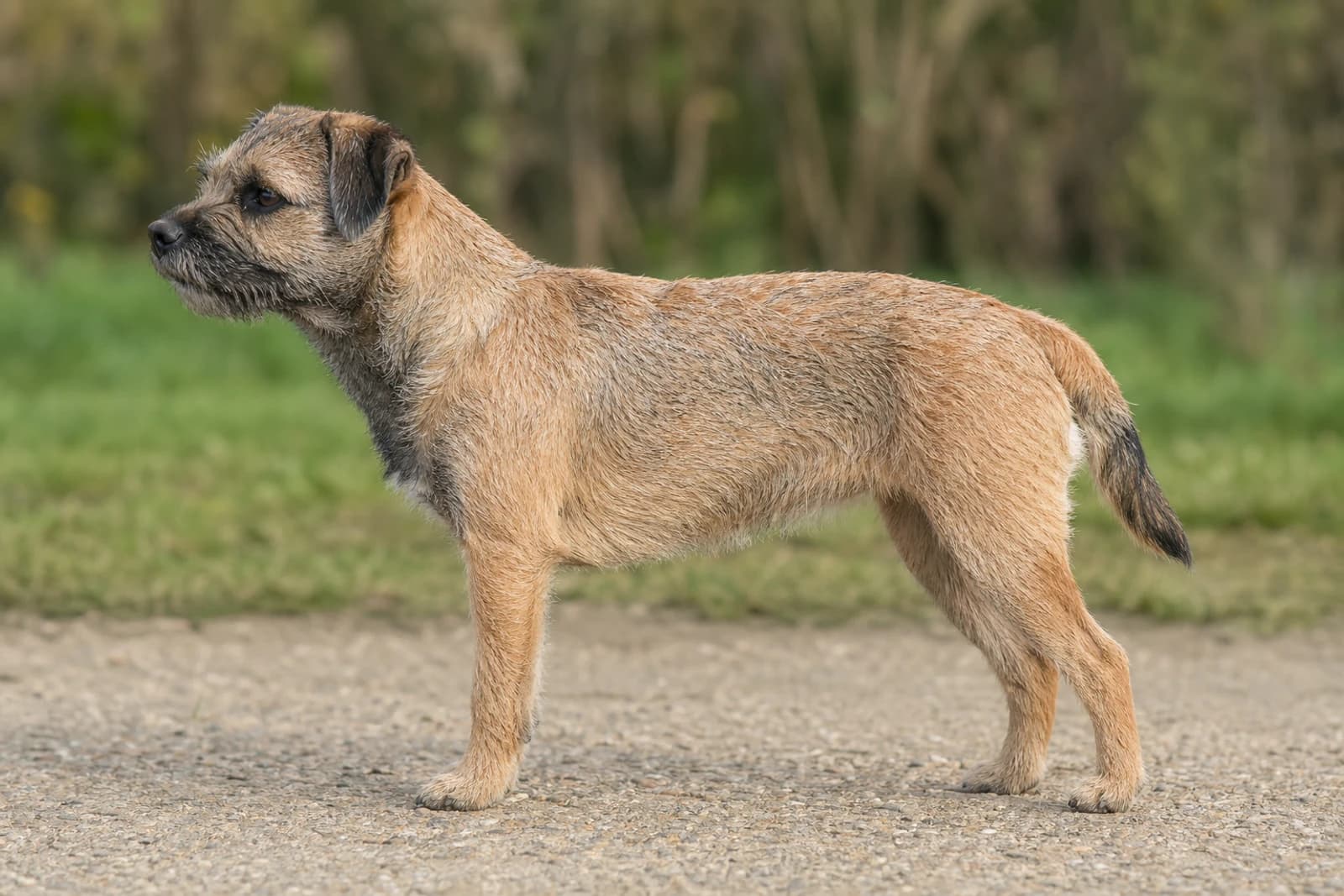
Originally bred in the border country between England and Scotland to assist with foxhunts, the Border Terrier is a small but sturdy working terrier. Their wiry, weather-resistant coat and cheerful, good-natured disposition make them a delightful companion for active individuals or families. They thrive on human interaction and require regular exercise to channel their energy. Suitable for apartments with sufficient outings, these terriers are affectionate with their owners but retain a strong prey drive, so caution is needed around small pets. With proper training and socialization, they are wonderful, loyal pets.
At a glance
- Size
- Small
- Height
- 10–11 in
- Weight
- 11–15 lb
- Life span
- 13–14 years
- Coat colors
- Grizzle and tan, Blue and tan, Red, Wheaten
- Coat type
- Short, dense, wiry double coat
How much does a Border Terrier cost?
Adopt / rescue
$75–$400
Usually includes spay/neuter, first shots, and a microchip.
Buy from a breeder
$700–$2,000
From a reputable, health-testing breeder.
Approximate USD. Prices vary widely by region, breeder, pedigree, age, and coat colour — adopting is the lower-cost and recommended route. Avoid suspiciously cheap “breeders”; they’re often puppy mills.
Estimate the full cost of a Border Terrier →Border Terrier photos
Views
Front, side, rear and top — the full silhouette.Poses
How the breed sits, lies, moves and plays.Puppy to senior
The breed across its whole life.Expressions
The breed’s range of moods.Close-up details
Eyes, ears, nose, paws, tail and coat.Coat colors
The breed’s recognized colors.Click any photo to enlarge. We show the Border Terrier from every angle — three views, poses, life stages, expressions, close-ups, coat and colors.
Appearance & size
A Border Terrier is built for a job, and every inch of his frame tells that story. He stands just 10 to 11 inches at the shoulder and weighs 11 to 15 pounds — small enough to bolt out of a den, sturdy enough to keep pace with a horse all day. The body is narrow and deep through the chest, with well-sprung ribs that can compress as he squeezes through a tight earth. A level topline, strong loin, and a slight tuck-up give him the balanced, effortless trot of a true working terrier. You won’t see a weedy, whippety outline or a cobby, stumpy one; he’s somewhere in between, with just enough leg for rough country but not so much that he looks leggy.
From the front, forelegs are straight and parallel, set under a moderately wide chest. The feet are small, oval, and tight — thick pads, well-knuckled toes — made for scrambling over stone and root. From the side, the shoulders are well laid back and the neck is of moderate length, clean, and widening slightly into the body. The rear end is muscular without being bulky; hind legs stand straight and parallel when viewed from behind, with low-set hocks that drive a ground-covering stride.
The head is where the breed leaves no doubt. It’s described as otter-like: a moderately broad skull with a short, strong muzzle that’s noticeably shorter than the top skull. The stop is slight, the jaw clean and powerful. Eyes are dark hazel, set under a brow that gives a keen, no-nonsense expression. Small, V-shaped ears drop forward, hugging the cheeks — never folded or long enough to look houndy. A slight, workmanlike beard and longer hair on the muzzle reinforce the otter look without tipping into shagginess.
The coat is a dense double layer that earns its keep. The outer coat is harsh and wiry, lying close, while the undercoat stays soft and insulating. This is a jacket that sheds mud, repels rain, and stays warm. Acceptable colors are red, grizzle and tan, blue and tan, or wheaten; white on the feet or chest is allowed, but the body should be solid or a neat grizzle pattern. You’ll never see a black-and-tan Border Terrier — that’s a disqualification. The tail is moderately short, thick at the base, tapering to a point, carried high and gaily but never curled forward over the back.
Add it up and you get a dog that looks exactly like what he is: compact, alert, and ready for the next adventure, with a face you’d recognize anywhere.
History & origin
The Border Terrier you see today was built for a hard, muddy job in the hills where England meets Scotland. Farmers and shepherds in the Cheviot Hills didn’t keep dogs for looks — they needed a terrier that could keep up with a horse all day, then fold itself small enough to follow a fox straight into a tight rock crevice and bolt it out. That’s the blueprint that shaped the breed from the 18th century forward.
The name comes from the Border Hunt, a pack of foxhounds that worked the Northumberland countryside. Those hunters wanted a terrier with enough leg to lope alongside the horses for 20 miles without quitting, but still narrow and flexible enough underground to do the dirty work. The result wasn’t flashy. He was a straight-fronted, racy little dog with a harsh, weatherproof coat, a thick pelt of loose skin to protect against teeth and rock, and a famously otter-shaped head that let him push through tight spaces without getting stuck.
For generations these dogs were simply known as “Coquetdale Terriers” or “Redesdale Terriers,” after the valleys where they worked. They didn’t split into a formal, recognized breed until 1920, when the Border Terrier Club was founded in the UK. Even then, the standard was built around a working dog, not a showpiece. That’s why the height and weight were kept deliberately modest — 10 to 11 inches at the shoulder and 11 to 15 pounds — big enough to do a long day’s work, small enough to get out of a hole. The official description insisted that a Border should be capable of following a horse, and judges were known to test that by making a dog jog alongside a galloping rider.
Border Terriers crossed the Atlantic slowly and without much fuss. They weren’t a novelty breed; they simply kept doing what they’d always done. In the United States, they gained AKC recognition in 1930, but their numbers stayed small for decades. A 13- to 14-year lifespan gave people time to notice just how adaptable these terriers were. A Border who spent his morning flushing out a groundhog could settle into a warm kitchen that afternoon, happy to be with his people. That blend of toughness off-leash and an agreeable, even-tempered nature indoors eventually tipped the balance from farm dog to family companion.
Today’s Border Terrier still carries the equipment of his hill-country ancestors — that double coat that turns rain, a lean build that covers ground efficiently, and a no-fuss expression that says he’s ready for whatever’s next. He’s not a heavily modified show breed; he’s a preserved piece of working history that just happened to fit under the dinner table, too.
Temperament & personality
A Border Terrier will charm you with a scruffy grin, but don’t mistake that teddy-bear face for teddy-bear energy. This is a working dog with a busy brain and a nose that never clocks out. You’re getting a plucky, curious housemate who’s equally happy tunneling through a blanket fort as he is sprinting after a squirrel. The upside: Borders earned a reputation as the “gentlemen of the terrier group” for good reason. They’re more even-keeled and less snappy than many of their kin, which makes them a solid fit for active families who understand terrier logic.
Driven, but not frantic
Expect a dog who needs a real outlet — a solid 45 to 60 minutes of off-leash running, structured sniff walks, or backyard games of chase — not a quick lap around the block. That doesn’t translate to manic energy inside the house; a well-exercised Border settles into a soft rug-lump who’ll press against your leg while you watch TV. But skip a day and you’ll notice: a bored Border invents his own jobs, like tunneling into couch cushions or barking at every bird that dares land on the feeder.
Affection with a side of sass
These dogs love hard. They’ll follow you room to room, lean into your hand for a scratch, and physically melt when you get behind their ears. At the same time, they carry a stubborn streak that reminds you they were bred to think for themselves underground. You’ll get a head-tilt challenge when you ask for a “down” and they’d rather not. Force gets you nowhere; a respectful, consistent approach with treats and short sessions wins every time. Neglect or harsh handling can flip that independent spark into avoidance or anxiety, so you’re better off treating training like a game you play together.
Watchful, not yappy
Border Terriers are sharp watchdogs. They’ll sound a distinctive terrier alarm at the doorbell or a strange noise, then race to investigate with body posture that says they mean business — weight forward, eyes locked, tail high. You’ll quickly learn to read the difference between that alert stance and the loose, wiggly greeting they reserve for family. Generally, they quiet down once they’ve announced the “threat,” so you’re not stuck with endless barking.
Around children and other animals
Supervised, they can be wonderful with kids who understand boundaries. The breed tends to be patient, but there’s a hard rule everyone in the house needs to follow: never bother a Border while he’s eating. Even the most even-tempered dog can develop food guarding if pestered, and teaching children to let him enjoy meals in peace prevents trouble. With other dogs, they often coexist happily if socialized young, though same-sex squabbles aren’t unheard of. Small furries? The prey drive is deep and non-negotiable. Your hamster, gerbil, or backyard rabbits will register as fair game, so separate and secure habitats are a must.
Quirks born from the field
The Border’s country roots show up in odd ways. You’ll likely catch him rolling in something truly foul — fox scat, decayed leaves, anything that would make you recoil. Biologists argue about why (masking scent, showing off a “find,” or just because it stinks delightfully), but the point is, you’ll need a good sense of humor and a nearby hose. Digging is another favorite — flower beds, under fences, anywhere. Providing a sanctioned digging pit or sandbox can redirect the instinct, but you’re not training it out of him entirely.
Puppies and young adults will chew like it’s an Olympic sport. This isn’t destruction for fun; they’re exploring the world and soothing teething pain early on, then keeping their jaws strong and teeth clean later. Keep plenty of appropriate chew items around, and if a favorite chair leg becomes a target, a homemade citrus spray (boiled peels steeped overnight) usually turns them toward less-tasty options.
Raise a Border with clear, calm expectations, a generous exercise budget, and the kind of gentle consistency that a sharp mind respects, and you’ll end up with a dog who’s equal parts gamekeeper and couch companion — affectionate, resilient, and always a little bit cheeky.
Good with kids, dogs & other pets
Border Terriers carry a patient, non-aggressive temperament that makes them one of the sturdier small-breed choices for families with children. They tend to tolerate the noise and bumping that comes with young kids without snapping, but no 11–15-pound dog is a plush toy. Always supervise interactions and teach children to handle gently — a dropped or squeezed Border can still get hurt or startled.
With other dogs, the outlook is usually bright. These terriers were bred to work alongside hounds and horses in packs, so they often read canine body language well and avoid unnecessary scuffles. That said, early and ongoing socialization locks in that friendliness. The critical window closes around 12–16 weeks; between 3 and 14 weeks is your best shot to expose a puppy to varied dogs, people, sounds, and surfaces so he grows into a confident adult instead of a fearful or reactive one.
Cats and small furry pets (rabbits, guinea pigs, hamsters) are where the terrier drive kicks in hard. A Border may live peacefully with the family cat if raised together from puppyhood, but chasing and high-pitched squeaks can override years of training. Never leave a Border Terrier unsupervised with pocket pets or a cat he doesn’t know well. Even with careful introductions, his instinct to grab and shake small, fleeing animals is real.
A loneliness snapshot matters here too. These dogs thrive on companionship and can develop distress if left alone outdoors for long stretches or shut away from family life. Think of them as velcro-ish — they want to be with you, not out back by themselves. If your household is gone for full workdays routinely, a Border Terrier will need a well-planned routine with mental stimulation, crate training, and gradual alone-time desensitization to avoid anxiety-driven barking or destruction.
Trainability & intelligence
Border Terriers are whip-smart problem-solvers — bred to work independently alongside foxhounds, they figure things out fast and get bored just as quickly. That means training needs to stay interesting. Drill the same command ten times in a row and you’ll watch him mentally check out, start sniffing the floor, or offer a random trick just to see if that’s what you wanted instead. Keep sessions short, game-like, and heavy on rewards. He works best for food, a squeaky toy, or a brief game of tug, and a happy voice goes further than you’d expect with this rugged little dog.
His independence is the double-edged sword. He learns new cues in a handful of repetitions, but acting on them when something more exciting is happening — say, a squirrel darting up a tree — is a whole other story. A reliable recall doesn’t come naturally; you build it over months with high-value treats and zero punishment for a slow response. Expect to use a long line in unfenced areas until you’re 100% sure, because his prey drive will override his hearing in an instant.
These terriers are sensitive despite their tough-as-nails reputation. Harsh corrections, yelling, or yanking on the leash can make him shut down or dig his heels in. He responds to clarity and consistency, not force. If you get frustrated, he’ll sense it and the training session is effectively over. Instead, reward the behavior you want the second it happens — catch him sitting calmly instead of jumping, and you’ll get that sit every time you walk through the door.
Socialization is non-negotiable. Start by 8 weeks and aim for a wide range of positive experiences before 16 weeks: people in hats, kids, slick floors, car rides, other dogs. Border Terriers are naturally social, but a poorly socialized one can become reactive or noise-sensitive. Well-handled, you end up with a confident, funny partner who thrives in dog sports like Earthdog, scent work, or agility — all of which channel his brain and his instinct to dig, sniff, and chase into something you can both enjoy.
Exercise & energy needs
A Border Terrier packs serious terrier stamina into an 11‑ to 15‑pound body. You won’t need a marathon partner’s schedule, but you do need to take the edge off a quick, clever brain and a nose that wants to be busy. Plan on 45 to 60 minutes of real exercise every day, split into at least two sessions. One long stroll around the block won’t cut it — this dog needs to trot, sniff, dart after a toy, and problem‑solve.
The sweet spot is a brisk 20‑ to 30‑minute morning walk plus an afternoon session that mixes free running and mental work. A securely fenced yard or a long‑line in a safe open space lets a Border Terrier sprint in those signature ground‑covering bursts, then stop dead to track a scent. Rainy days? Bring the workout indoors with stair‑sprints (just a few flights), hide‑and‑seek with a favorite toy, or a flirt pole session on a carpeted surface. What you absolutely don’t want is a Border Terrier who’s only physically tired but mentally twitchy; that’s when fence‑patrolling, obsessive digging, and barking at nothing show up.
These dogs were bred to work independently alongside hunters, so they’re hardwired for nose‑first jobs. Two or three short scent games per day — scatter a handful of kibble in the grass, hide a smelly treat under a blanket, work a snuffle mat — drain energy fast. If you’re looking for a breed sport, Earthdog trials are literally what they were built for, and many take to agility at lower jump heights with enthusiasm. Just skip repetitive jumping from heights or hard landings until growth plates are closed, which is typically around 12 to 14 months; a Border Terrier’s long back and small frame deserve that caution. A tired, mentally satisfied Border Terrier settles into a lap like a pro, but a bored one will find her own entertainment — and you probably won’t like her choices.
Grooming & coat care
Border Terriers wear a no-fuss double coat: a soft, dense underlayer beneath a harsh, wiry topcoat that’s bred to turn brambles and weather. That tough outer hair doesn’t shed like a typical short-coated dog, but it does die and cling to the follicle. Without regular attention, the coat turns soft, fuzzy, and loses its dirt-shedding magic. The fix isn’t a clipper—it’s hand-stripping, pulling out dead guard hairs by the root a few times a year. Many owners learn to do it themselves or schedule a pro groomer who knows the breed. Clipping is a shortcut that ruins texture permanently, so skip it entirely.
Brushing is straightforward. A weekly once-over with a slicker brush (rounded pins) or a pin brush dislodges loose undercoat and everyday dirt. I keep a metal greyhound comb handy for small tangles behind the ears and feathering on the legs, but you won’t need daily sessions. Brushing too much can actually soften the wiry jacket you want to preserve. Hand-stripping takes care of the real dead-hair removal.
Bathing is a rare event—three or four times a year at most, and only when the dog gets into something truly rank. Over-washing strips natural oils and encourages the coat to go limp. Use a gentle dog shampoo and rinse thoroughly. Between baths, a quick wipe with a damp cloth handles muddy paws and belly.
The rest is standard small-dog maintenance. Nails should be trimmed every few weeks; if you hear clicking on hardwood floors, you’re overdue. Ears fold over and need a weekly check and a gentle clean with a vet-approved solution to prevent yeast or debris buildup. Teeth get the same daily or every-other-day brushing with dog toothpaste that every breed deserves.
Seasonally, you’ll notice a bit more undercoat drop in spring and fall, but hand-stripping during those transitions keeps shedding nearly invisible. A Border Terrier who’s regularly stripped stays cleaner in the field and dryer in the wet—mud virtually crumbles off a proper wiry coat. That means less scrubbing at the back door and more time outdoors where the dog wants to be.
Shedding & allergies
How much they shed
Border Terriers are a genuinely low-shedding breed. Their double coat has a dense, wiry outer layer that traps dead undercoat, so very little ends up on your floor or clothes. You might spot a stray harsh hair on a cushion once a week, but you won’t be sweeping up tumbleweeds or pulling dog fur out of your coffee daily. Run a hand over a healthy Border and almost nothing comes off. They do shed—no dog is zero-shed—just far less than most.
Those twice-a-year blowouts
Twice a year, usually spring and fall, the soft undercoat goes through a seasonal turnover and sheds more noticeably for two or three weeks. During these windows you’ll pull out tufts of fuzzy hair when you brush, but the total mess is still minor compared to what a Labrador or Husky leaves behind. A quick daily comb-through with a stripping knife or slicker brush keeps the loose hair contained and off the furniture.
Drool (or lack of it)
Drooling is practically nonexistent. Borders have tight, dry mouths. They don’t drip after drinking, and they won’t leave wet patches on your clothes or upholstery after a snuggle. It’s one less sticky detail to worry about.
The real allergy picture
The breed’s hypoallergenic reputation comes from that low-shed coat and reduced airborne dander. Many people with mild dog allergies live comfortably with a Border Terrier. Just remember, the proteins that trigger reactions are in dander, saliva, and urine—not hair alone. No dog is 100% hypoallergenic. The smart move is to spend a couple of hours inside a breeder’s home with adult dogs to see how you actually react before bringing a puppy home.
Grooming plays into allergies, too. Keeping the wiry coat in shape requires hand-stripping dead hair out every few months. If you clip or shave a Border instead, the hair often grows back softer, sheds more, and loses its dirt-repelling texture. Neglect the undercoat long enough and it can mat, trap moisture, and lead to skin infections. That low-shed perk is real—but it depends on a consistent, hands-on grooming routine that’s a step beyond a casual brush-and-go.
Diet & nutrition
Border Terriers run on enthusiasm — and often on a bottomless appetite. At just 11–15 pounds, they’re small enough that an extra few ounces of kibble a day can silently tip them into overweight territory. The biggest nutritional challenge with this breed is their high food drive, so free-feeding is out. Measure every meal, using the feeding guide on a high-quality adult food as a starting point, then adjust based on the rib-check: you want to feel ribs easily under a thin layer of fat, not see them but not have to dig for them either.
For a typical 12–15 pound adult, total daily food lands around ½ to ¾ cup of dry kibble, split into two meals. Active terriers who hike or do dog sports may need the upper end; couch-potato routines call for trimming back. If you feed a raw or home-cooked diet, aim for roughly 60% muscle meat and raw meaty bones, 20–30% dog-safe fruits and vegetables, and the rest from eggs, plain yogurt, or cooked grains like pearl barley or white rice. Blend or finely process plant ingredients — dogs lack the enzymes and jaw motion to break down whole chunks efficiently, so you’ll see more nutrients absorbed from a puréed mix.
Puppy feeding follows a strict rhythm. Up to 4 months old, serve four evenly spaced meals a day. From 4 to 6 months, drop to three meals. After 6 months, switch to the adult two-meal schedule. Transition any new diet slowly over a week, starting with lightly cooked, puréed meats and vegetables or a premium puppy kibble. Raw chicken wings can be introduced around 12 weeks, under your direct supervision, to teach safe chewing.
Weight management matters here more than most people realize. Even a pound of extra weight on an 11-pound dog stresses joints and shortens an already compact life. Use a food puzzle bowl if your Border Terrier inhales meals in seconds — it slows down eating and gives that busy terrier brain a quick job. Treats are training gold, but they count toward daily calories; break tiny liver treats into pea-sized pieces and subtract that from the meal total. Senior dogs naturally slow down, so you’ll reduce portions gradually as activity drops, without needing to cut protein. Some old dogs do better on three smaller meals to ease digestion.
Never feed from the table or share leftovers off your plate. That begging stare works because they’ve been reinforced just once. If you want to share safe leftovers — some plain cooked fish, veggies, or a spoon of unsalted broth — put it in their own bowl, on their feeding mat, far from the dinner table.
Health & lifespan
Border Terriers are a naturally sturdy little dog with a typical lifespan of 13 to 14 years. You’re not buying delicate; you’re buying tenacity. The things that can cut that short are usually manageable if you know what to watch for.
What tends to show up
No breed is bulletproof, and Border Terriers can be prone to a few predictable issues. Patellar luxation — a kneecap that slips out of its groove — is one of the most common. You’ll sometimes see a bunny-hop skip when the dog runs, and it can range from mild to surgery-worthy. Hip dysplasia appears less often but responsible breeders still screen for it. Hearts matter, too: some lines carry a predisposition for early-onset heart murmurs or valve disease, so a cardiologist check is wise when you’re looking at a puppy.
Allergies and skin problems run through the terrier family. Border Terriers often deal with seasonal itchiness, ear infections, or foot-licking that trace back to food or environment. Progressive retinal atrophy (PRA) and juvenile cataracts can steal eyesight; a yearly eye exam catches these early.
Small mouths pack a punch: dental disease is a real risk. Without regular brushing and the occasional professional cleaning, tartar leads to tooth loss and systemic inflammation.
What responsible breeders do
Good breeders don’t guess. They run OFA or PennHIP evaluations on hips and patellas, and they have a veterinary ophthalmologist screen eyes annually. They’ll also discuss any known heart history in their lines. If a breeder waves off these tests, walk away.
Keeping your dog on the long side of 14
- Heartworm prevention is a monthly non-negotiable during mosquito season, plus one extra month after it ends. Rabies vaccination is legally required — there’s no cure after symptoms appear, so don’t skip it.
- Weight stays tight: 11–15 pounds is the breed standard. Even a pound over stresses those knees. Measure meals, not free-feed, because these dogs are food-driven and will pack on weight.
- Annual vet visits catch murmurs, luxating patellas, and eye changes before they become crises. Older dogs may need twice-a-year labs.
- Skin and ears get inspected weekly. Redness, waxy buildup, or an obsession with licking one spot warrants a vet check, not a wait-and-see.
- Dental care is day in, day out. Brush a few times a week and offer hard chews that help scrape tartar.
You’ll also sidestep stress-related trouble — anxiety-driven barking, digestive upsets — by socializing your pup early and handling him gently at the vet. A Border Terrier who learns that grooming and exams are no big deal is a dog who stays healthier for life.
Watch his knees, protect his teeth, and don’t let him get pudgy. Those three habits will carry more weight than almost anything else.
Living environment
Border Terriers are small, but they’re still driven little earthdogs who need enough daily action to stay happy — and enough in-your-pocket time to feel secure. A house with a securely fenced yard is the gold standard, not because they need acres to roam, but because these dogs love to dig, patrol, and bolt after squirrels. If a fence isn’t sunk a few inches into the ground or fitted with an L-shaped dig guard, a bored Border will happily tunnel under it.
Apartment life is possible, but it takes honesty about the noise factor. Borders are alert watchdogs who’ll announce visitors, odd thumps, or the neighbor’s cat with a sharp, quick bark. They aren’t nonstop yappers, but if you share walls, early training on a "quiet" cue and plenty of exercise make a big difference. A tired Border who’s had a couple of solid 20- to 30-minute outings and a puzzle toy or scent game afterward is far less likely to object to hallway sounds.
Exercise-wise, plan on 45 to 60 minutes total each day, split into at least two sessions. This isn’t a fluff-around-the-block breed. A brisk walk, a hard game of tug, or a hiking scramble taps into what they were bred to do: go all day alongside a horse. Mental work matters just as much, so stuff a few food puzzles or hide treats in a snuffle mat. Without that outlet, they’ll invent their own — often digging, shredding, or fence-running.
Left-alone tolerance is where you really need to think through your schedule. Borders bond hard to their people and can develop separation distress if they’re routinely left for a full workday. Puppies and newly adopted dogs benefit from a slow ramp: short departures, a stuffed Kong, and zero drama coming and going. An adult Border might handle a few hours solo once they trust the routine, but they’re not suited to a home where nobody’s around for 8 to 10 hours a day. A midday dog walker or a neighbor stopping by can bridge the gap.
As for climate, their dense, wiry double coat handles drizzle, cool weather, and modest heat better than many toy breeds. That said, they’re house dogs at heart — in freezing cold or high summer, you’ll shorten outdoor sessions and watch for signs they’re uncomfortable. They’re equally happy snuggled on the couch after a good run-through in the yard, as long as they’ve had their dose of exercise and your company.
Who this breed suits
A Border Terrier is a pocket-sized hiking buddy, not a lap ornament. This is a big dog personality crammed into a tough, weatherproof frame that barely tips the scale at 15 pounds. The right owner sees 11–15 pounds of muscle and thinks, “I finally found someone who can keep up on the trails and then curl up without hogging the couch.”
He’ll fit right in with:
- Active families with respectful kids. A properly socialized Border is famously patient and sturdy enough for play, but he’s not a stuffed animal. Older children who understand “gentle” get a tireless fetch partner and a funny, affectionate shadow.
- Outdoorsy singles or couples who want a weekend warrior. If your ideal Saturday is a muddy 6-mile hike followed by a dog dozing under the table at a brewery, you’re a match. A Border Terrier needs a solid hour of purposeful exercise daily—not just a walk around the block, but off-trail sniffaris, flirt poles, or scent games.
- First-time owners who aren’t pushovers. He’s friendlier and more forgiving than some terriers, but he still has a stubborn, creative mind. A novice who commits to puppy classes, puzzle feeders, and consistent (not harsh) rules will earn a devoted dog. Slack on boundaries and you’ll have a 13-pound counter-surfing escape artist who knows exactly how cute he is.
- Active retirees. Don’t underestimate a senior’s ability to keep pace with a Border. These dogs are perfectly content with a long, brisk morning walk and a few mental challenges spread throughout the day. Their portable size and moderate grooming needs (hand-stripping a few times a year) also suit a downsized lifestyle, provided the owner still wants a real dog, not a decorative one.
Think hard if:
- You prize a quiet home. Borders express themselves. They bark at delivery trucks, squirrels three blocks away, and occasionally just because they’ve noticed the wind. Apartment living is possible only with dedicated training and a willingness to manage noise.
- You keep small, furry pets. A guinea pig, rabbit, or free-range hamster will trigger a prey drive that’s been refined over centuries. This is not a “supervise closely and it’ll be fine” situation—it’s a hardwired instinct.
- Off-leash reliability tops your wish list. Borders are bred to work independently ahead of the horse, and that drive to bolt after a scent or a fleeing critter runs deep. You’ll need a securely fenced yard and a long line for unfenced spaces.
- Coat care that goes beyond a quick brushing feels like a chore. That wiry, dirt-shedding jacket stays healthy with regular stripping—learn to do it yourself or budget for a groomer who understands terriers. Skipping it leads to a dull, soft coat that won’t do its weatherproof job.
A Border Terrier is a small dog with zero interest in being dainty. His idea of a good life involves mud, mischief, and plenty of your time. Provide that, and he’ll be the most entertaining companion for the next 13–14 years. Hand him a treat-dispensing toy before you leave for work—not as a luxury, but because a bored Border Terrier will disassemble your baseboards one inventive tooth at a time.
Cost of ownership
A well-bred Border Terrier puppy from health-tested parents typically runs $1,200 to $2,500, sometimes more for strong working or show lines. That initial cost buys you generations of screening for issues like hip dysplasia, patellar luxation, and hereditary heart defects — it’s cheaper in the long run than a bargain puppy who may ring up big vet bills early.
Once the pup is home, expect to spend around $100–$200 a month on the basics, with the first year running higher because of one-time supplies and medical procedures.
Monthly costs
- Food: $30–$50. A high-quality kibble goes a long way for an 11–15 lb dog. Factor in treats for training — Border Terriers are food-motivated but can pack on weight, so go light.
- Grooming: $40–$75 every 6–8 weeks if you pay a pro to hand-strip that dense, wiry coat. Many owners learn to strip at home (a set of stripping knives and a grooming stone costs about $50–$80 upfront) which cuts the recurring cost to near zero after the initial investment. Clipping the coat ruins its weather-resistant texture, so you’ll want to avoid that.
- Vet & prevention: $35–$60 a month averaged over the year. Routine exams, vaccines, heartworm prevention, and flea/tick meds for a small dog aren’t steep. But Border Terriers can be prone to patellar luxation, juvenile cataracts, and occasionally seizures — a surprise surgery or specialist visit can easily hit $2,000–$5,000.
- Insurance: $25–$45 a month for a solid accident-and-illness plan with a decent deductible. Given the breed’s 13–14 year lifespan, a policy that covers hereditary conditions is worth comparing early.
The first-year extras
Crate, bed, leash, collar, a secure harness (essential for a terrier that may bolt after a squirrel), and training classes add $400–$700. Spay or neuter often falls between $200 and $500 depending on your area.
Add a few hundred extra for a terrier-proofed yard or a good long-line if you don’t have a fence — these busy little dogs need to burn off energy in a safe spot.
Choosing a Border Terrier
Did this puppy’s breeder test the parents’ eyes, hips, heart, and knees — and show you the paperwork? If the answer isn’t a clear yes, you’re gambling with the next 13–14 years of your life.
Rescuing an adult Border Terrier
Border Terriers don’t flood shelters, but dedicated breed rescues quietly place dogs that lost their first home. Adopting an adult means you skip the razor teeth and midnight potty runs. You’ll know exactly what you’re getting size-wise (11–15 lb, 10–11 inches at the shoulder) and temperament-wise, because a good rescue evaluates the dog for kid-savviness, cat tolerance, and daily quirks before you meet them. If your household can’t handle a bouncy, mouthy puppy, a 4-year-old who already understands “off” is a gift.
Finding a responsible breeder
If you’re set on a puppy, start with the Border Terrier Club of America’s breeder referral. Expect a wait — responsible breeders average a litter or two a year and almost never have pups sitting around. They’ll ask you more questions than you ask them: fenced yard, work schedule, where the dog sleeps, who trains it. That’s the sign of someone who cares where their puppy lands.
Health clearances: the paperwork you must see
Border Terriers can be prone to a handful of inherited problems, and a good breeder screens for all of them. Demand hard copies — not a verbal “they’re healthy.”
- Hips: OFA or PennHIP certification. Hip dysplasia isn’t rampant, but it shows up enough that skipping this test is inexcusable.
- Eyes: An annual CAER exam by a veterinary ophthalmologist, registered with OFA. Juveniles and adults can develop hereditary cataracts or progressive retinal atrophy (PRA).
- Heart: OFA cardiac evaluation from a board-certified cardiologist. Pulmonic stenosis and other congenital defects exist in the breed.
- Patellae: OFA patellar luxation clearance. Loose kneecaps are painful and expensive to fix.
- DNA: Both parents should be tested for PRA-prcd (a form of progressive retinal atrophy) so you know the puppies won’t go blind from it.
No test guarantees perfect health, but these clearances stack the deck in your favor.
Red flags that should make you walk away
- Selling a puppy before 8 weeks of age. Period.
- “We don’t test because the breed is healthy.” That’s a lie — and a dealbreaker.
- Breeding for off-standard colors like blue or liver, which often come with skin and coat problems.
- Multiple litters on the ground at once, a breeder who can’t produce sire and dam on-site (or video), or a clean-but-barren setup that looks like a puppy mill with fresh paint.
- No contract, no return policy, no questions about your home.
Choosing your puppy from the litter
Visit in person. Watch the pups move — a Border Terrier puppy should be curious, spiky-coated, and ready to investigate your shoelaces. The kid cowering in the corner might need a far quieter home than you can offer. Let the breeder match you to a pup whose energy lines up with your life. Ears and eyes should be clear, belly soft but not bloated, coat dense and harsh even at a young age. The breeder hands you a folder with health records, a signed contract, and a take-back clause. Then you hand that folder to your own vet within 72 hours of pickup. If the breeder squirms at any of this, keep your wallet in your pocket and walk.
Pros & cons
Pros
- Compact, portable size (10–11 in, 11–15 lb) fits apartments and small houses without sacrifice — sturdy enough for real outdoor adventure, not a fragile pocket dog.
- Long lifespan of 13–14 years means more time with a dog that often stays spry and playful into old age.
- Low-shedding coat — the wiry double coat drops very little hair day to day. A quick weekly brush and a hand-strip twice a year keeps it clean and blunt fur from drifting onto furniture.
- Family-first temperament — they tend to spread affection evenly across the household instead of fixating on one person, and their workmanlike build handles kid roughhousing better than many small breeds do.
- Brain and work ethic — sharp, curious, and eager to problem-solve. They thrive on scent games, food puzzles, and earthdog sports, so training feels like a partnership, not a chore.
- Adaptable exercise needs — genuinely satisfied with a solid 45–60 minutes of walking and backyard play, but they’ll cheerfully double that on weekends; they won’t unravel if you miss a day.
Cons
- Driven by prey — squirrels, rabbits, stray cats, even wind-blown leaves can trigger an instant chase. Off-leash freedom usually isn’t safe unless the area is securely fenced and free of small wildlife.
- Expert-level diggers and escape artists — they tunnel under fences with the focus of a little bulldozer. Burying wire mesh along the perimeter and checking for gaps is practically mandatory.
- Selective hearing — “come” loses hard to an interesting scent. Reliable recall takes months of high-value rewards and consistent practice; it may never be 100% in distracting environments.
- Noise when bored or alerting — they can be vocal barkers at fence lines and windows, which makes them a poor match for thin-walled apartments or noise-sensitive neighbors.
- Scrappy with other dogs — some, especially same-sex pairs, can be pushy or reactive without careful early socialization. Play dates and dog-park visits need supervision.
- Distinct grooming requirement — forget a quick comb: maintaining that weatherproof jacket usually demands hand-stripping (plucking dead hairs) a couple of times a year, either learned at home or done by a pro.
- Inherited quirks from poor breeding — issues like luxating patellas, juvenile cataracts, and certain heart defects can show up in lines without health clearances; look for breeders who screen via OFA, CERF, and cardiac exams.
Similar breeds & alternatives
If you like the Border’s compact size and go-all-day attitude but you’re weighing other options, a handful of terriers sit closest on the shelf — with a few important trade-offs.
Cairn Terrier – Same shaggy, weather-resistant coat, similar weight (13–14 pounds), but built closer to the ground: about 9–10 inches tall with a shorter, wider frame. Cairns are spunky and independent, often more stubborn about recall than a Border. They still need a solid hour of daily exercise, though they’re less built for jogging alongside a bike. Grooming is nearly identical — a weekly brush and stripping a few times a year. Where the Border tends to be quieter and more dog-social, a Cairn will let you know the mail carrier arrived three blocks away.
Norfolk Terrier – One of the smallest in the group at 9–10 inches and 11–12 pounds, with a softer expression and folded ears. Temperament lands a notch milder than a Border’s: keen but a little less intense. Expect that same terrier tenacity on a walk or in a digging session, but Norfolks often settle indoors more easily. They’re known for getting along well with other dogs, much like the Border. The trade-off is durability — those shorter legs don’t cover rough terrain or long distances quite as effortlessly.
Jack Russell Terrier (or Parson Russell Terrier) – If what draws you to the Border is a leggy, athletic small dog, a Jack Russell delivers even more explosive energy in a similar 13–15-pound package. Be prepared for a significantly sharper edge: higher prey drive, louder barking, and an intensity that easily outpaces a Border’s. They need a job, not just a long walk. The coat can be smooth, broken, or rough; smooth coats shed more but skip the hand-stripping work. Choose this only if you want a full-time project, not a weekend adventure buddy.
West Highland White Terrier – About the same weight (15–20 pounds) and height (10–11 inches), but a completely different grooming commitment: that bright white double coat needs frequent brushing outings and regular trims or stripping to stay clean and mat-free. Westies are confident, sometimes bossy, and more vocal than the typically easygoing Border. Energy levels compare well — both need brisk daily walks and mental puzzles — but the Westie’s independent streak can make off-leash reliability harder to build.
When the Border’s longer legs, otter-like head, and quiet tenacity feel just right but you want a slightly softer edge, the Norfolk fits best. If you crave the same wiry coat in a shorter, scrappier frame, the Cairn is your closest match.
Fun facts
- Originally bred as foxhounds in the border country of England and Scotland.
- Their ‘otter-like’ head is a distinctive breed characteristic.
- They have a weather-resistant double coat that requires hand-stripping to maintain texture.
- They earned the nickname ‘Best Dog in the World’ from devoted owners.
Frequently asked questions
- Are Border Terriers good with children?
- Border Terriers are generally good with children due to their affectionate and good-tempered nature. Early socialization and supervision are important, especially with young kids, to ensure positive interactions.
- How much do Border Terriers shed?
- Border Terriers are low to moderate shedders. Their wiry coat sheds minimally, making them a possible option for some allergy sufferers, though no dog is truly hypoallergenic.
- How much exercise does a Border Terrier need?
- As a high-energy breed, a Border Terrier typically needs at least 45–60 minutes of daily exercise, including walks and mentally stimulating activities. Without enough activity, they may develop unwanted behaviors.
- Is a Border Terrier easy to groom?
- Border Terriers require regular grooming due to their wiry double coat. Weekly brushing and hand-stripping or clipping every few months are needed to maintain coat health and manage shedding.
- Do Border Terriers bark a lot?
- Border Terriers are alert and can be prone to barking at unfamiliar sounds or sights. Consistent training can help manage excessive barking, but some vocalization is natural for this watchful breed.
- Are Border Terriers suitable for apartment living?
- Border Terriers can adapt to apartment living if their exercise needs are met. They are small and generally calm indoors when tired, but their barking tendency may be a concern in close quarters.
Tools & calculators for Border Terrier owners
Quick estimates tailored to Border Terriers — pre-filled with this breed’s size where it matters.
Articles & stories about the Border Terrier
Sources & standards
This profile follows recognized breed standards from the American Kennel Club (AKC) and the Fédération Cynologique Internationale (FCI), along with established veterinary and breed-club guidance. These describe general breed tendencies — every dog is an individual.
Owner stories
Have a Border Terrier? Share your experience — grooming tips, personality quirks, anything goes.