

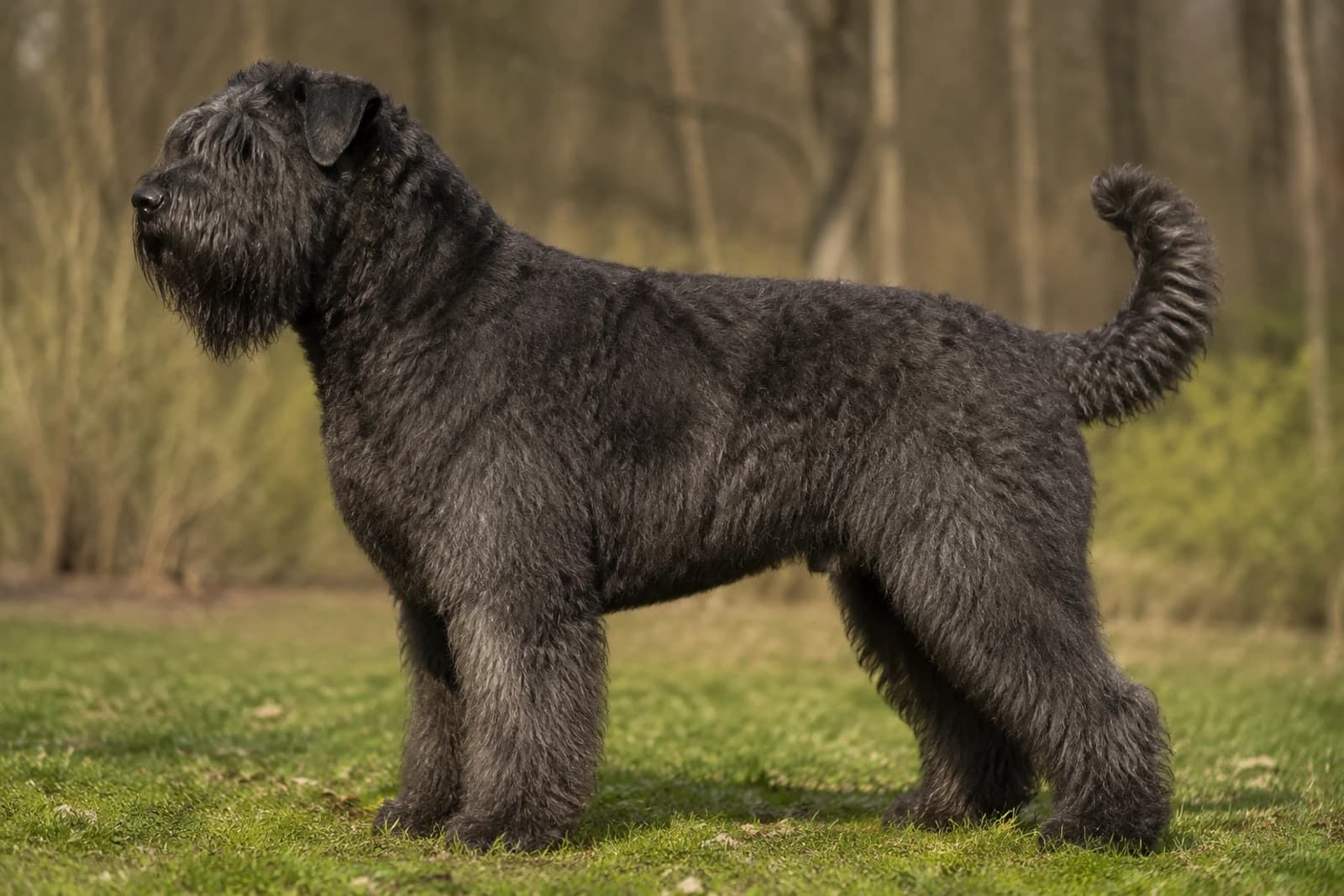
The Bouvier des Flandres is a sturdy, intelligent giant originally bred for herding cattle in Flanders. Calm and confident, this loyal guardian thrives with active, experienced owners who can provide firm yet gentle leadership. Devoted to family, they are naturally protective and surprisingly gentle with children, making them excellent watchful companions. Their thick, rough coat demands dedicated grooming, and they need ample exercise and mental stimulation. Best suited for rural or suburban homes with space to roam, the Bouvier is not ideal for first-time dog owners but repays investment with unwavering loyalty and steadfast companionship.
At a glance
- Size
- Giant
- Height
- 23–27 in
- Weight
- 60–88 lb
- Life span
- 10 years
- Coat colors
- Fawn, Brindle, Black, Gray, Salt and Pepper
- Coat type
- Rough, thick double coat
How much does a Bouvier des Flandres cost?
Adopt / rescue
$75–$400
Usually includes spay/neuter, first shots, and a microchip.
Buy from a breeder
$700–$2,000
From a reputable, health-testing breeder.
Approximate USD. Prices vary widely by region, breeder, pedigree, age, and coat colour — adopting is the lower-cost and recommended route. Avoid suspiciously cheap “breeders”; they’re often puppy mills.
Estimate the full cost of a Bouvier des Flandres →Bouvier des Flandres photos
Views
Front, side, rear and top — the full silhouette.Poses
How the breed sits, lies, moves and plays.Puppy to senior
The breed across its whole life.Expressions
The breed’s range of moods.Close-up details
Eyes, ears, nose, paws, tail and coat.Coat colors
The breed’s recognized colors.Click any photo to enlarge. We show the Bouvier des Flandres from every angle — three views, poses, life stages, expressions, close-ups, coat and colors.
Appearance & size
The Bouvier des Flandres is a substantial dog with a rugged, no-frills silhouette that immediately reads as working stock. Everything about the build says power without bulk: a deep chest, strong bone, and a compact frame that stays agile despite its giant classification. You’re looking at a dog that stands 23 to 27 inches at the shoulder and hits the scale between 60 and 88 pounds, with males predictably filling out the top end of both ranges.
The coat is one of the breed’s signatures — a harsh, tousled double coat that repels weather and farm grime. The outer hairs are coarse and dry, while the dense undercoat gives insulation without softness. This creates that shaggy, unpolished look that should never appear silky or curled. Colors run from fawn through brindle to black, with salt-and-pepper grays and blonde streaks often mixed in; a small white star on the chest is acceptable but not sought after.
Up front, the head is the first thing that holds your eye. A heavy beard and thick, upward-sweeping eyebrows frame a dark nose and oval, dark-brown eyes that sit deep under the brow. The skull is flat and broad, parallel to a square, strong muzzle. Where uncropped, the ears drop naturally in a triangular flap; cropped ears stand alert, but that practice is falling out of favor. From the front, the chest is broad and reaches down to the elbows, giving a solid platform between the forelegs.
Move to the side and you notice a level topline that isn’t long, ending in a croup that slopes gently. The ribs are well-sprung but not barrel-shaped, keeping a tucked-up underline. The natural tail is thick and carried high with a slight curve; historically, many in the U.S. were docked to a short nub, but full tails are increasingly common and give a graceful sweep behind a working gait. From the rear, the hindquarters are broad and muscular with moderate angulation, never overdone. The dog looks balanced, ready to pivot or drive forward without wasted motion — exactly what you’d want in a herding breed that spent centuries moving cattle through muddy Flemish fields.
History & origin
The Bouvier des Flandres grew out of the damp, hard-scrabble farmlands of Flanders—a region that straddles modern Belgium and France—where a dog earned its keep or didn’t last. Before there was a breed standard, farmers bred these shaggy, barrel-chested workers to do whatever needed doing. A Bouvier pulled milk carts to market, drove cattle from pasture to barn, guarded the farmstead at night, and even powered butter churns by walking a treadmill. The name is plain French: “Bouvier” means cowherd. That no-nonsense utility shaped a dog with a calm, evaluating intelligence and a body built to work long hours in raw coastal weather.
Standardization came later than you might expect. By the late 1800s, the region’s cattle dogs varied widely—some with wiry gray coats, others fawn and heavier. Professor Adolphe Reul of the Veterinary School of Brussels began sorting out the types in 1910. A breed club formed quickly, and the first written standard was drafted in 1912. It described a rough-coated, sturdy dog of moderate size and solid temperament, intended to preserve the best of the working farm type.
Then the First World War swallowed Flanders whole. The breed nearly vanished. Families were displaced, farms destroyed, and dogs lost to shelling or starvation. A few breeders managed to hold onto a handful of animals, and the entire postwar recovery hinged on a tiny genetic pool. One brindle male, Nic de Sottegem, sired an outsized share of subsequent litters; his name sits behind practically every modern Bouvier pedigree. During that same war, some Bouviers served as ambulance and messenger dogs, navigating mud and wire to move supplies or carry wounded soldiers to aid stations.
World War II flattened the breed a second time. Once again, the Flanders battlefields wiped out most of the breeding stock. A dedicated handful of fanciers in Belgium and France, along with a few dogs that had been exported before the war, rebuilt the population. The American Kennel Club had already recognized the breed in 1931, but in Europe true stability didn’t arrive until the 1960s, when numbers grew safe enough to ensure the Bouvier’s future.
What survived is a dog that never lost its working instincts. Today you’ll find Bouviers herding in trials, working as police K-9s, searching for missing people, and walking quietly at a handler’s side in obedience rings. They aren’t flashy. They’re the result of two near-extinctions and several centuries of farmers demanding a dog that could think, protect, and pull its own weight in the muck—no excuses.
Temperament & personality
A Bouvier’s defining trait is a steady, thinking mind that takes its job seriously — whether that’s watching the front door or herding the kids away from an open gate. He isn’t a goofball who ricochets around the room. Instead, you get a calm, observant dog who reads your mood and the room with an almost solemn focus, then tucks himself into your orbit for the rest of the day.
That doesn’t mean low-energy. A 60- to 88-pound dog bred to drive cattle needs a real physical and mental outlet — count on a solid hour of purposeful exercise daily. A leash stroll around the block won’t cut it. Mix in off-leash rambles, tug sessions, or obedience drills that make him problem-solve. Without that release, that brain turns to mischief: bored Bouviers famously chew, bark at nothing, or redecorate your hallway.
With strangers he’s reserved, not aggressive, but his size and direct stare are enough to make anyone pause. You need to read what that stiff posture and locked gaze actually mean — he’s assessing, not attacking. He’ll often place himself between you and whatever he finds suspicious and hold silent watch. Early, constant socialization is non-negotiable, or that natural wariness can tip into suspicion or same-sex reactivity.
Training a Bouvier is a partnership, not a battle of wills. He’s sharp, stubborn in the best way, and will shut down under heavy-handed corrections. Respectful, consistent guidance earns his cooperation; force just builds resistance. Once you’ve earned his trust, he’s remarkably biddable and eager to work through complex tasks.
Inside his own home, he’s a loyal shadow: leaning on your leg, resting his head in your lap, trailing the children. But at 60-plus pounds, he can accidentally bowl over a toddler, so kids learn early to respect his space — especially around food. A hard rule: nobody disturbs a Bouvier while he’s eating. That simple boundary prevents the food guarding that can surface in a big, confident dog who feels crowded.
A couple of quirks come with the package. He may try to herd the family, circling you on walks or nudging stragglers with his nose. And that dense, weatherproof coat is an absolute magnet for foul smells. If there’s a dead fish, a rotting log, or fresh livestock manure, expect him to drop a shoulder and grind into it with theatrical delight — a throwback to his farm-dog roots. It’s either laugh or grab the hose.
Good with kids, dogs & other pets
With kids
Bouviers are patient giants. Their temperament runs steady and non-aggressive, so they often slot into a family with young children better than many small, quick-to-flinch breeds. But at 60 to 88 pounds and up to 27 inches at the shoulder, a full-grown Bouvier can accidentally flatten a toddler just by turning around too fast. Supervise early interactions and teach both sides the ground rules — no tail pulling, no climbing on the dog’s back, and no letting the pup treat a running child like a sheep to block. The risk isn’t meant to scare you off; it’s just physics.
- Despite their size, Bouviers tend to be gentle and watchful with kids they know. They’re not the type to resource guard a couch or snap over a bumped knee, as long as they’ve been raised with consistent, fair handling.
- High companionship drive works in your favor here. This breed wants to be in the middle of the family chaos, not shut in a mudroom. Regularly leaving them alone for ten-hour stretches can cause anxiety that shows up as destructive chewing or barking, not the calm family dog you planned on.
With other dogs
A Bouvier who grows up with careful, positive exposure to other dogs usually turns into a reasonable adult. The key word is careful. That socialization window slams shut around 12–16 weeks. Before then, let your puppy meet a variety of healthy, friendly, vaccinated dogs — at your pace, not a free-for-all. If you’ve adopted an adult Bouvier who had minimal dog-to-dog experience, don’t push the dog park. Forcing an already-comfortable-with-you adult into forced meetups can spike stress or trigger a fight, especially with pushy dogs. Your Bouvier doesn’t need to be friends with every dog on the block.
- Be ready to manage play style. That herding instinct can turn a play session into a body-slamming, chase-heavy pursuit that a smaller dog will not appreciate. Step in before things get too one-sided.
- Same-sex tension can pop up in some intact adults, so any introduction to a new dog should happen on neutral ground, with both dogs leashed, and with your full attention.
Cats and small pets
The herding brain sees a darting cat or a scampering ferret and thinks something needs rounding up. A Bouvier raised with a house cat from puppyhood can absolutely learn to share the sofa, but don’t assume the peace extends to all small creatures. Free-roaming rabbits, guinea pigs, and birds trigger the same chase wiring. Even a dog who ignores the family cat indoors might still bolt after a stray in the yard. Manage the environment with baby gates or separate zones, and don’t expect the dog to “just know” the difference without training.
The socialization line item you can’t skip
A steady, people-oriented Bouvier is built, not born. The dog’s natural patience only blooms when you’ve done the front-end work. Begin the day your puppy comes home, no later than eight to ten weeks. Introduce them to a rolling parade of people — including children, bearded men, folks in hats, and delivery drivers — plus staircases, vacuum cleaners, and busy sidewalks. The checklist matters less than the tone: keep every new thing brief and paired with a treat or calm praise. What you’re preventing is a 70-pound animal who later startles at ceiling fans or turns reactive around unknown dogs on a walk.
Missed the early window? It’s not hopeless. Adult re-socialization is possible, but it’s a marathon, not a sprint, and you’re working against a brain that’s less plastic than a puppy’s. Some adult Bouviers will never be dog-park candidates, and that’s fine — they can still live a full, happy life with their family. Just don’t force greetings, and accept that a dog who’s content with you doesn’t need a wide social circle. A Bouvier who grows up nested in your daily routine, exposed step by step to the world you expect them to live in, becomes exactly what you’re looking for: a calm, present dog who takes the chaos of a household in stride.
Trainability & intelligence
A Bouvier des Flandres is whip-smart and a natural problem solver — the kind of dog who figures out the latch on the gate if you’re three seconds late with dinner. That intelligence doesn’t translate to blind obedience, though. These dogs were bred to work independently alongside farmers and cattle drovers, making quick decisions without waiting for a cue. Expect a dog who weighs your commands and sometimes decides his own plan is better.
Training has to start the day the 8-week-old fluffball comes home, and it has to be relentlessly consistent. Use positive reinforcement — treats, praise, a quick game of tug — to mark exactly what you want. Harsh corrections or raised voices backfire fast with a Bouvier. This is a sensitive giant under all that beard; you’ll build a 70-pound dog who avoids you or, worse, one who meets pressure with stubborn resistance. Clear rules and fair, calm follow-through are what keep a powerful dog safe and cooperative.
Socialization is your priority from 3 to 14 weeks and beyond. A poorly socialized Bouvier can tip from aloof into reactive or territorial. Walk him on different surfaces, introduce him to people with wheelchairs, umbrellas, kids on skateboards, and friendly dogs — all at a pace that keeps him curious, not overwhelmed. Real-life exposure, paired with treats, builds the steady confidence that makes an adult Bouvier unflappable rather than suspicious.
Come-when-called is a project. The breed has a strong working drive and a mind of its own, so off-leash reliability doesn’t happen just because you finished a puppy class. You’ll need to proof the recall in a hundred different settings, always making it worth his while. A half-hearted “come” won’t compete with a squirrel.
Keep training sessions short, specific, and upbeat. These dogs bore easily with repetition. Give them real jobs — carry a pack on a hike, practice scent games, learn advanced obedience or herding — or they’ll invent their own job, like rearranging the drywall. With trust and mutual respect, a Bouvier gives you a thoughtful, level-headed partner who can read a room and act accordingly. That’s the payoff for doing the work.
Exercise & energy needs
A Bouvier des Flandres won’t ricochet off the walls like a Border Collie, but don’t mistake calm for couch-potato. This is a giant working breed with a steady engine built to move cattle all day. Plan on 60 to 90 minutes of purposeful exercise split into at least two sessions—a brisk morning walk of 30–40 minutes and an evening outing that includes off-leash trotting, a hike, or a long sniffari. A quick potty break won’t cut it. Without enough outlet, a bored Bouvier dismantles shoes, digs craters in the yard, or becomes a full-time window alarm.
Joints come first
Giant frames mean exercise needs to be smart, not just long. Puppies and adolescents under 18 months should skip high-impact work—no repetitive jumping, no pounding pavement for miles. Growth plates close slowly, and too much stress invites hip and elbow trouble later. For adults, mix low-impact movement with strength builders: swimming, walking on varied terrain, and uphill hikes keep muscles engaged without rattling the joints. Avoid hard stops and twisting on asphalt—fetch on grass or sand is a better choice.
A brain that needs a job
Physical exercise alone won’t satisfy a Bouvier; this is a thinking dog bred to make independent decisions around livestock. Mental work flips the off-switch far faster than another lap around the block. Puzzle toys, frozen Kongs, scent games, and advanced obedience sessions tap into that old-herder brain. Many Bouvs excel at carting, nose work, or tracking—any sport that gives them a real problem to solve. Even a 10-minute session of practicing downs and stays in the driveway counts. Skip the mental workout, and you’ll come home to a dog who’s redesigned your couch cushions.
Take the breed’s life span seriously: at 10 years, this is a big dog on a shorter clock. Keeping him lean and moving with joint-friendly, brain-engaged activity for 60–90 minutes a day will help those years stay active and comfortable.
Grooming & coat care
That shaggy, weatherproof coat takes work. A Bouvier des Flandres wears a dense double coat — a rough, wiry outer layer and a soft, insulating undercoat — that sheds surprisingly little but mats like felt if you skip a day.
Brushing: your daily non-negotiable
Run a metal slicker brush (rounded pins only, no scratchy tips) down to the skin at least once a day, then follow with a greyhound comb to catch any tangles hiding near the roots. Work in sections, parting the hair as you go. The dense undercoat traps loose dirt and dead hair; if you let it pack down, the only fix is a vet visit with a clipper and a sedated dog. When you can’t easily draw a wide-tooth comb through to the skin, you’re already behind.
Bathing, trimming, and the no-shave rule
Bathe every 6–8 weeks, more often if your Bouvier rolls in something unspeakable. Use a gentle dog shampoo that won’t strip the coat’s natural harshness. Never shave the coat down to the skin — it destroys the double texture and leaves the dog vulnerable to sunburn and overheating. Instead, tidy the face, ears, and paw pads every few weeks with blunt-tipped shears, and either hand-strip or scissor-trim the body to maintain that crisp, tousled silhouette. Most pet owners go for a neat, practical cut about 2–3 inches long all over; show coats require regular hand-stripping to preserve the wiry outer guard hairs.
Ears, nails, and teeth
Drop ears trap moisture and wax, so flip them open twice a week, wipe with a vet-approved cleaner, and dry thoroughly. Nails grow fast on a dog this big — trim them every 3–4 weeks so you don’t hear clicking on hard floors. Brush the teeth three times a week with dog-specific toothpaste to head off gum disease, which shows up early in the breed.
Seasonal shedding: the undercoat blowout
Twice a year, usually in spring and fall, the undercoat lets go in fistfuls. For three to four weeks, bump brushing to twice a day and use an undercoat rake (skip the Furminator — it cuts the guard hairs). A forced-air dryer after a bath blasts out the loose fluff faster than any brush. Expect tumbleweeds of gray-brown hair drifting across your floors during a blowout, but outside those windows the shedding is surprisingly manageable.
Shedding & allergies
The Bouvier’s shaggy double coat doesn’t translate to a clean floor — but it’s closer than you’d think. Day to day, shedding is minimal because dead hair catches in the wiry outer coat and soft undercoat instead of drifting onto your sofa. Most of the loose stuff stays trapped until you brush it out, which means you’ll find more hair in the pin brush than on your black pants.
Twice a year, during the big seasonal shifts, expect a real blowout. For two or three weeks, the undercoat dumps in clumps, and any skipped grooming session punishes you with matted fur and tumbleweeds rolling through the hallway. You’ll need to rake out the dead coat every few days during that period, or your Bouvier will start resembling a felted rug.
Drool is another factor. This isn’t a Saint Bernard, but a Bouvier with loose flews will sling some slobber after drinking or on a hot day. Keep a rag handy near the water bowl.
As for allergies: no giant, double-coated breed is truly hypoallergenic. The dander and saliva proteins that trigger reactions are still present. However, the Bouvier’s low-shedding trait means less airborne hair carrying those allergens around your home, so some allergy sufferers find them more tolerable. If you’re allergic, spend hours with adult dogs of the line you’re considering — not just puppies — before committing. Relying on a “hypoallergenic” label alone is a gamble with your sinuses.
Diet & nutrition
A Bouvier des Flandres will happily eat himself into joint trouble if you let him. This is a giant breed where every extra pound grinds on hips and elbows already prone to dysplasia. Keep your dog lean—you should feel his ribs under a thin layer of fat and see a clear waist when you look down from above.
For an adult Bouvier (60–88 lb), count on roughly 3 to 4.5 cups of high-quality dry food a day, split into two meals. That number swings hard with activity: a farm dog burning calories all day needs more than a suburban companion with a long daily walk. Use a real measuring cup, track his body condition, and adjust. If he starts losing his waistline, cut back by a quarter cup at a time. Free-feeding is an invitation to obesity.
- Puppies get four evenly spaced meals until 4 months, then three meals until 6 months, before dropping to the adult two-meal schedule. Choose a large-breed puppy formula—the controlled calcium and calorie levels keep growth slow and steady, which protects developing joints. Raw, meaty bones like chicken wings can be introduced around 12 weeks, always under your supervision.
- Senior Bouviers slow down, so portions need to shrink before the scale climbs. There’s no strong reason to cut protein; just feed smaller, more frequent meals if digestion seems sluggish. Purée the food for a dog with missing teeth to aid nutrient absorption.
What goes in the bowl counts. A practical target is about 60% raw or cooked meat, 20–30% fruits and vegetables, and 10% extras such as eggs, plain yogurt, or cooked grains like white rice or high-fiber pearl barley. Blending or processing the mix helps a dog’s simple up-and-down jaw action and lack of salivary enzymes grab every bit of nutrition. Puzzle bowls slow speed-eaters and engage that busy Bouvier brain.
Rich, fatty trimmings can trigger pancreatitis, so skip the holiday handouts. Any healthy leftovers go into his own bowl on the floor—never directly from your fork—to head off a begging habit that’s almost impossible to break.
Health & lifespan
A Bouvier des Flandres typically lives about 10 years. That number isn’t rare for a giant breed — frame and weight take a toll — but the dogs who consistently reach it (or push past it) share a few things in common: lean body condition, routine vet care, and a home that catches subtle problems early.
The most talked-about health concerns in this breed involve joints and the stomach. Hip dysplasia and elbow dysplasia pop up often enough that any responsible breeder screens both parents with OFA or PennHIP evaluations before breeding. You’ll want to see those clearances. Along with dysplasia, big, deep-chested dogs like the Bouvier are at real risk for gastric dilatation-volvulus (bloat) — a life-threatening condition where the stomach twists on itself. Resting after meals, feeding smaller portions more often, and knowing the early signs (restlessness, unproductive retching, swollen belly) matter more than worrying about it.
Eye issues also deserve attention. Glaucoma, cataracts, and progressive retinal atrophy (PRA) can show up, so a yearly exam with a veterinary ophthalmologist is a smart move — and breeders who screen through the Canine Eye Registration Foundation (CERF) give you a head start. Some lines carry a higher load of autoimmune thyroiditis, so a thyroid panel at the yearly checkup makes sense, especially if your dog seems sluggish, gains weight easily, or loses coat quality. Heart conditions like subaortic stenosis exist in the breed as well, though they’re less common; a cardiologist’s clearance on breeding stock is a good sign.
Here’s the practical side: a Bouvier’s lifespan isn’t shaped by genetics alone. Weight management is enormous for those joints and for longevity. These dogs are strong, food-motivated, and can pack on pounds if you’re not measuring meals and keeping up with real exercise. A 70-pound dog who’s just a few pounds overweight is already stressing hips and elbows more than necessary. On top of that, a heavy coat can mask the first ribby clues of weight gain, so hands-on body condition checks every couple of weeks beat eyeballing.
At the vet, don’t wait for obvious limping or squinting. Watch for small shifts: getting up a bit slower after a nap, hesitating before a jump into the car, drinking more water than usual, or acting fussy with food. Annual wellness exams — and twice-yearly visits once your dog hits middle age — catch brewing joint degeneration, early eye pressure changes, and bloodwork anomalies before they turn into big problems. And the same early socialization that makes a Bouvier a steady family dog also lowers the chronic stress that can weaken immunity over time.
Living environment
A Bouvier des Flandres absolutely needs space. This is not an apartment breed. Cramped quarters magnify every pound of their 60–88 lb frame and every inch of their herding-drive intensity. A single-family home with a securely fenced yard is the realistic baseline. The yard gives them a place to patrol, trot, and burn off the edge between formal walks, but it won’t replace a real workout. Think of the fence as a must-have for off-leash romps and quick potty trips — never a substitute for daily, structured exercise.
Plan on at least an hour of active movement every day, split into two or three sessions. A pair of 30-minute brisk walks, plus a session of fetch or a training game, often works well. Bouviers are built to work, and their brains need as much exercise as their legs. Puzzle toys, scent work, and obedience drills stave off the restlessness that can turn into barking or chewing. Without that mental outlet, a bored Bouvier will find his own job — and you probably won’t like his choice.
Noise and watchdog habits
These dogs notice everything. A Bouvier is a natural guardian and will announce delivery trucks, neighbors, and squirrels with a deep, authoritative bark. Early training can dampen the impulse to carry on, but you’ll never get a silent dog. If you share walls, this alone may disqualify the breed. In a detached home, a few alert barks are normal and even welcome — just don’t expect them to be invisible.
Tolerance for time alone
A Bouvier bonds hard with his people and wants to be part of the action. Left alone for a full workday with no preparation, he can develop serious separation anxiety — destructive chewing, endless barking, or attempts to escape. Puppies need gradual alone-time training from day one and a steady routine to build confidence. With a safely enclosed space and a stuffed puzzle toy, many adults can handle a few hours solo, but this is not a dog you can crate and forget while you pull a 10-hour shift.
Climate comfort
The thick double coat that served them in Belgian fields gives Bouviers a real edge in cold, wet weather. They’ll happily tromp through snow. Heat is the bigger worry. In summer, schedule exercise for early morning or late evening, and watch for panting or sluggishness. Provide shade and cool water even when they’re just lounging in the yard. A kiddie pool or a spot by the air-conditioning vent will earn you extra tail wags.
A note for giant-breed puppies
Young Bouviers grow like weeds, and their joints are vulnerable. Avoid pounding runs on pavement or forced jogging until growth plates close. Let them set the pace on grass or dirt, and keep high-impact jumping to a minimum. A puppy who runs wild for hours may seem happy, but you’re preserving his soundness for a lifetime.
Everything about this breed’s living setup comes back to preventing boredom and separation-fueled trouble. A tired Bouvier comes from steady, engaging work — not just a big backyard — and that is what keeps the barking, pacing, and destruction at bay.
Who this breed suits
The Bouvier des Flandres suits an owner who enjoys a dog that thinks for itself. You’re not getting a soft, eager-to-please shadow; you’re getting a 60–88 lb herding dog with a guard instinct and a steady, stubborn streak. Experienced owners who have handled independent breeds will find the Bouvier’s loyalty and calm confidence inside the home deeply rewarding.
Active families with older kids do well here. The breed is naturally watchful and protective, but a 23–27 inch tall dog can easily topple a toddler just by leaning. Singles or couples who want a partner for long hikes, carting, scent work, or advanced obedience will tap into the dog’s real talents. Plan on a bare minimum of an hour of purposeful exercise each day—not a quick walk around the block, but work that engages both body and brain. Apartment living is possible only if you truly commit to that routine and don’t mind hauling a giant dog down three flights of stairs in bad weather.
First-time owners should think hard before choosing a Bouvier. A powerful, willful dog that questions your authority is a tough first project, and mistakes in training quickly turn into 80 lb of resistance. Seniors need to be honest about handling a dog that might bolt or brace during a vet visit. And that lush double coat? It requires serious, weekly grooming—skip it and you’ll deal with painful mats and skin trouble. With a life span of about 10 years, the commitment is intense but not endless. If you want a low-key pet that wags at every stranger, the Bouvier will disappoint you.
Cost of ownership
A well-bred Bouvier des Flandres puppy from a breeder who screens hips, elbows, eyes, and heart typically lands between $1,500 and $3,500. Show prospects or pups from working lines can cost more. That check is just the start — the real figure that matters is what it takes to keep a giant, high-maintenance dog thriving every month.
- Food: $100–$150/month. A 70-pound Bouvier packs away 4–5 cups of quality dry food daily. You’ll likely add joint supplements, treats, and maybe a raw topper, so figure on the high end.
- Grooming: $60–$100/month (averaged). That harsh double coat mats relentlessly. A professional full groom every 6–8 weeks runs $80–$120, and you’ll still need to brush at home with a slicker and comb several times a week. Add in shampoo, ear cleaner, and the occasional detangling spray.
- Vet and prevention: $70–$100/month. Heartworm, flea, and tick preventives are dosed by weight for a giant breed — count on $40–$60. An annual wellness exam with vaccines and senior bloodwork often hits $400–$600 a year. Giant breeds can be prone to hip dysplasia and bloat; count on at least one unplanned sick visit.
- Pet insurance: $60–$90/month. A solid plan with a reasonable deductible cushions the huge bills that come with a deep-chested, orthopedic-challenged breed.
Before the crate, bed, bowls, leash, and a sturdy training class series, you’ll spend another $500–$700 in the first few months. All in, budget $300–$440 a month for the predictable overhead. One emergency bloat surgery can run $3,500–$5,500, so early insurance or a designated emergency fund is what turns a catastrophic crisis into a manageable problem.
Choosing a Bouvier des Flandres
You have two honest paths—a purpose-bred puppy from a breeder who stacks health clearances, or an adult through a breed-specific rescue that evaluates temperament bluntly. Both can work, but the Bouvier’s size, protective instincts, and relatively short 10-year lifespan make that choice especially high-stakes. A shy or nervy 80-pound dog is a long-term management project, not a quirk.
Choosing a breeder vs. rescue
A responsible breeder selects for sound nerves, working drives, and orthopedic health over multiple generations. When you meet the dam, you get a live preview of what your puppy might become. If the breeder hesitates to let you interact with her, walk. Good Bouvier rescue groups do their own temperament assessments and place dogs in homes that match the dog’s actual energy and guarding level—not wishful thinking. Rescue often means living with unknowns about early socialization, so be prepared to invest time in a transitional period and possibly work with a trainer who reads guarding breeds.
Health clearances that actually matter
Start with hips and elbows: a Bouvier should have OFA or PennHIP ratings in the normal range, or equivalent from a reputable foreign registry if you’re dealing with an import. Ask for the actual results, not just a vet check. Eyes need an exam by a board-certified veterinary ophthalmologist, ideally within the year before breeding—cataracts and progressive retinal atrophy pop up in the breed. Cardiac screening is non-negotiable. Request an echocardiogram cleared by a cardiologist for subaortic stenosis (SAS), a silent killer that can strike before age two. Some breeders also run thyroid panels. If the breeder can’t produce documentation or hand-waves these tests, you are gambling with a giant breed that will cost you emotionally and financially.
Red flags that should make you walk away
- No verifiable health testing, or “my vet said they’re healthy.”
- Multiple giant breeds on the property—especially if they push “gentle giants for any family.”
- Litters always available or a waiting list that magically vanishes when you have a deposit.
- A breeder who does not grill you on your experience with strong-willed dogs, fencing, or how you’ll handle a territorial adolescent.
- Puppies isolated in a barn with no exposure to household sounds and foot traffic. A Bouvier raised in sensory poverty often grows into a spook.
Picking your puppy
Look for a pup that approaches you with a loose, wiggly body and then settles, not the one plastered to the corner or the littermate running the show with no brakes. A solid Bouvier puppy will investigate new things, recover quickly from a startle, and accept gentle restraint without melting down. Ask the breeder which pup they’d place in a home with your lifestyle—not just the most social one, but the match that holds up under pressure. The right 23–27 inch, 60–88 pound dog will spend its life reading your household like a second job, so don’t settle for a puppy chosen by color or availability.
Pros & cons
- Exceptional loyalty and protective instincts make them a natural family guardian. A well-raised Bouvier watches over the household without unprovoked aggression, yet will not hesitate to stand between you and a threat.
- Calm, steady indoor presence. Despite their size (60–88 lb, 23–27 in), they settle easily in the house and aren’t hyperactive—once their substantial exercise needs are met, they’re content to lounge near you.
- Sharp, eager mind paired with a strong work ethic. Originally bred to herd cattle and pull carts, they thrive on jobs like advanced obedience, tracking, carting, and protection sports. You get a dog that learns quickly when the handle is fair and consistent.
- Remarkable with their own children when raised together and properly socialized. The breed’s natural patience and gentle, deliberate movements often surprise people, given the rugged build.
- Low-shedding coat (though not maintenance-free). This can be a big plus for allergy sufferers, even though no dog is truly hypoallergenic.
- High coat commitment. The thick double coat mats easily and needs brushing several times a week, plus professional grooming every 6–8 weeks. Ignore it, and you’ll have a smelly, uncomfortable dog with skin problems lurking under the mats.
- Intensive socialization is non-negotiable. Without early, varied, and ongoing exposure to people, places, and other animals, a Bouvier can become suspicious, territorial, or reactive. Same-sex aggression is a known tendency and often surfaces as the dog matures.
- Not a beginner’s breed. Their independent thinking and strong will demand an owner who is clear, patient, and confident enough to lead without force. Training starts at eight weeks and never really stops; inconsistency will be exploited.
- Big exercise appetite. A stroll around the block won’t cut it. Plan on an hour or more of vigorous daily work—running, pulling, nose work, or challenging training sessions—or you’ll see destructive boredom and pacing.
- Potential health issues include hip and elbow dysplasia, bloat (gastric torsion), and some heart conditions. A 10-year lifespan is typical, and responsible breeders screen both parents for hips, elbows, and cardiac health. Even then, the risks are real.
- Messy drinking and occasional drool. That beard acts like a sponge, so expect water trails across the floor after every drink, especially right after grooming.
Similar breeds & alternatives
If you’re drawn to the Bouvier’s rugged farm-dog feel and protective streak, a handful of other substantial breeds share those working roots. Each tilts the scale a little differently in energy, grooming, or sensitivity.
Giant Schnauzer
Leaner and sharper, the Giant Schnauzer (60–85 lb, 23–27 in) is a working breed with the same coarse, wiry double coat and distinctive beard. It’s more intense and territorial than the Bouvier, often gunning for high-exercise roles like personal protection or sport. Giants typically need a solid hour of hard running daily and stay suspicious of strangers longer. Grooming is comparable—frequent clipping or stripping. Their longer lifespan (12–13 years) can tip the scale if you’re set on a go-anywhere, slightly more electric guard dog.
Briard
The Briard (55–100 lb, 22–27 in) is another French herding dog with a shaggy, low-shedding coat, but the texture is soft and wavy rather than harsh. Briards are lighter on their feet, more aloof with outsiders, and often have a stronger independent streak. They still demand lots of early socialization and daily off-leash time. Expect a similar lifespan (10–12 years). A Bouvier tends to be steadier and more forgiving around unfamiliar kids—the Briard can be more circumspect and sensitive, bonding tightly with one person.
Old English Sheepdog
If you want the fluffy, bear-like silhouette but softer on the inside, the Old English Sheepdog (60–100 lb, 21–22 in) trades the Bouvier’s reserve for a goofy, gentle personality. The OES is a herder too, but it’s less likely to challenge a stranger; it just wants to be where the people are. Coat upkeep is heavier—a profuse double coat that mats without daily brushing—and they can be more stubborn about training. Both breeds live around 10 years, but the OES lacks the Bouvier’s built-in watchdog edge.
Black Russian Terrier
For sheer size and a more serious guardian, the Black Russian Terrier (80–130 lb, 26–30 in) towers in the ring, but it’s a purpose-bred protection dog, not a herder. Its coat is similarly rough and low-shedding, requiring professional grooming. BRTs are calmer in the house yet more deliberate and powerful when they react. They typically have a shorter lifespan (9–11 years) and need an owner ready to manage a genuinely dominant character. The Bouvier gives you farm-sense versatility and a less imposing frame without giving up the “steady protector” role.
Fun facts
- Bouvier des Flandres dogs served as messengers and ambulance dogs in World War I.
- The breed nearly went extinct after both World Wars but was revived by enthusiasts.
- Their name means 'Cow Herder of Flanders,' reflecting their original role on Belgian farms.
- They are known for their versatility, excelling in herding, guarding, and even as police dogs.
Frequently asked questions
- Do Bouvier des Flandres shed a lot?
- They have a dense double coat that sheds minimally year-round, with a slight increase during seasonal changes. Regular brushing helps control loose hair, so they can be a manageable option for people with mild allergies.
- Are Bouvier des Flandres good with children?
- When properly socialized from puppyhood, they tend to be patient, gentle, and protective, forming strong bonds with family members. Supervision is still advised, especially with younger kids, due to the dog's large size.
- How much exercise does a Bouvier des Flandres need?
- This active working breed requires at least an hour of daily exercise, including walks, play, and mental challenges. They thrive on having purpose and can become bored without sufficient physical and mental stimulation.
- Is a Bouvier des Flandres suitable for apartment living?
- Their giant size and high energy make apartment living difficult unless you can provide extensive outdoor exercise several times a day. A home with a securely fenced yard tends to be a better fit.
- How much grooming does a Bouvier des Flandres require?
- Their thick, weather-resistant coat needs brushing several times a week to prevent mats, plus professional grooming every 6 to 8 weeks. Routine ear cleaning and nail trimming are also essential for overall health.
- Is the Bouvier des Flandres a good choice for first-time dog owners?
- While intelligent and trainable, their independent nature, strength, and protective instincts can present challenges for novices. Consistent, firm training and early socialization are crucial, making them better suited for experienced handlers.
Tools & calculators for Bouvier des Flandres owners
Quick estimates tailored to Bouvier des Flandress — pre-filled with this breed’s size where it matters.
Articles & stories about the Bouvier des Flandres
Sources & standards
This profile follows recognized breed standards from the American Kennel Club (AKC) and the Fédération Cynologique Internationale (FCI), along with established veterinary and breed-club guidance. These describe general breed tendencies — every dog is an individual.
Owner stories
Have a Bouvier des Flandres? Share your experience — grooming tips, personality quirks, anything goes.