

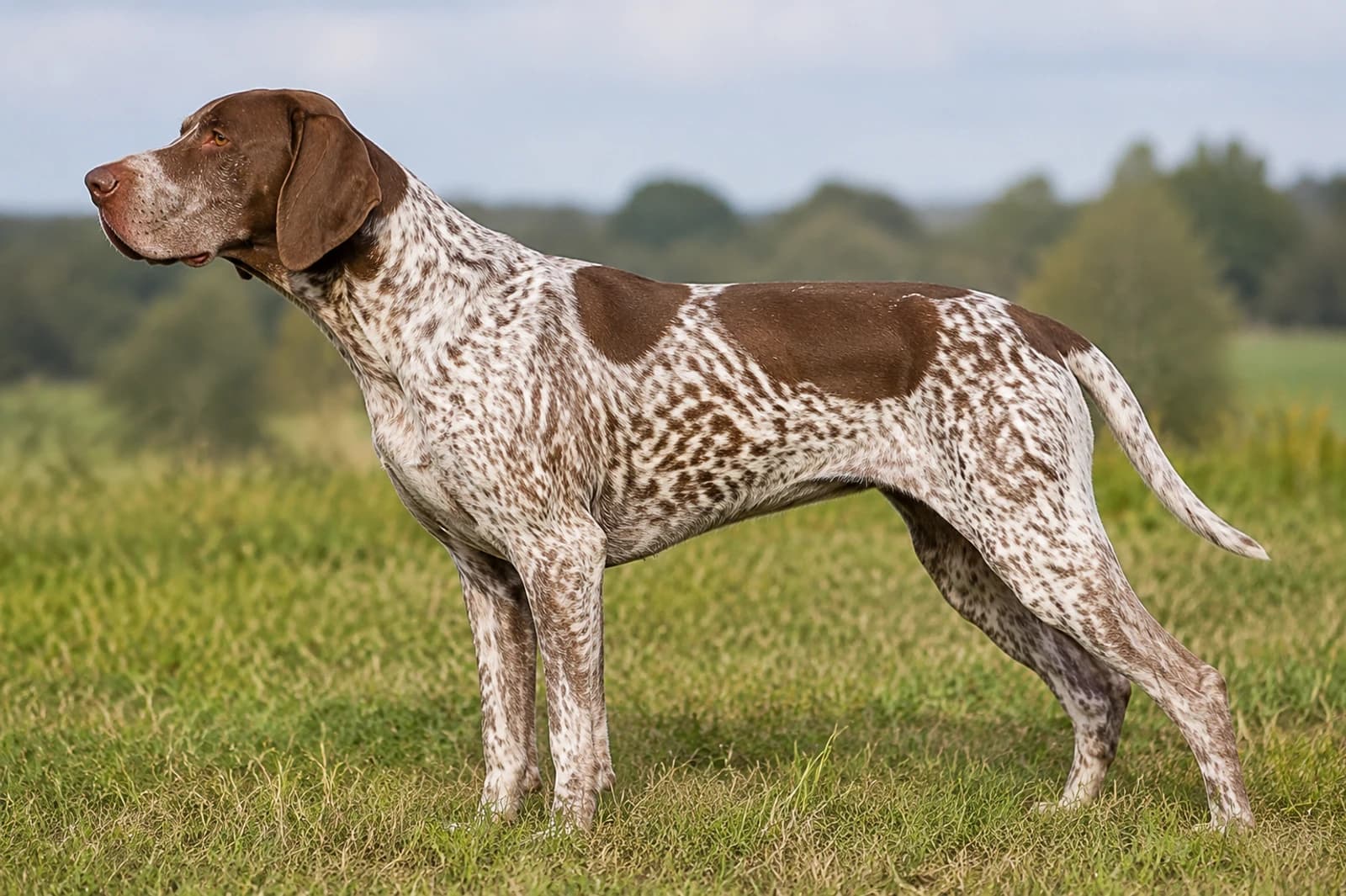
The Braque Francais, Gascogne Type is a versatile hunting dog that also makes a loyal family companion. Best suited for active owners, this giant-sized pointer thrives with plenty of exercise and mental stimulation. Affectionate and gentle, it forms strong bonds and is patient with children, but its size and energy require a home with space to roam. Not ideal for apartment living or first-time owners, it excels in rural settings where it can channel its natural pointing instincts. With proper training and socialization, this French breed is a devoted, even-tempered addition to an experienced household.
At a glance
- Size
- Giant
- Height
- 22–27 in
- Weight
- 55–71 lb
- Life span
- 12–14 years
- Coat colors
- Chestnut, Chestnut and White, White and Chestnut
- Coat type
- Short and dense
- Group
- Gun
- Origin
- France
How much does a Braque Francais, Gascogne Type cost?
Adopt / rescue
$75–$400
Usually includes spay/neuter, first shots, and a microchip.
Buy from a breeder
$700–$2,000
From a reputable, health-testing breeder.
Approximate USD. Prices vary widely by region, breeder, pedigree, age, and coat colour — adopting is the lower-cost and recommended route. Avoid suspiciously cheap “breeders”; they’re often puppy mills.
Estimate the full cost of a Braque Francais, Gascogne Type →Braque Francais, Gascogne Type photos
Views
Front, side, rear and top — the full silhouette.Poses
How the breed sits, lies, moves and plays.Puppy to senior
The breed across its whole life.Expressions
The breed’s range of moods.Close-up details
Eyes, ears, nose, paws, tail and coat.Coat colors
The breed’s recognized colors.Click any photo to enlarge. We show the Braque Francais, Gascogne Type from every angle — three views, poses, life stages, expressions, close-ups, coat and colors.
Appearance & size
When you see a Braque Francais, Gascogne Type in person, you’re looking at a big, honest hunting dog — 22 to 27 inches at the withers, with males often pushing the top of that range, and a lean weight of 55 to 71 pounds. This is a giant breed on paper, but it carries its size with the smooth, endurance-built frame of a pointer meant to hunt from dawn to dusk. You won’t find any bulk for bulk’s sake; the muscle lies flat and long, under a tight skin that shows just a hint of looseness around the neck and shoulders, a Gascogne hallmark.
Circle him and the picture sharpens. From the front, the chest is deep and moderately wide, dropping to the elbows, with straight, columnar forelegs and strong pasterns that hint at the shock-absorbing job they do. Feet are round, toes well-arched — nothing splayed. In profile, the topline stays firm and level from the withers to the slightly sloping croup, never roached or sagging. Ribs spring well back, giving the heart and lungs plenty of room, and the underline tucks up just enough to avoid a slab-sided look. From behind, you’re met with broad, heavily muscled thighs that drive the movement, and hocks that sit low and parallel when the dog stands naturally.
The coat is short, dense, and fine — sleek to the touch, with a sheen that throws off water and light debris. Color is where the Gascogne Type really stamps its identity. You’ll see:
- Solid chestnut brown, often a touch lighter on the cheeks and legs.
- White with chestnut patches of any size, from a few big saddle marks to scattered speckling.
- Chestnut roan — a heavy mix of white and chestnut hairs that gives an almost bluish or frosted effect up close, darkening with age.
Any white areas usually carry ticking, even on puppies that look clean at first glance.
The head ties everything together. It’s noble but not heavy, with a skull that’s slightly convex and a stop that’s defined without being sharp. The muzzle is broad and squared off at the end, the nose always a deep brown that matches the coat. Eyes are a warm amber or dark brown, set well apart, and they give you a soft, almost worried expression that disappears the second a bird hits the air. Ears hang at eye level, moderately long and pleated, lying flat against the cheeks with tips that reach just past the jaw. That ear length, combined with the gentle dewlap and the deep chest, gives the dog a silhouette reminiscent of a bigger, rangier German Shorthair, but with a distinctly old-world French face.
One detail you’ll appreciate up close: the tail is set just above the back line and tapers to a fine point, carried either straight out or with a slight saber curve, naturally reaching the hock. In motion, it acts like a rudder while the dog quarters a field; at rest it hangs quietly — never tucked between the legs. It’s a quiet signal of confidence, and one you’ll pick up fast if you’ve spent time around gun dogs that lack nerve.
History & origin
This is the granddaddy of French pointing breeds, and its influence reaches a lot farther than most people realize. The Braque Francais Gascogne type was hammered into existence in the marshes, woodlands, and open fields of Gascony in southwestern France, likely as early as the 1600s. Hunters there needed a dog with a deep chest to power through water, enough bone to handle heavy cover, and the nose to lock up on birds from a distance. That’s exactly what they got.
The core stock traces back to the Old Spanish Pointer, brought into France by traders and soldiers, crossed with local scent hounds and whatever else pointed and retrieved well. The result was a substantial, deliberate worker—what the French still call Braque Francais de Grande Taille, or the large-size French pointer. At 22 to 27 inches and 55 to 71 pounds, this is not a light-footed sprint specialist. It’s a dog built to quarter a swamp at a steady trot, hold a point through thick scent, and crash through brush to retrieve a goose without thinking twice.
For centuries, the Gascogne type was the everyday gun dog of rural French hunters. It pointed partridge, woodcock, and hare with equal seriousness, and it had the calm, biddable nature to work close, without needing constant shouting. By the 1800s, you could trace a direct line from these dogs to the foundation of several breeds we now think of as separate—German Shorthaired Pointers, for instance, owe no small debt to imports of the Gascogne type.
Two distinct types eventually emerged, split mostly by geography. In the Pyrenees mountains, breeders wanted a smaller, faster dog; that became the Braque Francais Pyrenean type. Down on the plains and along the coast, the larger Gascogne type held its ground. It almost didn’t survive the World Wars. Numbers crashed, and the breed nearly melted into obscurity while more modern versatile breeds boomed.
The dogs you see today exist because a handful of dedicated French breeders pulled the type back from the brink mid-20th century, using remaining pure lines and a deep respect for what the dog could do. Even now, a Braque Francais Gascogne type is a rare sight outside France. The FCI and UKC recognize it, but you won’t trip over one at a North American dog park. Those who have them tend to be hunters who still work the dogs the old way—on wild birds, in rough country, with minimal fuss. And they’ll tell you the breed’s serious lifespan of 12 to 14 years means those partnerships run long.
Temperament & personality
The Braque Francais, Gascogne Type is a deep-running pointing dog wrapped in a 55-to-71-pound frame that settles into surprising calm once his work is done. Indoors, with a family that understands him, he’s affectionate without being needy — a dog who leans against your leg rather than bowling you over. But don’t mistake that off-switch for low drive. This is a giant gun dog (22–27 inches at the shoulder) built to quarter big country all day, and he can’t be happy without a real job.
Energy and mental needs
A brisk neighborhood walk won’t dent his stamina. He needs at least an hour of hard running — off-leash field work, long retrieves, or serious scent games — plus problem-solving to tire his brain. A bored Gascony Pointer will invent his own activities, and they usually involve his nose. Expect obsessive sniffing, digging along fence lines, or a sudden need to redecorate the yard.
House manners
That powerful nose is always running in the background. He might mark indoors if he catches a whiff of another dog’s accident, even faint traces. The fix is brutally simple: clean accidents thoroughly with an enzymatic cleaner (white vinegar works in a pinch) and immediately reward outdoor elimination with a treat, every time. His territory can shift in ways that don’t make human sense — a spare bedroom that smells less like the family might suddenly become “outside” to him. Keep him near his people, and scent-claiming usually settles.
Personality with family and strangers
With his own pack, he’s steady and patient — the kind of dog who lets a respectful child lean on him without complaint. But he’s not a golden retriever. He’s reserved with strangers, watching them with a soft eye until he decides they’re safe. That quiet assessment can look aloof, but it’s not fear; he simply has no need to charm everyone. Still, a stiff, staring posture or a low growl is a clear warning, and you take it seriously. Socialize him early and often, especially if you want him relaxed around visitors.
The strong-willed streak
You don’t force this dog; you negotiate. He learns fast but shuts down under heavy-handed training. Respectful, consistent handling — short sessions, clear boundaries, high-value rewards — turns him into a biddable partner. Punishment only teaches him to avoid you. Instead, pay attention to his calming signals: lip licking, yawning, turning his head away. They’re his way of saying “I need a moment,” not stubbornness.
Quirks you need to know about
- Rolling in stink. Like most scent hounds and pointers, the Gascogne type will gleefully drop onto dead fish, garbage, or any rot he finds. Theories range from masking his own odor to bragging about a find, but the result is the same: you’ll need a strong stomach and a ready hose.
- Chewing. Puppies chew to explore and soothe teething pain; adults gnaw hard objects to keep jaws strong and teeth clean. If he’s working on something you’d rather he didn’t, a homemade citrus or vinegar spray often stops the habit cold without a fight. Just don’t leave shoes or remote controls within reach during the teething months.
- Food guarding. Never interrupt this dog while he eats. That rule goes double for children, who must be taught to let him have his meal in peace. A startled snap over a food bowl isn’t aggression born of meanness — it’s a hardwired response that can be avoided entirely with simple household management.
Good with kids, dogs & other pets
A well-socialized Braque Francais Gascogne is typically calm and gentle with children. Their default temperament leans patient and non-aggressive, which forms a solid base for family life. But don’t let the easygoing nature fool you: this is a giant breed, 55–71 pounds of muscle and enthusiasm, and a sudden zoomie or a joyful shoulder barge can knock a toddler flat. Always supervise interactions, especially with little kids, and teach children to give the dog space when it’s eating or resting.
Most Gascognes get along easily with other dogs. Bred to work in packs, they tend to be socially fluent and seldom start trouble. Early, positive exposure to a variety of dogs locks in that natural sociability. Resource guarding around food or high-value toys can crop up, so set clear rules from puppyhood. Off-leash play with unfamiliar dogs still requires oversight — a 69-pound pointer moving at full tilt can, even in play, inadvertently bully a shy dog.
Cats and small pets are a more nuanced conversation. The Gascogne’s pointing instinct and prey drive are genuinely bred-in, not a quirk you can train away entirely. A dog that hasn’t grown up with cats may view them as targets. Plenty of these pointers live peacefully with indoor cats, but the difference is usually a deliberate, gradual introduction during puppyhood and a household that never leaves them loose together unsupervised. Small pocket pets like rabbits or guinea pigs should be housed securely and out of reach.
Socialization is make-or-break for this breed. The critical window for shaping a bombproof temperament slams shut around 12–16 weeks. Puppies need consistent, gentle exposure to children, other dogs, cats, different people, and everyday noises before that deadline. A Gascogne who misses early positive experiences can become fearful or reactive as an adult, and forcing an already-skittish older dog into busy social situations only deepens the problem. If you’re adopting an adult, assess its history honestly — a dog that’s comfortable with its people but aloof with strangers or other animals doesn’t need to be pushed.
Finally, remember that this is a high-companionship breed. Leaving a Braque Francais Gascogne alone in the backyard for hours while the household is at work or school is a recipe for distress — barking, digging, or destructiveness that no family with young kids wants. They need to live indoors as part of the daily rhythm. When you combine early socialization, daily exercise, and common-sense management, you get a steady, affectionate dog that’s as relaxed sprawled at your feet as it is pointing birds in the field.
Trainability & intelligence
This dog’s smarts come with a side of independence, so you’ll get the best results working with his nature, not against it. Positive reinforcement — a quick treat, a favorite tug toy, sincere praise — is the only real currency here. Harsh corrections or raised voices will cause a Gascogne to shut down or simply wander off mentally. He’s sensitive without being soft, and once trust cracks, it’s slow to rebuild.
Start the moment your pup comes home. This is a large, powerful pointing breed that will weigh 55–71 lb, and waiting until adolescence to teach basics is like trying to steer a freight train with a string. Short, game-like sessions keep his mind engaged; repetition bores him quickly, and boredom leads to creative mischief. Recall is the #1 training challenge. Bred to hunt and range at distance, he carries a hard-wired drive to follow his nose, so a reliable come-when-called isn’t optional — it’s a safety essential. Practice it daily on a long line, in a dozen different places, with rewards that outshine whatever scent just caught his attention.
Socialization needs the same early, methodical focus. Introduce him to new people, sounds, surfaces, and other animals between 3 and 14 weeks old, and keep those experiences calm and positive. Skimp on this window and you risk a dog who is overly wary or reactive, particularly because his “giant” size label suits a frame that can be intimidating if he’s unsure. Think of every new person as a chance to dispense treats, every weird noise as background to a game of fetch.
A Gascogne will test your consistency. He’s bred to make judgment calls in the field, so he often assumes he knows best. You don’t crush that initiative; you patiently prove, over months, that listening to you pays better. That means the whole household uses the same cues, rewards the same behaviors, and never lets a command slide. When you get that partnership right, you end up with a biddable, steady companion who turns his intensity on for the tasks you ask of him — and switches off politely at home. What you don’t get is a robot. If you want a dog who stares at you waiting for permission, look elsewhere.
Exercise & energy needs
A tired Gascogne is a good Gascogne—this is not a casual couch companion. The Braque Francais, Gascogne Type was built to hunt all day across rough terrain, and that drive translates directly to his daily needs. Plan on a solid 60 to 90 minutes of exercise, split into at least two sessions. One long walk around the block won’t cut it; he needs to stretch his legs, open up, and use his nose.
Off-leash running in a safely fenced area is the gold standard. A field where he can gallop, quarter back and forth, and air-scent is where he truly comes alive. Swimming doubles as a joint-friendly workout and a great way to burn energy on hot days. Pair the physical outlet with mental work—this pointer’s brain will fry without it. Hide a retrieving dummy with a bird-wing scent, work on steady-to-shot drills, or feed meals in puzzle toys. A bored Gascogne will dismantle your house, so incorporate scent games or structured obedience sessions daily.
- Good activities: hunting over pointing dogs, hunt tests, agility, canicross, long hikes where he can roam on a long line, and targeted nose work classes.
- Puppy note: Protect those growing joints. Skip forced running on pavement and repetitive jumping until growth plates close—free play on grass is enough. Adult stamina builds gradually.
This is a dog who will out-exercise you if you don’t meet his baseline. Without adequate off-leash time and nose work, you’ll see pacing, vocalizing, and chewing that has nothing to do with bad temperament and everything to do with unmet instinct. If your schedule can’t consistently absorb that commitment, a Gascogne will make you miserable—and the feeling will be mutual.
Grooming & coat care
A short, dense, weather-resistant coat makes the Braque Francais, Gascogne Type about as wash-and-wear as a big pointer gets — but that undercoat demands attention during seasonal blows. His coat is a tight-fitting double layer: a sleek outercoat and a woolly undercoat that sheds heavily in spring and fall.
Brushing basics
A weekly once-over with a rubber curry brush or a hound glove yanks out dead undercoat before it blankets your furniture. During the twice-yearly shedding peaks, bump that to a daily session. A curry loosens hair and stimulates the skin; follow it with a soft bristle brush once a week to bring up the natural shine on that chestnut, white, or roan coat. A slicker brush with rounded pins works, too, if you have one, but you rarely need to untangle anything — this breed’s hair stays flat and snag-free when brushed regularly.
Bathing and skin care
You won’t need to bathe him often. Three or four times a year is plenty unless he’s rolled in something offensive. His coat naturally repels dirt and dries fast. When you do bathe, use a mild dog shampoo and rinse thoroughly; any residue can dull the coat and trigger itching. Over-bathing strips the oils that keep the outercoat water-resistant, so keep it to a minimum.
Ears, nails, and teeth
Those long, drop ears are handsome but act like closed umbrellas — they trap moisture and humidity, especially after a swim or a damp hunt. Lift and sniff each ear a couple of times a week. Wipe the visible part with a damp cloth or a vet-approved ear cleaner; never push anything deep. Redness or a musty smell means a vet visit.
Nails grow fast on a big, active dog. If you hear clicking on the floor, they’re too long. Trim them every three to four weeks, or more often if daily runs on soft ground don’t file them down. Brush his teeth two or three times a week with a dog-formulated paste to keep tartar at bay and gums healthy.
The seasonal shed
When the undercoat lets go, you’ll see tumbleweeds of hair in corners and on couch cushions. Use the curry brush outside, and consider a high-velocity dryer or a quick blast with compressed air (dog-safe) to blow out the loose fluff before it lands indoors. A warm, damp cloth wiped over the coat after brushing picks up the stray hairs that cling. The surge lasts two to three weeks each cycle, then settles back to the easy weekly routine.
Shedding & allergies
If you’re looking for a dog that won’t leave a dusting of hair on your black pants, the Gascogne Type isn’t it. These dogs have a short, dense, close-lying coat that sheds moderately all year, then ramps up to a real blowout a couple of times a year as the seasons change. Expect to find fine, pale hairs weaving themselves into upholstery, car seats, and pretty much any fabric they lean against — especially after a vigorous hunt or a long weekend in the field.
Daily life with a Braque Francais Gascogne means some ongoing tumbleweeds of fur on hardwood floors and a need for regular sweeping. A quick pass with a rubber curry brush or hound glove two or three times a week pulls out a surprising amount of loose hair and keeps the coat gleaming, but it won’t stop the shedding; it just corrals it.
- Hypoallergenic? No. There’s no such thing as a truly hypoallergenic dog, and the Gascogne produces normal levels of dander and shed hair — prime allergy triggers. If someone in the family has significant dog allergies, this breed is a risky choice, no matter how short the coat looks.
- Drool: You’ll see some slobber, particularly after drinking or when they’re keyed up and waiting for a meal. They aren’t mastiff-level droolers, but enough that you’ll want a hand towel stashed near the water bowl. The combination of shed hair and wet jowls means the floor around a water station can get grimy fast.
Short coat doesn’t equal low maintenance in this department. You trade the brush-intensive grooming of a long-haired breed for a vacuum-heavy relationship with your home.
Diet & nutrition
Life-stage feeding and the appetite trap
This dog will act as if he’s never been fed—every meal. Don’t let the pleading eyes set the portion. The Gascogne Type ranges from 55 to 71 lb, and how much you put in the bowl depends almost entirely on what he did that day. A full morning of hunting quail burns vastly more fuel than a few short leash walks; an idle weekend will pad him fast if you don’t cut back. Measure meals by weight or a level measuring cup, and keep those ribs easily felt under a thin layer of fat.
Puppies eat four times a day until four months, three times until six months, then settle into the adult rhythm of two meals. Transition a new pup slowly—puréed, lightly cooked meat, fish, fruits, and vegetables, or a premium commercial puppy food. Around twelve weeks, you can introduce a raw chicken wing under close supervision to let those jaws do what they’re built for.
Seniors often do better with smaller, more frequent meals. There’s no good reason to slash protein in an older dog, but you’ll want to gradually reduce total calories as the natural slowdown kicks in. If teeth go missing, purée the dish so nutrients aren’t wasted.
Weight management and joint longevity
Obesity is the monster under the bed for a giant breed like this. An extra 5 lb on a frame built for speed and endurance directly stresses hips, elbows, and the spine. Because many Gascogne Types are highly food motivated, weight creeps up silently. Use a food puzzle bowl—it turns a 45-second inhale into a mentally tiring activity and discourages the frantic gulping that can contribute to bloat risk. Never free-feed. Leftovers go in the dog’s own dish, never from the table, so begging never gets a foothold.
What goes into the bowl
Aim for roughly 60% meat (raw or cooked), 20–30% fruits and vegetables, and the remaining 10% from things like eggs, plain yogurt, and digestible grains. A quick hit of canned fish and cooked veggies makes a no-fuss meal, and pearl barley adds steady-release fiber. White rice works as a bland reset if his stomach turns sensitive. Because a dog’s jaws only move vertically and lack salivary digestive enzymes, blending or lightly processing meals helps him absorb more of what you’re giving him.
Skip the rich holiday scraps—a sudden fat overload can trigger pancreatitis in a breed that often lives to eat. Cook extra batches of grains and vegetables ahead of time so you always have a healthy foundation ready. And remember, there’s no way around it: a vegetarian or vegan bowl deprives a pointing dog of the meat-based nutrition his whole body is built to run on.
Health & lifespan
A healthy Braque Francais, Gascogne Type typically lives 12–14 years, which is a solid run for a dog of this size. Giant-breed longevity often tops out around a decade, so these fifteen extra pounds and an extra couple of inches don’t seem to drag the Gascogne down — provided you keep weight in check and stay on top of a few known trouble spots.
Recognized health predispositions center on the frame. Like many large, deep-chested gun dogs, they can be prone to gastric dilatation-volvulus (bloat). If a dog wolfs down a big meal and then tears around the yard, the stomach can twist on itself. This is an emergency you don’t want to learn about at 2 a.m. Split feedings, skipping heavy exercise right after eating, and knowing the early signs reduce that risk dramatically.
Joints take a pounding over a hunting dog’s life. Hip dysplasia and elbow dysplasia appear in some lines. Responsible breeders screen breeding stock through OFA or PennHIP evaluations and can show you those results. The same goes for eye disease — particularly progressive retinal atrophy and cataracts. Annual eye exams are your best early warning system.
Those long, low-hanging ears seal in moisture and debris, especially if your Gascogne doubles as a field dog. Without weekly cleaning, ear infections become a recurring nuisance. A quick wipe with a vet-approved solution after a swim or a muddy day in the brush takes less time than a course of antibiotics later.
The breed’s food drive is legendary. That makes training a breeze but also opens the door to obesity. A Gascogne carrying an extra 10 pounds stresses those hips and elbows and lops a year or two off his prime. Measure meals, go easy on treats, and keep him lean enough that you can just feel the ribs with your fingers.
Otherwise, standard large-dog prevention applies: monthly heartworm prevention through mosquito season plus one month past it, the legally required rabies vaccine, and annual checkups that track subtle changes in gait, vision, or appetite. A Gascogne who’s been well socialized from puppyhood also sidesteps the stress-driven behaviors that can flare up in an isolated, high-energy dog. Watch for any shift in his usual relentless enthusiasm — it’s often the first clue that something’s off.
Living environment
The Braque Francais, Gascogne Type is a giant pointing dog built to cover ground. He’s not a candidate for apartment life—even a small house feels tight if there’s no room to stretch. A securely fenced yard is close to non-negotiable. These dogs follow their nose and can easily clear a short barrier, so a four-foot fence is the bare minimum; five or six feet is smarter.
Inside, he’s calm and easygoing, but only after the real work gets done. Plan on at least 60 minutes of serious exercise twice a day—hard running, not a couple of leash walks around the block. This is a breed developed to hunt, point, and retrieve for hours, so unmet energy turns into chewed baseboards, manic digging, and a dog who can’t settle.
Mental stimulation is just as critical. Scent games, puzzle toys, and hiding treats in the yard give his nose a job. Without that outlet, barking or destructive habits creep in. He’s not a yappy dog by nature, but frustration or boredom will make him vocal.
He attaches deeply to his people. Separation anxiety can take hold if he’s left alone too long, so crate training and gradual absences need to start in puppyhood. You won’t get a dog who happily entertains himself all day while you’re at work.
His short, dense coat handles heat and mild cold, but he’s not built for bitter winters. In freezing weather, keep sessions shorter or throw on a coat, and watch for overheating during a hard summer run—pointers can push past their limits. If your daily rhythm can’t absorb a high-output partner who wants to be near you most of the time, this breed isn’t a fit. He needs room to run, a nose-work outlet, and a person who’s genuinely present.
Who this breed suits
This is a high-octane athlete who packs a surprisingly gentle off-switch for the right household. The Gascogne type suits a very specific owner: someone who runs, hunts, hikes, or bikes regularly and wants a large, affectionate shadow at home afterward. Think of him as a 55-to-71-pound partner who needs a solid hour or more of off-leash movement daily — a walk around the block won’t cut it. He thrives on scent work, retrieving drills, or long upland treks. If you hunt over pointing dogs, you’ve found your guy; he’s a natural at quartering, staunch on point, and soft-mouthed on the retrieve.
Families with older, dog-savvy kids can work beautifully, because these pointers are famously patient and people-oriented. Just brace for the occasional tail-swipe and know that a 27-inch dog can unintentionally bowl over a toddler. He gets along with other dogs and typically co-exists fine with cats if raised with them, though his prey drive outside the home is real. The breed bonds deeply and suffers if left alone for long workdays — so a home with at least one person who works remotely or a household that can bring him along daily to outdoor activities is ideal. First-time owners aren’t ruled out, provided they commit to positive, consistent gundog training and can meet the exercise demand with a fenced yard or daily access to open space. He’s sensitive and shuts down under harsh corrections.
- Buying pressure points: These dogs are rare in North America, so you’ll likely wait for a well-planned litter. Health screening isn’t overly complicated (hips and elbows at minimum), but you must ask breeders directly about temperament lines — a nervous Gascogne can be a handful.
Who should think twice
This isn’t a weekend-warrior dog. Sedentary owners, apartment dwellers without immediate access to large off-leash areas, and anyone who can’t reliably provide 60–90 minutes of running or hard exercise most days will end up with a frustrated, destructive chewer or escape artist. The breed’s size and strength demand early leash manners; a 71-pound dog pulling after a scent can injure an unsteady handler. Seniors with limited mobility, and families with very young children where supervision isn’t constant, are a mismatched fit — the dog’s bulk and exuberance indoors need thoughtful management. If you’re looking for a guard dog or a low-shed, low-energy lapdog, the Gascogne will disappoint. He sheds moderately year-round, drools a little after drinking, and will follow that nose right through an unfenced yard without a second thought. A secure physical fence and a full daily engagement plan aren’t optional here.
Cost of ownership
A Braque Francais Gascogne Type from a responsible breeder who health-tests hips and eyes usually runs $1,500 to $2,500. Pups out of established hunting stock can tip toward $3,000. The breed is scarce in North America, so be ready to join a waiting list or factor in a few hundred dollars for travel.
Monthly costs land squarely in large-dog territory. A 60-to-70-pound pointer eats 4 to 5 cups of quality kibble daily — budget $70–$90 a month on food. The short, dense coat is a wash-and-go affair: a weekly brush and a bath when he rolls in something dead. DIY grooming supplies run maybe $20 a month; if you prefer a pro for nails and a good deshed, figure $50–$70 every 6 to 8 weeks.
Veterinary care has a giant-breed price tag because preventatives are dosed by weight. A year of heartworm, flea, and tick meds plus a routine annual exam and vaccines averages $60–$100 a month. Brace for the occasional ear infection after a wet hunt, too. Pet insurance for a deep-chested breed that can be prone to bloat and hip dysplasia adds another $50–$80 a month for a comprehensive plan with a reasonable deductible.
One-time gear — a 42-inch crate, sturdy leash, orthopedic bed — will run $200–$400 up front. All told, you’re looking at roughly $200 to $320 a month to keep a Gascogne healthy and hunting-fit, not counting the extra gas money for when he points a woodcock three counties over.
Choosing a Braque Francais, Gascogne Type
Choosing a Braque Francais, Gascogne Type starts with a hard look at your lifestyle — this is a big, driven gun dog whose exercise needs don’t lighten up for years. You’ll likely search for a responsible breeder because the breed is rare in the US, but don’t write off rescue entirely. The French Pointer Rescue Alliance and larger pointing-dog networks occasionally place adult Gascognes, though waiting lists can stretch.
Health clearances you need to see. A giant breed with a 12–14 year lifespan means structural soundness is non-negotiable. Ask the breeder for current OFA or PennHIP hip scores; elbows should be cleared, too. Request a cardiac exam by a board-certified cardiologist — dilated cardiomyopathy can lurk in large hunting lines. Eyes should be checked annually by a veterinary ophthalmologist (CERF or OFA eye clearance). Thyroid panels done after age two are a plus. Because this is a deep-chested dog, stomach tacking (prophylactic gastropexy) won’t show up on a genetic test, but a breeder who talks openly about bloat risk and early spay/neuter impacts on growth plates is one you want in your corner. Walk away from anyone who shrugs off those conversations.
Red flags. Multiple litters per year, refusal to let you meet at least one parent on-site, pushing puppies out the door before eight weeks, or claiming their line has “no health issues” without paperwork are all dealbreakers. A good breeder grills you right back — expect detailed questions about your hunting plans, fenced yard, and daily routine. If they’re willing to ship a puppy to a stranger with a credit card and zero vetting, it’s a puppy mill or broker, no matter how pretty the website looks.
Picking your puppy. You’re looking for a confident, nose-down explorer who recovers fast from a startle. A 7–8 week old Gascogne puppy won’t be sprinting yet, but should move without stiltedness or bunny-hopping. Watch who greets you with a loose tail wag, then wanders off to investigate a leaf; that middle-of-the-road temperament suits most active families. Avoid the pup that cowers in a corner or, on the flip side, bullies littermates nonstop. Check ears for odor, eyes for discharge, and skin for raw patches. Ask what early socialization the litter received — exposure to different surfaces, household clatter, and quick car rides gives a young pointer a leg up. Your new 55–71 lb partner won’t stay small for long, so secure a vet check within 48 hours of pickup and have a giant-breed puppy growth plan ready.
Pros & cons
A big, mellow pointer with a heart of gold — the Gascony type is deeply devoted and more biddable than many pointing breeds, but its giant frame and serious exercise needs make it a poor match for a laid-back household.
Pros
- A mild, patient nature makes them excellent with children and other dogs when socialized early; they rarely show sharpness.
- Eager to please and responsive to calm, positive training — you won’t fight the stubborn streak common in some gun dogs.
- The short, dense coat sheds moderately but needs only a weekly once-over with a rubber curry; a low-drama grooming routine.
- A typical lifespan of 12–14 years is genuinely good for a giant breed, and responsible breeders screen hips, elbows, and eyes.
- Affectionate to the point of silliness: a 70‑pound pointer that genuinely believes it’s a lap dog and leans into you whenever you’re still.
Cons
- Count on at least 60–90 minutes of hard, off-leash running every day — a few leash strolls will leave this dog wired and destructive.
- That 71‑pound body and deep chest need a securely fenced yard; apartment living quickly turns into chewed drywall and constant pacing.
- Can develop serious separation anxiety if left alone for long hours, unleashing a loud, drooly mess of barking and shredded cushions.
- A generations‑deep prey drive means squirrels, cats, and darting birds trigger a full‑throttle chase, so a solid recall is non‑negotiable.
- They drool after drinking and, when bored or under‑exercised, can become noisy barkers — your neighbors won’t be shy about letting you know.
Similar breeds & alternatives
If you’re drawn to the Braque Francais Gascogne Type but the tight US breeder network gives you pause, a few close relatives and comparable versatile pointers are worth a hard look.
-
Braque Francais Pyrenean Type: The Gascogne’s smaller sibling. At 35–55 pounds and 18–22 inches, this breed brings the same soft mouth, calm indoor manners, and biddable nose into a more compact frame. Pick this one if you want the classic “Braque” off-switch and a dog that’s easier to haul around or fit into a smaller home.
-
German Shorthaired Pointer (GSP): The most common alternative here. GSPs run 45–70 pounds and 21–25 inches, so size overlaps heavily. The real fork in the road is energy. A GSP typically needs a hard hour or more of off-leash running daily and stays wound tight without it, while the Gascogne tends to be more moderate indoors and settles faster. Both have short, no-fuss coats, but the GSP comes in liver or liver-and-white, not chestnut roan.
-
Braque d’Auvergne: Another French pointer with a striking black-and-white heavily ticked coat that reads as a blue-gray sheen. Weighing 49–62 pounds and standing 22–24 inches, it shares the Gascogne’s affectionate, people-focused temperament and 12–14 year lifespan. It’s equally suited to a family that hunts on weekends. Still uncommon, but you’ll find more breeders in North America than for the Gascogne Type.
-
Wirehaired Pointing Griffon: If you need the versatility but want a rough, weather-resistant coat, the Griffon sits at 50–60 pounds and 20–24 inches. The coat requires regular hand-stripping and the temperament leans more exuberant and clownish, though still eager to please. A solid choice when cold-water retrieves are a regular part of your season.
For a dog that mirrors the Gascogne’s calm house presence and close-working style, the Pyrenean Type or Braque d’Auvergne are the most natural pivots. If availability is your top concern, a well-bred GSP selected for an off-switch can bridge the gap—just be honest about whether you can commit to that extra daily burn.
Fun facts
- Also known as the French Gascony Pointer or Braque Francais de Grande Taille.
- One of the oldest French pointing breeds, dating back to the 16th century.
- There are two types: the larger Gascogne and the smaller Pyrenean.
- Excellent versatility in hunting game birds and waterfowl.
Frequently asked questions
- Are Braque Francais Gascogne good with children?
- They tend to be very affectionate and gentle, often forming strong bonds with kids. However, due to their high energy, supervision is recommended around small children to prevent accidental bumps. With proper socialization, they can be excellent family companions.
- How much exercise does a Braque Francais Gascogne need?
- This is a high-energy breed needing at least an hour of vigorous activity each day. Long walks, running, or interactive play sessions are ideal to keep them content. Without sufficient exercise, they may become destructive or develop anxiety.
- Do Braque Francais Gascogne shed a lot?
- They have a moderate shedding level, with a short coat that loses some hair year-round. Weekly brushing can help reduce loose fur and maintain a healthy coat.
- Is the Braque Francais Gascogne easy to groom?
- Grooming is relatively simple; a weekly brush and occasional bath are usually enough. Routine ear checks, nail trims, and dental care will keep them in good condition.
- Is the Braque Francais Gascogne good for first-time owners?
- They can be a fit if the owner is prepared for an active, intelligent dog that needs consistent training. Their eagerness to learn makes them trainable, but novices must commit to meeting their high exercise and mental stimulation needs.
Tools & calculators for Braque Francais, Gascogne Type owners
Quick estimates tailored to Braque Francais, Gascogne Types — pre-filled with this breed’s size where it matters.
Articles & stories about the Braque Francais, Gascogne Type
Sources & standards
This profile follows recognized breed standards from the American Kennel Club (AKC) and the Fédération Cynologique Internationale (FCI), along with established veterinary and breed-club guidance. These describe general breed tendencies — every dog is an individual.
Owner stories
Have a Braque Francais, Gascogne Type? Share your experience — grooming tips, personality quirks, anything goes.