

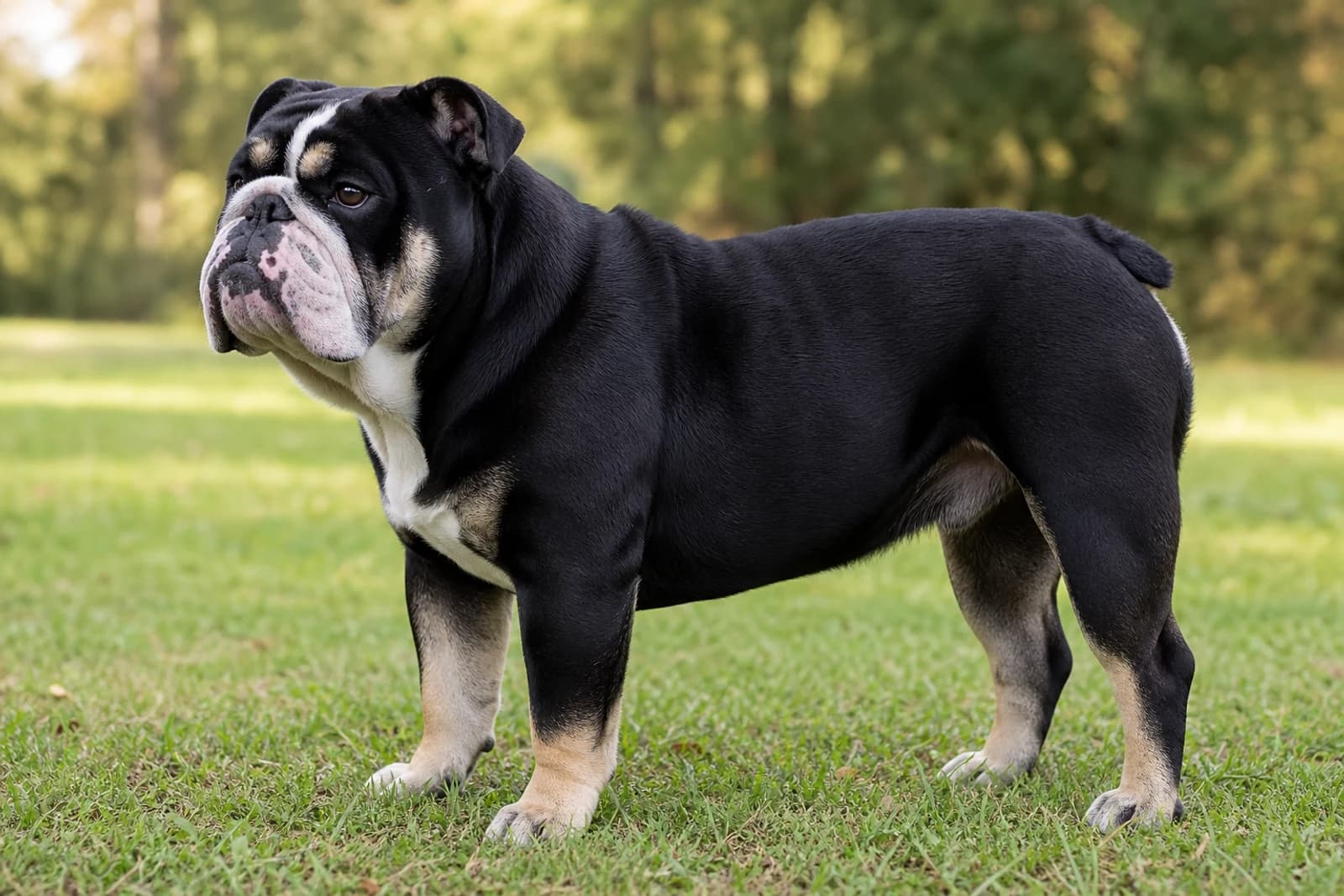
The Bulldog, known for its distinctive wrinkled face and pushed-in nose, is a calm, courageous, and affectionate companion. This medium-sized breed thrives in apartments and homes with small yards, requiring minimal exercise. Bulldogs are exceptionally patient and gentle with children, making them ideal family pets. They are loyal and form strong bonds but can be stubborn, so consistent training is needed. Their short coat needs little grooming, though shedding is average. Due to their brachycephalic nature, they are sensitive to heat and require careful monitoring in warm weather.
At a glance
- Size
- Medium
- Height
- 15–16 in
- Weight
- 51–55 lb
- Coat colors
- fawn, brindle, white, red, piebald, fallow
- Coat type
- short, smooth, fine
- Origin
- United Kingdom
How much does a Bulldog cost?
Adopt / rescue
$200–$600
Usually includes spay/neuter, first shots, and a microchip.
Buy from a breeder
$2,500–$6,000
From a reputable, health-testing breeder.
High C-section and health costs are reflected in breeder prices.
Approximate USD. Prices vary widely by region, breeder, pedigree, age, and coat colour — adopting is the lower-cost and recommended route. Avoid suspiciously cheap “breeders”; they’re often puppy mills.
Estimate the full cost of a Bulldog →Bulldog photos
Views
Front, side, rear and top — the full silhouette.Poses
How the breed sits, lies, moves and plays.Puppy to senior
The breed across its whole life.Expressions
The breed’s range of moods.Close-up details
Eyes, ears, nose, paws, tail and coat.Coat colors
The breed’s recognized colors.Click any photo to enlarge. We show the Bulldog from every angle — three views, poses, life stages, expressions, close-ups, coat and colors.
Appearance & size
When you see a Bulldog head-on, you’re met with a wall of width. This is a medium-sized dog that packs 51 to 55 pounds into a frame just 15 to 16 inches tall. Every bit of that mass is concentrated into a low, broad body that looks like it was built to push through anything. The chest is deep and rounded, dropping well below the elbows, and the front legs are set unusually wide apart. That stance—muscular forelegs planted like pillars, paws turned slightly outward—gives the Bulldog its rolling, deliberate gait.
From the side, the silhouette is unmistakable. The back is short and strong, dipping just a touch behind the heavy shoulders, then rising slightly over the loin before sloping down to the tail. The brisket runs deep, and the belly tucks up only a little. You’ll notice the hindquarters are solid and set higher than the withers, with thick thighs and short, straight hocks. The tail is naturally short; it’s typically either straight or formed into a tight, low-set screw.
The face pulls all the attention. The skull is massive and flat, with cheek muscles that bulge out to the sides. The muzzle is extremely short and square, receding so far that the wide, black nose sits pushed back almost between the dark, round eyes. Deep, soft wrinkles crease the forehead in horizontal folds, and a heavy roll of loose skin stretches over the top of the nose, with more folds descending to the corners of the mouth. A thick dewlap of loose skin hangs under the neck, breaking into wrinkles across the throat. The ears are small and thin, set high on the head, folded back in a rose shape that reveals the inner burr.
The coat is straight, short, and flat, with a fine, glossy texture. It lies smooth against the skin with no wave or curl. You’ll find Bulldogs in a range of solid colors—brindle, red, fawn, or white—often with a black mask or muzzle. A splash of white on the chest is common, but the coat itself is uniformly sleek all over.
From the rear, the wide stance repeats: the hind legs are muscular, set parallel and well apart, driving a body that is narrower through the loins than it is through the ribcage. Everything about the Bulldog’s shape is heavy, low, and rooted.
History & origin
The Bulldog’s story doesn’t start on a cozy couch. It begins in medieval England, where the breed was built for a bloody job: bull-baiting, a “sport” in which dogs were set on a tethered bull to bring it down by the nose. This grisly spectacle demanded a dog with a low, wide stance, a crushing undershot jaw, and an almost unbelievable tolerance for pain. The name says it all — Bull-dog.
For centuries, that’s what the Bulldog was. A tenacious working animal, not a pet. Their squat, muscular frame and pushed-in face weren’t cosmetic; the short muzzle let them breathe while clamped on, and the wrinkles channeled blood away from their eyes. Everything about the early Bulldog was shaped by the pit.
Then in 1835, Britain banned bull-baiting and other blood sports. Overnight, the breed lost its purpose. The population plummeted, and the Bulldog might have vanished entirely. Instead, a small group of fanciers stepped in, determined to salvage the dog but strip out the ferocity. They began selecting for a calm, gentle temperament while preserving the unmistakable exterior. It was a total reboot. By the late 19th century, the Bulldog had been deliberately remade from a fighter into a companion, and its popularity soared.
That transformation still defines the breed. The modern Bulldog’s heavy build, rolling gait, and massive head are echoes of the old bull-baiter, but the drive to fight was systematically bred out. What’s left is a dog whose idea of confrontation is giving you the silent treatment because you’re five minutes late with dinner. Today, they’re one of the most recognizable and beloved companion breeds worldwide — the 51-to-55-pound lap dog who carries centuries of history in every snort.
Temperament & personality
Don’t let the mug fool you. Behind that pushed-in face, undershot jaw, and tank-like build is one of the calmest, most emotionally tuned-in dogs you’ll ever meet. A Bulldog lounging on the sofa with soft eyes and a loose, wiggly body isn’t plotting anything — he’s genuinely content. They’re patient to a fault, especially with children, and form deep bonds with the whole household. That same sensitivity, though, means they don’t do well with neglect. Leave one alone too long and you may see anxiety bubble up as excessive barking, destructive chewing, or indoor marking.
Energy-wise, think sprinter who retired young. A couple of 15–20-minute walks a day and a good romp in the living room are about all this 51–55-pound dog needs. After that, they’re back to their default setting — snoring on the coolest patch of floor they can find. This isn’t a jogging partner, but they do need daily movement to keep the joints loose and the pounds off, because Bulldogs love food almost as much as they love naps.
Training one is a lesson in humility. Bulldogs aren’t disobedient out of defiance; they simply take their time processing a command. You’ll ask for a “sit,” and you can practically see the gears turning. They decide when — and if — the reward is worth the effort. Pushing harder or raising your voice backfires. Consistent, respectful repetition paired with a treat right at the moment of success is what actually works. They’re strong-willed, not hard-headed for the sake of it, and they remember who treats them fairly.
Around the house, they’re watchful without being edgy. A Bulldog tends to lean back or freeze rather than charge forward when something’s off, and their resting stern-expression is about as aggressive as it gets. You’ll learn to read the real signals: a stiff, staring posture means pay attention; a relaxed, loose frame and a turned-away head mean all is well. With visitors, they’re more likely to roll over for a belly rub than play guard dog.
A couple of practical quirks. House-training can lag because the same dog who deliberates over “sit” also decides whether going outside is truly worth the trip. Clean indoor accidents with an enzymatic cleaner, not just soap; conventional products leave scent markers that invite a repeat. Puppies chew to explore, and adult Bulldogs chew hard objects to keep their jaws strong, so offer appropriate outlets and try a homemade citrus spray to protect the furniture. Never interrupt a Bulldog mid-meal — teach kids early that the dog eats in peace — because food guarding can flare up in even the sweetest-tempered dog. Live with a Bulldog on his terms, and you get a steadfast, gentle companion who’d rather lean against your leg than race to the finish line.
Good with kids, dogs & other pets
A Bulldog’s patient, steady nature makes him one of the safest family dogs around children—provided the household isn’t overly chaotic. He’s not a high-energy jumper or barker. At 51–55 pounds of solid muscle, he’s more likely to snore on the couch than knock over a toddler during a zoomie. But his mass and low build mean a clumsy Bulldog can accidentally bump into a small child or step on little feet. Always supervise interactions with toddlers, and teach older kids to respect his space when he’s eating, resting, or simply not in the mood. Bulldogs thrive on human attention and will happily curl up with a child, but they may also nudge in for pets when you’re focused on the kids—this is their love-bug personality, not jealousy, though it can lead to a squished youngster. A quiet household with gentle, predictable routines fits them far better than a house full of screaming, fast-moving children.
With other dogs, Bulldogs are typically non-confrontational and get along fine with calm, polite housemates. They aren’t built for rough-and-tumble play, so bouncy puppies or high-drive dogs may irritate them. Early, positive exposure to a variety of friendly dogs during puppyhood—especially between 3 and 16 weeks—teaches them to read other dogs’ signals and avoid misunderstandings. An adult Bulldog who wasn’t socialized early may simply prefer his own company, and forcing introductions with strange dogs can trigger stress or a fight. Let him set the pace.
Indoor cats usually coexist peacefully with a Bulldog, especially if he’s raised alongside them. This breed wasn’t designed to chase or herd, so prey drive is generally low. Still, never leave a Bulldog unsupervised with small pocket pets like rabbits or guinea pigs—his powerful jaws and playful batting can injure a tiny animal even without aggressive intent. Proper introductions and a solid “leave it” cue go a long way.
The real foundation is socialization before 4 months of age. Expose your puppy gradually and positively to children of different ages, calm dogs, friendly cats, and everyday sounds. Keep every encounter short and stuffed with treats and praise. A Bulldog who learns early that new people and animals predict good things grows into an easygoing companion. Push an unsocialized adult into forced interactions, and you’ll just deepen his anxiety. Respect your dog’s personality—some Bulldogs are social butterflies, others keep a small circle of trust, and both are completely fine. Don’t leave this breed alone for long stretches or banish him to the yard; he needs to be indoors, close to his people, to feel secure and remain the tolerant, affectionate dog you brought home.
Trainability & intelligence
Your Bulldog isn't slow because he's dumb—he's deliberate. He wants to know what's in it for him before he bothers. That means you'll never win with repetition drills or a drill-sergeant tone. What works is short, upbeat sessions where success pays immediately: a tiny bit of hot dog, freeze-dried liver, or a lick of squeeze cheese. Because a 51–55 lb dog who'd rather nap than practice "sit" isn't being stubborn for the sake of it; he just hasn't been given a reason that beats the couch.
What works, in a nutshell:
- Patience and positive reinforcement only. Reward the exact moment he gets it right with food, a quick game, or genuine praise. Harsh corrections make him shut down.
- Clear, consistent cues. If instructions are vague or keep changing, he'll tune out. Family members must use the same words and same rules.
- Bribe-worthy treats. Many Bulldogs are food-motivated but not high-drive. Average kibble won't cut it. Use high-value stinkers, and keep training treats no bigger than a pea to avoid overfeeding a dog already prone to packing on extra pounds.
Where things can stall Recalls are the big one. A Bulldog who’s found a sunny spot on the lawn or an interesting puddle will weigh the recall command against the immediate comfort. To build a reliable "come," start in the hallway with zero distractions and a jackpot reward—three or four treats delivered one after another—every single time. Graduate to a long line outdoors, and never call him for something he hates (bath, nail trims). If the word predicts something unpleasant, he'll learn to ignore it permanently.
Start early, keep it positive Between 3 and 14 weeks, you have the window to build a confident adult. Expose your puppy to friendly strangers, different floor surfaces, common sounds, and well-behaved dogs—pairing each novelty with treats and calm praise. One bad scare can stick, so go at his pace. Ongoing exposure keeps him steady as an adult, so you don't end up with a 55-pound tank who spooks at the mail carrier.
A Bulldog’s version of obedience is a partnership, not a performance. Respect his independence, pay him well for cooperation, and he'll master house manners, loose-leash walking, and a handful of party tricks on his own timeline.
Exercise & energy needs
Your Bulldog needs about as little exercise as a dog can get—two 10-minute sessions a day is the sweet spot. That might sound barely enough to walk to the mailbox, but for this breed, less is genuinely more. That iconic squished face makes panting inefficient, which means a hot afternoon walk can tip into heatstroke territory fast. Stick to cool early mornings or evenings, and if it’s above 75°F or sticky humid, skip the outdoor stroll and find something to do indoors.
Short, sniff-focused walks on grass give just enough movement without overloading the joints. Avoid anything that launches a Bulldog into the air or keeps him trotting for a mile: no jogging alongside a bike, no jumping off the couch, no endless stair climbs. A single bad leap can lead to a blown knee or a spinal disc problem, and this breed’s heavy, low-slung frame doesn’t forgive high-impact work.
Mental stimulation carries a lot of the load here. A 10-minute session with a puzzle toy, a frozen Kong stuffed with a little kibble, or a hide-and-seek game where you stash treats around the living room can exhaust his brain just as thoroughly as a long run would satisfy a Border Collie. Nose games—even just rolling up a towel with some tidbits tucked inside—give him a job without straining his breathing.
Keep those short play intervals consistent. A Bulldog who gets none of this daily attention can tip into bored restlessness or barky frustration, but the real payoff is weight control. A fat Bulldog carries extra stress on an already-compromised airway and achy joints, so those daily 20 minutes total are about prevention, not just entertainment. The goal isn’t a tired dog—it’s a content one who flops down and snores on the cool floor, no guilt on your conscience.
Grooming & coat care
The single most important grooming task with a Bulldog isn’t brushing — it’s daily wrinkle care. Those iconic facial folds trap moisture, food, and dirt, quickly becoming a breeding ground for yeast and bacteria if left unattended. Grab a soft, damp cloth (or a vet-approved wipe) and gently clean inside every crease, then dry thoroughly. A dry fold is a healthy fold; lingering dampness is what leads to that telltale corn-chip smell and raw, red skin.
The Bulldog’s coat is short, smooth, and single-layered. It sheds minimally, but dead hair still needs to come off. A quick session with a soft bristle brush or a rubber curry mitt twice a week pulls away loose fur and spreads natural oils, keeping the coat glossy. You don’t need a slicker brush here — the bristle brush’s gentle massage does the job without scratching the skin. In spring and fall, you might notice a slight uptick in shedding; just add an extra brushing day.
Bathe every 4 to 6 weeks with a mild, hypoallergenic dog shampoo. Bulldogs can be prone to skin allergies, so skip heavily perfumed products and rinse completely — leftover residue invites itching. If your dog gets that distinct “Bulldog odor” between baths, a quick wipe-down with a damp cloth and a rinse of the folds usually sets things right.
Trim nails every 3 to 4 weeks; if you hear clicking on the floor, they’re too long. Check the ears weekly for redness or waxy buildup — that drop-ear shape limits airflow, making them susceptible to infection. A clean cotton ball dampened with a vet-recommended ear solution keeps them dry and comfortable. Teeth benefit from brushing a few times a week for fresh breath and gum health.
Seasonal care is straightforward. This is a single-coated breed that doesn’t blow its coat, but dry winter air and summer humidity can each trigger flare-ups of skin fold dermatitis. In hot weather, keep folds extra dry; after a walk, do a quick wipe-down. In winter, consider a humidifier if your home gets very dry, and resist the urge to over-bathe, which strips protective oils. Run your hands over your Bulldog during grooming sessions and look for any new lumps, scabs, or pink irritated patches. Caught early, a simple cleaning and drying routine handles most issues before they need a vet.
Shedding & allergies
You might think a short coat means low shedding, but Bulldogs drop a steady stream of hair all year. It’s not a blizzard like a double-coated breed, but those coarse little hairs weave into upholstery and dark clothing with a surprising tenacity. Expect a heavier shed in spring and fall when the coat cycles, leaving a visible layer on floors and furniture.
Shedding, though, is only half the mess. Bulldogs are champion droolers. Loose, fleshy jowls slosh water and fling ropes of saliva after drinking, eating, or just an enthusiastic greeting. Keep a dedicated drool rag stashed by the food bowl—and maybe another in the living room.
No dog is truly hypoallergenic, and the Bulldog is a poor choice for allergy-prone homes. The combination of dander and all that saliva lands as a double trigger. Those famous wrinkles add another complication: they trap moisture, food bits, and debris, which can quickly lead to bacterial or yeast overgrowth. Irritated skin then sheds more dander and often carries a yeasty odor. Wiping between every fold daily with a damp cloth—and drying thoroughly—helps keep the dog healthy and reduces the funk, but it won’t make the breed allergy-friendly. If anyone in your household has dog allergies, spend a full afternoon with an adult Bulldog before committing. A five-minute meet and greet won’t show you what it’s like to live with the constant drool and embedded hair on your favorite black sweater.
Diet & nutrition
Keep your Bulldog at a healthy weight—and keep those adorable wrinkles clean—as your top two feeding priorities. An adult Bulldog (51–55 lb) burns far fewer calories than the average medium dog; without strict portion control, the pounds pile on fast. The breed’s signature stubbornness often comes with a serious food drive, so free-feeding is a recipe for obesity and the joint, breathing, and spinal troubles that follow.
After every meal towel-dry the deep facial folds where food debris and moisture collect. A quick wipe with a damp cloth followed by a dry one prevents painful skin infections that can spread quickly.
For portioning, a typical 50–55 lb adult with low-to-moderate exercise does well on roughly 1,000–1,200 calories per day, split into two meals—but always dial that number in with your vet based on your dog’s body condition. High-quality dry kibble, measured to the gram, is easiest to manage; if you cook at home, aim for roughly 60% meat, 20–30% dog-safe fruits and vegetables, and 10% extras like eggs or grains. Blending or lightly processing meals helps Bulldogs, whose short muzzles make gulping large chunks common—and that slow-down can aid nutrient absorption.
- Slow them down: Bulldogs can inhale food. Use a puzzle bowl or wide, shallow dish to promote slower eating and mental engagement.
- Puppy timing: Up to 4 months, feed four evenly spaced meals; 4–6 months, three meals; then switch to the adult two-meal schedule. Transition pup diets gradually with puréed meats, fish, fruits, and veggies or a quality commercial puppy formula.
- Senior tweaks: Older Bulldogs move less, so trim calories before you see the scale creep up. Smaller, more frequent meals can help digestion; there’s no evidence for cutting protein in healthy seniors.
- What to avoid: Rich, fatty scraps—especially after holidays—can trigger pancreatitis in this breed. Skip the meat-free diets; a Bulldog’s digestive system evolved around animal protein, and a vegetarian plan deprives them of essential nutrients.
Treats count toward the day’s total, and Bulldogs will convince you otherwise. Measure everything, keep those wrinkles dry, and you’ll sidestep the weight-related problems that too often cut a Bulldog’s good years short.
Health & lifespan
A well-bred Bulldog often lives 8 to 10 years, but those years demand honest, hands-on care. The flat face that defines the breed is also its biggest health hurdle.
Breathing and heat: the everyday reality
That pushed-in nose means compressed airways — even a short walk can turn into a panting struggle if you aren’t careful. Bulldogs overheat fast. Once the temperature climbs past 75°F or humidity spikes, switch to early-morning or late-evening outings and keep sessions brief. Air conditioning isn’t a luxury; it’s a necessity. Never leave one outside unattended on a warm day.
Skin and eyes: what to watch
Deep facial wrinkles trap moisture and bacteria, so skin fold infections are common. Wipe between those folds daily with a damp cloth and dry them thoroughly. Eye issues pop up too — cherry eye, dry eye, and entropion all show up in the breed. If you notice squinting or a goopy discharge, don’t wait it out.
Keeping joints and weight in check
At 51–55 pounds on a compact frame, any extra weight stresses already vulnerable hips and knees. Bulldogs can pack on pounds easily, and obesity shortens their lifespan measurably. Feed measured meals, skip the table scraps, and use carrots or green beans as treats. Regular, low-impact movement — short walks, indoor play — keeps them mobile without overheating.
Nerve and spine quirks
Some Bulldogs are born with hemivertebrae, a malformation in the spine that can cause wobbliness or, in more serious cases, paralysis. Not every dog with the condition shows symptoms, but it’s worth asking a breeder about spinal x-rays on the parents.
What a good breeder screens for
Responsible breeders don’t just hand you a puppy and hope for the best. They test for brachycephalic syndrome severity, run eye exams through a veterinary ophthalmologist, and evaluate hearts and spines. Ask to see the paperwork. This is the difference between stacking the deck in your favor and rolling the dice.
Everyday precautions
- Heartworm prevention goes year-round or at minimum during mosquito season plus a month after, depending on your vet’s protocol.
- Rabies vaccination isn’t optional — it’s law, and once symptoms appear, there’s no treatment.
- Positive handling from puppyhood reduces stress-related flare-ups. Bulldogs are sensitive to harsh tones and shut down rather than respond, so respectful, consistent training keeps their cortisol low and their immune system stronger.
A Bulldog who stays trim, cool, and clean, with regular vet checkups and a breeder who screened for the big stuff, has the best shot at a full, happy run.
Living environment
Bulldogs are built for couch life — not the backyard. A medium frame (51–55 pounds, 15–16 inches at the shoulder) means they fit right into apartments, condos, and compact houses. They don’t need a yard to stay happy. A short, slow walk around the block two or three times a day, plus a few minutes of indoor tug or a puzzle toy session, covers their exercise needs. Anything high-impact — jumping, long runs, stairs — risks their spine and joints, so keep it low-key.
Climate sensitivity
This is the deal-breaker. Bulldogs overheat fast and struggle to cool down. If you live somewhere warm, your dog will be a strictly indoor companion with the AC on. Even a quick potty break on a hot sidewalk can turn dangerous. Early morning or late evening outings, shade, and constant water are non-negotiable. In cooler weather they handle walks better, but they’ll never be a hiking or beach-day breed.
Noise and neighbors
Expect a quiet household. Bulldogs rarely bark without a reason — maybe a knock at the door or an unfamiliar noise, but they aren’t yappy. Snoring, snorting, and the occasional grumble are more likely to draw attention than barking.
Being left alone
A Bulldog forms a tight bond with its people and can get anxious if left alone for long stretches. You’ll need to build up alone-time gradually, starting with short departures. Leave a frozen stuffed Kong or a scent game to keep their brain busy while you’re gone. Even with training, this isn’t a breed that thrives when nobody’s home for a full workday; a predictable routine and someone nearby works best.
Who this breed suits
The Bulldog is a low-slung, 51–55 lb roommate who brings more personality than exercise ambition. If your weekends revolve around the couch, short strolls, and plenty of air-conditioned naps, this dog fits right in. He’s not a project that needs hours of management—just a loyal shadow who drools, snores, and makes you laugh. But only if you’re ready for that.
First-time owners
A Bulldog can work for a first-timer, provided you do your homework. He’s generally sweet, tolerant, and unlikely to shred the house while you learn the ropes. The catch: he’s stubborn. House-training and basic commands won’t come with the eager-to-please speed of a retriever. You’ll need patience and a decent sense of humor when your “sit” command gets a head tilt and a snort. More importantly, a first-time owner has to understand the health checklist: daily wrinkle cleaning, constant temperature monitoring (anything above 75°F with humidity gets risky), and a realistic vet budget for brachycephalic and joint issues. If you’re willing to learn and stay proactive, you’ll get a devoted companion who asks very little of you physically.
Active families (and those who think they’re active)
Bulldogs adore children and will happily supervise backyard play from the shade. They’re sturdy enough to handle clumsy toddler hugs and generally calm in the chaos of family life. But let’s be blunt: this is not a tag-along-for-a-jog dog. His daily exercise is a couple of 15–20 minute walks, preferably when it’s cool. A game of fetch lasts three throws before he flops. Families need to absorb that fact—and teach kids not to push him. Overheating and exhaustion hit fast in a dog with a flat face and a thick chest. So, active families who genuinely want a hiking or running partner should look elsewhere. Those who want a gentle, couch-oriented family dog will find the Bulldog is hard to beat.
Seniors and singles
For seniors, the Bulldog is a near-perfect match. He requires short, leisurely walks that match an older person’s pace, and he’s content to lounge beside you for hours. Low barking and a calm indoor presence make apartment living seamless. Singles who work from home or have a predictable schedule will also find a friend here. The Bulldog forms a strong bond and does best with company; long days alone can lead to a depressed, snoring lump by the door. If you’re gone eight to ten hours, arrange a midday break. A walker or neighbor visit keeps him settled.
Who should think twice
Skip the Bulldog if:
- You expect a running buddy, a swimming partner, or a dog who can handle summer festivals. Heat intolerance is real, and Bulldogs often sink like stones.
- Snorting, drool streaks on furniture, and epic flatulence will bother you. This is a slobbery breed, and no amount of wishful thinking changes that.
- You want a highly obedient, off-leash hiking dog. Stubbornness is baked in, and his recall can be, well, creative.
- You’re not financially prepared for potential respiratory, skin fold, or hip surgery. Responsible breeders screen for these, but even well-bred Bulldogs can run up significant vet bills.
- You live in a hot, humid climate without reliable air conditioning. He will suffer, and heatstroke can be fatal.
Cost of ownership
Bringing home a Bulldog is a serious financial commitment, and the sticker price is just the start. From a responsible breeder who screens for hip, cardiac, and eye issues, a puppy typically runs between $2,000 and $4,500. Show-quality or rare-colored pups can push past $5,000. Bargain puppies from online ads almost always skip health testing and come with a much higher probability of expensive problems down the road — those “savings” disappear fast.
Once your dog is home, the bills keep coming. A 51–55 lb Bulldog eats about two cups of high-quality kibble a day, which lands around $50–$80 per month. You’ll also need a harness that fits a broad chest, elevated food bowls to reduce gasping, and indestructible chew toys they can’t shred in ten minutes.
Grooming looks simple (short coat, not much shedding), but those wrinkles demand daily attention. Expect to spend $10–$20 a month on unscented wipes, antifungal powders, and balms to keep skin folds clean and dry. Even if you bathe at home, a pro grooming visit every 6–8 weeks for a sanitary trim and deep wrinkle care adds $40–$60 a pop.
Veterinary costs are where this breed hits hardest. Bulldogs can be prone to skin infections, cherry eye, hip dysplasia, brachycephalic airway syndrome, and allergies. Routine care — annual checkups, vaccines, flea/tick/heartworm preventives — easily averages $50–$100 per month. When you add a surprise ear infection or a bout of skin fold pyoderma, that spikes quickly.
Because of that laundry list, pet insurance is practically a requirement, not an afterthought. A comprehensive policy for a Bulldog often runs $60–$120 a month, and many insurers raise rates as the dog ages. Without it, a single heatstroke scare or palate surgery can run into the thousands. Total ongoing costs (food, routine vet, grooming supplies, insurance) typically sit between $200 and $350 a month, and that’s before you factor in a qualified walker for midday potty breaks when the weather turns warm.
Choosing a Bulldog
Rescue or a Responsible Breeder
You can find a Bulldog through a breed-specific rescue or a good breeder—both are valid, but they come with different trade-offs. A rescue dog is often an adult, so you’ll know its adult temperament and health right away, but the background may be a mystery. Many Bulldogs end up in rescue because their people weren’t prepared for the medical bills or the daily wrinkle care, so you might be adopting a dog with pre-existing issues you’ll need to manage.
If you go the breeder route, your job is to avoid the ones who treat Bulldogs like cash crops. This breed is expensive to breed well, and cutting corners shows up fast in the vet bills you’ll pay later.
Health Clearances That Matter
Bulldogs are structurally a high-maintenance breed, so you need proof. A responsible breeder will show you OFA or PennHIP results for hips and elbows, a cardiac exam from a board-certified cardiologist, and a CERF eye exam from an ophthalmologist. Many also run a patella evaluation and a thyroid panel. For Bulldogs, you also want to know the parents’ BOAS (Brachycephalic Obstructive Airway Syndrome) scoring—a newer screening that measures breathing function. Ask if the breeder does BOAS grading; not all do, but the conscientious ones are starting to.
Don’t rely on a vet check that says “healthy puppy.” That’s a starting point, not a clearance. You want actual test results with registration numbers you can verify.
Red Flags You Can’t Ignore
Walk away if the breeder:
- Breeds for off-standard or “rare” colors (blue, lilac, merle, black and tan). Those are a markup scheme, not a health improvement.
- Won’t let you meet the mother dog on-site, or the whole operation is spotless but you never see where the dogs actually live. Muddy paws and a clean whelping box tell you more than a staged photo op.
- Won’t talk about C-sections and artificial insemination openly. Most Bulldog litters are born surgically because the pups’ heads don’t fit through the birth canal. A breeder who glosses over this or claims their dogs “always whelp naturally” is either lying or dangerously ignorant.
- Pressures you with a “limited time” deal or has multiple litters available at once. High-volume breeders rarely socialize puppies properly or track health outcomes.
- Doesn’t offer a written contract that includes a return-to-breeder clause and a health guarantee that covers serious genetic conditions for at least the first year.
Picking a Puppy
When you visit, focus on how the puppy breathes and moves. A healthy Bulldog puppy should trot around without audible wheezing or gagging, even after a few minutes of play. Watch for puppies that tire instantly, pant heavily just standing, or have nostrils that look slashed shut—those are signs of serious BOAS that often require surgery and will limit the dog’s whole life. Noses should be moist, not dry and crusty. Eyes need to be clear, with no tear-stain rashes rolling down the face. Ears should smell clean, not yeasty.
A good Bulldog puppy is bold and curious, not cowering or snapping. You want the one that waddles up to check your shoelaces, then flops over for a belly rub. Avoid the puppy that’s dramatically smaller than littermates—failure to thrive early often signals underlying issues. And don’t fall for the “wrinkliest face” trap; extreme skin folds just mean more lifelong infections and cleaning. Pick the puppy that acts like it wants to be part of your world, because that’s the dog you’ll be living with for the next 8 to 10 years.
Pros & cons
Pros
- The Bulldog’s exercise needs are modest — a couple of easy 15-minute walks and a little indoor play satisfy most, making them an honest choice for apartment life or owners who aren’t runners.
- They’re famously even-tempered and patient, forming tight bonds with their families and showing a gentle, tolerant streak that pairs well with respectful kids.
- Low barking is the standard for this breed. When they do vocalize, it’s more likely a snort, grunt, or contented sigh than a full-throated alarm.
- Their short, smooth coat sheds moderately, but a quick once-over with a rubber curry brush a few times a week handles most of the loose hair with zero drama.
- A Bulldog’s loyalty leans toward “Velcro dog” territory without high-strung neediness — they’re just as happy snoozing at your feet while you work as they are joining you on a slow stroll.
- Despite their blocky build, they adapt exceptionally well to small spaces. You don’t need a yard; you need a sofa they can claim as their own.
Cons
- Brachycephalic face, narrow nostrils, and an elongated soft palate mean these dogs run hot and pant inefficiently. Heatstroke is a real risk; outdoor time above 75-80°F should be minimal and supervised.
- That adorable squishy mug comes with maintenance debt: deep facial wrinkles need daily wiping and drying to fend off yeast and bacterial infections, tail pockets often require the same.
- Bulldogs are top-tier droolers and champion snorers. If a little slobber on your walls or a low-decibel rumble through the night bothers you, this isn’t your breed.
- Stubbornness can make training feel like negotiating with a friendly brick wall. Short, food-motivated sessions work, but they’ll never be quick-to-please obedience stars.
- Health vulnerabilities pile up — hip and elbow dysplasia, skin allergies, cherry eye, and spinal issues are common. Even well-bred puppies often rack up significant vet bills over a life expectancy that rarely stretches past 8–10 years.
- They can’t swim and sink like a rock. A wading pool is fine with constant supervision, but a full backyard pool or a lake dock is a drowning hazard waiting to happen.
Similar breeds & alternatives
If you love the Bulldog’s squishy face and couch-potato vibe but need a smaller footprint, these three breeds are the most common cross-shops.
French Bulldog. At 16–28 pounds and 11–13 inches tall, the Frenchie shrinks the Bulldog’s chunk into a compact, bat-eared package that travels easily and fits apartment life. You still get a brachycephalic snorer with a stubborn streak, but drool is minimal and the short coat sheds less. Exercise needs are even lower—a couple of short walks and indoor play suffice. The trade-off: Frenchies carry their own steep health risks, especially spinal issues (IVDD) and the same heat intolerance that keeps a Bulldog indoors on hot days.
Pug. If 50 pounds feels like too much dog, the Pug weighs in at 14–18 pounds with a similar pushed-in nose and wrinkly brow. Pugs double down on the comedic, food-obsessed personality; they’re more openly clownish than the sometimes-reserved Bulldog. Expect nonstop shedding and loud snoring, along with zero desire for serious exercise. A few short patrols around the block and they’re done. Eye injuries and breathing problems are common, so air-conditioned living is non-negotiable.
Boston Terrier. This is the pick when you want a brachy face but more motor. Bostons run 12–25 pounds, stand 15–17 inches tall, and bring a leash-pulling enthusiasm absent in the Bulldog. Their tuxedo coat stays nearly drool-free and sheds lightly. Plan for a solid 30–60 minutes of daily activity—they’ll boomerang around the yard or march briskly on leash in weather that would flatten a Bulldog (though they still overheat easily). Trainability is higher; they tend to be quicker learners who thrive on short, positive sessions.
Fun facts
- Bulldogs are England's national breed and a symbol of tenacity.
- They were originally bred for the brutal sport of bull-baiting, which influenced their fearless nature.
- Their distinctive pushed-in nose and wrinkles require regular cleaning to prevent skin infections.
- Bulldogs are known for their loud snoring and endearing snorts.
Frequently asked questions
- Are Bulldogs good with children?
- Bulldogs tend to be patient and affectionate with children, making them generally good family pets. Their sturdy, medium build helps them tolerate gentle play, but supervision is always recommended to prevent accidental bumps. Early socialization helps ensure a well-mannered companion.
- Do Bulldogs shed a lot?
- Bulldogs are moderate shedders, with short, fine hair that can leave traces on furniture and clothing. Regular brushing a few times a week can help manage loose fur. They are not considered hypoallergenic.
- How much exercise do Bulldogs need?
- Bulldogs have relatively low exercise needs, typically satisfied by short daily walks and play sessions. They are prone to overheating and breathing issues, so avoid strenuous activity, especially in warm weather. A calm lifestyle suits them well.
- Are Bulldogs good for apartment living?
- Yes, Bulldogs can make excellent apartment dogs due to their low energy and quiet nature. They don't need a yard and are generally content to lounge indoors. However, they are sensitive to temperature extremes, so indoor climate control is important.
- Do Bulldogs bark a lot?
- Bulldogs are not known for excessive barking; they tend to be fairly quiet. They may bark to alert but are generally calm and don't yap without cause. This makes them suitable for close-quarter living.
- Are Bulldogs easy for first-time dog owners?
- Bulldogs can be a good choice for first-time owners due to their laid-back temperament and moderate demands. However, prospective owners should be aware of their potential health issues, like breathing difficulties and skin fold infections, which require dedicated care and veterinary attention.
Tools & calculators for Bulldog owners
Quick estimates tailored to Bulldogs — pre-filled with this breed’s size where it matters.
Articles & stories about the Bulldog
Sources & standards
This profile follows recognized breed standards from the American Kennel Club (AKC) and the Fédération Cynologique Internationale (FCI), along with established veterinary and breed-club guidance. These describe general breed tendencies — every dog is an individual.
Owner stories
Have a Bulldog? Share your experience — grooming tips, personality quirks, anything goes.