

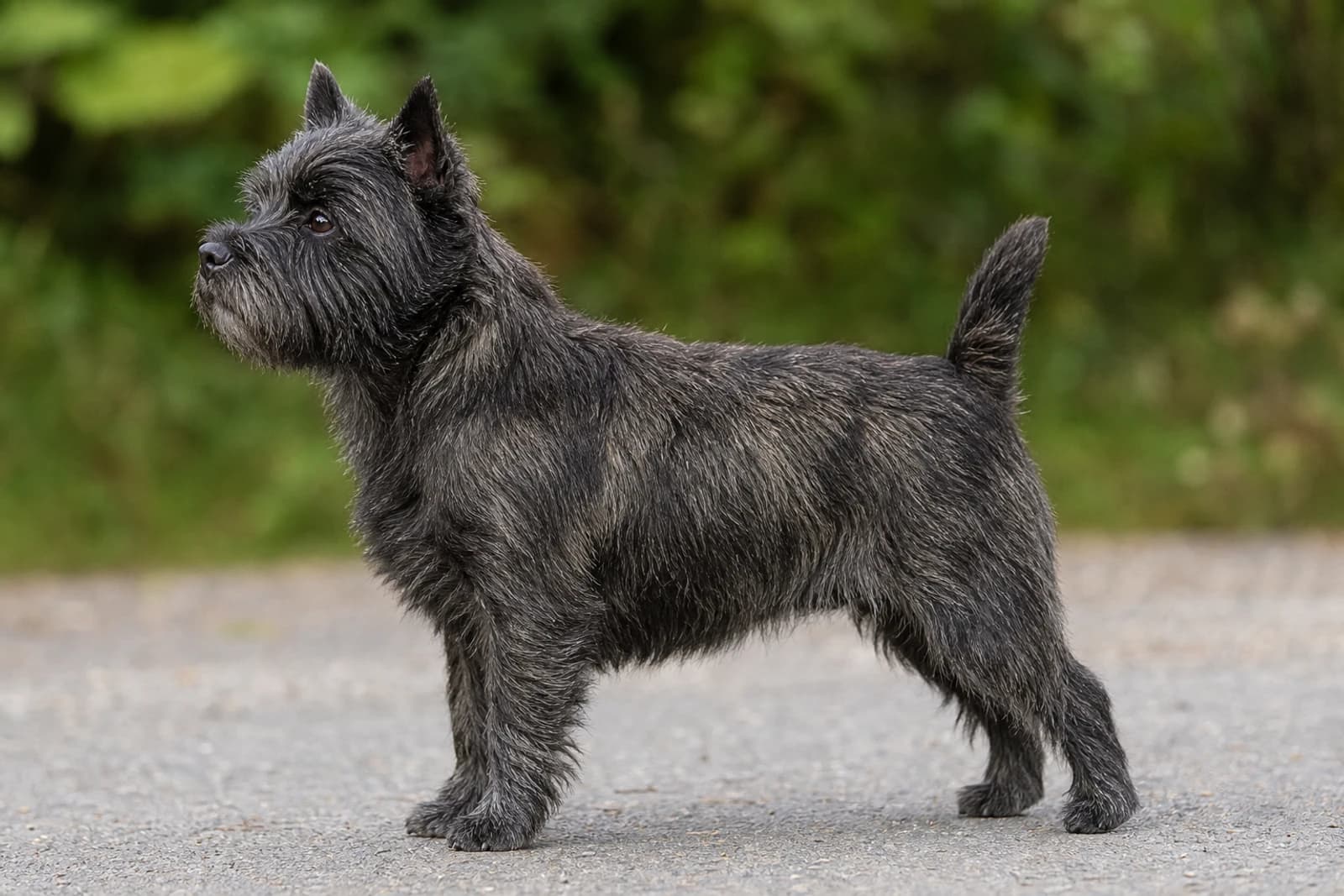
The Cairn Terrier is a small but sturdy terrier, originally bred in Scotland to hunt vermin among rocky cairns. With a happy-go-lucky attitude, a weatherproof wiry coat, and perky ears, these dogs are both charming and tenacious. They suit active individuals or families who enjoy outdoor fun and can provide consistent, firm training with a light touch. Cairns are affectionate with their people, alert watchdogs, and full of terrier spunk. They thrive on mental and physical challenges but may not tolerate small pets or overly rough handling. Perfect for those seeking a playful, low-shedding companion.
At a glance
- Size
- Medium
- Height
- 11–12 in
- Weight
- 13–18 lb
- Life span
- 9–15 years
- Coat colors
- Wheaten, Brindle, Red, Gray, Black-tipped wheaten, Silver
- Coat type
- Harsh, wiry double coat
How much does a Cairn Terrier cost?
Adopt / rescue
$75–$400
Usually includes spay/neuter, first shots, and a microchip.
Buy from a breeder
$700–$2,000
From a reputable, health-testing breeder.
Approximate USD. Prices vary widely by region, breeder, pedigree, age, and coat colour — adopting is the lower-cost and recommended route. Avoid suspiciously cheap “breeders”; they’re often puppy mills.
Estimate the full cost of a Cairn Terrier →Cairn Terrier photos
Views
Front, side, rear and top — the full silhouette.Poses
How the breed sits, lies, moves and plays.Puppy to senior
The breed across its whole life.Expressions
The breed’s range of moods.Close-up details
Eyes, ears, nose, paws, tail and coat.Coat colors
The breed’s recognized colors.Click any photo to enlarge. We show the Cairn Terrier from every angle — three views, poses, life stages, expressions, close-ups, coat and colors.
Appearance & size
At just 11 to 12 inches at the shoulder and 13 to 18 pounds, a Cairn Terrier is a small dog with a surprisingly big-dog build. He’s short-legged and low to the ground, but there’s nothing delicate about him. A deep, well-sprung chest, solid bone, and a level topline give the impression of a working terrier condensed into a compact frame — sturdy enough to scramble over rocks and squeeze into tight spots without the bulk of a larger breed.
The head is broad in proportion to the body and tapers to a strong, medium-length muzzle with a distinct stop. From straight on, what you notice first are the dark, wide-set hazel eyes peering out from under shaggy eyebrows. That expression is famously foxy — keen, clever, and a little mischievous. The ears are small, pointed, and carried fully erect, set wide apart on the skull. They telegraph every shift in mood before the dog even moves.
His double coat is a defining feature. The outer coat is harsh, wiry, and weather-resistant; the undercoat is short, soft, and dense. Run your hand through it and you’ll feel a slightly oily texture that helps him shake off rain and dirt. Cairns come in practically any color except white. Wheaten, red, brindle, gray, black, and black-and-tan are all common. Darker points on the ears, muzzle, and tail tip are breed-typical, and the coat itself often changes color over time — a dark brindle puppy may lighten to a clear wheaten by adulthood.
From the side, the body shows a moderate tuck-up and ribs that extend well back. The forelegs are straight, though the feet sometimes turn out just a little — a permissible breed quirk, not a flaw. The rear is muscular, with well-angulated stifles, and the short tail is set high on the croup. That tail is one of the breed’s signature features: it’s carried cheerfully upright, never curled over the back, and thickly furnished with hair. Watch a Cairn move, and you’ll see a ground-covering, effortless trot, head and tail up, that tells you this little dog was built to work all day and still be ready for whatever comes next.
History & origin
The Cairn Terrier comes straight out of the windswept Scottish Highlands and the rocky shores of the Isle of Skye. For at least 500 years, hard-scrabble crofters and farmers on Scotland’s western coast relied on small, fearless earthdogs to keep vermin in check. The breed’s name itself spells out the job: a “cairn” is a man-made pile of stones, often marking a boundary or burial site, and these piles were a favorite hideout for rats, foxes, and badgers. The terriers dug into those tight stone crevices and faced their quarry underground — a job that demanded a compact body, strong legs, and an attitude way bigger than their 13–18 pounds.
Up until the late 1800s, breeders on Skye and across the western mainland simply called them “short-haired Skye Terriers” or just “working terriers.” They were bred for grit and gameness, not for a uniform look. That changed when dog shows began to split Scotland’s terrier tangle into distinct breeds. In 1909, the UK Kennel Club started registering “Cairn Terriers of Skye,” but fanciers quickly pushed back, arguing the breed deserved its own identity separate from Skye Terriers. By 1912, the name was shortened to Cairn Terrier, and the AKC recognized the breed the following year.
A fascinating side note: the Cairn is the original foundation of the West Highland White Terrier. Cairn litters sometimes threw cream or white pups, and those were selectively bred — first as “White Cairns,” later as the West Highland White Terrier — because a white dog was easier to spot in the field and not mistake for a fox. Today’s Cairn still carries that native pretense-free working drive, even if he’s more likely to dig up a flower bed than dispatch a badger.
Temperament & personality
The Cairn Terrier packs more attitude per pound than just about any other dog. Don’t let the 13–18 lb frame fool you—this is a confident, busy little terrier who acts like the boss of the block. He leans into life with a forward, “let’s go” posture that matches his adventurous spirit. That boldness is the real deal, not a show.
Affection comes on his terms. A Cairn loves his people and will happily supervise your activities from the couch corner, but he’s not a velcro lapdog. Expect a quick cuddle, then he’s off to check on a noise at the front window. He’s an excellent early-warning system—alert, watchful, and quick to announce visitors with a sharp, repetitive bark that belies his size. If left alone too long or ignored, that vocal streak can turn into anxiety-driven barking or destructive chewing. A bored Cairn is a loud, excavation-minded Cairn.
Around the house, you’re sharing space with a natural-born problem solver. Give him a puzzle toy, and he’ll dismantle it with surgical precision. Forget to provide an approved chew, and your baseboards become the day’s project. Hard chewing is in his DNA; it’s not misbehavior so much as instinct—adults chew to keep jaws strong and teeth clean, and even a well-trained Cairn appreciates a durable bone within paw’s reach.
Territorial instincts run deep. A Cairn may mark chosen spots indoors with urine, especially in rooms that don’t carry the family’s scent profile. That’s not spite—it’s him saying, “I live here, too.” After he’s gone outside, a treat for doing his business on the grass will go further than scolding an accident, because he’s quick to connect the reward with the right spot. His scent memory is stubborn; if he’s peed there once, he’ll return unless the odor is thoroughly neutralized.
With other pets, the terrier grit is real. He typically tolerates a respectful dog of the opposite sex, but same-sex squabbles and bossy posturing are common. Cats might be okay if raised together, but a stray running through the yard is an invitation to chase. Because he’s both fearless and scrappy, even larger dogs don’t intimidate him, so early socialization keeps that confidence from sliding into fights. In a household with small children, teach kids to give him space during meals—resource guarding can surface if he feels his bowl is under siege.
This is a dog that thrives on respectful, consistent engagement, not a battle of wills. He’ll give you ten times the energy he receives, and he’ll out-stubborn you with a grin. Plan on a lifetime of channeled digging, a good deal of sock theft, and a sense of humor about the chaos—a Cairn Terrier guarantees all three.
Good with kids, dogs & other pets
These little earth dogs are typically patient and adventure-ready with kids, but their terrier firepower means you’ll need to manage interactions with other animals carefully. At 13–18 pounds and 11–12 inches tall, a Cairn is sturdy enough for gentle roughhousing without being fragile. They’re naturally non-aggressive and often form a fast bond with respectful children, becoming a tireless playmate who’s up for backyard games or couch cuddles. Still, that tolerance has limits. Teach kids not to yank ears, steal toys, or corner the dog when it’s resting. Even the most easygoing Cairn will defend its space if pushed, and their sharp bark can startle a small child.
Supervision is non-negotiable, especially with toddlers who move unpredictably. Early and ongoing socialization makes a huge difference. Expose your puppy to well-mannered children of all ages before 12–14 weeks, keeping every interaction positive. A Cairn who grows up with gentle kids generally becomes a safe, goofy family member; one who only meets children later may be reactive or guarded.
With other dogs, the picture shifts. Cairn Terriers can be dog-selective. They often coexist peacefully with a known canine housemate, particularly if raised together from puppyhood, but same-sex squabbles aren’t uncommon, and they seldom back down from a challenge. Expect a bossy, high-energy play style—lots of growling, body slams, and chase—that smaller or more sensitive dogs may find overwhelming. Introduce new dogs on neutral ground, use parallel walks, and separate dogs during meals and high-value chews. Puppies who miss the critical socialization window (3–14 weeks) are far more likely to become timid or over-excited around other dogs later, making everyday walks a headache. Even after that window closes, you can still build tolerance with patient counter-conditioning, but a severely fearful adult may never enjoy the dog park.
Cats and small pets are where a Cairn’s hardwired prey drive screams loudest. These dogs were bred to bolt after vermin, and that instinct doesn’t switch off just because the household gerbil has a name. A puppy raised with a confident indoor cat often learns to coexist—usually after a few swats teach manners—but you should never assume it’s safe. Fast movement from a fleeing cat, rabbit, or ferret can ignite a chase that ends badly. Keep pocket pets in securely latched enclosures and out of the terrier’s line of sight. Trust is not a management strategy.
Finally, Cairns are high-companionship dogs. They don’t do well left alone in a yard or shut away for 10-hour workdays. Loneliness can morph into relentless barking, digging, or destruction. If you’re out for long stretches, give them a solid run first, leave food puzzles, and build alone-time gradually from puppyhood. A tired, mentally stimulated Cairn is far less likely to invent its own trouble—or take out frustration on the household cat.
Trainability & intelligence
A Cairn Terrier isn’t the dog you train just to watch it comply. He’s bright, curious, and a quick study — but he’s also a problem-solver who was bred to bolt after quarry in tight rock piles all on his own. That means he figures out what works for him before worrying about what you want. The upside: he learns new cues fast when the payoff is obvious. The catch: he’s perfectly willing to ignore a command he finds boring, and he’s clever enough to train you if you’re not paying attention.
What motivates this breed. Food treats are the obvious door-opener, but don’t underestimate a squeaky toy or a rousing game of tug. Keep sessions short — three or four minutes a pop, mixed into daily life — and switch up rewards so he doesn’t get bored. A Cairn who knows a training routine is about to start may already be halfway up the back of the couch, looking for his own entertainment.
The independence issue. This is where people get tangled up. A Cairn Terrier will blow off a recall the instant a squirrel streaks across the yard. It’s not disobedience born of spite; it’s generations of self-directed work. You need to build a recall that’s stronger than his prey drive, and that takes months of proofing in boring places before you test it anywhere interesting. Use a long line, pay with roasted chicken or cheese, and never repeat a cue you aren’t in a position to back up. If he learns “come” is optional, you lose that button for good.
Socialization is not optional. Housemates often describe the Cairn as scrappy or opinionated with other dogs, and reserved with strangers. That’s a dog who missed early, positive exposure. The window from 3 to 14 weeks matters enormously. During that stretch, let your puppy meet calm, vetted dogs, hear clanging pots, walk on gravel, ride in the car, and greet gentle strangers — always paired with treats and a relaxed voice. Keep it up through adolescence. A well-socialized Cairn still has a terrier edge, but he learns to dial it back instead of snapping first.
What works — and what backfires. Positive, relationship-based methods are the only way with this breed. Clicker training, shaping, and play-based learning all suit him. Avoid leash pops, yelling, or alpha-roll tactics; a Cairn won’t meekly submit — he’ll get defensive, lose trust, and dig in harder. Patience and consistency do the real heavy lifting. When he blows off a known cue, it’s usually because the environment is too distracting or the reward history isn’t there yet. Back up a step, set him up to succeed, and pay generously. Over time, you get a partner who works with you willingly rather than a grudging employee waiting for the boss to turn his back.
Exercise & energy needs
Daily Total Your 13–18 pound Cairn Terrier runs on quick bursts, not all-day endurance. Plan on 40 to 60 minutes of real movement each day, split into at least two sessions. A single long trudge around the block rarely satisfies this dog; two shorter, snappier walks combined with a vigorous play period do a better job. If the weather’s foul, break the day into three 15-minute indoor games — they count just as much.
Mental Workout Bred to chase and dispatch vermin among rocky cairns, the Cairn’s brain needs a job. Without it, a perfectly nice terrier turns into an obsessive digger or a champion barker. Build in 10–15 minutes of focused mental work alongside physical exercise. Stash part of his kibble in a puzzle toy, play hide-and-seek with a smelly treat, or work a flirt pole to mimic the start-and-stop of a rat hunt. Scent games — like hiding a toy in a stack of boxes — tap his natural drive and leave him happily worn out.
Activities That Fit
- Brisk on-leash walks (sniffing is part of the exercise).
- Off-leash exploration in a securely fenced area.
- Earthdog trials, barn hunt, or low-level agility — they suit his build and his prey drive.
- Flirt pole sessions that respect his joints (keep turns tight but jumps low).
- A designated sandbox or digging spot; bury a toy to make it an event.
A few cautions. Avoid repetitive high-impact leaps — like springing off the back of the couch — that can stress knees and spine over time. A 15-minute flirt pole frenzy with quick stops is fine; an hour of nonstop fetch on concrete is not. Watch for limping or stiffness, especially as the dog ages.
When a Cairn starts redecorating your flowerbeds, it’s usually a signal the mental meter is still running. A tired brain tames that terrier instinct faster than another mile on the leash.
Grooming & coat care
Your Cairn’s shaggy, weather-resistant double coat looks low-maintenance, but it actually needs a purposeful routine. A slicker brush with rounded pins and a fine-toothed metal comb are your go-to tools. Once a week, work the slicker through the wiry outer layer and into the soft undercoat, then follow with the comb to catch any snags around the legs, belly, and behind the ears. During the twice-yearly shed — usually spring and fall — bump brushing to every other day. It keeps the hair on the brush instead of your couch.
Bathing is an occasional job. This breed’s harsh coat naturally sheds dirt, so a bath every couple of months or after a particularly muddy adventure is plenty. Over-washing softens the texture and can make the skin dry. Use a mild dog shampoo and rinse until the water runs clear; trapped residue invites itchiness.
The big decision is hand-stripping versus clipping. Stripping (pulling dead outer hairs by hand or with a stripping knife) preserves the coat’s crisp texture and rich color, but it takes practice. Most owners learn the basics or visit a groomer every 6–8 weeks. Clipping is faster and cheaper, though over time the coat may turn softer, lighter, and lose some of its natural dirt resistance. Either path is fine — just pick one and stick with it early.
Don’t skip the small stuff. Nails need trimming every 3–4 weeks; if you hear clicking on hard floors, you’ve waited too long. Ears stand upright and can trap grit, so wipe them out weekly with a damp cloth or a vet-approved cleaner. Teeth get a brushing a few times a week to keep tartar and doggy breath under control. A regular once-over also lets you spot skin flakes, hotspots, or parasites before they escalate — especially useful in a breed that loves to dive into brush and undergrowth.
Seasonal care is mostly about managing that undercoat blowout. Increase brushing sessions, and consider a warm bath followed by a thorough comb-out to loosen the dead fluff. Outdoor romps naturally help the old coat release, so your everyday walks do double duty.
Shedding & allergies
Cairn Terriers shed, but not much. You’ll find a few wiry hairs on dark pants or the couch, not the constant tumbleweeds some breeds produce. The trade-off is a double coat that needs more hands-on upkeep than a quick brushing every few days.
That coat is made of two parts: a soft, insulating undercoat and a harsh, water-resistant outer layer. Most of the loose fur comes from the undercoat, especially during seasonal blowouts — usually in spring and fall. For a couple of weeks, you’ll pull out clumps when you comb through them. The rest of the year, dead hair tends to stay trapped in the wiry topcoat instead of floating off. A thorough brushing once a week keeps it under control, but the real game-changer is hand-stripping: pulling out dead outer hairs by the root. It’s not painful (the hairs are ready to release), and it dramatically cuts down the loose stuff. If you rely on clippers instead, the coat loses its rough texture and more of that trapped undercoat will shed into your house.
Drool isn’t part of the picture. Cairns have tight mouths and don’t leave wet spots on your clothes or furniture.
Now, the allergy question. No dog is truly hypoallergenic — the proteins that trigger reactions are in dander, saliva, and urine, not just fur. Cairns do produce less dander than many breeds, and their low shedding means less airborne hair carrying it around. Some allergy sufferers find they can live comfortably with a Cairn, especially when the dog gets regular grooming and the house stays clean. But it’s a gamble. Spend real time around an adult Cairn, preferably indoors, before committing. A puppy’s coat and dander levels can change as they mature, so an early positive test isn’t a guarantee.
Diet & nutrition
Cairn Terriers will eat like they’ve just run a marathon — even if the longest trip they made was from the couch to the food bowl. That bottomless appetite makes weight management the single biggest nutrition concern for this breed. A lean Cairn is a healthier Cairn, especially since the breed can be prone to patellar luxation and other joint issues that extra pounds only aggravate. You control the portions, not the dog.
How much to feed depends on age, size, and daily activity. A typical 13–18 lb adult burns a lot of energy for its size and usually does well on two measured meals a day. If you’re feeding a high-quality commercial kibble, follow the bag’s weight-based guidelines, then adjust based on what you can see and feel — you should be able to feel ribs without a layer of padding. For a terrier that chases squirrels and digs for sport, the higher end of the range works; for a more sedate companion, cut back. Always factor in treats; a few extra biscuits and a little cheese add up fast on a dog this small.
Puppies need fuel spread across the day. From weaning to four months, offer four evenly spaced meals. Drop to three meals until six months, then settle into the adult two-meal rhythm. Transition a new puppy gradually, starting with lightly cooked, puréed meats, fish, fruit, and vegetables, or a high-quality puppy food. Raw chicken wings can be introduced under supervision around twelve weeks.
What to put in the bowl matters as much as how much. A diet built around animal protein is species-appropriate — about 60% raw and cooked meat, 20–30% fruits and vegetables, and 10% other ingredients like eggs, pearl barley, or plain yogurt. Cairns do well on this kind of varied, whole-food approach, but commercial balanced diets are fine too. The breed can gulp food, so a food puzzle bowl does double duty: it slows frantic eating and entertains a smart terrier brain. Because a dog’s jaw moves only vertically and lacks salivary digestive enzymes, blending or lightly processing fresh meals helps with nutrient absorption — particularly for puppies, seniors, or dogs with missing teeth.
Watch out for rich or fatty foods, especially trimmed holiday scraps and pan drippings. A sudden high-fat load can trigger pancreatitis, and Cairns aren’t big enough for that gamble. Serve any leftovers in the dog’s own bowl and never directly from the table; begging is a habit you won’t break easily once it starts.
As your Cairn ages into the 9–15 year window, senior dogs often benefit from smaller, more frequent meals if activity declines, but there’s no strong reason to cut protein. Keep weighing your dog regularly and taper calories slowly to match a slower pace — those extra ounces can sneak up and strain aging joints. For seniors with sensitive mouths, puréeing meals makes nutrition easier to access.
A simple go-to: keep batches of cooked lean meat, blanched veggies, and grain in the fridge so you can build fast, healthy meals. Even the water from steaming vegetables (unsalted) can stretch into a moist food base. Just measure every scoop against your dog’s actual waistline.
Health & lifespan
Cairn Terriers often reach 12 to 14 years, and it’s not unusual to see a well-cared-for dog hit 15. That kind of longevity doesn’t happen by accident — it leans heavily on good breeding, consistent preventive care, and not letting your little digger turn into a sofa shape.
Responsible breeders screen for a handful of inherited conditions that can pop up in the breed. Patellar luxation (a kneecap that slips out of place) shows up in some lines, so you want a breeder who tests the parents’ knees through OFA or PennHIP. Ocular problems, including cataracts and progressive retinal atrophy, are another reason to ask for eye clearances. A less common but breed-specific quirk is craniomandibular osteopathy, sometimes called “lion jaw,” which causes painful swelling in the jaw bones of puppies. It typically resolves on its own, but knowing whether it’s in the family tree helps you prepare for a rough few months. Reputable breeders don’t breed affected dogs, so they’ll talk openly about this stuff.
Cairns are compact and muscular, but that 13–18 lb frame relies on you to keep the weight off. An extra pound on a small dog is like an extra 10 on us, so don’t let their hungry eyes guilt you into second helpings. This is a food-motivated breed; they’ll work you like a carnival game. You’ll save their joints and cut the risk of arthritis by staying lean.
Skin allergies are the other quiet nuisance. You’ll notice them chewing at paws or rubbing their face, sometimes sparked by diet or environmental triggers. A good vet will help you track the culprit without chasing your tail. Their thick double coat offers decent protection, but if you’re headed into Texas heat, don’t expect the dog to self-regulate. Bring water, keep midday walks short, and use common sense.
Monthly heartworm prevention during mosquito season — and for a month after it ends — is non-negotiable for a dog that loves to be outside in the dirt. Make it a calendar habit, same as the legally required rabies vaccine. A skipped dose isn’t worth the gamble; treatment is brutal, and no dog should go through it.
Young Cairns do best when you handle their paws, ears, and mouth from the get-go. It turns vet exams from a wrestling match into a non-event, and it lets you catch subtle shifts — a bit less appetite, a day where the zoomies don’t happen — before they turn into larger problems. Schedule an annual wellness check with bloodwork once the dog hits middle age, and step it up to twice a year with a senior. These little terriers are tough enough to hide discomfort, so the owner is often the first and best diagnostic tool.
Living environment
A Cairn Terrier’s living situation matters far less than your willingness to deliver real work and a sense of humor about barking. A house with a securely fenced yard makes life easiest, but an apartment can work if you commit to several active sessions a day and a plan for their vocal streak.
Fenced yard and the digging instinct. These little terriers were bred to bolt after vermin in rocky Scottish terrain, so a high prey drive and a passion for excavation are hardwired. A fence you can bury or reinforce at the base keeps them from tunneling after a squirrel. Without that, expect escape artistry. In the yard, they’ll happily redesign your flowerbeds — giving them a sandbox or a designated digging spot channels the urge without constant landscaping battles.
Barking realities. Cairns are alert, opinionated watchdogs who announce every delivery, passerby, and suspicious noise. That makes them a tough sell for thin-walled apartments unless you train a solid “quiet” from puppyhood. A detached home dials down neighbor friction, but quiet is never their default setting. Expect a dog who believes he’s the neighborhood security patrol.
Climate tolerance. Their double coat — harsh outer layer, soft undercoat — insulates against cold, damp, and even a light Scottish-style drizzle. That same coat traps heat, so in hot weather limit walks to early morning or late evening and always provide shade and water. They aren’t brachycephalic, so breathing issues aren’t a concern, but the thick coat makes them heat-sensitive.
Time alone. Cairns were bred to work independently, not to cling, which gives them more backbone than many companion breeds when you’re gone. Still, leaving one alone for a full workday day after day can trigger non-stop barking, destructive digging, or anxiety. Gradual desensitization, puzzle toys stuffed with food, and scent games help them self-soothe. A midday dog walker or a lunch break visit goes a long way toward keeping a solo Cairn sane.
Daily energy needs split best into two or three chunks — a 20-minute walk, some off-leash sniffing in a safe enclosed space, and a round of indoor fetch or a snuffle mat. Skip the marathon and give them a job. A bored Cairn finds his own employment, and you probably won’t like the résumé.
Who this breed suits
Who clicks with a Cairn Terrier
If you want a big dog personality in a portable, 13–18-pound body, a Cairn could be your match. These dogs are scrappy, cheerful, and convinced they’re ten feet tall. The right owner isn’t fooled by the small size — you’ll be someone who genuinely enjoys a smart, independent thinker that won’t fawn over you simply because you walked through the door. Earn their respect through consistent, upbeat training, and you get a loyal sidekick with a wicked sense of humor.
Active singles and couples who like to hike, explore, or spend weekends outdoors will find a game little shadow. Cairns need a solid 45–60 minutes of real exercise daily — a quick lap around the block won’t cut it for this former farm dog. A securely fenced yard is ideal because the prey drive is hardwired; they’ll take off after a squirrel without a backward glance. Families with older, dog-savvy kids (think age 7+) thrive here. Younger kids can be too erratic and grabby for a terrier who won’t suffer clumsy handling in silence. Seniors who are still spry and want a sturdy, spirited companion can absolutely consider a Cairn — just be honest about whether you can keep up with a dog that moves like a wound-up spring.
First-time dog owners can succeed, but only if you’re signing up for terrier stubbornness. Cairns aren’t Golden Retrievers. They question authority, get bored with repetition, and won’t perform tricks just to please you. If that challenge sounds fun rather than exhausting, you’ll do fine. Apartment life is possible, but only if you’re a devoted walker and your neighbors are deaf or very forgiving — Cairns bark with conviction.
Who should think twice
Pass on this breed if you prize a calmly obedient, quiet lap dog. Also steer clear if your household includes pet rabbits, hamsters, or cats that don’t stand their ground; the Cairn’s vermin-hunting instincts run deep. A largely sedentary lifestyle, a distaste for regular grooming (they need weekly brushing and hand-stripping once or twice a year), or a zero-tolerance policy for digging in the flower beds are other solid dealbreakers. This is a dog that wants to run the show, so you need to be a calm, clear leader without squashing their spark.
Cost of ownership
Purchase Price
A well-bred Cairn Terrier puppy from a breeder who tests for genetic issues like ocular melanosis and patellar luxation typically runs $1,500–$2,500. Show-potential pups or lines with top titles can push closer to $3,000. If you go the rescue route, adoption fees usually land between $200 and $500, often including spay/neuter, microchip, and age-appropriate shots.
Monthly Upkeep
Budget about $100–$200 a month for the basics—more if you use a professional groomer or a premium wellness plan.
- Food: A 13–18 lb Cairn does well on high-quality dry food. Expect to spend $30–$50 a month, depending on the brand, with the higher end for fresh or raw formulas.
- Grooming: That shaggy, weather-resistant double coat needs regular attention. If you pay a groomer to strip or clip every 6–8 weeks, you’re looking at $50–$70 per session, which breaks down to roughly $30–$45/month. Doing it yourself with a stripping knife and slicker brush drops the cash outlay drastically but requires time and technique.
- Vet: Annual wellness checks, vaccines, heartworm prevention, and flea/tick meds average $300–$500 a year, or $25–$42/month. Dental cleanings (if needed) add a few hundred that year.
- Insurance: A comprehensive accident-and-illness policy for a Cairn tends to run $30–$50 monthly. It softens the hit if the dog ever needs patella surgery or develops allergies.
Don’t forget the smaller, steady drains: treats, chew toys, a sturdy harness (Cairns are pullers), and occasional boarding or dog-walking services. Licensing and routine items can add $15–$25 a month, too. All told, the coat care alone makes a Cairn a bit pricier than the average short-haired terrier—something to factor in if you’re drawn to that scruffy face.
Choosing a Cairn Terrier
A Cairn Terrier is a long-term, high-spirited housemate — a 13–18 lb terrier with a 9–15 year lifespan — so getting the source right saves heartache later. You have two solid routes: a breeder who health-tests and proves their dogs in some venue (conformation, earthdog, agility) or a Cairn-specific rescue. Rescue often places adult dogs whose temperaments are known, and you may even find a puppy surrendered through no fault of its own. The trade-off is thinner health history. A puppy from a painstaking breeder gives you predictable early socialization and a stack of clearances, but expect to wait for a litter — and pay accordingly.
Health Clearances to Ask For
- OFA patella certification. Luxating kneecaps are a real issue in the breed. Both parents should have a passing grade from the Orthopedic Foundation for Animals.
- OFA or CERF eye exam. An annual screening by a veterinary ophthalmologist rules out progressive retinal atrophy, cataracts, and other inherited eye disease. Ask for the exam number, not just a vet glance.
- Bile acid test for liver shunt. Portosystemic shunt appears in Cairns, and responsible breeders pre-screen puppies with a bile acid test before they go home, often around 8–10 weeks. A normal result is non-negotiable.
Some breeders also do cardiac exams; it’s not standard across the board but a plus.
Red Flags When Talking to a Breeder
- Does not provide written proof of the clearances above — “my vet says they’re fine” doesn’t count.
- Won’t let you meet at least one parent on the premises.
- Breeds multiple litters year-round or always has puppies available.
- Sells to anyone with a credit card without asking about your lifestyle, yard, other pets, or experience with terriers.
- Offers “teacup” or “rare” Cairns; those phrases don’t align with a 13–18 lb breed standard.
- Ships a puppy sight-unseen, no questions asked.
A good breeder will interview you as thoroughly as you interview them and stay in your life for the dog’s lifetime.
Picking Your Puppy
You’re looking for a busy, curious little terrier. A Cairn puppy should be into everything — investigating noises, pouncing on littermates — not hanging back in a corner. Watch the whole litter move; a pup that skips or bunny-hops may be showing early patella trouble. Eyes and nose should be clear, coat dry and springy, no pot-belly that could hint at worms or a shunt. The breeder should hand you a health record (first shots, deworming dates) and a signed contract with a return-to-breeder guarantee. Let the breeder guide you toward the pup whose energy matches your household; picking the bossiest puppy when you want a quiet couch pal sets everyone up for friction.
Pros & cons
Pros
- A hardy, compact terrier that slots into city apartments or rural life as long as daily exercise happens. At 13–18 lb and 11–12 in, they’re sturdy without being delicate.
- The harsh, weather-resistant double coat sheds minimally and shrugs off dirt. A weekly brush and occasional hand-stripping keep grooming simple — no pricey clipping required.
- Alert, watchful, and reliably noisy: they’ll let you know about the delivery truck without tipping into constant, unprovoked barking.
- A lifespan of 9–15 years is common, and responsible breeders screen for eye issues like progressive retinal atrophy and luxating patellas to stack the odds in your favor.
- Lively, curious, and sharper than many expect. Short, upbeat training sessions work well, and they often shine at earthdog, rally, or agility.
- Devoted but not needy — they’ll curl up near you, not on you, which suits owners who want a partner, not a shadow.
Cons
- Born with a hair-trigger chase instinct. Squirrels, cats, or any small fleeing creature will override recall, so a fenced yard and a leash are daily requirements.
- Obsessive diggers. Without a designated digging zone, your garden beds become a lunar landscape.
- Vocal about everything. Passersby, strange sounds, a leaf blowing wrong — Cairns have opinions and don’t keep them to themselves.
- Stubborn streak runs deep. Housetraining can drag on, and they’ll test boundaries; consistent, positive leadership gets results, but a heavy hand backfires.
- Terrier fire means they’ll stand up to dogs twice their size. Early socialization helps, but dog parks often invite trouble.
- Not a quiet lap warmer. Expect to provide at least 30–45 minutes of brisk walking plus a good romp, or they’ll redecorate with anything they can shred.
Similar breeds & alternatives
If the Cairn’s shaggy, no-fuss coat and independent spark appeal to you, a handful of other terriers occupy similar territory but each carve out their own niche.
West Highland White Terrier
Think of the Westie as a Cairn who decided to dress for a garden party. At 15–20 pounds and roughly the same height (10–11 inches), the Westie shares the compact, sturdy frame, prominent ears, and happy-go-lucky curiosity. The glaring difference is the coat: that brilliant white double coat stains easily and demands more frequent grooming to keep it from looking dingy. Temperamentally, Westies can be a notch more stubborn and vocal than the already opinionated Cairn, but both will gladly dig up your flower bed if the mood strikes.
Scottish Terrier
The Scottie is the Cairn’s more dignified, slightly heavier cousin, typically 18–22 pounds and 10 inches tall. That iconic beard and low-to-ground silhouette come with a famously reserved personality. Where a Cairn might warm up to strangers with a quick tail wag, a Scottie often holds back, preferring to observe first. Scotties can be more territorial and less forgiving of rough handling from small children, while a well-socialized Cairn is more adaptable. The Scottie’s wiry coat needs consistent stripping to keep its crisp texture, similar to the Cairn’s, but the breed tends to shed less.
Norwich Terrier
At just 10–12 pounds, the Norwich is a pocket-sized terrier with a foxy face and a noticeably softer temperament. They retain the tenacity and love of a chase, but are famously pack-oriented and often less scrappy with other dogs than a Cairn might be. A Norwich wants to be in the middle of the household action at all times, which can translate to some separation anxiety if you leave for work. Their wiry coat is easy to manage, and their smaller size makes them a good choice for apartment dwellers who still want a big terrier personality.
Border Terrier
If you like the Cairn’s outdoorsy sturdiness but wish for a terrier that’s more agreeable around other dogs and cats, the Border Terrier (11.5–15.5 pounds) is worth a look. They’re bred to run alongside horses and hounds, so they usually exhibit less of the bossy, “I’ll start it” attitude. Border Terriers have a softer expression, a water-resistant coat in shades of grizzle, red, or blue and tan, and a reputation for being one of the most trainable terriers. Expect a similar exercise need — at least an hour of active play or walking — but a slightly more biddable nature when it’s time to come when called.
Fun facts
- Toto from The Wizard of Oz was a Cairn Terrier.
- The breed's name comes from the Scottish Gaelic 'càrn', meaning a pile of stones where they hunted rodents.
- They are one of the oldest terrier breeds from Scotland, dating back to the 16th century.
- Cairn Terriers have a strong digging instinct, often creating holes in the yard in search of prey.
Frequently asked questions
- Are Cairn Terriers good with kids?
- Cairn Terriers can be good companions for older children who understand how to interact respectfully with dogs. Their terrier nature may make them less tolerant of rough handling, so supervision is recommended. Early socialization and training can help them get along well with kids.
- How much do Cairn Terriers shed?
- Cairn Terriers are low-shedding dogs, but they do shed minimally throughout the year. Their harsh double coat requires regular hand-stripping to remove dead hair and maintain coat health. Without proper grooming, they may shed more noticeably.
- How much exercise does a Cairn Terrier need?
- Cairn Terriers have moderate exercise needs and generally benefit from around 30-45 minutes of daily activity. They enjoy walks, playtime, and mental stimulation like puzzle toys. Due to their terrier drive, they should be kept on leash or in secure areas, as they may chase small animals.
- What are the grooming needs of a Cairn Terrier?
- Cairn Terriers require regular grooming to keep their wiry double coat in good condition. They benefit from weekly brushing and periodic hand-stripping every few months to maintain the coat's texture. Bathing should be occasional to avoid stripping natural oils, and routine nail trimming and ear cleaning are also necessary.
- Are Cairn Terriers suitable for apartment living?
- Cairn Terriers can adapt to apartment living if provided with enough daily exercise and mental stimulation. Their small to medium size makes them physically suitable, but their barking tendencies might be an issue in close quarters. Consistent training can help manage excessive barking.
- Are Cairn Terriers easy for first-time dog owners?
- Cairn Terriers can be a challenge for first-time owners due to their independent and stubborn streak. They are intelligent but may require patience and consistent training. With proper guidance and socialization, they can be rewarding pets, but first-time owners should be prepared for typical terrier traits.
Tools & calculators for Cairn Terrier owners
Quick estimates tailored to Cairn Terriers — pre-filled with this breed’s size where it matters.
Articles & stories about the Cairn Terrier
Sources & standards
This profile follows recognized breed standards from the American Kennel Club (AKC) and the Fédération Cynologique Internationale (FCI), along with established veterinary and breed-club guidance. These describe general breed tendencies — every dog is an individual.
Owner stories
Have a Cairn Terrier? Share your experience — grooming tips, personality quirks, anything goes.