

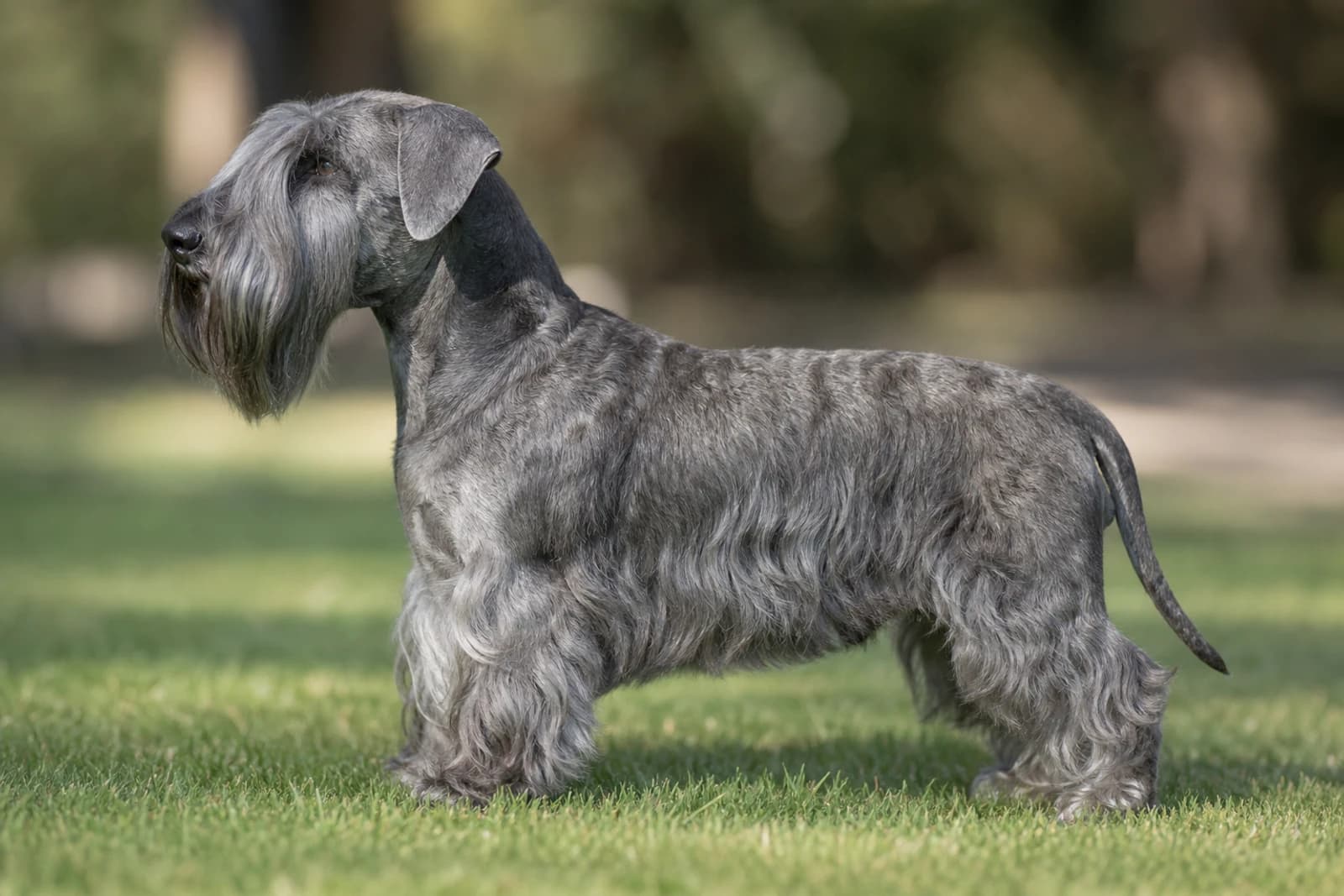
The Cesky Terrier is a rare, charming breed from the Czech Republic, created for hunting but prized as a gentle companion. With a soft, wavy coat that sheds minimally, they suit allergy sufferers and those seeking a low-maintenance grooming routine (though they require regular clipping). Standing 10-13 inches tall and weighing 13-22 pounds, they adapt well to apartments and enjoy moderate exercise. Their friendly, intelligent, and patient temperament makes them great with children, though early socialization helps with other pets. Ideal for first-time owners willing to commit to training and coat care, they live 12-14 years.
At a glance
- Size
- Medium
- Height
- 10–13 in
- Weight
- 13–22 lb
- Life span
- 12–14 years
- Coat colors
- Blue-gray, Coffee brown
- Coat type
- Silky, slightly wavy, single coat
- Group
- Terriers
How much does a Cesky Terrier cost?
Adopt / rescue
$75–$400
Usually includes spay/neuter, first shots, and a microchip.
Buy from a breeder
$700–$2,000
From a reputable, health-testing breeder.
Approximate USD. Prices vary widely by region, breeder, pedigree, age, and coat colour — adopting is the lower-cost and recommended route. Avoid suspiciously cheap “breeders”; they’re often puppy mills.
Estimate the full cost of a Cesky Terrier →Cesky Terrier photos
Views
Front, side, rear and top — the full silhouette.Poses
How the breed sits, lies, moves and plays.Puppy to senior
The breed across its whole life.Expressions
The breed’s range of moods.Close-up details
Eyes, ears, nose, paws, tail and coat.Coat colors
The breed’s recognized colors.Click any photo to enlarge. We show the Cesky Terrier from every angle — three views, poses, life stages, expressions, close-ups, coat and colors.
Appearance & size
You spot a Cesky Terrier’s silhouette long before you notice the details: a low, rectangular dog with a shaggy but soft outline that almost makes you think of a miniature, slightly stretched-out Soft-Coated Wheaten. Up close, the first thing that catches your eye is the long, silky topknot falling forward over the eyes and the lush beard that frames the face like a well-groomed gentleman’s whiskers. This is not a wiry, scruffy terrier coat — the texture is fine, wavy, and feels slippery to the touch, almost like human hair.
At the withers, a Cesky stands just 10 to 13 inches, and weighs anywhere from 13 to 22 pounds. That puts them in a handy “medium” category on paper, but in daily life they feel more like a compact small dog you can scoop up when needed. Don’t let the short legs fool you; the body is muscular and surprisingly solid under all that hair.
Coat and color. The breed comes in two main color camps, both born dark and gradually lightening as the dog matures. Puppies start out black or deep charcoal and shift over a year or two into a blue-gray shade, sometimes with lighter tan markings on the cheeks, lower jaw, chest, legs, and under the tail. The other variety is a warm, café-au-lait brown, also with possible tan points. The coat can reach several inches in length and is never stripped — it’s clipped to maintain the classic outline. Around the face, the hair is left longer to form the distinctive “fall” over the eyes, a full beard, and bushy eyebrows that give the dog a quizzical, wise expression.
Build and silhouette. From the side, the Cesky is noticeably longer than it is tall, with a deep, well-sprung ribcage that extends back and a slight tuck-up at the loin. The front looks strong and straight; the forelegs are set well under the body, and the chest drops to elbow level. Viewed from behind, the rear is muscular with well-angulated stifles, and the tail is set on moderately low, carried in a slight upward curve or sabre fashion when the dog moves — never curled over the back. The head is a long, blunt wedge with a strong underjaw, and the ears hang in a neat V-shaped fold, putting the final touch on that soft, thoughtful expression.
History & origin
Every Cesky Terrier alive today traces back to a single kennel in Czechoslovakia and one man’s decades-long breeding experiment. František Horák, a Prague geneticist and avid hunter, set out in 1949 to create a terrier that could go to ground in the Bohemian countryside but live as an easygoing house dog the rest of the week. He didn’t find what he wanted in the existing terriers, so he made one himself.
Horák started with Scottish Terrier and Sealyham Terrier stock, then wove in a dash of other breeds. His goal was a shorter-legged dog with drop ears that kept dirt and debris out of the ear canal during underground work, a softer, silkier coat that shed less in the home, and—most importantly—a temperament far less scrappy than the typical terrier. He selected relentlessly for dogs that were calm, trainable, and social with people, while still packing the drive to locate fox and rabbit and bolt them from their dens. The carefully documented program produced a sturdily built terrier standing 10–13 inches and weighing between 13 and 22 pounds, with a rectangular silhouette and a deep chest that allowed for easy maneuverability in tunnels.
The Fédération Cynologique Internationale (FCI) formally recognized the breed in 1963 as the Cesky Terrier, literally the Czech Terrier. Horák guarded the gene pool closely, registering every litter and enforcing a controlled breeding program that kept type and health remarkably consistent. After his passing in 1997, his daughter continued the work from the family’s Klánovice kennel, ensuring the lines stayed pure and temperament true.
The breed trickled into other European countries and eventually reached the United States, but it remained exceptionally rare. The American Kennel Club recorded its first Cesky Terrier litter in the late 1980s, and in 2011 the breed earned full recognition into the AKC Terrier Group. Today, the Cesky Terrier is still seldom seen in North America—finding a puppy often means a waitlist—but the dog Horák built is exactly what he’d envisioned: a tenacious, level-headed hunter that curls up quietly at the end of the day.
Temperament & personality
The Cesky Terrier often gets described as the terrier for people who don’t think they want a terrier. While most in this group are scrappy, high-octane, and fiercely independent, the Cesky dials things down several notches. At 13 to 22 pounds and standing 10 to 13 inches, they’re sturdy but manageably sized, with a temperament that leans more toward “calm, devoted sidekick” than “pocket rocket.”
Inside the home, these dogs are famously gentle and affectionate. They bond deeply with their families and want to be within sight of them, whether that means curling up next to you on the sofa or trotting behind you from room to room. They’re surprisingly tolerant with respectful children and often get along with other household dogs, especially if raised together. Early socialization still matters—without it, their natural reserve around strangers can tip into shyness—but outright aggression is rare in a well-bred Cesky.
They are watchful and will announce visitors with a sharp, no-nonsense bark, then usually settle once you’ve acknowledged them. That alertness doesn’t typically turn into nonstop yapping unless the dog is bored or lonely. Neglect or long hours alone can spark anxious barking, destructive chewing, and indoor marking, because these dogs are intensely people-oriented and don’t thrive as backyard ornaments.
Don’t mistake the mellow vibe for a pushover, though. Cesky Terriers are smart and sometimes have their own ideas about how things should go. They respond best to consistent, upbeat engagement—force or heavy-handed corrections can cause them to shut down. Respectful training that rewards what they get right keeps their cooperative side front and center, and it also channels the playful, slightly clownish streak that owners love.
Around the house, you’ll notice a dog that’s equal parts dignified and goofy. They might carry a favorite toy with exaggerated pride or throw themselves into a play session with short bursts of energy, then be perfectly content to nap while you cook dinner. Their exercise needs are moderate: a brisk half-hour walk plus some romp time in the yard usually satisfies them. That balanced energy makes them easier to live with than typical dig-happy terriers, but they still appreciate a chance to sniff, explore, and use that keen nose. Expect a devoted companion who’d rather be your shadow than run the show—provided you don’t leave them alone too long, or they’ll find ways to remind you they’re still a terrier at heart.
Good with kids, dogs & other pets
The Cesky Terrier’s naturally patient, non-aggressive temperament is the real headline here—these dogs rarely start trouble and often fit into families where gentleness is already the house rule. But at 13 to 22 pounds, they’re small enough that a clumsy toddler or an overenthusiastic squeeze can hurt them. Supervision is a must when little kids are on the floor, and children should learn to sit down for interactions, offering treats and soft ear scratches rather than grabbing. A Cesky typically enjoys tagging along with older, steady-handed children who will include them in backyard play or movie-night cuddles.
With other dogs, they lean toward polite rather than pushy. They lack the hair-trigger dog-aggression some terriers bring, yet they still benefit from real-world practice. Puppy kindergarten and casual, on-leash greetings in the neighborhood go a long way—the breed can become timid if the early weeks pass in a bubble. Because a Cesky forms such a tight bond with their people, a home where another easygoing dog is already present can help them feel more anchored when you leave for work.
The terrier chase instinct is alive and well, so small pets like hamsters or gerbils need secure cages and zero unsupervised access. With cats, it’s a much more workable picture, especially if they grow up together. Many Ceskys coexist peacefully with the family cat, learning early that the feline is off-limits. A newly adopted adult who missed that exposure might still view a fleeing kitty as fair game, so test introductions carefully.
A Cesky wants to be in the middle of things and does poorly when left alone all day or stuck in the backyard. They thrive when someone is home often—whether that’s kids doing homework after school or a multi-pet household that never feels empty.
Trainability & intelligence
A Cesky Terrier is sharp enough to learn anything you’d teach a terrier three times his size — but he’s also sharp enough to decide a command is optional. This isn’t stubbornness for its own sake. It’s an independent, problem-solving mind bred to work alone down a fox hole. You earn reliable responses by making the game more interesting than the distraction.
Training clicks when you lean into reward-based methods. Treats, a squeaky toy, a short game of tug — that’s the currency. A Cesky will work happily for small, frequent rewards and wither under harsh corrections. Punishment or heavy-handedness damages trust, and once a Cesky shuts down, you won’t coax him back out quickly. Consistency matters more than drill-sergeant firmness. Short sessions scattered through the day keep a terrier’s attention far better than one long slog.
Recall deserves early, obsessive attention. Off-lead, a 14-pound terrier with a whiff of a chipmunk becomes a focused little missile. Build a rock-solid come cue in your kitchen, then proof it in a fenced yard, then on a long line in a low-distraction park. Never punish a slow return or you’ll teach him that coming back ends the fun.
Get socialization rolling the week you bring the puppy home. Though the breed tends toward a steadier temperament than some terriers, early exposure to friendly strangers, children, other dogs, and everyday chaos — vacuum cleaners, skateboards, screaming toddlers — prevents the suspicion that can curdle into reactivity later. Reward calm curiosity every single time.
If you respect his brain and skip the force, you get a dog who figures out tricks, begs for training time, and stays connected even when the squirrels are running.
Exercise & energy needs
A Cesky Terrier needs about 30 to 45 minutes of exercise each day, ideally broken into two or three short adventures. A single long march around the neighborhood doesn’t fit this breed nearly as well as multiple quick, engaging outings — and your 13-to-22-pound dog won’t let you forget it if you skip a session.
What “enough” looks like
- Two 15–20-minute walks plus a brief backyard romp or indoor game usually hit the sweet spot.
- These are terriers, not couch potatoes, but they aren’t wired for all-out endurance. A brisk walk with plenty of sniffing counts as genuine exercise.
- If he’s tearing around the house or digging at the sofa, that’s a reliable sign he needs more movement or mental work.
Watch the intensity
The Cesky’s long back and short legs make him prone to spinal trouble, so ground-level activities rule here — no high jumps off furniture or hard-surface jogging. Stick to soft grass, dirt, or sand for fetch, and keep games low-key. Leaping to catch a frisbee while twisting in midair is asking for a disc injury you’ll both regret.
The brain drain is just as important
Terriers were bred to solve problems independently, and this one’s clever enough that physical exercise alone won’t settle him. Plan on daily mental challenges:
- Scent games: hide treats or a favorite toy and let him hunt it down indoors or in a snuffle mat.
- Puzzle toys that dispense kibble turn mealtime into a workout for his brain.
- Earthdog or barn hunt instinct trials give him a real job to do — crawling through tunnels and sniffing out quarry — and they burn off more energy than double the walking time.
Mix it up
Rotate routes and activities so he doesn’t get bored. One morning walk, one evening sniffari in a new spot, plus a 5-minute training session that works his nose or teaches a silly trick keeps him tired and out of trouble. Even a 10-minute indoor game of hide-and-seek behind the coffee table can shake off the zoomies on a rainy day.
Ignore the mental half of the equation and you’ll likely see nuisance digging, barking, or anxious pacing. Give him both, and you get a calm, content dog who’s perfectly happy to curl up once the day’s little missions are done.
Grooming & coat care
The Cesky Terrier’s soft, silky coat is the breed’s signature, but it comes with a trade-off: you won’t find tumbleweeds of hair on the sofa, yet you will spend real time brushing and clipping. The hair is a single, dense layer with no harsh undercoat, so dead strands tend to tangle right where they sit instead of falling out. Plan on brushing every other day at a minimum, and daily if your dog romps through wet grass or leaf litter.
Use a metal slicker brush with rounded pins to work through the length of the coat, lifting loose hair and tiny debris. Follow up with a metal greyhound comb to catch mats before they tighten—pay extra attention behind the ears, under the front legs, and along the belly where the longer furnishings rub together. A pin brush can also work for everyday detangling, but skip the bristle brush; those are meant for short, flat coats that need shine, not a wavy drop coat like the Cesky’s.
Bathe every 4 to 6 weeks, or when the dog is dirty. Over-bathing strips the natural oils that give the coat its sheen, so use a gentle, dog-specific shampoo and always follow with a conditioner to keep the texture supple. Towel dry and then let the coat air-dry or use a blow dryer on low while you brush.
The real workload is clipping. Unlike stripping breeds, the Cesky’s coat doesn’t pull out; it grows and must be cut. Most owners clip the body every 6 to 8 weeks with a #4 or #5 blade, leaving about an inch of length. The legs, chest, and beard are typically scissored longer to maintain the breed’s elegant, slightly rustic outline. Face trimming needs a careful hand: the hair between the eyes should be kept short so it doesn’t poke, the beard shaped, and the eyebrows tidied. If you aren’t comfortable with clippers and blending shears, find a groomer who has worked on a Cesky Terrier before—a generic pet clip can turn him into a shaggy blob.
Routine care rounds out the picture:
- Nails every 3–4 weeks; long nails change a small dog’s foot stance and can cause soreness.
- Ears checked weekly for wax or debris and cleaned with a vet-approved solution—drop ears don’t get much airflow.
- Teeth brushed daily with dog toothpaste to fight the periodontal disease small terriers are prone to.
- Paw pad hair trimmed flush with the pads so the dog doesn’t skate across hard floors.
Seasonal changes don’t trigger a big shed, but they do bring more mud and burrs. A light spray of leave-in conditioner or detangler before a walk helps keep snarls manageable. In summer, don’t be tempted to shave the coat down to the skin; that single coat actually insulates against heat and sunburn. Just keep the body clipped short and brush often. Put the work in consistently, and that gorgeous gray-blue coat will look like what it’s supposed to be: a soft, flowing curtain, not a neglected mop.
Shedding & allergies
A Cesky Terrier is about as close to a non-shedding dog as you can get without going hairless. Instead of a typical double coat that dumps fur seasonally, the Cesky has a fine, wavy, single coat that grows continuously — more like human hair. Dead hairs do loosen, but they usually stay tangled in the soft, silky waves rather than drifting onto your sofa or clothes. You won’t find tufts of undercoat in the corner because there’s virtually no undercoat to blow. Seasonal “blowouts” simply aren’t part of the deal, and drooling is minimal to nonexistent.
That low-shed personality makes the breed a frequent choice for people with allergies, but the realist in you needs a clear picture. No dog is allergen-free. The proteins that trigger reactions live in dander, saliva, and urine — not just shed hair. The Cesky’s continuously growing coat does trap dander near the skin, so grooming is what keeps the allergen load manageable at home. Skip it, and mats form, concentrating dander and giving you the very trouble you were trying to avoid.
Plan on a thorough brushing two or three times a week and a professional clip every six to eight weeks. Keep that rhythm, and you’ll need a lint roller for your own sweater, not the dog’s. If allergies run deep in your household, spend real time with an adult Cesky before bringing one home — breeder visits and “snuggle tests” tell you far more than a label like hypoallergenic ever can.
Diet & nutrition
A Cesky Terrier’s enthusiasm at mealtime often runs hotter than his actual energy needs — and that matters more than usual for a breed with a long, low back. Even a couple of extra pounds can put real pressure on his spine, so weight management isn’t optional. Start with a measuring cup, not a scoop, and stick to it.
For a typical adult weighing 13–22 pounds, aim for about ¾ to 1 cup of quality kibble per day, split into two meals. The exact amount hinges on age, activity level, and the calorie density of the food, so check the bag and adjust by how his ribs feel under your hand. If you prefer fresh food, a roughly 60% meat/protein, 20–30% fruits and vegetables, and 10% grains, eggs, or yogurt split gives a solid foundation. Use a puzzle bowl or snuffle mat if he inhales his food — it slows him down and burns a little mental energy in the process.
Puppies eat more often: four meals a day until four months old, then three meals until about six months, then switch to the adult two-a-day schedule. Around 12 weeks you can introduce raw chicken wings under supervision, but always transition any new food gradually over a week or two to avoid stomach upset. White rice or bland boiled chicken comes in handy when his gut gets squirrelly.
Seniors often slow down, so cut portions back as activity drops and consider smaller, more frequent meals if his teeth aren’t cooperating. Puréeing food helps older dogs with missing teeth absorb nutrients better. No matter the age, skip the table scraps and rich holiday leftovers — they can trigger pancreatitis. Dog treats should make up less than 10% of daily calories, and if you really want to share, put those leftovers in his own bowl, not your plate, to keep begging in check.
Health & lifespan
A healthy Cesky Terrier often reaches 12–14 years, which is a solid run for a medium terrier. That kind of longevity doesn’t come from luck — it leans heavily on smart breeding and steady preventive care.
This is generally a hardy breed, but a few inherited conditions show up often enough that responsible breeders screen breeding stock. Luxating patellas (loose kneecaps) and primary lens luxation (a painful shifting of the eye’s lens that can lead to blindness) are on that list. Some lines also carry a tendency for hip dysplasia or progressive retinal atrophy, so don’t skip those pre-breeding eye and orthopaedic exams. In day-to-day life, you might run into food or environmental allergies — itchy skin, paw licking, ear infections — that respond to diet tweaks or seasonal management.
- Weight management hits above its weight class here. A Cesky Terrier tops out around 22 lb; even a pound or two of extra pudge puts real pressure on small joints. Use measured meals, not a free-fill bowl, and keep the dog moving — they stay happier with at least a good 45‑minute daily walk and a couple of vigorous play sessions.
- Heartworm prevention is a monthly necessity during mosquito season and for a full month after the first freeze. A missed dose can turn fatal because treating an established infection is harder on the dog than the prevention.
- Rabies vaccination is non-negotiable — it’s the law, and there’s no effective treatment once symptoms appear.
- Dental care matters more than people assume. Brush a few times a week, provide safe chews, and schedule a dental cleaning when the vet recommends it; terrier mouths accumulate tartar quickly.
- That silky, single‑layer coat offers almost no weatherproofing. Bundle them in a sweater during cold snaps and never leave them in a hot car. Early socialization and positive, consistent handling also head off stress‑driven behaviors that can spiral into real health costs — anxiety, excessive barking, even digestive upset.
Annual vet checkups are your best early‑warning system — catch a trick knee or a subtle vision change before it becomes a crisis.
Living environment
Cesky Terriers were bred for companionship, not tenacity, so they slide into apartment life more smoothly than most terriers. A yard isn’t mandatory—two brisk 20–30-minute walks plus a couple of indoor puzzle toys or hide-and-seek sessions usually do the job. If you have a fenced yard, great; just expect some terrier-style digging, and give them a sandbox or designated spot to keep it manageable.
Ramps and furniture rules matter with this breed. That long back is a structural weak point. Teach a solid “off” command and place a ramp by the couch or bed to prevent hard landings. Even an 18-inch sofa jump can tweak a disc over time.
On the noise front, they’ll give you one sharp alert bark when someone’s at the door, then quiet down once you acknowledge it. Constant yapping isn’t their style, which makes them a decent neighbor in thin-walled buildings.
What they won’t tolerate well is being left for a full workday, day after day. These dogs glue themselves to their people and can slide into whining, pacing, or destructive chewing if isolated too long. If your schedule keeps you out for hours, line up a dog walker or doggy daycare, and build alone-time stamina gradually using frozen Kongs and treat puzzles. In the heat, they overheat quickly—walk early in summer and check pavement with your hand. A lightweight coat in real cold is enough.
Their quiet, compact build is a city-dweller’s dream—just make sure someone’s around often enough to keep that worry-prone brain occupied.
Who this breed suits
Best fits
If you want a terrier without the relentless edge, the Cesky Terrier is your dog. He’s a calm, compact companion — 10 to 13 inches at the shoulder and 13 to 22 pounds — who trades a day of hard hunting for a long walk and a spot on the sofa. First-time dog parents do well here, provided they don’t confuse his gentle nature with pushover. He needs kind, consistent rules, not a heavy hand.
Seniors and singles in apartments will find a willing, quiet buddy who doesn’t need a yard to sprint in circles. A brisk 30- to 45-minute daily walk, plus a few play sessions, usually does it. Families with kids roughly six and up get a sturdy but not rowdy playmate. He’s less fragile than he looks, and he won’t body-slam children out of excitement. With a 12- to 14-year lifespan, you’re signing up for a long, steady partnership.
Think twice
Skip this breed if you picture a terrier as a tenacious barn ratter or a scrappy rough-and-tumble dog. The Cesky is softer, more sensitive, and can shut down under harsh correction. A low-shedding coat doesn’t mean low-maintenance: his silky, wavy hair needs brushing several times a week and clipping every six to eight weeks, or a standing appointment with a groomer. He’s also not a solo act. These terriers bond deeply and will howl and stress if left alone for 10-hour workdays. Training-wise, he’s clever but not biddable. Sessions that drone on or use too much repetition just bore him, and he’ll opt out. Keep it short, upbeat, and interesting, and he’ll surprise you.
Cost of ownership
Bringing home a Cesky Terrier starts with a number that makes most people blink: $2,500–$4,500 from a responsible breeder is typical, and you may wait months for a litter. This is a rare breed, with only a few hundred puppies registered in the U.S. each year. Bargain ads under $1,500 almost always skip essential health testing—walk away. The upfront hit doesn’t stop with the puppy price, either. A crate, leash, bed, bowls, and initial supplies easily add another $300–$500.
Once you’re past the first trip to the pet store, the monthly rhythm settles in. Food is the easiest line item. At 13–22 pounds, an adult Cesky eats about 1–1 ¼ cups of quality kibble a day, which translates to $30–$50 a month. Treats and dental chews nudge that up $10–$15.
Grooming, on the other hand, is where you feel the breed’s fine, wavy coat. Cesky Terriers don’t shed much, but that silky hair grows fast and mats if you ignore it. Most owners book a professional groomer every 6–8 weeks at $60–$90 per visit (sometimes more in high-cost cities). That’s roughly $40–$60 a month averaged out. You can learn to clip and scissor at home—clippers and quality shears run $150–$250 upfront—but the time cost is real. Between appointments, you’ll still need a slicker brush and a metal comb to go over the coat a few times a week.
Veterinary care is what it is for any small-to-medium dog, with a couple of breed-specific caveats. Routine annual exams, vaccines, heartworm and flea/tick prevention run $250–$450 a year. Responsible breeders screen for patellar luxation, eye issues, and the neurological quirk called Scottie Cramp, but no line of dogs is perfectly clean. If you opt for accident-and-illness pet insurance, budget $30–$50 a month. Without it, you need a dedicated emergency fund—a single surgery can top $3,000.
Add in the odd training class ($100–$200 for a 6-week group session), license fees, and a replacement chew toy here and there, and a Cesky Terrier’s ongoing care typically lands between $120 and $200 a month. Over a 12-to-14-year lifespan, that’s a $25,000+ dog, not counting the initial purchase. The rare part isn’t just finding one—it’s budgeting for a coat that demands a standing salon appointment and a terrier who will happily keep you on your toes long into his teens.
Choosing a Cesky Terrier
You will almost certainly need a breeder rather than a rescue — fewer than 600 Cesky Terriers live in the US, so rehoming situations are rare. The national breed club keeps a rescue contact, but expect a long waitlist. If you go the breeder route, a well-placed deposit and a six- to twelve-month wait for a litter is normal. Anyone with puppies available right now, no questions asked, is skipping the careful planning this tiny gene pool demands.
Start every breeder conversation by asking for these health clearances (ideally searchable on OFA.org):
- Hip dysplasia screening (OFA or PennHIP)
- A current eye exam by a veterinary ophthalmologist (CAER)
- Patellar luxation evaluation
- DNA tests for Scottie Cramp and progressive retinal atrophy (PRA) when available
A breeder who brushes those off or insists “the line is healthy” without paperwork is a hard pass. So is someone who won’t let you see where the pups are raised, has multiple litters sharing a kennel run, or never asks about your work hours, fencing, or past dogs. Good breeders grill you — because Cesky Terriers are calm, sensitive terriers that don’t bounce back from a chaotic or neglectful home.
When you visit, watch the litter for five minutes before interacting. A healthy puppy moves without limping, approaches you with a relaxed tail, and recovers quickly if something startles it. Shy puppies that hide or ones that freeze and snap aren’t “just having a bad day” — that temperament will stick. Ask what the breeder does before pickup: at a minimum, the pups should be handled daily, exposed to normal household racket, and introduced to a crate and the sound of clippers (this breed’s coat needs regular clipping, not stripping). A Cesky Terrier should feel like a curious, easygoing partner, not a project dog you need to rehabilitate from day one.
Pros & cons
Pros
- Low-shedding, soft coat that doesn’t scatter hair like a typical terrier. No harsh stripping required — just clipping every 6–8 weeks keeps it manageable.
- Compact size (13–22 lb, 10–13 inches) fits apartments, small yards, or a cozy spot on the couch, as long as daily exercise happens.
- Calmer inside than most terriers. Bred to be a quieter, less reactive companion, so you get terrier smarts without nonstop barking or bouncing off walls.
- Deeply affectionate with their people, forming a strong bond without being velcro or needy. They’re happy to curl up nearby while you work.
- Generally sociable with other dogs and gentle with older kids when raised together. Their pack-hunting history often means less one-on-one dog aggression than you’d expect from a terrier.
- Solid lifespan of 12–14 years, and responsible breeders screen for issues like patellar luxation, Scottie cramp, and eye anomalies.
Cons
- Hard to find. Cesky Terriers are rare, so expect a waitlist, a travel commitment, and a higher puppy price to buy from a health-focused breeder.
- Coat needs steady upkeep. That soft, silky hair grows continuously and mats easily if you skip combing — plan on brushing several times a week plus regular clips.
- Reserved with strangers without early, upbeat socialization. A shy streak can turn into fear-based reactivity if you don’t invest time in exposing them to new people and places.
- Prey drive doesn’t clock out. Small critters (squirrels, rabbits, neighborhood cats) can trigger an instant chase. Recall off-leash is never a guarantee.
- Stubborn when it suits them. Training requires patience and positive reinforcement — they’ll negotiate, not blindly obey, so you’ll need a sense of humor and consistent ground rules.
- Moderate exercise needs, not low. A quick potty break won’t cut it; expect to log a solid 45–60 minutes of walking, running, or active play each day.
Similar breeds & alternatives
A Cesky Terrier suits you if you want a terrier’s clever, playful mind without the nonstop motor and fiery attitude many terriers stock. Here’s how a few other breeds stack up when you’re weighing alternatives.
Scottish Terrier
About the same height (10 inches) and weight (18–22 pounds), but a different planet in independence. A Scottie can be aloof with strangers and has a strong prey drive; they often decide if and when they’ll listen. A Cesky is much more willing to negotiate. You’ll spend far less time coaxing and far more time enjoying a dog that actually wants to work with you. The Cesky’s softer, silkier coat also tends to mat less than a Scottie’s harsh, wiry jacket.
Miniature Schnauzer
Stands 12–14 inches tall, 11–20 pounds, with that trademark beard. More classic terrier zip than a Cesky—expect a mile-a-minute dog that needs a solid daily sprint and will sound off at every squirrel or delivery truck. Ceskys are naturally quieter and less likely to take guard duty to an extreme. Both have a mostly non-shedding coat that requires regular clipping every 6–8 weeks, so grooming costs are similar. Pick the Schnauzer if you want a bolder, louder companion; pick the Cesky if you prefer a house with fewer noise complaints.
Sealyham Terrier
One of the Cesky’s foundation breeds, and it shows. Sealyhams are about 10.5 inches, 23–24 pounds, and share that uncommon “gentleman terrier” vibe—calmer, more laid-back, less scrappy. They can be slightly more stubborn and are genuinely rare, which means a waiting list and a higher price tag. Both are charming and compact, but the Cesky often edges ahead in trainability and easygoing affection with the whole family.
American Cocker Spaniel
Not a terrier, but frequently on the shortlist for someone who wants a medium-sized, amiable housedog. Males stand 14.5–15.5 inches, 25–30 pounds. A Cocker trades the Cesky’s independent problem-solving streak for a velcro personality that lives for your attention. You’ll get a tail-wagging optimist, but also a dog whose silky coat mats faster and needs daily brushing. The Cesky brings a sturdier, more clownish terrier playfulness without the separation anxiety Cockers can develop.
If the Cesky’s blend of smarts and a manageable energy level caught your eye but you’re still browsing, a Sealyham delivers a similar quiet terrier disposition, while a Cocker suits you if you’d rather swap independence for nonstop affection.
Fun facts
- Bred by crossing Scottish and Sealyham Terriers.
- Puppies are born black and lighten to their adult color.
- They have a low prey drive compared to other terriers.
- The breed almost disappeared after WWII before being revived.
Frequently asked questions
- Are Cesky Terriers good with children?
- They can be good with gentle, respectful children, but supervision is recommended. Their terrier nature may make them less tolerant of rough handling, so early socialization is key.
- Do Cesky Terriers shed a lot?
- Cesky Terriers have a soft, silky coat that sheds minimally, making them a good choice for some allergy sufferers. Regular grooming is needed to prevent mats, but they are considered a low-shedding breed.
- How much exercise does a Cesky Terrier need?
- They are moderately active and enjoy daily walks and playtime, but they don't require excessive exercise. A couple of short walks and some indoor play can suffice, making them adaptable to various living situations.
- Are Cesky Terriers easy to groom?
- They require regular grooming, including weekly brushing and periodic clipping every few months to maintain their coat. Their distinctive silky coat needs consistent care, but many owners find it manageable with routine effort.
- Can Cesky Terriers live in apartments?
- Yes, their moderate size and exercise needs make them well-suited for apartment living, provided they get daily walks. They are relatively quiet indoors but may alert bark, so training can help manage any excessive noise.
- Are Cesky Terriers good for first-time dog owners?
- They can be a good choice for first-time owners who are committed to training and socialization. Cesky Terriers are intelligent and eager to please but may have a stubborn streak, so consistent, positive reinforcement works best.
Tools & calculators for Cesky Terrier owners
Quick estimates tailored to Cesky Terriers — pre-filled with this breed’s size where it matters.
Articles & stories about the Cesky Terrier
Sources & standards
This profile follows recognized breed standards from the American Kennel Club (AKC) and the Fédération Cynologique Internationale (FCI), along with established veterinary and breed-club guidance. These describe general breed tendencies — every dog is an individual.
Owner stories
Have a Cesky Terrier? Share your experience — grooming tips, personality quirks, anything goes.