

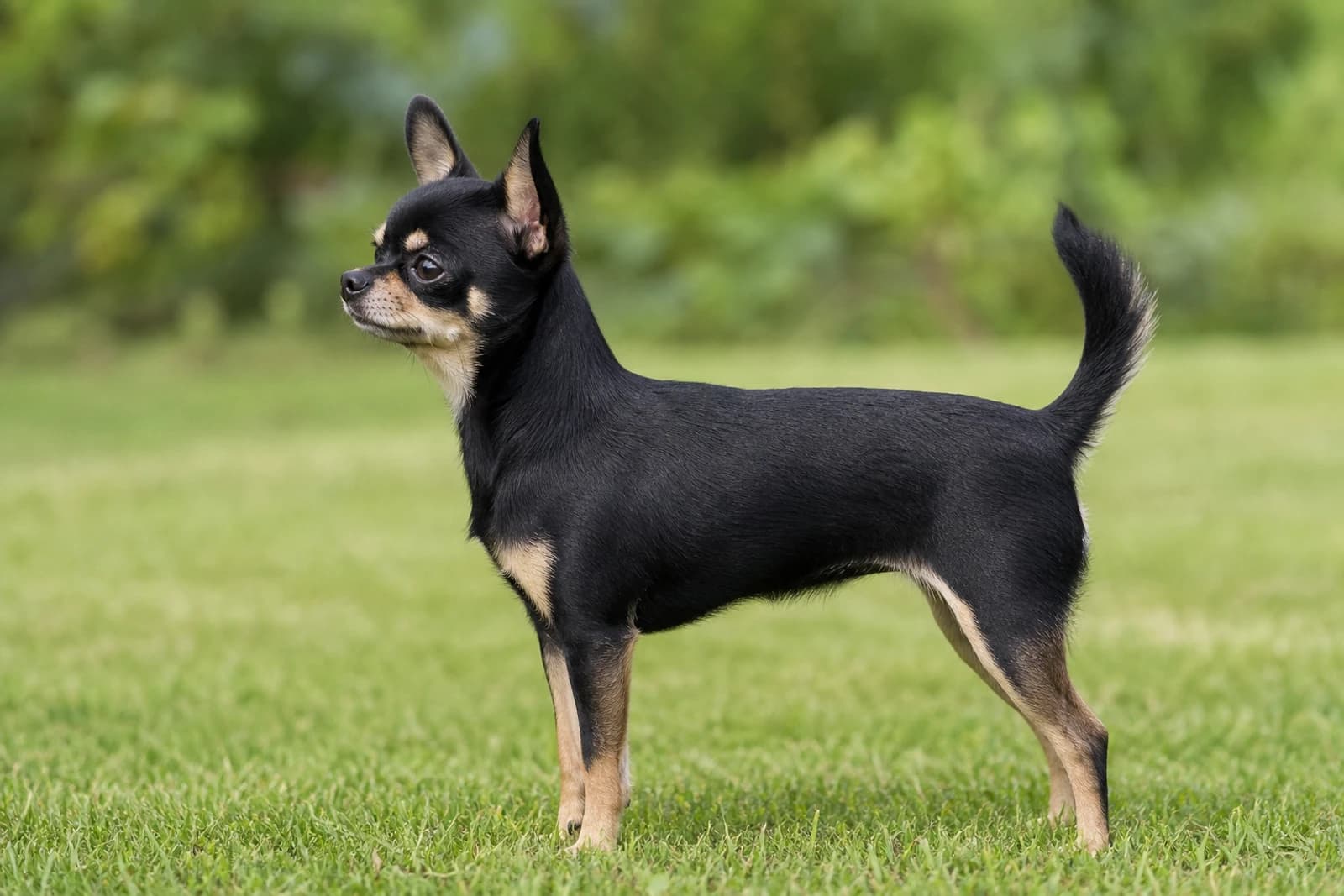
The Chihuahua is a tiny companion breed with a huge personality, perfect for those seeking a portable, devoted lapdog. Alert and expressive, they bond intensely with their favorite person but can be wary of strangers. They thrive in calm, adult-only homes or with older, gentle children, as their fragile frame makes them prone to injury. Ideal for apartment dwellers and seniors, they need minimal exercise yet plenty of mental stimulation. Their sassy confidence and unwavering loyalty make them endearing, but they require patient training to channel their bold nature appropriately.
At a glance
- Size
- Small
- Height
- 6–9 in
- Weight
- 5–7 lb
- Life span
- 12 years
- Coat colors
- cream, red, brown, black with tan, fawn, chestnut, white, spotted/mottled
- Coat type
- Smooth or long coat
- Group
- Companion
- Origin
- Mexico
How much does a Chihuahua cost?
Adopt / rescue
$75–$400
Usually includes spay/neuter, first shots, and a microchip.
Buy from a breeder
$700–$2,000
From a reputable, health-testing breeder.
Approximate USD. Prices vary widely by region, breeder, pedigree, age, and coat colour — adopting is the lower-cost and recommended route. Avoid suspiciously cheap “breeders”; they’re often puppy mills.
Estimate the full cost of a Chihuahua →Chihuahua photos
Views
Front, side, rear and top — the full silhouette.Poses
How the breed sits, lies, moves and plays.Puppy to senior
The breed across its whole life.Expressions
The breed’s range of moods.Close-up details
Eyes, ears, nose, paws, tail and coat.Coat colors
The breed’s recognized colors.Click any photo to enlarge. We show the Chihuahua from every angle — three views, poses, life stages, expressions, close-ups, coat and colors.
Appearance & size
You spot a Chihuahua across the room and your brain almost short-circuits: that’s a full-grown dog in a 5-pound package. The breed stands just 6 to 9 inches at the shoulder and weighs 5 to 7 pounds on a healthy adult frame, but what the body lacks in inches it makes up for in presence. The silhouette is rectangular—a touch longer from chest to rump than it is tall—with fine bone and a quick, graceful step that makes you think of a tiny deer.
From the front, everything about the head pulls focus. The skull is distinctly apple-shaped, round and domed, tapering to a short, slightly pointed muzzle. Two enormous erect ears sit wide on the head, almost bat-like. They’re thin, flaring, and always seem tuned in to what you’re doing three rooms away. The eyes are just as striking: large, round, and set well apart, typically dark brown or a luminous ruby shade that gives the face a perpetually alert, slightly mischievous expression. The bite is either a scissor or level meeting of the teeth, tucked neatly beneath a small black or self-colored nose.
From the side, you see the flat topline and a well-sprung ribcage that looks deeper than you’d expect on a dog this small. The neck slopes smoothly into a level back, and the tail—a sickle shape—carries proudly up and over the body. In a smooth-coated dog, that tail looks like a sleek little whip; in a long-coated dog, it becomes a plume with soft feathers that dust the hocks.
The breed comes in two coat types, both easy to live with in their own way. Smooth-coat Chihuahuas have a short, close-lying, glossy coat that feels soft like velvet. Long-coat Chihuahuas wear a soft, flat or slightly wavy topcoat with noticeable fringing on the ears, backs of the legs, and tail. Shedding is moderate for both, though the long coat’s extra wisps can float onto upholstery with a certain dramatic flair.
Color is where the breed goes wide open. You’ll see solid cream, red, rich chestnut, warm fawn, deep brown, and blue-toned black. Then there are the marked patterns: classic black with tan points, snowy white with patches (spotted or mottled), and combinations that mix two or three colors in a single dog. No color is “rare” or mystical—just a personal preference you’ll spot at a glance.
From the rear, the dog looks compact and squared-off, with slender, straight hind legs that drive a surprisingly buoyant trot. The tail carriage never drops; it stays arced forward with just the tip touching the back, giving the dog a silhouette that’s easy to recognize even from a distance.
History & origin
The Chihuahua’s real story begins a thousand years ago, not with a handbag, but with a dog called the Techichi. Kept by the Toltec people and later the Aztecs across what is now Mexico, these small, mute dogs were woven tightly into daily and spiritual life. They served double duty: sacred guardians believed to guide human souls through the underworld, and also cozy companions curled up beside everyone from nobles to commoners. Archeology and early accounts suggest the Techichi were often sacrificed in burial rites, yet just as often lived out pampered lives in family homes—a contradiction that feels familiar to anyone who knows the breed today.
When the Spanish conquest upended Mesoamerica, the Techichi largely disappeared into the genetic background, quietly crossing with European toy breeds. But a recognizable small dog began cropping up again in the 1800s around the Mexican state of Chihuahua. Local people sold these lively little dogs to American tourists and traders crossing the border, and the breed’s next chapter shifted north. U.S. fanciers in Texas, Arizona, and beyond refined the look—selecting for the rounded “apple” head, large ears, and diminutive frame we know now. By 1904, the first Chihuahua was registered with the American Kennel Club, and the breed’s climb from border-town curiosity to national obsession was well underway.
Unlike herding or hunting breeds, the Chihuahua was never designed for physical utility. It owes its survival to something simpler: an uncanny ability to attach itself to people. That ancient role—part temple dog, part lap warmer—still drives the breed’s bold, terrier-like confidence. Today’s 5-lb dog perched on a couch cushion is a direct descendant of the creatures who once warmed the laps of Aztec royalty and watched over the dead. The job description hasn’t really changed.
Temperament & personality
A Chihuahua’s world centers on one person — and you’ll know it. This breed bonds fiercely to its chosen human, following them from room to room, curling up in their lap, and keeping a watchful eye on anyone who comes near. That intense loyalty is the heartbeat of the Chihuahua personality, and it shapes everything from their affection to their spicier quirks.
They’re alert little dogs, always scanning. A knock at the door or a stranger in the driveway won’t go unannounced — expect a surprisingly big bark from that 6-pound body. That watchfulness makes them excellent alarms, but it also means they need to learn early on that not every visitor is an intruder. Without guidance, a Chihuahua will default to suspicion and may become a pint-sized gatekeeper, barking nonstop.
Don’t mistake their size for timidity. A Chihuahua will square up to a dog ten times their weight without a second thought. That bravery can get them into trouble at the dog park, so it’s on you to manage their interactions and read their body language. A stiff, forward-leaning posture with a hard stare often precedes a snap, while lip licking or turning the head away signals that they’re uncomfortable. Because they’re so small, people sometimes ignore these warnings — and that’s when nips happen. Teach kids to respect a Chihuahua’s space, especially during meals; interrupting a dog while eating can quickly create a food-guarding problem.
Possessiveness goes hand-in-hand with their devotion. Expect jealousy if another pet or person steals your attention. They’ll insert themselves between you and a perceived rival, and may grumble or mark to reinforce their claim. Speaking of marking, house-training can be a battle of wills with this breed. A Chihuahua uses urine to stake out territory, and the scent of past accidents inside can trigger repeat offenses. Clean accidents thoroughly with an enzymatic cleaner, and reward outdoor potty breaks immediately — punishment after the fact only teaches them to sneak off to another room you visit less often.
Underneath the bravado, this is a sensitive dog. Harsh corrections shut them down; consistent, respectful training works far better. Isolation fuels anxiety, which pours out as nonstop barking or destructive chewing. They’re not a breed to leave alone for long hours. And remember: a Chihuahua feels the cold acutely. These are couch-loving, blanket-burrowing companions who need a warm lap, not an outdoor kennel.
When their need for togetherness is met with structure and kind boundaries, they settle into a confident, charming sidekick. Ignore those needs, and you get a nervous, yappy mess. A Chihuahua isn’t a set-it-and-forget-it pet — they’re a full-time relationship.
Good with kids, dogs & other pets
With children
A 5-to-7-pound dog with delicate bones doesn’t mix well with toddlers who grab, squeeze, or stumble. Even a loving squeeze can crack a rib, and a dropped toy can cause a fracture. Young children’s quick, unpredictable movements often frighten a Chihuahua, and that fear can trigger a defensive snap. This isn’t a mean dog — it’s a tiny one that feels cornered.
That changes once kids are old enough to move calmly and follow rules. Children 8 and up, who sit on the floor and let the dog approach, often form a gentle bond. Still, supervision stays non-negotiable. A Chihuahua may bond tightly with one family member and remain aloof with everyone else, so each child must earn trust on the dog’s terms. Teach kids not to scoop up the dog without warning, and never allow chasing. Put the dog’s crate or bed in a quiet area where she can retreat when the household gets chaotic.
With other dogs
A Chihuahua rarely backs down, no matter the size of the other dog — and that confidence is dangerous. A single shake from a larger dog can be fatal. In multi-dog homes, they do best with other small breeds, especially another Chihuahua, after slow, supervised introductions. Even then, watch for resource guarding around a favorite person or high-value treats.
Early positive exposure to polite, vaccinated dogs is critical. Without it, your Chihuahua may react to every passing dog with barking and lunging. Don’t assume adding a second dog will fix loneliness; many Chihuahuas prefer human attention above all else and may still panic when left alone.
With cats and small pets
A cat’s quick swipe can permanently damage a Chihuahua’s prominent eyes, so introductions need to be gradual and controlled. A dog-savvy cat that respects space can co-exist peacefully, but never leave them together unattended until you’ve seen months of calm, mutual indifference.
Pocket pets like hamsters or rabbits usually don’t register as prey, but a sudden squeak or rapid movement might spark a chase. It’s smarter to keep those habitats in a room the dog can’t access, or securely elevated.
What makes the real difference
Socialization can’t wait. Between 3 and 16 weeks of age, introduce your puppy — gently, and always at her pace — to calm children, friendly small dogs, and new sounds. Positive puppy classes and short public outings in a carrier build a steady nerve. A Chihuahua who misses this window often grows into a fearful, reactive adult who barks at strangers and startles easily.
If you’re adopting an older dog, skip the forced meet-ups. Pushing a scared Chihuahua to “say hi” only deepens the anxiety. Instead, use distance, treats, and patience to let her discover that other people and animals predict good things. Give her a safe, gated-off spot she can disappear to when the world feels too big — because with a dog this small, feeling safe changes everything.
Trainability & intelligence
Chihuahuas are sharp little dogs that pick up new routines fast—once they decide the payoff is worth their time. Expect a clever, sometimes opinionated mind, not a push-button obedience machine. If you push too hard or use a stern correction, many will shut down or get snappy. A 5-pound dog has no reason to tolerate rough handling, so force only erodes the trust you need for reliable training.
Short, upbeat sessions loaded with high-value treats, a squeaky toy, or genuine praise work far better. They’ll quickly learn sit, down, stay, and even tricks if you keep it fun and consistent. Recall is trickier; an off-leash Chihuahua in an unfenced yard is a gamble. Inside the house or in a secure training space, a strong “come” command built on jackpot rewards is doable, but their independent streak means you’ll need to proof it hundreds of times before you can bet on it outdoors.
Start young—puppyhood is prime time. Before 16 weeks, calmly expose them to new people, different floor surfaces, household clatter, and polite older dogs. A poorly socialized Chihuahua often defaults to barking, trembling, or nipping when faced with something unfamiliar. Skip the temptation to treat them like a stuffed toy they’re not. Carry them only when necessary; let them walk on their own paws and face the world, always with a ready reward for calm behavior.
Common pitfalls: owners let a tiny dog get away with things a Lab never could, so the Chihuahua learns that growling at kids or guarding the sofa works. That’s not stubbornness—that’s effective communication no one corrected with a better option. Set clear, fair rules from day one. Teach a solid “go to your mat” and reward settling. If a behavior would be unacceptable in a 60-pounder, don’t allow it in a 6-pounder.
Because they’re sensitive, relationship is everything. A Chihuahua who trusts you will try hard to figure out what you want, even when distracted. But that trust gets built through patience and predictability, not intimidation. Skip punishment-based methods—they breed anxiety and erode the very connection that makes this breed shine. Keep every interaction a positive trade, and you’ll have a confident little dog who learns quickly and minds beautifully.
Exercise & energy needs
For a 5–7-pound dog, “exercise” doesn’t mean what it means for a Labrador. A Chihuahua’s energy needs are modest, and the biggest mistake owners make is overdoing it. A single 10-minute walk once a day is often plenty. Even better, split that into two 5-minute potty-and-sniff strolls, one in the morning and one in the evening. Many Chihuahuas meet most of their daily movement needs just by trotting around the house, following you from room to room.
What matters more than clock-watching is safety and observation. Those tiny legs work hard, and a walk that feels short to you can strain their heart if you push too far. Stick to flat, even surfaces and let your dog set the pace. If they pause or sit down, the walk is over—pick them up and carry them home. Because they’re so close to the ground, they overheat quickly on hot pavement and chill fast in cold weather. A sunny patch on the living room carpet often satisfies their urge for warmth without risk, but never leave one outside unattended in direct heat or cold.
- Daily activity: 10–15 minutes total, broken into one or two sessions. Indoor free play often covers the rest.
- Intensity: Low. Avoid long walks, steep hills, and any high-impact jumping. A ramp or pet steps for furniture protects their joints and spine.
- Mental exercise: This is the real secret to a calm Chihuahua. Five minutes of clicker training, a food puzzle, or a scent game (hide a treat under a cup) wears them out more than a forced march. Short, upbeat sessions keep them sharp without physical stress.
- Good activities: Indoor fetch with a soft toy, hide-and-seek with a family member, or a controlled walk around a quiet block. Sniffing and exploring at their own rhythm is ideal stimulation.
- What to skip: Any sport or game that involves repeated jumping, sudden stops, or long periods of running. Chihuahuas are not built for dog-park chaos or jogging alongside a bike.
Watch your dog rather than the clock. If they’re panting heavily or lagging behind, you’ve done enough. A tired Chihuahua curls up and naps—that’s your cue.
Grooming & coat care
Grooming a Chihuahua comes down to which coat you live with — smooth or long. They're two different ballgames, and knowing the difference saves you time and keeps your dog comfortable.
Brushing by coat type
- Smooth coat: A quick once-over with a soft pig-bristle brush twice a week is all it takes. This yanks out loose hair before it ends up on your couch and spreads natural oils for a glossy finish. If your smooth-coat Chi has a hidden undercoat (some do), you'll notice heavier shedding twice a year — bump the brushing to every other day during those blow-outs.
- Long coat: Skipping a day here leads to mats behind the ears, under the belly, and down the back legs. Use a pin brush or a rounded-tip slicker to work through the feathering without scraping the skin. Follow with a greyhound-style metal comb to catch tangles the brush missed. Plan on 5–10 minutes daily; a neglected long coat mats fast and turns into a full-on shave-down.
Bathing and what to expect
Bathtime isn't a weekly event. Once every 6–8 weeks is plenty, unless your Chi rolled in something foul. Too much shampoo strips the skin and makes shedding worse. Warm water, a gentle dog shampoo, and a thorough rinse — because dried suds left in that tight inner-thigh area or behind the ears means itching and hotspots.
Nails, ears, and teeth
Small dogs pay the price on nail neglect fast. When you hear click-click on the floor, the nails are already too long and straining the joints. Clip just the tip every 10–14 days. Have styptic powder handy — Chihuahua quicks seem to grow overnight.
Ears need weekly checks, especially long-coated dogs where hair can trap moisture and wax. A quick wipe with a vet-approved cleanser on a cotton pad (never a Q-tip) wards off yeasty infections. And don't skip the teeth. Chihuahuas collect tartar like a tax collector, so daily brushing with an enzyme toothpaste saves you from a $1,000 dental extraction down the road.
Seasonal shifts
Come spring and fall, expect a dusting of hair on every dark surface you own. Brush more, run a damp grooming cloth over the coat to catch flyaway hairs, and know that outdoor play — even a brisk walk on a sunny day — helps move that dead coat out naturally.
Shedding & allergies
Don’t let the tiny size fool you — a Chihuahua sheds enough to leave hair on dark pants, furniture, and car seats. Both coat varieties shed; the difference is how much you’ll see.
- Smooth-coat: Sheds moderately, year-round. Short, fine hairs weave into fabric and can be stubborn to remove. A quick weekly once-over with a rubber grooming mitt or soft brush keeps most of it off the floor.
- Long-coat: Sheds more noticeably, especially during spring and fall when the undercoat cycles out. Without regular brushing (two to three times a week), the longer hairs mat, tangle, and end up drifting into dust bunnies. An undercoat rake during heavy shedding months cuts way down on tumbleweeds.
Drool is a non-issue. A Chihuahua’s mouth is dry; you won’t be wiping slobber off your walls or clothes.
The real hypoallergenic picture
No dog is truly hypoallergenic — allergic reactions are driven by dander, saliva proteins, and urine, not just hair volume. Chihuahuas produce all three. While a 5‑pound dog makes less total dander than a 70‑pound retriever, plenty of allergy sufferers still react strongly to them.
If someone in the house has dog allergies, spend real time inside a Chihuahua owner’s home — not just a quick meet‑and‑greet in a neutral space. That tiny, short‑haired puppy may still trigger full‑blown symptoms. Responsible breeders won’t promise a “hypoallergenic” Chihuahua, and you shouldn’t count on that either.
Diet & nutrition
For a dog this small, an extra treat or a slightly full bowl can tip the scale fast. A five‑pound Chihuahua gains weight in ounces, but those ounces show up fast and strain tiny joints. Portion control isn’t a nice‑to‑have — it’s the centerpiece of their daily diet.
How much to feed an adult Chihuahua
Most 5–7 lb adults do well on two or three measured meals a day — three is better because their stomach is small yet their metabolism runs hot. As a baseline, plan for 2–3 ounces (60–90 g) of lean meat daily, plus a spoonful of vegetables and a couple of small biscuits. A dog in their prime that really burns energy — for example, a confident little explorer clocking a mile or more a day — may work up to 5 ounces (150 g) of meat, but you must adjust based on body condition, not just the scale. If you feed a high‑quality commercial small‑breed formula, expect the total daily amount to land around ¼ to ½ cup of dry food, often split with a spoonful of wet food for moisture and flavor.
Puppy and teen feeding schedule
Puppies burn through calories quickly and can’t go long without food. Feed them four evenly spaced meals a day until four months old, then three meals until six months, then drop to the adult two‑to‑three meal rhythm. Transition a puppy to new food gradually, starting with lightly cooked and puréed meats, fish, fruits, and vegetables or a quality puppy kibble. Raw items like chicken wings can be introduced around twelve weeks under supervision, but progress slowly — a Chihuahua’s jaws are tiny, and you want confident chewing, not choking.
Seniors and special mouths
Older Chihuahuas often have missing teeth or sensitive gums. Purée or blend their meals to aid digestion — dogs’ jaws move only vertically and they don’t have salivary enzymes, so breaking down food ahead of time helps nutrient absorption. Continue offering two or three smaller meals instead of one large portion, and don’t automatically cut protein; there’s no strong evidence that healthy seniors need less. Do watch the waistline, though. As activity drops, cut back food gently to prevent obesity, which is a bigger threat to an older Chihuahua than a little extra protein.
Keeping the weight off
Chihuahuas are food‑motivated and tiny, so the math is unforgiving. An extra half‑ounce daily puts a 5‑lb dog at serious risk. Weigh food with a kitchen scale for at least a week until your eye is calibrated. If your dog inhales meals, use a puzzle bowl or snuffle mat — it slows them down and keeps that busy brain engaged. Fresh water must always be available, and table scraps, especially fatty holiday leftovers, are off‑limits; they can trigger pancreatitis in a dog this size.
What goes in the bowl
Aim for a diet built around meat — roughly 60% raw and cooked meat, 20–30% fruits and vegetables, and 10% extras like eggs, plain yogurt, or digestible grains (pearl barley or white rice for sensitive stomachs). Warm the food slightly — not hot — by mixing boiled, chopped meat with dry food and a splash of warm water. This releases aroma and makes it easier to chew. A vegetarian or vegan diet simply doesn’t match a Chihuahua’s physiology, so don’t go there.
Ignore the pleading eyes for an extra treat between meals. Even a few extra bites a day can push a Chihuahua into a weight problem that’s hard to reverse. Measure, stick to the schedule, and you’ll have a lean, bright‑eyed companion for years.
Health & lifespan
A healthy Chihuahua typically lives around 12 years, but good preventive care often tacks on several more. Because they’re so tiny — 5 to 7 pounds — small problems can turn serious fast, so you’ll want a vet you trust and a sharp eye for early signs.
Patellar luxation is the most common orthopedic issue. The kneecap slips out of place, causing a skip or a hop. Mild cases respond to joint supplements and weight control; severe ones need surgery. Tracheal collapse shows up as a dry, goose-honking cough, often when the dog pulls on a leash or gets overexcited. Switch to a harness instead of a collar, and keep the dog lean — extra pounds press right on the windpipe.
Eye conditions like dry eye, corneal ulcers, and cataracts crop up often enough that responsible breeders have their breeding stock examined by a veterinary ophthalmologist. Ask for those certificates. You’ll also want to check for a molera, or soft spot on the top of the skull. It’s common in the breed and doesn’t cause trouble, but you do need to protect that spot from bumps, especially during puppy zoomies and play with bigger dogs.
Dental disease hits little mouths hard. Crowded teeth trap plaque, leading to early tooth loss and heart strain. Start brushing and schedule cleanings sooner than you would for a large breed. Hypoglycemia can drop blood sugar dangerously low in tiny puppies, so feed three or four small meals a day until they’re around four months old.
Chihuahuas are famously cold-sensitive. A sudden chill can trigger pneumonia or worsen arthritis. If you’re cold, your dog is freezing — pull out the sweater and keep walks short in winter.
A handful of inherited conditions show up with poor breeding. Cleft palate and epilepsy appear in the breed; a good breeder screens for these and doesn’t repeat matings that produced them. When you’re talking to breeders, ask directly about patella and eye clearances, and listen for whether they mention any seizure history.
Monthly heartworm prevention is non-negotiable, even if your Chihuahua mostly lives indoors — mosquitoes sneak in. Keep up with rabies shots, which are legally required, and don’t skip the annual checkup where your vet listens to the heart and works the kneecaps. Catching a slipping patella early keeps a dog comfortable without major intervention.
Early socialization also factors into physical health. A stressed, anxious dog that barks nonstop strains its trachea and raises cortisol levels. Gentle, positive handling from puppyhood heads off a lot of wear and tear, so your little dog stays sound for the long haul.
Living environment
Chihuahuas belong at your side, not out in the yard. This is an indoors breed through and through—happy in a compact apartment just as much as a sprawling house. What matters most is a warm, calm, predictable space. They lack the insulation to handle outdoor living, and their tiny frames make them startlingly sensitive to both heat and cold.
Climate control isn't optional. When the thermostat drops, even for a quick potty break, a well-fitted sweater or coat is non-negotiable. In summer, limit outdoor time to the coolest parts of the day and watch closely for panting or lethargy. Inside, they’ll gravitate toward sunny spots and soft blankets; keep the environment dry and free of drafts. A heated bed in winter? They’ll treat it like a throne.
Exercise fits into your living room. Forget long treks—two or three 10- to 15-minute sessions daily usually do the job. A brisk walk around the block, a chase after a crinkle toy down the hallway, or a round of hide-and-seek with treats meets their needs. Guard their spine and joints by discouraging high jumps off furniture; ramps or steps near the couch are smarter than letting them launch off like a tiny paratrooper. On nasty-weather days, puzzle feeders and scent games burn mental energy without a single paw outside.
Noise is the real consideration in shared spaces. Chihuahuas are alert watchdogs and quick to announce visitors, passing dogs, or a suspicious leaf. Apartment dwellers should invest early in a solid “quiet” cue and manage window access to prevent a habit of nonstop alarm-barking. A steady, low-drama household usually leads to a steadier dog.
Separation hits hard. This breed bonds fiercely and was never intended to log a 9-to-5 alone. Left for long stretches, many develop anxiety that shows up as destructive chewing, soiling, or barking marathons. If your schedule keeps you away:
- Arrange a midday dog walker or a trusted neighbor check-in.
- Consider doggy daycare or a compatible second small dog—they often thrive with a companion.
- Build independence gradually with short absences, always leaving a stuffed Kong or a worn shirt that carries your scent.
A clean, quiet, temperature-controlled home where people are around most of the day is exactly what a Chihuahua hopes for. Give them that, and they’ll fit your life like a pocket-sized shadow.
Who this breed suits
A Chihuahua makes perfect sense for someone who wants a tiny shadow—the kind of dog that tucks under your chin while you read and patrols the apartment like a six-inch security guard. Singles and seniors often click with this breed because the exercise demands are genuinely modest: a 20–30 minute walk, or even a few spirited indoor fetch sessions, burns off a 5–7 lb dog’s energy. If you live in a walk-up, travel often with a carrier, or just like the idea of a dog that fits in your lap, not underfoot, this is a hard-to-beat companion. First-time owners do fine here if they’re ready to train consistently—this is a sharp, willful breed that will walk all over a pushover. The payback is a fiercely bonded, comedic little dog who memorizes your routine and fills a quiet home with personality.
This breed is not a starter pet for a house full of young children. At 6–9 inches tall and barely heavier than a bag of flour, a Chihuahua can be seriously injured by a clumsy step or an overeager hug. The breed’s instinct when startled is often to snap or bite, making the combination with toddlers a risky one. Active families who want a hiking, jogging, or dog-park-romping buddy should also look elsewhere; these dogs are built for short bursts, not endurance outings.
You’ll want to think twice if:
- You’re away from home for 8+ hours daily—Velcro closeness can tip into anxious destruction and nonstop barking.
- You prize a silent house. Chihuahuas are alert barkers and will announce every delivery, visitor, and suspicious squirrel.
- You aren’t prepared to socialize early and often. Without it, a Chihuahua easily develops “small dog syndrome”: guarding laps, snarling at strangers, and believing he runs the household.
The ideal owner treats a Chihuahua like a real dog with real rules—not a purse accessory. Put in the work on manners and exposure, and you get a confident, long-lived (around 12 years) companion who barely leaves your side.
Cost of ownership
What you’ll pay upfront
- From a responsible breeder who screens for luxating patellas and heart issues: $800–$2,500. Show-quality pups from champion lines can top that.
- Adoption fee: $150–$400, which often includes spay/neuter, microchip, and the first round of vaccines.
Keeping a Chihuahua month to month
- Food: $10–$20 for high-quality kibble. A 5–7 lb Chihuahua eats about ½ cup a day, so a small bag stretches a long way.
- Grooming: Minimal. Brush weekly, trim nails every few weeks (~$10–$15 at a groomer). Long-coated Chis need a little more combing, but there are no expensive haircuts.
- Vet care: Annual exam and core shots run $100–$200. Budget harder for teeth—Chihuahuas are famously prone to periodontal disease. Plan $300–$800 for a professional dental cleaning every year or two.
- Insurance: $20–$40 a month for a small-breed policy. Some owners set aside that same amount instead.
- Supplies: A well-fitting harness ($20–$40), a soft-sided carrier, blankets (they burrow), and maybe pee pads if you’re apartment training. Sweaters add up—these tiny dogs chill fast.
All told, expect $70–$120 a month in routine costs, emergency surprises aside. The one that trips up new owners? Dental work. Build a cleaning fund into your budget early—those little mouths don’t come cheap.
Choosing a Chihuahua
Rescue or Responsible Breeder?
Chihuahuas wind up in shelters and breed-specific rescues more than you might expect, especially in warm-weather states. That means you can often skip the puppy phase entirely and adopt a young adult whose size, temperament, and house-training habits are already known. Adult Chihuahuas typically fall right into the 5–7 pound range and, with good care, can live past 12, so a four-year-old rescue gives you many solid years.
If you go the breeder route, you’re looking for someone who treats this little dog’s health as seriously as a Great Dane’s. A well-bred Chihuahua shouldn’t be a fragile novelty; it should be a sturdy companion built to reach those 12-plus years without constant medical drama.
Health Clearances Worth Insisting On
Small size doesn’t excuse skipping health screens. The big three for Chihuahuas are patellar luxation, heart disease, and eye disorders. A responsible breeder hands you paperwork—not just a vet check note—that includes:
- OFA patella evaluation (or an equivalent from a veterinary specialist). Slipping kneecaps are common, and surgery costs thousands.
- Cardiac exam from a board-certified cardiologist, ideally an echocardiogram. The breed can develop mitral valve disease early, and no amount of “my vet listened” replaces an echo.
- CERF or OFA eye clearance within the last year. Cataracts and progressive retinal atrophy aren’t the norm, but a clean exam shows the breeder isn’t rolling dice.
If the breeder shrugs off these three and points to the puppy’s cuteness instead, take your business elsewhere. A short-lived “health guarantee” that only offers a replacement puppy, not a refund, is another signal to walk.
Red Flags You Can’t Ignore
- “Teacup,” “micro,” or “pocket” language. A healthy adult Chihuahua weighs 5–7 pounds and stands 6–9 inches tall. Deliberately breeding for adults under 3–4 pounds invites hypoglycemia, fragile bones, and early organ strain. No reputable breeder markets runts this way.
- Always has puppies available. Quality breeders typically have a waiting list and raise litters in the home, not a kennel. You should meet the mother (at minimum) and see that she’s social, clear-eyed, and not trembling in a corner. A trembly, fearful parent very often produces the same.
- No questions about you. A good breeder wants to know if you have an escape-proof yard or a plan for cold-weather housetraining (tiny dogs hate the cold). Someone who just wants a deposit and ships the puppy sight-unseen isn’t a responsible source.
- Extreme “apple” dome or pushed-in muzzle. Overly domed skulls can indicate hydrocephalus risk, and very short muzzles make breathing and overheating harder. The Chihuahua’s classic rounded skull should be proportional, not cartoonish.
Picking Your Puppy
You’ll bring a puppy home no earlier than 8 weeks—10 to 12 is safer for a dog this small, since blood sugar can crash if they’re separated or stressed too young. Look at the whole litter. Healthy Chihuahua pups are active, noisy, and curious, not hiding in the back or glued to your ankles out of sheer fear. Eyes should be dry and bright, ears clean, and the knees shouldn’t pop out when the puppy walks (a vet check confirms this, but a normal gait is a good sign). Ask to see feeding and vaccination records; a breeder who starts socialization early will have the pups meeting calm, fully vaccinated adult dogs and a variety of safe people.
Expect straight talk about house-training. Chihuahuas are smart but physiologically small, so even a well-raised puppy will need a consistent schedule and patience. A breeder who promises they’re “basically trained” at eight weeks is selling you a fantasy. If you can, bring the puppy’s expected adult weight into the conversation—both parents should fall in that 5–7 pound window. A litter bred from an underweight mother can produce pups that will always struggle to stay healthy. Trust your gut: if the setup feels off or the dogs seem sickly, leave. There’s no shortage of well-bred, healthy Chihuahuas out there for someone willing to ask a few tough questions.
Pros & cons
– Pocket-sized and portable — 6–9 inches tall, 5–7 pounds means she fits in a carrier, under an airplane seat, or curled up on your lap without taking over the couch. – Fiercely devoted; a Chihuahua often bonds to one person like velcro and will follow you from room to room just to be near you. – A sharp little watchdog. Those satellite-dish ears pick up the faintest knock, and the bark is way bigger than the body. You won’t miss a delivery. – Grooming is a breeze — the smooth coat only needs a quick wipe-down, and even the long-haired variety is wash-and-go with a weekly comb-out. Shedding is manageable. – Long hang-time. Twelve years is the floor; well-bred Chihuahuas routinely hit 15 or more, so you get a lot of life with that little heartbeat. – Cheap to feed and treat. A high-quality kibble lasts forever, and a single chicken strip makes a week’s worth of training rewards.
– Fragile frame. A poorly judged jump off the sofa or an overexcited toddler’s grab can mean a broken leg. Not a rough-and-tumble breed for young kids. – House training tests your patience. With a bladder the size of a thimble and a distaste for rain or cold, potty habits can slip fast — litter box or indoor pad training often saves the day. – The bark can spiral. Without early “quiet” training, you get a tiny air-raid siren that reacts to every leaf, neighbor, and squirrel. – “Napoleon complex” is real. Under-socialized Chihuahuas can guard you, snap at strangers, and bully much larger dogs. Puppy classes and steady exposure from day one make the difference. – Health time bombs if you skip screening. Dental crowding leads to early tooth loss without daily brushing. Patellar luxation, collapsing trachea (use a harness, never a collar), and hydrocephalus are all on the table; a responsible breeder screens for them. – Cold is the enemy. Even a slight chill sends them shivering, so sweaters and a quick-exit potty strategy in winter become necessary.
Similar breeds & alternatives
If the Chihuahua’s pint-sized confidence and compact frame appeal to you, but you’re weighing other tiny companions, a few breeds split the difference on energy, coat, or family tolerance.
Papillon
8–11 in, 5–10 lb, 14–16 years
The Papillon shares the Chihuahua’s toy dimensions and whip-smart mind, yet trades the classic one-person devotion for a friendlier, everyone-is-my-fan outlook. Expect higher energy — a Papillon won’t settle for laps alone; they need zippy play sessions and short, daily walks. The long, silky coat is deceptively low-maintenance with a few weekly brushings, though the butterfly-wing ears are a visual departure from the Chihuahua’s upright, bat-like set. Where a Chihuahua often regards strangers with suspicion, a well-socialized Papillon is more likely to greet them with a wag.
Toy Poodle
Up to 10 in, 4–6 lb, 10–18 years
A Toy Poodle matches the Chihuahua’s apartment-friendly size and adds a curly, nearly non-shedding coat — a genuine advantage if allergies are in the house. The trade-off is grooming: budget for a professional clip every 4–6 weeks, or learn to do it at home. Temperamentally, Toy Poodles are brighter and more willing to please, which makes them quicker to train than an occasionally stubborn Chihuahua. Both can be vocal, but the Poodle is less likely to fixate on one person and usually more patient with gentle handling.
Miniature Pinscher
10–12.5 in, 8–10 lb, 12–16 years
The “King of Toys” cranks up the Chihuahua’s proud strut into a sturdier, more athletic frame. Those extra couple of inches and pounds mean a Min Pin rarely emphasizes fragility the way a 5-lb Chihuahua can. Min Pins are busier, faster, and born to patrol — a house with a small yard or multiple brisk walks daily suits them better. Their sleek coat is as wash-and-go as a smooth-coat Chihuahua, but their escape-artist tendencies and high prey drive demand secure fencing and watchful eyes.
Yorkshire Terrier
7–8 in, around 7 lb, 11–15 years
A Yorkie delivers the same carry-along size but wraps it in a long, silky blue-and-tan coat. That coat requires either daily brushing or a clipped “puppy cut” to stay manageable — a far cry from a smooth-coat Chihuahua’s near-zero grooming routine. True terrier pluck gives the Yorkie more fire when dealing with larger dogs and a stronger impulse to chase pests. Both can be champion doorbell alarmists, but with early socialization, a Yorkie often warms up to new people faster than a reserved Chihuahua.
Fun facts
- Named after the Mexican state of Chihuahua, where they were discovered.
- Many Chihuahuas have a soft spot on the top of their skull called a molera, which usually closes with age.
- They come in the widest variety of colors and marking patterns of any breed.
- Chihuahuas are one of the oldest breeds in the Americas, with a history tracing back to ancient Mexico.
Frequently asked questions
- Are Chihuahuas good with children?
- Chihuahuas can be good with older, respectful children, but due to their small size, they are fragile and may easily become injured. Early socialization and supervision are important to prevent fear-based nipping. They generally do best in homes without very young kids.
- Do Chihuahuas shed a lot?
- Chihuahuas are moderate shedders, with short-haired varieties typically shedding less than long-haired ones. Regular brushing helps keep loose hair under control, though they are not considered hypoallergenic. Shedding often increases during seasonal changes.
- How much exercise does a Chihuahua need?
- Chihuahuas have low exercise needs, usually content with short daily walks and indoor play. They enjoy engaging in games and can stay active in small living spaces. Care should be taken to avoid overexertion due to their tiny stature.
- Are Chihuahuas good for apartment living?
- Chihuahuas are excellent apartment dogs because of their compact size and minimal exercise requirements. They adapt well to indoor life but can be vocal, so training to manage barking is recommended for close-quarter living. Their alertness also makes them effective watchdogs.
- Do Chihuahuas bark a lot?
- Chihuahuas tend to bark frequently, especially when they encounter unfamiliar sounds or people. This alert nature makes them good watchdogs, but early training and socialization can help reduce excessive barking. Consistent guidance is key to curbing the behavior.
- Are Chihuahuas good for first-time dog owners?
- Chihuahuas can be a good choice for first-time owners who are prepared for consistent training and gentle handling. Their small size makes them physically manageable, but they require patience and guidance to prevent small-dog syndrome. Proper socialization helps ensure a well-adjusted companion.
Tools & calculators for Chihuahua owners
Quick estimates tailored to Chihuahuas — pre-filled with this breed’s size where it matters.
Articles & stories about the Chihuahua

Small Dog Syndrome Is Real: How We Fixed Our Chihuahua's Behavior
We let our Chihuahua's bad behavior slide because he was small – until the snaps and growls got real. Curing small dog syndrome meant treating our 6-pound dog like a real canine, not a toy.
Sources & standards
This profile follows recognized breed standards from the American Kennel Club (AKC) and the Fédération Cynologique Internationale (FCI), along with established veterinary and breed-club guidance. These describe general breed tendencies — every dog is an individual.
Owner stories
Have a Chihuahua? Share your experience — grooming tips, personality quirks, anything goes.