

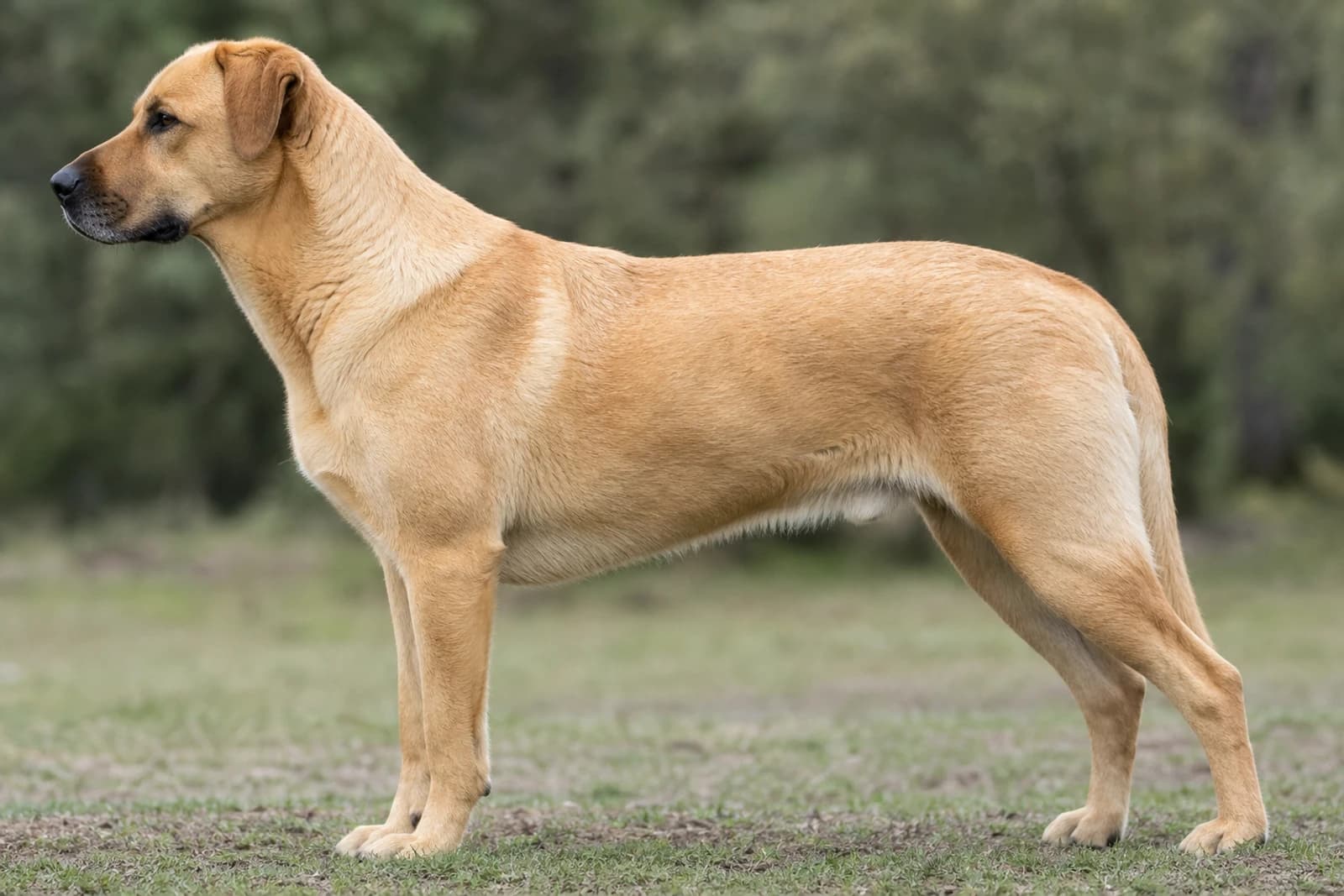
The Chinook is a gentle giant, originally bred for sled pulling but now cherished as a devoted family companion. This rare American breed bonds deeply with its people, thriving in active households that can provide daily exercise and mental stimulation. With a friendly, patient nature, Chinooks are excellent with children and generally get along well with other dogs, though early socialization is key. Their double coat requires regular brushing, and they shed seasonally. Best suited for homes with space to roam, Chinooks are not ideal for apartment living but make wonderful partners for outdoor adventures.
At a glance
- Size
- Giant
- Height
- 22–26 in
- Weight
- 55–71 lb
- Life span
- 10–15 years
- Coat colors
- tawny
- Coat type
- dense double coat
How much does a Chinook cost?
Adopt / rescue
$75–$400
Usually includes spay/neuter, first shots, and a microchip.
Buy from a breeder
$700–$2,000
From a reputable, health-testing breeder.
Approximate USD. Prices vary widely by region, breeder, pedigree, age, and coat colour — adopting is the lower-cost and recommended route. Avoid suspiciously cheap “breeders”; they’re often puppy mills.
Estimate the full cost of a Chinook →Chinook photos
Views
Front, side, rear and top — the full silhouette.Poses
How the breed sits, lies, moves and plays.Puppy to senior
The breed across its whole life.Expressions
The breed’s range of moods.Close-up details
Eyes, ears, nose, paws, tail and coat.Coat colors
The breed’s recognized colors.Click any photo to enlarge. We show the Chinook from every angle — three views, poses, life stages, expressions, close-ups, coat and colors.
Appearance & size
The Chinook is a sled dog built with power and balance, but there's a softness to the expression that sets it apart. Expect a dog that stands 22 to 26 inches at the shoulder and weighs 55 to 71 pounds—a solid, athletic large breed, not a towering giant in the mastiff sense. The frame is slightly longer than tall, giving a rectangular silhouette that hints at ground-covering efficiency.
From the front, the head is broad and wedge-shaped. Ears are triangular, set well apart, and carried erect when the dog is alert—a trait that pops up the moment something interesting happens. Dark, almond-shaped eyes sit under a moderate brow, radiating an intelligent, gentle warmth rather than a hard stare. The muzzle is strong and medium-length, with a neat, scissors bite. A deep chest and well-sprung ribs give the front end real substance, matched by straight, heavy-boned forelegs.
Moving to the side view, the neck is slightly arched and muscular, flowing into laid-back shoulders and a level topline that ends with a broad, powerful loin. The deep chest extends well back, and the underline rises in a moderate tuck-up. Hindquarters are the engine here—thick thighs, well-angled stifles, and hocks set low for driving propulsion. The tail is set low, bushy, and thick at the base; at rest it hangs with a slight curve, and when the dog moves, it lifts into a graceful sickle or saber curve, never curling over the back.
From the rear, the legs stand straight and parallel, showing solid muscle without bulk. The coat is a double-layer workhorse: a dense, soft undercoat for insulation and a straight, outer coat that is medium in length and slightly coarse to the touch, shedding moisture and debris easily.
Color stays within a tawny range—pale honey to deep reddish-gold—accented by darker shading on the muzzle, ears, and tail tip. Buff or cream markings can appear on the cheeks, throat, chest, breeches, and undercarriage. No white patches or black masks. That unbroken warm tone, combined with the alert ears and calm, friendly eyes, makes the Chinook look like a dog that’s just as happy hauling freight through snow as it is leaning against your leg at the end of a long day.
History & origin
The entire Chinook breed descends from a single legendary dog — a powerful, tawny-coated sled dog named Chinook, born on Arthur Treadwell Walden’s New Hampshire farm in 1917. Walden had been breeding and driving sled dogs in the Northeast for years, but he wanted to create his own ideal freighting dog: one that combined the stamina and cold tolerance of northern huskies with a calmer, more biddable temperament and incredible pulling power. Chinook was the result of a cross between a Mastiff-type male and a female Greenland Husky (with some accounts pointing to added St. Bernard or Belgian Shepherd influence further back). The dog’s own performance became legend.
Chinook was Walden’s lead dog and the centerpiece of his Wonalancet kennel. In 1928, Commander Richard Byrd selected Walden and his team — with the 11-year-old Chinook still in harness — to haul supplies during the first Byrd Antarctic Expedition. That expedition cemented the breed’s reputation for strength and reliability in brutal conditions. Chinook himself never made it home; he wandered off and died on the ice, but his name became the breed’s permanent legacy.
After Walden died in 1947, the breed nearly vanished. Without a centralized registry and with only a few dedicated breeders, numbers cratered to perhaps a dozen dogs by the 1980s. A small group of fanciers organized the Chinook Owners Association and undertook a painstaking revival, carefully managing a gene pool that could fit in a minivan. The United Kennel Club recognized the Chinook in 1991, and the breed entered the AKC Foundation Stock Service in 2001, achieving full AKC Working Group recognition in 2013.
Today, every Chinook alive traces directly back to that tiny post-war bottleneck. The breed remains one of the rarest in the world, with litters still carefully planned by a close-knit network of breeders. While no longer primarily used for expedition hauling, the modern Chinook is a versatile working partner that excels at carting, skijoring, and search work — and it carries forward the same gentle, dedicated ethos Walden prized over a century ago.
Temperament & personality
The Chinook gives you exactly what you put in: steady affection, a quiet indoor presence, and a switch that flips the second you reach for a leash. He’s not a dog who wears his heart on his sleeve with strangers, but once you’re part of his circle, you’ll have a 55–71-pound shadow who leans into your leg and watches your face for the next cue.
Despite the “giant” label, a typical Chinook stands 22 to 26 inches tall—big enough to pull a sled, compact enough to curl up on your feet. His energy is honest, not manic. He needs a solid hour of off-leash hiking, canicross, or a pulling sport several days a week. Without it, that calm house demeanor unravels into pacing, digging, or a persistent, echoing bark you can’t ignore.
Chinooks think for themselves. You don’t drill them; you negotiate with them. A heavy hand gets you a stiff back and a long, bored look. Short, fair training sessions and a sense of humor work better than any scolding. This is a dog who remembers a slight and a treat with equal clarity.
With his own family, he’s gentle to the point of being silly. Kids who respect his space get a patient tug-of-war partner and a warm pillow for movie night. Other dogs and even cats tend to be fine, especially if he grows up with them. Still, any dog this large needs early guidance around food. Never interrupt him mid-meal, and teach children to give him a wide berth when his bowl is down—it’s just common sense with a working dog who values his rations.
He’ll let you know when a delivery truck arrives. A deep, rolling bark announces visitors, but once you greet them, he’s likely to retreat and observe from his favorite spot. Aggression toward people isn’t part of the breed’s makeup. A forward lean and soft eyes mean he’s curious, not charging. If he ever does go stiff and stare hard, pay attention—but the average Chinook views his job as welcoming your guests, not guarding against them.
His quirks are earthy. Expect him to sniff a spot obsessively, leave a scent mark, and then strut away satisfied. On a walk, he might drop a shoulder and roll in something foul with the delight of a dog who still hears a distant wolf. That’s not rebellion; it’s just a Chinook being a dog. Keep a bottle of citrus spray handy for whatever you don’t want chewed, because even as adults, those powerful jaws stay busy. A raw marrow bone or a sturdy puzzle toy channels that need.
If he misses his daily workout, you’ll see it in the shredded couch cushion or the midnight pacing. Block off that morning hike or hook him to a cart—he thrives on purpose. Leave him guessing, and he’ll find his own job, which rarely matches your to-do list.
Good with kids, dogs & other pets
A Chinook’s default setting with kids is gentle patience — this is not a guardy or reactive breed. That said, 55 to 71 pounds of happy dog can accidentally topple a toddler, so supervision around small children is a must. Teach kids not to climb on the dog or interrupt meals. With school-aged children who can join in fetch, skijoring, or hiking, the bond runs deep. A Chinook views family as its team and is rarely happy on the sidelines.
The flip side: this is a dog that needs its people. Left alone in a backyard or empty house for long stretches, a Chinook can develop serious separation distress. Noise complaints, digging, or chewing are common signs that the dog is lonely, not naughty. They do best in households where someone is around more often than not.
With other dogs, the typical Chinook is cooperative and easygoing. They evolved as sled dogs that had to work in tight-knit teams, so aggression was actively selected against. That doesn’t mean you skip socialization. Puppies should meet a wide variety of calm, vaccinated dogs between 3 and 14 weeks, and those positive exposures need to continue through adolescence. An adult Chinook that missed that early window can still learn to coexist comfortably, but forcing dog-park greetings on a dog that’s already uneasy will backfire.
Cats and small pets depend almost entirely on upbringing. A Chinook raised alongside a cat from puppyhood often curls up with it. The same dog might chase a strange cat that dashes through the yard. Monitor early interactions with pocket pets, and use separate spaces until the dog proves he can be calm. Remember that the critical socialization window closes around 12–16 weeks — gentle, patient introductions during that time pay off for a lifetime.
Trainability & intelligence
A Chinook learns fastest when training feels like a conversation, not a command parade. These dogs read your body language and tone just as carefully as they read a new situation, and they’ll decide whether to engage based on how you’ve treated them so far. Harsh corrections or intimidation backfire hard — they erode trust and can turn a naturally cooperative dog wary.
Lean hard on positive reinforcement instead. Praise, a quick tug session, or a pocketful of high-value treats buys you more reliable obedience than force ever will. The breed was developed to pull sleds in tight partnership with a musher, so the drive to work with you is already baked in. A motivated Chinook will offer behaviors you haven’t even asked for, and new commands often click in just a few repetitions. The catch is that they’re also independent thinkers. If a request doesn’t make sense to them — or if you’re inconsistent — they’ll find their own solution.
Start puppy training the day you bring that fluffy 15-pounder home. The prime socialization window runs from about 3 to 14 weeks. Use it. Expose your pup gradually to men, women, kids, other dogs, traffic rumble, and uneven footing. A Chinook who misses this window can grow into an aloof, sometimes spooky 70-pound adult who reacts out of fear — and you don’t want to manage that later. Once the foundation is laid, short daily sessions hold attention better than long, repetitive drills.
Recall is a skill worth extra reps. Make returning to you the most rewarding event on the hike. With a Chinook, “come” shouldn’t mean the fun stops; toss a treat, click, then release them again to play. Most develop a solid off-leash recall when trust is high. Just expect the occasional teenage moment where they test the boundary — that’s the sled dog intelligence at work, checking whether the rules still hold. Stay patient and matter-of-fact in your cues, and you’ll have a partner who reliably chooses you, even with distractions.
Exercise & energy needs
A Chinook was born to pull, and that heritage doesn't go away just because the sled is parked. This is a working breed with real stamina — a 20-minute stroll around the block won’t scratch the surface. Plan on a solid 60 to 90 minutes of daily exercise, broken into at least two sessions. A single long walk rarely cuts it; these dogs do best with a morning run or bike ride and an afternoon hike, swim, or extended off-leash romp in a safe area.
Intensity matters as much as minutes. Chinooks love jobs that engage their whole body. Hiking with a weighted backpack (once they’re fully grown), skijoring, canicross, and even pulling a cart or small sled put their minds and muscles to work in ways they instinctively understand. If you don’t give them that outlet, they’ll find their own — usually involving a hole in the yard or a couch cushion you’ll miss.
Mental exercise is just as important. A tired brain makes for a settled dog. Puzzle toys stuffed with meals, nose-work games, and obedience or rally training all tap into their problem-solving side. Because these dogs were bred to think independently over long distances, they thrive on scent-based tasks that stretch their brain even when the weather keeps you indoors.
A few cautions: Chinooks are a large breed, and responsible breeders screen for hip and elbow dysplasia. Until the growth plates close — typically around 12 to 18 months — keep high-impact work like hard-surface running or repeated jumping to a minimum. Stick to softer ground and shorter, controlled bursts. As they mature, you’ll have a sturdy partner who can handle strenuous, all-weather activity well into their senior years if you build up conditioning gradually. Skip the mindless fetch marathons; give this dog a purpose, and you’ll have a quieter, more contented housemate at the end of the day.
Grooming & coat care
The Chinook’s thick double coat is a working dog’s armor — dense, plush, and surprisingly low-maintenance until it isn’t. About twice a year, this breed “blows” its undercoat, leaving tumbleweeds of tawny fur everywhere. Outside those seasonal events, shedding stays moderate.
The right tools for the job
A metal slicker brush with rounded pins works into the medium-length outer coat to lift loose hair and debris. During heavy shedding, follow up with an undercoat rake; it reaches the woolly underlayer without scratching the skin. For everyday shine, a pig-bristle brush redistributes natural oils across the coarser guard hairs. You don’t need a pin brush unless your dog’s furnishings (tail, breeches) tangle easily.
How often to brush and bathe
Two or three passes a week keep fur off your couch in normal months. When the undercoat starts releasing by the fistful — typically spring and fall — step up to a daily 10-minute session. A warm bath can speed the blowout along, but bathing a Chinook more than every two or three months risks drying the skin. Spot-clean muddy paws or use a damp cloth between baths.
Trimming and tidy-up
This isn’t a sculpted breed. Scissor away any straggly hair on the feet and tidy the hocks for a clean outline, but leave the body coat alone — it insulates against heat and cold. Some owners trim the hair between paw pads to prevent ice balls in winter.
Nails, ears, and teeth
- Nails: If you hear clicking on hard floors, it’s time for a trim. Aim for every 3–4 weeks.
- Ears: Chinooks love water and snow, so moisture can get trapped. Wipe the ear flap and opening weekly with a dry or slightly damp cloth. After a swim, a quick dry-off helps prevent infections.
- Teeth: Brush with dog-safe toothpaste two or three times a week. Dental chews help, but they aren’t a substitute for brushing.
All that brushing has a hidden upside: you’ll spot any scrapes, dry patches, or hot spots early, which matters for a dog that would rather keep working than show it’s uncomfortable.
Shedding & allergies
The Chinook is a heavy, year-round shedder with two epic blowouts a year. If you want a tidy house without dog hair, this is not the breed for you.
A dense double coat insulates them against New England winters and sheds constantly. Expect a steady rain of fur on your floors, furniture, and clothing. Twice a year, usually spring and fall, the undercoat comes out in clumps—a full-on molt that can last a few weeks. During a blowout, daily brushing isn’t optional; it’s the only way to keep your home from turning into a fur tornado.
- Coat type: Medium-length double coat—soft undercoat, coarser outer guard hairs.
- Shedding intensity: High. You will find hair in places the dog hasn’t even been.
- Seasonal blowout: Massive. Breaking out an undercoat rake and a high-velocity dryer makes it manageable, but even then, fur will drift into every corner.
- Drool: Minimal. Chinooks aren’t slobbery, so that’s one less mess.
This breed is not hypoallergenic. All that shed fur carries dander and saliva proteins, making it a poor match for allergy sufferers. No amount of bathing or brushing will eliminate the allergens. If someone in your home has dog allergies, spend real time around adult Chinooks before committing—your sinuses will give you the honest answer. Invest in a heavy-duty vacuum and lint rollers; you’ll need them.
Diet & nutrition
A Chinook who discovers you’re generous with the treat jar can turn that big, friendly enthusiasm into a weight problem fast. This breed often comes with a strong food drive, so free-feeding or guessing at portions is a direct route to extra pounds. Given their 55–71 lb frame, even five extra pounds stresses joints that are already working hard on hikes, runs, or skijoring adventures. Keep your dog lean by measuring meals to the exact weight, not a scooper, and adjusting up or down every few weeks based on what your hands tell you: you should feel ribs beneath a light fat cover, not see them.
Split the daily ration into two meals for adults. A moderately active, 60 lb Chinook typically needs 1,500–1,800 calories, but that number drifts with metabolism and workload. Use a high-quality kibble’s calorie-per-cup guide as a starting point, then dial in. If you feed raw or home-prepared, aim for roughly 60% meat, 20–30% fruits and vegetables, and the rest from eggs, grains, or plain yogurt. Blend or purée produce — a dog’s vertical-only chewing motion means whole chunks of carrot often pass right through undigested.
Puppies grow rapidly and burn through energy in bursts. From 8 weeks to 4 months old, offer four evenly spaced small meals. Drop to three meals until about 6 months, then switch to the adult two-meal rhythm. Transition pups to new foods gradually with lightly cooked, puréed meats and veggies or a premium large-breed puppy formula. Around 12 weeks you can introduce raw chicken wings under watch — the gnawing builds jaw strength and keeps a puppy busy.
Weight management becomes even more critical as Chinooks age. An older dog who’s padding instead of pulling on the leash needs fewer calories, but not necessarily less protein. Shift to smaller, more frequent meals if appetite wavers, and purée meals for seniors with tender mouths or missing teeth. Use a puzzle bowl or scatter kibble in a snuffle mat to stop gulpers from vacuuming dinner in 30 seconds — it engages that working-dog brain and prevents bloat risk, which large, deep-chested breeds like the Chinook can be prone to.
Skip the table scraps entirely. Put leftovers in his bowl after you’ve cleared the plates so you don’t accidentally teach begging. And never feed a vegetarian or vegan diet; a Chinook’s digestive system is built for meat, and denying that is asking for nutritional shortfalls.
Health & lifespan
A well-bred Chinook typically lives 10 to 15 years, and many remain active and working well into their senior years. That longevity hinges on a few things you control: keeping them lean, staying on top of routine vet care, and choosing a puppy from parents with documented health clearances.
This is a generally sturdy breed, but Chinooks do have some inherited conditions responsible breeders actively screen for. Hip and elbow dysplasia show up in the gene pool, as they do in many larger dogs. Ask for proof that both parents have been evaluated by the Orthopedic Foundation for Animals (OFA) or PennHIP—and don’t settle for a verbal “vet checked.” Eye disorders, including cataracts, can also crop up. A yearly exam by a veterinary ophthalmologist and OFA eye clearance tells you the breeder takes this seriously. Some lines may be prone to hypothyroidism, so a thyroid panel is a smart add-on.
Because Chinooks are deep-chested, they can be at risk for bloat (gastric dilatation-volvulus). You’ll want to split meals into two daily feedings, avoid heavy exercise right after eating, and know the early signs: a distended belly, unproductive retching, and restlessness. Bloat is a real emergency.
This dog was built to pull sleds in New England winters, so the dense double coat is a blessing in the cold and a potential liability in heat. They overheat fast. Provide shade, water, and early morning or late evening exercise during warm months. Never leave a Chinook in a parked car, even with windows cracked, on a 70-degree day.
Weight management is non-negotiable. A thick, food-motivated dog can pile on pounds before you notice. Extra weight stresses those hips and elbows and shortens lifespan. Keep them at a weight where you can feel ribs with a light touch but not see them. Measure meals, and adjust portions as activity levels change.
Routine care includes monthly heartworm prevention during mosquito season and for one month after it ends, as well as a legally required rabies vaccination. Because some Chinooks can develop skin allergies or sensitivities, pay attention to diet and environment—itching, hotspots, or ear infections often signal a problem before it gets out of hand.
Schedule annual wellness exams, and bump that to twice a year once your dog hits seven or eight. Subtle shifts—a little stiffness getting up, a drop in appetite, or a sudden reluctance to jump—deserve a call to your vet, not a wait-and-see approach. Chinooks are stoic and may not complain until something hurts.
Living environment
This is a giant working breed built to pull sleds across snow, not to idle in a studio. A house with a securely fenced yard makes the difference between a content Chinook and one that eats your drywall. Apartment living rarely works — these dogs need room to stretch a 55-to-71-pound frame and burn off serious energy without ricocheting off the walls.
Plan for two solid 45–60 minute exercise sessions every day, not just leash strolls. Think hikes, bikejoring, skijoring, or long off-leash romps in safe areas, paired with scent games and puzzle toys that work their problem-solving brain. Insufficient movement quickly shows up as digging, chewing, or anxious howling.
Yard specifics: a tall, dig-proof fence is non-negotiable. A bored Chinook can clear a four-foot barrier or tunnel under it. The yard isn't just a toilet spot — it's their secondary gym and mental reset zone.
Climate tolerance tilts firmly toward cold. Their dense double coat laughs off subzero temps, and they'll choose a snowy nap over a heated bed any day. Hot weather is a real hazard. During summer, shift exercise to early mornings or after dark, provide constant access to cool water and shade, and watch for heavy panting. A kiddie pool or a cold indoor mat does them good.
Noise level is moderate but distinctive. Chinooks aren't compulsive barkers, yet they're talkative in the husky tradition — expect low woos, whines, and the occasional full-throated howl when left alone or when sirens roll through. Good luck persuading a neighbor you didn't just adopt a wolf.
Alone time is the biggest sticking point. These dogs bond tightly to their people and can develop real separation anxiety if left solo for eight-hour stretches. You'll likely come home to chewed baseboards, overturned trash cans, and a heart-wrenching serenade. Crate training, graduated desensitization, and midday dog-walker visits help, but a household where someone is around most of the day is the ideal. A Chinook chooses his human like he chooses a sled team — for the long haul, not just weekends.
Who this breed suits
If you enjoy daily adventures but also appreciate a dog who can settle quietly beside you afterward, a Chinook might slide into your life like they were always there. You’ll get the most out of this breed if you’re an active person—not an ultra-marathoner, but someone who genuinely likes a solid hour of exercise each day, whether that’s a trail run, a long hike, or a vigorous game of fetch followed by a long sniffy walk. Despite the “giant” label, at 55 to 71 pounds and 22 to 26 inches tall, they’re more of a sturdy, medium-to-large dog that won’t accidentally flatten a toddler but has the heft to pull a sled or carry a backpack.
First-time owners often do remarkably well with a Chinook. These dogs are eager to please and quick to pick up on what you want, which means they forgive the inevitable newbie training mistakes. They respond better to encouragement and a pocketful of treats than to heavy-handed corrections. The catch is that you have to be consistent—this is a smart breed that will figure out loopholes if you let things slide.
Families with kids are a natural fit. Chinooks tend to be patient and gentle, and they genuinely seem to enjoy the chaos of a household. They’re big enough to play without getting hurt but not so massive that they’ll knock over a six-year-old by accident. Just supervise, as you would with any dog. They also typically get along with other dogs, making multi-pet homes feasible.
Singles and couples who want a weekend hiking partner and a weekday couch companion will appreciate how the breed can flip from working dog to lounger. Outdoors, they’re all business; indoors, they’re happy to sprawl at your feet while you work. Active seniors can thrive with a Chinook, provided they’re up for two or three brisk 20- to 30-minute walks a day. The dog’s calm, affectionate nature is a genuine morale boost, and their size is still manageable for someone with good mobility.
Who should think twice? Couch potatoes and apartment dwellers who can’t offer a securely fenced yard and that daily exercise commitment will quickly see a destructive, unhappy dog. Chinooks form tight bonds and don’t do well left alone for eight or ten hours—separation anxiety can become a problem. If you want a guard dog, look elsewhere; these guys might lean against a stranger for a scratch rather than sound an alarm. Shedding is moderate most of the year, but you’ll be sweeping up drifts of fur twice a year when they blow their coat. If you’re not up for that grooming routine, this isn’t your breed.
Cost of ownership
Bringing home a Chinook puppy typically starts at $2,000 to $3,500 from a responsible breeder who screens for hip, eye, and seizure disorders. Because the breed is rare, expect a waiting list and a price premium for pups out of working or titled lines. Budget another $300–$500 for a crate, sturdy bed, leash, bowls, and an initial supply of safe chew toys.
Monthly costs settle out like this:
- Food: $60–$80 for high-quality kibble; a 55–71 lb sled dog burns a lot of calories on a real exercise schedule.
- Vet and prevention: $40–$70 spread over 12 months (annual exam, vaccines, year-round heartworm/flea/tick control).
- Insurance: $35–$55 for a solid policy on a giant breed prone to orthopedic issues like cruciate tears or hip dysplasia.
- Grooming: $10–$20 averaged out—the dense double coat sheds heavily in spring and fall, but most owners brush it out at home and spring for a pro deshedding bath just a couple of times a year.
- Training and extras: An upfront basic obedience class ($150–$300) pays for itself. Ongoing chews, puzzle toys, and the occasional replacement of a gleefully shredded dog bed add $25–$40.
All told, routine care, food, and incidentals land in the $150–$250 a month range. That figure does not cover major surgery or a chronic seizure disorder requiring daily medication. The biggest financial wildcard is an under-exercised Chinook—boredom in this working breed can remodel your drywall faster than any line item on a spreadsheet.
Choosing a Chinook
Deciding where to get a Chinook starts with understanding just how rare they are. Only a few hundred puppies are born in the U.S. each year, so you’ll almost certainly be on a waitlist with a preservation breeder. That wait isn’t a hassle — it’s the first proof the breeder screens buyers as carefully as they screen their dogs.
When you talk to a breeder, ask point-blank what health testing they do and be ready to see paperwork. Both parents need hip and elbow evaluations through OFA or PennHIP; acceptable hip ratings are Excellent, Good, or Fair. A current eye exam from a veterinary ophthalmologist (CERF or equivalent) and a basic cardiac clearance are the bare minimum. Because the Chinook gene pool is small, responsible breeders also track autoimmune thyroiditis and epilepsy in their lines. Walk away from anyone who dismisses testing or claims the breed doesn’t have problems — that’s your biggest red flag.
Rescue is a much thinner path. The Chinook Owners Association runs a tiny rescue network, and an adult Chinook occasionally needs a new home, but “available” is never guaranteed. If you see a “Chinook” at a shelter, be skeptical — it’s usually a sled-dog mix. A DNA test can confirm, but you’ll have better luck asking breeders directly about retiring adults or young dogs that didn’t work out for their first family.
When you finally visit a litter, look for puppies raised underfoot, not in a separate kennel. They should already know the sound of a vacuum, the feel of being handled, and the chaos of a kitchen. A healthy Chinook pup is bold and curious — excessive shyness is a red flag, not a “quiet” temperament. The breeder should hand you a contract that spells out a health guarantee and a lifetime return clause. No contract, no sale. That guarantee is your safety net, and a good breeder won’t hesitate to stand behind it.
Pros & cons
Pros
- A calm, friendly giant who forms deep bonds with everyone in the household — famously patient with kids and warm with visitors once introduced.
- Eager to work alongside you. This breed reads human cues like a pro and excels at obedience, carting, skijoring, and therapy visits because they genuinely want to get it right.
- House manners come naturally. After a solid daily workout, a Chinook flops on the rug and stays there, not pacing or nudging you for constant entertainment.
- The medium-length double coat sheds moderately most of the year. A thorough weekly brushing handles it, and heavy blows twice a year are predictable and manageable.
- A hardy constitution with a 10–15-year lifespan; responsible breeders screen hips and eyes, so you’re not walking into a laundry list of built-in problems.
Cons
- Needs a real job, not a token stroll. Count on 60–90 minutes of running, pulling, or focused mental work every day, or you’ll come home to redecorated baseboards and a hole in the yard.
- Stranger caution can edge into sharp alarm barking if you skip early, positive socialization. They’ll announce every delivery truck unless you teach them when enough is enough.
- Velcro through and through. A Chinook left alone for a full workday often develops separation anxiety — pacing, howling, or destruction — because their people are their anchor.
- Raw power in a 55–71 lb body. Without early leash training, a squirrel sighting can yank you off your feet, and that pulling instinct doesn’t shut off by itself.
- Scarcity is real. Few breeders produce just one or two litters a year, so expect a waitlist and a higher puppy price unless you get lucky with a rescue that rarely has them.
Similar breeds & alternatives
If you’re drawn to the Chinook’s steady, family-first temperament but want to explore other sledding or working breeds, a few stand out — each with a very different day-to-day reality.
Alaskan Malamute
The Malamute is a heavier, more powerful freight dog (75–85+ lb, 25 in at the shoulder) bred to haul massive loads over long distances. Where the Chinook is known for a soft mouth and eager-to-please attitude, Malamutes bring deep independence and a stronger prey drive. They’ll need more reinforcement consistency and a truly secure fence. Energy output differs, too: a Malamute thrives on pulling weight or serious backpacking; a Chinook is more of a versatile running partner who settles in the house without the same driven intensity.
Siberian Husky
Smaller (35–60 lb, 20–23.5 in) and lighter on their feet, Huskies share the Chinook’s friendly, non-guarding nature but rarely the off-leash reliability. Chinooks tend to check in and stick around; Huskies are legendary escape artists with a mind of their own. If you want a dog that can jog without a leash on a trail, stick with the Chinook. Both breeds blow coat seasonally, but the Husky’s grooming load is heavier and year-round shedding can be more dramatic.
Samoyed
Samoyeds match the Chinook’s gentle, people-oriented personality and are roughly the same size (45–65 lb, 21–23.5 in in females; males can be larger). The big difference is the coat: a Samoyed’s brilliant white double coat demands frequent brushing to prevent matting and sheds enough to coat your furniture in a white haze. Chinooks have a dense but shorter double coat in shades of honey to reddish-gold — it still sheds, just less conspicuously. Samoyeds are also notably more vocal and “talkative” than the generally quieter Chinook.
Other Working-Retrievers (as a non-sledding alternative)
If what you really love is the Chinook’s trainable, calm-in-the-home disposition and you don’t need a pulling athlete, a well-bred Labrador or Golden Retriever often fills that lane. You give up the sled-dog heritage and cooler-weather hardiness, but you gain wide availability and a similar family-dog temperament. Chinooks give you the sledding instinct and a more unique, rare-breed ownership experience, while a Lab gives you a sporting dog that’s just as comfortable on the couch.
Fun facts
- The Chinook is the official state dog of New Hampshire.
- Developed by Arthur Treadwell Walden, the breed descends from a single male ancestor named 'Chinook.'
- Originally bred for sled pulling, they excel in weight-pulling and carting competitions.
- They are one of the rarest dog breeds, with only a few hundred registered annually.
Frequently asked questions
- Does the Chinook shed a lot?
- Chinooks have a thick double coat that sheds moderately throughout the year, with heavier shedding during seasonal changes. Regular brushing a few times per week can help manage loose fur and keep their coat healthy.
- How much exercise does a Chinook need?
- As an athletic sled dog breed, Chinooks need at least an hour of vigorous exercise daily, such as running, hiking, or pulling activities. Mental stimulation through training or puzzle toys is also important to prevent boredom.
- Are Chinooks good with children?
- Chinooks are typically gentle and patient, making them excellent family companions for homes with children. As with any large breed, supervision during interactions is recommended to ensure safety for both dog and child.
- Can a Chinook live in an apartment?
- While Chinooks are adaptable, their large size and high energy make them better suited to homes with a fenced yard. Apartment living may be possible if the owner can provide ample daily outdoor exercise and space to move.
- Is the Chinook a good breed for first-time dog owners?
- Chinooks can be a good choice for first-time owners who are dedicated to consistent training and meeting their exercise needs. They are eager to please and generally respond well to positive reinforcement methods.
Tools & calculators for Chinook owners
Quick estimates tailored to Chinooks — pre-filled with this breed’s size where it matters.
Articles & stories about the Chinook
Sources & standards
This profile follows recognized breed standards from the American Kennel Club (AKC) and the Fédération Cynologique Internationale (FCI), along with established veterinary and breed-club guidance. These describe general breed tendencies — every dog is an individual.
Owner stories
Have a Chinook? Share your experience — grooming tips, personality quirks, anything goes.