

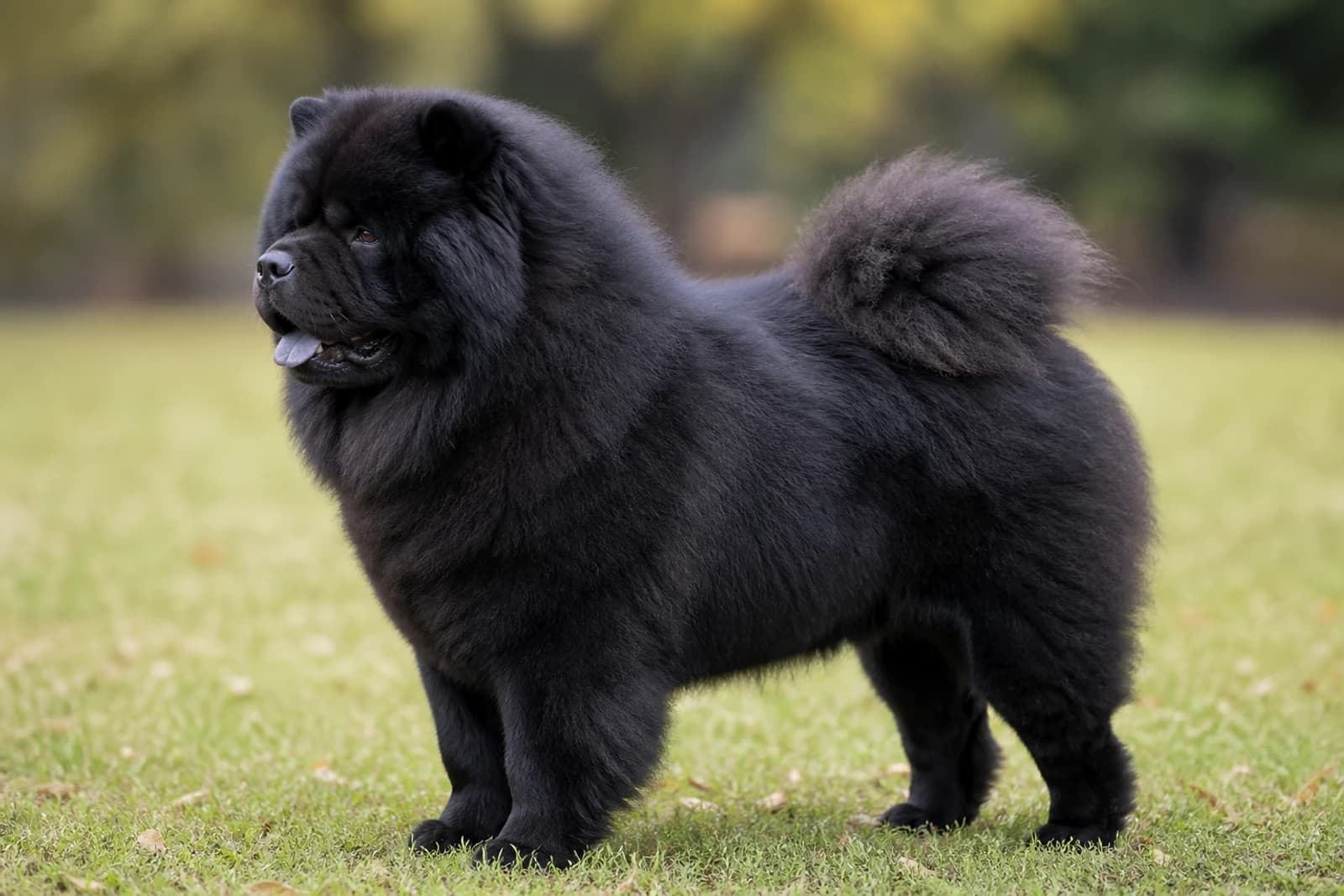
The Chow Chow is a dignified and independent breed best suited for experienced owners who appreciate its aloof nature. This loyal guardian forms strong bonds with its family but remains reserved with strangers. Early socialization is crucial to curb potential aggression. They do well in calm households without young children or other pets, unless raised together. Their moderate exercise needs and quiet indoor demeanor make them viable for apartment living, provided they receive daily walks. Not recommended for first-time owners, the Chow demands a confident handler who can manage its stubborn streak.
At a glance
- Size
- Large
- Height
- 18–22 in
- Weight
- 46–71 lb
- Life span
- 8–12 years
- Coat colors
- red, black, blue, cinnamon, cream
- Coat type
- dense double coat
- Origin
- China
How much does a Chow Chow cost?
Adopt / rescue
$150–$500
Usually includes spay/neuter, first shots, and a microchip.
Buy from a breeder
$2,000–$4,000
From a reputable, health-testing breeder.
Approximate USD. Prices vary widely by region, breeder, pedigree, age, and coat colour — adopting is the lower-cost and recommended route. Avoid suspiciously cheap “breeders”; they’re often puppy mills.
Estimate the full cost of a Chow Chow →Chow Chow photos
Views
Front, side, rear and top — the full silhouette.Poses
How the breed sits, lies, moves and plays.Puppy to senior
The breed across its whole life.Expressions
The breed’s range of moods.Close-up details
Eyes, ears, nose, paws, tail and coat.Coat colors
The breed’s recognized colors.Click any photo to enlarge. We show the Chow Chow from every angle — three views, poses, life stages, expressions, close-ups, coat and colors.
Appearance & size
The Chow Chow looks like a creature that wandered out of a fairy tale — a bear cub crossed with a lion, squared off and seriously dignified. This is a large, powerful dog. Males stand 18–22 inches at the shoulder, females about the same, and they pack 46–71 pounds into a compact, blocky frame. The body is roughly as long as it is tall, giving the dog a solid, almost immovable stance.
-
Coat & color: The Chow’s signature is a dense, stand-off double coat that can make him look even bulkier than he already is. Two varieties exist: the more common rough coat, with a long, coarse outer layer and a thick woolly undercoat, plus an enormous ruff that frames the head like a mane; and the less common smooth coat, which is shorter and plush, yet still dense and upright, lacking the dramatic ruff. Coat colors run the gamut: solid red (from light golden to deep mahogany), black, blue, cinnamon, and cream. In solid-colored dogs, the hindquarters, tail, and breeches may show slightly lighter shading, but the coat is otherwise even.
-
Head & expression: From the front, the head is broad and flat, with a deep muzzle that’s distinctly padded, giving the face a soft, rounded look — until you catch the scowling expression. Deep-set, almond-shaped eyes (always dark brown) and tiny, triangular ears that tilt slightly forward and sit stiffly erect add to the serious, no-nonsense stare. The hallmark that truly says “Chow” is a solid blue-black tongue and black lips; a pink or spotted tongue is a disqualification in the show ring.
-
Side view & gait: Viewed from the side, the dog’s profile reveals a deep chest, a straight topline, and the breed’s most distinctive structural feature — completely straight hind legs, with minimal angulation at the stifle and hock. This creates the characteristic short, stilted, choppy stride. It’s not a loping gait; it’s deliberate and a little stiff, which adds to the imperious aura.
-
Rear & tail: From behind, the hindquarters are broad and powerful, with that same straight stifle. The tail is set high on the rump and carried curled tightly over the back, resting to one side or the other. This tight curl, combined with the profuse coat and ruff, completes the silhouette that’s part teddy bear, part ancient temple guardian — and completely unmistakable.
The sheer density of the double coat means a Chow in full coat can look almost spherical from any angle. That coat, the lion’s mane ruff, and the scowling, blue-black tongue make him one of the most recognizable dogs on the planet.
History & origin
The Chow Chow’s story begins roughly 3,000 years ago in the Guangdong region of southern China, making it one of the oldest recognizable breeds still around today. This wasn’t a single-purpose lap dog — it was a true all-rounder, bred to hunt game, guard homes and livestock, and, in a practical twist, provide both meat and a dense, warm coat. The idea of eating a dog may feel jarring to modern family-pet ears, but in that time and place, the Chow was a valued food animal, much like a pig or chicken, raised alongside its working duties.
Physically, the breed carries clear ties to ancient spitz-type dogs. Those deep-set eyes, the lion-like ruff, and the stiff hind gait all suggest a lineage adapted to cold climates and hard labor long before it settled in subtropical Guangdong. And then there’s the blue-black tongue — a feature shared only with the Shar-Pei (another Chinese breed) and a handful of other animals, giving the Chow an almost mythical air.
By the Tang Dynasty, Chows were established as guards in temples and imperial kennels, where they were prized for their aloof, watchful nature. The name “Chow” itself likely didn’t come from Chinese — it’s thought to be a pidgin English term for knick-knacks or miscellaneous cargo from the East, slapped on the dogs when they were first shipped to England in the late 1700s and 1800s. Queen Victoria’s interest helped cement the breed’s exotic reputation, and from there the Chow spread steadily across Europe and North America. The American Kennel Club recognized the breed in 1903, and while most of us no longer ask them to hunt or guard in the traditional sense, the Chow’s quiet, independent, and sometimes stubborn spirit comes straight from those ancient, multi-purpose roots.
Temperament & personality
A Chow Chow doesn’t live to please you — and that’s the point. This 46–71 pound dog, standing up to 22 inches at the shoulder, carries himself with an almost feline disinterest, reserving his loyalty for those who earn it. He’s intelligent, watchful, and profoundly independent, a combination that can feel more like living with a dignified roommate than a typical tail-wagging pet. Expect quiet companionship, not sloppy kisses; a Chow will sit near you rather than on you, and he’ll decide when affection is on the menu.
That independent streak makes him strong-willed to the core. He responds to calm, consistent guidance, never force. Get loud or physical, and he’ll dig in his heels — or decide you’re not worth the trouble. Early, ongoing socialization is a must because natural wariness toward strangers can tip into outright suspicion. He’s not a dog who instantly trusts visitors, and he may not tolerate clumsy handling from young children. A stiff body, hard stare, and forward-leaning posture are clear signals to back off; a loose, relaxed body and soft eyes mean you’ve been accepted into his inner circle. Lip licking, yawning, or turning his head away are his way of saying he’s uncomfortable, and wise owners learn to spot them before things escalate.
At home, the Chow is a calm, quiet presence who needs a couple of brisk daily walks but won’t bounce off the walls. He’s a natural watchdog, alert to anything out of place, though he typically saves his deep bark for genuine threats. Don’t mistake his reserve for laziness — he simply sees no need to perform. Boredom or isolation can trigger anxiety-driven barking or destructive chewing, so he does best in a household where someone’s around for part of the day. Puppies explore the world with their mouths and need sturdy chew toys; adults keep their jaws strong on hard chews. If he fixes on a chair leg, a spray of homemade citrus solution (boiled citrus peels) often redirects him cleanly.
This is a breed that takes territory seriously. A Chow may urine mark indoors if he feels his boundaries are threatened, especially if he’s intact. The scent serves as a persistent cue to re-soil the same spot, so nix accidents quickly with a vinegar spray (white and cider vinegar) that neutralizes the odor instead of just covering it up. Likewise, never interrupt him while he eats; food guarding is real, and a Chow’s too-serious table manners demand respect. Teach every family member to let him eat in peace.
With his own people, a well-raised Chow is calm, brave, and unfailingly devoted — just not in a demanding way. He’ll memorize the scents of his household and define his territory by who belongs, not by floor plans, which is why a rarely used guest room might become an accident spot. The reward for your patience is a bond built on mutual respect, a dog who knows exactly who he loves and doesn’t bother pretending otherwise.
Good with kids, dogs & other pets
A Chow Chow is not the breed for a houseful of rambunctious children or a revolving door of playmates. These dogs bond deeply with their immediate family but tend to view unfamiliar children—and unfamiliar adults—with aloof suspicion. With their own kids, especially children they’ve been raised alongside, a well-socialized Chow often shows surprising patience and a quiet, watchful tolerance. That tolerance shouldn’t be mistaken for an invitation to roughhouse: a Chow’s large frame (46–71 lb) and powerful jaw turn even a warning grumble into a serious matter. Always supervise interactions between a Chow and young children, and teach kids to respect the dog’s space. If your child wants a cuddly, playful roughhousing partner, look elsewhere.
With other dogs, the picture is similarly measured. Chows can be dog-selective, and same-sex aggression is a well-known pattern in the breed. A puppy who grows up with another dog—particularly an opposite-sex housemate—may coexist peacefully, but introducing a new adult dog later often triggers territorial posturing. Off-leash dog parks are a gamble; many adult Chows simply prefer their own yard to a scrum of strangers. Early and thorough socialization between 3 and 14 weeks is non-negotiable if you hope to raise a Chow who can ignore a passing dog without tensing up. After the critical window closes around 12–16 weeks, forcing an already-distant adult to “make friends” adds stress and can lead to fights, not happy play.
Cats and small pets come with a significant caution. Chows have a historic background that includes hunting small game, and plenty of individuals carry a strong prey drive. A Chow puppy raised with a cat from day one might learn to coexist indoors, but you’re still managing instinct, not erasing it. Leave them unsupervised at your peril. An adult Chow encountering a new cat, rabbit, or pocket pet is likely to see a target, not a housemate. If harmony with smaller animals is a must-have in your home, a Chow is a poor fit.
What makes or breaks all of these relationships is socialization done early and done right, followed by a lifetime of calm, consistent leadership. A properly raised Chow in a quiet, single-pet household with respectful owners can be an unflappable companion. Stack the odds against that, and you get a powerful, reserved dog who’d honestly prefer you to handle the introductions—or skip them entirely.
Trainability & intelligence
A Chow Chow isn’t going to trip over itself to earn your approval the way some retrievers or herders do. They’re intelligent, but that brain comes wrapped in an independent streak that makes training feel more like a negotiation than a command performance. The good news: they learn fast when the payoff is clear and the relationship is solid. The flip side: force, inconsistency, or boredom will turn a Chow into a statue — or worse, a dog who growls when you push too hard.
You need to start the day your puppy comes home. That means short, upbeat sessions woven into everyday life: a sit before the food bowl hits the floor, eye contact to earn a door opening, four paws on the ground for a gentle greeting. Use high-value treats, a squeaky toy, a game of tug — whatever makes your Chow’s tail give that slow, dignified wag. Positive reinforcement builds the trust this breed demands. Chows often shut down under scolding or physical corrections. They don’t forget harsh handling, and they’ll repay it either with avoidance or a sharp growl that many people misread as “aggressive” when it’s really “stop threatening me.”
Socialization is non-negotiable and time-sensitive. A Chow who coasts through puppyhood in a quiet bubble can mature into an adult who views unfamiliar people and settings with deep suspicion. The prime window closes around 16 weeks, so between 3 and 14 weeks you want to introduce your puppy — always at her pace — to friendly strangers, children, doorbells, car rides, busy sidewalks, and calm adult dogs. Keep each new experience short and packed with treats. Never force contact; if she hangs back, let her. Pushing a Chow to “get over it” backfires hard, cementing the fear instead of easing it.
Consistency is what turns that early work into lifelong reliability. If jumping up gets you a laugh on Tuesday and a “no” on Wednesday, your Chow will take the inconsistency as permission to ignore you entirely. Set clear rules and stick to them. Everyone in the house needs to enforce the same commands the same way. Patience beats punishment every time: a Chow who understands what you expect and trusts that good things follow will choose to cooperate far more often than one who’s just bracing for the next sharp word.
Recall deserves an honest warning. Chows have centuries of guarding and independent decision-making behind them. “Come” is rarely a reflex. You’ll need to proof the command in a boring room, then a yard, then a fenced field with gradually more distance and distraction — and even then, many will still weigh whether the treat is worth breaking off that interesting sniff. Off-leash freedom in an unfenced area is a gamble you shouldn’t take unless your dog has proven, over years, that she’ll spin on a dime and return. For most Chows, a long drag line and a rock-solid “stay” are far safer tools.
Keep training sessions to 5–10 minutes and end before the yawns start. Puzzle feeders, nose work, and hide-and-seek games burn mental energy far better than drilling sit, down, sit, down for half an hour. A bored Chow is a creative Chow, and that creativity often lands on digging, chewing, or inventing reasons to ignore you. The aim isn’t a robot who heels like a border collie — it’s a steady, thinking partner who trusts you enough to listen when it counts. Pour your energy into that trust in the first year, and you’ll end up with a dog who chooses to work with you rather than simply tolerating your presence.
Exercise & energy needs
Think of a Chow Chow as a housemate who appreciates a daily constitutional but would rather not join your marathon training. Plan on two 30-minute walks each day, ideally morning and evening, to keep your Chow content and prevent the boredom that can lead to stubborn, standoffish behavior. These aren’t a breed that needs to run laps; a steady, purposeful stroll where they can sniff and survey their territory is exactly their speed.
Intensity stays low to moderate. A brisk walk on flat ground or gentle hills is plenty. Avoid jogging, extended fetch, or anything that puts sharp impact on those straight back legs. Chows have a dense double coat that makes them heat-sensitive, so schedule walks for cooler hours and watch for heavy panting. If your dog flops down mid-walk, that’s not negotiation — it’s the Chow equivalent of “we’re done.” Listen to it.
Mental exercise often tires them out faster than physical effort. These dogs are independent thinkers, not eager-to-please retrievers. Short, positive training sessions — teaching a new trick, practicing stays — work well. Toss in puzzle toys that dispense treats, or scatter part of their meal in the yard for a sniffing scavenger hunt. You’ll get a calmer dog who’s used his brain without feeling bossed around.
Indoor games like hide-and-seek with a favorite toy or teaching the names of objects can fill a rainy day. Because elbow and hip dysplasia can be a concern in the breed, keep jumping and sharp turns off the menu. If you’re looking for a low-key dog sport, trick dog or beginner nose work classes suit a Chow’s dignity. Just don’t expect them to repeat a command they’ve already figured out; once they know it, they’ll give you a look that says, “I did that already.” A tired, mentally satisfied Chow is a quiet companion who’s perfectly happy to curl up at your feet for the next eight hours.
Grooming & coat care
If you bring a Chow Chow home, plan on daily brushing. That dense double coat—a coarse outer layer over a woolly undercoat—mats fast if you skip a day or two. A metal slicker brush with rounded pins does the heavy lifting: it reaches the undercoat, pulls out loose hair, and clears debris. Follow up with a wide-tooth greyhound comb to hunt down tangles behind the ears, under the heavy ruff, and around the back legs where fur thickens.
Twice a year, your Chow “blows coat” in a dramatic seasonal shed. During those weeks, you’ll brush two or three times a day along with an undercoat rake to keep your floors—and your dog—under control. The clumps of downy fluff will test your vacuum, but staying ahead of it prevents painful, skin-irritating mats.
Bathing every six to eight weeks works for most Chows. Use a moisturizing dog shampoo and rinse until the water runs absolutely clear; any residue trapped against the skin can trigger hot spots. Towel drying alone won’t cut it. A high-velocity dryer blows out the thick undercoat and gets the coat completely dry, which is your best defense against musty odors and irritation.
Skip the clippers. Shaving a Chow down damages the coat’s natural insulation and can leave the skin vulnerable to sunburn. A light scissor-tidy around the paws and a sanitary trim under the tail are all the cutting most Chows ever need.
Don’t overlook nails, ears, and teeth. Small, furry Chow ears trap moisture and debris, so wipe them out weekly. Trim nails monthly—if you hear clicking on hardwood, they’re overdue. Brush teeth several times a week with dog-safe toothpaste. Start all of this when your Chow is a puppy, keep sessions short and positive, and you’ll have a dog who tolerates grooming instead of fighting it.
Shedding & allergies
If you want a house free of dog hair, a Chow Chow will test your resolve. These dogs are heavy, seasonal shedders thanks to a dense double coat built for harsh winters. Most of the year, that coat traps loose hair against the skin rather than releasing it onto your floors — so you might be lulled into thinking grooming is low-maintenance. Then spring and fall trigger the real show. The undercoat lets go in thick clumps, and for a few weeks you’ll pull tufts of fur off the dog, your sofa, and your favorite black sweater daily. A thorough brush-out every day during a blowout isn’t optional; even then, expect a stray tuft in your coffee cup.
Drool, at least, is a minor concern. Chows aren’t slobbery on the level of a Mastiff, so your pant legs stay mostly dry. But that low drool won’t save you from allergies. All that stuck hair holds dander and dried saliva, and when the coat blows, those allergens get airborne en masse. No dog is truly hypoallergenic, and a Chow makes zero effort to pretend otherwise. If someone in your household reacts to pet dander, this is the wrong breed to bring home. Run a HEPA filter, brush outdoors, and accept that twice a year your living room will look like a fur snow globe that needs a permanent vacuum attachment.
Diet & nutrition
Chow Chows carry a solid frame on a body that wasn’t built for marathons, so every bit of food matters. Portion control is your first line of defense against weight gain, which hits this breed particularly hard and fast. The extra pounds grind on joints already susceptible to hip and elbow issues, even if your dog seems fine in the moment.
Start with the feeding guide on your chosen food, but immediately trim the amount if your Chow isn’t working off that energy. Most adults in the 46–71 lb range stay lean on about 2 to 2¼ cups of high-quality kibble a day, split morning and evening, but you need to adjust by the individual. Put the bowl down, let your dog eat for 15 minutes, then pick it up. Measure portions with a kitchen scale, not a scoop — eyeballing is where the trouble begins.
- Puppies: Four evenly spaced meals until 4 months old, then three meals until 6 months, then switch to the adult two-meal schedule. Use a large-breed puppy formula with balanced calcium to protect growing bones, and transition gradually from the breeder’s diet over a week by mixing in the new food.
- Adults: Twice-daily feeding works best. If your Chow wolfs food in seconds, a puzzle bowl slows them down and adds a little mental work to the day.
- Seniors: From about 7 years onward, activity often dips noticeably. Switch to smaller, more frequent meals if appetite or digestion changes, and reduce total daily calories in small increments. Don’t cut protein — older dogs need it to preserve muscle. Purée meals if teeth are missing or gums get sensitive.
This breed isn’t universally food-obsessed; some Chows are dainty eaters, others inhale whatever’s in front of them. If you’ve got the food-driven type, the obesity risk multiplies overnight. Weigh your dog every two weeks and run your hands along the ribs. You should feel them under a thin layer of padding. If you can’t, back off the food by 10% and reassess.
A Chow’s thick coat benefits from steady omega-3s. Add a splash of fish oil, or toss in a little canned mackerel or sardines (packed in water, no salt) a couple times a week. Joints need glucosamine and chondroitin — many large-breed formulas already include them, but don’t expect a bag of kibble to fix pre-existing dysplasia. It’s one small tool.
If you’re building meals at home, roughly 60% should come from high-quality meat (raw or lightly cooked), another 20–30% from dog-safe fruits and vegetables like green beans, pumpkin, or blueberries, and the remainder from eggs, pearl barley, or plain yogurt. Grind or process the mixture — dogs lack salivary enzymes, so blending aids nutrient absorption. Avoid rich scraps and fatty cuts, especially after a holiday. Chows can tip into pancreatitis from a single greasy meal.
Keep a log of weight and body condition, and you’ll catch the creep long before it taxes those hips.
Health & lifespan
A healthy Chow Chow usually lives 8 to 12 years. That window depends heavily on genetics, weight management, and how well you manage the breed’s known sensitivities. Talk to a vet early and often — not just for shots, but to catch the stuff that creeps up slowly.
- Eye disorders are a big one. Chows can inherit entropion (where the eyelid rolls inward and lashes scrape the eye), glaucoma, or cataracts. Left untreated, these hurt and can steal sight.
- Hip dysplasia also shows up in the breed. A malformed hip joint leads to arthritis and pain, especially as a 55-pound dog ages.
- Endocrine issues, particularly hypothyroidism, are on the radar. A sluggish thyroid can quietly cause weight gain, skin problems, and lethargy.
Responsible breeders don’t guess. They screen the sire and dam with OFA hip evaluations and annual eye exams by a veterinary ophthalmologist. Ask for the paperwork. If they can’t produce it, walk away.
Daily habits do the heavy lifting. Keep your Chow lean — you want to feel ribs without a thick layer of fat over that 46–71-pound frame. Extra weight punishes already iffy hips and elbows. That magnificent double coat is a furnace; he’ll overheat fast in summer. Walk early or late, offer shade, and never leave him in a parked car. During mosquito season, monthly heartworm prevention is a must, and keep it going for another month after the bugs disappear. Rabies vaccination isn’t optional — it’s the law, and there’s no cure once symptoms start.
A Chow who feels pressured or isolated can develop chronic stress that spills into physical health. Skip the heavy-handed corrections. Early, positive socialization and calm, consistent handling build a dog whose mind and body are both easier to keep sound.
Living environment
Chow Chows do best in homes that run on routine and quiet, not chaos. Calm, predictable surroundings match their independent, almost cat-like nature far better than a house full of constant noise and activity.
Apartment or house?
An apartment works perfectly well if you commit to the essentials: climate control and daily walks. Indoors, these dogs are low-key—dignified, clean, and content to lounge. A house with a securely fenced yard is a nice bonus, offering them a private spot to patrol, but it’s not required. The real non-negotiable is twice-a-day exercise and plenty of mental engagement, regardless of your square footage.
Yard and outdoor space
A yard must have a sturdy, tall fence; Chows have an independent streak and won’t reliably come when called if a squirrel or stray cat catches their eye. They enjoy sniffing and patrolling in cool weather, but never leave one tied out or unsupervised for long. Even on mild days, provide shade and fresh water—this breed overheats quickly, even when just resting outside.
Climate and weather
That dense double coat is built for the cold and makes heat a serious hazard. Heat tolerance is poor, and Chows are prone to overheating and heat stroke. If you live in a hot or humid area, air conditioning is mandatory. Walk early in the morning or after sunset, keep outings short, and watch for heavy panting or lethargy. In winter, they’re in their element and often love snow, but they still need a dry, sheltered spot if they’re outside for extended periods.
Noise and barking
Chows aren’t chronic barkers. They’ll give a low, quiet alert when a stranger approaches—a decent watchdog trait—but otherwise stay silent. Constant street noise, yelling, or a chaotic environment can stress them, so a peaceful neighborhood or a quiet corner of a building suits their temperament best.
Alone time
Their independent streak means Chow Chows handle being left alone better than many breeds. They won’t panic or develop separation anxiety just because you head to work, provided they’ve had a good morning walk and a food puzzle or frozen chew to work on. Still, no dog should consistently be left solo for ten or more hours. A predictable routine and gradual alone-time training from puppyhood keep boredom-related chewing or barking from ever taking root.
Who this breed suits
This breed isn't for everyone, and that's exactly how a Chow Chow likes it. A well-bred, properly raised Chow is self-contained, dignified, and deeply loyal to its own people — but you have to earn that loyalty.
A great match for…
- Experienced owners who don't need a velcro dog. You'll respect the Chow's independent streak and won't mistake aloofness for a training failure. If you want a dog that greets you calmly, then settles at your feet rather than climbing into your lap, this may be the breed for you.
- Calm, adult-only households or singles who crave a quiet companion. A Chow's ideal day is a couple of 20–30 minute sniffy walks, not a marathon. They're perfectly content to nap while you work from home, as long as they get their daily outing. They rarely bark without reason, which works well in an apartment if you manage early barking habits.
- People who genuinely enjoy grooming or can budget for a pro. That thick double coat sheds heavily, especially during spring and fall blowouts. You'll need to brush 2–3 times a week year-round — and daily during coat transitions — to prevent matting and keep skin healthy beneath all that fur. Expect tumbleweeds of hair even with diligent upkeep.
- Homes where one person will take the lead in training. Chows often bond more strongly with a single person. They respond best to calm, consistent rules set by someone who doesn't take their stubborn moments personally. Food motivation varies; some Chow owners find that low-key praise and quiet persistence get better results than effusive treat parties.
Think twice if…
- You're a first-time dog owner. This is not a forgiving starter breed. Chows are smart but have an independent "what's in it for me?" attitude. They require early and ongoing socialization — not just puppy class, but a lifetime of neutral exposure to strangers, kids, and other dogs — or their natural suspicion can tip into aggression.
- You have small children or plan to soon. Even a well-socialized Chow has limited patience for tail-pulling, sudden grabs, or squealing chaos. Their large, sturdy frame (46–71 lb) and innate guarding reflexes make any snap more consequential than with a smaller, more tolerant breed.
- You picture a dog-park socialite or a gregarious greeter. Chows tend to be aloof with strangers and same-sex intolerant with other dogs. Leash-reactivity and resource guarding are real risks without dedicated training. If you want a dog who fêtes every houseguest, look elsewhere.
- You can't commit to managing heat and health quirks. That heavy coat puts Chows at high risk for overheating — no mid-day summer jogs. Responsible breeders screen for hip and elbow dysplasia, entropion (rolling inward of the eyelid), and thyroid issues, but the breed's typical lifespan is 8–12 years, and vet bills can pile up if those problems emerge.
A Chow pays off with quiet, steadfast presence for the person who accepts them on their own terms. But if you equate affection with tail wags and face licks, this dignified lion-dog will leave you disappointed.
Cost of ownership
A well-bred Chow Chow from health-tested parents typically runs $1,500 to $4,000. Show-potential pups or lines with exceptional pedigrees can push past $5,000. Adoption through a breed rescue might land between $300 and $500, but purebred adults aren’t common. That’s just the entry ticket—the breed’s size, coat, and predisposition to certain health conditions make the monthly numbers equally real.
- Food: Expect $60–$100 a month for high-quality kibble appropriate for a 50–70 lb dog. Raw or fresh diets will run higher.
- Grooming: That dense double coat isn’t optional maintenance. Plan on a professional groom every 4–6 weeks at roughly $80–$120 per session, or $60–$100 a month when you average it out. You’ll still need a good pin brush and a slicker for at-home brushing between appointments.
- Routine vet care: Annual exams, vaccinations, and year-round heartworm/flea/tick prevention usually land in the $40–$70 monthly range ($500–$800 per year). This assumes a healthy dog with no surprises.
- Pet insurance: Chows are prone to hip and elbow dysplasia, entropion, patellar luxation, and allergies—issues that can get costly fast. A comprehensive policy with a reasonable deductible typically costs $50–$100+ per month. Skipping insurance means a single emergency surgery could set you back $3,000–$6,000 or more.
- Extras: Treats, toys, a sturdy crate, training classes, and annual licensing add another $30–$50 most months.
All told, you’re looking at $300 to $500+ in monthly upkeep for a healthy Chow Chow. If a major orthopedic or eye problem crops up, those costs climb noticeably—another reason the initial breeder research matters so much.
Choosing a Chow Chow
Breeder or Rescue?
A Chow Chow isn’t a dog you grab because the fluffy puppy in the window stole your heart. These are large, independent guardians (46–71 pounds, 18–22 inches at the shoulder) with an 8–12 year commitment and a personality that doesn’t cater to your feelings. If you’re buying a puppy, find a breeder who produces dogs with solid nerve — not just a thick coat. Rescue is possible, but go through a breed-specific group that evaluates temperaments in foster care. Be honest about your experience: a Chow that missed early socialization can be a hard project, and shelters are full of them.
Health Clearances That Matter
Chows can be prone to orthopedic messes and eye trouble. Responsible breeders screen for what’s predictable, not just what’s convenient. When you talk to a breeder, ask for paper proof — not a “they looked fine” story.
- Hips and Elbows: OFA or PennHIP scores on both parents. Passable hips and elbows aren’t negotiable in a large breed that carries its weight low and square.
- Eyes: A current CERF or OFA eye exam. Entropion (eyelids that roll in and scrape the cornea) is painfully common. A puppy squinting or weeping at 8 weeks is already in trouble.
- Patellas: Luxating patella screening, especially if the line runs smaller.
- Thyroid: Full thyroid panel from an OFA-approved lab. Low thyroid can hide behind skin issues and prickly behavior, and nobody wants to mistake a medical problem for a temperament fault.
- Cardiac: Some breeders also clear hearts — ask if they have an echocardiogram on file.
Red Flags When You’re Looking
- No test results you can verify online with the OFA or PennHIP database.
- A breeder who won’t let you meet the dam (or at least show video of her interacting normally at home). You need to see what your puppy’s mother is like at full maturity.
- Puppies that cower, bark hysterically, or refuse to approach. A decent Chow pup is reserved, not shut down. If the whole litter hides behind a barrier, walk.
- Selling pups before 8 weeks. Many good Chow breeders keep them until 10 weeks so littermates can teach bite inhibition — a big deal for a breed with a powerful jaw.
- Multiple litters on the ground at once or “rare” color hype (blue, cinnamon) without equal focus on health and temperament.
- No written contract, no health guarantee, no return policy. A breeder who won’t take a dog back for its entire life isn’t one you hand money to.
Picking the Right Pup
Watch the litter for 10 minutes before you interact. You want the puppy that notices you, takes a beat, then walks over with a relaxed, rolling gait — not the one that barrels into your shins or the one that sits frozen in the corner. Chow puppies should feel dense and solid when you pick them up, with clean coats, clear eyes, and no yeasty smell on the skin.
Touch everything. Gently open the mouth, hold a paw, run a hand down the tail. A normal puppy might squirm but shouldn’t go stiff, yelp, or air-snap. If an 8-week-old growls when you restrain it for two seconds, don’t rationalize it as “just being a Chow.” That behavior rarely mellows — it sharpens. Look for a pup that recovers quickly from being startled, and ask the breeder exactly how they’ve socialized the litter: running a vacuum, dropping a metal bowl, handling by kids, car rides. A puppy raised underfoot in a busy household will adjust to your life 10 times faster than one that spent its early weeks in a quiet kennel.
Finally, watch the puppy move on a non-slip surface. A stilted rear gait is normal for the breed, but stumbling, bunny-hopping, or stiffness when playing is not. Trust a breeder who asks you hard questions and gladly hands you a folder of health clearances — not one who just wants a deposit.
Pros & cons
-
Loyal to the core — a Chow bonds tightly with its people and often picks one person as its shadow, offering a quiet, dignified devotion you won’t forget.
-
Naturally clean and quiet — they house-train easily, groom themselves like cats, and rarely bark without a real reason, so you get a calm house presence.
-
Modest exercise needs — a couple of 20- to 30-minute walks a day usually does it; they’re not a breed that needs an hour of hard running.
-
Striking, lion-like look — that blue-black tongue, scowling face, and thick ruff turn heads, but the impressive appearance also serves as a built-in deterrent.
-
Independent thinker — you won’t get a needy shadow; a well-adjusted Chow is happy to keep itself company while you work, without destructive drama.
-
Serious grooming commitment — the dense double coat sheds year-round and blows heavily twice a year, demanding brushing several times a week (and a good vacuum).
-
Early socialization is not optional — without it, natural wariness of strangers can harden into fear-based aggression, making walks and vet visits a headache.
-
Heat can be dangerous — that insulating coat works against them in warm weather; even a short summer walk can cause overheating, so exercise timing matters.
-
Stubbornness is a feature, not a bug — training is a battle of wills. A Chow learns fast but obeys only when it sees a payoff, so consistency and patience are everything.
-
Not a dog-park dog — they often have low tolerance for rude, bouncy dogs and can escalate quickly, so off-leash socializing is a risky proposition.
-
Potential for same-sex aggression — some lines have a low fuse with dogs of the same sex, which means careful management in multi-dog homes.
Similar breeds & alternatives
If the Chow’s combination of aloof dignity, moderate exercise needs, and lion-like coat appeals to you, a few other breeds scratch a similar itch — each with a different trade-off in size, grooming, or temperament.
-
Akita
Bigger and more intense. Akitas run 70–130 lb and stand 24–28 in, demanding a confident handler who’s ready for a powerful guarding breed with a high prey drive. Like the Chow, they’re reserved with strangers and famously independent, but they typically need more physical and mental output — count on a solid hour of brisk exercise daily, not just a few walks. Double coats shed heavily, and same-sex dog aggression can be a real management issue. Lifespan is similar at 10–14 years. Choose an Akita when you want a larger, more protective presence and can commit to early, ongoing socialization. -
Chinese Shar-Pei
A cousin from the same part of the world, just downsized and wrapped in wrinkles. Shar-Peis weigh 40–55 lb and stand 18–20 in — a more compact guardian. They share the Chow’s aloofness, stubborn independence, and need for firm, patient training. The coat difference is dramatic: short, bristly, and a magnet for skin problems if not bred carefully. Lifespan (8–12 years) mirrors the Chow. You get a similarly dignified, loyal dog with less fluff to brush, but you’ll be managing skin folds and a wary temperament that requires off-leash caution around unfamiliar dogs. -
Samoyed
The complete opposite in personality, despite the fluffy spitz coat. Samoyeds are social, grinning, people-oriented dogs that crave interaction and typically do poorly as solitary yard dogs, whereas a Chow is content to patrol alone. Both breeds blow coat twice a year and need regular brushing, but the Samoyed’s double coat mats more easily. Size is close: 19–24 in, 35–65 lb. The big trade-off is that a Samoyed lacks the guarding instinct — they’ll welcome a stranger with a wag — so if you want a watchful, standoffish breed, look elsewhere. -
Tibetan Mastiff
An extreme version of the independent guardian. These dogs dwarf a Chow, often reaching 70–150 lb and standing 24–26 in or more. They’re bred to work alone, so training is less about commands and more about earning respect. Lifespan is 10–12 years. Night barking and a deep suspicion of anything out of place are the norm. The Chow’s apartment adaptability and more manageable 45–70 lb frame feel moderate by comparison. Consider a Tibetan Mastiff only if you have serious property, secure fencing, and experience with primitive guardian breeds. -
Eurasier
A mid-sized spitz (18–24 in, 40–70 lb) that lands between a Chow and a Samoyed in temperament. Eurasiers are calm, even-tempered, and reserved without the same sharp guarding edge. They’re easier to socialize and generally less stubborn, but they still need consistent, positive training. Grooming is similar to a Chow’s — thick double coat, seasonal shedding, regular brushing. A good pick if you want the lion-dog look without the truly aloof independence and potential for aggression that can come with a poorly bred or under-socialized Chow.
Fun facts
- The Chow Chow has a distinctive blue-black tongue, a trait shared only with the Chinese Shar-Pei.
- One of the oldest dog breeds, Chow Chows date back over 2000 years in China, where they were used for hunting, guarding, and even pulling sleds.
- Their name may derive from a pidgin English term for miscellaneous items from the East, as they were often included in cargo manifests.
Frequently asked questions
- Is the Chow Chow good with children?
- Chow Chows can be aloof and independent, so they are often not recommended for homes with small children. They may tolerate older, respectful kids if raised together, but supervision is always necessary due to their strong protective instincts. Early socialization and training are critical to manage their dominant nature.
- Does the Chow Chow shed a lot?
- Yes, Chow Chows are heavy shedders, especially during seasonal changes. Their thick double coat requires regular brushing—ideally several times a week—to control loose fur and prevent matting. Be prepared for year-round shedding and extra grooming during shedding season.
- How much exercise does a Chow Chow need?
- Chow Chows have moderate exercise needs. Daily walks and play sessions in a securely fenced area are usually sufficient to keep them physically and mentally stimulated. However, they are not high-energy dogs and can be content with a relaxed lifestyle, but they do need regular activity to prevent obesity.
- Is the Chow Chow suitable for apartment living?
- Chow Chows can adapt to apartment living if they receive enough daily exercise and mental stimulation. They are generally quiet and calm indoors, but their independent nature means they need a confident owner to establish rules. Early training and socialization are important to prevent territorial behavior in close quarters.
- Is the Chow Chow easy to train for first-time dog owners?
- Chow Chows are not recommended for first-time dog owners because of their strong-willed, dominant personality. They require consistent, firm but gentle training from an experienced owner who can establish leadership without harshness. Their aloof and sometimes stubborn temperament can be challenging for novices.
Tools & calculators for Chow Chow owners
Quick estimates tailored to Chow Chows — pre-filled with this breed’s size where it matters.
Articles & stories about the Chow Chow
Sources & standards
This profile follows recognized breed standards from the American Kennel Club (AKC) and the Fédération Cynologique Internationale (FCI), along with established veterinary and breed-club guidance. These describe general breed tendencies — every dog is an individual.
Owner stories
Have a Chow Chow? Share your experience — grooming tips, personality quirks, anything goes.