

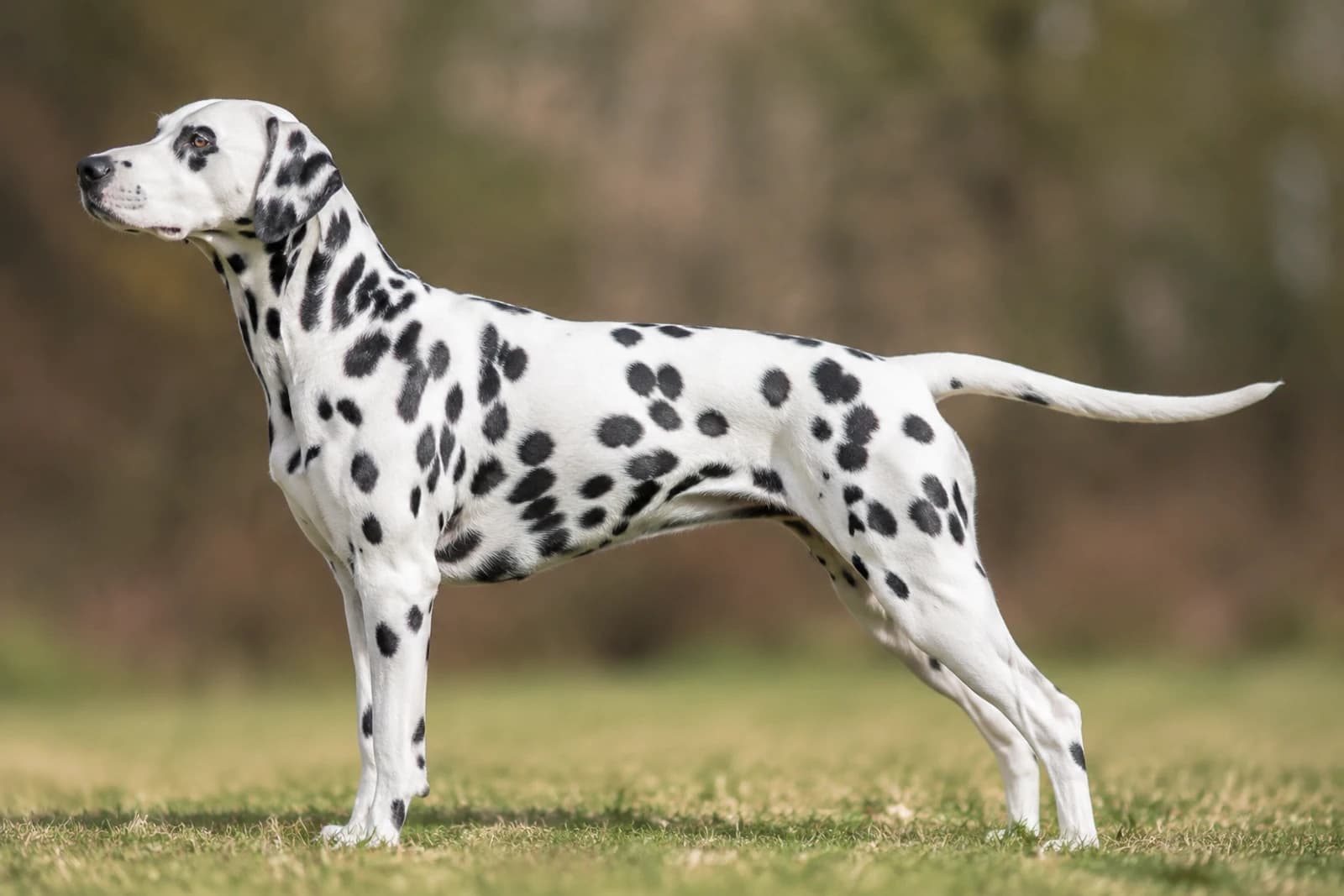
The Dalmatian is a highly energetic, athletic breed known for its distinctive white coat with black or liver spots. Best suited for active individuals or families who can provide plenty of daily exercise and mental stimulation, this loyal and playful dog thrives in a home with a yard. While affectionate with their people, Dalmatians can be strong-willed and require consistent training. They make excellent jogging partners and excel in dog sports. With early socialization, they can get along with children and other pets, but their high energy and heavy shedding may challenge first-time owners.
At a glance
- Size
- Large
- Height
- 22–24 in
- Weight
- 40–60 lb
- Life span
- 10 years
- Coat colors
- white with black spots
- Coat type
- Short, dense, and glossy
- Group
- Companion
- Origin
- Former Yugoslavia (Dalmatia region)
How much does a Dalmatian cost?
Adopt / rescue
$75–$400
Usually includes spay/neuter, first shots, and a microchip.
Buy from a breeder
$700–$2,000
From a reputable, health-testing breeder.
Approximate USD. Prices vary widely by region, breeder, pedigree, age, and coat colour — adopting is the lower-cost and recommended route. Avoid suspiciously cheap “breeders”; they’re often puppy mills.
Estimate the full cost of a Dalmatian →Dalmatian photos
Views
Front, side, rear and top — the full silhouette.Poses
How the breed sits, lies, moves and plays.Puppy to senior
The breed across its whole life.Expressions
The breed’s range of moods.Close-up details
Eyes, ears, nose, paws, tail and coat.Coat colors
The breed’s recognized colors.Click any photo to enlarge. We show the Dalmatian from every angle — three views, poses, life stages, expressions, close-ups, coat and colors.
Appearance & size
You’ll recognize a Dalmatian from across the street — but this dog is a lot more than a white coat sprinkled with black spots. A mature Dalmatian stands 22 to 24 inches at the shoulder and weighs 40 to 60 pounds, putting it squarely in the large-dog category with a frame that’s lean, muscular, and purpose-built for distance, not bulk. The body is deep-chested and well-sprung, with a level topline, a slight tuck at the belly, and a square silhouette that says “endurance athlete” from any angle.
Coat & spots
The coat itself is short, dense, and sleek — smooth to the touch with a healthy sheen. The base color is a crisp white, and the spots are deep black, sharply defined, and scattered evenly. They range from dime-sized to larger than a half-dollar, often smaller on the head and legs and larger across the ribs and haunches. Here’s the surprise: Dalmatian puppies are born spotless. They enter the world pure white, and the first faint spots peek through within ten to fourteen days. Full spotting can take over a year to settle, so a young pup’s pattern will shift and darken as it grows. The result is a coat that’s never cookie-cutter — every individual carries its own unique arrangement.
Head & expression
The head is moderate in length, with a flat skull, a distinct stop, and a strong, long muzzle. The nose is solid black. Eyes are set well apart — typically a warm mid-brown or amber — and give the dog an alert, intelligent expression. (A few individuals have blue eyes or one blue and one brown, but that’s less common.) The ears are medium-sized, set high, and lie flat against the head; their thin leather is almost always spotted, framing the face in a way that’s unmistakably Dalmatian.
Movement & stance
From the front or rear, the legs are straight and parallel, ending in compact, round feet with well-arched toes. The tail is a natural extension of the topline, carried with a slight upward curve — never curled over the back or tucked — and it’s generously spotted right to the tip. When the dog trots, the whole picture is balanced, fluid, and effortless, the build of an animal that was made to go the distance. No two Dalmatians wear their spots exactly the same way — each one’s pattern is a one-off.
History & origin
The Dalmatian’s spots are so distinctive that you might assume their whole history is neatly written down somewhere — but it’s not. The truth is messier and more interesting. While dogs that look unmistakably like Dalmatians show up in ancient Egyptian tomb paintings and Greek friezes, the breed as we know it was refined centuries later in a narrow strip of land along the Adriatic Sea: Dalmatia, in what was then Yugoslavia and is now Croatia. The region gave the dog its name, and the people there shaped it into a tireless, all-purpose working animal.
What was it bred to do? The straightest answer is “run with horses.” Long before motorized vehicles, wealthy travelers and traders needed a dog that could keep pace with a carriage for miles, guard the horses and cargo at rest stops, and clear a path through crowded streets. Dalmatians fit that job like a key in a lock. They have a natural affinity for horses, the stamina to trot for hours without flagging, and a protective streak that made them a rolling security system. They weren’t just ornaments; they earned their keep.
That carriage dog role is what catapulted the breed from a regional specialist into an international fixture. In 18th- and 19th-century England, Dalmatians became the must-have accessory for noblemen and merchants who wanted to arrive in style. A coach with a pair of spotted dogs running under the rear axle or ahead of the lead horses signaled wealth and taste. English breeders standardized the look — the crisp white coat with evenly spaced black spots — and the Dalmatian’s reputation spread.
The same instinct turned them into firehouse icons. When horse-drawn fire engines clattered through city streets, Dalmatians ran ahead, barking to warn pedestrians and other vehicles. They calmed the horses at the chaotic scene of a fire and guarded the equipment while the crew worked. Even after motorized rigs took over, the image stuck. In the United States, many fire stations kept a Dalmatian as a mascot and living link to that daring era.
The breed also spent time in the circus ring, where their striking looks and quick uptake of tricks made them crowd favorites. That show-ring history, combined with the 1960s surge of interest thanks to Disney’s “101 Dalmatians,” turned them into household names — and unfortunately triggered a boom in irresponsible breeding. Today, the Dalmatian is squarely a companion dog, though one with the engine of an endurance athlete and a memory that never forgets a routine. If you’re drawn to the breed, know that you’re looking at a dog shaped by centuries of running the roads, not lounging on them.
Temperament & personality
A Dalmatian is a people magnet, but her personality is the real surprise — this is no easygoing spotted couch cushion. She was built to trot beside horse-drawn carriages for miles, and that history shaped a dog of intense stamina, sharp intelligence, and a deep need to be part of the action.
Energy and play style
Plan on at least an hour of hard, off-leash running every day, not just leash walks. A bored Dalmatian will dismantle your yard, redecorate with shredded couch cushions, or bark the house down. They thrive on structured games, flirt poles, and anything that mimics a chase. If you’re a runner or cyclist, you’ll get a joyful, tireless partner; if you’re not, she’ll invent her own workout, and you won’t like it.
With family and strangers
At home, these dogs are velcro. They lean into your legs, follow you from room to room, and insert themselves into every conversation. They’re famously good-natured with their own people, but don’t mistake that for instant love with everyone else. A well-socialized Dal greets strangers with a reserved dignity — curious but not gushing. Poorly bred or undersocialized Dals can tip into real skittishness or even defensive snapping, especially if startled. Deafness, which is common in the breed, makes that startling risk even higher; a deaf dog who is touched unexpectedly may bite before she thinks. Teach kids to approach from the front, never bother the dog during meals, and respect her space.
Training and sensitivities
Here’s the catch: she’s strong-willed and smart enough to notice if you’re a pushover. Harsh corrections will shut her down fast — this is a sensitive dog who remembers rough handling and may become hand-shy. Use short, positive sessions and be calmly consistent. Once you prove you’re worth listening to, she’ll pick up commands quickly and relish the mental workout. Avoid repetitive drills; she bores easily and will walk off if the game isn’t fun.
Watchdog chops
The instinct to guard the carriage didn’t disappear. A Dalmatian is an alert watchdog who will announce every delivery truck and squirrel invasion with a deep, carrying bark. She’s more likely to hold her ground and vocalize than to charge, but a stiff-legged posture and a hard stare mean “back off” — and you should take it seriously. Early, ongoing socialization teaches her the difference between a real threat and a neighbor picking up a package.
Household fit
Active families with older kids (who won’t get bowled over by 55 pounds of enthusiasm) are ideal. Puppies and young adults are mouthy players, so supervise with toddlers. Same-sex dog aggression can surface, particularly between males, so early, positive introductions to other dogs are non-negotiable. A Dalmatian who gets plenty of exercise and a job — even just learning tricks or carrying a backpack on hikes — will settle indoors with a loose body and soft eyes, happy to rest her head on your lap. Skimp on the work, and you’ll have a neurotic, destructive shadow who makes her own rules.
Good with kids, dogs & other pets
A well‑raised Dalmatian treats the whole family like its personal crew — kids included. The breed’s patient, non‑aggressive temperament makes them a reliable choice for active households, but a 45‑ to 60‑pound dog with a full‑body tail wag can accidentally level a toddler. Supervise young children closely and teach both the dog and the child how to interact gently. For older kids, it quickly becomes a two‑way street: the Dalmatian gets a tireless play partner, and the child gets a goofy, affectionate shadow who will follow them from the living room to the back fence.
That deep family bond means a Dalmatian does not do well left alone in a yard for hours or asked to be an “outside” dog. Loneliness can spill into anxious barking, destructive chewing, and edginess that makes kid and pet interactions tense instead of easy. If your household is gone most of the day, plan on dog walkers, doggy daycare, or another stable canine companion — though even a second dog won’t replace the human connection this breed craves.
Around other dogs, a Dalmatian often starts out reserved. That’s not aggression; it’s the breed’s natural watchfulness with strangers, and you’ll see it with unfamiliar dogs as well as unfamiliar people. Early and steady socialization rewrites that script. Introduce a Dalmatian puppy to friendly, vaccinated dogs in calm, controlled settings before 12‑16 weeks of age, and keep these positive meet‑ups frequent through the first year. After the sensitive early window closes, you can still build confidence, but a dog that missed early exposure may always be more cautious. Never force a nervous adult Dalmatian into a dog‑park free‑for‑all; that can spark fear, fights, or shutdown.
Cats and small pets are a matter of upbringing and management. Dalmatians don’t carry the hard‑wired prey drive of some terriers, but a fast‑moving cat or a loose rabbit can easily trigger a chase from a large, athletic dog who simply thinks it’s a game. A puppy raised alongside a cat — with leashed introductions, separate safe zones, and plenty of treats for calm behavior — often learns to coexist peacefully. Don’t leave a Dalmatian unsupervised with a free‑roaming small animal until you’ve seen months of reliable indifference. For an adult dog who’s never lived with cats, go even slower: watch for fixated staring or stiff body language, and be ready to use baby gates and separate rooms instead of hoping for the best.
Underneath it all, a Dalmatian that’s included in daily life — not sidelined — tends to be the most stable with every member of the household. For the first few months, keep treat pouches handy and reward calm behavior around tiny hands, wagging tails, and furry housemates.
Trainability & intelligence
Dalmatians land right in the middle of the trainability scale — a 3 out of 5 — and that rating says more about their temperament than their intelligence. They’re sharp dogs who figure things out quickly, but they also have an independent, sometimes stubborn side that can make you work for reliable obedience. You’re not dealing with a push-button pleaser; you’re dealing with a curious partner who needs a good reason to cooperate.
What works. Reward-based training is non-negotiable. A quick treat, a tug session, or genuine praise the moment your dog offers the right behavior builds speed and reliability. Punishment-heavy approaches backfire hard: they damage trust and can increase anxiety or avoidance. Dalmatians respond best to consistent, patient communication that makes it clear you’re on the same team. Keep sessions short and game-like, and always end on a win.
Start early, stay consistent. The window for shaping adult behavior opens before your puppy hits 16 weeks. That means deliberately exposing him to a wide variety of people, supervised interactions with other dogs, different floor surfaces, city sounds, and new environments. Aim for dozens of positive encounters — not just one or two — to prevent the fear-based reactivity that an under-socialized Dalmatian can develop. Puppy kindergarten classes are a practical way to check those boxes while you cement basic manners.
Because the breed is high-energy and easily bored, training is also your best tool for keeping his brain occupied. A Dalmatian with a solid “sit-stay” and a reliable recall will be far less likely to channel his excess energy into chewing up the couch. That said, recall can be a specific challenge — their independent streak means they may weigh whether coming back is truly worth it. Build rock-solid recall with high-value rewards (think real meat or a favorite squeaky toy), practice in low-distraction settings first, and never punish a dog who finally returns to you.
You don’t need to dominate a Dalmatian; you need to out-patient him. Build trust through clear, fair rules, and he’ll learn exactly what you want. Just understand that he’ll often run a quick cost-benefit analysis before he decides to do it.
Exercise & energy needs
Plan on two serious sessions of exercise every day—not a couple of leisurely strolls. A Dalmatian was bred to trot alongside horse-drawn carriages for miles, and that endurance is hardwired. Aim for at least 60 minutes twice daily of heart-pumping movement. A quick walk around the block won’t touch his energy; instead, think off-leash runs in a safe area, long jogs, bike rides, or hiking rugged trails.
Intensity matters as much as the clock. This is a large, athletic dog (40–60 lb, 22–24 inches at the shoulder) with a deep chest and a natural gait built for covering ground, so he thrives when he can really open up. If you run, he’ll happily be your shadow. If you don’t, a flirt pole, vigorous fetch, or a structured game of chase can burn off the edge.
Mental fatigue is just as crucial. Dalmatians are clever and easily bored. Pair physical exercise with puzzle toys, scent games, or a 10–15 minute training session that works his brain. Hide treats around the house and let him sniff them out. Teach him new tricks or fine-tune obedience commands. Without this mental outlet, a tired body alone can still leave you with a restless dog who digs, chews, or barks.
Pay attention to his joints, especially while he’s growing. Avoid repetitive high-impact work like nonstop jumping or hard-surface running until his growth plates close. Once mature, he’s a natural at dog sports—agility, rally, dock diving, and lure coursing all tap into his speed and smarts. Many Dalmatians also love pulling a cart or running alongside a bike with a proper attachment, which connects straight back to their carriage-dog roots.
If you have to skip a session now and then, your house will let you know. Under-exercised Dalmatians get destructive and vocal fast. Give him the movement his breeding demands, and you’ll have a calm, content companion who crashes next to you on the couch after a full day.
Grooming & coat care
A Dalmatian’s short, sleek coat is a shedding machine. You’ll find crisp white hairs on your sofa, your car seats, and every black sweater you own — it’s a year-round reality, with two heavy blow-outs in spring and fall that can feel like a personal snow globe. The upside? There’s no undercoat to mat, and the grooming tools are simple.
Start with a rubber curry brush or a grooming mitt to loosen dead hair; that short, dense fur holds onto it stubbornly. Then follow with a pig-bristle brush to sweep away the loose stuff and buff the coat to a glossy shine. A few brisk strokes also distribute natural skin oils, which keeps the white parts looking bright. Skip the slicker or pin brushes — they’re overkill for a single coat this short.
- Brushing frequency: Two or three quick sessions a week keep day-to-day fuzz under control. During seasonal spikes, brush daily. Do it outside if you can; a quick rubdown with a damp chamois or a microfiber cloth afterwards grabs the final clingers.
- Bathing: Every 6–8 weeks is plenty, unless your dog has rolled in something foul. Use a mild dog shampoo; over-washing strips oils and can trigger dry, flaky skin. A high-velocity dryer (or a grooming blower) after a bath works wonders — it sends a cloud of dead coat flying out so less ends up on your floors.
- Nails, ears, teeth: Clip or grind nails every 3–4 weeks; long nails stress the feet on a breed that loves to run. Check ears weekly for dirt or odor, and wipe with a vet-approved cleaner as needed. Daily tooth brushing (or at least a few times a week) fights the plaque that shortens a dog’s life.
- Seasonal care: Outdoor exercise naturally speeds up coat turnover — letting your Dalmatian sprint in the yard before a brushing session means you collect more hair while it’s still outside. In heavy shedding seasons, a 5-minute daily pass with the curry and bristle combo makes the difference between constant vacuuming and a mostly tolerable home.
You won’t stop the shed, but a consistent 5-minute routine keeps it from owning your life.
Shedding & allergies
Dalmatians are heavy shedders — no way around it. Their short, dense white coat dotted with black spots releases hair year-round, and twice a year the undercoat blows out in earnest. During those seasonal peaks (usually spring and fall), fine white fuzz clings to dark clothes, weaves into upholstery, and somehow appears inside closed cabinets.
A daily pass with a rubber curry brush or grooming mitt will pull out loose hair before it lands on your couch, but don’t expect brushing to stop the shedding. You’ll still vacuum often and keep a lint roller in every room. The stiff, needle-like hairs are especially talented at embedding themselves into fabric.
Drool is less of a headline here. Dalmatians aren’t slobbery like some giant breeds, but you’ll notice a wet beard after water bowl visits and maybe a string or two when dinner hits the counter. A dedicated slobber rag nearby keeps it manageable.
Hypoallergenic reality: there’s no such thing as a truly hypoallergenic dog, and Dalmatians are a poor match for allergy sufferers. All that shed hair carries dander throughout the house, and because they drop hair constantly rather than in isolated bursts, the allergen load stays high.
Some Dalmatians are prone to skin allergies and sensitivities. When skin flares up, shedding often gets worse. A good diet, regular grooming, and vet-backed skin care can help keep the coat (and your floors) a little calmer. Still, you’ll learn to live with white fur on everything. Invest in a high-quality vacuum and a multi-pack of lint rollers — you’ll need them on every floor.
Diet & nutrition
A Dalmatian’s diet doesn’t have to be fussy, but there are a couple of things that make this breed different from your average large dog. Pay attention to urinary health and portion sizes, and you’ll sidestep the most common pitfalls.
Puppy feeding
From weaning to 4 months, split the daily ration into four evenly spaced meals. At 4 months, drop to three meals; at 6 months, switch to the adult schedule of two meals a day. Transition a new puppy slowly — start with lightly cooked, puréed meats, fish, and safe fruits or vegetables, or a high-quality commercial puppy food. Around 12 weeks, you can introduce raw meaty bones like a chicken wing under supervision. Blending or processing meals helps those growing jaws (which only move vertically and don’t produce salivary digestive enzymes) get more nutrition from the food.
Adult portions and weight control
An adult Dalmatian weighs 40–60 lb and stands 22–24 inches. That’s a lot of dog to fuel, but this breed can be food-obsessed, so free-feeding is a direct route to obesity. Measure everything. Exact cups depend on activity and the food itself, but a typical active adult might eat 2–3 cups of high-quality dry kibble split between morning and evening — or an equivalent amount of fresh food. If you home-prepare, aim for roughly 60% animal protein (raw or cooked), 20–30% fruits and vegetables, and the rest from eggs, grains like pearl barley or white rice, and plain yogurt. Use a puzzle bowl if yours inhales meals; it slows them down and engages their brain.
Weight management matters more here than with many breeds. Extra pounds strain joints and the long back, and Dalmatians are already large dogs that don’t need any extra stress on their frame. If your dog starts to look less like a spotted athlete and more like a polka-dotted ottoman, cut back portions and bump up the exercise. A solid hour of running, not a lap around the block, is what keeps this breed humming.
Special considerations for Dalmatians
The big one: urinary health. Dalmatians have a unique metabolism that can cause urate stones to form. A diet that keeps urine dilute and at the right pH is your best friend. That means plenty of fresh water always, and food that isn’t overloaded with purines. Liver, kidney, and certain fish like sardines or anchovies can be problematic in large quantities, so use them sparingly or avoid them. Some owners stick with commercially prepared diets formulated for urinary health. There’s no one-size-fits-all, but you do need to be deliberate about what goes in the bowl.
Skin issues can also pop up, so a balance of omega-rich proteins and vegetables often helps. Adding a bit of canned fish (in water, not oil) or cooked vegetables to meals can be a quick way to cover those bases without overcomplicating things.
Senior adjustments
Dalmatians typically live to about 10 years. As they slow down, their calorie needs shrink. Keep feeding twice a day but in smaller, carefully measured portions. If teeth become a problem, purée their meals for better absorption — same idea as with puppies. Obesity in an older dog can stealthily creep up; weigh your senior every couple of weeks and trim food by a tablespoon or two when the activity level drops. There’s no strong reason to slash protein in a healthy senior, so keep the meat content up and use ingredients like pearl barley or cooked vegetables for fiber.
Health & lifespan
Dalmatians don’t typically rack up years like some smaller breeds — 10 years is a realistic midpoint, with well-cared-for dogs sometimes pushing 12 or 13. The number nudges up when you stay ahead of the problems this breed tends to collect.
The most conversation-worthy issue is urinary stones, specifically urate bladder stones. Dalmatians break down purines differently than other dogs; their livers leave more uric acid floating around, and that uric acid can crystallize in the bladder. A dog that’s suddenly straining to pee, dribbling bloody urine, or squatting with nothing to show for it needs a vet, fast. Male Dalmatians are especially at risk because their narrower urethras can block completely. Prevention isn’t complicated but requires consistency: feed a diet low in purines (skip the organ meats, sardines, and yeast-heavy treats), keep fresh water available all day to dilute urine, and give plenty of bathroom breaks. Responsible breeders often screen for hyperuricosuria (the gene behind the trouble) and can tell you whether the parents carry it. Even so, some Dalmatians develop stones no matter what — you’ll just get good at reading their bathroom habits.
Skin problems are the other constant hum in the background. Allergies — environmental, food, flea bite — flare easily in this breed. You’ll see it as relentless licking, red patches, brownish staining, or a rough, scaly coat. Hotspots can pop up overnight. A lot of the fix boils down to diet (skip cheap fillers, try a single-protein novel protein if you suspect a reaction) and environment (wipe down paws after walks, rinse off pollen, use a humidifier in dry winters). Stress makes skin worse, and Dalmatians feel stress deeply when isolated or under-exercised, so the early socialization and positive handling the breed craves doubles as a health safety net.
Preventive care fills in the rest. Monthly heartworm prevention during mosquito season — and one extra month after it ends — is non-negotiable. Rabies vaccination is a legal requirement with zero wiggle room once symptoms appear. Weight management is sneakier than it sounds, because Dalmatians are strong, food-motivated dogs that can pack on pounds before you notice. Extra weight strains joints and shortens an already modest lifespan, so measure meals, not guess, and pair that famous endurance with daily, calorie-burning runs. Regular vet checkups catch what you can’t see: a subtle change in appetite, a slight shift in activity, or a bladder stone forming before it becomes an emergency. Small things matter when 10 years is the goal.
Living environment
A Dalmatian doesn’t just appreciate a backyard — they genuinely struggle without one. This is a large, high-octane breed built to trot for miles, and a cramped apartment stacked with close neighbors is a tough fit for their physical needs and their voice.
Yard vs. Apartment
A house with a securely fenced yard is the realistic baseline. These dogs can hit 24 inches tall and weigh up to 60 pounds; they need room to stretch their legs for a hard, daily run — not a lazy lap around the coffee table. Apartment living is possible only if you treat outdoor exercise like a part-time job: at least 60 to 90 minutes of vigorous movement split into two sessions, every day, regardless of weather. Without it, expect a whirling dervish of destructive energy and nonstop pacing.
Secure Fencing is Non-Negotiable
Dalmatians are notorious escape artists with a strong prey drive. A four-foot decorative fence won’t cut it. They can clear or dig under flimsy barriers, and they’ll bolt after a squirrel without a backward glance. A six-foot solid fence, preferably wood or wrought iron with a dig guard, is what you’re after. Check for gaps regularly — this breed is smart enough to find them.
Climate Comfort
Their short, sleek coat offers no serious insulation. They’ll feel the cold hard, shivering and seeking warmth in winter temps below freezing. A coat or sweater helps, but long outdoor stints in icy weather aren’t fair. On the flip side, they can overheat in high humidity or scorching summer sun. The white coat does reflect some heat, but a Dalmatian left to run in 90°F heat risks heat stress fast. Moderate climates are the sweet spot; if you live somewhere with extremes, you’ll need to adjust exercise timing — early mornings and late evenings — and always offer a cool, shaded spot indoors.
Noise and Vocalizing
Bringing a Dalmatian into an apartment introduces a noise problem. They bark. Not constantly, but enough to raise neighbor complaints, especially when bored or left alone. They’ll sound off at doorbells, strangers, or squirrels daring to exist. Early training can curb the worst of it, but you’ll never get a silently observant dog. If you have shared walls, plan for ongoing management and a thick skin.
Alone Time Tolerance (or Lack Thereof)
This is a companion breed that bonds like superglue. Leave them alone for a full workday and you’re likely to come home to chewed baseboards, howling, or a dog that’s twitchy and clingy. Separation anxiety is a real risk. Multiple short daily absences and gradual desensitization from puppyhood help, but a Dalmatian needs a lifestyle where someone is home a solid chunk of the day. A household with a stay-at-home person or a well-organized drop-in schedule fits far better than a solo nine-to-five.
Who this breed suits
If you don’t genuinely look forward to giving a dog at least 90 minutes of hard, sweat-breaking exercise every single day, a Dalmatian isn’t for you. That’s the non-negotiable entry ticket. These 40–60 lb powerhouses were bred to trot beside horse-drawn carriages for miles, and that endurance still lives in their bones. A stroll around the block won’t touch it — you need a dog who can be your running partner, your biking buddy, or your tireless hiking shadow.
He’s a perfect fit when…
-
You’re already active, and you want a dog to match. Runners, trail runners, and cyclists who log serious distance will find an eager companion who can go and go. A couple of 45-minute off-leash runs or a long, hilly hike followed by fetch is a baseline, not a goal.
-
You enjoy training a dog who thinks for himself. Dals are smart, but they’re not push-button obedient. They’ll test rules and need a handler who is consistent, positive, and never harsh. Signing up for a group obedience class isn’t optional — it’s where you build the communication that keeps that independent streak from turning into trouble.
-
You’re an active family with sturdy, older kids. When the children are at least 8 or so and can handle a bouncy 55-lb body, a Dalmatian becomes a joyful playmate. He’ll chase balls, join in on a game of tag, and then collapse beside you on the couch. Toddlers, though, often get accidentally knocked over during happy zoomies, and that can mean tears.
-
You want a dog who’s glued to your side. This breed is famously velcro. Singles, couples, or work-from-home owners who can spend most of the day together and don’t leave a dog alone for 9-hour stretches will see his best side. A Dalmatian who gets left behind too often channels his misery into chewing, digging, or barking.
-
You’re a first-timer with a realistic game plan. First-time Dalmatian owners absolutely can succeed if they go in with eyes open: no skimping on exercise, a commitment to ongoing training, and a willingness to learn about deafness and socialization. If you think that sounds like a project you’d love, you’re in the right headspace. If you just want an easygoing buddy, you’re not.
Think twice if ...
-
Your idea of downtime is a full Saturday on the couch. A Dalmatian with pent-up physical and mental energy finds his own entertainment — chewed baseboards, excavated gardens, or a barking concert for the neighborhood. He’s not being spiteful; he’s being under-exercised.
-
You live in an apartment without a serious, daily run routine. Can it work? Only if you’re fanatically dedicated to providing off-property sprints and brain games. A securely fenced suburban yard with a 6-foot fence (these dogs can jump) makes daily life far easier.
-
You can’t stand shedding. The coat is short and white with black spots, but it rains hair year-round. White needle-like hairs weave into dark clothing, furniture, and car upholstery, and they’re stubborn to remove. You’ll need a good vacuum and a sense of humor.
-
You have very young children and a packed schedule. The mix of a high-energy dog and unsteady little ones requires constant supervision. Even the sweetest Dalmatian can send a toddler flying simply by turning around fast, and the management needed can overwhelm a busy household.
-
You’re not prepared for the possibility of deafness. Roughly 10–12% of Dalmatians are born deaf in one or both ears, and unilateral deafness can make training tougher without strong visual cues. Responsible breeders BAER-test puppies, but it’s a genetic reality you have to be ready to handle with patience and creativity.
-
You want a quiet, low-key dog. Dals are alert watchdogs and naturally expressive. They’ll use their voice to let you know about a stranger at the door or a squirrel on the fence, and their goofy, physical play style can fill a room with noise.
Skip this breed if your perfect weekend means sleeping in and binge-watching shows. If your perfect weekend means a 10-mile trail run with a dog who matches your stride and still wants to play fetch afterward, a Dalmatian will be your all-in partner.
Cost of ownership
A Dalmatian puppy from a responsible breeder who does BAER hearing tests and screens for hip/elbow issues typically costs $800 to $2,000. Show-quality pups or those from highly titled parents can push beyond $2,500. If you go through a breed-specific rescue, adoption fees usually fall between $200 and $500, and the dog often comes spayed/neutered and microchipped.
- Food: An active 50-pound Dalmatian eats about 3 cups of high-quality dry food per day. That works out to $50–$70 a month. Some Dals need a low-purine diet to prevent urate bladder stones; prescription food bumps the monthly bill by $20–$40.
- Grooming: The short coat is wash-and-wear, but it sheds constantly. Plan on a good curry brush and a vacuum you don’t hate. Budget $20–$30 a month for shampoo, a de-shedding tool, and lint rollers. A professional de-shedding bath every 6–8 weeks runs $50–$80 per visit.
- Vet: Routine care—annual exams, vaccines, heartworm and flea/tick prevention—averages $600–$700 a year in most parts of the country. Figure another $300–$400 for a spay/neuter if it’s not already done.
- Insurance / emergency fund: Accident and illness coverage for a large breed starts around $35–$50 a month. Dalmatians have a higher risk of deafness (all puppies should be BAER-tested by the breeder) and urinary stones. A single stone-removal surgery can cost $2,000–$3,000, so coverage or a dedicated savings account pays for itself fast.
- Training: A basic 6-week obedience class runs $150–$300. The breed is bright but stubborn—a structured group class is worth every penny unless you’ve raised headstrong dogs before.
Add it up and a healthy year lands around $1,500–$2,200 in ongoing costs, not counting the initial purchase. If the dog develops stone issues or bilateral deafness, that number climbs meaningfully.
Choosing a Dalmatian
If you’re set on a Dalmatian, commit to finding a dog from a source that prioritizes health, not just spots. This breed comes with real genetic baggage: congenital deafness and a tendency to form urate bladder stones top the list. The single-most important clearance to verify is a bilateral BAER (Brainstem Auditory Evoked Response) hearing test — not a vet’s clap-and-whistle guess. A responsible breeder will show you BAER certificates for both parents and the entire litter, proving each puppy is bilaterally hearing. No exceptions. If a breeder says “all my pups hear fine” without paperwork, walk away.
Next, ask about urinary health. Dalmatians have a unique purine metabolism that predisposes them to urate stones. Good breeders feed a low-purine diet, understand the genetics behind hyperuricosuria (HU), and may test for the SLC2A9 gene mutation. While DNA testing isn’t universal yet, a breeder who can’t discuss stone prevention or dismisses lifelong dietary management is a red flag. Hip dysplasia can also occur, so request OFA or PennHIP scores on the parents.
Dalmatian rescue is a solid alternative. Many purebreds end up in rescue because owners underestimate their insane exercise needs. An adult from a foster-based rescue often comes with known hearing status, house training, and a real-world temperament report. If you go the puppy route, visit the litter, meet the mother, and watch puppies interact. A healthy Dalmatian puppy is curious, bouncy, and bold — not cowering in a corner. Puppies are born pure white; spots appear around two weeks. Don’t pick based on spot pattern. You live with the dog, not the coat.
Demand for Dalmatians spikes after every “101 Dalmatians” wave. Backyard breeders pump out litters with zero health screening to cash in. A cheap puppy now will cost you thousands later in vet bills. If the breeder doesn’t ask you hard questions about your lifestyle, exercise plan, and fenced yard, they aren’t protecting the breed — they’re selling product. Hold out for a breeder who returns your emails with health test results before you even ask.
Pros & cons
-
Striking, unmistakable look. That glossy white coat filled with crisp black spots turns heads everywhere — and no two Dalmatians are marked exactly the same.
-
Born to move, and built to go the distance. A fit 40–60 lb dog with a history as a real carriage coach, they thrive on long runs, bike rides, and vigorous hikes. Give them a solid hour or more of hard exercise daily and you’ll have a happy, settled housemate.
-
Loyal, playful family member. When raised with kids and given early socialization, they’re affectionate, goofy, and love being in the middle of the action. They form tight bonds and tend to shadow their people around the house.
-
Natural watchdog, not a nuisance barker. Aloof with strangers and always alert, they’ll let you know when something’s up — without being yappy about it.
-
Low grooming hassle despite the short coat. Weekly brushing keeps shedding manageable, the coat repels dirt, and they rarely carry that “doggy” smell.
-
Heavy, year-round shedding. Those short white hairs weave into furniture, clothing, and carpet with impressive efficiency. Expect to vacuum constantly — and invest in lint rollers.
-
Exercise requirements are non-negotiable. A bored Dalmatian left without a serious daily outlet will redecorate your home: digging, chewing, and barking are all on the table. A couple of quick leash walks won’t cut it.
-
Deafness is a real concern. Up to 30% of Dalmatians are deaf in one or both ears. Responsible breeders BAER-test puppies, but buying from less careful sources raises your risk of a deaf dog that needs special training.
-
Urate bladder stones. The breed’s unique purine metabolism makes them prone to forming urinary stones. Many dogs need a strictly managed low-purine diet for life — a real cost and commitment.
-
Independent streak runs deep. They’re smart but can be headstrong and sensitive. Harsh corrections backfire, and training takes patience and creativity. Without clear, consistent leadership, a Dalmatian will happily make up his own rules.
Similar breeds & alternatives
If the Dalmatian’s coat made you stop scrolling but you’re weighing other high-octane, short-haired dogs, a few breeds share some of the same wiring without being carbon copies.
English Pointer
Pointers and Dalmatians both land in that 45–60 pound sweet spot, stand around 23–25 inches tall, and were bred to cover ground all day. A Pointer’s coat can be liver, lemon, or black on white — often with heavy ticking that gives a similar “speckled” look from a distance. The big split is purpose. Pointers are hardwired hunters with a nose that can pull them off leash after a scent, so a fenced yard and a solid recall matter even more. Temperament-wise, Pointers tend to be soft and eager to please, while a Dalmatian brings more independence and can be watchful with strangers. Both shed steadily, though a Dalmatian’s short white hairs tend to weave themselves into every dark piece of clothing you own.
Weimaraner
If you like the idea of a large, smooth-coated shadow, a Weimaraner is worth a look. They run bigger — 55 to 90 pounds and up to 27 inches — with a distinct silver-gray coat. A well-exercised Dalmatian often settles into a calm household rhythm; a Weimaraner is more likely to stick to your side 24/7 and can tip into separation anxiety if left alone too long. Both breeds need a solid hour or more of real running, not just a stroll, but the Weimaraner’s intensity and need for mental work often outstrip the Dalmatian’s. Responsible breeders screen for hip dysplasia and bloat in both, but a Dalmatian’s breed-specific concern is congenital deafness, so BAER testing is non-negotiable.
Boxer
Boxers offer a similar weight range (50–80 pounds) with a shorter, brachycephalic face that changes the exercise equation. They’re bouncy, goofy family clowns who can sprint and wrestle, but they overheat fast and aren’t built for miles of steady trotting the way a Dalmatian is. If your ideal Saturday is a long trail run, the Dalmatian is the better fit. If your ideal is a spirited play session followed by couch snuggles, a Boxer might be more your speed. Both breeds can be headstrong, but Boxers often respond to a lighter touch, whereas Dalmatians can be sensitive dogs who shut down under harsh handling.
Fun facts
- Puppies are born completely white and develop spots within weeks.
- Historically served as carriage dogs, guarding horses and coaches.
- Became iconic firehouse mascots, running alongside horse-drawn fire engines.
- Prone to forming urinary stones, requiring a low-purine diet and plenty of water.
Frequently asked questions
- Are Dalmatians good with children?
- Dalmatians can be affectionate and playful with children, especially when raised with them from puppyhood. However, their high energy level may be too exuberant for toddlers, so supervision is recommended. Early socialization helps them develop patience and gentleness.
- Do Dalmatians shed a lot?
- Yes, Dalmatians are known to shed heavily year-round. Their short, dense coat leaves white hairs on furniture and clothing, so regular brushing is needed to manage loose fur. Weekly grooming can help control the mess.
- How much exercise does a Dalmatian need?
- Dalmatians are a very active breed that typically require over an hour of vigorous exercise daily. They enjoy running, hiking, and interactive play, which helps prevent boredom-related behaviors. Without enough physical and mental stimulation, they may become destructive.
- Are Dalmatians easy to train?
- Dalmatians are intelligent but can be independent-minded, which may challenge first-time owners. Consistent, positive reinforcement methods work best, and early obedience training is important. They tend to respond well when training sessions are kept engaging and varied.
- Are Dalmatians suitable for apartment living?
- Generally, Dalmatians are not ideal for apartments due to their high energy needs and need for space to move. They do best in homes with securely fenced yards where they can run. Without sufficient outdoor activity, they may bark or become restless indoors.
- Do Dalmatians bark a lot?
- Dalmatians are not excessive barkers by nature, but they may vocalize when bored or seeking attention. They can be alert watchdogs and might bark at unfamiliar sounds. Proper exercise and training usually keep unnecessary barking to a minimum.
Tools & calculators for Dalmatian owners
Quick estimates tailored to Dalmatians — pre-filled with this breed’s size where it matters.
Articles & stories about the Dalmatian
Sources & standards
This profile follows recognized breed standards from the American Kennel Club (AKC) and the Fédération Cynologique Internationale (FCI), along with established veterinary and breed-club guidance. These describe general breed tendencies — every dog is an individual.
Owner stories
Have a Dalmatian? Share your experience — grooming tips, personality quirks, anything goes.