

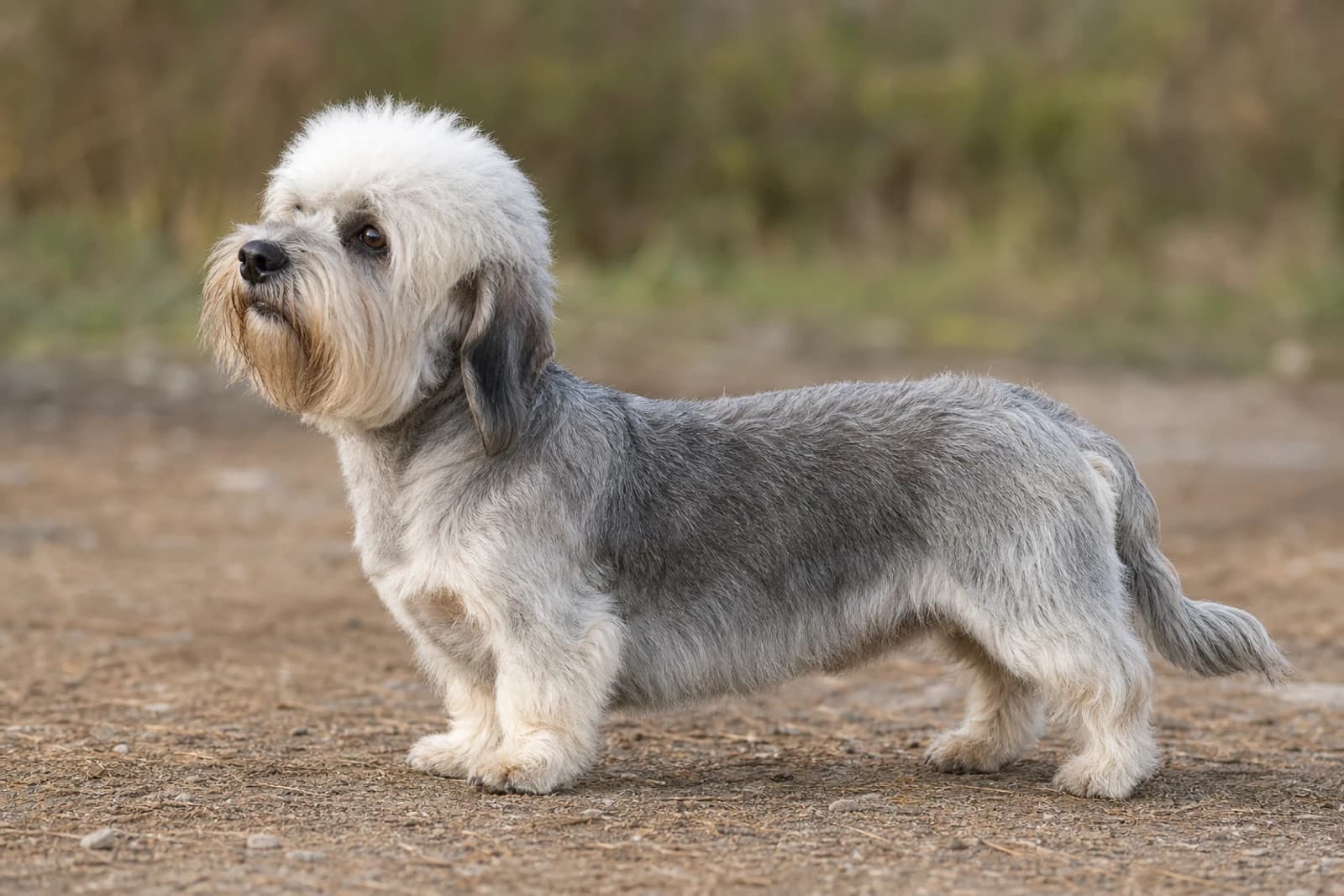
The Dandie Dinmont Terrier is a small, dignified breed with a unique appearance, known for its long body, short legs, and silky topknot. This affectionate and loyal terrier forms strong bonds with its family and is gentler than many other terriers, making it a good companion for those who want a calm yet independent dog. They are ideal for singles, couples, or families with older children, and they adapt well to apartment living. With low shedding and moderate exercise needs, they require dedicated grooming to maintain their coat.
At a glance
- Size
- Small
- Height
- 8–11 in
- Weight
- 18–24 lb
- Life span
- 13 years
- Coat colors
- Pepper, Mustard
- Coat type
- Double coat with soft undercoat and crisp topcoat
How much does a Dandie Dinmont Terrier cost?
Adopt / rescue
$75–$400
Usually includes spay/neuter, first shots, and a microchip.
Buy from a breeder
$700–$2,000
From a reputable, health-testing breeder.
Approximate USD. Prices vary widely by region, breeder, pedigree, age, and coat colour — adopting is the lower-cost and recommended route. Avoid suspiciously cheap “breeders”; they’re often puppy mills.
Estimate the full cost of a Dandie Dinmont Terrier →Dandie Dinmont Terrier photos
Views
Front, side, rear and top — the full silhouette.Poses
How the breed sits, lies, moves and plays.Puppy to senior
The breed across its whole life.Expressions
The breed’s range of moods.Close-up details
Eyes, ears, nose, paws, tail and coat.Coat colors
The breed’s recognized colors.Click any photo to enlarge. We show the Dandie Dinmont Terrier from every angle — three views, poses, life stages, expressions, close-ups, coat and colors.
Appearance & size
You spot a Dandie Dinmont Terrier long before you get close. The silhouette is unmistakable: a long, ground-skimming body carried on surprisingly short legs, topped by a large head with a silky pouf of hair right on the crown. The whole package is small but substantial. Full grown, a Dandie stands just 8 to 11 inches at the shoulder and weighs 18 to 24 pounds — a dense, muscular little dog you can scoop up in one arm but wouldn’t mistake for fragile.
From the side, the body is pliable and low, with a deep chest, well-sprung ribs, and a gently arched loin that slopes toward the tail. The back isn’t flat; it has a slight curve that gives the Dandie its characteristic rolling outline. The front legs are short, straight, and set noticeably wide apart, ending in compact feet. The hind legs are a touch longer, which creates a confident, almost swaggering gait when the dog moves.
The double coat is unlike anything on most terriers. A soft, linty undercoat hides beneath a crisp outer coat that feels a little like wire mixed with fluff. Left natural, it grows to about two inches over the body, forming a modest mane at the shoulders. The hallmark feature is the topknot: a generous, silky pouf of lighter hair that covers the crown and frames the face like a soft halo. The tail tapers like a scimitar and carries a neat fringe of the same crisp texture. Colors are strictly pepper (dark bluish black to light silvery gray) or mustard (reddish brown to pale fawn). In both colors, the contrast between the light topknot and the darker body is a breed essential.
Look at the Dandie head-on, and the face steals the show. It’s large for the dog’s size — domed, broad between the ears, with a muzzle that’s about three-fifths the length of the skull. The eyes are big, round, and set low and wide apart; they should be a deep, liquid hazel that gives the dog a curiously wise expression. The ears hang pendulous, set low and flat against the cheeks, with light feathering that softens the outline. The nose is black.
From the front, you get the broad chest, straight forelegs planted solidly, and that extravagant topknot framing everything. The side view shows the long, low-slung body and the tail rising in a gentle curve — never curled over the back, always carried with an easy, boneless-looking grace. From the rear, the muscling in the hindquarters is well developed, the hocks are let down cleanly, and the tail continues that soft arc. The overall effect is a dog that looks like a miniature badger-hunter dressed for a portrait — compact, dignified, and undeniably touchable.
History & origin
The Dandie Dinmont Terrier traces back to the hardscrabble border country where England and Scotland meet — a landscape of rolling hills, rocky streams, and farmsteads where a tough, no-nonsense terrier was less a luxury and more a necessity. Sometime in the late 1600s or early 1700s, farmers, shepherds, and itinerant hunters along the Coquet Valley in Northumberland began shaping a distinctive little dog. They needed a ratter that could clear the barns, but also something with the nerve and body to bolt a badger from its sett or drive an otter from a riverside holt. The solution was a long, low-slung terrier — 8 to 11 inches at the shoulder, 18 to 24 pounds of muscle and bone — with a curved “weasel” body that could slip into tight den entrances without getting stuck, a surprisingly large head that could hold quarry, and a soft, silky topknot that offered a bit of protection from teeth and claws.
The breed got its name in a way no other dog has. In 1814, Sir Walter Scott published Guy Mannering, featuring a border farmer named Dandie Dinmont who kept a pack of six little terriers he called Mustard and Pepper after their muted mustard and black-pepper coat tones. The novel was a hit, and suddenly everyone wanted a “Dandie Dinmont’s terrier.” The names stuck — Mustard and Pepper remain the official coat colors — and the dog became a fixture in Victorian drawing rooms as much as farm fields. Queen Victoria kept some, and the breed was exhibited at some of the earliest dog shows. In 1875, enthusiasts formed the Dandie Dinmont Terrier Club, one of the very first single-breed clubs in the world. The UK Kennel Club recognized it shortly after, and a breed standard codified the look that border folk had shaped by eye for generations.
Despite that early spotlight, numbers have always been modest. Today the Dandie Dinmont is listed as a Vulnerable Native Breed in the UK, with annual puppy registrations often falling below 300. That scarcity means you’re unlikely to bump into one at the park, but it also means the breed’s independent working character and unmistakable silhouette — short legs, long back, soulful eyes under that topknot — remain nearly identical to the dogs that once worked the border streams and hedgerows two centuries ago.
Temperament & personality
The Dandie Dinmont is not your average terrier. Weighing 18–24 pounds and standing just 8–11 inches at the shoulder, this low-slung, long-backed dog carries himself with a dignity that borders on aristocratic — until he decides the sofa cushion needs a thorough re-arranging. At home, a Dandie is calm, affectionate, and surprisingly soft-muzzled; he’ll happily curl up next to you for hours. But don’t mistake that quietness for laziness. Outside, he’s all terrier: curious, alert, and ready to investigate any scent that might lead to a squirrel or a stray tennis ball.
He bonds tightly with his people and acts as a devoted shadow, but he’s no pushover. Independent thinking is hardwired — a trait that served the breed’s ancestors hunting vermin solo. Expect a dog who weighs your request before complying. Respectful, consistent engagement wins cooperation far better than repetitive drills or a heavy hand. He’ll learn quickly if you make it fun; turn training into a chore and he’ll simply wander off and find a sunbeam.
Around the house, Dandies are watchful without being yappy. They’ll announce visitors with a deep, surprisingly big-dog bark, then settle once you’ve given the all-clear. With strangers, early socialization matters. They can be politely reserved or occasionally standoffish — a sharp contrast to the goofy, topknot-bobbing clown who greets you at the door. Kids who understand dogs do well here, but toddlers who grab ears or approach food bowls might trigger a snap. The breed’s possessive streak around meals means a hard rule: let the dog eat in peace, and teach children to keep their distance during chow time.
True to terrier form, many Dandies have a remarkable memory for scents and locations, so house soiling in one spot often leads to a repeated offense if the odor isn’t fully neutralized. They’re also prone to territorial marking — especially intact males — but neutering and consistent outdoor reward routines usually keep it in check. Neglect this bred-to-think dog and you’ll get barking, chewing, or anxiety-fueled destruction. A bored Dandie can dismantle a baseboard just for the fun of it.
With other pets, the picture is mixed. A well-socialized Dandie can live peacefully with a cat or a friendly dog he’s grown up with, but same-sex aggression isn’t unheard of, and that buried prey drive may kick in around rabbits or hamsters. The key is exposure from puppyhood, paired with a handler who reads calming signals — the yawn, the head turn, the lip lick — and backs off before tension escalates.
At their core, Dandies are gentle, brave, and utterly convinced they’re twice their size. They don’t demand a marathon, but they do need a solid daily walk and a chance to sniff and explore. Skip it, and you’ll get a grumpy roommate who’ll invent his own entertainment. Give him a steady routine, a soft bed near your chair, and the occasional puzzle toy, and you’ll earn a companion who is as quietly devoted as he is stubbornly opinionated.
Good with kids, dogs & other pets
Kids
Dandies are naturally patient and affectionate with children—they’re not the kind of terrier that gets snappy over small annoyances. At 18–24 pounds and only 8–11 inches tall, they’re sturdy enough to handle gentle play but too small to be a climbing frame. Kids need to learn to respect the Dandie’s long back and keep roughhousing off the menu. Always supervise, especially with toddlers who might stumble onto the dog or try to pick them up awkwardly. A well-socialized Dandie will settle into family life as a quiet cuddle buddy who also loves a backyard chase, but the relationship works best when adults set clear boundaries and don’t leave young children unsupervised.
Other dogs
Generally, Dandies get along fine with other dogs. They were originally worked in scrappy little packs, so a cooperative streak runs deep. Expect some terrier bossiness, though—especially between two unneutered males or if introductions feel rushed. Early and ongoing exposure to a variety of friendly dogs makes all the difference. Puppy classes, reward-based playdates, and calmly managing greetings teach your Dandie that other dogs are normal, not a threat. A properly socialized Dandie often thrives in a multi-dog home and actually benefits from the extra company, since this breed gets lonely easily. If you’re adopting an adult with an unknown past, move slowly; forcing interactions can spike fear or start scuffles. Respect their timeline.
Cats and small pets
Here’s the honest downside: the Dandie was bred to bolt badgers and kill vermin, and that prey drive doesn’t just evaporate. A cat that darts across the room can trigger an instinctive chase, while rabbits, hamsters, or gerbils are almost certainly seen as quarry. Some Dandies learn to coexist with a cat if raised together from puppyhood under steady, supervised exposure, but it’s never a guarantee. Even then, keep separate spaces when you’re not around. Off-leash in a yard with a neighbor’s free-roaming cat? That’s a risk you don’t want to take. Small caged pets need secure, dog-proof housing in a room the Dandie can’t access unsupervised.
Socialization sets the tone
Everything you’re hoping for—easygoing with kids, friendly with dogs, tolerant of a cat—depends on early, positive experiences. The critical socialization window closes around 12–16 weeks. During that time, gently introduce your puppy to children of different ages, other dogs, cats (if they need to cohabitate), everyday noises, and varied surfaces. Keep every encounter calm and brief; never flood a nervous dog. A Dandie that misses this window can become timid, reactive, or overly territorial as an adult. Even later in life, dedicated training helps, but you can’t undo a total lack of exposure. This is a companion breed that hates being isolated—mental and social stimulation aren’t extras, they’re non-negotiable.
Trainability & intelligence
Dandie Dinmonts are whip-smart, but they pair that intelligence with a serious independent streak. If you expect a dog who hangs on your every word and performs for the sheer joy of obeying, this terrier will humble you. He needs a reason to work, and that reason is usually a high-value treat, a squeaky toy, or a burst of happy praise — delivered the moment he gets it right. Harsh corrections or drill-sergeant repetition will backfire. A Dandie who feels pressured will simply opt out and ignore you, or quietly dig in his heels.
What a Dandie brings to the table
Your Dandie can learn remarkably fast when motivated. Teach a new trick with tiny bits of chicken, and he’ll nail it in three or four tries. Come back five minutes later expecting the same compliance without a reward on offer, and you may get a blank stare. That’s not stubbornness for its own sake — it’s a terrier calculating whether the trade is worth his time. The key is to keep sessions short, game-like, and unpredictable. Vary the reward (sometimes a treat, sometimes a tug session, sometimes a romp) so he never knows exactly what he’ll earn.
The big challenge: recall
Dandies were bred to work independently on rough, brushy ground, following scent and making their own decisions. That heritage makes a rock-solid recall one of the toughest things to build. If a rabbit darts across a field, your voice can disappear. You’ll need to teach recall from puppyhood in low-distraction spots, using a supercharged jackpot — think real meat, not dry biscuits — and never call him to you for something he dislikes (nail trims, bath, ending play). Many owners keep a long training line on their Dandie for months, sometimes years, when they’re anywhere unfenced.
Building trust, not just behaviors
This is a sensitive dog beneath the tenacity. A harsh tone or an impatient yank on the leash erodes trust and can make him hand-shy or aloof. The training approach that holds up over a 13-year life is consistent, reward-based, and patient. Focus on teaching him what to do, not punishing what he gets wrong. Because a Dandie who trusts you deeply is a dog who will try his heart out — on his own terms.
Early socialization: non-negotiable
A Dandie’s default suspicion of strangers and unfamiliar dogs means the early weeks are critical. Between 3 and 14 weeks, you want him to rack up dozens of positive, no-pressure encounters:
- different ages and builds of people, especially men and children
- friendly, calm adult dogs (not just rough-and-tumble puppies)
- normal household chaos: vacuums, garage doors, skateboards, weird flooring
- car rides that don’t always end at the vet
This should never be a flood. Short, pleasant exposures that end before he frets build a dog who can roll with life rather than react to it. For a Dandie Dinmont, that kind of steady, trust-first training pays off as a confident, deeply bonded companion who’s a pleasure to live with — even when his terrier opinions are running full blast.
Exercise & energy needs
A Dandie Dinmont Terrier isn’t going to pull you on a 10-mile run, but don’t mistake that low-slung silhouette for a lapdog who’s happy napping all day. These are working terriers with a need for daily outings and a brain that craves a job.
Two 20-minute walks at a steady clip — one morning, one evening — form a reliable baseline for most adult Dandies. Swap one of those walks for a longer sniffy stroll of 30 minutes and you’ll have a very content dog. Because of their long back and short legs, intensity matters more than duration. No leashed running on pavement, no repetitive jumping for a ball, and skip the Frisbee entirely. Use a harness, never a collar, and teach yours to use a ramp or get lifted into the car to protect that spine.
- Low-impact favorites: brisk neighborhood walks with ample sniff breaks, hikes on soft trails, slow trots in a securely fenced yard.
- Avoid: high jumps, sudden twists, stair climbing, dog-park wrestling with much larger dogs.
Mental stimulation is where Dandies truly light up. Fifteen minutes of nose work — hiding kibble in a snuffle mat or asking “find it” indoors — burns more steam than an extra mile of walking. Earthdog, barn hunt, or simple scent games channel their heritage as tenacious vermin hunters. Puzzle toys, stuffed Kongs, and short, reward-based training sessions keep them occupied when the weather keeps you inside.
A bored Dandie often turns into a barking, digging, slightly pushy problem-solver, so watch for that. Even on rainy days, a 10-minute session of trick training or treat-dispensing puzzles, plus a few indoor fetch rolls, keeps the restlessness at bay. If your dog starts pacing or barking excessively, you’re likely shorting the mental side of the equation.
As they age, or if back issues appear, dial back the walk length but double down on scent work and gentle enrichment. A healthy Dandie Dinmont will happily accompany you on moderate adventures for a solid 12–13 years, provided you tailor the activity to the dog in front of you — not the terrier ego inside.
Grooming & coat care
Grooming a Dandie Dinmont Terrier is unlike caring for any other small terrier. That soft, plush-looking double coat — a linty undercoat beneath a crisp, longer outer coat — demands a hands-on routine that protects its signature texture and breed-recognized color.
Brushing and detangling
The distinctive topknot, feathery legs, and body coat that reaches roughly 2 inches will mat without consistent attention. Use a pin brush or a metal slicker brush with rounded pins to work through the hair to the skin. Plan on a thorough session at least every other day, paying extra attention behind the ears, under the collar, and where the legs meet the body. A solid but gentle comb-through afterward catches any small knots you miss. This breed is not a heavy shedder; dead hair mostly stays trapped in the undercoat.
Stripping, not clipping
Forget the clippers. Dandie coats are maintained by hand-stripping — pulling out dead outer hairs individually or with a stripping knife. This preserves the harsh texture and the rich, breed-standard colors: pepper (ranging from bluish black to silvery grey) or mustard (reddish brown to pale fawn). Clipping softens the coat, fades the color, and leaves a woolly mess. Most owners learn to strip small sections weekly or pay a professional every 8 to 12 weeks. The crisp feel and depth of pigment are worth the effort.
Bathing
Over-bathing strips natural oils and turns the crisp coat soft and cottony. Wash your Dandie only once every 2 to 3 months, or when truly grimy. Use a mild, terrier-appropriate shampoo, rinse obsessively, and never rub the coat vigorously with a towel — squeeze out water and let the dog air-dry or use a cool hair dryer while brushing.
Nails, ears, and teeth
- Nails grow fast on a small, sturdy dog. Trim every 3 to 4 weeks; if you hear clicking on hard floors, you’re late.
- Ears trap debris under those long, dropped flaps. Wipe them weekly with a damp cotton ball and check for redness or odor.
- Teeth need daily brushing if you can manage it; otherwise, aim for several times a week to stave off the periodontal trouble that stalks small breeds.
Seasonal coat care
This isn’t a coat that blows out twice a year. But damp, cold weather practically glues mud to the furnishings, and in summer, a stripped-down dog needs protection from sunburn on pale-skinned areas. Keep a pair of blunt-nose scissors handy to trim the hair between paw pads, which collects ice balls in winter and burrs year-round. When the topknot starts dragging into the eyes, a quick hygiene trim restores sight without softening the true Dandie outline.
Shedding & allergies
A Dandie Dinmont Terrier sheds so little you’ll likely forget what dog hair on dark pants looks like. The secret is in the coat structure: a soft, linty undercoat locked under a crisp, hard topcoat. Dead hairs don’t easily fall free; they stay trapped until you brush or strip them out. You won’t see seasonal blowouts, and you’ll rarely spot loose fur drifting around the house.
Because of that near-zero shedding, Dandies often get the “hypoallergenic” label. No dog is truly allergen-free—dander and saliva are the real triggers—but a breed that holds onto its hair puts far less dander into the air. That can make a real difference for someone with mild allergies. Still, spend time with the individual dog before you bring one home.
The catch is grooming. That coat doesn’t clean itself. You’ll need to brush the legs, belly, and topknot a couple times a week to prevent mats. Every few months, the dead undercoat has to come out manually. Hand-stripping preserves the hard, weather-resistant texture; clipping is an easier option that softens the coat over time but won’t noticeably increase shedding. And drool? It’s basically a non-issue—these dogs keep their slobber to themselves.
If you want a terrier that keeps your home clean and you’re willing to stay on top of brushing and stripping appointments, the Dandie’s coat is a genuine advantage. Just test-drive your allergies with a real Dandie first.
Diet & nutrition
A Dandie’s long, low frame makes every extra ounce a direct threat to an already-vulnerable spine. Keep them lean, because the breed’s chondrodystrophic build — short legs, stretched back — sets the stage for disc trouble when excess weight piles on. And most Dandies will eat as if they haven’t seen food in a week, so you manage the portions, not the dog.
Puppy portions
Until four months old, feed four evenly spaced meals a day. Drop to three meals from four to six months, then settle into the adult two-meal rhythm. Transition a new puppy gradually: lightly cook and purée meats, fish, or vegetables, or stick with the breeder’s high-quality commercial food for the first week or two. Raw chicken wings are fine around twelve weeks, always under your eye.
Adult daily amounts
A grown Dandie Dinmont Terrier weighs 18–24 pounds and typically needs 400–500 calories a day, depending on build and activity. On most premium dry foods, that translates to about ¾ to 1½ cups, split into morning and evening meals. Check the calorie-per-cup on your bag and adjust. If your dog inhales meals, a puzzle bowl slows things down and engages that terrier brain.
Homemade? Aim for roughly 60% animal protein (raw or cooked meat), 20–30% fruits and vegetables, and 10% eggs, grains like pearl barley or white rice, or plain yogurt. Pearl barley is a digestible, high-fiber standby; white rice works when a stomach is tender.
Senior shifts
Around age 10 or so, activity tends to taper. Cut total daily food by 10–20% before you see the scale climb. Smaller, more frequent meals can help an older dog digest comfortably. Missing teeth? Purée the meal — blending aids nutrient absorption since dog jaws don’t grind the way ours do. There’s no solid reason to cut protein in healthy seniors, so keep the meat content steady.
The weight trap
Dandies are sturdy little dogs, not fragile ornaments, but their long back does not forgive extra pounds. Measure every meal with a proper cup or scale. Treats count — pull a few kibbles from the daily allotment for training rewards, rather than adding on top. Never feed from the table. Put leftovers directly in the dog’s bowl, away from the dining area, or you’ll create a beggar that’s nearly impossible to retrain. Rich, fatty scraps after a holiday are especially dangerous; they can spark a bout of pancreatitis in a small dog.
When you’re cooking, throw a little unsalted vegetable water into the bowl as a broth base, or batch-cook grains and proteins on the weekend for quick, predictable meals. A Dandie that maintains 18–24 pounds with a visible waist and a tuck behind the ribs is a dog with a longer, more comfortable life ahead.
Health & lifespan
A well-cared-for Dandie Dinmont Terrier often reaches around 13 years. That’s a solid run for a small breed, but getting there depends on staying ahead of a few known trouble spots.
The most talked-about physical vulnerability is their long, low back. Intervertebral disc disease (IVDD) can flare if a disc ruptures or bulges, causing pain, wobbliness, or even paralysis. This isn’t a guarantee, but the body shape loads the spine differently than a square-proportioned dog. The best thing you can do is keep your Dandie lean. Those 18–24 pounds should feel firm and tucked up, not sausage-like. Extra weight presses on discs daily. Teach the dog to use ramps or steps for furniture instead of jumping down, and support the hind end when you pick them up.
Patellar luxation—a kneecap that slips out of its groove—shows up in many small breeds, and Dandies are no exception. A skipping or bunny-hopping gait, especially when they’re young, is a common red flag. Responsible breeders screen for this with orthopedic exams (often OFA certification for patellas) and don’t breed dogs with repeat problems.
Eyes need monitoring, too. Glaucoma, cataracts, and progressive retinal atrophy can develop, so a yearly eye exam by a veterinary ophthalmologist is part of a solid prevention plan. Breeders who are serious about long-term health will have their adults’ eyes cleared annually through the Canine Eye Registration Foundation (CERF) or a similar database.
Dental disease sneaks up on small-jawed dogs. Crowded teeth trap plaque, leading to painful gums and infections that stress the whole body. Daily toothbrushing and regular dental cleanings under anesthesia matter more than many owners expect. Without it, you may be looking at extractions by age six or seven.
Skin issues can be stubborn. Some Dandies battle allergies or seborrhea, leaving flaky, itchy, or greasy coat patches. A quality diet, omega-3 supplements, and medicated baths when needed often keep that under control.
Two universal things you’ll handle regardless of breed: a monthly heartworm preventive during mosquito season (and one extra month after it ends), and keeping the rabies vaccine current—required by law and essentially untreatable once symptoms appear.
Yearly wellness exams catch a lot of this early. Watch for subtle behavior shifts—a Dandie who suddenly avoids stairs, squints in bright light, or loses his usual food enthusiasm needs a vet visit sooner rather than later.
Living environment
A Dandie Dinmont Terrier slides easily into apartment or condo life — but only if you can handle a built-in doorbell. Expect fast, sharp barking at every knock, passerby, or squirrel sighting, so early training to quiet on cue keeps the peace with neighbors. A house is just as good, and a small, securely fenced yard gives him a safe spot to sniff and patrol. He’s not a dog you turn loose unsupervised; those short legs and long body make digging under fences a real risk.
Yard or no yard, the Dandie doesn’t need marathon sessions. Plan on two 15–20 minute walks a day mixed with indoor play. This terrier loves to follow his nose, so a sniff-heavy stroll satisfies him more than a rushed jog. Because his elongated back is vulnerable to disc problems, avoid high-impact jumping — no flying off couches or leaping for frisbees. Instead, channel his energy into short bursts of tug, hide-and-seek, or a good puzzle toy. A Dandie’s brain needs as much exercise as his legs, otherwise boredom can spill into nuisance barking or redecorating your throw pillows.
His double coat gives him some insulation, but he’s happiest in moderate climates. In summer, walk early or late and watch for overheating. In winter, a coat helps on bitter days, though he’ll still enjoy a quick snow zoomie.
This is a dog who bonds hard and fast. A Dandie left alone for long stretches — think 8-hour workdays, daily — can slide into anxious behaviors like barking, chewing, or indoor accidents. If you’re gone often, gradual alone-time training from day one is non-negotiable: start with short absences, stuff a frozen Kong before you leave, and never make a dramatic exit. Ideal homes have someone around part of the day, whether that’s a remote worker or a retired family member. When his people are home, he’s a calm shadow, not a vibrating ball of neediness — as long as he’s gotten his two walks and a solid mental workout.
Who this breed suits
The Dandie Dinmont is a small dog who carries herself with a big-dog swagger. She is affectionate and deeply loyal, but she is no pushover. The ideal owner appreciates a terrier’s independent spirit and is ready to be a gentle, consistent leader — this is not a breed for someone who expects blind obedience.
First-time owners should think twice
A Dandie’s stubborn streak and sensitivity to harsh corrections can trip up a first-timer. Housetraining tends to be harder than expected, and they will test boundaries with a sly, playful defiance. If you’re new to dogs but drawn to the breed, it’s entirely doable — provided you commit to force-free training classes and have a mentor who knows terriers. Otherwise, expect a clever, short-legged tyrant who runs the house.
Families: older children are a better fit
A 18–24 lb dog with an 8–11-inch shoulder height is too small to tolerate clumsy handling. Dandies generally enjoy kids who respect their space — think ages 8 and up — but they may snap if cornered, picked up roughly, or surprised. Dropping a Dandie from a sofa can injure her long back, so a home with rambunctious toddlers is a genuine risk. In the right family, though, the Dandie turns into a playful, affectionate shadow who loves backyard games as much as cuddling on the couch.
A natural match for seniors and singles
The Dandie’s indoor calm makes her one of the better terriers for apartment dwellers. A solid 30-minute daily walk, supplemented by scent games or a short play session, is usually enough to keep her settled. She is equally happy joining you on a longer, meandering stroll — as long as you don’t expect her to jog alongside a bike. Their watchdog bark is piercing, so a condo or rental with thin walls demands training to curb unnecessary noise. Seniors love the Dandie’s manageably small size and the fact that they don’t bounce off the walls, but must be realistic about the breed’s grooming: a wiry double coat that needs hand-stripping or clipping every 5–8 weeks, plus regular combing to prevent mats behind the ears.
When a Dandie is not the ticket
- You want an off-leash hiking buddy. A strong prey drive sends most Dandies rocketing after squirrels and rabbits, and no amount of calling will bring them back mid-chase. A securely fenced yard or a dedicated long-line is non-negotiable.
- You hate a vocal dog. Digging and barking are baked into this terrier’s DNA. You can manage it, but you won’t train it away completely.
- You’re away for 9–10 hours straight most days. Alone for too long, a Dandie will find her own entertainment, and you’ll come home to an excavated sofa cushion or a chorus of complaints from neighbors.
- You want a wash-and-wear coat or a “hypoallergenic” guarantee. The Dandie sheds little, but the coat demands regular professional attention — plan for a grooming budget roughly every two months.
Cost of ownership
You’ll likely spend $2,000–$3,500 for a well-bred puppy from a health-tested parent. Dandie Dinmonts are rare, so a responsible breeder with a short waiting list isn’t cheap, and you’re paying for thoughtful lines that screen for glaucoma, hip issues, and the breed’s long-back concerns. Rescue adults, when available, run more in the $300–$800 range, but they’re extremely scarce.
Ongoing monthly costs hover around $150–$300 depending on your location and how much you outsource.
- Grooming: The crisp, double coat needs hand-stripping every 6–10 weeks to keep its texture and weather resistance. A professional stripping session easily costs $70–$120. If you learn to do it yourself, you’ll still invest in a good stripping knife, chalk, and a grooming table up front. Clipping is simpler but softens the coat permanently and isn’t standard for the breed.
- Food: An 18–24 lb terrier eats about 1 to 1.5 cups of high-quality kibble daily. Budget $30–$50 per month, a bit more if you add toppers or fresh ingredients.
- Vet & prevention: Annual checkups, vaccines, and heartworm/flea/tick prevention average $40–$60 per month set aside. As the dog ages, expect occasional dentals and monitoring for cushings, allergies, or back trouble — none unusual in the breed.
- Insurance: A solid accident-and-illness policy typically runs $35–$55 monthly. Because Dandies are rare, some companies treat them as a “specialty” breed, so compare quotes directly.
- Extras: Expect one-time outlays for a low-slung harness, a cozy cave bed (many adore burrowing), and puppy proofing for a dog with a stubborn streak and a talent for counter-surfing low tables.
Don’t forget the soft costs: a breed this uncommon usually means travel to pick up your pup or cover a reputable transporter, plus a non-negotiable spay/neuter deposit in many contracts. The upfront sticker price is only part of the picture.
Choosing a Dandie Dinmont Terrier
Because Dandie Dinmont Terriers are scarce — you won’t stumble on a litter down the street — you’ll likely wait months, sometimes a year or more, for a well-bred puppy or a rescue adult. That wait is your first good decision. Rushing into a careless purchase usually means big veterinary and behavioral bills down the line.
Responsible breeder or rescue?
Start with the Dandie Dinmont Terrier Club of America’s breeder referral and keep an eye on breed-specific rescue groups. The rescue route rarely has a flood of dogs, but an adult placement can be a perfect match if you want to skip the puppy chaos and already see the dog’s full-grown personality. Adult Dandies in foster care often come with a honest history — house training progress, prey drive level, whether they’ll curl up in a lap or prefer their own space.
If you go the breeder route, stick with someone who actively shows or works their dogs and makes a point of preserving the breed’s health and peppery terrier temperament. Expect to be interviewed. A good breeder will ask about your yard, your daily schedule, and why you want this particular breed. You’re looking for a mentor, not a transaction.
Health clearances to ask for
Responsible breeders test their stock for problems that can dog the breed. Don’t nod along — ask to see the paperwork. For Dandies, key clearances include:
- OFA eye exam (CAER) — screens for inherited eye diseases like progressive retinal atrophy and lens luxation. Updated annually is ideal.
- Patella evaluation — luxating patellas are common in small breeds, and you want parents certified free of clinically significant looseness.
- Hip evaluation — while not as prone to hip dysplasia as large breeds, some lines benefit from OFA or PennHIP screening, especially given their long back and short legs.
- Back and spine history — no nationally recognized registry for IVDD exists, but a breeder should be able to speak bluntly about disc problems in the line and what they’ve done to avoid stacking risk.
Also ask about any cardiac screening, especially if a dog is over four years old. The point isn’t a perfect guarantee — it’s that the breeder chose parents with a paper trail, not just a cute face.
Red flags when you’re looking
Walk away if you hear any of these:
- “They’re healthy because the breed is rare and tough.” That’s a substitute for actual test results.
- Multiple litters on the ground at once or a website with a “buy now” button.
- No meeting the mother, or the mother is kept out of sight because she’s “protective.” You want to see her temperament and condition.
- The breeder doesn’t ask about you, won’t require you to spay/neuter a pet puppy, or provides no written health guarantee and return policy.
- Puppies that seem subdued, fearful, or have runny eyes and potbellies.
A Dandie pup’s pepper or mustard coat may look darker at birth, so don’t let a breeder promise an exact adult shade on a two-month-old. Honest breeders tell you how colors can shift until the dog matures around two years.
Picking your puppy
You’re not just picking a puppy — you’re seeing the litter’s environment. Puppies should be raised in the main part of the home, exposed to daily noises, different surfaces, and respectful handling. Look for a pup that trots up to investigate you, not one who cowers in the corner or bullies littermates relentlessly. A little Dandie bravado is fine; a withdrawn, trembling pup often takes a long time to bounce back. While a super independent pup might fit a ranch life, most families do best with the middle-of-the-road puppy — curious, wiggly, and relaxed enough to flop in your lap for a minute before waddling off to tackle a toy. Ask to see both parents if possible, or at minimum the dam, and trust your gut if the breeder’s setup or the dogs’ body language feels off.
Pros & cons
-
Compact and portable. Standing just 8–11 inches tall and weighing 18–24 pounds, they fit apartment life without being fragile lap dogs.
-
Long-lived bond. A life span around 13 years means you get a lot of years with that quirky personality.
-
Affectionate without clinginess. Dandies form tight family attachments and enjoy a snuggle on the couch, but their terrier independence keeps them from being needy.
-
Moderate exercise requirements. A couple of 20- to 30-minute walks plus some indoor play satisfy most Dandies—no need for marathon runs.
-
Unique, head-turning look. The silky topknot, large soulful eyes, and low-slung body spark conversations wherever you go.
-
Watchdog instincts in a small package. They’ll alert you to visitors with a big-dog bark, offering a layer of security without the size.
-
Stubborn streak runs deep. Intelligent but independent, they often decide whether a command is worth obeying—training requires patience and a sense of humor.
-
Vocal tendencies. That alert barking can become excessive if not managed early, which may strain apartment or close-neighbor situations.
-
Grooming isn’t optional. The soft, linty coat mixes with a harder topcoat, so regular brushing, plus hand-stripping or clipping every few months, keeps matting at bay. The topknot itself needs frequent attention.
-
Not a guaranteed off-leash dog. Strong prey drive and selective hearing can override recall, so a securely fenced yard is a real asset.
-
Health concerns to watch. The long back makes them more prone to intervertebral disc disease, and the breed can carry risk for glaucoma. Even with responsible screening, vet bills may come with the territory.
-
Selective about rough handling. While good with older kids, an unsupervised toddler grabbing at that distinctive topknot might earn a grumble—early socialization is key.
Similar breeds & alternatives
Skye Terrier
At 9–10 inches tall and 25–40 pounds, the Skye is noticeably heavier and longer-backed than the 18–24-pound Dandie. Both breeds share a reserved, dignified house presence and moderate exercise needs—a good 30-minute walk suffices. The Skye’s straight, floor-length double coat requires daily brushing to prevent mats, while the Dandie’s linty, crisp topcoat and silky topknot need stripping only a few times a year. If you want a slightly larger, elegant shadow who’s content to lounge quietly, the Skye fits. Choose a Dandie for a shorter, easier-care coat and that distinctive melon-shaped head.
Scottish Terrier
A compact square build at roughly 10 inches and 18–22 pounds puts the Scottie in the same weight class, but the personality splits sharply. Scotties run hotter: more stubborn, more likely to challenge other dogs, and quicker to sound an alarm. The Dandie is the milder housemate—still independent, but less prone to scrappiness. Coat upkeep differs, too. Both benefit from hand-stripping, but the Dandie’s mixed soft-and-crisp coat mats less aggressively than the Scottie’s dense wire jacket. If you appreciate the terrier spirit but want a calmer, quieter companion, the Dandie edges ahead.
Bedlington Terrier
The lamb-like Bedlington stands 15–17.5 inches and weighs 17–23 pounds, giving it a leggier, more graceful outline than the low-slung Dandie. Both are calm indoors with moderate get-up-and-go, and both shed very little. Bedlingtons have a curly, woolly coat that needs clipping every six to eight weeks; the Dandie’s coat stays in shape with occasional hand-stripping and weekly brushing. Families who like the non-shedding, gentle-dog vibe but prefer a robust, less fragile-looking terrier often settle on the Dandie—especially if they’d rather skip frequent professional grooming.
West Highland White Terrier
A Westie weighs 15–22 pounds and stands 10–11 inches, close to the Dandie’s footprint, but the energy gap is real. Westies typically need at least 45 minutes of active running and play, plus they’re more vocal and sociable with strangers. The Dandie’s default is reserved and low-key; a walk around the neighborhood with a chance to sniff meets its needs. Coat care is similar—both require stripping to hold texture—but the Westie’s white double coat shows dirt easily. If you want a sparky, outgoing terrier, go Westie. If a quiet evening buddy is the priority, the Dandie’s the one.
Fun facts
- The breed’s name comes from a character in Sir Walter Scott’s novel 'Guy Mannering'.
- They are the only dog breed named after a fictional character.
- Originally bred in the Scottish Borders to hunt otters and badgers.
- Known for their distinctive silky topknot of hair.
Frequently asked questions
- Do Dandie Dinmont Terriers shed a lot?
- They have a low-shedding coat that produces minimal loose hair, making them a good choice for some allergy sufferers. Regular grooming is needed to prevent mats and maintain their distinctive appearance. However, no dog is completely hypoallergenic.
- Are Dandie Dinmont Terriers good with children?
- They can get along well with older children who respect their space, but supervision is recommended around younger kids. Their independent nature means they may not tolerate rough handling. Early socialization helps promote positive interactions.
- How much exercise does a Dandie Dinmont Terrier need?
- Daily walks and playtime totaling 30 to 45 minutes typically satisfy their energy levels. They enjoy exploring and short bursts of activity but are also content to relax indoors. Mental stimulation through games or training is beneficial.
- What kind of grooming does a Dandie Dinmont Terrier require?
- Their unique double coat needs regular brushing, usually two to three times a week, to prevent tangles. Professional grooming every 4 to 8 weeks helps maintain the classic Dandie look, including scissoring. Attention to ear cleanliness and nail trimming is also important.
- Do Dandie Dinmont Terriers bark a lot?
- They tend to be alert and may bark to announce visitors or strange noises, but they are not known for excessive barking. With consistent training, they can learn when barking is appropriate. Early socialization can reduce nuisance barking.
- Can Dandie Dinmont Terriers live in an apartment?
- Yes, their small size and moderate exercise requirements make them adaptable to apartment living, provided they get daily walks. They are generally calm indoors but need mental engagement to prevent boredom. Consideration should be given to potential noise if they become territorial barkers.
Tools & calculators for Dandie Dinmont Terrier owners
Quick estimates tailored to Dandie Dinmont Terriers — pre-filled with this breed’s size where it matters.
Articles & stories about the Dandie Dinmont Terrier
Sources & standards
This profile follows recognized breed standards from the American Kennel Club (AKC) and the Fédération Cynologique Internationale (FCI), along with established veterinary and breed-club guidance. These describe general breed tendencies — every dog is an individual.
Owner stories
Have a Dandie Dinmont Terrier? Share your experience — grooming tips, personality quirks, anything goes.