

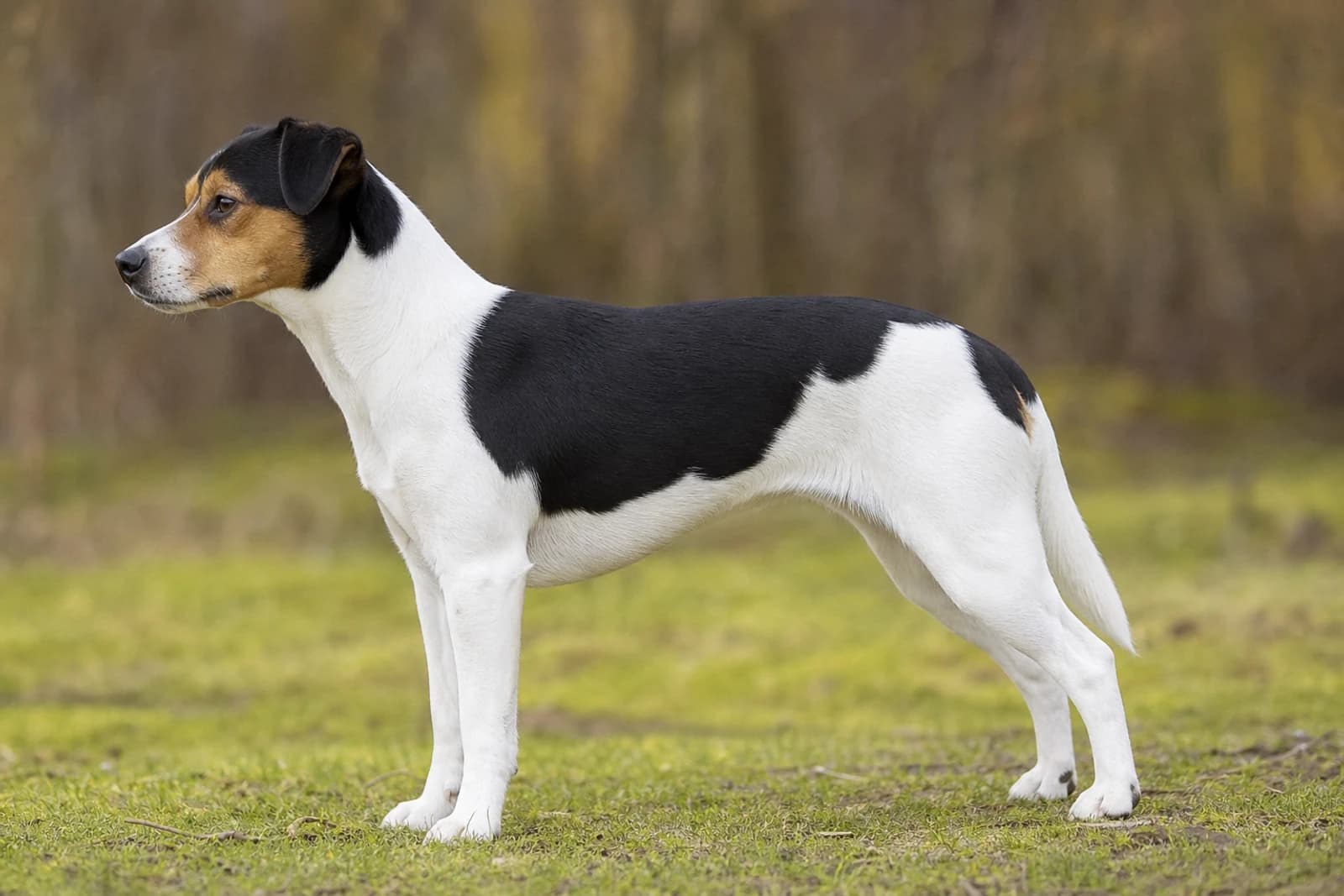
The Danish-Swedish Farmdog is a small, lively breed perfect for active singles, families, or anyone seeking a compact, versatile companion. Originally a working farm dog, they are affectionate, intelligent, and thrive on human interaction and daily exercise. Their short coat is easy-care, but they shed moderately and need mental stimulation to prevent mischief. Ideal for those who can provide consistent training and playful activities, this breed adapts well to various living situations, making them a delightful addition to homes with or without yards.
At a glance
- Size
- Medium
- Height
- 13–15 in
- Weight
- 15–26 lb
- Life span
- 10–15 years
- Coat colors
- White & Black, White & Brown, White & Brindle, Solid Black, Solid Brown
- Coat type
- Short, smooth, and dense
- Group
- Companion
How much does a Danish-Swedish Farmdog cost?
Adopt / rescue
$75–$400
Usually includes spay/neuter, first shots, and a microchip.
Buy from a breeder
$700–$2,000
From a reputable, health-testing breeder.
Approximate USD. Prices vary widely by region, breeder, pedigree, age, and coat colour — adopting is the lower-cost and recommended route. Avoid suspiciously cheap “breeders”; they’re often puppy mills.
Estimate the full cost of a Danish-Swedish Farmdog →Danish-Swedish Farmdog photos
Views
Front, side, rear and top — the full silhouette.Poses
How the breed sits, lies, moves and plays.Puppy to senior
The breed across its whole life.Expressions
The breed’s range of moods.Close-up details
Eyes, ears, nose, paws, tail and coat.Coat colors
The breed’s recognized colors.Click any photo to enlarge. We show the Danish-Swedish Farmdog from every angle — three views, poses, life stages, expressions, close-ups, coat and colors.
Appearance & size
The Danish-Swedish Farmdog is a small dog that behaves like it’s a size Large, and its build backs that up. It’s a compact, rectangular workhorse that feels substantial without ever looking heavy. You’ll see 13 to 15 inches at the shoulder and a body weight anywhere from 15 to 26 pounds—a wide range that means a lean, leggy 15-pounder and a thick-chested 26-pounder can both fit the standard. Bone is never fine, never coarse; just sturdy enough to handle a long day of farm chores.
The coat is a short, smooth double coat that lies flat and has a sleek, almost glossy feel. It’s wash-and-wear—a quick rub-down with a towel takes care of most dirt. Colors are overwhelmingly some pattern of white with patches of black, brown, tan, or a mix of those. The classic look is tri-color (white with black and tan markings), but you’ll see plenty of black-and-white or brown-and-white dogs. Solid-colored dogs exist but are rare; the broken color pattern is the breed’s calling card. Shedding is moderate and steady, not dramatic, so a rubber curry brush once or twice a week keeps it under control.
From the front, the dog looks square-built and ready. Forelegs are straight with strong bone, and the chest is deep, dropping to the elbows. The head has a slightly rounded skull and a distinct stop, with a muzzle that tapers just a touch. Dark, medium-sized eyes give an alert, you-got-a-job-for-me expression. Drop ears or button ears are both correct—they sit close to the head and never look houndy.
From the side, the Farmdog is noticeably longer than tall, with a level topline and a firm, tucked-up loin. The tail is often docked or naturally short and carried with a cheerful upward curve; in countries where docking is prohibited, a full-length tail curled over the back is common.
From the rear, the hindquarters show moderate angulation—enough to drive a ground-covering trot, with obvious muscle through the thighs. Nothing is exaggerated. The overall picture is a no-fuss dog that looks ready to hop in the truck and check the fence line, just as it was bred to do.
History & origin
If you’d walked a Danish or southern Swedish farmstead in the 1800s, you’d have seen a little tri-colored dog trotting alongside the draft horses, nailing rats in the barn, and curling up with the children by the hearth at night. That dog was the Danish-Swedish Farmdog — a versatile, no-nonsense farmhand whose original job description covered everything from vermin control to light herding and guarding.
The breed’s roots run deep in the smallholdings of Denmark and southern Sweden, where farmers needed a dog that was compact enough to navigate a hayloft but sturdy enough to move livestock. It almost certainly descends from old Pinscher-type dogs and local terrier-like ratters that had wandered onto farms for generations. Nobody was keeping pedigrees; they just kept the dogs that worked hardest and fit into family life. By the late 1800s, a distinct type had emerged: a square-built, mostly white dog with patches of brown or black, a natural bobtail in some lines, and a cheerful, tireless attitude.
Mechanization and urbanization nearly erased that history. As small farms dwindled in the early 20th century, so did the need for an all-purpose farm dog. By the 1960s and 1970s, the Danish-Swedish Farmdog was dangerously close to extinction, scattered in pockets without any formal breed recognition. A handful of dedicated fanciers in Denmark and Sweden refused to let the breed disappear. They combed rural areas to locate the last purebred examples, piecing together a foundation stock. In 1985 they drafted the first official breed standard, and by 1987 both the Danish and Swedish kennel clubs had accepted the breed, calling it the Dansk-Svensk Gårdshund. The Fédération Cynologique Internationale (FCI) granted provisional recognition in 2008, followed by full international recognition.
That revival was built on the breed’s working character: the people who saved it weren’t just preserving a pretty face; they wanted the dog’s quick mind, boldness, and eagerness to cooperate. Today the Farmdog is still rare outside Scandinavia, but it’s gaining ground as a spunky companion and a standout in dog sports like agility, rally, and obedience. You’ll still spot flashes of the old farm dog in its alert expression and in the way it trots right next to you, ready for whatever task you dream up next.
Temperament & personality
This little dog comes alive when it’s part of whatever you’re doing. The Danish-Swedish Farmdog isn’t a couch ornament; it’s a quick, upbeat sidekick that treats your daily routine like a team sport. If you’re washing dishes, it’s there. If you’re heading to the barn or the home office, it’s leading the way. They bond tightly with their people and can shadow you from room to room — not from anxiety, but from a deeply ingrained need to collaborate. That also means they don’t do well with long stretches of isolation. Left alone and understimulated, they often develop noisy, anxious habits like incessant barking or destructive chewing.
Expect a bright, curious dog with a watchful streak. At 13–15 inches and anywhere from 15 to 26 pounds, they’re medium-sized but carry themselves like a much bigger presence. They notice every squirrel, delivery truck, and guest, and they’ll announce it — not with a deep, guard-dog bellow, but with alert, sustained barking. They’re usually friendly once you welcome someone in, yet they keep a sharp eye on strangers. You’ll see that classic forward-leaning posture: head up, weight shifted toward whatever’s got their attention, ready to act. A relaxed, loose body and soft eyes show they’re truly comfortable; lip licks, yawns, or sudden head turns are often their quiet way of saying “I need a break.”
Inside the household, they’re generally sunny and gentle, but they do have an independent opinion. The breed leans strong-willed, not in a stubborn-for-the-sake-of-it way, but in the manner of a dog that was bred to solve small-farm problems on its own. Respectful, consistent training — with clear boundaries and plenty of rewards — goes much further than force. Harsh corrections can sour their natural enthusiasm. Food motivation runs high, which is a gift for training, but it also means you need to teach children to leave the dog entirely alone during meals; even a normally peaceable Farmdog can guard its bowl if startled.
That farm heritage explains a few quirks you might encounter. Many will roll in things that smell absolutely vile, possibly to mask their own scent or simply because they like it. If your dog comes back from the yard smelling like something dead, that’s not a glitch — it’s a feature. They also tend to be enthusiastic chewers, starting with teething as puppies and continuing into adulthood to keep jaws strong and teeth clean. Redirect to appropriate hard chews early, and a homemade citrus or vinegar spray on forbidden items can help. Speaking of vinegar, neutralizing urine odor indoors with a vinegar solution is your first line of defense against repeat marking, since these dogs read scent cues like a map of their territory.
Under all that activity, you’re getting a dog that reads you like a book. A 13-inch farmdog resting its chin on your knee when you’ve had a tough day isn’t random; it’s connection. Give them a solid hour of movement and sniffing each day — not a rushed walk, but a real explore-and-sniff outing — plus a puzzle toy or short training session, and you’ll have a calm, content companion happy to settle beside you. Expect a life well-lived together for 10 to 15 years.
Good with kids, dogs & other pets
The Danish-Swedish Farmdog brings a genuinely patient, non-aggressive temperament to a household with children. At 15–26 pounds, this is not a fragile dog, but it’s also not a rough-and-tumble tank. A well-meaning toddler who trips over the dog or goes for a hug-squeeze can hurt or frighten it, so direct adult supervision is non-negotiable. Teach kids to sit on the floor for greetings and to leave the dog alone when it’s in its crate or bed. Because the breed leans heavily on companionship, a Farmdog left alone for long stretches—or banished to the yard—can develop stress habits that show up as clingy or whiny behavior around the children later.
With other dogs
Early and ongoing socialization makes the real difference. A puppy introduced to friendly, stable adult dogs between 3 and 14 weeks usually matures into an easygoing companion who reads canine body language well. Without that window, you can get an adult who is timid, over-excited on leash, or uneasy around unfamiliar dogs. If you already have a resident dog, set up first meetings on neutral ground and manage household interactions for several weeks—gates, separate feeding spots, and no high-value chews left out together. For an older Farmdog who’s perfectly content with just you, don’t force it into dog-park social hour. Forced adult interactions often backfire, spiking fear instead of building confidence.
With cats and small pets
Plenty of Farmdogs share a couch with cats and even coexist with rabbits or guinea pigs, but you’re working with a breed originally expected to put in a day’s work on a farm. That means some individuals come with a prey-drive shadow. A puppy raised alongside a calm, dog-savvy cat from 8 weeks onward has the best shot at genuine peace. Supervise until you see genuine indifference—not a frozen stare or stiff body. Replace any chase impulse immediately with a recall cue and a rewarding alternative like a scatter feed. Crated small pets should stay out of reach, because a nudge or paw swipe through cage bars can turn into a dangerous game. The key is never to wing it: every introduction gets structure, and every interaction gets a sober second look.
Trainability & intelligence
This is a thinking dog that picks up new commands in a handful of repetitions — often faster than you can refill the treat pouch. Their eagerness to work alongside people makes training a genuinely fun back-and-forth, not a chore. The challenge isn’t getting them to learn, but keeping their bright mind busy enough that they don’t find less desirable ways to occupy themselves, like dismantling a throw pillow.
Learning style and motivation Danish-Swedish Farmdogs are biddable and food-motivated, but they also thrive on play and praise. A quick game of tug after a correct sit works every bit as well as a training snack. Their people-pleasing streak runs deep; they genuinely want to get it right. That said, they’re not push-button robots. They can flash a stubborn, independent side if a session gets repetitive or if you try to drill the same thing for ten minutes straight. Short, varied 5-minute bursts keep them sharp and eager.
Recall and scent-drive caveats Because these dogs were originally bred to patrol farmyards and dispatch vermin, they have a nose that can override their ears. A reliable recall won’t happen by accident — you need to build it layer by layer, starting indoors with zero distractions and gradually proofing it outdoors. If a rabbit bolts, a half-trained Farmdog may temporarily forget you exist. Reinforce “come” with high-value rewards every single time, and never punish a slow return; you’ll only teach them that checking in means the fun stops.
What works (and what backfires)
- Positive, relationship-based training: These dogs are sensitive enough that harsh corrections erode trust fast. They shut down under pressure and then learn nothing at all.
- Early socialization: Exposure to different people, dogs, sounds, and surfaces — ideally starting between 3 and 14 weeks — prevents the wariness and reactive barking that can surface in an under-socialized individual. Keep experiences gentle and voluntary; flooding a puppy creates problems, not confidence.
- Consistency across the household: Everyone needs to use the same cues and rules. A Farmdog is smart enough to spot a loophole, and they’ll exploit it if Dad lets them jump up but Mom doesn’t.
- Avoid punishment-based methods: Yelling or yanking a leash might stop a behavior in the moment, but it builds anxiety and weakens the trust you need for off-leash reliability. All it takes is patience and a pocketful of chicken to shape the dog you want.
Start the day you bring the puppy home. A dog this clever, left to figure things out alone, will write its own rulebook — and you may not like the rules it comes up with.
Exercise & energy needs
A 15-pound Farmdog can outlast friends twice its size — that’s the first thing you’ll notice. This is a true working breed tucked into a medium frame, and it expects a daily routine that burns both physical and mental fuel. Count on at least an hour of active movement every day, split into two or three sessions. A single leashed walk around the block won’t cut it; you need off-leash running, fetch, flirt-pole sprints, or a long hike with room to explore.
The sweet spot for most healthy adults is 30 to 45 minutes of high-energy exercise twice a day, paired with shorter brain-work sessions in between. Think of it as 15–20 minutes of full-tilt play — chasing a ball, practicing agility jumps in the backyard — followed by a walk or jog that lets the dog sniff and settle. Mental stimulation is not optional. Hide treats in a snuffle mat, stuff a puzzle toy, or run through an obedience or trick-training routine. A 10-minute scent game indoors can tire the Farmdog out as effectively as an extra lap around the park.
Their heritage as all-purpose farmhands means they’re naturals for dog sports. Flyball, barn hunt, rally, and especially agility channel the speed, smarts, and nimbleness this breed is built for. Even casual backyard agility obstacles give a much-needed outlet. Without that, you’ll see the restlessness: pacing, barking at nothing, or turning your couch cushions into a personal digging project. Insufficient exercise and boredom mix badly in a dog this clever.
Watch the joints with young dogs — avoid repetitive high jumps on hard surfaces until growth plates close (usually around 12-14 months). Seniors and dogs with injuries may dial back to 30-40 minutes of gentler activity plus extra sniff walks, but the brain games stay important. The real payoff is a calm, content house dog who can settle at your feet once the workday’s done. Meet that hour earnestly, and you’ll rarely meet a more satisfied companion.
Grooming & coat care
This dog’s coat is about as low-maintenance as they come. The Danish-Swedish Farmdog wears a short, smooth, close-lying coat that stays naturally tidy with very little effort from you. That doesn’t mean “no grooming ever,” but you won’t wrestle with mats, tangles, or a pile of hair every day.
Brushing: once or twice a week does the trick
A soft bristle brush or a grooming mitt is all you need. Run it over the dog for a few minutes a couple of times a week. That lifts loose hair, spreads the natural oils, and brings out a healthy shine. You’ll snag most of the loose stuff before it lands on your sofa, and the dog gets a nice massage out of it. Skip the slicker brushes and pin brushes—those are for long or curly coats and can irritate this breed’s thin skin.
Bathing: only when he’s genuinely grimy
Farmdogs have a naturally clean, low-odor coat. Bathe him once every couple of months, or after a roll in something foul. Use a gentle dog shampoo and rinse thoroughly; overdoing it strips the oils that keep the coat glossy and the skin comfortable. Between baths, a damp cloth wipe-down handles dusty paws or muddy bellies.
Shedding and seasonal shifts
You’ll see a light, year-round shed that picks up a bit during spring and fall. Nothing dramatic, but if you run the bristle brush through the coat twice a week during those transitions, you’ll stay well ahead of tumbleweeds. Regular outdoor exercise also helps dead hair turn over naturally—another reason this active little dog keeps the house cleaner than you’d expect.
Nails, ears, and teeth
- Nails: Trim every three to four weeks, sooner if you hear clicking on hard floors.
- Ears: Check weekly for wax buildup or redness. Wipe the outer ear with a damp cotton ball or a vet-approved ear cleaner—never poke inside.
- Teeth: Aim to brush two or three times a week with dog toothpaste. Small dogs can be tartar magnets, so this routine pays off later.
Skin checks built right in
Because the coat is short and you’re already running your hands over him, you’ll catch bumps, scrapes, or dry patches early. A quick weekly once-over is also the perfect time to scan for fleas or ticks.
No trimming, no clipping, no stripping—there’s simply nothing to cut. Tuck a bristle brush, nail clippers, ear cleaner, and toothbrush in one drawer, and your whole routine is under ten minutes a week.
Shedding & allergies
This farmdog sheds less than you’d expect for a dog with so much energy, but don’t mistake “short coat” for “no hair on your black pants.”
The breed has a smooth, flat, single coat — no dense undercoat to blow out twice a year. You’ll get light, steady shedding year-round, with a minor uptick when the seasons shift. On the plus side, you won’t find fistfuls of fluff drifting into corners like you would with a double-coated breed. A quick session with a rubber curry brush or hound glove a couple of times a week catches most of the loose hair before it reaches the sofa. Baths every month or two loosen and remove even more.
Drool is essentially a non-issue. These dogs are dry-mouthed and tidy, so you’re not wiping slobber off walls or changing clothes after a greeting.
Now, the realistic allergy picture: no dog is truly hypoallergenic. Allergies are triggered by proteins in dander, saliva, and urine — not just hair. The Farmdog’s short, single coat may mean less airborne hair carrying dander around the house, and weekly brushing keeps it under control, so some mild allergy sufferers do better with similar smooth-coated breeds. But plenty of people still react. If someone in your home has dog allergies, spend at least half an hour inside with an adult Farmdog before committing to a puppy. Coat type alone won’t predict how your immune system responds.
Diet & nutrition
A Danish-Swedish Farmdog may be small, but his appetite often isn’t. Many are seriously food-motivated, and on a frame that stands just 13–15 inches and weighs 15–26 pounds, extra ounces add up fast. Once the weight creeps on, you’re inviting joint strain and a struggle to slim back down—so watch the waistline from day one.
How much to feed
A typical adult needs roughly 400–700 calories a day, adjusted for real-world activity. A 15-pound house dog who trots around the yard lands closer to the low end; a muscular 26-pounder working a farm all day can burn through the high end. Use your food’s label as a starting point, then check body condition every couple of weeks—ribs should be easy to feel under a thin layer of fat, not hidden under a cushion.
Mealtime smarts
Because Farmdogs often inhale their food, a slow-feed bowl or puzzle feeder protects against gulping and gives their brain a job. Hard kibble can also be scattered on a snuffle mat or lawn for a natural foraging session.
What goes in the bowl
Dogs are built for meat, so lean muscle meat, organ meat, and raw meaty bones should anchor the diet. A home-prepared ratio works out to roughly 60% raw or cooked meat, 20–30% fruits and vegetables, and 10% extras like eggs, plain yogurt, or pearl barley. Puréeing veggie-heavy batches helps absorption—dogs lack salivary amylase and their jaws don’t grind sideways like ours. Bland white rice is a good stand-in for sensitive stomachs, and the unsalted water from cooking vegetables can double as a soup base.
- Puppies (up to 4 months): Four evenly spaced meals a day; then three meals until six months; adult two-a-day from six months on. Start with lightly cooked, puréed meats and veggies or a quality commercial puppy food. Raw chicken wings are okay around 12 weeks under close supervision.
- Seniors (roughly age 10+): As activity drops, weight can inch up even on the same old portions—dial food back gradually. Smaller, more frequent meals are easier on an older gut. There’s no solid case for cutting protein, so keep the diet meat-rich; just purée it if teeth are missing or gums are tender.
A couple of hard lines: no vegetarian or vegan diets for this breed. Their digestive system evolved to extract nutrients from animal tissue, and plant-only meals leave critical amino acids and vitamins short. Also skip rich, fatty extras—holiday table scraps are a fast track to pancreatitis.
And a house rule worth cementing early: feed leftovers only in the dog’s own bowl, never from your plate. Begging is a tough habit to break, and a Farmdog’s laser-focused stare is relentless once it learns there’s a payout.
Health & lifespan
A healthy Danish-Swedish Farmdog typically lives 10 to 15 years. That’s a generous window for a medium-sized dog, and many individuals stay bouncy and sharp well into their senior years. The breed carries a reputation for hardiness — no surprise for a working farm dog — but that doesn’t mean you can skip the basics.
Because the Farmdog is fairly uncommon, large-scale data on inherited conditions is thin. What we do see echoed by breeders and long-time owners is a handful of things worth watching: luxating patellas (a kneecap that slips out of place), hip dysplasia, and some hereditary eye disorders like cataracts or progressive retinal atrophy. None of these are rampant, but they pop up often enough that responsible breeders screen breeding stock with OFA or PennHIP evaluations and annual eye exams by a veterinary ophthalmologist. Ask to see those clearances — it’s the single best hedge you have against expensive surprises.
Weight management hits home with this breed. Farmdogs are famously food-driven, and a thick middle isn’t just a cosmetic issue — extra pounds strain those knees and hips, and they shorten the years you get together. Stick to measured meals, go easy on table scraps, and use their gear-head focus on treats to your advantage during training rather than as a constant snack bar.
Dental care deserves a mention. While Farmdogs don’t fall into the itty-bitty-toy category where decay is rampant, any dog under 30 pounds can collect tartar faster than a Great Dane. Brush regularly, provide safe chews, and budget for professional cleanings when your vet recommends them. Skin and allergies crop up now and then — a fish-oil supplement or a switch to a higher-quality diet often sorts mild itchiness, but persistent problems warrant a vet look to rule out environmental triggers or food sensitivities.
Routine veterinary care is your other pillar. Rabies vaccination is required by law. Heartworm prevention, given monthly during mosquito season plus one extra month, is non-negotiable in areas where mosquitoes carry it. Get an annual wellness exam for younger dogs; for seniors or dogs with known quirks, bump that to twice a year. You’ll also want to notice small changes — a dog who lags behind on walks, hesitates to jump into the car, or loses interest in food is telling you something, even if everything else looks normal.
Despite their short, low-maintenance coat, Farmdogs aren’t built for extreme cold. They lack an undercoat and carry little body fat. In below-freezing weather, a well-fitted coat keeps them comfortable on long winter outings. Heat is usually fine, but don’t run them hard when the pavement sizzles.
Early socialization does more than shape a good citizen — it directly lowers stress-related health risks. A confident, well-adjusted Farmdog is less likely to tip into anxiety-driven behaviors and the physical toll that constant stress can take. That, paired with sensible preventative care, tips the odds in favor of a dog who hits 12, 13, even 15 years lively, sound, and ready to work.
Living environment
A Danish-Swedish Farmdog can live happily in an apartment or a house with a yard, but the non-negotiable is you. These are classic Velcro dogs—bred to shadow their people on small Scandinavian farms—and they’ll fall apart emotionally if left alone for long stretches.
Your dog's size (15–26 lb, 13–15 in tall) makes a condo or city apartment perfectly manageable, provided you meet the daily movement requirement. Plan on about 45 to 60 minutes of total activity, split across two or three shorter walks rather than one long trudge. A midday puzzle toy, a round of indoor hide-and-seek, or 10 minutes of scent work in the hallway burns mental energy just as effectively as pavement pounding, and a well-exercised Farmdog is a quiet, content Farmdog.
A securely fenced yard is a nice bonus—these little athletes love to rip around in a good zoomies session—but it’s not a necessity. Without one, you’ll just need to be more intentional about off-leash play in safe areas or longer sniffaris. Apartment dwellers should be mindful of the breed’s alertness: they’ll announce the mail carrier with a sharp, terrier-like bark. Early training to settle and a “thank you, that’s enough” cue keep the noise polite, but if you’re gone all day and the dog gets bored, barking can escalate.
Climate-wise, the short, smooth coat that makes grooming a breeze means they feel the cold. A Farmdog will appreciate a fleece jacket in freezing weather and shouldn’t be left outside in the heat without shade and water. They’re indoor dogs, through and through.
The real pain point is alone time. Farmdogs bond fiercely and can slide into anxiety or destructive chewing when routinely isolated. If your schedule demands full-time office hours, start with short absences, use food-stuffed toys, and consider a midday dog walker. Pairing them with another confident, well-adjusted dog often helps—they were made for partnership, not solitude.
Who this breed suits
The Danish-Swedish Farmdog slots into more homes than you might guess — an adaptable, people-centered little dog that still carries a working terrier’s get-up-and-go. Give them real daily exercise and include them in your routine, and they return it with a steady, cheerful presence that almost never wears out its welcome.
Active families get the classic Farmdog experience. At 15–26 pounds, they’re sturdy enough to tussle gently with school-age kids, then settle indoors after a solid run. They ride shotgun to soccer practice, nail backyard trick sessions, and happily join weekend hikes. First-timers appreciate how eager they are to work for a treat and how forgiving they can be during imperfect training — biddable and sociable rather than stubborn or scrappy. Singles and couples find a portable buddy that fits under an airplane seat and charms café patios without a fuss. If you want a small dog that can earn an agility title and still snooze through a rainy Saturday, the Farmdog keeps up.
Active retirees often discover a surprising fit. A 13–15 inch dog that loves a daily two-mile walk and then curls up in your lap hits a sweet spot. They’ll alert-bark enough to make you feel safe, then wag at everyone you actually let through the door. With a 10–15 year lifespan, it’s a long-term sidekick that doesn’t demand a marathon — just consistency.
Who should think twice? Anyone gone eight-plus hours without a midday break. Farmdogs are velcro dogs; long stretches alone invite destructive chewing, barking, and genuine panic. They’re not low-energy lap ornaments. A quick leash stroll around the block won’t cut it — plan on 45–60 minutes of mixed walking, running, and brain games, or expect a dog that invents its own jobs. Moderate shedding surprises some, and the terrier heritage means you’ll manage prey drive around cats, hamsters, or backyard chickens. Neighbors will hear the “delivery truck” announcement, so training a quiet cue early saves a lot of headaches. If your lifestyle matches their biddable, busy-body personality, the Farmdog disappears into the family rhythm — up for anything, often underfoot, and built for the long haul.
Cost of ownership
Bringing a Danish-Swedish Farmdog into your life usually means joining a waiting list. These dogs are still uncommon in the U.S., so responsible breeders who health-screen and prove their dogs in work or sport are the norm. Expect to pay $1,500 to $2,500 for a well-bred puppy. A higher price often reflects elbow and hip clearances, eye exams, and early socialization, not just scarcity. You might stumble on an adult through a rescue, but it’s rare; adoption fees typically fall between $200 and $500.
Monthly upkeep
This is a low-hassle dog to run and the monthly bills reflect that. A solid breakdown:
- Food: A 15–26 lb dog eats about 1.5 to 2 cups of high-quality kibble daily. Figure $30–$50 a month, plus a few bucks for training treats.
- Preventive care: Monthly heartworm, flea, and tick medication runs $25–$45, depending on your vet and whether you buy in bulk.
- Routine vet: An annual exam, vaccinations, and a heartworm test average out to $20–$35 a month when you save ahead.
- Grooming: The short, hard coat is wash-and-wear. At-home brushing and occasional baths keep things tidy; a professional nail trim every 6–8 weeks adds maybe $15 a month. You can easily handle it all yourself.
- Pet insurance: For a small, generally sturdy breed, a policy with accident and illness coverage typically costs $25–$45 a month. It’s worth pricing out early — emergency surgery for a torn cruciate ligament easily tops $3,000.
All in, budget around $100–$175 a month for baseline care, not counting toys, replacing chewed harnesses, or that training class you’ll both enjoy. First-year extras — spay/neuter, microchip, crate, leash, puppy shots, and maybe a few private lessons — often tack on another $700–$1,200. Plan for that upfront hit, and the lean, sensible Farmdog won’t surprise your wallet.
Choosing a Danish-Swedish Farmdog
If you want a Danish-Swedish Farmdog, be ready to wait. This breed is still uncommon in the U.S., so a well-bred puppy rarely appears in a quick online listing. You’ll either work with a dedicated breeder who has a waiting list or keep an eye on breed-specific rescue groups—though those, too, don’t pop up often.
Responsible breeder vs. rescue
Most families start with a breeder. A good one doesn’t breed often and won’t have puppies available year-round. They’ll ask you as many questions as you ask them: where the dog will live, your daily schedule, what activities you plan to do together. Rescue is a smaller world for this breed, but the national breed club can point you toward any dogs needing rehoming. An adult rescue lets you skip the puppy chaos and see the dog’s full temperament from day one. Just know that with a rare breed, you might wait months or over a year either way.
Health clearances you’ll want to see
This is a generally sturdy little farm dog, but no breed is bulletproof. Responsible breeders screen for conditions that can show up, especially patellar luxation (loose kneecaps) and hip dysplasia. Ask for proof: OFA or PennHIP results on both parents, ideally with a passing score for patellas and hips. Some breeders also do a yearly eye exam by a veterinary ophthalmologist. They should hand over documentation without hesitation. If a breeder claims they “don’t need to test because the breed is healthy,” that’s a red flag. Even robust breeds benefit from tracking what’s under the hood.
Red flags that should send you elsewhere
- A breeder who always has puppies on the ground, ships anywhere with just a credit card, or can’t tell you anything about the parents beyond their names.
- No health clearances, or “clear by parentage” without actual certificates.
- Someone who dismisses your questions about the breed’s energy level and wants to sell you a dog as a low-maintenance lap warmer—this is a busy little thinker that needs a job.
- A litter raised in isolation. Puppies should be underfoot in the home, meeting gentle noises, surfaces, and visitors before they head to yours.
Picking your puppy
When you finally meet the litter, watch for a few things. A confident puppy won’t hang back the whole time, but also won’t steamroll its siblings nonstop. You want a pup that investigates you, maybe mouths your fingers gently, and recovers fast after a startle like a dropped set of keys. Don’t pick on color or markings alone. A farmdog’s charm is in the attitude—curious, game, and ready to follow you anywhere. Ask the breeder which pup’s personality matches your life. They’ve been watching these dogs 24/7 and know who’s the adventure buddy versus who’s the slightly calmer sidekick.
If a puppy seems sluggish, hides and won’t come out, or the breeder pressures you to take the “last one” without discussing fit, walk away. The right dog will be worth the hunt.
Pros & cons
Pros
- Compact but tough: 13–15 inches at the shoulder, 15–26 pounds — small enough for an apartment, sturdy enough to ride along on the farm truck all day.
- Low-maintenance coat: The short, smooth hair sheds dirt and water easily. A quick brush once a week and a towel-off after a romp is all you need.
- Trainable and sharp: They pick up new commands fast. Keep it upbeat and reward-heavy, and you’ll have a dog that thrives in obedience, tricks, or agility.
- Natural family dog: Gentle with sensible kids, game for backyard soccer, and always up for a snuggle after the action winds down.
- Solid lifespan: 10–15 years of good health is typical, especially from responsible breeders who screen for joint and eye issues.
- Versatile worker: Originally a ratter, herder, and watchdog rolled into one. That drive still comes out in sports, hiking, and everyday problem-solving.
Cons
- Serious exercise needs: A walk around the block won’t cut it. Budget a full hour of running, fetching, or off-leash exploring every day, or expect chewed baseboards.
- High prey drive: Squirrels, cats, and even fast-moving joggers can light up that chase instinct — off-leash reliability takes real work.
- Alert barker: They’ll announce the mail carrier, the neighbor’s car door, and the wind. Quiet-cue training from day one saves your sanity.
- Velcro through and through: These dogs bond fiercely and don’t do well crated alone for eight hours. Separation anxiety pops up fast if you’re gone too long.
- Smart enough to outsmart you: Repetitive drills bore them, and they’ll invent their own games if you don’t mix it up. Short, varied sessions work best.
- Not a low-key companion: If you’re looking for a calm lap dog, this breed’s gas pedal is stuck on “go,” and they’ll drag you along for the ride.
Similar breeds & alternatives
Rat Terrier
The Rat Terrier is the closest American cousin — similar size (10–25 pounds, 13–18 inches) and originally bred to control vermin on farms. Both breeds are compact, wash-and-wear dogs that thrive on active family life. The Rat Terrier, however, leans harder into terrier traits: prey drive is sharper, digging and barking can be more persistent, and they tend to test boundaries more deliberately. The Danish-Swedish Farmdog typically has a softer, more handler-focused temperament that’s easier to channel into dog sports or off-leash reliability. If you like the look and energy level but want a slightly less intense, more biddable house companion, the Farmdog wins out.
Jack Russell Terrier
A Jack Russell packs a lot of dog into a 13-to-17-pound frame. They’re brilliant escape artists with an engine built for all-day hunts. Compared to the Danish-Swedish Farmdog, the Jack Russell demands far more management: higher predatory drive, a stronger inclination to dig and bolt, and less tolerance for downtime. A Farmdog will happily power through a hike, then curl up on the couch; a Jack Russell often hasn’t read that memo. Lifespan is similar (13–16 years), but the daily commitment of tireless mental stimulation pushes the Jack Russell into a different owner league. The Farmdog is the better pick for someone who wants an energetic, game little dog without the nuclear option.
Swedish Vallhund
The Vallhund shares Scandinavian roots and a farm-all-purpose background, but the similarities thin out quickly. This is a herder through and through — longer, lower (11–14 inches, 20–35 pounds), with a dense double coat that sheds year-round and blows heavily. Vallhunds are more vocal, bossy with other dogs, and apt to nip heels when overstimulated. The Danish-Swedish Farmdog’s short, easy-care coat and generally chill attitude toward critters and noise make it a simpler city and suburb companion. Both live 12–15 years, but the Vallhund’s grooming and herding-drive needs are an order of magnitude higher. If you prize a dog that rides the couch without covering it in fur and rarely yodels at the mail carrier, stick with the Farmdog.
Fun facts
- Also known as the 'Danish Chicken Dog' for its history of catching poultry.
- Originally an all-purpose farm dog used for herding, vermin control, and companionship.
- The breed is a national symbol in both Denmark and Sweden.
- Despite its small size, it has a big-dog personality and high energy.
Frequently asked questions
- Are Danish-Swedish Farmdogs good with children?
- They tend to be friendly and energetic, making them good companions for older children who can handle their playfulness. Early socialization is important to ensure gentle interactions. Always supervise young kids around any dog.
- Do Danish-Swedish Farmdogs shed a lot?
- They have short coats that shed moderately. Regular brushing can help manage loose hair, and they are not considered heavy shedders compared to some breeds.
- How much exercise does a Danish-Swedish Farmdog need?
- As an active farmdog, they need daily physical and mental stimulation. A couple of walks and play sessions should suffice, and they enjoy tasks and can excel in dog sports.
- How often do Danish-Swedish Farmdogs need grooming?
- Their short coat requires minimal grooming; weekly brushing is usually enough. They are generally clean dogs that do not need frequent baths unless they get dirty, though nail trims and ear checks remain important.
- Can Danish-Swedish Farmdogs live in apartments?
- They can adapt if provided sufficient exercise and mental engagement. Their moderate size helps, but they may bark if bored, so regular outdoor time is essential.
- Are Danish-Swedish Farmdogs good for first-time dog owners?
- They are intelligent and eager to please, which can make training relatively easy. However, their energy levels require commitment, and with consistent guidance, they can be a manageable breed for novices.
Tools & calculators for Danish-Swedish Farmdog owners
Quick estimates tailored to Danish-Swedish Farmdogs — pre-filled with this breed’s size where it matters.
Articles & stories about the Danish-Swedish Farmdog
Sources & standards
This profile follows recognized breed standards from the American Kennel Club (AKC) and the Fédération Cynologique Internationale (FCI), along with established veterinary and breed-club guidance. These describe general breed tendencies — every dog is an individual.
Owner stories
Have a Danish-Swedish Farmdog? Share your experience — grooming tips, personality quirks, anything goes.