

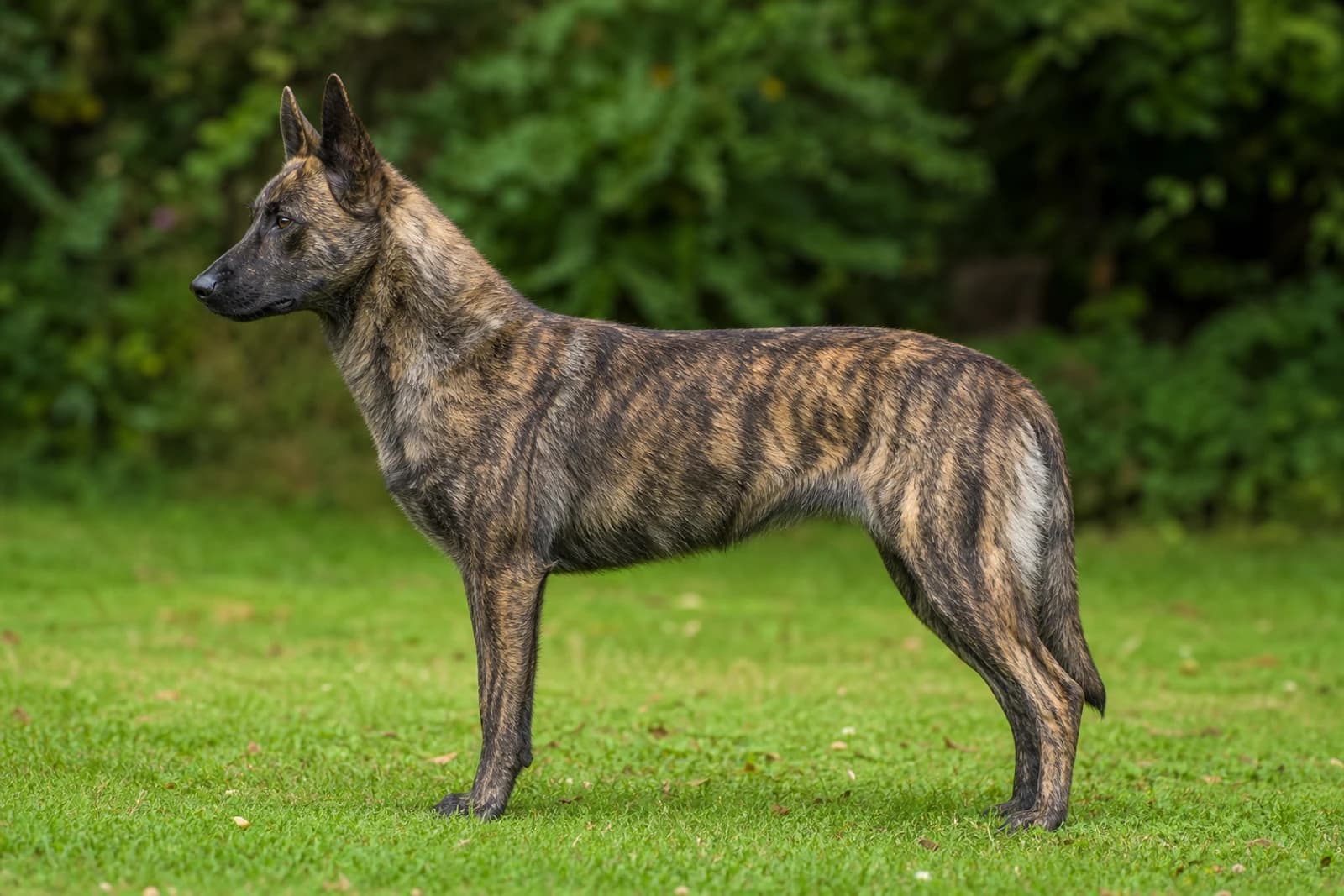
The Dutch Shepherd Dog is an intelligent, loyal, and versatile working breed that thrives with active, experienced owners. Originally a farm dog in the Netherlands, they excel in dog sports, obedience, and protection work. They require vigorous daily exercise and mental challenges to prevent boredom. This breed forms strong family bonds but can be reserved with strangers. Best suited to homes with space, they are protective and alert. With socialization, they get along with children and other dogs, but high prey drive requires caution around cats. Not ideal for first-time owners or apartment dwellers.
At a glance
- Size
- Large
- Height
- 22–24 in
- Weight
- 66–68 lb
- Life span
- 12–14 years
- Coat colors
- Gold Brindle, Silver Brindle, Red Brindle
- Coat type
- Short, dense double coat (also long and rough varieties)
- Group
- Working
How much does a Dutch Shepherd Dog cost?
Adopt / rescue
$75–$400
Usually includes spay/neuter, first shots, and a microchip.
Buy from a breeder
$700–$2,000
From a reputable, health-testing breeder.
Approximate USD. Prices vary widely by region, breeder, pedigree, age, and coat colour — adopting is the lower-cost and recommended route. Avoid suspiciously cheap “breeders”; they’re often puppy mills.
Estimate the full cost of a Dutch Shepherd Dog →Dutch Shepherd Dog photos
Views
Front, side, rear and top — the full silhouette.Poses
How the breed sits, lies, moves and plays.Puppy to senior
The breed across its whole life.Expressions
The breed’s range of moods.Close-up details
Eyes, ears, nose, paws, tail and coat.Coat colors
The breed’s recognized colors.Click any photo to enlarge. We show the Dutch Shepherd Dog from every angle — three views, poses, life stages, expressions, close-ups, coat and colors.
Appearance & size
A Dutch Shepherd gives the immediate impression of a well-balanced, athletic working dog—agile enough to herd all day, sturdy enough to handle real farm chores, but never heavy or clunky. They’re a large breed, standing 22 to 24 inches at the shoulder and weighing 66 to 68 pounds, with males typically sitting at the high end of both ranges. The body is slightly longer than tall (often a 10:9 ratio), which creates the smooth, ground-covering trot the breed is known for.
Coat types and colors
All Dutch Shepherds have a brindle coat—a background color overlaid with clearly defined dark streaks. You’ll see three distinct coat varieties, and every one of them is brindle:
- Short-hair: A close, harsh coat with a woolly undercoat. Ruff, breeches, and tail feathering are minimal. This is the most common variety.
- Long-hair: Straight, flat-lying hair that’s harsh to the touch, with pronounced feathering on the backs of the legs, a full ruff, and a well-fringed tail. The undercoat exists but stays hidden.
- Rough-hair: A dense, wiry outer coat that’s tousled and harsh, giving a tousled, no-fuss look. The undercoat is thick and woolly. Facial furnishings like a beard and eyebrows are evident, but they’re never as exaggerated as in some terriers.
The brindle base is either gold brindle (a rich yellow-to-reddish-gold ground) or silver brindle (a grayish to blue-gray ground). The dark brindle stripes run in true black, never brown or washed out. A crisp, dark mask on the muzzle is strongly preferred. The coat color rarely covers the whole body evenly; you’ll often spot darker shading on the ears, with some white allowed only on the chest and toes—and a solid black coat is considered a serious fault.
Head and expression
From the front, the head is a long, dry wedge, flat across the skull with a very slight stop. The muzzle is roughly equal in length to the skull and tapers gently without becoming snipey. Dark, almond-shaped eyes sit at a slight slant and give an intelligent, alert expression—never hard or suspicious. The ears are upright, triangular, and set high, giving the dog an eager, ready-for-anything look. If you’re accustomed to German Shepherd ears, you’ll notice the Dutch Shepherd’s ears are slightly smaller in proportion to the head.
Body and stance
Viewed from the side, the neck is slightly arched and flows into a well-laid-back shoulder, then a deep, oval chest with well-sprung ribs. The topline is firm and level from the withers to the croup, and the loin is short and strong. There’s a clear, but not extreme, tuck-up. The overall silhouette reads as a ready-to-move athlete, not a heavy-set protector.
The front legs are straight, with moderate bone and strong pasterns. From the rear, you see muscular thighs, a second thigh that’s long and well-defined, and hocks that are moderately angulated and set low to the ground. The tail hangs straight or with a soft curve at rest, reaching to the hock; when the dog moves or is excited, the tail rises gracefully but never curls over the back. The natural, unexaggerated build means you won’t see the extreme slopes or over-angulation that sometimes get bred into other shepherd breeds. This is a dog built to work a full day and still go home sound.
History & origin
The Dutch Shepherd didn’t start out as a show dog or a specialist. It was the Netherlands’ original all-purpose farm dog—a hard, versatile worker that had to earn its keep every single day. While its cousins the Belgian and German Shepherds were being refined for specific jobs or the ring, this breed stayed a rugged, no-frills partner for rural families.
Back in the 19th century, Dutch farmers didn’t have the luxury of keeping a different dog for each chore. One dog needed to drive sheep to pasture, keep cattle off the crops, pull a milk cart to market, watch over the kids, and kill rats in the barn. That’s exactly what the Dutch Shepherd was bred to do. The earliest dogs were a patchwork of local brindle-coated herders; the brindle pattern likely provided camouflage in the shadowy Dutch countryside. By 1898, enthusiasts organized the Nederlandse Herdershonden Club and wrote the first breed standard, recognizing three coat varieties—short, long, and rough—all allowed in the same breed, a rare flexibility that reflects its practical origins. At that time, the dog’s working ability mattered far more than a uniform look.
Then the world shifted. Farms mechanized, tractors replaced draft animals, and sheep flocks shrank. The same breed that had been indispensable suddenly seemed obsolete. Crossbreeding with imported German Shepherds and even Belgian Malinois, which were gaining popularity for police work, further diluted the original stock. By the mid-20th century, the Dutch Shepherd hovered near extinction—only a handful of purebred dogs remained.
A small group of dedicated fanciers refused to let the breed disappear. They scoured isolated farms, particularly in the eastern provinces, to find surviving dogs with the old-type brindle coat and working temperament. A careful breeding program rebuilt the population from those scattered remnants. The dog they rescued wasn’t a softened version; it retained the lean muscle (a mature adult today runs 66–68 lb on a 22–24 inch frame), the brains, and the no-quit attitude that made it valuable in the first place.
Modern Dutch Shepherds are still uncommon on this side of the Atlantic, but they’ve found a foothold in working roles that demand exactly their blend of traits: police K9s, search and rescue, detection work, and competitive dog sports. Off-duty, they’re affectionate with their own people but distinctly not a Labrador-level social butterfly. The history shows: this is a dog built for a job, and if you don’t give it one, it’ll invent one—and you may not like its choice.
Temperament & personality
Dutch Shepherds don’t come with an off switch. These are sharp, high-octane working dogs bred to move livestock all day, and that drive doesn't dim just because they live in a house. At 66–68 pounds and 22–24 inches, they’re lean, agile, and always scanning for a job. A bored Dutch Shepherd is a destructive one—expect a solid hour of running, tugging, or focused training daily, not a leisurely stroll. They live 12–14 years, so that’s over a decade of serious commitment.
With their own people, they’re deeply loyal and surprisingly affectionate—often glued to your side, leaning against your legs, and following you from room to room. This isn’t casual attachment; they anchor their sense of territory to the human scents they know, so a new house feels safe faster when you’re there. They’re reserved with strangers, sizing people up before relaxing, which makes them natural watchdogs. An alert bark announces delivery trucks and unfamiliar footsteps, but they’re not endless yappers unless bored or left isolated too long.
The personality has a stubborn streak that demands respect, not force. A Dutch Shepherd figures out what you want, then decides if your offer is worth the effort. Training works best when you’re consistent, fair, and creative—turn it into a game or a challenge, and they’ll light up. Heavy-handed corrections sour the relationship and may trigger defensive behavior. They thrive on mental work: advanced obedience, scent detection, agility, or herding practice. Without that, their quick mind misfires, and you’ll see anxious chewing, fence-running, or herding the kids around the living room.
This breed isn’t a plug-and-play family pet. They’re often same-sex dog-aggressive, and strong prey drive can make cats or small animals targets unless raised with them from puppyhood. Resource guarding—over food, toys, or even a favorite person—is a real possibility. Teach children never to disturb a dog while they’re eating or gnawing a prized bone; a stiff stance and hard stare are usually the first warning. They also have a quirky love of stink: a dead earthworm or patch of rotting leaves may trigger a joyous shoulder-roll, likely an old scavenger instinct to bring scent information back to the pack—or just because they truly enjoy smelling terrible. Be ready for frequent baths.
Nervous habits show up clearly if you know what to watch for. Lip licking, yawning, and turning the head away mean the dog needs space. A forward-leaning posture signals excitement or intent to act; pair that with a rigid body, and you’re looking at a dog about to react, not think. Respect those signals, and you’ll keep a highly intelligent partner who works for you because he wants to, not because he has to. That partnership is the real reward, but it’s earned through structure, daily exercise, and a lot of patience. Skip the wet-nosed sentimentality—this dog needs a leader, not a coddler.
Good with kids, dogs & other pets
A steady, well-socialized Dutch Shepherd can be a patient and engaged family dog around kids. But at 66 to 68 pounds and 22 to 24 inches tall, this is an athletic herding machine, not a plush toy. Toddlers get knocked over by a happy tail or a hip check without any malice. The bigger concern is instinct: children running and shrieking can trigger a herding response — a nip at the heels or a shoulder nudge meant to corral. You direct that impulse early with clear, consistent redirection. Teach the dog that kids are not stock, reward all four paws on the floor around small humans, and never leave a baby or toddler alone with any large dog, no matter how gentle the reputation.
With other dogs, the outcome hinges on socialization done right and done young. A Dutch Shepherd who hit puppy classes before 16 weeks, met dozens of well-mannered dogs, and learned to read canine cues is usually tolerant — sometimes playfully rough, but rarely a bully. That same dog, isolated or poorly matched in adolescence, can become selectively social, especially with same-sex housemates. Introductions to a new dog should be on neutral ground, both dogs leashed, and you should watch for hard stares or stiff postures. The breed’s working backbone means they often won’t back down from a challenge, so management is key until you know the dynamics.
Cats and small pets are where the herding brain meets the reality of prey. A Dutch Shepherd raised indoors with a cat from puppyhood might learn to peacefully ignore it, even snuggle. But the same dog can see a fleeing outdoor cat as a chase target. Pocket pets — rabbits, guinea pigs, hamsters — read as a job to be done. Even a dog who appears disinterested can flip into drive instantly if a small animal bolts. Secure enclosures, separate rooms, and never relying on a verbal “leave it” as your only safety net is the honest, practical approach. You build a strong recall and proof it daily, but you still assume risk and manage with gates, crates, and constant supervision around anything small and fast.
Trainability & intelligence
This dog will learn a new command in fewer repetitions than you’d believe — but that razor-sharp mind is wasted without a real job. A Dutch Shepherd reads your body language the moment you pick up the leash and connects cause and effect faster than many handlers can keep up. You don’t need to convince this breed to work; you need to give it a reason to choose you over every squirrel, scent cone, or suspicious shadow in the distance.
- Motivation is the key that unlocks everything. Food, a squeaky tug, or a thrown ball all work, but the real reward is action. A bored Dutch Shepherd invents its own rules, and you won’t like them. Keep sessions short, fast, and heavy on movement — five focused three-minute bursts beat one meandering fifteen-minute drill.
- Recall can be rock-solid, but it isn’t automatic. These dogs were bred to make independent judgment calls at a distance, so they’ll test whether coming back is genuinely more rewarding than whatever they just flushed out of the brush. Build a history of high-value payoffs and never poison the recall by using it to end the fun. Start in low-distraction areas and proof it on hiking trails, around livestock, and near moving toys before you trust it off-leash.
- Pressure backfires, full stop. A Dutch Shepherd doesn’t need a heavy hand; it needs a handler who is clearer and more consistent than its own impulse. Harsh corrections will either shut down engagement or spark a head-on fight you won’t win. You want fast, reliable responses? Use marker training, reward the dog for choosing you, and ignore or redirect mistakes — patience builds the bond that force destroys.
- Socialization is the foundation for soundness. The puppy who tiptoes across grates, investigates a clattering shopping cart, and politely greets a dozen strangers before 14 weeks grows into an adult who holds his nerve in a crowd. The one raised in a backyard bubble often turns suspicious and reactive. Ongoing exposure to novel environments, sounds, and calm handling keeps that early investment paying off for the dog’s entire 12–14 years.
- Work through the stubborn streaks by being more interesting, not more intimidating. When a Dutch Shepherd plants its feet and stares you down, it’s not defiance for the sake of it — it’s calculating whether the payoff matches the effort. Change the reward, lower your criteria just for a moment, or move into a quick game of chase. You’ll get the behavior back on track faster than any leash pop could ever accomplish.
A Dutch Shepherd will run circles around a trainer who leans on repetition and control. Hand over your trust first, teach with crystal-clear consistency, and you earn a partner who learns faster than just about any other working dog out there — and never stops looking for the next cue that means go.
Exercise & energy needs
A Dutch Shepherd doesn’t just want exercise—he needs a job, every single day. Plan on a minimum of 90 minutes of serious, high-intensity activity, split into two sessions. A casual sniff-and-stroll won’t scratch the surface. This breed was built to work livestock and guard property, and that drive translates into a dog who thrives on hard runs, long hikes, and mentally demanding tasks.
Think sprint intervals, bikejoring, herding practice, weighted backpack hikes, or advanced fetch games on hilly terrain. The goal is to get a 66–68 lb athlete genuinely tired, not just entertained. If you’re a runner, a conditioned adult can handle a steady 5-mile jog; if not, a flirt pole or off-leash sprint session in a safe area does wonders.
Physical exercise alone isn’t enough. This is a startlingly intelligent dog who needs mental engagement woven into the day. Scent work, tracking, treibball (urban herding with exercise balls), competitive obedience, or Schutzhund-style protection sports all hit the mark. Puzzle toys and frozen Kongs can supplement, but they’re snacks—not the main course. Short, frequent training bursts (10–15 minutes) of new commands or impulse-control games keep his sharp mind from turning toward self-appointed projects.
With a puppy, ease up on repetitive high-impact activities like long pavement runs or excessive jumping until growth plates close, to protect developing joints. A missed workout here is no small thing; an under-exercised Dutch Shepherd will invent his own outlet, and you won’t like the result—think shredded couch cushions, relentless pacing, or nippy herding behavior aimed at the kids. Skip the leisurely walk around the block and give this dog the purpose-driven workout he’s wired for.
Grooming & coat care
Dutch Shepherds come in three distinct coat varieties — short, long, and wire-haired — and each one calls for a different grooming routine. All three are double-coated, so expect a heavy shed twice a year when the undercoat blows, plus a steady trickle of hair in between. Brushing isn’t optional if you want fewer fur tumbleweeds rolling across your floor.
The short-haired coat is the easiest to maintain. A quick once-over with a natural bristle brush once or twice a week pulls out dead hair and brings up a nice shine without much fuss. Step it up to every other day during spring and fall shedding peaks.
The long-haired variety needs more hands-on attention. Without 2–3 brushing sessions a week with a slicker brush or pin brush, the feathering on the legs, tail, and belly will mat. Get down to the skin, not just the top layer, and follow up with a metal comb behind the ears and in the breeches where tangles hide.
The wire-haired coat is the most labor-intensive. It won’t just shed out on its own — dead hairs cling and need to be pulled. Plan on hand-stripping the rough outer coat a couple times a year to keep the texture and color looking right, plus weekly combing with a coarse-toothed comb to prevent mats. If you clip instead of stripping, the coat will soften and lose its weather-resistant harshness, but for a pet home that’s a fair trade-off if you’re not showing. A rubber curry mitt works wonders on all three coat types during heavy shedding months, loosening clumps of undercoat faster than a brush alone.
Bathe only when the dog is genuinely dirty — every few months or after a romp in something foul. Overbathing strips the natural oils that keep the double coat weatherproof.
Nails, ears, and teeth follow the same rhythm regardless of coat type. Trim nails every 3–4 weeks; if you can hear them clicking on the floor, they’re too long. Floppy-eared Dutch Shepherds can trap moisture, so lift those ears weekly to sniff and wipe out any gunk with a damp cotton ball. Daily tooth brushing with a dog-safe paste knocks back tartar and keeps that mouth from getting rank between vet cleanings.
Shedding & allergies
You wouldn’t guess it from that sleek, short coat, but the Dutch Shepherd is a serious shedder. The dense double layer that protects them from rain and cold drops loose fur year-round, and during spring and fall, it comes out by the handful. Expect to find short, bristly hairs on your clothes, couch, and floors pretty much constantly.
Brushing two or three times a week with a rubber curry brush or a firm bristle brush will pull out dead undercoat before it ends up on everything. During the seasonal blowout, a daily going-over with an undercoat rake makes a real dent, though you’ll still be vacuuming more than usual. The good news: these dogs are light droolers, so you aren’t mopping up slobber to go with the fur.
Now for the realistic allergy picture. No double-coated breed is hypoallergenic, and the Dutch Shepherd is no exception. All that shedding spreads dander throughout the house, which is the real trigger for most allergy sufferers. If someone in your family has moderate to severe dog allergies, this breed will likely keep them sneezing regardless of how often you clean. Light, occasional allergies might be manageable with strict housekeeping and an air purifier, but don’t bank on it.
If you hate lint rollers and the hum of a vacuum, the shedding alone may test your patience. A Dutch Shepherd shares its coat generously — you’ll just need to decide if you can live with that trade-off.
Diet & nutrition
What an active Dutch Shepherd needs on the plate
Build meals around animal protein. A practical daily split is roughly 60% cooked or raw meat, poultry, and fish, 20–30% dog-safe fruits and vegetables, and the remaining 10% from extras like eggs, whole grains, or plain yogurt. The exact numbers flex with your dog’s workload—a herding or protection dog burns far more fuel than a weekend hiking companion.
Because dogs chew vertically and don’t produce salivary enzymes, blending or finely chopping ingredients helps them actually absorb what you’re serving. It’s a small step that pays off for puppies, seniors, and any Dutch Shepherd that acts like mealtime is a race.
Portion control starts with honest activity
A fit Dutch Shepherd feels light over the ribs—you want a thin layer of fat, not a blanket. This breed often carries strong food motivation, so free-feeding or “just one more scoop” adds up fast. Extra weight stresses hips, elbows, and spine, and the breed’s working nature means many dogs will keep pushing until they’re overfed, not until they’re full.
Adjust portions to match real exercise, not wishful thinking. An off-season, an injury, or a sweltering week means dialing back the bowl immediately—don’t wait for the scale to climb. For a moderately active 66–68 lb adult, two meals a day keeps metabolism steady; divide total daily calories according to the food’s guidelines, then fine-tune with your hands and eyes.
Puppy feeding timeline
- Up to 4 months: four evenly spaced meals.
- 4–6 months: three meals a day.
- 6 months onward: two meals a day, like an adult.
Transition a new puppy gradually. Start with lightly cooked and puréed meats, fish, fruits, and vegetables—or a high-quality large-breed puppy food. Raw chicken wings can be introduced around 12 weeks, always under supervision.
Seniors and the slow-down
Older Dutch Shepherds often do better with two or three smaller meals instead of one or two large ones. Use your hands and a scale to catch creeping weight early. There’s no solid evidence that healthy older dogs need a severe protein cut; instead, reduce total calories as the daily hustle dials back. Purée meals for a dog with missing teeth or a tender mouth—it’s the same food, just more accessible.
Mealtime habits that prevent problems
- Serve every scrap of human food in the dog’s own bowl, never from the counter or table. Begging is a one-way street once it starts.
- A puzzle bowl or slow feeder is more than a toy for a gulping Dutch Shepherd—it cuts the risk of bloat and channels that busy brain.
- Batch-cook grains, chopped vegetables, or lean proteins and keep them on hand for quick meal toppers.
- Unsalted water from cooking vegetables makes a nutritious base for homemade food when stock isn’t available.
- Skip rich, fatty leftovers, especially after holidays. A single heavy meal can trigger pancreatitis, and this breed doesn’t need that gamble.
Health & lifespan
A healthy Dutch Shepherd typically lives 12 to 14 years. These are hardworking, athletic dogs, and the breeders who know them best focus heavily on hips, elbows, and eyes. Reputable breeders screen for hip and elbow dysplasia, and they won’t breed a dog without current, passing OFA or PennHIP scores. Inherited eye conditions show up occasionally, so a yearly exam by a veterinary ophthalmologist is another box good breeders check.
Like a lot of large, deep-chested dogs, Dutch Shepherds can be prone to bloat. Feed them two or three smaller meals a day, avoid heavy exercise right after eating, and know the warning signs — restlessness, unproductive retching, a distended belly. That’s an emergency, no waiting around.
Weight management matters more than most people think. A lean dog is a longer-lived dog, and with a food-motivated, powerful breed like this, it’s on you to measure meals and keep the treats reasonable. An extra 5 pounds on a 67-pound frame puts unnecessary strain on joints that are already working hard during training, running, and play.
Don’t overlook skin and coat health. Dutch Shepherds come in three coat varieties — short, long, and rough — and all shed. The rough-coated ones rarely need a bath, but that dense hair can trap moisture and irritate skin if you let them stay damp after they’ve been out in the rain. Pay attention to any persistent scratching, hot spots, or dull coat; it’s often the first clue that diet, allergies, or environment need adjusting.
A breed this smart and handler-focused doesn’t do well with isolation or a couch-potato lifestyle. Neglect and under-stimulation can lead to anxiety-driven behaviors that look like health problems — excessive licking, pacing, barking. A tired, engaged Dutch Shepherd is a relaxed one. That’s preventive care every bit as much as the annual vet visit.
Speaking of the vet visit: keep up with monthly heartworm prevention during mosquito season and the month after it ends, and stay legal on rabies. You’ll also want to schedule a wellness exam once a year, and twice annually once your dog hits senior status. Catching subtle shifts — a little stiffness getting up, a drop in appetite, a hesitant jump — early gives you options.
If you live somewhere with hot summers, remember this is a dog bred to work livestock in the Netherlands, not the desert. Heat sensitivity is real, especially during high-intensity exercise. Provide shade, water, and cool-down breaks, and don’t push through heavy panting.
Living environment
The Dutch Shepherd is a working dog through and through—athletic, driven, and built to move. Apartment living can work, but only if you treat it as a crash pad between long, strenuous outings. Without at least two hours of full-tilt exercise every day, you’ll watch that intelligence turn destructive. A house with a securely fenced yard is the simpler route, but even a big yard is just a stage. This breed doesn’t self-exercise; it waits for you to throw the ball, run the agility course, or set up a scent trail.
That double coat (short, long, or rough) handles moderate cold and heat well, so they’re happy joining you in most weather. Just don’t leave them outside alone for hours—they’d rather be glued to your side.
Noise is part of the package. These dogs are sharp watchdogs who notice every delivery truck and squirrel that enters their airspace. Early training can build a reliable “enough” cue, but if you want a silent housemate, look elsewhere. That alert barking can strain neighbor relations in thin-walled apartments.
Tolerance for being left alone is low. Dutch Shepherds bond deeply and can spiral into separation anxiety when left for a full workday. You’ll see it in chewed door frames and nonstop pacing. They thrive in homes where someone works remotely, or where a mid-day run with a dog walker breaks up the monotony. Crate training, puzzle toys stuffed with frozen meals, and gradual desensitization from puppyhood all help—but at their core, this is a dog who lives to be your partner, not your pet you leave behind.
Who this breed suits
You’re looking at a partner who was bred to work hard all day, not a dog that dozes on the couch waiting for a 20-minute stroll. The Dutch Shepherd is a high-octane, brilliantly sharp working dog that needs a handler who will match that intensity. At 66–68 pounds and 22–24 inches tall, he’s a large, athletic presence with a life span of 12–14 years. The right home gives this dog a real job—agility, nose work, herding, protection sports, or advanced obedience—and a daily schedule built around serious exercise, not just a fenced yard.
Best matches
- Singles or couples with a sport-dog lifestyle. You’re already running, hiking, or biking most days, and you’re excited about channeling a drivey dog into a dog sport. He’ll gladly log at least 60–90 minutes of hard, off-leash running plus focused training sessions. Fetch in the park isn’t going to scratch the surface.
- Active families with older kids. The breed’s herding instinct and bouncy energy can knock a toddler over, so kids need to be steady enough to handle a dog who might nip at heels in play. When supervised, older children can be fantastic training partners who love teaching cues and running the dog through obstacle courses.
- Previous dog owners who want a versatile working dog. If you’ve worked with a Malinois, GSD, or border collie and crave that level of engagement, a Dutch Shepherd delivers. First-time owners should think carefully: this is a steep learning curve. Success usually hinges on finding a breed-savvy trainer before you even bring the puppy home.
Who should think twice
- Apartment dwellers without a rigorous outdoor plan. Close quarters magnify restlessness. A home with a secure yard is better, but even that won’t replace the daily grind of purpose-driven work.
- Sedentary households or busy professionals who are gone 9–10 hours a day. A bored Dutch Shepherd will dismantle your drywall, shred a couch, and develop anxiety-driven behaviors. They thrive on being with you and doing something—not waiting around.
- Homes with small pets or very young children unless you’re ready for extensive management. Those herding chops can translate into chasing cats, nipping running kids, or pushing around other dogs. It’s manageable with early socialization, but it’s a constant training project.
- Seniors looking for a calm companion. Even a highly active senior may find the physical demands and quick, reactive movements exhausting. Only consider this breed if you’ve lived with working-line dogs before and your current daily routine easily accommodates two hours of rigorous activity.
This is a dog who won’t settle for being a casual pet. If your day can’t revolve around intense physical and mental work, you’ll both be frustrated. When you provide the right job, you get a fiercely loyal, tireless partner—but nothing about this setup is low-key.
Cost of ownership
A Dutch Shepherd puppy from health-tested parents doesn’t come cheap. Expect $1,500 to $3,000 from a breeder who screens hips, elbows, and eyes. Working-line pups with titled parents push toward the high end. Shelters or breed-specific rescues might have one for $200–$500, but purebreds rarely show up that way.
Once the dog is home, the real expenses start. This is a lean, 66–68 lb athlete that needs real fuel. Feed a high-quality, protein-rich kibble and count on $60–$80 a month. Raw feeding easily tops $100. Keep a steady stream of high-value training treats in the budget — you’ll use a lot of them. Dutch Shepherds are whip-smart and driven; skipping professional training costs more in property destruction later. Plan on $200–$300 for a solid group obedience series right away. Many owners continue with sport classes (agility, protection, nose work) at $100–$200 a month.
Grooming is mercifully simple. The short brindle coat needs a quick weekly brush, a rubber curry mitt during spring and fall shedding seasons. You can do it all yourself, so monthly cost hovers near zero. Budget maybe $30 for a self-wash station a couple times a year when the undercoat really lets loose.
Vet bills follow large-breed patterns. Annual exams, vaccines, and heartworm/flea/tick preventatives run $400–$600 a year. Then there are the structural issues responsible breeders work to minimize: hip and elbow dysplasia can still occur. Even well-built dogs blow out cruciate ligaments — a $3,000–$5,000 surgery. That’s where pet insurance earns its keep. A policy with a $250 deductible and 80% reimbursement typically costs $45–$75 a month for this breed.
All in, monthly outlay generally lands between $200 and $400, not counting that first-year training push or initial gear (crate, heavy-duty puzzle toys, a tall fence — easily another $500). A Dutch Shepherd is a high-investment working partner.
Choosing a Dutch Shepherd Dog
If you’ve settled on a Dutch Shepherd, the next move is finding a sound, stable dog—whether that’s a puppy from a breeder who does the genetic homework or an adult through a breed-specific rescue. This is a sharp, high-drive working breed that lives 12–14 years, so where you start matters every single day of that stretch.
Breeder or rescue?
A respected Dutch Shepherd rescue can place a young adult whose energy level and quirks are already clear, which you don’t get with an 8-week-old. Puppies from a health-tested litter let you shape everything from day one, but they demand an enormous early investment in socialization and training. Either path works; the non-negotiable is that the dog’s temperament fits your actual daily life, not a fantasy of what a Dutch Shepherd “should” be.
Health clearances to ask for
A good breeder readily shows you the paperwork—not just a vet’s nod at a puppy checkup. The joint clearances you need are:
- Hips: OFA (rated Fair or better) or PennHIP score, because hip dysplasia can appear in the breed.
- Elbows: OFA or equivalent elbow clearances.
- Eyes: A current CAER exam from a board-certified veterinary ophthalmologist, repeated every year or two on breeding dogs.
Some breeders go further and test for degenerative myelopathy or cardiac disease. If you hear “the breed is naturally healthy so we don’t test,” consider that your exit cue.
Red flags
Walk away from a breeder who has multiple litters on the ground at once, always has puppies available, or sells dogs as “personal protection” prospects without thoroughly screening your experience and living situation. You should be allowed to meet the dam at her home (the sire may be off-site), and the dogs should live in the house, not in a separate kennel building. Puppies sent home before 8 weeks, high-pressure sales, and no written health guarantee that includes a return-to-breeder clause are deal-breakers. A Dutch Shepherd who’s been poorly bred or raised is not just difficult—it can become a genuine liability.
Picking a puppy
A Dutch Shepherd puppy should be curious, resilient, and interested in people, not cowering behind furniture or skittering away from eye contact. A pup that hides every time you move or one that relentlessly body-slams its littermates are both extremes that rarely mellow without serious behavior work. The breeder will have watched the litter for weeks—let them steer you toward a puppy whose confidence and drive match your home. If you want a reliable weekend hiking partner and family dog, don’t insist on the buzziest, sharpest pup in the box. You’ll get exactly what you ask for, and this breed delivers intensity in spades.
Pros & cons
Pros
- Sharp mind, eager to work. These dogs learn fast and stay engaged through advanced obedience, scent work, or agility — they need a job to be happy, and they’ll impress you with how quickly they pick things up.
- All-day athletic partner. Weighing 66–68 lb and standing 22–24 in, they’re built for real endurance. A Dutch Shepherd will outlast you on a trail run, bike ride, or a long day of herding practice.
- Deeply loyal and watchful. They form a tight bond with their family and have a natural alertness that makes them a calm deterrent. Properly socialized, they’re steady and discerning rather than edgy.
- Low grooming hassle. A short, dense double coat needs little more than a weekly brushing. Mud and dirt tend to brush out once dry, making cleanup surprisingly easy.
- Hardy lifespan. 12–14 years is a solid run for a large working breed, and dedicated breeders have kept the gene pool focused on sound hips and elbows over flashy traits.
Cons
- High-octane daily requirement. A few walks won’t cut it. Expect to provide over an hour of fast-paced exercise plus brain work — puzzles, training, or sport — every single day. A bored Dutch Shepherd will remodel your home.
- Herding mouthiness. Nipping at heels, mouthing hands, and steering children are hardwired behaviors. Training a reliable “off switch” and redirecting to a toy takes months of consistency.
- Wary of strangers by default. Without thorough, ongoing socialization, their protective instinct tips into suspicion or reactivity. You’ll need to commit to exposing them to people, places, and situations from puppyhood through adulthood.
- Recall roulette around prey. High drive to chase squirrels, cats, or cars means off-leash freedom requires a fenced area. An electric collar or long line is often a necessity, not an option.
- Seasonal shedding surprise. That low-maintenance coat blows a dense undercoat twice a year. For a few weeks, you’ll find fine black and brindle fur on every surface — a good vacuum is your friend.
- Not a beginner’s breed. Their intensity, exercise needs, and demand for a leader who understands working-dog psychology can overwhelm a first-time owner. You need prior experience with a driven, handler-focused dog.
Similar breeds & alternatives
If you’re considering a Dutch Shepherd but want to kick the tires on a few close cousins, the Belgian Malinois, German Shepherd, and Belgian Tervuren are the natural places to look. Each brings the herding brain and athletic body you expect — with a different flavor.
Belgian Malinois
Snap a photo of a Malinois and a short‑haired Dutch Shepherd, and the first thing you’ll spot is the color. Malinois wear a fawn‑to‑mahogany coat with a crisp black mask; the Dutch Shepherd’s signature is brindle — and you can get it in short, long, or rough coats. Size‑wise they’re neck and neck in height, but the Malinois is often 10 to 15 pounds lighter, giving it a leaner, more whippet‑like silhouette. Temperament is the real splitter. Both breeds live for a job, yet the Malinois routinely operates at one speed (full‑tilt), while Dutch Shepherd owners praise a genuine “off‑switch” when the workday ends. If you need a partner who can match your marathon training and then crash on the couch, the Dutch Shepherd’s balance often wins.
German Shepherd Dog
You’ll notice the difference in build immediately. A German Shepherd is heavier‑boned, stands taller in the rear with that trademark sloped back, and can easily push past 70 pounds, where a Dutch Shepherd stays a sturdy, square 66–68 pounds. The GSD’s temperament skews more aloof with strangers, which suits some handlers, but a Dutch Shepherd is typically quicker to warm up without giving up its watchful nature. Lifespan is a practical differentiator: Dutch Shepherds average 12–14 years, while German Shepherds more commonly reach 9–13 years, and responsible breeders screen hips in both to keep those numbers real. Shedding is a fact of life with either, but the GSD’s dense double coat edges ahead in the “fur tumbleweed” department.
Belgian Tervuren
If the long‑haired Dutch Shepherd caught your eye, the Tervuren is worth a hard look. Same medium‑large frame and similar drive, but the Tervuren’s flowing, sable‑colored double coat demands daily brushing to avoid mats — a noticeable step up from the Dutch Shepherd’s lower‑maintenance longhaired variety. Personality‑wise, Tervurens can be more sensitive and naturally reserved around new people; a Dutch Shepherd tends to move through the world with a friendlier, more confident stride. For a dog that brings the elegance without the every‑day detangling, a long‑haired Dutch Shepherd in that unmistakable brindle is often the smarter grab‑and‑go choice.
Fun facts
- Bred as a versatile farm dog in the Netherlands.
- One of the rarest shepherd breeds.
- Excels in dog sports like agility, obedience, and herding.
- Nearly went extinct after WWII but has been revived.
Frequently asked questions
- Are Dutch Shepherd Dogs good with children?
- With proper socialization, Dutch Shepherds can be excellent family companions and are often patient with children. Their herding instinct may cause them to nip at running kids, so supervision and training are recommended.
- How much exercise does a Dutch Shepherd need?
- This high-energy working breed requires at least 1–2 hours of vigorous exercise daily, such as running, fetch, or agility training. Without sufficient physical and mental stimulation, they may develop destructive behaviors.
- Does the Dutch Shepherd shed a lot?
- They have a dense double coat that sheds moderately year-round, with heavier shedding during seasonal changes. Weekly brushing helps control loose fur, and more frequent grooming may be needed during peak shedding periods.
- Can a Dutch Shepherd live in an apartment?
- Dutch Shepherds are not well-suited for apartment living due to their high energy and need for space. They thrive in homes with a securely fenced yard where they can safely burn off energy.
- Is the Dutch Shepherd a good choice for first-time dog owners?
- This breed is typically not recommended for first-time owners because of their intense drive, intelligence, and need for experienced handling. They excel with an active, consistent owner who can provide firm, positive training and a job to do.
Tools & calculators for Dutch Shepherd Dog owners
Quick estimates tailored to Dutch Shepherd Dogs — pre-filled with this breed’s size where it matters.
Articles & stories about the Dutch Shepherd Dog
Sources & standards
This profile follows recognized breed standards from the American Kennel Club (AKC) and the Fédération Cynologique Internationale (FCI), along with established veterinary and breed-club guidance. These describe general breed tendencies — every dog is an individual.
Owner stories
Have a Dutch Shepherd Dog? Share your experience — grooming tips, personality quirks, anything goes.