

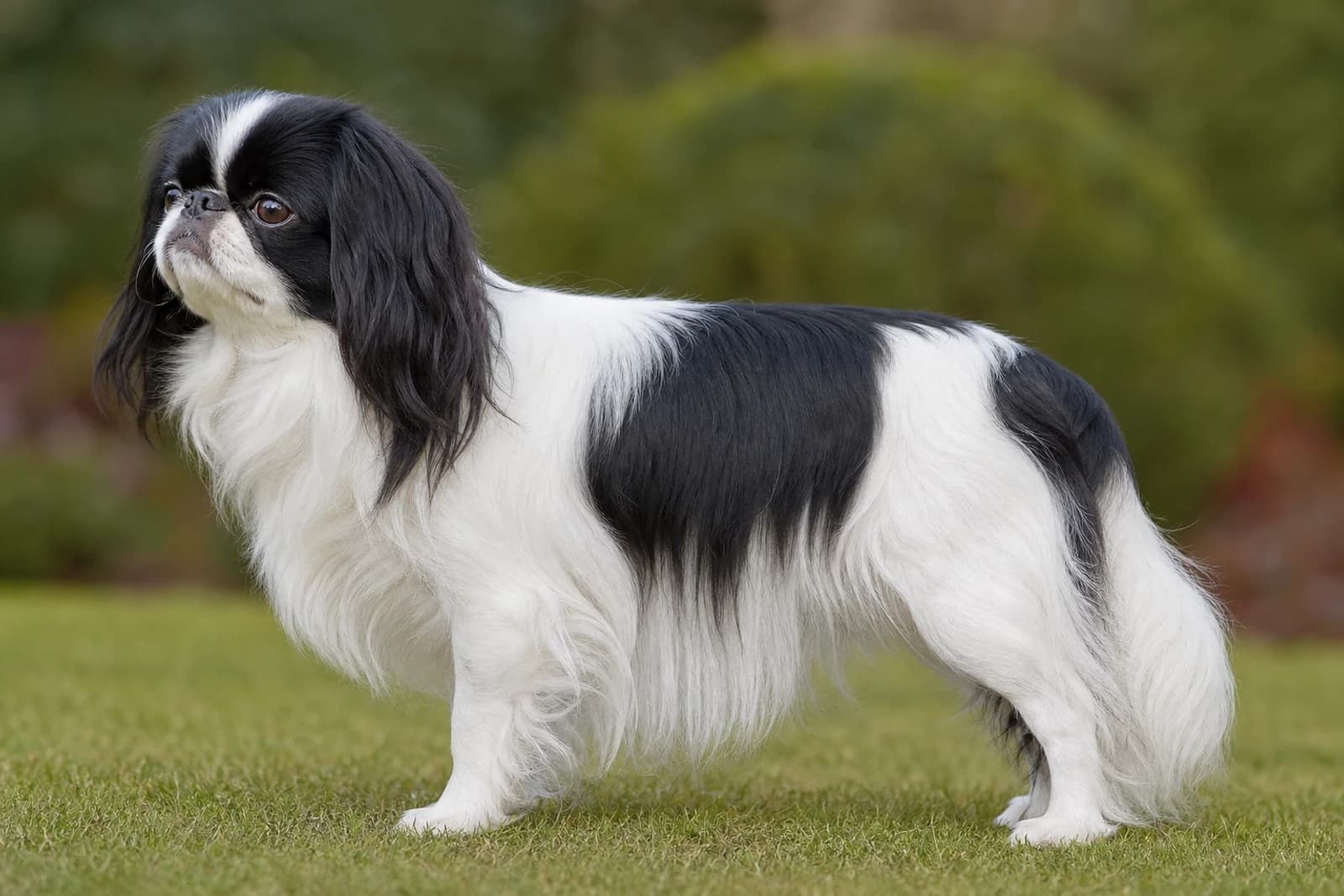
The English Toy Spaniel is a gentle, affectionate companion ideal for quiet households, seniors, and apartment dwellers. With a calm demeanor and moderate exercise needs, they thrive on human lap time and short daily walks. Their sweet, loving nature makes them excellent emotional support dogs, but they require gentle handling and regular grooming. This breed suits first-time owners seeking a devoted indoor pet.
At a glance
- Size
- Small
- Height
- 10–11 in
- Weight
- 9–13 lb
- Life span
- 12 years
- Coat colors
- Blenheim (chestnut and white), Prince Charles (tricolor: black, tan, white), King Charles (black and tan), Ruby (solid chestnut)
- Coat type
- long, silky, single coat
How much does a English Toy Spaniel cost?
Adopt / rescue
$75–$400
Usually includes spay/neuter, first shots, and a microchip.
Buy from a breeder
$700–$2,000
From a reputable, health-testing breeder.
Approximate USD. Prices vary widely by region, breeder, pedigree, age, and coat colour — adopting is the lower-cost and recommended route. Avoid suspiciously cheap “breeders”; they’re often puppy mills.
Estimate the full cost of a English Toy Spaniel →English Toy Spaniel photos
Views
Front, side, rear and top — the full silhouette.Poses
How the breed sits, lies, moves and plays.Puppy to senior
The breed across its whole life.Expressions
The breed’s range of moods.Close-up details
Eyes, ears, nose, paws, tail and coat.Coat colors
The breed’s recognized colors.Click any photo to enlarge. We show the English Toy Spaniel from every angle — three views, poses, life stages, expressions, close-ups, coat and colors.
Appearance & size
This is a small, square-built spaniel, just 10–11 inches at the shoulder and 9–13 pounds, with a sturdy frame that never tips into fragile. You’ll notice the compact body and deep chest right away — it’s a dog that looks as solid as it is short.
The head is one of the breed’s signatures. The skull is high and domed, with a well-defined stop, and the short, turned-up muzzle gives that characteristic pushed-in face. Large, dark, round eyes sit wide apart and have a soft, limpid expression. Beneath the eyes, the face is well cushioned — plenty of fill there, so the muzzle doesn’t look pinched.
Ears are set low, long, and dripping with silky feathering that frames the face. Both coat and feathering are the same long, silky texture — straight or just slightly wavy, never curly. You’ll see a full mane of longer hair on the neck and chest, plus flowing feathering on the backs of the legs and tail.
Coat colors come in four clear varieties, each with its own name:
- Blenheim: pearly white ground with rich chestnut-red patches. A distinct chestnut spot centered on top of the head (the “Blenheim spot”) is highly desirable.
- Prince Charles (tricolor): pearly white with black patches and bright tan points above the eyes, on the cheeks, inside the ears, under the tail, and on the legs.
- King Charles: glossy black with rich mahogany tan markings in the same places as the tricolor. A tiny white chest spot can appear but is not sought.
- Ruby: solid, even, rich chestnut red all over.
From the front, the chest is broad and deep, with straight, well-boned forelegs set well under the body. From the side, you see the short, level topline and a deep brisket that gives the dog its cobby silhouette. The tail is heavily feathered, carried at or just above the line of the back — never curled over it — and gives the rear a lively, flowing finish. Hindquarters are muscular and padded with feathering, so the back view is all plume and purposeful movement, never weak or spindly.
History & origin
The English Toy Spaniel was built for one job — warming laps and charming royalty. That job came straight from the English court, and the breed’s been doing it without apology for over 500 years.
You can trace the family tree directly to the toy spaniels that nestled into the ruffs and bedchambers of 16th-century Europe. In England, these little dogs hit their cultural peak under the Stuart kings. Charles I had one. His son Charles II adored them so completely that his name still sticks — in the U.K., the breed is called the King Charles Spaniel. Samuel Pepys grumbled that the king played with his spaniels during council meetings. The dogs had free run of Whitehall Palace, no permission required.
What were they bred to do? Nothing strenuous. No flushing birds, no guarding henhouses. They were bred to be small, quiet, and attentive human shadows — foot warmers for drafty castles, portable bed heaters, and constant companions for aristocrats in sedan chairs. The working requirement was simple: be adorable, stay small, and project a soft, loving nature. Breeders of the day took that seriously.
That original toy spaniel didn’t look exactly like today’s English Toy Spaniel. Paintings by Titian and Van Dyck show a flat head but a more pronounced muzzle. In the late 1600s and early 1700s, trends shifted. Short-nosed Asian breeds like the Pug made their way west, and some fanciers crossed them with spaniels, pushing the face flatter and the dome of the skull higher. By the time the first breed club formed in England in 1885, the pushed-in nose, undershot jaw, and domed forehead were the standard — and the breed we recognize emerged.
The Blenheim coloring (chestnut and white) has its own royal detour. The first Duke of Marlborough kept a kennel of these spaniels at Blenheim Palace; legend says his wife, Sarah, pressed a thumbprint onto a pregnant female’s head during a stressful wait for battle news, and thereafter many pups carried a chestnut “thumbprint” or lozenge in the middle of a white forehead blaze. That mark is still prized in the breed.
The dogs crossed the Atlantic with well-heeled English immigrants and aristocrats-on-tour. The American Kennel Club registered “English Toy Spaniels” in 1886, making them one of the earliest toy breeds in the U.S. studbook. The name change — AKC calls them English Toy Spaniels, while the U.K. sticks with King Charles Spaniel — cuts down confusion with the separate Cavalier King Charles Spaniel, which was later re-created to match the longer-nosed dogs in old paintings.
So when you see an English Toy Spaniel today, you’re looking at a lapdog refined by kings, dukes, and generations of breeders who demanded nothing more than a sweet, steady companion with a face that could melt a cold heart. That’s still exactly what they deliver.
Temperament & personality
An English Toy Spaniel is a lap dog who means it. At 9 to 13 pounds, she’s not the kind of dog who bounds off to patrol the yard—she’d rather curl up against your leg and watch the world from the warm spot you provide. She’s calm, gentle, and utterly devoted to her person, often shadowing you from room to room simply to be near.
That deep attachment cuts both ways. Left alone too long, she’s prone to anxiety, which can spill out as barking or even house-soiling. She isn’t being spiteful; she’s stressed. This breed does best in a household with someone home much of the day, or at least a predictable routine that doesn’t involve long stretches of isolation.
Energy-wise, a couple of short, meandering walks and a little indoor play satisfy her. She’s no athlete and will happily trade a romp in the park for an afternoon nap on the sofa. Don’t mistake her low-key nature for a dog who can be ignored, though—she needs daily attention, a soft lap, and quiet conversation.
With strangers, she’s politely reserved. She might hang back, watch from a corner, and need a few minutes to decide someone is safe. That watchfulness makes her a decent little alarm dog; she’ll alert you to a doorbell or a strange noise, but her bark dissolves once you welcome the visitor. Early, gentle socialization helps her build confidence, so she learns that new people usually mean good things.
Around children, her small size and sensitive nature call for boundaries. She’s well-suited to homes with older kids who understand not to grab, crowd, or interrupt her during meals. Like many small dogs, she can be possessive over food, so teach everyone to let her eat in peace. Watch her body language: a relaxed mouth and soft eyes say she’s content; a stiff, forward-leaning posture or a hard stare is her way of saying she’s uncomfortable. If she yawns, licks her lips, or turns her head, she’s asking for space—listen to it.
House-training takes patience. Even a well-trained English Toy Spaniel may mark indoors if she’s feeling insecure, and the scent of past accidents pulls her back like a magnet. Clean messes promptly with an enzymatic cleaner, and a homemade vinegar spray can neutralize odors that detergent leaves behind. She’s smart but can be stubborn, so positive, consistent training wins over heavy-handed methods. A treat the moment she does her business outside teaches her faster than punishment for an indoor mistake.
Puppies will chew to ease teething pain, so point those puppy teeth toward appropriate toys and consider a citrus-peel spray on furniture. She’s a creature of comfort and habit—give her a calm home, gentle handling, and a steady presence, and she’ll repay you with years of quiet companionship.
Good with kids, dogs & other pets
A 9-to-13-pound dog that tops out around 11 inches at the shoulder doesn’t have much padding against a clumsy child’s hug or a tumble. That’s the first thing to know about the English Toy Spaniel and kids: this breed’s patient, non-aggressive temperament makes them a sweetheart, but their slight build means they’re only truly safe with children old enough to handle them gently. For families with respectful school-age kids who understand no pulling, no dropping, and no chasing, an English Toy Spaniel can be a devoted nap buddy and quiet playmate. With toddlers or rambunctious preschoolers, constant, hands-on supervision isn’t optional—it’s the difference between a happy dog and a stressed, possibly injured one. Teach your child to sit on the floor and let the dog come to them; a Toy Spaniel that can choose to approach is far more relaxed than one that’s scooped up without warning.
With other dogs, this breed generally gets along well, especially when early socialization is part of the picture. They’re not scrappy or dominant. However, their delicate frame again dictates caution: a rough wrestling match with a 60-pound retriever can go wrong in a heartbeat. A multi-dog home with other small, calm companions is a natural fit. If you have larger dogs, supervise play and step in the moment things get boisterous. Proper introductions on neutral ground let them build confidence at their own pace, which matters because an unsocialized Toy Spaniel can tip into timidity around unfamiliar dogs.
Cats and small pets? They’re a surprisingly easy pair. These dogs were bred as companions, not hunters, so they typically lack the chase-and-grab instinct that can make life with a cat or rabbit stressful. A cat that stands its ground often becomes a favorite cuddle buddy. Still, introductions should be gradual and calm, especially with small rodents or birds where a paw-swipe curiosity could still frighten a pocket pet. Assume nothing and separate them when you can’t oversee.
The thread running through all these relationships is socialization, and for an English Toy Spaniel, the clock starts early. The critical window for shaping a confident adult dog closes between 12 and 16 weeks. Expose your puppy to gentle kids, different floor textures, household sounds, and safe encounters with vaccinated, friendly dogs during this time. Without it, the breed’s sensitivity can harden into fear-based reactivity—a dog that trembles at the doorbell or snaps when cornered. After the sensitive period, you can still make progress, but it’s slower and never forces a fearful dog into situations that trigger panic. A Toy Spaniel who feels safe is peaceful; one who doesn’t is a project.
Trainability & intelligence
An English Toy Spaniel won’t go out of its way to win an obedience ribbon, but that’s not a lack of intelligence — it’s a perfectly calibrated sense of what’s worth the effort. This is a dog who reads your mood with unnerving accuracy and knows exactly which behaviors earn the good stuff. The trick is making sure the “good stuff” genuinely matters to the dog at that moment.
What actually motivates them
Food is the obvious answer, but not just any kibble. Tiny, high-value morsels — think shredded chicken, soft liver treats the size of a pea — unlock far more cooperation than dry biscuits. For many English Toy Spaniels, a squeaky toy or a quick belly rub works just as well, especially if you keep the reward unpredictable. The biggest mistake is assuming a one-size-fits-all paycheck: today’s jackpot might be roast beef, tomorrow’s is getting to burrow under a blanket next to you. Pay attention and switch it up.
The sensitive-but-stubborn combo
Harsh corrections or a raised voice will backfire spectacularly. Instead of trying harder, the dog will shut down — dropping eye contact, yawning, or simply curling up in a ball. That isn’t defiance; it’s a stress response. On the flip side, they can be quietly mulish. If you haven’t built enough value into the request, a 10-pound spaniel will plant itself on the sofa and pretend it can’t hear “off.” The fix isn’t more pressure — it’s more practice with small wins, rewarded every time, until the behavior feels like the dog’s own idea.
House training needs extra patience
Expect potty training to take longer than with many other small breeds. Their tiny bladders are part of the story, but a bigger factor is that cold, wet grass or a single scary noise outside can make them refuse to eliminate outdoors. Sudden weather changes, a Saturday morning garbage truck — that’s all it might take to derail a week’s progress. Set a strict schedule (out first thing, after meals, after naps, before bed) and reward with a jackpot treat the instant they go in the right spot. Using an indoor potty area with a litter box or real grass patch as a backup isn’t a failure; it often prevents the anxiety that leads to stealth peeing behind the couch.
Recall and early socialization
Do not count on a rock-solid recall in unfenced spaces, at least not without months of proofing. A butterfly, a passing stroller, or an interesting smell quickly overrides a half-hearted “come.” Build it slowly on a long line in quiet areas, using a treat that’s reserved only for this cue. Even then, many English Toy Spaniels stay selectively deaf when something competes for their attention. Socialization works on a similar timeline. The window between 3 and 14 weeks is critical, but don’t stop there. Puppy classes, short visits to a friend’s house, sitting on a bench at a calm park — all in graduated doses — prevent the wariness that can curdle into fear-barking at strangers. If the puppy shows even a flicker of hesitation, back off to a distance where it feels safe and let curiosity do the rest.
Keep training sessions to three or four five-minute bursts across the day. The moment you push past the dog’s attention span, you lose a week’s goodwill. These dogs don’t need to be drilled; they need a partner who makes learning feel like a string of little games with a payoff they can count on.
Exercise & energy needs
The English Toy Spaniel needs short, gentle daily movement — not a hard workout. Think two 15‑minute leash walks and a couple of indoor play bursts, not a single long march. This is a small, brachycephalic breed, so steady low‑impact activity keeps them fit without overtaxing their breathing or joints.
How much, how often
- Two 15‑minute walks once or twice a day is a solid baseline. Some individuals do fine with 10‑minute potty strolls plus extra indoor play, especially in hot weather.
- Add 5–10 minutes of indoor movement a few times a day: a gentle game of fetch down a hallway, hide‑and‑seek with a toy, or following you from room to room.
- On days when the weather is muggy or freezing, skip the outdoor walk entirely and triple the indoor sessions. These dogs overheat fast, so always walk in the coolest part of the day.
Intensity: keep it low and comfortable Skip running, jumping off furniture, or anything that pounds their spine and short legs. A level sidewalk, a grassy patch, or carpeted floors are ideal. They don’t need a yard to sprint in — a small living space works perfectly if you meet their daily move‑around minutes. Because they’re flat‑faced, watch for open‑mouth panting that turns noisy or labored; that’s your signal to stop, offer water, and cool them down.
Mental stimulation counts as exercise A bored English Toy Spaniel can become whiny or anxious, but it’s rarely from lack of physical running — it’s a mind that needs something to do. Use:
- Puzzle feeders or snuffle mats for meals.
- 5‑minute scent games: hide a treat under a cup and let them sniff it out.
- Short, upbeat training sessions (a new trick, a hand touch, a name game).
This breed often gets more tired from 10 minutes of scent work than from a 20‑minute walk, so swap them freely.
What to watch for Their short muzzle makes them prone to breathing trouble in heat, humidity, or high excitement. A harness instead of a collar protects their throat and windpipe. Also, those big, expressive eyes are easily injured by branches and thorns — stay on clear paths.
Two quick strolls, a puzzle toy, and a lap to curl up on afterwards — that’s a recipe for a happy, calm dog who isn’t climbing the walls.
Grooming & coat care
Every other day, run a pin brush or slicker brush with rounded pins through that long, silky coat — then follow with a metal comb through the feathering on the ears, chest, legs, and tail. These are the mat hot spots. A quick once-over isn’t enough; you need to feel for small snarls behind the ears and under the elbows, where friction turns them into tight mats fast. During spring and fall shedding peaks, daily brushing keeps loose hair off your sofa and your dog comfortable. A light mist of water or diluted conditioner before brushing helps prevent breakage.
Bathing & drying
Bathe every 3–4 weeks, or when your dog starts smelling more “dog” than “clean laundry.” Use a gentle, moisturizing shampoo (the coat tends toward dry, not oily) and rinse until the water runs clear — leftover product can cause itching. Follow with a lightweight conditioner on the feathering only, keeping it off the back where it can flatten the natural silkiness. Towel-dry, then finish with a low-heat dryer while you brush. Air-drying a long coat like this invites tangles and can lead to hot spots in the thick pants and chest.
Trimming & tidying
The English Toy Spaniel doesn’t need a haircut, but two small trims make a real difference: clip the hair between the paw pads flush with the pad surface to reduce slipping and muck buildup, and do a sanitary trim around the rear if the feathering traps mess. Leave the rest natural; the breed’s charm is in its silky flow.
Ears, nails & teeth
Those drop ears are a perfect trap for moisture, wax, and yeast. Lift the ear leather and wipe the visible part of the canal with a vet-approved ear cleaner once a week — nothing deeper than a finger’s width, and never a cotton swab. Redness, brown gunk, or a funky smell means a quick vet trip. Nails grow fast in small dogs; aim to trim every 3–4 weeks, or whenever you hear a click-click on hard floors. Brush teeth daily, no exceptions. Toy breeds pack a lot of dental disease risk into a tiny jaw, and daily scrubbing is your best defense.
Seasonal shedding is moderate — a steady trickle of hair year-round rather than a dramatic blowout, so sticking with that every-other-day brushing routine keeps most of it in the brush instead of on your clothes.
Shedding & allergies
The English Toy Spaniel sheds more than you might expect from a little lap dog. Its double coat — a soft, insulating undercoat beneath a longer, silky outer layer — sheds moderately all year and then really lets go during spring and fall. Plan to find fine, dark hair clinging to light-colored upholstery, and get comfortable with a lint roller.
That seasonal blowout can double the amount of loose hair for a few weeks, so you’ll want to brush every day with a pin brush or slicker during those times. The rest of the year, two or three good brushings a week keep the tumbleweeds under control and distribute coat oils. Skipping grooming during a blowout means hair will end up everywhere, so it’s not a stage you can ignore.
Drool isn’t part of the package. They don’t have loose, pendulous lips, so you won’t be wiping slobber off the floor after a drink. A bit of a wet chin is possible, but it’s minor and dries quickly.
If someone in your house has allergies, know that this breed is not hypoallergenic. They produce dander (dead skin cells) and shed those protein-carrying hairs wherever they go. No dog is allergy-proof, but the English Toy Spaniel’s coat turnover means it’s a real risk for sensitive people. Spend time with adults of the breed before committing if allergies are a concern — that’s the only honest test.
Diet & nutrition
An English Toy Spaniel’s short muzzle and compact frame make every ounce count. Even a pound or two over ideal weight puts real strain on the spine and joints, so portion control — not guesswork — is the foundation of lifelong health.
Feed adults two meals a day. A typical 10‑pound dog with moderate activity might do well on ¼ to ½ cup of high‑quality dry food per meal, but the best gauge is your dog’s waistline and energy, not the back of the bag. If you home‑prepare, aim for roughly 60% raw or gently cooked meat, 20–30% fruits and vegetables, and 10% extras like eggs, plain yogurt, or cooked grains such as pearl barley (high‑fiber and easy to digest) or white rice for sensitive stomachs. Always blend or purée home‑cooked meals — a dog’s jaw moves only vertically and lacks salivary digestive enzymes, so breaking down food mechanically beforehand aids nutrient absorption. For Spaniels that gulp their meals, a puzzle bowl slows eating and engages that bright little brain.
Puppies need more frequent fuel: four evenly spaced meals until four months old, then three meals until six months, then the adult two‑a‑day rhythm. Transition gradually from the breeder’s diet over at least a week, starting with lightly cooked puréed meats, fish, and soft fruits and vegetables, or a premium puppy kibble. Around twelve weeks, you can introduce raw chicken wings under close supervision — the chewing strengthens jaws and cleans teeth.
Weight management turns non‑negotiable as the dog ages. Older English Toys often slow down but still polish the bowl. Switch to smaller, more frequent meals, and purée if teeth are missing or gums are tender. Scale calories back quietly as activity drops, and weigh your dog monthly — creeping ounces are far easier to reverse than full‑blown obesity.
A few hard‑and‑fast safety rules:
- No rich table scraps, fatty holiday leftovers, or gravy‑soaked morsels. One indulgent meal can trigger pancreatitis, which hits small dogs especially hard.
- Never hand‑feed from your plate — begging, once learned, is nearly impossible to break. Serve any healthy leftovers (steamed vegetables, plain grains, a spoonful of fish) in the dog’s own bowl, away from family mealtime.
- Dogs’ teeth and digestive systems evolved to process animal protein. A vegetarian or vegan diet deprives them of essential nutrients; keep meals built around substantial meat content.
- Keep unsalted water from steaming vegetables to moisten kibble or thin home‑prepared food — it adds a little extra nutrition without extra calories.
Stick to measured meals, limit treats to training, and that easy‑going couch companion will stay comfortable and mobile into old age.
Health & lifespan
Plan on about 12 years with an English Toy Spaniel. That’s the typical lifespan, but how you care for that time makes all the difference. At 9 to 13 pounds, he’s a tiny dog, and tiny dogs share a few predictable vulnerabilities that are easier to stay ahead of when you know what to watch for.
Dental disease is the big one. A small mouth packs a lot of teeth into a tight space, trapping tartar and brewing infections that can spread to the heart and kidneys. Daily brushing and regular veterinary cleanings do real work here—not just for fresh breath, but for longevity.
Hypoglycemia (low blood sugar) is a risk mainly in toy-breed puppies. A young Spaniel who suddenly seems wobbly, weak, or unusually sleepy may need a quick source of sugar, like a dab of honey on the gums. Keeping frequent, high-quality meals on a schedule usually prevents it.
Luxating patellas—kneecaps that slip sideways—appear in many small dogs, and the breed is no exception. Responsible breeders screen the parents’ knees and will share those results. You can tip the odds in your favor by keeping your dog lean; every extra ounce strains those little joints.
That flat, sweet face means the English Toy Spaniel is brachycephalic. In hot or humid weather, he can overheat frighteningly fast. Walk when it’s cool, provide shade and water, and never leave him in a parked car. Some individuals also deal with tracheal collapse, which shows up as a dry, honking cough. A harness instead of a neck collar and steady weight management both help.
Those large, expressive eyes are prone to hereditary eye conditions like cherry eye, dry eye, or entropion. A breeder who’s doing the right thing will have the parents’ eyes certified annually by a veterinary ophthalmologist.
Don’t let the predictable stuff distract you from the basics. Heartworm prevention is a monthly dose during mosquito season and for one month after it ends. Rabies vaccination is legally required, and there’s no effective treatment once symptoms appear. Annual wellness exams—more often for seniors—let your vet pick up subtle shifts in appetite, activity, or a heart murmur before they turn into crises. And because this breed lives for your company, isolation or neglect can brew anxiety that impacts physical health. Early socialization and calm, consistent handling keep stress levels low from puppyhood onward.
Living environment
An English Toy Spaniel is an indoor dog through and through. A cozy apartment with a lap to snooze on suits him far better than a big house with acreage — he’d trade a fenced yard for a spot on the couch next to you any day. At 9–13 pounds and naturally quiet, he rarely disturbs neighbors, and he simply doesn’t need a dedicated outdoor space to feel satisfied.
Yard needs are essentially zero. Two or three short, sniffy outings totaling 20–30 minutes a day usually cover his exercise requirements. Fill in the rest with indoor play and puzzle toys that engage his brain. This is a brachycephalic breed, so skip midday summer strolls and long hikes — he overheats fast and does best with air conditioning and early-morning walks. In chilly weather, a well-fitted sweater makes those brief trips comfortable. Because his frame is compact but not indestructible, a ramp or pet stairs near the sofa prevents the kind of repeated jumping-down that can strain his back over time.
Barking is minimal. You’ll hear a polite “woof” when a delivery arrives, but he isn’t a dog who yaps at every squirrel or passing car. Early socialization helps keep him confident rather than timid around new sounds.
The real deal-breaker is alone time. English Toy Spaniels bond like Velcro — left by himself for more than 4 or 5 hours, he can develop separation anxiety that shows up as pacing, crying, or destructive chewing. Gradual desensitization and a stash of food-dispensing toys take the edge off, but this breed genuinely thrives in a home where someone is around most of the day. If you work long hours away, another breed will handle your schedule with far less stress.
Who this breed suits
This breed clicks with anyone who genuinely wants a devoted shadow, not just a dog that sits in the corner. The English Toy Spaniel lives to be near you — on the couch, under your desk, in your lap — and will follow you from room to room with zero concept of personal space. If that sounds like love, not a burden, you’re already in the right headspace.
-
Best-fit owners: Seniors, retirees, singles, and stay-at-home adults who are home most of the day. The breed settles beautifully into quiet, predictable routines and needs little more than a short leashed walk or some indoor play — a solid 20–30 minutes of gentle movement suits them fine. Apartment dwellers will appreciate the almost nonexistent barking (they’re too languid to make a fuss) and the fact that a 9–13 lb dog doesn’t need a yard.
-
First-time dog owners can do well, provided you’re prepared for a Velcro companion who struggles with long stretches alone. English Toy Spaniels don’t do “independent.” Left by themselves for a full workday, they can become anxious, destructive, or house-soiling messes. A home where someone works remotely, is retired, or has a flexible schedule is ideal.
-
Families with calm older children (say, 8+) who understand gentle handling work, but skip this breed if you have toddlers or rough-and-tumble kids. That flat face and delicate frame don’t mix with clumsy squeezes or accidental falls. The dog will simply shut down or grow fearful in a chaotic environment.
-
Who should think twice:
- High-energy outdoor adventurers looking for a hiking buddy or jogging partner. A 10-minute romp indoors often satisfies this dog; forced long walks can overheat a short-nosed breed.
- Homes where everyone leaves at 8 a.m. and returns at 6 p.m. Unless you can arrange a midday sitter or doggy daycare, the loneliness will chew up your sofa — and the dog’s spirit.
- Anyone put off by regular grooming. That silky, feathered coat mats behind the ears and legs if you skip brushing 3–4 times a week. Factor in occasional professional trims and the near-constant shedding of a double-coated toy breed.
-
A note on health: Responsible breeders screen for mitral valve disease, patellar luxation, and eye issues, but even well-bred dogs can run up vet bills. If a 12-year lifespan and potential cardiac medication fit your emotional and financial bandwidth, that’s a plus.
The English Toy Spaniel isn’t a “beginner” dog in the sense of being easy to ignore. It’s a beginner dog for someone who wants a low-exercise, high-affection companion and can arrange their life so the dog rarely, if ever, eats dinner alone.
Cost of ownership
An English Toy Spaniel puppy from a responsible breeder typically costs between $2,000 and $4,000. Show-potential pups or those from tightly held bloodlines can push the price higher, and because the breed is rare, you’ll usually face a waitlist and a detailed application. Good breeders screen for mitral valve disease, patellar luxation, and eye disorders before pairing dogs, which matters for long-term costs.
Monthly upkeep is manageable but not negligible. A 10-pound dog eats about a cup of high-quality kibble daily, so food runs roughly $20–$30 a month. Treats and dental chews add another $10–$15. That silky coat needs brushing several times a week at home, plus a professional groom every 6 to 8 weeks. Budget $50–$75 per visit, or about $30–$40 monthly if you use a groomer instead of learning to do it yourself.
Routine veterinary care—annual exams, core vaccines, heartworm and flea prevention—averages $300–$500 a year, so $25–$40 a month. English Toy Spaniels are brachycephalic, which means crowded teeth and a real tendency toward dental disease. A professional cleaning under anesthesia often costs $300–$600 and is a predictable yearly or biennial expense. The breed can be prone to heart murmurs and eye issues, so your vet may recommend a baseline cardiac or ophthalmologist exam; budget an extra $200–$400 in the first two years.
Pet insurance for a small breed typically runs $30–$60 a month, but a plan that covers hereditary heart or eye conditions can edge toward the higher end of that range. Realistically, expect to spend $120–$200 a month on the basics, not counting the initial purchase or a dedicated emergency fund. Set aside a few hundred dollars a year specifically for dental care—it’s one of the few predictable big-ticket items with this breed.
Choosing a English Toy Spaniel
If a breeder won’t let you meet the dam and see where the puppies are raised, that’s your cue to leave. The English Toy Spaniel is a heart dog, but hearts run this breed — literally. Mitral valve disease is so deeply concentrated in the gene pool that a long-lived, healthy companion depends almost entirely on the breeder’s choices before you ever show up.
Responsible breeder or rescue?
You’re not going to stumble onto a well-bred English Toy Spaniel on a whim. The breed is rare, and responsible breeders typically have waitlists. A good breeder knows their dogs’ health history back multiple generations and treats each litter as a responsibility, not a transaction. They’ll grill you just as hard as you grill them.
Rescue is absolutely worth exploring, though available dogs are few. The English Toy Spaniel Club of America has a breed rescue that occasionally places adults. With a rescue, you skip the puppy chaos but you may inherit a dog with unknown genetics — so pet insurance and a thorough vet cardiac check become non-negotiable.
Health clearances you need to see
A breeder should hand you paperwork without defensiveness. Ask for:
- Cardiac exam — performed by a board-certified veterinary cardiologist within the past year on both parents. Not just a stethoscope listen from a general-practice vet. The clearance should specifically rule out murmurs consistent with mitral valve disease.
- Patella evaluation — OFA certification or equivalent showing knees are stable. Slipping kneecaps are common and painful.
- Eye exam — OFA/CERF clearance from a veterinary ophthalmologist, looking for cataracts, progressive retinal atrophy, and distichiasis.
A 12-year lifespan doesn’t happen by accident. If the breeder can’t tell you the age and cause of death for the grandparents and great-grandparents, they’re flying blind.
Red flags that should make you walk away
- The breeder won’t show you the dam on site. You don’t need to meet the sire (he may live elsewhere), but you do need to see the mother interacting with her puppies in a clean, household setting.
- Puppies are released before 10 weeks. English Toy Spaniels mature slowly and benefit from extra littermate time to learn bite inhibition and social cues.
- No written contract requiring you to return the dog to them if you can’t keep it. Responsible breeders don’t let their dogs end up in shelters.
- “Teacup” or “mini” anything. The breed already runs 9–13 pounds. Pushing smaller invites hypoglycemia, bone fragility, and a shortened life.
- A breeder who doesn’t ask you hard questions about your lifestyle, other pets, children, and why you want this breed.
Picking your puppy
You’re looking for a 10–11 inch, well-padded puppy who walks up to investigate you without hesitation. Avoid the one hiding in the corner — timidity in this breed can snowball into a lifetime of fearfulness because they tend toward sensitivity already. Watch for clear, bright eyes, a clean bottom, and easy breathing with no raspy sounds. Don’t be charmed by a flat-out athlete either; you want a middle-of-the-road puppy who lands somewhere between curious and cuddly. That’s the one who’ll fit into a quiet home and still meet the world with steady, sweet confidence.
Pros & cons
Pros
- A true companion dog through and through — your shadow in a small, silky package that asks for nothing more than to be near you.
- Apartment-ready temperament: quiet, calm, and far more interested in a warm lap than in constant barking or frantic activity.
- Exercise needs are modest. A couple of relaxed 15–20-minute walks and some indoor play satisfy them without making you rearrange your life.
- Gentle with older, respectful children and quick to bond with every family member, not just one person.
- Coat care is simpler than it looks. A thorough brushing every other day controls shedding and keeps the ears and feathering tangle-free, without a heavy “dog” smell.
- Not a high-strung toy breed. They’ll announce a visitor but settle down fast once the person is inside.
Cons
- Flat face equals real breathing challenges. They overheat quickly, snore, and should never be exercised hard or left in warm spaces.
- Serious hereditary health risks run in the breed: mitral valve disease (heart), luxating patellas, and eye problems like cataracts or progressive retinal atrophy. Even well-bred dogs can develop them.
- Housetraining tests your patience. Many are stubborn about going outside in wet weather or cold, and accidents can linger into adulthood.
- Separation anxiety can surface fast. Left alone for long hours, they may get destructive, refuse to eat, or become depressed.
- That beautiful coat mats easily behind the ears, under the collar, and in the armpits. Skip a few days of brushing and you’ll be cutting out knots.
- Physically delicate. A tumble off a sofa or rough play with a larger dog can cause joint injuries or worse, so they’re a poor match for homes with young, grabby kids or rowdy pets.
Similar breeds & alternatives
If you want the calm, velvety presence of an English Toy Spaniel but are side-eyeing the extreme flat face or the breed’s rarity, a handful of small companions share some of the same furniture-loving DNA — with trade-offs worth weighing.
Cavalier King Charles Spaniel is the most obvious cousin. At 12–13 inches and 13–18 pounds, it’s slightly larger and significantly more outgoing. Cavaliers want to be part of everything you do and typically need a solid 30–45 minutes of active exercise — true spaniel trotting and sniffing, not just a stroll. Their longer muzzle makes them far less heat-intolerant and less prone to the snoring, snorting breathing issues you manage in a flatter-faced dog. The big caveat: mitral valve heart disease shadows the breed. Responsible breeders screen rigorously, but it’s still a real risk. If you long for an English Toy Spaniel’s gentle devotion with more everyday stamina and a wider breeder pool, this is your switch.
Japanese Chin sits closer in weight (7–11 pounds) and shares the English Toy’s quiet, reserved charm. Expect a cat-like housemate who keeps herself fastidiously clean, can be aloof with strangers, and doesn’t demand much beyond a couple of short daily walks. The Chin’s coat and pushed-in face mean similar grooming and heat-sensitivity watchfulness. You trade the English Toy’s sweetness for a slightly more independent, sometimes clownish spirit that entertains on her own terms.
Pekingese also shares the brachycephalic build and low exercise drive. Pekes are heavier-boned, often under 9 inches tall, and carry a lush double coat that needs brushing several times a week. They’re less of a velcro lapdog and more of a regal housemate: devoted to their person but perfectly content to observe you from the next cushion rather than melt into your side. Stubbornness runs deep, so early training takes more patience than the biddable English Toy. Still, for a quiet home where you want a watchful, low-movement companion, a Peke delivers.
Fun facts
- They were treasured by King Charles I and II, giving them the nickname 'Charlies'.
- The breed appears in many 17th-century paintings by artists like Van Dyck.
- They were originally called the 'Spaniel Gentle' due to their calm temper.
- Their pushed-in face and large, round eyes contribute to a 'soft' expression.
Frequently asked questions
- Are English Toy Spaniels good with children?
- English Toy Spaniels can be gentle and affectionate with children, particularly if raised with them. However, due to their small size, interactions with very young children should be supervised to prevent accidental injury. They tend to do best in homes with older, respectful kids.
- Do English Toy Spaniels shed a lot?
- English Toy Spaniels are moderate shedders, with more noticeable shedding during seasonal changes. Regular brushing helps manage loose hair and keeps their coat healthy. They are not considered hypoallergenic.
- How much exercise does an English Toy Spaniel need?
- This breed has relatively low exercise needs and is content with short daily walks and some indoor play. They are not high-energy dogs and can adapt well to a more relaxed lifestyle. Over-exercising in hot weather should be avoided due to their brachycephalic features.
- What are the grooming requirements for an English Toy Spaniel?
- Their long, silky coat requires brushing several times a week to prevent tangles and mats. Pay special attention to the feathering on the ears, chest, and legs. Regular ear cleaning, nail trimming, and occasional baths are also necessary.
- Are English Toy Spaniels suitable for apartment living?
- English Toy Spaniels are well-suited for apartment living due to their small size and low exercise requirements. They are generally quiet indoors, though they may bark to alert you of visitors. Early training can help manage any nuisance barking.
- Do English Toy Spaniels bark a lot?
- They tend to be alert and will bark to announce strangers or unusual sounds, but they are not typically excessive barkers. With proper training and socialization, their barking can be minimized. They may be more vocal if left alone for long periods.
Tools & calculators for English Toy Spaniel owners
Quick estimates tailored to English Toy Spaniels — pre-filled with this breed’s size where it matters.
Articles & stories about the English Toy Spaniel
Sources & standards
This profile follows recognized breed standards from the American Kennel Club (AKC) and the Fédération Cynologique Internationale (FCI), along with established veterinary and breed-club guidance. These describe general breed tendencies — every dog is an individual.
Owner stories
Have a English Toy Spaniel? Share your experience — grooming tips, personality quirks, anything goes.