

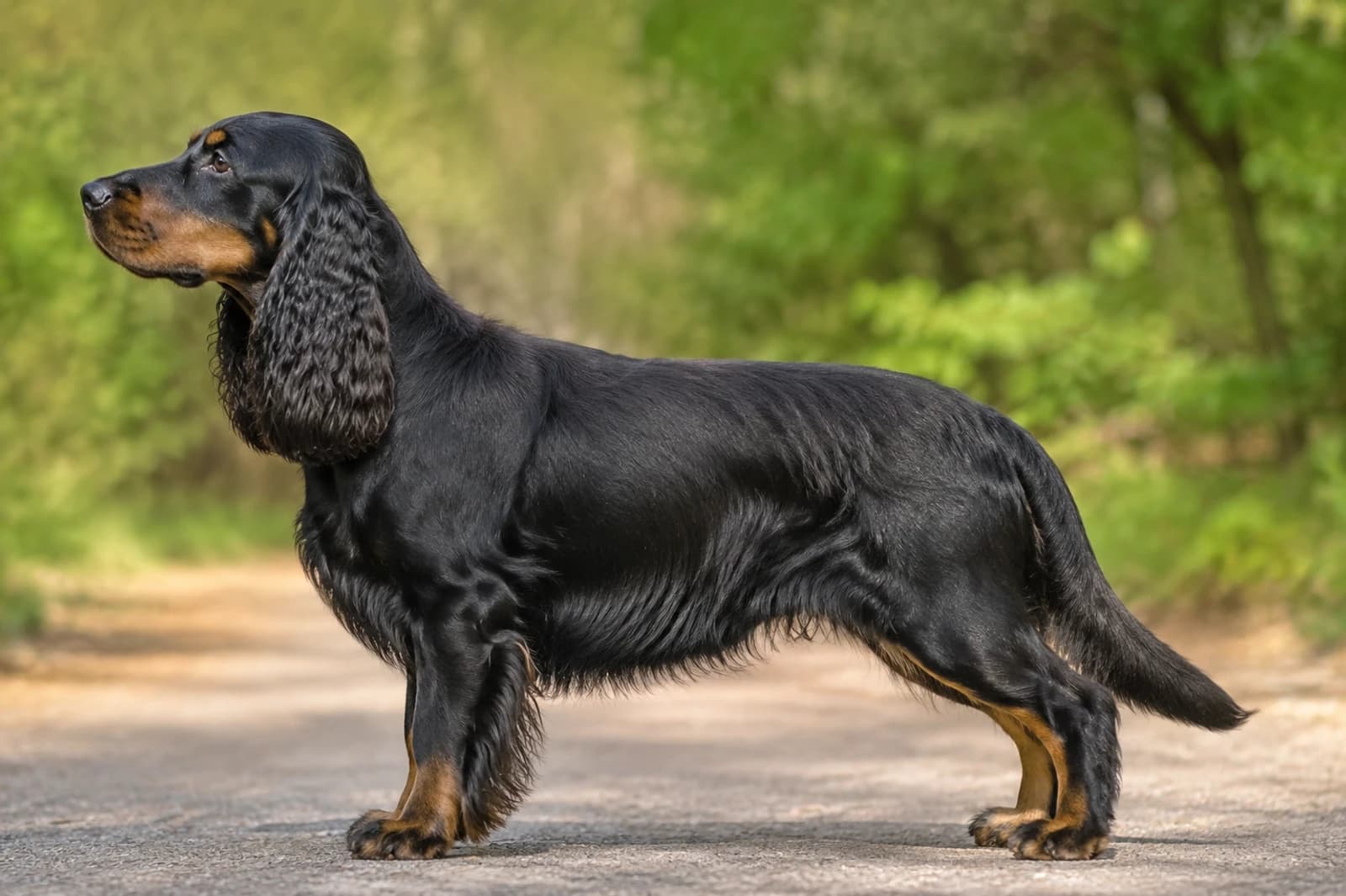
The Field Spaniel is a medium-sized, affectionate gun dog, ideal for active families or individuals seeking a devoted companion. Known for their gentle and loyal nature, they thrive in homes with space to explore and require daily exercise to channel their moderate energy. With their silky coat and expressive eyes, they are well-suited for owners willing to provide regular grooming and mental stimulation. This breed excels in dog sports and is patient and playful with children, though their hunting instincts may pose challenges with small pets.
At a glance
- Size
- Medium
- Height
- 17–18 in
- Weight
- 40–55 lb
- Life span
- 10–12 years
- Coat colors
- Black, Liver, Black & Tan, Liver & Tan, Blue Roan, Liver Roan, Black & White, Liver & White
- Coat type
- Silky, medium-length, dense with feathering
- Origin
- United Kingdom
How much does a Field Spaniel cost?
Adopt / rescue
$75–$400
Usually includes spay/neuter, first shots, and a microchip.
Buy from a breeder
$700–$2,000
From a reputable, health-testing breeder.
Approximate USD. Prices vary widely by region, breeder, pedigree, age, and coat colour — adopting is the lower-cost and recommended route. Avoid suspiciously cheap “breeders”; they’re often puppy mills.
Estimate the full cost of a Field Spaniel →Field Spaniel photos
Views
Front, side, rear and top — the full silhouette.Poses
How the breed sits, lies, moves and plays.Puppy to senior
The breed across its whole life.Expressions
The breed’s range of moods.Close-up details
Eyes, ears, nose, paws, tail and coat.Coat colors
The breed’s recognized colors.Click any photo to enlarge. We show the Field Spaniel from every angle — three views, poses, life stages, expressions, close-ups, coat and colors.
Appearance & size
At 17 to 18 inches at the shoulder and 40 to 55 pounds, a Field Spaniel gives you a dog that’s substantial without being blocky — think all-day hunting legs wrapped in a soft, silky coat. Females tend to hug the lower end of that range, while males push toward the upper, but the breed standard prizes balance over raw size. You’ll see a dog that’s slightly longer than tall, with a level topline and a deep, fairly wide chest that hints at real stamina.
The coat is what makes people stop and touch. It’s a single layer — no undercoat to mat up — so it lays flat or shows a light wave, never curls. Run your hand over it and it feels glossy and almost cool, with long, silky feathering that drips off the ears, chest, belly, backs of the legs, and the tail. Colors are classic spaniel: solid black, liver, or golden liver; roan patterns in blue, liver, or golden liver; and any of those can come with tan points above the eyes, on the cheeks, under the tail, and on the feet. You won’t see patches or parti-color patterns, just those rich coats with or without the copper trim.
From the front, the Field Spaniel stands squarely on straight, well-boned forelegs, shoulders laid back just enough to let him cover ground effortlessly. The head is long and lean without being snipy, and those ears — set low and well-feathered — frame a soft, intelligent expression. Dark hazel to brown eyes sit underneath moderate brows, giving him a look that’s alert but never hard.
Come around to the side and you pick up the working architecture: a graceful, slightly arched neck flowing into a strong back, well-sprung ribs, and a moderate tuck-up. The hindquarters are muscular, with well-bent stifles that drive the dog forward in a smooth, reaching stride. From the rear, you see parallel hocks and a tail (docked where still legal, otherwise left natural) that’s carried level with the back or just a tick above it when the dog is moving. There’s none of the exaggerated shortness or heaviness you see in some spaniels — this is a dog built to work without tiring, with enough bone to hold up but zero bulk that gets in the way.
History & origin
You’re looking at a breed that was practically erased by its own popularity — then painstakingly rebuilt from a handful of leftover dogs.
The Field Spaniel got its start in mid-19th-century England, spun off from landrace spaniels closely tied to the English Cocker Spaniel. Early breeders wanted a dedicated black show spaniel, but they took things to an extreme. By selecting for exaggerated length, low-slung bodies, and heavy bone, they produced a dog that was stunning in the ring and useless in the field. The breed rocketed to fame at early dog shows, then crashed just as fast. By the end of World War I, the public had turned against these caricatured, short-legged dogs, and Field Spaniels had all but vanished.
The AKC recognized them in 1894, back when they were still a functional (if already fashion-showy) breed. Within a few decades, though, the registered population cratered. Without a handful of breeders in the 1920s and ‘30s who deliberately crossed back to sensible working springer and cocker types, the Field Spaniel would be a footnote today. Those outcrosses restored a moderate, athletic body — the 17–18 inch, 40–55 pound dog you now see — and put the “field” back into the name. Even so, recovery was slow. The breed wasn't re-recognized in the UK until 1978, and recognition elsewhere followed suit.
Today’s Field Spaniel is still uncommon, often mistaken for a large cocker or a small springer. But that rarity is part of what saved it: there’s no commercial breeding pipeline warping the dog into extremes again. What you get now is what the original revivalists intended — a quiet, durable spaniel built to flush game all day in thick cover, with a level back and legs actually long enough to do the job.
Temperament & personality
At first glance, the Field Spaniel is all soft eyes and a wagging tail — the kind of dog who leans into your legs just to remind you he’s there. Under that affectionate, easygoing surface lives a capable hunting dog with a serious work ethic. Skip a few days of real exercise and that sweet companion will invent his own entertainment, usually at your sofa’s expense. This isn’t a “let him out in the yard” breed. He needs a solid hour of off-leash exploring, retrieving, or nose work every single day. A 20-minute leash walk around the block won’t touch his energy. Give him that, though, and he settles into the house like he owns the calmest corner of it.
With his family, a Field Spaniel is patient to a fault. He tolerates respectful children and gets along fine with other dogs when introduced properly. That patience has a limit around food — teach kids never to bother any dog while he’s eating, because even a gentle soul can learn to guard a bowl if startled. This is a breed that genuinely wants to please, making training a matter of consistency, not force. Harsh corrections backfire. A quiet “no” gets more mileage than a raised voice because these dogs carry a sensitive streak that remembers a hard tone long after the moment passes.
Separation anxiety is the real trouble spot. A Field Spaniel bonds tightly to his people and can unravel if left alone for a full workday without a midday break. Barking, destructive chewing, or urine marking in out-of-the-way rooms are common symptoms — not spite, just a dog who’s stressed. A dog walker, doggy daycare, or a family member home most of the day makes a huge difference. If you catch him starting to mark, clean the spot with an enzyme-based cleaner (vinegar spray works in a pinch) to erase the scent cue that says “go here again.” And if your Field Spaniel ever turns a table leg into a chew project, spritz it with boiled citrus peels and water; most dogs hate the smell and move on.
Watch his body language and you’ll read him like a book. A loose, wiggly posture and soft eyes mean all is well. Lip licking, yawning, or turning his head away are signals he’s uncomfortable — often the first sign before a growl. Tail wags alone mean nothing; look at the whole dog. A stiff body and a hard stare mean he needs space. With a Field Spaniel, those moments are rare, but knowing them keeps everyone safe.
He’s not a watch dog; an intruder might get a polite tail thump. This is a dog who’d rather welcome the plumber than question him. At 40–55 pounds, he’s perfectly sized for a lap, and he’ll take the spot whether you offer it or not. If you meet his exercise needs and don’t leave him alone for marathon stretches, you’ll get a deeply cuddly, quiet shadow who’s just as happy to hike five miles as he is to curl up under your desk while you work.
Good with kids, dogs & other pets
Field Spaniels carry a patient, non-aggressive temperament that slots naturally into family life. They read a room rather than demand the spotlight, and that calm, people-oriented nature makes them a safe bet around children. A 40–55 lb medium frame sits in a sweet spot — sturdy enough to handle a clumsy hug from a six-year-old, yet small enough not to bowl a toddler over by accident. Still, this is a sensitive breed. Kids need to be taught gentle handling; sharp voices or rough tumbling can shut a Field Spaniel down or make them avoidant. So set ground rules early: no crawling into the dog’s bed, no tugging on ears. Supervision is non-negotiable with any dog and any young child, and the Field Spaniel’s willingness to walk away instead of snap means adults must watch for quiet stress signals — yawning, lip licking, turning away — not just growls.
With other dogs, they’re generally affable when introduced with decent social skills. They weren’t bred to be scrappy. Most Field Spaniels enjoy the company of another friendly, well-matched dog, especially one that respects their more low-key play style. Early socialization is the engine behind that ease. The critical window slams shut around 12–16 weeks, so a Field Spaniel puppy should meet a wide cast of vaccinated, stable dogs (as well as children, men in hats, umbrellas, skateboards, etc.) in a gentle, positive way well before that four-month mark. Skipping this window often breeds timidity, noise sensitivity, or adult reactivity that’s far harder to undo later.
Cats and small pets are a more nuanced conversation. A Field Spaniel’s flushing heritage means critters that skitter or flutter can trigger a hardwired chase instinct. Plenty of Field Spaniels live peaceably with a household cat, particularly when they’ve been raised together from puppyhood and the cat stands its ground rather than bolting. Free-roaming pocket pets — rabbits, guinea pigs — are a bigger gamble and should never be left unsupervised with the dog, regardless of how angelic the dog acts when you’re standing there. If you keep birds, a solid "leave it" cue and separate rooms when you’re not home give everybody the safest outcome.
One reality that catches families off guard: a Field Spaniel’s high companionship drive. Describing them as "affectionate" undersells it — these dogs want to be with their people, near their people, all day. Leaving one alone in the backyard for hours or crated for a full workday without a serious midday break often creates an anxious, miserable dog who expresses distress through barking, chewing, or house soiling. Mental stimulation puzzles and gradual desensitization to alone time help, but if your household is empty from 8 to 6 every weekday, a Field Spaniel will struggle hard. Even after the prime socialization period, careful, force-free training can help an adult dog cope better, but forced interactions with other dogs or strangers to "fix" shyness backfire and add stress. An adult Field Spaniel who’s content with his own family doesn’t have to be a social butterfly — he just needs to feel safe.
Trainability & intelligence
A Field Spaniel isn’t the sort of dog who hangs on your every word without question—but give him a clear, consistent reason to work with you, and he’ll surprise you with how quickly he catches on. Often labeled “moderately trainable,” this breed shines with owners who pair patience with a light touch. Harsh corrections do more harm than good here: these dogs are sensitive, and a sharp tone can cause them to shut down or start second-guessing themselves.
They’re naturally inclined to please, yet they also think for themselves. That means a Field Spaniel may offer you a creative reinterpretation of “stay” if he spots a promising scent. Food rewards (tiny bits of cheese or chicken), a favorite tug toy, or an excited “good dog” tend to motivate him far better than repetition for its own sake. Keep lessons short—five to ten minutes, a couple times a day—and end each session on a win. He’ll learn basic manners and household rules without much fuss, making him a solid choice for first-time dog owners who are willing to be consistent.
The one piece that often takes extra work is a reliable off-leash recall. This is a flushing spaniel originally bred to quarter dense cover. His nose is hardwired to pull him toward interesting smells, so a casual “come” can vanish into thin air when a rabbit trail demands investigation. Start calling him back during puppyhood with enthusiasm and high-value rewards, and practice in fenced areas before testing him in wide-open spaces. Even then, proof the command around gradually bigger distractions.
What seals a Field Spaniel’s trainability is trust. Socialize him gently and early—not in a rigid “window” but by letting him explore new people, sounds, and surfaces at his own pace the moment your vet gives the green light. A sensitive pup who is hurried or flooded can become skittish; one who learns the world rewards curiosity grows into a steady, adaptable adult. Build that foundation, and you’ll have a dog who works with you because he genuinely wants to, not because he’s afraid to do otherwise.
Exercise & energy needs
Your Field Spaniel wasn’t built for a casual stroll. She packs the endurance of a full-size working gundog into a 40–55-pound body that can happily cover rough ground for hours. Plan on 60 to 90 minutes of exercise every day, split into at least two sessions. A single leash walk around the block won’t hold her attention — she needs off-leash running, swimming, or a vigorous game of fetch where she can stretch her legs and use her nose.
Mental work counts just as much as physical exertion. This is a breed that lives to scent and retrieve, so a bored brain often looks for trouble in the form of digging, chewing, or barking. Skip the predictable walk and throw in a hide-and-seek game with a favorite bumper, scatter her kibble across the yard, or work through a new trick. Puzzle feeders and scent games will settle her faster than an extra mile on pavement.
Because the breed can be prone to hip and elbow dysplasia, keep high-impact repetition — constant jumping on concrete, for example — to a minimum, especially during the first 18 months while joints are still developing. Soft grass, dirt trails, and swimming are far gentler. A Field Spaniel who discovers water often turns into an obsessive, happy swimmer, so safe access to a pond or pool is a bonus.
Sports and outlets that click
- Retrieving and swimming — a natural, low-impact favorite
- Nosework and tracking — taps into that legendary spaniel nose
- Agility — start with low jumps and soft footing until maturity
- Rally and obedience — keeps the thinking muscles sharp
- Dock diving or field work, if you want to go all-in
A Field Spaniel doesn’t need to be run into the ground; she needs a daily job that engages body and mind. If you can give her that, she’ll settle inside as a calm, easy companion. If you skip a few days, don’t be surprised when she redesigns your flower beds or reorganizes the toy box on her own.
Grooming & coat care
A Field Spaniel’s single coat looks plush but it’s built for the field — dense, water-repellent, and a little oily. That means grooming is more about managing feathering and debris than battling endless fluff. A thorough brush-out 2–3 times a week keeps the coat healthy and free of mats, especially where fur grows longest: the ears, chest, belly, backs of the legs, and tail.
Brushing and tools
Reach for a medium pin brush or a slicker with rounded pins to work through the flat-lying body coat and untangle the feathered trim. Follow up with a metal comb behind the ears and in the leg fringes — those spots knot up fast after a romp in wet grass. A soft bristle brush can add a final polish, but it’s optional; the coat’s natural sheen comes from its texture, not a high-gloss finish.
During spring and fall, when shedding picks up, bump the schedule to a daily once-over. A rake-style comb lifts out loose undercoat hair and cuts down the amount you’ll find on the couch.
Bathing and trimming
Bathe every 4–6 weeks or whenever your dog rolls in something awful. Use a gentle, dog-specific shampoo that won’t strip the natural oils that keep the coat weather-resistant. Some owners do a light sanitary trim around the paws and hocks to keep mud and burrs manageable, but heavy clipping isn’t needed for this breed and can ruin the traditional silhouette. A tidy of the feet pads and a scissor trim of stray ear feather hairs is usually plenty.
Ears, nails, and teeth
Those long, drop ears trap moisture and invite infections. Check and clean them weekly with a vet-approved ear cleaner — wipe the flap and outer ear with a cotton round, never dig deep. Nails should be trimmed every 3–4 weeks; if you hear clicking on the floor, they’re overdue. Daily tooth brushing with an enzymatic dog toothpaste prevents tartar buildup and the gum issues that can shorten a spaniel’s life.
Shedding & allergies
A Field Spaniel isn’t a heavy shedder, but you’ll still find silky dark hairs woven into couch cushions and riding on your clothes. They lose hair steadily all year, and the long, fine strands cling to fabric in a way that a short-haired dog’s don’t. Twice a year—usually spring and fall—you’ll see a blowout that can feel like a whole extra dog’s worth of hair drifting around. Daily brushing during those weeks makes the difference between a manageable house and a hairy one.
Managing the coat
Brush the moderately long, flat or slightly wavy coat two to three times a week with a pin brush or slicker. The feathering on the legs, chest, and tail is a tangle magnet; knots trap loose hair and then release it later in a clump, so spend an extra minute combing those spots. During seasonal peaks, add a quick daily session and an occasional bath to wash out what’s about to fall.
Drool
This isn’t a slobbery breed. Some dogs drip a little after a long drink, and a wet beard can leave a damp mark on your leg. Park a hand towel by the water bowl and the issue practically vanishes. You won’t be cleaning drool from the walls.
The allergy reality
No dog is truly hypoallergenic, and the Field Spaniel is no exception. They produce dander and saliva proteins that trigger allergies, and their shedding spreads those allergens into the air and onto surfaces. If someone in the household has dog allergies, don’t bank on this breed’s coat to solve it. Spend real time around adult Field Spaniels—ideally inside a home—before you commit. Regular brushing, a good vacuum, and HEPA filters can lower the allergen load, but they won’t eliminate it.
Diet & nutrition
Field Spaniels love their food, which can be a great training tool or a direct path to extra pounds — depending on how you manage it. This breed tends to be highly food motivated, so portion control matters from day one. Keeping your adult dog at a lean, muscular 40–55 lb protects joints and helps stretch those 10–12 years as far as possible.
Most grown Field Spaniels do well on roughly 1.5 to 2.5 cups of high-quality dry kibble a day, split into two meals. The exact number comes down to your dog’s build, activity level, and the calorie punch of the food you pick. A dog putting in long days in the field needs more fuel than a weekend rambler. Judge by feel — you want to locate ribs with a light layer of flesh, not see them jutting out or have to poke through a fat pad.
Puppies under four months need four meals a day, then three until about six months, settling into a morning-and-evening rhythm after that. Transition a new pup gradually by mixing what the breeder fed with lightly cooked, puréed meats, soaked kibble, or a trusted commercial puppy formula. Raw feeding, if you choose it, is safest when introduced under an experienced guide — guessing with a growing pup can throw off critical nutrient balance.
Weight creep is the real enemy here. Even a couple of extra pounds add stress to hips and elbows. Measure meals, go easy on treats, and cut back promptly if you see the waistline disappearing. Slow-feeder bowls or food puzzles work beautifully for Field Spaniels who inhale meals; they stretch out eating time and give that busy brain a little workout.
As your dog moves past seven or eight years old, metabolism slows, and you may need to gradually reduce portions. Some seniors do better with three smaller meals instead of two, and softer, blended foods help when teeth get sensitive. Watch the scale and adjust before the weight settles in — it’s far easier to prevent than to peel off later.
No matter how desperate those eyes get, never feed from the table. It teaches begging that’s hard to undo, and rich, fatty leftovers — think holiday trimmings — can trigger pancreatitis. Serve everything in his own bowl and keep his diet predictable and species-appropriate: plenty of animal protein, some vegetables, and a modest bit of grain or egg for variety.
Health & lifespan
A healthy Field Spaniel can share a decade or more with you—most live between 10 and 12 years. To tip the odds in your favor, the two issues you’ll hear about most are skin trouble and arthritis.
Field Spaniels can be prone to chronic skin conditions, and those long, pendant ears don’t help. Hotspots, yeast infections, and seasonal allergies often show up as scratching, licking paws, or head shaking. Checking and drying the ears after swims or wet walks cuts down on infections. Allergies may flare from environmental triggers or food, so you might work with your vet to tweak the diet—adding omega-3s or removing common triggers—and keep bedding clean.
Arthritis is the other one to watch. This is a sturdy, medium-sized dog, but extra weight strains joints fast. Staying inside the 40–55 pound range through measured meals and regular, low-impact exercise protects elbows and hips. Even a few extra pounds can mean the difference between a dog who bounds up the stairs at 9 and one who heaves himself up by the railing.
Responsible breeders don’t guess. They screen breeding stock for problems that run in the breed. Before you commit, ask to see:
- Hip evaluations (OFA or PennHIP)
- Annual eye exams by a veterinary ophthalmologist
- Thyroid screening—autoimmune thyroiditis shows up in spaniels
Routine prevention matters, too. Heartworm medication goes monthly during mosquito season and for a month after it ends. Rabies vaccination is legally required, and there’s no effective treatment once symptoms appear. Yearly vet visits catch early arthritis, skin changes, or ear infections while they’re still small issues.
And early, positive handling—getting your dog used to ear checks, paw handling, and vet exams—isn’t just about good manners. It means you’ll spot subtle changes in how they move or act, and you’ll catch a limp or a reddened ear before it becomes a full-blown problem. Catching arthritis early often leads to a plan that’s manageable: joint supplements, careful weight management, and the right kind of exercise instead of pain and stiffness you can’t undo.
Living environment
A Field Spaniel thrives in a home where someone is around for a good chunk of the day. These dogs bond deeply with their people and can develop serious separation anxiety if routinely left alone for 8+ hours. If you work long days outside the home, this isn’t the breed for you unless you arrange for a midday dog walker or daycare. Gradual alone-time training from puppyhood helps, but their baseline is a strong desire to be near you — often leaning against your leg or snoozing at your feet while you work.
A house with a securely fenced yard is the ideal setup, but an apartment can work if you’re honest about the exercise commitment. This is a medium-sized sporting dog, not a couch potato. Count on at least 60 minutes of real movement a day, split into two sessions. A quick potty break won’t cut it. They need to trot, sniff, and use their brain — off-leash romps in a safe area, long sniffy walks, or retrieving games in the water. Field Spaniels were bred to work the fields and marshes of England, so they adore swimming and will happily plunge into ponds or creeks. If you lack a yard, you’ll need a nearby park, trail, or dog-friendly swim spot.
Inside, they’re generally quiet and calm once their exercise tank is full. They aren't notorious barkers, but a bored, under-exercised Field Spaniel may voice frustration or become destructive. Mental work is just as critical: puzzle toys, hide-and-seek with a favorite ball, or short scent-training sessions tire them out as much as a run.
Climate-wise, their medium-length, water-resistant coat gives them decent tolerance for cool, damp weather — not surprising for a breed developed in the UK. They can overheat in hot, humid conditions, so summer outings should happen in the early morning or evening, with plenty of shade and water. In the house, they’ll claim a spot on the cool floor or a vent during a heatwave.
If you have a yard, double-check fencing. A Field Spaniel’s nose can override recall training, and they’ll follow a scent trail without a second thought. Expect a dog who wants to be included in everything you do, whether that’s a hiking weekend or simply moving from room to room as you tidy up.
Who this breed suits
This dog fits best with someone who can be around for a good part of the day. Field Spaniels form deep bonds and don’t do well left alone hour after hour — they can become destructive or anxious. A work-from-home setup, a retiree, or a family where someone is usually around is ideal. They’re gentle and patient with children, and at 40–55 pounds, they’re sturdy enough for a tumble in the yard without being too big for a smaller house. Just supervise with toddlers, as a happy tail-wag can knock a little one off balance.
First-time owners will find a Field Spaniel surprisingly manageable. These dogs are eager to please and responsive to positive training, without the high-octane intensity of a working-line spaniel. They need real exercise — a leash walk around the block won’t cut it. Plan on at least 45–60 minutes of active time daily: a long walk, a chance to sniff on a long line, maybe a swim or a romp in a fenced area. But they’re just as happy curling up with you on the couch afterward. That off-switch makes them a solid match for active singles or couples who also value downtime.
A Field Spaniel isn’t the dog for someone chasing a no-shed, wash-and-go breed. Their silky, feathered coat needs brushing two or three times a week and periodic trimming to prevent mats. Ears require regular checking, especially if the dog swims. If you see grooming as a bonding ritual, you’ll enjoy it; if it feels like a chore, think twice.
Small-space living can work if the dog gets out often, but barking can become a problem when they’re bored. They’re alert and will announce the mail carrier, though they’re too soft-natured to be guard dogs. The real dealbreaker is chronic absence. If your household is gone 9-to-5 with no plan for a midday break, a Field Spaniel will struggle. Skip this breed if you can’t offer consistent companionship — it’s the price of admission for such a devoted dog.
Cost of ownership
A well-bred Field Spaniel puppy from a responsible breeder typically runs $1,500 to $3,000, though show prospects or pups from champion bloodlines can push higher. This price isn’t just for the dog itself — it covers health screenings for hips, eyes, and thyroid, plus early socialization. If you go the rescue route, adoption fees usually land between $300 and $500, but these dogs aren’t common in shelters.
Monthly Costs Breakdown
Once that silky pup is home, the bills settle into a rhythm. Plan on these monthly outlays for a 40–55 lb adult:
- Food: High-quality kibble or a balanced raw diet runs about $50–$75 a month. Look for formulas that support joint health and that single-layer coat.
- Grooming: A professional session every 6–8 weeks costs $60–$80 each time. Because the Field Spaniel’s coat sheds moderately and tangles around the ears and feathering, you’ll also need a slicker brush, metal comb, and detangling spray at home. Budget roughly $30–$40 monthly if you average out the salon visits.
- Routine Vet & Preventatives: Annual exams, vaccines, heartworm and flea/tick prevention average $50–$75 monthly. This breed’s floppy ears can trap moisture, so ear cleaners and periodic vet checks for infections might tack on a little extra.
- Pet Insurance: For a medium-sized breed with a 10–12 year lifespan, a comprehensive accident-illness plan generally costs $35–$60 a month. This becomes a safer bet given that responsible breeders screen for hip dysplasia, but issues like ear infections or allergies can still pop up.
First-Year Reality Check
Upfront gear (crate, bed, leash, collar, microchip, spay/neuter) commonly adds $600–$900 to the first year. Toss in two rounds of professional grooming for a puppy getting used to the table, and your first-year total, including the purchase price, can land in the $3,500–$5,000 range. After that, expect a steady $2,500–$3,000 per year, not counting the emergency you hope never happens.
Choosing a Field Spaniel
Breeder or Rescue?
Field Spaniels aren’t common—only a few hundred pups are registered each year—so a responsible breeder will almost certainly have a waitlist. Start with the Field Spaniel Society of America’s breeder referral. A good breeder won’t treat this like a retail transaction. They’ll interview you thoroughly, ask about your home, energy level, and plans for the dog, and insist the dog come back to them if you ever can’t keep it. If you’re open to an adult dog, breed rescue is an option. Rescue coordinators often know the dog’s real-world temperament, house manners, and any quirks, which can be a huge advantage for a family with kids or other animals.
Health Clearances You Should Ask For
A breeder should hand you hard copies of test results—not just say the parents were “vet checked.” Field Spaniels can be prone to a few issues, so confirm these clearances yourself on the Orthopedic Foundation for Animals (OFA) website:
- Hip dysplasia: Hips evaluated by OFA (Fair, Good, or Excellent) or PennHIP (preferably above the breed median). This isn’t a casual flashlight exam; it’s a radiograph read by a specialist.
- Eye certification: An annual exam by a board-certified veterinary ophthalmologist. Look for a current OFA Eye Certification or CERF number. Inherited cataracts and progressive retinal atrophy (PRA) exist in the breed.
- DNA test for prcd-PRA: A cheek swab test tells you if the parents are clear, carrier, or affected. At least one parent must be clear for the puppy to be safe from this form of progressive blindness. The breeder should show you the lab report.
- Thyroid: Autoimmune thyroiditis appears in some lines. Many breeders submit bloodwork to the OFA thyroid registry. Ask if that’s been done and see the result.
Also note the floppy ears. A honest breeder talks about the regular ear cleaning this breed needs, because chronic infections are a management issue, not a dealbreaker you discover on your own.
Red Flags to Walk Away From
- No published health clearances, or the breeder won’t give you the dog’s OFA registration number so you can look them up.
- Multiple litters on the ground simultaneously with no waitlist—that’s production, not preservation.
- Puppies sold before eight weeks old.
- Upselling “rare” colors (liver or black with tan points aren’t rare; they’re standard). Price shouldn’t vary by coat color.
- The breeder doesn’t ask a single question about your life, yard, experience, or what would happen to the dog if you move.
- Dogs live exclusively in kennel runs with no indoor socialization. A Field Spaniel raised without household sights, sounds, and daily handling will have a steeper adjustment curve.
- A contract that’s more concerned with breeding rights than with the dog’s welfare—or no take-back clause at all.
Picking the Right Puppy
Visit the litter around six to eight weeks. Watch more than you touch at first. You want a puppy that moves toward you with a relaxed body and recovers quickly after a loud noise, not one that freezes permanently or bolts. A little hesitation is normal; outright panic or constant hiding is a temperament flag in a breed that should be friendly and moderately bold.
Ask the breeder to describe each puppy’s personality. A pup wired for all-day hunting may be too intense for a quiet home; a calmer, more people-oriented sibling might be a better match. Look for clear eyes, clean ears with no odor, a dry nose, and firm stools in the pen. Puppies should have had at least one round of age-appropriate vaccines and a recent deworming.
A thorough breeder sends you home with a written contract, health records, AKC registration paperwork, a feeding guide, and a straightforward schedule for the first few weeks. They also make it clear they’re available for questions long after the check clears. Expect to spend the first months building potty training, crate comfort, and short, positive socialization outings—Field Spaniel puppies bond hard and thrive on that early structure.
Pros & cons
Pros
- Deeply bonded with their people — they’ll stick by your side whether you’re on a hike or sprawled on the couch.
- Medium size (40–55 lb, 17–18 in) is easy to load into a car yet solid enough for a long day outdoors.
- Eager to please and bright; they pick up positive, reward-based training quickly.
- Gentle and patient with respectful kids and other dogs, especially when raised together in a calm home.
- Moderate exercise needs: a daily 45–60 minute walk plus some off-leash sniffing or a game of fetch fills their tank.
- The silky, medium-length coat sheds less than many spaniels, and that soft, soulful expression melts hearts.
- A 10–12 year lifespan means you get a long-term companion when you stay on top of vet care and healthy routines.
Cons
- That lovely coat mats without regular attention — plan on brushing 3–4 times a week and trimming feathering to keep it tidy.
- Drop ears trap moisture and debris; weekly cleaning and drying are non-negotiable to dodge infections.
- Tendency to be reserved or timid around strangers without early, ongoing socialization — they’re not a go-everywhere party dog.
- Shadowing instinct can spiral into separation anxiety if left alone for long stretches, leading to barking or destructive chewing.
- Sensitive to harsh tones or corrections; training demands a light touch and plenty of patience.
- Responsible breeders screen for hip dysplasia, ear issues, and progressive retinal atrophy (PRA), but these remain concerns in the breed.
- A need for near-constant connection means the breed isn’t a good fit for a household that’s gone all day — a lonely Field Spaniel will find ways to let you know.
Similar breeds & alternatives
If the Field Spaniel tugs at your heart but you want to weigh similar dogs before committing, start with a few that share flushing-spaniel roots but land differently in energy, size, or availability.
English Springer Spaniel
The Springer is the obvious cousin—and a much more common one. Both are in that 40–55 lb range, but the Springer often stands slightly taller (19–20 inches) and packs more motor. Field-bred Springers need a solid 90 minutes of hard running daily and a job to chew on; show-line Springers can settle a notch below that, but still outpace the typical Field Spaniel’s moderate, “give me a good walk and a puzzle toy” rhythm. Grooming is parallel (feathered coat, twice-weekly brushing, seasonal shedding), and both are friendly with family, though the Springer’s enthusiasm can be more slapdash. Go with a Field Spaniel if you want a less frenetic, rarer companion; pick a Springer if you want easier access to breeders and are ready for a bigger daily charge.
Cocker Spaniels (American and English)
American Cockers are smaller (20–30 lb, 13.5–15.5 inches) with a glamorous, high-maintenance coat that typically needs professional grooming every 6–8 weeks. They tend to be merry but more sensitive—harsh tones can shut them down faster than a Field Spaniel. The English Cocker (26–34 lb, 15–17 inches) is more compact than a Field Spaniel but still a sturdy hunter; many lines have a bouncier, more driven temperament. Neither Cocker has quite the Field Spaniel’s laid-back, silent-hunter vibe. A Field Spaniel rewards you with steadiness and a deep, unspooling affection that isn’t clingy. Cockers often demand more lap time and can be quicker to alert-bark at the door.
Welsh Springer Spaniel
Size matches closely (17–19 inches, 35–55 lb), but the Welsh Springer brings a red-and-white coat and a more reserved personality. With strangers, expect polite distance at first; the Field Spaniel usually warms up faster. Energy levels are comparable—both happy with an hour of exercise, though the Welshie might want a little more sprint-and-sniff variety. Both breeds can be soft and require patient, positive training. The Welsh Springer is slightly more common yet still not a breed you’ll stumble on at every dog park. Choose the Field Spaniel for an all-brown, less suspicious family shadow; choose the Welshie if you don’t mind a slower social warm-up.
Clumber and Sussex Spaniels
If the Field Spaniel’s moderate pace appeals but you like a heavier, lower-slung dog, the Clumber Spaniel (55–85 lb, 17–20 inches) is essentially a steady, affectionate couch bear wrapped in a white-and-orange coat. Exercise needs are lower—a leisurely long walk, not a sprint—but drool and weight management become bigger considerations. The Sussex Spaniel (35–45 lb, 13–15 inches) is a rare golden-liver breed with a shorter, more rectangular body and an even more deliberate, stubborn tilt. Both shed more than a Field Spaniel and come with smaller gene pools. The Field Spaniel strikes a middle ground: athletic enough for water and woods, calm enough to settle indoors, and less prone to the Sussex’s outright deterrence to being rushed.
Every breed here has a silky, feathered coat and a heart for the family. The real differentiator isn’t just size—it’s how much “go” you can honestly live with day after day, and whether you relish owning a dog most people have to ask about twice.
Fun facts
- Originally bred to flush and retrieve game in dense cover.
- Known as the 'gentleman's spaniel' for their docile temperament.
- Almost went extinct in the early 20th century due to breeding trends.
- They sport a distinct topknot of hair on their head.
Frequently asked questions
- Is the Field Spaniel good with children?
- Field Spaniels are typically gentle and affectionate with children, making them a good family companion. They tend to be patient, but supervision is recommended around very young kids due to their medium size and energy. Early socialization helps ensure positive interactions.
- How much exercise does a Field Spaniel need?
- Field Spaniels require moderate daily exercise, such as a long walk or active playtime, to stay healthy and content. They enjoy retrieving and swimming, and mental stimulation through training or puzzle toys can help prevent boredom. Aim for at least 45–60 minutes of activity per day.
- Does the Field Spaniel shed a lot?
- Field Spaniels are moderate shedders. Their single, silky coat sheds some hair throughout the year, with potential increases during seasonal changes. Regular brushing helps manage loose fur and keeps shedding under control.
- What grooming does a Field Spaniel require?
- The breed’s medium-length, feathered coat needs brushing two to three times per week to prevent mats and tangles. Occasional trimming around the ears and paws may be necessary, and regular ear checks are important to avoid infections. Bathing can be done as needed.
- Can a Field Spaniel live in an apartment?
- Field Spaniels can adapt to apartment living if their exercise and mental stimulation needs are met. They are relatively calm indoors, but they do best with access to outdoor space and should not be left alone for long periods. Consistent daily walks are essential.
- Is the Field Spaniel prone to barking?
- Field Spaniels are not known to be excessive barkers, but they may alert bark when strangers approach. With proper training and socialization, barking can be managed. They are generally a quiet breed compared to some other spaniels.
Tools & calculators for Field Spaniel owners
Quick estimates tailored to Field Spaniels — pre-filled with this breed’s size where it matters.
Articles & stories about the Field Spaniel
Sources & standards
This profile follows recognized breed standards from the American Kennel Club (AKC) and the Fédération Cynologique Internationale (FCI), along with established veterinary and breed-club guidance. These describe general breed tendencies — every dog is an individual.
Owner stories
Have a Field Spaniel? Share your experience — grooming tips, personality quirks, anything goes.