

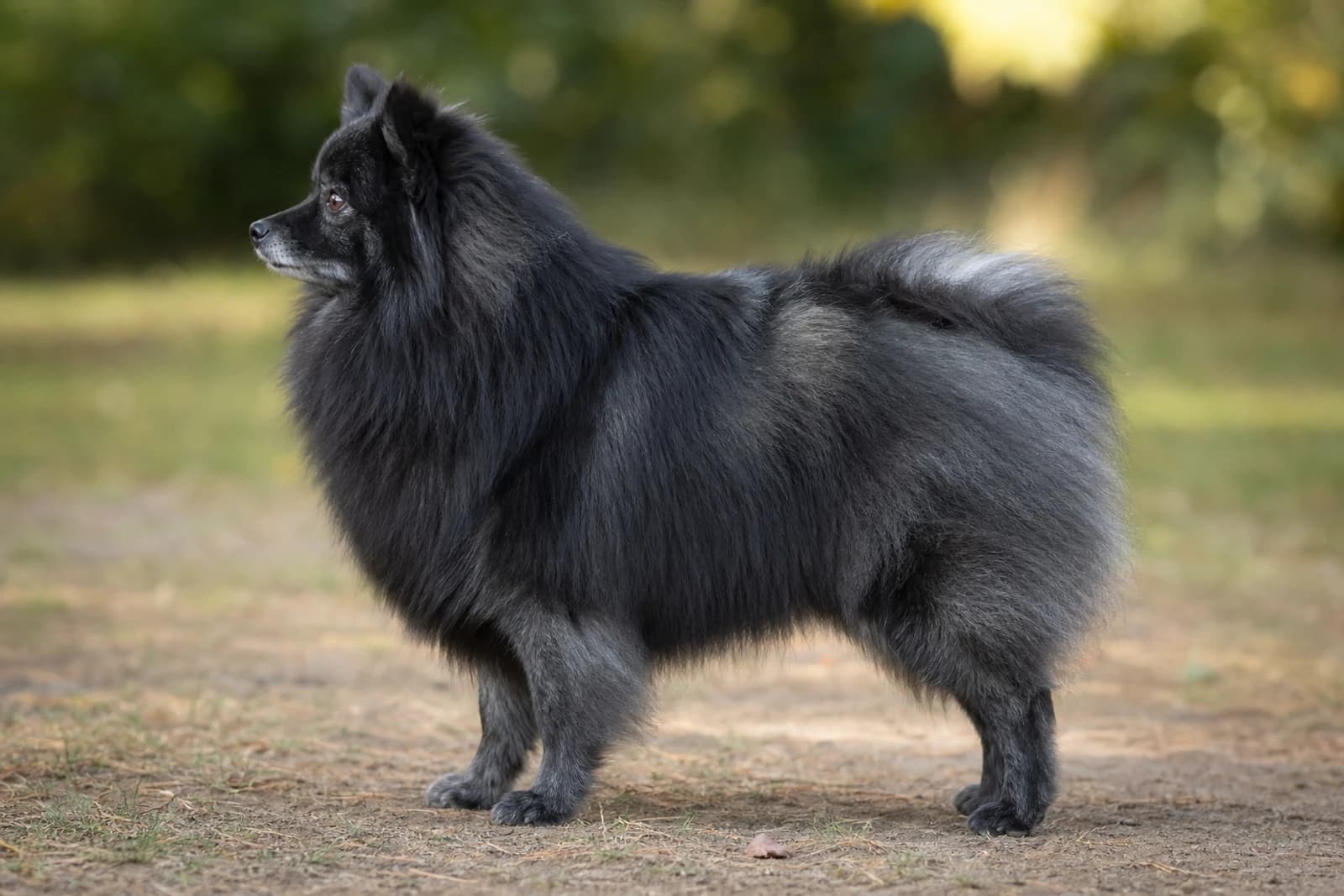
The German Spitz is a small, lively companion with a fox-like face and a luxurious double coat. Perfect for families and individuals who want an alert, affectionate dog that thrives on human interaction. Their playful and curious nature makes them great for active households, but they can be vocal, so early training is essential. While they get along well with older children, supervision is recommended with very young kids due to their small size. Despite their small stature, they are bold and make excellent watchdogs. They are intelligent but independent, requiring patient training. With a lifespan of 14-15 years, they become devoted family members. Apartment-friendly but needs daily exercise and regular grooming.
At a glance
- Size
- Small
- Height
- 9–11 in
- Weight
- 18–22 lb
- Life span
- 14–15 years
- Coat colors
- White, Black, Brown, Orange, Wolf-gray, Cream, Parti-color
- Coat type
- Thick, dense double coat
- Group
- Spitz–Type
How much does a German Spitz cost?
Adopt / rescue
$75–$400
Usually includes spay/neuter, first shots, and a microchip.
Buy from a breeder
$700–$2,000
From a reputable, health-testing breeder.
Approximate USD. Prices vary widely by region, breeder, pedigree, age, and coat colour — adopting is the lower-cost and recommended route. Avoid suspiciously cheap “breeders”; they’re often puppy mills.
Estimate the full cost of a German Spitz →German Spitz photos
Views
Front, side, rear and top — the full silhouette.Poses
How the breed sits, lies, moves and plays.Puppy to senior
The breed across its whole life.Expressions
The breed’s range of moods.Close-up details
Eyes, ears, nose, paws, tail and coat.Coat colors
The breed’s recognized colors.Click any photo to enlarge. We show the German Spitz from every angle — three views, poses, life stages, expressions, close-ups, coat and colors.
Appearance & size
Build and size
The German Spitz Klein is a compact little dog built like a miniature fox on a cold-weather trail. His silhouette is roughly square—the height at the withers nearly matches the length from chest to rump—which gives him a sturdy, balanced presence despite his small size. At 9 to 11 inches tall and 18 to 22 pounds, he’s easy to scoop up, but he doesn’t feel fragile. His body is muscular, with a deep, well-sprung chest and a short, straight back. From the side, you’ll see a moderate tuck-up and straight, ground-covering legs set squarely under all that fur. The bone is fine but never spindly, and the feet are small, round, and cat-like.
Coat and color
The double coat is the main event. A dense, woolly undercoat pushes the longer, straight outer coat away from the body, so the dog looks like he’s floating inside a soft halo. The mane around the neck is especially lavish, forming a ruff that blends into a feathery chest and shoulders. Colors run the spitz rainbow: solid white, black, brown, orange, cream, or grey-shaded (wolf sable), often with lighter shadings on the legs, belly, and underside of the tail. Parti-colors and spotted patterns show up too. The tail is a thick, carry-it-proud plume that lies flat over the back in a tight curl—when you see him from behind, that curl adds a round, plush finish to the whole outline.
Head and expression
Face-on, the most arresting feature is that fox-like head. A clean wedge tapers to a moderately pointed muzzle—never snipey—with a distinct but not cliff-like stop. Small, triangular ears stand bolt upright, set wide apart and tipping just slightly forward. The eyes are medium-sized, almond-shaped, and dark, ringed in black, giving a sharp, intelligent expression that’s equal parts curious and mischief-ready. When you look head-on, the tips of the ears and the nose should form a neat equilateral triangle, with nothing heavy or coarse.
A walk-around view
From the side, the silhouette explains a lot about the breed’s watchdog roots: a well-arched, proud neck, a deep chest for stamina, and a compact, balanced frame that looks light on its feet. Move around to the rear and the hind legs stand parallel and strong, with moderate angulation. That tail never droops—it sits firmly over the back whether the dog is trotting or taking a nap on the sofa. The overall picture is a bright, self-possessed little dog that always looks ready for the next interesting thing.
History & origin
The dog we call the German Spitz today — 9 to 11 inches at the shoulder and a sturdy 18 to 22 pounds — is the direct, un-hyped descendant of a working lineage that reaches back at least four thousand years. Spitz-type dogs appear in Stone Age peat bog finds across Central Europe, and by the Middle Ages their prick-eared, thick-coated silhouette was a fixture in every German principality. What you are looking at is not a scaled-down novelty but the original small Spitz that earned its keep on farms, barges, and tradesmen’s carts long before anyone called it a “breed.”
A Farmer’s, Boatman’s, and Town Crier’s Dog
Across the German countryside, the Klein (small) Spitz wore many hats. He was a sharp-pitched alarm system that announced strangers before they reached the door, a determined ratter in barns and storehouses, and a fire-and-forget companion who could entertain children for hours and still have enough energy to ride along with a peddler the next morning. Nobody made a fuss over him — he was simply the family’s all-purpose working partner, valued for a bark that carried, a coat that shed weather, and a brain that never quit. Farmers kept them; innkeepers kept them; riverboat families kept them. The size we recognize today was deliberately practical: big enough to be heard and to handle itself with vermin, small enough to feed for a fraction of what a guard dog cost.
The Victorian Fork in the Road
The breed’s path took a sharp turn once English travelers started bringing home the tiniest German Spitz they could find. By the late 1800s, fanciers in Britain were pouring effort into shrinking the dog further, creating what became the Pomeranian — a toy breed that exploded in popularity under Queen Victoria’s patronage. Back in Germany, serious dog men didn’t abandon the original. They formalized the Spitz varieties by size: Wolfsspitz (the largest), Giant Spitz, Medium Spitz, Miniature Spitz (Klein), and the Toy Spitz that eventually spun off as a separate breed. The Pomeranian went its own way into the show ring; the German Spitz Klein stayed anchored to its working roots. The FCI classification later locked in that distinction, and European breeders kept the Klein’s structure, coat, and temperament true to the old farm dog.
A Quiet Presence Until Now
For decades the German Spitz, especially the small variety, remained practically invisible on this side of the Atlantic. It didn’t chase the American show trend, and it had no marketing machine behind it. What it did have was a handful of dedicated breeders in Germany, the Netherlands, and eventually the United States who valued the dog’s longevity (14 to 15 years is common), health, and unvarnished personality. The United Kennel Club granted recognition, and the breed is now slowly building a following among people who want a bright, unfiltered watchdog that still acts like it runs the household. No fluff, no size manipulation — just a compact, clear-headed Spitz with a job memory that goes back millennia.
Temperament & personality
The German Spitz is a big-dog personality in a neat 18-to-22-pound package. He’s lively without being hyper, and his sharp mind makes him a joy to train—when you do it his way. He forms tight bonds with his people and wants to be in the middle of everything. Expect a fluffy shadow that follows you from room to room, offering a soft nudge when he thinks you’ve been still too long.
A watchdog through and through
His farmyard heritage is on full display. This little dog notices everything—the mail carrier, the neighbor’s cat, a leaf that moved suspiciously. He’ll happily let you know when a delivery truck is three blocks away. Without early training, that enthusiastic alarm bark can become a full-time job for your household. Teaching a solid “quiet” cue from day one keeps him from turning into a four-legged fire alarm. Left alone for long stretches, he may bark out of anxiety or boredom, so a midday dog walker or a stash of puzzle toys helps him stay sane.
Training him your way
He’s whip‑smart but can be stubborn. Force or harsh corrections shut him down, while short, upbeat sessions with lots of praise and treats make him eager to work. Tap into his natural curiosity—teach him to put his toys away or find hidden snacks, and you’ll both have a blast. Watch for calming signals: a yawn when he’s not tired, a lip‑lick, or turning his head away. These are his way of saying “I need a break” or “I’m uncomfortable.” Respect those cues and you deepen his trust.
Daily life and household harmony
A couple of brisk 20‑ to 30‑minute walks plus some indoor fetch keep him content, but he’s also game for longer adventures. Skip his exercise a few days in a row, and that pent‑up energy may spill into restless barking or creative redecorating of your shoe collection. Channel his chewing instincts from the start. Provide a rotation of safe chew toys to soothe teething gums and satisfy the adult drive to keep jaws strong and teeth clean. If he zeroes in on chair legs, a homemade citrus spray (boil citrus peels in water, strain, and spray) makes off‑limit items far less appealing.
Because he’s so alert and sensitive to scent, a past indoor accident can easily trigger repeat marking if the odor lingers. Clean messes with an enzymatic cleaner or a vinegar spray (white and cider vinegar work) to break the cycle. He defines his territory partly by your family’s smell, so accidents can happen in rarely‑used rooms that don’t carry your scent as strongly. Simply spending time there or bringing a worn T‑shirt into the space can help.
Kids, pets, and mealtime manners
German Spitz typically does well with respectful children who learn to read his signals. He’s not a stuffed animal—teach kids to invite him to play rather than grab, and to let him eat in peace. Even a normally gentle dog can snap if startled during a meal, so separate feeding areas and a strict no‑disturb rule go a long way. Early socialization and a consistent, kind hand raise a dog who can be a loyal playmate and a vigilant, cuddly companion for 14 or 15 years.
Like many Spitz types, he may have a decidedly un‑glamorous hobby: rolling in dead fish or droppings on a walk. Biologists have a few guesses—masking his scent or showing off a “find”—but from your perspective, it’s just messy. A reliable “leave it” cue saves bath time. That combination of cleverness, devotion, and just a dash of mischief is exactly what makes him such a memorable dog for an owner who treats him as a thinking partner, not just a fluffball.
Good with kids, dogs & other pets
German Spitz dogs have a patient, non-aggressive nature that lets them settle into family life with kids surprisingly well. Still, the numbers matter here: you’ve got an 18‑ to 22‑pound dog standing 9 to 11 inches tall. A toddler who trips or hugs too hard can easily cause a serious injury, so supervision is non-negotiable. Teach children to sit on the floor and wait for the dog to approach — he’ll come over when he’s ready. A socialized Spitz will often bounce into gentle play, but he’ll also walk away when he’s had enough. Respect that exit and give him space.
Where the German Spitz really shines is in homes that don’t treat him like outdoor background noise. These dogs bond tight with their people and can become distressed if left alone for long stretches. Mental stimulation and gradual alone-time practice help, but this is a companion breed, not a backyard ornament. Plan on him being underfoot, not sequestered.
With other dogs, the outcome hinges on early puppyhood. A German Spitz raised with a calm adult dog usually grows into a polite, playful companion. An adult who missed those early introductions may be selective or skittish around unfamiliar dogs. Skip the busy dog park and set up quiet, one-on-one leash walks with a known, even-tempered dog instead. If your adult Spitz is genuinely content by your side without canine company, forcing dog-dog interactions only piles on stress.
The story with cats and small pets is manageable, not automatic. Raise a Spitz puppy with a cat from day one, and you’ll often see peaceful cohabitation — though the dog may still chase when the cat darts, because that’s a Spitz impulse. Hamsters, rabbits, and birds are a different matter. The quick, skittering motion triggers a chase drive that can end badly. Keep small-pet cages elevated and in a separate room, and never trust a Spitz unsupervised around a loose hamster.
The socialization clock ticks fast. Between 3 and 14 weeks, expose your puppy to friendly kids, calm dogs, and the everyday sounds of your household. Positive, bite-sized sessions during this window build a dog who stays curious rather than fearful when something new shows up. An adult German Spitz who already startles at strangers or backs away from other dogs can still improve with gentle desensitization — but he may never be the life of the dog park, and that’s fine. Meeting your dog where he’s comfortable matters more than any imaginary sociability score.
Trainability & intelligence
A German Spitz picks up new cues fast — often faster than you’re ready for. These little dogs are bright, watchful, and bred to sound the alarm, so they notice everything. That intelligence doesn’t mean blind obedience. It means you’re training a quick thinker who will also decide whether your request is worth his time. If you come in heavy-handed or repetitive, you’ll see the Spitz stubbornness kick in. He’ll simply tune you out.
What actually works is turning training into a conversation. Use positive reinforcement — tiny treats, a squeaky toy, an excited “good!” — and mark the exact moment he gets it right. Praise builds the trust this breed runs on. Correction-based methods backfire fast, creating a wary, shut-down dog instead of a willing partner. Keep sessions short, varied, and upbeat. If you drill the same sit for ten minutes, your Spitz will find his own entertainment, probably by barking at a falling leaf.
Recall deserves a reality check. Off-leash reliability isn’t a given. This is a spitz type: independent, with a streak of “I’ll check that thing first.” You can build a solid recall with high-value rewards and lots of practice in low-distraction places, but don’t mistake a fenced yard for an off-switch. Some will never be safe off-leash near traffic.
Start socialization the day you bring the puppy home, ideally before 14–16 weeks. Expose him gently to different people, calm dogs, city sounds, and weird surfaces. A poorly socialized German Spitz can tip into fear-based reactivity and nonstop alert barking. Ongoing, positive experiences keep that sharp mind busy in a good way and prevent him from treating every visitor like a suspicious intruder.
Exercise & energy needs
Think of a German Spitz as a clever little housemate who runs on curiosity, not sheer horsepower. You aren’t dealing with a dog that needs to be run to exhaustion every day. Instead, aim for 30–45 minutes total of true daily activity, broken into a couple of short, focused sessions. A single long walk often bores them; two or three brisk 10–15 minute outings keep their brain engaged and stop them from manufacturing their own entertainment later.
Their intensity is moderate but bouncy. They love to trot beside you, burst into zoomies, and then park themselves in a sunny spot to watch the world. Because these dogs tip the scales at just 18–22 pounds, you can easily meet a chunk of their movement needs indoors with a game of hallway fetch or a round of hide-and-seek. That’s not a cop-out — smaller, clever dogs often do better with frequent quick sessions rather than one big push.
Mental exercise isn’t optional with this breed; it’s how you prevent the nonstop barking and anxious pacing. Puzzle toys, snuffle mats, and scent games drain that busy Spitz brain far faster than mindless laps around the block. Teach new tricks regularly — they’re natural show-offs and pick up everything from “spin” to “put your toys away” if you make it fun. Mini agility, even a homemade course with broomsticks and a tunnel, plays directly to their light-footed, eager-to-please streak.
A key word of caution: skip high-impact leaping or long stair climbs while they’re puppies, as joints are still developing. For adults, the best routine pairs a morning sniff walk with an afternoon training game. A tired German Spitz is a quiet one. Skip the mental workout, and you’ll quickly learn that those perked ears and bright eyes can find plenty of trouble on their own — like screaming at every leaf that falls within 50 feet of the front window.
Grooming & coat care
The German Spitz wears a glorious double coat — a soft, dense undercoat and a longer, harsher outer coat that stands off the body. That magnificent fluff comes with a price: serious shedding, especially twice a year when the coat blows. During those few weeks, daily brushing is non-negotiable. The rest of the year, three times a week usually keeps loose fur from taking over your sofa.
Brushing & Tools
A pin brush or a slicker brush with rounded pins works through the long outer coat without breaking it, while a wide-toothed metal comb finds hidden tangles behind the ears and under the legs. When the undercoat starts coming out in tufts, an undercoat rake reaches deep to remove dead hairs before they mat. Always brush down to the skin — surface brushing just fluffs the top layer and leaves painful mats brewing underneath.
Bathing & Trimming
Bathe only when he’s dirty or starts to smell doggy. Over-bathing strips the natural oils that make the coat weather-resistant; every 6–8 weeks is plenty for most indoor Spitz. Brush out every tangle before water touches the coat — wet mats tighten into solid knots you’ll have to cut out. Scissoring isn’t part of the breed’s look. A quick tidy of the feet, a sanitary trim around the rear, and maybe neatening the feathering on the backs of the legs is all that’s needed. Never shave the coat. It insulates against heat and cold, and once shaved, the undercoat may not grow back properly.
Nails, Ears & Teeth
Keep nails short — once a month or whenever you hear clicking on the floor. The small, prick ears get good airflow but still collect wax; wipe them out weekly with a damp cloth. Brush his teeth several times a week. Small breeds are prone to dental disease, and a Spitz with a clean mouth is a more comfortable, longer-lived dog.
Seasonal Shedding & Coat Care
When a big shed hits, step up to daily brushing. A warm bath can loosen dead undercoat — follow it with a high-velocity dryer (if you have one) or a thorough comb-through while he’s still damp. The extra 10 minutes a day keeps your clothes and furniture from wearing a fur coat. It’s also your best chance to run your hands over his whole body and catch any lumps, bumps, or early skin changes before they become bigger problems.
Shedding & allergies
A German Spitz doesn’t just shed — it generously donates hair to every surface in your home. This breed wears a stand-off double coat: a dense, woolly undercoat beneath a harsh, straight outer coat. Daily tumbleweeds of fluff drift across the floor year-round, and twice a year the shedding kicks into high gear with a seasonal blowout. During those weeks in spring and fall, you can literally pull loose undercoat out in tufts. It’s not subtle.
- Year-round shedding: Hair clings to sofas, dark trousers, and car upholstery. A quick pat leaves you wearing a fine layer of fur.
- Seasonal blowout: When the undercoat releases en masse, a single petting session can fill both hands with fluff. Expect to brush daily — a pin brush and metal comb are your best friends — and still find drifts in corners.
- Drool: Minimal. The German Spitz isn’t a drooly breed, so that’s one less wet spot to clean.
Now for honesty: there’s no “hypoallergenic” German Spitz. The heavy shedding spreads dander (and the proteins that trigger allergies) everywhere the hair lands. If someone in your home reacts to dogs, this breed is a poor match — no amount of grooming changes that. A powerful vacuum with a pet attachment and a steady supply of lint rollers become part of daily life.
Diet & nutrition
A German Spitz at the right weight feels solid but sleek — ribs easily felt under a thin layer of fat. Because this is a compact 18–22 lb dog, even a single extra pound stresses small joints and can set the stage for orthopedic trouble later. Measure every meal. Most adults do well on a high-quality commercial food or a balanced home-prepared diet, split into two portion-controlled servings per day. Free-feeding is a direct path to obesity, especially since many Spitz are clever opportunists around food.
For a homemade approach, aim for roughly 60% meat, 20–30% dog-safe fruits and vegetables, and the remaining 10% from eggs, plain yogurt, or cooked grains like pearl barley or white rice. If your dog inhales the bowl, a food puzzle or slow feeder turns mealtime into a short mental workout and prevents gulping air.
Puppy feeding schedule:
- Under 4 months: four evenly spaced meals a day.
- 4 to 6 months: three meals.
- After 6 months: transition to the adult two-meal rhythm.
Start a puppy on lightly cooked and pureed meats, fish, and veggies, or a premium puppy formula. Gradual switches prevent stomach upset. Raw chicken wings can be introduced under supervision around 12 weeks — just never leave a pup unattended with bones.
Senior German Spitz (that 14–15-year lifespan) often slow down. Cut back calories gradually as activity drops, but don’t slash protein unless your vet advises it. Small, more frequent meals work well for older dogs, and pureeing helps those with missing teeth or sore mouths absorb more nutrients. Stick to the dog’s own bowl for any healthy extras — food from your plate teaches begging, and rich holiday scraps can trigger pancreatitis.
Health & lifespan
German Spitz dogs routinely live 14 to 15 years, and many stay active and sharp well into their teens. That long lifespan depends on smart breeding, preventive care, and daily habits you can control.
- Patellar luxation: A loose kneecap that slips out of place, causing a skip or sudden lameness. It’s one of the more common issues in small breeds. Responsible breeders screen for it, and keeping your dog lean removes extra strain.
- Eye conditions: Some lines carry genes for progressive retinal atrophy (PRA) or hereditary cataracts. A board-certified veterinary ophthalmologist can spot these early — ask your breeder for eye clearances on both parents.
- Tracheal collapse: That dry, honking cough you sometimes hear in tiny dogs? It can show up here, too. Maintaining a healthy weight and using a harness instead of a collar around the neck helps protect the windpipe.
- Skin and allergy trouble: Not universal, but some German Spitz develop itchy skin or hot spots tied to environmental allergies or food sensitivities. A diet rich in omega-3 fatty acids and prompt treatment of flares usually keeps things comfortable.
Dental disease hits small mouths hard. Without daily brushing and routine cleanings, tartar buildup leads to gum infection and tooth loss. Start handling the mouth early so your Spitz accepts the toothbrush without drama.
At 18 to 22 pounds, a German Spitz is compact — and a little extra weight matters a lot. Measure meals, use treats sparingly, and give them a solid 30–45 minutes of exercise each day, not just a quick lap around the block. That double coat insulates beautifully against cold, but it’s a liability in heat. Hot pavement and midday sun can cause overheating fast, so shift walks to early morning or evening in summer and always bring water.
Don’t skip the basics. Heartworm prevention needs to run monthly during mosquito season and for one month after it ends. Rabies vaccination isn’t optional — it’s legally required and fatal once symptoms appear. Yearly wellness exams, with bloodwork after age seven or so, catch slow-moving problems like hypothyroidism or early kidney changes before they spiral. Also, a German Spitz who’s under-socialized or left alone for long stretches can tip into anxiety-driven barking and stress — and chronic stress lowers immune defenses. Consistent, positive training and puzzle toys do more than most people realize for physical health.
Watch for subtle shifts: a dog who suddenly quits jumping on the couch, pants more than usual, or loses interest in food is telling you something. The earlier you act on those signals, the easier they are to fix.
Living environment
A German Spitz fits apartment life surprisingly well—but only if you tackle the barking early. These alert little Spitz types weigh under 22 pounds and stand about 9 to 11 inches tall, so they don’t need a big backyard. A couple of 20-minute walks, a spirited game of fetch indoors, and a good puzzle feeder handle their physical needs just fine. Multiple short sessions suit them better than one long march, especially in warm weather. (And because they’re small, keep furniture leaping to a minimum—it’s easier on their joints.)
That dense double coat is built for cold climates, but it turns a sunny afternoon stroll into a risk for overheating. During summer, walk early or late and watch for heavy panting.
Now the catch: they’re vocal. The German Spitz takes watchdog duty seriously and will announce delivery trucks, squirrels, and neighbors in the hallway. Without consistent training from day one, that can strain apartment relationships. You’ll need to teach a solid “quiet” cue and reward calm.
Leaving them alone is where it gets tricky. They bond hard with their people and can slide into separation anxiety if left for long stretches. Crate training, stuffed Kongs, and gradually building up alone time help, but this breed does best in a household where someone is around a good part of the day. If your schedule keeps you out 8-plus hours, hire a midday dog walker or consider a more independent breed. A home with a dedicated human who enjoys lively, interactive companionship—and doesn’t mind being told about every visitor—is the sweet spot.
Who this breed suits
You’ll click with a German Spitz if…
- You want a dog that’s portable but not fragile. At 18–22 lb and 9–11 in, this is a small dog with real bone and a working-dog attitude. He’ll hike, play fetch, and keep up on a multi-mile trek with enough conditioning—not just a purse pooch.
- You’re genuinely looking for a companion. German Spitz dogs bond hard. They want to be in your orbit whether you’re making coffee, working at a desk, or watching TV. Singles, active retirees, and families with older kids who include the dog in daily life get this naturally.
- You enjoy training and can be consistent. Bright, opinionated, and quick to learn, they thrive on short, positive sessions. First-timers can absolutely succeed with a training class and a sense of humor. Seniors find them manageable if walks and play are built into the routine.
- Your home has someone around a fair bit. A German Spitz left alone for 8–10 hours daily will announce his misery with a piercing, repetitive bark. Work-from-home setups, staggered schedules, or a retired person’s rhythm avoid the problem.
- You don’t mind a little conversation. This breed is alert to every leaf and delivery truck. Barking is part of the package, not a defect. Some owners shape it into a “thank you, that’s enough” cue, but you’ll never have a silent dog.
- You’re okay with regular grooming. The thick double coat sheds year-round and blows heavily seasonally. Brush a few times a week, and accept that white tumbleweeds of fluff are a fact of life.
Think twice if…
- Barking would cause conflict. Apartment dwellers with thin walls or noise-sensitive neighbors will find this a tough fit. The Spitz’s alarm-dog instinct isn’t negotiable—it’s hardwired.
- You picture a quiet lapdog that needs a quick stroll. A German Spitz has real energy: think two brisk 30-minute walks plus brain games daily. He’s charmingly busy, not sedate. Under-exercise him and the barking and mischief ramp up.
- Young children are in the mix without close supervision. Well-socialized Spitz can be gentle with respectful kids, but their 9–11-inch frame is easily hurt by a tumble or a clumsy grab. A frantic household with toddlers may overwhelm a dog this alert and sound-sensitive.
- You’re gone long hours often. Even with a dog walker, this breed struggles with loneliness. If your routine rarely allows the dog to be near you most of the day, you’ll both end up stressed.
- You’re rental-shopping and unsure about pet policies. The vocal nature and shedding can limit housing options. A 14–15-year commitment is a long time; be certain your living situation can flex around a chatty, fluff-shedding shadow.
Cost of ownership
A well-bred German Spitz puppy from health-tested parents typically costs $1,500–$3,000. Because the breed is still uncommon in the U.S., you’ll often wait months with a dedicated breeder; show-quality prospects can push the price higher. Bargain puppies almost always mean skipped genetic screenings or puppy-mill shortcuts.
Once your dog is home, the monthly rhythm kicks in. For an 18–22 lb dog, a quality kibble runs $20–$40 a month. That thick double coat sheds heavily and needs brushing several times a week. Most owners book a professional groom every 6–8 weeks at $30–$60 a session, which works out to about $15–$30 per month.
Routine vet visits — annual exam, core vaccines, heartworm and flea/tick prevention, and a yearly dental cleaning — spread to $50–$80 a month on average. German Spitz dogs can be prone to luxating patellas and certain eye issues, so a buffer for unexpected vet bills is smart. Pet insurance for a small purebred usually adds $25–$50 monthly, depending on your deductible and coverage.
Treats, poop bags, and the occasional toy tack on another $10–$20 a month. Initial supplies — a crate, bed, bowls, leash, collar, and a few safe chew items — will set you back $200–$400 right out of the gate.
Choosing a German Spitz
Start your search by asking the breeder for health clearances — not just a vet check, but actual screening results. A German Spitz should have patellar luxation certification from the OFA (or PennHIP for patellas) and an annual eye exam by a boarded veterinary ophthalmologist to rule out progressive retinal atrophy (PRA) and other inherited eye problems. No clearance, no puppy.
You might find an adult German Spitz through a breed-specific rescue. The advantage: you’ll meet a dog whose personality and energy level are already on display. Even if you can’t get full health records, a rescue that knows the dog’s background can steer you toward a good fit.
When you contact a breeder, watch for these red flags:
- They won’t show you the mother (sire may not be on site, but you can see photos and records).
- Puppies go home before 10–12 weeks — small breeds need that extra time for bite inhibition and confidence.
- No health testing proof for the parents on the OFA database.
- Multiple litters on the property or a purely transactional vibe (no questions about your home, yard, or experience).
- Only offers a generic vet “nose-to-tail” exam instead of the breed-specific screens above.
When you visit the litter, look for a puppy that’s curious and wants to interact. A German Spitz temperament is alert and lively — a pup that hangs back and startles easily may struggle in a busy household. The breeder should raise pups indoors, with exposure to normal home sounds, visitors, and gentle handling. Ask for a written contract with a health guarantee and a clause that the breeder takes the dog back at any age if you can’t keep it. Well-bred puppies from tested parents routinely reach 14–15 years, so you’re choosing a companion for the long haul. Expect to wait for a good litter, and skip any website that lists puppies as available with a credit card.
Pros & cons
Pros
- Built-in longevity. A lifespan of 14–15 years means you get a long, steady partnership — far longer than many small breeds.
- Apartment-friendly size without fragility. At 18–22 pounds and 9–11 inches tall, they slot into condo life easily but still feel like a real dog, not a delicate toy.
- Upbeat and game for anything. Expect a lively, cheerful shadow who’s ready for a solid walk or a treat puzzle, then parks himself on your feet without being clingy.
- Natural watchdog with zero training required. Those pricked ears miss nothing; you’ll get an alert bark at every knock, doorbell, or suspicious squirrel, which also makes them a great deterrent.
- Sharp little mind. They pick up tricks, routines, and food puzzles fast when you keep sessions short and reward-based — this isn’t a breed that needs endless drilling to understand what you want.
- Clean and low-drool. A fastidious nature and minimal slobber make for a tidy housemate who often grooms himself like a cat.
Cons
- The hair is a lifestyle. That glorious double coat sheds heavily year-round and dumps fistfuls of fluff twice a year. You’ll brush 2–3 times a week at minimum, and your dark pants will never be safe.
- They have an opinion about everything. Barking is a feature, not a bug. You can dial it back with training, but you’ll never fully mute a dog bred to sound off — a challenge in thin-walled apartments.
- “Will work for snacks” — and only snacks. Training takes creativity because their independent streak means they won’t perform just to make you happy. You’ll need to be more interesting than whatever they’re investigating.
- Suspicion of strangers. Without early, positive socialization, natural reserve can harden into skittishness or territorial nipping. Ongoing exposure to new people is non-negotiable.
- Not a low-energy lap ornament. A bored German Spitz turns into a tiny demolition crew — expect barking marathons, digging, or shredded mail if you skip daily mental and physical outlets (a 30-minute walk plus a puzzle toy is baseline).
- Kneecaps and teeth need watching. The breed can be prone to patellar luxation and dental crowding. Responsible breeders screen orthopedics and prioritize dentition, but you may still face veterinary leg or teeth care as they age.
Similar breeds & alternatives
If you’re drawn to the German Spitz’s foxy face and lively watch-dog nature but want to compare size, coat color, or daily vibe, these spitz cousins are worth a real look.
-
Pomeranian. Think of this as the German Spitz shrunk down to toy size — 3 to 7 pounds and 6 to 7 inches tall. Same double coat, same bright, inquisitive spark. A Pom fits into a purse; a German Spitz needs a sturdy leash. That tiny frame means more fragility around young children, and Poms have a reputation for getting a bit yappy and territorial without early training. Pick a Pom for maximum portability. Pick the German Spitz if you want a more robust, 18–22 pound dog that can actually join a no-hands game of fetch without worrying about a misstep.
-
Japanese Spitz. At 10–15 inches and 11–20 pounds, this breed is a near match in size and lifespan (12–15 years), but it comes only in brilliant white. The Japanese Spitz tends to be a little less independent — often more eager to please and quicker to pick up off-leash recalls. The white coat is surprisingly dirt-resistant, though you’ll still find drifts of undercoat fluff under your furniture. A solid alternative if you love the medium-small spitz shape and alert bark but want a dog that might dial the stubborn streak back a notch.
-
Keeshond. Go larger: 17–18 inches and 35–45 pounds, always gray and black with those signature “spectacles” around the eyes. The Kees is a calmer, goofier spitz that still announces every delivery truck but often settles faster indoors. Expect more food, more coat to brush, and a deeper bark that travels through walls. A Keeshond swaps some of the German Spitz’s quick-footed busyness for a more laid-back, kid-friendly patience, at the cost of extra space and shedding.
All three breeds, like the German Spitz, are alert, devoted, and vocal. If you’re already pushing the noise tolerance of an apartment, a Pomeranian’s piercing yap or a Keeshond’s booming voice will be an even harder sell. Factor in your neighbors before the fluff wins you over.
Fun facts
- The German Spitz is the direct ancestor of the Pomeranian and the Keeshond.
- They were historically used as watchdogs on farms and boats.
- Despite their small size, they have a big-dog bark and make excellent alert dogs.
Frequently asked questions
- Are German Spitz good with children?
- German Spitz can be good with children when properly socialized and supervised. They tend to be playful and affectionate, but their small size means they should be handled gently to prevent injury. Early socialization helps them get along well with respectful kids.
- Do German Spitz shed a lot?
- Yes, German Spitz are moderate to heavy shedders, especially during seasonal changes. Their thick double coat requires regular brushing to manage loose fur. Shedding can be kept under control with consistent grooming.
- How much exercise does a German Spitz need?
- German Spitz need moderate daily exercise, such as brisk walks and play sessions. They are energetic for their size, but a couple of 20-30 minute outings per day usually suffices. Mental stimulation is also important to prevent boredom.
- What are the grooming needs of a German Spitz?
- The German Spitz has a profuse double coat that requires brushing several times a week to prevent mats and tangles. During shedding seasons, daily brushing may be necessary. Regular nail trims, ear cleaning, and dental care are also important.
- Can German Spitz live in an apartment?
- Yes, German Spitz can adapt well to apartment living due to their small size. They are indoor dogs but still need daily walks and playtime. Their tendency to bark should be managed with training to avoid disturbing neighbors.
Tools & calculators for German Spitz owners
Quick estimates tailored to German Spitzs — pre-filled with this breed’s size where it matters.
Articles & stories about the German Spitz
Sources & standards
This profile follows recognized breed standards from the American Kennel Club (AKC) and the Fédération Cynologique Internationale (FCI), along with established veterinary and breed-club guidance. These describe general breed tendencies — every dog is an individual.
Owner stories
Have a German Spitz? Share your experience — grooming tips, personality quirks, anything goes.