

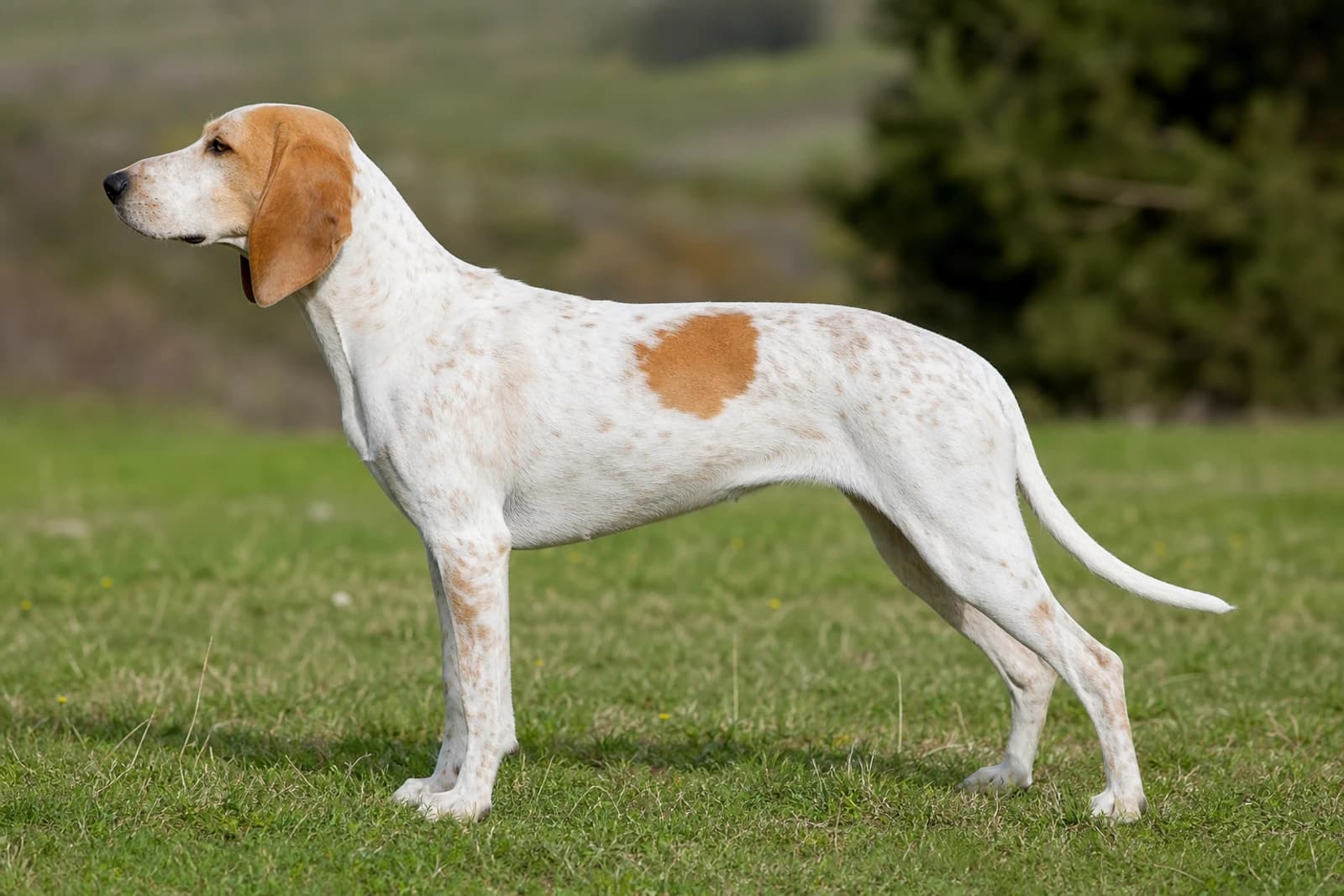
The Istrian Shorthaired Hound is a lively, dedicated scenthound from Croatia, bred for hunting hare and fox over rough terrain. He suits active, experienced owners who can provide ample daily exercise and mental stimulation. With his melodious bark and tireless work ethic, he thrives in a home with a yard and enjoys family life, especially with children who respect his independence. His gentle, affectionate nature makes him a loyal companion, though his strong prey drive requires caution around smaller pets.
At a glance
- Size
- Large
- Height
- 17–22 in
- Weight
- 31–44 lb
- Life span
- 12 years
- Coat colors
- White with orange or lemon markings, White with orange ticking, White with lemon ticking
- Coat type
- short, smooth, glossy
- Group
- Scenthounds
- Origin
- Croatia
How much does a Istrian Shorthaired Hound cost?
Adopt / rescue
$75–$400
Usually includes spay/neuter, first shots, and a microchip.
Buy from a breeder
$700–$2,000
From a reputable, health-testing breeder.
Approximate USD. Prices vary widely by region, breeder, pedigree, age, and coat colour — adopting is the lower-cost and recommended route. Avoid suspiciously cheap “breeders”; they’re often puppy mills.
Estimate the full cost of a Istrian Shorthaired Hound →Istrian Shorthaired Hound photos
Views
Front, side, rear and top — the full silhouette.Poses
How the breed sits, lies, moves and plays.Puppy to senior
The breed across its whole life.Expressions
The breed’s range of moods.Close-up details
Eyes, ears, nose, paws, tail and coat.Coat colors
The breed’s recognized colors.Click any photo to enlarge. We show the Istrian Shorthaired Hound from every angle — three views, poses, life stages, expressions, close-ups, coat and colors.
Appearance & size
Standing 17 to 22 inches at the shoulder and weighing between 31 and 44 pounds, the Istrian Shorthaired Hound is a medium-to-large scenthound built for endurance, not bulk. It’s lean, athletic, and slightly longer than tall, with a frame that covers ground effortlessly in rough karst landscapes.
Build & size
A solid, rectangular silhouette defines the breed. The chest is deep — reaching down to the elbows — with well-sprung ribs that give the lungs plenty of room. The back is straight, the loin broad and slightly arched, and the underline tucks up just enough to let you see a day-long galloper underneath. Legs are straight-boned and muscular without being heavy. Front pasterns slope subtly, and rear stifles are well bent, driving a long-reaching stride. An adult male might push the upper end at 44 pounds, but most look lighter than the scale suggests because the density is all functional muscle.
Coat & color
The coat is the breed’s calling card: short, dense, and hard to the touch — a glossy, smooth shell that repels rain and brush. The base color is always white, vivid and clean. Markings are bright orange or lemon, usually in large, well-defined patches on the head, ears, and body. Ticking — small flecks of color in the white — is common and perfectly acceptable. The white often forms a classic hound pattern: a full or partial collar, a white blaze on the face, white legs, and a white-tipped tail. You won’t see a black-and-tan or tricolor here; orange or lemon on white, full stop.
Head & expression
The head is noble without being coarse. The skull tapers slightly to a deep, long muzzle, with a stop that’s noticeable but not steep. Eyes are oval, dark, and set well apart, giving a calm, serious expression — never hard, but always alert. The nose is black when the markings are orange, and brownish with lemon markings. Long pendant ears hang in soft folds from a high set, reaching at least to the lips and often beyond when pulled forward. They’re velvety thin, not thick and leathery.
From every angle
- Front: Straight, parallel forelegs with elbows hugging the ribcage. A deep, narrow chest avoids a bulldog splay, so the hound slips easily through dense cover.
- Side: The deep chest blends into a firm back and gradual tuck-up, creating a clean underline. The tail sets on as a natural extension of the croup, thick at the base and tapering to a fine point, carried in a gentle saber curve — never curled over the back.
- Rear: Muscular thighs and well-angled hocks stand parallel. The croup is broad and slightly sloping, which adds power when the dog pushes off from a sudden turn.
That tight-coated, rangy build sheds water and brambles easily — this is a hound meant to hunt all day in the rocky Istrian terrain, and it looks the part: spare, honest, and purpose-built.
History & origin
The Istrian Shorthaired Hound traces back to the rugged Istrian peninsula – that triangular wedge of land where Croatia, Slovenia, and Italy meet – and you’re looking at a breed that’s been working the rocky karst landscape since at least the 1700s. Frescoes from the region show hounds nearly identical to today’s dogs, so the type has remained remarkably stable for centuries. Locals call it Istarski Kratkodlaki Gonič, and it’s the short-coated cousin of the slightly heavier, wire-haired Istrian Coarse-haired Hound.
These dogs were built to hunt hare and fox across sharp limestone, dense scrub, and steep hillsides, and occasionally to bay up wild boar. A hunter needed a hound with tireless stamina, a nose that could untangle cold trails on sun-baked rock, and a voice that carried clear through the maquis so you’d know exactly where the pack was working. Size mattered too — at 17 to 22 inches and 31 to 44 pounds, the Shorthaired Hound was big enough to push through brush all day but light enough to scramble over stone without breaking down.
The breed’s formal identity came later. In 1924, enthusiasts wrote the first standard and cemented the name. Before that, the dogs were simply the local goniči — a word meaning “driving hounds” — and every village had its own strain, all tracing back to ancient Balkan scenthound stock with possible dashes of other Mediterranean hounds. The standard helped preserve a uniform look, but the breed’s real value remained its work in the field, not the show ring.
World War II nearly did them in. The peninsula saw heavy fighting, and by the late 1940s the population had cratered. A handful of committed hunters and breeders pulled the Istrian Shorthaired Hound back from the brink, scouring remote villages for remaining dogs and rebuilding the gene pool from a very narrow base. The Fédération Cynologique Internationale (FCI) eventually recognized the breed in Group 6 (Scenthounds), and the United Kennel Club followed suit. Even so, you rarely spot one outside Croatia and neighboring countries. A few dedicated fanciers in Europe and North America are working to change that, but demand is slow — these aren’t casual house dogs. They’re high-drive, vocal scenthounds whose history still dictates what they need: a job that lets them run, trail, and sing across open ground.
Temperament & personality
This hound runs on two things: its nose and its bond with you — not always in that order. Once a scent catches its attention, the ears practically turn off, so a fenced yard and a solid recall trained with high-value rewards are not luxuries. Expect a dog that can shift from a couch snoozer to a full-throttle tracker the moment a rabbit trail crosses the backyard.
A nose with a mind of its own
Istrian Shorthaired Hounds were bred to work independently over rough terrain, which shows up at home as a quiet confidence and, sometimes, selective hearing. They’re not typically needy or anxious, but they do notice everything: a relaxed, loose body and soft eyes mean your hound is content; a forward lean, stiff posture, and a direct stare signal intent — often right before a dash after a scent. Pay attention to that body language. It’s more honest than a bark.
Because scent rules their world, marking can become a conversation. You may see your dog sniff the same spot repeatedly, then lift a leg — that’s a deliberate scent memo, not an accident. Clean indoor accidents with an enzyme cleaner or a white vinegar spray to erase the cue, and the moment they do their business outside, hand over a treat. It sticks better than any scolding.
Around the household
With their own people, these dogs lean toward calm and affectionate without being underfoot. They’re sturdy enough for boisterous play (31–44 pounds on a 17–22 inch frame) but not so giant that they knock toddlers over by breathing. Still, teach kids the hard rule: never bother a dog while it’s eating. A peaceful meal prevents guarding behavior from ever taking root.
Strangers get a measured look and maybe a deep-throated bay. That makes them honest watchdogs, but not sharp or aggressive — just a hound announcing, “Someone’s here.” Early socialization keeps the wariness from tipping into shyness.
Quirks and chewing
Puppies chew to explore and soothe teething gums; adults gnaw on hard objects to keep jaws strong and teeth clean. A homemade citrus spray (boiled citrus peels) or a diluted vinegar spray on chair legs saves your furniture without a fight. And if your hound rolls in something foul, don’t panic: some dogs do it to announce a find, others just seem to enjoy the perfume. It’s a reminder that a scenthound’s idea of a good smell is worlds apart from yours.
A tired nose is a happy nose. Plan on a solid hour of off-leash running or a long, winding hike where they can chase scent trails, not just a leashed walk around the block. Without that, you’ll see restlessness and probably hear about it — a bored Istrian Shorthaired Hound doesn’t whisper.
Good with kids, dogs & other pets
These dogs come from a line of pack hunters, so a patient, non-aggressive nature is the baseline. Around kids, an Istrian Shorthaired Hound typically settles into the role of sturdy, tolerant buddy. At 31–44 pounds and up to 22 inches tall, they’re not delicate, but that solid frame can knock over a toddler by accident during an enthusiastic greeting. Separate play areas or a hand on the collar when small children are about gives everyone room to enjoy each other safely.
With other dogs
Most Istrian Shorthaired Hounds live comfortably in multi-dog households. They’ve been bred to work side by side, not squabble. Still, good dog-to-dog habits don’t sprout automatically. The real groundwork happens during puppyhood. Start introducing your pup to a rotating cast of friendly, vaccinated dogs between 3 and 14 weeks old. Short, positive sessions on neutral ground build the kind of adult who reads other dogs’ signals instead of reacting blindly.
If you adopt an adult who’s spent years as the only dog, don’t force group play. A forced greeting at the dog park can backfire fast — it might trigger a scrap, not a friendship. An Istrian who’s content just with you doesn’t need a canine social circle. Let the dog’s comfort level dictate the pace.
With cats and small pets
This is where the scent hound brain kicks in. An Istrian Shorthaired Hound tracks by nose, and a scurrying creature can short-circuit that patient temperament. A retired racing cat or a well-adjusted house rabbit can coexist, but only with deliberate, early exposure. Introduce kittens or small animals when the pup is under 16 weeks, under full control, and with escape routes built in. Even then, never leave them unsupervised. A sudden dart across the floor flips a switch that recall training doesn’t always reach. If you keep pocket pets, house them in a completely separate, dog-proofed room — not just a cage on a shelf.
The common thread is early, gentle exposure. Puppies raised in isolation — a kennel run with little human or animal contact — often grow into adults who startle easily or overreact. If you’re starting with an older rescue, focus on building confidence at home before introducing new people or animals. A dog who feels safe around you is far more likely to extend that calm to others.
Trainability & intelligence
The nose calls the shots
Treat training an Istrian Shorthaired Hound like a friendly negotiation, not a lecture. This dog thinks with his nose, and everything else — including you — can drop to background noise once a good scent trail unspools. At 31 to 44 pounds, he won’t yank you off your feet like a large coonhound, but his determination more than makes up for it. Your job is to make yourself more interesting than the rabbit that crossed the path three hours ago.
What smart looks like here
Is the Istrian intelligent? Absolutely. Obedient? Only if you make it worth his while. His smarts are the independent problem-solving kind: he’ll figure out how to open a pantry door if you stored the liver treats behind it. Channel that mental horsepower into scent games, hide-and-seek puzzles, and short training bursts where sniffing is part of the payoff. Drills that bore him — five sits in a row for a dry biscuit — get you a theatrical yawn and a slow retreat to the dog bed.
Motivation that actually works
Food is the great equalizer, but a drag scent beats a plain treat every time. Drag a piece of hot dog through the grass before practicing recall, and you’ll see a profound difference. Stinky stuff (dried fish, liverwurst) grabs his attention; praise alone rarely cuts it. Play rewards work too — a quick tug session after a solid “leave it” keeps him engaged without turning training into a nonstop buffet.
The recall challenge
Recall is the rub with any determined scenthound. When that nose locks on, you cease to exist. Start indoors with zero distractions, then graduate to a long line in the yard. Reward a prompt return with a high-value jackpot — every time. Even with meticulous practice, a reliable off-leash recall in unenclosed spaces is a gamble; many owners stick to 30-foot lines for hiking. Losing him for ten minutes while he follows a scent hotline is a breed reality you plan around, not a failure if you’ve built a solid “check in.”
Training that builds trust
Harsh corrections backfire fast. This is a sensitive breed under the tough hound exterior — punishment can make him check out or avoid you entirely. Keep sessions tight (5–10 minutes), upbeat, and always end on a win. Load up on calm, consistent communication and lay a heavy foundation of socialization before 14 weeks: new people, different surfaces, everyday noises, other dogs. A well-socialized Istrian Shorthaired Hound is steady and easygoing out in the world; an under-socialized one can become cautious or reactive when life feels unpredictable.
Teach a laser-focused “watch me” cue early — it becomes your emergency brake when the nose tries to hijack the walk. Pair it with an immediate, high-level reward, and you’ll have a dog who whips his head toward you instead of darting after a squirrel. That single redirection repays every minute you put into it.
Exercise & energy needs
You’ll need to set aside a solid 60 to 90 minutes of real exercise every day, split into at least two sessions. This isn’t a breed you can tire out with a few quick trips to the yard. Think about what he was built for — chasing game through dense brush and rocky Istrian hillsides with his nose glued to the ground. A leisurely walk on a short leash misses the point entirely.
Aim for a long morning outing and a second substantial session in the afternoon or evening. One of those should let him really run or trot on a long line or in a securely fenced area. Hounds this size (31–44 pounds, 17–22 inches) are whipcord-tough and can cover rough terrain for hours, so flat sidewalk walks won’t drain his tank. Give him uneven ground, hills, and plenty of sniffing time. He needs that mental piece just as badly. Without it, a bored Istrian Shorthaired Hound will find ways to entertain himself — usually with a voice you can hear three houses down.
- Good outlets: scent work, nose games, tracking, long-line hikes, canicross, or structured hunts if you have access. Even a simple “find it” with hidden smelly treats beats a fifth mile on pavement. Puzzle toys help indoors, but they don’t substitute for outdoor sniff time.
- Intensity: moderate to high. He’s all stamina, not explosive sprints. Avoid young-puppy over-exertion, but once he’s mature (around 12–18 months), he’ll easily handle several miles, broken up with frequent sniff breaks.
If you skip a day or cut corners, you’ll see the fallout: restlessness, digging, or that deep-chested bay turning into an all-day concert. A tired Istrian hound is a quiet one — so let his nose lead the way.
Grooming & coat care
The Istrian Shorthaired Hound’s smooth, single coat is among the easiest in the scenthound world. There’s no undercoat to trap dirt or tangle, so you’re not signing up for daily brushing marathons. A soft bristle brush (pig bristle works beautifully) ran over the coat once or twice a week is all it takes to distribute natural oils and bring out a glossy sheen. When shedding kicks in — spring and fall — switch to a rubber curry mitt once or twice a week to pull out dead hair before it blankets your furniture. A fine-toothed comb can also flick away burrs and loose fuzz after a day in the brush.
Bathing is strictly as-needed. These dogs have a naturally clean, houndy scent that doesn’t turn rancid quickly, so a full bath every three or four months is usually plenty. Over-washing strips the coat’s protective oils and can leave the skin dry. If your dog rolls in something ripe, a rinse with lukewarm water and a mild dog shampoo gets the job done. The white-and-lemon (or orange) coat shows mud and grass stains, but a quick wipe-down with a damp towel often handles that between baths.
Drop ears demand regular attention. The ear leather hangs close to the head, creating a warm, damp pocket. Make it a weekly habit to lift each ear, give it a sniff, and swipe the outer canal with a cotton pad and a vet-approved ear cleaner. Never dig deep. Nails get a trim every 3–4 weeks — if you hear clicking on the floor, you’re overdue. Brush teeth several times a week with dog-specific toothpaste to keep that scenthound mouth healthy.
The coat thrives on outdoor exercise. All that running through tall grass and woodland edges helps slough off old hair naturally, so a tired dog is also a tidier dog. In heavy shedding weeks, just add five extra minutes of curry brushing and you’ll stay ahead of it. Keep the ear cleaning in your Sunday routine and you’ll dodge the gunk that leads to infections.
Shedding & allergies
The Istrian Shorthaired Hound doesn’t carpet your house in fur, but you’ll notice a steady, fine drift on dark floors. They shed moderately year-round thanks to a short, dense, single coat that’s smooth to the touch. A quick weekly once-over with a hound glove or rubber curry brush catches most of it, yet you’ll still find a haze of tiny hairs on furniture and baseboards. Twice a year—typically spring and fall—the shedding ramps up into a concentrated seasonal blowout. During those few weeks, daily brushing keeps the mess from getting ahead of you; without it, you’ll be chasing tumbleweeds under the couch.
Drool falls on the lower end for a scenthound, but it’s not zero. You’ll see strings after drinking, and an interesting scent trail can loosen the jowls enough to leave a wet spot on your pant leg. Keep a rag handy near the water bowl and you’ll manage fine.
If allergies are a dealbreaker, spend real time with the breed before committing. A short, smooth coat doesn’t trap dander the way a woolly double coat does, but these dogs still produce the saliva and skin proteins that trigger reactions. Calling them “hypoallergenic” is a stretch; responsible breeders will tell you the same. The practical middle ground: regular brushing outdoors, wiping down the coat with a damp cloth after high-pollen walks, and washing bedding frequently can nudge the allergen load downward, but you’re not getting an allergy-free dog.
Diet & nutrition
An Istrian Shorthaired Hound will convince you he’s starving every time you walk toward the kitchen. These scent hounds are often seriously food-motivated, so free-feeding is a recipe for a pudgy dog with achy joints. Keep him lean—extra weight on a 31–44‑pound frame puts real stress on hips and elbows, and this breed needs a long, active life.
Portion sizes and weight control
Measure meals. For an adult weighing 31–44 pounds, start with about 1½ to 2½ cups of high-quality dry kibble per day, split into two meals. If you’re feeding a raw or home-prepared diet, aim for roughly 60% meat (raw or cooked), 20–30% fruits and vegetables, and 10% extras like eggs, grains, or plain yogurt. Use a slow-feeder bowl or food puzzle—these dogs can inhale a meal in seconds, and slowing them down aids digestion and keeps their brain busy. Adjust portions based on how many miles you’re logging; a weekend warrior needs fewer calories than a dog hunting or running daily.
Puppy feeding schedule
From weaning to four months, a puppy gets four evenly spaced meals. At four to six months, drop to three meals, then switch to the adult two-meal routine. Introduce new foods gradually—start with lightly cooked, puréed meats, fish, and soft fruits and vegetables. Raw chicken wings can appear around twelve weeks, but only under your supervision.
Senior adjustments
An older Istrian Shorthaired Hound may slow down. Switch to smaller, more frequent meals if his appetite wavers, and blend or purée food if teeth are worn. There’s no need to cut protein; instead, closely watch his waistline and reduce portions a little as his daily trot becomes a stroll.
What to put in the bowl
A diet built on meat, not plants, matches what these dogs evolved to digest. If you cook at home, pearl barley and white rice are gentle, digestible carb options. Canned fish (in water), scrambled eggs, and cooked vegetables round out quick meals. Save the unsalted water from steaming veggies—it makes a good base for mixing kibble or thinning a purée. After holiday feasts, never hand down greasy, rich scraps; that can trigger pancreatitis.
Kitchen habits that matter
Serve any leftovers in his own bowl, never from the table. Once a hound learns that staring at your plate works, you’ll battle begging for the next decade. Batch-cook grains and proteins on the weekend so you’re not scrambling to put together a meal when he’s giving you the eyes.
Health & lifespan
Most Istrian Shorthaired Hounds live about 12 years. Getting there and keeping those years active means staying ahead of a few inherited risks and nailing the everyday basics.
Responsible breeders screen for the joint and eye problems that can surface in larger scent hounds. Ask to see hip and elbow dysplasia scores—OFA or PennHIP—and a current eye exam from a veterinary ophthalmologist that clears for progressive retinal atrophy (PRA) and other inherited sight disorders. A puppy out of tested parents sharply lowers the odds of dealing with chronic pain or early blindness.
Ears, belly, and weight are where daily habits really pay off. Floppy ears trap moisture; wipe them out weekly with a vet-approved cleaner to sidestep infections. A deep chest puts the breed at risk for bloat, so feed two or three smaller meals and avoid hard exercise for at least an hour after eating. Keep the dog lean—at 31 to 44 pounds you should feel ribs without pressing hard. Even a couple of extra pounds grind on joints in a hound that moves all day.
The coat is short and offers almost no insulation. A snug jacket prevents shivering on cold-weather walks, and hot asphalt in summer can burn pads fast. After a romp through heavy brush, run your hands over the dog to check for cuts, foxtails, or rashes from grass and pollen.
Because these hounds work nose-down in tall grass, heartworm prevention is non-negotiable. Give a monthly preventive during mosquito season and for 30 days after it ends. Keep the rabies vaccination current—it’s legally required and has no treatment once symptoms appear. Schedule an annual vet exam to catch early arthritis, eye changes, or other age-related issues. A hound that’s been calmly handled from puppyhood won’t stress at the clinic, and that matters more than many owners realize: chronic stress drags down the immune system.
Living environment
Apartment vs. house and yard needs
An apartment is a tough fit for a scenthound built to fly across rocky terrain on a hot trail. The Istrian Shorthaired Hound needs room to stretch out and a daily outlet for a nose that never turns off. A house with a securely fenced yard is the realistic minimum — and that fence should be 6 feet tall, buried a few inches at the base, because chasing a whiff of rabbit is more compelling than any recall cue you can teach. Even with a yard, don’t expect your landscaping to substitute for deliberate exercise. Plan on at least 60 minutes of vigorous movement each day, split into two sessions: a long morning jog or a hard run in a safe open space, then an evening sniff walk or a session of hide-and-seek with scented toys. Short, casual walks around the block won’t scratch the surface. Without that burn, this dog invents its own projects — often loud, destructive ones.
Climate tolerance
The breed’s short, dense coat tells you exactly what it’s built for: mild to warm weather without much fuss. They tolerate heat decently if you provide shade and cool water, but they won’t self-limit — a driven Istrian will run until it drops, so you have to enforce breaks on hot days. Cold is a different problem. With no undercoat and minimal body fat, a 35-pound shorthaired hound starts shivering fast once the temperature dips below freezing. A well-insulated dog coat is mandatory for winter walks, and this isn’t a dog you leave outside for an afternoon in snow or freezing rain. Think Mediterranean origins, not mountain endurance.
Noise and barking
Hounds communicate, and the Istrian Shorthaired Hound communicates with a deep, booming bay designed to carry over long distances. A squirrel on the fence, a delivery four streets over, a new grill on a neighbor’s deck — any novelty that hits that nose can trigger a full-throated announcement. You can train a “quiet” command and reward silence, but you will never mute a breed hardwired to alert the pack. If you share walls or have neighbors who value absolute stillness, expect friction.
Time alone
This is a pack-oriented hound that forms intense bonds with its people. Left alone for a full 8- or 9-hour workday, many Istrian Shorthaired Hounds unravel into pacing, howling, or tunneling into the couch. You can ease the edge with gradual desensitization from puppyhood and by leaving scent-based puzzle toys stuffed with meals — chewing through a frozen Kong to find kibble buys you a quiet hour — but it’s a management plan, not a cure. The breed thrives in a home where someone is around most of the time, or where a midday dog walker reliably breaks up the solitude. A lonely Istrian doesn’t suffer in silence; it makes sure the whole block knows.
Who this breed suits
This is a breed for people who genuinely enjoy long, strenuous outdoor outings. If your idea of a perfect morning is a 5-mile trail run followed by the dog crashing contentedly in the yard, you’re on the right track. The Istrian Shorthaired Hound’s stamina and nose mean he’s happiest tracking a scent line through the woods—never off-leash in an unfenced area, because once his nose locks on, his ears turn off. You must have a securely fenced yard. These hounds will dig under or climb over a flimsy barrier if a rabbit passes by.
He bonds closely with his family but shows affection on his own terms. Expect a cheerful, tail-wagging housemate, not a Velcro lapdog. He’s typically good with other dogs, making him a solid fit for multi-dog households. Kids who are steady on their feet and understand not to bother a dog while he’s tracking a scent will do well; smaller children could get bowled over by a 40-pound hound in full flight.
Think twice if:
- You live in an apartment or a home without a yard. The barking (a ringing, repetitive bay) will be a problem, and no amount of leash walking replaces the need for all-out running in a safe enclosure.
- You want an easily trained dog who hangs on your every word. Scenthounds are independent problem-solvers; a recall is a negotiation, not a guarantee.
- You have cats, rabbits, or other small pets. The prey drive is deeply ingrained, and even a well-socialized hound may view them as quarry.
- You’re a first-time owner looking for a forgiving, easygoing companion. This breed needs consistent, patient handling and a sense of humor about selective hearing.
If you’re an active, experienced dog person with a tall fence and a love for vocal, nose-driven dogs, the Istrian Shorthaired Hound can be a tireless, joyful partner—just don’t expect him to be anything other than what he was bred to be.
Cost of ownership
Finding an Istrian Shorthaired Hound in the U.S. takes effort. This is a rare breed, and the few dedicated breeders typically have waiting lists. Expect a well-bred puppy from health-screened parents to start around $1,200 to $2,500. If you luck out and find an adult through a specialized scenthound rescue, fees usually fall between $200 and $400, though that’s an uncommon route.
Once the dog is home, the monthly routine isn’t bank-breaking, but the obvious costs add up. A 35-pound athlete burns through quality food; budget roughly $45–$65 a month for a high-protein kibble that supports an active hound’s energy. Grooming is refreshingly minimal — the smooth, dense coat sheds seasonally and needs little more than a weekly rubber curry brush. Professional grooming is unnecessary for most owners, so you’re looking at maybe $10 a month for the occasional nail trim or a self-serve bath if you don’t own a hose.
Veterinary care is where you need to plan ahead. Annual exams, core vaccinations, and year-round flea, tick, and heartworm preventatives will run $400–$600 a year, or $35–$50 monthly. This breed’s floppy ears are notorious for trapping moisture, so ear infections can spike a vet bill if you neglect regular cleaning. Pet insurance for a medium-sized scenthound averages $35–$55 a month, depending on your deductible and whether you opt for accident-only or comprehensive coverage that includes hereditary conditions. Responsible breeders screen for hip dysplasia, but it’s still a risk worth insuring against.
Factor in a harness, sturdy chew toys, high-value training treats (you’ll need them for recall work with a scent-driven dog), and the occasional boarding or pet-sitting fee, and a realistic all-in monthly total lands around $150–$200. The biggest hidden cost is time — this is a dog that requires patient, early socialization and a lot of off-lead exercise to stay sane in a family home.
Choosing a Istrian Shorthaired Hound
The Istrian Shorthaired Hound is a nose-on-the-ground scenthound, not a breed you’ll find on every corner. If you want one, you’re almost certainly waiting for a litter from a dedicated breeder or connecting with a rescue that knows sighthounds and scenthounds. Expect a search, not a same-day purchase.
Breeder or Rescue?
A handful of Istrian Shorthaired Hounds enter rescue each year, often through all-hound groups or after being imported. Going that route means an adult dog with known prey drive and house manners, but you’ll need to ask hard questions about why the dog was given up and how strong their recall is around game. Finding a puppy through rescue is rare.
Responsible breeders put the same drive into health testing that their dogs put into chasing a scent line. They’ll talk openly about hips, elbows, eyes, and ears, and they’ll have proof. They raise pups underfoot, not out back in a kennel run, because a hound that doesn’t learn household rhythms early can be a stubborn, howling handful later.
Health Clearances That Matter
Ask for written documentation — not a verbal “the vet said they’re fine.” At minimum, both parents should have:
- Hip evaluation (OFA or PennHIP) with a passing score. Hips are a known concern in many medium-to-large hounds.
- Elbow evaluation (OFA) to rule out elbow dysplasia.
- Eye clearance (CAER exam) done within the past year by a veterinary ophthalmologist.
Some breeders also run a cardiac exam or thyroid panel. Floppy ears will need lifelong cleaning, but a pup whose parents had recurrent, drug-resistant infections can pass that misery along. Ask directly.
Red Flags
Walk away if a breeder always has puppies on the ground, pushes for a deposit before you’ve met the litter, or dismisses health testing because the breed is “rare and healthy.” That’s how you end up with a 2-year-old dog who can’t run without pain. Other warning signs:
- Sells pups before 8 weeks of age.
- Won’t let you visit or meet at least the mother.
- Brags about a 50-pound “big boy” outside the 31–44 lb standard; oversized parents often bring joint trouble.
- Fails to provide a written health guarantee or contract.
Picking Your Puppy
At around 7–8 weeks, a well-socialized Istrian puppy is curious, mouthy, and busy. A pup that hangs so far back it won’t approach you — or one that stiffens and growls — is a liability in a breed that already leans independent. Look for a puppy who actively sniffs your hands, follows a gentle squeak, and scrambles back up after a minor tumble. Their ears should be clean-smelling, eyes clear, coat slick. The breeder should tell you exactly which early exposures the litter got: different surfaces, car rides, crate time, vacuum noise. With a dog built to put its nose down and go, early handling that builds a “check in” habit is worth its weight in off-leash reliability later. A pup raised on that foundation, backed by cleared parents, is your best chance at a sound, 12-year partner who can hunt all morning and curl up on the couch at night.
Pros & cons
Pros
- Tireless hunting partner. If you run, hike, or hunt regularly, this hound will outlast you. A brisk walk around the block is a warm‑up — this dog wants an hour or more of hard, scent‑trailing exercise daily to stay sane.
- Loyal and people‑oriented at home. Unlike some scenthounds that are aloof, the Istrian forms a tight bond with its family. They’ll curl up next to you after a long day and are generally patient with kids who respect them.
- A low‑maintenance coat. The short, dense fur needs little more than a weekly rubdown with a hound glove to remove dead hair. No trimming, no matting, and they dry fast after a rainy hunt.
- Robust and medium‑sized. At 31–44 lb and 17–22 in, they’re big enough to tackle rough terrain but not so large that they’ll knock over the furniture. The 12‑year lifespan means many seasons of good health when bred responsibly.
- A true working nose. This is a thinking dog’s scenthound. They work methodically, with a clear, ringing bay that helps hunters track them from a distance. Obedience trials and scent work come naturally.
Cons
- Loud, and unapologetic about it. The distinctive baying voice is music to a hunter’s ears, but it becomes a problem fast in apartments or close‑quarter suburbs. You won’t train this out of them entirely.
- Prey drive rules all. Squirrels, rabbits, the neighbor’s cat — once that nose locks on, ears shut off. Off‑leash reliability in unsecured areas is nearly impossible without years of proofing, and even then expect a chase.
- Stubborn when bored. Smart, independent hounds don’t do blind obedience. Without clear, consistent training that respects their drive, they’ll make up their own job — often involving creative escapes or digging up the yard.
- Seasonal shedding and doggy odor. The coat is easy, but it sheds more than you’d think, and like many scenthounds, they produce more skin oils, giving a distinct musky smell that some owners find off‑putting.
- Not a first‑time dog. A novice who just wants a calm companion will be overwhelmed by the noise, exercise needs, and tenacity. They thrive with someone who speaks “hound” and gives them an outlet for their genetic drive.
Similar breeds & alternatives
If the Istrian’s general blueprint appeals — a medium-sized, short-coated scenthound with stamina and a calm house presence — a few other breeds sit in the same ballpark, but each pushes the needle in a different direction.
-
Beagle — The most common comparison. Beagles are smaller (typically under 15 inches and 20–30 pounds), louder, and far easier to find in North America. You get a similar merry, pack-driven hound, but the Istrian is noticeably taller, leaner, and less prone to putting on weight if overfed. Beagles often have a more gregarious, food-obsessed edge; the Istrian tends to be a little more reserved and businesslike indoors.
-
Harrier — Rare on this side of the Atlantic, but a closer physical match. Harriers stand 19–21 inches and weigh 45–60 pounds, making them stockier than the 31–44-pound Istrian. Both are hare-hunting specialists with smooth coats and tremendous endurance. The Harrier may feel a bit more substantial, while the Istrian remains lighter on its feet and slightly more angular.
-
Finnish Hound — Similar height range (20–24 inches) but heavier, usually 45–55 pounds. Like the Istrian, it’s a tri-colored scenthound used on hare and fox. Temperament wise, both can be calm housemates once exercised, but the Finnish Hound often carries a deeper bay and may be harder to locate in the U.S.
-
Istrian Wirehaired Hound — The most direct alternative. This is essentially the same breed with a wiry, weather-resistant coat and a frame that runs an inch taller and a few pounds heavier. If you hunt in thick cover or wet underbrush, the wirehaired version shrugs off brambles better, but the smooth coat is easier to rinse clean after a muddy run. Temperament and exercise needs are nearly identical.
Fun facts
- One of the oldest Croatian scenthounds, dating back to the 14th century.
- Possesses a distinctive, melodic bark while on the trail.
- Renowned for exceptional endurance and persistence in rough terrain.
- Rarely encountered outside its native Croatia.
Frequently asked questions
- How much exercise does an Istrian Shorthaired Hound need?
- This breed is very lively and has high energy, requiring at least 60–90 minutes of daily physical activity. Long walks, runs, and scent-based games are ideal to satisfy their persistent nature. Without adequate exercise, they can become restless or develop unwanted behaviors.
- Do Istrian Shorthaired Hounds shed a lot?
- No, they are moderate shedders with a short, dense coat that sheds minimally. Weekly brushing is typically sufficient to keep shedding under control and their coat healthy.
- Can an Istrian Shorthaired Hound live comfortably in an apartment?
- Generally not recommended; their high energy and strong hunting instincts require a home with a securely fenced yard. They thrive with space to explore and can be too active for apartment life, though extensive daily exercise might make it manageable with a dedicated owner.
- Are Istrian Shorthaired Hounds good with children?
- Yes, they are known to be gentle and affectionate, often forming strong bonds with family members, including children. However, their lively nature means interactions with very young kids should be supervised to prevent accidental knocks or overexcitement.
- Is this breed prone to excessive barking?
- As a scenthound, they have a strong instinct to bay or bark when following a trail or alerting to something unusual. With proper training and sufficient mental stimulation, excessive barking can be managed, but they are naturally vocal dogs.
- Is the Istrian Shorthaired Hound suitable for first-time dog owners?
- Their independent and sometimes stubborn temperament can present challenges for novices. They require consistent, patient training and an experienced owner to channel their high energy and scent drive effectively. First-time owners may find them demanding without prior guidance.
Tools & calculators for Istrian Shorthaired Hound owners
Quick estimates tailored to Istrian Shorthaired Hounds — pre-filled with this breed’s size where it matters.
Articles & stories about the Istrian Shorthaired Hound
Sources & standards
This profile follows recognized breed standards from the American Kennel Club (AKC) and the Fédération Cynologique Internationale (FCI), along with established veterinary and breed-club guidance. These describe general breed tendencies — every dog is an individual.
Owner stories
Have a Istrian Shorthaired Hound? Share your experience — grooming tips, personality quirks, anything goes.