

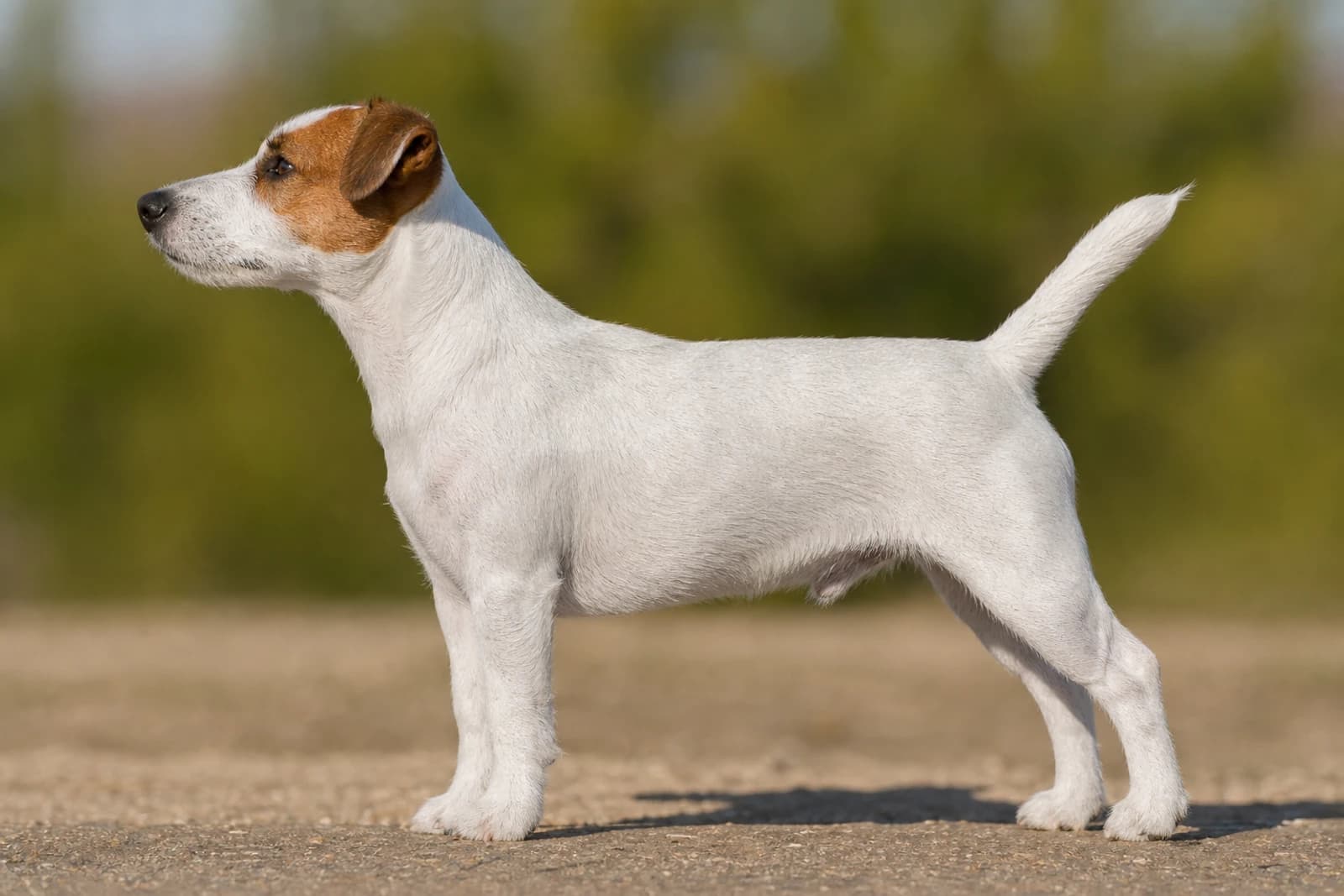
The Jack Russell Terrier is a small but mighty breed brimming with energy and intelligence. Originally bred for fox hunting, this tenacious terrier thrives on activity and mental stimulation. Best suited for experienced dog owners with an active lifestyle, they excel in canine sports like agility, flyball, and obedience. While affectionate with their family, their strong prey drive and independent nature may challenge first-time owners. With proper training and socialization, the Jack Russell makes a devoted and entertaining companion for those who can keep up with its boundless spirit.
At a glance
- Size
- Medium
- Height
- 10–12 in
- Weight
- 11–13 lb
- Life span
- 13–14 years
- Coat colors
- black-and-white, brown-and-white
- Coat type
- Smooth, broken, or rough short double coat
- Group
- Terriers
- Origin
- United Kingdom
How much does a Jack Russell Terrier cost?
Adopt / rescue
$50–$300
Usually includes spay/neuter, first shots, and a microchip.
Buy from a breeder
$400–$1,200
From a reputable, health-testing breeder.
Approximate USD. Prices vary widely by region, breeder, pedigree, age, and coat colour — adopting is the lower-cost and recommended route. Avoid suspiciously cheap “breeders”; they’re often puppy mills.
Estimate the full cost of a Jack Russell Terrier →Jack Russell Terrier photos
Views
Front, side, rear and top — the full silhouette.Poses
How the breed sits, lies, moves and plays.Puppy to senior
The breed across its whole life.Expressions
The breed’s range of moods.Close-up details
Eyes, ears, nose, paws, tail and coat.Coat colors
The breed’s recognized colors.Click any photo to enlarge. We show the Jack Russell Terrier from every angle — three views, poses, life stages, expressions, close-ups, coat and colors.
Appearance & size
A Jack Russell looks like a terrier that was shrunk in the dryer but kept every ounce of muscle. This is a rectangular dog — body length slightly exceeds height at the withers, giving it the planted, ready-to-launch stance you’d expect from a working earth dog. Males and females stand 10 to 12 inches at the shoulder and tip the scales at a lean 11 to 13 pounds. Those numbers are small, but holding one surprises people: the chest is deep and narrow, the bone is substantial, and there’s zero fragility in that frame.
The head is a dead giveaway for the breed’s attitude. Viewed from the front, you see a flat skull, a distinct stop, and a powerful muzzle that’s only slightly shorter than the skull — no snippiness, no apple-head roundness. The almond-shaped eyes are dark, deeply set, and brimming with the intensity of a dog already planning its next dig. Small V-shaped ears fold forward, sitting high and breaking the silhouette with a sharp, alert set.
From the side, the topline is level and strong, the neck clean and arched into well-laid-back shoulders. The forelegs drop straight and true, with tight, cat-like feet pointing dead ahead. The chest extends down to the elbows, giving lung room for serious sprinting, but the body stays narrow enough to follow a fox underground. The rear is just as intentional: muscular thighs, well-bent stifles, and short, parallel hocks that drive the dog across a field without wasted motion. The tail is set high and carried gaily — often docked where laws allow, but a natural tail is just as expressive.
Coat comes in two main textures from the reference: smooth (dense, close-lying, and weatherproof with a hard feel) and curly (a rough or broken coat with more beard and eyebrow, giving a slightly shaggy look). The base color is always predominantly white — usually over 50 percent — with patches of black-and-white or brown-and-white markings. The colored areas most often cap the head, patch around the base of the tail, or speckle the ears. A smooth-coated dog gleams; a curly-coated one looks like it just rolled out of a hayloft. Both are correct, and both are terrifically low-maintenance to rinse off after a muddy escapade.
History & origin
The parson’s working terrier
The Jack Russell Terrier traces back to a single obsessive fox hunter in early 1800s England. Reverend John Russell bought a mostly white terrier bitch named Trump while studying at Oxford — she had a patch over one eye, a docked tail, and the kind of compact fire he was after. By 1819, Russell was breeding his own line in Devonshire, aiming for a dog that could run with the foxhounds, then dig and squirm into a fox’s den to bolt the animal without mangling it. That job demanded a tiny frame — eventually settled at 10–12 inches at the shoulder and 11–13 pounds — a punishing jaw, relentless drive, and a white coat so the hunters wouldn’t mistake a dog for the fox. He crossed Trump’s descendants with other terriers, keeping only the grittiest, most level-headed pups that worked right alongside horses and hounds.
A split in the breed
After Russell’s death, his strain stayed alive through friends and followers, but the terrier world fractured. Some breeders favored a taller, squarer leg — the dog that would later become the Parson Russell Terrier. Working huntsmen and farmers, however, kept selecting for a shorter, slightly longer-backed dog that could still get underground fast. When British emigrants brought these terriers to Australia, the small, hard-nosed version really took hold. Australian fanciers wrote the first formal standard around the 10–12 inch height, a sturdy build, and a chest small enough to squeeze through a fox earth — and that Australian-bred dog is the direct ancestor of today’s Jack Russell. The hallmark never changed: a terrier with the lung power to run all morning and the nerve to confront quarry in pitch darkness.
A working terrier, then and now
The breed arrived in the U.S. in larger numbers through the mid-20th century, and in 1976 a group of dedicated owners founded the Jack Russell Terrier Club of America (JRTCA) to protect its working character. The JRTCA keeps an open registry, judges dogs primarily on earthwork ability, and has long resisted closing the stud book around a purely cosmetic standard. The United Kennel Club recognized the Jack Russell Terrier in 1995. Around the same time, a taller, more uniform show-line dog was broken off and eventually accepted by the American Kennel Club as the Russell Terrier — a separate breed. That split still confuses newcomers, but the Jack Russell you’ll meet as a pet or a working partner is the same tenacious, problem-solving little hunter that bolted foxes in Devon two centuries ago, and he still needs an outlet worthy of that original purpose.
Temperament & personality
A Jack Russell Terrier packs more personality and drive into 11–13 pounds than many dogs four times his size. This is a bold, whip-smart, deeply loyal dog built for action, not a couch cushion. He’s curious to the point of nosiness, and his confidence means he’ll take on a challenge you never saw coming — whether that’s scaling furniture to reach a sandwich or squaring off with a dog triple his weight.
Energy pours out of every muscle. This isn’t a breed satisfied with a casual stroll; he needs at least an hour of running, chasing, and problem-solving every day. Tug, fetch, flirt pole, digging pits, scent games — give him a job and he’ll give you everything he’s got. Without that outlet, a Jack Russell’s brain will find its own work, and you’ll pay for it in chewed baseboards, nonstop barking, or holes dug to China.
Affection runs deep, but it’s on his terms. He often bonds hardest with one person and becomes a tenacious little shadow from room to room. He’s not typically a laid-back lapdog; he’d rather be part of the action, leaning into your leg or pressing a cold nose against your hand so you don’t forget him. Separation and isolation hit him hard — a neglected JRT can spiral into anxiety-driven barking, destructive chewing, or indoor marking.
Speaking of marking: these terriers have strong scent instincts. Urine in the house isn’t just an accident; it’s a pungent cue to re-offend, so any mess needs an enzymatic cleaner that fully obliterates the smell. They also define territory by family member scents, which is why less-used rooms may become accidental potty spots. On walks, that same nose leads them to roll in dead things or foul smells — a quirk that might be pure joy, a leftover instinct to mask their own scent, or a triumphant “check out what I found!”
Watchfulness is hardwired. A Jack Russell will alert you to squirrels, delivery trucks, and suspicious leaves with a piercing bark. That makes him a fantastic watchdog, but in close quarters, you’ll need to teach a “quiet” cue early. With strangers, he’s reserved but not shy — he’ll assess, then decide if you’re a friend or an intruder.
Stubborn doesn’t begin to cover it. You can’t muscle a JRT into compliance; he thrives on respectful, consistent engagement and withers under force. Keep training short, game-like, and rewarding, because if you bore him, he’ll renegotiate the rules. Body language offers a clear read: a forward-leaning stance with a hard stare often precedes a snap or a lunge, so back off and redirect, don’t confront. Yawning, lip licking, or turning his head away means he’s feeling pressure and needs a break. Teach kids never to interrupt him while he’s eating or chewing a high-value bone — food guarding can escalate fast.
Around other pets, his instinct to chase and dispatch small critters is a real risk. Even a well-socialized JRT may not be safe with cats, rabbits, or pocket pets, and he can be bossy or scrappy with other dogs. Supervised, structured introductions help, but off-leash around small animals is a gamble you usually lose. If you’re looking for a low-key, easygoing companion, this isn’t your breed. But if you show up ready to run, laugh, and outsmart a ten-pound mastermind every single day, you’ll get a fiercely devoted partner who meets your effort with everything he’s got.
Good with kids, dogs & other pets
A well-socialized Jack Russell Terrier can be a nonstop playmate for grade-schoolers, but that terrier firecracker energy means constant supervision — especially around toddlers. At 11–13 pounds and 10–12 inches tall, they’re sturdy enough to roughhouse with older kids, yet small enough that a clumsy grab or a shrieking chase can flip their patience. They’re protective by nature, and many show surprising tolerance when kids handle them gently, but their reflex to snap comes fast if they feel cornered or hurt. Teach children to give the dog space during meals and rest, and always step in when play gets loud. JRTs bond hard with their people and don’t do well left alone for marathon hours; a lonely, pent-up dog is more likely to redirect that frustration into nipping, barking, or destructive habits that wear on a family.
With other dogs, the picture comes down to puppyhood. These terriers pack a scrappy, “big dog in a small body” confidence that doesn’t always mix well at the dog park. Early, positive exposure to a variety of calm dogs — starting before 14 weeks — reduces the odds an adult JRT will lunge, posture, or start a scuffle. A slow, neutral-ground intro with a compatible canine housemate can work beautifully, but same-sex pairings and unsupervised yard time can spark tiffs over toys or attention. Manage resources carefully: feed separately and put away high-value chews until you know the dynamics are solid.
Where cats and small pets enter the scene, the terrier’s prey drive takes center stage. A loose hamster, rat, or guinea pig reads as quarry, not a friend. Cats might coexist with a JRT raised from puppyhood alongside them and trained to a solid “leave it,” but a fleeing feline can still ignite the chase. Never leave them alone together, and keep birdcages or small-animal enclosures secured behind closed doors. The critical socialization window slams shut around 16 weeks: systematically introduce your JRT puppy to children of every age, cat-savvy cats, selected friendly dogs, and everyday noises during that stretch. Skip it, and you’re likely to own an adult who’s a nervous barker, a resource guarder, or a dog that reacts on sight to other animals. An adult dog who missed those weeks can still make progress with patient, positive conditioning, but forced interactions will backfire. Respect the dog you actually have, and don’t push for greetings it doesn’t want.
Trainability & intelligence
A Jack Russell’s brain works overtime. He learns new cues in a handful of repetitions — often faster than you’re ready to level up. But that intelligence comes wrapped in tenacity and a fiercely independent streak. Training isn’t about “fixing” stubbornness; it’s about channeling a mind that’s built to problem-solve, dig, and hunt. If you’re boring or bossy, he’ll outsmart you every time.
What works — and what backfires
- Keep sessions short, fast, and game-like. Two or three minutes of snappy clicker work beats twenty minutes of repetition. He’ll tune out the moment you sound like a broken record.
- Use what he loves as currency. A squeaky tug toy or a sliver of real chicken often outweighs a pat on the head. Jack Russells tend to be play-driven, not just food-driven, so experiment.
- Reward the behavior you want, ignore (or redirect) the rest. Punishment, yelling, or yanking a leash kills trust fast — and this breed remembers. He’ll get sneaky rather than compliant.
- Be consistent. Every family member has to enforce the same rules. “Maybe” doesn’t exist; a JRT will exploit any loophole.
The recall battle
Recall is the hill most JRT owners climb daily. That prey drive can override any command when a squirrel bolts. Start recall training the day the puppy comes home, use a distinct whistle or word, and reward with a jackpot every single time — treats, a frantic game of tug, whatever makes him light up. Never punish a slow recall or you’ll teach him that coming back ends the fun. Until your dog has a rock-solid response in high-distraction environments (which can take years), he drags a long line or stays in a securely fenced area.
Socialization isn’t optional
Between 3 and 14 weeks, your puppy needs slow, positive exposure to a long checklist: people in hats, kids, traffic noise, other dogs, weird surfaces. Keep each encounter short and pleasant; force nothing. A poorly socialized JRT can turn reactive or snappy out of fear, not meanness. Well-socialized adults are still alert and opinionated — just less likely to make bad decisions.
You won’t win a battle of wills with a Jack Russell. You earn his cooperation by being more interesting than his environment and by making training the best part of his day. Start early, stay patient, and treat every interaction as a negotiation where both of you win.
Exercise & energy needs
If you’re thinking a couple of leash strolls will do it, think again. A Jack Russell Terrier doesn’t just need movement—they need a job. Plan on two 30-minute sessions of hard physical exercise every single day, but that’s the floor, not the ceiling. Many crave a solid hour of running, chasing, and problem-solving split into multiple bursts. These are working terriers, not lap warmers, and a bored JRT will remodel your couch.
Intensity matters more than mileage. A high-energy game of fetch in a fenced yard, controlled flirt-pole sprints, or a long off-leash hike where they can zigzag and sniff everything—that’s the fuel gauge dropping. A flat sidewalk loop won’t touch their reserves. Because the breed can be prone to patellar luxation and other joint quirks, avoid repetitive high-impact jumping on hard surfaces; instead, channel that spring into grass, sand, or a low-agility course with proper training.
Mental work hits the same off-switch. Your Russell needs to think. Hide a scented toy, teach a new trick with tiny steps, load up puzzle feeders, or scatter their kibble across the yard. Short, frequent brain games—even three 10-minute sessions indoors—tire them out when the weather’s lousy. Scent work, barn hunt, and beginner agility are built for these dogs; they thrive on having a mission. Without it, that restless energy curdles into barking, digging, and neurotic habits quickly. Give them a real outlet, and you’ll have a sharp, satisfied partner instead of a tiny hurricane.
Grooming & coat care
That scrappy terrier coat is built for work—a dense double layer that sheds dirt and shrugs off weather. Underneath the rough-and-tumble exterior, though, it’s still a coat that needs a consistent, no-fuss routine.
Jack Russells come in three coat types: smooth (short, flat, and hard), broken (a mix of short and slightly longer, wiry hairs), and rough (a longer, wire-haired outer coat with a soft undercoat). All three shed moderately, and all three benefit from a weekly once-over that takes about five minutes.
- Smooth coats get a quick going-over with a soft bristle brush or a rubber curry mitt once a week. That spreads skin oils for a glossy finish and grabs loose hair before it lands on your pants.
- Broken and rough coats need a slicker brush with rounded pins 2–3 times a week, followed by a metal comb through the feathering on the legs, chest, and behind the ears—the spots most likely to mat. During spring and fall, when they blow coat heavily, bump that to a daily comb-out for about three weeks.
Bathe a Jack Russell only when he’s genuinely grimy or stinky—every couple of months is plenty. Over-washing strips the weather-resistant oils from that harsh outer coat. Use a gentle dog shampoo and rinse thoroughly.
Stripping dead hair by hand (or with a stripping knife) twice a year keeps a rough or broken coat’s crisp texture and protects the skin. Clippers can turn the coat soft and patchy, so if you’re not up for learning to strip, book a groomer who knows terrier coats. Smooth coats don’t need trimming beyond a stray whisker if it bothers you.
The rest is normal small-dog maintenance. Nails: every 3–4 weeks—if you hear clicking on the floor, they’re too long. Ears: wipe the flap with a damp cloth weekly and check for gunk or a yeasty smell. Teeth: daily brushing sidesteps the dental bills these little guys often rack up. While you’re at it, run your hands over your dog’s body to feel for burrs, ticks, or new lumps—especially between toes after a hike, where foxtails like to hide.
Shedding & allergies
Jack Russells shed more than their tidy size suggests. Their coat drops a steady rain of short, light-colored hairs year-round — you’ll see it on dark pants, car seats, and couch cushions within a day of vacuuming. The amount and pattern depend on which coat type you bring home.
- Smooth coat: Flat, dense, and the most obvious shedder. Loose hair comes off with every stroke and shows up as tiny white flecks on dark fabric.
- Broken coat: A slightly longer, wiry topcoat with a soft undercoat layer. The rough texture traps some dead hair until you brush it out, so the floor may stay a touch cleaner, but you’ll still fill a shedding tool every session.
- Rough coat: Longer, harsher, and furnished with a thicker undercoat. This type blows coat heavily in spring and fall — expect to pull tufts of fuzz from the flanks, neck, and britches for a few weeks during seasonal transitions.
Twice-a-week brushing with a rubber curry comb or shedding blade keeps the fallout manageable, and a quick wipe-down after a walk picks up loose strands before they land in the house.
Drool isn’t part of the picture. A Jack Russell might drip a little water after a drink, but you won’t deal with ropes of slobber.
As for allergies, no Jack Russell is hypoallergenic. All three coat types produce dander and shed hair that carries allergens into the air and onto surfaces. Some people with mild allergies react less to the broken or rough coats because the wiry texture holds dander closer to the skin until brushing, but that’s unpredictable. If allergies run your household, spend time with several adult Russells indoors before committing. A good vacuum and a washable throw for the couch will be the real line of defense — not the promise of a no-shed dog.
Diet & nutrition
A Jack Russell who lives for a tossed ball or a squirrel chase often lives for his food bowl, too. That combination — sky-high energy paired with a “what’s next?” appetite — makes him easy to overfeed. At just 11–13 pounds, even an extra few tablespoons a day adds visible padding fast. Since excess weight can stress small joints and a long back, portion control is the single most important part of feeding this breed.
What a balanced day looks like
Think of the bowl as roughly 60% muscle meat (raw or lightly cooked), 20–30% dog-safe fruits and vegetables, and 10% extras like eggs, plain yogurt, or cooked grains. Meats keep that terrier muscle hard; produce and a little fiber from something like pearl barley or white rice support digestion. Because a dog’s jaw moves only up and down and lacks salivary enzymes that start breaking down starches, blending or puréeing the meal aids nutrient absorption — especially helpful for older dogs with missing teeth or sensitive mouths. A food puzzle bowl serves double duty for a speedy eater: it slows him down and burns a few mental calories.
Puppy to senior: how meals change
Very young pups do best on four evenly spaced meals a day. Drop to three meals around 4 months, then settle into the adult rhythm of two meals by 6 months. Transition a puppy gradually, starting with puréed meats, fish, and softened vegetables or a high-quality commercial puppy food. By about twelve weeks you can offer a raw chicken wing under close supervision — nothing teaches a terrier how to use his jaws like actual chewing.
Seniors often stay active well into their teens (the breed commonly lives 13–14 years), but when the pace finally slows, the portions need to follow. Split the daily ration into two or three smaller feedings and monitor weight ruthlessly — obesity is the biggest nutritional threat for an old Jack Russell. Don’t fall for the idea that older dogs need drastically less protein; there is no strong evidence for protein reduction, just less total food when exercise drops.
The stuff that sinks a good diet
- Rich, fatty scraps (bacon grease, holiday ham, cheese-laden casseroles) can trigger pancreatitis in a small terrier.
- Vegetarian or vegan meals shortchange a digestive system built to tear apart meat. A dog who gets no animal protein misses essential nutrients his physiology counts on.
- Begging habits that start “just this once” are incredibly hard to break. Put any leftovers in his own bowl, not directly from the plate — and never from the table.
A starting number to tweak
Most adult Jack Russells hold their weight on ½ to ¾ cup of dense, meat-first dry food daily, or the equivalent in fresh/home-prepared food, split into two meals. But the real measure is your hands on his ribs: you should feel them with a light pad of fat, not see them. If your terrier suddenly gains a single pound, that’s over 7% of his body weight — the same as a moderate-size human packing on a dozen pounds in a month. Keep a weekly weigh-in and cut back by a few biscuits before that pound turns into two.
Health & lifespan
Jack Russell Terriers typically live 13 to 14 years, a solid run for a dog this size. Hitting that upper range usually comes down to proactive care and knowing what health quirks the breed can carry.
Many JRTs stay hardy, but there are a few trouble spots worth watching. Skin conditions crop up frequently — allergies, atopy, and hot spots that might need dietary tweaks or environmental management. The breed can also be prone to neurological disorders (seizure disorders, for example) and endocrine issues like hypothyroidism or Cushing’s disease. These aren’t guarantees, just patterns that pop up often enough that breeders and vets keep an eye on them.
Small, fast terriers also tend to have their own orthopedic weak points. Patellar luxation (a kneecap that slips out of place) shows up in JRTs, along with certain inherited eye diseases like lens luxation. That’s why responsible breeders screen parent dogs before breeding and why regular vet checkups matter — catching a loose kneecap or early eye changes early keeps a dog comfortable. Dental health is another priority: those compact jaws crowd teeth, making tartar and gum disease more likely. Brushing a few times a week and offering dental chews go a long way.
Weight and daily habits
At 11–13 lb, a Jack Russell doesn’t have much cushion for extra pounds. They’re brilliant, food-motivated dogs, so it’s easy to overfeed or hand out too many training treats. Even a couple of extra ounces strain joints and can complicate endocrine problems. Measure meals, keep treats small, and give them the hard exercise they’d get anyway — a lean JRT is a longer-lived JRT.
Preventive care you don’t want to skip
- Heartworm prevention: monthly medication during mosquito season and for one month afterward. A missed dose in warm months can lead to a preventable, dangerous infection.
- Rabies vaccination: legally required, with no effective treatment once symptoms appear. No exceptions.
- Temperature awareness: the JRT’s short, no-frills coat offers little insulation. In cold weather, a coat or sweater keeps them from burning calories just to stay warm.
- Early socialization and positive handling: a well-socialized Jack Russell is less likely to develop anxiety-driven barking, pacing, or stress-related behaviors that chip away at quality of life.
The most reliable way to stack the deck in your favor: annual or twice-a-year vet visits with bloodwork, an honest conversation about the lines your puppy came from, and a weight that lets you feel ribs without digging. A JRT who stays lean, sees the vet on schedule, and comes from health-screened parents often barrels into his teens full of the same mischief he had at two.
Living environment
A secure, fenced yard is the closest thing to a non-negotiable for a Jack Russell. These 11–13 lb firecrackers were built to bolt after anything that moves, and a squirrel, a cat, or a blowing leaf can trigger an all-out chase. A solid physical fence—not just an invisible boundary—keeps them from turning your neighborhood into their personal hunt course.
If you’re in an apartment, it can work, but only if you’re brutally honest about the daily grind. This isn’t a breed that thrives on a couple of 20-minute leash walks. Plan on at least two serious sweat sessions a day—60 minutes of off-leash sprinting, flirt-pole bursts, or nose work that wears out their brain as much as their legs. Shorten that, and that pent-up drive will find an outlet in your baseboards, your couch cushions, or your eardrums.
Which brings up the noise. Jack Russells are vocal little watchdogs with zero volume control. They’ll announce every delivery truck, every dog three blocks away, and every squirrel that dares to trespass on the windowsill. If you share walls with neighbors, early training can dial down the worst of it, but you’ll never mute their terrier commentary completely. Thin floors or papery walls make them a tough fit.
As for weather, they’re sturdy but not invincible. Their short, dense coat leaves them shivering in real cold—throw on a coat and booties for winter walks. In heat, they’ll self-destruct with enthusiasm, running until they’re dangerously overheated. Move exercise to dawn or dusk when the pavement cools off.
The hardest truth? They hate being left alone. Jack Russells bond hard and fast, and hours of boredom can quickly spiral into barking marathons, digging, or escape-artist antics (they’ve been known to climb fences and open crates). If your workday keeps you gone eight hours straight, line up a midday dog walker, stuff puzzle toys with frozen meals, and start gradual alone-time training the day you bring them home. Without that, expect a tiny tyrant who’s already figured out how to dismantle your baseboards by lunchtime.
Who this breed suits
A Jack Russell Terrier is a 10–12 inch, 11–13 pound engine with a “go” button that sticks. This breed fits owners who genuinely want a high-octane, thinking partner, not a casual pet.
Active singles and couples who hike, run, or bike daily will find a tireless sidekick. The Jack Russell needs a solid hour of real running every day—fetch, off-leash sprinting, or a long, hilly trail—not a stroll around the block. Without that, the dog invents its own job, usually demolition. Families with older, respectful kids (eight and up) who can participate in training and fast-paced games often do well. The dog’s size makes it portable, but the energy level makes it a terrible match for couch-potato households.
- Best-fit owners: People who think dog sports sound fun. This terrier excels at agility, flyball, earthdog trials, and advanced trick training. A home with a secure, dig-proof yard and someone home for part of the day is a plus—the breed hates being bored and alone. Retirees who are still hitting the trails or spending hours gardening alongside a terrier that “helps” dig can work, provided they have the stamina to match a 13- to 14-year commitment.
- Who should think twice: First-time owners who just want an easy, adaptive small dog. A Jack Russell does not coast. Apartment dwellers without access to a large fenced area will struggle; this is a vocal breed that barks at every squirrel, leaf, and imagined insult. Seniors seeking a lap warmer should look elsewhere—these dogs cuddle on their own terms, usually after they’ve exhausted you. Families with toddlers or frail grandparents risk a hard nip if the terrier gets overstimulated or mishandled, because they react in a flash and forgive slowly.
If your dog experience peaked with a polite retriever, the Jack Russell will shred your expectations. They dig, they chase, they spar with dogs three times their size, and they need an owner who finds that exhilarating, not exhausting.
Cost of ownership
A well-bred Jack Russell puppy from a responsible breeder typically costs $800 to $1,500. Show-line or working-line pups can top $2,000, while pet-quality companions often sit in the $600–$1,000 range. Adoption through a rescue or shelter will run $150–$400, and adult JRTs frequently pop up in breed-specific rescues. Steer clear of prices below $500 — they almost always mean a puppy mill with zero health screening on the parents.
Upfront supplies add another $200–$400 for a sturdy crate, bed, harness, lead, bowls, and a starter stash of teeth-proof toys.
Then come the ongoing monthly nuts and bolts:
- Food: $30–$50. An 11–13 lb Jack Russell burns a ton of energy for their size. Plan on 1 to 1.5 cups of high-quality kibble per day, plus training treats (and you’ll do a lot of training).
- Veterinary care: $20–$35 when amortized across the year. That covers an annual exam, core vaccines, and year-round flea, tick, and heartworm prevention. JRTs can be prone to patellar luxation and lens luxation, so you may also budget for occasional specialist eye or knee screenings as they get older.
- Pet insurance: $25–$50. Premiums vary widely by location and deductible. Given their terrier fearlessness, a policy can soften the sting of the unexpected injury.
- Grooming: $10–$20. Their short, dense double coat doesn’t demand a professional clip. A good brush, regular nail trims, and the occasional bath are usually all you need. If you prefer a groomer, figure on $40–$60 every couple of months.
- Training and enrichment: $20–$50. A six-week obedience class ($100–$200) sets the groundwork. After that, budget for puzzle feeders, replacement toys, and maybe an agility or barn hunt class — these dogs need a job.
All told, expect to shell out roughly $120 to $200 a month on the basics, not counting the odd chewed remote, dug-up garden bed, or escape-artist fence reinforcement. Jack Russells drain their mental battery as fast as their physical one, so you’ll always be investing in activities and sturdy chewables, not just kibble.
Choosing a Jack Russell Terrier
Responsible Breeder vs. Rescue
You’ll find plenty of 11–13 lb Jack Russells in rescue because first-time owners often underestimate the sheer drive packed into that 10–12 inch frame. A breed-specific rescue is a solid path to an adult dog whose personality and exercise needs are already known. If you decide to go through a breeder, expect to be vetted as thoroughly as the dogs: a good breeder will ask about your fence, your daily routine, and whether you truly want a dog that needs a job.
Health Clearances to Ask For
Responsible breeders screen for a short list of inherited problems. Ask to see original certificates—not a verbal promise. The parents should have:
- Patella evaluation (OFA or equivalent) – luxating patellas are common in small terriers.
- BAER hearing test – bilateral deafness can show up in heavily white lines, so both parents should be tested.
- Eye exam by a veterinary ophthalmologist (CAER or OFA Eye) – checks for cataracts and luxation issues.
- DNA test for primary lens luxation (PLL) – a late-onset, painful condition that good breeders won’t gamble with.
A breeder who also tests for Legg-Calve-Perthes or spinocerebellar ataxia tells you they’re going above the minimum.
Red Flags
Walk away from a breeder who skips those clearances entirely or who lets puppies go home before 8 weeks. Other warning signs: breeding “miniature” or “teacup” Jack Russells (not part of the standard and often code for unhealthy runts), advertising multiple litters always available, or telling you a Jack Russell will be fine with a quick leash stroll. A breeder who doesn’t let you meet the mother on site, or whose adults flinch and hide, is showing you the temperament you’ll likely get.
Picking a Puppy
Watch the whole litter interact for a while. A well-bred Jack Russell puppy is busy, nosy, and quick to recover from a startle—the one who trots over to investigate your empty hand, not the one who freezes or shrieks. Avoid the bully who constantly pins littermates and the wallflower who hangs back. Look for clean, bright eyes, a coat without bald patches, and a belly that isn’t distended. At this age, neither black-and-white nor brown-and-white markings tell you anything about health—choose the coat pattern you like, but pick the puppy whose bold, steady curiosity matches what you’ll want to live with for the next 13–14 years.
Pros & cons
What you’ll love:
- A compact 10–12″, 11–13 lb frame that’s all muscle and grit — portable enough for apartment life as long as he’s truly tired out.
- Razor-sharp intelligence. This dog can learn anything, from advanced tricks to navigating an agility course at warp speed.
- Low-maintenance coat. Short, dense fur in black-and-white or brown-and-white needs a quick weekly brushing and the occasional bath after a dig session.
- Long-haul buddy: a 13–14 year lifespan, often longer, so you’ll have a lot of adventures together.
- A loyal shadow with zero quit. He’ll alert you to every knock, squirrel, or suspicious breeze without hesitation.
The honest downsides:
- Engineered to go all day. A couple of short walks won’t dent his energy — he needs 60–90 minutes of hard running, chasing, or digging daily, plus a puzzle toy or training session to work his brain.
- A bored Jack Russell is a demolition crew. Left alone and under-exercised, he’ll excavate the sofa, your garden, and drywall with equal enthusiasm.
- Stubbornness comes standard. He’ll debate commands, outsmart lazy training, and demand a reason to cooperate. Novice owners will feel outmatched.
- Prey drive that overrides recall. A sprinting cat, a rustling leaf, or a darting squirrel can trigger a full-speed escape attempt. Dig-proof fences and a long line in open areas aren’t optional.
- Terrier feistiness can spill into scrappiness with other dogs, especially same-sex pairs. Early, ongoing socialization is a must, and even then, some simply prefer people.
- Noise isn’t a phase — it’s a feature. Expect barking at delivery trucks, passing dogs, and the wind. Not a fit for thin walls or noise-sensitive neighbors.
Similar breeds & alternatives
If the Jack Russell’s tenacity and compact frame feel right to you, a few close relatives let you fine-tune size, temperament, and that famous terrier fire.
- Parson Russell Terrier: The Parson is the Jack’s leggier double—12 to 14 inches tall and 13 to 17 pounds. It was originally built to stride alongside horses, and that extra height gives it a slightly longer, more rectangular silhouette. Many Parson breeders focus on a predictable off-switch, though you still get a dog that needs a real job. Choose this if you want a taller terrier with less variation in body type and a shot at a calmer indoor companion.
- Rat Terrier: This American breed splits into miniature and standard sizes; the standard runs 13 to 16 pounds, right in Jack Russell territory, but the temperament often takes the edge off. Rat Terriers were blended from terriers, Whippets, and Beagles, so they tend to be more biddable and less prone to scrapping with other dogs. They’re still high-alert and need daily hard exercise, but many owners find them more flexible about curling up after the work is done. You’ll see the classic white coat with black or liver markings, plus a wider range of patterns.
- Smooth Fox Terrier: Standing 15.5 inches and weighing 15 to 18 pounds, the Smooth Fox Terrier is the larger, flashier cousin. It’s pure terrier—confident, quick, and just as exercise-hungry as a Jack Russell. The coat is always white with black or black-and-tan patches. If you want a dog with a commanding presence and don’t mind a little more dog and a lot more confidence, this one steps right into the spotlight.
Fun facts
- Bred in the 19th century by Reverend John Russell for fox hunting.
- Renowned for their incredible vertical jump—they can leap up to 5 feet high.
- Jack Russells are often featured in movies and TV due to their trainability and charisma.
- They possess a strong 'kill' instinct, making them excellent ratters.
Frequently asked questions
- Are Jack Russell Terriers good with children?
- They can be good with older children who respect their boundaries, but their high energy and tendency to nip when overexcited means supervision is needed. They are not always patient with toddlers. Early socialization is key.
- How much exercise does a Jack Russell Terrier need?
- Jack Russells are high-energy dogs that require at least 45–60 minutes of vigorous exercise daily, plus mental stimulation. Without it, they can become destructive. They excel at activities like agility and fetch.
- Do Jack Russell Terriers shed a lot?
- They have a smooth or broken coat that sheds moderately year-round, with heavier shedding seasonally. Weekly brushing helps manage loose hair. They are not considered hypoallergenic.
- Are Jack Russell Terriers easy to groom?
- Grooming is relatively easy; a weekly brush and occasional bath are usually sufficient. Their coat is low-maintenance. However, regular nail trims and dental care are important.
- Can Jack Russell Terriers live in apartments?
- They can adapt to apartment living if given enough daily exercise and mental stimulation. However, their high barking tendency and energy may pose challenges in close quarters. They thrive in homes with a yard but can adjust with dedicated owners.
- Are Jack Russell Terriers good for first-time owners?
- They are often not recommended for first-time owners due to their independent nature, high exercise needs, and strong prey drive. Training requires consistency and patience. Experienced owners who can provide structure tend to do better.
Tools & calculators for Jack Russell Terrier owners
Quick estimates tailored to Jack Russell Terriers — pre-filled with this breed’s size where it matters.
Articles & stories about the Jack Russell Terrier
Sources & standards
This profile follows recognized breed standards from the American Kennel Club (AKC) and the Fédération Cynologique Internationale (FCI), along with established veterinary and breed-club guidance. These describe general breed tendencies — every dog is an individual.
Owner stories
Have a Jack Russell Terrier? Share your experience — grooming tips, personality quirks, anything goes.