

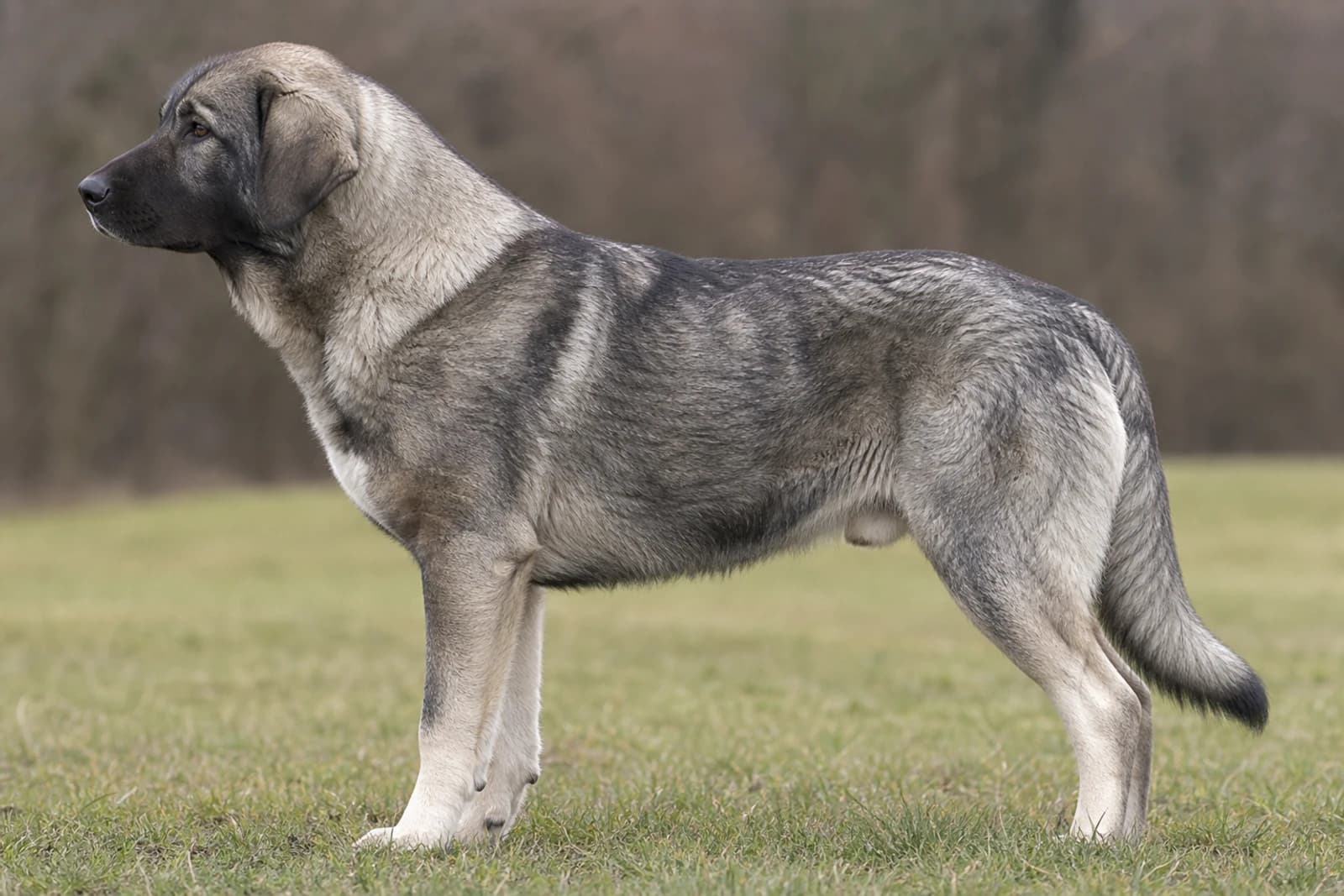
The Karst Shepherd Dog is a loyal, protective livestock guardian breed from the former Yugoslavia, ideally suited to experienced owners with rural properties. This large, courageous dog thrives with a job to do, excelling at guarding family and property. While reserved with strangers, it forms deep bonds with its people and is gentle with children when properly socialized. Not for first-time owners or apartment life, the Karst Shepherd needs consistent training, ample space, and an active, structured environment.
At a glance
- Size
- Large
- Height
- 21–25 in
- Weight
- 55–93 lb
- Life span
- 11–12 years
- Coat colors
- iron gray with lighter markings
- Coat type
- double coat, medium length, straight, harsh outer with thick undercoat
- Origin
- Former Yugoslavia
How much does a Karst Shepherd Dog cost?
Adopt / rescue
$75–$400
Usually includes spay/neuter, first shots, and a microchip.
Buy from a breeder
$700–$2,000
From a reputable, health-testing breeder.
Approximate USD. Prices vary widely by region, breeder, pedigree, age, and coat colour — adopting is the lower-cost and recommended route. Avoid suspiciously cheap “breeders”; they’re often puppy mills.
Estimate the full cost of a Karst Shepherd Dog →Karst Shepherd Dog photos
Views
Front, side, rear and top — the full silhouette.Poses
How the breed sits, lies, moves and plays.Puppy to senior
The breed across its whole life.Expressions
The breed’s range of moods.Close-up details
Eyes, ears, nose, paws, tail and coat.Coat colors
The breed’s recognized colors.Click any photo to enlarge. We show the Karst Shepherd Dog from every angle — three views, poses, life stages, expressions, close-ups, coat and colors.
Appearance & size
A Karst Shepherd is a substantial, square-built dog with a no-nonsense look. He stands 21 to 25 inches at the shoulder and tips the scale anywhere from 55 to 93 pounds—males reliably hit the upper end of that range, while females tend toward the lighter side. Every line of him says working mountain guardian: broad chested, thick necked, and boneed just heavy enough to handle rocky terrain and harsh weather without being clunky.
Head and face
From the front, the head is moderately broad and slightly rounded between the ears. Dark, almond-shaped eyes sit well apart under a pronounced stop, giving an alert, serious expression. The ears are drop style, V-shaped, and carried flat against the cheeks, framing a strong black mask that covers the muzzle and often extends around the eyes. That mask against an iron-gray coat is the breed’s signature—no flashy markings, just a clean, workmanlike contrast.
Body and profile
Step to the side and the Karst Shepherd shows a deep, well-sprung rib cage that reaches at least to the elbows. The back is level and solid, the loin short and muscular, and the underline tucks up only slightly. The tail is set moderately high, thicker at the base, and usually carried low with a gentle sabre curve; when relaxed it hangs down to the hock, and it may lift a touch when the dog is alert but never curls over the back. From behind, strong, parallel hindquarters support a balanced gait, and the tail hangs naturally, blending into a thick rear outline.
Coat and color
The double coat is built for a wet, cold climate. The outer guard hairs are long, harsh, and straight, while the undercoat is dense and woolly. The recognized color is iron-gray to grayish-brown, with the undercoat often a lighter fawn-gray that shows through when the dog moves. A black mask is essential. Small white spots on the chest and toes are allowed but not bred for. This coat sheds heavily during seasonal blow-outs, so you’ll find gray tufts everywhere for a couple of weeks twice a year.
History & origin
The first reliable written mention of the Karst Shepherd Dog appears in 1689, tucked inside Baron Janez Vajkard Valvasor’s encyclopedia The Glory of the Duchy of Carniola. He described a sturdy, iron-gray dog that local shepherds in the rocky Karst plateau (modern-day western Slovenia) relied on to guard and drive flocks of sheep. For centuries, these dogs were shaped purely by function: surviving the harsh limestone landscape, fending off wolves and bears, and working with a fierce independence that made them indispensable to transhumant herders.
The breed shares deep ancestral roots with the Sarplaninac, the other large livestock guardian that developed in the Šar Mountains farther south. Both descend from old Molossian-type flock guardians that moved through the Balkans with migrating pastoralists, but geography and local selection split them into distinct types. For decades, canine authorities lumped them together under the label “Illyrian Shepherd Dog.” The FCI recognized that combined breed in 1939, just as organized breeders began to document the Karst dogs more seriously. World War II nearly undid everything. The dogs’ territory became a combat zone, and by the war’s end, the pure Karst Shepherd population had crashed to a perilous low.
A handful of dedicated Slovenian breeders spent the 1950s and ’60s scouring remote villages for surviving specimens. Their efforts rebuilt the breed from a tiny genetic base. In 1968, the FCI finally split the two types, granting the Karst Shepherd Dog its own standard and name. Despite the revival, it’s never become numerous. Home remains almost entirely Slovenia, where a few hundred registered dogs work and live today. You might still spot a Karst Shepherd patrolling alpine pastures in the Vipava Valley or standing watch over a small homestead — a living link to centuries of guarded flocks and brutal, beautiful terrain.
Temperament & personality
A Karst Shepherd doesn’t hand out affection freely — this is a deeply loyal but serious guardian, not a social butterfly. You’ll notice the forward-leaning posture and steady, evaluating stare before they decide someone belongs. That brave, independent judgment has been bred into them for centuries, and they’ll place themselves between you and anything they deem a threat without waiting for a command.
With family, the bond runs deep but quiet. They’re more likely to lean against your leg or settle near the door than clamor for petting. Strangers, on the other hand, often get aloof tolerance at best. Many individuals have low friendliness toward unfamiliar people and other dogs, so early, continual socialization isn’t optional — it’s what keeps their protective nature from tipping into problem behavior. Even well-socialized dogs remain territorial. They’ll mark key spots along a fence line or on walks, and if an indoor accident happens, the lingering scent acts like a compass pointing them back to the same spot. Blot it, then neutralize with a vinegar spray (white or cider vinegar) to break the cycle.
Energy isn’t manic, but it’s formidable. A 55–93 pound, 21–25 inch dog with a job to do needs real exercise — a quick walk around the block barely registers. They thrive on long, structured hikes plus the chance to patrol a large, secure yard. Without that purpose, they’ll chew obsessively to keep their jaws strong or bark at every perceived intrusion. Isolation makes it worse: a Karst Shepherd left alone in the backyard often develops anxiety-driven habits like nonstop barking or escape attempts. They need to live inside, close to the household rhythms that define their internal map of “home.”
- Body language to watch: A stiff, forward body with a fixed stare signals serious intent; take it seriously. Lip licking, yawning, or turning the head away are calming signals that mean back off. A loose, wiggly body and soft eyes say the dog is content.
- Quirks and caveats: They may roll in foul-smelling things — possibly to mask their own scent, possibly just because they like the stink. During puppyhood, chewing is part of exploring and teething; a homemade citrus spray (boiled peels) can redirect them from furniture. Adult dogs still need hard chews for dental health.
- Food and kids: Respect mealtimes. A Karst Shepherd can resource-guard food if pressured. Teach children never to interrupt the dog while eating, and never grab the bowl unexpectedly.
Training a strong-willed guardian like this doesn’t work with force. They respond to respectful, consistent rules and clear leadership that doesn’t provoke a power struggle. You’ll get the best results by rewarding good behavior immediately — for example, giving a treat right after outdoor elimination, which cements the right habit far better than punishing indoor mistakes.
This is not a beginner’s breed. The protective streak, physical power, and low tolerance for outsiders mean you need experience reading canine cues and managing a dog that makes its own decisions. In the right hands, you get a calm, unshakeable partner with a courage and soundness of judgment that few breeds can touch.
Good with kids, dogs & other pets
The Karst Shepherd’s patient, non-aggressive temperament makes him a steady presence around kids, but his large frame—55 to 93 pounds and up to 25 inches tall—means he can knock over a toddler without meaning to. Close supervision around small children is a must. He’s not the dog for roughhousing; he bonds tightly with his family and prefers calm, respectful interaction. If your children understand how to treat a dog gently, you’ll get a loyal shadow who watches over them without fuss.
With other dogs, this breed sits on the low end of the sociability scale. He doesn’t need a crowd of canine buddies and won’t automatically befriend every dog at the park. Early, careful introductions matter enormously. A Karst Shepherd raised with another dog from puppyhood can coexist peacefully, but throwing an adult into a chaotic off-leash scene often triggers stress or defensive posturing. Keep first meetings on neutral ground, on leash, and let trust build slowly.
Cats and small pets are a case-by-case situation. If a puppy is exposed to a household cat during the critical socialization window—between 3 and 14 weeks—the two can learn to ignore each other or even nap together. The breed’s livestock-guarding heritage means some individuals have a chase instinct that kicks in when a creature scurries, so never leave a Karst Shepherd unsupervised with rabbits, guinea pigs, or a cat he doesn’t know well.
The socialization clock is real. Puppies who miss positive exposure to varied people, sounds, surfaces, and other animals before about 16 weeks often grow into adults who spook at loud noises, panic at the vet, or overreact around strange dogs. This isn’t a flaw you can easily patch later. Force an already fearful adult into meet-and-greets and you’ll add stress, not confidence—sometimes provoking a fight. If you adopt an older Karst Shepherd who is comfortable only with you, respect that. He doesn’t have to mingle with other dogs to live a full, happy life.
One more thing this breed won’t compromise on: companionship. He’s been bred to work closely with shepherds and despises long hours alone in a yard or empty house. A family where someone is typically home and where the dog is included indoors will get a calm, dependable companion. Stick him outside as a part-time pet and you’ll get distress, barking, and destructive habits. Give him daily time and early social practice, and you’ll have a quiet, watchful family member who saves his devotion for the people he trusts.
Trainability & intelligence
A Karst Shepherd doesn’t work to win your approval the way a retriever does. He’s been shaped by centuries of independent livestock guarding, so his first instinct is to read a situation and decide for himself — not look to a handler for a cue. That lines up with what the breed ratings tell you: moderate trainability and low social coordination. He can absolutely learn, but he won’t automatically check in with you or cooperate with strangers without being taught that it pays off.
What does that mean in real life? Training is about building a relationship of mutual trust, not running a dog through a set of commands. Harsh corrections, raised voices, or any kind of force damage that trust fast — and a Karst Shepherd remembers. Instead, you reward every flicker of the behavior you want, right when it happens. A clicker or a marker word like “yes” followed by high-value food (think chopped chicken or cheese), a quick tug session, or calm, genuine praise. That’s how you turn moderate trainability into reliable obedience.
Because his social coordination is low, early and ongoing socialization is a safety essential, not a nice-to-have. The prime window sits between 3 and 14 weeks. During that time:
- Introduce your puppy to dozens of calm new people — men, women, kids, people in hats, people with umbrellas.
- Pair every introduction with a stream of small treats so he builds an automatic positive association with novelty.
- Expose him to different surfaces (gravel, grass, tile, metal grates), household sounds, and other vaccinated dogs in controlled settings.
- Continue this exposure through adolescence; a single puppy class isn’t enough.
Formal obedience training works best when you keep sessions short, clear, and patient. Cue words stay to one syllable — “sit,” “here,” “place” — and you avoid nagging. If he doesn’t respond, it’s usually not defiance; it’s his guard-dog brain weighing whether the command makes sense in that moment. Don’t turn it into a confrontation. Walk back a step, make it easier, and win the moment with a party of praise and treats.
Recall is the biggest hurdle. A Karst Shepherd who spots movement at the edge of a field may disappear after it, no matter how sweetly you call. Build this skill over months, not days. Start on a long line in a boring area, reward every return like it’s a jackpot, and never punish a slow come — you’ll just teach him that returning ends the fun. The goal is to engrave the idea that being near you is the best deal going.
You won’t get a flashy trick dog here, and off-leash reliability in high-distraction places may never be 100%. What you can get — with daily reward-based work, total consistency, and zero intimidation — is a calm, thinking partner who takes your leadership seriously because you’ve earned it.
Exercise & energy needs
Plan on at least two separate 60‑minute workouts every day — not one marathon walk, but distinct sessions that give this mountain-bred dog a real job to do. A casual stroll around the block won’t dent his stamina. He needs sustained trotting, off‑leash exploration on safe trails, or focused, purposeful movement like pulling a mushing scooter or working a hillside. Splitting the day into a morning blast and an evening outlet also helps him settle indoors instead of pacing.
Mental effort matters as much as mileage. Karst Shepherds were developed to think on their feet while guarding flocks, and a bored brain quickly leads to barking, digging, or anxious reactivity. Build scent games, puzzle toys, or short, intense training sessions into every day — teach him to find a hidden toy, work for his meals in a snuffle mat, or practice a new herding command. Nose‑work and tracking classes are a natural fit and will wipe him out in a way that pure running cannot.
Because this is a large, growing breed, protect those joints early on. Avoid repetitive high‑impact exercise on pavement until growth plates close — typically around 18 to 24 months. Long hikes on soft ground, swimming, and gentle hill climbs are safer while he’s still lanky, and responsible breeders screen for hip and elbow health, so you’ll want to know those results before committing to a high‑intensity sport. If you run together, hold off on hard surfaces and build distance gradually. A fit adult handled this way often excels at canicross, hiking with a pack, or herding trials that mimic the breed’s working roots.
Neglect this routine and you won’t just have a restless dog — you’ll have a powerful, clever one who invents his own entertainment. Two hours of daily effort is the baseline, not the ceiling. Give him that and he’ll crash contentedly at your feet; shortchange it and he’ll let you know with your landscaping.
Grooming & coat care
Get ready for a coat that works as hard as your Karst Shepherd does — and sheds accordingly. This is a rugged, double-coated breed built for mountain weather, which means you’ll deal with a dense undercoat that blows out heavily twice a year. During those seasonal peaks, daily brushing isn’t optional; it’s how you keep fur tumbleweeds from taking over your house. The rest of the year, a thorough session 2–3 times a week keeps loose hair under control and skin oils distributed.
Brushing tools that actually work
- Slicker brush with rounded pins – your go-to for working through the outer coat and light undercoat tangles.
- Undercoat rake – essential during spring and fall when the wooly undercoat is shedding in clumps. It grabs dead fluff without scratching the skin.
- Greyhound-style comb – run it through the longer furnishings on the tail and britches to catch hidden mats.
Bathing and coat turnover
You don’t need to bathe a Karst Shepherd often — every 3–4 months is plenty, unless he’s rolled in something foul. Frequent bathing strips the natural oils that keep his coat weather-resistant. When you do bathe, a forced-air dryer (or a high-velocity dryer on a cool setting) works wonders to blow out loose undercoat. Outdoor exercise naturally helps the coat turn over, so a muddy hike followed by a brush-out does double duty.
Paws, ears, nails, teeth
A dog this size wears down nails some on rough ground, but you’ll still need to check every few weeks — too-long nails change his gait and stress joints. Ears need a quick wipe with a damp cloth every week, especially if he’s been out in wet weather, to prevent yeast infections. Brush teeth at least a few times a week with dog-safe toothpaste; large breeds can have surprisingly fragile dental health. Trimming is minimal: just tidy up the hair between paw pads and a light sanitary trim if needed.
The upside of all that brushing? You’ll spot hot spots, scrapes, or ticks early, often before they become problems. Invest in a good rake and a sturdy slicker, and you’ll cut through a shedding season in about 10 minutes a day.
Shedding & allergies
This dog sheds — a lot. The Karst Shepherd carries a dense double coat built for harsh mountain weather, and that coat dumps hair 365 days a year. You’ll find wiry guard hairs and soft undercoat on floors, furniture, and dark clothing no matter how often you vacuum.
Twice a year, usually in spring and fall, the breed goes through a full seasonal blowout. For two to three weeks, clumps of undercoat come out in fistfuls. Daily brushing with an undercoat rake and a slicker brush is the only way to keep the snowdrifts manageable inside your house. A high-velocity dryer helps when outdoor temps allow.
Drool is generally low to moderate — you might see a few wet spots after drinking, but nothing like a Mastiff’s waterfall. The bigger allergy picture is mostly about the hair and dander. This is not a breed for allergy sufferers. If you need a truly low-allergen dog, look elsewhere; no amount of grooming turns a heavy-shedding large dog into a hypoallergenic pet.
Skin conditions can make the shedding even heavier. Some lines are prone to allergies and dermatitis, which can trigger patchy hair loss and extra scurf. Responsible breeders screen for autoimmune skin issues and won’t breed dogs with recurring problems, but it’s a real downside to keep in mind — and one more reason you’ll want a solid relationship with a good vacuum cleaner.
Diet & nutrition
For a big working dog built to cover rough mountain terrain, what goes into the bowl has everything to do with staying sound over his 11–12-year life. A Karst Shepherd carrying too many pounds pays for it in the joints, and this breed can be seriously food-motivated — some individuals will eat until the bag is empty if you let them. Portion control isn't optional.
Puppy feeding
A Karst puppy grows fast. From weaning to four months, feed four evenly spaced meals a day. Drop to three meals until six months, then settle into the adult rhythm of two meals daily. Introduce new foods gradually — lightly cooked and puréed meats, fish, and soft fruits or vegetables — or use a high-quality large-breed puppy kibble. Raw chicken wings can come into the picture around twelve weeks, always under supervision. The goal is steady, lean growth, not a roly-poly puppy that stress-fractures developing bones.
Adult portion control and weight management
An adult Karst typically falls between 55 and 93 pounds, and a working-line dog on active duty burns a lot more fuel than a companion dog with a big yard and a couple of daily walks. Start with the feeding guide on your dog food, then adjust based on what you can see and feel — you want an obvious waist from above and ribs you can easily feel under a thin cover of flesh. Because some Karsts inhale their food, a puzzle bowl or slow feeder keeps the meal from becoming a three-second gulp and gives that clever brain a small workout at the same time.
Obesity creeping up isn't just about joint strain. It shortens a large breed's already modest lifespan. Weigh your dog every few weeks, cut portions back if the scale climbs without more activity, and resist those soulful begging eyes by serving any healthy leftovers — like extra vegetables or a spoon of egg — in his own bowl, never from the table.
What's in the bowl
There's no single perfect diet, but a sensible pattern that many owners of working landrace breeds lean on looks like this: roughly 60% raw or cooked meat (muscle meat, organs, raw meaty bones), 20–30% fruits and vegetables, and the remaining 10% from things like eggs, yogurt, pearl barley, or a little white rice for dogs with touchy stomachs. This isn't a strict recipe; it's a reminder that the digestive system of a dog is designed around meat, so a vegetarian or vegan diet deprives him of nutrients his physiology expects.
Blending or lightly processing vegetables and tougher ingredients helps a dog's up-and-down jaw action extract more nutrition — they lack the salivary enzymes we use to start digestion. When you batch-cook grains or proteins, you can freeze portions for quick meals later. Unsalted vegetable-cooking water works fine as a meal base when you don't have stock.
Skip rich holiday trimmings and sudden fatty meals; those can trigger pancreatitis in an otherwise healthy dog. If your Karst has a sensitive mouth or missing teeth later in life, purée his regular food; you'll get better nutrient absorption and a happier eater.
Senior adjustments
Older Karst Shepherds naturally slow down. Move to smaller, more frequent meals if a twice-a-day schedule feels like too much, and pull back total calories as his daily mileage drops. There's no solid reason to cut protein in a healthy senior, but you do need to guard against that slow weight creep. At every age, what you feed is only half the equation — the other half is keeping him moving.
Health & lifespan
A healthy Karst Shepherd lives 11 to 12 years on average—solid for a large, rugged working dog.
Hip dysplasia is the joint problem you’ll hear about most often. The hip socket doesn’t cover the ball of the thigh bone properly, leading to painful arthritis over time. Responsible breeders screen their breeding stock with OFA or PennHIP x-rays and only use dogs with passing scores. You can stack the odds further by keeping your dog lean through the growth phase and avoiding high-impact jumping on hard surfaces before the growth plates close.
Skin disease is the other recurring issue. Some lines are visibly itchy, prone to hot spots, or sensitive to certain proteins and environmental allergens. The fix is rarely a single pill—it’s a combination of a high-quality diet, regular grooming to remove dander and dirt, and quick intervention at the first sign of excessive scratching. If your dog starts licking paws or rubbing its face raw, get to the vet before a small irritation becomes a full-blown skin infection.
Weight management isn’t just about appearance in a breed already prone to joint trouble. Extra pounds accelerate hip and elbow wear. You should feel ribs easily under a light layer of flesh. Carrying the 55–93 lb frame heavier than it should be shortens those 11–12 years fast.
Beyond breed specifics, routine care still carries the day. Monthly heartworm prevention during mosquito season (and one month after) is a must. Rabies vaccination is legally required. Annual vet exams catch subtle changes—a slight limp, a dull coat—that a stoic Karst Shepherd often hides. Early socialisation and low-stress handling reduce cortisol, which can help keep stress-related skin flare-ups in check.
Living environment
A Karst Shepherd is not a dog you cram into an apartment and hope for the best. These are large, independent guardians bred to roam the rocky Karst plateau, so a house with a securely fenced yard is the bare minimum. The fence needs to be tall and sturdy — this is a 55–93 lb dog with a strong territorial instinct, not a casual jumper but a determined patroller who will test boundaries if bored.
The breed’s cold-weather toughness and tolerance for hot summers mean they can handle living outdoors in many climates, but they are deeply bonded to their people and do far better as inside members of the family. Expect barking. A Karst Shepherd sounds the alarm at anything out of place; you won’t train that out of them, so a close-quarters neighborhood with thin walls is a poor fit.
Left alone for long stretches, this dog can turn your yard into a moonscape or your furniture into confetti. They need more than just space — they need a job to burn off their mental and physical fuel. Two or three substantial activity sessions a day, mixing long walks with scent work or serious play, keep a Karst Shepherd steady. A bored one will find his own work, and you won’t like the results. Start teaching them as puppies that alone time is fine, with puzzle toys and gradual departures, or you’ll get a dog who howls his anxiety across the county.
Who this breed suits
If you’ve never lived with a big, independently minded guardian breed, the Karst Shepherd will humble you fast. This is not a low-maintenance family pet that waits for your command. He was built to make his own judgments for hundreds of years in the rocky karst of former Yugoslavia, protecting flocks from wolves and bears. You need to actually want that self-sufficiency and reservoir of suspicion — because you won’t train it out of him, and you shouldn’t try.
You’re a solid match if you have property (at least a large, securely fenced yard) and experience with working or guardian breeds. Active families with older kids who understand dog body language can work, but the Karst Shepherd is not a rough-and-tumble playmate for toddlers. He bonds deeply and is fiercely protective, which means you’ll need to manage introductions and set firm, fair rules from day one. This breed often does best with a single person or a couple who are consistent leaders, not pushovers or heavy-handed trainers.
Think twice if you’re a first-time owner, live in an apartment or suburb with close neighbors, or expect a dog that welcomes strangers with a wagging tail. The aloof, watchful nature that makes a great livestock guardian translates into a dog that will bark — loudly — and put himself between you and anyone he doesn’t know. You’ll spend a lifetime socializing and proofing, not just a puppy class. Seniors or sedentary owners can get in over their heads, too. A 90-pound dog who decides the mail carrier is a threat without a second of hesitation demands physical strength and mental sharpness from his handler.
He can genuinely suit experienced singles or couples who want a loyal, rugged companion for hiking, mountain runs, or property patrol. Give him a real job — even if it’s just supervising a few acres and escorting you on long daily treks — and you’ll see his steady, devoted side. Expect at least 90 minutes of purposeful exercise every day; a walk around the block won’t touch his stamina or his need to survey his territory. Without that outlet, you’ll get a bored, loud, and potentially destructive guardian who invents his own duties, often at your expense.
This dog is a lifestyle commitment, not a weekend project. If your vision of a great dog includes a guardian that’s more pragmatic partner than eager-to-please retriever, the Karst Shepherd can be an extraordinarily honest and capable companion. If you’re after an easygoing, social butterfly who fits into any home, walk away now.
Cost of ownership
Bringing home a Karst Shepherd puppy typically costs $1,200 to $2,500 from a responsible breeder — occasionally more if you’re importing from European lines. This is a rare livestock guardian breed in the US, so you may face a waitlist and higher than average shipping or travel expenses. Budget another $300–$500 for the first round of supplies: XL crate, heavy-duty leash, sturdy chew toys, and a decent dog bed that will survive a determined chewer.
Ongoing monthly costs run $150–$300, and that can spike during heavy-shedding season or if orthopedic issues appear.
Food
A 55–93 lb breed with a work ethic needs quality fuel. Expect to feed 4–5 cups of high-protein kibble daily, or a raw/home-prepared diet if you go that route. That’s about $70–$110 a month for a good large-breed formula that supports joint health. Cheap filler-heavy food will cost less upfront but often leads to bigger vet bills down the road.
Grooming
The Karst Shepherd’s thick double coat sheds steadily and blows coat twice a year — think drifts of undercoat. At-home brushing with a rake and slicker brush 2–3 times a week is non-negotiable. Professional grooming every 6–8 weeks during peak shedding seasons adds $60–$90 per session if you don’t want to wrestle it yourself. Factor in the usual nail trims, ear cleaning, and a solid vacuum.
Veterinary Care and Insurance
Routine care (checkups, vaccines, heartworm/flea/tick prevention) averages $40–$70 a month for a large dog. Karst Shepherds can be prone to hip and elbow dysplasia; responsible breeders screen for it, but even well-bred dogs can develop joint problems later. Orthopedic surgery can hit $4,000–$7,000 per hip. Pet insurance for a large breed, with a good orthopedic rider, runs $55–$85 a month — a cost that’s easy to skip but impossible to ignore when your 85-lb dog can’t get up. Training and early socialization for a fiercely protective guardian are also recurring expenses you shouldn’t sidestep.
Choosing a Karst Shepherd Dog
You won’t stumble upon a Karst Shepherd puppy easily. This rare Slovenian guardian breed barely registers outside its homeland, so your search starts with patience and a willingness to travel — or wait a year or more for the right litter.
Breeder vs. Rescue
Rescue is a long shot. A few adult Karst Shepherds end up in breed-specific rescues or with all-breed guardian-dog groups, but they’re scarce. Most families buy directly from a breeder who knows the dogs inside out. That’s a good thing: a dedicated breeder will be your mentor for the dog’s entire 11–12-year life. They won’t just hand you a puppy and disappear.
Health Clearances to Demand
A solid breeder screens the parents with more than a vet check. Because the breed is large (55–93 lb), joint health is non-negotiable. Ask for written OFA or PennHIP hip and elbow scores — look for “Fair” or better, or FCI A/B from European databases. Eyes cleared by a veterinary ophthalmologist (OFA Eye or equivalent) should be on record. Though not universal, many responsible breeders also run thyroid panels and a basic cardiac exam. Since deep-chested dogs can bloat, ask whether any close relatives have had a history of gastric torsion — there’s no genetic test, but families prone to bloat should be a red flag.
Red Flags You Can’t Ignore
- The breeder can’t show you the dam on site (or at least clear proof she lives with the family).
- Multiple litters on the ground at the same time, or puppies shipped sight-unseen with zero questions.
- No written health clearances you can verify online in the OFA database or European equivalents.
- They’re willing to sell a guardian breed to anyone with a credit card, no home check, no long conversation about your experience.
- Puppies raised in a kennel run with little human handling — you will pay for that lack of early socialization for a decade.
Choosing Your Puppy
Watch the whole litter interact. You want a pup that’s curious without being reckless — one that checks you out, then calmly gets back to wrestling or exploring. A Karst Shepherd should show an independent streak, not cling to you desperately or hide in a corner. Avoid the loudest bully bowling over littermates and the fearful pup who avoids all contact. Tell the breeder exactly what your daily life looks like: these dogs need a job (even if it’s guarding a suburban yard) and a securely fenced property. A sharp breeder will match a middle-of-the-road temperament to a family; a more driven puppy to an experienced guardian-dog home. Expect to fill out an application and answer a lot of questions yourself. If the breeder doesn’t grill you harder than you grill them, walk away.
Pros & cons
Pros
- A deeply loyal guardian who bonds tightly with family and naturally watches over children and property without being taught.
- Calm and steady indoors once exercised—not a breed that paces nervously or demands constant entertainment.
- Highly intelligent and problem-solves independently, which makes training a rewarding challenge for an experienced owner.
- Minimal grooming between seasonal sheds; the dense double coat resists dirt and rarely holds doggy odor.
- A healthy, hardy working breed with a typical lifespan of 11–12 years and no widespread inherited disorders when sourced from a responsible breeder.
Cons
- Wary of strangers by instinct; early and relentless socialization is critical, or you risk a dog who sees every visitor as a threat.
- Not suited to apartment life or small yards—this is a large (55–93 lb), athletic dog that needs room to patrol and a solid hour of off-leash time daily.
- Independent thinker who will test boundaries; first-time owners often find the stubborn streak frustrating and the protective intensity overwhelming.
- Heavy seasonal shedding can blanket your home in fur twice a year, despite the low-maintenance coat in between.
- High prey drive and territorial nature make off-leash reliability around strange dogs or wildlife a constant training project.
Similar breeds & alternatives
If you need a flock guardian that’s strong-willed and deeply loyal but want to scope out alternatives, a handful of mountain breeds from the same part of the world share that independent mindset — with a few crucial tweaks in size, coat, and day-to-day manageability.
-
Šarplaninac (Yugoslavian Shepherd Dog) — the Karst’s closest relative, and the one most people compare them to. The Šar is heavier, often 65–110 lb, with a thicker, longer coat that blows out in a cloud twice a year. That extra mass comes with a more deliberate, watchful style of guarding. A Karst Shepherd is typically a little leaner and quicker on its feet, which can make a difference if your property isn’t vast or you’re training in tight spaces. Both are reserved with outsiders, but a well-socialized Karst often warms up to houseguests a notch faster.
-
Tornjak — another Balkan livestock guardian, from Bosnia and Herzegovina. Tornjaks average larger and have a long, dense topcoat that almost covers the eyes. Their temperament skews a bit steadier and less reactive, but they’re still not a push-button dog. The Karst, with its shorter iron-gray or fawn coat, sheds less heavily and is easier to spot in dim light if you’re doing late-night fence checks.
-
Maremma Sheepdog — the white Italian guardian you’ll see on many North American farms. Maremmas often bond more exclusively to their stock, so they can slip into independent patrol mode and ignore commands off the flock. A Karst Shepherd typically forms a tighter family bond and is more likely to split its attention between children and the sheep, making it a somewhat more household-oriented dog in the same role. Maremmas also mature to a solid all-white coat that can mat more than the Karst’s double coat.
Fun facts
- One of the oldest Slovenian breeds, documented as early as the 14th century.
- A close relative of the Šarplaninac (Yugoslavian Shepherd Dog).
- Nearly extinct after WWII, it was revived by dedicated breeders.
- Feared by wolves and bears, it fiercely defends its flock.
Frequently asked questions
- Are Karst Shepherd Dogs good with children?
- Karst Shepherd Dogs can be loyal and protective of their families, but they tend to be independent and may be reserved with rowdy children. Early socialization and supervision are important to ensure positive interactions. They often do best with older, considerate kids.
- How much do Karst Shepherd Dogs shed?
- Karst Shepherds are heavy shedders, especially during seasonal changes. Their dense double coat sheds year-round, requiring regular brushing to manage loose fur. Expect significant hair around the home.
- How much exercise does a Karst Shepherd Dog need?
- Karst Shepherds have moderate energy levels and need daily exercise like long walks or active play sessions. Without sufficient physical and mental stimulation, they may become restless. They are not hyperactive but do best with a consistent routine.
- Can a Karst Shepherd Dog live in an apartment?
- Karst Shepherds are large, active dogs that typically need space to roam. While they can adapt to apartment living with adequate outdoor exercise, their protective barking and size make them better suited for homes with a securely fenced yard.
- Is the Karst Shepherd Dog a good choice for first-time owners?
- Karst Shepherds can be challenging for first-time owners due to their independent and protective nature. They require consistent training and early socialization. Experienced owners who understand working breeds tend to be a better fit.
- How much grooming does a Karst Shepherd Dog need?
- Karst Shepherds have a thick double coat that requires brushing two to three times per week to manage shedding and prevent mats. They may need more frequent grooming during heavy shedding seasons. Baths should be occasional to preserve coat oils.
Tools & calculators for Karst Shepherd Dog owners
Quick estimates tailored to Karst Shepherd Dogs — pre-filled with this breed’s size where it matters.
Articles & stories about the Karst Shepherd Dog
Sources & standards
This profile follows recognized breed standards from the American Kennel Club (AKC) and the Fédération Cynologique Internationale (FCI), along with established veterinary and breed-club guidance. These describe general breed tendencies — every dog is an individual.
Owner stories
Have a Karst Shepherd Dog? Share your experience — grooming tips, personality quirks, anything goes.