

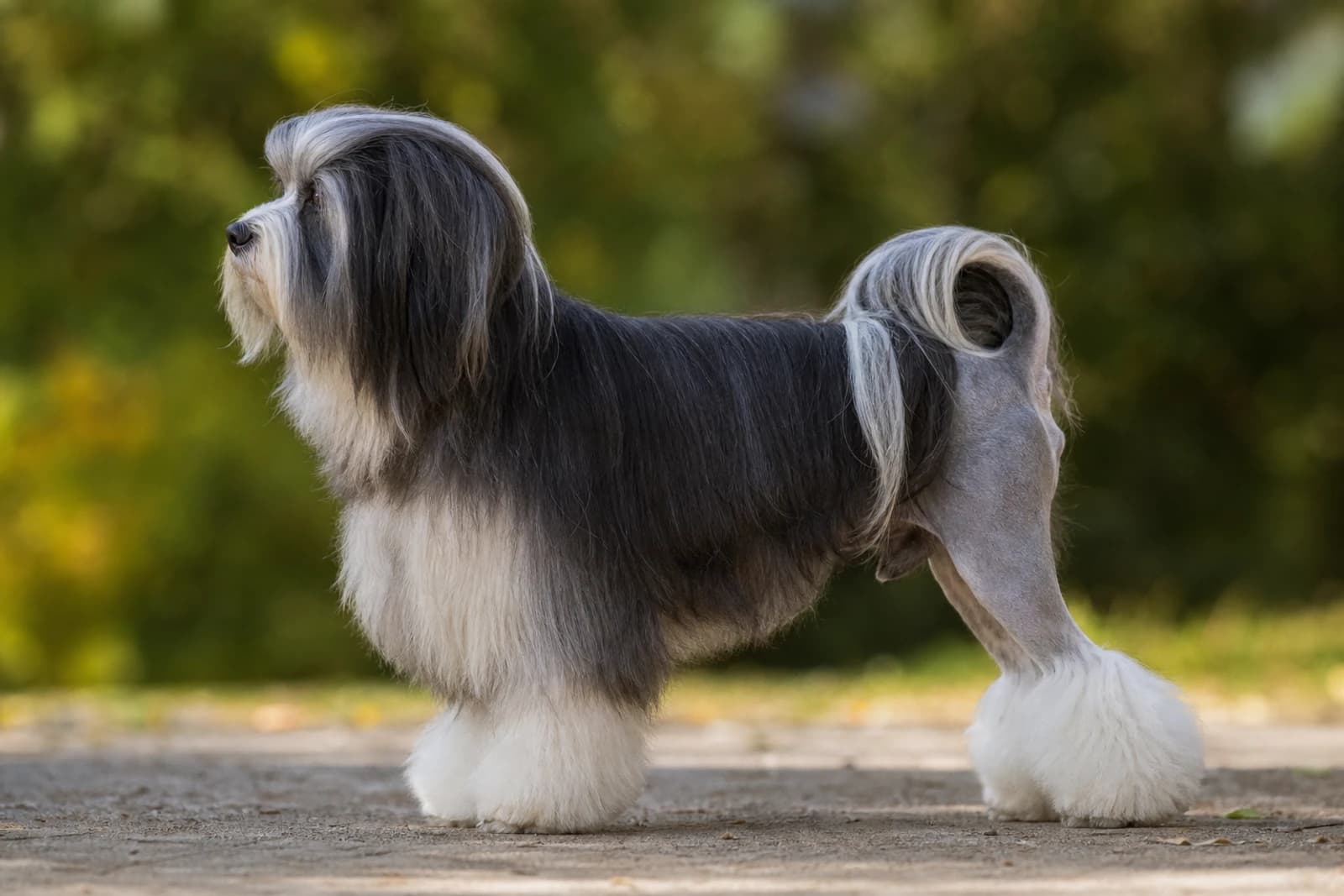
The Löwchen, or Little Lion Dog, is a lively and affectionate companion breed best suited to families, singles, or seniors seeking a devoted, low-shedding pet. With a playful yet calm demeanor, they thrive in apartments or homes with yards. Their long, silky coat requires regular grooming, but they are hypoallergenic. Löwchens are intelligent and eager to please, though sometimes independent. They get along well with children and other pets, making them versatile. Perfect for first-time owners willing to commit to grooming, this rare breed offers endless love and charm.
At a glance
- Size
- Medium
- Height
- 10–13 in
- Weight
- 9–18 lb
- Life span
- 12–14 years
- Coat colors
- All colors and combinations
- Coat type
- Long, silky, single coat (often kept in lion trim)
- Group
- Companion
How much does a Löwchen cost?
Adopt / rescue
$150–$500
Usually includes spay/neuter, first shots, and a microchip.
Buy from a breeder
$2,000–$4,000
From a reputable, health-testing breeder.
Approximate USD. Prices vary widely by region, breeder, pedigree, age, and coat colour — adopting is the lower-cost and recommended route. Avoid suspiciously cheap “breeders”; they’re often puppy mills.
Estimate the full cost of a Löwchen →Löwchen photos
Views
Front, side, rear and top — the full silhouette.Poses
How the breed sits, lies, moves and plays.Puppy to senior
The breed across its whole life.Expressions
The breed’s range of moods.Close-up details
Eyes, ears, nose, paws, tail and coat.Coat colors
The breed’s recognized colors.Click any photo to enlarge. We show the Löwchen from every angle — three views, poses, life stages, expressions, close-ups, coat and colors.
Appearance & size
A Löwchen looks like a small, solid dog who knows exactly how good he looks — and the coat is the first thing that tells you why. Stand one on the floor and you see a compact, square-proportioned body sitting 10 to 13 inches at the shoulder and weighing anywhere from 9 to 18 pounds. That spread isn’t an error; some individuals are light-boned and dainty, others carry more substance and muscle, but all fall inside a frame that’s as tall as it is long, with a balanced, cobby outline free of legginess or coarseness.
The coat itself is long, silky, and falls in gentle waves — never tight curls. Let it grow fully and it drags the ground, turning the dog into an animated plume. Most pet owners keep the body scissored into a shorter, practical clip, but the breed’s namesake trim is the famous lion cut: everything from the last rib back is shaved close, leaving a full mane over the chest, shoulders, and head, little bracelets of hair on the rear pasterns, and a pompom on the end of the tail. It’s dramatic and highlights the proud, forward carriage this little dog naturally holds. Color is a free-for-all in the best sense. Solids like cream, black, red, chocolate, and blue appear right alongside brindles, sables, parti-colors, and every speckled or ticked pattern you can name. There is no disqualified coat color, so two Löwchen rarely mirror each other.
From the front, the dark, round eyes are set well apart and shine with a bright, attentive expression. A short muzzle — about a third of the skull’s length — ends in a black or brown nose, with a distinct stop between the eyes. The pendant ears start just above eye level and disappear under cascading feathery hair. A thick ruff of coat frames the face and spills onto the chest, giving the front view a soft, lion-like mass even without a show trim. Forelegs drop straight down from well-laid-back shoulders, ending in small, round, tight feet.
Step to the side and the proportions make perfect sense. A slightly arched neck flows into a level topline, no dip or roach. The chest reaches down to the elbows and the ribs spring gently outward without going barrel-shaped, followed by a moderate tuck-up that keeps the silhouette clean. The tail is set high and carries gaily over the back, the plume draping to one side. In the lion clip, the contrast between the full front half and the shaved rear pulls your eye to the engine room — a well-muscled thigh and a moderately angled stifle that powers a light, ground-covering trot.
From the rear the hind legs stand straight and parallel, with short, perpendicular hocks. The tail plume arches forward over the back and often brushes the mane. The shaved pompom at the tip bobs with every step, an unmistakable signature whether the dog is moving or just standing still. Even in a full pet coat, the rear view shows clean lines and a tightly knit frame that backs up the breed’s surprisingly substantial feel when you lift one.
History & origin
The Löwchen’s story is one of ancient privilege and near extinction. The breed’s exact beginnings are lost to time, but we know it was well established by the Renaissance. A 1503 woodcut by Albrecht Dürer shows a small dog trimmed in a lion clip—the unmistakable silhouette of a Löwchen—proving that the breed (or its direct ancestor) already existed as a distinct type over 500 years ago. Similar dogs turn up in tapestries and paintings from the 15th and 16th centuries, always nestled in the laps of noblewomen.
Where the breed originally came from is still debated. The most plausible theory ties the Löwchen to the same Mediterranean progenitor stock as the Bichon Frise, Maltese, and Havanese. Traders likely brought these small companion dogs from the coastal regions of Italy or Spain northward into France, Germany, and the Low Countries. Once there, they were bred purely for companionship. A Löwchen’s job was to charm its owner, warm a lap on a cold castle floor, and serve as a living ornament for the wealthy. That’s where the famous lion clip comes in. A persistent (and delightfully practical) tale says that ladies of the court shaved the dog’s hindquarters so its warm skin would act like a hot water bottle against their feet; the full mane and tufted tail were left to keep the front end cozy and visually impressive. True or not, the clip gave the breed its German name, meaning “little lion,” and it remains the Löwchen’s calling card.
Despite centuries as a favored pet, the Löwchen nearly slipped into oblivion. Two world wars ravaged European kennels, and by the 1960s the breed’s numbers had crashed to fewer than 40 dogs worldwide. That’s when a handful of passionate breeders—most notably Madame Jeanne Roosens in Belgium and Dr. Hans Wachtel in Germany—decided the breed would not die on their watch. They tracked down every Löwchen they could find and carefully managed a rescue breeding program. Every Löwchen alive today descends from that tiny, bottlenecked population. The breed came to the United States in the 1970s, and after decades in the AKC’s Miscellaneous class, it earned full recognition in 1999 and now competes in the Non-Sporting Group.
Today the Löwchen is still uncommon—you won’t see one on every street—but its numbers are stable, guarded by a small, dedicated network of breeders. A dog that once warmed the laps of Renaissance ladies continues to do the same for modern families, carrying a historical thread back to the little lion dogs in Dürer’s woodcuts.
Temperament & personality
The Löwchen is, at heart, a clever, affectionate clown that thrives on being the center of your world. Don’t let the glamorous, leonine haircut fool you—this dog expects to be a full participant in family life, not a living room ornament. They bond tightly with their people and can develop anxiety-driven barking or destructive chewing if left alone too long. Consistent daily companionship and a crate or safe zone go a long way toward preventing that.
Playful and surprisingly athletic for a dog that tops out around 15 pounds, a Löwchen invents games, chases a ball, or prances around showing off a stolen sock. Bred as companions, they usually greet guests warmly, but they’ll still sound the alarm with a surprisingly big bark when someone approaches the door. That watchfulness makes them an effective early-warning system; without guidance, barking can become a habit, so teach a “quiet” cue early.
With their family, they tend to be gentle and patient—on their own terms. A Löwchen can have a stubborn streak, so treat training with a light touch. They respond far better to playful, reward-based methods and a sense of humor than to heavy-handed corrections. Kids should learn to let the dog eat in peace and recognize when a yawn or head turn means “I need a break.” A stiff body and direct stare are the real red flags—a relaxed, loose body and soft eyes tell you your Löwchen is content.
This breed uses scent as a primary language. They’ll sniff the same patch of grass intently, revisit spots on walks, and might decide the rarely used guest room is fair game because it doesn’t smell enough like “home.” Diligent potty training—rewarding the dog immediately after they go outdoors—works better than punishing accidents. Clean indoor messes thoroughly with an enzymatic or vinegar spray to eliminate the cue. And yes, your Löwchen may occasionally roll in something wonderfully stinky. Take it as a little leftover scavenger instinct, not a personal insult. A quick bath and a laugh keep things in perspective.
Good with kids, dogs & other pets
The Löwchen’s easygoing, patient temperament makes them a natural fit for families with respectful children, but their small size (9 to 18 pounds) means kids need to learn gentle handling. Even a wiggly, friendly Löwchen can be injured by a clumsy grab or an accidental fall from a low couch. Supervise interactions with toddlers and preschoolers, and teach older children to read the dog’s signals — a tucked tail or a yawn often means “give me a break.” This isn’t a breed that snaps out of nowhere; they give clear, quiet warnings if they’ve had enough.
With other dogs, a well-socialized Löwchen is typically a cheerful playmate. They enjoy canine company and do well in multi-dog homes where introductions are calm and gradual. Puppy kindergarten and regular positive exposures before 16 weeks lay the groundwork for a dog who greets new friends without fear or overexcitement. An adult Löwchen who missed that early window may be timid or selective; don’t force dog-park interactions. A few one-on-one playdates with known, easy dogs often suit them better than chaotic group settings.
Cats and small pets rarely trigger strong chase instincts in this companion breed. Many Löwchen live peacefully with indoor cats, rabbits, and even guinea pigs when raised together or introduced with patience. Still, give each animal a safe escape route and supervise early encounters. A rabbit sprinting across the floor can tempt any dog’s curiosity, so set up a baby gate until you’re confident everyone is calm.
One non-negotiable: Löwchens bond hard and hate being left alone all day. They’re built for family life where someone is around often — a remote worker, a retiree, or a stay-at-home parent. If your household is gone nine hours daily, this breed’s loneliness can turn into barking, chewing, or house-soiling. Plan for a midday dog walker or a pet sitter who can break up the quiet. With thoughtful early socialization and a home that values togetherness, a Löwchen becomes the easy family member who can sprawl next to the cat, join a supervised tea party with the kids, and flop contentedly at your feet — all in the same afternoon.
Trainability & intelligence
The Löwchen is a sharp little dog who reads you like a book. She picks up new tricks surprisingly fast — often faster than you’re ready for — and genuinely enjoys working alongside her person. But that brain comes with an independent streak. If training feels like a chore or you get heavy-handed, she’ll simply opt out.
What works
- Short, game-like sessions trump marathon drills. Five to ten minutes of upbeat practice a few times a day keeps her engaged. End the moment she nails something, and she’ll drag you back for more.
- Reward heavily. Tiny soft treats, a beloved squeaky ball, or a cheerful “Yes!” work better than any correction. Harsh tones or punishment erode her trust and can make her shut down — you’ll see progress freeze the instant she feels pressured.
- House training takes consistency, not stubbornness. With a 9–18 pound body and a small bladder, a puppy needs a bathroom break every two hours at first. Set a schedule, take her to the same spot, and reward the instant she goes. Accidents happen; just clean them up without drama.
Where the independence shows up
- Recall can be negotiable. If a squirrel, a visitor, or a suspicious napkin on the sidewalk captures her attention, she may decide her own plan wins. Build recall with high-value prizes — think shredded chicken, not a dry biscuit — and practice in low-distraction spaces. Never call her only to end playtime or clip nails.
- Early socialization closes the confidence gap. Löwchens can become wary or vocal with strangers if they aren’t exposed gently as puppies. Between 8 and 14 weeks, introduce her to friendly people, calm dogs, different floor surfaces, and everyday sounds. Carry her on short public outings before vaccinations are complete so she can observe the world without getting overwhelmed. Keep every encounter pleasant — treats raining down while a stranger says hello does wonders.
- Mental work is non-negotiable. A Löwchen who hasn’t used her brain will find her own projects: demand-barking at the window, unmaking your couch cushions, or convincing you that the doorbell requires a full opera. Puzzle feeders, trick chains, and even rally or obedience classes give her a job. She’ll shine in a sport that rewards partnership, not robotic drills.
A Löwchen trained with patience and fair play becomes a biddable, adaptable companion who’s just as happy showing off a spin for company as she is curling up afterward. Treat her like a thinking partner, and she’ll repay you with a lifetime of enthusiastic teamwork.
Exercise & energy needs
A Löwchen isn’t a high-octane working dog, but don’t mistake that for low-energy couch-potato status. These little comedians have a bright, playful spark that needs a daily outlet, or you’ll see it bubble up as restless barking or destructive chewing. Think purposeful movement rather than exhaustive workouts.
Plan on roughly 30–45 minutes of activity a day, best split into two or three shorter sessions. Their compact size means a couple of 15-minute walks around the neighborhood, plus a few rounds of fetch down the hallway or a hide-and-seek game, usually hit the sweet spot. Because they were bred to be indoor companions, they’re perfectly happy with at-home exercise when the weather’s lousy—a hallway chase or a puzzle toy session can count just as much.
Mental exercise matters as much as the physical kind. Löwchen are clever, and a bored brain can look a lot like excess energy. Work in scent games, trick training, or a snuffle mat. A 10-minute “find it” session with hidden treats can drain that busy mind faster than an extra walk.
A few specific activities that fit the breed safely:
- Low-level agility or rally: They’re agile and love performing, but keep jumps low (or switch to a tunnel and weave poles) to protect their back and knees.
- Nose work: Tap into a surprisingly keen nose with simple indoor scent trails.
- Interactive play: Tug, fetch, or learning a new trick in short bursts—5 to 10 minutes at a time keeps them engaged without overtiring.
Avoid long runs on pavement or repetitive jumping off furniture. Some Löwchen can be prone to patellar luxation or back issues, and responsible breeders screen for those. The safest bet is to observe how your individual dog moves and holds up after activity, then adjust intensity accordingly. If your pint-sized clown suddenly seems wired and yappy at 9 p.m., they’re probably telling you they need a little more brain work, not just a longer leash walk.
Grooming & coat care
Daily brushing
The Löwchen’s long, silky coat is a showstopper—but it tangles if you blink. Plan on a thorough brushing every single day. Skip a session and you’ll be chasing mats behind the ears, in the armpits, and along the legs. Use a pin brush or a slicker brush with rounded pins to work through the hair without scratching the skin. I keep a light detangling spray handy and work in small sections, then follow with a metal comb to catch any hidden snarls the brush missed.
Bathing & drying
Bathe your Löwchen every three to four weeks, or more often if they roll in something questionable. A mild dog shampoo and a separate conditioner keep the coat soft and less prone to breakage. Rinse thoroughly—leftover product dries into a gummy mess that invites mats. Don’t let the coat air-dry by itself; that hair will curl and knot as it dries. Blow-dry on a low heat setting while you brush, straightening the hair as you go. It sounds fussy, but it’s the single trick that saves you from a matted nightmare mid-week.
Clip choices
The traditional lion trim (shaved hindquarters, full mane, ankle bracelets, and a plumed tail) is iconic. For a pet, it means a professional groomer every 4 to 6 weeks to keep the pattern clean. Not up for that? A puppy cut all over—about an inch or two of length—slashes grooming time without sacrificing the breed’s teddy-bear charm. Even with a short clip, you’ll need to trim the face, paw pads, and sanitary areas between appointments. A cordless trimmer with a #10 blade is your friend here.
Nails, ears & teeth
Trim nails every three to four weeks; if you hear clicking on the floor, they’re overdue. Those drop ears are velvet traps for moisture, so check weekly for wax buildup or redness. Wipe the outer ear with a damp cloth, never dig into the canal. Daily toothbrushing with an enzymatic dog toothpaste nips dental disease in the bud—Löwchens can be prone to early tooth loss if you slack off.
Seasonal shifts
This breed sheds very little, so you won’t battle seasonal blowouts. What you will notice: a longer, thicker coat in winter that traps dampness from snow or sweaters. Brush more frequently then, and dry them thoroughly after wet walks. Spring mud means more baths, but keep the conditioner light so the hair doesn’t get weighed down. Outdoor time helps turn over dead hair, but check for burrs and twigs that latch onto the fine strands like Velcro. If all the daily brushing sounds like too much, just keep the body clipped short year-round and enjoy the personality without the upkeep.
Shedding & allergies
If you hate vacuuming every day, this is the breed for you. Löwchen shed very little — you’ll spot a stray hair here and there, not tufts on the furniture. They have a single coat with no dense undercoat, so you skip the dramatic seasonal blowout that double-coated breeds unleash twice a year. The trade-off is that the hair keeps growing and mats easily if it isn’t brushed out regularly. Most pet owners keep their Löwchen in a short, no-fuss trim to reduce grooming time.
Drool is a non-issue. These dogs are dry-mouthed and tidy, with zero slobber on your pant legs or walls.
Now for the realistic “hypoallergenic” picture. Allergies aren’t triggered by hair itself, but by proteins in dander, saliva, and urine. Because a Löwchen drops minimal hair, less dander floats around your home, which can be a game-changer for someone with mild allergies. However, no dog is completely allergen-free. If allergies in your household are severe, visit a breeder and spend time with adult dogs before committing. Weekly baths and a clean coat also help keep any dander in check.
Diet & nutrition
A Löwchen’s small frame means even an extra half-pound puts strain on joints and can sneak up fast if you aren’t measuring meals. Most adults do well on a high-quality commercial food formulated for small breeds, with a real meat first ingredient and minimal filler. Look at the bag’s calorie-per-cup figure, then base portions on your dog’s ideal weight, not the current one. A 10‑pound adult typically needs 250–300 calories a day, split into two meals. A more active 15‑pound dog might need 400–450 calories. Treats count — and because Löwchen are often shameless chowhounds, swap calorie‑dense biscuits for a few green beans, carrot coins, or a single piece of freeze‑dried liver.
Puppy feeding schedule
From weaning to 4 months, serve four evenly spaced meals a day. From 4 to 6 months, drop to three meals. By 6 months, you’re at the adult rhythm of two meals. If you switch foods, do it over a week, gradually mixing in the new with the old, and start with lightly cooked, puréed protein or a high‑quality puppy formula. Raw meaty bones like chicken wings can be introduced around 12 weeks under direct supervision, not as a meal replacement but for natural chewing and teeth cleaning.
Weight management
Löwchens aren’t power athletes, but they’re lively. Without daily walks and active play, their food motivation tilts the scales quickly. Use a slow‑feeder bowl or a puzzle toy if your dog inhales meals — it stretches mealtime and burns a few mental calories. Keep a weekly weight log, and run your hands over the ribs monthly. You should feel them with light pressure, no digging. If the ribs disappear, cut back on the main meals first, not the exercise. Senior Löwchens slow down further; switch to smaller, more frequent meals and gradually reduce total daily calories before you see the number creep up.
What to put in the bowl
If you go the homemade route, anchor the diet around 60% animal protein — muscle meat, organs, fish — with 20–30% dog‑safe fruits and vegetables, and the remaining 10% from eggs, plain yogurt, or cooked grains like pearl barley or white rice. Purée or finely chop veggies to help your dog actually absorb the nutrients. Avoid rich, fatty trimmings and holiday leftovers, which can trigger pancreatitis in small dogs. Cooked, unsalted vegetable water makes a decent low‑calorie topper if you want to add moisture without extra fat. And never give in to table‑side begging; serve any healthy leftovers in the dog’s own bowl to keep those big brown eyes from training you.
Health & lifespan
A healthy Löwchen often hits 12 to 14 years, and plenty stay spry well into their teens. That’s solid for a small dog, but longevity depends on staying ahead of a few problems that pop up in the breed. Responsible breeders don’t roll the dice — they screen for conditions that can be passed down and only breed dogs with clean results.
Like many small breeds, Löwchen can be prone to patellar luxation (a kneecap that slips out of place) and progressive retinal atrophy (PRA) or cataracts that steal vision gradually. You might also see dental disease because their little mouths pack teeth tightly together. Without daily brushing and occasional professional cleanings, plaque turns into painful gum infections and tooth loss that can stress the heart and kidneys. Skin allergies show up too — often driven by environmental triggers or food sensitivities — so if your dog starts scratching more than usual, a diet tweak or allergy workup helps before it turns into a hot spot.
When you bring a Löwchen puppy from a conscientious source, ask to see proof of OFA or PennHIP knee evaluations and a recent CERF or OFA eye exam for both parents. Those aren’t paperwork theater; they’re the first line of defense against inherited joint and vision trouble. Yearly checkups with your vet catch early signs of slipping kneecaps, murmurs, or cloudy lenses, especially once your dog passes age 7. Keep your Löwchen at a lean 9–18 pounds — extra weight bangs up tiny joints fast. Heartworm prevention monthly during mosquito season (and a month after it ends) is non-negotiable, and rabies vaccination isn’t just the law; it’s literally the only shield against a fatal virus with no treatment once symptoms show. Beyond the vet stuff, early socialization lowers stress-driven behaviors that can impact physical health — a confident little lion that isn’t anxious or isolated avoids a whole category of wear and tear on the body.
Living environment
A Löwchen fits into apartment living as naturally as a house with a yard — as long as you don’t leave them alone for marathon stretches. These 9–18 lb dogs were bred to be close to people, and they take that job seriously. An ideal setup has someone home for a good chunk of the day, because hours of solitude can quickly turn a confident little lion into a stressed, barking mess.
You don’t need a fenced acre. A secure courtyard or a well-managed apartment corridor works fine for quick potty breaks. Their exercise appetite is modest but real: a couple of 15–20 minute walks each day, plus some indoor fetching or a puzzle toy, keeps that compact body and sharp mind satisfied. Multiple short sessions suit them better than one long trek, and they’ll tell you when it’s time to move — boredom here can trigger sharp, repetitive alert barking. Nip that early with a “quiet” cue, because they’ll happily announce every delivery truck and neighbor in the stairwell.
Climate-wise, think temperate. That single coat offers little protection against serious cold, so a sweater on winter walks isn’t pampering — it’s practical. In hot weather, stick to morning and evening strolls and keep indoor play cool. With a steady routine, predictable company, and mentally tiring games (like hiding a treat in a snuffle mat), a Löwchen adapts to whatever four walls you call home. Just know that renting a small space means you’ll be sharing it — constantly — with a dog who sees distance as a problem to solve.
Who this breed suits
A great fit if you …
You want a small dog that’s more playful shadow than delicate ornament. The Löwchen bonds tightly with its people and follows you from room to room, ready to chase a ball or curl up beside you. First-time owners often succeed here because these dogs are eager to please, food-motivated, and sharp enough to pick up commands quickly — housetraining usually clicks once you’re consistent. Their 9- to 18-pound frame and moderate exercise needs make them a natural for apartment dwellers, seniors who still enjoy a couple of 20-minute walks a day, or singles who work from home and want a cheerful companion under the desk.
Families with gentle, school-age kids get a sturdy little playmate that doesn’t break when a child accidentally bumps them. They’re also famously good with other dogs and even cats when raised together. If you don’t mind a bit of primping, the breed’s non-shedding coat is a real bonus for neatniks — a daily brush and a clip every 4 to 6 weeks keeps the signature lion trim tidy.
Think twice if you …
- You’re gone 8 or more hours daily. Löwchens form intense attachments and can develop separation anxiety that surfaces as barking, chewing, or house soiling. This isn’t a dog you can leave with a bowl of food and a pat on the head.
- Constant barking wears you down. These little watchdogs notice everything — a squirrel, a delivery truck, a leaf — and they’ll announce it. Training helps, but the tendency never fully disappears.
- You want a wash-and-wear coat. That hypoallergenic fluff mats against the skin if you skip a few days of brushing. Factor in the time or the cost of a professional groomer.
- Your household is rough-and-tumble with tiny tots. Despite their solid build, a 10-pound dog can still be hurt by a toddler’s enthusiastic grab. Supervision is non-negotiable.
If your life allows you to be around enough, and you’re looking for a clever, affectionate dog that acts like a clown most of the day, a Löwchen will happily fill that space. The breed’s real dealbreaker for the wrong home is a persistent, high-pitched bark that won’t be ignored — so if silence is your top priority, look elsewhere.
Cost of ownership
A Löwchen puppy from a responsible breeder typically costs between $2,500 and $4,500, and the wait can be long — this is one of the rarest breeds in the world, with only a few hundred registered each year. That price tag should include health clearances, a health guarantee, and early socialization, not just a cute face. Avoid any breeder charging half that without proof of OFA patella and eye screenings; cheap puppies usually carry expensive surprises later.
Monthly upkeep lands in the $150–$250 range, depending heavily on how you handle grooming. A Löwchen in full show coat is a serious commitment, but even a practical pet clip requires professional grooming every 6–8 weeks at $70–$100 per visit, plus your own brushing and combing between appointments to prevent matting. Factor in $10–$15 a month for quality shampoo, conditioner, and detangler if you do home maintenance.
Food is modest: a 10–15 lb bag of high-quality kibble runs about $30–$50 and lasts roughly two months for a dog this size. Add another $15–$20 for treats and chews.
Vet care is where ownership gets real. A routine annual exam, vaccines, heartworm and flea/tick prevention average $500–$700 yearly, or about $40–$60 monthly when you spread it out. Pet insurance adds another $30–$60 a month, and it’s worth it — Löwchens can be prone to luxating patellas and, less commonly, hereditary eye conditions like progressive retinal atrophy. A single luxating patella surgery can hit $2,000–$4,000 per knee, so even a modest savings buffer of $25–$50 a month beats scrambling for credit. When you budget, plan for a dog that lives 12–14 years and won’t look a day over puppyhood until those vet bills remind you otherwise.
Choosing a Löwchen
Löwchens are uncommon, so you’ll likely need to get on a breeder’s waiting list — and that’s exactly where you want to be. Responsible breeders don’t churn out puppies; they plan a litter or two a year and typically have homes lined up before the pups arrive. Rescue is worth a look, but true Löwchens rarely appear in shelters. A breed-specific rescue network is your best shot if you’d rather skip the puppy phase.
Ask for written proof of these health clearances: an OFA or PennHIP hip evaluation, a patellar luxation (knees) exam, and an annual eye certification from a veterinary ophthalmologist. Löwchens can be prone to patella issues and certain eye conditions, so a breeder who screens for them is non-negotiable. Some also test for cardiac and thyroid health. They should hand you the certificates freely — no excuses.
Red flags are straightforward. Avoid anyone who can’t produce those health documents, always has puppies available, ships a puppy without ever meeting you, or runs a multi-breed operation out of a kennel. A breeder who won’t let you visit the home and meet the mother (and father, if on-site) isn’t one you want to trust.
When you meet a litter, observe the puppies as a group. You’re looking for a middle-of-the-road pup — not the shyest one hiding in the corner, and not the bully who steamrolls the rest. A confident Löwchen will investigate you but also look back for reassurance. Cradle a puppy gently and handle its paws, ears, and mouth to see how it reacts; a little squirming is normal, panic or stiff freezing isn’t. Since adults reach only 10 to 13 inches tall and weigh 9 to 18 pounds, you can already spot the outliers at 8 weeks. A breeder who raises the litter inside the home is giving you a huge advantage for house training and early socialization because those puppies have already learned that human noise, kitchen sounds, and carpet underfoot are just everyday life.
A well-bred Löwchen is an investment in 12 to 14 years of companionship, so take your time finding the right one.
Pros & cons
Pros
- Practically no shedding — the single coat traps dander, which can be kinder to allergy-sufferers than most breeds.
- A true shadow dog — this 9–18 pound companion wants to curl in your lap, follow you room to room, and ride along on errands.
- Sharp, upbeat mind — they learn tricks and house rules fast with clicker-style, positive training; food rewards work like a charm.
- Apartment-sized and travel-ready — standing just 10–13 inches tall, they tuck easily under a seat or into a city routine.
- Endless comic relief — the breed’s playful, almost goofy personality means you’ll laugh at their antics daily.
- Family-friendly foundation — when socialized early, they get along well with gentle children and other household pets.
- Solid lifespan — count on 12–14 years of that bouncy, tail-wagging presence.
- Modest exercise appetite — two 20-minute walks and some indoor fetch usually satisfy them, though they'll gladly do more.
Cons
- Serious grooming commitment — brush that silky coat every other day to prevent mats, and budget for a professional trim every 6–8 weeks.
- Velcro dog gone anxious — without gradual alone-time training, their devotion can turn into howling or destructive chewing when left solo.
- The doorbell is their business — alert barking is loud and frequent; they’ll narrate every visitor unless you teach a “quiet” cue.
- Stubborn negotiator — charm turns to stonewalling if sessions get repetitive; you’ll need short, upbeat drills and endless patience.
- Hard to find — rarity means waitlists of six months or more with responsible breeders, and “available now” ads are a red flag.
- Little but not indestructible — a 10-pound dog is easily hurt by an enthusiastic toddler; always supervise kid-and-dog play.
- Health watch points — the breed can be prone to patellar luxation and progressive retinal atrophy; reputable breeders screen, but no guarantee erases every risk.
Similar breeds & alternatives
If the Löwchen’s lion trim and upbeat nature catch your eye but you’re still comparing, a handful of small companion breeds overlap in size and lap-dog appeal. Here’s how they differ in practice.
- Bichon Frise (9.5–11.5 in, 12–18 lb): The closest relative—same white powder-puff coat, same merry disposition. A Bichon tends to be more demonstrative with strangers and lives in a full puffball trim rather than the Löwchen’s distinctive shaved hindquarters. Grooming costs and frequency are similar; both need pro cuts every 4–6 weeks.
- Havanese (8.5–11.5 in, 7–13 lb): Slightly lighter and famously attached at the hip. That intensity can tip into separation anxiety more easily than in a Löwchen, which usually handles alone time with more self-assurance. The Havanese coat is silkier, mats fast, and is often kept long all over—meaning a daily detangling commitment you can largely skip with a lion-clipped Löwchen.
- Coton de Tulear (9–11 in, 8–13 lb): Another bichon family member with a softer, more easygoing personality. The Coton’s cottony coat sheds very little, but the breed lacks the spring-loaded, clownish energy that defines many Löwchens.
- Shih Tzu (9–10.5 in, 9–16 lb): Stockier and lower-key. A Shih Tzu is usually content to lounge with minimal interactive play, while a Löwchen actively seeks out games. The Shih Tzu’s flattened muzzle also makes them pant more heavily in heat; a Löwchen’s longer snout handles exercise and warm days without the same effort.
- Lhasa Apso (10–11 in, 12–18 lb): Same weight range, longer body, and a much sharper watchdog. Lhasas bark at every knock and may stay aloof with visitors; a Löwchen is quicker to warm up after a polite sniff.
The lion clip itself is a practical difference—less daily body brushing than a full-coated Havanese or Bichon. Combine that with a playful, self-possessed temperament that avoids the extremes of velcro-like neediness, and you have a rare package that feels lively without demanding constant hands-on reassurance.
Fun facts
- The Löwchen's name means 'little lion' in German, referencing the traditional lion clip.
- They were popular among European nobility and appear in paintings from the 15th century.
- Despite their small size, they are brave and make excellent watchdogs.
- The breed is one of the rarest, but its loving nature is winning hearts worldwide.
Frequently asked questions
- Is the Löwchen good with children?
- Löwchens can be excellent family pets and generally get along well with children, especially when socialized early. Their playful and affectionate nature makes them enjoyable companions, but supervision is wise with very young kids because of the dog's small size.
- Do Löwchens shed a lot?
- Löwchens are considered a low-shedding breed, with a coat that is more similar to hair than fur, making them a potential option for allergy sufferers. Regular grooming is still required to prevent mats and keep their coat healthy.
- How much exercise does a Löwchen need?
- Löwchens have a moderate energy level and typically do well with daily walks and some playtime. They enjoy interactive games and short romps, but are not overly demanding in terms of physical activity.
- What kind of grooming does a Löwchen require?
- Their long, flowing coat needs frequent brushing—ideally several times a week—to avoid tangles and mats. Many owners opt for professional grooming every 4–6 weeks, and the breed's distinctive 'lion clip' is a traditional style that can simplify maintenance.
- Are Löwchens suitable for apartment living?
- Thanks to their small-to-medium size and adaptable nature, Löwchens can thrive in apartments as long as they get daily exercise and mental stimulation. They are generally quiet dogs, though they may alert bark occasionally.
Tools & calculators for Löwchen owners
Quick estimates tailored to Löwchens — pre-filled with this breed’s size where it matters.
Articles & stories about the Löwchen
Sources & standards
This profile follows recognized breed standards from the American Kennel Club (AKC) and the Fédération Cynologique Internationale (FCI), along with established veterinary and breed-club guidance. These describe general breed tendencies — every dog is an individual.
Owner stories
Have a Löwchen? Share your experience — grooming tips, personality quirks, anything goes.