

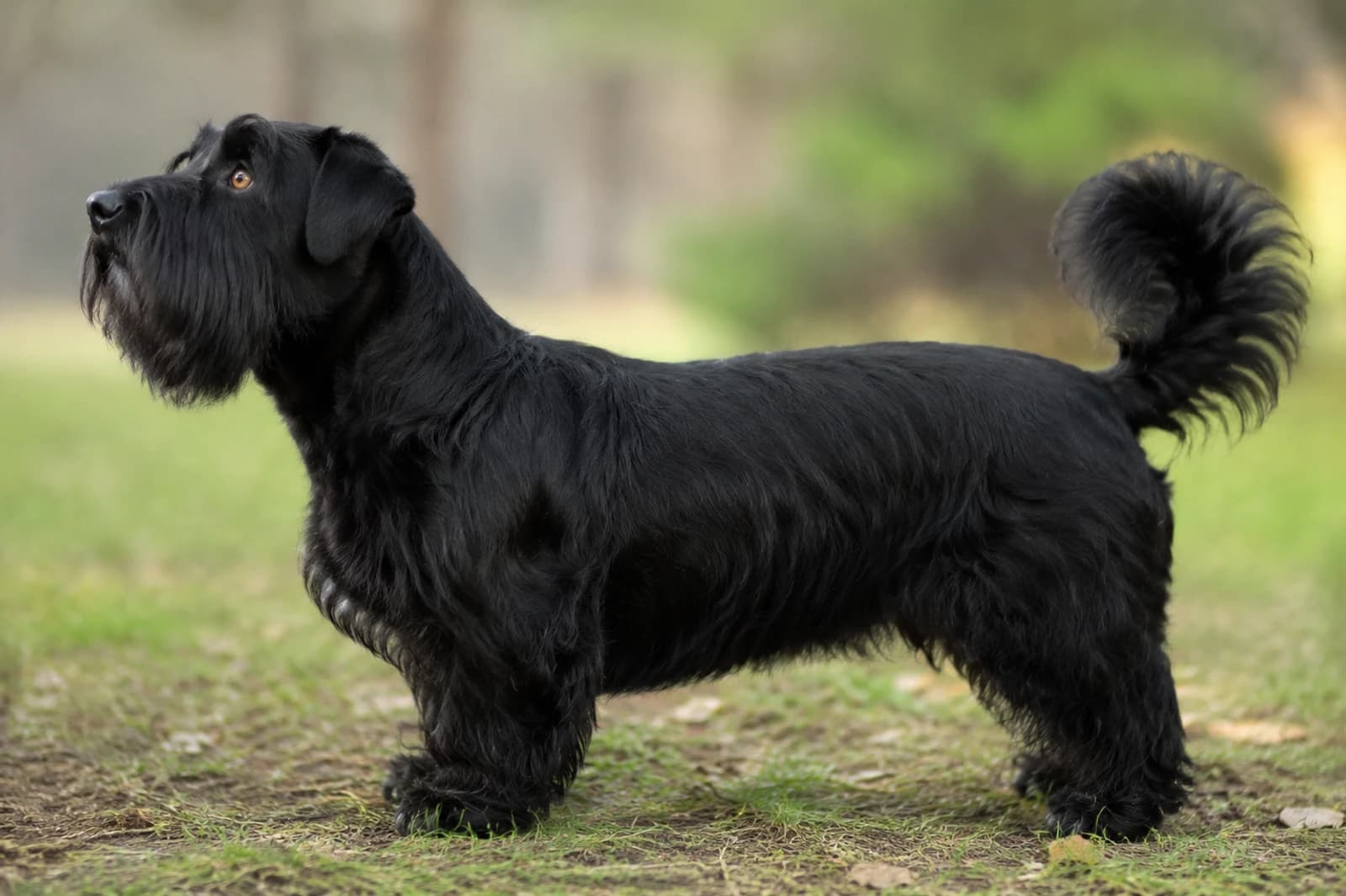
Bred as a companion by Sir Jocelyn Lucas, the Lucas Terrier is a charming blend of Sealyham and Norfolk Terriers. This small yet sturdy dog stands 9–12 inches tall and weighs 11–20 pounds, with a lifespan of 14–15 years. Known for its gentle, affectionate nature, it’s a quieter terrier with a low propensity to bark. Ideal for families, singles, or seniors, it adapts well to apartment living and requires moderate exercise. Its dense, weather-resistant coat comes in various colors and sheds minimally, making it a great choice for allergy-conscious owners.
At a glance
- Size
- Medium
- Height
- 9–12 in
- Weight
- 11–20 lb
- Life span
- 14–15 years
- Coat colors
- White, White & Black, White & Tan, Black & Tan, Tan
- Coat type
- Short, dense, weather-resistant double coat
How much does a Lucas Terrier cost?
Adopt / rescue
$75–$400
Usually includes spay/neuter, first shots, and a microchip.
Buy from a breeder
$700–$2,000
From a reputable, health-testing breeder.
Approximate USD. Prices vary widely by region, breeder, pedigree, age, and coat colour — adopting is the lower-cost and recommended route. Avoid suspiciously cheap “breeders”; they’re often puppy mills.
Estimate the full cost of a Lucas Terrier →Lucas Terrier photos
Views
Front, side, rear and top — the full silhouette.Poses
How the breed sits, lies, moves and plays.Puppy to senior
The breed across its whole life.Expressions
The breed’s range of moods.Close-up details
Eyes, ears, nose, paws, tail and coat.Coat colors
The breed’s recognized colors.Click any photo to enlarge. We show the Lucas Terrier from every angle — three views, poses, life stages, expressions, close-ups, coat and colors.
Appearance & size
At first glance, a Lucas Terrier looks like a pint-sized, plush-coated working terrier — built low to the ground but anything but fragile. This is a dog that can spend a morning tussling in the yard and still look tidy enough for the sofa.
Build and size
The breed stands 9 to 12 inches at the shoulder and weighs between 11 and 20 pounds. That weight sits on a compact, rectangular frame. The chest is deep and the ribs are well sprung, giving him the lung room of a larger dog. From the side, the topline is level and the underline tucks up just slightly behind the ribcage. He has short, straight forelegs with thick bone, and a broad, well-muscled rear. Don’t expect a fine-boned toy dog here — this is a solid, substantial little terrier that feels heavier than he looks when you pick him up.
Coat and color
The double coat is one of the defining features. The undercoat is dense and soft; the outer coat is medium-long, straight, and has a unique, almost silky texture — not harsh like many terrier jackets. It lies flat, with a slight wave over the back and britches. The coat repels dirt and dries quickly after a walk in wet grass. Most Lucas Terriers are predominantly white, often with tan, lemon, black, or brown markings on the head and rump. A fully white dog is common, and so is a white body with colored patches over the ears and tail base. Solid-colored dogs are less typical.
Head and expression
Viewed from the front, the skull is broad and slightly domed, tapering to a strong, square muzzle. The stop is moderate, so the profile is clean, not dished. The nose is always black and prominent. Dark, almond-shaped eyes are set well apart and have a bright, inquisitive gleam — never hard or shifty. Ears fold forward in a neat V-shape, framing the face without hiding it. The lips are tight, and the jaw has enough power for a terrier’s original work, but the overall expression stays soft and good-natured.
Rear and tail
From behind, the hind legs are straight and muscular, with low hocks and compact, round feet. The tail is set high and usually carried upright or just slightly forward over the back when the dog is alert. In countries where docking is permitted, the tail is traditionally kept to a few inches — a balanced, natural extension of the spine. Where docking is banned, an undocked tail is medium-length, feathered with the same dense coat, and held in a cheerful sickle curve.
History & origin
Most terrier breeds trace back to a region or a type of work. The Lucas Terrier traces back to one man and a pretty specific vision for the perfect house terrier.
Sir Jocelyn’s experiment
In post‑WWII England, Sir Jocelyn Lucas — a baronet, working‑terrier judge, and author of The Training and Management of Terriers — decided the Sealyhams he’d bred for years had become too heavy and too ready for a scrap. He wanted a small, game terrier that could still bolt a rat or a fox when needed, but would settle indoors without taking over the sofa or starting a fight with every dog on the street.
Sometime around 1949 he bred his Sealyham bitch, Ch. Ilmer Liz, to a compact Norfolk Terrier dog named Dan of Dorney. The first litter was deliberately planned to blend the Sealyham’s strong, white coat and steady nerve with the Norfolk’s smaller size, softer expression, and less pugnacious attitude. Sir Jocelyn then backcrossed selectively to shape exactly the dog he had in mind. The result became known as the Lucas Terrier.
What he was aiming for:
- A dense, dirt‑shedding coat that needed minimal upkeep
- A sturdy 9–12 inch, 11–20 pound body small enough for a city flat but tough enough for a barn
- Enough prey drive to nail rodents, yet a genuinely gentle, people‑friendly temperament
- A terrier that wouldn’t demand hours of hard labor to be livable
Unlike many working origins, the Lucas Terrier was built from the start to be a companion first and a ratter second. That’s why Sir Jocelyn placed so much weight on nerve and tractability, not just fire.
From a single kennel to a quiet following
The breed stayed close to its founder during his lifetime. A small band of dedicated breeders formed the Lucas Terrier Club in the UK in 1967, and by the late 20th century a handful of enthusiasts had brought the dogs to North America. The United Kennel Club (UKC) recognized the Lucas Terrier in 1999. You still won’t find them in every dog park — numbers have always been low — but that tight gene pool is managed carefully. Responsible breeders screen for luxating patellas and a few eye conditions, and the dogs routinely live 14–15 years. The result today is essentially the same little terrier Sir Jocelyn decided he couldn’t live without: a no‑fuss, spirited dog that fits a family’s rhythm without needing a job to be happy.
Temperament & personality
The Lucas Terrier is a plucky, affectionate little terrier that packs far more personality into a 11–20 pound body than most people expect. This is an alert, curious dog with a confident streak—the kind that greets new situations head-on rather than hanging back. If you’re picturing a dainty lapdog, recalibrate: you’re getting a busy, intelligent working terrier that wants to be in the middle of whatever is happening.
At home, the Lucas is warm and playful with its family. Most form tight bonds and follow you from room to room, but they’re not typically velcro dogs that demand constant attention. They’ll jump into a game of fetch or tug with gusto, then settle in for a nap at your feet. This balance comes with a caveat: neglect or long stretches of isolation can quickly flip their natural confidence into nuisance barking or destructive chewing. A Lucas left alone too much will find its own entertainment, and you probably won’t like what it chooses.
With kids and strangers, early socialization makes all the difference. A well-raised Lucas is generally good-natured, but like any terrier, it has limits. Never interrupt a dog while eating, and teach children to give the dog space during meals—puppies that feel pressured around food can develop guarding habits that are hard to undo. Stiff body posture and a hard stare are your early warning signs. A relaxed, loose body and soft eyes say the dog is at ease; lip licking, yawning, and head turns are calming signals that mean “give me a break.” Learning to read these cues will prevent most problems before they start.
Household behavior comes with a few terrier quirks you need to manage, not fight. A Lucas may roll in foul-smelling things on a walk—some dogs seem to treat the stink like doggy cologne, and this breed often indulges with real enthusiasm. Inside, scent marking can be an issue, especially in a new home or a busy household. Thoroughly clean any indoor urine spots with an enzymatic cleaner (or a homemade vinegar spray) to remove the scent cue; otherwise the dog will return to the same spot. When you’re house training, reward outdoor elimination with a treat right away—positive reinforcement is far more effective than punishing mistakes after the fact.
The chew factor. Puppies chew to explore and relieve teething pain; adults chew hard objects to keep jaws strong and teeth clean. A Lucas will redirect that drive to chair legs or shoes if you don’t give it appropriate outlets. Provide sturdy chew toys from day one, and use a bitter deterrent (like a boiled citrus-peel spray) on off-limits items rather than constantly chasing after the dog.
Confidence, not aggression. A Lucas leans somewhere between watchful and feisty—it’ll announce visitors with a sharp bark, but it’s not a fear biter. Aggression or a low friendliness score would signal caution, but that’s not the breed’s typical profile. With consistent, respectful training—never force—you shape a dog that is brave, engaged, and steady around people. Skip the heavy-handed corrections; this terrier’s strong will responds far better to clear, fair boundaries and a sense that you’re a team.
Good with kids, dogs & other pets
A Lucas Terrier usually has more patience than your average terrier. That easygoing, non-aggressive temperament makes him a surprisingly natural fit around children. He’s sturdy enough at 11–20 pounds to handle gentle roughhousing from school-age kids, but you’ll still want to supervise toddlers — a quick grab or accidental tumble can hurt a small dog, no matter how tolerant. Teach children to respect his space, and he’ll return the favor with years of playful, even-keeled companionship. Because these dogs bond hard with their people, they also struggle with long stretches of alone time; a household where someone is usually around keeps the Lucas Terrier from becoming anxious or vocal.
With other dogs, early and frequent socialization tips the scales. Start introducing your puppy to friendly, vaccinated dogs during the 3–14 week window and keep the experiences calm and positive. A Lucas Terrier who grows up meeting a rotating cast of well-mannered dogs learns real social fluency, not just dog-tolerance. Skip that exposure and you risk raising a timid adult who stiffens up around unfamiliar canines. Forcing a fearful older dog to “make friends” backfires — take the cue from your own dog, not a social calendar.
Cats and small pets take more management. Plenty of Lucas Terriers share a home peacefully with cats, especially when the introduction happens before that 12–16 week socialization window closes. Still, he’s a terrier; a fleeing cat or a scurrying hamster can flip a switch. Supervise early interactions, use baby gates for a safe retreat, and never leave him unattended with pocket pets like rabbits or gerbils. A well-socialized Lucas Terrier who knows the household cat is family won’t necessarily see the neighbor’s cat the same way, so leash walks remain the smart play.
Trainability & intelligence
Lucas Terriers are sharp, quick-on-the-uptake dogs that genuinely enjoy working with you — as long as the payoff is obvious. They’re not the type to repeat a sit for a dry biscuit, but whip out a sliver of cheese or a squeaky ball and you’ll see a terrier ready for business. These 11–20 pound thinkers often puzzle out what you want before you’ve fully asked, which makes them fun to train but also means they’re clever enough to weigh whether your request is worth their attention.
Your biggest training challenge will be their terrier wiring.
Selective hearing, especially around critters, is real. A squirrel or a fluttering leaf can erase every command you’ve practiced indoors. Recall is rarely bombproof without serious, long-term work — expect to rely on a long line and truly irresistible rewards while you build reliability. Frustration or punishment won’t speed things along; it will damage trust and teach your dog to tune you out. What works is a relationship built on loads of short, positive sessions (think 3–5 minutes, not 20), where you catch and reward the behavior you want the instant it happens.
Start early, stay consistent, and keep it light.
Socialization between 3 and 14 weeks old matters enormously. Gradual, upbeat exposure to new people, sounds, surfaces, and other dogs helps prevent the fear-based reactivity that can bubble up in a sensitive, alert terrier. Use tiny treats, a game of tug, or a quick chase of a toy as your go-to reinforcers — anything that makes your dog feel like a winner. A Lucas Terrier who trusts you and knows that cooperating leads to good things will surprise you with his problem-solving. A Lucas Terrier who’s been nagged or bored will simply look for something more interesting to do.
Tiny, high-value treats tethered to your belt, a pocket full of patience, and the understanding that your day’s training might only last as long as it takes the squirrel at the window to disappear — that’s the real-world recipe.
Exercise & energy needs
A Lucas Terrier isn’t a couch potato, but you won’t need to buy a treadmill, either. Aim for 30 to 45 minutes of real activity every day, broken into two or three short sessions. A brisk 15-minute walk in the morning and a lively 20-minute game of fetch or a sniff-heavy ramble in the afternoon usually hits the sweet spot. These dogs are small (11–20 lb) and compact, so their legs cover plenty of ground without marathon distances.
Mental work matters just as much as the miles. This is a terrier with a problem-solving brain, and boredom fuels nuisance barking, digging, or obsessive tail-chasing. Puzzle toys, hide-and-seek with a favorite squeaky, or five minutes of nosework (tossing treats into the grass to sniff out) will tire him faster than another lap around the block. Short, positive training sessions—teaching a new trick or refreshing a solid “stay”—count toward the daily energy budget.
Stick to surfaces that keep joints safe. No high jumps off the couch or repeated pounding on pavement for a growing puppy; those little legs and long back deserve careful handling. A flirt pole in the yard, gentle hiking on soft trails, or even a beginner’s agility tunnel kept low to the ground all fit the bill.
If you notice restless pacing or evening zoomies that won’t quit, add a third 10-minute play break or a frozen food puzzle before you increase walk length. The Lucas Terrier’s ideal rhythm is moderate, consistent, and rarely single-session—think “engaged companion” rather than weekend warrior.
Grooming & coat care
The Lucas Terrier’s coat is a dense, harsh double coat that barely sheds on its own — but that doesn’t mean it’s maintenance-free. The wiry outer hairs and soft undercoat trap dead fur, so you’ll need to pull it out by hand-stripping every 8 to 12 weeks to keep the texture weather-resistant and the skin healthy. If you clip instead, the coat turns soft and will start shedding more, so plan on brushing twice a week to catch the loose stuff.
Between strip sessions, a slicker brush with rounded pins is your go-to. Run it through the coat once or twice a week to lift out debris and any dead hair before it works into a mat. A fine-toothed metal comb gets through the beard, legs, and any thicker feathering. Skip bristle brushes — they’re great for shine on a short, smooth coat, but they’ll just skate over that wiry top layer without doing much.
Bathing is a rare event. Too much shampoo strips the natural oils that keep the coat hard and dirt-repellent. Aim for no more than three or four baths a year unless your dog rolls in something truly foul. Use a gentle, sulfate-free dog shampoo and make sure you rinse thoroughly — leftover residue can cause itching and dullness.
Nails grow fast on these compact feet, so trim them every three to four weeks, or whenever you hear clicking on hard floors. Ears need a weekly check; wipe the outer canal with a damp cotton ball or a vet-approved cleaner to keep wax and grime from building up. Teeth get brushed at least three times a week — small dogs are notorious for tartar buildup, so stay on top of it.
The good thing about that wiry double coat: seasonal “blowouts” aren’t the usual avalanche of hair you’d see from a husky. But if you miss a stripping cycle in spring or fall, dead undercoat will mat against the skin, especially behind the ears and under the collar. Stick with the stripping schedule and a light weekly brush-out, and you’ll have a terrier whose coat stays hard, clean, and ready to shrug off brambles and drizzle.
Shedding & allergies
The Lucas Terrier sheds so little that you might forget shedding is a thing — until you visit a friend with a double-coated breed. This is one of the neatest small terriers you can own.
The coat is a harsh, wiry outer jacket with a softer undercoat. Broken hairs tend to get trapped in the wiry top layer instead of falling onto your floor. What you will get is a dusty tumbleweed of dead hair every time you brush, but daily stray hairs on furniture are rare. There’s no heavy seasonal blowout; shedding stays pretty consistent year-round at a low level. Drool is basically a non-issue.
Now the honest allergy picture: no dog is truly hypoallergenic. Allergens come from dander (skin flakes) and saliva, not just hair. A Lucas Terrier’s tight, low-shed coat can mean fewer airborne particles, and many allergy sufferers do well with them. But triggers vary widely. Spend real time with adult dogs of the breed before you commit if allergies run in your house — don’t rely on “hypoallergenic” labels alone.
Maintenance shapes shedding more than you’d think. A properly hand-stripped coat (plucking dead outer hairs by the root) keeps the wiry texture and minimizes loose hair. If you clipper the coat instead, it’ll soften, lose that self-cleaning grit, and shed a bit more. So if you’re after that almost-zero-hair-home, plan to learn hand-stripping or find a groomer who knows terriers.
Diet & nutrition
A Lucas Terrier will convince you he’s starving even with a full belly — these little dogs tend to be outrageously food-motivated. That charm offensive makes obesity the number-one dietary trap. An adult weighing between 11 and 20 pounds typically needs somewhere around 350–450 calories a day, split into two measured meals. Couch-potato types land on the low end; a dog who tears around the yard for an hour needs more. Use your hands and eyes: you should feel ribs with a light fat cover, and a waist should tuck up when you view from above.
Puppies burn through calories hot and fast. Up to four months, feed four evenly spaced meals. From four to six months, drop to three. At six months, switch to the adult two-meal rhythm. Transition a new puppy to your chosen diet slowly, starting with lightly cooked and puréed meats, fish, fruits, and vegetables or a high-quality commercial puppy formula. Raw chicken wings can come in around 12 weeks under supervision, but watch for gulping.
- Weight management: Excess pounds put real strain on small joints and can worsen patellar issues that pop up in terriers. Food puzzles or slow-feeder bowls turn meals into mental work and stop a dog from inhaling his dinner in 20 seconds. Never free-feed.
- What’s on the menu: A species-appropriate diet is built around meat. A good baseline is about 60% raw or cooked muscle meat and organ, 20–30% fruits and vegetables, and 10% extras like eggs, plain yogurt, and grains such as pearl barley or white rice for dogs with sensitive stomachs. Blend or finely chop meals — a dog’s jaw moves vertically and lacks salivary enzymes, so mechanical breakdown up front aids nutrient absorption.
- What to avoid: Rich, fatty scraps — especially after a holiday feast — can trigger pancreatitis. Keep leftovers out of reach, and never feed from the table. If you want to share something, drop it into his bowl so he doesn’t learn to beg.
- Batch-cooking shortcuts: Cook extra grains, bland meats, or veggies and freeze them in portions. Unsalted water from steaming vegetables makes a light soup base when stock is not on hand.
- Senior years: Around 10 or 11, metabolism often slows. Swap to smaller, more frequent meals and shave portion sizes gradually as sprinting turns to strolling. Keep protein intake steady — there’s no need to slash it. Monitor weight monthly; a ridge of extra padding can creep on fast and take months to work off.
Treat calories count. If you train with a mountain of treats, trim back the next meal accordingly. A lean Lucas Terrier is a longer-living Lucas Terrier.
Health & lifespan
A Lucas Terrier that gets solid care and a little genetic luck often reaches 14 to 15 years — a long run for a terrier this size. That lifespan isn’t automatic, though. It leans hard on a few practical guardrails.
The biggest day-to-day threat is weight creep. An adult tops out around 20 pounds, but a couple extra pounds on a frame that small puts real strain on knees and hips. Keep them lean, and you sidestep a cascade of joint trouble. Luxating patellas — kneecaps that pop out of place — show up in active little dogs, and carrying too much weight makes it worse. Responsible breeders will screen parent dogs for patellar stability before breeding, because it can be inherited.
Dental disease is another predictable pain point. Small mouths pack teeth tightly, and without frequent brushing and the occasional veterinary cleaning, tartar buildup leads to infections that can hit the heart and kidneys. Start handling their muzzle early so a toothbrush doesn’t become a wrestling match.
Eye issues like cataracts or progressive retinal atrophy can appear in terrier lines. A breeder who knows their stuff will have annual eye exams on breeding dogs through a veterinary ophthalmologist — ask to see those certifications. There’s no substitute for that paperwork.
As a small, thin-coated dog, the Lucas Terrier doesn’t love extreme cold. A coat or sweater on winter walks isn’t a fashion statement; it stops them from burning calories just to stay warm. In summer, shade and water access are non-negotiable.
Beyond breed-specific quirks, the standard preventive checklist matters. Heartworm prevention runs monthly through mosquito season and a month past the first frost — heartworm is hard to treat and easy to avoid. Rabies vaccination is legally required, and for good reason: once symptoms hit, it’s fatal. Yearly vet visits should include a hands-on check for early signs of tracheal issues, heart murmurs, and any skin abnormalities, because terriers can be prone to environmental allergies that show up as itchy skin or ear infections. Catch those early, and you’re managing a minor nuisance instead of a chronic problem.
- Patellar luxation screening (breeder eye exams and vet palpation)
- Annual eye exams by a veterinary ophthalmologist (look for CERF or OFA certificates)
- Dental care: daily brushing, professional cleanings as needed, plus raw bones or dental chews
- Weight monitoring: use a body condition score, not just the scale
- Heartworm, flea, and tick prevention tailored to your region
- Crate or car harness training to prevent injury from sudden stops
Living environment
A Lucas Terrier fits surprisingly well into apartment life—if you keep that terrier brain busy. At 11–20 pounds, they don’t demand much square footage and can burn a solid chunk of their energy indoors with short, frequent play bursts and a rotating stash of puzzle toys. Still, “small” doesn’t mean “couch potato.” Plan on two 15–20 minute walks a day, plus a few rounds of scent games or a flirt pole session; that mix usually prevents the restless digging and pacing that come from a bored terrier.
A securely fenced yard is a nice bonus, not a must. If you have one, check for gaps along the bottom—these dogs are escapists with surprisingly busy paws. Without a yard, leashed walks and occasional off-leash time at a safe, enclosed spot cover their needs well.
Barking is the real apartment wild card. Lucas Terriers notice everything—delivery trucks, a neighbor’s cat, a breeze—and they’ll tell you about it with terrier conviction. Early, consistent redirection toward a quiet cue or a toy can take the edge off, though you’ll live with some level of watchdog chatter. If thin walls are part of the equation, invest in training from day one.
Their small frame and modest coat don’t offer much insulation against extreme weather. A sweater in freezing temperatures and shorter winter outings are common sense, while hot summer days call for early-morning walks, shade, and plenty of water. They’re indoor companions and shouldn’t be left outside in harsh conditions.
Being left alone is not the breed’s favorite thing. Lucas Terriers form tight bonds and can tip into anxiety if hours alone pile up without preparation. Build up departures gradually, leave a frozen Kong or a scent puzzle to ease the transition, and keep absences reasonable. If your workday runs long, a midday walker or a neighbor’s check-in makes a noticeable difference.
Who this breed suits
The Lucas Terrier is a small dog with a big personality—sturdy enough for a Saturday morning hike yet compact enough to curl up in an apartment. At 11–20 pounds and 9–12 inches tall, he’s the kind of dog that slides into more households than you’d guess, provided you don’t mistake “manageable size” for “no training required.”
Who’s an Ideal Match
- First-time owners who are willing to put in the work. This terrier tends to be less hard-headed than many in the family, so consistent, positive training actually sticks. You’ll still need to outsmart that terrier cleverness, but he’s naturally eager to engage with his people.
- Families with respectful children. The Lucas is a solid little dog, not a delicate toy breed. He can handle gentle play and will happily chase a ball with kids old enough to know not to manhandle him. Early socialization makes him a cheerful, patient buddy.
- Active singles or couples in apartments or smaller homes. He doesn’t need a massive yard—a couple of brisk 20- to 30-minute walks, a good tug session, and a puzzle toy keep his brain and body happy. He’ll be your shadow indoors without bouncing off the walls.
- Seniors looking for a lively but portable companion. At 11–20 pounds, he’s easy to lift and travel with, and 14–15 years is a long, loyal timeline. His exercise demands are real but moderate; a daily walk and neighborhood sniff patrol suit him fine.
Who Should Think Twice
A Lucas bonds hard and doesn’t do well with neglect—this is not the breed for owners who are gone 8+ hours every day. Left alone too long, he can turn to nuisance barking or destructive chewing. His terrier blood also means a strong prey drive toward small pets like hamsters or gerbils; even a well-socialized Lucas may not be safe around them. If you want a completely hands-off grooming routine, take note: that dense, wiry double coat needs weekly brushing and either hand-stripping a few times a year or regular clipping to prevent matting. And while he’s not a nonstop barker, expect an alert watchdog who will announce the mail carrier every single time. Skip this breed if you’re not up for early and ongoing training—a bored Lucas makes his own fun, and you won’t like his choices.
Cost of ownership
A well-bred Lucas Terrier from a responsible breeder who health-tests parents typically runs $2,000 to $3,500 in the US. The breed is still uncommon here, so you may encounter a waitlist and travel costs to pick up a puppy. Avoid rock-bottom prices — they often skip essential screenings for patellar luxation and hereditary eye conditions.
Once the dog is home, budget a one-time outlay of $200–$400 for a crate, bed, leash, harness, and a few sturdy puzzle toys. Then the rhythm of monthly and annual costs kicks in.
Food
A 15-pound adult eats about a cup of high-quality kibble a day. That works out to roughly $25–$40 per month. If you choose freeze-dried or fresh options, plan closer to $60–$90. Treats for training add another $10–$20.
Grooming
The Lucas Terrier’s hard, dense coat sheds very little but needs a thorough hand-strip or rolling coat maintenance a few times a year to keep it weatherproof and neat. A professional session every 8–12 weeks usually costs $50–$80. Many owners learn to do basic stripping themselves and just pay for a deep groom twice a year, which cuts the long-term average to about $15–$25 monthly. A once-a-month bath, nail trim, and ear check round that out.
Veterinary and preventive care
Annual wellness visits with core vaccines, heartworm testing, and fecal exams generally land between $250 and $400. Don’t skip dental care; small terriers can be plaque-builders, so a professional cleaning every year or two adds $300–$600 when needed. Monthly heartworm and flea/tick prevention runs about $20–$30.
Pet insurance
Because the breed can be prone to patellar luxation and eye issues like lens luxation, insurance is worth real consideration. A plan with accident and illness coverage for a small, mixed-terrier-type dog typically starts around $30–$50 per month, depending on your deductible and reimbursement rate. Set aside the premium and a separate emergency fund if you self-insure.
Over a 14- to 15-year lifetime, you’re looking at a total of $18,000–$25,000 or more in direct care costs, not counting a major surgery or chronic condition. The real price tag shows up in the small, steady numbers — and the fact that this little dog will be part of your budget for a long, active stretch.
Choosing a Lucas Terrier
You have two paths: a Lucas Terrier puppy from a dedicated breeder, or an adult dog through rescue. Because the breed is still rare, rescue dogs aren’t always waiting—but a few breed-specific networks and all-breed terrier rescues do place Lucases when an owner’s situation changes.
If you go the breeder route, ask for health clearances before you let a fuzzy face make the decision for you. Responsible breeders screen for several heritable problems that can crop up in small, solid terriers. The big one is patellar luxation—kneecaps that slip out of groove. Ask for OFA patella results; parents should rate normal. Eyes come next: a current CAER eye exam (look for clearance from a veterinary ophthalmologist) rules out conditions like primary lens luxation, cataracts, and other inherited eye disease. Some breeders also run a PLL DNA test since lens luxation is a known risk. A thorough cardiac exam isn’t universal but worth asking about if the line has any murmur history. If a breeder can’t show you certificates, can’t explain what the tests check for, or waves them off with “my vet says they’re fine,” walk away.
Red flags pile up fast. No health testing, no questions about your living situation, puppies raised in a kennel run or a garage with little human interaction, anyone willing to let a puppy go before 10 weeks, cash-only sales with no written contract. A solid breeder sells with a health guarantee, a spay/neuter agreement for pet homes, and a contract that says the dog comes back to them—always—if you can’t keep it.
When you visit a litter, watch the pups move. At 8–10 weeks, a Lucas Terrier puppy should be busy and curious, not shrinking into a corner or collapsing into a limp heap. Check for bright eyes with no discharge, clean ears, pink gums, and a coat free of bare patches. Ask to meet at least the dam; her temperament around strangers tells you a lot. Pick the puppy that trots over to investigate you, not necessarily the loudest or the wallflower. A good breeder will have already started basic handling and early socialization, and they’ll match a puppy to your home’s energy level—maybe the more driven pup for an active household, or the easygoing one for a quieter life.
Rescue is a slower search but worth it if you’d rather skip puppyhood. Contact the Lucas Terrier Club of America’s rescue liaison, set alerts on pet adoption sites, and be ready to apply when a dog shows up. Adult Lucases often land in rescue with house-training and some leash manners already in place, and a foster home can give you a clear read on personality before you commit.
The breeder who grills you harder than you interview them is the keeper. They’ll be your living resource for behavioral quirks, feeding questions, and the occasional “did your dog ever do this?” for the dog’s entire 14- to 15-year lifespan.
Pros & cons
-
Long-lived buddy for the long haul: 14–15 years means you’re signing up for well over a decade of steady companionship, not a fleeting chapter.
-
A softer terrier temperament: bred specifically as a family dog, Lucas Terriers tend to be affectionate and easygoing with kids, other dogs, and even cats — without the razor-sharp edge of some working terriers.
-
Compact and apartment-friendly: at 11–20 lb and 9–12 inches, they tuck neatly under a coffee shop table, ride easily in a carrier, and don’t need a big yard to feel at home.
-
Exercise that fits a busy life: two 20–30-minute walks plus a romp in the living room usually does it. Skip a day and you won’t come home to a shredded sofa.
-
Low-shedding coat: their dense, wiry double coat drops very little hair around the house — a relief if you’re tired of vacuuming tumbleweeds.
-
Alert, not high-strung: they’ll let you know when someone’s at the door, but they typically don’t serenade every squirrel out the window.
-
Grooming isn’t optional: that wiry coat mats fast without weekly brushing and a hand-strip or clip every 6–8 weeks. Factor in a pro groomer trip or learn the technique yourself.
-
Terrier stubborn streak: house-training and basic commands click quickly, but when you ask for “down” for the fifth time, expect a blank look. Short, upbeat sessions win out.
-
Digging and prey-drive instincts: earthdog roots mean your flower beds and local chipmunks are forever in peril. A securely fenced yard and a leash are non-negotiable — off-leash recall is a coin toss.
-
Rare-breed realities: finding a responsible breeder often means a waiting list, a puppy price in the $1,500–$2,500 range (or higher), and fewer local breed mentors.
-
Few health watchpoints: patellar luxation and hereditary eye issues can crop up. Insist on OFA knee clearances and annual eye exams from a CERF-registered ophthalmologist when you choose a puppy.
Similar breeds & alternatives
Norfolk Terrier: Slightly smaller at 9–10 inches and 11–12 pounds, the Norfolk shares ancestry with the Lucas but leans harder into classic terrier traits — quicker to chase, dig, and entertain itself. The Lucas’s plush, low-shedding coat and mellower, more people-focused temperament make it the better pick if you want a lap dog that still has a spark, not an independent ratter.
Sealyham Terrier: The Lucas’s direct foundation breed. A Sealyham runs stockier, usually 10–12 inches tall and 23–24 pounds, and can be reserved with strangers. The Lucas streamlines that package to 11–20 pounds, keeps the same soft, dense white coat, and dials up sociability — you get an easier-to-lift dog that’s less stubborn and more openly friendly with visitors.
Border Terrier: A Border sits in the same general weight range (13–16 pounds) but comes with a wiry double coat and a work ethic that demands a solid hour of running or intense play most days. The Lucas needs a good daily walk and some romping, but rarely pushes the exercise meter that high — and you won’t be hand-stripping a wiry jacket.
Fun facts
- Developed by Sir Jocelyn Lucas in the 1940s by crossing Sealyham and Norfolk Terriers.
- Nicknamed the ‘Gentleman’s Terrier’ for its quiet and well-mannered nature.
- One of the rarest terrier breeds, with only a few hundred registered worldwide.
- Known for being a ‘silent hunter’—low barking despite terrier roots.
Frequently asked questions
- Are Lucas Terriers good with children?
- Lucas Terriers can be good family dogs when raised with children, though supervision is recommended due to their small size and terrier tenacity. Early socialization helps them get along well with older, respectful kids, but they may not tolerate rough handling. Their affectionate nature often makes them a loyal companion for gentle children.
- How much exercise does a Lucas Terrier need?
- A Lucas Terrier typically needs a moderate amount of daily exercise, such as brisk walks and interactive play sessions, totaling around 30–45 minutes. They have bursts of energy but also enjoy relaxing with their owners, making them adaptable to various activity levels. Mental stimulation through puzzle toys or training can help prevent boredom-related behaviors.
- Do Lucas Terriers shed a lot?
- Lucas Terriers have a short, dense coat that generally sheds minimally, making them a lower-maintenance option for some allergy sufferers, though no dog is truly hypoallergenic. Regular brushing once or twice a week helps remove loose hair and keep their coat healthy. Seasonal shedding may increase slightly but remains manageable with consistent grooming.
- Are Lucas Terriers suitable for apartment living?
- Yes, Lucas Terriers can adapt well to apartment living if their exercise and mental stimulation needs are met. Their small size and moderate energy level make them comfortable in smaller spaces, though they may bark at noises, so early training can help manage this. Daily walks and indoor playtime are usually sufficient to keep them content.
- Is the Lucas Terrier easy to train?
- Lucas Terriers are intelligent and eager to please, but they can also exhibit a stubborn streak typical of terriers, which may require patience and consistency. Positive reinforcement methods using treats and praise tend to work best, as they respond poorly to harsh corrections. With short, engaging sessions, they can learn commands and tricks relatively quickly.
- What is the typical lifespan of a Lucas Terrier?
- The Lucas Terrier generally has a long lifespan, often living between 14 and 15 years with proper care. Providing a balanced diet, regular veterinary check-ups, and appropriate exercise can help them reach their senior years in good health. This longevity makes them a lasting and devoted companion for dedicated owners.
Tools & calculators for Lucas Terrier owners
Quick estimates tailored to Lucas Terriers — pre-filled with this breed’s size where it matters.
Articles & stories about the Lucas Terrier
Sources & standards
This profile follows recognized breed standards from the American Kennel Club (AKC) and the Fédération Cynologique Internationale (FCI), along with established veterinary and breed-club guidance. These describe general breed tendencies — every dog is an individual.
Owner stories
Have a Lucas Terrier? Share your experience — grooming tips, personality quirks, anything goes.