

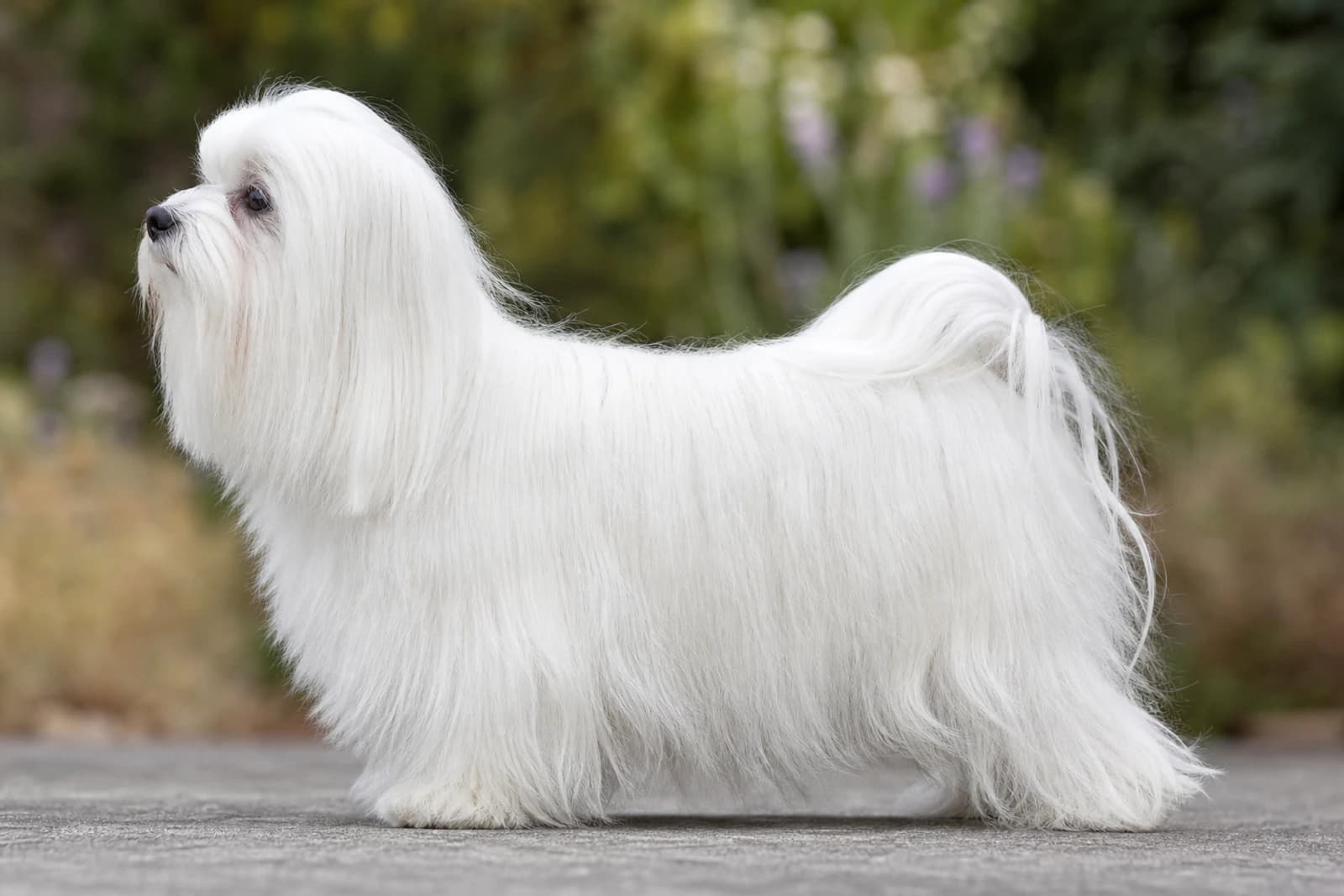
The Maltese is a gentle and playful companion dog, ideal for those seeking a devoted lapdog. Thriving in apartments or homes with small yards, they form strong bonds with their humans and are well-suited to singles, seniors, and families with older children. Their petite size and affectionate nature make them excellent emotional support animals. Regular grooming is essential to maintain their luxurious white coat, and they enjoy short daily walks and interactive play. Maltese dogs are intelligent and eager to please, though they can be stubborn, requiring consistent, positive training.
At a glance
- Size
- Small
- Height
- 10 in
- Weight
- 5–7 lb
- Life span
- 12 years
- Coat colors
- White
- Coat type
- Long, silky, single coat
- Group
- Companion
How much does a Maltese cost?
Adopt / rescue
$100–$450
Usually includes spay/neuter, first shots, and a microchip.
Buy from a breeder
$1,200–$3,000
From a reputable, health-testing breeder.
Approximate USD. Prices vary widely by region, breeder, pedigree, age, and coat colour — adopting is the lower-cost and recommended route. Avoid suspiciously cheap “breeders”; they’re often puppy mills.
Estimate the full cost of a Maltese →Maltese photos
Views
Front, side, rear and top — the full silhouette.Poses
How the breed sits, lies, moves and plays.Puppy to senior
The breed across its whole life.Expressions
The breed’s range of moods.Close-up details
Eyes, ears, nose, paws, tail and coat.Coat colors
The breed’s recognized colors.Click any photo to enlarge. We show the Maltese from every angle — three views, poses, life stages, expressions, close-ups, coat and colors.
Appearance & size
The first thing you’ll notice is the hair — a waterfall of pure white silk that cascades nearly to the floor. But look past the coat and you’ll find a compact, squarely built little dog with more substance than you’d expect. Under all that glamour, the Maltese is a fine-boned but sturdy toy breed. The body is short and level from shoulders to hips, giving him an outline that fits neatly into a square.
- Height: up to 10 inches at the shoulder.
- Weight: 5–7 pounds, and a well-bred Maltese feels surprisingly solid when you pick him up, never fragile.
The coat and color
The coat is a single layer — no undercoat — so it doesn’t shed in the typical sense. The hair is straight, glossy, and heavy enough to hang flat against the body. On a full-coated dog, it parts naturally along the spine and reaches the ground. The recognized color is white, though a little light ivory or lemon on the ears is allowed in puppies and usually fades with age. A true white Maltese has skin that is pink with dark pigmentation showing through at the nose, eye rims, and lips.
What catches your eye: front, side, and rear
From the front, the head is a soft round shape with a distinct stop. The eyes are dark, round, and set wide apart, rimmed in black as if expertly lined. A black button nose sits right in the center, and the pendant ears hang close to the cheeks, heavily feathered. The forelegs are straight and delicate-looking, with tiny round paws hidden under a fringe of hair.
From the side, you see the square proportions clearly. The back is level, the neck carried proudly. The tail arches over the back in a plume, the long hair draping down one side like a fan. The silhouette is a clean sweep of white, uninterrupted.
From the rear, that tail is a defining feature — it curves over the croup and rests gracefully across the top, never curled tight or carried down. Hind legs are strong and straight when viewed from behind, with small, well-padded paws that you rarely see because of the furnishing.
One detail that often surprises people: the Maltese is naturally a trotting dog. When you watch him move, that silky coat floats, and you can glimpse the quick, flowing stride of a tiny aristocrat who still loves a good run.
History & origin
The Maltese belongs to an exclusive club of dogs that have never had a real job — and that’s exactly the point. For more than two millennia, this tiny white lapdog has been bred for one thing only: charming its way into human hearts. There’s no herding instinct, no guarding past, no sled-pulling chapter to unearth. The breed’s entire history is a study in companionship, polished over centuries by aristocrats, artists, and anyone who wanted a little elegance riding on a silk cushion.
Most historians agree the breed took shape on the island of Malta, a rocky gem in the central Mediterranean, though references to similar “Melitaie” dogs pop up in ancient Egyptian, Greek, and Roman records. Phoenician traders likely moved these small white dogs around the sea-lanes by 500 BC. Aristotle wrote about a perfectly proportioned little dog that sat gracefully, and Roman matrons tucked Maltese-like companions into their stolae — the original sleeve dogs. The name probably ties directly to Malta itself, not from a Semitic word for “harbor,” as some early writers proposed, though the island’s location certainly made it a crossroads of commerce and culture.
Over the centuries, the Maltese never strayed from its role as a living ornament and steadfast bed-warmer. During the Middle Ages, the breed survived in scattered noble households around the Mediterranean basin. By the 1500s, these dogs were fixtures in European courts. Queen Elizabeth I received a Maltese as a gift, and Mary Queen of Scots reportedly had one hidden in her skirts on the way to the scaffold. The breed nearly evaporated a few times — after the fall of Rome, then again during the world wars — but dedicated fanciers in England and later the United States kept the bloodlines intact.
The modern Maltese crystallized in the late 19th century. British breeders wrote the first standard, cementing the pure white coat, compact body (ideal height is around 10 inches and weight a mere 5 to 7 pounds), and that unmistakably sweet expression. The American Kennel Club recognized the breed in 1888, and it has remained a popular member of the Toy Group ever since. Through it all, the Maltese never got a job description beyond “be adored.” That’s still what it does best, a 12-year lifespan wrapped in a silky coat that demands exactly the devotion this ancient companion has always expected.
Temperament & personality
Your Maltese doesn’t know he weighs five pounds — he’ll meet the world with the forward-leaning swagger of a much bigger dog. That fearless little spark is what makes him such an entertaining companion. He is, first and foremost, a serious lapdog. He’ll follow you from room to room, wedge himself into the coziest spot on the sofa, and look personally wounded when you stand up without him.
This level of devotion has a flip side. A Maltese left alone for long stretches often develops a loud, anxious bark or forgets his house-training. Separation anxiety is not a rare quirk here — it’s a real possibility, so he fits best in a home where someone is around for a good part of the day.
Energy and play
Forget marathon walks. He’s a sprinter, not a long-distance runner. Two quick outings and a rousing indoor game of fetch usually burn off his steam. You’ll still see sudden “zoomies” that send him ricocheting off the couch cushions. Mental exercise matters just as much — puzzle toys and short training sessions keep that sharp mind out of trouble.
A vigilant little watchman
His bark arrives before the doorbell finishes ringing. He takes his self-appointed guard duty seriously, and that high-pitched alarm can become a habit if you don’t teach a “quiet” cue early. When he’s on alert, you’ll spot a stiff, forward-leaning posture and a tail held high. That’s bravado, not true aggression, but it’s a good time to read the rest of his body. A direct stare, closed mouth, and rigid stillness signal that he needs space — ignore it and a warning snap may follow.
Housetraining and those tiny “messages”
His bladder isn’t the only challenge. Intact males often mark territory indoors, drawn back to the same spot by scent memory. Because dogs define “home” partly by family smells, a less-used guest room can suddenly become a target. Clean every accident with an enzymatic cleaner; a vinegar spray neutralizes the odor and discourages a repeat performance. The moment he squats outside, reward him like he just won the lottery — split-second timing teaches faster than any scolding.
Chewing, stubbornness, and daily life
Puppies chew to explore and soothe teething gums; adults may gnaw to keep jaws strong. Offer permitted chews and use a homemade citrus spray — boiled lemon peels in water — on table legs to redirect the habit. This is also a dog who can dig in his heels. Force just makes him more obstinate, so keep training positive, short, and loaded with treats.
Around the household
At 5–7 pounds, he’s no rough-and-tumble playmate. A clumsy grab or an interrupted meal can trigger a defensive growl, so teach children to handle him gently and let him eat in peace. His stress signals are subtle: a lip lick, a yawn, or a head turned away means “I need a break.” In a calm, respectful home, that same dog will be a bright, tail-wagging shadow who turns ordinary minutes into a comedy routine.
Watch the body language. A loose, soft-eyed dog is your contented buddy. A forward lean combined with rigid stillness isn’t loyalty — it’s a request for a little distance. Give it.
Good with kids, dogs & other pets
A 5-pound Maltese is no rough-and-tumble play partner for a toddler, but for older children who understand gentle handling, this breed’s naturally easygoing temperament can make it a wonderful little buddy. Maltese aren’t guard dogs or fighters—they were bred to be lap-warmers—so they rarely snap or posture without real cause. Still, their tiny bones and delicate build mean a clumsy grab or a drop from a child’s arms can cause serious injury. Supervision is mandatory any time a young child and a Maltese are together. Teach kids to sit on the floor when holding the dog and never to chase or corner it.
With other dogs
Most Maltese enjoy the company of other dogs if they’ve been properly introduced from puppyhood. Because they weigh less than a gallon of milk, a larger dog’s friendly-but-exuberant play can quickly turn scary or dangerous. Watch for the bigger dog’s body language—a play bow might be fine, but a pouncing motion isn’t. Gradual on-leash introductions in a neutral space and plenty of praise for calm behavior help. With small dogs of similar size, sharing a home often goes smoothly. Just don’t assume every adult Maltese craves a doggy friend; some are perfectly content as the solo pet and find pushy dogs stressful.
With cats and small pets
A well-socialized Maltese usually gets along fine with the family cat. Early exposure is key—puppies raised alongside a cat often treat it as part of the pack. The breed’s low prey drive means they aren’t wired to hunt, but that doesn’t mean you should leave a Maltese alone with a pet hamster or rabbit. To the dog, a fast-moving small critter is an exciting toy, and even a gentle play-swat can injure a pocket pet. Keep cages secure and separate them when you can’t supervise.
The early socialization window matters big here
Whether you want a Maltese that’s calm around kids, dogs, and cats, you’ll get the best results by starting between 3 and 14 weeks old. During that stretch, expose the puppy to friendly, quiet children, vaccinated adult dogs, and a cat that’s comfortable around dogs. Go at the puppy’s pace and pair each new encounter with tiny treats. A rushed or scary experience can backfire. If you bring home an older Maltese who’s shy, don’t force meetings; let him watch from a distance and reward any sign of curiosity. Even after the puppy window closes, patient, positive training can help an adult dog feel safer—but forced socialization only adds stress. Keep in mind that this is a companion breed through and through. A Maltese who’s left home alone 10 hours a day may become anxious and barky, which won’t endear him to your housemates—furry or human.
Trainability & intelligence
A Maltese picks up new behaviors quickly when the payoff is clear and the mood stays light. This is a bright little dog who reads your tone and body language like a book — so if you get frustrated or raise your voice, learning stops. What works: short, upbeat sessions built on praise, small soft treats, and a favorite toy. What backfires: drilling commands or any hint of punishment, which erode trust and can trigger anxiety or avoidance.
- Start formal training early — puppies soak up patterns well before 16 weeks, so introduce simple cues like "sit" and "come" the day you bring them home.
- Keep lessons to 3–5 minutes, several times a day; Maltese attention spans are short, and they mentally check out if you push.
- Reward the exact moment they get it right. A tiny pea-sized treat and an enthusiastic "yes!" teaches far more than a correction ever will.
Recall is a common pain point, not because they don't understand, but because a 5-pound dog has a different risk calculus. They may ignore "come" if something interesting is afoot — a leaf, a visitor, another dog. Practice recall daily in a securely fenced space and never punish a slow return; make coming back the best deal in town.
Sensitivity is the breed's defining training trait. A harsh word can undo a week of progress. If you feel stuck — potty training often takes longer than expected with toy breeds — back up, lower your criteria, and reward any step forward. Maltese respond to patience and consistency, not force.
Socialization isn't optional. Without deliberate, positive exposure to new people, sounds, and surfaces during the 3–14 week window, you risk raising a nervous adult who barks at strangers or startles easily. Invite calm friends over, walk on different textures, and play recordings of everyday noises while treats appear. It builds the resilience that makes relaxed city walks and vet visits possible.
The upside of all this soft-handed work: a Maltese who trusts you will learn tricks, obedience, and games with genuine enthusiasm. They're clever enough to solve puzzles and quick to nail complex chains of behavior when the reward is right. Channel that brain with positive, relationship-based training, and you get a companion who not only knows what you want, but wants to give it to you.
Exercise & energy needs
A Maltese doesn’t need to be an athlete—short, playful bursts of activity twice a day suit this pocket-sized companion far better than one long trek. Two or three 15 minute walks, spaced through the day, add up to plenty of movement for a 5–7 pound frame. Many Maltese are just as content with a brisk indoor play session as they are with a neighborhood stroll, especially in hot or inclement weather. The real goal is to keep that little tail wagging without pushing them into heavy panting or reluctant lagging.
Mental exercise often tires a Maltese out faster than physical exercise. Puzzle feeders, snuffle mats, and short nose-work games tap into a curious, people-focused mind and can replace some outdoor minutes on busy days. A few five-minute training slots—practicing spins, hand targeting, or simply reinforcing polite greetings—count toward daily stimulation and burn energy, too. If you skip the brain work, you’ll likely notice the result: a bored Maltese tends to become a chatty, anxious shadow, barking at every sound or chewing whatever is within reach.
Watch for activities that strain this breed’s small, low-clearance body. Jumping off the sofa or sprinting up and down flights of stairs can jolt a tiny spine and knees that are already prone to luxating patellas. Stick to carpeted play zones or use a ramp if your dog insists on being on the couch. In summer, asphalt heats up fast—if you can’t hold your palm on the pavement for a few seconds, carry your Maltese to a grassy spot or save the walk for cooler hours. A quick indoor zoomie session or a few rounds of gentle tug are safer substitutions.
How do you know when you’ve hit the right balance? A satisfied Maltese curls up for a nap afterward without frantic circling or demand barking. If you’re getting the stink-eye two hours after a walk, add a five-minute hide-and-seek game with a favorite toy or a chew that requires some effort. For older dogs or the occasional couch-potato Maltese, one short walk plus a food puzzle in the afternoon often does the job. Stick to around 30–45 minutes total daily activity, broken up, and you’ll avoid both under-exercise restlessness and the overexertion a fragile frame doesn’t need.
Grooming & coat care
If you keep a Maltese in full, floor-length coat, plan on brushing every single day — no exceptions. This isn't about vanity; that fine, silky single coat tangles into tight mats within hours of play or a rub against the couch. A mat left against the skin pulls painfully and can trap moisture, leading to hot spots. Even a shorter “puppy cut” needs a thorough brush-out at least three times a week.
Brushing tools matter. A metal pin brush with rounded tips or a flexible slicker brush glides through the long hair without scraping the skin. Always work in sections, lifting the top layer to reach the chest, belly, and leg feathers. Follow up with a greyhound-style steel comb to catch any tiny knots you missed with the brush. If you run the comb through and it snags, you have more detangling to do. A light misting with a leave-in conditioner or detangling spray makes the process easier and helps prevent breakage.
Bathing every two to four weeks keeps the white coat bright. Use a gentle dog shampoo; a whitening formula can help lift any dinginess but won’t fix tear staining on its own. Make sure the coat is completely tangle-free before you wet the dog, because water turns an existing knot into a tight, felted mat. After rinsing, blot dry with a towel and use a low-heat dryer while continuing to brush — air-drying a long coat invites more tangles.
Trimming is where you get choices. A full show coat is a serious commitment. Most pet owners opt to have a groomer clip the body down to a short, even length (often an inch or so) and keep the face rounded. That single clip every six to eight weeks drastically cuts at-home work. Regardless of length, the hair around the pads, the sanitary area, and the eyes needs regular scissoring to keep the dog clean and comfortable.
Ears, eyes, nails, and teeth are part of the weekly routine. Maltese are prone to tear staining, so gently wipe the eye area with a soft, damp cloth daily and keep the hair trimmed away from the eyes. Check ears weekly for wax or redness; a small dog’s drop ears don’t always get good air circulation. Nails click on hard floors when they’re too long — if you hear that, it’s time for a trim. Tiny teeth benefit from daily brushing, because small breeds can pack a lot of tartar into a tiny mouth.
Seasonally, not much changes. With no undercoat to blow out, you won’t deal with a heavy shed. Humidity can make mats form faster, and winter dry air might call for a more moisturizing conditioner, but the brush stays your main tool all year long.
Shedding & allergies
The Maltese sheds so little you’ll rarely find hair on your clothes or couch. This breed has a single coat of long, silky hair—no dense undercoat to blow out with the seasons. What you get instead is a dog that loses a few strands here and there, much like a person does, rather than leaving tufts behind. There’s no “shedding season” to plan around, and those who keep their Maltese in a short puppy cut often see even fewer stray hairs.
The real daily trade-off is grooming, not vacuuming. That single coat keeps growing and mats fast if you skip brushing. Plan on a thorough comb-through every day, especially behind the ears, under the legs, and where the collar sits. Mats don’t just look bad—they pull on the skin and can trap moisture, leading to irritation. A professional groom every four to six weeks keeps things manageable, whether you keep the coat floor-length or clipped short.
Drool is basically a non-issue. You won’t find wet spots on your arm or slobber on the walls with a Maltese.
When it comes to allergies, no dog is truly hypoallergenic. But because the Maltese sheds minimally and produces less dander than many heavy-shedding breeds, less allergy-triggering material circulates in your home. Many people with mild allergies do well with them. If you’re seriously allergic, spend time with an adult Maltese indoors before bringing one home—it’s the only way to know for sure.
Diet & nutrition
A Maltese who weighs only 5–7 pounds can’t afford even a few extra ounces. The single most useful thing you can do is measure every meal and treat with a scale or a precise measuring spoon — eyeballing doesn’t cut it with a dog this small.
How much and how often
An adult Maltese typically needs around 200–280 calories a day, split into two meals. That number shifts up or down based on your dog’s real build and daily movement — not what the bag says. If you can’t feel ribs with a light press, cut back. A 7-pound couch potato may need less than a 5-pound dog who trots along on long walks.
Puppies under four months eat four evenly spaced meals a day. From four to six months, drop to three meals. At six months, switch to the adult schedule of two meals. Senior Maltese often do better with three smaller meals instead of two larger ones; there’s no good evidence you need to slash protein, but you do need to keep an eye on the scale as activity slows.
What to put in the bowl
A high-quality commercial small-breed formula works well for most owners. If you prefer home-prepared food, aim for roughly 60% raw or cooked meat, 20–30% fruits and vegetables, and 10% extras like eggs, plain yogurt, or digestible grains. Pearl barley adds fiber without being heavy; white rice is a bland, go-to carb for sensitive stomachs.
Blend or purée meals — especially for puppies, seniors, or a Maltese with missing teeth. Dogs’ jaws move vertically and they don’t produce salivary digestive enzymes, so smaller particle size helps them absorb nutrients.
Weight traps to avoid
Even a pound of excess weight strains tiny joints and can crank up the risk of back or knee problems. This breed tends to be a lap companion, not a marathon runner, so don’t let affection look like constant handouts of cheese or training treats. Use a puzzle bowl if your Maltese inhales food; it slows them down and adds a little mental work.
- Never feed from the table or directly from your plate. Once begging takes root, it’s miserable to undo.
- Put any leftovers in the dog’s bowl in the kitchen — you control when and where.
- Right after holidays, avoid giving rich scraps; a sudden fatty meal can trigger pancreatitis in a tiny dog.
Puppy and senior specifics
Transition a new puppy gradually. Start with lightly cooked, puréed meats, fish, fruits, and vegetables, or a high-quality puppy food. Raw chicken wings can be introduced around 12 weeks, but always supervise. For an older Maltese with a sore mouth or few teeth left, purée the food to a smooth consistency so they actually get the calories and nutrients instead of just pushing kibble around.
Health & lifespan
Most Maltese live a solid 12 years, but a well-cared-for dog often sails into the early teens. Those extra years hinge on weight control, dental diligence, and catching small-breed troubles before they turn serious.
Tiny dogs pack a few predictable vulnerabilities. Luxating patellas—kneecaps that temporarily pop out of place—show up as a skip or a bunny-hop step that corrects itself. Mild cases need lean body weight and maybe a joint supplement; severe ones need surgery. Tracheal collapse causes a dry, honking cough, often triggered by pulling on a leash or getting over-excited. A harness instead of a collar is the simplest prevention. Dental disease is almost a given without home care. Crowded teeth trap tartar fast, and the infection can spread to the heart or kidneys. Daily brushing and annual vet cleanings aren’t optional.
Maltese puppies can dip into hypoglycemia—blood sugar crashes that cause shakiness, weakness, or even seizures if a meal is missed. Good breeders send pups home with a strict feeding schedule, and you’ll keep a high-calorie gel handy until they’re older.
Eyes need a watchful eye. Tear-staining under those big dark eyes is often cosmetic, but it can point to blocked ducts, allergies, or minor eyelid quirks. Inherited conditions like progressive retinal atrophy (PRA) and cataracts exist in the breed. Responsible breeders screen parents through a veterinary ophthalmologist and make those clearances easy for you to see.
The Maltese single coat doesn’t insulate much, so they shiver in cold weather—a sweater isn’t just a fashion choice. In heat, they can overheat, so skip midday romps. Skin sensitivity rounds out the picture. Allergies to food, pollen, or fleas often show up as itching, licking, or rusty staining. Keeping the face dry and working with your vet to identify triggers calms things down.
Prevention keeps this little dog rolling. Monthly heartworm prevention during mosquito season (and one month past it) is a straight-up requirement. Rabies vaccination is legally mandatory; there’s no treatment once symptoms surface, so never let it lapse. Annual wellness exams—with bloodwork as they age—catch metabolic shifts early.
At 5–7 pounds, a couple extra ounces strain joints and breathing. Measure meals, limit treats, and don’t let that beggar routine win. When you talk to a breeder, ask directly about screening for luxating patellas, heart issues, and eye disease. Walk away from anyone pushing ultra-tiny “teacup” sizes or downplaying health testing—those puppies often shoulder a much heavier medical load.
Living environment
A Maltese is built for apartment life — barely 5 to 7 pounds and 10 inches at the shoulder, this is a dog that fits under an airline seat and needs no yard at all. A couple of short, sniffy walks each day, maybe 15 minutes apiece, plus a few indoor play sessions, cover the physical to-do list. You can easily swap a walk for a hallway fetch game or a few minutes of hide-and-seek when the weather turns lousy.
These dogs feel the cold quickly despite their long silky coat. They're indoor companions first and foremost, happiest at a comfortable room temperature. A light sweater in winter and air conditioning on scorching days aren't luxuries — they keep a tiny body safe from temperature extremes.
Yard or house with a fenced patch? It's a perk, not a requirement. The breed's real estate need is a soft lap and a sunny spot on the rug. They sprint in short bursts, then conk out. One thing to watch: don't turn the sofa into a launch pad. Jumping down from heights can jar a fragile spine, so teach a ramp or simply lift them down.
Noise level depends heavily on routine and training. A Maltese will announce visitors with a sharp bark, and that trait can tip into nonstop vocalization if the dog gets bored or anxious. And boredom hits fast in a breed that bonds hard. Left alone for long stretches, many Maltese slide into whining, barking, or destructive chewing. That's not a flaw; it's a signal that you're their whole world. Puzzle toys, stuffed Kongs, and practicing short departures from day one build the resilience they need. Enrichment isn't optional — it's what turns a clingy shadow into a calm, self-entertaining companion. Start leaving for just five minutes at a time while they work a treat-dispensing toy, and the quiet that follows is worth every peanut-butter-smeared effort.
Who this breed suits
If you want a devoted lapdog that treats you like the center of the universe, a Maltese is going to fit like a glove. This is a 5-to-7-pound companion through and through — bred for nothing but charm and closeness. You don’t need a big yard or a six-mile running habit. A couple of short walks and some indoor playtime satisfy their exercise needs perfectly, so they slide right into apartment life or a calm household.
They’re an excellent match for first-time dog owners. Small, portable, and not driven by intense working instincts, a Maltese is forgiving of a learning curve as long as you’re home a lot. Singles and seniors who want an affectionate shadow will find exactly that — this is a dog who wants to be on your lap, across your keyboard, or tucked beside you in bed.
Families can work beautifully, with a big asterisk. The dog’s tiny build (around 10 inches at the shoulder) makes rough handling a real hazard. They’re better suited to homes with gentle older children who understand that a five-pound dog isn’t a stuffed toy. A clumsy toddler tripping over a Maltese can cause a serious injury. If chaotic playroom energy is your daily reality, this breed may need to wait a few years.
Think twice if you’re gone for long stretches. A Maltese bonds hard and can tip into separation anxiety, barking, or destructive chewing when left alone all day, every day. That signature silky white coat — often kept long — demands daily brushing and a trip to the groomer every month or two. You can keep them in a short “puppy cut” to make maintenance easier, but there’s no zero-effort version. They also have a reputation for being tricky to housebreak, so patience and consistency are non-negotiable.
If you’re looking for a rugged hiking buddy, a dog that happily entertains itself in the backyard, or a breed that shrugs off rowdy child play, the Maltese will disappoint. But if your ideal day ends with a tiny white cloud contentedly snoring on your pillow, you’ve found your dog.
Cost of ownership
A well-bred Maltese puppy from a responsible breeder typically costs between $1,500 and $3,000, and show-quality pups or lines with health-tested parents can push that price higher. The tiny size (5–7 lb) doesn’t equal tiny expenses — the recurring costs that come with a long, silky white coat and a small dog’s health quirks add up.
Once you bring that little fluffball home, here’s what a monthly budget actually looks like:
- Food: A 5–7 lb dog eats roughly ¼–½ cup of high-quality kibble per day, so you’ll spend around $20–$40 a month on food. Some Maltese are picky, so you may cycle through brands before you find one that sticks.
- Grooming: This is the budget line that surprises people. That signature floor-length coat mats fast without daily brushing and a professional groom every 4–6 weeks. Each session runs $50–$80 on average — often more in metro areas — so figure $50–$80/month if you book every four weeks. A shorter “puppy cut” reduces at-home work but doesn’t eliminate professional trims. You’ll also need a good pin brush, metal comb, detangler, and tear-stain wipes, which add another $30–$60 upfront and occasional replacement costs.
- Vet care: Routine checkups, shots, and heartworm/flea prevention total about $200–$350 a year (roughly $15–$30/month). Maltese are notorious for dental problems — crowded teeth and early periodontal disease — so an annual dental cleaning under anesthesia often becomes a fact of life; that can tack on $300–$800 when it’s needed, or an extra $25–$65/month if you average it out. Luxating patellas and eye issues pop up too, so unplanned vet visits aren’t rare.
- Pet insurance: A solid accident-and-illness plan for a small breed generally runs $30–$60 per month. It won’t cover pre-existing conditions, but it takes the sting out of a surprise surgery or a dental extraction that goes beyond routine cleaning.
- The rest: Treats, toys, a crate, bed, harness, and a few puppy classes can easily run $100–$300 upfront and another $10–$20 a month for replacements and the occasional new chewie.
Realistically, expect to spend $150–$300 a month on a Maltese over their 12-year lifespan, with grooming and dental care driving the higher end of that range.
Choosing a Maltese
Start with a breeder who treats this tiny, fragile breed like the long-term houseguest it is. A well-bred Maltese sits at 5–7 pounds and reaches about 10 inches; anything shaped like a throw pillow but labeled “teacup” or “micro” is a flashing red flag — those runts often carry skeletal, heart, or liver problems you don’t want to finance. If you open your home to a rescue Maltese instead, be honest about the unknowns. Many arrive with years of dental neglect, patella issues, or house-soiling habits, but a patient home can turn them around.
Health clearances to ask for.
Responsible breeders don’t wing it. They screen for everyday Maltese vulnerabilities that can range from annoying to devastating. Look for:
- Patellar luxation – OFA-certified knees on both parents. Not “my vet said they’re fine.” Real paperwork.
- Congenital heart disease – A board-certified cardiologist exam, ideally within the past year.
- Eye certification – OFA or CERF clearance on parents, because progressive retinal atrophy and eyelid issues aren’t rare.
- Liver shunt – No universal OFA test exists, but a breeder who runs pre- and post-meal bile acid tests on pups (or uses a known-clear lineage) is light-years ahead of one who shrugs.
Ask to see the actual certificates. If the breeder squirms, walk away.
Red flags that matter.
A breeder who sells puppies younger than 10–12 weeks is cutting corners. Maltese take time to develop mentally, and that extra month makes a real difference in bite inhibition and confidence. Run from anyone who runs multiple litters of multiple breeds, won’t let you meet the mother onsite, or ships a puppy to you sight-unseen after a credit card swipe. Good breeders grill you — they’ll ask about your fencing, your work schedule, and who’s home during the day. Silence on their end is a warning.
Picking a puppy.
Sit with the litter on their home turf. You want a pup who peels away to investigate your shoe, not one who hides or freezes — but the tiny tornado who bullies littermates may need more management than you bargained for. Check that eyes are bright and dry, ears smell clean, the belly isn’t distended, and the coat is snow-white (puppy tan spots on the ears usually fade). A sharp breeder has already started handling, crate introduction, and potty-pad training — ask to see the setup. Insist on a written contract with a minimum two-year genetic health guarantee and a clause that the dog comes back to the breeder if you ever can’t keep it.
A rescued Maltese might show up with a few preexisting vet bills, but you dodge the puppy chaos and give a dog a second shot. Either path, the effort you pour into screening now pays off for the next dozen years — a solid return on a 5-pound companion.
Pros & cons
-
Perfectly portable. At just 5–7 lb and around 10 inches tall, this is a true lap dog you can scoop up and take anywhere — errands, travel, apartment living, you name it.
-
Shedding is almost a non-issue. The long, silky single coat sheds very little, making the breed a favorite for allergy-conscious owners (though no dog is truly 100% hypoallergenic).
-
Affection without the “big dog” demands. Maltese are bred solely to be companions — they’ll gladly spend the day curled next to you and don’t need a yard or a hard run to be content. A few short walks plus indoor play is plenty.
-
Longevity in a small package. A 12-year life span is typical, and with good care many live well into their teens, so you’re gaining a long-term buddy.
-
Sharp and people-oriented. They’re quick to pick up on routines and tricks when training is positive and consistent, and they thrive on being part of daily life.
-
Fragile in busy households. At this weight, a clumsy drop, a child’s tight hug, or a misstep can cause a serious injury. Not ideal around toddlers or large, rowdy dogs unless closely supervised.
-
Separation anxiety is real. Bred for generations to be at their person’s side, many Maltese panic or become destructive when left alone for long stretches. Crate training and gradual independence work is a must.
-
High-maintenance grooming. That beautiful white coat mats within a day or two without daily brushing. Plan on a professional groom every 4–6 weeks or commit to learning a daily line-brushing routine.
-
Housebreaking headaches. These toy dogs have tiny bladders and can be stubborn about going outside in bad weather. Expect a longer potty-training timeline and occasional indoor accidents.
-
Watchdog without an “off” switch. They’re alert to every door knock or passerby and won’t stop barking until the “threat” is gone. Apartment neighbors won’t love this, and quiet training requires patience.
Similar breeds & alternatives
If the Maltese’s tiny size and silky coat have your attention but you’re still weighing other small companions, a few breeds frequently end up on the same short list. Here’s how they actually compare.
Bichon Frise
The Bichon looks like a bigger, sturdier version of the Maltese with a white puffball coat—but that coat is a thick, curly double layer rather than a single silky drop. Bichons run 12–18 pounds and stand roughly 9.5–11.5 inches, so they’re nearly triple the Maltese’s 5–7 pounds. That extra heft makes them a bit more resilient around young children. Both breeds are cheerful and clingy; the Bichon tends to be goofier and a little more boisterous. The grooming commitment is similar, though the Bichon’s dense curls require clipping every 4–6 weeks to avoid matting.
Havanese
Think of a Havanese as a Maltese in a colorful, slightly larger package. They weigh 7–13 pounds and reach 8.5–11.5 inches, with a long, soft double coat that comes in cream, gold, black, or parti-color instead of pure white. They’re equally affectionate and lap-happy, but Havanese usually have a lower key, more adaptable temperament and less tendency to bark at every doorbell. Exercise needs are comparable: a couple of brisk 20-minute walks and indoor play satisfy both. The trade-off: that thicker coat can tangle faster, and you won’t get the stark white contrast the Maltese is known for.
Shih Tzu
Shih Tzus are in the same weight class as the Havanese at 9–16 pounds, but they have a distinct flat face that comes with a more stubborn, dignified personality. Their long, flowing double coat comes in many colors and, like the Maltese, demands daily brushing if kept long. The real difference is health: Shih Tzus are brachycephalic, meaning they often deal with breathing issues and heat sensitivity that a Maltese’s normal muzzle doesn’t face. They’re sturdy little dogs, but a walk on a hot day can be riskier.
Yorkshire Terrier
A Yorkie’s size feels shockingly similar—5–7 pounds, 7–8 inches tall—but nearly everything else diverges. That fine, steel-blue-and-tan coat is hair-like and prone to breaking, so it needs protective oil treatments or a short trim. Personality-wise, a Yorkie is terrier-cored: more independent, scrappier with other pets, and sharper about guarding their person. If a Maltese is a gentle lap warmer, a Yorkie is a pint-sized bodyguard who’ll let you know when the mail arrives. Both are small enough to tuck under an arm, but the daily energy and sass levels differ a lot.
Fun facts
- Maltese dogs are one of the oldest toy breeds, with a history dating back over 2,000 years.
- They are known for being a favorite of royalty, including Mary Queen of Scots and Queen Elizabeth I.
- Despite their small stature, Maltese are fearless and are known to be effective watchdogs.
- Their coat is hair-like rather than fur, which contributes to their hypoallergenic quality.
Frequently asked questions
- Do Maltese dogs shed a lot?
- Maltese dogs are known for minimal shedding, as they have a single coat of hair rather than fur. This trait can make them a better option for some allergy sufferers, though no dog is truly hypoallergenic. Regular grooming helps keep loose hair controlled and the coat healthy.
- Are Maltese good with children?
- Maltese can be affectionate family pets, but their small size makes them fragile and they can be easily injured by rough handling. They tend to do best in homes with older, gentle children who understand how to interact carefully. Supervision is always recommended when any dog is around young kids.
- Are Maltese suitable for apartment living?
- Yes, Maltese are well-suited for apartment living due to their small size and moderate exercise needs. They can get enough activity indoors with play, but daily walks are still beneficial. Potential owners should be aware that Maltese can bark at unfamiliar noises, so training may be needed to manage excessive vocalization.
- How much grooming does a Maltese need?
- Maltese require a high level of grooming because their long, silky coat can mat easily without regular care. Daily brushing is typically necessary, along with baths every few weeks and visits to a professional groomer for trims. Many owners choose a shorter 'puppy cut' to make maintenance easier.
- How much exercise does a Maltese need?
- Maltese have moderate exercise needs and usually do well with a couple of short walks and indoor playtime each day. They are not high-energy dogs, but mental stimulation through games or training is important to prevent boredom. Their small size means they tire out relatively quickly.
- Is a Maltese a good choice for first-time dog owners?
- Maltese can be a good choice for first-time owners due to their eager-to-please nature and adaptability. However, they require consistent training to manage barking and may develop separation anxiety if left alone for long periods. The breed’s high grooming needs also demand a time commitment that new owners should consider.
Tools & calculators for Maltese owners
Quick estimates tailored to Malteses — pre-filled with this breed’s size where it matters.
Articles & stories about the Maltese

Apartment Dogs: What Breeds Actually Work (And What Doesn't)
Small size doesn’t always mean apartment-friendly. We use breed data on energy, barking, and temperament to reveal which dogs truly thrive in tight spaces—and which don’t.

Hypoallergenic Dogs for Families: What "Low-Shedding" Actually Means
No dog is 100% hypoallergenic—the real trigger is dander and saliva, not fur. These low-shedding breeds cut down on allergens and love kids, but ‘low-shed’ doesn’t mean no grooming.

Small Fluffy Dogs That Are Actually Good With Kids
Small and fluffy doesn't have to mean fragile or snappy. Here are seven breeds that prove pint-sized can still be kid-friendly—with a few honest catches every parent should know.
Sources & standards
This profile follows recognized breed standards from the American Kennel Club (AKC) and the Fédération Cynologique Internationale (FCI), along with established veterinary and breed-club guidance. These describe general breed tendencies — every dog is an individual.
Owner stories
Have a Maltese? Share your experience — grooming tips, personality quirks, anything goes.