

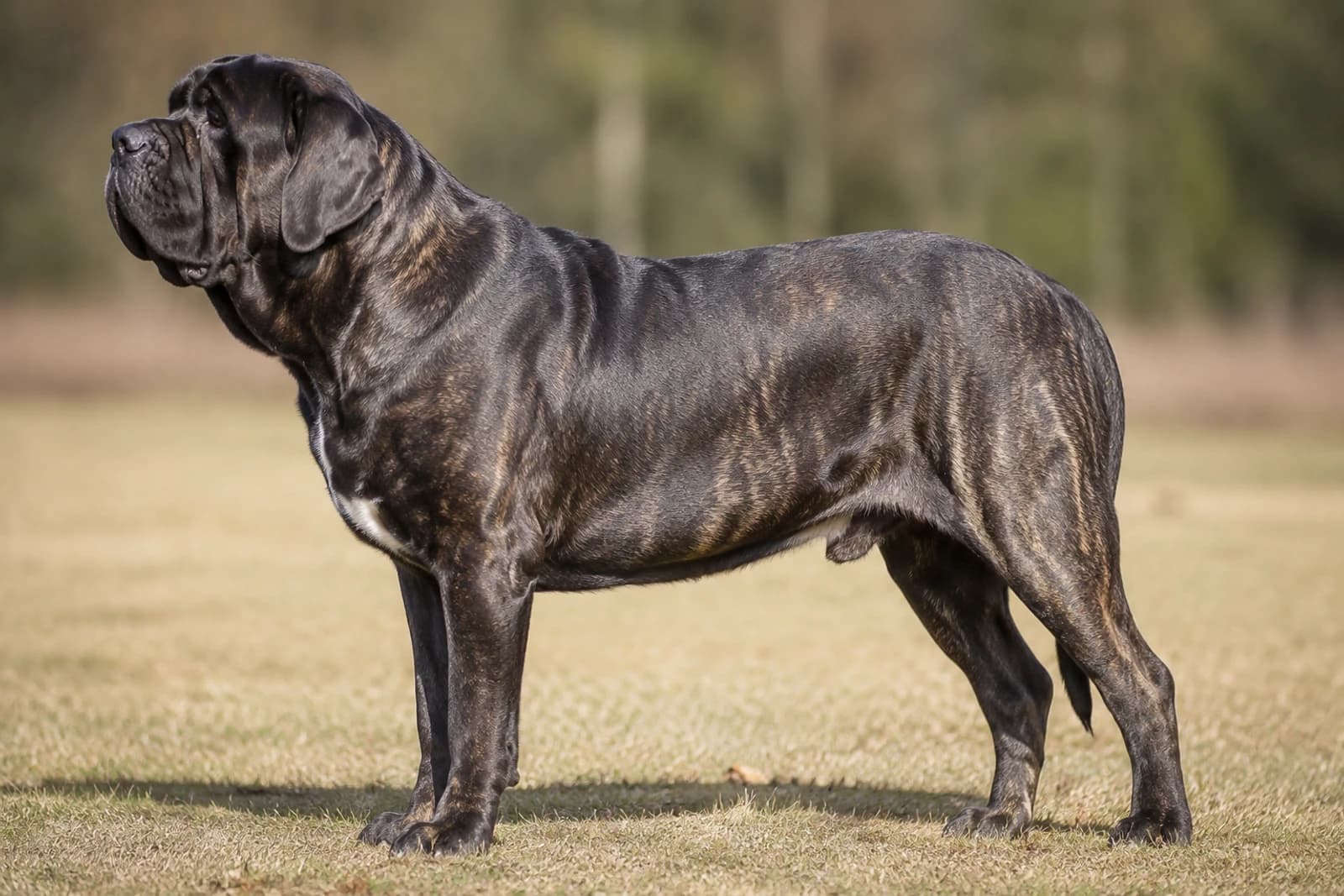
The Mastiff, often called the English Mastiff, is a colossal yet gentle companion best suited for families with space and experience. Known for their unwavering loyalty and calm demeanor, these giants thrive in homes where they can be close to their people. While they are affectionate and protective, their sheer size and strength demand early, consistent training. Mastiffs are relatively low-energy, content with moderate walks and plenty of lounging, but they drool and shed, requiring an owner willing to handle drool cleanup. They excel with children and other pets if socialized, but first-time owners may find their needs challenging.
At a glance
- Size
- Giant
- Height
- 28–30 in
- Weight
- 175–190 lb
- Coat colors
- Fawn, Apricot, Brindle
- Coat type
- Short, dense, and smooth
- Origin
- United Kingdom
How much does a Mastiff cost?
Adopt / rescue
$75–$400
Usually includes spay/neuter, first shots, and a microchip.
Buy from a breeder
$700–$2,000
From a reputable, health-testing breeder.
Approximate USD. Prices vary widely by region, breeder, pedigree, age, and coat colour — adopting is the lower-cost and recommended route. Avoid suspiciously cheap “breeders”; they’re often puppy mills.
Estimate the full cost of a Mastiff →Mastiff photos
Views
Front, side, rear and top — the full silhouette.Poses
How the breed sits, lies, moves and plays.Puppy to senior
The breed across its whole life.Expressions
The breed’s range of moods.Close-up details
Eyes, ears, nose, paws, tail and coat.Coat colors
The breed’s recognized colors.Click any photo to enlarge. We show the Mastiff from every angle — three views, poses, life stages, expressions, close-ups, coat and colors.
Appearance & size
You see a Mastiff coming and your brain immediately tries to recalibrate scale. This is a breed where everything is built to the absolute limit — a rectangular, heavy-boned body draped in dense muscle, bred to be a guardian that didn’t need to move fast because nothing would be dumb enough to test it.
Males stand 30 inches at the shoulder and routinely tip the scales between 175 and 190 pounds, while females usually settle around 28 inches and still push the same weight range. Those are numbers on paper; in person it’s a broad, deep-chested wall of dog with a level topline that stays firm even when the dog is moving.
The coat is short, straight, and close-lying, never fluffy or wavy. You’ll see three main color groups: fawn, apricot, and brindle. Every acceptable color comes with a black mask — the muzzle, ears, and nose leather are dark, framing the eyes against a lighter body. A small white spot on the chest is common and perfectly fine, but a Mastiff with too much white departs from the standard.
From the front, the sheer breadth hits you first. The chest drops down between the elbows and spreads wide, the forelegs are straight and set well apart with heavy bone, and the feet are big and cat-like. Move around to the side and the proportions read like a giant rectangle: the body is long, the brisket reaches at least to the elbows, and there’s a slight tuck-up in the flank that keeps the dog from looking slab-sided. A high-set tail reaches the hocks and hangs straight when the dog is at rest. In profile, the head is a defining piece — massive, square, with a short blunt muzzle and a distinct stop between the eyes. The ears are V-shaped, set wide apart, and lie back against the cheeks.
From behind, the rear is powerfully muscled and broad, the stifles are well bent, and the back legs stand parallel without cow-hocks. There’s no stringiness anywhere; a Mastiff in good condition feels hard under your hand, not puffy. This is a breed where every pound belongs to function, and even standing still, it looks like it could absorb a hit that would flatten a lesser dog.
History & origin
You can trace the Mastiff’s family tree back to the massive war dogs that marched alongside Roman legions. When Julius Caesar invaded Britain in 55 BC, his soldiers encountered enormous, fiercely loyal dogs that fought beside their handlers. The Romans were so impressed they shipped many back to Rome to battle in the arena against bulls, bears, and even gladiators. Those ancient British dogs are the direct ancestors of today’s Mastiff.
For centuries after, the breed settled into a quieter but equally important role on English estates. Lords and landowners needed a dog that could patrol the grounds at night, deter poachers and intruders, and still be calm enough to lounge by the hearth during the day. The Mastiff fit that bill perfectly — a silent guardian with a deep, intimidating bark when the situation called for it. By the 1800s, fanciers had refined the type, but they were still purposeful working guardians, not just showpieces.
Then came the disasters of the early 20th century. World War I and World War II gutted English kennels. Food shortages made keeping a 190-pound dog nearly impossible, and by the late 1940s the purebred Mastiff was functionally extinct in its homeland. A handful of dogs survived in North America, and dedicated breeders in the UK rebuilt the bloodline by carefully crossing those remaining Mastiffs with other giant breeds — primarily Bullmastiffs and, according to some accounts, St. Bernards and Great Danes. The revival was slow, but it worked. Every Mastiff today descends from that post-war effort, which explains why the modern dog, for all its ancient pedigree, is a relatively recent reconstruction of a very old idea.
Temperament & personality
The first thing you notice about a well-socialized Mastiff is the stillness. These are not frantic, needy dogs. A 190-pound Mastiff curled on the living room rug looks like a piece of furniture until he decides it’s time to lean his entire body against your leg — which he will. They’re deeply affectionate and physically demonstrative in their own quiet way, showing love through close contact, a heavy head on your knee, and the ever-present drool trail on your clothes.
Energy-wise, the Mastiff is a sprinter, not a marathoner. A solid 30–40 minute walk and a short play session cover the exercise needs; after that, expect hours of snoring. Don’t mistake that low-key indoor vibe for laziness, though. These dogs remain watchful, tracking movement with their eyes from their favorite spot. They’ll alert to a stranger with a deep, booming bark, but then usually wait for your cue. Unprovoked aggression is not typical, but a Mastiff who hasn’t been introduced to enough people and situations as a puppy can become overly wary or reactive. That’s a serious problem in a dog this size.
That size shapes every interaction in your household. With their own family, Mastiffs are famously gentle and patient — often dubbed “gentle giants” for good reason — but toddlers can be accidentally toppled by a turning body or a happy tail wag at coffee-table height. Supervise young kids, no exceptions. The same goes for smaller pets: a Mastiff raised with cats or toy breeds usually coexists peacefully, but early introductions are key, and you should never leave them unsupervised until you know the dynamic is rock solid.
Training a Mastiff means working with a brain that’s as substantial as the body. They’re smart but not eager-to-please in a Border Collie way. A stubborn streak runs deep. Nagging or forceful corrections just make them shut down. Instead, use short, positive sessions and respect that your Mastiff might take a beat to think before complying. Housetraining is mostly straightforward, but be meticulous about cleaning accidents. Mastiffs rely heavily on scent cues, and any lingering urine smell inside can prompt a repeat performance. Reward outdoor elimination immediately with a high-value treat, and use an enzyme cleaner on indoor spots — a vinegar spray can help neutralize odor in a pinch, too.
Learn to read what your dog is saying. A relaxed Mastiff has soft eyes and a loose, swinging gait. A stiff, frozen body with a direct stare is a warning you can’t afford to miss. They also use classic calming signals — yawning, lip licking, turning their head away — when they’re uncomfortable. Pay attention when your Mastiff shows you those signals around new guests or in a crowded space, and give him the room he needs to decompress.
Good with kids, dogs & other pets
A Mastiff can be wonderfully gentle with kids, but the first thing you have to reckon with is his size. An adult male can top 190 pounds and stand 30 inches at the shoulder—that’s a lot of dog who can accidentally send a toddler flying just by leaning into a hug or turning around in the hallway. So the breed’s famous patience and non-aggressive nature are a real gift around children, but they don’t replace active supervision. Never leave a young child and any giant breed unsupervised, not because the dog means harm, but because a happy tail-wag can clear a coffee table.
Introductions to other dogs require a light touch. Mastiffs aren’t particularly high in natural sociability; many are reserved or even aloof with unfamiliar dogs, especially as they mature. This doesn’t usually mean aggression—these dogs tend toward a calm, watchful demeanor—but it does mean you shouldn’t expect a dog-park social butterfly. Early and ongoing positive exposure to a variety of friendly dogs, ideally during the critical socialization window of 3 to 14 weeks, helps your Mastiff pup learn to read canine body language and stay relaxed. If you’re bringing an adult Mastiff into your home, respect his comfort zone. Some do best as the only dog and don’t need to make new dog friends. Forced interactions can backfire, adding stress and even triggering defensive reactions. A fenced yard and one-on-one play with a stable, known dog usually suit them better than crowded, chaotic dog runs.
Household cats and small pets can work, but again, size and early training are the deciders. A Mastiff raised with a cat from puppyhood often coexists peacefully—the cat may even boss him around. However, an adult Mastiff who’s never lived with small animals may view a fleeing critter as something to investigate or pin with a paw, which can be fatal for a hamster or devastating for a cat’s nerve. Introductions should be gradual, well-managed, and never forceful. Use baby gates, leashes, and calm, positive sessions to build tolerance. Some Mastiffs will always have a mild chase instinct, so it’s smart to separate them when you can’t supervise.
One underrated factor: Mastiffs are deeply bonded to their people. They’re not dogs who do well left alone in the backyard or shut away for long hours. Loneliness can morph into anxiety-driven behaviors like chewing or barking, and a stressed 180-pound dog is a lot to manage. This attachment actually helps them fit into a busy family home—they’ll happily lounge near the action—but it also means the whole household needs to be on board with including the dog in daily life and making gentle, patient introductions the norm, not just during puppyhood, but consistently as the dog ages.
Trainability & intelligence
Training a Mastiff is less about clever problem-solving and more about getting a 180-pound dog to care what you think. They’re rated right in the middle for trainability and judgment — smart enough to learn quickly, but independent enough to weigh whether a command actually benefits them. That “what’s in it for me?” streak means you can’t rely on sheer authority. You need a relationship built on trust, not intimidation.
What works: patience, positivity, and really good treats. Reward-based methods — praise, play, or a high-value snack delivered the instant your dog gets it right — are far more effective than force. Mastiffs shut down under harsh corrections; their size makes punishment a dangerous route that erodes the bond you’re trying to build. Short, upbeat sessions keep them engaged, and consistency from every family member prevents the dog from shopping for loopholes.
Start this work early. The socialization window closes around 14–16 weeks, so expose your puppy to as many new people, sounds, surfaces, and calm experiences as possible before then. A Giant breed that’s wary of strangers or spooked by everyday noises becomes a genuine safety problem, not just a nuisance. Ongoing positive exposure throughout adolescence keeps that early foundation solid.
The recall question. Off-leash reliability isn’t a given. A Mastiff who’s found something more interesting than you — a scent, another dog, a person with a sandwich — may weigh your recall command and decide it can wait. Practice in fenced areas, reload your treat pouch, and never punish a dog who finally comes back. The goal is a response that’s reflexive because it’s always been worth his while.
Leash skills matter more than most tricks. A full-grown Mastiff who hasn’t learned to walk politely can pull you off your feet. Start loose-leash training in puppyhood with a harness and plenty of rewards for staying by your side. Yanking or popping the leash creates resistance in a powerful dog; teaching him that the tension releases when he checks in with you is faster and safer.
Common challenge: the puppy who leans, mouths, or barges because nobody set boundaries when he was 30 pounds. Address these behaviors early with calm, clear direction — redirect the mouthing to a toy, ask for a sit before meals, reward all four paws on the floor. A 190-pound adult who never learned impulse control isn’t cute, he’s hard to manage. Front-load the effort so you’re never physically wrestling a Massive dog into compliance.
Long-term, a well-trained Mastiff should respond to a quiet word or hand signal because he wants to, not because he’s afraid of what happens if he doesn’t. Build that trust with steady, reward-based work and you’ll have a cooperative partner who moves through the world calmly.
Exercise & energy needs
A 175-pound Mastiff doesn’t need marathon training — but skimping on daily movement can lead to weight gain and stiffness that shorten an already brief lifespan. Plan on 40–60 minutes total each day, split into two easygoing walks. That’s typically two 20- to 30-minute sessions, not a single long slog. The goal is consistent, low-impact motion that keeps joints oiled and muscles from wasting, never a panting, exhausted dog.
Mastiffs are brachycephalic and grow to an enormous size, so safety trumps intensity every time. Their heavy frame puts stress on hips, elbows, and shoulders, which means you’ll avoid high-impact activities like jogging, jumping for frisbees, or sustained stair climbing — especially before growth plates close around 18–24 months. Walk on grass or dirt when you can, and in warm weather, shift exercise to early morning or late evening. A Mastiff can overheat dangerously fast, even in temperatures you find pleasant.
Mental stimulation matters as much as the walk itself. A bored Mastiff is a destructive Mastiff, and these dogs respond beautifully to short, purpose-driven tasks.
- Scent work: Scatter a handful of kibble in the grass or use a snuffle mat. Following their nose tires a Mastiff faster than an extra half-mile on the leash.
- Puzzle toys and frozen Kongs: Stuffed with wet food or yogurt, they turn mealtime into a 20-minute brain workout.
- Training sessions: Two or three five-minute rounds of reinforcement basics (sit, down, stay, leash manners) burn mental energy and sharpen the bond.
If your Mastiff enjoys water, controlled swimming or wading can be an excellent, joint-friendly activity — but never leave them unattended, as their bulk makes them sink quickly if they panic. Avoid dog parks. The combination of towering size, low play drive, and intolerance for rude behavior often escalates to fights you can’t safely break up.
The payoff: a Mastiff whose exercise and mental needs are met is calm and content indoors, not a pacing, drooling wreck. Watch for signs of fatigue — heavy panting, lagging behind, or lying down mid-walk — and call it a day. With this breed, shorter and easier almost always pays off longer.
Grooming & coat care
The Mastiff’s coat is a short, dense double coat that’s about as low-maintenance as a giant breed gets — but “low-maintenance” still means you’re dealing with a 190-pound dog who sheds more than you might expect. There’s no trimming or sculpting required, just a consistent routine that keeps the hair tumbleweeds under control and your dog comfortable.
Brushing
Grab a rubber curry brush, a hound glove, or a natural-bristle brush (pig bristle is ideal for adding shine to a short coat). Skip the slicker brushes meant for long-haired dogs; they won’t reach the undercoat the way a curry or bristle brush will. Aim to brush two or three times a week during normal periods, increasing to daily sessions when shedding picks up.
Brushing pulls out dead undercoat, spreads natural oils, and cuts down on the grainy black hairs that end up glued to your sofa. Because a Mastiff has so much square footage, you’ll need a little patience — but most of them lean into the attention like a big, happy rock. Use the time to check for hot spots, ticks, or any skin oddities that hide under all that muscle.
Bathing
Bathe only when your dog genuinely stinks or has rolled in something offensive. For most Mastiffs, that’s every two or three months — over-washing strips the coat’s natural oils and leads to dry, itchy skin. A mild, oatmeal-based dog shampoo works well. Given the size, a self-serve dog wash with a ramp or a walk-in shower with a detachable nozzle saves your back. Dry thoroughly with towels, and if your Mastiff tolerates it, a high-velocity dryer on a low heat setting helps evaporate moisture trapped in the undercoat, which reduces the risk of hot spots.
Nails, ears, and teeth
A 180-pound dog with neglected nails is a recipe for sore joints and scratched floors. Trim nails every three to four weeks with a heavy-duty clipper or a rotary grinder. If you hear clicking on hard surfaces, you’re overdue. Dewclaws grow faster and need extra attention.
Those floppy ears trap moisture and need a weekly wipe-down with a vet-approved ear cleaner and a cotton ball — never push anything into the canal. Redness, a funky smell, or head shaking means it’s time for a vet visit. Brush teeth several times a week with dog-specific toothpaste; starting handling routines early turns grooming into no-big-deal instead of a wrestling match with a dog that outweighs you.
Seasonal shedding
Twice a year — usually spring and fall — your Mastiff blows its undercoat and the hair really flies. Daily brushing is non-negotiable during these periods, and a de-shedding tool like a Furminator used gently on the short coat can grab loosened fluff before it drifts into your coffee. Brush outside when you can, and remember that regular outdoor exercise boosts healthy coat turnover, so a tired, brushed Mastiff is a cleaner house.
Shedding & allergies
If you like a spotless house, a Mastiff will test your resolve. These giants shed a constant stream of short, stiff hairs year-round, and twice a year — spring and fall — they “blow” their dense undercoat in clumps that seem to multiply overnight. A good brushing with a rubber curry comb or shedding blade a few times a week cuts down on the tumbleweeds, but you’ll still find fawn or brindle hairs woven into your carpet, couch, and clothes.
And then there’s the drool. Mastiffs are champion droolers. Water bowls become slobber stations. After a meal or a drink, you’ll see long, stretchy strings hanging from the jowls, ready to paint your walls, furniture, and legs. Keep a dedicated “drool rag” in every room — you’ll use them constantly. The combination of shed fur and saliva-soaked everything is simply part of life with the breed.
As for allergies: no dog is hypoallergenic, and a Mastiff is a poor match for allergy sufferers. The dander and the proteins in all that drool are potent triggers. If someone in your home has dog allergies, spend time around adult Mastiffs before committing — or choose a breed that’s a known lower-allergen fit. A Mastiff’s coat won’t clog the air filter like a heavy spitz breed, but the sheer volume of hair, skin flakes, and airborne saliva from a 190-pound dog will push most allergic systems over the edge.
Diet & nutrition
Weight management is the single most important nutritional decision you’ll make for a Mastiff. Those 175–190 pounds already load the joints and ligaments heavily; even a few extra pounds can speed up arthritis and cut an active life short. Precise portion control matters more than any single ingredient.
How much to feed
A typical adult Mastiff at a lean, healthy weight (you should feel ribs easily under a flat palm) eats roughly 6–10 cups of high-quality dry food a day, split into two meals. The exact number varies with age, metabolism, and real exercise—not just a slow amble around the yard. Start with the bag’s feeding chart, weigh your dog every few weeks, and adjust. Never free-feed; this breed will eat itself into a mobility crisis without missing a beat. Use a slow-feeder or puzzle bowl to pace his eating. It engages his mind and, because Mastiffs are deep-chested, slower intake may also reduce the chance of bloat.
Puppy patterns
Puppies need four evenly spaced meals a day until four months, then three meals until six months, then you can drop to the adult two-meal schedule. Growth should be slow and steady—pick a large-breed puppy formula with controlled calcium and phosphorus. When you bring a pup home, transition any new diet gradually, starting with lightly cooked and puréed meats, fish, fruits, and vegetables, or a high-quality commercial puppy food. Some owners introduce a raw chicken wing around twelve weeks under supervision, but that’s strictly optional and needs your vet’s go-ahead.
Senior adjustments
Older Mastiffs tend to slow down and pack on weight. Switch to smaller, more frequent meals if a twice-a-day schedule leaves him uncomfortably full. There’s no strong evidence that seniors need low-protein food—keep protein quality high and monitor calories closely. Regular weigh-ins become even more critical as activity fades.
What to put in the bowl
If you’re home-cooking, a useful blueprint is roughly 60% raw and cooked meat, 20–30% fruits and vegetables, and 10% extras like eggs, grains, or plain yogurt. Because dogs chew only up-and-down and lack salivary amylase, blending or puréeing raw fruits and vegetables before serving breaks down plant cell walls and unlocks nutrients they’d otherwise pass right through. For sensitive stomachs, white rice offers bland, easily digestible carbohydrates; pearl barley is a gentle high-fiber alternative. Quick combos—canned fish (in water, no salt), cooked eggs, and dog-safe vegetables—make solid meals. Unsalted vegetable cooking water works as a base if you’re out of stock. Batch-cooking extra grains or proteins gives you a ready supply of healthy foundations.
Safety and the breed’s weak spots
Keep rich, fatty holiday scraps away—this breed can be prone to pancreatitis when overloaded with fat. Serve any leftovers in the dog’s own bowl to discourage begging, never from the table. And avoid vegetarian or vegan diets: a Mastiff’s digestive system evolved to process meat, so that remains the non-negotiable foundation of every meal.
Health & lifespan
Expect a Mastiff to share your life for 6 to 10 years — a relatively short span that makes every year count. Giant breeds age a little faster than smaller dogs, so the window for catching problems early is tight.
Bloat (gastric dilatation-volvulus) is the emergency you can’t ignore. A Mastiff’s deep chest creates the perfect setup for the stomach to twist on itself, trapping gas and cutting off blood flow. You’ll see restlessness, drooling, a distended belly, and unproductive attempts to vomit. This kills in hours if a vet doesn’t intervene. Deflate the risk with these daily habits:
- Split food into two or three smaller meals instead of one big bowl.
- Keep your dog quiet for at least an hour before and after eating — no wild zoomies on a full stomach.
- Know the signs cold, and have your emergency vet’s number saved. Many owners also ask their vet about a prophylactic gastropexy during spay or neuter to tack the stomach in place.
Eye conditions show up in lines that aren’t carefully screened. You might see entropion (eyelids roll inward, causing lashes to scrape the eye), ectropion (droopy lids that collect debris), or progressive retinal atrophy, which slowly steals vision. A responsible breeder will have both parents’ eyes examined annually by a veterinary ophthalmologist and registered with the OFA or CERF — ask to see those certifications before you commit.
Those 175 to 190 pounds ride on joints that take a beating over time. Hip and elbow dysplasia are common, and even soundly built Mastiffs develop arthritis as they age. Keeping your dog lean is the single best insurance you can buy. Measure portions religiously, skip the free-feeding, and stick to low-impact exercise — swimming and steady walks beat jumping or hard running on concrete. If a parent’s hip and elbow scores aren’t on the table, walk away.
Subtle changes matter more with a stoic giant. A missed meal, a slight hitch in his step, or a new reluctance to climb into the car can be the first whisper of pain. Annual vet checkups — with bloodwork as he gets older — catch brewing trouble before it’s obvious. Rabies vaccination is legally required, and monthly heartworm prevention during mosquito season (plus one month after) is non-negotiable.
Mastiffs overheat easily, so shade and cool water are essential when the temperature climbs. Those jowly wrinkles also trap moisture; wipe the folds dry once a day to prevent skin infections. And because a well-socialized dog handles stress better, handling practice during puppyhood — gentle ear touches, paw exams, tooth brushing — makes vet visits less of an ordeal and keeps stress hormones from taking a toll over the long haul.
Living environment
Mastiffs are gentle giants that handle apartment living surprisingly well, as long as you plan for their size, not their energy level. These dogs are calm indoors and sleep a lot, so a sprawling yard isn’t essential. What matters more is having a ground‑level entry or a sturdy elevator—hauling a 180‑pound senior Mastiff down stairs twice a day is a real commitment.
For outdoor space, a small, securely fenced area for bathroom breaks and a few minutes of sniffing is plenty. They don’t need long runs; in fact, high‑impact exercise on hard surfaces can strain growing joints and aggravate arthritis later. Two or three short, easy walks (15–20 minutes each) plus an evening stretch usually meet their physical needs. Indoor mental outlets—food puzzles, low‑key scent games—burn just as much energy without risking injury.
Climate is a bigger consideration. These thick, heavy dogs overheat fast. Air conditioning in summer is non‑negotiable, and walks should happen during cooler hours. They handle cold better, but they’re still indoor companions, not yard dogs.
Barking is rarely an issue. A well‑socialized Mastiff is naturally quiet, though boredom or loneliness can trigger more noise. They’re deeply attached to their people and don’t do well left alone for long stretches. Start working on alone time early: crate training, frozen Kongs, and short practice departures build independence. If you’re gone 8+ hours daily, a midday dog walker or break makes all the difference between a content Mastiff and one that chews doorframes.
Who this breed suits
A Mastiff fits a very specific kind of home — one that’s ready for a dog the size of a small sofa who believes he’s a lap dog. If you can confidently handle 190 pounds on a leash when the neighbor’s cat darts by, and you want a loyal, low-key shadow who loves nothing more than leaning his full weight against your hip, this could be your breed.
- You have giant-breed experience or serious dedication. First-timers can succeed, but only if they commit to professional training and understand that a puppy who will be the size of a full-grown Lab by six months can’t get away with jumping, mouthing, or pulling — no matter how cute it looks at 20 pounds.
- Your household is calm and spacious. A Mastiff is a quiet indoor companion who needs only moderate daily walks (two 20–30 minute strolls, not five-mile runs). A house with a ground-floor entry and room for a jumbo crate is ideal. Apartments can work if you’re on the first floor and have an elevator — carrying a 180-pound senior dog up stairs is not an option.
- You have older kids or no children. The breed is famously gentle, but a happy tail wag at coffee-table height clears everything in its path. Toddlers can easily be knocked over by accident. Families with children over eight who can stand steady around a horse-sized dog are a better match.
- You’re home more than you’re away. Mastiffs bond hard and don’t do well crated for long workdays. A retired person, a remote worker, or a family with staggered schedules fits best. Seniors must be strong enough to manage a dog who can lunge at a squirrel — leverage beats brute force, but the physics are real.
- You don’t mind slobber and snoring. Water droplets on the ceiling, drool on your pants, and a rumble that rivals a freight train are all part of the package. This is not the breed for a pristine, white-carpet household.
Think twice, or three times, if you want a running partner, a highly trainable off-leash hiking buddy, or a dog who can be reliably walked by a petite teenager. Giant appetites come with giant vet bills (bloat surgeries, joint issues), so a thin budget is a deal-breaker. First-time renters, travelers who board frequently, and families with fragile grandparents visiting often should look elsewhere. Without consistent, firm-but-gentle training from day one, you’ll be sharing your couch with a well-meaning but unmanageable wrecking ball. If your vision of dog ownership includes a clean, low-maintenance companion who stays off the furniture, the Mastiff will disabuse you of that notion within the first ten minutes.
Cost of ownership
Bringing a Mastiff into your life comes with a price tag that matches his size. From a responsible breeder who screens for hip dysplasia, heart issues, and other giant-breed problems, a puppy typically costs $1,500 to $3,000. Pups from champion bloodlines or breeders with extensive health clearances can run $3,500 to $5,000. Avoid the $600 backyard-bred litters; they often skip those expensive health certifications, and you’ll pay the difference later in vet bills.
Once he’s home, the monthly bills add up fast. Here’s what to expect:
- Food: $150–$200+ per month. A full-grown male can put away 8–10 cups of high-quality dry food every day. That’s two 30-pound bags a month if you’re not supplementing with raw or fresh food. Cheap kibble means more fillers and bigger, softer stools—invest in a nutrient-dense formula.
- Routine vet and prevention: $40–$60 per month. Annual checkups, vaccinations, and parasite preventives cost more for a giant breed because his doses are larger. Budget $500–$700 a year.
- Pet insurance: $50–$100 per month. Mastiffs are prone to bloat, cruciate ligament tears, and elbow dysplasia. One emergency surgery can top $5,000. A good policy gives you breathing room.
- Grooming and supplies: $30–$50 per month. His short coat is low-maintenance—a quick brush once a week and the occasional bath—but you’ll need a heavy-duty nail grinder, a slobber towel (always), and a crate big enough for a pony. Bedding, toys, and elevated feeders add to the initial outlay.
All in, you’re looking at a realistic $300–$400 monthly spend, not counting the inevitable replacement of anything left at tail height on your coffee table.
Choosing a Mastiff
Because a Mastiff will fill your sofa and your schedule for a solid 8–10 years, the way you bring one into your life matters more than almost any other decision. You have two solid paths: a responsible breeder who treats this giant like a family member from day one, or a breed-savvy rescue that knows the dog’s background.
Choosing a breeder means looking for someone who talks about health clearances before they talk about color or head size. A sound Mastiff starts with parents who have passing scores from the Orthopedic Foundation for Animals (OFA)—hips and elbows at a minimum, plus a cardiac evaluation from a board-certified cardiologist and a current eye exam (CERF or OFA Eye). Giant breeds can also be prone to hypothyroidism and bloat, so a breeder who tracks thyroid panels and doesn’t breed dogs that bloated until old age is worth their weight. Ask to see the actual certificates, not just a “vet checked” story.
Red flags are easy to spot once you know them. Run from any breeder who pushes puppies out the door before eight weeks—giant-breed puppies need every day of that time with their littermates to learn bite inhibition. Avoid anyone breeding for extreme size (“200+ pounds!”) because joints don’t scale that way. Skip litters where the sire and dam won’t let you meet at least one of them, or where the puppies are raised in a kennel with no sights and sounds of a real home. A well-raised Mastiff puppy has been handled daily, exposed to gentle kids and different flooring, and begun crate introduction. When you visit, the litter should be calm but not comatose; a puppy who hides the entire time or one who bowls over littermates without self-control is a risk you don’t need in a 190-pound adult.
Picking your individual puppy comes down to temperament, not color markings. Tell the breeder what your household actually looks like—small children, other dogs, a city street full of noise—and let them steer you toward the puppy with the medium energy and the most bounce-back. A good breeder has already identified which pups startle and which ones recover quickly, and they’ll be honest about the bossier personalities that need an experienced hand.
Rescuing a Mastiff is a different ballgame but can be a wonderful fit if you go in clear-eyed. Adult rescue dogs often arrive with unknown genetic history, so you trade predictability for immediate size and temperament knowledge. Work with a rescue that quarantines, evaluates, and discloses any health quirks—joint pain, allergies, or resource guarding. Meet the dog several times, bring every family member along, and watch how the dog moves after a short walk; a stiff rear or reluctance to rise can signal hip trouble that will cost you big. Ask directly about heartworm treatment, bloat history, and whether the dog has lived peaceably with cats or livestock if you have them. A solid rescue won’t rush you and will willingly take the dog back if it never settles—which is the kind of safety net that makes a nearly 200-pound unknown a manageable risk.
Pros & cons
Pros
- Gentle giants through and through. A well-socialized Mastiff is famously patient and affectionate with children, though toddlers can get bowled over by accident — sheer physics at 175–190 pounds.
- Couch-potato energy indoors. Despite their size, they’re happy with a couple of short walks and a good sniff session. They don’t demand hours of running; they’d rather lounge near you.
- Natural, no-fuss guardians. They won’t yap at every squirrel, but a deep “woof” at the door is instant. Strangers take it seriously, yet a proper Mastiff accepts welcomed guests once you give the okay.
- Short, low-maintenance coat. A quick brush a few times a week handles shedding. No elaborate grooming bills or constant trips to the groomer.
- Deeply loyal and in-tune. They bond hard to their people and read the room uncannily well — calm when you’re calm, alert when you’re not.
Cons
- Slobber is a lifestyle. Drool ends up on walls, ceilings, clothes, and guests. Carry a rag everywhere; you’ll use it.
- Short lifespan. 6 to 10 years is typical. The heartbreak comes faster with giant breeds, even with excellent care.
- Expensive to keep. Feeding a 190-pound dog costs a small fortune. Vet bills, preventatives, and joint supplements all scale up with body weight. Bloat and GDV risk mean you need to know emergency signs cold.
- Can become a very large liability. Without early, thorough socialization and consistent training, protective instincts can tip into over-guarding or aggression. A reactive Mastiff is not just a problem — it’s a 190-pound problem.
- Joint and structural issues are common. Hip and elbow dysplasia, cruciate tears, and arthritis often appear by middle age. You’ll be managing mobility and pain for a heavy dog that can’t easily be lifted.
- Stubborn streak. They’re smart but not push-button obedient. A firm, patient hand and a sense of humor matter — they will lean on you, ignore you, or plant themselves mid-walk when they decide they’re done.
Similar breeds & alternatives
If the Mastiff’s head-turning size and quiet guardian temperament draw you in, but you’re not locked into 190 pounds of dog, a few other giants share the calm, protective core with meaningful differences in heft, energy, and upkeep.
-
Bullmastiff: Bred as a gamekeeper’s night dog, this is essentially a smaller, more agile version. While a Mastiff pushes 190 pounds, the Bullmastiff tops out around 130 pounds and 27 inches — still imposing, but far easier on leashes, doorways, and car rides. Temperament lands in the same sweet spot: loyal with family, naturally suspicious of strangers without being sharp. Plan for a bit more get-up-and-go; a Bullmastiff usually needs a brisk daily walk plus some active play, whereas the Mastiff is happy with a solid half-hour stroll and a long nap.
-
Great Dane: You give up raw mass for height. Danes stand 30 to 34 inches, often taller than a Mastiff, but weigh 40 to 50 pounds less, with a leaner frame. They share the gentle, people-loving nature, but the guardian instinct is dialed way back — a Dane is more likely to lean on a stranger for scratches than to hold a stare. Grooming is simpler (short coat, less drool), but joint and heart issues mirror the Mastiff’s, and their sprint-driven play style can surprise you.
-
Saint Bernard: Right in the Mastiff’s weight class, this is your alternative if you want the same droopy, patient family giant with a different look. Coats come long or short; both shed heavily. The real difference is temperament: the Saint is a gregarious rescue dog at heart, often wagging at everyone. A Mastiff will observe and assess before deciding someone is okay — a subtle but real shift in home protection.
-
Neapolitan Mastiff: For the hardcore guardian enthusiast, the Neapolitan cranks the Mastiff’s protective wiring to its logical extreme. Smaller overall (110 to 150 pounds), but with volcanic wrinkles that need daily cleaning, heavier drool, and a deeply suspicious nature that can be a liability without extensive socialization. Exercise needs are even lower than the Mastiff’s, but early training is non-negotiable.
All of these breeds share giant-dog health screening priorities — hips, elbows, heart, and bloat risk — and a drool rag recommendation. The Mastiff sits squarely in the middle: the maximum substance with a level-headed guard instinct, without the wrinkle maintenance of a Neo or the open-arms friendliness of a Saint.
Fun facts
- The Mastiff is one of the oldest dog breeds, depicted in ancient Egyptian monuments.
- They hold the record for heaviest dog breed, with some exceeding 300 pounds.
- Despite their imposing size, they are famously known as 'gentle giants'.
- The breed features a distinctive black mask on the face.
Frequently asked questions
- Do Mastiffs shed a lot?
- Mastiffs have a short, dense coat that sheds moderately year-round, with heavier shedding in spring and fall. Regular brushing once or twice a week helps manage loose fur. They are not considered hypoallergenic.
- Are Mastiffs good with children?
- Mastiffs are known for being gentle and patient with children, often called "gentle giants." However, their large size means they can accidentally knock over small kids, so supervision and early socialization are important. They tend to be protective and loyal to their family.
- How much exercise does a Mastiff need?
- Mastiffs have moderate exercise needs and enjoy a daily walk or two, along with some playtime. They are not high-energy dogs and can be content with a leisurely lifestyle, but lack of exercise can lead to weight gain. Avoid intense exercise in puppies to protect their developing joints.
- Can a Mastiff live in an apartment?
- Mastiffs can adapt to apartment living if they get enough outdoor walks and mental stimulation, as they are relatively calm indoors. However, their giant size means they take up a lot of space, and some buildings may have weight restrictions. Access to an elevator or ground floor is helpful to avoid stairs.
- Do Mastiffs bark a lot?
- Mastiffs are generally not excessive barkers; they tend to bark only when there is a reason, such as a stranger approaching. They can be protective, but they are usually quiet and dignified. Early training can help manage any unwanted barking tendencies.
- Are Mastiffs a good choice for first-time dog owners?
- Mastiffs can be a good fit for first-time owners who are committed to early training and socialization, as their calm demeanor is forgiving. However, their massive size and strength require an owner who can manage them physically and is prepared for the cost of care. They respond best to consistent, positive reinforcement.
Tools & calculators for Mastiff owners
Quick estimates tailored to Mastiffs — pre-filled with this breed’s size where it matters.
Articles & stories about the Mastiff
Sources & standards
This profile follows recognized breed standards from the American Kennel Club (AKC) and the Fédération Cynologique Internationale (FCI), along with established veterinary and breed-club guidance. These describe general breed tendencies — every dog is an individual.
Owner stories
Have a Mastiff? Share your experience — grooming tips, personality quirks, anything goes.