

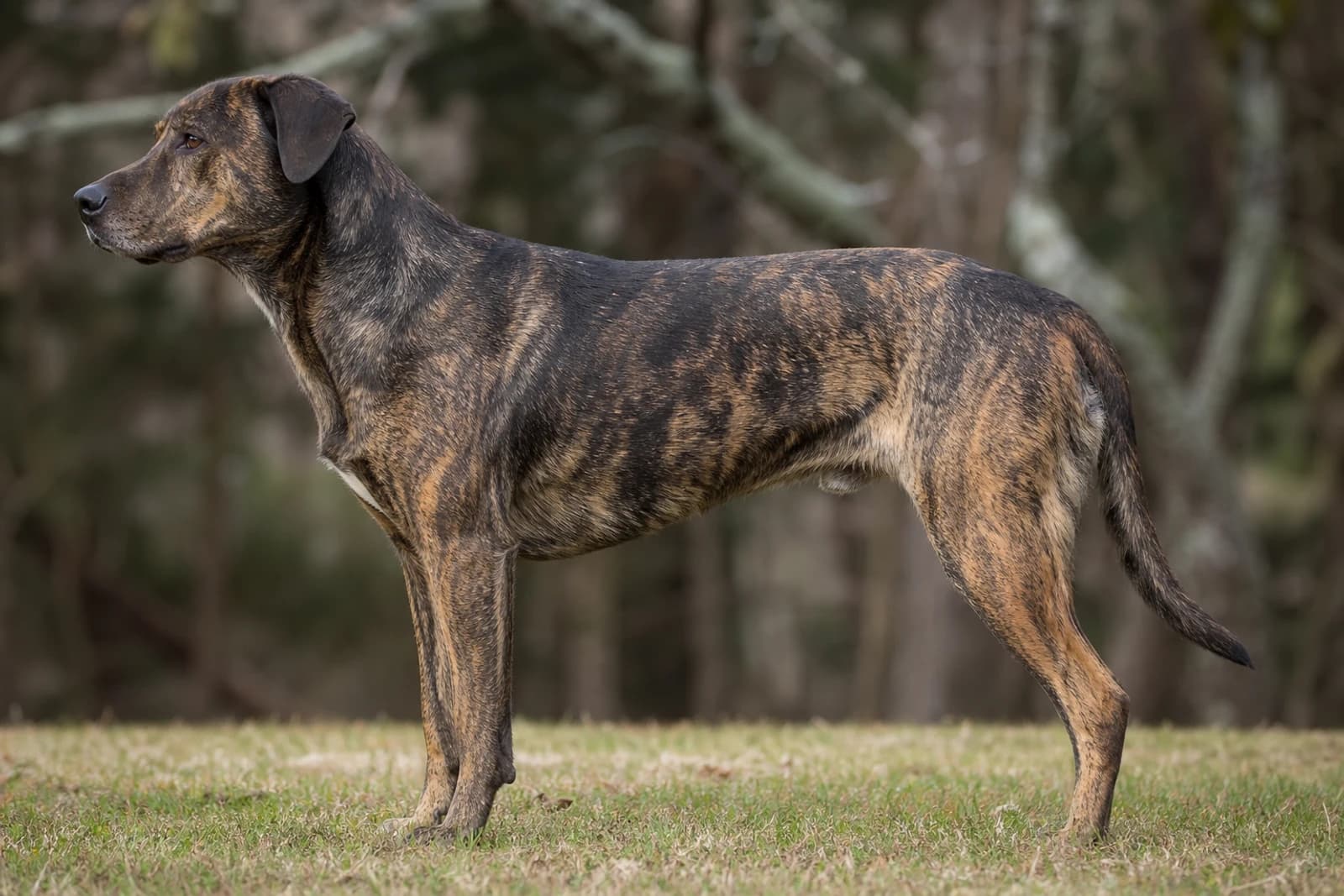
The Mountain Cur is a courageous and versatile hunting dog, originally bred by early American settlers. This medium-sized breed (despite a 'Giant' label, they typically stand 16–26 inches and weigh 40–60 pounds) thrives with active owners who can provide ample exercise and mental stimulation. Their protective instincts and loyalty make them excellent guardians, but they require early socialization to coexist with other pets. Best suited for rural or suburban homes with experienced handlers, they are not ideal for apartment living or first-time owners.
At a glance
- Size
- Giant
- Height
- 16–26 in
- Weight
- 40–60 lb
- Life span
- 12–16 years
- Coat colors
- Brindle, Black, Yellow, Blue, Red, Buckskin
- Coat type
- Short, dense, and rough
How much does a Mountain Cur cost?
Adopt / rescue
$50–$300
Usually includes spay/neuter, first shots, and a microchip.
Buy from a breeder
$400–$1,200
From a reputable, health-testing breeder.
Approximate USD. Prices vary widely by region, breeder, pedigree, age, and coat colour — adopting is the lower-cost and recommended route. Avoid suspiciously cheap “breeders”; they’re often puppy mills.
Estimate the full cost of a Mountain Cur →Mountain Cur photos
Views
Front, side, rear and top — the full silhouette.Poses
How the breed sits, lies, moves and plays.Puppy to senior
The breed across its whole life.Expressions
The breed’s range of moods.Close-up details
Eyes, ears, nose, paws, tail and coat.Coat colors
The breed’s recognized colors.Click any photo to enlarge. We show the Mountain Cur from every angle — three views, poses, life stages, expressions, close-ups, coat and colors.
Appearance & size
You’ll sometimes see the Mountain Cur filed under “giant” breeds, but don’t let that fool you — these are medium, no-nonsense working dogs. A grown Cur stands somewhere between 16 and 26 inches at the shoulder and tips the scale at 40 to 60 pounds. The wide height range isn’t random; different lines lean toward different tasks, from treeing squirrels to baying hogs, and that job shapes the frame. What’s consistent is a look of tightly packed utility — a dog that carries zero extra weight and moves like it could go all day.
The coat is short, dense, and single, lying flat against the body. It sheds dirt and light rain easily. Brindle is the flag you’ll see flown most often, but solid colors show up plenty: black, yellow, blue, red, and every shade between. White trim on the chest, feet, face, and tail tip is common, and some dogs wear black-and-tan points or a clear solid coat with no white at all.
The head is broad across the brow without being blocky, tapering to a muzzle just shorter than the skull. Eyes are round, widely spaced, and usually brown or amber — direct without being hard. Ears are set high and often fall as a rose or button ear; a few throw naturally semi-erect ears that flip at the tips. Tails vary. Historically, many were docked to a short nub, but a natural bob tail pops up in some lines, and a full tail is growing more common. When left long, it’s thick at the base and carried with an upward curve, especially when the dog is alert.
From the front, a Mountain Cur looks square and honest. The chest is deep — reaching clear to the elbow — but not barrel-wide, giving plenty of heart and lung room without making the dog look clunky. Front legs are straight and bone is sturdy but not heavy, with shoulders laid back for reach. In profile, the topline runs level from withers to hip, the ribs spring well back, and there’s a definite tuck-up behind the loin. That tucked flank and the clean neck give the whole dog a “ready” outline. From the rear, the hindquarters are muscular and well-angled, with parallel hocks and thighs that show real drive. Feet are tight and arched, the kind that grip rock and root without fuss. Nothing about the build is exaggerated — every inch says a Cur was put together to hunt, tree, and cover rough ground long after heavier dogs would quit.
History & origin
Mountain Curs trace back to the rugged southern Appalachian frontier — the kind of country where a dog had to earn its keep or you didn’t feed it. They weren’t created by aristocrats chasing a paper standard. They were built by necessity, starting around the late 18th and early 19th centuries, when Scots-Irish, English, and German settlers pushed into the mountains of Kentucky, Tennessee, Virginia, and the Carolinas. Those families needed one dog that could tree squirrels for supper, bay a boar that was tearing up the cornfield, guard the cabin at night, and still be safe around children. No imported purebred filled that slot, so settlers bred their various working dogs — European cur-type herders, treeing hounds, maybe a dash of Native American dog — and the Mountain Cur emerged as the all-purpose homestead dog.
For over a century, no one called them a “breed” in the formal sense. They were simply “curs,” an old term for a mixed-breed farm dog with grit. Every hollow had its own line, and men judged a dog by what it could do, not by a pedigree. A good cur was currency. They treed raccoon by night, tracked bear through laurel thickets, and held wild hogs at bay until the hunter arrived. They had a reputation for reckless courage and an almost eerie ability to read terrain and game.
By the mid-20th century, that world was fading. Industrialization, two world wars, and the moving of families into cities hit the cur hard. Without a breed registry, the dogs nearly vanished. Then men like Hugh Stephens, Dewey Ledbetter, and Carl McConnell — hunters who remembered what these dogs could do — decided to round up the best remaining specimens and preserve them. In 1957, Stephens founded the Original Mountain Cur Breeders Association (OMBA), setting a foundation that kept the old blood alive. The United Kennel Club granted full recognition in 1998, cementing the Mountain Cur as a distinct breed rather than just a type of farm dog.
Today’s Mountain Cur hasn’t gone soft. Responsible breeders still select for working ability, nerve, and that innate drive to hunt and protect. The dog you take home is a living piece of American pioneer grit — not a fashion statement, but a partner that demands you meet its energy and loyalty halfway.
Temperament & personality
You get a Mountain Cur for one reason: you need a dog that will work like a partner, not a pet. These are serious, driven dogs bred to hunt and guard, and they bring that intensity into every corner of life. A 40–60 lb frame on legs that range from 16 to 26 inches can explode into motion faster than you’d expect, and a Cur who doesn’t have a real job will find one — tearing up trim, excavating the couch, or patrolling windows with single-minded focus. A couple of walks won’t cut it. Plan on an hour of hard running, scent work, or tugging drills that leave the dog panting and satisfied.
The independent thinker behind the drive
Mountain Curs are sharp and strong-willed. They don’t respond to heavy-handed corrections or repetitive drilling. Respectful, consistent engagement — the kind where you set clear rules and reward the right choices without nagging — gets you a responsive, eager teammate. Shortcut that, and you’ll watch a dog weigh your commands and decide you aren’t interesting enough today. This independence isn’t defiance for its own sake; it’s a brain that needs to be used. Food puzzles, tracking games, and advanced obedience give that mind a legitimate outlet.
With family, strangers, and other animals
In their own home, Curs are typically calm and easygoing once their exercise tank is empty. You’ll recognize the shift: a loose body, soft eyes, and a tail that wags at hip level instead of flagging high. They bond tightly to their people and will shadow you from room to room, though they rarely smother you with neediness. Strangers get a different reception. A Cur’s default is reserved to outright wary — a stiff forward lean and direct stare can signal the dog is sizing up a newcomer, so early and frequent socialization is non-negotiable. I’d be cautious in a home with small children who can’t yet read that body language; even playful intensity can knock a toddler over. Teach kids never to disturb the dog while eating, because a Cur’s natural possessiveness over food can escalate if someone reaches for the bowl.
Prey drive is baked in. These dogs were bred to chase and tree game, so cats, squirrels, and small dogs often register as targets, not playmates. Some Curs learn to coexist with other household pets if raised together from puppyhood, but the instinct rarely disappears completely.
A nose that never clocks out
Mountain Curs live through their noses. You’ll see it in rituals like sniffing the same spot twice, then lifting a leg to overmark — a clear sign of scent-based spatial memory. That drive means indoor accidents become set points if you don’t erase the odor completely. Vinegar spray or an enzymatic cleaner destroys urine smells that otherwise scream “toilet here” to the dog. When house training, reward a Cur immediately after he does his business outside; punishment for indoor mistakes only teaches him to hide the evidence. Don’t be surprised if your Cur rolls in something foul on a hike. While we’re repulsed, the dog is accessing a scavenger ancestry that prizes decay scents the way we like flowers — it may also be broadcasting a messy “dinner here” signal to the pack. Keep a bottle of citrus or vinegar spray around to discourage chewing on off-limits items, because puppy teething and adult jaw-strengthening both lead to destroyed furniture if you don’t redirect to appropriate bones and chews.
Isolation is this breed’s kryptonite. Left alone in the yard for hours, a Mountain Cur can tip into anxiety-driven barking, escape attempts, or obsessive marking around the property’s edges. They need to be inside, woven into the household’s daily rhythm. Give them that, and you have a 12-to-16-year partner who will match your grit and then curl up beside you without a shred of pretense.
Good with kids, dogs & other pets
A Mountain Cur with a solid upbringing is naturally patient and steady around children. That’s the starting point, not a guarantee. These dogs are medium-powerful (40–60 pounds, standing up to 26 inches at the shoulder) and often unaware of their own momentum. A friendly body slam during play can topple a toddler, so ground rules matter just as much for the kids as for the dog. Teach children to leave the dog alone when it’s on its bed or eating, and don’t permit ear-pulling or climbing. Even the most tolerant Cur has limits.
If you’re bringing a puppy home, you have a short, critical window — roughly from 3 to 16 weeks — to shape how that dog feels about small humans. Invite calm, supervised kids over often. Let the puppy hear the shrieks, the sudden movements, the chaos, and pair those experiences with high-value treats. A Mountain Cur raised alongside considerate children often becomes a fiercely loyal shadow who sleeps in their room and trails them around the yard. Skip that early work, and you risk a dog who startles easily and finds kid energy overwhelming.
With other dogs
Mountain Curs aren’t automatic social butterflies. They were bred to work independently and think on their feet, which translates to a “let me assess you first” attitude with strange dogs. Early and ongoing positive exposure to other dogs — puppy classes, structured play dates, reward-based neutrality training on walks — is non-negotiable. Without it, same-sex grumpiness or leash reactivity can surface by adolescence. That doesn’t mean you need a dog-park socialite. Plenty of adult Curs are perfectly content co-existing with a known pack at home while ignoring unfamiliar dogs on the street. Just don’t expect a wiggly greeter if you skipped socialization.
With cats and small pets
Here’s the honest caveat: the Mountain Cur’s hunting heritage is baked in. These dogs were used to tree squirrels, corner raccoons, and bay up hogs. Most have a strong prey drive, and small, fast-moving critters — cats, rabbits, even small dogs — can trigger it. You can tilt the odds by raising a puppy alongside an indoor cat with slow, controlled introductions, and many families succeed. But never trust that arrangement when you’re not there to supervise. A cat darting across the room while the Cur is amped up is a gamble. For rodents, birds, or anything that runs, separate rooms and secure enclosures are the realistic answer.
Supervision is the through line. A Mountain Cur wants to be where its people are, not banished outdoors. Involve the dog in daily family rhythms, give kids jobs like measuring food or tossing a ball, and you’ll build a bond that lasts well into those 12–16 years. If you’re adopting an adult, don’t force social scenarios the dog isn’t ready for. Some Curs never become dog-park dogs, and that’s fine — a dog who’s relaxed around your household is a win.
Trainability & intelligence
A Mountain Cur’s brains are the real deal, but they come wrapped in an independent streak that can test even experienced owners. These dogs weren’t bred to wait for detailed instructions—they had to read terrain, tree game, and make split-second choices on their own. Training, then, is less about obedience drills and more about building a partnership where the dog decides you’re worth listening to.
Start the morning your pup arrives. Reward-based methods build speed and reliability here, while punishment poisons the trust you need. Use a sharp, happy “yes” or a clicker the instant paws hit the floor on cue, then pay up with something that counts: a quick tug session, a scatter of diced chicken, or a calm chest scratch if he’s not toy-driven. Fade the treats over time, but never the clarity. A Cur who thinks he’ll get a better deal by ignoring you will take that gamble, so keep the payoff consistent.
Recall is the make-or-break skill. Every Cur carries heavy prey drive, and a squirrel dashing across a trail can erase your voice from his mind. Build the response in layers: inside on a leash, then a long line in a quiet field, then short off-leash reps before you ever test it around wildlife. When he finally does ignore you and then drifts back ten minutes later, praise him like he just won the lottery. Punishing a late return teaches him that coming back ends the fun.
Early socialization has a tight window. Between 3 and 14 weeks, calmly expose your puppy to strangers, noisy streets, slippery floors, and friendly dogs. A Mountain Cur who learns that novelty predicts good things rarely turns into a reactive adult. Skip this, and you may end up with a 50-pound dog who views every unfamiliar face as a threat—and that’s a hard problem to unravel later.
- Keep sessions short and game-like. Two five-minute wins beat a twenty-minute stalemate.
- Household rules need to be ironclad. A Cur will find the one person who lets him on the couch and exploit it.
- Match the reward to the temptation. Ordinary kibble loses to a raccoon every time.
- Adolescence (roughly 8–18 months) will test every boundary. Stay calm, stay consistent, and don’t turn it into a battle of wills.
- No intimidation, ever. Loud corrections or physical force erode the trust that makes a Cur safe and cooperative.
With steady, fair handling, you get a dog who watches your eyes, reads your intent, and locks in when it matters—not because he has to, but because you’ve earned it.
Exercise & energy needs
Plan on at least 60 to 90 minutes of serious exercise every day, broken into two sessions. A quick walk around the block won’t cut it for a Mountain Cur. This is a working hound built to cover rough terrain, tree game, and work closely with hunters. You’re looking at long, off-leash hikes, hard runs in a secure area, or active sports that push both body and brain.
A single marathon session isn’t ideal — split it into a morning workout and an afternoon session. One could be a fast-paced 3-mile run or a steep trail hike; the other a 30-minute session of fetch, flirt pole, or scent work in the yard. If you skip days or keep things too low-key, that bottled-up drive usually shows up as digging, barking, or restlessness inside the house.
Mental work matters just as much as the miles. These dogs genuinely need a job. Scent games, puzzle feeders, and hide-and-seek with toys tap into their treeing instincts. A 15-minute nosework session in the yard can burn as much energy as an extra walk. Without that mental outlet, you can give them two hours of running and still end up with a dog that’s wired and pacing.
Good sports include barn hunt, lure coursing, and especially hunting or tracking activities that let them use their nose and voice. Agility can work if you keep jumps safe for a dog in the 40–60-lb range — no extreme heights. For a family setting, a structured game of fetch that incorporates “find it” commands or a long tug session hits the mark.
Puppies and adolescents need the same intensity spread out differently. Short, frequent bursts protect growing joints while still satisfying their drive. Adult Mountain Curs typically stay sound and active well into their early teens — 12 to 16 years isn’t unusual — so daily conditioning now pays off in a strong, level-headed partner later.
Grooming & coat care
The Mountain Cur’s coat is a low-fuss, working-class setup: short, dense, and smooth, with no undercoat to trap burrs or mat. It’s designed to shed dirt and dry fast, not to need a standing appointment at the groomer.
Brushing
A quick once-over with a bristle brush or a rubber curry mitt once a week does the job. The stiff natural bristles pull out loose hair and spread skin oils, which adds a healthy gloss to a short coat. During heavy shedding spells (usually spring and fall), bump that to two or three times a week and keep a lint roller handy for your furniture. A shedding blade or a fine-toothed comb can speed up dead-hair removal when the old coat really starts to let go.
Bathing
Mountain Curs don’t get that typical doggy odor quickly, so bathe only when they’re truly grimy — maybe every few months — or after rolling in something unmentionable. Over-washing strips the natural oils that make their coat weather-resistant. Use a mild dog shampoo and rinse thoroughly.
Nails, ears, and teeth
Ears need regular attention because those floppy, drop ears trap moisture and debris, especially after a swim or a wet hunting trip. Wipe them out once a week with a vet-approved ear cleaner and a cotton ball. Nails on an active Mountain Cur often wear down naturally on hard ground, but if you hear clicking on floors, a trim is overdue. Check dewclaws too — they don’t hit the ground and can grow into a painful loop. Brush teeth at least two to three times a week with dog toothpaste to keep tartar in check; daily is even better.
Seasonal coat care
This breed isn’t a heavy shedder year-round, but you’ll notice a decent uptick when the seasons change. More frequent brushing during those weeks catches the shed fur before it settles into every corner of the house. The upside of that short coat: it’s a breeze to check for ticks, cuts, and hot spots after a day in the brush. A quick post-hike brush-out is both a bonding ritual and a health scan.
Shedding & allergies
The Mountain Cur is a moderate shedder with a short, dense coat that drops hair year-round. If you value spotless furniture, this dog will test your patience — those coarse, needle-like hairs weave into fabric and show up on light-colored clothes even when you think you’ve vacuumed thoroughly.
Shedding kicks into a higher gear twice a year when the coat blows out for the season. In spring and fall, expect tufts of loose undercoat to collect along baseboards and in corners for a few weeks. During these periods, a daily once-over with a rubber curry brush or a slicker brush will pull out the dead hair before it lands everywhere. Outside of blowout season, a quick brushing a couple of times a week keeps the dusting of hair manageable.
Drool is present but not extreme. Most Mountain Curs stay fairly dry-mouthed during ordinary lounging. You’ll notice some slobber after they gulp water, during intense exercise, or when they’re staring down a treat — a quick wipe with a towel after meals handles the worst of it.
This is not a hypoallergenic breed in any meaningful sense. They produce dander and shed hair, which carry the proteins that trigger allergic reactions in sensitive people. Some allergy sufferers might tolerate a Cur better than a heavy-coated breed, but there are no guarantees. Spend real time around an adult Mountain Cur before bringing one home if allergies are a concern in your household. Keep a quality vacuum with a pet-hair attachment and a stash of lint brushes handy, because short dog hair works itself into everything.
Diet & nutrition
Your Mountain Cur eats to fuel the task in front of them — a day on the trail can triple calorie burn compared to a rest day. Feed the dog in front of you, not the label on the bag. A lean, muscular 50-lb adult might need 2½ to 3 cups of quality dry food a day, split into two meals. The better gauge: you should feel ribs without pressing hard and see a defined waist from above.
This breed tends to be food-motivated, so they’ll convince you they’re starving even when they’re not. That drive makes weight management the number-one nutrition challenge. Extra pounds punish their joints, especially if they already lead a high-impact life. Keep servings tight when exercise dips — a rainy week means a slightly lighter bowl.
What a solid diet looks like
A species-appropriate diet for an active dog hangs on meat. Aim for rough proportions of 60% raw or cooked meat, 20–30% fruits and vegetables, and 10% extras like eggs, plain yogurt, or digestible grains (pearl barley, white rice). Blending or lightly cooking veggies helps them actually absorb the nutrients, since a dog’s jaw and short digestive tract don’t break down cell walls the way ours do.
- Protein foundation: chicken, beef, fish, turkey — rotate proteins. Canned fish (in water, no salt) and scrambled eggs make quick healthy toppers.
- Safe grains: Pearl barley for fiber, white rice if their stomach gets rocky.
- What to skip: Rich, fatty table scraps, especially after holidays, can trigger pancreatitis. Never pour holiday ham drippings over their bowl.
Puppy to senior feeding schedule
- Puppies under 4 months: Four evenly spaced meals a day. Start with lightly cooked and puréed meats, fish, and soft fruits/vegetables, or a premium large-breed puppy formula (don’t get hung up on “large breed” — the controlled calcium/phos ratio still matters for medium, fast-growing frames). You can introduce raw chicken wings around 12 weeks, always with supervision.
- 4–6 months: Drop to three meals.
- 6 months and up: Two meals a day for life.
- Seniors: Once the daily hunts slow down, cut back calories before you see the scale creep. Offer smaller, more frequent meals if appetite wanes or teeth become sensitive; there’s no reason to slash protein, but you may purée their food to ease chewing and boost absorption.
Practical habits that cut down begging
Serve everything — even leftovers — in their own bowl, never from the counter. A food puzzle bowl does double duty if they bolt meals: it slows them down and burns a little mental energy. Save unsalted vegetable cooking water to moisten kibble instead of reaching for broth. Cook extra grains and proteins ahead so you always have a fast, non-processed meal base ready.
Steer clear of vegetarian or vegan plans. The Mountain Cur’s teeth, gut, and energy demands are built around meat. Shorting them on animal protein is asking for a dull coat, muscle loss, and a dog that never quite feels full.
Health & lifespan
A Mountain Cur that makes it to 16 isn’t a rarity — 12 to 16 years is a realistic range for these tough, no-frills working dogs. That longevity owes a lot to a deep gene pool shaped by function, not fashion. Still, a dog that’s built to hunt all day in rough country comes with a few predictable health watchpoints.
Hips and joints sit at the top of the list. Hip dysplasia does show up in the breed, as it does in many active, medium-to-large dogs. Responsible breeders screen breeding stock through the Orthopedic Foundation for Animals (OFA) or PennHIP before making a litter. Even with good genetics, keeping a Cur lean is one of the best things you can do for those joints. A 40–60 pound dog that runs hard on uneven ground doesn’t need any extra weight hammering his hips and elbows.
Those drop ears are another practical concern. Thick, well-set ear leather traps moisture and reduces airflow, so ear infections can become a recurring nuisance. A quick sniff and wipe-out after a swim or a wet hunt prevents most of it. Some lines also struggle with skin allergies — contact or environmental — that show up as itchy paws, belly rashes, or chronic ear flare-ups. A limited-ingredient diet and keeping bedding clean often sorts the mild cases without heavy medication.
Eye issues pop up occasionally. While not rampant, conditions like progressive retinal atrophy (PRA) and cataracts have been noted. A breeder who offers eye clearances through the Canine Eye Registration Foundation (CERF) is doing the right thing.
Because this is a dog that lives for the outdoors, parasite prevention isn’t optional. Give a monthly heartworm preventive during mosquito season and one month past the first hard freeze. Skip it, and you’re gambling with a disease that’s expensive to treat and often fatal if missed. A good tick preventive matters just as much for a Cur that’s busting through brush.
Vet visits should include an annual blood panel once the dog hits middle age. A Cur won’t always show you when something hurts; a dip in stamina or a grumpy edge around the house is often the first clue something’s off. And don’t overlook the link between mental health and physical health. A Mountain Cur that spends too many days bored or isolated will slide into anxious, destructive habits that wear on his body. The fix is usually more work, not more medication.
Vaccination-wise, rabies is a legal requirement everywhere, no wiggle room. Keep the core vaccines current and have an honest chat with your vet about leptospirosis if your dog drinks from creeks and ponds frequently — this breed tends to find every puddle on the trail.
Living environment
An apartment will frustrate a Mountain Cur unless you can commit to two intense, 60-minute workouts daily—and even then, the lack of room to move between sessions often leads to pacing and whining. This is a working dog with a body built to cover rough terrain, and 40 to 60 pounds of coiled energy needs a release valve that goes beyond a couple of leisurely walks.
Yard needs A securely fenced yard is non-negotiable. A 6-foot wood or chain-link barrier is the starting point, because a Mountain Cur who spots a squirrel will clear a shorter fence without hesitation. The yard itself should be more than a patch of grass; they’ll dig, patrol, and create their own racetrack if you don’t provide purposeful outlets. Think along the lines of a sandbox for digging or a tether-tug post.
House vs. apartment A single-family home with direct outdoor access works best. In an apartment, the constant containment can magnify alert barking—and these dogs are quick to sound off at hallway footsteps, passing cars, or a neighbor’s door slam. They’re not yappy, but their deep, carrying bark can travel through walls and floors enough to strain tenant relations.
Left alone? Mountain Curs form tight bonds with their people. Leaving one alone for a full workday is a recipe for destruction: chewed drywall, shredded cushions, and nonstop howling. If your schedule demands that, you’ll need a midday dog walker or daycare. Start with short absences (10 minutes, then 30, then an hour) paired with frozen food puzzles to build tolerance, but even then, this breed rarely becomes content with extended solitude.
Climate tolerance Their short, dense coat handles heat and cold reasonably well, but no dog thrives on a concrete patio in 90°F sun or chained outside during a freeze. Provide shade and cool water in summer, and limit winter exposure to 20–30 minutes when temperatures drop below 20°F. They’ll work alongside you in most weather, but they need a warm, dry spot indoors afterward.
Managing the noise and drive Mental work cuts the edge off their restlessness. Scatter feeding, scent trails in the yard, and short training bursts (five minutes of recalls or “find it” games) throughout the day keep their brain busy. Without that, boredom translates directly into barking, fence running, and obsessing over small critters.
Who this breed suits
Best Fit
You’re a match if your weekends revolve around miles of rough trail, a hunting vest, or an afternoon working on agility equipment. The Mountain Cur was built to tree game and run farms all day, and that relentless drive surfaces in everything they do. Despite the “giant” label, the breed’s actual footprint—40 to 60 pounds and 16 to 26 inches at the shoulder—makes them a deceptively portable package for such a high-octane worker. Hunters, active ranchers, and experienced dog-sport folks who plug into that work ethic get a fiercely loyal, clear-headed partner. Singles and couples who can bring their dog along on runs, hikes, or camping trips inherit a tireless shadow that only truly settles indoors after a solid hour of hard running—not a stroll, but galloping off-leash, climbing, and scent tracking.
Families with older, dog-savvy children can succeed if the household already treats canine manners as a shared project. This is not a casual pet; the Cur needs a defined job, from daily off-leash romps on secure acreage to nose-work sessions that challenge an independent mind. First-time owners usually get in over their heads. The Cur’s prey drive, sharp problem-solving, and tendency to make their own calls demand a handler who stays calm, consistent, and a step ahead. Seniors only fit if they are lifelong hunters still actively hiking and working land themselves—otherwise, the 60-plus minutes of daily, high-intensity exertion will overmatch what most retirees can deliver safely.
Think Twice If…
- You live in an apartment or lack a securely fenced yard. This dog’s vertical leap, digging talent, and need to patrol turn containment into a constant project.
- Small pets roam the house. The instincts that make them exceptional tree dogs can cause cats, rabbits, and even smaller dogs to read as quarry, not family.
- Long workdays keep you away. A bored Mountain Cur doesn’t nap; they remodel drywall, scale fences, and serenade the neighborhood.
- You want a dog who greets every stranger with a wag. These curs are naturally reserved and protective. Early, ongoing socialization builds a stable adult, but you’ll never own a lab-like welcomer.
- You can’t sign up for a 12- to 16-year stretch of daily, purpose-driven activity. This breed runs on real mental and physical work. If you can’t offer that, a lower-drive companion saves you both years of frustration.
Cost of ownership
A well-bred Mountain Cur puppy from a parent-proven working line typically runs $400 to $800. These aren’t kennel-club commodity dogs, so you’re paying for generations of hunting instinct and sound hips, not papers. Expect to stay on a wait list and fill out a detailed questionnaire — reputable breeders prioritize homes that will hunt or work the dog. A rescue adoption, if you can find one, usually falls around $200 to $400.
Monthly upkeep isn’t crushing, but the costs stack up over a 12-to-16-year life span. Here’s where the money goes:
- Food: A 50-pound Cur with a metabolism built for full days in the field needs a high-protein, quality kibble. Count on $70 to $90 a month. Factor in extra during heavy work seasons, hunting trips, or if you feed a raw or fresh diet, which can push it past $120.
- Vet care: Annual exams, heartworm/tick prevention, and vaccines run about $500 to $700 yearly ($40–$60/month). This breed can be hard on its body — lacerations from briars, split nails, or the occasional porcupine encounter happen. Emergency visits aren't a matter of "if." A serious injury can set you back $800 to $1,500 overnight.
- Insurance: With a dog that might tree a bear or run hogs, a policy makes sense. Expect $35 to $50 monthly for accident-and-illness coverage with a decent deductible. Skip it, and you're self-insuring for conditions like hip dysplasia or ear infections — both known in lines without health screening.
- Grooming: You’re doing this yourself 99% of the time. A short, dense coat needs a quick brush weekly, a bath when they roll in something dead, and nail trims. Maybe $15/month if you buy good shampoo and a brush, or $0 if you already own them.
- Gear and training: These are not casual pets. A GPS tracking collar ($300–$600 upfront), a heavy-duty harness, a long line, and possibly a first-aid kit for the field are one-time costs. Factor in at least one group obedience class ($150–$250) to build a recall you can bet your life on.
Over the dog’s lifetime, you’re looking at $18,000 to $25,000 in predictable expenses — and that’s before you tack on any emergency surgery, a new fence, or replacing the couch they dismantled during a bored afternoon.
Choosing a Mountain Cur
Your first decision is whether to go through a breeder or adopt. Neither is automatically better, but each comes with different trade-offs for a working breed like the Mountain Cur. A rescue can match you with an adult dog whose energy level and personality are already visible — a real advantage if you don’t want to roll the dice on a puppy’s adult drive. The catch: you rarely get health history on the parents. A responsible breeder, on the other hand, should hand you a folder of clearances and let you meet at least one parent on-site.
Ask to see OFA hip and elbow scores (ideally “Good” or “Excellent”), a current eye exam from a boarded veterinary ophthalmologist, and, because some lines carry deafness, a BAER hearing test result. Don’t accept a vet “check-up” as a substitute — a general exam misses hip laxity and early eye changes.
Red flags pile up quickly. Walk away if a breeder won’t let you see where the dogs live, always has puppies available, or pressures you with a “limited time” deposit. No health testing on the parents is a hard no. So is releasing a puppy before 8 weeks. Be wary of anyone breeding specifically for a rare coat color or charging a premium for “blue” or “merle” pups; that’s a sign priorities are out of order.
When you’re picking a puppy from a litter, watch the whole group together. You want the middle-of-the-road pup — not the one cowering in the corner, and not the one bulldozing its littermates. A Mountain Cur with a sound temperament will show curiosity without unhinged boldness. Sit down and see which puppy eventually comes to check you out, then settles near you. That blend of confidence and recoverability matters more than which one eats first.
- Rescue route: Look for a group that fosters dogs in real homes. They can tell you if the dog is tree-crazy on a walk or a couch potato indoors. Ask about any known resource guarding or separation anxiety, two issues that pop up in this breed when under-stimulated.
- Health documentation: OFA hips, elbows, eyes, BAER. If the breeder does PennHIP instead of OFA, ask for distraction index numbers — under 0.5 on both hips is the target.
- Puppy setup: The litter area shouldn’t smell like a kennel. Pups at 7–8 weeks should be chunky, clear-eyed, and moving without a hitch. Run your hands over a pup’s body; a soft belly but ribs you can feel is about right.
A well-bred Mountain Cur can go strong for 12–16 years, so the hours you spend checking health paperwork and watching puppy behavior now pays off in a decade of sound joints and a steady brain.
Pros & cons
Pros
- A practical 40–60 lb build at 16–26 inches tall — substantial enough to handle rough country, compact enough to toss in the truck without a ramp.
- Fiercely loyal and alert; they naturally keep tabs on family and property without acting jittery or randomly aggressive.
- Born to work, not just hang out. They excel at treeing, trailing, herding, and will pour that same grit into any job you teach them.
- Sharp and responsive when you give them a real purpose. Consistent, high-energy training produces a dog that listens fast and stays dialed in.
- Coat care is dead simple — a short, dense coat that needs little more than a weekly once-over and dries out in minutes.
- A 12–16 year lifespan is common in healthy lines, and responsible breeders screen for hips and hearing to dodge the few issues that crop up.
Cons
- Sky-high prey drive turns small animals — even the family cat — into targets. Off-leash reliability around critters takes relentless early work.
- Exercise isn't optional. A quick walk does nothing; they need a solid hour of hard running, chasing, or nose-work, or they'll invent their own destructive to-do list.
- They're loud on the job. Expect a carrying bay, chop bark, or locator bark when they scent something interesting or get bored — close neighbors won't appreciate it.
- Stranger wariness can harden into suspicion without heavy, ongoing socialization. This isn't a dog that wags at every visitor without plenty of exposure from puppyhood.
- Independent and intense, they push back on soft handling. You'll need the confidence to set firm boundaries and keep training sessions moving.
Similar breeds & alternatives
If the Mountain Cur’s drive and versatility caught your eye but you’re still comparing, a few breeds come up again and again. First, ditch the “Giant” label; these dogs are lean, medium-sized workhorses—typically 40–60 lb with a 16–26 inch height range. That puts them in a different practical category than true giants. Here’s how they stack up against other curs and treeing breeds.
-
Black Mouth Cur A close cousin, but the Black Mouth Cur often runs heavier (40–95 lb) and carries more guardian mass. Both are treeing dogs with deep stamina, yet the Mountain Cur stays more agile and light on its feet—better suited to dense, rugged terrain. Black Mouth Curs can lean harder into property protection, while a Mountain Cur’s territorial instinct is usually more reserved until a real threat shows. If you need a dog that works stock, hunts, and keeps an eye on the back forty without pulling toward 90 pounds, the Mountain Cur is the more compact pick.
-
Catahoula Leopard Dog Catahoulas range 50–95 lb and often bring a strong herding drive alongside their hunting chops. They tend to be more independent and stubborn, with striking merle coats that a Mountain Cur doesn’t have. The Mountain Cur is a purer cur: biddable, single-minded on game, and quicker to bond tightly with one handler. In a family setting, a Mountain Cur is easier to motivate with praise and a job, while a Catahoula might need firmer negotiation. Size-wise, you’re getting a lighter, more nimble frame in the Mountain Cur without sacrificing tenacity.
-
Treeing Tennessee Brindle This breed is smaller—30–50 lb—and specializes in treeing. It’s typically softer in the house, less protective, and all about the hunt in a smaller package. The Mountain Cur brings a broader toolset: same treeing instinct plus a willingness to work bigger game, a more watchful nature around strangers, and a ruggedness that comes from generations as an all-purpose farm dog. If you want a dedicated squirrel dog that crashes on the couch after, the Brindle fits. If you want a dog that can switch from bay pen to woodlot to family protector, the Mountain Cur tilts the scales.
-
Plott Hound Plotts are scenthounds bred to trail and bay big game like boar and bear. They match the Mountain Cur’s 40–60 lb range but stand taller and lankier, with a bay that carries for miles. Plotts are pack-oriented and less naturally territorial; they’ll alert you but lack the cur’s personal watchfulness over family. A Mountain Cur is more likely to post up on the porch and make decisions about who belongs, while also treeing a coon. Lifespan on both can hit the high teens with good care, but the Mountain Cur’s 12–16 year expectation gives you a long working window.
What most separates the Mountain Cur from these alternatives is the combination of a medium, athletic build and a hard-work-is-fun attitude that doesn’t tip into obsessive single-purpose drive. You get a dog ready to hunt squirrel at dawn, hold a hog at noon, and alert you to a stray truck in the driveway by evening—all without the bulk of a big Catahoula or the softness of a specialized treeing breed. If you can provide a real job and off-leash miles, not just a walk around the block, this dog delivers without the extremes.
Fun facts
- Mountain Curs are 'treeing' dogs, known for their distinct bark that changes when they corner game in a tree.
- They are one of the few truly American breeds, developed by settlers for hunting and protection.
- Their rugged heritage makes them virtually weatherproof and tireless workers.
- The breed remains rare outside the rural southeastern United States.
Frequently asked questions
- How much do Mountain Curs shed?
- Mountain Curs have a short, dense double coat that sheds moderately throughout the year. Expect increased shedding during seasonal changes, but regular brushing can help keep loose hair under control.
- How much exercise does a Mountain Cur need?
- This breed is very energetic and requires at least an hour of vigorous daily exercise, such as running, hiking, or active play. Without enough activity, they may become bored and destructive.
- Are Mountain Curs good with children?
- When raised with children and properly socialized, Mountain Curs can be loyal and gentle family companions. However, their high energy and strong prey drive mean interactions with young kids should always be supervised.
- Do Mountain Curs bark a lot?
- Mountain Curs are naturally alert and may bark to warn of strangers or unusual sounds. With consistent training, excessive barking can be managed, but they will still be vocal at times.
- Are Mountain Curs suitable for first-time dog owners?
- They are intelligent and eager to please, but their strong will and need for firm leadership can be challenging for novices. First-time owners should be prepared to invest time in obedience training and daily exercise.
Tools & calculators for Mountain Cur owners
Quick estimates tailored to Mountain Curs — pre-filled with this breed’s size where it matters.
Articles & stories about the Mountain Cur
Sources & standards
This profile follows recognized breed standards from the American Kennel Club (AKC) and the Fédération Cynologique Internationale (FCI), along with established veterinary and breed-club guidance. These describe general breed tendencies — every dog is an individual.
Owner stories
Have a Mountain Cur? Share your experience — grooming tips, personality quirks, anything goes.