

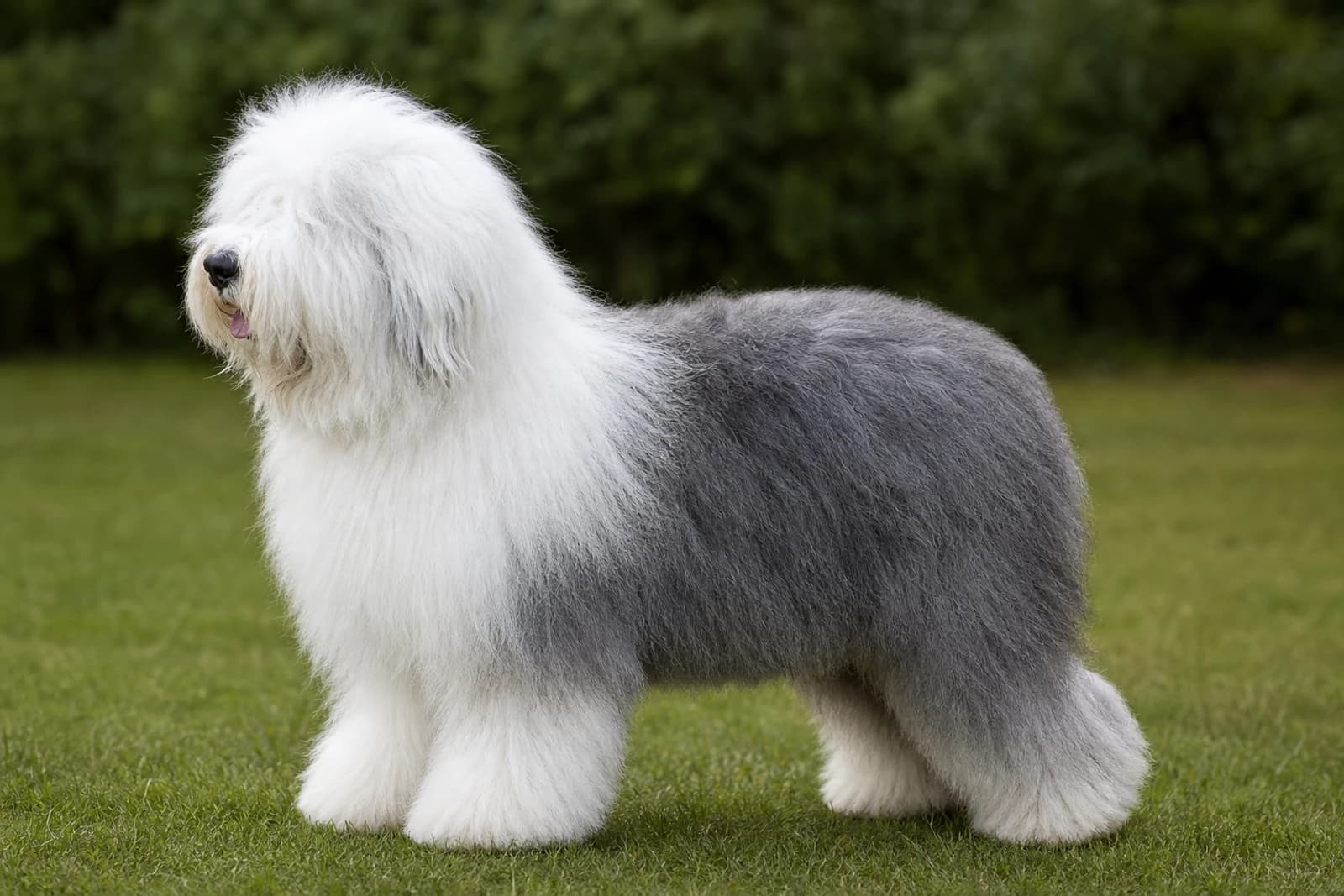
The Old English Sheepdog is a charming, shaggy giant with a playful spirit and a heart of gold, suited for active families seeking a devoted, gentle companion. Their distinctive bear-like gait and profuse coat demand owners committed to regular grooming and exercise. While affectionate with children and good with other pets, they thrive on human interaction and can be prone to separation anxiety. Best for spacious homes with fenced yards, they are not ideal for novices or apartment dwellers.
At a glance
- Size
- Large
- Height
- 22–24 in
- Weight
- 60–99 lb
- Life span
- 10 years
- Coat colors
- Gray, Blue, Blue Merle, Grizzle, White
- Coat type
- Long, dense, shaggy double coat
- Group
- Working
How much does a Old English Sheepdog cost?
Adopt / rescue
$100–$450
Usually includes spay/neuter, first shots, and a microchip.
Buy from a breeder
$1,200–$3,000
From a reputable, health-testing breeder.
Approximate USD. Prices vary widely by region, breeder, pedigree, age, and coat colour — adopting is the lower-cost and recommended route. Avoid suspiciously cheap “breeders”; they’re often puppy mills.
Estimate the full cost of a Old English Sheepdog →Old English Sheepdog photos
Views
Front, side, rear and top — the full silhouette.Poses
How the breed sits, lies, moves and plays.Puppy to senior
The breed across its whole life.Expressions
The breed’s range of moods.Close-up details
Eyes, ears, nose, paws, tail and coat.Coat colors
The breed’s recognized colors.Click any photo to enlarge. We show the Old English Sheepdog from every angle — three views, poses, life stages, expressions, close-ups, coat and colors.
Appearance & size
You’ll spot an Old English Sheepdog from across the park long before you see its face. The silhouette alone gives it away: a big, square dog covered in a profuse shaggy coat that seems to billow with every step. Beneath all that hair is a muscular, sturdy animal built for driving cattle—broad through the chest, strong in the loin, and standing with a noticeable presence.
Males and females both range from 22 to 24 inches at the shoulder, but weight can swing wildly depending on bone and substance. A compact female might settle around 60 pounds, while a heavily built male can push close to 100. You’re looking at a large breed with plenty of body under that coat, never lanky or fine-boned.
The coat itself is the breed’s calling card. It’s a harsh, shaggy double coat that feels crisp to the touch, not soft or silky. A dense, waterproof undercoat provides insulation, while the outer guard hairs give that trademark tousled look. The color isn’t a single uniform shade. You’ll see any gray, grizzle, blue, or blue merle, typically with crisp white markings on the head, down the front of the neck and chest, across the belly, and on the forelegs and feet. The rear half of the body and the back usually remain the darker base color, sometimes freckled or mottled. White shouldn’t dominate the rump or thighs. Puppies are often born with clearer markings that soften as the adult coat comes in.
From the front, the dog looks wide and deep-chested, with straight, heavy-boned forelegs and large, round feet pointing directly ahead. The head appears large and square, completely framed by hair. Small ears lie flat against the sides, nearly lost in the fluff. The stop is well-defined, the muzzle strong and squared off at the end. A big black nose sits at the tip, and the eyes—brown, blue, or one of each—peer out from under a natural fall of hair that often fully covers them unless you sweep it aside or tie it up.
From the side, the body is just slightly longer than tall, with a level topline and a deep, capacious chest that reaches down to the elbows. The neck is fairly long and arched, blending into well-laid-back shoulders. The rear end is thickly muscled and rounded—the rump appears higher than the shoulders because of the abundant coat and the natural padding over the pelvis. You’ll notice the tail, or lack of it: traditionally docked to a close bob, giving the “bobtail” nickname. Where docking is banned, the natural tail is low-set, heavily feathered, and carried with a slight upward curve when the dog moves.
Watch the dog from behind at a trot, and you’ll see the signature bear-like roll. The hind legs drive powerfully, hocks turning neither in nor out, and the entire rear end sways with a loose, ground-covering motion that’s unique to the breed. That rolling gait isn’t a structural flaw—it comes from correct angulation and the thick coat exaggerating every shift of weight.
All of that hair doesn’t come without a catch. If you keep the coat full-length, plan on thorough brushing several times a week—or a standing appointment with a groomer every six to eight weeks.
History & origin
The dog that became the shaggy, grinning Old English Sheepdog started out as a no-nonsense working partner for drovers in the rural West of England. Its earliest roots reach back to the late 1700s and early 1800s, in counties like Devon, Somerset, and Cornwall, where farmers needed a sturdy, weather-proof dog to move large flocks of sheep and herds of cattle along the dusty drove roads to city markets—trips that could take days.
The exact parentage is lost to time, but the breed almost certainly owes its thick, insulating coat and tireless drive to a mix of shaggy herding dogs. The Scottish Bearded Collie likely provided the long, harsh topcoat and the calm but focused work ethic. Sailors docking in English ports probably brought the now-extinct Russian Owtchar, which contributed additional size and a natural bob tail—or a tightly curled tail that was often docked short as a practical tax dodge. (In the 18th century, working dogs with docked tails were exempt from certain fees, and the “bobtail” nickname stuck long after the tax was repealed.) Some breed historians also point to the Poodle for the dense, almost waterproof undercoat that protects this dog even in sleet and mud.
The Old English Sheepdog’s method of working was distinctive: rather than nipping or yapping, the dog used a bouncing, bear-like gait and its own body weight to guide stubborn stock, moving low to the ground with surprising agility for a 60-to-99-pound animal. By the 1870s, the breed had gained enough notice to appear in England’s early dog shows, and a formal standard was drafted in 1888. Wealthy Americans, including the Vanderbilt family, imported the first OES to the United States that same decade, and the American Kennel Club registered its first Old English Sheepdog in 1888.
The breed’s goofy charm and unmistakable coat—often pictured with a lead shaved through the middle in old photos—made it a natural for advertising, most famously as the “Dulux dog” starting in the 1960s. That visibility propelled it from a drover’s dog to a beloved companion and show ring favorite. Today’s Old English Sheepdog still carries the steady, problem-solving brain of its ancestors. Responsible breeders focus on preserving sound hips and calm temperament in a breed where the average lifespan hovers around 10 years, keeping those centuries-old droving instincts alive in a dog far more likely to herd a family than a flock.
Temperament & personality
An Old English Sheepdog is a shaggy, barrel-chested extrovert who truly believes his job is to be the heart of the household. At 60 to 99 pounds, he’ll lean against your legs, follow you from room to room, and try to climb into your lap whenever he gets the chance — even if he no longer fits. Leave him isolated in the yard or ignored for long stretches, and that people-centered drive can backfire into a wall-shaking barkathon. This is a dog who needs to be with his family, rain or shine.
His default setting is gentle and patient, which makes him a natural with respectful children. But keep an eye on the toddler crowd: a happy sheepdog will happily “herd” running kids, circling and nudging with his solid body, and can accidentally knock little ones over. Early training helps you redirect that instinct into structured games instead of surprise ankle checks.
He’s smart, observant, and absolutely capable of digging in his heels. You’ll get nowhere with harsh corrections. Calm, consistent boundaries and a sense of humor work far better — this breed remembers who was fair and who wasn’t. He’ll bark at a knock on the door or an unfamiliar car in the driveway, yet aggression toward strangers is uncharacteristic; most OES will greet a newcomer with a full-body wiggle once you give the all-clear.
Because that thick double coat covers his eyes, a lot of subtle expression gets lost. Learn to read everything else: a loose, wiggling body and a softly wagging rear stub mean he’s at ease, while a still upright posture and a hard stare demand your attention. Many owners keep the hair tied up or trimmed around the eyes — it keeps him from startling and lets you see his face when he’s plotting his next bit of mischief.
- Puppy chewing reaches industrial levels. Stock up on sturdy chews, and don’t punish indoor accidents; just hustle him outside and reward him immediately after he relieves himself.
- Water works. That famous beard and muzzle soak up a bowl’s worth of water, which he’ll deposit on your floors, pants, and furniture. Accept the drips or invest in a raised waterer and a towel station.
- Energy level is typically moderate-plus. An hour of brisk walking or a good off-leash romp scratches his exercise itch, after which he morphs into a pro-level couch lounger. Skimp on that outlet, and you’ll come home to creatively rearranged cushions.
He’s an affectionate, oversized goofball with a streak of stubbornness and a genuine need to be part of whatever you’re doing. A decade with an Old English Sheepdog means ten years of a dog-shaped shadow, a messy beard, and an uncanny ability to make you laugh right when you were about to be annoyed.
Good with kids, dogs & other pets
Old English Sheepdogs have a well-earned reputation for being patient and steady with children, but don’t let the shaggy teddy-bear look fool you — they’re still a large working breed that can tip the scales at 99 pounds. That means a toddler can get body-checked by accident during a bout of the zoomies. Active supervision around small kids is non-negotiable, not because the dog means harm, but because 60-to-99-pound exuberance has momentum.
The breed’s non-aggressive temperament tends to make them forgiving of ear tugs and clumsy hugs, especially when they’ve been raised alongside children from puppyhood. Start that early: between 3 and 14 weeks, gradually expose your puppy to kids of different ages, along with the chaos of family life — sudden squeals, dropped toys, wobbly walkers. Those first four months shape whether the dog grows up to take things in stride or startle easily. Even with a solid foundation, never leave an Old English Sheepdog unsupervised with a young child. Their herding instinct can surface as nudging, circling, or a swift lean-bump to “steer” running kids — funny until it knocks someone down.
With other dogs, the breed typically does well. They’ve historically worked in close quarters with canine partners, so dog-to-dog aggression isn’t the norm. Still, a friendly adult doesn’t happen by magic. A puppy isolated in a kennel or backyard, starved of varied social contact, can grow up fearful or reactive. Early and ongoing positive experiences — meeting calm adult dogs, visiting friends’ homes, hearing traffic and thunderstorms — build the confidence that lets an easygoing nature shine. If you’re bringing an adult Old English Sheepdog into a multi-dog household, go slow. Forced greetings often backfire; let the dogs set the pace with parallel walks and off-leash time on neutral ground only when both are relaxed.
Smaller pets like cats, rabbits, or guinea pigs require a more careful game plan. A Sheepdog raised with a cat from puppyhood usually learns to coexist peacefully. Without that early exposure, the herding drive can translate into staring, stalking, or chasing, which is stressful even if the dog never makes contact. Always introduce pocket pets in secure enclosures, reward calm behavior, and manage the environment so the dog doesn’t practice fixating. A 10-year lifespan means you’re making a long commitment to socialization and steady management — these are dogs that genuinely want to be with their people and typically don’t do well left alone for extended hours. Get it right, and you’ve got a loyal, good-humored companion who fits right into a busy household.
Trainability & intelligence
Old English Sheepdogs are whip-smart problem-solvers with a stubborn streak that keeps life interesting. They learn fast, but they’re not hardwired to obey just because you asked. You’re building a partnership, and that means you earn their cooperation with consistent, reward-based training, not demands.
Motivation that actually works
Food motivation is your strongest ally. A treat pouch loaded with something stinky—cheese, freeze-dried liver—paired with enthusiastic praise gets far more reliable responses than a harsh voice or a yanked leash. Punishment tends to make an OES dig in his heels or shut down entirely. Keep sessions short, upbeat, and end on a win. These dogs were bred to work alongside shepherds, making decisions on the fly, so they appreciate training that feels like a collaboration, not a drill.
Recall and the chase instinct
The biggest hurdle is often recall. A sheepdog’s instinct to chase movement can override his ears when a squirrel or a bicycle zips past. Start recall training the day he comes home, use a jackpot reward (real meat, not dry biscuits), and never call him to you for anything unpleasant. Practice in a fenced area until it’s rock-solid before testing off-leash. Punishing a slow recall teaches him that coming back kills the fun—and you’ll lose that reliability when you need it most.
Early socialization pays off
Between 3 and 14 weeks, calmly expose your puppy to a wide variety of people—kids, delivery drivers, folks in hats—along with different surfaces, sounds, and other friendly dogs. This early foundation helps head off the fear-based reactivity you don’t want in a 90-pound dog. Without that work, a nervous OES may bark or retreat from everyday situations that feel unfamiliar.
Puppy nipping and polite greetings
Mouthiness and enthusiastic jumping come with the territory. Herding pups naturally nip at moving ankles, and a 25-pound fuzzball launching at your knees is cute; a full-grown adult doing it to a guest isn’t. Redirect nipping to a toy and teach a solid “sit” for greetings before the habit becomes ingrained. Pair the sit with a scatter of treats on the floor to take the pressure off and keep all four paws down.
A busy brain is a happy brain
Mental exercise isn’t optional—it’s what stops a clever, unsupervised sheepdog from un-potting your houseplants or reorganizing the trash. Obedience sessions, trick training, puzzle feeders, and food-dispensing toys all give that active mind a job. A bored OES will invent one, and you won’t like it.
Progress won’t be linear. One day he’ll hold a ten-minute down-stay in a bustling park; the next he’ll act like you taught him nothing. Plan on short, daily training games rather than marathon weekend sessions. That’s what keeps him sharp, connected to you, and out of trouble.
Exercise & energy needs
Plan on a solid hour of daily exercise for an adult Old English Sheepdog — split into at least two sessions, not one long trudge. These are large working dogs with real stamina, not couch potatoes. A brisk 30- to 40-minute walk in the morning and a similar session later in the day, plus a chance to romp off-leash in a secure area, hits the baseline. Young, high-energy Sheepdogs often want more, so you might push toward 90 minutes total, but watch for signs they’re done — heavy panting or lagging behind means the thick double coat is doing its job a little too well.
Adjust for joints and weather
Old English Sheepdogs can be prone to hip and elbow dysplasia, so high-impact pounding on pavement or hard-packed dirt isn’t wise, especially before growth plates close (around 12–18 months). Stick to grass, trails, or sand for running. They’re notoriously heat-sensitive thanks to that shaggy coat; exercise early in the morning or after sunset during warm months, and always carry water. A kiddie pool in the yard gives them a chance to cool off while still blowing off steam.
Mental workouts are non-negotiable
This breed was built to think independently while moving sheep across miles of countryside. Without a mental job, that brainpower gets channeled into re-landscaping your yard or chewing the drywall. Mental stimulation is as critical as physical exercise. Short, focused training sessions (10–15 minutes, two or three times a day) work wonders. Trick training, hide-and-seek, and puzzle toys that dispense meals tap that problem-solving drive. Scent work — like having them find a hidden toy or treat — is surprisingly tiring and dead easy to set up indoors on a rainy day.
Activities that fit a Sheepdog
- Herding instinct tests or lessons: If you have access, nothing satisfies a Sheepdog like working stock. Even a few sessions give them an outlet.
- Hiking and swimming: Long trail walks with a pack (the dog carries a light backpack, once joints are mature) build endurance without joint stress. Swimming is king for low-impact cardio and cooling off.
- Carting and draft work: Many OES love pulling a cart or wagon. It gives purpose, burns energy fast, and you can practice in the backyard. Start light and keep sessions short.
- Agility (scaled down): Low jumps and tunnels are fine; skip the weave poles or high A-frames until you know the hips are clear.
- Rally and obedience: The precision routine of rally or advanced basic obedience keeps the mind engaged and strengthens your teamwork.
A bored Sheepdog is loud, destructive, and a little neurotic. A well-exercised one with a job — even if that job is carrying your water bottle on a hike — will flop down at your feet, satisfied, and wait for what’s next.
Grooming & coat care
That shaggy, barrel-bodied look doesn’t happen without a serious coat underneath — and it’s all on you. The Old English Sheepdog wears a heavy double coat: a harsh, long outer layer and a soft, dense undercoat that catches every bit of dead hair. Skip a day of brushing and the undercoat starts to tangle with the outer guard hairs. Within 48 hours you can have a tight mat pulling at the skin. That’s why the baseline for this breed is daily, line-by-line brushing down to the skin, not a quick once-over with a soft bristle brush.
Tools that actually work
Reach for a pin brush with a flexible head and a metal slicker brush with rounded pins — those two together let you work through the coat in sections. Follow up with a wide-toothed metal comb to check for hidden snarls behind the ears, under the elbows, and along the britches, where mats start silently. A bristle brush won’t get through this coat; it’s meant for short-coated dogs and shine, not detangling. Treat brushing as a ritual. Some owners do it in two passes: a quick evening session to break up tangles and a longer morning one when the dog is tired and cooperative.
Shedding — it’s a mat problem, not a fur-drift problem
Old English Sheepdogs shed moderately, but because that loose undercoat gets trapped against the body, you won’t see hair tumbleweeds rolling across the living room. Instead, dead hair forms felt-like mats. During the twice-a-year coat blows (spring and fall), you’ll rake out fistfuls of undercoat for two to three weeks. Keep at it. Miss that window and you’ll be shaving the dog down to the skin, which strips away natural insulation and sun protection.
Bathing and drying — plan half a day
Bathe every 4 to 6 weeks or when the dog has rolled in something rank. Soak the coat thoroughly, use a high-quality dog shampoo, and rinse until the water runs completely clean. Residue left in that dense coat is a fast track to seborrhea or hot spots. The real work is drying. A thick double coat holds moisture against the skin for hours. A high-velocity dryer (cool or barely warm air, never hot) is almost mandatory. Towel drying alone often leaves a damp underlayer that smells musty by the next day and can breed bacteria.
Trimming — less coat, less daily grind
Many owners opt for a puppy cut or a utility trim that shortens the coat to 2–3 inches all over. This drops the brushing requirement to every other day and makes baths and dry-offs tenable at home. Even if you keep the classic full coat, a pro groomer who knows the breed standard (the rounded rump, the head fall that doesn’t blind the dog) is worth the cost. Clip the hair between the paw pads and tidy the sanitary area every few weeks to cut down on grime and dingleberries.
The stuff people forget
- Ears: Those drop ears are airless pockets. Lift them weekly, sniff, and wipe with a dog ear cleaner. Hair grows inside the canal too; plucking a few strands (carefully) can improve airflow if your dog gets chronic infections.
- Nails: You’ll hear a clicking on hard floors when they’re too long — a monthly trim is about average.
- Teeth: Brush several times a week. A breed with a 10-year lifespan needs healthy gums to stay comfortable into old age.
All that face-to-skin time during grooming is also your best early-warning system. You’ll notice a hotspot starting, a flaky patch, or a new lump before it becomes a vet trip. Regular off-leash rambles and outdoor activity support healthy coat turnover too, but nothing replaces thorough brushing. If you’re not ready for a 20–30 minute daily grooming commitment, this isn't the dog for you.
Shedding & allergies
That shaggy coat hides a secret: Old English Sheepdogs shed plenty — the hair just doesn’t usually end up on your sofa. Instead, dead undercoat gets trapped inside the long, dense outer fur. If you aren’t raking through it daily, that loose hair turns into felt-like mats against the skin, bringing dirt, dander, and moisture with it.
Grooming drives what you see. Without regular brushing, the coat becomes a magnet for everything the dog rolls in, and you’ll find clumps of fluff only when they finally work loose — usually during a twice-yearly blowout. Come spring and fall, expect drifts of grey-and-white fluff piling up in corners if you’re combing them out. The rest of the year, most dead hair stays in the coat, so you control how much is released into your home every time you pick up a slicker or pin brush.
Hypoallergenic? Not even close. The OES double coat produces plenty of dander, and the trapped hair holds it. Allergy triggers aren’t just airborne; they’re in the dog’s saliva and skin oils, too. People with allergies often react strongly to this breed. If you’re allergic, spend multiple hours in a Sheepdog household before you commit — and know that keeping a Sheepdog groomed short doesn’t cancel the dander load.
Drool comes with the beard. These are not the driest-mouthed dogs. After a big drink, the facial hair soaks up water like a mop, and a head shake flings it everywhere. Moderate drooling also happens when the dog is panting, anticipating food, or just hanging around on a warm day. Expect damp spots on your jeans and drips across the floor.
Bottom line: You can manage the cloud of visible shed hair with serious grooming, but you’ll still live with dander, damp whiskers, and occasional slobber.
Diet & nutrition
An Old English Sheepdog will happily eat itself into joint trouble if you let it. This is a big, food-motivated breed that carries 60 to 99 pounds on a frame already prone to hip and elbow dysplasia. Every extra ounce ratchets up the pressure on those joints, so keeping your dog lean is the single most important nutrition decision you’ll make.
How much to feed
There’s no one-size-fits-all number, but an adult sheepdog with average activity typically needs 3 to 4.5 cups of high-quality large-breed kibble each day, split into two meals. A highly active dog or a nursing female will need more; a couch potato will balloon on that amount. Use the feeding guide on the bag as a starting point, then adjust based on body condition. You want to feel ribs easily under a thin layer of fat — the shaggy coat hides a lot, so you have to put your hands on the dog regularly.
Puppies follow a tighter schedule: four meals a day until four months, three meals until six months, then two meals like an adult. Start them on a premium large-breed puppy food or a gently cooked, puréed mix of meat, fish, fruits, and vegetables. Around 12 weeks you can introduce supervised raw meaty bones like chicken wings.
Keeping weight in check
- Use a puzzle bowl or snuffle mat. Sheepdogs often inhale food, and slowing them down adds mental work and helps them register fullness.
- Measure everything. Free-feeding a breed that’s this enthusiastic about supper is a direct route to obesity.
- Never feed from the table. If you want to share safe leftovers, put them in the dog’s own bowl after the meal — this kills begging before it starts.
- Avoid rich, fatty scraps, especially after holidays. A single high-fat meal can tip a dog into pancreatitis.
What goes in the bowl
Dogs are built to process meat; a vegetarian or vegan diet deprives them of what their physiology demands. A solid baseline for homemade food is roughly 60% meat (raw and cooked), 20–30% fruits and vegetables, and 10% extras like eggs, grains, or plain yogurt. Because a dog’s jaw moves vertically and lacks salivary digestive enzymes, blending or processing the mix helps pull out more nutrients. For quick pantry meals, combine canned fish, cooked eggs, and leftover grains or vegetables — unsalted vegetable cooking water even doubles as a broth base.
If your dog’s stomach goes sideways, plain white rice or cooked pearl barley with a bit of boiled chicken usually settles things down.
Senior years
At this breed’s typical 10-year lifespan, the senior years come fast. As activity drops, cut calories gradually — not protein. Small, frequent meals can help an older dog digest more comfortably. Losing teeth is common; puréeing food ensures nutrition doesn’t slip. Above all, keep that hands-on rib check going. A lean old sheepdog hurts less and stays mobile longer.
Health & lifespan
Ten years is the milestone you’ll see in most breed summaries, but plenty of well-bred Old English Sheepdogs push past it when weight, joints, and eyes get the attention they deserve. The flip side: this is a big, deep-chested dog with a thick coat, and a few health problems pop up often enough that you need to know about them before you fall in love with a fluffy puppy.
- Hip dysplasia: Large, heavy-boned dogs carry a higher risk, and OES are no exception. Responsible breeders screen breeding stock through the Orthopedic Foundation for Animals (OFA) or PennHIP and share those results openly.
- Eye disease: Cataracts and progressive retinal atrophy (PRA) both appear in the breed. PRA can steal a dog’s sight gradually and has no cure. Annual eye exams by a veterinary ophthalmologist — starting in puppyhood — are non-negotiable. A breeder who doesn’t provide Canine Eye Registration Foundation (CERF) clearances isn’t doing their homework.
- Autoimmune thyroiditis: Low thyroid function can creep in midlife, leading to weight gain, lethargy, and skin problems. It’s easily managed with daily medication once diagnosed, but a baseline thyroid panel around age two helps catch it early.
- Bloat (gastric dilatation-volvulus): A deep chest makes the OES a bloat candidate. The stomach can twist, cutting off blood supply and turning deadly in hours. Feed two or three smaller meals instead of one big one, never exercise hard right after eating, and know the signs: unproductive retching, a hard belly, restlessness. Some owners opt for a preventive gastropexy during spay or neuter.
- Deafness: Congenital deafness, sometimes linked to coat color (merle or piebald genes), can occur. BAER testing on puppies before they go home is a good sign in a breeding program.
- Skin trouble and hot spots: That iconic shaggy coat holds moisture against the skin, so mats and poor air circulation set the stage for hot spots and bacterial infections. Routine brushing down to the skin and stripping out undercoat aren’t just for looks — they’re preventive medicine.
Obesity sneaks up fast on a Sheepdog. They’re food-driven and can pack on pounds behind all that fur, straining hips and increasing anesthesia risk. Weigh your dog monthly, adjust portions, and keep the treat count honest. A lean dog with visible waist is a healthier dog, period.
Regular vet visits — twice a year for seniors — should include a thorough eye check and a hands-on joint assessment. Ask your vet to palpate the thyroid gland and listen for heart murmurs. You’ll also want a vaccine protocol tailored to your area, not a one-size-fits-all, because giant breeds don’t need unnecessary immune challenges. Pick a vet who understands that and is willing to discuss titers.
Living environment
This is not a dog for a quiet apartment building. Between the Old English Sheepdog’s substantial size (60 to 99 pounds) and his deep-rooted impulse to announce anything that moves, close neighbors won’t thank you. He thrives in a detached house where his rumbling bark won’t travel through shared walls.
Apartment vs. house
A house with a bit of elbow room is the natural fit. The breed’s sheer bulk — 22 to 24 inches at the shoulder — means he can knock over a lamp just by turning around in a cramped living room. Apartment living becomes a realistic option only if you’re on the ground floor with direct yard access and you’re deeply committed to managing barking. Most will be happier elsewhere.
Yard needs
A securely fenced yard gives this herding dog a place to do what he was bred for: patrol and burn off steam between walks. The yard alone won’t exercise him, but it offers a safe off-leash outlet for the zoomies that a one-bedroom apartment never could. Count on 45–60 minutes of purposeful exercise twice a day — a couple of leash walks plus a hard romp or a session with a flirt pole. If you don’t have a yard, you’ll need to hit a dog park or a large, open field daily.
Climate tolerance
That iconic shaggy double coat is built for the Yorkshire moors, not a Texas summer. Snow, wind, and cold barely register; he’ll happily lounge outside in weather that sends you hunting for a heavier coat. Heat is a different story. Once the temperature climbs, watch him closely. Keep walks to early morning or evening, offer plenty of shade, and expect to crank the air conditioning. A kid’s wading pool in the backyard can be a game-changer.
Barking and noise
Old English Sheepdogs were bred to think for themselves while moving livestock, and they’re quick to raise the alarm. A delivery truck, a squirrel, or a neighbor’s cat will likely get a full-throated commentary. With training you can curb demand barking, but the watchdog instinct doesn’t go away. Expect a dog who talks.
Left alone
This is a breed that bonds hard. Left alone for long workdays, he can tip into anxiety — chewing drywall, barking nonstop, or simply shutting down. If your schedule keeps you out of the house for eight or nine hours, this isn’t the dog for you right now. Even with crate training and mental enrichment (puzzle toys, frozen Kongs, scent games), he’ll do best in a home where someone is around more often than not. Gradual desensitization to absences helps, but a dog bred to be a constant companion struggles when that’s taken away.
Who this breed suits
You’ll fit well with an Old English Sheepdog if your household laughs at the idea of a pristine living room and you’ve got the time, patience, and sense of humor to manage a 60-to-99-pound shaggy herder. The ideal home is an active family or couple with kids old enough to handle the dog’s size — this breed can accidentally knock over a toddler. Singles and retirees can work, too, as long as someone is around most of the day. OES dogs bond hard and hate being left alone; hours of solitude commonly lead to barking, chewing, and depression.
Grooming isn’t optional. The double coat requires thorough brushing every day or two to prevent painful mats, plus a trip to a professional groomer every 6–8 weeks. If you don’t enjoy that hands-on ritual — and the constant shed hair and post-drink drool that tag along — this breed will wear you down.
Daily exercise needs land somewhere between solid and demanding. Count on two brisk 30-to-45-minute walks and a good romp in a securely fenced yard, or equivalent off-leash time. A quick spin around the block leaves a clever, bored dog who dismantles your baseboards. Training asks for the same consistency: they’re smart but have a cheerful stubborn streak that folds under gentle, confident handling, not heavy-handedness.
Better to think twice if:
- You’re a first-time dog owner. The never-ending grooming and a herding dog’s independent mind can overwhelm novices.
- You live in an apartment without a yard and a tight schedule. The size, alert bark, and need for daily galloping don’t suit thin-walled, space-limited living.
- You’re a neat freak. They shed constantly, slobber after drinking, and their coat acts like a walking mop on rainy days.
- You can’t commit to the full 10-year lifespan of daily brushing, regular groomer bills, and consistent activity. An under-exercised, unbrushed OES turns into a matted, unhappy handful fast — if that picture sounds like more than you can give, pass.
Cost of ownership
Bringing home an Old English Sheepdog puppy from a responsible breeder typically costs $1,800–$3,000. Show-prospect or champion-line pups can push past that. The upfront check clears, and then the real spending starts — this is a big, coated breed with consistent monthly demands.
The financial heavyweight is grooming. That dense double coat mats fast and requires professional attention every 4–6 weeks. One session runs $100–$150, so even with diligent at-home upkeep you’ll spend $100–$200 a month on a groomer. You’ll also need a quality pin brush, steel comb, and detangler — figure $40–$60 up front — for the daily line brushing that keeps the dog comfortable between appointments.
Feeding a 70–90-pound dog costs $70–$100 a month for high-quality large-breed kibble. Add another $20–$30 for treats and chews, and budget for the occasional destroyed dog bed.
Vet care and insurance are where costs can spike. With a lifespan around 10 years, the breed is prone to hip dysplasia, eye issues, bloat, and cancer. Routine checkups, vaccines, and preventatives average $50–$80 monthly. Pet insurance for a large breed with known hereditary risks often runs $60–$100 a month. Without it, a single emergency bloat surgery can top $5,000.
- Monthly grooming (professional plus home supplies): $100–$200
- Food and treats: $90–$130
- Routine vet care: $50–$80
- Insurance: $60–$100
A realistic monthly budget lands between $300 and $500, not counting boarding, training classes, or the unplanned emergency. That shaggy rug of a dog comes with a serious price tag.
Choosing a Old English Sheepdog
An Old English Sheepdog’s shaggy grin comes with a short, decade-long window — the average lifespan sits right around 10 years — so the dog you bring home starts with a gut-level decision about breeder vs. rescue, and you need to be picky either way.
Responsible breeder basics
Focus on health clearances first, because a poor start will chew through those years fast. Both parents should have hip evaluations you can verify on the OFA database (or a PennHIP report). Eyes are a trouble spot, so ask for a current canine ophthalmologist exam — not just a vet glance — clearing parents of cataracts, progressive retinal atrophy, and other heritable eye diseases. Because this is a large, active breed, many diligent breeders also screen elbows and thyroids, and BAER hearing tests for puppies are a smart extra given the white-headed lines. You want to see the paperwork, not hear about it.
- Red flags: A breeder who won’t show you health certificates, pressures you to pay a deposit immediately, or has multiple litters on the ground at once. Puppies should be at least 8 weeks old, microchipped, and raised underfoot in a home environment — not a kennel run. If the breeder never asks you questions about your life, your yard, or how you’ll handle the coat, walk away.
Picking the right puppy
Even within a healthy litter, temperament varies. Sit with the whole bunch for a while. You’re looking for a puppy who greets you without gripping your shoelace like a tug toy, recovers quickly after an unexpected noise, and doesn’t hang back or hide the entire time. Shyness in an OES can snowball into a fearful 90-pound dog you can’t safely manage. Bold-but-biddable pups often suit families best. Check ears (clean, no odor), eyes (bright, no discharge), and belly (no umbilical hernia). Then ask how the breeder has been introducing early handling, grooming, and new surfaces — you need a puppy who already knows the brush isn’t a monster.
The rescue route
Old English Sheepdogs end up in rescue more often than you’d guess, usually because someone fell in love with the look and didn’t realize the coat requires two to three hours of brushing a week and a professional groom every 6 to 8 weeks. That’s your upside: many available dogs are young adults whose personality is fully visible, and you skip the velociraptor puppy phase. A good breed-specific rescue will be brutally honest about any quirks (guardiness, over-exuberance) and have dogs in foster homes where they’ve been assessed with kids, cats, and crates. Expect to fill out an application that digs into your experience with herding breeds and your grooming plan. It’s not a shortcut — it’s just a different road to a dog who may already know sit, stay, and not to body-slam the kids. Still ask about hip and eye health records if they’re available; many owner-surrenders come with zero history, so a pre-adoption vet exam is essential.
If you’re set on a puppy, check the pedigree for longevity — lines that routinely produce 12-year-old dogs, not just the breed average — because every extra year you get with an easygoing, shaggy shadow is hard-won.
Pros & cons
-
Pros
- A big, goofy, affectionate shadow that treats every family member like their personal flock — gentle and patient with kids when raised together.
- Quick study when you make training a fun, reward-based game; they can nail agility courses or herding routines, not just basic obedience.
- Surprisingly calm indoors for a Working breed of this bulk (60–99 lb, 22–24 in), as long as they’ve had their daily run-and-think session.
- That famous shaggy double coat sheds less than you’d guess — a plus for some allergy-aware homes, though you’ll still find fur tumbleweeds.
- Deep bark and bear-like silhouette make a great deterrent, yet they’re more likely to greet a stranger with a wiggly nub than a snarl.
-
Cons
- Coat commitment is a part-time job: dense, double-layered fur mats painfully fast, demanding 20–30 minutes of line-brushing 3–4 times a week, plus a full groomer clip every 6–8 weeks.
- Independent streak runs deep — a bored, untrained adolescent can be a 90-lb chaos engine that drags you down the street or decides “come” is optional.
- Needs real exertion, not just a leash stroll; budget a solid hour of running, fetch, or brain work (puzzle toys, herding games) or you’ll get a creatively destructive roommate.
- Beard and chest act like a mop for every drop of water, slobber, and mud they encounter — wiping their face and your floors becomes a multiple-times-a-day ritual.
- Short lifespan around 10 years, and responsible breeders screen for hip dysplasia, progressive retinal atrophy, and hereditary deafness, but that doesn’t eliminate risks.
- Herding instinct can turn ankles and small running children into targets; they hate being isolated and can develop noisy, destructive separation anxiety if the household is empty all day.
Similar breeds & alternatives
If the Old English Sheepdog draws you in but you’re sizing up other options, a handful of breeds share that shaggy, working-dog soul with clear trade-offs.
Bearded Collie. This is the OES’s closest relative, and it shows. Beardies stand 20–22 inches and weigh 45–55 pounds — noticeably lighter and more racy. You get the same profuse, weather-resistant double coat in blue, fawn, or brown, usually with white markings, and the daily shed-not-but-mats-often grooming ritual is identical. Temperament is the big split: a Bearded Collie is an exuberant, bouncy clown, often compared to a perpetual puppy, while an OES tends toward a calmer, more grounded watchfulness. Beardies typically live 12–14 years, a step up from the Sheepdog’s 10 years. If you want the shaggy herder but with a smaller frame and more comedic energy, this is your candidate.
Polish Lowland Sheepdog (PON). A compact alternative at 17–20 inches and 35–50 pounds. The coat is just as dense and shaggy — greys, whites, and blacks in endless mixes — but the dog underneath is more suspicious of strangers and fiercer about guarding what’s his. Grooming commitment is on par. PONs can be sharper and more strong-willed than an OES, so they suit an owner who won’t back down from a smart, independent thinker.
Bouvier des Flandres. For those drawn to the OES’s size and working heritage but wanting a harder edge. Bouviers are bigger still: 23.5–27.5 inches and 70–110 pounds, with a rough, tousled double coat that’s less profuse but still needs regular stripping or clipping. They were cattle drovers and cart dogs, and the temperament is more serious, protective, and naturally suspicious. Where an OES is usually happy to meet a stranger, a Bouvier expects to be convinced. Early and consistent training is not optional. Life span hovers around 10–12 years.
Briard. Another French herder of similar height (22–27 inches) and weight (55–100 pounds). The coat forms long, slightly wavy locks rather than the Sheepdog’s dense puffball, and it requires less volume of brushing but still mats. Briards are notoriously loyal and form a tight bond with one person; they can be aloof and watchful with everyone else. They carry a strong independent streak and need a job, not just a yard. Like Bouviers, they lean more toward guardian than gregarious greeter.
All of these dogs carry a high grooming bar and a working mind that needs serious, daily engagement. The OES splits the difference: softer than a Bouvier or Briard, steadier than a Beardie, and bigger and more easygoing than a PON.
Fun facts
- Often born with a natural bobtail or docked tail.
- Known for their distinctive, bear-like shuffling gait.
- Originally bred for driving cattle and sheep to market.
- The breed became a pop culture icon after the Disney film 'The Shaggy Dog'.
Frequently asked questions
- Are Old English Sheepdogs good with children?
- Old English Sheepdogs tend to be affectionate and playful, making them excellent family companions. Their patient and gentle nature often makes them good with children, but supervision is always recommended to ensure safe interactions. They can be boisterous as puppies, so early training helps them learn appropriate behavior around kids.
- Do Old English Sheepdogs shed a lot?
- Old English Sheepdogs have a thick double coat that sheds moderately, but the loose hair often gets trapped in their long outer coat instead of falling to the floor. Regular brushing is essential to prevent matting and to manage the shedding. Without consistent grooming, shedding can become more noticeable.
- How much exercise does an Old English Sheepdog need?
- This breed requires regular daily exercise to stay happy and healthy, typically needing around an hour of physical activity. Walks, playtime, and mental stimulation can help burn off their energy. Without sufficient exercise, they may become restless or develop unwanted behaviors.
- Is an Old English Sheepdog suitable for apartment living?
- Old English Sheepdogs can adapt to apartment living if their exercise needs are met, but their size and energy level make a home with a yard more ideal. They are relatively calm indoors when properly exercised, though their shaggy coat can track in dirt and debris. Consider noise tolerance as well, since they may bark to alert you of strangers.
- Are Old English Sheepdogs easy to train?
- Old English Sheepdogs are intelligent and eager to please, which can make training a positive experience for first-time owners. They respond best to consistent, reward-based methods, but their independent streak may sometimes surface. Early socialization and obedience training are recommended to channel their herding instincts appropriately.
- Do Old English Sheepdogs bark a lot?
- Old English Sheepdogs have a moderate tendency to bark, often using their voice to alert you of visitors or unusual activity. With proper training and socialization, excessive barking can be managed. They are not typically known for nuisance barking without reason.
Tools & calculators for Old English Sheepdog owners
Quick estimates tailored to Old English Sheepdogs — pre-filled with this breed’s size where it matters.
Articles & stories about the Old English Sheepdog
Sources & standards
This profile follows recognized breed standards from the American Kennel Club (AKC) and the Fédération Cynologique Internationale (FCI), along with established veterinary and breed-club guidance. These describe general breed tendencies — every dog is an individual.
Owner stories
Have a Old English Sheepdog? Share your experience — grooming tips, personality quirks, anything goes.