

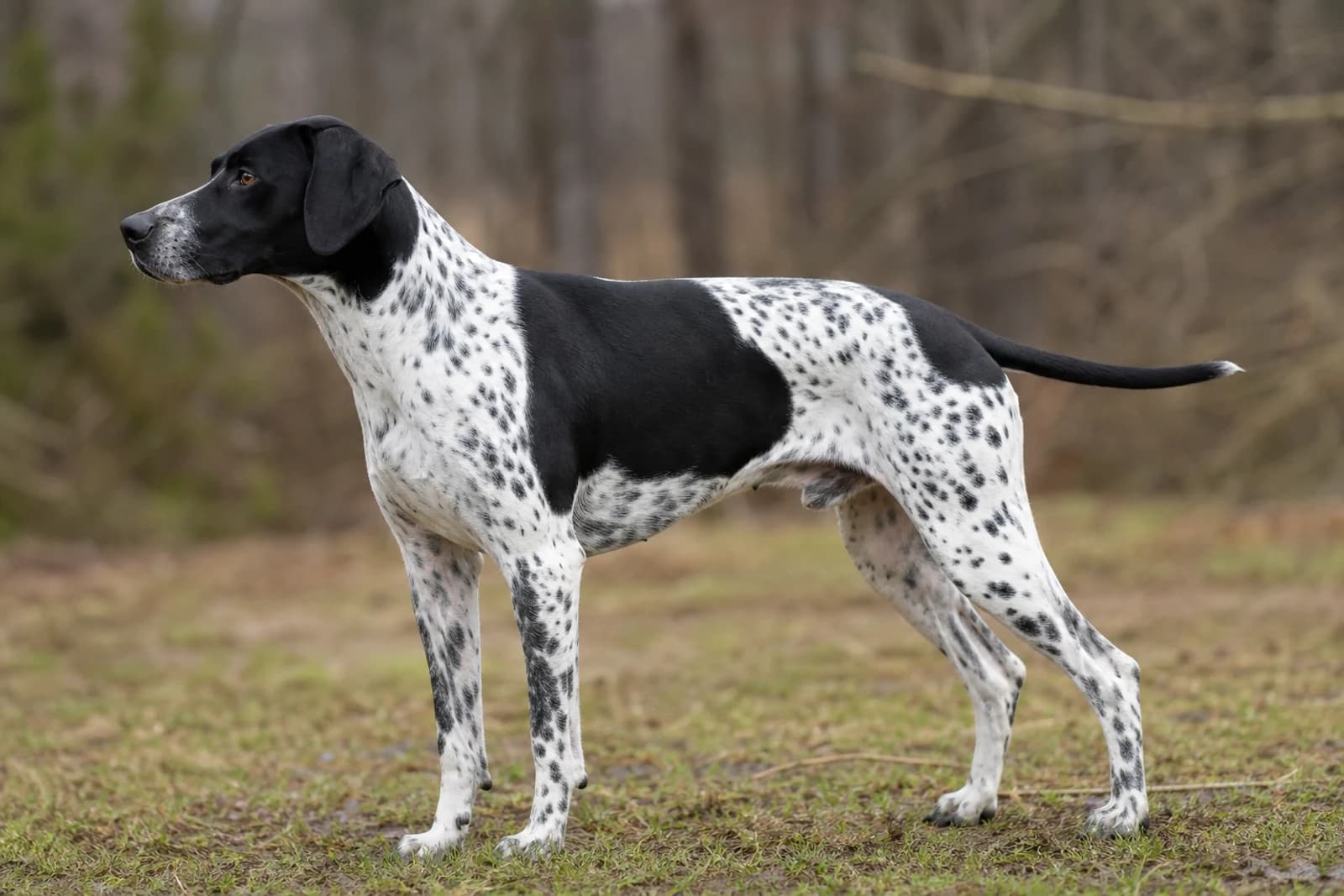
The Pointer is an athletic, driven hunting dog best suited for active families or individuals who can provide ample daily exercise and mental stimulation. They excel in field sports, running, and hiking, and thrive in homes with large yards. Pointers are affectionate and loyal with their families, forming close bonds, but may be reserved with strangers. Their short coat is low-maintenance, but they shed moderately. Not ideal for apartment living or sedentary households, they require consistent training and early socialization. Due to high energy and prey drive, they may not be suitable for homes with small pets unless carefully introduced.
At a glance
- Size
- Large
- Height
- 21–25 in
- Weight
- 45–75 lb
- Life span
- 12–13 years
- Coat colors
- Liver, Lemon, Black, Orange, Liver & White, Lemon & White, Black & White, Orange & White
- Coat type
- Short, sleek, and dense
How much does a Pointer cost?
Adopt / rescue
$75–$400
Usually includes spay/neuter, first shots, and a microchip.
Buy from a breeder
$700–$2,000
From a reputable, health-testing breeder.
Approximate USD. Prices vary widely by region, breeder, pedigree, age, and coat colour — adopting is the lower-cost and recommended route. Avoid suspiciously cheap “breeders”; they’re often puppy mills.
Estimate the full cost of a Pointer →Pointer photos
Views
Front, side, rear and top — the full silhouette.Poses
How the breed sits, lies, moves and plays.Puppy to senior
The breed across its whole life.Expressions
The breed’s range of moods.Close-up details
Eyes, ears, nose, paws, tail and coat.Coat colors
The breed’s recognized colors.Click any photo to enlarge. We show the Pointer from every angle — three views, poses, life stages, expressions, close-ups, coat and colors.
Appearance & size
Lean and athletic, a Pointer looks like the endurance athlete it is. Standing 21 to 25 inches at the shoulder and weighing between 45 and 75 pounds, you’ll see plenty of variation between a compact, hard-muscled female and a bigger, rangier male. No matter the size, the outline is unmistakable: a series of long, elegant curves built for covering ground at a gallop, then freezing stock-still on point.
The coat is short, dense, and lies flat with a noticeable sheen. It’s smooth to the touch — no feathering, no curl. That sleekness makes mud and burrs easy to spot and wipe off. Colors always start with a white base, then layer on liver, lemon, black, or orange. The pattern can show up as large solid patches, a smattering of ticking, or a fine roan. No two dogs are marked exactly the same, so a solid liver head with a heavily ticked body or a clean white dog with one orange ear is equally correct.
From the front, the chest is deep and well-filled, but not so wide that it costs a Pointer any agility. The forelegs are dead straight, set squarely under the shoulders, with firm, oval bone that looks substantial without being clunky. Move around to the side and you’ll really appreciate the silhouette: a long, slightly dished muzzle, a distinct stop, and a pronounced occiput at the back of the skull give the head a clean, chiseled look. The neck is long and gracefully arching, running into well-laid-back shoulders. The brisket drops to the elbows, and the underline tucks up noticeably — this is a dog with a defined waist, not a barrel on legs. From the rear, you see strong, broad thighs and hindquarters with enough angulation to match the reach of the front assembly. The hocks are well let down, and in motion, the legs converge toward a center line.
A few details separate the Pointer from every other breed. The ears are set high, hang close to the head, and reach just below the jaw. The expression is alert and eager — the eyes are round, dark, and set right at the edge of a well-opened nostril, giving the face a no-nonsense, driving look. The tail is heavier at the base, tapering to a fine point, and is carried as an extension of the topline, never curled over the back. When a Pointer locks onto scent, that tail snaps horizontal, rigid as a fence post. That’s the moment the whole dog seems to hold its breath — a pure, distilled picture of purpose.
History & origin
The Pointer’s job is tattooed right on its name. Long before it was a handsome couch companion, this dog was the silent partner of hunters who stalked open country with a flintlock, relying on a dog that could freeze mid-stride and aim its entire body like a compass needle at hidden game.
The roots stretch back to 17th-century England, but the raw material came from Spain. Spanish pointers—heavier, slower, steady-nosed dogs—arrived in Britain after the War of Spanish Succession. English sportsmen took that solid nose and crossed it with faster, lighter breeds to create a gun dog that could cover more ground. Foxhounds added endurance and a finer scenting ability in motion. Greyhound blood likely contributed the clean, aerodynamic build and a burst of foot speed. The result, refined over generations, was a dog that could hunt all day at a gallop, then lock into a rigid point the instant a covey of quail or pheasant teased the breeze.
By the early 1800s the type had crystallized. The modern Pointer’s silhouette—chiseled head, deep chest, whip tail, and those compact, spring-loaded legs—shows up in sporting art and dog books as a distinct, prized hunter. The breed didn’t just point; it quartered ground methodically, held steady to wing and shot, and retrieved on command. American sportsmen imported Pointers heavily in the late 19th century, and the breed became a mainstay on southern quail plantations and open-field trials. Competitive field trials, in turn, pushed breeding toward an even sleeker, more driven athlete.
Today’s Pointer is still that athlete: 45 to 75 pounds of muscle and lung power, standing 21 to 25 inches at the shoulder, built to run big and fast. A 12-to-13-year lifespan means you’ll be fielding that hardwired drive long after the hunting season wraps. While the breed’s official job is still finding and pointing game, more Pointers now live as active family dogs, where that same intensity gets channeled into off-leash runs, organized dog sports, or simply wearing you out on a Sunday morning trail.
Temperament & personality
A Pointer lives to run, hunt, and then curl up on the couch with the person they’ve glued themselves to. This is a high-energy, big-hearted dog that treats a day without a hard gallop as a day wasted. Expect a lean, muscular 45-to-75-pound shadow who will match your pace whether you’re on a trail or simply moving from room to room.
Unlike some gun dogs that bounce off the walls, a well-exercised Pointer has an easygoing off switch indoors. They’re affectionate without being needy — though they do form intense bonds and can tip into anxious habits like excessive barking or chewing if left isolated for long stretches. That anxiety isn’t stubbornness; it’s the flip side of loyalty. They want to be part of the household action, not stashed in a yard.
With family, their typical setting is “calm but ready.” You’ll notice a confident forward lean when they spot something interesting, and a loose, soft-eyed sprawl when the day winds down. They’re generally good with children who respect their space, but that big frame and kinetic energy can accidentally knock over a toddler. Supervision and early socialization teach them to dial it back.
- Watchfulness, not guarding. Pointers will sound the alarm when a stranger approaches, but their tail usually stays loose and level — this isn’t a guard dog looking for a confrontation. They alert, then lean in for a sniff rather than a standoff.
- Stubborn streak with a soft spot. These are intelligent dogs bred to work at a distance from their handler. That independence shows up as a quiet, “I’ll think about it” attitude. Force meets a brick wall; short, consistent training sessions with a fair payoff (a treat after the right behavior) get results. They thrive on respectful engagement, not heavy-handed correction.
- A nose that runs their life. Don’t be surprised if your Pointer rolls in something unspeakable. It’s a deep instinct — maybe masking scent, maybe just a scavenger’s idea of cologne — but it happens often enough to mention. A vinegar spray for indoor accidents destroys the odor that would otherwise cue them to re-mark the same spot.
- Chewing as a lifestyle. Puppies shred to survive teething pain; adults crunch bones to keep jaws strong and teeth clean. If you don’t provide appropriate outlets, your baseboards become the outlet. A homemade citrus spray on off-limits items can redirect that drive without a power struggle.
This is a dog that reads your body language as fluently as they read the field. They’ll offer a head turn or a yawn when spread too thin, and they expect you to notice. Return that respect by giving them peaceful meals without interruption — no kid’s hand in the food bowl — and a predictable rhythm of all-out exercise followed by real downtime. Meet those terms, and you get a companion who’s equal parts athletic partner and easy company for the next 12–13 years.
Good with kids, dogs & other pets
Pointer is one of the most easygoing hunting breeds you’ll find around children—patient, non-aggressive, and quick to curl up beside a kid on the couch. But that affectionate nature doesn’t erase the physics of a 55-pound athlete with a whip‑like tail. An excited Pointer can clear a coffee table or send a toddler flying without a hint of malice, so supervision around small children is non‑negotiable until both learn each other’s rhythms.
What makes a Pointer truly bombproof with kids is early, ongoing socialization. Between 3 and 16 weeks, your puppy needs gentle, positive reps with toddlers, strollers, sudden shrieks, and clumsy pats. Pair it all with high‑value treats and you build a dog who views chaotic family life as predictably pleasant, not something to startle at. Without that foundation, a sensitive Pointer can grow skittish, and a fearful 65‑pound dog ricocheting off furniture isn’t safe for anyone.
With other dogs, most Pointers are sociable and lighthearted. They were bred to range alongside other canines in the field, so off‑leash hikes and playdates often go smoothly—provided your dog learned polite greeting skills during puppyhood. Keep an eye on play intensity; a Pointer in full‑throttle chase mode can annoy a more reserved dog. Fearful adults who missed early exposure don’t need forced meet‑and‑greets. Respect the dog’s comfort zone and let relationships build at their pace.
The real management shift comes with cats and small pets. Pointers were hardwired to spot, freeze, and pursue feathered game, and that instinct doesn’t switch off indoors. A cat darting across the room can trigger a full‑on stalk in a heartbeat. Raise a Pointer puppy with a confident, dog‑savvy cat, using baby gates and structured introductions, and many figure out the house rules. Still, never leave them loose together unattended. Caged animals like rabbits or birds need enclosures secured well out of leaping range.
A Pointer who gets a solid 60–90 minutes of hard running and some brainwork is calm, reliable company for the whole household. Leave one alone in the backyard 10 hours a day, and pent‑up frustration spills into jumpy, over‑aroused behavior that makes life with kids and other pets stressful. This is a stretch‑their‑legs, bring‑them‑inside breed—meet that need, and you’ll have a steady family companion.
Trainability & intelligence
A Pointer can learn anything you’re willing to teach — but he’ll ask, “What’s in it for me?” before he bothers. This is a sharp, independent dog bred to make his own decisions at a gallop. He is not wired to hang on your every word. The intelligence is real; the biddability is not. Expect a dog who masters new cues in a handful of repetitions and then loses interest if you drill them another twenty times.
What works — and what backfires
Reward-based training isn’t a nice idea; it’s the only path that holds his attention. A quick tug on the leash or a sharp “no” will shut down a Pointer faster than almost any other breed. He’s sensitive in a way that surprises people who see only his athletic, hard-charging side. Harsh corrections build avoidance, not reliability. Use food, a squeaky toy, or a brief game of tug to pay him for the right choice, and keep sessions short. Three five-minute rounds scattered through the day teach more than a single grinding half-hour.
The recall you can trust
This is the make-or-break skill. A 45–75 lb dog bred to spot movement a quarter-mile away and hit full speed in three strides doesn’t get second chances. You have to build recall as the most rewarding thing in his world. Practice inside first, then a quiet yard, then a long line in a big field. Every time he returns, produce something extraordinary — a chunk of hot dog, a retrieve to a hidden toy. If he learns that coming away from a flushing bird means you clip on a leash and go home, you’ll lose him. The math has to work in your favor.
Start early, stay calm
Socialization isn’t optional. A Pointer exposed to city streets, strangers, clattering carts, and other dogs before 16 weeks matures into a steadier, less reactive adult. That early window sets the stage for impulse control. Pair new experiences with treats and calm, matter-of-fact handling. Keep your tone even. A Pointer who learns that novelty pays off will meet the world with a wag, not a whirl of anxiety. Skip this window and you may spend months mopping up fear-based barking or skittishness — a real shame in a dog this athletic and affectionate.
Exercise & energy needs
A Pointer is a high-octane athlete built to cover miles of ground at a gallop. Plan on at least 60 to 90 minutes of vigorous exercise every day, split into two sessions — a quick stroll around the block won’t make a dent. These dogs need to run, not just walk, and they’ll happily do it off-leash in a safe field, alongside a bike, or chasing a ball until your arm gives out.
Intensity matters as much as duration. A couple of 30- to 45-minute bursts of hard running, swimming, or field work does far more for a Pointer than a single long, slow walk. Short, frequent sessions also help you manage that crackling energy without overheating or overstressing their joints — especially in a young dog whose growth plates are still open. If you jog or hike, bring them along; if you don’t, a flirt pole or a long session of fetch in a fenced area works.
Physical exercise alone isn’t enough. A Pointer’s brain runs on scent. Ten minutes of hiding a scented dummy or playing “find it” with treats indoors drains mental batteries faster than another lap of the yard. Puzzle toys, nosework classes, and hide-and-seek games all count. Without that job to do, that natural drive to scan, point, and search gets channeled into the living room — and you’ll see digging, pacing, chewing, or relentless whining.
Good outlets for this breed are practically anything that mimics hunting. Think field trials, upland bird work, lure coursing, dock diving, agility, or canicross. Even a structured weekly run with a waist leash lets them lock into a steady, focused gait. The real payoff kicks in after the workout: a properly exercised Pointer will crash contentedly at your feet instead of redecorating your house. Give them less, and you’ll both be miserable.
Grooming & coat care
A Pointer’s coat is basically a wash-and-wear setup — short, dense, and sleek with no undercoat to fuss over. That doesn’t mean you can skip grooming altogether, but it does make the routine quick and easy.
Brushing
A once- or twice-weekly pass with a soft bristle brush or a hound mitt does the trick. It pulls up loose hair, spreads natural oils, and brings out a deep shine. During spring and fall shedding seasons, swap in a rubber curry brush a couple of times a week to catch the extra hair before it lands on your furniture. You’ll never need a slicker or pin brush on this coat — it’s too fine for that.
Bathing
Bathe your Pointer only when he’s truly grungy, which for most means every two to three months. Over-washing strips those shine-producing oils and can dry out the skin. Between baths, a damp cloth wiped over the coat handles mud and trail dust just fine. Always use a mild dog shampoo, not your own.
Nails, ears, and teeth
Floppy ears trap moisture and a little debris, so check them weekly for redness or a yeasty smell. Wipe the outer ear with a vet-approved cleaner and a cotton ball — never push into the canal. Nails need a trim roughly once a month; if you hear clicking on hard floors, they’re overdue. Dental care is easily overlooked, but brushing teeth two or three times a week with dog-formulated toothpaste prevents tartar buildup in an otherwise healthy mouth.
Seasonal shifts
Pointers shed lightly year-round, with a noticeable bump when days lengthen in spring and shorten in fall. Ramp up brushing to every other day during those spikes, and always run a hand over his coat after a hunt or long run to check for ticks and burrs. A quick post-adventure wipe-down goes a long way — especially if he’s been crashing through brambles or swimming.
Shedding & allergies
A Pointer’s short, sleek coat looks low-maintenance, but don’t let that fool you—these dogs shed a steady amount all year. The hair is fine, flat, and barb-like, weaving into upholstery and carpet where it can be stubborn to vacuum out. You’ll find it on dark pants, on couch cushions, and floating in sunbeams. Shedding is moderate to heavy for a single-coated breed, and there’s no “off switch” seasonally.
Spring and fall bring a noticeable surge. Pointers don’t have a dense undercoat to blow in chunks like a husky, so the seasonal uptick is more a doubling of the usual fallout than a dramatic molt. A quick daily once-over with a rubber curry brush or grooming glove during these weeks pulls loose hair before it migrates to every surface, but expect extra sweeping nonetheless.
Drool isn’t a headline issue. Most Pointers have tidy, fairly tight lips and stay dry-mouthed day to day. You might see a few drips after a long drink of water or when a particularly tempting squirrel appears, but you won’t be wiping down walls or carrying a slobber rag.
And about allergies: no dog is hypoallergenic, and Pointers are no exception. They produce dander and shed hair that carries it onto fabrics and into the air. If someone in your home has dog allergies, this breed is a risky choice. Spending time in a house with adult Pointers will tell you more than any promise of “low-shedding” ever could. Regular grooming and vacuuming help manage the accumulation, but they don’t stop the allergens at the source.
Diet & nutrition
A fit Pointer runs hot and eats like a furnace, but that intense food motivation is also why so many end up softer than they should be. Left to their own devices, they’ll clean the bowl and look for more, so you set the rules — or your vet will have to.
Adult Pointers do well on roughly 2 to 3 cups of quality dry food a day, split into two meals. That 45-to-75-pound frame and the day’s effort decide the number. A dog who put in a hard morning hunt or a solid hour of off-leash running needs the top end. A house companion logging a few walks gets the lower end. Keep a hands-on check: you want to feel ribs beneath a light layer of fat, not a cushion. If the waist tucks in from above, you’re on track.
Puppies need fuel for that lanky growth, but not all at once. Four evenly spaced meals a day until 4 months, then three meals until 6 months, then dial it back to the adult two-a-day schedule. Introduce new food gradually — a week or so of mixing in a high-quality puppy formula or lightly cooked, puréed meats, fish, and softened vegetables.
Seniors slow down and that’s when the scale creeps up. Smaller, more frequent meals help an older dog’s digestion and stop weight gain before it stresses aging joints. A lean Pointer is a healthier Pointer. Dial back the kibble as the activity drops, but don’t skimp on the protein — muscle mass matters at any age.
A meat-first diet makes sense for a breed built to run all day. Look for real chicken, turkey, fish, or beef in the first few ingredients, moderate fat, and minimal grain-filler fireworks. Vegetables, eggs, or a scoop of cooked pearl barley can add fiber, but the core is animal protein. If your Pointer inhales food like a vacuum, a puzzle bowl forces slower eating, which cuts the very real bloat risk in deep-chested dogs.
Skip the table handouts entirely. One rich holiday scrap can kick off pancreatitis, and teaching a naturally food-obsessed dog to beg is a headache you don’t want. If you share leftovers, they go in the dog’s bowl, on the floor, far from the dinner table. Treats stay under 10 percent of daily calories. And because a lifetime of hard movement can put wear on hips and elbows, many owners add a joint supplement; run it by your vet first.
Health & lifespan
You can expect a well-bred Pointer to live 12 to 13 years. That’s a solid run for a large dog, and you can stack the deck in your favor by knowing what responsible breeders screen for and what daily habits truly count.
Pointers are generally athletic and hardy, but a few inherited conditions pop up in the breed. Hip dysplasia and elbow dysplasia are the big orthopedic concerns. Ethical breeders will have their dogs’ hips and elbows evaluated through OFA or PennHIP, and they won’t breed dogs with poor scores. Eye health matters, too — specifically progressive retinal atrophy (PRA) and cataracts. A yearly CERF exam by a veterinary ophthalmologist is the gold standard for breeding dogs, and it gives you peace of mind. Hypothyroidism can also surface, causing weight gain and skin issues, so it’s something your vet will test if you notice coat changes or unexplained fatigue.
- Bloat (GDV) is the life-threatening one to stay ahead of. Pointers have deep chests, which raises their risk. Feed two or three smaller meals instead of one big bowlful, and avoid heavy exercise for at least an hour after eating. Know the signs: unproductive retching, distended belly, restlessness. It’s a straight-to-the-er situation.
Active dogs burn calories, but Pointers are also famously food-motivated. Keep your dog lean — you should feel ribs without pressing hard. Extra pounds strain those joints and increase the risk of bloat, diabetes, and heart strain.
Their short, slick coat doesn’t offer much insulation, so a coat or sweater makes sense in freezing weather, and they’ll seek shade when it’s hot. Those floppy ears need a weekly wipe-and-sniff to catch infections before they flare.
Routine care is straightforward but non-negotiable: monthly heartworm prevention during mosquito season and one month after, a rabies shot on the schedule your vet sets, and an annual wellness exam that covers bloodwork once the dog hits middle age. For a senior Pointer, bump that to twice a year. Subtle shifts — a drop in appetite, a new stiffness after a run, a little more drinking and peeing — tell you it’s time to get things checked sooner.
Living environment
A Pointer belongs in a home with a yard—a securely fenced yard—and an owner who sees daily hard exercise as non-negotiable. This is not an apartment dog. Bred to range hundreds of acres in a single hunt, a Pointer running on a couple of leash walks around the block is a recipe for chewed baseboards and a dog bouncing off the walls. Plan on at least an hour of off-leash running twice a day, not just a stroll. A large suburban or rural property with room to stretch is ideal, but even a modest fenced yard works if you commit to getting the dog out to open fields, trails, or a safe off-leash area regularly.
The short, dense coat offers almost no protection from cold. In freezing weather your Pointer will need a jacket and you’ll have to watch for shivering; they’re indoor dogs by nature and should sleep inside where it’s warm. Heat is less of a problem, but you can’t run a Pointer hard in high summer without risking heat stress—early mornings and late evenings are your friends, along with plenty of water and shade.
Pointers aren’t notoriously noisy, but they are alert and passionate about anything that moves. You’ll get barking when the doorbell rings or when they spot a squirrel in the yard. It’s usually short-lived, not the kind of nonstop yapping that drives neighbors nuts.
The real challenge is being left alone. These dogs bond fiercely with their people. A Pointer left by itself for a full workday will often develop serious separation anxiety—destructive chewing, howling, or escape attempts. Crate training, puzzle toys, and gradual desensitization can help, but the breed does best when someone is home much of the day or a midday dog walker or doggie daycare fills the gap. If your household is gone nine hours straight, consider a more independent breed.
Who this breed suits
A Pointer belongs with someone who sees “tire the dog out” as a lifestyle, not a chore. This is a 45-to-75-pound athlete built to hunt all day, then do it again tomorrow. If your idea of a good Saturday is a 5-mile trail run, a midday game of fetch, and an afternoon training session, you’ve got the rhythm a Pointer needs.
This breed is a natural fit if…
- You are an active single or a family with older, sturdy kids who won’t get bowled over by a happy, 60-pound rocket.
- You run, hike, bike, or bird-hunt regularly and want a dog who happily matches your pace for 1–2 hours of hard exercise daily.
- You’re drawn to a smart, driven partner for scent work, field trials, or advanced obedience — Pointers thrive when their brains and noses work as hard as their legs.
- You live on acreage, a large fenced property, or have access to safe off-leash space where a dog can cut loose at sprint speed.
- You want a friendly, non-guarding dog who greets strangers with enthusiasm, not suspicion.
Rethink bringing a Pointer home if…
- You’re a first-time dog owner — an independent streak and high energy can overwhelm someone still learning basic training.
- Your typical day involves a couple of leash walks and relaxing on the couch. A bored Pointer invents his own fun: redecorating doors, excavating yards, and a barking habit that’ll test neighborly goodwill.
- You live in an apartment or condo without a serious, daily outlet for full-throttle running. Yard size isn’t the problem; it’s the “full-throttle” part.
- You keep free-roaming small pets like cats or rabbits. Many Pointers carry a strong prey drive, and that chase instinct isn’t easily trained out.
- You’re looking for a low-shedding, tidy-around-the-house breed. The short coat sheds steadily, and mud clings to those long legs after any wet run.
A well-exercised Pointer is an easygoing house companion who settles near your feet. Achieving that takes real daily effort across a 12-to-13-year lifespan. The dog won’t judge your decision — he’ll just act out the energy you don’t drain.
Cost of ownership
Getting a Pointer means budgeting for a dog that runs on enthusiasm and needs a job—or a serious daily workout—so your costs reflect that athletic engine.
Purchase price
From a responsible breeder who screens for hip dysplasia, elbow dysplasia, and eye issues, expect to pay $1,000 to $2,500 for a well-bred puppy. Field-bred lines from proven hunting stock can push toward the higher end. Rescue adoption fees typically run $200 to $500, often including spay/neuter, vaccinations, and a microchip. Avoid bargain puppies; cutting corners up front frequently means paying for health problems later.
Monthly costs
- Food: $60–$100. A 50–70 lb adult Pointer eats 3–4 cups of high-quality dry food daily. If your dog is hunting or doing heavy fieldwork, you’ll be on the upper end, possibly supplementing with extra fat and protein during peak season.
- Grooming: $10–$25. The short, dense coat just needs a quick weekly once-over with a rubber curry brush and the occasional bath. Nail trims and ear cleaning add a small cost if you pay a groomer, but most owners handle this themselves.
- Veterinary care: $40–$70 averaged monthly. Annual exams, vaccines, heartworm and flea/tick preventives form the baseline. Pointers are generally healthy, but they can be prone to bloat and orthopedic injuries. One emergency surgery or a cruciate ligament repair can hit $3,000–$6,000, so you need a sinking fund or solid insurance.
- Pet insurance: $35–$60 per month. Premiums vary by location, coverage level, and deductible. Given the breed’s high pain tolerance (they’ll keep running on a torn pad) and love of full-speed outdoor antics, a policy that covers accidents and hereditary conditions pays for itself fast.
Realistically, figure on $150 to $250 per month for the basics, plus an extra $500–$1,000 annually for training classes, gear, and replacing the occasional chewed-up remote during the puppy stage.
Choosing a Pointer
You’re bringing home a canine athlete bred to hunt all day at a dead run. The decision between a breeder and a rescue comes down to predictability versus house-ready maturity. A Pointer from health-tested working lines gives you the best shot at sound hips, steady nerves, and a full-throttle drive you can channel. Rescue Pointers often land in shelters because an owner underestimated the exercise bill — so you can jump straight to a dog who’s past the chew-everything puppy stage, often with a known temperament around kids and cats.
If you go the breeder route, ask for written proof — not just a verbal “they’re healthy.” The Pointer Club of America recommends these clearances at minimum:
- Hips: OFA or PennHIP evaluation (look for a rating of Fair or better; “Excellent” is common in well-bred lines)
- Elbows: OFA clearance for elbow dysplasia
- Eyes: Annual CAER exam (to catch progressive retinal atrophy and other inherited eye diseases)
- Thyroid: OFA thyroid panel from an approved lab, repeated every few years
Some breeders also screen for von Willebrand’s disease and cardiac issues, but hip and eye results are the non-negotiables. A responsible breeder hands over the OFA numbers without being asked and can tell you exactly how the sire and dam performed in the field — not just in the ring. Pointers bred solely for the show bench sometimes lose the biddable, ground-covering gallop that makes the breed sane to live with.
Red flags: a breeder who won’t let you meet the mother on-site, multiple litters available at once, puppies under 8 weeks with no early scent introduction or structure notes, and any claim that “these dogs don’t need much exercise.” Run the other way.
When you’re face-to-face with a litter, don’t grab the shy one hiding in the corner or the pup that steamrolls its siblings and won’t let up. You want the puppy that notices you, walks over to investigate, then returns to playing — confident, curious, and ready to lock in on a toy you drag across the grass. That middle-of-the-road drive is your future partner, not a project.
Pros & cons
A Pointer runs hot during the day but crashes like a contented lapdog at night — provided his considerable exercise demands are met.
Pros
- Born to go all day. Pointers need a solid hour or more of hard running, hiking, or field work daily — not a couple of leash strolls. With that, they’re calm, easy housemates.
- Gentle family dog. When his gas tank is empty, he’s famously patient with kids, sociable with other dogs, and eager to sprawl beside you on the couch.
- Low-maintenance coat. The short, slick coat sheds moderately, needs only a weekly once-over with a hound glove, and has little doggy odor.
- Bright and biddable. They’re quick studies who thrive on positive, varied training — great for hunting, agility, or anything that channels their brain.
- Solid health. A well-bred Pointer typically lives 12–13 years. Responsible breeders screen for hip dysplasia, eye disorders, and other heritable issues.
Cons
- No days off. Skimp on exercise and a Pointer invents his own job: digging craters, chewing door frames, or scaling fences. A tired Pointer is a good Pointer.
- Hardwired to chase. Squirrels, cats, and birds trigger an intense prey drive. Off-leash recall demands relentless training, and even then, instinct can override commands.
- Independent streak. Smart problem-solvers can dig in their heels if training gets boring. You’ll need patience, creativity, and consistency — not a heavy hand.
- Velcro indoors. They bond deeply and can develop separation anxiety if left alone for long workdays. A midday runner or doggy daycare often becomes essential.
- Space and containment. A securely fenced yard is ideal. Apartment living frustrates this 45–75-pound athlete, and he’ll vocalize his discontent if under-stimulated.
Similar breeds & alternatives
If the pointer’s mix of speed, independence, and single-minded drive has you curious but you’re still weighing how that fits daily life, a few other pointing breeds sit nearby on the family tree — each tweaking energy, affection, or upkeep in a different direction.
German Shorthaired Pointer
The breed most folks picture when they hear “pointer” without the English label. GSPs land in the same size zone (45–70 lb, 21–25 in) and share that sleek short coat, but they were built as all-purpose hunters: they point, retrieve fur and feather, and work water willingly. Energy is a dead heat — count on a solid hour of running, not a couple of leash laps. The personality fork: the pointer tends toward independent and watchful; a GSP often leans more handler-focused and can tip into protective. A pointer’s lighter, racier frame and slightly more aloof manner suit you if you want a dog that doesn’t need to be velcroed to your hip.
English Setter
A setter swaps the pointer’s sprinter build for a graceful long-distance lope and a definite off-switch when you’re back inside. You’ll get a larger dog (males can hit 80 lb) with a silky, feathered coat that demands brushing several times a week and periodic trims — a far cry from the pointer’s quick wipedown coat. Setters are famously gentle and calm indoors after a good run; pointers remain watchful and may need a firmer nudge to settle. Both are amiable with other dogs, but the setter’s soft, eager-to-please nature often makes it an easier first pointing breed for a busy household, as long as the grooming doesn’t scare you off.
Vizsla
Go Vizsla if you love the pointer’s wash-and-wear coat and athletic lines but want a dog that literally sticks to your side. A Vizsla is smaller (40–65 lb, 21–24 in) and was bred to work tight to the hunter, so it brings that same compulsive need for human contact home. Leave one alone for a workday and you may come back to serious destruction — separation anxiety runs deep in the breed. A pointer is way more self-reliant. It likes you fine, but it won’t panic when you grab the car keys. Exercise demands are similar though a Vizsla’s edge can tip into neurosis without daily mental outlets, while the pointer’s independent streak makes it less likely to unravel during a few hours of downtime.
Fun facts
- Pointers were originally bred in England in the 1600s for locating and pointing game birds.
- They are known for their iconic 'pointing' stance, where they freeze with one paw raised and nose toward the scent.
- Despite their hunting prowess, they are gentle and affectionate family companions.
- The Pointer is one of the fastest and most agile of all hunting breeds.
Frequently asked questions
- Are Pointers good with children?
- Pointers can be gentle and patient with children, but their high energy may lead to accidental knocks. Supervision and early socialization help foster safe, positive interactions. They tend to do best in active, outdoor-loving families.
- Do Pointers shed a lot?
- Pointers have a short, smooth coat that sheds moderately year-round. Weekly brushing typically keeps loose hair under control. Overall, their grooming needs are minimal.
- How much exercise does a Pointer need?
- As a hunting breed, Pointers need at least an hour of vigorous activity each day, such as running or fetch. Without enough physical and mental stimulation, they may develop unwanted behaviors. A securely fenced area where they can safely stretch their legs is ideal.
- Are Pointers suitable for apartment living?
- Pointers are energetic and large, making apartment living challenging unless their exercise needs are fully met outdoors. They generally thrive in homes with a fenced yard. Without enough space and activity, they can become restless.
- Do Pointers bark a lot?
- Pointers are not excessive barkers by nature, but they may alert to strangers or become vocal when bored. Adequate exercise and mental engagement usually keep barking at a manageable level. Early training can also help curb nuisance barking.
- Are Pointers good for first-time dog owners?
- Pointers can be demanding for first-time owners because of their high exercise requirements and independent streak. With committed training and a very active lifestyle, they can be a rewarding fit. Beginners should be ready for a smart, driven companion that needs consistent guidance.
Tools & calculators for Pointer owners
Quick estimates tailored to Pointers — pre-filled with this breed’s size where it matters.
Articles & stories about the Pointer
Sources & standards
This profile follows recognized breed standards from the American Kennel Club (AKC) and the Fédération Cynologique Internationale (FCI), along with established veterinary and breed-club guidance. These describe general breed tendencies — every dog is an individual.
Owner stories
Have a Pointer? Share your experience — grooming tips, personality quirks, anything goes.