

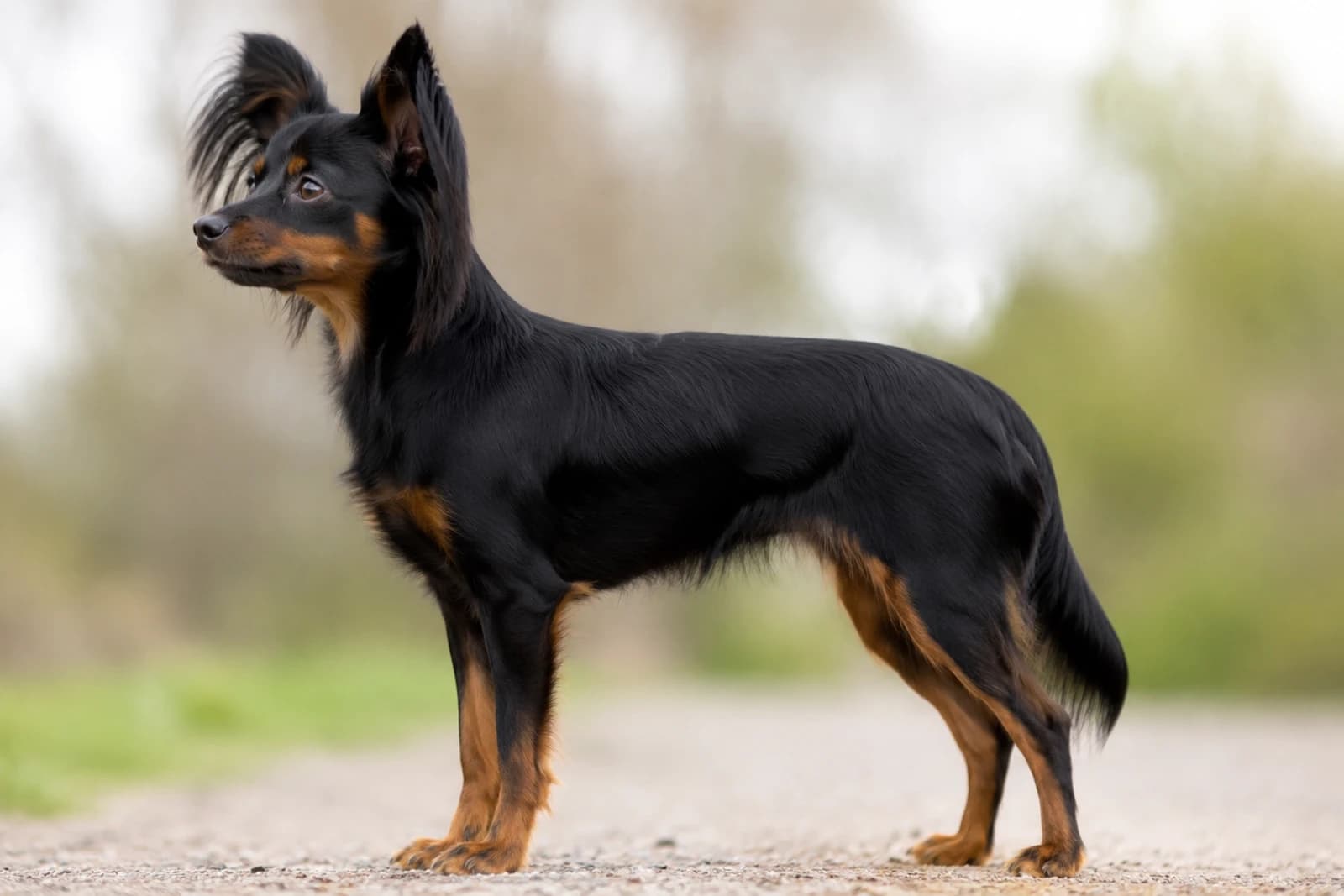
The Russian Toy is a lively, affectionate companion ideal for apartment dwellers, singles, seniors, and families with gentle older children. This tiny, elegant breed thrives on human attention and bonds closely with its owner. With moderate exercise needs and a portable size, it suits first-time owners seeking a devoted lap dog. Its alert nature and terrier-like spirit require consistent training, but overall, it is an adaptable, charming pet that brings joy to any home.
At a glance
- Size
- Small
- Height
- 8–11 in
- Weight
- 7 lb
- Life span
- 12 years
- Coat colors
- black and tan, brown and tan, blue and tan, red, sable
- Coat type
- smooth or long coat
How much does a Russian Toy cost?
Adopt / rescue
$75–$400
Usually includes spay/neuter, first shots, and a microchip.
Buy from a breeder
$700–$2,000
From a reputable, health-testing breeder.
Approximate USD. Prices vary widely by region, breeder, pedigree, age, and coat colour — adopting is the lower-cost and recommended route. Avoid suspiciously cheap “breeders”; they’re often puppy mills.
Estimate the full cost of a Russian Toy →Russian Toy photos
Views
Front, side, rear and top — the full silhouette.Poses
How the breed sits, lies, moves and plays.Puppy to senior
The breed across its whole life.Expressions
The breed’s range of moods.Close-up details
Eyes, ears, nose, paws, tail and coat.Coat colors
The breed’s recognized colors.Click any photo to enlarge. We show the Russian Toy from every angle — three views, poses, life stages, expressions, close-ups, coat and colors.
Appearance & size
The Russian Toy is built like a miniature deer — fine-boned, leggy, and impossibly light on its feet. He stands just 8 to 11 inches at the shoulder and hovers around 7 pounds, which puts him squarely in the toy group, yet his proportions are more elegant than stout or cobby.
From the front, the most arresting feature is the huge, upright ears. They’re set high on a small, narrow head, shaped like elongated triangles with pointed tips, and they give the dog a perpetually alert, almost impish expression. Large, round, dark eyes sit well apart, and the muzzle tapers but never appears snipey. A fine, smooth coat or the longer-haired variety frames the face; in long coats, the ear edges sprout dramatic fringing that softens the silhouette.
Turn to the side and the breed’s sighthound-like structure becomes obvious. The neck is long, lean, and carried proudly. The back is straight and level, and the body is slightly longer than tall, creating a clean rectangular outline without any chunkiness. Long, slender legs with tiny, oval feet add to the high-stepping glamour. The tail can be naturally bobbed or left long; a natural long tail is often carried level with the back or slightly curved.
From the rear, the dog still reads like a ballet dancer — narrow through the hips with a flat, well-angled croup. The hind legs are straight and parallel with no trace of cow hocks. Fine bone means every tendon and sinew shows under the skin, but it shouldn’t look fragile. This is a surprisingly sturdy little dog for its weight.
Coat and color add versatility. The breed comes in two distinct coat types. The smooth coat is short, glossy, and lies close to the body, much like a tiny Italian Greyhound. The long coat reaches about 3–5 cm in length and includes signature feathering on the ears, backs of the legs, tail, and chest — essentially a built-in fringe without any soft, woolly undercoat. Colors cover a wide palette: black and tan, brown and tan, and blue and tan are the classic patterns, each with rich, well-defined markings above the eyes, on the cheeks, inside the ears, and under the tail. You’ll also see solid shades of red, sable, and even cream, often with a scattering of white that’s acceptable but not preferred in the show ring. In any color, the nose is black, matching the pigment of the lips and eye rims.
A Russian Toy won’t ever be mistaken for a generic Chihuahua or Papillon. The combination of outsized bat ears, a delicate frame that’s built like a scaled-down Borzoi, and the option of smooth or flowing feathering makes him a pocket-sized standout with zero cutesy ornamentation.
History & origin
The Russian Toy you see today traces back to the English Toy Terrier, a sleek black-and-tan ratter that arrived in Russia during the 18th and 19th centuries. At the time, Russian nobility admired small, elegant dogs as living ornaments and bed warmers. The little terriers fit the bill—they kept manor houses clear of vermin, curled up on silk cushions, and announced visitors with their sharp bark.
By the early 20th century, the breed was firmly established among the Russian aristocracy. Then history gutted it. The 1917 Revolution swept away the old ruling class, and dogs associated with the wealthy became targets of ridicule or outright elimination. World War II delivered another blow. By the late 1940s, the Russian Toy was functionally extinct—no official breeding stock, no pedigrees, just a handful of unregistered survivors scattered across the country.
The revival started in the 1950s. A small group of Moscow dog fanciers, led by people like Evgenia Zhukova and Maria Landau, rounded up the remaining smooth-coated dogs they could find. They bred selectively, prioritizing health, temperament, and the classic upright-eared silhouette. A surprise came in 1958 when a long-coated puppy with feathery ears and a plumed tail popped up in a litter. Instead of discarding the oddity, breeders cultivated it, and the long-haired variety—often called the Moscow Long-haired Toy Terrier—became a breed hallmark.
For decades, the Russian Toy remained a hidden gem behind the Iron Curtain. International recognition came slowly. The Fédération Cynologique Internationale (FCI) granted full breed status in 2006 under the name Russkiy Toy. The American Kennel Club now lists it in the Foundation Stock Service. While still far from common outside its homeland, the breed is steadily gaining traction as a portable, sharp-witted house dog that never forgets its ratter roots.
Temperament & personality
The Russian Toy is wired to be your constant companion, and that’s both the breed’s greatest charm and its biggest challenge. At just 7 pounds or so, this is a dog who will learn your schedule, anticipate your movements, and rarely let you out of sight. The flip side: left alone for long stretches, that devotion can curdle into anxiety. You’ll hear the protest barks, and you may find small urine marks on furniture legs or doorframes—not because they’re untrained, but because they’re scent-mapping a territory that feels empty without you.
They’re smart, sensitive, and surprisingly strong-willed for their size. A sharp “no” or a physical correction will only erode trust; they respond to calm, consistent guidance and a routine that makes them feel safe. Think of them as a tiny reactor core: energy that can power a cheerful, playful companion or, if short-circuited by neglect, outlet through nervous habits.
With family, they’re affectionate and loyal to a chosen person or two. They’ll curl in your lap, follow you from room to room, and possibly roll in that odd smell they found on the rug—an ancient scavenger impulse that some might call perfume. They’re alert watchdogs, and they don’t know they’re seven pounds. A knock at the door, a squirrel outside, or a stranger on the sidewalk can trigger a full-throated alarm. Redirecting that with a treat is more effective than shushing.
You’ll need to tune into their body language, because they’ll tell you everything if you pay attention:
- A stiff-legged stance, direct stare, and ears forward often signal they’re gathering confidence to advance—give them space.
- A backward lean, lip licking, yawning, or turning the head away are anxiety signals. It’s their way of saying “I need a break.”
- A loose, wiggly body with soft eyes is the green light for affection.
Puppies chew to soothe teething pain and explore; adults chew to maintain jaw strength and clean teeth. Keep appropriate chews on hand and use a homemade citrus or vinegar spray on off-limits items if you catch them in the act.
House training requires patience. These dogs have a sharp memory for scent. One unnoticed puddle behind the sofa and they’ll return to that spot again. An enzymatic cleaner is non-negotiable—standard cleaners just don’t erase the cue. Reward the action you want with a tiny treat immediately after outdoor elimination, and they’ll connect the dots fast.
To avoid resource guarding, which can surface in small dogs, make sure everyone in the household lets them eat in peace. Kids especially must learn not to interrupt meals. With early socializiation, they can coexist with older, gentle children, but they’re not a rough-and-tumble playmate. Their world revolves around a predictable, loving home. Learn to read their subtle signals and offer respectful guidance, and you’ll get a bright-eyed shadow who thrives on mutual trust.
Good with kids, dogs & other pets
A 7-pound dog who stands 8 to 11 inches tall lives in a world of giants. That’s the first thing to keep in mind when your Russian Toy meets children, other dogs, or even a clumsy cat. These dogs are patient and non-aggressive by nature, but their bones are delicate. A well-meaning toddler who squeezes too hard or a preschooler who trips nearby can cause a serious injury. Supervision around kids under about 8 years old isn’t optional — it’s the price of admission. Teach children to sit on the floor and let the dog come to them, use open-palm petting, and never pick the dog up without an adult’s help.
With other dogs, the story is similar. A Russian Toy can live happily alongside a calm, well-matched housemate, but rough-and-tumble play with a 50-pound dog can go wrong in a heartbeat. Off-leash dog parks are a gamble; a more practical approach is arranging one-on-one playdates with dogs you know are gentle. Early socialization is what tips the odds in your favor. The critical window for puppies closes around 12 to 16 weeks, so you want gradual, positive exposure to friendly dogs, new people, and everyday sounds before that door shuts. After that, fearful behavior can still improve with patient work, but forcing an anxious adult dog to “make friends” usually backfires.
Russian Toys tend to do well with cats, especially when raised together. Small pets like hamsters or rabbits are a different story — these dogs were bred as companions, not hunters, but any quick, scurrying creature can still trigger a chase. Keep cages securely out of reach and supervise any face-to-face time.
One thing that reliably causes stress is being left alone too long. This breed craves company and can develop clingy, vocal habits or separation distress if isolated for hours every day. A home where someone is around most of the time, along with a second compatible pet, often suits them best. Start introductions young, keep them gentle, and never assume the dog’s small size means he can fend for himself — he’s counting on you.
Trainability & intelligence
Russian Toys are sharp, quick studies who figure out routines and words faster than most people expect from a dog barely bigger than a squirrel. They genuinely enjoy learning and live for the moment a treat or a happy squeal of praise lands in their direction. You’ll find they pick up basic commands — sit, down, come — in just a few repetitions, provided your timing is clear and your pockets are stocked with something worth their while.
That same intelligence means they’re also sensitive. A hard voice or a jerk on the leash can shut them down in a heartbeat, so leave punishment-based methods entirely off the table. This is a breed that builds reliable obedience on trust, not pressure. The dog who feels safe and knows good things reliably follow a cue will repeat that behavior eagerly; the one who’s startled or intimidated will start sidestepping you.
Start training the day your puppy comes home, and don’t skimp on early socialization. Between 3 and 14 weeks, gentle introductions to new people, loud household sounds, slick floors, and calm older dogs pay off hugely. Without it, these tiny personalities can tip toward fearfulness, and a startled Russian Toy may bolt — so a solid recall, shaped with high-value rewards and zero drama, is your safety net. Practice it often, long before you think you’ll need it, because their little legs can carry them out of sight faster than you’d guess.
Consistency is the glue here. Everyone in the house needs to use the same cues and the same kind, reward-first approach. If you try to muscle through a standoff, you’ll lose. Wait out the stubborn two seconds, show the treat, and the tail starts wagging. Smart, soft, and a touch willful, the Russian Toy trains best when you play the long game: short, upbeat sessions, a ton of tiny rewards, and zero force.
Exercise & energy needs
Don’t let the dainty size fool you — a Russian Toy is lively, alert, and always up for action, just in snack-sized doses. Aim for 20 to 30 total minutes of purposeful activity each day, broken into two or three short walks and indoor play sessions. These dogs are built more for quick laps around the living room and spirited toy-chasing than for mile-long slogs.
A brisk 10- to 15-minute walk twice a day usually covers the outdoor portion. Watch the weather — thin legs and a tiny body mean they chill fast, so a sweater is non-negotiable in cool temperatures. Inside, a vigorous game of fetch with a soft toy, chasing a flirt pole at ground level, or zipping through a tunnel can burn off the rest of that energy safely.
Mental work matters just as much. A Russian Toy who’s physically tired but mentally bored will bark, chew, or shadow your every move. Puzzle feeders, snuffle mats, and short trick-training sessions (think spin, paw, roll over) scratch the brain-itch beautifully. They’re quick studies and often love nose work games — hiding a treat under a cup and letting them sniff out the right one.
Avoid anything that puts high stress on those delicate legs: no leaping off couches, no rough wrestling with bigger dogs, and no repetitive high jumps. Even in canine sports, stick to low-impact options like novice rally, trick dog titling, or indoor scent work where you control the setup. If you skip these needs, don’t be surprised when a normally sweet dog turns into a restless, vocal shadow. Keep sessions short, upbeat, and consistent, and you’ll have a happy little athlete who’s ready to curl up and snooze after.
Grooming & coat care
The Russian Toy comes in two distinct coat types, and your grooming gear — and schedule — depends entirely on which one you bring home.
For the smooth, short-coated variety, reach for a natural bristle brush. The pig bristle grabs loose hair, redistributes skin oils, and builds a glossy shine without scratching thin skin. A quick session once or twice a week is plenty. These dogs shed very little, so you won’t find hair tumbleweeds under the couch.
The longhaired version is a different story. Those soft featherings on the ears, legs, and tail need a soft slicker brush or a pin brush with rounded tips. Expect to brush daily — even skipping a couple of days can let fine hairs twist into mats behind the ears, under the “armpits,” or along the tail plume. Work through the coat in sections, and follow up with a metal comb on trouble spots.
Bathing is infrequent. A gentle dog shampoo every 4 to 8 weeks — or when he rolls in something unspeakable — keeps both coat types clean without stripping natural oils. Over-bathing invites dry, flaky skin.
No full-body haircut is ever needed. Some owners tidy the fur between the paw pads for better traction on hardwood floors, but that’s purely optional.
- Nails: Trim every 2 to 3 weeks. If you hear clicks on the floor, you waited too long. Tiny nails curl fast and can torque the toes.
- Ears: Check weekly. Wipe the outer ear with a damp cotton ball; don’t dig into the canal. Redness or a yeasty smell means a vet visit.
- Teeth: Small mouths pack a lot of problems. Aim for daily brushing with a dog toothpaste — even every other day cuts down on plaque and future extractions.
Seasonal shedding is minimal, though you might notice a slight uptick in spring and fall as the coat turns over. Bumping the smooth coat’s brushing to twice a week, and staying religious with the long coat, keeps loose hair off your dark pants. A quick once-over with a rubber grooming mitt does wonders on the short-haired dog when you’re in a hurry.
Grooming sessions also double as a hands-on health check — run your fingers over the ribs, check for lumps, and peek at the skin. Catching a hot spot or a tick early beats treating a full-blown infection.
Shedding & allergies
If you’re hoping for a dog that leaves almost no hair behind, the Russian Toy is one of the easiest tiny breeds to live with – especially if you choose the longhaired variety.
Smooth-coated Russian Toys shed a bit. You’ll notice a handful of fine, needle-short hairs on dark pants or upholstery after a cuddle session, but it’s nothing like the constant tumbleweeds you’d get from a double-coated breed. A quick once-over with a rubber curry brush every few days keeps it in check. Longhaired individuals have a silky, single-layer coat with hardly any undercoat. They shed so little that many owners joke they don’t shed at all. You might see a few wisps during a light seasonal shift in spring or fall, but a damp hand run over the coat grabs most of it.
Drool isn’t part of the package. This breed is naturally dry-mouthed, so you won’t find slobber trails on your furniture or clothes.
On the allergy front, approach “hypoallergenic” claims with skepticism. No dog is 100% allergen-free; the proteins that trigger reactions hide in dander, saliva, and urine, not just hair. Because the Russian Toy sheds minimally and produces relatively little dander, some people with mild allergies manage comfortably. For others, even a nearly shed-free coat doesn’t guarantee relief. The only way to know for sure is to spend a few hours in the company of an adult Russian Toy before bringing a puppy home.
Diet & nutrition
A 7‑pound dog has a stomach about the size of a walnut, so every bite needs to earn its keep. For an adult Russian Toy, that usually works out to ¼–½ cup of high‑quality kibble per day, divided into two meals. The exact amount depends on activity: a dog who trots beside you for a couple of miles will need the higher end; a true lap‑warmer may need less. Always go by the calorie guidelines on the bag and, more importantly, by what you feel under your palms — you want to easily find the ribs with just a light fat pad.
The weight trap: tiny dog, quick gain
With a frame this fine, even a few extra ounces strain delicate knees and elbows. Russian Toys are not typically food‑obsessed, but a few can be opportunistic eaters, so free‑feeding is a fast track to obesity. Measure meals. Treats, no matter how tiny, cut into the day’s calorie budget — use half a pea‑sized bit of chicken for training, not a whole biscuit. A fat Toy is a Toy with a higher risk of patellar luxation and pancreatitis, so keep rich holiday scraps and fatty table trimmings completely off the menu.
Life‑stage adjustments
-
Puppies (8 weeks–4 months): four evenly spaced meals. Transition onto a minced or puréed blend of lightly cooked meat, veggies, and a little grain, or a premium small‑breed puppy food. You can introduce a raw chicken neck or wing tip (size‑appropriate!) around 12 weeks under supervision.
-
4–6 months: drop to three meals a day.
-
6 months +: two meals, morning and evening.
-
Seniors: as activity drops after 8–9 years, scale back the total daily portion by 10–20%. If teeth go missing, a quick whirl in the blender or a soft, moisture‑rich commercial food makes nutrients accessible. Breaking the day’s ration into three small meals often suits an older dog’s digestion better.
Practical pointers
- Slow them down: a puzzle bowl or snuffle mat turns a gulper into a thinker and cuts the risk of bloat.
- Mix it up: for dogs with sensitive stomachs, plain white rice or pearl barley with a little poached fish or egg makes a gentle reset meal.
- Never from your plate: scoop any leftovers into the dog’s own bowl after you’ve finished eating. It kills begging before it starts.
Check the waistline every couple of weeks. If the tuck behind the ribs starts to disappear, pull back the kibble, not the walks.
Health & lifespan
A healthy Russian Toy typically lives around 12 years. That’s a solid run, but it doesn’t happen on autopilot — this 7-pound dog has a few predictable weak spots that need your eyes and attention.
Common health concerns
- Dental disease hits tiny mouths hard. Teeth are crowded, tartar builds fast, and without daily brushing plus regular vet cleanings, periodontal problems can start early and shorten a dog’s life.
- Hypoglycemia is a real threat, especially in puppies. A skipped meal or too much excitement can crash blood sugar, leading to wobbliness, lethargy, or even seizures. Keeping a little food available around the clock and knowing the signs is just part of the drill.
- Patellar luxation — when the kneecap pops out of its groove — shows up often. You might see a hop-skip or a leg held up momentarily. Mild cases respond to weight control and joint supplements; severe ones may need surgery. A responsible breeder will screen parent dogs for this.
- Tracheal collapse causes that harsh, goose-honk cough, usually triggered by pressure from a collar. A harness is non-negotiable with this breed.
- Eye issues like progressive retinal atrophy or cataracts can develop, so regular ophthalmoscopic exams by a vet familiar with the breed matter.
- Temperature sensitivity is acute. That wispy single coat offers zero insulation. Cold weather means a sweater or coat, and hot pavement burns delicate pads in seconds.
Prevention and screening
Yearly wellness checks — twice a year once they’re seniors — spot trouble early. Rabies vaccination is legally required, and there’s no effective treatment once symptoms appear. Heartworm prevention needs to be given monthly during mosquito season and for one month after it ends; even pint-sized dogs attract infected mosquitoes. Weight management is critical: an extra half-pound stresses joints and that fragile trachea. Responsible breeders screen for patellar luxation, eye disease, and cardiac conditions before breeding, and they’ll show you the documentation. Early socialization done gently also lowers stress-related health risks — a neglected Russian Toy can bark itself hoarse and live in a state of high cortisol that wears down immunity. Know what to watch for, and you’ll catch problems while they’re still manageable.
Living environment
The Russian Toy was practically designed for apartment living. At 7 pounds and standing just 8–11 inches at the shoulder, this dog takes up almost no space and doesn’t need a yard. A couple of short daily walks — 15 to 20 minutes each — plus a few indoor play sessions and a puzzle toy or two cover his exercise needs without a single blade of grass. He can sprint around a living room, chase a rolling ball down a hallway, and call it a solid workout. A house with a fenced yard is a bonus, but absolutely not a requirement; what matters more is having you nearby.
Because he’s so small and lightly built, the Russian Toy is sensitive to cold weather. He’ll shiver outdoors when the temperature drops—a well-fitted dog coat or sweater isn’t a cute accessory, it’s a necessity for winter walks. In heat, he handles moderate warmth fine, but direct summer sun beating down on pavement can be harsh on those tiny paws and a thin coat. Stick to shaded routes and early-morning or evening outings when it’s hot.
Barking is worth a frank mention. This breed is naturally alert and often vocal. A knock on the door, a neighbor’s car door shutting, a squirrel on the windowsill—all can trigger a sharp, persistent alarm. You can’t eliminate the instinct, but consistent, reward-based training can dial it down to a reasonable “announce and then settle” instead of endless yapping. If you share thin walls, start noise training early and layer in mental exercise (scent games, trick training) to take the edge off.
Being left alone is the Russian Toy’s biggest soft spot. He bonds hard and can quickly slip into isolation distress if left for a full workday, every day. This isn’t a breed that self-soothes easily; destructive chewing, house-training regressions, and nonstop barking are common signs of a dog who missed you too much. He thrives in a home where someone works part-time or from home, or where a dog-friendly office lets him tag along. If you have the occasional long day, build up his solo tolerance gradually with crate training, frozen food puzzles, and leaving him with safe distractions—but plan on hiring a midday walker for anything beyond 4 to 5 hours. A Russian Toy does best as a near-constant companion, tucked against your side on the couch more often than not.
Who this breed suits
Ideal home
If you want a true shadow that tops out at 7 pounds and stands 8–11 inches, the Russian Toy slots into a calm, adult-centered life beautifully. First-time owners do well here—this breed is eager to please and picks up routines fast, provided you’re home enough to keep the lessons consistent. Retirees, singles working from a desk, or couples in an apartment will find a companion who’d rather curl on your lap than run a marathon. A couple of 20-minute leash walks plus a few indoor games of fetch cover the exercise; no yard required. Just be ready for a dog that follows you from room to room, wedges itself under your chin, and announces every delivery truck with a sharp bark. That alertness makes the Russian Toy a spirited little watchdog—endearing if you like a heads-up, grating if you crave silence.
The breed forms an intense bond and hates being left alone. You’ll sidestep serious separation anxiety by scheduling your day so the dog isn’t crated for a full work shift. Homes where someone is around most of the time, or where a midday dog walker fills the gap, are the ones that truly click.
Think twice if…
- You have young kids. A 7-pound dog with fine bones is one clumsy tumble away from a fracture. Even gentle toddlers can squeeze too hard. This breed suits families with older, dog-savvy children who understand hands-off play.
- Your household is loud and busy. Constant commotion, roughhousing, or big visiting dogs put a Russian Toy on edge. They weren’t built for the chaos of a bustling pack.
- You’re gone 9+ hours regularly. This isn’t a dog that copes by napping alone all day. Neglect that, and you get a frantic, vocal mess and likely some potty training backslides—small bladders and stubborn streaks are part of the deal.
- You want a jogging partner or a backyard explorer. They overheat easily, refuse bad weather, and make an easy target for hawks or off-leash dogs. The Russian Toy is a house dog through and through.
If your life is a series of quiet evenings, short strolls, and a steady lap to share, a Russian Toy will burrow into it for the next 12 years. If your world includes high-energy kids, regular weekend getaways without the dog, or a need for silence, you’re both better off looking elsewhere.
Cost of ownership
The first check you write will be the steepest because Russian Toys are still uncommon in the US. A well-bred puppy from a breeder who screens for patellar luxation, heart issues, and eye problems typically costs $1,500 to $3,000. Show or breeding prospects can top $3,500. Rescue is rare; if you find one through breed-specific rescue, expect an adoption fee around $200 to $500.
After that, the monthly math quiets down. A 7-pound dog eats like a 7-pound dog.
- Food: $20–$30 a month for a high-quality kibble or freeze-dried diet. Fresh toppers or a raw diet might add $10–$15.
- Grooming: Minimal. Both smooth and long-haired coats need a quick brush a few times a week and a bath every month or two. DIY supplies run $10–$20 a month; a professional trip every 6–8 weeks costs $40–$60 per visit.
- Veterinary: Routine care — exam, vaccines, heartworm prevention, flea/tick control — runs $200–$400 a year. But you have to account for teeth. Toy breeds often have crowded mouths and dental disease. A professional cleaning under anesthesia every one to two years will run $300–$600, so build that into your savings plan. Yearly bloodwork adds another $100–$200 once the dog hits middle age.
- Pet insurance: For a generally healthy small breed, accident and illness coverage costs $30–$50 a month, depending on deductible and location. That’s cheaper than for a big dog, and it can defuse a multi-thousand-dollar emergency surgery.
Realistically, keeping a Russian Toy in kibble, vetted, and insured lands between $80 and $120 a month, not counting one-off gear like a secure harness, a crate, or clothing for cold weather — because a 7-pound dog with a thin coat genuinely needs a sweater when the temperature drops.
Choosing a Russian Toy
Getting a Russian Toy starts with a decision that ripples through the next 12-plus years: breeder or rescue. If you go the breeder route, you're paying for predictability—health history, temperament lines, and a dog raised with early socialization. If you rescue, you're often getting a dog whose adult personality is already visible, but you may have less medical history. Neither is "better," but the breed's tiny size (7 pounds soaking wet) and delicate bone structure mean you need to be extra careful about early breeding practices. Poorly bred Russian Toys can wind up with wobbly knees, bad hearts, or mouths full of rotting teeth before they're middle-aged.
Health clearances to demand. A responsible breeder hands over documentation, not promises. Ask for an OFA patella evaluation—luxating patellas are a top concern in toy breeds, and a dog that skips or hops on a back leg isn't just "being cute." A cardiac clearance from a board-certified cardiologist matters because mitral valve disease can show up. Eyes should be checked by a veterinary ophthalmologist. Don't accept "the vet said they look fine" as a substitute for written test results.
Red flags that should make you walk away. Breeders who always have puppies available, who ship sight unseen with zero questions about your life, or who can't produce a pedigree with clear health testing. A Russian Toy puppy should never leave its mom before 10–12 weeks; the breed is emotionally soft, and early separation can create a permanently anxious dog. Run from anyone pushing puppies at 6 or 7 weeks.
Picking the puppy itself. Meet at least one parent on-site—ideally mom, since she gives you the best read on adult temperament. Watch how the puppy recovers from a startle (a jangling set of keys works). You want curiosity, not collapse. Russian Toys can be reserved with strangers, but a pup that hides and won't emerge isn't just shy—that's a red flag for a dog who'll struggle in a normal, noisy household. Pick up each candidate and gently run your hands over the body. The ribs should be palpable but not sharp; the knees should feel stable, not clicky. Ask to see vaccination records and note whether the puppy has been properly exposed to household sounds, slick floors, and gentle handling. A well-raised Toy puppy will approach you with a prance, not flat-out panic, and that is the dog you want to bring home.
Pros & cons
Pros
- Truly portable: At just 7 pounds and 8–11 inches tall, your Russian Toy fits in a shoulder bag, under an airplane seat, or happily in a fifth-floor apartment with no yard.
- A devoted shadow: This is a lap dog through and through — one who follows you room to room, curls up on your feet while you work, and sleeps pressed against your side.
- Light exercise requirements: A couple of 15–20 minute leash walks plus some indoor fetch or trick training meet their daily needs. No marathon runs required.
- Inexpensive to feed: That small body sips rather than gulps kibble, so a bag of high-quality food lasts a long time.
- Two coat varieties, both low-shed: The smooth coat feels like velvet and leaves little hair behind; the long-haired version has silky fringes but no dense undercoat, making both easier on allergy-sensitive homes than heavily shedding breeds.
- A solid decade-plus: With an average lifespan of 12 years — and many reaching well into their teens — you get a long-term companion who stays puppy-energetic well into old age.
Cons
- Surprisingly fragile bones: A seven-pound body means legs thin as pencils. A jump off the sofa, a dropped handbag, or a child’s clumsy hug can result in a broken bone. You’ll need to child-proof your home for a dog that never grows bigger than a kitten.
- Big voice, small body: These little watchdogs have a piercing bark and will sound the alarm at every doorbell, delivery truck, or neighbor’s footsteps. Quieting them takes consistent training work.
- Velcro attachment can become panic: Bred to be a constant companion, many Russian Toys develop full-blown separation anxiety if left alone for a full workday without careful, gradual conditioning.
- A mouthful of trouble: Crowded teeth in a tiny jaw mean dental disease sets in early. Expect regular vet cleanings, daily toothbrushing, and a dog who can become picky or refuse hard kibble if their mouth hurts.
- Wary of strangers without early work: Undersocialized puppies grow into adults who tremble, bark, or even snap when faced with new people or situations — not out of meanness, but genuine fear.
- No house for rough-and-tumble kids: Most responsible breeders won’t sell a puppy to a home with young children. The risk of accidental injury to the dog is simply too high.
Similar breeds & alternatives
If the Russian Toy’s intense one-person attachment or delicate build gives you pause, a few other toy breeds share its compact size but bring a different energy or temperament.
Chihuahua
The most obvious switch. Same 6–9-inch height, often a pound or two lighter. Chihuahuas lean bold and bossy — they’ll challenge a much larger dog without hesitation, while a Russian Toy is more likely to sound the alarm from a safe perch. Both come in smooth and long-coated varieties, but Chihuahuas have stouter builds and are far easier to find in the US. If you want a tiny shadow that’s a little less fragile and a lot more sass, the Chihuahua fits. Just prepare for a more demanding personality.
Papillon
Slightly larger at 8–11 inches and 5–10 pounds, the Papillon is the hyper-social, brainy alternative. Those butterfly ears house a mind that needs a job — they often crush agility courses. A Russian Toy learns tricks fine but is happier as a lap warmer. The Papillon greets strangers with a wag, not the Russian Toy’s typical reserve. Coat-wise, the Papillon’s single, silky layer sheds less than you’d think, while the Russian Toy’s long coat still leaves a dusting of hair on dark pants.
Italian Greyhound
For anyone drawn to the Russian Toy’s long legs and deer-like outline, the Italian Greyhound stretches that look to 13–15 inches and 7–14 pounds. Both are blanket-burrowing heat-seekers, but the IG is a sighthound and needs full-speed runs in a secure area — a romp won’t cut it. The IG is even more breakable, with thin skin and brittle bones that make a misplaced leap a genuine risk. The velcro loyalty level is a dead match; the exercise requirement and fragility are not.
Yorkshire Terrier
Same 7-pound weight class, but the Yorkie is a true terrier: feisty, stubborn, and always up for chasing something small that moves. The Russian Toy’s alertness rarely carries that prey drive or tenacity. The Yorkie’s single, floor-length coat grows continuously and needs regular trims, but it’s often kinder to mild allergy sufferers — the Russian Toy sheds normally and offers no hypoallergenic edge. Pick a Yorkie if you want a tiny dog that runs the house with a terrier’s swagger and a topknot.
Fun facts
- The Russian Toy nearly went extinct after World War II but was revived by dedicated enthusiasts.
- It descended from the English Toy Terrier and was originally called the Russian Toy Terrier.
- Its large, triangular ears and expressive eyes are signature breed traits.
- The longhaired variety boasts elegant feathering on the ears and tail.
Frequently asked questions
- Is the Russian Toy good with children?
- The Russian Toy can be a loving companion for older, gentle children, but its small size and delicate build make it vulnerable to injury from rough handling. Supervision is necessary when young children interact with this breed, and teaching respectful play is essential to ensure a safe, positive relationship.
- Does the Russian Toy shed a lot?
- This breed is considered a low shedder. The smooth-coated variety sheds very little and requires only occasional brushing, while the long-coated type needs more frequent grooming to prevent tangles. Overall, the Russian Toy is easy to maintain in terms of coat care.
- How much exercise does a Russian Toy need?
- The Russian Toy is an active little dog that enjoys playtime indoors and short daily walks. It does not require extensive exercise, but mental stimulation through games and training is important to prevent boredom. A couple of 15–20 minute activity sessions per day usually suffice.
- Is the Russian Toy suitable for apartment living?
- Thanks to its compact size and moderate energy level, the Russian Toy adapts well to apartment life. It needs daily walks and indoor play but does not require a yard. However, note that this breed can be alert and may bark at noises, so early training to manage barking is recommended for close living quarters.
- Is the Russian Toy a good choice for first-time dog owners?
- The Russian Toy can be a good match for first-time owners who are committed to consistent, positive training. This breed is intelligent and eager to please, but it can also be sensitive and may become timid without proper socialization. With patience and gentle guidance, a novice owner can successfully raise a well-adjusted Russian Toy.
- Does the Russian Toy bark a lot?
- The Russian Toy tends to be alert and may bark to notify you of visitors or unusual sounds. While not excessively noisy, this breed can be vocal, especially if its watchdog instincts are not managed early. Training and socialization from puppyhood can help curb excessive barking and teach appropriate quiet commands.
Tools & calculators for Russian Toy owners
Quick estimates tailored to Russian Toys — pre-filled with this breed’s size where it matters.
Articles & stories about the Russian Toy
Sources & standards
This profile follows recognized breed standards from the American Kennel Club (AKC) and the Fédération Cynologique Internationale (FCI), along with established veterinary and breed-club guidance. These describe general breed tendencies — every dog is an individual.
Owner stories
Have a Russian Toy? Share your experience — grooming tips, personality quirks, anything goes.