

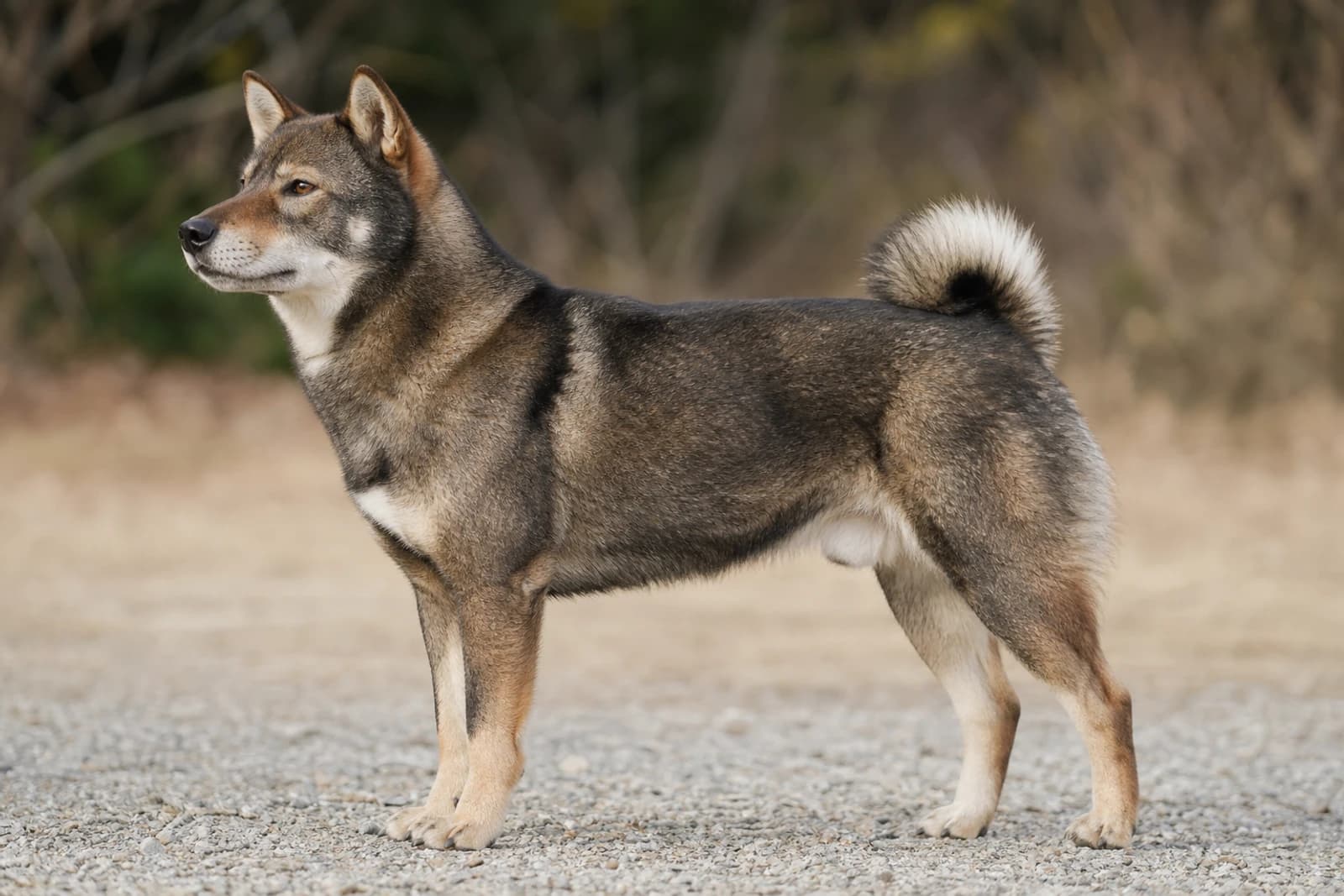
The Shikoku is a rare Japanese hunting breed prized for its endurance, keen senses, and unwavering loyalty. With a reserved yet affectionate nature with family, this primitive spitz requires an active, experienced owner who can provide firm, patient training and daily vigorous exercise. Best suited to rural or suburban homes with access to outdoor adventures, the Shikoku thrives in a job-oriented environment. Its independent streak and high prey drive make early socialization essential. Not ideal for novice owners or apartment living, this breed bonds deeply and makes a steadfast companion for those who appreciate its wild spirit and quiet dignity.
At a glance
- Size
- Large
- Height
- 18–20 in
- Weight
- 35–57 lb
- Life span
- 10–12 years
- Coat colors
- sesame, black sesame, red
- Coat type
- double coat with harsh outer and dense undercoat
- Group
- Spitz-Type
- Origin
- Japan (Kochi Prefecture)
How much does a Shikoku cost?
Adopt / rescue
$75–$400
Usually includes spay/neuter, first shots, and a microchip.
Buy from a breeder
$700–$2,000
From a reputable, health-testing breeder.
Approximate USD. Prices vary widely by region, breeder, pedigree, age, and coat colour — adopting is the lower-cost and recommended route. Avoid suspiciously cheap “breeders”; they’re often puppy mills.
Estimate the full cost of a Shikoku →Shikoku photos
Views
Front, side, rear and top — the full silhouette.Poses
How the breed sits, lies, moves and plays.Puppy to senior
The breed across its whole life.Expressions
The breed’s range of moods.Close-up details
Eyes, ears, nose, paws, tail and coat.Coat colors
The breed’s recognized colors.Click any photo to enlarge. We show the Shikoku from every angle — three views, poses, life stages, expressions, close-ups, coat and colors.
Appearance & size
The Shikoku looks exactly like what it was bred to be: a rugged, nimble hunter that could chase boar through steep mountain forests. You see it in the tight, athletic build and the alert, no-nonsense expression.
Standing 18 to 20 inches at the shoulder, this is a medium-large spitz-type dog with a surprising amount of muscle packed into a lean frame. Males typically tip the scales at 44 to 57 pounds, while females run lighter, usually 35 to 44 pounds. There’s zero bulk for the sake of looks — every pound is working dog.
The body is slightly longer than tall, with a deep chest, well-sprung ribs, and a moderate tuck-up that lets you see the dog’s athletic waistline. Shoulders are well-laid-back, and the legs are straight and sinewy, ending in tight, cushioned feet with hard pads built for rocky terrain. From the side, the topline is level and firm, flowing into a thick tail that’s set high and carried in a proud curl or sickle over the back. When the dog moves, the gait is light, springy, and efficient — you won’t see heavy pounding, just an elastic, ground-covering stride.
The head is a clean wedge, moderately broad at the skull and tapering to a straight muzzle that’s neither snipey nor blunt. Small, triangular ears prick forward with a slight incline, and they always seem tuned to something just out of your hearing. Dark brown eyes are small, almond-shaped, and set with an upward slant at the outer corners — they give the dog a watchful, almost intense expression that softens instantly when a trusted person walks in the room. The nose is black, lips tight, and bite a neat scissors.
The coat is a standout. It’s a harsh, straight outer coat over a dense, soft undercoat — the kind of double coat that sheds mud and brush but also blows seasonally in your house. On the cheeks and tail, the fur is longer, giving real presence without fluff. Acceptable colors keep things simple: sesame (a red-fawn base heavily overlaid with black guard hairs, often creating a “wild boar” effect), black and tan with sharp, defined markings, and less commonly, a clean cream. Many dogs show pale shading on the cheeks, underside, and legs.
From the front, the Shikoku looks balanced and purposeful — erect ears, dark knowing eyes, and a deep but not overdone chest that suggests stamina. From the rear, you’ll see muscular hindquarters driving under that curled tail, the whole dog ready to pivot and climb. It’s an honest, handsome package without a trace of exaggeration.
History & origin
The Shikoku wasn’t bred in a kennel or a show ring — it was shaped by dense mountain forests and the instincts of Japanese hunters who needed a dog tough enough to hold a wild boar at bay. This is a genuine landrace breed, developed over centuries in the remote Kochi Prefecture on the island of Shikoku, where steep slopes and thick cover rewarded a medium-large, nimble dog with keen senses and a fearless streak.
Hunters relied on the Shikoku to track and contain big game, especially the aggressive wild boar that still roam those mountains, as well as deer. The dog worked silently or with a low bark, cornering prey without reckless flailing, then holding the animal until the hunter arrived. That job demanded an independent thinker — a dog that could read a boar’s body language, dodge tusks, and keep pressure without getting itself killed. Generations of selective breeding in isolated villages produced a dog with a wolf-like silhouette, prick ears, a curled tail, and a clean, muscular frame that weighs between 35 and 57 pounds.
The breed developed in three primary regional types: Awa, Hata, and Hongawa. The Hongawa line, from the most inaccessible part of Kochi, remained the purest and became the foundation stock for all modern Shikoku. In 1937, Japan declared the breed a national monument, officially recognizing it as one of the country’s precious native dogs — the same year the name “Shikoku” was formalized.
World War II nearly erased that hard-won recognition. Bombing, food shortages, and a distemper outbreak decimated the population. A handful of dedicated breeders in Kochi tracked down surviving dogs and carefully rebuilt the gene pool from the Hongawa line. Even today, the Shikoku remains scarce. Outside Japan, the population is tiny — you might wait years for a well-bred puppy from a responsible breeder, and most are still tightly held within hunting and preservationist communities in its homeland.
Temperament & personality
A Shikoku gives wholehearted loyalty to its own family and keeps most everyone else at arm’s length. Expect a calm, self-possessed dog with a watchful streak, not a slobbery extrovert who wants to be friends with every stranger. This breed notices everything — the mail carrier, the squirrel on the fence, a neighbor walking a cat — and won’t always keep its opinions to itself.
That alertness pairs with an independent mind. Shikokus think before they act, and they’ll question a command that doesn’t make sense to them. Harsh corrections just build resentment. You’ll get much further with short, consistent training sessions that respect the dog’s intelligence. Positive reinforcement, a steady routine, and a calm, confident handler keep this dog engaged rather than stubborn.
- Energy and engagement: A solid hour of off-leash running or a serious hike, plus some brain work, is the baseline. Without it, a bored Shikoku becomes a noisy, destructive one — this is not a lapdog that tolerates neglect.
- With the household: They’re typically gentle and patient with their own kids, provided no one bothers them while they eat (food guarding can surface if meals are interrupted). However, the breed’s reserve and sensitivity mean roughhousing, chaotic environments, or homes with very young children often aren’t a good fit.
- Other animals: High prey drive is baked in. Many Shikokus can’t be trusted loose around cats, rabbits, or small dogs, and leash walks near wildlife require full attention. Some individuals live peaceably with a canine sibling they were raised with, but same-sex aggression isn’t unusual.
- Watchdog without the frenzy: You get a natural guardian who stares down the driveway — stiff body, forward-leaning posture, and direct eye contact are its warning signs, not idle dramatics. They settle back to a relaxed, soft-eyed calm once they decide there’s no threat.
Chewing is a genuine occupation for this breed. Puppies shred to explore and relieve teething pain; adults gnaw hard objects to keep jaws strong and teeth clean. Provide marrow bones or durable chews, and protect furniture with a homemade citrus spray (boiled peels) or a simple vinegar wipe. Speaking of vinegar: house-training requires real vigilance. Shikokus can mark inside if they catch even a faint urine scent in a rarely used room, because they map territory by smell. Clean accidents thoroughly with vinegar to break the cue, and reward outdoor elimination without delay. You’ll see some quirky scent habits, too — like rolling ecstatically in something dead. That’s the scavenger ancestry at work, not bad manners.
This is a deeply capable, feeling dog that needs a job and a close-knit family, not a kennel out back. Isolation frequently triggers anxiety-driven barking and escape attempts. If you’re a novice owner, or a household where the dog will be alone many hours, the Shikoku’s strong will and sensitivity will overwhelm you. But if you have experience, time, and a quiet sense of humor, you’ll get an honest partner who reads your body language better than most humans and meets your effort with quiet, steady devotion.
Good with kids, dogs & other pets
A Shikoku is patient and non-aggressive by nature, but they’re not a push-button “kids’ dog.” They bond tightly with their own family’s children when raised together, yet they have a sensitive, independent streak that doesn’t bounce back well from rough handling or relentless noise. School-age kids who understand canine body language and give the dog space will find a fiercely loyal shadow. Toddlers who grab, squeal, or corner the dog are a mismatch. Every interaction needs active supervision—if a Shikoku feels trapped, warning growls can escalate to an air-snap, which is a clear “enough,” not an unprovoked attack.
Other Dogs
Think “selective” rather than “dog-park social butterfly.” Puppies need a sweep of positive, controlled exposures to calm dogs before 14 weeks, and that socialization needs to continue through adolescence. Even then, many Shikokus mature into adults with same-sex intolerance or strong resource-guarding tendencies around their humans. An opposite-sex pair in the home often works best. Dog parks are a gamble: the breed’s prey drive and quick arousal can flip rough play into a fight in seconds. If your adult Shikoku is content with one or two known dog friends and ignores everyone else, that’s a win. Forcing greetings with strangers’ dogs after the sensitive period closes just layers on stress and can backfire.
Cats & Other Small Pets
High prey drive isn’t a personality quirk here—it’s factory equipment. Originally pitted against boar in Japan’s mountains, a Shikoku sees a darting cat, rabbit, or chicken as a target. Some puppies raised alongside an indoor cat with relentless “leave it” training can coexist cautiously indoors, but the instinct never vanishes. Outdoors, that same cat turns into quarry. Never leave a Shikoku unsupervised with small animals, including tiny dog breeds that trigger the same chase reflex. Tall, sturdy baby gates, separate living zones, and zero slip-ups are the daily reality. A Shikoku that kills the family hamster isn’t being mean—they’re doing exactly what their DNA tells them to.
Start socialization early—the window slams shut around 16 weeks. Expose your puppy to friendly strangers, different surfaces, household sounds, and stable adult dogs in that stretch. Without it, the breed’s natural wariness can curdle into fear-based reactivity that haunts you during vet visits or walks. Even a well-socialized Shikoku stays aloof with outsiders and saves affection for a tight circle. They’re also a high-companionship breed; leaving one isolated in a yard or alone for long workdays breeds barking, destruction, and a deeply unhappy dog. This is an indoor pack member who wants to be near you, not a lawn ornament.
Trainability & intelligence
Your Shikoku is sharper than most dogs you’ll meet — and just as likely to question your authority. He learns new cues in a handful of repetitions when he sees the point, but he’ll also weigh whether complying suits him right now. This isn’t stubbornness bred from malice; it’s a primitive, independent mind that evolved to problem-solve without human direction. Expecting blind obedience will frustrate you both. Instead, treat training as a negotiation where you prove you’re worth listening to.
Training approach that works
- Use high-value rewards. A dry biscuit won’t cut it. Smelly cheese, freeze-dried liver, or a squeaky toy get real buy-in. Deliver the reward immediately when he gets it right.
- Keep sessions short and crisp. Five minutes of focused work beats drilling a cue until he checks out.
- Never punish or yank. A harsh correction will crater his trust and turn aloofness into avoidance. This is a sensitive breed — raise your voice and you might lose his engagement for the rest of the day.
- Be patient and consistent. He reads your mood and your follow-through. If you let a “sit” slide once, he’ll test it the next six times.
Recall and independence
A Shikoku’s prey drive runs deep. When a squirrel streaks across the yard, your dog’s brain can dump every ounce of training you’ve built — not because he’s defiant, but because his genetics scream “chase.” Even a solid recall built on hundreds of rewarded repetitions can evaporate around wildlife. That’s why off-leash freedom should happen only in securely fenced areas, and a long drag line is your friend during early training. Airtight recall is the exception, not the rule.
Socialization as a foundation
Shikokus are naturally reserved with strangers and can be reactive when under-socialized. The window closes fast — start exposing your puppy to new people, sounds, surfaces, and calm dogs well before 16 weeks of age, and keep those positive experiences coming throughout adolescence. A Shikoku who learns early that the world isn’t a threat is far easier to live with than one who defaults to suspicion. Pair every new encounter with a high-value treat, and never force an interaction when he’s nervous.
Build your training around trust, clarity, and earned rewards, and you’ll get a responsive partner who cooperates because he respects the relationship — not because he thinks he has to. That’s the real metric of success with this breed.
Exercise & energy needs
A Shikoku won't be satisfied with a quick lap around the block. This is a serious working dog, originally bred to chase boar through the rugged mountains of Kochi Prefecture, and that determined, athletic drive is still the real deal. Expect to give this dog a job, not just a walk.
Plan on 60–90 minutes of exercise every day, broken into at least two sessions. A single long outing rarely cuts it. Two 30–45 minute bursts—morning and late afternoon—work far better for their body and brain. Intensity matters more than distance. These dogs crave off-leash running in a securely fenced area, hard-charging hikes with elevation change, or a vigorous game of fetch that leaves them genuinely winded. Because of their strong prey drive, off-leash time needs to happen in safe, enclosed spaces or on a long line unless you're in a remote area with excellent recall—and that recall is something you'll earn through consistent training.
Physical exercise alone isn't enough. A Shikoku's sharp mind needs to be tired out, too. Weave mental work into every day. Hide a smelly treat and make them search it out, feed meals in puzzle toys, or work through a 10-minute trick-training session. Scent games tap directly into their breeding and are often more satisfying than another mile on pavement. If you enjoy dog sports, they excel at nose work, tracking, agility, and canicross—any activity that pairs movement with problem-solving.
Skip the daily outlet and you'll see the fallout quickly. An under-exercised Shikoku often becomes restless, vocal, or finds creative ways to remodel your furniture. Give them the physical and mental work they're built for, and you get a calm, tuned-in companion who's happy to curl up at your feet once the job is done.
Grooming & coat care
The Shikoku’s double coat is built for mountain weather — a stiff, straight outer layer over a dense, soft undercoat. That setup means heavy shedding twice a year, usually in spring and fall, when clumps of fluff will come off in handfuls. Outside those seasons, the coat drops a modest amount of hair year-round.
You’ll need two tools that actually work for this texture: a slicker brush with rounded pins to grab loose undercoat and surface debris, and an undercoat rake to reach the thick stuff without irritating the skin. A wide-toothed metal comb can also help check for hidden tangles behind the ears and on the backs of the thighs.
Brushing frequency ramps way up during the blowouts. During a coat dump, daily brushing keeps your floors and furniture halfway sane. The rest of the year, a solid session once or twice a week is plenty. Focus on getting the rake through the undercoat, not just skimming the top. Working outside or on an easy-to-clean surface saves you a vacuum session.
Bathing is rare — every three or four months, or when the dog rolls in something truly offensive. The Shikoku’s coat resists dirt and holds a natural oil that repels moisture, so over-washing dries out the skin and triggers even more shedding. Use a mild dog shampoo and make sure you rinse all the way down to the undercoat; trapped residue causes hot spots.
No trimming, clipping, or scissoring is needed. The coat naturally falls into a crisp outline, and the breed standard expects it to be left natural. The urajiro markings (the cream-to-white shading on the cheeks, chest, belly, and inside the legs) are part of the coat’s character and don’t require any special care beyond keeping those areas free of dirt.
Nails, ears, and teeth follow a straightforward routine: trim nails every three to four weeks before you hear clicking on the floor. Check the ears weekly for wax buildup or redness, especially after wet hikes. Brush the teeth several times a week with dog-safe paste to prevent that spitz-breed tartar buildup. While you’re at it, run your hands over the coat and skin to feel for any bumps or dry patches you might miss visually — a thick undercoat can hide surprises.
Shedding & allergies
If a tidy, fur-free home is high on your list, a Shikoku will make you work for it. These are double-coated Spitz dogs, and they shed constantly. The outer coat is harsh and straight, the undercoat dense and soft — and both layers release hair year-round. You’ll find wiry guard hairs woven into sofa cushions, drifting across hardwood floors, and clinging to dark pants the moment you walk out the door.
Twice a year, the shedding shifts from steady background noise to a full-blown event. During the spring and fall coat blow, the Shikoku dumps its entire undercoat in a matter of weeks. You’ll pull tufts of tan, black, or sesame-colored fluff away from the skin, and daily brushing becomes non-negotiable — often twice a day just to keep the tumbleweeds under control.
Drool is nearly a non-issue. Shikokus have tight, dry lips and don’t slobber when drinking, panting, or begging for a treat. You can leave a towel in the cabinet.
On the allergy front, there’s no gentle way to put it: this is not a hypoallergenic breed. No dog truly is, but a Shikoku’s heavy shedding spreads dander- coated hair and skin flakes everywhere. The dense undercoat traps allergens against the skin and then releases a concentrated dose into the air during blowout season. Hard flooring, HEPA filters, and rigorous grooming cut the load a little, but they won’t transform a Shikoku into a safe bet for someone who reacts. If a family member has significant dog allergies, you’ll save a lot of grief by choosing a different breed.
Diet & nutrition
A Shikoku’s diet needs to fuel an agile, medium-built hunter — not pad a couch potato. This is a dog bred to move through steep mountain forests, and carrying extra weight puts needless strain on their joints and stamina. An adult typically lands between 35 and 57 pounds, and an active one will often burn through 1,200 to 1,600 calories a day. That usually translates to roughly 2 to 3 cups of a high-quality dry food, split into two meals, but you judge the amount by the dog in front of you: you should feel ribs without pressing hard, and see a visible waist from above.
- Portion control matters here more than with some breeds. Shikokus can be food-driven and will happily pack on pounds if you free-feed or overdo the treats. Use a measuring cup, and if your dog inhales meals, a puzzle bowl slows things down and gives their brain a workout too.
Home-prepared and raw options
Many owners feed a commercial kibble that scores well on meat content and joint-friendly extras. If you go the home-prepared route, a common ratio to start from is roughly 60% raw or cooked meat, 20–30% dog-safe fruits and vegetables, and 10% other ingredients like eggs, plain yogurt, or cooked grains such as pearl barley or white rice (the latter useful for a sensitive stomach). Because dogs lack salivary enzymes to start breaking down plant matter, blending or processing vegetables can improve nutrient absorption.
- Introduce raw meaty bones like chicken wings around 12 weeks old, under your direct supervision.
- Never feed overly rich, fatty scraps — especially post-holiday leftovers — as they can trigger pancreatitis.
Puppy and senior adjustments
Puppies need fuel spread out: four meals a day until four months, then three meals until about six months, then the adult two-meal schedule. Transition a pup to your chosen diet over a week, starting with lightly cooked, puréed meats and vegetables or a premium puppy food.
Senior Shikokus slow down, and their waistline will show it if you don’t adjust. As activity drops, gradually reduce calories and consider breaking the daily ration into three smaller meals. If an older dog is missing teeth, purée the food to aid eating and digestion. Weigh your senior monthly — a lean body condition becomes even more protective for aging joints.
Health & lifespan
A well-bred Shikoku typically lives 10 to 12 years. Large-scale health surveys are thin for a breed this rare, but what rings true from longtime owners and breeders is a picture of a generally rugged dog with a few areas that pay back early attention.
Hips and elbows are the big-ticket items. Like many lanky, active dogs in the 35-to-57‑pound range, Shikokus can develop dysplasia. Responsible breeders won’t guess—they’ll screen breeding stock with OFA or PennHIP evaluations and share those results. Eyes are another point of diligence. Some lines carry an inherited risk for progressive retinal atrophy (PRA) or cataracts, so ask for an up-to-date clearance from a veterinary ophthalmologist. Patellar luxation crops up here and there, but good breeders keep an eye on it and choose matings that minimize the odds.
Weight management hits doubly hard for this breed. Shikokus are driven, food-motivated dogs. Letting their weight creep up—even 5 extra pounds on a 45-pound frame—multiplies stress on joints that already have a lot of work to do. Keep them lean, and you lower the lifetime load on hips and knees. Their dense double coat insulates them beautifully in cold weather, but it’s a liability in high heat and humidity. Plan exercise for early morning or evening during summer, and never leave them in a parked car.
Routine care that belongs on every Shikoku owner’s radar:
- Heartworm prevention given monthly during mosquito season and for one month after it ends.
- Rabies vaccination—legally required, with zero effective treatment once symptoms appear.
- Annual wellness exams, bumping to twice a year once the dog hits senior status. Subtle changes like reduced stamina, stiffness after rest, or a sudden pickiness about food are often the first quiet signals that something needs a vet’s ears and hands.
Early socialization and positive handling do more than shape a good household companion—they cut stress during vet visits and make it easier to catch problems early. A Shikoku that learns young that being examined is no big deal will let you and your vet spot a sensitive tooth, a new lump, or an off-step gait without a wrestling match.
If you’re chasing a puppy, expect the breeder to hand over hip, elbow, and eye clearances without you having to beg. Then back it up with consistent wellness care that catches the small stuff before it gets big.
Living environment
A Shikoku in an apartment is a tall order. This is a high-octane hunting dog built to cover rough mountain terrain — not a breed that unwinds with a couple of leash walks. Without a securely fenced yard and a serious daily exercise commitment, you’ll quickly see boredom spill into destruction and noise.
Yard and space
A house with a large, securely fenced yard is the baseline. The fence needs to be at least 6 feet high and dig-proof — these dogs have a hair-trigger prey drive and the athleticism to go over or under barriers that are merely decorative. A yard, though, is not an exercise plan. It’s just a place to air. Your Shikoku still needs 60 minutes of off-leash running or high-intensity activity twice a day — hiking, canicross, or hard-charging fetch, not a meander. Scent work and puzzle toys are essential add-ons that burn the mental energy that otherwise fuels problem behaviors.
Climate tolerance
The double coat gives them an edge in cold, wet weather — they’ll happily trudge through snow. Heat and humidity are a different story. In summer, exercise in the early morning or late evening, and never leave them in a parked car or unshaded yard. Expect a massive seasonal shed twice a year and steady moderate shedding the rest of the time.
Noise and barking
Shikokus are watchful and naturally reserved with strangers, so they’ll sound the alarm. Expect alert barking — not constant yapping, but a clear, repeated vocalization when something’s off. That trait makes them a solid early-warning system, but it also means you’ll need to actively train a “quiet” cue if you have close neighbors.
Alone time
They form intense bonds with their family and don’t tolerate being left alone all day. A young, untrained Shikoku may howl, chew, or attempt escape if isolated for long stretches. Crate training, gradual departures, and plenty of alone-time enrichment like frozen Kongs or layered scent games can help. If your schedule keeps you away 8+ hours daily, a dog walker or daycare isn’t optional — it’s likely the only way to keep this dog sane and your house intact.
Who this breed suits
A Shikoku is a project dog, not a starter pet. If you want a dog that hangs on your every word, this isn’t it. But if you’re an experienced handler who genuinely enjoys the challenge of a sharp, independent mind, you might have met your match.
This breed works best with an owner who is active and outdoorsy — not just a daily walker, but someone who hikes, trail runs, or spends hours in the woods. Count on giving a Shikoku at least 60–90 minutes of real off-leash running or equivalent mental work every day. A bored Shikoku will dismantle your yard, dig craters, and vocalize in ways that sound like a yodeling coyote.
You should be confident with positive but firm training, because this dog questions authority and will test boundaries. They’re not biddable; they’re cooperative on their own terms. A household that likes to train for dog sports (agility, nose work, canicross) and sees training as a daily interaction, not a six-week class, is ideal. They form a deep bond with one or two people, but they are wary of strangers and not a golden retriever at the dog park. Expect aloofness toward guests and a need for early, careful socialization.
Who should think twice? First-time dog owners will be frustrated. Seniors or sedentary households are a poor fit unless you can hire a runner. Apartment living rarely works unless you’re committed to multiple daily outings and have direct access to open space. Homes with cats, rabbits, or small dogs are risky — their prey drive is hardwired and often non-negotiable. Families with young children can work if the dog is raised alongside them, but a Shikoku may not tolerate tail-pulling or clumsy handling, so supervision is non-negotiable. If you need a dog that’s reliably off-leash in an unfenced area, look elsewhere; their recall can vanish the moment a squirrel appears.
You’ll also need a secure, tall fence. These dogs can climb and squeeze through gaps, and they will patrol a perimeter obsessively. On the plus side, they’re clean, naturally house-train easily, and shed heavily only twice a year. They’re quiet inside when their needs are met, making them a manageable house dog for the right, committed owner. Just go in with your eyes wide open: you’re not getting a pet, you’re getting a partner with opinions.
Cost of ownership
Expect to pay between $1,500 and $3,000 for a well-bred Shikoku puppy from a responsible breeder. Because the breed is rare in the U.S., you’re not walking into a store and picking one up — most breeders keep a waiting list, and you’ll likely need to put down a deposit to hold a spot. That upfront cost should include early health clearances: screening parents for hip dysplasia, patellar luxation, and eye issues is standard for anyone breeding seriously.
Once your Shikoku is home, monthly expenses settle into a steady rhythm. Here’s what a typical budget looks like:
- Food: $50–$80 per month for high-quality kibble or a raw diet, sized for a moderately active 35–57 lb dog.
- Routine vet care: Annual checkups, vaccinations, and year-round heartworm/flea/tick prevention run roughly $300–$500 a year. Spread out, that’s $25–$45 a month.
- Grooming: You’ll handle most brushing at home (they shed in dramatic seasonal bursts). A professional deshedding bath a few times a year adds $40–$70 per session — call it $10–$20 monthly on average.
- Pet insurance: $35–$65 a month gets you solid coverage, worth it for a breed where an orthopedic surgery can happen. Puppy packages often run a bit higher.
- Extras: Early obedience classes are a smart investment for this independent, prey-driven dog. Budget $150–$300 for a group class series, plus replacing chewed leashes or puzzle toys as you figure out what holds their interest.
All in, plan on $200–$300 a month for a Shikoku, not counting one-time gear like a crash-tested car harness or a sturdy escape-proof crate. And before that puppy comes home, stash at least $1,000 in an emergency vet fund — unexpected limps and swallowed objects happen to the best dogs.
Choosing a Shikoku
A Shikoku isn’t a breed you stumble across—they’re rare, even in their native Japan. You’ll almost certainly be working with a dedicated preservation breeder, and the wait for a puppy can stretch to a year or more. Rescue is possible but extremely uncommon; your best bet is to contact the breed’s national club and ask about any adults being rehomed.
Health clearances you should see
Shikokus are generally a hardy, unexaggerated breed, but reputable breeders still screen for issues that can pop up. Ask for proof of:
- Hips: OFA or PennHIP evaluation (fair or better)
- Patellas: OFA certification for luxating patellas
- Eyes: CAER (formerly CERF) exam within the last year
Some breeders also test thyroid function. Don’t accept a screenshot of a DNA test as a substitute—those have little relevance for this breed. The breeder should hand over the actual health certificates without hesitation.
Red flags when talking to a breeder
Because these dogs are rare, you’ll encounter a range of sellers. Walk away if you hear or see any of these:
- Puppies always available or multiple litters on the ground at once
- No questions about your experience with primitive breeds or your living situation
- “Champion bloodlines” talk with zero health clearances
- Unwillingness to let you meet the dam (or at least see a video call if distance is an issue)
- Shipping a puppy to anyone who pays, zero screening
A good Shikoku breeder interviews you harder than you interview them. They’ll want to see that you understand the breed’s high energy, prey drive, and reserved nature with strangers.
Picking the right puppy
You aren’t likely to walk in and pick your own puppy from a row of playpens. A responsible breeder will match you based on temperament testing and what you’re looking for—active hunting partner, hiking buddy, or just a family companion. Spend your visit observing the litter’s reaction to you. A well-socialized Shikoku pup will approach, investigate, and then maybe retreat; excessive hiding or panic is a concern in a breed already wired to be cautious. Ask the breeder specifically how they expose puppies to new sounds, surfaces, and people during the critical 3–12 week window. A Shikoku that misses early socialization often stays spooky for life. Trust a breeder who stays in your corner long after you take that pup home.
Pros & cons
Pros
- Fiercely loyal and bonds deeply with its own people—this is a one-family dog that doesn’t waste affection on strangers.
- Clean and nearly odorless thanks to a self-grooming, cat-like fastidiousness; indoors they are calm and observant.
- A quiet watchdog who rarely barks without a reason, yet their sharp alertness means you’ll know the moment something’s off.
- Sturdy, athletic build in a manageable 35–57 lb package; tough enough for all-day mountain hikes but not so big you can’t control them.
- Hardy constitution with a typical lifespan of 10–12 years when responsibly bred; no extreme physical features to drive chronic health issues.
- Striking primitive spitz form—erect ears, curled tail, and a dense sesame, black, or red coat that stops people in their tracks.
Cons
- Sky-high prey drive: a squirrel or darting deer can trigger a chase, and reliable off-leash recalls are a pipe dream for most families. A securely fenced yard is non-negotiable.
- Independent thinker to a fault—they’ll weigh your request and decide if it’s worth their time, so patience and creative motivation are mandatory.
- Wary of strangers and prone to same-sex aggression with other dogs; early, consistent socialization is not optional if you want a stable adult.
- Exercise is a job, not a suggestion. A walk around the block barely registers. They need a solid hour of vigorous work daily—long hikes on a long line, sprints in a fenced field, or canine sports like agility.
- Heavy seasonal shedding: twice a year, undercoat blows out like a snowstorm, and daily brushing is required to keep your home halfway fur-free.
- Rare outside Japan, so finding a well-bred puppy means waitlists, travel, and careful vetting of breeders who health-test and understand the breed’s primitive nature.
Similar breeds & alternatives
If the Shikoku’s blend of untamed prey drive, one-person loyalty, and keep-you-guessing intelligence sounds like your match, a handful of other breeds occupy similar territory — with a few hard differences that might tip your choice.
-
Shiba Inu – The Shikoku’s smaller city cousin. At 13.5–16.5 inches and 17–23 pounds, the Shiba is a compact fox-faced spitfire, easier to crate and apartment-dwell. You get the same catlike independence, fastidiousness, and selective deafness, but far less need to pound out miles on a trail. A Shiba can get its ya-yas out with brisk walks and puzzle toys; a Shikoku is built to disappear into the backwoods for hours at a lope. If you want a portable spitz with bold opinions, go Shiba. If you need a leggy endurance hunter that will run a half-marathon alongside you, the Shikoku fits.
-
Akita – Think of the Akita as the Shikoku’s heavy-lift guardian, not its exercise buddy. At 24–28 inches and 70–130 pounds, this Japanese breed was refined to protect family and property with quiet intensity. They share the Shikoku’s dignity and reserve with strangers, but an Akita has zero interest in a daily trail run; its idea of a good day is patrolling the yard and silently watching the door. The Shikoku remains an agile, eager hunting athlete that thrives on movement. Pick the Akita if deterrence matters most; pick the Shikoku for an active, woods-rambling partner.
-
Kai Ken – The rarest of the three medium Japanese hunting breeds, and the Shikoku’s closest look-alike under a different paint job. Kai Ken run 17–22 inches and 25–55 pounds, often with a brindle coat that makes them tiger-striped. Temperamentally, both are nimble, clean, reserved dogs that bond fiercely to their people and have zero interest in a stranger’s small talk. The split comes down to coat color preference and sheer availability: you’ll wait for a well-bred puppy of either, but Kai Ken tend to be even harder to locate. If the sesame or black-and-tan Shikoku pattern calls you, lean Shikoku; if you want the brindle, hold out for a Kai. Their exercise and training demands are nearly identical.
-
Norwegian Elkhound – A hardy grey spitz from a completely different tradition, yet a reasonable alternative if you want a similar-sized (around 19.5–20.5 inches, 48–55 pounds) independent hunter without the Japanese primitives’ fierce aloofness. Elkhounds were bred to hold moose and bark it blind; they’re exuberant watchdogs that will use their voice freely. The Shikoku is quieter and more dingo-like with strangers — it may not bark a warning, it just won’t care. The Elkhound is generally more sociable with family and visitors, but both need a solid hour or more off-leash in a safe area. If you can handle a sound track, the Elkhound is a sturdier, less rare option that still demands an owner who won’t be pushed around.
Fun facts
- One of Japan's six native spitz breeds, the Shikoku is named after the island of Shikoku where it originated.
- Originally used for hunting boar and deer in the mountainous Kochi Prefecture, it is a tenacious and agile hunter.
- The Shikoku is known for its unique "sesame" coat, where individual guard hairs are tipped with black.
- It was designated a Living National Monument of Japan in 1937, helping to preserve the breed.
Frequently asked questions
- How big do Shikoku dogs get?
- Shikokus are a large breed, typically standing 18 to 20 inches tall and weighing between 35 and 57 pounds. They have a sturdy, well-proportioned build that reflects their heritage as hunting dogs.
- Do Shikokus shed a lot?
- As a spitz-type breed with a thick double coat, Shikokus shed moderately year-round and more heavily during seasonal changes. Regular brushing helps manage the shedding and keeps their coat healthy.
- Are Shikokus good with children?
- Shikokus can be good with children if they are properly socialized from an early age. They are loyal and protective, but due to their size and energy, supervision is recommended around small kids.
- How much exercise does a Shikoku need?
- This active breed requires daily exercise to stay healthy and happy, including long walks, runs, or play sessions. Without enough physical and mental stimulation, they may develop unwanted behaviors.
- Is the Shikoku suitable for apartment living?
- Shikokus are not typically well-suited for apartments due to their size, high energy, and need for space to roam. They thrive best in homes with a securely fenced yard where they can safely expend their energy.
- Are Shikokus good for first-time dog owners?
- Shikokus can be challenging for first-time owners because they are intelligent and independent, often requiring an experienced handler. Consistent training and early socialization are crucial to raising a well-mannered companion.
Tools & calculators for Shikoku owners
Quick estimates tailored to Shikokus — pre-filled with this breed’s size where it matters.
Articles & stories about the Shikoku
Sources & standards
This profile follows recognized breed standards from the American Kennel Club (AKC) and the Fédération Cynologique Internationale (FCI), along with established veterinary and breed-club guidance. These describe general breed tendencies — every dog is an individual.
Owner stories
Have a Shikoku? Share your experience — grooming tips, personality quirks, anything goes.