

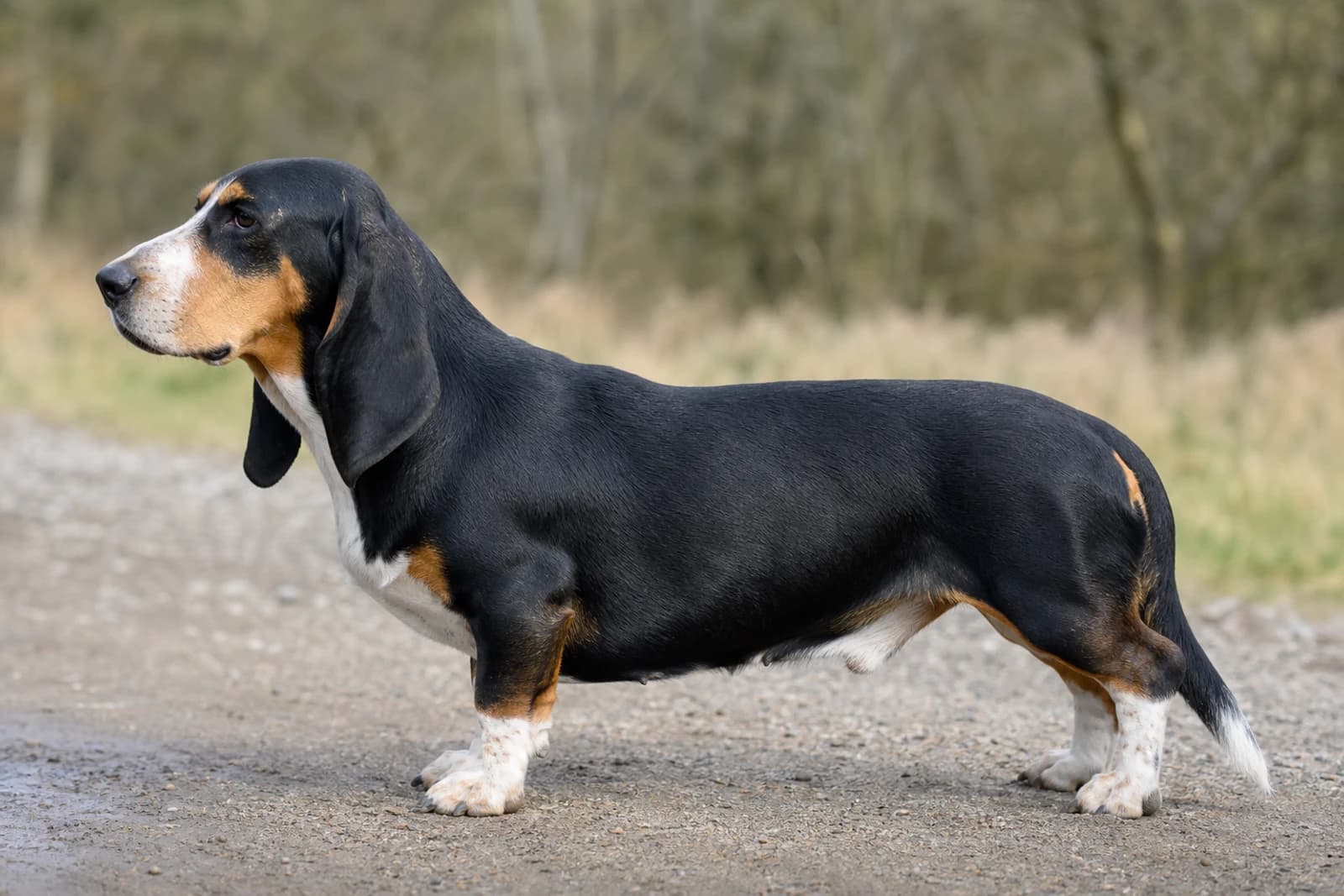
The Small Swiss Hound is a compact, short-legged scenthound bred for hunting in Switzerland's dense undergrowth. Known for their keen nose and tireless tracking, these dogs are lively, affectionate companions for active families who enjoy outdoor adventures. They thrive in homes with securely fenced yards and an owner committed to moderate exercise and mental stimulation. Their gentle nature makes them good with children, but their strong prey drive requires caution around small pets. Ideal for experienced hound enthusiasts, they are social, vocal, and devoted.
At a glance
- Size
- Medium
- Height
- 13–17 in
- Weight
- 18–33 lb
- Life span
- 12–13 years
- Coat colors
- Tricolor (black, tan, white), Black and tan, Blue speckled, Orange and white
- Coat type
- Short, dense, smooth coat
- Group
- Scenthounds
- Origin
- Switzerland
How much does a Small Swiss Hound cost?
Adopt / rescue
$75–$400
Usually includes spay/neuter, first shots, and a microchip.
Buy from a breeder
$700–$2,000
From a reputable, health-testing breeder.
Approximate USD. Prices vary widely by region, breeder, pedigree, age, and coat colour — adopting is the lower-cost and recommended route. Avoid suspiciously cheap “breeders”; they’re often puppy mills.
Estimate the full cost of a Small Swiss Hound →Small Swiss Hound photos
Views
Front, side, rear and top — the full silhouette.Poses
How the breed sits, lies, moves and plays.Puppy to senior
The breed across its whole life.Expressions
The breed’s range of moods.Close-up details
Eyes, ears, nose, paws, tail and coat.Coat colors
The breed’s recognized colors.Click any photo to enlarge. We show the Small Swiss Hound from every angle — three views, poses, life stages, expressions, close-ups, coat and colors.
Appearance & size
You’d swear somebody took a standard Swiss Hound and gave him a set of shorter legs—and you’d be close. The Small Swiss Hound (Niederlaufhund) is a compact, short-legged scent hound built to navigate underbrush without ever looking clunky. Next to his tall cousin you see the same lean head, deep chest, and easy trot, just scaled to 13–17 inches at the shoulder and 18–33 pounds.
Build & Silhouette
From the side this dog reads as a rectangle. Body length noticeably out-measures height at the withers, with a deep chest that reaches elbow level and a level topline that stays firm on the move. The loin carries a slight arch, the croup a gentle slope. The tail is medium-length, thick at the base, and carried saber-like or low—never curled over the back.
From the front you see straight, parallel forelegs with short, strong bone. The chest is broad but not so wide it looks clumsy; it sinks well between the legs, giving heart and lungs room for a full day in the field. Feet are tight and cat-like, with dark pads.
Move to the rear and the build still says power. Thighs are muscular, stifles well angulated, and the hocks stand parallel. At a trot the Small Swiss Hound covers ground smoothly, his short legs swinging straight with no wasted bounce.
Coat & Color
The coat is short, dense, and smooth—made to shed briars and dry fast. It lies close. Two color patterns prevail:
- Tricolor: a black saddle or blanket with rich tan points (cheeks, above the eyes, legs, under the tail) and white on the chest, feet, and tail tip.
- Bicolor (orange/white or reddish-yellow/white): warm orange or reddish with white patches—often a blaze, collar, chest, and feet. Some dogs are ticked with orange freckling in the white.
Head & Expression
The head is clean, moderately long, with a slightly domed skull and distinct stop. The muzzle is straight, deep, and roughly equal in length to the skull. Nose is black (brown may appear in some lighter-coated dogs). The signature detail: low-set, long, broad ears that hang in graceful folds. Pulled forward, the leather reaches at least to the nose, and when the dog’s tracking you’ll see them swing like little pendulums. Medium-sized, dark brown eyes are set slightly obliquely, giving a soft, friendly expression that matches the breed’s easy-going nature.
If you’re used to a Dachshund, this hound looks similar in height but is distinctly stouter, with a deeper chest and a truly houndy head—a full-size hunter compressed into a trail-ready shape that never feels delicate.
History & origin
If you’d been a Swiss foot hunter around 1900, your standard Schweizer Laufhund was more frustration than help. Those leggy scenthounds could run a hare for hours, but in the dense brush and steep, tangled terrain of the Jura and Alps they constantly outran the man with the gun. You needed a dog that worked slow and close, with a nose that never quit and a voice you could track through thick cover. So Swiss hunters built one.
They started with the smallest, slowest individuals from their existing Laufhund packs and likely crossed in shorter-legged breeds — French basset types or the Basset Hound — to lock in the compact frame. The goal was straightforward: keep the relentless scenting ability and ringing “tongue” of the big hound, but drop the height enough that a hunter on foot could stay in contact. What emerged was the Niederlaufhund, literally “short-legged hound,” also known as the Schweizerischer Niederlaufhund or Swiss Short-Legged Hound. The Swiss Kennel Club recognized the breed in 1905 and grouped it into the same four regional varieties that define the standard Swiss Hound:
- Bernese Niederlaufhund (tricolor, mostly black with rich tan markings)
- Jura Niederlaufhund (smooth black and tan)
- Lucerne Niederlaufhund (blue speckled, from heavy ticking on a white base)
- Schwyz Niederlaufhund (white with orange patches)
Every variety stands just 13 to 17 inches at the shoulder and weighs a solid 18 to 33 pounds. That low build isn’t delicate — it lets the dog push through undergrowth at a steady trot, nose down, while a high-pitched, almost melodic bay tells the hunter exactly where things are heading.
A century later, the Small Swiss Hound remains a specialist’s working dog. The overwhelming majority still hunt hare and fox in Switzerland, and only a handful of breeders export them. The gene pool is tiny, so finding one outside Europe is a long game — and the dog you bring home will still be wired to follow its nose with single-minded determination.
Temperament & personality
A Small Swiss Hound pivots between two worlds: a calm, tail-wagging house companion who’ll snooze on the couch, and a single-minded tracker who tunes out everything but the trail of a rabbit. That split personality is the real deal — not a training failure, just a nose with a dog attached.
At home, they’re quiet and even-keeled. When you meet daily exercise needs, this is not a yappy, anxious breed. A relaxed hound moves with a loose body, soft eyes, and a tail held at a comfortable level. You’ll notice they lean into you for ear scratches and often follow you from room to room without being clingy. They’re affectionate without being in your face — a chin resting on your knee, or a warm body curled at your feet while you work.
But ignore the nose, and you’ll meet the other side. Bred to hunt in the thick Swiss underbrush on short legs, these dogs process the world through scent. A walk around the block won’t cut it. They need a solid 45–60 minutes of sniff-rich roaming — think hikes, woodland trails, or fenced fields with a lot of ground to cover. When a scent locks in, their hearing shuts off. Recall training on a fresh rabbit track? It’ll test your patience. A long line or secure off-leash area is smart until you’ve built a currency of high-value treats for checking in.
Stubborn, yes. Hard, no. Strong will comes with the territory, but force or harsh corrections backfire. Respectful, consistent routines — paired with food rewards — work far better. These hounds remember consequences anchored to smells, so they may freeze or pull away if they associate a spot with a past fright. Give them time to sniff and think through new situations; lip licking, head turns, and yawns are all signals they need a beat to settle.
Watchdog tendencies are mild. They’ll bark an alert if a stranger approaches the property, but most are too personable to be real guardians. Expect a deep, rolling bay rather than a sharp yap — it carries. Left alone for long stretches without a job, some will channel boredom into howling or destructive chewing. A tired hound rarely makes trouble, but an under-exercised one will rediscover your shoes, chair legs, and anything that smells interesting. Orange-peel spray or a bitter vinegar mix can help deter the worst of it, but the real fix is more exercise.
Around the household, they’re steady when raised right. They tend to do well with respectful children who understand to leave the dog alone during meals (food guarding can develop if meals are interrupted). Early exposure to cats and small pets is a must — a racing hamster or a darting cat kicks the chase instinct into high gear. Scent drives everything, including house training. Any lingering urine odor indoors acts as an invisible signpost that says “potty here again,” so enzymatic cleaners are your friend. And because these dogs mark territory by scent, they may re-soil places where a rug holds the faint smell of another dog or a laundry pile carries family scents. A reward right after outdoor business — every single time — teaches the right habit faster than scolding accidents.
One quirk you’ll either love or dread: They roll. Deer droppings, dead worm, the stinkier the better. It’s not defiance — it’s a deep-rooted scavenger impulse that likely once masked their smell or shared news of a good meal. You’ll learn to carry a towel in the car.
Above all, this is a dog who thrives on partnership, not orders. They’ll return your patience with years of quiet companionship, as long as you never forget the nose running the show.
Good with kids, dogs & other pets
Small Swiss Hounds get along with kids in a calm, steady way that many families appreciate. They aren’t quick to snarl or snap—these are patient, non-aggressive hounds bred to work in close-knit packs. At 18 to 33 pounds and 13 to 17 inches tall, they’re sturdy enough to handle a clumsy toddler’s lean but small enough that they won’t accidentally bulldoze a child. Still, no dog is a babysitter. Teach kids not to climb on the dog or grab ears, and keep an eye on all interactions so the hound always has an escape route to his crate or a quiet corner.
Other dogs usually aren’t a problem. A working scenthound background means the Small Swiss Hound grew up hunting side by side with packmates, so canine company often comes naturally. Early, positive introductions still make a difference. If you bring a puppy home, let him meet vaccinated, friendly adult dogs and well-matched playmates on neutral ground. For an adult rescue, don’t force dog-park greetings. Many adult Small Swiss Hounds are perfectly content playing with one or two trusted buddies and ignoring strange dogs on leash—and that’s fine. Pushing a shy adult to “socialize” can backfire into stress and fights.
Small pets are a different story. Like most scenthounds, the Small Swiss Hound has strong chase instincts. A cat that dashes or a pet rabbit hopping across the living room can flip a switch in his brain. You can raise a puppy with a cat inside and build a polite truce through careful, supervised introductions—baby gates, positive reinforcement, and never leaving them alone together. But a small, squeaking mammal loose in the yard? That’s fair game. Secure hutches and hamster cages, and accept that some homes just aren’t a good fit for this mix.
Socialization shapes how all these relationships play out. Get a puppy from a breeder who raises litters indoors with everyday sights, sounds, and handling. From the day he comes home, quietly introduce him to new people, gentle dogs, different flooring, car rides, and the clatter of a dropped pan. Keep sessions short, upbeat, and never forced. That early work—especially through the first four months—builds the confidence that prevents a dog from turning timid or reactive later. Puppies raised in isolation (think puppy mills or cages) often develop lasting fears that are much harder to undo as adults.
With a well-raised Small Swiss Hound, you’ll have a tolerant companion who fits into a busy household. Just remember to match the pace to the individual dog, keep small pets out of reach, and never skip the supervision.
Trainability & intelligence
The Small Swiss Hound learns exactly what you teach — and then decides whether it’s worth doing when a scent trail is calling. This is a scenthound, not a retriever. His brain is sharp, but his motivations run through his nose, not through a desire to please you on command. Once he locks onto a smell, your voice can drop into a background hum. That independence isn’t stubbornness in the typical sense; it’s centuries of breeding for a dog who worked at a distance, making his own calls.
Training works best when you lean into that reality rather than fighting it. Use high-value rewards — tiny bits of hot dog, freeze-dried liver, or cheese — and keep it fast. A two-minute session where he scores five jackpots teaches more than ten minutes of drilling. Mark the instant he gets it right. Harsh corrections are doubly wrong here: a hard word can make this hound shut down emotionally, and a yank on the leash just teaches him to avoid you. Your job is to become more interesting than the ground, and that takes a bank account of trust built over months, not days.
Recall is the wall most owners hit. A Small Swiss Hound in full cry on a rabbit track is practically deaf. Never punish a slow or failed recall — you’ll only teach him that coming back ends the adventure. Use a long line in unfenced spaces, reward every spontaneous check-in before you need to call, and practice dozens of low-distraction recalls before you ever test it near woods or wildlife. He may never be a dog who can safely hike off-leash in open country. Accept that early, and you’ll both be safer.
Start socialization young — ideally before 16 weeks old — with gentle exposures to new people, dogs, surfaces, and household clatter. A poorly socialized Niederlaufhund can grow into a skittish or aloof adult, and that nervous energy often turns into barking at things that don’t scare a more seasoned dog. Channel his extraordinary nose into games like “find it” inside the house or a structured scent-work class. Teach a reliable “leave it” for the moments you spot trouble before he does. A bored hound’s brain won’t idle — it’ll dismantle something fragrant. Give him a puzzle that pays off in kibble and he’ll work for you willingly.
Exercise & energy needs
This little hound runs on his nose, not his legs — but that nose still needs a daily job. Plan on 45–60 minutes total of exercise, split into at least two outings. A single stroll around the block on a short leash won’t cut it. He’s built for endurance, not speed, so the best use of that time is a long, sniffy walk in the woods or a grassy field where he can put his nose to the ground and follow a scent trail until his brain is tired.
Because the Small Swiss Hound carries a long back on unusually short legs, skip high-impact stuff — no repetitive jumping down from the SUV or off the couch, no hard turns at a dead run on pavement. A harness instead of a neck collar keeps pressure off his spine when he hits the end of the leash after a rabbit.
- Two 20–30 minute scent walks — let him choose the route. He’ll zigzag and backtrack, and that mental work drains energy faster than jogging.
- Indoor scent games — hide kibble in a snuffle mat, scatter it in the grass, or set up simple nosework searches in the house. Ten minutes of “find it” can feel like a full walk.
- Puzzle feeders and frozen Kongs for days when weather traps you inside.
- No off-leash running in unfenced areas — his nose overrides recall when he’s locked on a track.
These dogs were developed to hunt all day in the Swiss mountains, so while they’re compact, they’re stubbornly persistent. If you shortchange his daily exercise, he’ll let you know — digging, pacing, and a deep, resonant howl are your standard payback. A tired Small Swiss Hound is one who’s been allowed to sniff deeply for a solid hour, not one who’s been forced to trot on asphalt.
Grooming & coat care
The Small Swiss Hound wears a short, dense, smooth coat that sits close to the body. It’s a wash-and-wear jacket — no fussy layers, no undercoat to rake out. That doesn’t mean zero upkeep, but you’ll spend far less time grooming than you would with a long-haired scenthound.
A quick once-over with a pig-bristle brush or a grooming mitt once a week is all it takes to whisk away dead hair and spread the natural oils that keep the coat glossy. During spring and fall shedding pick-ups, bump that to twice a week; a rubber curry helps grab the loose stuff before it ends up on the furniture. You won’t need a slicker or pin brush here — the coat is too short to mat or tangle.
Bathing is strictly as-needed. These dogs have a mild hound odor, but over-washing strips the protective oils and can dry out the skin. When they roll in something ripe, a gentle dog shampoo and a thorough rinse does the job.
The ears demand more attention than the coat. Those long, low-set, floppy ears trap moisture and reduce airflow, making them a perfect spot for yeast and bacteria. Flip each ear up, give it a sniff, and wipe the visible area with a damp cotton ball or a vet-approved cleaner once a week, and always after the dog’s been out in wet grass or rain.
Keep nails short enough that you can’t hear them clicking on the floor — for a 18–33 lb dog, that usually means a trim every 3–4 weeks. Pair it with a regular brushing of the teeth (enzymatic dog toothpaste makes it less of a wrestling match) and this little hound stays clean, comfortable, and ready to hit the scent trail.
Shedding & allergies
You won’t escape dog hair, but the Small Swiss Hound’s smooth, single coat keeps it manageable. No undercoat means no seasonal explosion of fluff. Instead, short dark-and-tan hairs drift onto floors and upholstery steadily year-round. A quick session with a rubber curry brush or a hound glove two or three times a week traps the worst of it before it becomes part of your wardrobe.
Drool is on the lighter side for a scenthound. You might notice a thin strand after a big drink or when a scent has them really fired up, but they aren’t the type to leave snail trails on your knee.
There is no truly hypoallergenic dog, and this breed is no exception. The proteins that trigger allergies live in dander, saliva, and urine — not just fur. Because the Small Swiss Hound sheds a normal amount and produces the usual proteins, it won’t be a sneeze-free companion for allergy sufferers. The only reliable test is spending a few hours in a home with adult Niederlaufhunds. A breeder visit gives you real-world information that no listing can.
Diet & nutrition
A Small Swiss Hound’s short, strong frame doesn’t carry extra pounds gracefully — every ounce above a healthy weight adds strain to joints and the long spine. This is not a breed you can free-feed and forget. Portion control matters from day one.
The weight trap these dogs can fall into
These are scent hounds with a healthy food drive. Many will eat whatever you put in front of them, then look for more. Without strict measured meals, they’ll steadily gain weight, and you might not notice until a vet visit shows they’ve crept past 33 pounds. Keep your dog lean — you should feel ribs under a light layer of flesh, not a padded cushion. For an adult of average build (say, 25 pounds), that usually means 1,000 to 1,200 calories a day, split into two meals. A highly active hunting dog might need closer to 1,400; a couch-loving companion in an apartment may need less. Adjust based on what you see, not what the bag recommends.
What goes in the bowl
A high-quality commercial kibble formulated for medium breeds works well, but many owners rotate in fresh food. A practical ratio: roughly 60% raw or cooked meat, 20–30% vegetables and fruit, and the remaining 10% from eggs, plain yogurt, or digestible grains like pearl barley or white rice. If your dog bolts food, use a puzzle bowl or scatter part of the meal on a snuffle mat — it turns eating into a scent game and slows them down. Never feed rich, fatty scraps, especially after holidays; pancreatitis is a real risk in a breed that doesn’t know when to stop.
Puppy rhythm
From weaning to four months, a Small Swiss Hound puppy needs four evenly spaced meals a day. Drop to three meals from four to six months, then two meals like an adult. Start with lightly cooked, puréed meats, fish, fruits, and veggies, or a premium puppy food. Around twelve weeks, you can introduce supervised raw meaty bones like chicken wings for jaw strength and mental work. Transition any new food gradually over a week to avoid stomach upsets.
The senior chapter
By age 10 or so, metabolism slows. Keep feeding twice a day but watch the scale relentlessly — cut back gradually if you spot padding. There’s no evidence that healthy seniors need less protein; you just need to manage total calories. If dental issues make chewing tough, purée the meal to improve nutrient absorption. Smaller, more frequent meals can help an older dog that’s lost a little appetite, but still measure everything. Leftover vegetables cooking water (unsalted) can be stirred into meals for extra hydration. And never feed from the table — a begging Small Swiss Hound is a stubborn one to undo, so keep those habit loops from forming.
Health & lifespan
You can expect a well-bred Small Swiss Hound to live 12 to 13 years. That’s a solid run for a medium scent hound, and plenty stay sharp and active into their double digits — if you get ahead of the few structural quirks built into the breed.
The most significant concern comes from that classic short-leg, long-back silhouette. It’s the same body plan that makes Dachshunds prone to intervertebral disc disease (IVDD). A disc can rupture or slip under everyday stress, especially in a dog that’s carrying too much weight or launching off furniture. Keeping your hound lean — you should feel the ribs easily — is the single most protective move you can make. Learn the early red flags: sudden reluctance to jump, yelping when touched, or dragging a back leg, and get to a vet fast if you see them.
Ears and skin are the next front. Those low-hanging, floppy ears seal in moisture and wax, giving yeast and bacteria a perfect setup. A weekly sniff-and-wipe with a drying ear cleaner prevents most problems. Some lines also inherit a tendency toward allergies — seasonal or food-related. If your hound starts licking paws obsessively or scratching raw spots on its belly, a vet-guided diet trial often clears it up.
Because the breed is uncommon, health-shaping breeders don’t lean on guesswork. They screen for:
- Hip and elbow dysplasia — less dramatic than in large breeds, but still present, so OFA or PennHIP evaluations matter.
- Patellar luxation — loose kneecaps pop up in any small-to-medium dog, and a breeder should have the parents’ patellas certified normal.
- Eye disorders — annual CERF exams catch inherited retinal problems early.
- Heart murmurs — some European clubs flag a slight predisposition to mitral valve disease, though it’s not rampant. A baseline cardiac exam is wise.
This is a thin-coated dog bred for mountain work, not a sofa ornament. In winter, a dog coat is practical, not cute. In hot months, limit heavy exercise to mornings and evenings. They adore a sunbeam, but they won’t self-regulate; you have to pull the plug before they overheat.
Routine care is straightforward. Monthly heartworm prevention during mosquito season, year-round flea and tick control, and a current rabies vaccination are non-negotiable for every dog. Annual wellness exams that include a full mouth check help you stay ahead of dental disease — which matters when your hunting buddy is likely to live 12-plus years. A lean waistline, dry ears, and a consistent vet relationship sidestep the worst of what the breed can encounter.
Living environment
If you don’t have a secure yard with a fence that goes down to the ground, think twice. The Small Swiss Hound is a dedicated scenthound — his whole world happens nose-first, and an interesting smell can override any recall training. A house with a tightly fenced outdoor space gives him room to trot, sniff, and follow trails without you worrying he’ll disappear into the woods after a rabbit. Apartment living is a tough fit. It’s not just the space; it’s the voice. This breed bays — full-throated, houndy bawls — when he’s excited, on a scent, or just bored. Close neighbors won’t thank you.
He handles cool and cold weather well, thanks to a dense double coat designed for Swiss winters. Hot summers call for early morning or evening exercise and plenty of shade, because he’ll push himself long past what’s smart for his own body. Unlike some short-nosed dogs, heat isn’t a medical emergency waiting to happen, but a long run in 90-degree sun is a bad idea.
Inside the home, this hound latches onto his people. He’s not a “leave me alone” kind of dog. If you work long hours away, you’ll need a plan for midday breaks and mental stimulation — or you’ll come home to a howling, stressed-out companion and possibly chewed baseboards. Puzzle toys stuffed with treats and frozen kongs can buy you time, but they don’t replace human company. Crate training and slow, deliberate practice with short absences help build independence, but a Small Swiss Hound who’s left solo for 9-hour stretches will likely develop separation anxiety.
Exercise isn’t a quick loop around the block. Plan on at least an hour a day, split into a couple of sessions: a long morning walk where he can sniff every blade of grass and a late-afternoon run or scent game. He thrives when his nose gets a real workout — hide treats in the yard, scatter kibble in the grass, or enroll in a nosework class. A tired-out hound who’s spent the day following his nose is a quiet, content one. Ignore that need, and the baying will remind you.
Who this breed suits
The Small Swiss Hound is a dedicated scent machine in a compact, easy-to-house package. This breed fits owners who genuinely enjoy watching a dog follow its nose for hours and aren’t fazed by a deep, ringing bay when the trail gets hot. You need a securely fenced yard and a commitment to on-leash walks or long-line hikes — off-leash reliability is a coin toss once that nose locks on.
Active singles, couples, or families with older kids who can match the dog’s steady, ground-covering pace get the best match. The breed is affectionate without being needy, making it a fine partner for someone who works from home but won’t smother them. First-time owners can succeed here if they sign up for positive reinforcement classes early and treat the hound’s independence as a feature, not a flaw. Think of training more as a negotiation with a cheerful, scent-obsessed roommate.
Seniors who still walk briskly and enjoy nose-work games, puzzle feeders, or tracking sports might find a great companion in the Small Swiss Hound. The manageable 18–33-pound size means it won’t drag you down the street, but you’ll need to provide a real hour or more of sniff-heavy exercise daily, not just a quick potter around the block.
Skip this breed if multi-hour barking spells would cause neighbor friction or if you want a dog that comes instantly when called, regardless of deer or rabbit distractions. The prey drive is real, and smaller pets can trigger it. Apartment living without immediate access to quiet trails and a yard is a tough ask — these dogs live through their noses and need daily outlets that satisfy that drive, or they’ll create their own, often noisy, projects.
Cost of ownership
A sound, well-bred Small Swiss Hound won't show up on a casual scroll—these are scarce dogs, even in Europe, and finding a responsible breeder in the US takes patience. When you do, expect a purchase price between $1,800 and $3,500, sometimes a bit more if you import or work with a breeder who does extensive health clearances. An occasional adult rehome through the breed club can knock that figure in half, but those dogs rarely pop up.
The true ongoing cost is refreshingly moderate once the dog is home. These are lean, 18–33 lb hounds with short, single-layer coats and a sensible appetite.
- Food: A high-quality kibble runs $30–50 a month for most individuals. If you hunt or train hard, you might nudge into the $55 range for a performance formula.
- Grooming: Coat upkeep is almost zero. A rubber curry a few times a week pulls out dead hair. The real need is ear care: those long, drop ears trap moisture and dirt. Budget for a quality cleaner and a quick check after any wet outing. Professional nail trims every 4–6 weeks add $10–20, or do it yourself for the cost of a good trimmer.
- Routine vet and preventatives: Annual exams, core vaccines, and heartworm/flea-tick prevention land at roughly $400–600 per year ($35–50/month). Don't skip the monthly preventative—these hounds rummage through thick brush where parasites thrive.
- Pet insurance: For a reasonably healthy breed with a 12–13-year lifespan, a solid accident-and-illness policy typically costs $35–55 a month, depending on your deductible and location. A wellness add-on tacks on another $15–25 if you prefer to smooth out routine care bills.
One-time setup
A crate, a scent-proof leash, a properly fitted harness (a neck escape artist is no joke), beds, and safe chew toys will set you back $200–400 right off the bat. Many owners also spring for a GPS tracker early on—recall off a hot scent line isn't a given.
All told, budget $120–170 per month for a healthy adult, not counting the initial price or a surprise surgery. The handful of real budget-breakers come from the houndy habits: a swallowed sock, an ear infection that won't quit, or a hurt pad from a day in rough terrain. Keep a cushion for those, and the rest stays pleasantly manageable.
Choosing a Small Swiss Hound
You can bring home a Small Swiss Hound from a breeder or a rescue, and your choice really rides on how much predictability you want versus what you’re willing to roll with. A responsible breeder stacks the deck for health and temperament; a rescue gives a known dog a second life but rarely comes with a clean medical folder.
Start with health clearances, because the short legs on this breed don’t mean fewer orthopedic problems. The Schweizerische Kynologische Gesellschaft (SKG) and breed clubs expect breeders to screen for hip dysplasia, elbow dysplasia, and patellar luxation — all of which can show up in a 13–17 inch, 18–33 pound dog that was built to course over rugged Swiss terrain. Ask for OFA or PennHIP results on both parents, plus an annual eye exam by a veterinary ophthalmologist (progressive retinal atrophy and cataracts crop up in scenthound lines). A cardiac exam and a Brucellosis test round out the non-negotiables. If a breeder waves these away with “my lines are clean” or produces only a vet check, keep looking.
Red flags are loudest around puppy pickup. No breeder should send a puppy home before 8 weeks; 10–12 is more common here because the slow-maturing hound brains benefit from extra litter time. Run from anyone running multiple litters simultaneously, unwilling to show you where the dogs live, or pushing a particular puppy on you without asking about your lifestyle. You want to meet at least the dam and watch how she moves — any hitch or limp is a warning sign.
When you’re in front of a litter, pay less attention to which puppy charges you first and more to sound structure. The puppy should walk squarely on those short legs with no wobbling patellas, clear eyes, and clean, sweet-smelling drop ears. Ears that already smell yeasty or paws that turn inward are early headaches. Temperament-wise, a Small Swiss Hound shouldn’t be shy or sharp; you’re looking for a confident nose that will eagerly investigate your hand but settle once novelty passes.
The rescue path skips the puppy chaos and often lands you a dog whose house manners and voice are established. You’ll rarely get a full health history, so assume you’ll need baseline hip and patella X-rays right away, plus a deep ear cleaning. A good hound rescue will still try to match you based on how vocal or driven the dog is — critical because this breed can get loud and single-minded on scent. Whether you go breeder or rescue, a candid conversation about the dog’s baying and follow-through on a fenced yard will save you a lot of noise complaints.
Pros & cons
-
Compact but rugged. At 18–33 pounds and 13–17 inches, you get a dog small enough to curl up on the couch but sturdy enough to scramble over fallen trees on a hike. Their short-legged build handles steep, brushy terrain better than taller hounds.
-
People-friendly, pack-happy temperament. They’re amiable with family, generally patient with kids, and usually get along well with other dogs. A true scenthound: they want to be part of the action, not left in the backyard alone.
-
Easy-care coat. A smooth, short double coat needs little more than a weekly brush to stay shiny and clean, plus the occasional bath after a muddy outing.
-
A nose-driven explorer. If you love long, meandering sniff walks where the dog leads the way, you’ve met your match. They can go for a solid 60-90 minutes of exercise split between walking and scent games, and will happily nap afterward.
-
Decent lifespan. With good care, you’re looking at a 12–13-year companion, which is solid for a purebred hound.
-
Off-leash freedom is a fantasy. A Small Swiss Hound’s nose overrides every other sense. Once they catch a scent, recall training becomes a faint suggestion. You’ll need a securely fenced yard—6-foot, dig-proof—because they will tunnel under or shimmy through gaps to follow a trail.
-
They’re louder than their size suggests. This breed bays with a deep, carrying voice that announces every interesting smell. Apartment dwellers and neighbors with thin walls will not appreciate the concert at 6 a.m. when a squirrel passes by.
-
Stubborn streak runs deep. Patience and positive reinforcement are non-negotiable. They didn’t evolve to work off-leash for a handler; they were bred to hunt independently, and that shows up as selective hearing in the backyard.
-
Exercise is a requirement, not a suggestion. A bored hound turns into a chewer, a digger, a nonstop barker. Two short leash walks won’t cut it—plan on daily, purposeful sniff-heavy outings plus puzzle feeders or nose work games indoors.
-
Ear maintenance matters. Those long, floppy ears trap moisture and reduce airflow, so you’ll be cleaning them weekly to head off infections. It’s a five-minute chore, but skip it and you’ll be at the vet.
Similar breeds & alternatives
If a short-legged scenthound fits your life but you want to weigh other paths, a few breeds share that low-to-the-ground hound nose—but each feels different when you live with them.
-
Beagle – The obvious household name. At 13–15 inches and 20–30 pounds, a Beagle lands in the same general size bracket. Key difference: Beagles are pack hounds through and through. They tend to be noisier, more gregarious, and more prone to separation anxiety when left alone. A Small Swiss Hound is steadier and more independent; it handles solo time better and rarely matches the Beagle's full-volume bay. Beagles also shed a short, hard coat year-round, while the Small Swiss Hound’s dense, medium-length double coat needs less daily vacuuming and offers better protection in cold, wet woods.
-
Basset Hound – If you’re drawn to short legs but want a lower-energy couch companion, the Basset weighs twice as much (40–65 pounds) and moves at a saunter. The Small Swiss Hound is a lighter, more athletic dog built to push through steep undergrowth all day without tiring. That means a Small Swiss Hound needs significantly more daily off-leash running, while a Basset is content with a couple of leisurely walks. Bassets also carry more weight on a longer spine, so back and joint trouble is a bigger concern; the lighter frame of a Small Swiss Hound reduces that risk, though achondroplasia still merits a watchful eye.
-
Petit Basset Griffon Vendéen (PBGV) – Another rough-country French hound with a merry streak. Height and weight overlap (13–15 inches, 25–40 pounds), but the PBGV’s shaggy, wiry coat demands regular stripping or trimming to stay mat-free. The Small Swiss Hound’s smooth, close-lying coat is wash-and-wear by comparison. Temperament-wise, a PBGV leans into terrier-like sass and can be more vocal indoors, where the Small Swiss Hound tends to be calmer and more reserved with strangers until it warms up.
-
Drever – A Swedish short-legged hound that’s stockier than the Small Swiss Hound (about 30–34 pounds, often heavier in bone). Drevers have a short, dense coat and a reliable nose for deer and hare. They’re sturdy and friendly but can be stubborn on a trail. The Small Swiss Hound is a lither, more angular dog bred for fast, twisting chases in mountain terrain. If you hunt in truly steep country or want a dog that turns on a dime, the Small Swiss Hound feels more nimble.
Within the breed itself, you’re really choosing a coat color pattern, not a different dog. The four Swiss Niederlaufhund varieties—Bernese (black-and-tan), Jura (dark with tan over the eyes), Lucerne (blue speckled), and Schwyz (white with orange or red patches)—all share the same size, temperament, and working style. The pick comes down to which look you prefer and whether a nearby breeder has a line with current health clearances.
Fun facts
- Also known as 'Niederlaufhund,' meaning 'short-legged hound' in German.
- Bred to hunt in dense undergrowth, their short legs allow them to navigate thick cover with ease.
- They have an exceptionally keen nose and a melodious bay.
- The breed comes in four color varieties, each named after a Swiss canton: Bernese, Jura, Lucerne, and Schwyz.
Frequently asked questions
- Is the Small Swiss Hound good with children?
- The Small Swiss Hound is generally gentle and affectionate, making it a good companion for children. Supervision is always recommended during interactions, especially with younger kids. Their lively nature enjoys play, but their independent streak may require patience.
- How much exercise does a Small Swiss Hound need?
- With high energy (4 out of 5), this breed needs plenty of daily exercise—at least an hour of vigorous activity like long walks, runs, or scent games. Without enough stimulation, they can become restless and vocal.
- Does the Small Swiss Hound shed a lot?
- The Small Swiss Hound has a moderate shedding level (3 out of 5). Expect some loose hair year-round, with increases seasonally. Regular brushing a couple of times per week helps control the shedding.
- What are the grooming requirements for a Small Swiss Hound?
- Grooming needs are low (2 out of 5) due to their short, dense coat. Weekly brushing removes dead hair and distributes oils, while baths are only occasional. Routine nail trims and ear checks complete the care.
- Can a Small Swiss Hound live in an apartment?
- Apartment living can be challenging because they tend to be vocal and very active. Their barking may disturb neighbors, and they need ample daily exercise that is harder to provide without a yard. With dedicated training and enough outdoor activity, they can adapt, but a home with space is ideal.
- Is the Small Swiss Hound easy for first-time dog owners?
- They can be suitable for first-time owners who are prepared for an independent and vocal dog. Their affectionate nature is appealing, but their strong scent drive and occasional stubbornness require consistent, positive training. Plenty of exercise and mental engagement are essential.
Tools & calculators for Small Swiss Hound owners
Quick estimates tailored to Small Swiss Hounds — pre-filled with this breed’s size where it matters.
Articles & stories about the Small Swiss Hound
Sources & standards
This profile follows recognized breed standards from the American Kennel Club (AKC) and the Fédération Cynologique Internationale (FCI), along with established veterinary and breed-club guidance. These describe general breed tendencies — every dog is an individual.
Owner stories
Have a Small Swiss Hound? Share your experience — grooming tips, personality quirks, anything goes.