

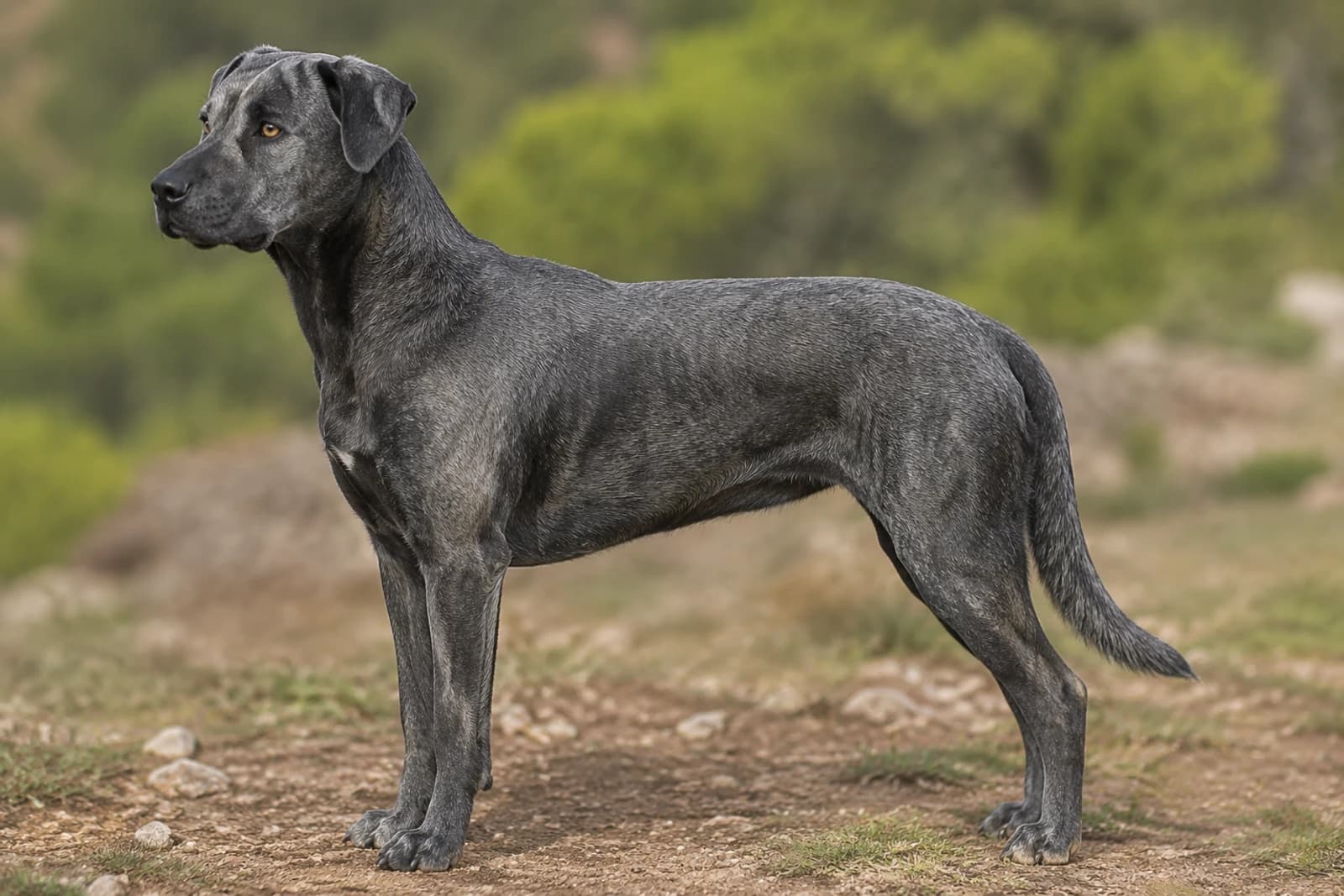
The St. Miguel Cattle Dog is a robust, intelligent herding breed from the Azores. Known for its loyalty and protective nature, this large dog thrives with experienced, active handlers who can provide firm leadership and plenty of exercise. Best suited for rural or suburban homes with space, it excels in working roles and makes a devoted family companion when properly socialized. Not ideal for novice owners, this breed requires consistent training, mental stimulation, and early socialization to bring out its best qualities.
At a glance
- Size
- Large
- Height
- 19–24 in
- Weight
- 44–77 lb
- Life span
- 15 years
- Coat colors
- fawn, brindle
- Coat type
- short, dense coat
How much does a St. Miguel Cattle Dog cost?
Adopt / rescue
$75–$400
Usually includes spay/neuter, first shots, and a microchip.
Buy from a breeder
$700–$2,000
From a reputable, health-testing breeder.
Approximate USD. Prices vary widely by region, breeder, pedigree, age, and coat colour — adopting is the lower-cost and recommended route. Avoid suspiciously cheap “breeders”; they’re often puppy mills.
Estimate the full cost of a St. Miguel Cattle Dog →St. Miguel Cattle Dog photos
Views
Front, side, rear and top — the full silhouette.Poses
How the breed sits, lies, moves and plays.Puppy to senior
The breed across its whole life.Expressions
The breed’s range of moods.Close-up details
Eyes, ears, nose, paws, tail and coat.Coat colors
The breed’s recognized colors.Click any photo to enlarge. We show the St. Miguel Cattle Dog from every angle — three views, poses, life stages, expressions, close-ups, coat and colors.
Appearance & size
The first thing you notice is a blocky, muscular dog that looks built for hard work, not a grooming session. A St. Miguel Cattle Dog stands 19 to 24 inches at the shoulder and carries 44 to 77 pounds on a frame that’s heavy-boned but never clunky. From the side, the body is just slightly longer than tall, with a deep, wide chest that drops to the elbows and a well-sprung ribcage that says endurance. You won’t see wasp waists here — this is a solid, rectangular-built herder with enough substance to turn stubborn cattle.
Up front, the head is the breed’s trademark. It’s broad and massive, with a slightly rounded skull and a definite stop. The muzzle is wide and blunt, not snipey, and the powerful jaws close in a scissors bite. Dark, oval eyes are set well apart, giving the dog a calm but watchful expression. The ears, if left natural, are moderately sized, triangular, and fold downward; in many working lines they’re cropped short and rounded, which makes the already formidable head look even more formidable. A strong, slightly arched neck flows into laid-back shoulders, so the dog’s forward carriage conveys confidence.
From the rear, you’ll see muscular thighs and well-angled stifles that drive a smooth, ground-covering trot. The tail hangs down at rest with a slight curve at the tip; when the dog is moving or alert, it rises to the level of the back but never curls over. The rear assembly isn’t flashy — it’s functional, built for quick starts and sharp lateral movements on uneven pasture.
The coat is the no-fuss workman of the package: short, dense, and harsh to the touch, with just enough undercoat to shed mud and rain. Brindle is the iconic color, ranging from pale silver-gray tiger stripes on a fawn background to a heavy black striping that nearly covers the body. You’ll also see solid fawn or yellow coats, but almost always with a dark mask on the muzzle and darker shading on the ears. Small white markings on the chest and toes are permitted, but a primarily white dog isn’t typical. Coat texture stays crisp and flat, so a rub-down with a hound glove after a day outside is usually all the grooming this dog asks for.
History & origin
The dog you see today tracks back to a single volcanic island where cattle outnumbered people and a tough, no-nonsense herding dog wasn’t a luxury — it was a necessity. The St. Miguel Cattle Dog, or Cão Fila de São Miguel, was forged on São Miguel in the Azores, an archipelago settled by the Portuguese in the 15th century.
Settlers brought livestock and their working dogs, including large mastiff-types and bulldog-like gripping breeds from mainland Portugal. On São Miguel, these imports crossed with local dogs already adapted to the rugged terrain. The goal was clear: create a dog that could manage semi-feral cattle across steep pastures, volcanic stone walls, and dense laurel forests without wrecking the stock or quitting halfway through a drive.
By the early 1800s, a recognizable type was locked in. The breed didn’t just herd by barking and circling. It worked as a low-heeling catch dog, darting in to grip a stubborn steer low on the leg — just above the hoof — and releasing the instant the animal moved. That bite-and-release instinct saved the dog from kicks and kept the cattle sale-ready. When not moving herds, the same dog doubled as a farm guardian, alert to anything out of place around the dairy barns and homesteads.
For more than a century, the St. Miguel Cattle Dog remained a hidden island specialist. Modernization hit hard in the mid-20th century. Fencing, motorized vehicles, and shifts in farming practices shrank the breed’s role, and numbers plummeted dangerously close to extinction.
A dedicated group of local breeders reversed the slide. They combed rural pockets of the island for remaining pure examples and built a structured breeding program. The first official breed standard was published in 1984, and the Portuguese Kennel Club recognized the breed that same year. The FCI followed internationally in 2007, classifying it in Group 2 (Pinscher and Schnauzer type, Molossoid breeds).
Today the breed remains rare outside Portugal. You’re most likely to find it still at work on its home island, or in the hands of a few committed fanciers who value a square-built, agile cattle dog with a 15-year lifespan and zero quit.
Temperament & personality
The St. Miguel Cattle Dog is a working animal through and through — whip-smart, intense, and bred to move livestock all day long. Bring one into a family setting and you’re signing up for a dog that needs a job, not just a backyard to roam. A 45-minute stroll won’t cut it; expect to provide a solid hour of focused running, herding games, or obstacle work. Without that outlet, a 60-pound dog with this much drive will find its own projects, often at the expense of your furniture or garden.
Loyalty runs deep, but it’s directed at their inner circle. They tend to be watchful and reserved — sometimes outright wary — with strangers, which makes early, ongoing socialization non-negotiable. Temperament descriptors like “calm” or “gentle” reflect typical tendencies, not a lifetime guarantee. A St. Miguel Cattle Dog with a low friendliness score or a protective streak can be a lot of dog in a house with small children or other pets. Novice owners often find the breed’s strong will and sensitivity to household dynamics challenging. This is not a dog that thrives on force; respectful, consistent guidance gets much further.
Quirks come with the territory — literally. These dogs mark their world using scent, and if you miss cleaning a urine spot, the odor cues them to repeat the behavior in the exact same place. A vinegar spray (white and cider vinegar) helps neutralize the smell and break the cycle. You’ll also notice they roll in foul things — dead worms, mystery gunk at the park. Multiple theories explain it, but practically it means keep a towel handy and hold your nose. Chewing is another constant: puppies chew from teething and exploration, while adults gnaw on hard objects to keep their jaws strong and teeth clean. A citrus spray made from boiled peels can steer them away from chair legs.
Watch body language closely. A stiff front, direct stare, and forward-leaning posture often precede a lunge; a loose, soft-eyed stance signals the calm you want. Never interrupt this dog during meals, because food guarding can escalate quickly. Teach kids to let them eat in peace. Housetraining goes faster if you go outside with them and hand over a treat the instant they finish — punishment for indoor accidents only teaches them to hide from you.
You’ll have this dog for around 15 years, so choose a breeder who screens for stable temperament and health. In daily life, a St. Miguel Cattle Dog doesn’t just share your home; they read your routines, guard your perimeter, and learn exactly which family member’s scent defines “inside.” If you keep their brain busy and respect the instincts, you get an intense, deeply bonded partner.
Good with kids, dogs & other pets
A St. Miguel Cattle Dog is built to work closely with people all day, and that need for companionship shapes every interaction with kids, dogs, and other pets. Leaving one alone in the yard for hours tends to backfire — boredom and isolation can feed barking, destruction, and a dog who’s too wound up to be safe around little ones. This breed does best when he lives indoors as part of the family.
Kids
Remember the herding roots. A child who runs, shrieks, or moves fast can trigger a Cattle Dog’s instinct to control movement — often a nip at the heels. That’s not aggression; it’s a hardware-level response to motion. Supervise every interaction and teach the dog from day one that using his mouth on people is off-limits. Start puppy‑kid introductions early, ideally before 16 weeks, with calm children who know how to respect a dog’s space. At 44–77 lb, a happy body-check can floor a toddler, so active play needs an adult on hand. Ongoing, positive exposure to kids of different ages keeps the dog comfortable and predictable as he matures.
Other dogs
With early socialization, most St. Miguels get along with other dogs. Puppy classes, neighborhood walks where you reward calm leash greetings, and controlled playdates all help. A few individuals will try to boss and steer other dogs like cattle — watch for stiff, pushy body language and redirect it. If you adopt an adult who’s missed that early window, don’t force friendships. An adult dog who is relaxed with just you doesn’t need to be a social butterfly; forced interactions risk fights, not play.
Cats and small pets
Herding drive usually comes with a chase instinct. A cat, rabbit, or free‑running chicken can look like something to round up. Introduce pets slowly, in controlled setups with the dog on leash. Many St. Miguels coexist peacefully with a house cat they grew up with, but never leave them unsupervised. Small caged animals like hamsters or birds need secure enclosures and a barrier the dog can’t breach.
Lay the foundation in that critical 3‑to‑16‑week window, keep social experiences gentle and frequent, and you get a steady, affectionate dog who takes the household chaos in stride.
Trainability & intelligence
The St. Miguel Cattle Dog is a whip-smart working animal who picks up new commands fast — when he sees the point. Don't mistake his independent streak for dullness. Bred to make split-second decisions moving semi-wild cattle, he still brings that decisive, sometimes bullheaded nature into everyday life. Training him isn't about breaking his will; it's about giving him a reason to use that brain with you.
He responds to reward-based methods like a lock finding its key. A pocketful of stinky treats, a quick game of tug, or genuine verbal excitement gets his attention and keeps it. Short, game-like sessions work best — drill the same command for ten minutes and you'll watch a 77-pound dog mentally check out and find his own entertainment. High-value rewards are especially critical for recall. This breed is wired to work at a distance from his handler, so a reliable "come" won't happen because you asked nicely. He has to know that heading your way pays off every single time, with better stuff than whatever he's spotted across the field.
Consistency is your real currency. He reads hesitation like a book and will test boundaries just to see if the rules changed. Set a rule — no feet on the counter, wait at the door — and enforce it calmly every time. One slip-up and he'll remember it for a month. The flip side is that punishment-based methods destroy the trust you need. Yelling or leash corrections can turn a confident dog into a shut-down, wary animal, and a mistrustful cattle dog of this size is a genuine safety concern. You build a reliable partner by rewarding the behavior you want and ignoring or gently redirecting the rest.
Start socialization young, ideally between 3 and 14 weeks. Get the puppy onto different surfaces, into new environments, and meeting calm, friendly strangers and vaccinated dogs. Pair every novel experience with treats or play so he learns that unfamiliar things mean good stuff. That effort continues through adulthood. A well-socialized St. Miguel is still naturally watchful and reserved with new people, but he won't react out of unfounded fear. Without it, that wariness can curdle into reactivity that's tough to undo later.
Because this breed can live 15 years, the time you put into that trust-based foundation pays off for over a decade. The real training challenge isn't teaching a down-stay or a clean heel — it's convincing an intelligent, independent thinker that your idea was his all along.
Exercise & energy needs
A St. Miguel Cattle Dog isn’t the type to settle for a couple of quick potty breaks and a token lap around the block. Plan on 60–90 minutes of real exercise every day, split into at least two sessions. This is a 44–77 lb working breed with the stamina to move livestock for hours—one casual walk won’t dent that energy. You’ll typically do something more intense in the morning (a jog, an off-leash hike, sustained fetch) and a second 30- to 45-minute session later. The exact split matters less than the total burn: a tired St. Miguel is a breeze to live with; an under-exercised one will find its own outlet.
Intensity counts as much as the clock. A leisurely sniffari is fine on a rare rest day, but this dog needs to run, sprint, and problem-solve. Think fast-paced games, uphill hikes, or a 20-minute agility session that leaves them mentally spent. They pair nicely with runners and mountain bikers once their joints are mature. Indoors, mental work becomes essential — puzzle toys, hide-and-seek with treats, or 10 minutes of teaching a new trick can take the edge off when weather turns nasty.
Great activities for the breed:
- Herding (livestock or even specially designed herding balls)
- Agility, flyball, or dock diving
- Scent work or barn hunt — taps their nose and brain
- Backpacking/hiking on varied terrain
- Canicross or bikejoring for the adult dog with sound joints
Avoid repetitive high-impact pounding (long pavement runs, jumping from heights) through puppyhood until growth plates close. Even as adults, watch for overexertion on hard surfaces. But on dirt, grass, or trails, they’re built to go.
Mental stimulation isn’t optional. A St. Miguel without a job will create one — and you won’t appreciate the herding, barking, or remodeling that results. On the flip side, when you meet these daily needs, you get a calm, focused companion who’s ready to curl up after the work is done. Skip a session, and you’ll know it by the nose nudging your elbow or the pillow that didn’t survive.
Grooming & coat care
The St. Miguel Cattle Dog’s short, dense double coat pretty much takes care of itself — until it doesn’t. Once a week, run a metal slicker brush with rounded pins through his fur. It grabs loose undercoat and lifts out the dirt, grass seed, and tiny burrs he collects on a working day. After that, a pig-bristle brush brings a clean, glossy finish to the outer coat and spreads natural oils evenly.
The twice-a-year shed
Spring and fall are when things get messy. This is a breed that blows coat in earnest, so plan to swap that weekly session for a daily or every-other-day brush-out. An undercoat rake or de-shedding tool is your best friend here — it reaches the dead fluff before it blankets your couch. Letting him run outdoors during these seasons also shakes out a surprising amount of loose hair before it lands inside.
Bathing and beyond
Bathing stays on an as-needed schedule. Every two to three months is plenty — or whenever he’s found something foul to roll in. A mild dog shampoo preserves the coat’s natural water resistance. Don’t be tempted to clip or shave him; that double coat insulates against both heat and cold, so you’d do more harm than good. A sanitary trim around the rear and tidying stray hairs between paw pads is all the scissor work he’ll ever need.
Nails, ears, teeth
Check his nails every three weeks. If you hear clicking on hard floors, it’s time for a trim. Ears — especially the open, prick style common in cattle dogs — tend to stay cleaner, but a quick weekly peek and a wipe with a damp cloth keeps wax and debris from building up. Brush his teeth several times a week using a dog toothpaste; tartar doesn’t care how tough the dog is.
Shedding & allergies
If you’re picturing a dog that leaves just a few stray hairs on your pants, the St. Miguel Cattle Dog is not that dog. This breed has a dense, medium-length double coat built to handle the raw, damp weather of the Azores — and it sheds accordingly. You’ll find hair on your floors, your furniture, and probably your coffee mug. Year-round, it’s a steady, moderate shedder.
Twice a year, usually spring and fall, the shedding ramps up dramatically. For two to three weeks, the undercoat comes out in clumps. Running a brush over their back at that time will produce piles of greyish fluff. Daily brushing during these blowouts is non-negotiable unless you want your home to look like a tumbleweed convention. A slicker brush and an undercoat rake will be your best friends. Outside of those heavy shedding seasons, two or three thorough brushings a week help keep the storm manageable. Baths as needed — every few months or when they roll in something ripe — loosen more dead hair, but don’t overdo it; their coat has natural oils that do a decent job repelling dirt.
Drool is a modest affair. A St. Miguel will produce some slobber after drinking or when they’re hot and panting, but they’re not a breed that leaves strings dangling from the ceiling. You might wipe a wet muzzle now and then, but it’s nothing like the constant waterfall you’d see from a mastiff.
Now, the allergy question: no, they are not hypoallergenic. There’s no such thing as a truly hypoallergenic dog anyway, but this breed’s heavy shedding spreads plenty of dander-laden hair throughout your home. The sticky proteins in saliva and urine that trigger allergies are present, and the seasonal blowouts magnify exposure. If someone in your household has moderate to severe allergies, a St. Miguel Cattle Dog is a risky bet. You can mitigate things with HEPA air filters, frequent vacuuming, and keeping the dog out of bedrooms, but you’ll be fighting an uphill battle. A better gauge of compatibility is spending real time with an adult dog of this breed before committing — allergies are individual, and some people react less than expected. But don’t count on it. If you need a dog that keeps its coat to itself, you’d do better looking at breeds with hair that grows continuously, like the Portuguese Water Dog or a Poodle.
Diet & nutrition
Portions that match the dog in front of you
A St. Miguel Cattle Dog can weigh anywhere from 44 to 77 pounds — a thirty-pound spread that makes one-size-fits-all feeding charts useless. If she’s running alongside your bike or working cattle all morning, she’ll burn through 1,600–1,800 calories a day easily. A quieter adult at the lighter end of the scale thrives on 1,100–1,300 calories. Split that daily total into two meals, and measure with a kitchen scale or a consistent scoop. Don’t free-feed. These dogs tend to be enthusiastic eaters, and even a little extra food creeps into real joint trouble down the line — extra weight batters hips and elbows that are already doing hard work, and it can quietly shave years off a 15-year lifespan. If your dog vacuums the bowl in thirty seconds, switch to a puzzle feeder or a slow-feed insert; it stretches mealtime and gives that clever brain a quick workout.
Build the diet around animal protein. A workable home-prepared ratio is roughly two-thirds meat and fish, a quarter fruits and vegetables, and the rest from eggs, whole grains like pearl barley, or plain yogurt. Canned sardines, cooked greens, and hard-boiled eggs make fast, affordable additions. When a stomach gets touchy, plain white rice and boiled chicken settle things fast. Never push a vegetarian or vegan diet on this breed — their digestive system is straight-up carnivore architecture.
From puppy to old timer
Puppies eat small, frequent meals: four times a day until four months, three meals until six months, then the same twice-daily rhythm as an adult. Transition gradually from the breeder’s food, starting with high-quality puppy kibble or lightly cooked, puréed meats and produce. Around twelve weeks, some owners introduce raw chicken wings for chewing and dental health — always supervised, never with the pup left alone. As the dog ages, keep protein generous but dial total calories back the moment activity drops, not after the extra pounds appear. Older dogs often do better on three smaller servings instead of two large ones, and puréeing is a real help if teeth go missing — a dog’s jaw moves only vertically, and blending aids nutrient absorption.
Skip the holiday plate-scraping entirely. One unusually rich meal can trigger pancreatitis in a breed that’s not metabolically built for it. Any leftovers you do share — cooked veggies, unseasoned meat — go into the dog’s own bowl, away from the table. A St. Miguel who figures out that eye contact and a whimper gets human food is a smart dog with a begging habit you’ll be trying to undo for years.
Health & lifespan
Fifteen years is a long run for a large dog, and a well-bred St. Miguel Cattle Dog often hits that mark when you stay ahead of a few things. The blueprint starts before you bring a puppy home.
Responsible breeders screen for hip and elbow dysplasia, the joint issues that can steal mobility from big, active dogs as they age. They’ll provide health clearances on the parents and talk openly about their lines. Eye disorders like progressive retinal atrophy (PRA) and cataracts also pop up in herding breeds, so a yearly eye exam by a veterinary ophthalmologist is money well spent. Ask specifically about these when you’re interviewing breeders — if they can’t produce documentation, walk away.
Once the dog is yours, joint health depends heavily on body condition. These dogs carry 44 to 77 pounds on a frame that’s all drive and muscle, and an extra five or ten pounds turns into real wear on hips and knees. Obesity can quietly shorten that 15-year lifespan, so measure meals by weight, not by eye, and keep an honest conversation with your vet about what “fit” looks like. Expect your dog to be food-motivated and maybe pushy around the bowl — managing that now spares joints later.
On the disease-prevention side: heartworm prevention isn’t negotiable. You’ll give a monthly medication every month of mosquito season and for one month after the last bite. Your vet will time that based on where you live. Rabies vaccination is legally required everywhere in the U.S., and it’s worth remembering that once symptoms show, this disease has no effective treatment — you don’t want to test those odds.
You’ll also want an annual wellness check, more frequent after age seven. During those visits, your vet will listen for heart murmurs, feel for lymph node changes, and catch subtle clues you might miss, like a stiffness that’s early arthritis or a slight appetite shift. Because this is a working breed built to cover ground, don’t mistake an old dog slowing down for just “getting older” that you can’t address — a pain management plan or a diet tweak can often return a spark. Watch for signs that exercise leaves your dog heavy or limping the next morning, and don’t ignore skin issues. A dull coat, constant licking, or recurring hotspots can point to an underlying skin condition tied to diet, allergens, or environment, so address those early rather than burning through shampoos.
Early socialization also plays a quiet but real role in long-term health. A St. Miguel that’s handled steadily as a puppy carries less daily stress, and lower stress means fewer cortisol-driven behaviors that wear down the immune system. So your gentle, consistent handling — not force — ends up protecting that 15-year horizon just as much as a good joint supplement does.
Living environment
This is a working dog built to think on its feet and cover ground all day — apartment life is a non-starter. A St. Miguel Cattle Dog belongs in a house with a securely fenced yard where he can burn off steam and keep an eye on his territory. A flimsy four-foot fence won’t cut it; his herding drive, combined with an athletic 44 to 77-pound frame, means a determined dog can easily clear a short barrier if something catches his attention.
The yard is just a launchpad, not a substitute for real work. Plan on at least two 45- to 60-minute sessions of vigorous exercise daily — running, hiking alongside a bike, or hard flirt-pole sessions — not just a leashed stroll around the block. Splitting that into a morning run and an evening training game often works better than one marathon workout. These dogs need a job for their brain just as much as for their body. Nose work, advanced obedience, or herding trials give him a constructive outlet for the focus and stamina that were honed over generations of driving cattle across the Azores. Skip the mental challenge, and you’ll see that intelligence redirected into digging, fence-pacing, or remodeling your drywall.
Climate-wise, the breed is built for the mild, breezy conditions of his island origins. He handles temperate weather well, but on hot, humid days, pull back hard exercise to the coolest hours and watch for signs of overheating. His drive will push him past his own limits if you don’t step in.
Noise is part of the package. As a natural guardian, he won’t hesitate to announce a delivery driver or a stray cat with a deep, carrying bark. This makes him a tough fit for attached housing or any neighborhood with noise rules managed by a strict HOA. Early training can teach an “enough” cue, but you’re managing an instinct, not erasing it.
Being left alone for long stretches is where things can go sideways. This dog forms a tight bond with his people — expect a shadow, not a solitary lounger. Left alone eight hours daily with nothing to do, he’s prone to developing anxiety-driven barking or chewing. If you work long hours, invest in a dog walker or doggy daycare, and start building independent coping skills early with short, calm departures and puzzle toys stuffed with food. A bored, lonely St. Miguel Cattle Dog is a disaster waiting to happen; a properly challenged one is an unmatched partner.
Who this breed suits
This dog fits best with someone who already understands that “herding dog” doesn’t just mean smart — it means intense, body-slamming, independently minded, and bred to make quick decisions in tough terrain. If you’ve raised a working-line cattle dog, a Malinois, or a driven Airedale, you’ll recognize the wiring. New owners almost always end up frustrated, outmaneuvered, or inadvertently reinforcing bad habits because these dogs read human inconsistency like a neon sign.
Who thrives with this breed
- Active, confident owners with land or a serious outdoor lifestyle. This is not a neighborhood stroller. A 44–77 lb dog built to work cows for hours needs more than a long walk — think off-leash running, weighted pulls, scent work, or advanced obedience drills that burn the brain just as hard. You’ll need a securely fenced yard at minimum, ideally acreage. They excel at agility, Schutzhund, and any sport that lets them grip and think.
- Singles or couples who treat training as a daily project, not a six-week class. The St. Miguel Cattle Dog matures late (physically and mentally) and stays razor-sharp into old age — 15 years of having a dog who will test boundaries if you slack. Early and relentless socialization is non-negotiable because natural suspicion of strangers is hardwired. You’ll need to put in the hours so the dog learns to differentiate a welcome guest from a threat without you having to micromanage every interaction.
- Families with older, dog-savvy kids. The breed can be fiercely loyal to its own pack, but its herding style is not gentle. Nipping heels, body-checking, and redirecting movement are instinctive. A toddler shrieking and running can trigger the dog’s drive to chase and grab, which is why homes with small children are a mismatch. Teenagers who can participate in training and handle a dog that may weigh more than they do are a better fit.
Who should think twice
- First-time dog owners or those who want an easygoing companion. Everything rewarding about this breed — the loyalty, the tireless work ethic, the protective streak — comes wrapped in a dog who will make your life hard if you’re not consistently one step ahead. They’re not forgiving of mistakes, and a poorly socialized St. Miguel becomes a liability, not a pet.
- Apartment dwellers or anyone with close neighbors. The bark is deep, loud, and deliberate. Combined with territorial instincts, you’ll be managing noise complaints and a dog who feels compelled to patrol every external sound. Cramped spaces leave all that drive bottled up with nowhere to go except toward destructive chewing or fence-running.
- Seniors or people with limited physical strength. Even a 19-inch-tall female can yank you off your feet if a deer pops up on a walk, and recovering from that kind of surprise is rough if you’re not steady on your feet. These dogs also have a low threshold for boredom and won’t settle for a couple of gentle walks — they need hard daily running and a job, which can be a lot of dog to manage year after year.
- Households where someone works long hours away from home. Left alone without sufficient exercise and mental work beforehand, this breed can dismantle a couch, dig through drywall, or invent its own entertainment by herding everything that moves — including the cat or the delivery driver.
Cost of ownership
Expect to pay $1,500–$2,800 for a responsibly bred St. Miguel Cattle Dog puppy, often with a waitlist because litters are small. A few breeders in the U.S. work with this rare Azorean breed, and they screen for hip and elbow health, which helps justify the price. If you skip the puppy stage, breed-specific rescues are extremely uncommon, so adult dogs usually cost less when they pop up but disappear fast.
Monthly costs add up for a 15-year commitment. Here’s what a typical month looks like:
- Food: A 55–75 lb working dog with real drive needs high-quality fuel. Plan on 3.5–4 cups of premium kibble a day or the raw-fed equivalent. Budget $70–$110/month.
- Grooming: The short, dense coat is low-maintenance. A rubber curry brush and the occasional bath are all you’ll need at home. A professional de-shedding treatment twice a year tacks on roughly $10–$15/month if you amortize it.
- Vet & prevention: Annual exams, core vaccines, and year-round heartworm/flea/tick preventatives run $35–$55/month for a large dog. Count on a few hundred extra the first year for puppy shots and spay/neuter.
- Health insurance: This breed can be prone to hip dysplasia, bloat, and cruciate tears. A solid accident-and-illness plan for a large, purebred dog typically costs $45–$70/month, depending on your deductible and location.
- Training/activity: A cattle dog brain goes stale without regular work. Budget $100–$300 upfront for group obedience classes or private sessions, then at least $20–$40/month for chews, puzzle toys, and replacement gear that won’t survive a determined chewer.
All in, a well-cared-for St. Miguel runs $200–$300 per month, not counting surprise trips to the emergency vet. That’s a serious number for a dog who thrives on daily off-leash movement and a job to do—but a clear-eyed budget now means fewer tough decisions later.
Choosing a St. Miguel Cattle Dog
You have two solid paths: a puppy from a careful, health-testing breeder or an adult from a breed-specific rescue. Neither is a shortcut, but both can land you an honest, long-lived dog.
With a breeder, ask for hip and elbow clearances upfront. Look for OFA or PennHIP certificates—scores should be freely posted or handed over without hesitation. A St. Miguel Cattle Dog is built to move all day, and sound joints are everything. Responsible breeders also run annual eye exams on their stock, so request current CAER results. If either parent carries white near the ears, push for BAER hearing test documentation; congenital deafness isn’t common, but it lurks in cattle dog genetics.
- Red flags to watch for: No proof of health clearances, litters on the ground constantly, puppies sent home before eight weeks, or a breeder who never asks how you’ll exercise or contain a large, driven dog. A good breeder will interview you, not just your wallet.
Rescues often place adults whose energy outpaced a prior home or farm. You skip the puppy chaos and typically get a dog with at least some manners. Ask the rescue about any known nippiness or guarding tendencies—these are thinking, territorial dogs, and you want the full picture before they walk through your door.
If you’re choosing a puppy in person, watch the litter for a solid twenty minutes. You’re looking for a pup that notices you, investigates, and doesn’t spook at a dropped food bowl or a quick clap. Avoid the wallflower hiding behind the couch and the bully pinning littermates. The breeder who’s clocked hundreds of hours with that litter can point you toward a pup that matches your activity level, so lean on that experience. Meeting the dam (and ideally the sire) gives you a real-time snapshot of adult size and temperament—expect a dog that tops out anywhere from 44 to 77 pounds and stands 19 to 24 inches, with a frame you’ll be feeding and exercising for a solid 15 years.
Pros & cons
A St. Miguel Cattle Dog isn’t a casual commitment — this is a serious working breed with an independent streak. Your daily routine and household patience will decide whether the traits below feel like a perfect match or a constant power struggle.
Pros
- Outstanding longevity for a large dog. A 15-year lifespan means you’re signing up for a long-term partner, not a few fleeting years. If you stay active, they’ll stay active right along with you well into old age.
- Ferociously loyal and vigilant. Bred to move cattle and guard the farm, they take ownership of their people and property seriously. You get a dog that naturally watches the perimeter and alerts without being a nonstop barker.
- Athletic and built to work. That 44–77 lb frame and 19–24 inch height is solid, agile muscle. They thrive on real jobs — hiking, advanced obedience, herding trials — not just a walk around the block.
- Quick as a whip when motivated. This isn’t a dog that needs to be shown things ten times. Channel their brain into training and you’ll see a sharp problem-solver who reads your movements before you speak.
Cons
- Demands a daily outlet, not a suggestion. An hour of running, sprinting, or hard play is the floor, not the ceiling. Without it, expect creative destruction: fence pacing, chewing, and hypervigilance that wears down even calm households.
- Tough, independent personality. They were bred to make decisions on their own with stubborn cattle. That means they’ll question a handler who hesitates. First-time owners often find themselves negotiated with rather than obeyed.
- Intense herding and guarding instincts. Nipping at heels and body-blocking children or guests is hardwired. You’ll need relentless early socialization and management to prevent a well-meaning collapse into inappropriate chasing or reserve with strangers.
- Not a dog-park dog. Same-sex aggression and a low tolerance for unfamiliar dogs can emerge in adolescence. Many adults prefer their own family’s company, making off-leash outings a calculated risk.
Similar breeds & alternatives
If the St. Miguel Cattle Dog intrigues you, a few other breeds deliver a similar mix of grit, loyalty, and working ability—but with important differences in size, drive, and upkeep. Knowing how they stack up can spare you from a mismatch.
-
Australian Cattle Dog – Much smaller at 17–20 inches and 35–50 pounds, this heeler shares the St. Miguel’s tenacity and intense bond with its person. Both need a job, but the ACD is quicker, more reactive, and often nippier with moving children or pets. The St. Miguel’s larger, heavier frame gives it more power on stubborn cattle, yet it’s typically calmer indoors after exercise. Lifespan is comparable (12–16 years), but the little guy is a lot easier to travel with.
-
Beauceron – This French herder matches the St. Miguel’s rectangular build and reserved nature, only taller (24–27.5 inches) and heavier (70–110 pounds). Both breeds demand firm, early training and are suspicious of strangers. Beaucerons sport double rear dewclaws and a shorter coat; they tend to be more aloof with the family, while a St. Miguel often attaches fiercely to one handler. The real kicker is lifespan: 10–12 years for the Beauceron versus the St. Miguel’s standout 15 years, making the latter a longer commitment despite similar size.
-
Rottweiler – Another Roman-drover descendant, the Rottweiler is a chunkier safeguard at 80–135 pounds and 22–27 inches tall. You’ll see that same blocky head and natural suspicion, but Rottweilers mature earlier and settle down more readily in the house. A St. Miguel keeps a sharper herding edge—it may circle, nudge, or chase livestock (and sometimes children) long past puppyhood. The Rottweiler’s 8–10-year lifespan and higher rates of cancer and joint disease are stark contrasts to a breed that routinely reaches 15.
-
Cão de Gado Transmontano – If you’re tempted by the St. Miguel’s Portuguese roots but need a livestock guardian rather than a driver, this mastiff-type can top 130 pounds. It’s a nocturnal, independent protector, not a people-focused herder. The St. Miguel wants direction; the Transmontano works on its own judgment. Lifespan averages 10–12 years, so again, the St. Miguel’s longevity is a defining edge.
Fun facts
- Originated on São Miguel Island in the Azores, where they were used to herd wild cattle.
- Also known as the Azores Cattle Dog or Cão de Fila de São Miguel.
- This breed is known for its distinctive low, intense bark when herding.
- They are a rare breed, even in their native Portugal, and are recognized by the Portuguese Kennel Club.
Frequently asked questions
- Is the St. Miguel Cattle Dog good with children?
- They can be good with children if socialized early, but their herding instinct may lead to nipping at heels. Supervision is recommended, especially with young kids. They tend to be loyal and protective of their family.
- How much does a St. Miguel Cattle Dog shed?
- This breed has a short, dense coat that sheds moderately throughout the year. Weekly brushing helps remove loose hair and keep shedding manageable. They are not a hypoallergenic breed.
- How much exercise does a St. Miguel Cattle Dog need?
- As a high-energy working breed, they need at least 60–90 minutes of vigorous exercise daily. Without sufficient physical and mental stimulation, they may become destructive or develop behavioral issues.
- What are the grooming needs of a St. Miguel Cattle Dog?
- Their low-maintenance coat requires weekly brushing to control shedding. Bathing is only needed occasionally, along with regular nail trimming and ear cleaning. Overall grooming is relatively simple.
- Can a St. Miguel Cattle Dog live in an apartment?
- This breed is generally not well-suited for apartment living due to its high energy and need for space. They thrive in homes with a securely fenced yard where they can run and play.
- Do St. Miguel Cattle Dogs bark a lot?
- They are naturally alert and vocal, often barking to alert of strangers or unusual activity. Early training and socialization can help curb excessive barking, but they tend to be effective watchdogs.
Tools & calculators for St. Miguel Cattle Dog owners
Quick estimates tailored to St. Miguel Cattle Dogs — pre-filled with this breed’s size where it matters.
Articles & stories about the St. Miguel Cattle Dog
Sources & standards
This profile follows recognized breed standards from the American Kennel Club (AKC) and the Fédération Cynologique Internationale (FCI), along with established veterinary and breed-club guidance. These describe general breed tendencies — every dog is an individual.
Owner stories
Have a St. Miguel Cattle Dog? Share your experience — grooming tips, personality quirks, anything goes.