

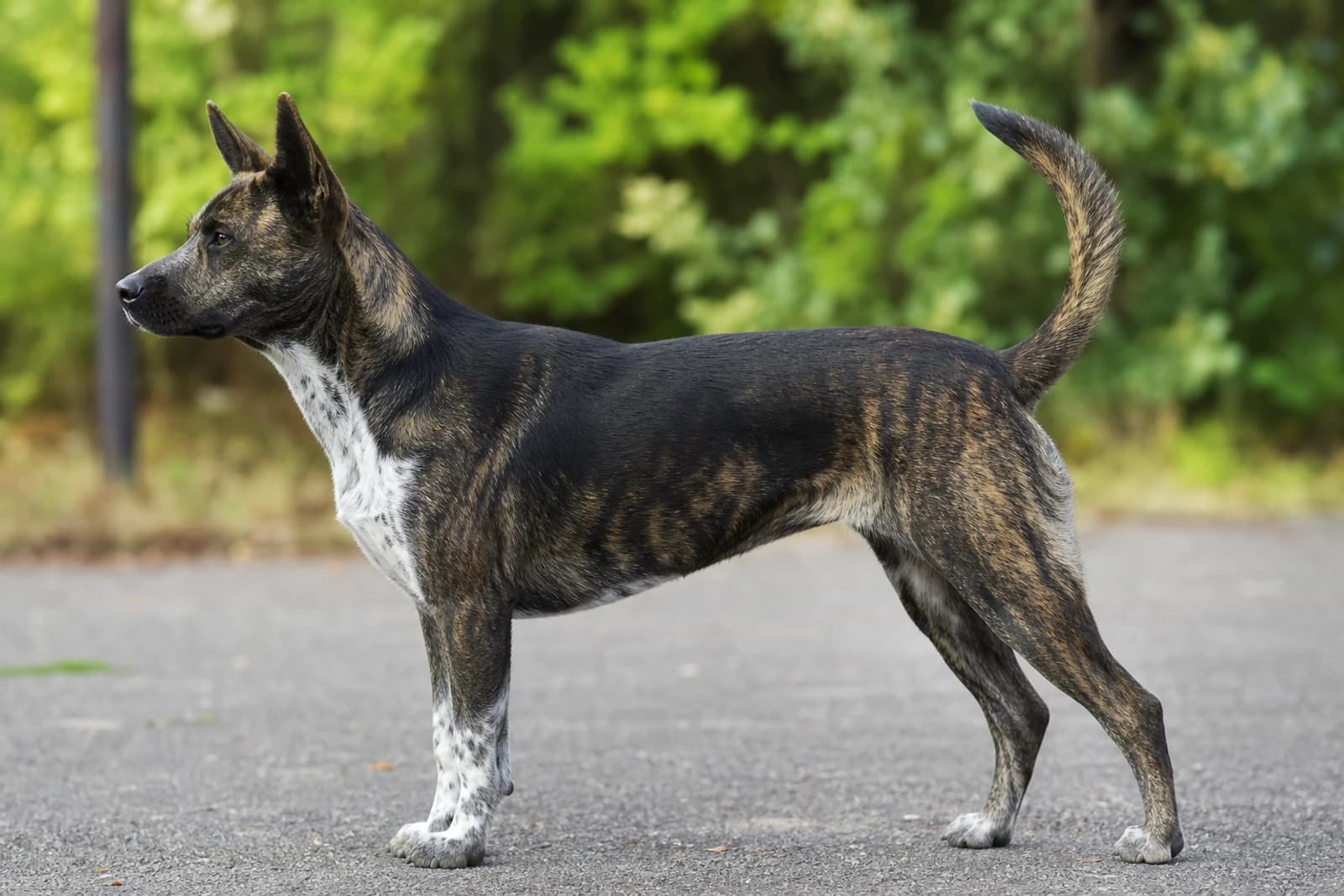
The Taiwan Dog, a primitive hunting and guardian breed, is ideal for experienced, active owners who can offer firm, consistent leadership. This intelligent, fiercely loyal companion thrives in a home with a yard, requiring plenty of exercise and mental stimulation. Aloof with strangers but deeply devoted to family, the breed suits those seeking a vigilant watchdog and a steadfast partner for outdoor adventures.
At a glance
- Size
- Large
- Height
- 17–20 in
- Weight
- 26–40 lb
- Life span
- 10 years
- Coat colors
- Black, Brindle, Fawn, White, Black and White
- Coat type
- Short, dense double coat
- Group
- Working
How much does a Taiwan Dog cost?
Adopt / rescue
$75–$400
Usually includes spay/neuter, first shots, and a microchip.
Buy from a breeder
$700–$2,000
From a reputable, health-testing breeder.
Approximate USD. Prices vary widely by region, breeder, pedigree, age, and coat colour — adopting is the lower-cost and recommended route. Avoid suspiciously cheap “breeders”; they’re often puppy mills.
Estimate the full cost of a Taiwan Dog →Taiwan Dog photos
Views
Front, side, rear and top — the full silhouette.Poses
How the breed sits, lies, moves and plays.Puppy to senior
The breed across its whole life.Expressions
The breed’s range of moods.Close-up details
Eyes, ears, nose, paws, tail and coat.Coat colors
The breed’s recognized colors.Click any photo to enlarge. We show the Taiwan Dog from every angle — three views, poses, life stages, expressions, close-ups, coat and colors.
Appearance & size
A Taiwan Dog stands somewhere between a midsize mutt and a true large breed, but the Working group classification tells you more about its job than its tape measure. You’re looking at 17 to 20 inches at the shoulder and a tight 26 to 40 pounds — all of it lean, functional muscle with no padding. This is a dog shaped by survival on a rugged island, and it shows.
From the front, the face reads as alert and almost foxlike. The skull is broad between upright, sharply triangular ears that pivot to catch the slightest sound. The eyes are almond-shaped and set at a slight angle, typically dark brown, with a keen, watchful expression that holds your gaze without being aggressive. The muzzle tapers cleanly but remains substantial — not pointy — and the nose is black (or slightly lighter on pale-coated individuals). A thin dewlap under the chin is allowed but never heavy.
In profile, the neck flows smoothly into a flat, well-laid-back shoulder. The body is square to slightly longer than tall, with a level topline and a deep, moderately narrow chest that leaves plenty of room for lung capacity. The ribs are well-sprung but never barrel-shaped. The legs are straight and dry, with tight feet and arched toes — built for quick, sure-footed movement on rocky terrain. The tail sets high and is carried in a characteristic sickle curve, or tightly curled over the back, never drooping.
From behind, the dog looks just as uncluttered. Hindquarters are sturdy with moderate angulation, and the thighs show enough sinew to remind you this breed can climb a mountain at a trot and still go another ten miles. The overall silhouette is clean lines and minimal bulk.
The coat is a short, hard double layer — nothing plush about it. A proper Taiwan Dog’s hair lies flat, sometimes reaching 1 to 2 inches, with a dense undercoat that sheds heavily once or twice a year. Common colors include solid black, brindle, various shades of fawn and red, white, or combinations like black-and-white. A black tongue or spotted tongue shows up often, a trait shared with other ancient East Asian breeds. Apart from the tail and ears, the most distinctive feature might be the toes: many Taiwan Dogs have slight webbing between them, a nod to their semi-aquatic hunting past.
History & origin
The Taiwan Dog is not a breed cobbled together in a kennel club era. It’s a living piece of Austronesian history, shaped by at least 5,000 years of semi-feral existence on the island of Taiwan. Genetic studies tie these dogs to the earliest pariah-type dogs that traveled with Austronesian-speaking seafarers from southern China and Indochina, arriving long before any written record. Isolation in the island’s central mountains and dense eastern forests kept the gene pool remarkably pure, preserving a primitive, dingo-like form that shows up in ancient artwork and archaeological digs across the region.
For millennia, the dogs lived on the edges of indigenous tribal villages — not pampered pets, but independent hunting partners and alert sentinels. Bunun, Atayal, and other aboriginal groups relied on them to track and corner wild boar, serow, and small game. The dogs hunted in loose packs, using sharp hearing, a strong prey drive, and a fearless, slashing style that didn’t require constant human direction. In return, they got scraps, occasional meat, and the freedom to roam. That harsh filter produced a dog that is heat-tolerant, quiet when working, and so resourceful it can open its own food stash.
Contact with outside powers almost wiped the breed out. During the Dutch and Qing periods, and especially under Japanese rule (1895–1945), imported military and farm dogs interbred freely with local village dogs. By the mid-20th century, pure Taiwan Dogs were thought to be extinct in all but the most remote mountain hamlets, and even there numbers had cratered as traditional hunting practices declined.
A formal rescue began in the late 1970s. A research team from National Taiwan University, led by Dr. Sung Yung-yi, scoured indigenous territories and located fewer than a dozen dogs that matched the old type: erect ears, a thick sickle tail, a short harsh coat (often black, brindle, or fawn), and frequently a solid black or spotted tongue. Those dogs became the foundation of a careful preservation program. The Taiwan Kennel Club recognized the breed in 2001, and the FCI followed in 2004, classifying it in Group 5 (Spitz and primitive types). The AKC added it to the Foundation Stock Service in 2012. Today most of the population still lives in Taiwan, where the breed serves as a versatile hunting dog, a search-and-rescue asset, and a fiercely loyal companion — still a tough, unadorned dog that acts more like a partner than a dependent.
Temperament & personality
This is a dog that takes itself pretty seriously. The Taiwan Dog isn't a goofy, everyone's-best-friend type; it’s a lean, alert working animal that bonds deeply with its own people and views the rest of the world with a cool, appraising eye. Expect a strong territorial drive — these dogs naturally mark and memorize scent boundaries, so you’ll notice deliberate urine marking on walks and a keen awareness of who belongs where. Indoors, that same instinct can lead to accidents in a guest room or basement if the dog doesn't associate that space with the family's scent. Clean any indoor urine with an enzymatic cleaner (or a vinegar spray) to break the odor cue, and always reward outdoor elimination with a treat right away.
Independence and willpower are hallmarks of the breed. A Taiwan Dog thinks for itself, which made it valuable for hunting and guarding but means you can't bully or bribe it into cooperation. Respectful, consistent handling works; heavy-handed correction creates resistance. If you’re away long hours or shove the dog into the backyard, isolation can trigger anxiety-driven barking, digging, or chewing. These are dogs that need to be part of the household rhythm, not sidelined. Give them a job — even if it's just a solid hour of off-leash running and nose work each day — or they’ll invent one, possibly in your shoe closet.
With the family, the Taiwan Dog is calm, brave, and often surprisingly gentle once trust is established. However, wariness of strangers and a low threshold for unwanted handling are very real. A stiff body, hard stare, or forward-leaning posture can signal an intent to control a situation, and you must teach children never to disturb the dog while it eats (food guarding is a real risk). Lip licking, yawning, or turning the head away are often early “please stop” signals that the dog is uncomfortable — ignoring them can push a quiet dog to a snap. For these reasons, the breed is a poor fit for novice owners or homes with lots of small, unpredictable kids.
Quirks to know: The scavenger ancestry runs deep. Your Taiwan Dog may happily roll in dead fish, raccoon scat, or anything foul enough to make you gag — think of it as a scent souvenir, not a personal insult. Chewing is another hardwired behavior; offer sturdy chews to keep jaws strong and teeth clean, and use a homemade citrus peel spray on off-limits furniture if needed. Ultimately, you’re sharing life with a perceptive, fiercely loyal dog that will watch your every move and match your commitment — but won’t ever let you coast on autopilot.
Good with kids, dogs & other pets
A calm household is where the Taiwan Dog shines, but that doesn't mean he’s a pushover with kids. He bonds tightly to his family and often brings a steady, patient energy to children he knows — just don’t mistake his 26 to 40 pounds for a stuffed animal. A full-speed dash or an excited jump can easily knock over a toddler. Teach kids to pet gently, avoid pulling ears, and leave the dog alone when he retreats to his crate or bed. An adult should always supervise, because even a tolerant dog has limits, and this breed can be sensitive to sudden grabbing.
Early socialization is what tips the scales from “watchful” to “easygoing.” Start between 3 and 14 weeks of age — that’s the critical window. Expose your puppy to hordes of friendly strangers, rattling shopping carts, clanging pots, and yes, kids of all ages. The goal isn’t for him to love everyone, but to stay level-headed when a shrieking four-year-old barrels into the room. A Taiwan Dog who missed that early flood of positive experiences can grow into a dog who startles at loud noises, trembles at the vet, or spooks around unfamiliar people. That’s harder to fix later; you can’t force a fearful adult into a party and expect him to enjoy it.
With other dogs, the picture is similarly nuanced. A well-socialized Taiwan Dog can live peacefully with a canine housemate, especially if they’re raised together. On walks, he’s often aloof rather than aggressive — a trait that may read as standoffish but rarely starts fights. Introduce new dogs on neutral ground, with both leashed, and let them sniff in arcs, not head-on. If your dog is happier as an only dog, that’s fine; not every adult needs a playgroup. Forced mingling doesn’t build confidence, it builds stress.
Smaller pets — cats, rabbits, birds — are where honest caution is required. The Taiwan Dog has a deep working-drive current that can snap on when something small darts. A cat that holds its ground may earn a live-and-let-live truce if they’ve grown up together, but a fleeing squirrel or a panicked hamster will likely trigger a chase. Keep small animals securely separated or supervised, and never leave them loose with the dog when you’re not there. Management beats training when instinct is doing the driving.
The foundation is simple: pour your energy into that first year of gentle, daily exposure to new people, places, and situations. After that, respect the dog in front of you — some Taiwan Dogs adore a full house, others prefer peace. Forced socialization after the 16-week window shuts can backfire spectacularly, so let your dog set his own pace.
Trainability & intelligence
Taiwan Dogs are wicked smart and pick things up fast — but that doesn’t mean they’ll blindly follow orders. Think of them as problem-solvers with a mind of their own. If you want a dog who hangs on your every word, be prepared to earn it. Training hinges on building a real partnership, not running a boot camp. Harsh corrections or old-school punishment will backfire fast, making these sensitive, independent dogs shut down or get evasive. You’ll get miles further with clear, reward-based communication: treats, a quick game of tug, or an excited “yes” the second they get it right.
Socialization isn’t optional; it’s non-negotiable. These dogs are naturally wary of strangers and new situations, so you need to flood those early weeks with good experiences. Start between 3 and 14 weeks — calmly introduce your puppy to different people, surfaces, sounds, and safe other dogs. Don’t flood them. Short, positive exposures build the confidence that keeps an adult Taiwan Dog from tipping into fear-based reactivity. Keep it up through adolescence and beyond; one puppy class isn’t enough. A well-socialized Taiwan Dog is alert but level-headed, not a reclusive watch dog who barks at every leaf.
When it comes to commands, they’re fast learners but bore easily. Repetitive drills will get you a dog who checks out mentally. Keep sessions short (5–10 minutes) and mix things up. Shape behaviors with patience — if they hit a stubborn streak, pushing harder doesn’t win. Instead, make it their idea. For example, reward for eye contact voluntarily, then build on that. Recall can be a headache because their prey drive and independence sometimes overrule their ears. Proof it exhaustively with high-value rewards before you ever test it off-leash in an open space. Never punish a slow recall; just go back to a long line and more practice.
Common challenge: they’re sensitive to tone and environment, so a trainer who yells or over-corrects will damage trust fast. Respect their dignity. Training a Taiwan Dog is about relationship-building — honest, consistent, and gentle. Get that right, and you’ll have a dog who’s not just obedient, but genuinely tuned in.
Exercise & energy needs
Count on a solid hour of exercise every day, split into at least two sessions — a quick trot around the block won’t cut it. Taiwan Dogs were shaped by hunting, herding, and guarding work in rugged terrain, so they come with serious stamina and a brain that needs just as much action as the body. Most thrive on 60 to 90 minutes total, and many will gladly go longer if you’re up for it. A dog this athletic and bright, left under-exercised, will invent her own agenda — usually involving shredded couch cushions or fence-pacing.
Intensity matters as much as clock time. These are agile, medium-framed dogs (26–40 pounds on 17–20 inch legs) built to sprint, pivot, and scramble over obstacles. Give them off-leash running in a securely fenced area, a long hike with elevation change, or regular sessions of fetch with a Chuckit, and they’ll hit their stride. On leash, a brisk walk doesn’t empty the tank; pair it with a run, bike ride, or canicross. Avoid repetitive, high-impact pounding on pavement, especially for growing pups — their joints need time to mature.
Mental work is non-negotiable. Taiwan Dogs are wickedly smart and task-driven. Without a job, they grow anxious or reactive. Weave scent games, puzzle toys, or hide-and-seek into every day. Structured activities that marry physical and mental effort work best:
- Nosework or barn hunt — the breed’s natural sniffing drive goes into overdrive, and it wears them out faster than a long run.
- Agility or rally — quick decisions mixed with full-body movement tap into their working heritage.
- Advanced obedience or trick training — five minutes of sharp, rewarded commands does more for their brain than 20 minutes of mindless circling.
Short, frequent bursts often work better than a single marathon session. A 30-minute morning sprint plus a 30-minute sniff walk and a 10-minute puzzle session after dinner can keep a Taiwan Dog settled and content. In warm weather, shift exercise to cooler hours — this breed is heat-sensitive and will pace itself, but it’s your job to stop before they overdo it.
If your idea of daily exercise is a couple of 15-minute leash strolls, the Taiwan Dog will let you know you’re shortchanging her — and the fallout usually lands on your baseboards.
Grooming & coat care
Your Taiwan Dog’s coat is a lean, no-fuss double layer built for rugged mountain life. The outer coat is short, straight, and harsh to the touch; underneath sits a dense undercoat that blows out twice a year. Most of the year, this dog barely sheds—an easy keeper. During spring and fall, you’ll wonder where all the hair came from. Plan for a heavy shed that lasts a couple of weeks, then levels off again.
A bristle brush (pig bristle works great) is your go-to tool. It grabs loose hairs, distributes natural oils, and adds a glossy sheen without scraping the skin. Run it through the entire body once or twice a week in normal months. When the undercoat blows, switch to a slicker brush or a de-shedding rake two or three times a week—outside makes cleanup simpler. You’ll fill a brush in minutes, but staying on top of it keeps the hair off your couch.
Bathing is strictly as-needed. These dogs have a naturally clean, low-odor coat. A rinse after a muddy hike or a bath every few months (or when they roll in something dead) is plenty. Use a mild dog shampoo so you don’t strip the oils that make the coat weather-resistant. Over-bathing leads to dry, itchy skin.
Trimming is minimal. No haircut required. Some owners tidy up stray hairs between the paw pads with blunt-tipped scissors, but that’s about it. The tail may have a brushy plume you can leave alone. Don’t shave the coat—that undercoat insulates against heat and cold, and shaving ruins the texture and may cause sunburn.
Ears stand upright, so they’re less prone to infections than drop ears, but they still collect debris. Wipe them out with a damp cotton ball once a week. Nails: 26–40 pounds of active dog on hard surfaces will wear nails down somewhat, but check every couple of weeks. If you hear clicking on floors, they’re too long. Teeth get a quick brush two or three times a week to keep that 10-year lifespan healthier. A raw beef bone or tough chew helps scrape tartar between brushings.
Shedding & allergies
The Taiwan Dog wears a dense double coat built to shrug off mountain weather. A stiff, straight outer layer sits over a soft undercoat, and both layers contribute to a moderate but steady shedding rhythm all year long. You won’t find tumbleweeds of hair rolling across the floor like you would with a heavy-coated northern breed, but you will see a fine dusting of short, dark hairs on light furniture and clothing within a day or two of cleaning.
Twice a year, typically in spring and fall, the shedding cranks up into a genuine seasonal blowout. For a few weeks, the undercoat releases in clumps, and running your fingers through the coat will pull out loose fur in handfuls. A 15-minute brushing session three or four times a week during those peaks makes a dramatic difference; a rubber curry brush or a slicker brush works well to strip out dead hair before it lands on your upholstery. Outside of the heavy-shedding windows, a quick weekly once-over keeps things tidy.
Drool isn’t part of the package. This breed has a clean, dry mouth, and you’re not likely to be wiping slobber off your jeans or walls. Expect a little dampness right around mealtime or a water bowl drip, but nothing that qualifies as a drooler.
Realistically, no dog with fur and skin is hypoallergenic — allergies are triggered by proteins in dander, saliva, and urine, not just shedding volume. The Taiwan Dog does shed dander, so it can be a problem for allergy sufferers. Because the coat is short and the dog is fastidiously clean by nature (they often groom themselves cat-like), some mildly allergic owners find the breed more manageable than a heavy-shedding, dander-loose breed, but that’s a gamble, not a guarantee. If allergies are a household concern, spend unhurried time with an adult Taiwan Dog indoors before committing, and plan on a good HEPA-filtered vacuum.
Diet & nutrition
Portion control and a healthy weight
Taiwan Dogs are lean, athletic dogs, but many will eat anything you put in front of them — and then look for more. Free-feeding quickly leads to obesity, which puts unnecessary stress on joints and can cut into their roughly 10-year lifespan. Because their daily activity varies a lot from home to home, you need to portion meals based on the dog in front of you, not the chart on the bag.
A moderately active adult (around 30 pounds) typically does well on 1½ to 2 cups of high-quality dry food per day, split into two meals. Working dogs that log hard hours outdoors may need more; a laid-back companion who mostly walks on leash will need less. Use a puzzle bowl if your dog inhales food — it slows them down and adds mental work.
Check body condition every few weeks. You should see a visible waist from above and feel ribs with a thin layer of fat. If the ribs disappear, cut portions by about 10% at a time and increase exercise.
What goes in the bowl
This primitive breed thrives on a diet that leans heavily animal-based. Aim for roughly 60% high-quality animal protein (muscle meat, organ meat, fish, eggs), 20–30% dog-safe fruits and vegetables, and about 10% extras like plain yogurt, pearl barley, or cooked grains for fiber. Canned fish, scrambled eggs, and cooked vegetables make great toppers or quick home-prepared meals. Blending or processing raw meals before serving can improve nutrient absorption because dogs lack salivary digestive enzymes and their jaws move mostly up and down.
Stay away from vegetarian or vegan formulas — a dog’s gut and teeth are built for meat, and a meat-free diet robs them of essential nutrients. Skip rich, fatty table scraps too, especially after holidays; a sudden high-fat meal can trigger pancreatitis. If you do share safe leftovers, always put them in the dog’s own bowl to keep begging at bay. Never feed directly from the table.
Feeding from puppyhood to old age
Puppies need four evenly spaced meals a day until about four months old, then three meals until six months, and finally settle into the adult two-meal rhythm. Transition a new puppy gradually to what you’ll feed long-term — start with lightly cooked, puréed meats, fish, fruits, and vegetables or a premium commercial puppy food. Around twelve weeks, you can introduce raw chicken wings under close supervision.
As a Taiwan Dog ages and activity tapers off, switch to smaller, more frequent meals and weigh them regularly. Reduce food gradually to match their slower metabolism. Purée meals if teeth are missing or gums are tender. There’s no good evidence that older dogs need less protein, so keep the meat foundation strong unless your vet recommends otherwise. When the waist starts vanishing and you can’t feel ribs, you know it’s time to tighten up — not their collar, but the portion scoop.
Health & lifespan
A healthy Taiwan Dog typically lives about 10 years. That’s on the shorter side for a lean, medium-sized athlete, but it reflects the breed’s primitive roots — these dogs haven’t been layered with exaggerated traits that invite chronic problems. Still, a solid decade relies on preventive care, not just good luck.
What to watch for and prevent
Taiwan Dogs don’t come with a long laundry list of inherited disorders, but that doesn’t mean they get a free pass. A working dog’s chassis isn’t bulletproof. Responsible breeders screen breeding stock for hip and elbow dysplasia, along with baseline eye exams, because joint and vision issues can still pop up in a hard-running dog. Ask to see the parent clearances — written proof, not a verbal nod.
Weight sits squarely in your hands. These dogs often hover between 26 and 40 lb, and they’re built to be quick and agile, not thick. Even a few extra pounds stress joints and shorten an already modest lifespan. Use a measured cup, keep treats small, and run your hands over the ribs every couple of weeks. You want to feel them easily beneath a thin layer of flesh — not buried.
Heartworm prevention isn’t optional. Give your dog monthly medication from the start of mosquito season through one month after it ends. Mosquitoes transmit heartworms, and treatment for an active infection is costly, risky, and miserable for the dog. Rabies vaccination is legally required everywhere in the U.S.; there’s no effective treatment once symptoms appear, so stay current.
The mental-health side of the equation
A Taiwan Dog that spends hours alone in a yard or apartment will likely develop anxiety-driven behaviors — excessive barking, pacing, destructive chewing. That chronic stress dampens immune function and can trigger skin flare-ups. The breed is deeply attached to its people and needs daily, engaged interaction. Early socialization that pairs new people, places, and handling with positive outcomes (treats, play) builds a dog that can cope with life without constant cortisol spikes. Strong-willed and perceptive, they respond to respectful consistency, not force — trying to bully this dog into submission backfires and erodes the trust that keeps them stable.
Routine vet care and aging
- Schedule an annual wellness exam with a full physical. Once your dog turns 7, shift to twice-yearly visits and add a senior blood panel to catch kidney, liver, or thyroid changes early.
- Pay attention to subtle shifts: a dog that suddenly sleeps more, loses appetite, or acts stiff after a long walk may be signaling pain or illness long before lab work shows it.
- Dental health matters even in a non-brachycephalic breed. Tartar buildup leads to bacteria that can affect the heart and kidneys. Brush teeth several times a week and get professional cleanings as your vet recommends.
- Skin can be a weak spot. Some Taiwan Dogs develop environmental or food allergies that show up as itching, redness, or recurrent ear infections. If you see persistent scratching, work with your vet to isolate the trigger — often it’s a dietary protein or pollen — rather than reaching for over-the-counter sprays indefinitely.
In cold weather, the short, dense coat doesn’t cut it. Below freezing, limit time outdoors and consider a well-fitted jacket. In heat, they handle moderate activity but need shade and water; avoid midday pavement and watch for heavy panting. A yearly checkup that actually discusses breed-appropriate risk factors — joint wear, weight, parasite exposure — is the most practical thing you can do to push that 10-year mark in the right direction.
Living environment
The Taiwan Dog is a tough, athletic survivor bred to patrol and hunt across harsh terrain—not a casual couch companion. An apartment can work, but only if you are genuinely willing to deliver two hour-long, sweat-breaking exercise sessions every single day. Without that, a house with a securely fenced yard is a far saner setup.
Yard and space
A sturdy, dig-proof fence at least 5 feet high is non-negotiable. These dogs are agile jumpers and will follow a squirrel right over a low barrier. The yard isn't for unsupervised idle time—it's a place to sprint, sniff, and burn off steam between your morning run and evening hike. If you don't have a yard, you'll need daily access to open spaces where the dog can really move off-leash.
Climate and weather
Taiwan Dogs come from a subtropical island, so they handle heat and humidity far better than cold. A short, dense coat means they'll start shivering once temperatures dip below freezing. A functional winter coat and limiting outdoor time during real cold snaps is common sense. Indoors, they want to be right next to you, not banished to a corner.
Noise and barking
They notice everything. A Taiwan Dog will bark when someone approaches the door or a strange car pulls up—think of it as a built-in alert system, not a nuisance. With early training and a solid “quiet” cue, you can keep the barking from becoming chronic. A bored, under-exercised dog, though, will voice every tiny frustration, and that's a fast track to neighbor complaints.
Alone-time tolerance
This is where many families struggle. Taiwan Dogs bond hard and can spiral into separation anxiety if left alone for a full workday. They do best in homes where someone is around often, or with a commitment to mid-day dog walkers or doggy daycare. Gradual desensitization and leaving stuffed puzzle toys—frozen Kongs, snuffle mats—can take the edge off, but this breed will never be a leave-for-ten-hours-alone dog. Budget your time just like you budget their daily mileage.
Who this breed suits
The Taiwan Dog is a hard reset from the typical companion breed — sharp, territorial, and bred to make its own decisions. If you’ve never raised a dog that challenges you as much as it bonds with you, this is not the place to start.
You’ll click with a Taiwan Dog if you’re an experienced owner who wants a project, not just a pet. These dogs thrive with active singles or couples who treat daily exercise as a non-negotiable. We’re talking a solid 60-90 minutes of off-leash running, hill work, or focused training — a leash stroll won’t touch their energy. They need a securely fenced yard (think 6-foot, dig-proof) and a job. Agility, scent work, canicross, or serious hiking all tap into the drive that kept them hunting wild boar for centuries.
They bond fiercely with one person. That loyalty is real, but it comes with wariness of strangers and a strong guarding instinct. Expect to manage a dog that will sound the alarm at every delivery truck and may never be the life of the dog park. Same-sex aggression isn’t rare, and prey drive means cats or small fluffies in the home are a gamble you shouldn’t take.
Think twice if you have young children, a busy social household, or limited experience with primitive breeds. Taiwan Dogs have little patience for clumsy handling and can shut down or react if pushed. They’re not apartment dogs, and they won’t tolerate being left in the yard with nothing to do — boredom here translates to escape artistry, digging, and destruction fast. Seniors or anyone seeking a low-key companion should look elsewhere. This dog operates on a 10-year fuse, and it packs every day with intensity: you either meet them at that level or you’re both going to be miserable.
Cost of ownership
Because the Taiwan Dog is still uncommon in the U.S., finding a puppy usually means a wait and a premium. A responsibly bred puppy typically lands between $1,200 and $2,000, with some breeders charging more for a pup from fully health-tested parents. An adult through a breed-specific rescue, while rare, might run $200 to $400.
Monthly food. An active 30-pound dog does best on high-quality, protein-forward kibble. Plan on $40 to $60 a month. If you mix in fresh food or raw, costs can inch toward $75.
Grooming. The short, stiff coat is built for low upkeep. A quick weekly brush, an occasional bath, and regular nail trims are all you need. DIY costs hover around $10 to $20 a month for supplies. Even if you use a groomer twice a year for a deep clean, it rarely adds more than $5 to $10 a month averaged out.
Vet care. Annual exams, core vaccines, heartworm tests, and preventatives typically run $500 to $700 a year ($40–$60/month). Spaying/neutering and microchipping are additional one-time expenses early on.
Insurance. Taiwan Dogs can be broadly healthy, but responsible breeders screen for hip dysplasia, patellar luxation, and eye issues; the limited North American gene pool makes early coverage smart. A solid accident-and-illness plan for a medium breed usually runs $35 to $50 a month.
Piecing it together, expect to budget $150 to $200 a month for the basics. Over a 10-year lifespan, that’s $18,000 to $24,000 before factoring in a single emergency surgery or a week of boarding, so locking in insurance from day one protects your wallet and your dog.
Choosing a Taiwan Dog
Breeder or Rescue?
Taiwan Dogs don’t show up in every shelter, but you won’t have to look overseas to find one if you’re patient. Breed-specific rescues and import groups occasionally place surrendered adults or mixed dogs, especially in the western US. The catch: you’ll rarely know what the first few months looked like, and that’s a big deal with a primitive breed that can aloof with strangers. If you’re open to rescue, meet the dog in multiple settings and bring a trainer-savvy eye. Otherwise, set your sights on a breeder who keeps pups underfoot in the house from day one. A Taiwan Dog that hears kitchen clatter, meets new faces, and walks on different surfaces before 8 weeks is already miles ahead of one raised in a quiet kennel run.
Health Clearances
Ten years isn’t a long lifespan for a 26–40 lb dog, so don’t shortcut the health legwork. Responsible breeders screen for issues that can sink that number even lower. Ask to see hard copies — not a verbal “they’re fine” — of:
- Hip certification: OFA or PennHIP, with both parents rated at least “fair” or better.
- Patella evaluation: OFA clearance for luxating patellas, which can show up in active, sinewy dogs.
- Eye exams: A current CAER report (within the last year) ruling out inherited cataracts or retinal disease.
Breeders who also put working or sport titles on their dogs signal they’re evaluating more than a pretty silhouette — they’re proving the dog can move, think, and recover under pressure.
Red Flags When Searching
Rare breeds attract corner-cutters. Walk immediately if you spot:
- No health testing — screen shots, not promises.
- A waiting list that never exists; puppies always ready to go.
- The breeder won’t let you meet at least one parent on video or in person.
- Dogs are kept in outdoor runs with minimal human interaction.
- They ship a puppy with zero interview, zero questions about your yard, experience, or plan.
Taiwan Dogs that miss early socialization can harden into reactive, fearful adults who take months of rehabilitation. That’s not what most families sign up for.
Picking Your Puppy
Between 7 and 8 weeks, watch the whole litter. Skip the pup plastered to the back wall and the one body-slamming littermates. A steady Taiwan Dog puppy will check you out, maybe mouth a cuff, then drop into a sit or follow you a few steps. Bright, alert, and willing to re-engage — not frantic. Ask how the litter’s been introduced to crates, car rides, and gentle restraint. A pup that’s already microchipped, has its first shots, and comes with a written socialization log is a green flag. Commit to daily, active socialization for that first year. With this breed, loyalty isn’t a freebie; it’s built one positive encounter at a time.
Pros & cons
Pros
- Deeply bonded and protective. They form an intense, no-nonsense loyalty to their family, always watching and ready to step in if something feels off.
- Compact but rugged. At 26–40 pounds and 17–20 inches tall, you get an athletic, sturdy dog that fits well indoors yet has the stamina for long mountain hikes.
- Near-zero grooming. A short, harsh coat means you can skip the grooming bills. An occasional brushing or wipedown handles most shedding.
- Natural watchdog. Their alertness is hardwired — they’ll announce a stranger’s approach immediately, no special training needed.
- Sharp problem-solvers. Bred for centuries as versatile hunters and sentinels in tough terrain, they’re smart and resourceful with a “let’s figure it out” attitude.
- Hardy constitution. As a landrace breed, they tend to be resilient and straightforward, without the exaggerated physical traits that land other dogs in the vet’s office.
Cons
- Demanding exercise requirements. A quick walk around the block is barely a warmup. They need an hour or more of off-leash running, climbing, or focused games to burn off mental and physical steam.
- Aloof with outsiders. Early and ongoing socialization is non-negotiable. Without it, you’ll have a dog that barks, growls, or worse at unfamiliar people, making guests and outings stressful.
- High prey drive. Squirrels, cats, and small dogs can trigger a full-throttle chase. Off-leash reliability in unfenced areas is a real struggle, even with training.
- Stubborn independence. They were designed to act on their own judgment, so obedience work requires patience, consistency, and a handler who doesn’t cave. “Because I said so” won’t fly.
- A poor fit for first-time owners. The combination of intensity, wariness, and exercise hunger can overwhelm novices or homes with very young, grabby kids.
- Short average lifespan of 10 years. It’s a tough number for a medium-sized dog. Responsible breeders may produce longer-lived lines, but the time you get will feel too brief.
Similar breeds & alternatives
Shiba Inu: Smaller package, same independent streak
If the Taiwan Dog’s alert, clean, cat-like nature appeals but its 40-pound frame feels like more dog than you need, the Shiba Inu shrinks the archetype. A Shiba runs 15–25 lb and 13.5–16.5 inches tall, yet brings the same prick-eared, curled-tail spitz intensity. The Shiba’s independence is legendary — they are often less handler-focused and more likely to blow off a recall than a Taiwan Dog, who tends to stick closer to their person. Both breeds shed heavily twice a year and are escape artists. The Shiba’s lifespan is notably longer (12–15 years vs. the Taiwan Dog’s 10), which may matter if longevity is a priority.
Korean Jindo: The loyal guard with more bone
The Jindo mirrors the Taiwan Dog’s primitive pariah origins and carries similar height (18–22 inches) but packs more weight (40–50 lb for males) and substance. Both breeds are fiercely loyal to their families, fastidiously clean, and naturally suspicious of strangers. The Jindo’s thicker double coat gives it an edge in cold weather; the Taiwan Dog’s short, dense coat handles heat better. Prey drive is sky-high in both, but a Jindo often has an even stronger territorial guarding instinct and can be more dog-reactive. If you want a sturdy, serious watchdog that still moves like a wolf, the Jindo swaps some of the Taiwan Dog’s lithe, agile build for more power.
Canaan Dog: A pariah dog with more biddability
The Canaan Dog is another natural pariah breed, standing 19–24 inches and weighing 35–55 lb. It shares the Taiwan Dog’s desert-adapted body, prick ears, and watchful disposition, yet life with a Canaan often feels slightly more trainable. The Canaan Dog’s temperament is still environmental — quick to sound the alarm — but many line-bred Canaans accept strangers more readily than a Taiwan Dog once introduced. Their lifespan runs 12–15 years. The trade-off: a Canaan needs just as much early socialization to avoid sharpness, and they will still out-think an owner who gets lazy with rules. Both breeds thrive on a job, not just a walk; the Taiwan Dog’s prey drive often comes harder and faster, making on-leash reliability a bigger training commitment.
Fun facts
- One of the oldest primitive dog breeds, existing alongside Taiwan's indigenous people for millennia.
- Designated as a national treasure in Taiwan, often called the Formosan Mountain Dog.
- Historically used for hunting wild boar and guarding villages.
- Renowned for its strong survival instincts and adaptability to harsh environments.
Frequently asked questions
- Are Taiwan Dogs good with children?
- Taiwan Dogs can be loyal and affectionate with family, but they may be wary of young children due to their independent nature. Early socialization and supervision are recommended. They often become protective companions.
- Do Taiwan Dogs shed a lot?
- Taiwan Dogs have a short, dense coat that does shed moderately, especially during seasonal changes. Weekly brushing can help manage loose hair.
- How much exercise does a Taiwan Dog need?
- This breed has high energy and requires daily exercise, such as long walks or runs. They benefit from mental stimulation to prevent boredom and destructive behavior.
- Can Taiwan Dogs live in apartments?
- They can adapt to apartment living if given enough daily exercise and outdoor time. However, their high energy and need for space to roam make them better suited for homes with yards.
- Do Taiwan Dogs bark a lot?
- Taiwan Dogs are naturally alert and may bark to alert their owners of strangers or unusual activity. With training, excessive barking can be managed.
- Are Taiwan Dogs good for first-time dog owners?
- They are intelligent but can be independent and strong-willed, which may challenge inexperienced owners. Consistent training and early socialization are important, so they are often better for those with some dog experience.
Tools & calculators for Taiwan Dog owners
Quick estimates tailored to Taiwan Dogs — pre-filled with this breed’s size where it matters.
Articles & stories about the Taiwan Dog
Sources & standards
This profile follows recognized breed standards from the American Kennel Club (AKC) and the Fédération Cynologique Internationale (FCI), along with established veterinary and breed-club guidance. These describe general breed tendencies — every dog is an individual.
Owner stories
Have a Taiwan Dog? Share your experience — grooming tips, personality quirks, anything goes.