

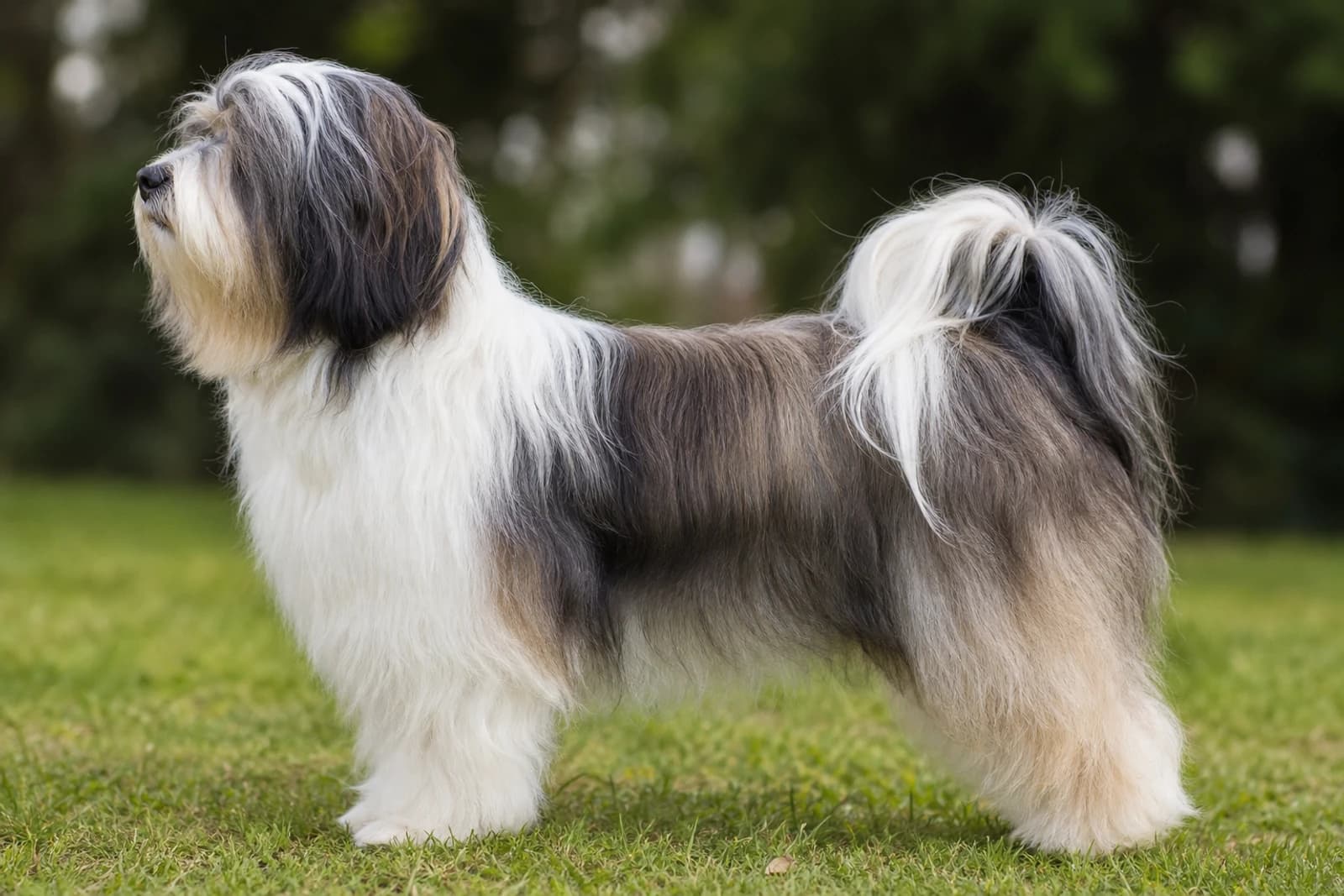
The Tibetan Terrier is an affectionate, medium-sized companion dog originally from Tibet, where it was revered as a good luck charm. Despite its name, it is not a true terrier. This breed is perfect for families seeking a loyal and gentle pet that thrives on human companionship. Their shaggy, hypoallergenic coat requires dedicated grooming, but they shed very little. Adaptable and playful, Tibetan Terriers do well in apartments with moderate exercise. They are intelligent and trainable, though they can be independent. Ideal for first-time owners committed to coat care, they get along wonderfully with children and other pets.
At a glance
- Size
- Medium
- Height
- 14–16 in
- Weight
- 18–31 lb
- Life span
- 10 years
- Coat colors
- White, Black, Gold, Cream, Gray, Sable, Brindle, Parti-color
- Coat type
- Long, profuse double coat
How much does a Tibetan Terrier cost?
Adopt / rescue
$75–$400
Usually includes spay/neuter, first shots, and a microchip.
Buy from a breeder
$700–$2,000
From a reputable, health-testing breeder.
Approximate USD. Prices vary widely by region, breeder, pedigree, age, and coat colour — adopting is the lower-cost and recommended route. Avoid suspiciously cheap “breeders”; they’re often puppy mills.
Estimate the full cost of a Tibetan Terrier →Tibetan Terrier photos
Views
Front, side, rear and top — the full silhouette.Poses
How the breed sits, lies, moves and plays.Puppy to senior
The breed across its whole life.Expressions
The breed’s range of moods.Close-up details
Eyes, ears, nose, paws, tail and coat.Coat colors
The breed’s recognized colors.Click any photo to enlarge. We show the Tibetan Terrier from every angle — three views, poses, life stages, expressions, close-ups, coat and colors.
Appearance & size
The first thing that throws people off is the name — nothing “terrier” about this dog’s look or job. What you actually get is a sturdy, square-built mountain dog squeezed into a medium frame. Stand one in front of you and you’ll see a level back, a deep chest, and a straight, strong front with shoulders that slope smoothly into well-laid-back upper arms. The front legs are straight and parallel, ending in large, flat, snowshoe-like feet with plenty of feathering. Those feet aren’t a quirk; they’re purpose-built for gripping snowy Himalayan trails.
From the side, a Tibetan Terrier reads like a neat square. The distance from the point of the shoulder to the point of the buttock roughly equals the height at the withers. That height lands between 14 and 16 inches at the shoulder, with a surprising heft for the size — 18 to 31 pounds on a compact frame. The topline stays level whether the dog is standing or moving, and the hindquarters are muscular with well-angled stifles, giving a powerful, ground-covering stride. You’ll notice the tail immediately: medium-length, set high, and carried in a jaunty curl over the back, sometimes falling to one side. The abundant coat makes it look like a plume.
From the rear, the back legs are straight and well-boned, with the same big, flat feet pointing ahead. The whole rear is covered in a thick fall of hair that sometimes obscures the definition, but underneath it’s solid muscle.
Then you get to the coat — the breed’s signature. It’s a profuse double coat: a soft, woolly undercoat for insulation and a long, fine outer coat that can be wavy or straight, never silky or curling. It hangs naturally, parting down the back. In a full show coat, hair sweeps the floor; pet clips keep things manageable. The hair on the face grows long, blending into a beard and mustache, with a distinct fall over the eyes that acts as a built-in snow visor.
Colors are all over the map — solid, parti-color, brindle, tri-color, black, white, gold, cream, gray, or any shade in between. There’s no pattern that isn’t accepted. Just don’t expect to see much of the eyes underneath all that hair.
History & origin
The Tibetan Terrier isn’t a terrier at all, and it didn’t spring from anyone’s idea of a modern family pet. It’s an ancient utility dog from the “Roof of the World,” where it lived alongside Buddhist monks and nomadic herders in the remote Himalayan valleys of Tibet. For centuries, these dogs were known as Tsang Apso—“shaggy dog from Tsang Province”—and were treated as good-luck charms, never sold, only given as gifts to honored travelers and friends.
They earned their keep in ways that sound almost contradictory. In monasteries, they were nimble watchdogs, trotting along high stone walls and barking an alert at strangers or avalanches. Among herdsmen, they worked as drovers and guardians, helping move flocks of goats and sheep across treacherous mountain passes, their large, flat feet acting like snowshoes on the snowfields. At night, they’d curl up next to their people and provide warmth—part companion, part living blanket. That dual life, split between spiritual centers and yak-hair tents, bred a dog that was sturdy, sure-footed, and utterly devoted to its humans, with a mind sharp enough to make independent decisions.
The breed’s journey to the West started with a single dog. In the 1920s, Dr. Agnes R. H. Greig, a British surgeon working in northern India, performed a successful operation on a Tibetan merchant’s wife. As thanks, the merchant gave her a white-and-gold female puppy, the kind of gift you didn’t refuse. Greig named her Bunti, acquired a male named Rajah from a nearby monastery, and began a careful breeding program. She coined the misleading “Tibetan Terrier” label because of the dogs’ terrier-like size, even though they have no true terrier ancestry. Her Lilac Cottage kennel produced the foundation stock that traveled to England, where the Kennel Club recognized the breed in 1937. The first Tibetan Terriers arrived in the United States in the 1950s, and the American Kennel Club formally accepted the breed in 1973.
What you take home today is a direct descendent of those mountain-tested dogs. Every 18- to 31-pound adult still carries a double coat designed to shrug off bitter cold, a flexible back for scrambling up slopes, and a personality that’s opinionated without being sharp—exactly what you’d need in a creature that had to decide for itself whether that distant shape on the trail was a monk, a yak, or real trouble.
Temperament & personality
A Tibetan Terrier isn’t a true terrier — and that matters a lot when you’re sizing up their personality. Bred as a companion and watchdog in Tibetan monasteries, this dog combines a sharp, observant mind with a deep loyalty to their own people. They’ll watch the door like a pint-sized security guard, announcing visitors with a volley of barks, but once you welcome someone in, they’ll settle — perhaps after a brief reservation. Expect a dog who thinks independently, adores routine, and treats affection as something earned through patient, consistent interaction.
The daily vibe: alert, playful, and sometimes stubborn
A Tibetan Terrier is active indoors and outdoors, but not hyper. A couple of brisk walks and a good romp — maybe 45 minutes total — keeps them happy. They love puzzle toys, hide-and-seek, and anything that engages their radar-dish mind. When they’re not patrolling the living room, they’ll curl up near you, soft eyes tracking your every move. Despite their moderate energy, they become noisy and destructive if isolated for long hours; separation anxiety can trigger barking marathons and indoor accidents. If your household is away most of the day, this isn't the breed for you.
With the family: loyal, gentle, and sometimes possessive
Inside the house, they’re endearing clowns with their own family — gently mouthing hands, rolling on their backs for belly rubs, and following you from room to room. They do well with respectful older children who understand a dog’s need for calm meals and personal space. Because these dogs can be possessive over food, teach kids to let them eat in peace. You’ll also want to supervise around toddlers; a Tibetan Terrier may back away or stiffen if hugged too tightly, and a forward-leaning posture with a hard stare is your cue to step in before a snap.
Quirks and smarts you’ll need to manage
Their temple-guard heritage means they’re naturally suspicious of strangers and quick to alert. They’ll often bark before they think, but with early socialization, they learn to settle after the doorbell rings. They’re clever enough to outsmart a disengaged owner — commands given with a booming voice or force will backfire. Instead, use positive reinforcement and a good-natured, firm tone. Housetraining can take longer if you don’t clean up accidents with an enzyme cleaner; that urine scent in the hallway cues them to remark the spot. The moment they squat outside, toss a treat — this builds the right association faster than scolding ever will.
A few behavioral signals to watch for
- A relaxed, soft-eyed dog with a loosely wagging tail is in a content state; a stiff, upright posture and direct stare can signal tension or a potential bite.
- Lip licking, yawning, or turning their head away means “give me a minute” — these calming signals pop up when they’re overwhelmed.
- They may roll in something foul from the yard — part scavenger throwback, part canine perfume. Redirect them with a toy rather than punishing the habit; they won’t understand why you’re upset.
A Tibetan Terrier isn’t a go-with-the-flow sort of dog. They need engagement, early boundaries around chewing and marking, and an owner who reads their body language fluently. In the right home, you’ll get a devoted shadow with a mischievous streak and a bark that’s bigger than their 18-to-31-pound frame.
Good with kids, dogs & other pets
With children
A well-socialized Tibetan Terrier brings a patient, non-aggressive spirit into a home, but this breed is sensitive—not a rough-and-tumble tank. Their 18–31-pound frame means a clumsy toddler can easily hurt or scare them, so direct supervision is non-negotiable. They shine with school-age kids who understand gentle handling, and they’ll gladly join fort-building sessions or long snuggle marathons. What they won’t tolerate well is being grabbed, chased, or left alone in a chaotic playroom for hours. This is a breed that forms tight bonds and can develop distress when the family disappears all day, so they fit best with households that have someone around more often than not.
With other dogs
Tibetan Terriers are not automatically social butterflies. They often carry a polite reserve, and a poor early experience can tip them toward timidity or over-excitement around unfamiliar dogs. With a calm resident dog and careful, gradual introductions, many live peacefully side by side. The key is starting young: the prime socialization window slams shut around 12–16 weeks, so expose your puppy to vaccinated, easygoing adult dogs in short, positive bursts. If you adopt an adult who is already comfortable with just their owner, don’t force dog-park meetups or busy daycares—pushing a fearful dog adds stress and can backfire badly.
With cats and small pets
Raised together from puppyhood, a Tibetan Terrier can coexist with cats without drama. Early exposure to the sight, smell, and sound of other animals teaches them what’s normal. Prey drive isn’t sky-high, but erring on the side of caution matters: never leave them unsupervised with rabbits, guinea pigs, or pocket pets, and use baby gates or crates during the introductory months. The same sensitive nature that makes them gentle with kids also means a hard-charging cat can intimidate them, so let things unfold at the dog’s pace.
Focus your early socialization on calm, treat-laden visits from well-mannered children and steady adult dogs. A handful of 5–10 minute positive interactions during puppyhood does more for lifelong steadiness than months of forced meetings later.
Trainability & intelligence
A Tibetan Terrier’s smarts don’t come wrapped in a people-pleasing package. This is a breed that spent centuries problem-solving in Himalayan monasteries, not waiting for a command. They learn fast when they see the point — and they decide that on their own. If you want a dog that obeys instantly just because you asked nicely, you’ll be disappointed. If you enjoy a dog that thinks, negotiates, and occasionally outwits you, this is your kind of project.
Training hinges on a straightforward bargain: make it worth their while. High-value treats, a squeaky toy, or a burst of your happy voice — pick whatever gets that tail waving. Sessions that feel like a game keep them engaged; repetition or drilling kills their attention cold. They’re sensitive to tone, so a harsh word can shut down cooperation faster than a slammed door. Trust is the real currency. Once they believe you’re fair and consistent, they’ll stretch that clever mind further than you expect.
Common sticking points? Recall and selective listening. An off-leash Tibetan Terrier who spots a squirrel or a novel smell may suddenly go deaf. Start recall training early in a fenced area and load it with rewards so coming back outranks whatever else is going on. Without that reinforcement history, that independent streak will win every time.
Socialization is non-negotiable. Expose a puppy slowly to different people, surfaces, and sounds before 16 weeks. Keep it positive — one scary experience can build wariness that’s hard to undo. Adult Tibetan Terriers with a solid foundation are calmly watchful, not skittish, but they rarely turn into instant buddies with every stranger. That reserve is normal; forcing them to be social backfires.
Expect a dog that learns commands quickly but may then test boundaries — “Is the reward still coming? Can I get a better deal by waiting?” Patience, not punishment, moves you past that. Ignore the wrong behavior, reward the right one the instant it happens. Skip the force and intimidation entirely; a Tibetan Terrier holds a grudge, and it'll damage the very trust that makes training work. End every session on a success, even a tiny one, so the relationship gains ground instead of losing it.
Exercise & energy needs
A Tibetan Terrier doesn't need a marathon partner—but they do need a committed walking buddy with a stash of puzzle toys. Count on 45–60 minutes of daily exercise, split into two outings. Left to one long stroll, these clever dogs often end up with unused brainpower that spills into mischief.
- Two walks of 20–30 minutes each, ideally at a brisk pace where they can sniff and explore. They’re medium-sized and sturdy, not high-octane sprinters.
- Mental exercise carries equal weight. Swap a repetitive walk loop for scent games, a snuffle mat, or a stuffed Kong that takes 15 minutes to empty. A bored Tibetan Terrier is an inventive one—shredding mail, reorganizing the shoe rack, or serenading the neighborhood.
- They shine in dog sports that blend thinking and moving. Agility (with low jumps, especially for young dogs), rally, nose work, and trick training all suit their biddable but independent streak. Hikes on uneven trails are a weekend favorite; just watch that double coat doesn’t overheat them in summer. Exercise in the cooler morning or evening if it’s hot.
A fenced yard is a bonus for off-leash zoomies, but don’t rely on it to burn energy. This breed needs you in the game—a game of hide-and-seek inside the house on a rainy day does more than letting them patrol solo. And because they can inherit a chase instinct, a solid recall and secure fencing keep casual squirrel hunts from becoming cross-country adventures. Give them the physical and mental workout they need, and you’ll have a relaxed, happy shadow—not a household tornado.
Grooming & coat care
This breed’s long, dense double coat doesn’t do casual. Plan on daily brushing — a real 15-to-20-minute session, not a quick once-over. The soft, woolly undercoat traps loose hair fast, and the topcoat’s length (often reaching the floor if left natural) tangles like crazy behind the ears, under the collar, and in the armpits.
Daily brushing
A medium-pin slicker brush with rounded pins is your workhorse: it pulls dead undercoat and smooths surface tangles without scratching the skin. Follow up with a metal greyhound comb to catch hidden snarls right next to the skin. If the comb won’t glide through, stop and work that spot with your slicker before it becomes a solid mat. Skipping a day might already mean you’re spending tomorrow’s session teasing out knots — mats that tighten up can pull painfully and end with a vet shave.
Bathing and drying
Bathe every 4–6 weeks, or when your dog is genuinely dingy. Overbathing strips the natural oils that keep the coat weather-resistant. Always brush out tangles before water hits the coat; wet mats lock up like felt. Use a gentle dog shampoo and a conditioner to keep the hair from turning brittle. Rinse until the water runs clear, then towel-dry thoroughly. Most owners power through drying with a low-heat dryer and a pin brush; letting the coat air-dry without brushing invites a whole new set of tangles.
Coat trims and shaping
Many pet people opt for a puppy cut every 6–8 weeks — a uniform shorter trim that tames the shagginess and makes daily brushing less of a marathon. Note that clipping can soften the coat texture over time, which actually makes it mat more if you back off on brushing. Even with a short cut, you’ll still need near-daily attention. Between professional grooms, keep the hair around the eyes trimmed back for visibility and buzz the paw pads and sanitary area yourself with blunt-tipped scissors or a guarded clipper. Hand-stripping (plucking dead topcoat) is perfectly breed-appropriate if you want to keep that harsh, dirt-shedding texture, but it’s a skill most owners skip.
Ears, teeth, and nails
- Ears: Check weekly for wax, debris, or a yeasty smell. A gentle vet-approved cleaner on a cotton ball keeps the ear canal happy.
- Teeth: Brush several times a week with a dog toothpaste. Long-coated small breeds tend to develop tartar quietly, so stay vigilant.
- Nails: Trim every 3–4 weeks, or when you hear clicking on hard floors. Letting nails grow long stresses the foot and can alter your dog’s gait.
Seasonal shedding and coat blows
Tibetan Terriers tend to blow their undercoat in spring and fall. For a few weeks, you’ll want to brush twice a day or add an undercoat rake to the routine to strip out the loose wool before it forms a tight mat layer against the skin. Extra outdoor romping during these seasonal flurries helps shed the dead hair naturally and cuts down on what ends up in your carpet. Summer heat calls for a practical trim, but never shave down to bare skin — the double coat actually insulates against heat as well as cold, and close-shaving invites sunburn and clipper irritation.
Stay on top of the routine, and you’ll have a sweet-smelling, tangle-free dog who’s comfortable and ready for anything — and you’ll skip the emergency shave-down at the vet.
Shedding & allergies
You won't find loose fur coating your couch with a Tibetan Terrier. This breed sheds so little that most of the dead hair stays trapped in the long double coat instead of floating off onto your floor. That’s the upside. The trade-in is time: without brushing every day or two, that caught hair quickly turns into tight mats that pull painfully against the skin. Let it go too long, and a shave-down is the only way out—mats don't untangle.
There’s no seasonal fur storm here. Unlike many double-coated dogs, Tibetan Terriers don’t blow their undercoat in spring or fall. The hair grows continuously, like a human’s, and will drag the ground if you don’t cut it. That’s why you’ll often see them in a practical “puppy clip”—it’s less about style and more about preventing a mop that collects every twig in the yard.
Drool isn’t part of the picture. They have dry mouths, so you won’t be wiping slobber off walls or clothing.
On the allergy question: yes, Tibetan Terriers land on most hypoallergenic lists, and for many people with mild dog allergies, the lack of airborne hair makes a real difference. But the breed isn’t dander-free. Allergens still exist in saliva, urine, and skin flakes, so someone severely reactive can still have trouble. The only way to know is to spend a few hours up close with an adult dog before committing.
- Grooming isn’t optional. The fine, profuse coat grabs burrs, leaves, and mud on contact. After a trail walk, you’ll be picking out debris. Count on a bath and a thorough blow-dry every two to three weeks—anything less invites mildew down near the skin. A high-velocity dryer and a grooming table stop feeling like luxuries and start feeling like furniture.
Diet & nutrition
A Tibetan Terrier’s compact frame and often eager appetite mean the number on the scale can creep up fast. At 18–31 lb, even a pound or two is a big deal — extra weight strains joints and can chip away at that 10-year lifespan. Measure every meal with a real cup, keep treats under 10% of daily calories, and you’ll help your dog stay lean and mobile.
Puppy feeding
From weaning to four months, split the daily portion into four small meals. Switch to three meals until six months, then stick with two meals a day for life. A high-quality puppy formula — or a home-prepared blend of puréed meat, cooked veggies, and grains — fuels steady growth. Around twelve weeks you can offer a raw chicken wing under close watch.
Adult portions
Shoot for roughly 30 calories per pound of body weight daily, then dial it up or down based on activity. A 25-lb dog who hikes and romps may need 750–800 calories; a more sedate house dog might do fine on 550. Split that into two feedings. If your Tibetan Terrier bolts food, a puzzle bowl or snuffle mat slows things down and adds mental work.
Keeping weight in check
Many Tibetan Terriers are seriously food-motivated — they’ll eat anything left within reach. No free-feeding; portion based on ideal weight, not current weight if he’s already heavy. Swap a little kibble for dog-safe vegetables like green beans or plain pumpkin. Never feed from the table or hand out rich holiday scraps — one fatty binge can trigger pancreatitis.
Senior changes
As exercise tapers off, trim calories gradually. Older dogs still need solid protein to hold onto muscle, so don’t slash the meat. Smaller, more frequent meals can be easier on an aging digestive system. If teeth get sensitive, purée the food so nutrients absorb well.
What goes in the bowl
A species-appropriate diet is built around animal protein; dogs aren’t designed for vegetarian or vegan menus. A practical ratio is about 60% meat (raw or cooked), 20–30% dog-safe fruits and vegetables, and the remaining 10% from ingredients like eggs, plain yogurt, or digestible grains like pearl barley or white rice. Canned fish, batch-cooked veggies, and unsalted vegetable-cooking water make handy meal bases. Switch foods gradually over a week to avoid upset, and always keep clean water available.
Health & lifespan
The average lifespan lands around 10 years — solid for a medium breed, but that number depends heavily on the genetic hand your dog is dealt and the care you commit to. That’s not a hard ceiling. Some Tibetan Terriers reach 12 or 13, while others fall short if inherited issues aren’t caught early.
Responsible breeders don’t guess. They test breeding stock for a handful of conditions that show up more often in the breed. Progressive retinal atrophy (PRA) and lens luxation can steal a dog’s sight, so DNA screening and eye exams by a veterinary ophthalmologist are non-negotiable. You’re also looking at a breed where hip dysplasia and patellar luxation (kneecaps that slip out of place) can appear. A breeder who X-rays hips and rates patellas before pairing dogs gives your pup a substantial head start.
Skin and coat can be a quiet weak point. Tibetan Terriers have a dense double coat that traps moisture, so hot spots, yeast infections, and general itchiness aren’t unusual — especially if the coat stays damp or isn’t brushed down to the skin. The solution isn’t genetics; it’s consistent grooming and keeping the dog bone-dry after a wet walk. A balanced diet and attention to any food-related flare-ups help, too.
Weight stacks the deck faster than most owners realize. A lean Tibetan Terrier runs less risk of joint stress and metabolic strain. Since these dogs enjoy a puzzle feeder or a treat for learning a new trick, it’s easy to overdo it. Use your hands — you should feel ribs without pressing hard, but not see them from across the room.
Beyond breed-specific worries, the non-negotiables still apply. Rabies vaccination is legally required; there’s no treatment once symptoms show, so staying current protects your dog and everyone around you. Heartworm prevention needs a monthly dose throughout mosquito season and for a full month after — missing a window invites a parasite that’s far harder to cure than prevent. Annual wellness exams, with bloodwork for seniors, catch simmering problems before they become emergencies. Watch for small shifts: a quieter trot up stairs, less enthusiasm for food, or a cloudy pupil. Those are your red flags.
Living environment
A Tibetan Terrier can settle into almost any home, but the real deal-breaker isn’t square footage — it’s loneliness. These dogs bond like Velcro, and an empty house for long stretches will unravel them.
Apartment vs. House
You don’t need a sprawling yard. A Tibetan Terrier’s 18–31 lb frame and low-key indoor energy fit an apartment just fine, provided you commit to daily outings. Aim for two 20–30 minute walks plus something that works their clever brain: a snuffle mat, a puzzle toy, or a few rounds of hide-and-seek with a favorite ball. Stairs are no obstacle, but discourage leaping on and off furniture to protect knees and hips that can be prone to luxating patellas and hip dysplasia.
Yard Needs
If you have a yard, make it escape-proof. These dogs are agile climbers and determined diggers — a 5- to 6-foot fence is not overkill. Even a large yard won’t exercise itself; it’s just a safe zone for off-leash zoomies and sniffing. The structured walk, where your dog can track new smells and work its mind, remains essential.
Climate Tolerance
That thick double coat was built for cold Himalayan nights, so snow and chilly weather are pure joy. Heat, however, hits hard. On warm, humid days, shift walks to early morning or late evening, keep air conditioning running indoors, and watch for heavy panting. A cool tile floor is your dog’s best friend.
Noise and Barking
Tibetan Terriers are alert watchdogs — they will announce a visitor at the door with a sharp bark. With early training, you can shape that into a quick “doorbell” routine rather than endless noise. Teach a “quiet” cue, and don’t leave them unsupervised in a yard where they’ll practice barking at every passerby.
Tolerance for Being Left Alone
This is where it gets real. A Tibetan Terrier left alone for a standard 9-to-5 workday will often develop separation anxiety, showing up as destructive chewing, house soiling, or distressed barking. They belong in a home where someone is around often, whether that’s a remote worker or a family with staggered schedules. Start alone-time training from day one: give a frozen stuffed Kong, step out for five minutes, and gradually stretch the duration. A midday dog walker or a second canine buddy can help, but nothing replaces your presence.
Who this breed suits
Your home fits a Tibetan Terrier best when you want a devoted, clever companion and genuinely don’t mind a dog that requires more coat care than many people spend on their own hair. This is a medium-sized breed — 18 to 31 pounds, 14 to 16 inches at the shoulder — that settles easily into apartments, suburban homes, or country life as long as you provide real daily interaction and moderate exercise. They thrive with owners who see grooming as part of the bond, not a chore to skip.
A great match if…
- You’re an attentive first-time owner who’s willing to learn. Tibetan Terriers are affectionate and adaptable, but they have an independent streak that benefits from positive, consistent training. The real test isn’t temperament — it’s keeping up with a long, double coat that mats quickly without daily line brushing and a full comb-out, plus professional grooming every 6–8 weeks.
- You have older, respectful children. These dogs are playful and generally patient, but they’re not suited to rough handling or chaotic, grabby toddlers. Kids who can be calm and involved in brushing sessions will earn a loyal best friend.
- You’re an active single or couple who works from home or has a flexible schedule. Tibetan Terriers bond hard with their people and can develop separation anxiety if left alone for long hours. A brisk 45–60 minute daily walk plus indoor play and puzzle toys keeps them content.
- You’re a retiree or senior looking for a sturdy but not overwhelming companion. The breed’s indoor calm and modest exercise needs fit well, provided you have the physical ability to manage the grooming — or the budget for regular professional help. Do consider the average 10-year lifespan: it’s shorter than many similar-sized breeds, which can be a hard reality.
Think twice if…
- You’re not excited about daily coat care. This is non-negotiable. Without it, the dog suffers and your home fills with mats and debris. If you want a wash-and-wear pet, look elsewhere.
- You need a silent apartment dog. Tibetan Terriers are natural watchdogs and can be vocal. Barking at doorbells, passing strangers, or novel sounds is common and not easily trained out completely.
- You want a jogging partner or a high-energy outdoor athlete. A couple of walks and a romp in the yard satisfy them; they aren’t built for mile-after-mile runs or weekend-warrior extremes.
- Someone is home only sporadically. This breed craves company and can become destructive or anxious when regularly left alone for long workdays. If your household is gone 9+ hours routinely, a Tibetan Terrier will struggle.
Cost of ownership
A Tibetan Terrier puppy from a responsible breeder usually runs between $1,500 and $3,000. But the real budget driver isn’t the purchase price—it’s the coat. Plan on spending more each month on grooming than on food.
Here’s where your money goes.
-
Grooming: That thick, floor-length double coat mats if you blink. A professional groom every 4–6 weeks is the baseline, and it’ll cost $80–$120 a pop, plus tip. If you learn to do it yourself, you’ll still sink several hundred dollars into a good grooming table, slicker brushes, pin brushes, and a high-velocity dryer. Even with home maintenance, a professional visit every other month keeps things sane. Budget $60–$100 a month just for coat care.
-
Food: Figure on $40–$70 a month for high-quality kibble. An 18–31 lb adult eats about 1½–2½ cups a day depending on the food and activity level. Treats and chews add another $10–$15.
-
Veterinary and insurance: Routine care—annual exams, vaccines, heartworm and flea/tick prevention—averages $300–$500 a year. Tibbies can be prone to hip dysplasia, progressive retinal atrophy, and luxating patellas, so a solid insurance policy ($30–$50 a month) or a dedicated emergency fund is smart. Responsible breeders screen for eye and hip issues, but surprises still happen.
All in, a realistic monthly budget for a Tibetan Terrier lands between $160 and $260. The grooming line-item is non-negotiable; if you skimp there, you’ll pay for it in mats and skin problems.
Choosing a Tibetan Terrier
Tibetan Terriers aren’t a breed you’ll stumble on at every dog park, so plan on a wait—sometimes a long one—for a well-bred puppy, or months of watching rescue networks. Rushing the process lands you in puppy-mill territory fast.
Rescue vs. breeder. A TT through a breed-specific rescue gives you a known adult personality, which is a real advantage with a dog that can be both sensitive and stubborn. Rescues are rare, but they do surface. If you go the puppy route, a responsible breeder treats the litter like a family project, not a side hustle. They’ll interview you as thoroughly as you interview them and hand over a puppy contract that includes a lifetime return clause.
Health clearances you ask to see. With a lifespan around 10 years, you want parents screened for the problems that can show up in this shaggy, 18–31-pound athlete. Insist on original paperwork, not a verbal guarantee:
- Hip evaluation – OFA or PennHIP scores to rule out hip dysplasia.
- Eye certification – A current CAER exam from a veterinary ophthalmologist. Tibetan Terriers can inherit progressive retinal atrophy (PRA) and lens luxation.
- DNA tests – prcd-PRA and neuronal ceroid lipofuscinosis (NCL) are known in the breed; many breeders test for both.
- Patella evaluation – Luxating patellas are common in small-to-medium dogs, so ask for a clear patella check.
Red flags. Walk away if a seller can’t produce those clearances or waves them off as unnecessary. Other warning signs: multiple litters always available, pressure to pay a deposit sight-unseen, puppies offered younger than 10–12 weeks, and a refusal to let you meet the dam on site (where you can gauge her temperament). The sire may live elsewhere, but photos and health records shouldn’t be a secret.
Picking the puppy. When you visit, watch for a pup that trots over to investigate, recovers quickly from a startle, and tolerates gentle handling without thrashing. A puppy glued to the corner or one that freezes may need more experienced hands than a typical family can offer. Tibetan Terriers mature slowly and carry a streak of independence; the easygoing middle-of-the-litter pup who engages with you—without being a pushy bully—tends to settle best into a busy home. Don’t let the fluffiest face make the decision for you. A breeder who stands behind a health guarantee and a real return policy—not just a sales receipt—is the one you want.
Pros & cons
If you love a shaggy, devoted shadow who’s up for anything, the Tibetan Terrier delivers. But that gorgeous coat and independent mind aren’t for the low-maintenance owner. Here’s how the day-to-day trade-offs stack up.
Pros
- Deeply bonded to their people. They thrive on companionship and form a close-knit attachment, often following you from room to room without being clingy.
- Naturally good with kids and other dogs. Raised with proper socialization, they’re patient and playful, making them a solid family dog.
- Surprisingly adaptable for a mountain breed. A 14–16 inch, 18–31 pound dog fits into apartment life, provided you meet their exercise needs.
- Sharp and quick to learn. They pick up routines and tricks fast when training is upbeat and fair—food motivation definitely helps.
- A built-in watchdog. They’ll sound a bark when someone’s at the door. That alert, resonant voice is a plus if you want a heads-up, minus if you’ve got thin walls.
Cons
- The coat is a part-time job. That profuse, double-layered fur mats easily. Budget for thorough brushing several times a week and a full groom every month or two, plus regular ear and paw cleanups.
- Stubbornness runs deep. An independent streak means “I heard you” doesn’t always lead to “I’ll do it.” Consistency and patience are mandatory, not optional.
- High daily exercise demand. A quick leash stroll won’t cut it. They need a solid 45–60 minutes of off-leash running, hiking, or vigorous play to stay sane indoors.
- Not a “terrier” for pest control. The name is misleading—they were never ratters. A squirrel in the yard may get a chase, but their real job was herding and companionship.
- Shorter-than-expected lifespan. At just 10 years on average, it’s a briefer commitment than many dogs this size, making every year count.
Similar breeds & alternatives
If the Tibetan Terrier’s blend of shaggy coat and medium build intrigues you, a few other breeds pull some of the same levers while leaning in different directions.
Lhasa Apso
Smaller and sharper-edged, the Lhasa Apso (10–11 in, 12–18 lb) comes from the same Himalayan villages. Both need daily combing through that floor-length double coat, but the Lhasa packs a bigger watchdog streak and a more aloof personality. You get a dog that fits under an airplane seat more easily and feels less likely to bowl over a toddler, yet you lose the Tibetan Terrier’s bounce-house playfulness and extra 6–10 pounds of trail-ready sturdiness.
Shih Tzu
The Shih Tzu (8–11 in, 9–16 lb) is a dedicated lap-warmer with a pushed-in face. Its low exercise needs and love of a couch cushion make it a simpler choice for apartment life, but the shorter muzzle can make panting and heat tolerance a hiccup. The Tibetan Terrier’s leggier frame and longer nose turn it into an actual hiking partner that still clocks out happily indoors. If you want a companion who can keep up on a five-mile walk and not just a stroll around the block, the Shih Tzu will feel limiting fast.
Soft Coated Wheaten Terrier
Roughly the same size (17–19 in, 30–40 lb), the Wheaten swaps the Tibetan Terrier’s dense double coat for a single, silky layer that mats just as readily. The real difference is temperament: the Wheaten’s terrier ancestry brings a bounding, jump-up-and-lick-everyone exuberance and a prey drive that can make squirrels suddenly very interesting. The Tibetan Terrier is more level indoors, less likely to fixate on fleeing critters, and a bit softer in the greeting department—though neither breed is low-energy.
Fun facts
- Despite the name, the Tibetan Terrier is not a true terrier; it was named by European travelers for its terrier-like size.
- They were considered good luck charms in Tibet and were never sold, only given as gifts.
- Their shaggy coat is designed to protect them from the harsh Himalayan climate.
- They are known as the 'Holy Dog of Tibet.'
Frequently asked questions
- Are Tibetan Terriers good with children?
- Tibetan Terriers are generally affectionate and patient with children, though supervision is advised with very young kids. Their playful and sturdy medium build suits active families, but early socialization helps ensure gentle interactions.
- Do Tibetan Terriers shed a lot?
- They have a double coat that sheds minimally, which can be easier for allergy sufferers. However, their hair grows continuously and requires regular grooming to prevent mats. They are not completely hypoallergenic but produce less dander than many breeds.
- How much exercise does a Tibetan Terrier need?
- Tibetan Terriers are moderately active and typically do well with a daily walk and interactive play. They enjoy mental challenges and can adapt to apartment life if exercised properly. A securely fenced area is ideal for off-leash time.
- What are the grooming requirements for a Tibetan Terrier?
- Their long, thick coat needs brushing several times a week to avoid tangles and mats. Professional grooming every 6–8 weeks is often recommended, along with regular ear cleaning and nail trims. Consistent care keeps the coat healthy and comfortable.
- Can Tibetan Terriers live comfortably in an apartment?
- Yes, they can adapt well to apartment living if given enough daily exercise and mental stimulation. They are generally calm indoors, but their alert nature may lead to barking at noises. Early training can help manage this tendency.
- Do Tibetan Terriers bark excessively?
- They tend to be alert barkers, often vocalizing at unfamiliar sounds or visitors. With consistent training and early socialization, this behavior can be managed. They are not typically nuisance barkers by nature.
Tools & calculators for Tibetan Terrier owners
Quick estimates tailored to Tibetan Terriers — pre-filled with this breed’s size where it matters.
Articles & stories about the Tibetan Terrier
Sources & standards
This profile follows recognized breed standards from the American Kennel Club (AKC) and the Fédération Cynologique Internationale (FCI), along with established veterinary and breed-club guidance. These describe general breed tendencies — every dog is an individual.
Owner stories
Have a Tibetan Terrier? Share your experience — grooming tips, personality quirks, anything goes.