

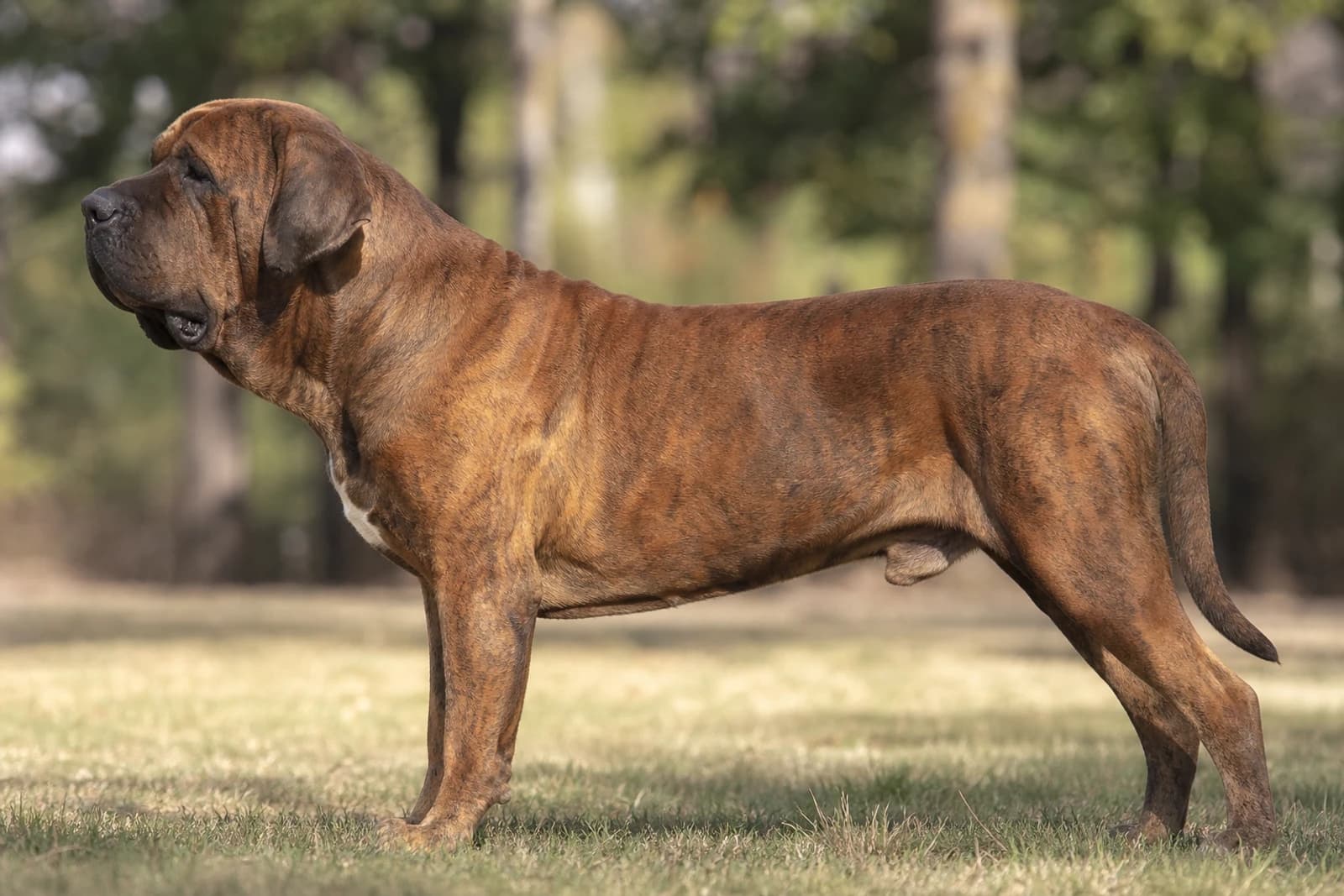
The Tosa is a large, powerful breed from Japan, originally developed for dog fighting. Known for its calm and courageous nature, this breed forms strong bonds with its family but requires an experienced owner. Its short coat and quiet demeanor might make it seem low-maintenance, but the Tosa needs consistent training, early socialization, and firm leadership. Best suited to a home without other pets or small children, the Tosa thrives with active individuals who can provide exercise and structure. This loyal guardian is not for first-time dog owners.
At a glance
- Size
- Large
- Height
- 22–24 in
- Weight
- 82–198 lb
- Life span
- 10 years
- Coat colors
- Red, Fawn, Apricot, Black, Brindle
- Coat type
- short, dense, and harsh
- Group
- Working
- Origin
- Japan
How much does a Tosa cost?
Adopt / rescue
$75–$400
Usually includes spay/neuter, first shots, and a microchip.
Buy from a breeder
$700–$2,000
From a reputable, health-testing breeder.
Approximate USD. Prices vary widely by region, breeder, pedigree, age, and coat colour — adopting is the lower-cost and recommended route. Avoid suspiciously cheap “breeders”; they’re often puppy mills.
Estimate the full cost of a Tosa →Tosa photos
Views
Front, side, rear and top — the full silhouette.Poses
How the breed sits, lies, moves and plays.Puppy to senior
The breed across its whole life.Expressions
The breed’s range of moods.Close-up details
Eyes, ears, nose, paws, tail and coat.Coat colors
The breed’s recognized colors.Click any photo to enlarge. We show the Tosa from every angle — three views, poses, life stages, expressions, close-ups, coat and colors.
Appearance & size
A Tosa looks like a wrestler who managed to stay lean and light on his feet. He’s massive but not sloppy, with every pound of that 82-to-198-pound range carried on a frame that stands just 22 to 24 inches at the shoulder. A typical male might tip the scale at 150 pounds or more without an ounce of fat; the biggest males approach the double-century mark, which makes them a whole lot of dog in a deceptively compact silhouette.
The coat is straight, dense, and harsh to the touch — a no-nonsense short coat that lies flat and sheds seasonally. Colors run from solid red and fawn to brindle and black, often with white markings on the chest, feet, or tail tip. Pure white dogs with dark patches pop up too. There’s no fussy pattern to maintain, just a coat that’s tough enough to handle weather but short enough that you’ll see the muscle ripple underneath.
From the front, the chest is broad and deep, dropping down to the elbows, and the front legs stand straight with bone so heavy it almost seems exaggerated. The head is a blunt, heavy wedge with a moderately wrinkled forehead when the dog is interested. Ears drop forward in a small, triangular fold, and the eyes are dark, small, and calm — never hard or threatening. The muzzle is wide and squared off, built around jaws that are tremendously strong.
Move around to the side and you notice the body is just slightly longer than tall, with a level topline and a big, well-sprung ribcage that screams lung capacity. The neck is thick and muscular, hanging with a bit of dewlap, blending into shoulders that are laid back and powerful. The loin is wide and solid, and the tail sits high, thick at the base, tapering to a point, carried low or in a gentle curve — never curled over the back.
From the rear, the hindquarters mirror the front: broad thighs, heavy bone, and a stance that looks planted. The hocks are moderately bent and well let down, giving the dog a smooth, efficient stride when he decides to move. Everything about a Tosa says “I won’t start the trouble, but I’m here to finish it if I have to.” That short, hard coat is easy to groom until shedding season hits, and then you’ll find fawn hairs woven into the couch cushions no matter how often you brush.
History & origin
A quiet giant built for ritual combat — that’s the Tosa in a sentence. The breed developed in what used to be called Tosa Province (now Kōchi Prefecture) on Japan’s Shikoku island during the late 1800s. Local enthusiasts wanted a homegrown fighting dog that could compete with the bullish Western breeds showing up in Japanese ports. They didn’t want a snarling, flashy brawler — Japanese dog fights were a stylized, sumo-like affair where two dogs charged, shoved, and tried to pin each other to the ground without a sound. So breeders set out to engineer the perfect silent wrestler.
The foundation was the native Shikoku Ken, a medium-sized, agile spitz-type hunter with stamina and grit. To add size, bone, and an unshakeable calm, they crossed in a parade of European heavyweights: Bulldog, Mastiff, Great Dane, Saint Bernard, and possibly Bull Terrier and German Pointer. The result was a dog that could tip the scales anywhere from 82 pounds to nearly 200, with a broad skull, deep chest, and loose, thick skin that gave opponents little to grab. The breeding was deliberate and well-documented, producing a dog that combined immense physical strength with an almost stoic patience in the ring.
By the early 20th century, the Tosa Ken (or Tosa Inu) was a point of national pride, and top fighting dogs drew huge crowds in Kōchi. After World War II, interest waned as the country modernized, though regulated dog fighting still exists in parts of Japan today — a controversial but legal tradition that keeps a small pool of Tosa bloodlines intact. Outside Japan, the breed’s history as a fighter has led to bans or restrictions in several countries, including the UK and Australia.
The Tosa entered North America in small numbers, recognized by the United Kennel Club (but not the AKC). Even now, it remains rare, with dedicated breeders carefully preserving its calm, dignified temperament. That fighting heritage wasn’t about hyper-reactivity — it was about a dog that could face another massive dog and hold its ground without losing its head. The same trait, played forward into a family home, means you’re looking at a dog that is often exceptionally quiet indoors, deeply loyal, and keenly aware of its own power.
Temperament & personality
A Tosa in his own home is often startlingly calm—quiet, watchful, and almost catlike in the way he conserves energy until something truly needs his attention. That 150-pound frame sprawled across the living room floor isn’t laziness; it’s confidence. These dogs were developed in Japan as sumo-style fighters, and the cultural expectation was silent, composed power, not flashy barking. That dignified reserve carries over into family life. He’ll lean against your leg or rest his heavy head on your knee rather than bounce around demanding play, but don’t mistake low-key for low-involvement. A Tosa bonds deeply and can grow anxious or destructive if banished to the yard or ignored for long stretches. Neglect often surfaces as chewing walls, doorframes, or anything that smells strongly of you—interpreting the house as territory defined by family scents.
With his own people, the typical Tosa is gentle and surprisingly tolerant, but “gentle” is an observed tendency, not a pinky-swear. That soft expression—relaxed body, slow tail wag, squinty eyes—is the real deal. A stiff, forward-leaning posture paired with a hard stare, on the other hand, is the dog telling you he’s locked onto something and about to commit. Learn that distinction, because this is not a breed you correct with heavy hands. Strong-willed and physically immense, a Tosa responds to consistent, respectful leadership. Force just teaches him you’re unpredictable, and a dog that outweighs you has to trust you implicitly.
He’s naturally reserved with strangers and territorial without being a nonstop barker. Expect an adult Tosa to carry that forward lean when a stranger approaches the property—not necessarily aggression, but a clear “I see you, and I’ll handle this.” Early and relentless socialization turns that from a liability into intelligent watchfulness. Without it, a fearful backward lean or panicked lip-licking at new sights can escalate to a bite. And because he’s massive and has the jaw strength of a mastiff, even a warning snap causes damage.
A few hard-wired quirks: urine marking indoors is more common than in many breeds if you let him rehearse it. Clean accidents with an enzymatic cleaner or a vinegar spray to kill the scent cue; a Tosa who smells his own calling card assumes that spot is his bathroom. Reinforce outdoor elimination with a treat the instant he finishes—punishing indoors will only make him sneakier. Also teach children from day one never to bother him while he’s eating or chewing. Food guarding can develop silently, and it’s not up for debate with a mouth that size. Provide heavy-duty chews to satisfy that urge to work his jaws and keep teeth clean, but don’t expect him to share.
He is, in summary, a quiet powerhouse who moves through the world with solemnity and a long memory for the scents and experiences of his past. A Tosa who grows up inside the household, treated with clear expectations and real inclusion, is about as unshakable as a dog gets. Cut corners on training or leave him to figure things out alone, and you’ll be dealing with a fearful, hard-headed animal who takes up half the couch and knows he can.
Good with kids, dogs & other pets
The Tosa’s sheer size—males can top 180 pounds—makes supervision around small children non-negotiable, even with the breed’s naturally patient, low-key demeanor. A Tosa who grows up with kids and is consistently treated kindly will often be calm and tolerant. However, a happy tail wag or a lean into a toddler’s space can knock a child over in an instant. Teach children how to interact respectfully, and never leave a Tosa unsupervised with young ones regardless of the dog’s history.
Early socialization makes or breaks this dog’s comfort with other animals. The critical window closes around 16 weeks old, so a Tosa puppy needs gentle, positive exposure to friendly dogs, cats, and unfamiliar people on a near-daily basis. Without it, same-sex dog aggression and overall dog selectivity are real possibilities—especially between males. An adult Tosa who missed that boat may never be a dog-park candidate, and forcing introductions only piles on stress. If you have another dog at home, choose opposite-sex pairings and manage mealtimes and high-value toys carefully.
With cats and small pets, the picture shifts depending on prey drive and early experience. A puppy raised alongside a household cat from day one can learn to coexist peacefully. Even then, a fleeing squirrel or a neighbor’s outdoor cat can trigger a chase instinct that’s hard to override. Separation by a sturdy door or crate when you’re not there is the safest bet.
Bottom line: a Tosa bonds deeply with his family and thrives on near-constant companionship. Long periods of isolation in a yard or kennel create frustration and can amplify wariness toward strangers and animals. Pour your effort into that first four-month socialization sprint—expose him to varied kids, calm dogs, and all the everyday sounds and surfaces you can. The payoff is a steady, discriminating adult dog rather than a reactive 150-pound liability.
Trainability & intelligence
The Tosa is a thinking dog that picks up patterns quickly, but it doesn’t respond to force the way some harder breeds might. You’ll get further building trust and proving you’re worth listening to than you ever will trying to bully a 150-pound dog. When training clicks, this breed works with quiet attention — not biddable in a border-collie sense, but deliberate and watchful.
Positive reinforcement — treats, play, calm praise — is the only approach that reliably gets a Tosa on your team. Punishment-based methods backfire hard here. A Tosa that feels cornered or intimidated can shut down or, worse, escalate, and you’re not winning a physical contest with a dog that can outweigh you. Mark and reward the behavior you want, and you’ll see a dog that starts offering good choices instead of just avoiding punishment.
Consistency matters more than drill-sergeant repetition. Short, clear sessions where the rules never shift from one day to the next work best. Tosas can be independent thinkers — they’re not push-button robots — so if a command seems pointless to the dog, you’ll get a flat stare. That stubborn streak means training a reliable recall takes real work. Even a well-trained Tosa may weigh your call against the squirrel it’s tracking, and decide the squirrel wins. Because of that, off-leash freedom belongs only in a securely fenced area, regardless of how solid the obedience feels at home.
Start socialization the day the puppy comes home. The window between 3 and 14 weeks is when you shape whether this naturally reserved dog grows into a calm, steady adult or a suspicious one. Expose the puppy gradually to different people, calm dogs, traffic sounds, slick floors — always keeping the experience positive and low-pressure. A Tosa that missed this early work tends to be aloof to the point of wariness, and a wary giant is a hazard. Keep exposures to new guests and environments going well into adulthood, but never force interaction; let the dog choose to investigate.
Common challenge: a Tosa that decides it doesn’t feel like working. You’ll know it’s not a learning issue when the dog performs flawlessly at home but conveniently forgets “down” in the driveway. The fix is patience, not a louder voice. Go back to basics, jackpot easy wins, and rebuild the habit without turning it into a showdown. A calm handler who treats every session as a conversation rather than a contest will have a Tosa that leans into training — and that’s the only safe way to manage a dog this powerful.
Exercise & energy needs
The Tosa is a big, powerful dog that carries its strength quietly — but don’t mistake that calm demeanor for low energy. This is a working breed built for stamina and resilience, and it needs a steady, daily outlet, not just a quick spin around the block. Plan on 60 to 90 minutes of exercise every day, broken into at least two sessions. A single long walk rarely satisfies a Tosa; it’s much more effective to do a solid morning and evening routine, with a possible third burst of activity midday if your schedule allows.
Think of those sessions in terms of engagement, not just distance. A Tosa will happily join you for long, purposeful walks, hikes on varied terrain, or controlled jogs, but high-impact, repetitive pounding — like chasing a ball on asphalt or hard jumping — is rough on a dog that can top 150 pounds. Joints are the long-term concern here, so keep the surfaces forgiving and the pace manageable, especially in hot or humid weather. This breed doesn’t pant efficiently to cool down, so avoid midday summer slogs.
Mental work is just as critical. A Tosa with nothing to puzzle over is a Tosa that may redirect that intelligence into unwanted behaviors — staring out the window, pacing, or developing anxiety. Puzzle toys, scent games, and hiding treats around the house can burn mental energy indoors. You’ll get even more out of structured activities like nose work, obedience drills, or weight pull. These tap into the breed’s natural focus and desire to work alongside you without overdoing physical impact. A tired Tosa isn’t just a dog that’s run hard; it’s a dog that’s had to think.
Grooming & coat care
The Tosa’s short, dense, single coat is about as low-maintenance as large‑dog grooming gets. There’s no undercoat to trap dead hair or mat, so a thorough weekly brushing with a firm bristle brush does the heavy lifting. The natural pig bristle grabs loose hairs, sweeps away surface dirt, and spreads skin oils across the coat, leaving a healthy, glossy sheen. During the week, a quick pass with a rubber curry mitt works just as well for a light polish.
Moderate year‑round shedding picks up in spring and fall when the coat turns over. Adding a two‑minute daily brush during those couple of weeks keeps hair off the furniture and gives you a chance to spot any early skin bumps or scrapes. Because the coat is so slick, a bath is only necessary every two to three months — or when the dog has found something unspeakable to roll in. Use a mild, dog‑formulated shampoo so you don’t strip the natural oils that protect that single layer.
With a dog this heavy (82–198 lb fully grown), nail care isn’t cosmetic. Overgrown nails can torque the toes and put unnecessary strain on joints. Trim or grind every three to four weeks. Check the ears weekly, wiping the visible part with a damp cloth to prevent wax buildup; the Tosa’s drop‑ear shape can trap moisture. Teeth benefit from brushing a few times a week with a dog‑safe toothpaste, and offering raw meaty bones or tough dental chews helps keep tartar down between sessions.
All told, a bristle brush, a nail clipper, and a handful of consistent habits cover the whole routine.
Shedding & allergies
A Tosa won’t coat your sofa in drifts of fluff like a double-coated spitz, but don’t mistake that short, dense lie-flat coat for a low-shed pass. This is a large, powerful dog that drops a steady amount of hair year-round and blows coat heavily twice a year — usually in spring and fall — when you’ll find wiry black or fawn hairs woven into upholstery, baseboards, and car seats. The coat is single-layered and glossy, which means the shed hairs are short and stiff, not soft tumbleweeds, but they still add up fast on dark clothing.
A quick session with a rubber curry brush or hound glove two or three times a week pulls most of the loose coat before it lands on your floor. During the seasonal blowout, daily brushing for five to ten minutes makes a real dent, but expect to empty the vacuum canister more than once. The upside: you’ll never pay for pro grooming. This is a wash-and-wear coat that repels dirt reasonably well and dries quickly, but the shed volume scales with the dog’s size — an adult Tosa can tip the scale at nearly 200 pounds, which is a lot of dog dropping a little bit of hair every day.
Drool is a separate reality check. The breed has generous, loose-skinned jowls that collect saliva, especially after drinking, eating, or during warm weather. Long strings of slobber on walls, furniture, and pant legs are part of the package, and a head shake after a water bowl visit sends it flying. A hand towel stationed near the water dish becomes routine.
For allergy sufferers, the realistic picture: no dog is hypoallergenic, and the Tosa is no exception. The primary triggers are proteins in dander and saliva, and a 180-pound dog produces plenty of both. Short hair doesn’t bypass this — in fact, those stiff shed hairs can carry dried saliva into fabric. If allergies in the household are severe, the only real test is spending meaningful time around an adult Tosa in a confined space before committing. If the combination of constant hair, seasonal dander, and dangling drool puts you over the edge, this is the wrong breed for your living room.
Diet & nutrition
Keeping a Tosa at a healthy weight is genuinely one of the most important things you can do for this breed. These are massive dogs — anywhere from 82 to nearly 200 pounds — and every extra pound pounds down on joints that are already carrying a big load. You won’t see ribs poking out, but you should be able to feel them under a thin layer of fat. Run your hands along his sides weekly; if you have to press to find them, it’s time to cut back.
Feed a meat-heavy diet. A Tosa’s digestive system is built for it, and skimping on animal protein with a vegetarian or vegan approach is a nutritional dead end. Many owners aim for roughly 60% raw or cooked meat, 20–30% fruits and vegetables, and the rest from eggs, quality grains, or plain yogurt. This isn't a hard formula, but it keeps the plate anchored in what his body actually needs.
With such a wide weight range, there’s no single calorie number. A 90-pound young adult who jogs daily needs a lot more fuel than a 180-pound senior who prefers napping. Start with the feeding guide on a high-quality commercial food, then adjust up or down based on condition — not the other way around. Tosas aren’t typically manic food gulpers, but if your dog acts like every meal is his last, use a puzzle bowl to slow him down and give his brain a little work at the same time.
Puppies need a different rhythm. From weaning until four months, break daily intake into four small meals. Then three meals a day until six months. After that, twice a day for life. A puppy’s stomach is small, and stretching it with one giant meal sets up bad eating habits and potential bloat risk. When you first bring a puppy home, transition his food slowly — start with lightly cooked and puréed meats, fish, and soft veggies before moving to chunkier textures. You can introduce a raw chicken wing around twelve weeks, but supervise him directly. No wolfing.
Older Tosas lose steam and often pack on weight right when their joints need the least stress. Cut back portions gradually as activity drops, and consider switching to three smaller meals if he seems less interested or develops a sensitive mouth. Puréeing food for seniors with missing teeth is a simple way to keep nutrients coming in without frustration.
Avoid feeding from your plate or tossing him trimmings while you cook. Once a Tosa learns to beg, you’ll never eat a peaceful meal again. If you want to share safe leftovers like plain cooked vegetables, eggs, or a little canned fish, scrape them into his own bowl after you’ve finished. And steer clear of anything excessively rich — holiday ham, bacon grease, fried bits — because a sudden fatty meal can trigger pancreatitis, a hard lesson for a dog this size.
Health & lifespan
A Tosa’s lifespan typically lands around 10 years—right in line with what you’d expect from a dog this size. A few deliberate habits can help you hit that decade and stack the odds for more.
Joint and skeletal health
A frame that carries 82 to nearly 200 pounds puts serious pressure on hips and elbows. Hip and elbow dysplasia—where the joint doesn’t form correctly and leads to arthritis—shows up in the breed. Responsible breeders screen breeding stock with OFA or PennHIP radiographs and only use dogs with passing scores. Ask to see the results. Even with sound genetics, keeping a Tosa lean is non-negotiable; extra weight grinds down joints faster. Puppies grow fast, so stick to a large-breed puppy formula that paces growth instead of rocketing it.
The bloat emergency
A deep chest makes the Tosa a candidate for gastric dilatation-volvulus, or bloat with torsion. The stomach twists, trapping gas and cutting off blood flow—that’s a surgical crisis where minutes matter. You can’t prevent it entirely, but you lower risk by splitting food into two or three smaller meals, never exercising hard right after eating, and avoiding raised bowls unless your vet specifically recommends one. Know the early red flags: unproductive retching, pacing, a distended belly. Get to a vet immediately if you spot them.
Heart and eye screenings
Some lines carry an elevated risk for dilated cardiomyopathy, a weakening and enlargement of the heart muscle. Annual cardiac exams (ideally with an echocardiogram) catch changes early, when medication can buy time and quality of life. Eye concerns like entropion (inward-rolling eyelids) and ectropion (outward-rolling lids) cause chronic irritation and corneal damage. A board-certified veterinary ophthalmologist can examine breeding dogs and young pups before problems take hold.
Weight, weather, and routine care
That short, single coat offers almost zero insulation and burns easily in strong sun. Tosas overheat fast in humidity—this is a climate-controlled indoor breed when temperatures swing extreme. Obesity amplifies joint pain, labored breathing, and anesthesia risk if bloat surgery ever hits the table. Measure meals with a real cup, not your gut, and keep high-value treats to training sessions. Twice-a-year vet visits starting around age 6 or 7 let you catch subtle dips in energy, appetite, or mobility before they snowball. And never skip the basics: monthly heartworm prevention during mosquito season (plus one month after it ends), a legally required rabies vaccination, and early, positive socialization that keeps stress hormones low. A Tosa handled with calm consistency is a steadier, healthier dog—full stop.
Living environment
A Tosa is not a dog that thrives in an apartment or condo. Weighing anywhere from 82 to nearly 200 pounds, these are massive, powerful animals that need floor space to move comfortably and a layout that doesn’t force them to navigate tight hallways or staircases constantly. Shared walls and thin floors are a bad fit — not because the dog will bark incessantly, but because the sheer weight of a Tosa shifting position can sound like furniture moving to the neighbors below.
Yard and space needs
A securely fenced yard is non-negotiable. We’re talking 6-foot or higher fencing with buried reinforcement or a concrete footer; a Tosa can go through a flimsy wooden barrier without much effort if something on the other side triggers its guarding instinct or high prey drive. Underground electronic fences won’t cut it for a breed built to ignore discomfort when focused. The yard gives them room to patrol, sniff, and stretch out without the constant management that on-leash walks demand. Off-leash dog parks are a gamble best avoided — Tosas can be dog-selective and the combination of 150+ pounds of muscle and a sudden squabble is dangerous.
Climate tolerance
Tosa’s short, dense double coat handles moderate cold and damp weather just fine — Japan’s climate gave them that — but they labor in high heat. On summer days, limit outdoor activity to early morning or after sunset, always provide deep shade and cool water, and watch for signs of overheating. Avoid jogging or strenuous exercise when the temperature climbs past 80°F. Because they carry so much bulk, hard surfaces and hot pavement also amplify joint stress, so grass or dirt underfoot is kinder on growing and adult dogs alike.
Noise and barking
A well-adjusted Tosa is remarkably quiet inside the home. You’re not dealing with a yappy watch dog; they often save their deep, resonating bark for genuine alerts — a stranger at the door, something unusual in the yard. That said, boredom or isolation can change the story. If left alone for long stretches with nothing to do, that silence can turn into persistent vocalization or destructive chewing.
Tolerance for being alone
This breed bonds tightly with its people and doesn’t handle extended solitude well. A Tosa left alone 8–10 hours a day, day after day, can develop separation anxiety — pacing, drooling, or trying to escape are not dramatic exaggerations. Aim for a household where someone is home much of the day. When you do leave, a combination of gradual desensitization training, a safely enclosed indoor room, and serious mental engagement (a frozen Kong, a robust puzzle toy) cuts down on stress. Crate training, if started early and paired with positive associations, gives a 150-pound dog a den-like spot to settle rather than a whole house to patrol nervously.
Multiple shorter exercise sessions — think two solid 20- to 30-minute leash walks plus a couple of yard sessions or scent games — meet the Tosa’s physical and mental needs without slamming growing joints the way a single long run would. These dogs need to work their brain as much as their body. A bored Tosa with nothing to chew but drywall is a disaster waiting to happen; a mentally tired one curls up in a cool corner and hardly makes a sound.
Who this breed suits
The Tosa lands squarely in the hands of a small fraction of dog owners — those with deep experience managing powerful guardian and fighting breeds, not just general large-dog know-how. If you’ve successfully lived with a well-trained Cane Corso, Boerboel, or Akita, you’re beginning to understand the threshold. For anyone else, this is a sharp left turn from a typical family pet.
Best-fit owners
- Calm, capable singles or couples who want a quiet home guardian and have no other dogs — especially no same-sex dogs. The Tosa’s dog aggression is real, heavily ingrained, and surfaces unexpectedly even with littermates raised together.
- Owners who live on secure, fenced property with limited foot traffic. This isn’t a dog you casually invite strangers to meet. Tosas are reserved and watchful, and management means controlling who enters the space.
- People who genuinely enjoy the long, slow work of socialization and ongoing training, not just a puppy class. You’ll be proofing neutrality around dogs and unfamiliar people for the dog’s entire life. A Tosa that blows off a recall at an off-leash trail isn’t a nuisance — it’s a liability.
- Those who appreciate a dignified, not clingy, bond. A Tosa won’t pester you for fetch, but it will move from room to room to keep you in sight and settle at your feet.
Who should think twice
- First-time dog owners, period. The learning curve is too steep, and mistakes with a 140-pound, game-bred dog aren’t recoverable with an apology.
- Families with young children or anyone unsteady on their feet. Even a gentle bump can topple someone, and the Tosa’s natural suspicion of unpredictable movement and noise makes extreme supervision non-negotiable.
- Homes with other pets, particularly dogs of the same sex. Same-sex aggression is the rule, not the exception. A Tosa that coexists peacefully with another dog for years can still turn with little warning if a subtle challenge is perceived.
- Renters, city dwellers, or anyone subject to breed bans. Many municipalities, homeowners’ insurance policies, and military housing list the Tosa specifically. A lease violation or a denied claim can unravel your living situation overnight.
- People who want a dog they can run in a dog park or let off-leash in public. That’s not on the table. You walk on leash, you steer clear of triggers, and you accept that your dog’s social circle may be exactly you.
A Tosa settles into your life with the gravity of an animal that was never designed to be a lighthearted companion. The dog needs less aerobic exercise than many large breeds — a few long, sniffy walks a day and a securely fenced area to stretch — but the mental load of constant environmental management never lets up. If you measure your capacity to own a dog by your willingness to plan every outing around worst-case scenarios and never become complacent, the Tosa fits. Otherwise, you’re gambling with 180 pounds of instinct.
Cost of ownership
The upfront price of a well-bred Tosa isn’t small, and the monthly upkeep matches the dog’s size. From a breeder who health-tests hips, elbows, and cardiac — and who screens temperament meticulously — expect to pay $2,000 to $4,000 for a puppy. Show prospects or imports from Japan can push that higher. This is a rare breed in the U.S., and the number of responsible breeders is tiny, so you may sit on a waitlist and travel to pick up your dog.
Once the dog is home, the numbers become a steady drumbeat. A 130-pound adult eats like an athlete. High-quality kibble or a balanced raw diet will run you $120–$200 a month, easy. Heartworm and flea/tick preventives are dosed by weight; for a giant breed, those alone can add $40–$60 monthly to the vet budget. Annual check-ups, vaccines, and routine bloodwork typically land between $600 and $1,000 a year, assuming good health.
- Insurance: Because Tosas are a giant breed and some companies categorize them as high-risk, you might pay $80–$150 per month for a comprehensive policy — and you’ll want it. Emergency bloat surgery or cruciate ligament repair can hit $5,000–$10,000 overnight.
- Grooming: The short, dense coat is a bargain. A rubber curry brush at home and a nail trim every few weeks handles most of it. Budget $30–$60 for a professional session only a few times a year, or none if you learn to do nails and ear cleaning yourself.
- Training and infrastructure: This is the line item nobody skips. A dog with the Tosa’s strength and guarding instinct needs professional, ongoing guidance. Plan on $1,500–$5,000 in the first two years for obedience classes and private sessions. A six-foot privacy fence is often a non-negotiable; if your yard needs one, that’s another $3,000–$8,000 upfront. Some homeowner’s insurance policies will exclude coverage or raise premiums if you own a Tosa, so call your agent before you commit.
Choosing a Tosa
You aren’t just picking a pet — you’re picking a 100-plus-pound guardian breed with a fighting history. The breeder you choose shapes whether that power lands in a calm, discerning house dog or a liability. This is not the breed to impulse-buy from the first listing you see.
Finding a Responsible Breeder
A real Tosa breeder is breeding for rock-solid temperament as much as structure. They’ll health-test relentlessly, raise puppies underfoot in the home, and grill you harder than you grill them. Expect to answer tough questions about your experience with large working dogs and your containment setup. The breeder should prove their dogs in some venue — often conformation, weight pull, or other working events — not just produce puppies. They’ll keep pups until at least 8 weeks, run early neurological stimulation, and conduct structured temperament tests to match each pup to the right home. They’ll also have a contract that requires you to return the dog to them if life falls apart.
Health Clearances You Should See
For a breed with a typical lifespan of just 10 years, documented health is everything. Insist on seeing original OFA certificates — not an “examined by vet” note — for both sire and dam. The non-negotiables:
- Hips: OFA certification (fair or better; borderline is a red flag in a breeding dog).
- Elbows: OFA; elbow dysplasia can cripple a giant breed early.
- Cardiac: A board-certified cardiologist’s echocardiogram, not a routine stethoscope check. Dilated cardiomyopathy is a real threat.
- Thyroid: OFA thyroid panel from an approved lab, since hypothyroidism can fuel skin and behavioral issues.
Also ask direct questions about bloat history in the lines and the ages of dogs in a three-generation pedigree. If grandparents rarely make it past 8 years, keep looking.
Red Flags That Should Stop You Cold
Walk away if the breeder can’t produce those health clearances instantly, breeds dogs under 2 years old (final hip clearances can’t happen sooner), or offers “full registration” to anyone with a credit card. Multiple litters on the ground, puppies raised in a kennel run, or a breeder who won’t let you meet the dam are dealbreakers. And if they don’t first check whether Tosas are legal in your region, they aren’t protecting their dogs — or you.
Choosing Your Puppy
Let the breeder guide you. The right pup for a family home isn’t the boldest, bossiest puppy or the one hanging back in a corner. You want a pup that investigates you with curiosity, accepts gentle handling, and bounces back from a mild startle. Avoid any puppy that shows stiff stillness, hard staring, or resource guarding at this age. A conscientious breeder will already have a short list of pups suited to your household.
The Rescue Alternative
Tosas almost never land in general shelters; when they do, they’re often in breed-specific rescues that understand the stakes. A rescue dog’s background will be murky, so you need a group that does rigorous foster-based temperament evaluation and is brutally honest about guarding drives or fear triggers. If you go this route, treat the first few months as a probationary period with zero off-leash freedom. The non-negotiable baseline stays the same: if a breeder can’t hand you OFA hip and cardiac certificates that you can verify online, move on — right then.
Pros & cons
Pros
- Devoted and steady with their own family — a quiet, dignified companion that forms deep bonds once you earn its trust.
- Naturally low indoor energy; a Tosa is calm in the house as long as it gets regular outside exercise.
- Sharp watchfulness without nuisance barking; they tend to vocalize only when something genuinely concerns them.
- Short, dense coat needs minimal grooming — a quick weekly brush handles most shedding.
- Highly intelligent and trainable by someone with timing and consistency; they respond well to calm, firm leadership.
- Stand-apart presence: a large, athletic dog (males can top 150–198 lb) that offers real deterrent value just by being there.
Cons
- Strong potential for same-sex dog aggression and prey drive; many Tosas cannot be trusted off-leash or at dog parks, and they often need a one-dog household.
- Not a beginner’s dog — the combination of size, power, and independent thinking demands an owner experienced with guardian or working breeds.
- Reserved with strangers; without thorough early socialization, suspicion can tip into reactivity.
- Legal minefield — the breed is banned or restricted in several countries, and some insurers won’t cover them. Check local laws before you commit.
- Short lifespan (~10 years) with a risk of bloat, hip dysplasia, and eye issues; giant-breed vet bills add up fast.
- Drools and can be a messy drinker, and that muscular 24-inch frame needs a securely fenced yard — a privacy fence is often smarter than a chain-link one.
Similar breeds & alternatives
If you're drawn to the Tosa's imposing size and calm power but want alternatives that fit different households or legal situations, a few breeds stand out.
-
English Mastiff – You trade the Tosa's fighting background for a giant breed that was selectively developed to guard, not fight. The English Mastiff is heavier (120–230 lb) with a similarly short lifespan (6–10 years) and a famously patient, low-key temperament indoors. Dog aggression is much less of a concern, but drool, snoring, and the sheer physical scale of the dog mean you'll still need experience managing a huge animal. Early socialization is non-negotiable.
-
Cane Corso – This Italian mastiff matches the Tosa’s protective instinct and muscular, athletic build, but at 88–110 lb it's often more agile and easier to handle for an active family. Cane Corsos are typically more biddable and trainable, with a lifespan of 9–12 years. Like the Tosa, they require a confident owner and consistent boundaries; unlike the Tosa, they're rarely targeted by breed-specific legislation, which can be a deciding factor.
-
Bullmastiff – Bred to quietly hold intruders, the Bullmastiff mirrors the Tosa's silent watchdog nature in a slightly smaller package (100–130 lb). They’re generally less prone to same-sex dog aggression, though still naturally protective. This breed fits well in a quieter home that commits to lifelong socialization but doesn’t want the intensity of a former fighting dog.
-
Akita – If the Tosa’s Japanese origin and dignified loyalty appeal to you, the Akita is another large, powerful breed with a similar independent streak and potential for dog selectivity. Expect a thick double coat, heavier shedding, and a comparable need for an owner who won't back down. Both breeds demand early, rigorous socialization and are not a fit for novice homes.
Fun facts
- Bred in Japan for dog fighting, earning the nickname 'Sumo wrestler of the dog world'.
- Requires a wide, thick collar to support its powerfully muscular neck.
- Known for its stoic and silent nature, rarely barking without cause.
- Considered a national treasure in Japan.
Frequently asked questions
- Are Tosas good family dogs with children?
- Tosas can be gentle with children in their own family when raised with them and properly socialized, but their large size and protective instincts mean interactions should always be supervised. They are not ideal for homes with very young kids due to their potential to knock over a child unintentionally.
- How much do Tosas shed?
- Tosas have a short, dense coat that sheds moderately year-round, with heavier shedding during seasonal changes. Regular weekly brushing can help manage loose hair and keep their coat healthy.
- How much exercise does a Tosa need?
- Tosas are a large, powerful breed that requires daily moderate to high exercise, including long walks, play sessions, and mental stimulation to prevent boredom and destructive behaviors. A fenced yard is ideal for safe off-leash activity.
- Is the Tosa a good choice for first-time dog owners?
- Generally, no. Tosas are strong, assertive dogs with a dominant nature, requiring an experienced owner who can provide consistent training and firm leadership. Without proper handling, they may develop behavioral issues.
- Do Tosas bark a lot?
- Tosas tend to be relatively quiet dogs and are not frequent barkers. They may bark to alert their owners of strangers, but with proper training, nuisance barking is uncommon.
- Can a Tosa thrive in an apartment?
- Apartment living is not typically suitable for a Tosa due to their large size and substantial exercise requirements. They need ample space to move comfortably and a secure outdoor area, making a house with a yard a better fit.
Tools & calculators for Tosa owners
Quick estimates tailored to Tosas — pre-filled with this breed’s size where it matters.
Articles & stories about the Tosa
Sources & standards
This profile follows recognized breed standards from the American Kennel Club (AKC) and the Fédération Cynologique Internationale (FCI), along with established veterinary and breed-club guidance. These describe general breed tendencies — every dog is an individual.
Owner stories
Have a Tosa? Share your experience — grooming tips, personality quirks, anything goes.