

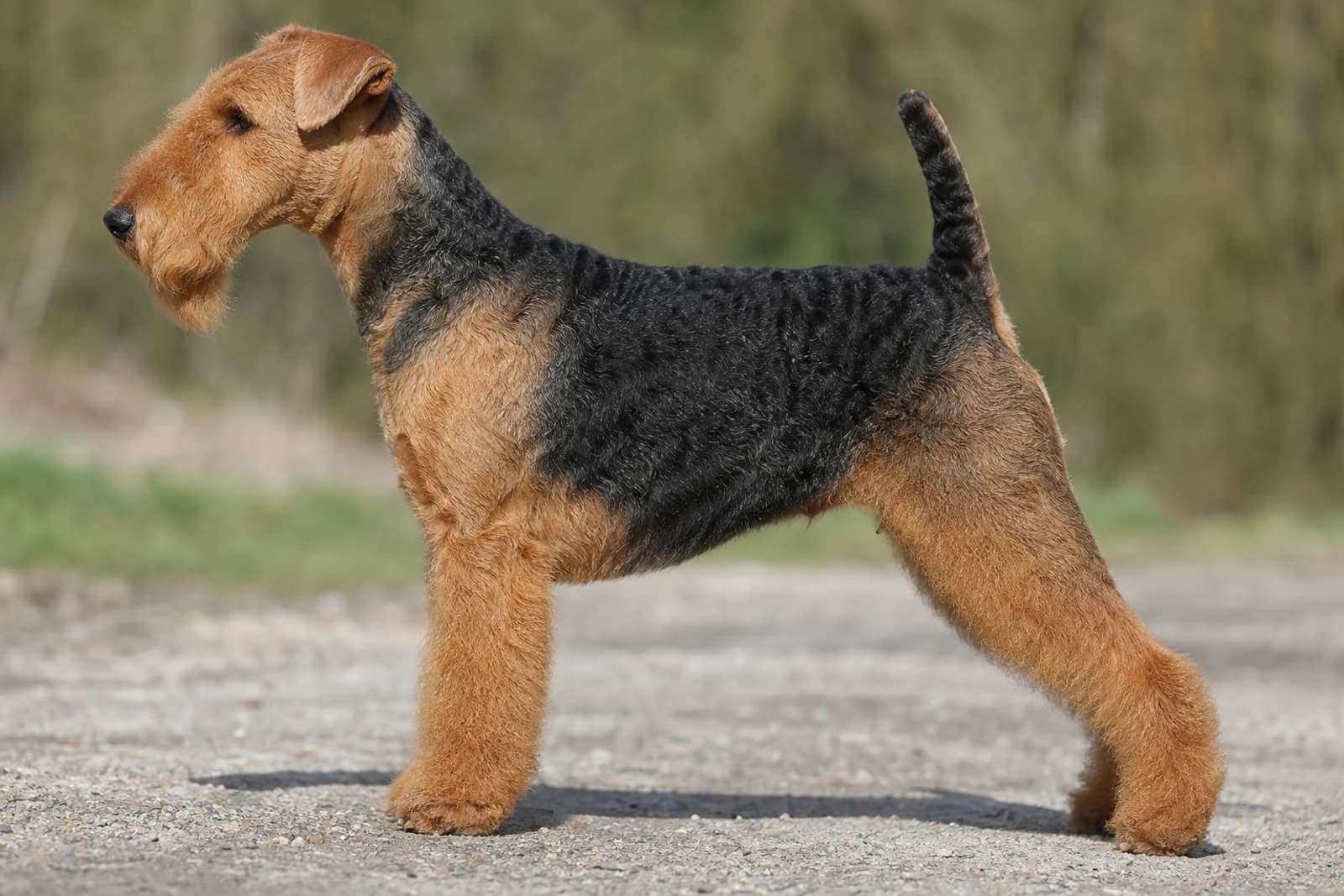
The Welsh Terrier is a medium-sized, spirited terrier with a cheerful disposition and distinctive wiry coat. Ideal for active individuals or families, they are affectionate and playful but have a typical terrier stubbornness. They require consistent training, plenty of mental and physical exercise, and do best with a yard. Adaptable to apartment living if sufficiently exercised, they can be good with children but may chase small animals. With a lifespan of 9–15 years, they are loyal companions for those who appreciate a lively, independent dog.
At a glance
- Size
- Medium
- Height
- 15 in
- Weight
- 20–22 lb
- Life span
- 9–15 years
- Coat colors
- black and tan
- Coat type
- wiry, dense, weather-resistant
How much does a Welsh Terrier cost?
Adopt / rescue
$75–$400
Usually includes spay/neuter, first shots, and a microchip.
Buy from a breeder
$700–$2,000
From a reputable, health-testing breeder.
Approximate USD. Prices vary widely by region, breeder, pedigree, age, and coat colour — adopting is the lower-cost and recommended route. Avoid suspiciously cheap “breeders”; they’re often puppy mills.
Estimate the full cost of a Welsh Terrier →Welsh Terrier photos
Views
Front, side, rear and top — the full silhouette.Poses
How the breed sits, lies, moves and plays.Puppy to senior
The breed across its whole life.Expressions
The breed’s range of moods.Close-up details
Eyes, ears, nose, paws, tail and coat.Coat colors
The breed’s recognized colors.Click any photo to enlarge. We show the Welsh Terrier from every angle — three views, poses, life stages, expressions, close-ups, coat and colors.
Appearance & size
The first thing you’ll notice is how square and compact this dog stands. The Welsh Terrier is built like a small powerhouse — body length equals height at the withers, giving a balanced, no-frills silhouette. At 15 inches tall and 20 to 22 pounds, they’re solid without ever tipping into bulky.
The coat is what really defines them: a dense, wiry, hard outer jacket that feels crisp to the touch, paired with a soft undercoat for weather resistance. The color is always some version of black and tan — a deep black or grizzle “jacket” drapes the back, neck, and upper tail, while the legs, head, chest, and underside glow in a rich rust tan. The black doesn’t extend onto the toes or face; it stops cleanly behind the ears and at the elbows.
From the front, you catch that classic terrier expression. The head is flat and moderately wide between the ears, with a distinct stop. Small, dark, almond-shaped eyes sit deep and watchful, set off by a thick fall of hair and long, bushy eyebrows that add a knowing, almost mischievous look. The V-shaped ears fold forward and hang close to the cheeks, breaking the skull’s clean rectangle. A strong, square muzzle with a wiry beard and whiskers completes the no-nonsense face.
In profile, the neck is clean and slightly arched, running into well-laid-back shoulders. The topline is level and firm, ending in a high-set tail — traditionally docked short and carried upright with a jaunty kink, though an undocked natural tail (carried the same way) is just as correct in many places today. The chest is moderately deep and the ribs are well-sprung, giving the lungs plenty of room.
From behind, the hindquarters are muscular and straight, showing the driving power you’d expect from a dog bred to go to ground. Legs are neither too heavy nor too fine, with small, round, cat-like feet. The overall picture is a tight, ready terrier — no loose skin, no fluff, just a hard-wearing coat and a silhouette that practically hums with purpose.
History & origin
The Welsh Terrier traces back to the tough hill farms and rocky stream banks of northern Wales, where a no-nonsense, black-and-tan earth dog had been flushing otter, fox, and badger since at least the 1700s. Farmers and huntsmen didn’t keep studbooks; they just bred the hardest, grittiest terriers that could go to ground, bolt quarry, and keep up with hound packs on foot. Those early dogs were sometimes called “Old English Terriers” or “Black-and-Tan Wire Haired Terriers,” but they were the raw material for what we now call the Welshie.
By the mid-1800s, Welsh Terriers had caught the eye of dog fanciers beyond Wales, and they started showing up in English rings, originally lumped in with Old English Black-and-Tan Terriers. The breed got its own identity in 1885, when a group of enthusiasts formed the Welsh Terrier Club in Britain and drew up a standard. The Kennel Club recognized the breed the following year. What’s interesting is that for a time, the same dogs were exhibited as both Welsh Terriers and, in some cases, as wire-haired fox terriers of a different color — early show records show a close type overlap that breeders worked hard to tidy up. By 1888, the first Welsh Terriers crossed the Atlantic, and the American Kennel Club gave them full recognition that same year, making the breed one of the first terriers officially registered in the U.S.
The Welsh Terrier’s original job demanded a compact, fearless build — roughly 20 to 22 pounds, standing about 15 inches at the shoulder, with a dense, wiry coat to shed water and thorns. That same body plan survived the transition from hunter to family companion essentially unchanged. Though most Welshies now channel their drive into backyard games and long walks, the breed’s voice, tenacity, and sharp nose are a direct line back to the days when a single dog was expected to face an angry badger underground and walk away from the scrap. No frills have been added, and none have been bred out.
Temperament & personality
The Welsh Terrier packs every ounce of classic terrier feistiness into a sturdy, medium frame. At around 20–22 pounds and 15 inches tall, this is not a delicate lapdog — it’s a confident, sometimes comical firecracker that wants to be in the middle of the action. You get a smart, opinionated housemate who loves you fiercely but rarely worships you blindly. The breed’s 9–15 years are full of personality, not quiet obedience.
Energy and daily rhythm
Plan on a real workout, not a gentle stroll. A Welsh needs a solid hour of off-leash running, tug games, or vigorous fetch every day, plus something to puzzle over — a stuffed Kong, scent games, or short training bursts. Without that outlet, expect industrious redecorating: this dog was bred to tackle vermin, and those jaws still want to dismantle what they shouldn’t. Chewing keeps teeth clean and jaw muscles strong, so stock durable chews and be ready with a homemade citrus or vinegar spray to protect chair legs when the needle teeth emerge.
With the family
At home, a Welsh Terrier is generally warm and affectionate with its own people, but the affection often shows up as a full-body wiggle and a nearby perch rather than clingy cuddling. The breed tends to be reserved, even suspicious, with strangers — a trait that makes it a sharp little watchdog. Barks are usually genuine alerts, not random noise, but you’ll still want to teach a “quiet” cue so the watchdog doesn’t become a neighborhood nuisance. Small kids and visiting toddlers need supervision: a sudden grab near a food bowl or a toddler’s shriek can trigger a stiff, staring posture you need to recognize and interrupt. Teach children early that the dog eats in peace and that a forward lean combined with a hard stare means “back off.”
Independent streak and training
This is a strong-willed terrier. They don’t respond well to heavy-handed corrections. Respectful, consistent engagement — short sessions, clear rules, high-value treats — wins cooperation. Use their cleverness against them (in a good way) by turning training into a brain game. A Welsh will take the inch if you give a mile, so not allowing a puppy’s first jump on the counter or bolt out the door saves you months of unraveling habits. They are masters at the “why should I?” glance, and that’s where a pocketful of tiny, smelly treats keeps you more interesting than the squirrel outside.
Quirks and terrier instincts
The prey drive is no joke. A cat or hamster in the same house can work if raised together, but a fleeing critter outside flips a switch. A Welsh may bolt after a chipmunk and come back smelling like the compost pile — rolling in foul odors is a deeply ingrained joy, whether it’s about masking their own scent or just the dog equivalent of loud cologne. Digging is another passion; a dedicated digging pit sometimes saves your flower beds. Indoors, urine marking can become a habit, especially in intact males, because scent defines territory. Clean any accident thoroughly with a vinegar solution to break the scent memory, and treat immediately when they go outside — punishment after the fact only teaches them to sneak away.
Reading a Welsh Terrier
Body language tells you everything before trouble starts. A loose, bouncy body and soft eyes mean a happy dog ready to play. A body that suddenly freezes, weight shifted forward, with a direct stare signals intent — often toward another dog or a forbidden object. Lip licking, yawning, or turning the head away are not quirkiness; they’re signs the dog is stressed and needs space. A Welsh Terrier that consistently stiffens around certain people or scents might be recalling a past negative association, so pay attention to those reactions.
Early and ongoing socialization with other dogs is crucial. Same-sex squabbles aren’t rare, and the typical terrier bluster — loud, stiff, forward-leaning — doesn’t always mean actual aggression, but it can escalate fast if ignored. With a consistent owner who reads these signals and respects the breed’s independence, the Welsh Terrier is a loyal, spirited companion that keeps you laughing and just slightly on your toes every single day.
Good with kids, dogs & other pets
A well-bred Welsh Terrier brings a patient, non-aggressive temperament to family life, and that alone makes him a safer bet around considerate kids than many other terriers. At 20–22 pounds and 15 inches tall, he’s sturdy enough to handle a clumsy hug from a six-year-old without snapping, yet small enough that he won’t bowl over a toddler. That said, no dog should be a crash test dummy. Supervise all interactions, teach children to give the dog space when he’s eating or resting, and never leave a young child and dog alone together. A Welshie who’s part of the daily chaos—homework at the kitchen table, backyard soccer games—thrives, but isolation breeds trouble. This breed wants to be with his people, and a dog left alone in the yard or crated for long hours can become stressed and snippy.
With other dogs
The picture depends heavily on early socialization. A Welsh Terrier raised with another dog often forms a tight bond. Off-leash on neutral turf, he’ll play chase and wrestle with enthusiasm. Same-sex aggression isn’t a given, but terrier spunk can surface, especially with two unneutered males. Puppyhood is your golden window: between 3 and 14 weeks, you’ll want him meeting a dozen calm, vaccinated adult dogs of different sizes, listening to the vacuum cleaner, walking on gravel. That exposure lays the foundation for a dog who doesn’t resort to fear-barking at the park. After 16 weeks, the brain stops soaking up new experiences as easily—but consistent, positive outings still matter well into adolescence. For an adult rescue who missed those early lessons, forcing meet-and-greets can backfire; a contented homebody who’s polite on leash may not need a dog park social life at all.
With cats and small pets
Cats, rabbits, and pocket pets are where the terrier wiring shows its teeth. Bred to pursue vermin, a Welsh Terrier sees a fleeing hamster as a squeaky toy. Some live peacefully with the family cat they’ve known since puppyhood, but that truce depends on constant management and a cat who stands its ground. A strange cat dashing up a tree will flip the switch. Inside, you’ll need baby gates and secure crates; outside, he’s never off-leash unless the yard is fenced. A flirt pole or a barn hunt class gives his prey drive a legal outlet—and that goes a long way toward keeping the household peace.
Trainability & intelligence
A Welsh Terrier learns fast — often too fast for a handler who isn’t ready to stay a step ahead. At 20–22 pounds of terrier tenacity, this is a smart, independent problem-solver. He picks up new commands in a handful of repetitions, but he also quickly figures out when you’re inconsistent or when the payoff isn’t worth his effort. That independent streak means “because I said so” won’t cut it. Motivation has to be real: high-value treats, a squeaky toy, or a rousing game of tug after a correct response.
Terrier stubbornness shows up if you repeat drills or bore him. Keep sessions short and unpredictable — mix obedience with play and trick training to hold his attention. Harsh corrections backfire hard. A Welsh Terrier who gets scolded or yanked will either shut down or push back with more resistance, damaging the trust you need for reliable teamwork. Reward-based methods build that trust and make compliance a choice he wants to make.
Recall is a project, not a given. With a strong prey drive, a Welsh who spots a darting squirrel or stray cat will blow you off unless the reward beats the chase. Train recalls on a long line from puppyhood, jackpot the return every time, and never punish a slow response — or you teach him that coming back ends the fun. Even with solid training, an unfenced area near traffic is a gamble.
Socialization matters as much as formal drills. Start by 8 weeks, exposing him to different people, other dogs, city sounds, and weird surfaces while pairing everything with treats or play. An under-socialized Welsh can become reactive or snarky around unfamiliar dogs. Widen his world early and keep at it through adolescence.
What works is treating training like a partnership: set clear rules, reward freely, and out-patient his stubborn moments. Channel his brains into dog sports — earthdog, agility, or nose work — where his natural instincts and quick thinking shine. Lose your cool and you’ll lose the dog. Stay consistent and creative, and you’ll have a sharp, biddable terrier who can master an impressive vocabulary of commands and tricks.
Exercise & energy needs
Forget the neat beard and bright eyes for a second. Underneath, a Welsh Terrier is a working terrier, built to hunt and problem-solve. That 20–22 lb body packs a serious engine. A leisurely loop around the block won’t cut it. Plan on a minimum of 60 minutes of real exercise every day, broken into at least two sessions to match their natural go-and-rest rhythm.
One long walk can leave them physically sated but mentally twitchy. Instead, pair a 30-minute morning romp — jogging, a flirt pole chase, or off-leash running in a securely fenced area — with an afternoon session that works their brain. Welsh Terriers thrive when they have a task, not just a route. A fast game of fetch, a backyard obstacle course, or hide-and-seek with a favorite toy all count.
- Mental work is non-negotiable. These dogs were bred to make independent decisions in the field. Puzzle feeders, snuffle mats, and scent games burn energy just as effectively as a run. Spend 10 minutes hiding treats in the yard and send them to “find it,” and you’ll watch a wired dog settle into a satisfied nap.
- Watch the prey drive. Any off-leash time must be in an enclosed space. A squirrel sighting will override recall unless you’ve put in serious training, and these terriers dig and climb surprisingly well for their size.
- Redirect the digging instinct. Give them a designated digging pit or sandbox; it’s easier than fighting a 100-year-old urge.
Dog sports like agility, earthdog trials, and barn hunt are perfect outlets. They tap into the breed’s love of chasing, tunneling, and quick movement. Even short, intense training sessions for tricks can take the edge off. A tired Welsh Terrier is a joy to live with. A bored one will dismantle your couch cushion stitching with surgical precision, then bark about it. You get to choose.
Grooming & coat care
A Welsh Terrier’s dense, wiry double coat sheds very little but demands hands-on upkeep that goes beyond a quick brush-and-go. That tight, hard outer jacket protects the dog from weather and brambles, but it also traps dead undercoat, which means weekly brushing with a slicker brush or a sturdy metal comb is non-negotiable to prevent matting — especially behind the ears, under the legs, and around the collar. Run the brush down to the skin, then follow up with a comb to catch any hidden tangles. You’ll pull out loose hair without eroding the coat’s natural texture.
That texture is the whole point of the breed’s look, and preserving it is where the real commitment lies. Most Welsh Terrier owners either learn to hand-strip the coat every 8–12 weeks or find a groomer who knows terriers. Stripping plucks out dead topcoat hairs by the root, letting a fresh, harsh, richly colored coat grow in. Skimp on this and resort to clipping, and that iconic wheat-and-black jacket will fade to a soft, pale fuzz — no crime for a pet, but it changes the coat’s weather resistance and picks up dirt faster. If you clip, commit to more frequent trims and accept a dog that looks less crisp.
Bathe sparingly — usually every 2–3 months or when the dog rolls in something foul. Use a mild dog shampoo that won’t strip the natural oils keeping the wiry coat water-repellent. Between baths, a wipe-down with a damp cloth and a quick brush-out handles most dirt.
Nails, ears, and teeth follow the reliable small-dog pattern. Check nails every 3–4 weeks; if you hear clicking on the floor, they’re overdue. Keep the ears clean and dry — flip them over weekly and swab gently to ward off the yeast infections that can plague drop-eared terriers. Brush teeth several times a week with dog toothpaste, because tartar builds fast on those tight little jaws. In spring and fall, when the undercoat loosens, step up the brushing to three times a week and strip any dead wool before it mats into armor plate under the topcoat.
Shedding & allergies
The wiry, dense coat that gives the Welsh Terrier its crisp outline also makes it one of the lowest-shedding breeds you’ll find. You won’t see tumbleweeds of hair on the sofa — the occasional loose strand tends to get caught in the tough topcoat instead of drifting onto your clothes and furniture.
That trapped dead hair has to come out somehow. Either you commit to hand-stripping (plucking the dead hairs by the root every few months) or you clip the coat. Clipping is quicker and keeps the dog comfortable, but over time it softens the texture and weakens the coat’s natural dirt-repelling quality. Skipping either method can lead to matting, skin irritation, and a dull, faded look.
Because so little hair and dander escape into the air, many people with mild allergies breathe easier around a well-groomed Welsh Terrier. But no dog is truly allergen-free — allergens are present in skin oils and saliva, too. Spend time around adult dogs of the breed before bringing a puppy home if allergies are a serious concern.
Drool is essentially a non-issue. Welsh Terriers are a dry-mouthed breed.
A quick brush with a slicker a couple times a week removes what little loose undercoat there is and keeps the coat free of debris. That maintenance, combined with the near-zero shedding, makes for a remarkably tidy household.
Diet & nutrition
A lean Welsh Terrier should have a visible waist and ribs you can feel but not see. That 20–22 pound frame doesn’t leave much room for extra padding before it starts stressing joints and setting the stage for a shorter, less comfortable life. If your dog is the type that acts like every meal is his last, you’ll need to stick to measured portions with zero guilt — terriers can be master manipulators around the food bowl.
How much to feed
Portion size depends more on activity level than the bag’s generic chart, but as a starting point:
- Active adult (20–22 lb): 1 to 1¼ cups of high-quality kibble per day, split into two meals.
- Couch warrior or senior with slowed metabolism: As little as ¾ cup daily, weighed or leveled with a real measuring cup, not a scoop.
- Heavily exercised dog (farm work, daily off-leash hikes): May need up to 1½ cups, but increase only if you see ribs starting to vanish.
Watch the dog, not the chart. If you can’t feel those ribs with light pressure, cut back by 10% and recheck in two weeks.
Puppy feeding rhythm
Puppies need fuel for growth, but a fat puppy is a lifetime orthopedic gamble. Stick to this cadence:
- 8–16 weeks: Four evenly spaced meals.
- 4–6 months: Three meals.
- 6 months on: Transition to the adult two-meal schedule.
Around 12 weeks, a raw chicken wing under supervision makes a fine teething tool and jaw workout. Introduce it in a quiet space and take it away once the meat’s gone.
Keeping the engine running clean
Welsh Terriers don’t have a breed-specific metabolic quirk, but they share the terrier talent for packing on ounces fast. Obesity here isn’t just a cosmetic issue — it hikes the odds of pancreatitis, arthritis, and back problems. Avoid rich table scraps, especially fatty holiday meats and cheese rinds, which can trigger a painful pancreatic episode even in a young dog.
If your dog inhales meals, a puzzle bowl or snuffle mat forces him to slow down. The point isn’t to frustrate him; it’s to let his stomach register fullness before he vacuums up a second serving.
What goes in the bowl
You don’t need a doctorate to feed well. A sensible adult diet runs roughly 60% meat (raw or cooked), 20–30% fruits and vegetables, and 10% extras like eggs, plain yogurt, or pearl barley. Puréeing or lightly processing the veggie portion helps a dog’s vertically hinged jaw actually access the nutrients — whole carrot chunks often pass through undigested. For sensitive stomachs, bland white rice and boiled chicken work better than grain-free fads. Canned fish (in water, no salt) and the unsalted water from steaming vegetables both make quick, healthy additions to a meal. And always serve leftovers in the dog’s own bowl, never from the table, unless you want a begging habit that outlives the leftovers.
Health & lifespan
A well-cared-for Welsh Terrier often lives between 9 and 15 years. That’s a solid stretch for a medium dog, and you have real control over which end of that range you land on. Good genetics lay the foundation; what you do day to day tips the scale.
Skin allergies are the complaint you’ll hear about most. A Welshie who seems constantly itchy, licks his paws raw, or battles recurrent ear infections may be reacting to pollen, dust mites, or something in his food. You’ll need to pay attention to diet, possibly add omega-3s, and work with your vet to identify triggers. Responsible breeders avoid pairing dogs with chronic skin histories, so ask blunt questions.
Eye issues deserve your attention because they can move fast. Primary lens luxation (PLL) — where the lens slips out of place — shows up in some lines and causes intense pain and blindness if left untreated. A DNA test exists for it. Ask the breeder for clear test results on both parents, and schedule an annual eye exam with a veterinary ophthalmologist even if your dog seems fine. Glaucoma is another concern that regular checks can catch early.
Luxating patellas (trick knees) can affect this size dog, especially given the way a Welsh Terrier launches himself off the couch after a squirrel. Your vet will feel for it during a routine physical. Hip dysplasia appears less often, but a breeder who screens with OFA or PennHIP on their stock gives you an extra layer of confidence.
At 20–22 pounds, every extra ounce counts. A Welsh Terrier is a chowhound with a capital C, and he’ll sell you a pitiful look for just one more treat. Keep him lean — you want to easily feel ribs, not see a barrel shape from above. Measure meals with a real cup, not a guess, and use part of his daily kibble for training rewards.
Yearly vet visits matter. Once your dog reaches seven or eight, twice-a-year exams and bloodwork help spot hypothyroidism or kidney changes while they’re simple to manage. Stick to monthly heartworm prevention, keep vaccinations current, and don’t ignore a day or two of “not himself” — subtle behavior shifts are sometimes the only early warning a stoic terrier gives you.
Start with a puppy from a breeder who hands over written health clearances and is honest about what appears in their pedigrees. That single choice buys you more healthy years than any supplement ever will.
Living environment
A Welsh Terrier can settle into an apartment—if you’re ready to manage the noise. These 20–22 lb fireplugs pack a big-dog bark that carries through walls and ceilings, and they’re quick to announce delivery trucks, hallway footsteps, or a squirrel at the window. A house with a little distance from neighbors is a better natural fit simply because the alert-dog soundtrack won’t cause friction.
Yard needs
A securely fenced yard is a game changer, but not because the dog needs wide open acreage. It’s because a Welshie was bred to hunt vermin and has zero off-switch for digging and chasing. Expect your 15-inch-high dog to tunnel like a badger. A fence should be solid wood or chain link with an L-footer bent outward underground, or a buried wire apron, to stop the escape artist from going under. Walk a new yard’s perimeter often; they’ll find the one soft spot before you do.
Climate tolerance
That dense, wiry coat gives moderate protection. Welsh Terriers handle cool, damp weather pretty well, but they overheat quickly in direct summer sun or high humidity. They’re indoor dogs—air conditioning on hot days, no hours-long yard stints in July. In cold climates, 20 lb and a short body means body heat drains fast, so a coat if you’re standing around outside is sensible.
Barking and noise
Don’t hope for a quiet companion. Welsh Terriers are vocal and opinionated. They bark at movement, sound, and sometimes just because something looks interesting. This is hardwired terrier behavior, not a fault you train completely out. If you share walls, expect to invest heavily in redirecting and calming games, and still plan on a few awkward conversations with neighbors.
Being left alone
A Welshie bonds fiercely with its people. Left solo for eight-hour workdays, this breed can spiral into anxiety-driven destruction—digging couches, shredding baseboards, barking nonstop. Realistically, you’ll want to build a schedule around two active sessions daily (a solid hour total of fast walking, flirt-pole sprints, and scent games) plus mental workouts like puzzle feeders or “find it” nosework throughout the day. If you’re gone long hours, a midday dog walker or doggy daycare isn’t optional—it’s the difference between a pleasant housemate and a stressed-out, demolition-minded terrier. Gradual alone-time training works best started the week you bring the dog home.
Who this breed suits
A Welsh Terrier fits a specific kind of owner — one who wants a compact, tireless terrier, not a stuffed animal. You’ll get along great if you’re active, patient, and appreciate a dog with the confidence of a much larger breed. They thrive with singles or couples who treat daily exercise as non-negotiable: at least 60–90 minutes of brisk walking, running, or play, plus real mental work (puzzle toys, scent games, or earthdog trials). A secure, fenced yard is ideal because their prey drive kicks in hard around squirrels and neighborhood cats. Families with older kids (say, 8 and up) do well — these dogs are sturdy and playful, but young children may be bowled over by a 20-lb dog that jumps and spins when excited.
First-time owners can succeed, but only if they’re ready for a training challenge. Welshies are smart and independent; they learn commands quickly but will choose whether to obey. Seniors might find the breed’s exercise demands and occasional stubbornness too much, though a laid-back older dog from a rescue could be a good fit if walks and grooming are still doable.
Think twice if you want a quiet lap dog or a dog that’s reliable off-leash. A Welsh Terrier’s recall is often selective when something squeaks or scampers. They’re also vocal — they’ll alert bark at the doorbell and may keep it up if bored. Apartment living can work, but only if you’re committed to tiring them out before leaving and can handle a bored dog’s digging and barking. Grooming is another reality: that wiry coat needs hand-stripping or clipping every 8–12 weeks and weekly brushing, otherwise it mats into a mess. If you’re looking for an easygoing, low-preparation companion, this isn’t your dog.
But if you want a lively, funny partner who’ll keep you hiking, laughing, and on your toes for the next decade-plus (lifespan 9–15 years), the Welsh Terrier delivers. Just know that you’ll never entirely squash their independent streak — and that’s exactly how they like it.
Cost of ownership
A well-bred Welsh Terrier puppy from a responsible breeder usually lands between $1,500 and $3,000, with show-prospect pups occasionally stretching above $3,500. Adoption through a breed rescue typically falls in the $200–$500 range. The ongoing numbers are what you’ll live with, and they add up differently than for a low-shed lap dog.
- High-quality food: $30–$50 a month for kibble that fuels a sturdy, 20-pound terrier without fillers.
- Professional grooming: $40–$60 a month averaged over the year. That dense, wiry coat needs hand-stripping or clipping every six to eight weeks; a session runs $60–$90, and skipping it leads to a matted, uncomfortable dog.
- Routine vet care: $20–$40 a month (annual exam, vaccines, heartworm and flea/tick preventives total about $250–$450 a year).
- Pet insurance: $30–$60 a month. Welsh Terriers can be prone to allergies, lens luxation, and epilepsy, so a policy that covers hereditary conditions is worth considering. Responsible breeders screen for eye and joint issues, which helps.
- Treats, toys, training, and “terrier-proof” gear: $20–$50 a month. Think puzzle toys, sturdy leashes, a class or two, and the inevitable replacement trash can.
Figure a real-world monthly budget of $150–$250, not counting emergency care or the pluck-to-trim kit if you decide to learn home grooming. And if you're tempted to cheap out on the groomer, that wiry coat will let you know—publicly.
Choosing a Welsh Terrier
Finding the right Welsh Terrier almost always starts with the breeder. You’re looking for a sturdy 20–22 lb dog that stays bright and busy for 9 to 15 years—that kind of longevity depends heavily on how the puppy was bred and raised.
Rescue is an option, but wait lists for breed-specific rescues through the Welsh Terrier Club of America’s network tend to be long. If you have terrier experience and don’t mind an adult with an unknown backstory, it’s a solid path. Most families, though, work with a breeder.
What a responsible breeder does
A good breeder considers the whole dog, not just a quick sale. They’ll ask you harder questions than you ask them: your exercise routine, your yard setup, your experience with a whip-smart, independent-minded terrier. They let you meet the dam (often the sire, too) and hand over health clearances without hesitation.
You need proof of three things at a minimum:
- Primary Lens Luxation (PLL) DNA test – both parents should be clear, or at most one a carrier. This painful inherited eye condition can show up suddenly and lead to blindness.
- Annual eye exam (OFA Eye or CERF) – done by a veterinary ophthalmologist, not a routine vet visit.
- Patellar luxation evaluation – OFA Patella certification, because slipping kneecaps show up in the breed.
Some breeders also screen hips, heart, or thyroid. But if you hear “my vet says they’re healthy” and see no paperwork, walk. No records means the breeder cut a corner you don’t want to gamble on.
Red flags that should stop you cold
Puppies always available. Multiple breeds on the property. A dam you can’t visit or that’s kept away from the litter. Selling pups younger than 8 weeks. A breeder who pressures you to pay a deposit without a real conversation or pushes a specific puppy because it’s the last one. All signs of a business, not a breed steward.
Picking the puppy in front of you
By the time you visit, a responsible breeder will have narrowed the litter to one or two pups that match your home. Watch the group. A sound Welsh Terrier pup is confident and nosey—maybe a little bossy, but not a bully or a wallflower. The right one makes eye contact, investigates your shoelaces, then wades back into play. Avoid a puppy that cowers in the corner or one that relentlessly mounts littermates. All pups should appear clean, have had at least one round of age-appropriate vaccines, and be on a deworming schedule.
Skip the internet listings and start with the Welsh Terrier Club of America’s breeder referral. That one step puts you years ahead.
Pros & cons
Pros
- Compact, sturdy build — 15 in tall and 20–22 lb means a dog you can lift, travel with, and share a small yard, yet tough enough for real outdoor adventure.
- Long life span of 9–15 years gives you a loyal sidekick for a big stretch of family life.
- Low-shedding wiry coat drops very little hair, a solid pick for tidy homes; many allergy sufferers do well with them.
- Vibrant family companion — forms fierce bonds, adores being in the middle of the action, and has a playful, tail-wagging zest that keeps everyone entertained.
- Alert watchdog with a big-dog bark that sounds far larger than his size, without sliding into aggression.
- Smart and food-motivated — learns tricks quickly when training is short, upbeat, and consistent; fun to work with in dog sports.
Cons
- High exercise demands — a leashed stroll won’t cut it. They need a solid hour of running, exploring, or rowdy play, plus mental puzzles, or they invent their own (destructive) games.
- Large prey drive — squirrels, cats, even small dogs can trigger an all-out chase. A fenced yard and a long line in open areas are non-negotiable.
- Independent streak — that terrier brain says “what’s in it for me?” Training takes patience; they’ll test rules repeatedly if you let loopholes slide.
- Coat commitment — the harsh double coat needs brushing several times a week and either regular hand-stripping or clipping to keep it healthy and mat-free.
- Noise and digging — barking at passersby and excavating the flowerbeds are baked-in terrier hobbies; early training can dial it down, but the instinct stays.
- Selective with other dogs — some adults become same‑sex intolerant or scrappy without careful socialization from puppyhood; not a natural dog‑park social butterfly.
Similar breeds & alternatives
If you’re drawn to the Welsh Terrier’s sturdy build and game terrier attitude, a handful of other wire-coated breeds sit right in the same zone—with a few key differences.
- Lakeland Terrier: Almost the same height (14.5 in) but typically 5-7 lb lighter. Lakelands tend to be a little more reserved with strangers and can be a touch sharper with same-sex dogs. The Welsh usually brings a more overtly social, steady-nerve personality to the house.
- Wire Fox Terrier: Slightly taller and leaner (up to 15.5 in, 15–19 lb). Expect a more intense, driven terrier engine. Wire Foxes are famously fast, clever, and need an outlet for their chase instinct. A Welsh Terrier often settles into family life with a notch less manic energy, though neither is a couch potato.
- Irish Terrier: Noticeably larger at around 18 in and 25–27 lb. This is the reckless, protective “daredevil” of the group, bred to be a farm guardian as much as a hunter. If you need a dog with a bit more size and a louder alarm bark, the Irish is a candidate—just know the training demands jump up accordingly.
- Border Terrier: A smaller, lower-to-the-ground alternative (11–14 lb). Borders are famously amiable with other dogs and often easier to manage off-leash, but they still have a strong prey drive. The Welsh gives you more bone, a harder coat, and a more robust, substantial feel while keeping a similar lifespan.
- Airedale Terrier: The “king of terriers” stands 23 in and can weigh 40–65 lb. Same wiry coat, same terrier smarts, but scaled way up. If you love the Welsh look but need a dog twice the size, an Airedale fits. For tighter living quarters or easier portability, the Welsh is the more practical pick.
All these breeds need consistent grooming (hand-stripping maintains the coat), and none will ignore a squirrel. But among them, the Welsh Terrier often strikes the balance of being tough enough for a hike and calm enough to post up under your desk without leaving teeth marks on the baseboard.
Fun facts
- Originally bred in Wales for hunting foxes, badgers, and otters.
- Their black and tan jacket is a hallmark, with puppies born mostly black.
- Often described as ‘calmer than a Fox Terrier but just as tenacious’.
- The breed’s wiry coat requires regular hand-stripping or clipping to maintain texture.
Frequently asked questions
- Do Welsh Terriers shed a lot?
- No, they are low-shedding dogs due to their wiry, dense coat, but they do require regular grooming to remove dead hair. While often called hypoallergenic, no dog is completely allergen-free.
- Are Welsh Terriers good with children?
- They can be good with children if raised together and properly socialized, though supervision is wise because of their high energy. Their playfulness can be too boisterous for toddlers.
- How much exercise does a Welsh Terrier need?
- This active breed needs at least 45–60 minutes of daily exercise, including brisk walks and interactive play. Without enough activity, they may become restless and develop behavioral issues.
- What are the grooming requirements for a Welsh Terrier?
- Their coat needs weekly brushing and professional grooming every 4–6 weeks, typically through hand-stripping or clipping to maintain texture. Regular ear cleaning and nail trimming are also essential.
- Can a Welsh Terrier live in an apartment?
- Yes, they can adapt to apartment living if provided with sufficient daily exercise and mental stimulation. However, their alert nature may lead to barking, which could disturb neighbors.
- Is a Welsh Terrier a good choice for first-time dog owners?
- They are affectionate and intelligent but can be stubborn and independent, making consistent training a must. First-time owners should be ready for typical terrier behaviors like digging and chasing small animals.
Tools & calculators for Welsh Terrier owners
Quick estimates tailored to Welsh Terriers — pre-filled with this breed’s size where it matters.
Articles & stories about the Welsh Terrier
Sources & standards
This profile follows recognized breed standards from the American Kennel Club (AKC) and the Fédération Cynologique Internationale (FCI), along with established veterinary and breed-club guidance. These describe general breed tendencies — every dog is an individual.
Owner stories
Have a Welsh Terrier? Share your experience — grooming tips, personality quirks, anything goes.