

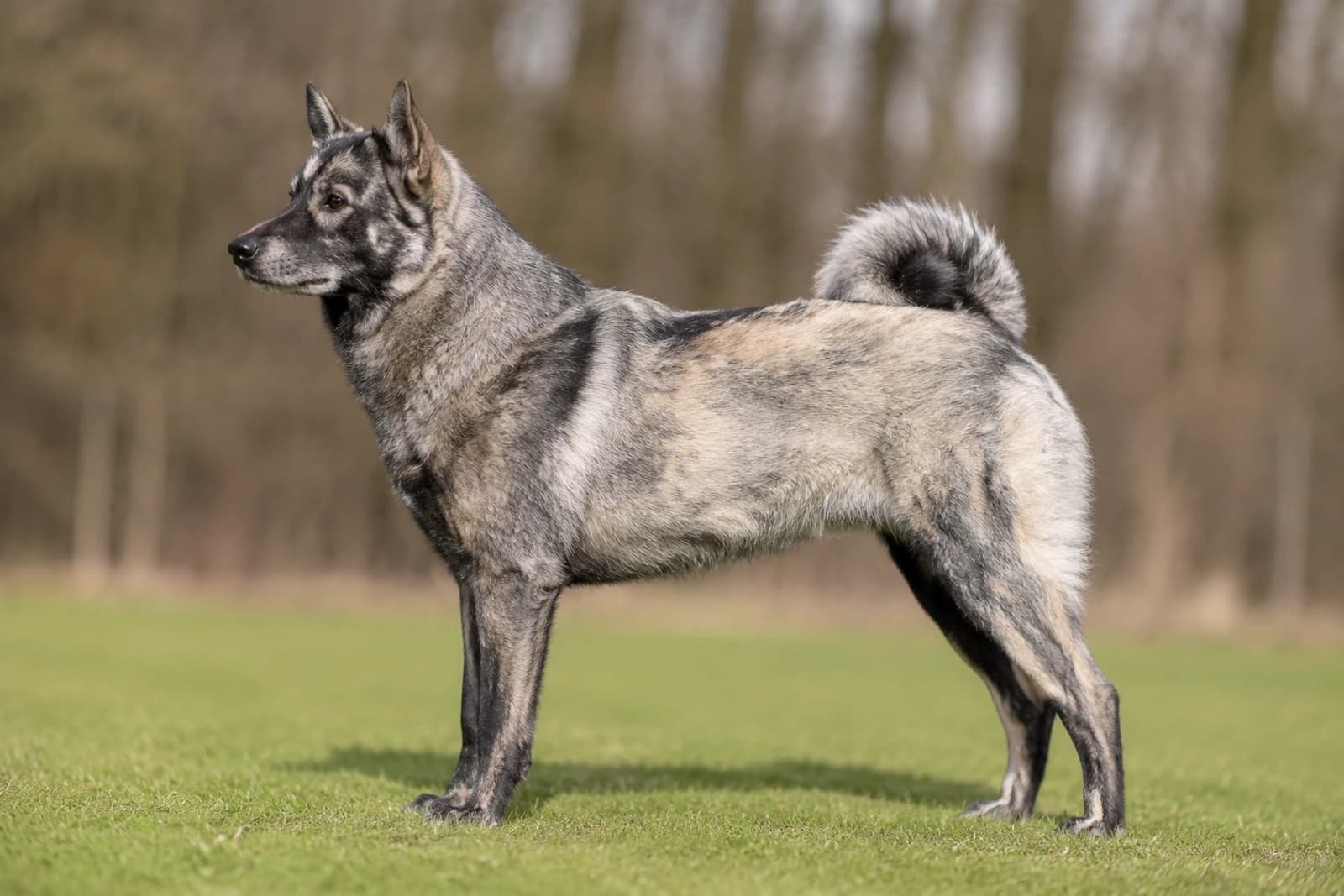
The West Siberian Laika is a robust, medium-to-large spitz-type breed originally developed in Russia for hunting everything from squirrels to bear. This versatile and tireless hunter is highly intelligent, independent, and deeply loyal to its family. With a dense, weather-resistant double coat and a strong prey drive, the Laika thrives in active, outdoor-oriented households. Best suited for experienced dog owners who can provide firm, consistent training and plenty of physical and mental stimulation, this breed is a devoted companion for those who share its adventurous spirit. Not ideal for apartment living or sedentary families.
At a glance
- Size
- Large
- Height
- 20–24 in
- Weight
- 40–49 lb
- Life span
- 10–12 years
- Coat colors
- Wolf-grey, Red, White, Grey, Black, Red-grey, Sable
- Coat type
- Dense double coat with straight, harsh outer hair and soft undercoat
- Group
- Spitz–Type
How much does a West Siberian Laika cost?
Adopt / rescue
$75–$400
Usually includes spay/neuter, first shots, and a microchip.
Buy from a breeder
$700–$2,000
From a reputable, health-testing breeder.
Approximate USD. Prices vary widely by region, breeder, pedigree, age, and coat colour — adopting is the lower-cost and recommended route. Avoid suspiciously cheap “breeders”; they’re often puppy mills.
Estimate the full cost of a West Siberian Laika →West Siberian Laika photos
Views
Front, side, rear and top — the full silhouette.Poses
How the breed sits, lies, moves and plays.Puppy to senior
The breed across its whole life.Expressions
The breed’s range of moods.Close-up details
Eyes, ears, nose, paws, tail and coat.Coat colors
The breed’s recognized colors.Click any photo to enlarge. We show the West Siberian Laika from every angle — three views, poses, life stages, expressions, close-ups, coat and colors.
Appearance & size
What you notice first is a medium‑large hunting Spitz built for endurance, not bulk. These dogs stand 20 to 24 inches at the shoulder and weigh 40 to 49 pounds — compact enough to weave through dense forest, leggy enough to work deep snow all day. The overall picture is slightly longer than tall, with a clean, athletic outline that never looks soft or overdone.
From the front, the West Siberian Laika has a wedge-shaped head, prick ears set high and alert, and dark, oval eyes that give a sharp, confident expression. The muzzle is about equal in length to the skull, tapering without being snipey. The chest is deep and fairly narrow, with straight, muscular forelegs set well under the body — you see immediate function here. Lips are tight, and the nose is usually black, though lighter pigmentation can happen with certain coat colors.
In profile, you appreciate the balance. The neck blends smoothly into a firm, level topline. There’s a moderate tuck-up, and the loin is short and strong. The tail is a vital landmark: curled tightly over the back or flank, a classic Spitz flag. When the dog moves, the tail stays put, and the stride is ground‑covering — a driving rear and a free‑moving front, with none of that wasted up‑and‑down motion.
From behind, the hindquarters are muscular and well‑angulated, with hocks that drive straight forward. The legs are parallel when standing; any weakness here robs endurance.
The coat is a true working double coat, harsh and straight against the body, with a thick, soft undercoat that insulates in brutal cold. Around the neck and shoulders, the outer coat forms a pronounced ruff, framing the head and giving the dog its wolfish rough‑and‑ready look. On the head and fronts of legs, the hair is short and smooth; on the backs of the legs and tail, it feathers out. Color patterns run the gamut: solid white, salt‑and‑pepper, wolf‑gray, red, and all shades of sable. You’ll see parti‑color and piebald dogs with white bodies and colored patches — often around the eyes and ears — which helps hunters spot their dog at a distance. Solid black or black‑and‑tan, by contrast, is a disqualification in the breed standard. The coat sheds heavily once or twice a year, but between blows it’s surprisingly low‑maintenance for a northern breed.
History & origin
The West Siberian Laika isn’t a kennel creation. It’s a selection of the aboriginal hunting dogs that the Khanty (Ostyak) and Mansi (Vogul) peoples relied on for centuries across the West Siberian taiga. Those people didn’t keep casual pets; they kept lean, fast, weatherproof partners that could work alone at great distances in snow and sub-zero cold, then sleep outside curled in a ball. The dogs found, bayed, and held everything from sable and marten to capercaillie, bear, and moose. They also pulled light sleds when rivers froze.
By the early 1900s, the native dog populations had thinned badly—overhunting, disease outbreaks, and the disruption of traditional ways took a steep toll. After World War II, Soviet cynologists moved to salvage and standardize the best remaining stock from the Ural and Ob River drainages. They gathered dogs directly from native villages, picking for the traits hunters actually needed: a wide, independent search, a nose that could scent a squirrel from a hundred yards, and a hard, clear bark that didn’t quit until the human arrived. The first official breed standard was approved in Moscow in the mid-1950s.
The name “Laika” means barker, and it’s a working description, not a decorative label. The Fédération Cynologique Internationale recognized the breed in 1980. Even so, numbers outside Russia have always been small. You’ll occasionally find them with European hunters or a handful of North American breeders, but this is still a dog defined by the frozen bogs and pine forests of its homeland. Most West Siberian Laikas today remain working guns dogs in Russia, not show-floor regulars, and serious breeders still test them on wild game to preserve the grit that kept a Khanty family fed through the dark months.
Temperament & personality
A West Siberian Laika isn’t a casual couch companion, and that’s the first thing you need to know. This is a sharp, driven hunting dog wrapped in a 40–49 pound frame, bred to think independently while working miles from a handler. You’ll earn his respect, not command it. Heavy-handed training falls flat — he’s too smart for bullying and will shut down or push back. Consistent, fair boundaries and a good dose of patience get you a wildly loyal partner who literally lives to work with you.
A mind that needs a job, not just a walk
Laikas run hot. A couple of daily leash strolls won’t touch the sides. He needs at least an hour of hard, physical activity — running, pulling, scent work, or a combination — and just as much mental challenge. Without it, that intense energy turns into howling marathons, excavated flower beds, or furniture reconfigured by chew-happy jaws. Puppies chew to explore and soothe teething pain; adults keep their teeth and jaws strong on hard objects, so redirecting that natural urge to approved toys saves your baseboards. A bored Laika left alone too long can develop anxiety-driven barking that doesn’t just annoy the neighbors — it’s a genuine stress signal.
Watchful, not needy — but decidedly vocal
He’s naturally reserved with strangers and notices everything on his property. A loose, relaxed body and soft eyes mean he’s at ease; a stiff, forward-leaning posture with a hard stare is your cue to step in before a warning bark escalates. Count on him to be a reliable watchdog, not a silent one. Laikas talk — howls, yips, and grumbles are part of the package. You can shape it with training, but you won’t extinguish it.
House manners and the nose that never quits
That powerful nose drives some quirks you’ll manage, not eliminate. Urine marking indoors isn’t spite — it’s a scent message he recognizes later. If he has an accident, clean the spot with an enzymatic cleaner or a vinegar spray (white vinegar and water works) to break down the odor and remove the cue, or he’ll hit that same patch again. Reward outdoor elimination immediately; he’ll connect the dots faster than punishment will. And don’t act shocked when your Laika finds something magnificently dead to roll in. Some dogs do it to mask their own scent, others seem to genuinely enjoy the stink — either way, a bottle of deodorizing shampoo is non-negotiable.
Life with family
With his own people, he’s affectionate without being clingy — think steady companionship, not velcro. He can be great with respectful older children, but the household needs ground rules: never interrupt him while he eats, because food guarding can surface if meals feel threatened. His high prey drive makes off-leash reliability a long-term project and means cats, small dogs, or pocket pets are rarely a safe mix unless he’s been raised with them from puppyhood with careful management. Neutering can take the edge off some territorial marking, but don’t expect it to erase the instinct.
If you want a dog that tests your creativity, keeps you moving, and returns your effort with unshakeable devotion, a Laika fits. If you’re picturing an easygoing daytime napper, you’ll both be miserable.
Good with kids, dogs & other pets
A West Siberian Laika is typically even-keeled and patient with kids, so households with respectful children are a natural fit. These dogs bond deeply with their whole family and won’t shy away from noisy, active playtime; a 45-pound Laika can be surprisingly gentle, but sheer enthusiasm can knock over a toddler if nobody’s paying attention. Supervise interactions with young kids and teach both dog and child the ground rules early — no ear-pulling, no climbing on the dog’s bed while it’s resting.
This breed thrives on companionship and wants to be in the middle of family life. Leaving a Laika alone in the backyard for hours, or isolating them from the household, almost always backfires into barking, digging, or anxious behaviors. They do best when they can sleep indoors and join daily routines. If your family is gone for long workdays, plan for a midday break — these are not dogs that adapt well to solitary living.
With other dogs, the picture depends heavily on early socialization and the individual dog. Laikas can coexist peacefully with housemate dogs they’ve been raised with, but same-sex squabbles aren’t unheard of, and an adult Laika who missed the window for positive exposure may become selective. The critical socialization period runs from about 3 to 14 weeks; consistent, gentle introductions to a variety of friendly dogs during that time give you the best shot at a dog who’s easygoing later. After that sensitive window closes, forcing an adult to interact with unfamiliar dogs can spike stress rather than improve things — you work with the dog in front of you, not the one you wish you’d socialized earlier.
Prey drive is where you’ll see the true hunting heritage. A West Siberian Laika was bred to pursue game, from squirrels to wild boar, and that instinct doesn’t switch off in a suburban yard. Small pets like cats, rabbits, or pocket pets are usually viewed as prey. Some Laikas learn to live with a family cat if introduced early in puppyhood and supervised like a hawk, but there are no guarantees, and you should never leave them unsupervised together. Off-leash, a Laika that sights a fleeing cat or a small dog will likely give chase with remarkable speed and focus. If your household includes small animals, you’ll need rock-solid management — a securely fenced yard, separate spaces, and realistic expectations about what your dog can comfortably ignore.
Trainability & intelligence
You’re not training a retriever who lives to please. West Siberian Laikas were developed to hunt independently over miles of forest, making split-second decisions without human direction. That brainpower is very much there—these dogs learn new cues quickly—but they’ll also weigh whether following your request makes sense in the moment. Your job is to convince them it does.
Motivation matters more than commands
A Laika works for a clear payoff, not out of blind obedience. Find what drives your dog: food, a tug toy, the chance to chase a flirt pole. High-value rewards, delivered immediately when they offer the right behavior, build a reliable response far faster than drilling “sit” for a pat on the head. Praise and play often work as well as treats once a bond is established, but never expect them to perform for nothing. They notice if you’re stingy.
The recall: your biggest challenge
This breed’s prey drive can override training in a heartbeat. If your Laika treeing a squirrel hits the 40-pound mark and ignores your whistle, you’ve got a real problem. Train the recall from day one in boring, distraction-free areas, then gradually proof it around wildlife—and accept that off-leash freedom in unenclosed spaces may never be 100% safe without an e-collar trained as a back-up signal, not a punishment.
Build the partnership, then the obedience
Punishment, leash jerks, or loud corrections backfire dramatically. A Laika doesn’t forget harsh treatment, and you’ll damage the trust that makes cooperation possible. Short, 5–10 minute sessions keep them from zoning out. Mix basic cues with scent games or hide-and-seek—anything that lets them use their nose and problem-solving brain. End every session on a win with something they love.
Socialization isn’t optional, it’s a safety net
Without thorough early exposure, the breed’s natural reserve can tip into fear-based reactivity or aloofness that’s hard to unwind later. Get your puppy out before 16 weeks to meet calm strangers, hear traffic, walk on different surfaces, and encounter other well-behaved dogs. Keep every encounter positive and never force interaction. Those early months pay off in an adult dog who can handle the world without panic—and who still listens when life gets interesting.
Exercise & energy needs
Your West Siberian Laika wasn’t built for a life of Netflix and brief leash strolls. This dog came from lines of tireless hunters that worked alone or in small groups across frozen forests, tracking and treeing game for hours. Expect to match that drive every single day.
How much, and how hard
Plan on a bare minimum of 90 minutes of daily exercise — split into two sessions, not one long grind. I’m talking real movement that gets the heart pumping: off-leash running (in a secure area), pulling a sled or bike, or hunting-style hikes with plenty of sniffing and terrain changes. A casual walk around the block won’t touch this dog’s stamina. If you can’t provide at least 45–60 minutes of active work in the morning and another 30+ minutes in the afternoon, the Laika will find its own outlets, and you won’t like them.
- Morning session: 45–60 minutes of hard running or pulling work (canicross, skijoring, bikejoring, or a long hilly hike).
- Afternoon/evening session: 30–45 minutes of brisk walking paired with intense scent games or free running in a large field.
Puppies and adolescents need the same drive but in shorter, more frequent bursts to protect growing joints. Avoid repetitive high-impact jumping on pavement until growth plates close, usually around 12–14 months.
Mental work is non-negotiable
Physical exercise alone will leave a smart hunting dog half-baked. Laikas were bred to problem-solve while tracking game, not just follow a human on a paved loop. Without mental fatigue, you get pacing, digging, chewing, and a shrill barking habit that can drive neighbors mad.
- Scent work is the closest thing to their original job. Hide a favorite toy or drag a scent trail through the woods. Join a nose work class — it’s a lifesaver.
- Puzzle feeders and frozen Kongs take the edge off indoors, but they’re just a supplement.
- Training sessions (10–15 minutes, multiple times a day) that challenge their independence — like practice recalls away from wildlife, or teaching directional tracking — burn more mental energy than endless reps of sit-stay.
What a Laika really wants to do
Lean hard into activities that honor the breed’s history. They thrive in mushing, skijoring, bikejoring, or canicross. Hiking off-leash in a safe area where they can range, sniff, and occasionally tree a squirrel for you to catch up is their idea of a perfect day. Some take well to barn hunt, lure coursing, or tracking trials. Whatever you choose, keep the goal clear: a tired Laika is one who has used its nose and its legs until the job feels done.
Skip the afternoon session once, and you might get lucky. Skip it twice, and you’ll come home to a vocal, creatively destructive housemate who’s not sorry about the shredded couch cushions. This is a breed that thrives on hard work — give them enough of it, and they’ll be a calm, focused partner inside the house.
Grooming & coat care
A thick, stand-off double coat gives the West Siberian Laika a permanent “just back from the tundra” look — and thankfully it’s one of the lowest-maintenance coats in the spitz family until shedding season hits. You’ll brush once a week most of the year, and every other day (or even daily) during the two heavy seasonal sheds when the undercoat lets go in clumps.
-
Brushing tools that actually work: A metal slicker brush with rounded pins gets through the harsh outer guard hairs to pull loose undercoat without scratching skin. Follow up with a wide-toothed steel comb to catch hidden tangles behind the ears, britches, and tail. When the coat is blowing hard in spring and fall, swap the slicker for an undercoat rake or a deshedding tool — that’s when you’ll fill a trash bag with grey fluff.
-
Bathing? Barely. Laikas have a naturally dirt-repellent, nearly odorless coat. Bathing strips the protective oils that make this possible, so you’ll only need to reach for dog shampoo a couple of times a year, or after a particularly inventive roll in something dead. When you do bathe, use a mild, soap-free formula and rinse until the water runs clear — leftover residue is what causes skin drama.
-
Trimming: Leave the body coat alone. It insulates against both cold and heat; clipping ruins the texture and invites sunburn. Trim the fur between the paw pads to prevent ice balls in winter and caked mud in summer, and snip any ragged nails if they click on the floor. Ears stand up and usually stay clean, but after a swim or a wet hunt, lift the flap to dry any moisture and check for wax buildup. A quick tooth brushing two or three times a week rounds out the routine.
-
Seasonal coat care reality check: Twice a year, you’ll question your life choices as tumbleweeds of undercoat drift across the house. Brush her outside during those periods — a brisk 15 minutes with a rake every day for two to three weeks gets it over faster. Some owners blow out the loose fur with a high-velocity dryer (no heat) before brushing. It’s messy, but it cuts grooming time in half and leaves the coat flat and shiny.
Ignore the shedding for a week during a blow, and you’ll end up with dense mats that pull on the skin — especially under the collar, in the armpits, and along the flanks. Stay on top of it, and the Laika’s coat pretty much takes care of itself.
Shedding & allergies
This is a heavy shedder, plain and simple. If the thought of tumbleweeds of fur rolling across your floor bothers you, the West Siberian Laika will push every button you have. They carry a dense double coat built for real Siberian cold — a straight, harsh outer layer and a thick, woolly undercoat — and it comes off in quantities that honestly surprise most first-time owners.
Year-round, you’ll find hair on your couch, clothes, and floating into your coffee. But the real show happens during the twice-a-year seasonal blowout, when the entire undercoat cuts loose in a matter of weeks. You can literally pinch a tuft and pull it free without the dog flinching. During these periods, daily brushing with an undercoat rake or slicker brush isn’t a maybe — it’s how you keep your sanity. Even then, expect to empty the vacuum canister multiple times a session. A bath can help loosen the dead stuff, but it won’t stop the steady rain of fur.
Drool, thankfully, is a non-issue. Tight lips mean you won’t be wiping slobber off the walls or your clothes.
Now the allergy reality. No dog is truly hypoallergenic, and a dog that sheds this much spreads dander — the real trigger — through every room. If someone in the house has dog allergies, a Laika is a risky bet. Spend real time around a few adults before you commit, because once that undercoat starts flying, there’s no off switch.
Diet & nutrition
A West Siberian Laika in hard hunting condition is a lean, athletic dog. But put that same dog on a couch with a full bowl and you’ll see the pounds creep on fast. Extra weight takes a toll on working joints and can shorten a 10–12 year lifespan. Measure every meal and keep an honest eye on the waistline — you should feel ribs under a thin pad of fat, not a blanket.
For a typical adult weighing 40–49 pounds, daily calories land around 1,200–1,400 for an active dog, often 2–2½ cups of a high-quality performance kibble split into morning and evening meals. Dial that back to 1,000–1,100 calories for a dog that’s just doing leash walks. Use the feeding guide on the bag as a starting point, then adjust by the handful based on body condition, not the clock.
Puppies need four evenly spaced meals until about four months old, three meals until six months, then the adult two-meal rhythm. Start them on lightly cooked, puréed meats, fish, fruits, and vegetables or a well-formulated commercial puppy food. Raw chicken wings can come in around twelve weeks — always supervised and never leave a puppy alone with a bone.
If you go the home-prepared route, aim for roughly 60% meat, 20–30% fruits and vegetables, and 10% other ingredients (eggs, yogurt, pearl barley, or soaked grains). Blend or purée early meals because dogs don’t break down plant cell walls well on their own. Pearl barley makes a digestible, high-fiber carb. For sensitive stomachs, plain white rice works as a bland reset. Canned fish (packed in water, no salt), chopped cooked veggies, and scrambled eggs make quick add-ins. Save your vegetable cooking water — unsalted — as a soup base if you run out of stock.
Seniors often do better with three small meals instead of two, especially if their appetite ebbs. There’s no solid reason to slash protein, but you should gradually reduce total food as activity falls off. Weigh the dog monthly and adjust the scoop before the waistline disappears.
Fast eaters benefit from a puzzle bowl, which slows them down and gives their brain a workout. Never feed directly from the table — begging is a hard habit to break. Leftovers go in the dog’s bowl, not under the table. And after holidays, resist the urge to share rich scraps; sudden pancreatitis isn’t rare. A simple logbook and a consistent measuring cup keep a Laika in hunting shape for years.
Health & lifespan
Expect a West Siberian Laika to live 10 to 12 years. These are hardy, no-fuss dogs that often stay sound well into old age if they’re worked or exercised regularly and kept at a healthy weight. Still, no breed is bulletproof, and knowing what can slip under the radar helps you stay ahead of trouble.
A Laika’s biggest health advantages — a dense double coat, a strong prey drive, and a metabolism built for long days in the woods — also come with a few points to watch. Obesity sneaks up on dogs that go from a full hunting season to a quieter off-season. These dogs are muscular, not heavy-boned, and even a few extra pounds strain the joints. Keep a hands-on check: you should easily feel ribs under a thin layer of flesh.
Responsible breeders screen for conditions that pop up in working Spitz lines. Hip dysplasia can appear in larger Laikas, so ask whether both parents have hip certifications. Some lines can be prone to eye disorders like progressive retinal atrophy (PRA); a knowledgeable breeder has the eyes tested annually and shares results. Because they’re built for cold, Laikas shed heavily and are relatively low-maintenance when it comes to the elements, but heat sensitivity is real. On hot, humid days, cut out hard running during peak sun and make sure shade and cool water are always within reach.
Skin issues — hotspots, yeasty ears, dry coat — sometimes trace back to diet or environmental allergies. A fish-based food and prompt drying after wet outings often nip that in the bud.
Preventive care is straightforward but non-negotiable. Rabies vaccination is legally required; there’s no effective treatment once symptoms appear. Give heartworm prevention monthly during mosquito season and for at least one month after the first hard freeze. Laikas range far outdoors, so this isn’t a place to cut corners.
What trips up more Laikas than any joint or eye problem is isolation. A bored, under-exercised dog can spiral into pacing, excessive barking, or anxiety-driven self-licking that turns into raw spots. Physical health holds up far better when the mind is tired, too. Schedule annual vet checkups — bloodwork and a thorough joint exam — even if the dog seems fine. Catch subtle shifts early: a drop in appetite, a hitch in stride, or a typically bold dog suddenly hiding behind the couch. Those little signals tell you when to call the vet before a problem hardens.
Living environment
A West Siberian Laika is not an apartment dog. These are large, intense working animals bred to chase game through miles of frozen forest. Without a house and a securely fenced yard, you’re inviting trouble.
Apartment vs. house
An apartment will smother this dog’s instincts. Laikas need dirt under their paws and a job to do — or they’ll invent one, and that usually means shredded baseboards and howled complaints the neighbors can’t ignore. A house with direct outdoor access gives you half a chance. Even then, they aren’t couch-potato housemates; they’ll patrol every window and sound an alarm at any squirrel, delivery truck, or stray leaf.
Yard needs
The yard must be physically fenced, tall (at least 6 feet), and dug-in at the base. Laikas climb, jump, and dig with the focus of a dog whose ancestors survived Russian winters. Underground electronic fences won’t stop a dog this prey-driven when a rabbit bolts past. The fence isn’t just containment — it’s an outlet for patrolling and scent-checking. Expect a network of trenches and worn patrol paths.
Climate tolerance
Their dense double coat is built for bitter cold, not heat. A Laika will gladly nap in a snowdrift at -20°F. Summer is the danger zone. In hot weather, restrict outdoor time to early morning and late evening, always provide shade and water, and watch for overheating. A climate-controlled indoor space to retreat to is non-negotiable.
Barking and noise
You will hear this dog. Laikas use a sharp, carrying bark and a rolling howl — not just when they tree a squirrel, but when they’re bored, excited, or convinced a delivery is a mortal threat. Hunting breeds are bred to be vocal over long distances. Quiet living is not on the table; your neighbors need to be far away or uncommonly understanding.
Tolerance for being left alone
These dogs form a tight bond with their people and were never intended to be solo kennel dwellers. Left alone for a full workday, many develop destructive anxiety — digging, howling, chewing through doors. Short absences, paired with heavy exercise beforehand and long-lasting chew or puzzle items, can work. But if your routine demands 8+ hours of absence daily, this breed will unravel. The real fix is scheduling life around the dog’s need for companionship and motion, not the other way around.
Who this breed suits
The West Siberian Laika belongs in the hands of an owner who already gets what it means to live with a primitive working dog. This is not a casual companion. If you’re a hunter who wants a tireless, wide-ranging partner for boar, moose, or small game, or a musher looking for a crisp, driven sled dog, you’ll find a Laika to be a fiercely loyal teammate. The breed also clicks with the sort of active, experienced owner who backpacks, trail-runs, or skijors regularly and views a dog’s off-leash reliability as a project, not a given. Confident, physically fit singles or couples who enjoy troubleshooting independent thinking and have a high tolerance for barking will thrive.
Active families can work if the adults are already dog-savvy. The Laika bonds tightly to its people and is generally gentle with familiar children, but high arousal and a strong chase instinct mean play sessions need structure. A dog that mistakes a running toddler for prey is a hazard, not a helper. The breed does best in a home with a securely fenced yard and no free-roaming cats, rabbits, or pocket pets. Expect a rugged, seasonal shedding machine that “talks” in yodels and barks — apartment living and close neighbors are a poor fit.
First-time owners should think hard before diving in. This dog isn’t wired to care about pleasing you; it’s wired to solve problems on its own and make fast decisions in the field. Without a handler who reads body language fluently and rewards precisely, the Laika will outsmart you. Seniors or low-energy households will quickly find the daily requirement—roughly two hours of intense, off-leash exercise plus mental work like scent games or structured hunt training—unsustainable. If you can’t provide a job, you’ll end up with a bored escape artist that dismantles your yard, your drywall, or both. The Laika suits someone whose weekends revolve around the dog’s need to run, track, and howl at the wild edge of the trail, not someone who simply wants a hiking buddy.
Cost of ownership
A West Siberian Laika puppy from a responsible U.S. breeder typically costs $1,500 to $2,500. The breed is still uncommon outside Russia, so you may wait on a list and pay towards the higher end for a pup out of proven hunting or working lines. Anything under $800 usually means a backyard breeder who skips health clearances. A well-bred Laika is an investment in a stable, sound dog — not one that unravels with crippling dysplasia at age two.
Monthly outlay for an adult Laika settles in the $100 to $175 range, not counting boarding, walkers, or surprise emergencies. Here’s where that money goes:
- Food: $50–$70. This 40–49 lb athlete burns through calories, especially during hunting season. A high-protein, high-fat kibble or balanced raw diet keeps him fueled. Budget 2–3 cups of dry food a day depending on workload; a 30 lb bag won't stretch as far as it does for a sofa-loving breed.
- Vet and preventives: $30–$50 averaged monthly. Annual exams, core vaccines, heartworm and flea/tick medication run $350–$600 a year. Laikas are tough and mask pain, so many owners start yearly bloodwork around age six to catch thyroid issues or early organ changes.
- Pet insurance: $30–$50. A torn cruciate ligament or a tussle with a boar (this dog won't back down) can rack up a five-figure surgery. A solid accident-and-illness policy protects you from having to make a gut-wrenching financial call.
- Grooming: $0–$30. You'll do the bulk at home. This double-coated spitz drops its dense undercoat in massive seasonal blowouts. Arm yourself with a quality undercoat rake and a slicker brush. Only pay a pro if you need help during a heavy shed or want someone else to grind down those thick nails.
One-time supplies — a crash-tested crate, a sturdy harness (this dog pulls by nature), long line, bowls, bed, collar — tack on another $300–$500 before the pup even steps through your door. Travel without your Laika? Boarding or a house sitter tacks on $25–$50 a day.
The bill you won't see on a receipt: boredom. An under-exercised Laika will manufacture his own job — redecorating your siding, digging a moon crater in the yard, or fence-fighting with the neighbor's dog. That kind of repair work costs a lot more than an extra bag of kibble and a longer morning run.
Choosing a West Siberian Laika
The first fork in the road is whether to go through a breeder or find a West Siberian Laika through a rescue. This is not a common breed in North America, so a purebred rescue is a long shot. If you do find one, you’ll likely be adopting an adult dog with a known track record around livestock, kids, and other dogs — a big plus for a breed that can be sharp and independent. Just be ready for the baggage a rehomed hunting dog often carries, such as a hair-trigger prey drive that was never tempered.
If you go the puppy route, finding a responsible breeder matters more than with a forgiving companion breed. A well-bred WSL should stand 20–24 inches at the shoulder and weigh 40–49 pounds, with a thick double coat, prick ears, and a sickle tail. Structure matters because this dog was built to cover rough ground at a trot for hours. Look for a breeder who actually runs their dogs on wild game — not just in the show ring. Ask to see proof of hip radiographs (OFA or PennHIP) on both parents, at minimum, along with a recent CAER eye exam from a veterinary ophthalmologist. Some breeders will also screen elbows and patellas; a few run DNA tests for prcd-PRA, though it’s not yet a universal requirement in the breed.
Red flags are easy to spot once you know what to ask. Steer clear of anyone who advertises “rare” coat colors (solid white gets thrown around a lot), who can’t show you a multi-generation pedigree with working titles, or who pushes a puppy on you without grilling you about your hunting experience, fenced yard, and ability to manage a high-octane spitz. If the dam and sire are kept in kennel runs 24/7 and not integrated into the household, walk away. The same goes for breeders who promise a quiet lap dog.
When you visit a litter, watch the pups around 7–8 weeks old — that’s when their core temperament starts to show. You want a puppy that investigates you with confidence, then settles down to gnaw on your shoelace, not one that hides in the corner or refuses to be handled. A little low-grade growling over a food dish isn’t a dealbreaker, but a pup that freezes and then snaps without warning is a serious concern in a breed that must have a clear, steady nerve. Expect the breeder to have already started crate training and exposing the pups to outdoor sounds, slick floors, and strangers. Ask which pup would fit a home with no hunting ambitions (hint: the lower-drive one that still burns off steam chasing a flirt pole). If the breeder can’t give you a straight, warts-and-all answer about each puppy’s energy and quirks, keep looking.
Pros & cons
Pros
- Born to hunt. If you spend your falls chasing game in the woods, this dog is your perfect partner — tireless, sharp-nosed, and dead serious about the job. It will tree game, corner boar, and track for miles without fading.
- Fiercely loyal to its people. A West Siberian Laika bonds hard with its household and is affectionate without being needy. You earn a shadow that watches your back, not one that trips you in the kitchen.
- Modest, workable size. At 40–49 pounds and 20–24 inches, it’s big enough to tackle rough terrain and snow but won’t pull your shoulder out getting it into a crate. Fits in a compact truck cab, a modest kennel, or a small home without dominating the square footage.
- Built for bad weather. That thick double coat laughs at subzero temperatures, freezing rain, and deep snow. You’ll tap out from the cold long before this dog does.
- Sharp, independent intelligence. The Laika solves problems on the move and learns hunting-specific tasks incredibly fast when you work with its instincts instead of against them. A thinking dog, not a robot.
- A generally sound, long-lived working breed. Expect 10–12 years of partnership. Responsible breeders screen hips and elbows, so insist on seeing those clearances before you commit.
Cons
- Exercise needs are extreme. A couple 20-minute leash walks will wreck your house — this dog needs a solid hour or more of hard, off-leash running, scent work, or pulling every day, rain or shine. Skip a day, and you’ll find your couch gutted.
- Prey drive rules all. Cats, family rabbits, the neighbor’s Yorkie, a deer three ridges over — it’s all fair game. Off-leash reliability in an unfenced area is a months-long project, and even then, instinct can override any recall when the chase is on.
- Stubborn as frozen lug nuts. Bred to work independently, not to take orders. Training demands patience, consistency, and a sense of humor. First-time dog owners routinely find themselves outmaneuvered.
- Sheds so much it’ll make you question your life choices. Twice a year the undercoat blows out in tumbleweeds that drift across the floor, and heavy shedding continues in between. Black clothing becomes a badge of surrender.
- Loud and vocal to the point of neighbor warfare. Barking, baying, and howling are factory-installed. If you share walls or have a noise-sensitive neighborhood, this is not your dog.
- An accomplished escape artist. A four-foot fence is a suggestion, not a barrier. If the yard isn’t dig-proof and six feet tall with coyote rollers, your Laika will self-deport and follow its nose for miles without a backward glance.
Similar breeds & alternatives
If a West Siberian Laika is on your shortlist, you’re after a sharp, independent hunter with a classic spitz look. Here’s how a few other breeds stack up, and why you might lean one way or the other.
-
East Siberian Laika
This is the closest cousin, developed across a huge expanse from the Yenisei River to the Pacific. They’re noticeably larger—often 50–65 pounds and up to 26 inches at the shoulder—and carry a heavier, blockier frame. Temperament is similar: independent, territorial, and wired to hunt everything from squirrels to moose. The main difference is scale and stamina. An East Siberian is built for even longer days in tougher, colder terrain, but that extra mass means a slower dog in dense cover and a bigger food bill for you. If you hunt primarily sable or smaller game in tighter forest, the West Siberian’s lighter, more agile body is a real advantage. -
Russo-European Laika
Often overshadowed by its Siberian relatives, the Russo-European is a medium-sized laika bred west of the Urals. At 40–50 pounds, it’s right in the same weight class, but more square and compact, with a slightly shorter coat. Personality-wise, they’re equally high-drive and aloof with strangers, but many hunters find them a bit more handler-focused and less dog-aggressive than the West Siberian. If you want a dedicated one-family hunting partner that’s a shade biddable without losing the classic laika fire, this is worth a look. Just know that finding a well-bred Russo-European in North America is harder than finding a West Siberian. -
Karelian Bear Dog
A Finnish breed with an almost identical job description: treeing and holding big game, especially bear and moose. Both dogs are fearless, vocal, and need an owner who understands primitive spitz logic. Where they split is intensity. A Karelian is typically more sharply dog-aggressive and more zealous about pushing the edge of danger. West Siberian Laikas are just as tough, but breeders often describe them as more measured, willing to check back with you rather than charging headlong into a fight. The Karelian is also a little smaller—averaging 44–49 pounds—with a distinctive black-and-white coat. Both breeds are a handful around the house; the West Siberian may settle slightly easier when off duty. -
Siberian Husky
If your eye is drawn to the wolfish looks but you don’t need a hunting dog, a Siberian Husky might tempt you. They’re about the same height but lighter (35–60 pounds for the breed), with a softer expression and a much more gregarious personality. The critical distinction: Huskies pull sleds, they don’t independently find and hold game. Their recall is notoriously suicidal, while a good West Siberian Laika, after a hard day’s work, will actually come back. Huskies also tend to be more destructive when bored and far more likely to befriend your neighbor’s cat than to dispatch a raccoon in the yard. Pick a Husky if you want a social, comic sled dog; stick with a Laika if you need a serious, tough woods partner.
Fun facts
- Originally bred by indigenous peoples of Siberia for hunting large game like bear and moose.
- The West Siberian Laika is known for its 'treeing' behavior, barking to corner prey in trees.
- This breed has an exceptional sense of smell and is still widely used by Russian hunters today.
Frequently asked questions
- Are West Siberian Laikas good with children?
- They can be good with children if socialized early, but their independent nature means interactions should always be supervised. The breed tends to be loyal and protective, which can be beneficial in a family, though their high energy may be overwhelming for very young kids.
- Do West Siberian Laikas shed a lot?
- Yes, they have a thick double coat that sheds heavily, especially during seasonal changes. Routine brushing several times a week helps manage loose fur, and more frequent grooming may be needed during peak shedding periods.
- How much exercise does a West Siberian Laika need?
- As a working spitz breed, they require significant daily exercise—at least an hour of vigorous activity like running or hiking. Without enough physical and mental stimulation, they may become restless and develop unwanted behaviors.
- Can a West Siberian Laika live in an apartment?
- Generally no; their high energy, strong prey drive, and need for space make them ill-suited for apartment living. A home with a securely fenced yard is ideal, and they thrive in active households that provide ample outdoor time.
- Are West Siberian Laikas prone to barking?
- They have a natural tendency to bark, which stems from their history as alert hunting dogs. Training can help manage excessive vocalization, but potential owners should expect a fairly vocal companion.
- Is the West Siberian Laika a good choice for first-time dog owners?
- This breed is not typically recommended for first-time owners due to its independent, strong-willed temperament and high exercise demands. Experienced handlers who can provide consistent training and leadership are better suited for this intelligent but challenging dog.
Tools & calculators for West Siberian Laika owners
Quick estimates tailored to West Siberian Laikas — pre-filled with this breed’s size where it matters.
Articles & stories about the West Siberian Laika
Sources & standards
This profile follows recognized breed standards from the American Kennel Club (AKC) and the Fédération Cynologique Internationale (FCI), along with established veterinary and breed-club guidance. These describe general breed tendencies — every dog is an individual.
Owner stories
Have a West Siberian Laika? Share your experience — grooming tips, personality quirks, anything goes.