

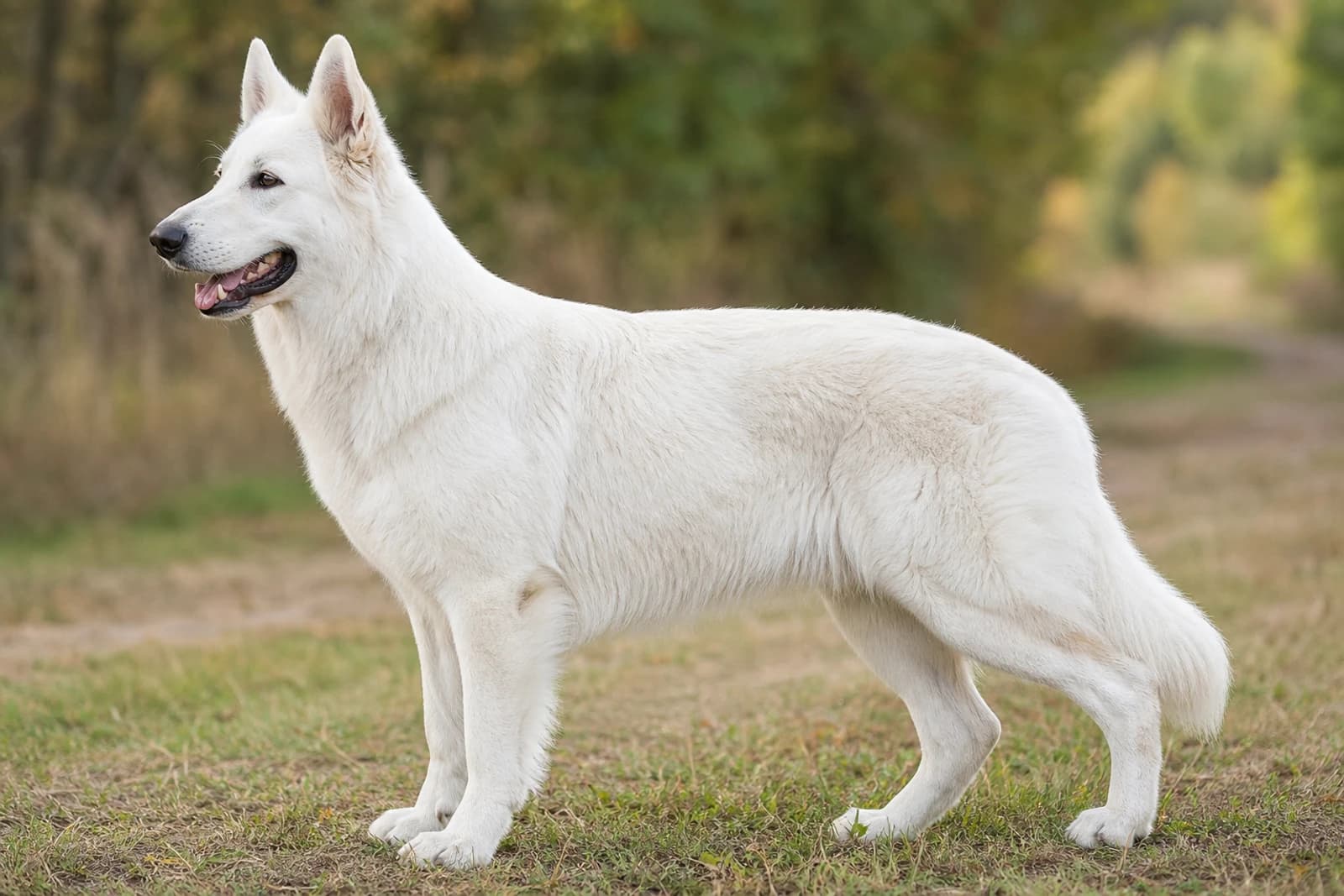
The White Swiss Shepherd Dog is a gentle, intelligent, and loyal working breed, ideal for active families or individuals who can provide ample mental and physical stimulation. They thrive with experienced owners who enjoy outdoor activities and consistent training. While affectionate and good with children, they are not well-suited for apartment living or first-time owners due to their high energy and shedding. Their striking white coat requires regular grooming. This breed excels in canine sports and makes a devoted companion for those who can meet its needs.
At a glance
- Size
- Giant
- Height
- 21–26 in
- Weight
- 55–88 lb
- Life span
- 8–11 years
- Coat colors
- white
- Coat type
- medium-length double coat
- Group
- Working
- Origin
- Switzerland
How much does a White Swiss Shepherd Dog cost?
Adopt / rescue
$75–$400
Usually includes spay/neuter, first shots, and a microchip.
Buy from a breeder
$700–$2,000
From a reputable, health-testing breeder.
Approximate USD. Prices vary widely by region, breeder, pedigree, age, and coat colour — adopting is the lower-cost and recommended route. Avoid suspiciously cheap “breeders”; they’re often puppy mills.
Estimate the full cost of a White Swiss Shepherd Dog →White Swiss Shepherd Dog photos
Views
Front, side, rear and top — the full silhouette.Poses
How the breed sits, lies, moves and plays.Puppy to senior
The breed across its whole life.Expressions
The breed’s range of moods.Close-up details
Eyes, ears, nose, paws, tail and coat.Coat colors
The breed’s recognized colors.Click any photo to enlarge. We show the White Swiss Shepherd Dog from every angle — three views, poses, life stages, expressions, close-ups, coat and colors.
Appearance & size
The first thing you’ll notice is how that snow-white coat moves — fluid and light, almost glowing in the sun. This is a large, athletic dog with no trace of clunkiness. The frame is slightly longer than tall, giving it a graceful, stretched-out trot that eats up ground without wasted effort. Males stand 24–26 inches at the shoulder and weigh 66–88 pounds; females come in at 21–24 inches and 55–77 pounds. Even at the upper end, a well-built White Swiss Shepherd looks lean and muscular, never soft or oversized.
The double coat is a big part of the silhouette. A dense, woolly undercoat keeps the dog insulated, while the outer coat can be either medium-long with a close-lying texture or distinctly long and slightly wavy. The only accepted color is white, though puppies sometimes carry a faint cream or pale biscuit shading that fades as the adult coat comes in. A creamy overlay on the ears or along the back may appear but pure white remains the ideal. The thick ruff around the neck — heavier in males — adds to the noble outline, and the pants on the back of the thighs and the bushy tail emphasize the working heritage.
From the front, the head shows a clean wedge shape and a strong, dry muzzle. The almond eyes are dark brown, never blue or light, which keeps the expression alert and intelligent. Erect, slightly forward-pointing ears are set high and feel firm to the touch. The nose leather is jet black — a requirement that stands out sharply against all that white fur. When you view the dog in profile, the back is straight and well-muscled, the chest deep but not barrel-shaped, and the croup slopes gently to set the low-hanging, saber-shaped tail. The plume reaches at least to the hock and stays down when the dog is at rest. From the rear, the hind legs are straight and parallel with moderate angulation, never cow-hocked. The whole picture is a balanced, ground-covering animal — substantial but never heavy, and always that startling white that made the breed famous.
History & origin
The white coat you see on a White Swiss Shepherd Dog isn’t a modern mutation or an albino quirk — it traces straight back to the earliest days of the German Shepherd breed. In fact, the grandfather of Horand von Grafrath, the first registered German Shepherd, was a white dog. White was part of the original color palette, and those early herding and working lines regularly produced pale pups right alongside the darker ones.
That changed in the 1930s when the German Shepherd breed standard in Germany disqualified the white coat, incorrectly linking it to genetic problems. Breeders in North America and Europe quietly kept the white dogs going anyway, drawn to their sound structure and steady temperaments. By the 1960s and 70s, dedicated fanciers in Switzerland began collecting these white Shepherds and breeding them selectively with a clear goal: create a distinct breed that preserved the white coat’s recessive genetics without sacrificing the intelligence and versatility of the original type.
Switzerland became the breed’s official home base. The Swiss Kennel Club recognized the White Swiss Shepherd Dog as its own breed in 1991, and the FCI (Fédération Cynologique Internationale) followed with full international recognition in 2011 under the name Berger Blanc Suisse. You’ll still hear them called White German Shepherds in some circles, but the Swiss name reflects where the modern breed’s foundation was solidified.
Today’s White Swiss Shepherd is not simply a color variant — it’s a purpose-built dog with a distinct standard. While it still excels at herding, scent work, and obedience, Swiss breeders purposefully selected for a somewhat softer, more biddable temperament than you might find in today’s working-line German Shepherds. The result is a dog that landed squarely in the Working Group in many registries, yet fits more naturally into active family life than its intense cousin. The breed remains relatively rare in the United States, so if you spot one, you’re seeing a lineage that was nearly lost to history and then deliberately brought back by a handful of determined Swiss enthusiasts.
Temperament & personality
A White Swiss Shepherd turns heads with that gleaming white coat, but it’s the dog’s clear-eyed, steady nature that makes people stop and ask, “What’s it like to live with one?” In a word: present. These dogs bond intensely with their people and want to be part of whatever you’re doing. That’s not a side note — it’s the thing that shapes the entire relationship.
The heart of a working dog
Don’t let the elegant look fool you. This is a giant working breed that thinks, problem-solves, and notices everything. If you leave one alone in the backyard for hours with nothing to do, you’ll get a dog that invents his own job — which can look a lot like digging craters or barking at every leaf that moves. A bored White Swiss Shepherd often becomes an anxious one; separation anxiety and excessive vocalization are real risks when the dog is isolated or neglected. They need a solid hour or more of active engagement every day, not just a stroll. Think brain games, training sessions, or learning a new task alongside you. This breed thrives on having a clear role in the household.
With the family
Gentle and observant, they’re often called “velcro dogs” because they’ll follow you from room to room. They tend to be watchful without being jumpy — a quiet natural alertness that makes them excellent at simply knowing when something’s off. Most settle well with respectful kids, but a young child who stumbles into a dog’s space during a meal can trigger a hardwired response. Teach every kid in the house that the dog eats undisturbed. Food guarding isn’t a breed trait as much as it is a dog reality, and a dog this size needs everyone on the same page.
You’ll also notice these dogs are emotionally transparent once you learn their language. A relaxed body, soft eyes, and a gently wagging tail mean all is well. A stiff-legged stare or a forward-leaning posture says something entirely different. They use plenty of calming signals — lip licks, yawns, looking away — when they need a moment. If you miss those cues, the dog’s stress can escalate. So pay attention, not in a hyper-vigilant way, but like you would with any close friend who can’t use words.
A few quirks to expect
- Scent marking and house training: Like all dogs, they use urine to map their world, and the smell of a previous accident indoors sends a strong “go here again” message. Clean any mess with an enzymatic cleaner or a vinegar spray to break the cue. Reward outdoor elimination immediately with a treat — punishment after the fact just teaches the dog to hide from you.
- Chewing: Puppies chew to survive teething; adults chew to keep jaws strong and teeth clean. A homemade citrus spray on furniture legs can save your coffee table while you redirect that energy to appropriate hard chews.
- Odor antics: Yes, a White Swiss Shepherd might decide rolling in something unbelievably foul is a great idea. Theories range from masking their own scent to simply advertising they found something amazing, but the bottom line for you is a lot of bathing. It’s not misbehavior — it’s a dog being a dog.
The takeaway for a prospective owner
A White Swiss Shepherd gives you a partner who is sensitive, biddable, and utterly devoted — but that devotion comes with a daily price tag of time, mental work, and real inclusion in your life. You’re not just adding a dog; you’re adding a shadow that needs to trust you and know what’s expected next. If you can provide that kind of clear, respectful structure, you’ll have a dog that walks through the world with a calm, confident presence that’s hard to match. If you can’t, this isn’t the right fit — and the dog will let you know.
Good with kids, dogs & other pets
This patient, non-aggressive breed is a natural fit for families with children. White Swiss Shepherds typically tolerate tail-tugs and noise without snapping, but at 55–88 pounds and 21–26 inches tall, they’re a lot of dog. A happy wiggle can knock a toddler flat. Supervise all interactions with kids under five, teach the dog to sit for greetings, and show children how to respect the dog’s space. The payoff is a loyal playmate who’ll spend hours in the yard, then settle calmly at the kids’ feet.
With other dogs, early and ongoing socialization is everything. The critical window slams shut around 12–16 weeks, so expose your puppy to well-mannered, fully vaccinated dogs in safe settings before that deadline. Puppies raised in isolation—or rushed into overwhelming situations—risk developing fear-based reactivity or over-excitement as adults. A properly socialized White Swiss Shepherd is generally easygoing and thrives with a canine housemate; the breed’s strong need for companionship means they truly suffer when left alone for long stretches.
Cats and small pets require a more careful approach. These shepherds don’t carry the intense prey drive of some working lines, but their herding heritage can trigger a chase. When the puppy arrives, introduce it indoors to a confident, dog-savvy cat on a leash, rewarding calm behavior. Over weeks, remove the leash and supervise. Free-roaming pocket pets (rabbits, guinea pigs) should always be behind a secure barrier unless you’re right there. Raise them together from day one, and many White Swiss Shepherds learn to treat indoor cats like part of the pack. Outside, a stray cat sprinting across the yard can still flip that switch—so a solid recall is non-negotiable.
Trainability & intelligence
Training a White Swiss Shepherd is less about drilling commands and more about building a two-way conversation. This is a deeply intelligent working dog that reads your tone and body language as carefully as it reads your hand signals. Harsh corrections or force will backfire fast — you won't get a dog that tries harder, you'll get one that shuts down or becomes anxious. What works is clear, reward-based teaching that makes the right choice feel like a game.
They learn quickly, often picking up new behaviors in just a few repetitions when the motivation is right. Food rewards work, but most White Swiss Shepherds light up even more for a squeaky toy, a game of tug, or genuine, excited praise from their person. That sensitivity is a superpower if you handle it gently, but it also means they don't bounce back easily from a bad experience. A single yelled correction during recall practice can turn a puppy that came flying to you into one that hangs back, trotting in slow circles to avoid the pressure.
Start training early, ideally by the time the puppy is 8 weeks old, and keep sessions short and upbeat. Socialization is non-negotiable with this breed. Before 16 weeks, calmly expose the puppy to a wide range of people, friendly dogs, different surfaces, and everyday noises. A White Swiss Shepherd that misses this window often grows into a dog that is fearful or reactive in new situations. Continue those positive exposures through adolescence and beyond — one crowded park visit a month won't cut it. You need a steady drip of neutral, happy experiences to build a confident adult.
Recall deserves extra attention. Use a long line in safe, open spaces and reward every check-in with something the dog values above the distraction — a bite of chicken, a ball toss, a full-body rub. Call them back, then release them to go play again at least half the time so "come" never means the fun ends. With this approach, you'll get a recall that's reliable even around wildlife, but you earn that reliability through months of trust-building. A White Swiss Shepherd that trusts you will try its heart out for you — but trust is not a default setting, it's a daily deposit.
Exercise & energy needs
A White Swiss Shepherd isn’t a dog you wear out with a couple of easy walks. This is a smart, driven working breed that needs real physical and mental work every day—think 90 minutes minimum, split into at least two sessions. A quick loop around the block won’t cut it; you’ll end up with a restless, anxious dog that finds its own job, like redecorating your drywall.
Plan on one long, active session (45–60 minutes) that gets the heart pumping: off-leash running, vigorous fetch, hiking, or a solid bike ride alongside you. The second session can be shorter but still purposeful—maybe 30 minutes of scent games, a flirt pole, or practicing obstacle sequences if you’re into agility. These dogs live for jobs, and they’ll happily channel that energy into dog sports like herding, rally, or advanced obedience. A bored White Swiss Shepherd is a creative one, and not in a good way.
Puzzle toys and stuffed Kongs are nice, but they’re side dishes. The main course is interactive work that makes them think and move at the same time. Hide-and-seek with toys, backyard “find it” games, or learning new complex tricks will tire out their brain far faster than running endless circles in a yard. If you skip the mental piece, you’ll still have a wired dog after an hour of physical exercise.
- Joint sense: These dogs can be prone to hip and elbow dysplasia. Avoid repetitive high-impact stuff on hard surfaces, especially during growth. Opt for grass, dirt trails, and swimming once joints are mature.
- Puppy pacing: Don’t overdo forced running or jumping until growth plates close (around 12–18 months). Short, frequent free-play sessions and basic training are plenty early on.
A White Swiss Shepherd that’s adequately worked is calm and focused indoors. Without that daily commitment, expect barking, pacing, and destruction. This is a dog that thrives when you match its drive with a lifestyle built around movement and training.
Grooming & coat care
The White Swiss Shepherd wears a medium-length, dense double coat that sheds constantly and kicks into overdrive twice a year. If you bring one of these 55–88 lb dogs into your home, plan on brushing as a near-daily ritual — not a chore you squeeze in on weekends. A slicker brush with rounded pins reaches through the topcoat without scraping the skin, and a metal comb or undercoat rake is non-negotiable for digging out the wooly dead fur that otherwise mats behind the ears and under the elbows. Bristle brushes alone won’t get through that underlayer; save them for a finishing pass if you want extra gloss, but the real work happens with a slicker and a rake.
Most weeks, three solid brushing sessions will keep loose hair in check. When the coat blows in spring and fall, expect to brush daily — think handfuls of white fluff rolling off your dog like tumbleweeds. A high-velocity dryer after a bath blasts out dead undercoat far faster than a brush alone and cuts down on the fur-drifts already collecting under your furniture.
Bathing every six to eight weeks is about right. Over-washing strips the natural oils that protect that double coat, but letting grime and dander build up invites skin irritation. Use a gentle dog shampoo, rinse thoroughly, and make sure the coat dries completely — moisture trapped next to the skin can create a perfect spot for hotspots.
Trimming the coat isn’t needed for looks, but many owners tidy the fur between paw pads and clip the feathering on the backs of the legs and tail to keep mud and debris to a minimum. Nails grow fast on a big working dog; if you hear clicking on the floor, it’s time for a trim, usually every 3–4 weeks. Ears get a weekly check and a wipe with a damp cloth to prevent the wax buildup and odors that large, upright-eared dogs can get. Teeth need brushing two to three times a week, more if you can swing it — White Swiss Shepherds can be prone to dental issues, and the earlier you start the routine, the less argument you’ll get.
Regular hands-on grooming also gives you a chance to run your fingers over ribs, hips, and paw pads and spot cuts, lumps, or hot spots before they get ugly. Outside time supports healthy coat turnover, but check for burrs and foxtails after hikes — those awns can burrow into the thick fur and pierce the skin fast.
Shedding & allergies
If spotless black pants are part of your daily uniform, a White Swiss Shepherd is going to test your patience. This is a heavy-shedding breed with a dense double coat, and it leaves a calling card of white fur on floors, furniture, and clothing year-round. You’ll find it floating in sunbeams and woven into rugs after what feels like a deep clean.
Twice a year, things get genuinely dramatic. During the spring and fall blowouts, the undercoat comes out in tufts that can fill a grocery bag in a single brushing session. Daily grooming with an undercoat rake helps, but it won’t stop the drift of white fluff entirely—you’ll still be sweeping and vacuuming more than you ever thought reasonable.
On the allergy front, there’s no sugarcoating it. No dog is truly hypoallergenic, but a dog that pumps out this much fur and dander is a straight-up poor match for allergy sufferers. Reactions aren’t triggered by hair length; they come from skin cells, saliva, and urine proteins that cling to all that loose coat. A White Swiss Shepherd spreads those around constantly.
Drool is the one saving grace. This isn’t a slobbery breed—you won’t need a drool rag draped over your shoulder after playtime or meals. A little post-water-bowl dribble here and there is the extent of it.
Practically speaking, committing to a White Swiss Shepherd means committing to a life with white hair on everything. A robot vacuum that runs daily, a stack of lint rollers in every car and bag, and a well-maintained undercoat rake become essential gear.
Diet & nutrition
A White Swiss Shepherd can run 55 to 88 pounds of muscle and bone — that frame demands real nutrition, not guesswork. Keeping this dog lean isn’t about vanity. It directly protects joints that wear down fast in a giant breed.
How much to feed an adult
Start with your dog’s actual weight and activity level. An active 70-pound Shepherd may need 2,000–2,400 calories a day, split into two meals. A less active or spayed/neutered adult needs less. This breed often carries a strong food drive, so a measuring cup or kitchen scale is your friend. Allow treats to make up no more than 10 percent of daily calories, and use a food puzzle bowl if your dog inhales meals — it slows eating and burns mental energy.
Puppy feeding by age
- 8 to 16 weeks: four meals spaced through the day.
- 4 to 6 months: three meals.
- After 6 months: two meals, just like an adult.
Feed a large-breed puppy formula the whole first year. That slower, controlled growth lowers pressure on developing hips and elbows. If you prepare food at home, begin with lightly cooked and puréed meats, fish, fruits, and vegetables. Raw chicken wings can be offered around 12 weeks, under close supervision.
When your dog gets older
By age 7 or 8, metabolism often downshifts. Monitor the waistline — you should feel ribs with a flat hand, not dig for them. If activity drops, reduce portions gradually. Switching to three or four smaller meals can be easier on an older digestive system. There’s no strong evidence you need to cut protein drastically, but keep it lean. Purée meals for a dog with sore or missing teeth.
What belongs in the bowl
Anchor the diet in animal protein — whole meats or meat meals listed first on the label. Cooked vegetables, eggs, or a spoonful of canned fish are fine additions. Grains like pearl barley or white rice can settle a sensitive stomach, but the meal should stay meat-based. Avoid greasy, rich scraps; one heavy holiday handout can trigger pancreatitis, and large dogs aren’t immune.
Weight-watching realities
This dog will look at you like starvation is imminent — you have to stand your ground. Free-feeding is a recipe for an overweight Shepherd with aching joints. Serve any extras in their regular bowl, never from the table, to avoid creating a chronic beggar. A splash of unsalted vegetable cooking water as a meal topper is okay; just count the moisture.
Health & lifespan
A White Swiss Shepherd’s life typically spans 8 to 11 years, and while that might feel short for such a devoted companion, smart, proactive care can stack the deck for as many healthy years as possible.
Responsible breeders don’t guess — they screen. Expect them to test both parents for hip and elbow dysplasia through organizations like the Orthopedic Foundation for Animals (OFA) or PennHIP. These dogs are deep-chested and large, so gastric dilatation-volvulus (bloat) is a real threat; ask whether a breeder’s lines have a history of it. Degenerative myelopathy (DM) also appears in the breed. A DNA test exists, and good breeders use it so they’re not passing the risk unknowingly. Eye certifications from a veterinary ophthalmologist matter too — progressive retinal atrophy and other inherited eye issues can pop up.
On your end, all that screening pays off when you pair it with routine vet care. Yearly exams aren’t just a checkbox. A vet who knows the breed will check for subtle signs of joint pain, monitor heart health, and stay alert for allergies or skin sensitivities that seem to crop up more in white-coated dogs. Their pink skin around the nose, ears, and belly can burn, so limiting midday sun or using dog-safe sunscreen is worth doing during high-UV months.
Weight is a frontline defense. Carrying just a few extra pounds hammers those already vulnerable hips and elbows. You’ll want to keep your dog lean — you should feel ribs without pressing hard — and adjust portions the second your vet raises a flag. Because bloat can be fatal fast, split meals into at least two feedings per day, use a slow-feeder bowl if they gulp, and wait a full hour after eating before any serious exercise.
Keep up with monthly heartworm prevention during mosquito season (and one month past it), keep the rabies vaccination current, and don’t skip the early socialization that helps a White Swiss Shepherd stay steady and stress-resilient — anxious dogs often run into digestive and immune issues down the line. When you notice a behavior shift, like reduced enthusiasm for a walk or a picky appetite that wasn’t there before, act on it quickly. Subtle clues tend to surface before big problems in this breed.
Living environment
Apartment or house?
A White Swiss Shepherd isn’t a casual apartment dog. At 55–88 pounds and 21–26 inches tall, they take up real space, and their working-drive brain goes stir-crazy without room to move. You can make an apartment work if you’re dead-set on providing at least an hour of hard exercise twice a day—think running, hiking, or intense fetch—not a couple of leash strolls. But a house with direct access to a secure yard will save your sanity.
Yard and space needs
A fenced yard is the closest thing to a non-negotiable. These dogs are athletic, agile, and bred to herd; off-leash zoomies in a safe, enclosed area let them burn the edge off their energy. Underground e-fences often fail with a breed this motivated to chase movement. Inside, you need enough square footage that a full-speed toy-shake or post-zoomies collapse doesn’t feel like a demolition event. Stairs? Fine for a healthy adult, but with a puppy, limit high-impact climbing and jumping until growth plates close—responsible breeders screen for hip and elbow dysplasia, and you protect that investment by managing surface hardness early on.
Climate tolerance
That pure white double coat insulates well against cold, so winter walks and snow play are usually welcome. The flip side: they overheat quickly in high heat or humidity. When the pavement is too hot for your hand, it’s too hot for their pads. Provide deep shade, cooling mats, and exercise in the early morning or late evening during summer months. A kiddie pool in the yard is often a hit.
Barking and noise
White Swiss Shepherds are alert and naturally watchful—they’ll announce a delivery truck or an unfamiliar car in the driveway. It’s rarely mindless yapping, but without a job to do, the alert barks can pile up. Boredom and isolation are the real volume knobs. Keep the brain busy with puzzle feeders, scent work, and command training, and you’ll get a dog who settles quietly indoors instead of one who narrates every squirrel.
Handling alone time
This breed bonds fiercely and wants to be where you are. Left alone for long workdays, they can tip into destructive chewing, howling, or obsessive pacing. Gradual desensitization from puppyhood helps, but they’re simply not wired for eight hours of solo silence. If your household has staggered schedules or someone works from home often, you’re in a better spot. Building a routine that includes vigorous exercise before you leave and rewarding independent calm throughout the day makes a real difference in curbing separation distress.
Who this breed suits
You need a life that moves — and a vacuum that can handle blizzard-level shedding. The White Swiss Shepherd is a 55-to-88-pound working dog with a bright, bound-to-you brain, and he’s miserable if his day lacks purpose. He’s a perfect fit for active families who see a dog as a full-participation member: jogging partner in the morning, hiking buddy on weekends, and a constant shadow under the kitchen table. Kids who are steady on their feet are fine; this dog’s herding instinct occasionally shows up as an innocent nudge, but he’s naturally gentle and patient with respectful children. First-time owners can absolutely thrive here, provided they’re genuinely excited about a formal obedience class and a daily routine that includes at least 60–90 minutes of real exercise — not a stroll, but off-leash running, fetch that leaves him panting, or a challenging sport like agility.
Singles who want a dog that joins them for trail runs, camping trips, or long evenings on the patio will find an attentive, deeply loyal sidekick who reads your moods and hates being left behind. Seniors in excellent physical shape who still walk several miles a day can handle the energy, but the size and sudden bursts of speed demand solid balance and strength on the other end of the leash. An older adult with mobility concerns or a small yard-less apartment just isn’t a match for a dog who needs to stretch his legs and work his mind hard.
Think twice if your household is gone 8–10 hours a day. This shepherd forms a tight bond and isolation can spiral into barking, chewing, or obsessive pacing. Also, if you’re not ready for white hair on every dark fabric you own — twice a year he drops a truly staggering undercoat, and the rest of the year he sheds steadily. He’s a talker, too: expect a range of whines, mumbles, and alert barks that make him a terrible choice for anyone who wants a silent dog. When his needs are met, he’s a steady, clear-eyed companion with an off-switch in the house. Ignore those needs, and you’ll have a 70-pound lesson in frustration.
Cost of ownership
Bringing a White Swiss Shepherd home from a responsible breeder typically costs $1,500 to $3,000. Puppies from lines with extensive hip and elbow clearances or show titles can push toward the upper end. You’ll occasionally find adults through breed-specific rescues for $200 to $500, but they’re uncommon. Budget another $300 to $500 up front for a crate that fits a full-grown 55–88 lb dog, a sturdy bed, leash, collar, food bowls, and tough chew toys.
On a monthly basis, the real commitment kicks in. This is a large, athletic working dog — expect to feed 3 to 4 cups of high-quality kibble daily. Quality food runs $50 to $80 a month, sometimes more if you mix in fresh toppers. They shed a thick double coat year-round and blow it heavily twice a year. A good slicker brush and an undercoat rake are non-negotiable. Many owners schedule a professional deshedding session every 6 to 8 weeks at $60 to $100 per visit, though diligent home grooming can cut that frequency in half.
Veterinary care adds $50 to $80 a month when you spread it out. That covers annual check-ups, core vaccines, and monthly heartworm and flea/tick preventatives for a giant-breed dog. Because the breed can be prone to hip and elbow dysplasia — and, like other deep-chested dogs, bloat — you’ll want a solid insurance policy or a dedicated emergency fund. Good coverage with a reasonable deductible typically lands between $40 and $75 a month. Without it, a single emergency surgery can dwarf a year’s worth of routine costs.
Don’t overlook training. A White Swiss Shepherd is whip-smart but needs structured outlets. Group obedience classes or a few private sessions early on run $150 to $300 for a multi-week course. It’s not a luxury — it’s how you channel that herding-drive brain before it channels itself into your drywall. Over the breed’s 8- to 11-year lifespan, total ownership costs can easily climb past $15,000. Start with a monthly budget around $200 to $300 and adjust as your dog ages.
Choosing a White Swiss Shepherd Dog
You can find a White Swiss Shepherd from a dedicated breeder or through breed-specific rescue — but whichever route you choose, your commitment to health screening makes all the difference. This breed’s lifespan of 8–11 years can be cut short by joint disease or neurological issues when corners are cut, so demand proof of the right clearances.
Starting with a responsible breeder
A good breeder isn't just selling puppies; they're stewarding a working dog with strong guarding and herding instincts. They’ll want to know as much about you as you do about their dogs. Expect to answer questions about your yard, daily schedule, experience with giant breeds, and plan for training.
For health clearances, ask for OFA or PennHIP results on both parents, not a vet statement. The bare minimum for a White Swiss Shepherd includes:
- Hips: scored Fair, Good, or Excellent (OFA) or no evidence of hip dysplasia
- Elbows: no dysplasia
- Eyes: cleared by a veterinary ophthalmologist within the past year (CERF or OFA Eye)
Beyond those, serious breeders often test for degenerative myelopathy (DM) and multidrug resistance gene (MDR1). Both are known issues in the breed, and you want parents that are free of DM or, if a carrier is used, paired with a clear mate. Don’t settle for verbal reassurances — look up the dog’s registration number on the OFA database yourself.
Red flags are easy to spot once you know what normal looks like. Walk away if:
- The breeder always has puppies available or multiple litters on the ground at once.
- They won’t let you meet the mother dog (and sire, if on-site) in person.
- Puppies are sent home before 8 weeks, or you’re pressured to pay full price before visiting.
- They downplay the breed’s exercise needs — a 70-pound working dog won’t thrive on a couple of short walks.
When visiting a litter, observe the puppies where they live, not in a sterile room brought out for you. Look for clear eyes, clean ears, and a puppy that approaches you with curiosity, not cowering or freezing. A little initial caution is normal, but sharp fearfulness in a breed meant to be confident and watchful is a warning sign. Ask to see the parents’ temperaments. A White Swiss Shepherd should be alert and reserved with strangers, not shut down or aggressive.
The rescue alternative
Breed-specific rescues and all-breed groups sometimes have White Swiss Shepherds surrendered because of energy mismatches. A rescue dog — whether young adult or senior — can be a perfect fit if you’re ready to work through past gaps in training. Ask the rescue for any available veterinary records, and insist on a trial period or foster-to-adopt arrangement. Don’t skip the home check, even if the process feels intrusive. Rescues that skip that step rarely have the dog’s long-term interest at heart.
Picking a puppy or adult from this breed means preparing for a strong, intelligent dog that needs a job — even if that job is daily off-leash runs, advanced obedience, or nose work. If you’re not ready for at least an hour of serious exercise and mental stimulation each day, neither a breeder nor a rescue is the right starting point.
Pros & cons
Pros
- Deeply loyal and bonded with their family – a true velcro dog that thrives on human companionship.
- Exceptionally trainable; quick to learn and eager to please, making them stars in obedience, agility, and herding trials.
- Calm, gentle, and patient with children when raised together, often taking on a watchful, protective role.
- The striking solid white coat turns heads, and the breed’s athletic build makes them a powerful yet graceful presence.
- Naturally alert, they make an excellent watchdog without the hair-trigger aggression some guard breeds display.
Cons
- Massive seasonal shedding and steady year-round hair fall; a rake brush and vacuum become daily tools.
- Demanding exercise needs – a 60-minute walk barely scratches the surface; they need hard running, fetch, or focused work to stay sane.
- Prone to separation anxiety; left alone for long hours, they can become destructive or bark incessantly.
- Reserved with strangers, and without thorough socialization may tip into fearfulness or suspicion, so early and ongoing exposure is essential.
- Health concerns include hip and elbow dysplasia, allergies, and a relatively short lifespan of 8–11 years. Responsible breeders screen for joint issues, but no guarantees.
Similar breeds & alternatives
If you’re drawn to the White Swiss Shepherd’s luminous white coat and keen intelligence, a few other breeds might also catch your eye—but the differences under the fur matter a lot when you live with them day to day.
-
German Shepherd Dog This is the closest relative (the White Swiss Shepherd was developed from white-coated GSDs), but temperamentally they often split in opposite directions. A well-bred White Swiss Shepherd is typically softer, less intense, and more easily satisfied with family life than many working-line German Shepherds. If you want a dog that alerts you to the doorbell but doesn’t need a job to stay sane, the WSS tends to be the easier housemate. The GSD, especially from police or sport lines, usually runs hotter: more drive, more suspicion of strangers, and a bigger need for structured daily work.
-
Belgian Shepherd (Tervuren) Same herding-group brain and a glorious long coat, but the Tervuren is a whole different fuel grade. They’re often described as sharper, more sensitive, and extremely high-energy—these dogs can outthink and outrun you if you’re not channeling them into a sport or advanced training. The White Swiss Shepherd is no couch potato, but most Tervurens demand an owner who practically makes dog sport a hobby. WSS lines lean more toward being calm, steady companions who can settle between walks.
-
Samoyed The snowball look is hard to ignore, but the Samoyed’s personality is pure spitz: independent, mischievous, and much more likely to say “I’ll think about it” when you give a command. A White Swiss Shepherd is innately more biddable and handler-focused. Samoyeds also top out around 65 pounds, while a WSS male can push 88 pounds with a leggier, more rectangular build. Both shed heavily, so if white fur everywhere is your dealbreaker, neither breed offers a free pass.
-
American White Shepherd Some breeders in the U.S. work with white-coat shepherd lines that aren’t recognized as a separate breed or bred to the FCI Berger Blanc Suisse standard. A key difference: the White Swiss Shepherd’s standard explicitly calls for a steady, family-friendly temperament, while an American White Shepherd’s personality can mirror the GSD lines it came from—sometimes nervier or harder-edged. Ask about health testing and breeding goals no matter the label.
Fun facts
- Developed from white German Shepherds, they gained recognition as a separate breed in the early 2000s.
- They are known for their distinctive 'smiling' expression, with a gently curved mouth.
- The breed excels in dog sports such as agility, obedience, and herding trials.
- Their dense white coat helps them blend into snowy environments, a trait from their herding ancestry.
Frequently asked questions
- Are White Swiss Shepherd Dogs good with children?
- They often form strong bonds with family members and can be gentle with children when well-socialized. Early socialization and supervision are important due to their size and energy. They may inadvertently knock over small kids, so caution is advised.
- How much exercise does a White Swiss Shepherd need?
- As an active working breed, they require plenty of daily physical and mental stimulation. Aim for at least an hour of vigorous exercise each day, such as long walks, runs, or play sessions. Without enough activity, they may become bored and develop undesirable behaviors.
- Do White Swiss Shepherds shed a lot?
- Yes, they have a thick double coat that sheds heavily year-round, with more intense shedding during seasonal changes. Regular brushing several times a week helps manage loose fur. They are not a good choice for those with allergies or a strong aversion to dog hair.
- Is the White Swiss Shepherd Dog suitable for apartment living?
- They are not ideal for apartments due to their large size and high exercise needs. Without ample space to move and a dedicated owner providing sufficient outdoor activity, they can become restless. A home with a securely fenced yard is much better suited.
- Are they easy to train for first-time dog owners?
- They are intelligent and eager to please, which can make training relatively straightforward. However, they need consistent, positive reinforcement and a firm but kind leader. First-time owners should be prepared to invest time in training and socialization; otherwise, the breed's sensitivity and energy might be challenging.
- How much do White Swiss Shepherds bark?
- They have a tendency to bark to alert their family of something unusual, making them good watchdogs. Early training can help manage excessive barking, but they may not be the quietest breed. If left alone too long or under-exercised, barking can become a problem.
Tools & calculators for White Swiss Shepherd Dog owners
Quick estimates tailored to White Swiss Shepherd Dogs — pre-filled with this breed’s size where it matters.
Articles & stories about the White Swiss Shepherd Dog
Sources & standards
This profile follows recognized breed standards from the American Kennel Club (AKC) and the Fédération Cynologique Internationale (FCI), along with established veterinary and breed-club guidance. These describe general breed tendencies — every dog is an individual.
Owner stories
Have a White Swiss Shepherd Dog? Share your experience — grooming tips, personality quirks, anything goes.