Labrador Retriever
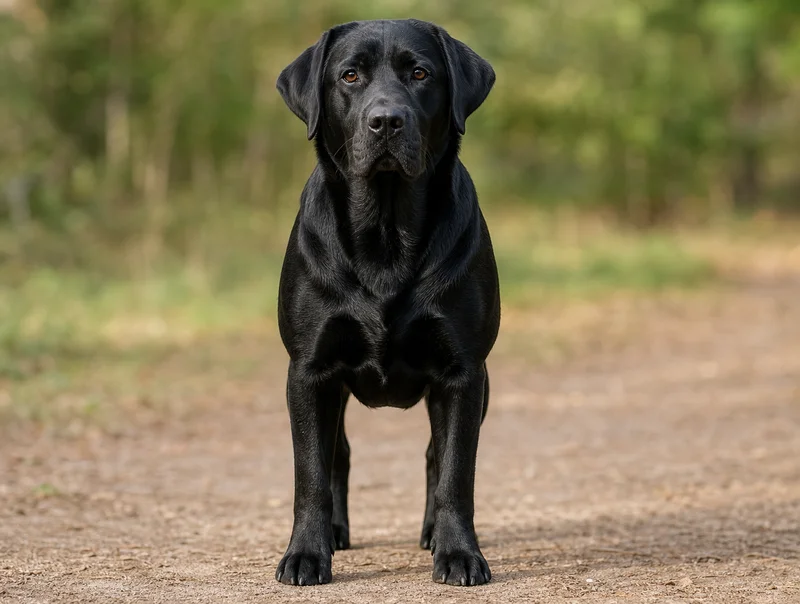 Labrador Retriever — View full breed profile →
In my experience, Labs sit at the sweet spot of biddability and bone. They clock a 5 for trainability and a 4 for energy — high enough to work a full day, low enough to settle for hours under a restaurant table without vibrating. At 55–82 pounds, they can brace for mobility transfers or tug a light manual chair, and their “even-tempered, outgoing” temperament means they rarely startle at dropped trays or grabby toddlers. The coat is a manageable double layer that dries fast after a rain-soaked outing. The catch is the food drive: you will never eat alone again, and you’ll need to measure every meal to keep that 10–12 year lifespan from getting cut short by extra joint load. Expect to pay $1,000–$2,500 for a well-bred puppy from health-tested lines, plus another $10,000–$30,000 and two years of professional training if you’re going the full service route. Many owner-trainers succeed with Labs because the breed forgives mistakes and learns cues in a handful of repetitions — exactly what you want when teaching a diabetic alert dog to nose-bump a leg at the scent of low blood sugar.
Golden Retriever
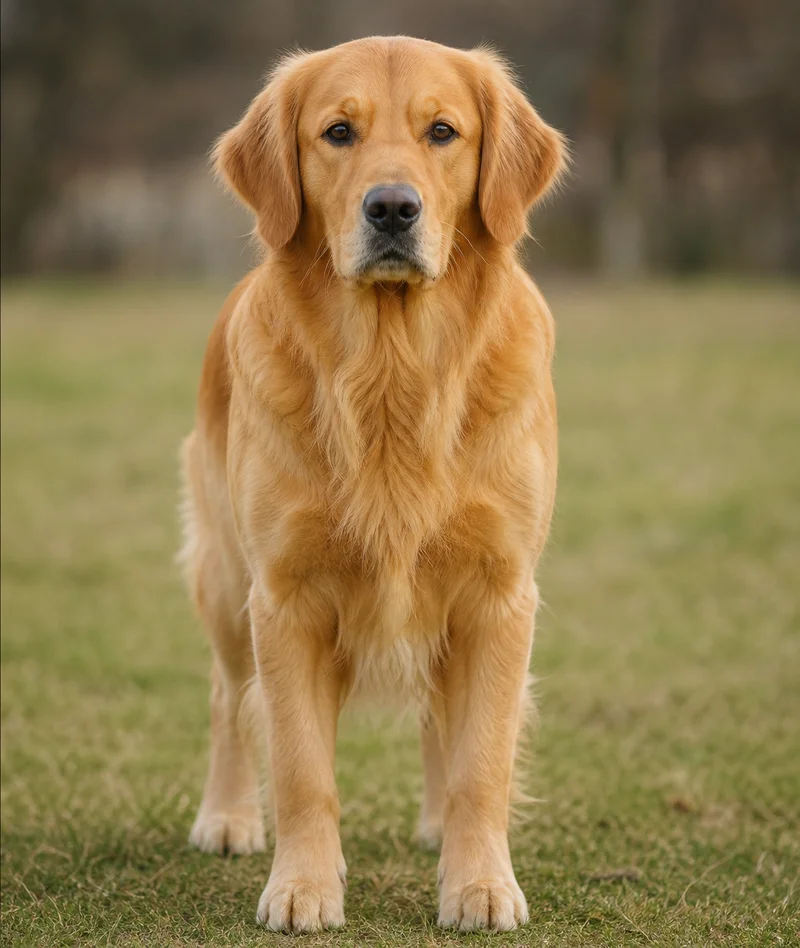 Golden Retriever — View full breed profile →
A Golden will match a Lab’s trainability score of 5 and beat him on affection with a 5 out of 5. That deep need to connect makes them exceptional for psychiatric service work and PTSD. I’ve seen a Golden lean gently against a handler’s shaking leg, a simple pressure cue that the dog offered spontaneously after watching a dozen panic attacks unfold. Their 55–75 pound frame is solid enough for some mobility tasks and their gentle mouth — bred to carry game without bruising — translates into delicate retrieves of medication bottles. The trade-off is the grooming. That dense double coat sheds year-round and blows out twice a year; you’ll brush three or four times a week just to keep gilded tumbleweeds from floating through the grocery store. If you’re looking for a best dog breeds for families that can also work as a service dog, a Golden tops the list. They demand an hour of serious exercise daily and cannot handle being left alone for long stretches, but the emotional payoff is a dog who reads your mood better than most people and never, ever quits.
German Shepherd Dog
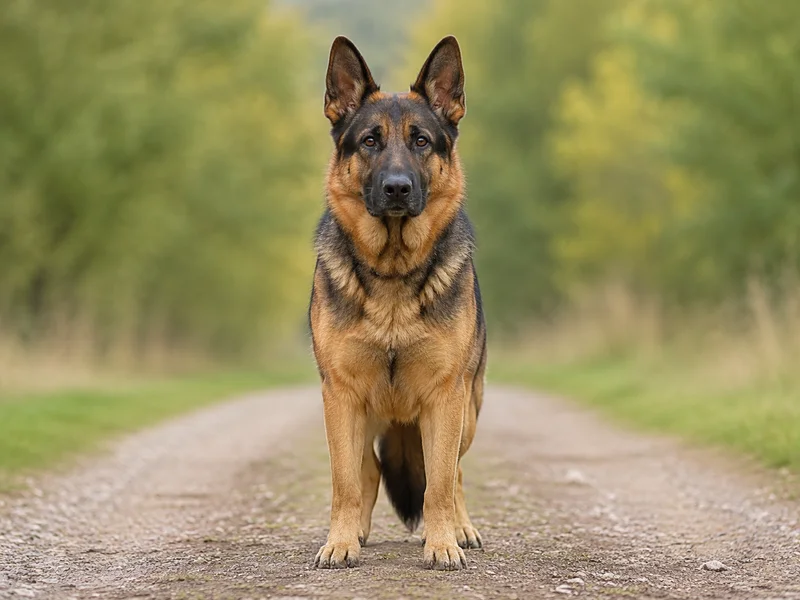 German Shepherd Dog — View full breed profile →
A Shepherd is not an easy button. With a trainability of 5 and an energy level of 5, this 49–88 pound dog burns through mental fuel at a rate that would fry a less driven breed. I’ve worked with Shepherds trained for mobility — they can brace a 200-pound handler and still pivot on a dime — and for PTSD, where their alertness becomes a perimeter scan that lets a veteran sit with his back to a door. Their courage is real, not romanticized: a confident Shepherd will put themselves between you and a threat without being asked. That sensitivity cuts both ways. They absorb handler stress like a sponge and can unravel if their person is chaotic or harsh. A 10-year lifespan means you’ll get about a decade of this intensity, and the shedding is legendary — 24/7 with seasonal blowouts that require daily brushing. Novices should think twice, but if you’re an experienced handler seeking a dog who learns a new command in three reps and won’t flinch when you need them most, this is your breed.
Poodle
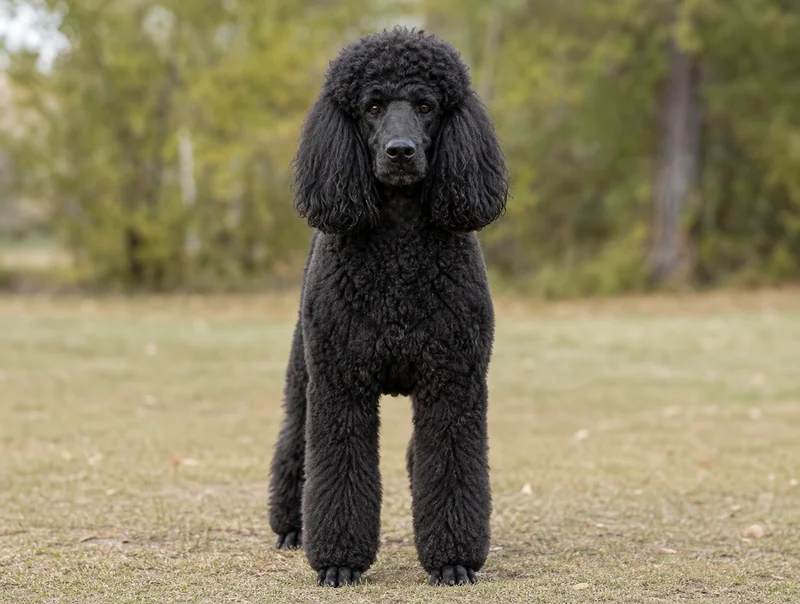 Poodle — View full breed profile →
Don’t let the toy size fool you. The data on Poodles shows a 5 for trainability and a 1 for shedding, which makes the Toy Poodle a powerhouse for diabetic alert work and psychiatric support where a big dog would be impractical — think apartment living, frequent travel, or a handler who needs a dog tucked quietly under a seat. That 7–9 pound body won’t brace or pull, but it can sit in a purse and sniff a dangerous glucose swing before symptoms hit. Poodles are scary smart and need mental puzzles daily, or they’ll invent their own entertainment (like stripping the remote buttons). They’re hypoallergenic in practice because the single curly coat traps dander, but that coat requires professional grooming every 4–6 weeks and daily brushing to avoid matting against the skin. A Toy Poodle won’t work for mobility, but if your disability requires a light-on-the-floor companion who can nail scent work and deep pressure therapy with a 7-pound full-body lay, this breed crushes the brief.
Border Collie
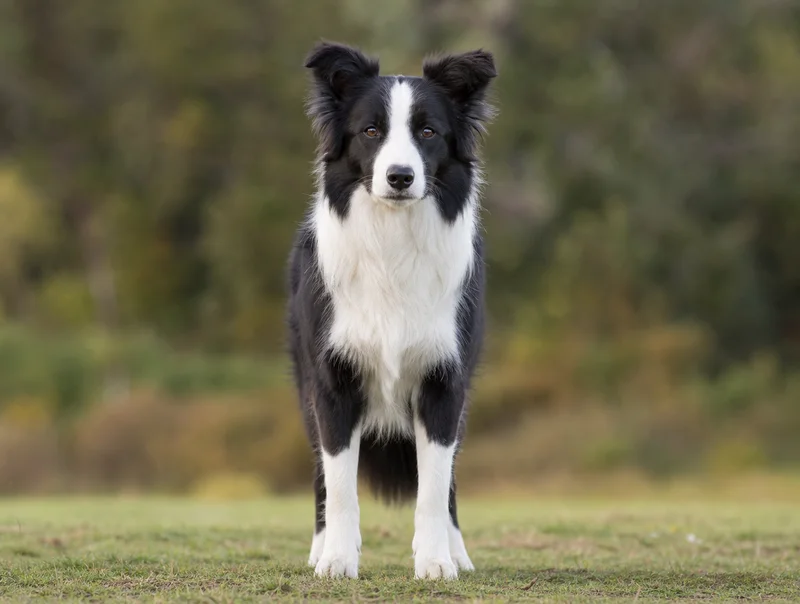 Border Collie — View full breed profile →
I’ll say this plainly: a Border Collie is a gamble as a service dog, and I only recommend them when the handler is already a high-drive athlete with a farm’s worth of outlets. Trainability is a perfect 5, and the 26–44 pound frame is nimble — perfect for a diabetic alert dog that needs to shadow a person through tight spaces. The problem is the energy level of 5 and the brain that demands 90 minutes to 2 hours of intense, off-leash work daily. A bored Border Collie will herd moving feet, chase shadows, and bark at every passing car — disastrous for public access. They form intense bonds and can be profoundly responsive, but their sensitivity means a stressed handler’s anxiety often feeds back into the dog, creating a loop of reactivity. I’ve seen brilliant Border Collie service prospects wash out because they couldn’t settle in a waiting room. That said, for a handler who runs agility courses on the side and lives in a quiet, rural area, a Border Collie can outperform almost any breed in scent discrimination and complex task chains.
Doberman Pinscher
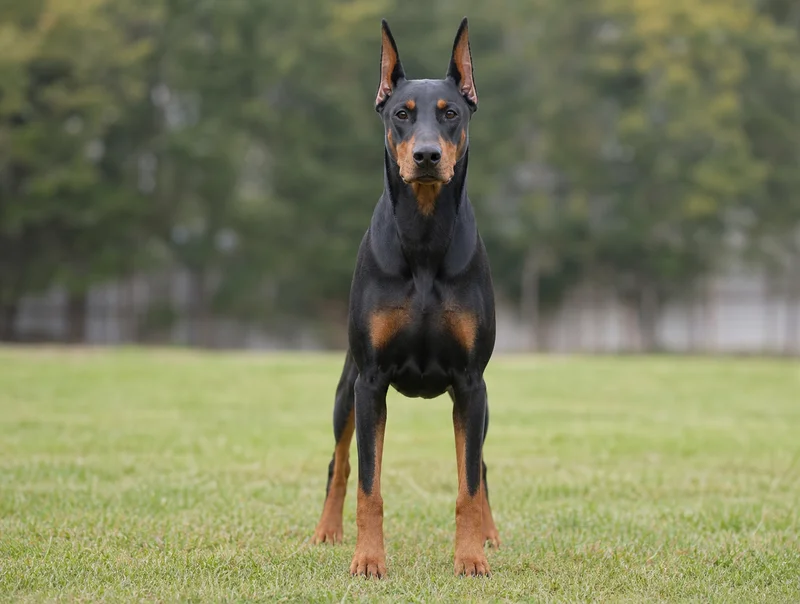 Doberman Pinscher — View full breed profile →
A Doberman brings a trainability of 5 and a 13-year lifespan to the table — the longest of the batch — along with a 66–88 pound frame that can handle mobility work without flinching. Their loyalty is borderline obsessive; many become a one-person shadow who scans every room before their handler enters. That instinct makes them solid PTSD service dogs, and their natural watchfulness rarely tips into nuisance barking if they’re properly exercised. But energy is a 5, so expect a minimum of 60–90 minutes of hard cardio daily plus serious mental engagement. They’re sensitive to harsh handling — a correction that rolls off a Lab will crater a Doberman’s trust — and they need early, relentless socialization to keep protectiveness from curdling into suspicion. If you’re an experienced owner who runs, bikes, or hikes every day and wants a service dog that also functions as a deterrent simply by existing, a Doberman is a fierce, faithful choice.
Training costs don’t stop at the puppy price. A professional service dog from an accredited program can take 18–24 months and $20,000–$40,000, but many owner-trainers succeed with a dedicated first year of daily, methodical work. The breeds above share one thing that makes that possible: a trainability score of 5, meaning they acquire new cues in five or fewer repetitions and generalize them to novel environments. Without that raw learning speed, no amount of size or strength matters. You can’t muscle a dog into ignoring a dropped steak in a food court; you can only build such a deep reinforcement history that the steak becomes background noise. These six breeds, when matched correctly to the right service role and given a handler who respects their needs, will do exactly that.






 Border Collie
 Doberman Pinscher
 German Shepherd Dog
 Golden Retriever
 Labrador Retriever
 Poodle