


The Labrador Retriever is a versatile, good-natured gun dog from the United Kingdom, excelling as a family companion, service dog, and sporting partner. With their exuberant personality and unwavering loyalty, Labs thrive in active households where they receive ample exercise and mental stimulation. They are exceptionally patient with children and get along well with other pets, making them an ideal choice for first-time owners seeking an affectionate, trainable breed. However, their high energy levels and love for food require consistent training and regular outdoor activities to keep them happy and healthy.
At a glance
- Size
- Large
- Height
- 22 in
- Weight
- 55–82 lb
- Life span
- 10–12 years
- Coat colors
- Black, Yellow, Chocolate
- Coat type
- short, dense double coat
- Group
- Gun
- Origin
- United Kingdom
How much does a Labrador Retriever cost?
Adopt / rescue
$75–$400
Usually includes spay/neuter, first shots, and a microchip.
Buy from a breeder
$700–$2,000
From a reputable, health-testing breeder.
Approximate USD. Prices vary widely by region, breeder, pedigree, age, and coat colour — adopting is the lower-cost and recommended route. Avoid suspiciously cheap “breeders”; they’re often puppy mills.
Estimate the full cost of a Labrador Retriever →Labrador Retriever photos
Views
Front, side, rear and top — the full silhouette.Poses
How the breed sits, lies, moves and plays.Puppy to senior
The breed across its whole life.Expressions
The breed’s range of moods.Close-up details
Eyes, ears, nose, paws, tail and coat.Coat colors
The breed’s recognized colors.Click any photo to enlarge. We show the Labrador Retriever from every angle — three views, poses, life stages, expressions, close-ups, coat and colors.
Appearance & size
You won’t mistake a Labrador for a delicate breed. This is a big, solid dog built for a long day’s work. Height sits right around 22 inches at the shoulder for both sexes, but weight varies considerably — 55 to 82 pounds, with males typically filling out toward the high end and females often staying leaner in the 55–70 pound range. The whole frame says “athlete,” not “couch ornament.”
Build and frame
From the front, the chest strikes you first: broad, deep, and supported by well-sprung ribs that give the ribcage a barrel-like roundness when viewed from the side. Straight forelegs drop cleanly to compact, well-arched toes — no splay, no toeing out. The neck is moderate in length and clean, with zero throatiness, so the head sits naturally on a muscular, uncluttered column.
Move around to the side and you’ll see a dog built for substance, not flash. The body carries good depth all the way back, and the hindquarters are moderately angled — enough to drive a powerful trot or a water entry without the exaggerated angles of some show lines. Rear legs are well under the body from a side view, giving a balanced, ready-to-go stance.
Head and expression
The head is clean-cut with a broad skull and a moderate stop — not a blocky mastiff head, but still substantial. Ears hang close to the head and set slightly back, framing a pair of medium-sized eyes. Eye color follows coat color: shades of brown, yellow, or black, but the expression always reads intelligent and kind. It’s the face of a dog that’s already figuring out what you’re going to ask next.
Coat and color
The Labrador’s double coat is pure function. A soft, insulating undercoat sits beneath a straight, dense outercoat that sheds water like a duck’s back — no waves, no feathering, just a practical, weather-resistant jacket. Coat colors come in solid black, yellow, and chocolate. Yellow ranges from a deep fox-red all the way to a pale cream, and all three colors appear as solid, unmarked coats (a small white spot on the chest pops up occasionally, though it’s not part of the breed standard). The coat feels short but dense to the touch — you’ll feel the substance when you run your hand over a Lab after a swim.
History & origin
You won’t find the Labrador Retriever’s story beginning in Labrador. The breed actually took shape on the island of Newfoundland, where a compact, water-loving dog worked alongside fishermen in the early 1800s. These “St. John’s dogs” were smaller than today’s Newfoundlands, with a short, dense coat that shrugged off icy water. They plunged into the sea to haul nets, retrieve lines, and snatch up fish that flopped free from the catch. When British sportsmen visiting the area saw the dogs’ athleticism and soft mouth, they brought several back to England.
In Britain, the breed was refined into a gentleman’s hunting companion. The Earl of Malmesbury and the Duke of Buccleuch were among the first to establish kennels, crossing imported St. John’s dogs with local retrievers to sharpen their game-finding drive. The name “Labrador” appeared around 1800—likely to distinguish these smaller retrievers from the heavier Newfoundland dog, even though both originated in the same region. The label stuck, and by the 1870s the Malmesbury and Buccleuch lines had produced the foundation for the modern Labrador.
The UK Kennel Club recognized the Labrador Retriever as a distinct breed in 1903. Through the 1920s, the dogs gained a following among field sportsmen for their steady temperament and tireless work ethic. In 1931, enthusiasts formed a dedicated breed club, and the Labrador soon became a dominant force in retriever trials. Judges took notice of the breed’s clean outline and classic head, too, and the dogs started holding their own in the show ring. That dual talent—a hard-driving worker on a duck marsh and a composed ring performer—is what pushed the Labrador from a regional helper to one of the most recognizable gun dogs in the world.
Temperament & personality
The Lab’s personality runs on two speeds: all-in with the family, and surprisingly easygoing when things are calm. These are affectionate, even-tempered dogs bred to work side-by-side with people all day. They greet strangers like long-lost friends, lean into your leg for a scratch, and follow you from room to room — not out of neediness, but because being part of the action is what makes a Lab tick. Their eagerness to please runs deep, which makes training straightforward when you’re consistent and use positive reinforcement. Heavy-handed corrections fall flat; this is a breed that stays bulletproof only when trust comes first.
Energy-wise, Labs aren’t hyperactive in the frantic sense, but they bring a lot of motor. A couple of short leash walks won’t cut it. Plan on at least an hour of real exercise daily — retrieving, swimming, off-leash running — or that upbeat enthusiasm turns into jumping, chewing, and restless barking. And speaking of jumping: Labs often launch straight up when excited, a habit that surprises first-time owners. Early training on “four on the floor” saves a lot of muddy paw prints.
With kids and other pets, Labs lean heavily toward patient and tolerant, but no dog’s temperament is a set-it-and-forget-it guarantee. Those gentle tendencies are shaped by breeding, socialization, and daily handling. Teach children to leave the dog in peace during meals; even the mildest Lab can develop food guarding if mealtimes feel threatened. A relaxed, floppy body and soft, blinking eyes usually mean all is well. If you see stiff posture, a locked stare, or a closed mouth, give the dog space — those are signals that tension is rising.
A few quirks worth knowing upfront:
- Chewing is for life. Puppies do it to explore and ease teething pain, but adult Labs chew hard objects to keep their jaws strong and teeth clean. Stock up on sturdy, safe chew toys, and redirect to those from day one. If an older Lab suddenly gnaws on furniture, it’s almost always boredom screaming for exercise. A homemade citrus or vinegar spray can protect off-limits items while you fix the root cause.
- House marking runs on scent memory. Labs tie their sense of territory to the family’s smell, so accidents can pop up in less-used rooms where that scent is weak. Clean every indoor mess with an enzyme cleaner (or a vinegar solution) to break the odor cue; otherwise the dog will revisit that spot.
- They read you more than you realize. Lip licking, yawning, and turning the head away are calming signals — a dog’s way of saying “I’m not a threat, give me a second.” A forward-leaning posture with a high tail means the dog is confident and ready to go, while a backward lean can signal fear or the desire to retreat. Labs tend to telegraph these signals big and clear, so you rarely have to guess.
Neglect or long hours alone hit this breed hard. A Lab starved for company can slide into anxiety-driven barking, destruction, or indoor marking. They don’t need constant entertainment, but they do need to feel included. Meet that need, and you get a dog who matches the household rhythm beautifully — up for an adventure when you are, and calm enough to nap by your feet when the day winds down.
Good with kids, dogs & other pets
If you’re looking for a dog who thinks kids hung the moon, a well-bred Labrador is about as close as it gets. These are dogs with a deep, patient affection for children — the kind who will tolerate a tail-pull from a toddler, then wiggle around to lick the jelly off that same hand. Many families trust their Lab alone with older children, though no dog, no matter how solid, should be left unsupervised with a baby or very young child simply because accidents happen. A 75-pound Lab can accidentally knock over a small kid during a zoomie, so teaching both the dog and the children some ground rules pays off fast.
Labs are generally non-aggressive by nature, so they often slide into multi-dog households with minimal drama. That said, the typical Lab enthusiasm can steamroll a tiny cranky senior dog, so pairings need a little sense. With cats, the picture depends on exposure. Raise a Lab puppy alongside a cat, and you’ll likely find them curled up on the same couch within weeks. But that soft, floppy retriever mouth was built to carry things gently — and a fleeing hamster or rabbit can trigger an instinct to "retrieve" that rarely ends well for the small animal. Keep pocket pets securely caged and out of reach when your Lab is loose.
The real glue making all this work is early, consistent socialization. Between 3 and 14 weeks, a Lab puppy needs gradual, positive run-ins with toddlers, men with beards, people in wheelchairs, vacuum cleaners, other dogs on leashes, and whatever else your everyday life throws at them. This window is tight. If you skip it and hope an adult dog "grows into" being chill around your niece’s squeaky toys or the neighbor’s skateboard, you’re setting yourself up for a reactive, fearful dog instead of the steady companion you hoped for.
Finally, Labs are built for companionship more than yard duty. Leaving one alone in the backyard for hours while the family is out invites barking, digging, and a dog so starved for connection that he jumps on Grandma the second she walks in. A Lab who’s woven into your household’s daily noise, routines, and downtime — and who gets a solid dose of off-leash running or fetch before the kids sit down for homework — is a Lab who’s too content to cause trouble.
Trainability & intelligence
Labrador Retrievers are famously biddable — they genuinely want to work with you. That eager-to-please attitude, combined with a sharp mind, puts them near the top of any trainability list. Most Labs will soak up new cues in just a few repetitions, especially when you start from puppyhood and stay consistent.
The food drive: your best friend and occasional headache
Labs are walking appetites. That strong food motivation makes training ridiculously easy because a single piece of kibble can hold their focus. Use it to your advantage: small, pea-sized treats, plenty of praise, and a happy tone will get you further than any harsh correction.
The flip side: an unguided Lab can turn that same food obsession into counter-surfing, dumpster-diving, or stubborn pushiness. If you don’t teach an “off” and a solid “leave it” early, he’ll train you — usually to hand over your sandwich. So yes, that food drive is rocket fuel for learning, but it demands clear boundaries.
Recall comes naturally, but don’t coast on it
Bred to retrieve downed game and swim back to the hunter, Labs have a built-in desire to return to you. With consistent reward-based recall training — especially around distractions like squirrels or water — you’ll end up with a dog who whips around mid-charge and sprints back. Start in a quiet hallway at 8 weeks, then move to long lines in the park. Jackpot rewards for coming when called pay off for life.
The challenge: a bored Lab is a destructive Lab
High intelligence without an outlet is a recipe for chewed drywall. Labs don’t grow out of that need for mental work — they grow into bigger jaws. Daily training sessions (even 10–15 minutes), puzzle toys, and scent games keep those wheels turning. Without it, you might come home to a Labrador who has creatively disassembled your couch cushions.
What works — and what doesn’t
- Use positive reinforcement. Reward-based methods build trust and speed up learning. Small treats, a tug toy, or an excited “yes!” all work.
- Avoid punishment. Jerking the leash or yelling damages trust and can make a soft-natured Lab anxious or avoidant.
- Start socialization before 16 weeks. Introduce your puppy to varied people, friendly dogs, traffic sounds, slick floors, and water. Gradual, upbeat exposures now prevent fear-based reactivity as an adult.
- Be patient and consistent. Every family member should use the same cues and rules. A Lab will quickly figure out who lets him on the couch — and exploit it.
Ultimately, a Labrador rewarded for good choices becomes a biddable, reliable partner. Skip the corrections, load up on tiny treats, and give his brain a job every day.
Exercise & energy needs
Plan on giving your Labrador 2–3 hours of purposeful exercise every day, not a single walk around the block. These are high-energy retrievers bred to work all day in the field, and an adult Lab who doesn’t burn off that gas will redecorate your house or tie himself in knots with anxiety. Split the day into at least two sessions, each 60 minutes or more, with at least one session being off-leash running, hard swimming, or a long, hilly hike.
Good old-fashioned retrieving is the sweet spot that makes a Lab’s brain and body hum. Throw a bumper into a pond, hit the shoreline for dockside fetch, or work field drills with hand signals and whistle commands. A tired-out Lab is far more likely to snooze on your feet than excavate the sofa cushions.
Physical work alone isn’t enough. Mix in serious mental exercise to take the edge off that hunter’s drive:
- Scent games — hide treats or a rag drag in the yard and send him to find it.
- Puzzle feeders and frozen Kongs for mealtime activation.
- Short, frequent training bursts — sit-stay-remotes, blind retrieves, or nosework.
- Agility or dock diving for dogs with solid joints and a clean bill of health.
Puppies need a very different approach. Those goofy, growing bodies can’t handle forced pavement running or high-impact jumps. Stick to short play sessions on soft ground plus loads of scent exploration and safe socialization until growth plates close (around 18–24 months). Reputable breeders screen for hip and elbow dysplasia, but even well-bred Labs can develop joint trouble if you push them too hard too young. Swimming is your best friend — a zero-impact full-body workout that most Labs will plunge into the second they see water.
If you skip this daily ritual, you won’t get a couch potato. You’ll get a destructive, leash-yanking mess. A Lab’s exercise quota isn’t a suggestion — it’s what separates a calm companion from a canine wrecking ball. If you can’t carve out that kind of time, this isn’t your breed.
Grooming & coat care
Labs shed — a lot. That short, dense coat is a double coat built for retrieving in icy water, and it drops hair year-round with two big seasonal blowouts in spring and fall. If you want clothes and furniture free of yellow, black, or chocolate fuzz, you’ll brush 2–3 times a week most of the year, and daily when the undercoat starts raining out.
Start with a rubber curry brush or a de-shedding tool to rake loose undercoat from the shoulders, flanks, and tail. Follow up with a soft bristle brush to sweep away surface hair and distribute natural oils — that’s what puts the shine on a short coat. There’s no long feathering to mat, so you won’t deal with tangles, but ignoring the undercoat leads to clumps of dead hair floating around the house.
Bathing every 2–3 months is plenty, or when your dog rolls in something foul. Over-bathing strips the waterproofing oils, so reach for a mild, dog-specific shampoo. Many owners time baths for peak shedding weeks: a warm-water massage with a de-shedding shampoo loosens the coat dramatically.
Trimming isn’t required. The breed standard calls for a natural, dense coat with an otter-like tail, and scissors won’t improve it. Some folks neaten the feathering on the tail or trim hair between the toes for traction on slick floors, but that’s a “you” decision, not a coat-care necessity.
Don’t skip the basics:
- Nails: clip or grind once a month. Heavy, active Labs can wear them down somewhat, but you’ll still hear clicking on hard floors if they’re too long.
- Ears: those floppy ears trap moisture and grit. Lift and sniff weekly — any musty smell, redness, or head-shaking needs a vet check. Wipe the outer ear with a vet-approved cleaner; never dig into the canal.
- Teeth: aim for a brush 3–4 times a week with enzymatic dog toothpaste. Labs are food-driven, which makes teaching tooth brushing relatively easy, and it’s a solid defense against periodontal disease down the road.
When the coat blows seasonally, plan for tumbleweeds of fur. A high-velocity dryer after a bath or a quick session with a de-shedding tool on dry hair can cut loose undercoat by the fistful. Pay extra attention to the “pants” area and the ruff around the neck — those spots hold onto dead hair stubbornly. Regular brushing also lets you spot hard-to-see issues like hot spots, ticks, or dry skin before they balloon into a vet visit.
Shedding & allergies
Labrador Retrievers shed like it’s their job. If you bring one home, expect hair on your floors, furniture, clothes, and occasionally in your coffee. They have a thick, water-resistant double coat that drops fur every single day, with two major seasonal blowouts in spring and fall when clumps of undercoat come loose all at once. During those weeks, you’ll wonder how a dog can have any hair left. Brushing daily with a slicker brush or de-shedding tool during peak shedding pulls out the dead stuff before it coats the house, but even a quick, year-round weekly brush makes a visible dent in the tumbleweeds.
These dogs also drool. Not like a Saint Bernard faucet, but enough that after a drink of water or when the treat jar comes out, you’ll see strings. A hand towel by the water bowl isn’t a joke — it’s a tactical choice.
As for allergies: Labradors are not hypoallergenic. No dog truly is, but Labs produce plenty of dander and saliva proteins that trigger reactions. Their constant shedding spreads those allergens everywhere. If someone in your home has dog allergies, a Lab is a risky gamble, not a safe bet. Frequent vacuuming, HEPA filters, and keeping the dog out of bedrooms help, but they won’t turn a heavy shedder into a non-issue.
Diet & nutrition
The Labrador appetite: a blessing and a curse
Labs are famously food-driven. They’ll eat anything, any time—and that’s the problem. Without strict portion control, they pack on pounds fast. Obesity isn’t just a cosmetic issue in this breed; added weight worsens the hip and elbow dysplasia that already plagues the line, shortening a life that should stretch to 10–12 years. Measure every meal with a kitchen scale or a standard measuring cup, not a random scoop. The bag’s chart is a starting point—adjust based on your dog’s body condition, not the clock. If you can’t easily feel your Lab’s ribs behind that thick double coat, cut back.
Slow down a speed-eater with a puzzle bowl or snuffle mat. Labs that inhale food risk bloat, and the mental work of a food puzzle channels that nose-driven drive into something productive.
What to feed an adult Labrador
A high-quality commercial kibble—look for a named meat as the first ingredient—offers balanced nutrition without guesswork. Many Labs thrive on it. If you prefer homemade, aim for a blend that mirrors their needs: roughly 60% meat (raw or cooked), 20–30% fruits and vegetables, and the remaining 10% from eggs, grains like pearl barley or white rice, and plain yogurt. Because dogs lack salivary enzymes and chew with a simple up-down motion, blending or finely chopping vegetables helps unlock nutrients—a quick blitz in the food processor makes a real difference.
Vegetarian or vegan diets aren’t a good fit. A Lab’s digestive system and teeth evolved for meat; removing species-appropriate protein leads to deficiencies you can’t fix with supplements.
Treats count. Keep them under 10% of daily calories, and never hand out fatty table scraps—a post-holiday overload can trigger a life-threatening bout of pancreatitis.
Feeding a Labrador puppy
Puppies burn energy fast, but their stomachs are small. Spread the day’s calories across four meals until 4 months old, then three meals until 6 months. By seven months, settle into the adult two-meal rhythm. Transition your puppy gradually from the breeder’s diet, starting with lightly cooked and puréed meats, fish, fruits, and vegetables, or a high-quality large-breed puppy food (the calcium-to-phosphorus ratio matters for growing joints).
Around twelve weeks, you can introduce raw chicken wings under close supervision—gnawing on raw meaty bones strengthens jaws and cleans teeth, but always watch for choking. Raw bones must be size-appropriate, never cooked.
Keeping a senior Lab trim and nourished
As the sprint turns to a saunter, calories need to drop in lockstep—before the scale creeps up. Older Labs often do better on three smaller meals rather than two big ones, but there’s no solid reason to reduce protein unless your vet is managing kidney disease. For dogs with missing teeth or sensitive mouths, puréeing the meal makes eating comfortable and improves nutrient absorption.
Weigh your senior monthly. Even a couple extra pounds make arthritic joints ache. If you’d use that measuring cup as faithfully for your own snacks as you do for your dog’s kibble, you’ll spot trouble before it settles in.
Health & lifespan
Most Labs live 10 to 12 years, but that number isn’t set in stone. Genetics, diet, and body condition all pull the lifespan one way or the other. You’ll want to know what your dog’s breeder did to stack the deck in your favor.
Labs can be prone to joint issues that cut into their active years. Hip dysplasia and elbow dysplasia are the big ones — both involve malformed joints that lead to arthritis and pain, sometimes as early as middle age. Responsible breeders have their dogs’ hips and elbows X-rayed and scored through the Orthopedic Foundation for Animals (OFA) or PennHIP. They won’t breed a dog with borderline results. Eye conditions are another area: progressive retinal atrophy (PRA), cataracts, and retinal dysplasia can show up. A yearly eye exam by a veterinary ophthalmologist, with results registered with OFA or CERF, is the gold standard. Hypothyroidism — an underactive thyroid — also runs in the breed. It’s not usually life-threatening but causes weight gain, hair loss, and lethargy; it’s managed with daily medication. Ask your breeder if they test for thyroid function and for genetic disorders like exercise-induced collapse (EIC) and centronuclear myopathy (CNM); both have DNA tests available.
The single biggest day-to-day health variable you control is weight. Labs are famously food-motivated. They’ll work you for a second dinner with the same enthusiasm they bring to a retrieve. Carrying extra pounds magnifies joint stress and can tip a dog into diabetes or shorten the comfortable years they have. Feed measured meals, not free-choice bowls, and keep treats to under 10% of daily calories. A lean Lab is a longer-lived Lab.
Routine care that’s easy to overlook: monthly heartworm prevention during mosquito season (and one month after it ends) — it’s far simpler than treating a heartworm infection. Rabies vaccination is legally required and, once symptoms appear, there’s no effective treatment. If your Lab suddenly acts stiff, gains weight without eating more, or seems less excited about the daily walk, don’t chalk it up to aging alone. A vet check can catch hypothyroidism or early arthritis before they steal too much of your dog’s spark.
Living environment
A Labrador Retriever is a 55–82 lb athlete with a brain that needs a job, not just a place to sleep. A house with a securely fenced yard is the closest thing to ideal—room to play fetch, chase a ball, or just do zoomies after a good swim. That yard isn’t a substitute for exercise, though; it’s a bonus. These dogs still need a solid hour of off-leash running, retrieving, or swimming every day, broken into at least two sessions. If you're in an apartment, the math is simple: can you commit to multiple daily trips to a park or open space where your Lab can truly run? If not, the couch cushions will pay the price.
Labs are built for cold water and cool weather, thanks to their dense double coat. They’ll happily plunge into a chilly lake, but that same coat makes them prone to overheating in hot, humid conditions. Plan strenuous activity for early mornings or evenings during summer, and always carry water. A kiddie pool in the yard is often the best money you’ll spend.
Noise-wise, you’re getting an alert barker, not a nuisance barker. A Lab might announce a delivery truck or an excited game of tug, but incessant yapping isn’t typical. The bigger environmental challenge is shedding—expect a steady snowfall of yellow, black, or chocolate fur year-round, with heavier blows in spring and fall.
The dealbreaker for many homes is alone time. Labs form deep bonds with their people and can develop serious separation anxiety if left for eight-plus hours daily. Destructive chewing, howling, and house soiling often show up fast. Crate training, long-lasting puzzle toys, and a tired dog before you leave all help, but if your household is gone most of the day, a midday dog walker or daycare isn’t optional—it’s a requirement.
Who this breed suits
A Labrador can be the easiest dog you’ll ever own — or a muddy, chewing hurricane — depending almost entirely on how much time you genuinely want to spend outdoors. If your default Saturday involves a long hike, a swim at the lake, or a solid hour of off-leash fetch, you’re a strong candidate. A tired Lab is a happy Lab, and they need that kind of daily, heart-pumping outlet well into their senior years. Without it, they convert that 55–82 pounds of muscle and enthusiasm into redecorating your baseboards.
First-time owners get a forgiving, food-motivated breed that lives to earn a treat or a “good dog.” That trainability is real, but it comes with a catch: Labs are big, energetic teenagers for the first two or three years. You’ll need to commit to puppy classes and a consistent schedule. If you’re willing to do that, this breed repays you with a rock-solid, bomb-proof family dog.
Active families with kids often view Labs as the default choice, and for good reason. They’re famously tolerant, happy to be tackled by a toddler, and will match a child’s energy level all afternoon. Just be clear-eyed about the chaos. Labs shed in tufts. They counter-surf. They’ll knock over a preschooler in their joy. So you need a household that can laugh off muddy pawprints and manage a dog that never quite outgrows its inner puppy.
Singles with an active lifestyle can thrive with a Lab, especially if you enjoy running partners that can go for miles. The dog will happily join you for trail runs, dock diving, or early-morning beach sessions. The flip side: a Lab left alone in an apartment for 10 hours while you’re at work is a recipe for barking, chewing, and a profoundly unhappy animal. They’re social to the bone.
Seniors can absolutely own a Lab, but the match works best with a few modifiers. A senior with a fenced yard and a grown child or dog walker who can guarantee that daily hard run might do well. A lower-energy, older rescue Lab (think 6+ years) is often a far better fit than a puppy. The 22-inch height and that enthusiastic tail can unsteady someone with balance issues, so physical sturdiness matters.
Who should think twice:
- If your exercise plan tops out at a 15-minute stroll around the block, you’re setting yourself up for a frustrated, destructive dog.
- If a clean car, a hair-free couch, and a pristine lawn matter more than most things, that double coat will break your spirit. Labs blow their coat twice a year and shed moderately the rest of the time.
- If you travel constantly or work long hours away from home, a Lab’s need for human connection can tip into separation anxiety.
- If you have very frail or tiny family members (a fragile grandparent, a newborn you’ll carry constantly), the breed’s affectionate, whip-like tail and full-body greetings can cause accidental injury. An older, calmer dog might mitigate that. A 70-pound yearling won’t.
Cost of ownership
A well-bred Labrador Retriever puppy from a responsible breeder who screens hips, elbows, and eyes typically runs $1,000 to $2,500, with show-line or field-trial lineages sometimes pushing closer to $3,000. Avoid bargain listings — cutting corners on health clearances often leads to five-figure vet bills later.
Monthly costs settle into a predictable rhythm for a large, active dog. Plan on $60–$100 for a quality large-breed kibble; a working-line Lab in peak condition may eat more. Routine vet care — annual exams, vaccines, heartworm and flea/tick preventatives — averages $50–$80 per month when you spread the annual bill across the year. Pet insurance for a Labrador runs $40–$75 monthly, heavily influenced by your deductible and whether you choose a plan that covers hereditary issues like hip dysplasia, which the breed is prone to. Grooming is mercifully cheap: a good undercoat rake and a slicker brush are one-time buys, and the occasional bath at home keeps costs at maybe $10–$15 a month for shampoo and nail trims. Don't forget the hidden big-ticket items: replacing chewed TV remotes during puppyhood, a sturdy crate, and the extra-large bed they'll outgrow. Set aside $50–$75 a month for training classes, destroyed toys, and the inevitable emergency fund contribution — because a Lab who swallows a sock will not wait for payday.
Choosing a Labrador Retriever
You’re not just getting a Labrador — you’re getting a dog who will throw a tennis ball in your lap at 6 a.m., follow you from room to room, and shed enough to knit a small sweater. Where you get that dog matters enormously.
Breeder or rescue? Start with what fits your life.
A rescue Lab — whether an adolescent surrendered for being “too much dog” or an adult from a breed-specific group — skips the needle-toothed puppy months. You get a clearer picture of size, temperament, and energy level right away. The adoption fee is lower, and you’re giving a good dog a second shot. The tradeoff: you rarely know the full health history, and you’ll need to be patient with any habits or gaps in training.
A responsible breeder puts a two-year-old dog’s health, temperament, and structure under a microscope before breeding. You’ll wait longer and pay more, but you stack the deck in favor of a healthy, predictable companion. You’ll also likely have a mentor for the life of that dog.
Health clearances are not optional.
Labradors have a merry way of masking pain, so clearances aren’t paperwork — they’re your best insurance. A reputable breeder tests both parents through the Orthopedic Foundation for Animals (OFA) or an equivalent registry and shares the results openly. For Labs, that means:
- Hips — OFA Excellent, Good, or Fair (no “borderline” passing)
- Elbows — OFA Normal
- Eyes — annual exam by a board-certified veterinary ophthalmologist, not just a vet check
- Exercise-Induced Collapse (EIC) and Centronuclear Myopathy (CNM) — DNA tests that should return “clear” or “carrier” bred only to clear (never affected)
Some breeders also screen for cardiac issues and progressive retinal atrophy (prcd-PRA). If a breeder tells you “my dogs are healthy, the vet says so,” walk away. A vet exam is not a clearance.
Red flags that should send you back to the car.
- No written contract that spells out health guarantees and a return policy if you can’t keep the dog.
- Puppies available now, all the time, with several litters on the ground simultaneously.
- Multiple breeds in the same kennel (the occasional breeder with two breeds isn’t a dealbreaker, but three or more is a yellow flag).
- Won’t let you meet at least one parent on-site. Shy or aggressive adult dogs in their home environment are a hard no.
- Selling “rare” colors like silver or fox red for a premium. Labradors come in black, yellow, and chocolate — nothing else, no matter what the ad says.
Picking your puppy from the litter.
You’re not looking for the cowering one in the corner or the pup launching itself at the baby gate like a furry missile. A solid middle-of-the-road puppy will investigate you, maybe nibble your shoelace, then settle or move on. Good breeders watch pups for weeks and can guide you to the one that fits your household — whether you need a more laid-back pup for a quieter home or a go-getter for active fieldwork. Trust their read. They know the litter better than you ever will in a 20-minute visit.
If you’re choosing from a rescue, ask the foster family about how the dog does with kids, cats, and being left alone. A five-minute meet-and-greet at a noisy shelter won’t tell you much, but a week in a foster home will.
Pros & cons
A Labrador Retriever is the quintessential family dog — biddable, joyful, and built for action — but that package deal includes hair everywhere, a mouth that won’t quit, and exercise needs that can crush a couch-potato household.
Pros
- Bred to work with people, so training is fast and rewarding; they shine in obedience, hunt tests, and service work.
- Gentle and patient with kids, other dogs, and even clumsy toddlers — a well-socialized Lab rarely starts a fight.
- Tireless adventure buddy: swimming, hiking, endless rounds of fetch, or a full morning in the field.
- Coat is low-maintenance: a quick weekly brushing removes loose hair, and the double coat dries in minutes.
- Adaptable to apartment or acreage as long as they get their daily workout.
Cons
- Heavy shedding year-round, with two epic coat blows yearly — your clothes, couch, and car will wear a fine layer of yellow, chocolate, or black fuzz.
- Needs a real, heart-pumping hour of running, swimming, or retrieving every day; a leash stroll won’t take the edge off.
- Lab puppies are chewing machines that mouth hands, furniture, walls — early redirection and crate training are survival tactics.
- Lives for food and will beg relentlessly; free-feeding or extra treats quickly add pounds, which punishes their joints.
- Prone to hip and elbow dysplasia; responsible breeders screen parents, but it remains a breed concern.
- Greets every stranger like a long-lost friend — brilliant for visitors, useless as a guard dog.
Similar breeds & alternatives
If you love the Labrador’s all-in, people-pleasing enthusiasm but want to compare a few close cousins, the Golden Retriever is the natural first stop. Goldens share the same gun-dog roots, a comparable size (21–24 inches, 55–75 pounds), and that soft-mouthed retrieve. The biggest difference is the coat: a Golden’s long, feathered double coat brings more shedding and weekly brushing to avoid mats, where a Lab’s short, dense coat is wash-and-wear. Temperament shifts a hair, too. Goldens often read a touch more sensitive and eager to please, while Labs can be a bit more rough-and-tumble and pushy about food or retrieving. Both live 10–12 years and are prone to hip dysplasia, elbow issues, and certain cancers, so responsible breeder health screening matters equally.
-
Flat-Coated Retriever: Taller and leaner, a Flat-Coat typically stands 23–24.5 inches and weighs 60–70 pounds. They’re the perpetual puppy of the retriever world—exuberant, clownish, and silly well into old age. The coat is glossy, flat, and moderate-length, requiring regular brushing but no clipping. The hard trade-off: Flat-Coats have a significantly shorter average lifespan, often 8–10 years, with a high incidence of cancer. If you’re after a more elegant, long-headed retriever who never really grows up, they’re a joy, but you’re likely signing on for a shorter run.
-
Chesapeake Bay Retriever: This is the cold-water specialist with a completely different wiring. A Chessie is similar in size (21–26 inches, 55–80 pounds) but wears a dense, wavy, oily coat that shrugs off ice and sheds less than a Lab’s. Temperamentally, they’re the anti-Lab: reserved with strangers, protective of their people, and fiercely independent. Training requires a steady, experienced hand, not the “anybody with a treat” approach that works on a Lab. A Lab will bound toward any new face with a wagging tail; a Chessie will watch, evaluate, and may never fully warm up. For an active owner who wants a grittier, more guardy retriever and doesn’t mind a dog who thinks for itself, the Chesapeake is the compelling alternative—just don’t expect a social butterfly.
Fun facts
- Originally bred in Newfoundland to help fishermen retrieve nets and fish.
- Labradors have a distinctive 'otter tail' that acts as a powerful rudder in water.
- They are the most popular dog breed in the United States, known for their versatility as service and therapy dogs.
- Labs have a waterproof double coat and webbed paws, making them exceptional swimmers.
Frequently asked questions
- Are Labrador Retrievers good with children?
- Yes, Labrador Retrievers are generally very good with children due to their patient, friendly, and outgoing nature. They tend to be gentle and enjoy playing, making them a great family companion. However, supervision is always recommended, especially with young kids, due to their size and exuberance.
- How much exercise does a Labrador Retriever need?
- Labrador Retrievers are high-energy dogs that need at least an hour of vigorous exercise daily. Activities like swimming, fetching, or running are ideal to keep them physically fit and mentally stimulated. Without sufficient exercise, they can become restless or develop behavioral issues.
- Do Labrador Retrievers shed a lot?
- Yes, Labrador Retrievers are heavy shedders, especially during seasonal changes. Their dense double coat requires regular brushing, ideally a few times a week, to manage loose fur and keep their coat healthy. Expect to vacuum frequently if you have a Lab.
- Are Labrador Retrievers easy to train for first-time owners?
- Labrador Retrievers are typically very trainable and eager to please, making them a good choice for first-time owners. They respond well to positive reinforcement and consistent training. However, early socialization and obedience training are important to channel their energy and intelligence.
- Is a Labrador Retriever suitable for apartment living?
- Labrador Retrievers are not ideal for apartment living due to their large size and high energy levels. They thrive in homes with a yard where they can run and play. Without adequate space and exercise, they may become bored and destructive.
Tools & calculators for Labrador Retriever owners
Quick estimates tailored to Labrador Retrievers — pre-filled with this breed’s size where it matters.
Articles & stories about the Labrador Retriever

Our Husky Was Dragging Us Down the Street. Here's the Method That Fixed It.
Our 50-pound Husky turned walks into drag races—until we ditched the choke chain and tried this. It took time, but now he walks at our pace, not his.

'Leave It' Saved My Dog's Life Twice. Here's How We Trained It.
The 'leave it' command stopped my Labrador from eating a rotting fishhook carcass and later a chocolate bar. Here's the step-by-step training that worked.

Our Lab Gained 20 Pounds in Two Years. Here's How We Got It Back Off.
When our Labrador hit 78 pounds, the vet didn't mince words. Here’s the exact plan—food, exercise, and tough love—that got her back to 60 pounds and saved her joints.

Our Labrador's First Year: The Good, The Exhausting, and The Worth It
Chewed baseboards, stolen socks, and a 3 a.m. potty run—our Lab's first year nearly broke us. But that same muddy, shedding maniac brought joy we'd never trade.

Which Dog Breeds Actually Make the Best Service Dogs — And Why
Trainability beats brawn every time. These six breeds dominate service work for reasons you can measure, not just guess.
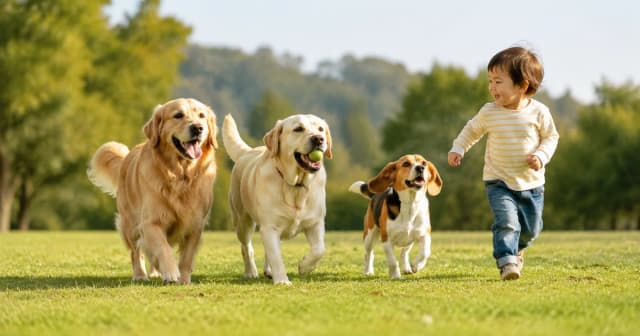
The 8 Best Dog Breeds for Families With Toddlers (Ranked by Temperament)
Any parent who’s seen a toddler grab a dog’s ear knows the cold sweat. Our honest, parent-tested ranking of the 8 best breeds for toddlers weighs patience, size, and real-world chaos.
Sources & standards
This profile follows recognized breed standards from the American Kennel Club (AKC) and the Fédération Cynologique Internationale (FCI), along with established veterinary and breed-club guidance. These describe general breed tendencies — every dog is an individual.
Owner stories
Have a Labrador Retriever? Share your experience — grooming tips, personality quirks, anything goes.