

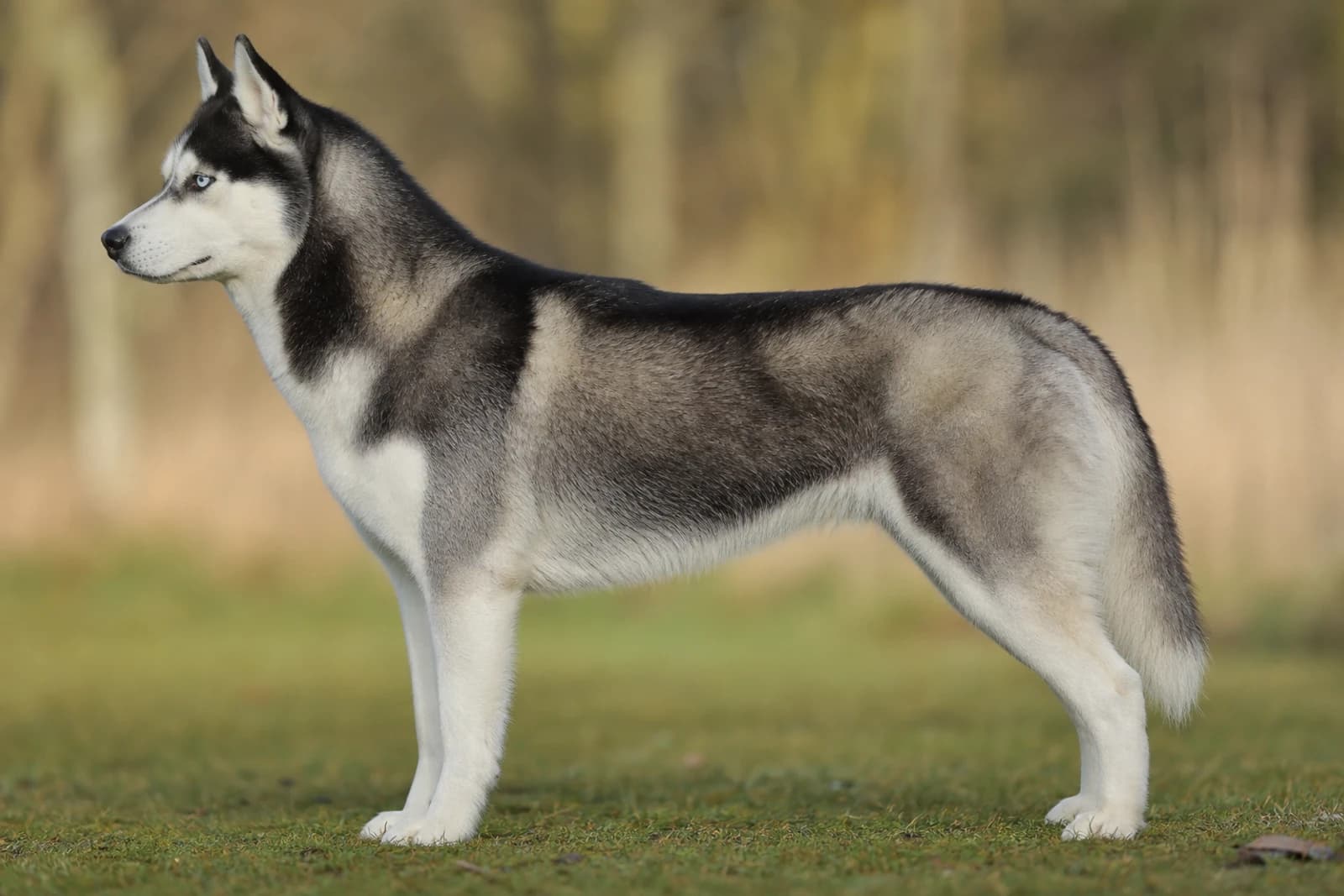
The Siberian Husky is a medium to large working dog known for its endurance, intelligence, and striking appearance. This breed suits active individuals or families who enjoy outdoor adventures, especially in cool climates. Their thick double coat and high energy require ample exercise and can challenge first-time owners. Huskies are friendly, outgoing, and gentle with children but have a strong prey drive, so they may not do well with small pets. With proper training and an escape-proof yard, they make loyal, playful companions for experienced dog handlers.
At a glance
- Size
- Large
- Height
- 20–24 in
- Weight
- 35–60 lb
- Life span
- 10 years
- Coat colors
- black, gray, brown, white
- Coat type
- thick double coat, medium length
- Origin
- United States
How much does a Siberian Husky cost?
Adopt / rescue
$100–$450
Usually includes spay/neuter, first shots, and a microchip.
Buy from a breeder
$1,200–$3,000
From a reputable, health-testing breeder.
Approximate USD. Prices vary widely by region, breeder, pedigree, age, and coat colour — adopting is the lower-cost and recommended route. Avoid suspiciously cheap “breeders”; they’re often puppy mills.
Estimate the full cost of a Siberian Husky →Siberian Husky photos
Views
Front, side, rear and top — the full silhouette.Poses
How the breed sits, lies, moves and plays.Puppy to senior
The breed across its whole life.Expressions
The breed’s range of moods.Close-up details
Eyes, ears, nose, paws, tail and coat.Coat colors
The breed’s recognized colors.Click any photo to enlarge. We show the Siberian Husky from every angle — three views, poses, life stages, expressions, close-ups, coat and colors.
Appearance & size
That wolfish silhouette stops people in their tracks, but up close the Siberian Husky reads more like a compact, athletic sled dog built for endurance, not bulk. This is a large breed with a lean, rangy frame — not massive, but hard-bodied and quick. Males stand 21 to 24 inches at the shoulder and weigh 45 to 60 pounds; females run 20 to 22 inches and 35 to 50 pounds. A mature Husky feels lighter on its feet than you might expect, with a deep chest, well-sprung ribs, and a level topline that says “I was made to pull.”
The coat is a thick double layer — a dense, soft undercoat beneath a straight, weather-resistant outer coat. It comes in black, gray, brown, or solid white, and almost always with striking white markings on the face, chest, belly, and legs. Masks, goggles, and full face blazes are common. You’ll see dogs with a full white collar, white socks, or a dark saddle. The coat is never so long that it obscures the clean outline of the dog; it should look functional, not fluffy.
From the front, the head is fox-like — not coarse, not snipey — with a moderately pointed muzzle and a definite stop. Ears are triangular, set high and close together, thickly furred, with white inner fur that catches the light. Eyes are almond-shaped and set slightly oblique, giving a keen, sometimes mischievous expression. They can be brown, blue, or one of each; the idea that a blue eye with three marks is some kind of breed standard is pure myth — it’s just a striking variation that pops up.
In profile, you see the neck arched and carried proudly, the chest deep but not slab-sided, and a back that stays firm and level on the move. The legs are moderately heavy-boned and straight, with compact, oval feet. From behind and from the side, the tail is a fox brush — carried low with a graceful upward curve when the dog is alert, but never twisted tightly over the back. It hangs down naturally when the dog is relaxed, and that relaxed carriage is as much a breed signature as the ears or eyes.
The whole picture is one of balance and athleticism: a dog built to cover miles at a steady trot, light on its feet, and distinctly northern in every line. No gaudiness, no rag-doll fluff — just a purpose-built runner that happens to look like something out of the taiga.
History & origin
The Siberian Husky was forged in one of the most unforgiving climates on the planet, bred by the Chukchi people of northeastern Siberia as an all-purpose working dog. For centuries, these semi-nomadic people isolated their dogs from outside influence, requiring them to haul sleds over vast frozen distances, herd reindeer, hunt, and guard the family camp—all on a starvation diet. That brutal selection produced a dog with remarkable endurance, a dense double coat, and an uncanny ability to metabolize energy efficiently. Genetically, the Husky sits right alongside the Samoyed and Alaskan Malamute, sharing deep roots in that ancient Arctic spitz lineage.
The dogs might have stayed a regional secret if not for the Alaskan gold rush. In the early 1900s, fur traders and prospectors brought them across the Bering Strait to use in sled races. The turning point came in 1909, when a team of these small, wolfish-looking imports entered the All-Alaska Sweepstakes and left the local, heavier freighting dogs in their tracks. The Siberian Husky’s reputation exploded. But the moment that burned the breed into history happened in the winter of 1925. A diphtheria outbreak threatened Nome, and a relay of 20 mushers and over 150 dogs—most of them Huskies—covered 1,537 kilometers in five and a half days to deliver life-saving serum. Teams led by dogs like Balto and Togo made that impossible run a reality, and the Husky became a national hero.
The American Kennel Club recognized the breed in 1930, placing it firmly in the Working Group. Since then, the Husky’s expressive face and mischievous personality have propelled it into pop culture through films like Eight Below and Snow Dogs. Despite the couch-cushion life many lead today, the dog still carries that ancient drive: a 60-pound engine that thinks nothing of running for hours, given half a chance.
Temperament & personality
Your Siberian Husky has the soul of a marathoner and the emotional radar of a lap dog. This is a dog who greets the world with an optimistic wag, rarely meeting a human or another dog they don’t want to befriend. Aggression toward strangers is so unusual that a Husky makes a truly terrible guard dog — they’re more likely to show a burglar where you keep the treats. Inside the house, that warmth turns into a loyal shadow. Many owners notice a gentle, slightly timid streak: a sudden loud noise can send your Husky ducking behind your legs, seeking the safety of your presence.
Flip the switch outdoors, though, and that gentle indoor companion reveals a wilder, fiercely energetic side. Bred to pull sleds for miles, these dogs need a legitimate outlet — a solid hour or more of off-leash running, bikejoring, or mushing, not just a meander around the block. A Husky who hasn’t burned off that fuel will find a creative substitute, and you probably won’t like it. Chewing is a signature pastime when they’re bored or anxious; puppies gnaw to explore and ease teething pain, while adults work their jaws to stay strong and clean. Without enough mental and physical engagement, your couch legs and shoe collection become tempting targets.
- With other dogs: Huskies live easily in packs. They accept new canine housemates with a welcome-wagon attitude, rarely starting conflicts. A multi-dog home suits them perfectly, as long as everyone has their own space and fair share of attention.
- With children: They’re typically gentle, but small kids should understand never to interrupt a dog’s meal or startle them when sleeping. A Husky’s sensitive nature means they might duck away from clumsy handling.
- Strong will, not force: Huskies are independent thinkers, not push-button obedience robots. They respond best to respectful, consistent engagement. Heavy-handed corrections backfire; they’ll simply refuse to cooperate. Think of it as negotiating with a friendly, stubborn teammate.
A well-exercised, socially connected Husky is a happy, quiet housemate. The flip side is real: isolation or neglect can spiral into barking marathons and property destruction driven by anxiety. These dogs mark territorially with urine, revisiting the same outdoor spots by scent memory, so a secure yard is non-negotiable. You’ll find a Husky who leans into you, makes eye contact with those striking pale blue or brown eyes, and communicates with a whole vocabulary of woo-woos and dramatic sighs. Just know that the same dog who curls up contentedly at your feet tonight will be ready to go full sled-dog at sunrise tomorrow.
Good with kids, dogs & other pets
Huskies tend to be patient and non-aggressive, which lines up nicely with a houseful of kids — but their 35–60-pound frame and bottomless energy mean supervision isn’t optional. A friendly Husky who barrels around a corner can pancake a toddler without meaning to. Teach children to handle the dog gently and avoid hugging around the neck; this breed is sensitive and remembers rough treatment. When raised together with respectful handling, the relationship clicks.
These dogs were bred to run in teams, so they naturally enjoy the company of other canines. A well-socialized Husky usually fits right into a multi-dog household. Start that exposure early, ideally between 3 and 14 weeks, and keep it positive. The prime socialization window slams shut around 12–16 weeks, and missing it can lead to a dog who’s overexcited or edgy around other dogs later. Even with good early work, a Husky can play like a freight train — match him with dogs who appreciate hard-charging wrestling rather than timid housemates. For an adult Husky who missed that early window, forced dog-park interactions are a gamble; go slow and respect where the dog is actually comfortable.
With cats and small pets, you’re looking at a different reality. A Siberian Husky’s heritage as a sled dog means a strong instinct to chase small, fleeing animals. Early, careful introductions can teach some Huskies to coexist with a resident cat, but never leave them unsupervised — that harmony can evaporate the moment a cat darts. Small mammals like rabbits or ferrets are a non-starter in most Husky homes. If you have a multi-species household, plan on heavy management: separate spaces, baby gates, and a realistic understanding that some individuals simply won’t be safe. This breed craves companionship and hates being left out of family action, so a household where someone is usually around helps prevent the loneliness that can fuel destructive behaviors.
Trainability & intelligence
Siberian Huskies are whip-smart, but they care about your agenda only if you make it worth their while. This is not a breed that lives to please you — it’s a breed that weighs every request against “what’s in it for me?” With a moderate trainability rating of 3 out of 5, Huskies learn commands quickly and then decide whether they feel like obeying today. That independence makes them a poor match for first-time owners expecting an off-leash shadow.
What works — and what backfires
Forget force. Harsh corrections or punishment-based methods damage trust and can trigger the Husky’s trademark dramatic howling, stubbornness, or outright escape attempts. Reward-based training — using high-value treats, play, or a favorite squeaky toy — builds the cooperation you need. Keep sessions under 10 minutes, game-like, and unpredictable. Bored repetition gets you a dog that simply checks out.
Start the day your puppy comes home, ideally around 8 weeks old. Socialization is non-negotiable: expose them gently to different people, surfaces, sounds, and animals between 3 and 14 weeks, and continue those positive experiences well into adulthood. A poorly socialized Husky can tip from aloof to fear-reactive.
The recall challenge
Recall is the hill many owners die on. With a prey drive that snaps on at the sight of a squirrel, a Husky’s instinct to run overrides even the best training. Off-leash reliability requires thousands of rewarded repetitions in a fenced area, never punishment for a slow return. Realistically, a 100% recall in high-distraction settings is a lifelong project, not a guarantee. Many owners wisely stick to securely fenced yards and long lines.
Your job is to build a relationship where the dog prefers to check in with you. When that connection is solid, a Husky will choose to work with you — not because they have to, but because they’ve learned it’s more fun. Patience, consistency, and a sense of humor matter more than any formal drill.
Exercise & energy needs
Your Siberian Husky doesn’t need a quick stroll around the block — he needs to run, pull, and think, every single day. Aim for at least 60 minutes of hard exercise twice daily, and know that many lines genuinely need more. This is a breed built to cover a hundred miles of frozen trail in a single day; a 20-minute leash walk barely registers.
- Intensity matters as much as minutes. Toss a ball if he’ll chase it, but the real sweet spot is pulling and sustained running. Canicross, bikejoring, skijoring, sledding, or a long run alongside a mountain bike are where Huskies shine. If you live somewhere warm, schedule exercise for the cool early morning or late evening. These dogs overheat fast and will keep going until they drop — it’s on you to enforce breaks and carry water.
- Split the day into multiple workouts. Two 60-minute sessions is the minimum; three or four blocks of running and brain work often fit a Husky’s natural rhythm better. Back-to-back long walks alone rarely cut it. A bored Husky turns into a howling, fence-digging, upholstery-shredding menace. Consistent, hard output directly prevents the reactivity and destructive habits the breed is famous for.
- Mental exercise is non-negotiable. Even a physically tired Husky can get into trouble if his head isn’t engaged. Mix in puzzle toys, frozen Kongs, nose work, hide-and-seek with toys, or short training bursts that demand self-control. Scent games that send him searching the yard or house tap into his working drive and wear him out faster than a third run of the same loop.
- Watch the heat and the surface. Huskies can suffer heatstroke in temperatures that feel fine to you. On pavement, check the ground with your palm — if it’s too hot for you, it’s too hot for his pads. In summer, shift to swimming (if he’ll tolerate it) or indoor flirt-pole sessions in a cool space, but never substitute laps around a hot dog park for true running.
- Puppies and seniors adjust. Growing pups need free play, not forced mileage on hard surfaces, to protect developing joints. Older dogs often still want the routine but with lower impact — think long sniffy walks and swimming instead of road-work. Listen to the individual dog; a healthy adult Husky will happily out-exercise you, but don’t push a stiff senior to keep up.
If you can’t give this breed the kind of daily, high-output exercise he was bred for, you’ll both be miserable. A tired Husky is a cooperative housemate; an under-exercised one will dismantle your yard, serenade the neighbours, and escape to find his own fun. A secure, 6-foot fenced space isn’t a nice-to-have — it’s the barrier between your dog and a solo marathon across town.
Grooming & coat care
The Siberian Husky wears a thick double coat that’s purpose-built for Arctic sledding — and it sheds like it. You’ll deal with a dense, cashmere-soft undercoat beneath longer, coarser guard hairs. Routine brushing keeps the fur from taking over your home, but once or twice a year the undercoat “blows,” and the hair comes out in constant, drifting tufts. You cannot stop it; you can only manage it with the right tools and schedule.
Brushing schedule. During normal months, brush 1–2 times a week with a pin brush or a slicker brush with rounded pins to pull out loose hair and debris. When the coat starts blowing — often in spring and fall — step up to daily sessions. That’s when an undercoat rake becomes your best friend. It reaches through the guard hairs to grab dead undercoat without scraping the skin. After raking, a slicker or pin brush smooths the topcoat. For a final gloss, a soft bristle brush (boar bristle works) distributes natural oils across the guard hairs.
Bathing. Huskies are surprisingly clean dogs with little doggy odor. Bathe only when they’re actually dirty — a couple of times a year is plenty. Over-washing strips the coat’s protective oils. Always use a gentle dog shampoo, and rinse thoroughly; leftover soap can trigger itching. A bath right before a heavy shed can loosen more undercoat, but a high-velocity dryer at home or the groomer’s will blast out buckets of loose fur.
No shaving, minimal trimming. Never shave or clip the body coat. That double layer insulates against both cold and heat, and shaved fur often grows back patchy or with a ruined texture. You can trim the fuzzy hair between the paw pads for better traction and cleaner feet — that’s a maintenance trim, not a style choice.
Nails, ears, teeth. Check and trim nails every 3–4 weeks; if you hear clicking on hard floors, they’re too long. Wipe ears weekly with a vet-approved cleaner and a cotton ball — never dig deep. Brush teeth several times a week with dog toothpaste to prevent tartar. Dental chews help between brushings.
Seasonal reality. When a Husky blows coat, the fur seems endless. Outdoor running and play naturally help loosen and release the dead hair, so keep up those daily runs. Inside, expect to empty the vacuum canister multiple times per session. Accept the fur tumbleweeds and schedule your heavy brushing outside — your broom and your sanity will thank you.
Shedding & allergies
If you're picturing a dog that sheds a little here and there, a Siberian Husky will completely reset your expectations. These dogs don't just shed — they blow their coat in massive, seasonal waves. Once or twice a year (usually spring and fall), the soft, dense undercoat releases in fist-sized clumps for two to three weeks straight. You'll find grey, black, or copper tufts floating into corners, clinging to furniture, and dusting every dark piece of clothing you own. During a blowout, daily brushing is non-negotiable — not just a quick once-over, but a solid session with an undercoat rake to pull loose fur before it takes over your house.
Outside those dramatic weeks, day-to-day shedding is surprisingly modest. A Husky's plush double coat mostly contains itself when it isn't actively dumping the underlayer. You'll still see some stray hairs on floors and upholstery, but nothing like the constant rain of fur you'd get from a heavy year-round shedder. A quick brush a couple times a week keeps things tidy enough for most owners.
Drool is a non-issue. Unlike jowly breeds that leave slobber trails on every surface, Huskies have dry, tight lips. You won't be wiping down walls or carrying a drool rag.
Now for the allergy reality check: no dog is truly hypoallergenic, and a Husky's dramatic coat cycles make it a poor fit for many allergy sufferers. During a blowout, airborne dander and fur spike sharply, enough to make even mild allergies flare. If you have severe pet allergies, this breed is simply not a safe bet. If your allergies are mild, daily control during non-blowout periods might be manageable with frequent vacuuming and grooming, but the seasonal onslaught is tough to mitigate.
One more layer: Huskies can be prone to skin and ear issues — things like zinc-responsive dermatosis, allergies, or yeast overgrowth. A dog with untreated skin problems will scratch and shed excessively, sometimes well beyond the normal blowout. Responsible breeders screen for hereditary skin conditions, but even so, a Husky's coat health hinges on good nutrition and parasite control. A dull, brittle, or patchy coat often signals something deeper going on. So, while the typical shedding pattern is predictable, an unhealthy dog can push it into genuinely unmanageable territory.
Diet & nutrition
Siberian Huskies are remarkably fuel-efficient for their size. A fit adult can pull a sled all day on fewer calories than many couch-potato breeds burn, so the biggest mistake is pouring too much kibble into the bowl of a dog who only gets a couple of walks. Portion control isn’t just about the scale — it directly affects joint health, especially in a breed where extra weight can worsen hip dysplasia or elbow issues later in life.
Feeding an adult Husky
Most Huskies land between 35 and 60 pounds. A moderately active 50-pound adult does fine on roughly 1,000–1,300 calories a day, but that number drops fast if you’re in an apartment and exercise is light. Use the dog’s body condition as your real gauge: you want to feel the ribs easily without a layer of fat, and see a defined waist from above.
Huskies’ appetites vary widely. Some are picky — they’ll skip meals when they’re not hungry, which is normal. Others would eat the entire bag if you let them. If yours falls into the second camp, measure every meal and use a puzzle bowl to slow things down. It adds mental stimulation and prevents the kind of bolting that can lead to bloat or discomfort.
What to put in the bowl
A solid daily diet follows this rough breakdown:
- 60% animal-based protein: raw or cooked meat, fish, and eggs form the foundation
- 20–30% fruits and vegetables for fiber and micronutrients
- 10% extras like pearl barley, white rice (gentle on sensitive stomachs), plain yogurt, or unsalted vegetable cooking water used as a moist base
You can achieve that with a high-quality commercial food that lists a named meat first, or with a carefully balanced homemade plan. If you go raw, introduce puréed or lightly cooked meats and veggies during puppyhood; raw meaty bones like chicken wings can start around 12 weeks, always under supervision.
Puppy feeding schedule
- Up to 4 months: four evenly spaced meals a day
- 4–6 months: three meals a day
- 6 months and older: shift to the adult two-meal rhythm
Make diet transitions gradual. Begin with soft, puréed blends of lightly cooked proteins and produce, or a reputable puppy formula, then slowly move toward the adult diet you intend to keep. This eases the digestive system and lets you spot any food sensitivities early.
Seniors and weight management
As your Husky slows down — typically after 7 or 8 — the calorie needs drop, but there’s no good reason to slash protein. Keep the muscle-building fuel high while trimming overall portions. Switch to smaller, more frequent meals if digestion becomes sluggish. Missing teeth? Purée the meal so nutrient absorption doesn’t suffer.
Obesity in older dogs is the single biggest preventable health threat. Weigh your dog monthly and adjust food gradually; even two extra pounds on a 50-pound Husky can inflame aging joints.
A few hands-on tips
Never feed straight from the table. If there’s a safe leftover (unseasoned meat, plain rice, cooked veg), serve it later in the dog’s own bowl to avoid creating a beggar.
- Cook extra batches of grains, vegetables, or lean proteins on the weekend, so you have healthy meal starters ready midweek.
- After holiday meals, resist the urge to share rich scraps — fatty trimmings and gravy are a fast track to pancreatitis.
- Unsalted water from steaming vegetables makes a nutritious, no-cost stock for mixing with dry food when you’re out of broth.
Health & lifespan
A Siberian Husky typically lives about 10 years. That’s a shorter run than many large dogs, so paying attention to the breed’s known weak spots makes a real difference.
- Patellar luxation — a loose kneecap that pops out, often showing as a hop-skip stride. Mild cases may need only monitoring; severe ones require surgery.
- Hypothyroidism — an underactive thyroid that can appear in middle age, leading to weight gain, low energy, and a dull coat. A daily pill usually manages it.
- Seborrhea and otitis — greasy, flaky skin and persistent ear infections. Huskies can be prone to both, especially if they’re enthusiastic rollers. Early intervention prevents long-term discomfort.
- Cataracts — lens clouding that can start young. Without treatment, they may cause blindness, but surgery has a high success rate when caught early.
These aren’t guarantees. A responsible breeder screens parent dogs for eye, hip, and thyroid health and should show you the paperwork. Genetics loads the gun, but environment pulls the trigger.
Keeping your Husky lean is one of the biggest favors you can do. They’re master manipulators around food, yet an extra 5 pounds strains joints and shortens that decade-long timeline. Measure meals, don’t free-feed. Annual vet checkups — including a thorough eye exam — catch subtle beginnings: a faint limp, an elevated thyroid level, a small ear flare-up. Heartworm prevention during mosquito season and an up-to-date rabies vaccine are non-negotiable basics.
You’ll know your dog. A refusal to run or a sudden loss of appetite often flags trouble before any obvious symptom shows. Catching a trick knee early might mean physical therapy instead of a major repair. Catching a cataract before it matures can mean restored vision. A decade goes fast; small, steady vigilance keeps it vibrant.
Living environment
A Siberian Husky’s ideal living environment starts with a simple reality: this is a cold-weather working dog bred to run for miles in a pack. Apartment living is a poor fit. Even if you’re an avid runner, the breed’s vocal nature and need for space rarely mesh with shared walls. A securely fenced yard is non-negotiable, and not just any fence — Huskies are notorious escape artists. They dig under, climb over, and slip through gaps you’d swear were too small. Sink that fence deep, check it often, and never rely on an invisible barrier; prey drive cancels out shock training in a heartbeat.
Climate tolerance is a sharp line. These dogs thrive in snow and subfreezing temperatures, often preferring to sleep outside when other breeds huddle by the heater. Heat is the real danger. In temperatures above 80°F, a Husky can overheat quickly. Summer exercise shifts to early mornings or late evenings, with plenty of shade and cool water. Air conditioning becomes a necessity in warmer regions, not a luxury.
Noise is part of the package. Siberian Huskies rarely guard bark, but they howl, yodel, and “talk” — a sound that travels through walls and across neighbors’ yards. Some will carry on full conversations with you or serenade the neighborhood when bored. If you’re in a dense subdivision or have noise-sensitive neighbors, tread carefully.
Tolerance for being left alone is low. Bred to work in tight-knit teams, the breed forms fierce family bonds and can slide into destructive chewing, excavation projects, or howling marathons if left for eight-hour stretches. A dog walker, doggy daycare, or at least a mid-day break helps, but gradual alone-time training from puppyhood is essential. Pair that with a tired dog: a solid 60 minutes or more of vigorous daily exercise, split across at least two sessions. A quick leash walk isn’t enough — think running, pulling a cart, or off-leash play in a fully enclosed area. Mental work (puzzle toys, scent games, training) scratches the problem-solving itch. Without it, that clever mind will invent its own entertainment, and you won’t like the results.
Who this breed suits
Few dogs will rearrange your life as fast as a Siberian Husky. The first real question is whether you can give this dog a solid hour of hard running every day, not a gentle stroll around the block. If your idea of exercise is a leash-and-sniff walk, you’ll end up with a bored escape artist who digs craters in the yard, dismantles the sofa, and howls an opera for the neighbors. Huskies are built to pull sleds for miles, and that drive doesn’t switch off because they live in the suburbs.
You’ll be a great match if you’re a runner, a skijorer, a hiker, or someone who genuinely loves getting outside in all weather. Active families with older kids can do well — Huskies are famously friendly and pack-oriented — but those strong, zoomy 35–60 lb bodies can accidentally flatten a toddler. They’re people-loving social butterflies, not guard dogs, so expect an enthusiastic “Hi!” to everyone, including the mail carrier.
You should think twice if you want a dog you can trust off-leash. A Husky’s recall is notoriously unreliable. When their high prey drive kicks in, a squirrel or cat can override every command you’ve taught. Homes with free-roaming small pets, unsecured fences, or a low tolerance for Great Escape attempts won’t work. Plan on a fence at least 6 feet tall and check for digging below — these dogs are masterminds of perimeter breach.
Shedding is monumental. Twice a year Husky owners live inside a fur snow globe. If you’re a neat freak, this isn’t your dog. They also talk — whining, woo-wooing, and full-throated howling are normal, not a sign something’s wrong. Apartment dwellers without access to a large yard and a dedicated daily run should skip the Husky entirely.
In short, a Siberian Husky fits someone who views training as a puzzle, exercise as a non-negotiable, and chaos as part of the package. You’ll get a mischievous, athletic partner who’s equal parts frustrating and hilarious. If you won’t prioritize that outlet every single day, they’ll redecorate your house and show themselves the door before you even finish your coffee.
Cost of ownership
Upfront purchase price
Plan on spending $800 to $1,500 for a puppy from a health-tested, responsible breeder. Outstanding show lines or working sled-dog pedigrees can push that to $2,000 or more. You’ll often see pups listed for less on classified sites, but those typically skip the eye, hip, and cardiac screenings that matter in a breed prone to juvenile cataracts and hip dysplasia. Expect to get on a waiting list — good Husky breeders don’t crank out litters.
Adoption through a Siberian Husky rescue usually runs $250 to $500, with the dog already spayed/neutered and vetted.
Monthly baseline costs
A 35–60 lb Husky with the fuel-burning metabolism of a sled dog will run through about 2½ to 3 cups of quality kibble a day. That’s roughly $50 to $70 a month for food. You’ll also want a couple of escape-proof harnesses, a waist-worn running leash, and puzzle toys — add $30–$40/month on average when you spread those purchases out.
Grooming is deceptive. The double coat sheds constantly and drops an undercoat blizzard twice a year. You’ll buy a good undercoat rake, a high-velocity dryer, or budget for a professional groomer to handle the blowout. If you pay for a grooming appointment during shedding season, expect $60 to $100 per session, plus supplies year-round. Even if you do it all yourself, count on $15–$25/month for tools and shampoos.
Vet and insurance
Routine annual care — exam, vaccines, heartworm and flea/tick prevention — runs $300 to $500 a year. Add $30 to $50 a month for a solid accident-and-illness insurance policy. Huskies are notorious for ingesting things they shouldn’t, ACL injuries from hard turns during zoomies, and skin allergies. One foreign-body surgery can hit $3,000 fast, so insurance usually pays for itself.
The real wallet test
These costs assume a calm, well-behaved Husky. Realistically, you’ll also pay for:
- Secure fencing. A 6-foot dig-proof fence or a dedicated dog run is a one-time outlay — easily $1,500–$5,000 — but it prevents escape attempts that lead to impound fees or liability.
- Daycare or a dog walker. A bored Husky can destroy drywall. If you work long hours, plan on $200–$400 a month for midday exercise.
- Training classes. Huskies are independent thinkers; group obedience classes (around $150–$200 for a 6-week session) save your sanity and your sofa.
All told, a responsible owner can expect to spend $2,000–$3,500 a year on routine care, plus a steady trickle of “I can’t believe he did that” expenses. With a typical 10-year lifespan, this is a $20,000–$35,000 commitment before you ever set aside an emergency fund.
Choosing a Siberian Husky
Rescue or responsible breeder? Start with a hard truth.
Siberian Huskies land in shelters at alarming rates—not because they’re bad dogs, but because people fall for the wolf-like looks and forget everything else. Rescue is a smart first stop. You’ll find purebreds and mixes through regional Husky-specific rescues, and you can get a dog whose energy level and quirks are already a known quantity. A good rescue will match you based on your home, not just hand you the cutest face. Expect a thorough application and in-person meeting.
If you go to a breeder, you’re looking for someone who treats the dogs like family and acts as a steward of the breed, not a production line. Huskies are working dogs; a breeder who never runs sled, skijor, or bikejor with their dogs isn’t evaluating the traits that matter most—endurance, sound structure, and a mind that won’t quit.
Health clearances you need to see
A 10-year lifespan means you’ll get a decade if you stack the deck in your favor. Ask for OFA or PennHIP hip scores on both parents (Hip dysplasia shows up in the breed, though not as often as in heavier giants). The eyes are the real battlefield. The breeder should show you a current, passing CERF or OFA Eye certification from a veterinary ophthalmologist—not just a regular vet check. Juvenile cataracts, corneal dystrophy, and progressive retinal atrophy can all rob a young dog of vision. Responsible breeders test annually, even on dogs they’re not actively breeding.
Don’t settle for “the vet said they looked healthy.” Get the paperwork, check the dates, and verify online if you have any doubt.
Red flags that should send you running
- “Rare” color claims and extra price tags. A white Siberian Husky, solid black, copper, gray—all of these are completely standard coat colors, and nobody should charge you a premium for them. If you see “rare woolly coat” or “blue-eyed merle,” walk away. That person is selling hype, not health.
- Litters on the ground constantly. A breeder with multiple litters available at all times can’t properly socialize those pups or stand behind them for life.
- No questions about you. If the seller doesn’t grill you—about your fence height, your experience with escape artists, your daily exercise plan, your tolerance for howling and digging—they don’t care where that puppy lands.
- Unable to meet at least one parent on-site. You need to see the dam, watch her temperament, and look at the environment. Puppy mill setups use off-site “studs” and won’t let you past a sterilized meeting room.
Picking the right puppy
A well-raised Husky puppy rushes to meet you with a loose, wiggly body and a tail up—not slinking behind furniture. Look for the pup that’s curious, pounces on a toy, and recovers fast after a startling noise. Avoid the one who flattens to the ground and stays there, or the one who bulldozes everything without ever checking in with people. Middle-of-the-road boldness tends to grow into a dog you can live with.
Watch the dam. If she’s aloof but relaxed, that’s perfect and breed-typical. If she’s skittish, reactive, or hides, the puppies are absorbing that every day. Go home, sleep on it, and don’t pick a puppy just because you drove three hours and feel pressure. You’ll live with this decision for the next ten years.
Pros & cons
Pros
- Born socialite, not a guard dog. Sibes greet strangers like long-lost friends, which makes them a poor choice for protection but a great fit for homes that welcome guests and other dogs.
- Surprisingly light on dog smell. Their coat stays naturally clean, and they typically need only occasional baths — a real perk indoors for a double-coated breed.
- Eyes and coat stop traffic. Striking blue, brown, or parti-colored eyes paired with mask-like markings and a palette of black, gray, brown, or white create a showstopper that sparks conversation everywhere you go.
- Playful, kid-friendly energy. That bouncy, never-serious attitude pairs well with active children who enjoy a running buddy and can handle a dog that rarely settles out of sheer age — just supervise littles so the enthusiasm doesn’t lead to a tumble.
- Built for the cold. Under that plush double coat, they’re insulated against freezing temperatures and revel in winter hikes, skijoring, or just zoomies in fresh snow.
Cons
- A professional-grade shedder. Twice a year they blow their entire undercoat, and the rest of the year they still drop a steady snowfall of fur. You’ll find hair in your coffee, your car, and your coat closet. Budget for a good vacuum and accept that black pants are a statement.
- Escape artist of the dog world. A 35-to-60-pound Husky can clear a six-foot fence with a running start, dig under it in minutes, or slip a collar faster than you can grab the leash. Microchipping and a Fort Knox yard are minimums.
- Pulls like a freight train on walks. Bred to run in harness for miles, a 20-to-24-inch tall Husky can drag a grown adult off their feet if squirrel-mode engages. A front-clip harness and consistent loose-leash work from day one are non-negotiable.
- Wired to chase and kill small animals. That ancient sled-dog instinct means cats, pocket pets, and even small dogs often read as prey. Not every individual, but assume it until proven otherwise, and manage your household accordingly.
- Drama queen with a howl you’ll hear across the neighborhood. Boredom, excitement, or just the conversation with a passing siren — they vocalize in yodels, screams, and full-on wolf howls. Apartment living is a hard sell unless you’re ready to run them ragged and have very patient neighbors.
- Stubborn smart, not biddable. A 10-year commitment means a decade of a dog that learns commands in a flash but calculates whether obeying benefits them in the moment. Short, fun training sessions with high-value treats work; repetition and stern voices get you a stubborn statue.
Similar breeds & alternatives
The Siberian Husky’s turbocharged work ethic and genius for escape make it a poor fit for many homes. If the look steals your heart but the lifestyle demands give you pause, a handful of breeds scratch a similar itch without an identical set of headaches.
Alaskan Malamute
Malamutes are the heavyweight cousins — 75–85 pounds of freight-hauling power to the Husky’s 35–60-pound racecar. They’re calmer indoors, less likely to ricochet off the walls, but they still need heavy exercise and a fortress-grade fence. Same-sex aggression can be a serious issue, particularly between males. A Malamute won’t match a Husky’s mile-a-minute escape plots, but they shed just as much and can be more stubborn when they don’t see the point.
Alaskan Klee Kai
If you want the wolfish face in a portable package, the Klee Kai was developed as a companion-sized Husky doppelganger (10–20 pounds, 15–17 inches). They’re alert, often reserved with strangers, and prone to barking. Despite the size, they’re still escape artists — a tiny gap under a fence is an invitation. Exercise needs are lower: a couple of long walks and serious mental challenges usually suffice, but they won’t tolerate rough handling from small children. Responsible breeders screen for factor VII deficiency and cardiac issues.
Samoyed
Samoyeds share the Husky’s height (19–23.5 inches) and similar weight (35–65 pounds), but swap the kaleidoscope of coat colors for a permanent, gleaming white double coat. They’re famously people-oriented and less driven to roam — a securely fenced yard still matters, but a Samoyed is more likely to stick around for a belly rub than to dig under the gate. The trade-off: grooming. Expect to brush several times a week and vacuum daily during shedding season. They need real exercise but will settle for an hour of brisk walking and play, where a Husky often needs to flat-out run.
If the Husky’s endurance and Houdini streak feel like a full-time job, a Samoyed or a well-bred Klee Kai can give you that striking spitz silhouette with a somewhat different recipe of challenges.
Fun facts
- Bred originally by the Chukchi people of Siberia for pulling sleds.
- Famed for the 1925 serum run to Nome, where teams of Huskies delivered diphtheria antitoxin.
- They have a remarkable ability to withstand cold temperatures thanks to their double coat.
- Their striking blue eyes (or heterochromia) are a breed hallmark.
Frequently asked questions
- Are Siberian Huskies good with children?
- Siberian Huskies are typically friendly and gentle with children, but their high energy and playfulness can be overwhelming for small kids. Early socialization and supervision are key to ensuring safe interactions. Their pack-oriented nature often makes them good family companions when properly trained.
- How much do Siberian Huskies shed?
- Siberian Huskies shed heavily, especially during seasonal coat blows twice a year when they lose their undercoat. Regular brushing several times a week can help manage the fur, but expect significant year-round shedding. They are not ideal for those who prefer a low-shedding breed.
- How much exercise does a Siberian Husky need?
- As a high-energy working breed, Siberian Huskies need at least one to two hours of vigorous exercise daily, such as running or pulling activities. Without enough physical and mental stimulation, they can become destructive or attempt to escape. A securely fenced yard is recommended for safe off-leash play.
- Are Siberian Huskies good for apartment living?
- Siberian Huskies can adapt to apartments only if their substantial exercise needs are met daily, which can be challenging. They are active indoors and may become vocal or restless without enough activity. Their tendency to howl and high energy often make them better suited for homes with more space.
- Is a Siberian Husky a good dog for first-time owners?
- Siberian Huskies are generally not recommended for first-time owners due to their independent, stubborn nature and high exercise and grooming needs. They require consistent, patient training and a confident handler to channel their intelligence and energy. Inexperienced owners may struggle with their escape tendencies and strong prey drive.
Tools & calculators for Siberian Husky owners
Quick estimates tailored to Siberian Huskys — pre-filled with this breed’s size where it matters.
Articles & stories about the Siberian Husky

Sources & standards
This profile follows recognized breed standards from the American Kennel Club (AKC) and the Fédération Cynologique Internationale (FCI), along with established veterinary and breed-club guidance. These describe general breed tendencies — every dog is an individual.
Owner stories
Have a Siberian Husky? Share your experience — grooming tips, personality quirks, anything goes.